




Abstract
Energy-efficient pulse-coupled oscillators have recently gained significant research attention in wireless sensor networks, where the wireless sensor network applications mimic the firefly synchronization for attracting mating partners. As a result, it is more suitable and harder to identify demands in all applications. The pulse-coupled oscillator mechanism causing delay and uncharitable applications needs to reduce energy consumption to the smallest level. To avert this problem, this study proposes a new mechanism called random traveling wave pulse-coupled oscillator algorithm, which is a self-organizing technique for energy-efficient wireless sensor networks using the phase-locking traveling wave pulse-coupled oscillator and random method on anti-phase of the pulse-coupled oscillator model. This technique proposed in order to minimize the high power utilization in the network to get better data gathering of the sensor nodes during data transmission. The simulation results shown that the proposed random traveling wave pulse-coupled oscillator mechanism achieved up to 48% and 55% reduction in energy usage when increase the number of sensor nodes as well as the packet size of the transmitted data compared to traveling wave pulse-coupled oscillator and pulse-coupled oscillator methods. In addition, the mechanism improves the data gathering ratio by up to 70% and 68%, respectively. This is due to the developed technique helps to reduce the high consumed energy in the sensor network and increases the data collection throughout the transmission states in wireless sensor networks.
Keywords
Introduction
The wireless sensor network (WSN) positions itself within the revolutionary network technologies as a credible member.1–3 This is due to the enormous benefit of WSNs in diverse fields that affects human life. WSN applications can be classified into two categories, that is, tracking and monitoring. 4 The main task of tracking applications is to track objects, animals, humans, and vehicles. However, monitoring applications focus on monitoring the environment, health, power, inventory, and process automation. According to Zulkifli et al., 5 the data obtained from the observed ecological phenomenon are only required to be occasionally sampled and transported to the base station. Therefore, it is imperative to create a smart mechanism that could further advance the performance of sensor nodes in reducing energy consumption, particularly among the process of transmission.2,6,7
In this study, energy efficiency mechanism was proposed with the expectation of its benefits through the expanded number of sensor nodes and data packet size, specifically from the aspect of energy consumption and data gathering ratio. Moreover, the recommended random traveling wave pulse-coupled oscillator (RTWPCO) mechanism is able to spread the traffic load frequently and gradually over the sensor nodes during the process of transmission, which consequently enables the production of an improved network lifespan and allows the sensors to fail. On top of that, low energy consumption is possible through the use of multihop communication of each node with the sink that could be done by the proposed mechanism. Based on the above discussion, Figure 1 illustrates the energy-efficient taxonomy that encompasses two main mechanisms, which are biological-inspired network system and non-biological-inspired network system.

Classification of the energy-efficient mechanism in WSNs.
The RTWPCO algorithms focused on improving energy consumption ratio and data gathering ratio to some sort of applications. Using this self-organizing strategy, the WSN develops energy consumption and data gathering, thus resulting into a prolonged network lifespan.
For the purpose of this study, a self-organized formula was established from the traveling wave pulse-coupled oscillator (TWPCO) mechanism developed by Al-Mekhlafi et al. 8 through randomization-based mechanism. The main difference between RTWPCO and TWPCO is obvious because TWPCO ignored the high energy usage consumed during the synchronized transmission scheduling between sensor nodes in WSN. The proposed mechanism is not complicated and easy to operate compared to the other mechanism. Therefore, the aim of the proposed method is to reduce energy consumption and increase data gathering according to WSN conditions. This method will avoid packet collisions during data traffic between sender and receiver, resulting better data gathering, as well as minimized energy usage of sensors in transmission phase.
The flow of this article is described as follows: In section “Related works,” the previous works related to this study are thoroughly discussed. Section “Proposed algorithm” illustrates the suggested mechanism in detail. In section “RTWPCO mechanism design,” the purpose and major processes of the proposed method are described and discussed with details. Moving on, the performance assessment of the proposed method is presented in section “Performance evaluation of RTWPCO.” Finally, an overall summary of this study is provided in section “Conclusion.”
Related works
In this section, an extensive analysis of the previous works related to this study is presented together with the status of the recommended approach. In terms of energy efficiency, a self-organizing method is usually chosen in transmission scheduling in order to synchronize the time. Energy-efficient transmission scheduling is ensured in WSNs by explicit embedding energy minimization protocols into the underlying sensing model of the sensors, for example, minimizing the per packet energy consumption9–11 or avoiding preventing high energy usage of any single node within the network. Another vital specification of WSNs revolves around a self-organizing capability which allows the sensor nodes to relocate their new neighbors (as a result of battery exhaustion or an immediate breakdown of some nodes in the network) in the case of dynamic network topology changes. Energy efficiency is the major focus of constructing any sensor nodes due to the inadequate and non-rechargeable power resource. 12
According to the literature,13–15 the traditional data collection mechanism suggests that a tree topology rooted at the sink is secured due to the many-to-one advantages of the monitoring environmental applications. Moreover, sleep timings and data packet transmission are separated to avoid high energy consumption and low data gathering. In these mechanisms, sensor nodes are expected to transport the control packets to secure the sensor network topology, to cooperate with the surrounding sensor nodes, or to prevent high energy consumption and low data gathering among the surrounding sensor nodes. In the case of self-organizing, sensor nodes must transport the supplemental control packets to re-establish the topology which could be energy- and time-consuming.
Various researchers in wireless communication have established different types of energy-efficient pulse-coupled oscillator (PCO)-based models. The PCO model is possible to be adopted in establishing WSNs.7,8,12,16–21 Similar to sensor nodes, the energy efficiency of PCO models demonstrates decentralization performance as well as inadequate individual processing potentials. In fact, communication is greatly confined.
According to Taniguchi et al., 12 a self-organizing mechanism that depends on phase-locking in PCO was first created. The purpose of this particular mechanism was to circulate the data of the sender node to the sink node inside WSN in order to prevent deafness problem. Following it, a simple randomization-based mechanism and a desynchronization-based mechanism were developed by focusing on the anti-phase provided in the PCO model. The purpose of creating both mechanisms was to solve the issue of an unnecessary contact among sensors and at the same time sustain the same hop count attained by means of the energy efficiency ratio and the data gathering ratio. However, the desynchronization-based mechanism is appropriate to be applied to WSN, as it requires a high level of data collection and efficiency and clarity of mechanism instead of the data gathering ratio.
In Phung et al., 22 a multichannel protocol for high-bandwidth WSNs was introduced by incorporating the time-division multiple access (TDMA) to the frequency-division multiple access (FDMA). In this case, the aim was to solve the issues of deafness and packet collision. In other words, it aimed to meet the demand of scheduling of transmissions. Therefore, it was augmented by choosing learning for collaborated scheduling and routing in each node, which is in agreement with the service quality (i.e. packet delivery ratio, end-to-end latency, and energy waste factor). As expected, this study managed to accomplish the predicted conditions without any complications, which include a minimal latency and a packet loss. Furthermore, it was reported that the developed protocol could enhance the operations related to an end-to-end delivery rate and an end-to-end latency, including making the energy efficiency possible compared to other protocols.
Leidenfrost and Elmenreich 23 proposed a self-organizing scheme based on the biological features of firefly. Moreover, this method utilizes the PCO model to synchronously emit light flashes to attract mating partners, as a result the timing of light flashes will distribute in a given time window without affecting the quality of the synchronization. In their study, no dedicated synchronization node was required and thus there was no single point of failure. Moreover, the additional rate calibration mechanism allows a longer resynchronization interval, and the use of cheap oscillators with high drift rates is usually featured in low-cost nodes. It is also possible to achieve a synchronization precision which is lower than 1 ms.
Núñez et al. 24 proposed the implementation of pulse-coupled synchronization in an acoustic event detection system that aimed to locate the source of acoustic events by means of an acoustic capable WSN. The distributed localization with pulse-coupled synchronization over a pure-broadcasting infrastructure-free ad hoc network seems to be the ideal configuration to solve the acoustic source localization problem.
Al-Mekhlafi et al. 8 presented a TWPCO using a self-organizing mechanism for energy-efficient WSNs. This proposed method neglected packet collisions as a result of synchronized transmission scheduling between sensor nodes and recorded high energy consumption ratio and fewer data gathering ratio.
Kamimura and Tomita 25 suggested a novel self-organizing network coordination framework (SoNCF) for WSNs for information-gathering applications in large-scale ad hoc wireless networks. The framework supports numerous nodes’ P2P communication with a decentralized time-division technique for transmissions using a simplified PCO model. The proposed framework demonstrated the feasibility of SoNCF using software simulations by comparing the SoNCF and the traditional carrier-sense multiple access with collision avoidance (CSMA/CA) method. A simulation of the extended method successfully transferred data from 59 nodes in a mesh network to a base node with no packet loss.
Based on the above review, the previous works assisted this study to achieve a better understanding as well as to enable communication phases, acquisition, and network synchronization to be differentiated. However, the proposed mechanisms that have been reviewed above are not appropriate to be applied to WSNs due to the fact that it must adhere to the topology.
Proposed algorithm
Radio communications of sensor nodes contribute to the rising energy costs on the sensor node, especially in the active mode (receive and transmit). As a matter of fact, the energy consumed in transmitting and receiving modes are larger compared to sleep and idle modes that they are assumed to be negligible in this proposed framework. A number of different sensor network applications will result in various demands and specifications, which cause it to be more complicated in having identical requirements for all applications. For instance, the adoption of the TWPCO in the energy efficiency process is very energy-consuming, thus making it inapplicable for other applications. 8 Alternatively, the RTWPCO is preferred because it does not absorb a lot of energy, thus making it possible to maximize the lifespan of the whole network. According to the literature,13–15 referring to the traditional mechanism of collecting data, a tree topology that is rooted at the sink is not changed as a result of many-to-one features of the monitoring applications. Moreover, the data packet transmission and the sleep timings are being separated for the purpose of avoiding radio interference and high power. In this case, sensor nodes are required to assign control packets to sustain the network topology and integrate themselves with the surrounding sensor nodes, or avoid any interference and high power among the surrounding sensor nodes. In the case of a network topology change, sensor nodes have to transport extra control packets for the purpose of strengthening the topology because it requires more energy and time.
The prime mechanism behind the self-organizing algorithm is to utilize the parameter information from the application requirements to construct a conclusion about the suitable value of the offset
TWPCO algorithm
The PCO technique introduced in the literature8,18,20,26,27 requires the performance of oscillators to be coordinated with the fact that an oscillator only fires when its timer reaches 1. According to the conventional method of PCO, there are several synchronous firefly behaviors, namely, in-phase, anti-phase, and phase-locking. 21 For in-phase behavior, the oscillators are totally integrated, while for the anti-phase behavior, the oscillators must be integrated with an equal interval. The phase-locking behavior can only be integrated based on PCO synchronization, for example, in traveling waves, the synchronization is only possible with the presence of a constant offset. Overall, it can be concluded that up to this moment, this is the only study that has chosen to apply both biologically inspired network systems based on phase-locking of PCO model and non-biologically inspired network systems based on the anti-phase of PCO model. Biologically inspired network systems neglects high power utilization in the network as a result of synchronized transmission scheduling between sensor nodes, therefore high energy consumption ratio and fewer data gathering ratio was recorded. Hence, non-biologically inspired network systems are used in order to counteract high power utilization in the network to get better data gathering, as well as to minimize the energy needed for the sensor nodes during transmission. 8
The details of the process are described as follows: Given a set of N oscillator
The total

where
QIF model

where
RIC model

where
The PRC function
To create a desired TWPCO, regardless of the initial phase, an oscillator must advance its phase toward 1 − τ when it is catalyzed throughout

From equations (3) and (4), we can generate the following new equation

Moreover, from equations (2) and (4), equation (6) is formed as

where
Figure 2 presents the evaluation of PRC

Evaluation of PRC
Figure 3 presents the assessment of PRC

Evaluation of PRC
By comparing the above evaluations as shown in Figures 2 and 3, the PRC that satisfies the QIF model in equation (6) obtained superior results than the PRC model that satisfies the RIC model in equation (5). Our new generated equation (6) indicates that the PRC satisfies the QIF model as assisted in the firefly and pacemaker. The pacemaker may be related to the TWPCO mechanism broadcast to oscillator number of sensor nodes N forward the pacemaker information together with a constant offset phase-variation
As a result, the TWPCO equation proved from equation (6) and applied in equation (1) catalyzes the sensor node and modifies its phase as follows

On the whole, the traveling wave phenomenon is possible to be arranged in data gathering and diffusion according to the biologically inspired network systems of phase-locking in the PCO model.2,8,9,11,20 In the TWPCO model, the collected data are being broadcasted by individual sensor in the range of its timer. Therefore, this allows the network to amend the phase of its own timer whenever a transmission from another node is spotted. It is important for a sensor node to cooperate with its surroundings to allow itself to get into the phase-locking state in which the sensor data are discharged. In this scenario, the timing of a message being discharged is considered as a traveling wave phenomenon, in which the center takes place at the sensor node and attempts to either gather or disperse information from or to all sensor nodes.
In this case, the phase timer
TWPCO mechanism suggests that the phase will be activated and adjusted by the node as presented in equation (7), where considering that
Randomization-based algorithm
In the randomization-based formula, offset


where

where
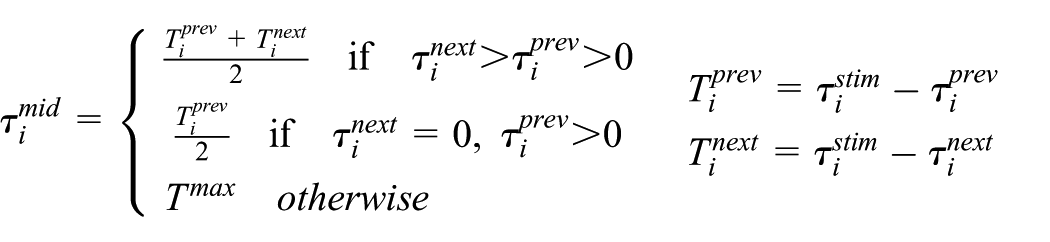
It is important to understand that in the randomization-based formula, the sensor node

Message broadcast timing and offset in the randomization-based algorithm: (a) level and (b) time.
Figure 5 depicts the pseudocode of the randomization-based algorithm and offset

Pseudocode of the randomization-based algorithm.
Additionally, even if the receipt of the message satisfies
RTWPCO mechanism design
In this article, RTWPCO model was classified into two parts. First part involves the use of phase-locking TWPCO that is related to sensor nodes, which was discovered in the flashing synchronization behavior of fireflies, which requires the sensor node to transmit the data packet to the base station or sink during transmission. The second part is using random method on anti-phase of the PCO model that uses the TDMA protocol in order to minimize the high power utilization in the network to get better the data gathering of the sensor nodes during transmitting.
Multiple factors were classified into several varied categories that are the sensor node, the method, the energy model, the CSMA/CA model, and the equation. The sensor node factors are the packet phase size, the packet header size, the data packet size, and the maximum number of nodes. The methods used in the developed simulator are built using Java programming language running on Microsoft Windows 7 Home Premium 64-bit edition. The energy model factors for MICAz 29 are the initial energy, the transmit power, the receive power, the idle power, the sleep power, and the transmit data rate. The CSMA/CA factors 30 are presented in Table 2. Finally, the notations factors are presented in Table 1.
Specification of notations.

CSMA/CA: carrier-sense multiple access with collision avoidance.
A fundamental sensor node for the base station or the root node and surrounding sensor nodes of the recommended methods in the sender were generated and deployed. These nodes were deployed with the intention to the width (Y) and the height (X) of deployment area based on uniform random distribution between 0.0 and 3.0, which is offered by the Java programming language. The generated sensor nodes were then represented by X, Y values (i.e. two-dimensional (2D) location within the deployment area), the transmission range value, and the initial energy value. For estimation, the proposed mechanism utilizes a WSN. After generating the nodes, it was crucial to figure out the location of the radio range by utilizing the following equation function of distance7,21

It is important to validate that all sensor node packets in the same radio range with the value of 50 in order to allow for the sensor nodes packet to be recorded. All vital parameters for the sensor node packet must be programmed, particularly the parameters of CSMA/CA model parameters of ZigBee 802.15.4 as presented in Table 2. 29
Parameters of CSMA/CA.

CSMA/CA: carrier-sense multiple access with collision avoidance; CSMA: carrier-sense multiple access.
Figure 6 semantically illustrates that the sensors are deployed randomly with the restriction of height, X = 100 m and width Y = 100 m of the deployment field while the base station is placed at the center X = 50 m*Y = 50 m. In addition, sensor nodes are deployed randomly with no prior assumptions regarding the connectivity and the position.
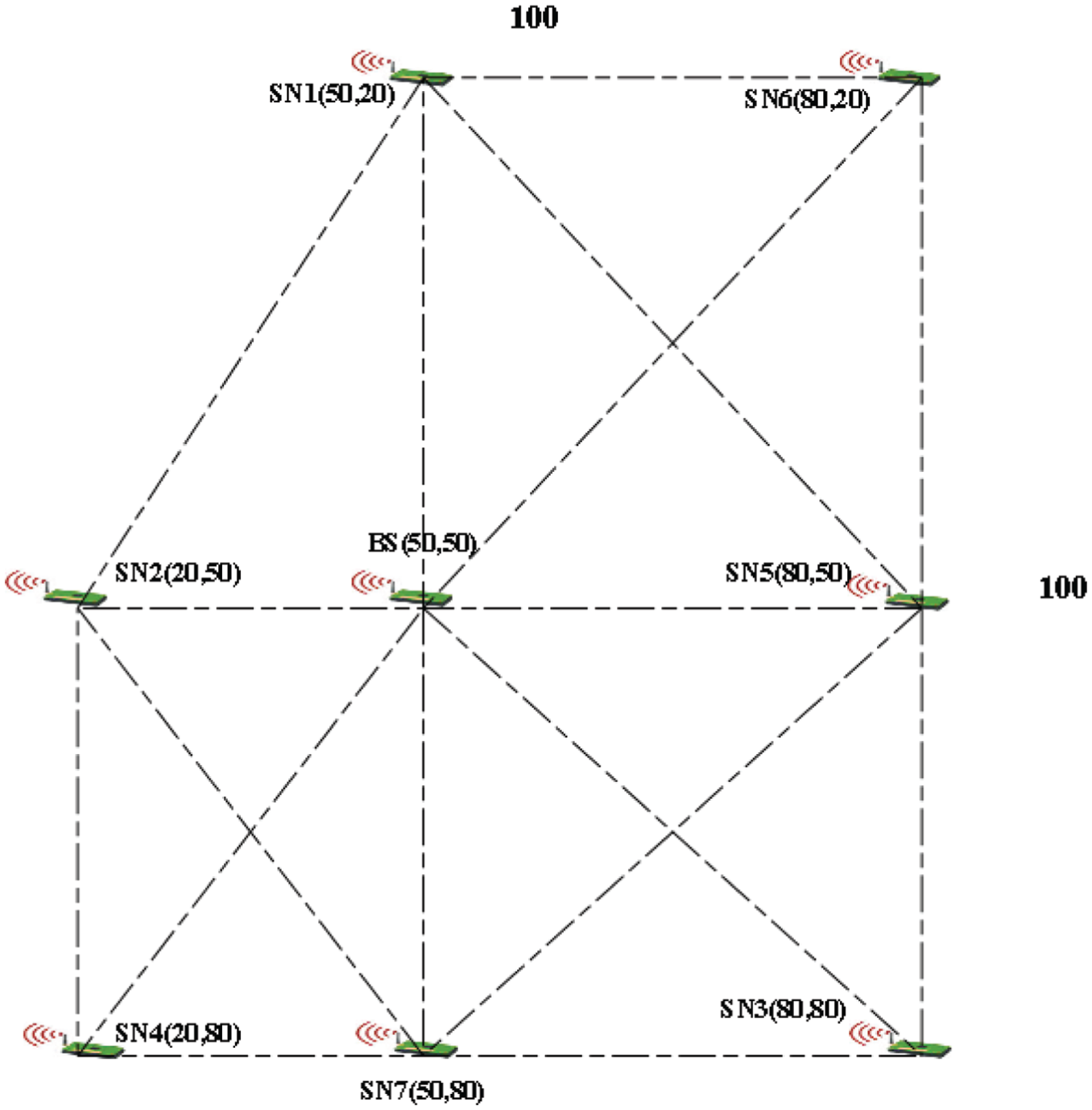
Generate and deploy the sensor node and base station.
This article mainly focuses on the aspect of naming the mechanism of energy consumption operation, transmitting operation, and receiving operation:7,21
Energy consumption operation.
Energy consumption event in WSN9,10,31 has sleep, idle, transmit, and receive modes, which are mainly attributed to the radio system in active mode. The energy consumed in transmit and receive modes are large compared to sleep and idle modes.
(a) Sleep mode

where
(b) Idle mode

where
(c) Transmit mode

where
(d) Receive mode:
The receive power can be classified into listening and receiving.
Listening

where
Receiving

where
2. Transmitting operation.
Sensor node behavior refers to the performance of the sent message after a series of cycle and when the nodes become stable. Previously, we paragraph mentioned that the performance of a sensor node
(a) Wake-up.
The sensor node
(b) Message reception from downstream nodes.
When the message is obtained from its downstream node
(c) Message reception from same hop nodes.
When a message is obtained from another node
(d) Message transmission.
Following the phase
(e) Message reception from upstream nodes.
The node
3. Receiving operation.
While waiting for the message to arrive and in fulfilling the condition of


where

where

Performance evaluation of RTWPCO
In this study, an observation and an evaluation of the simulation experimental results were conducted for the purpose of assessing the performance under numerous WSN environments. According to the experimental results obtained, our proposed mechanism plays a crucial role in improving energy efficiency as well as data gathering. These particular improvements achieved by the RTWPCO mechanism are resulted from the process of adapting to the quality evaluation of the functions, thus further assisting the process of improving the accuracy of the firefly based on the formula of the PCO. 21 In verifying the RTWPCO mechanism, the results of the experiments were compared to those obtained through the TWPCO mechanism 8 and PCO mechanism. In the following part, the experimental setup and the evaluation of the accuracy and results of the RTWPCO mechanism are further clarified.
Simulation environment
The suggested RTWPCO mechanism was replicated by setting up various sensor nodes. The reproduction of the experiments was carried out with a laptop (Intel CoreTM
Parameters setup.

Evaluation of the performance metrics
This section is concerned with the calculation and benchmarking of the performance metrics of the proposed mechanism using the similar metrics for other mechanisms. Similar to the other mechanisms of energy efficient, the performance of our RTWPCO mechanism was measured in relation to two significant effects: the effect of the number of sensor nodes and the effect of data packet size. Our mechanism mainly aims at updating the system performance through the reduction of the consumed energy and extension of the network lifespan. The metrics of the performance discussed are the data gathering ratio and the energy efficiency ratio.
Data gathering ratio
The data gathering ratio is described as the ratio of the overall sensor node data collected at the sink per cycle. This ratio is calculated as follows

where n is described as the number of sensor nodes in the network, while
Energy efficiency ratio
The energy efficiency ratio refers to the ratio of the overall consumption of energy to the number of packets, which are accepted by the core node. This particular ratio is measured in the following manner

where n expresses the number of sensor nodes in the network, ToEnc(i) is the total energy consumption for each sensor node i, and
Discussion of experimental results
The main preliminary outcomes of this study obtained by comparing the efficiency of the proposed RTWPCO mechanism to the TWPCO and PCO mechanisms are reviewed. 8 The outcomes are centered on two main facets: increasing the number of nodes from 10 to 100 sensor nodes and increasing the data packet size from 8 to 800 bits in the transmission state due to the packet transmission based application requirements as shown in Figures 7–10. In this case, the proposed formula presents better behaviors in terms of data collection and energy conservation compared to the TWPCO and PCO formulas. With the results shown, the application of mathematical and biological models of the RTWPCO mechanism to WSN provided evidence of the suitability and strength of this mechanism.

Energy efficiency ratio based on number of nodes in the transmission state of RTWPCO mechanism.

Data gathering ratio based on number of nodes in the transmission state of RTWPCO mechanism.

Energy efficiency ratio based on data packet size in the transmission state of RTWPCO mechanism.
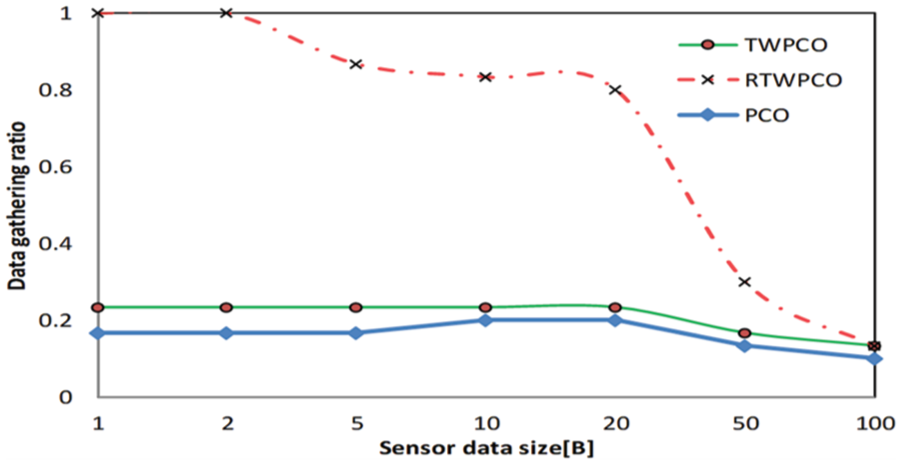
Data gathering ratio based on data packet size in the transmission state of RTWPCO mechanism.
In Figure 7, the TWPCO model at nodes 90 and 100 consumed 4.13808 and 5.27089 (m Joule) of energy, respectively, whereas the recommended RTWPCO mechanism only dominated about 1.78087 and 2.30856 (m Joule). Hence, it is demonstrated that the suggested model reduced the energy efficiency up to 48% compared to the TWPCO and PCO models for every node. As a result, the ratio of consumed energy achieved through the RTWPCO mechanism is approximately less than the TWPCO and PCO mechanisms. This particular outcome acts as one of the inputs to the proposed mechanism reported in this study. Meanwhile, the improvement is the result of various categories of the levels of nodes.
Similarly, Figure 8 shows that the collection of data reduced or declined, while the amount of sensor nodes became greater in both mechanisms. In the process of increasing the number of sensor nodes from 10 to 100 nodes, the ratio of data collection of the RTWPCO mechanism tended to reduce when the number of sensor nodes reached above 40, which is believed to be the effect of the simulation results. When the RTWPCO, TWPCO, and PCO mechanisms are evaluated, the ratio of data collection of the RTWPCO mechanism is 70% greater due to the beneficial methods provided by the proposed mechanism. Furthermore, the ratio of data collection of the RTWPCO mechanism is approximately 100% when the number of sensor nodes was below 40, which is considered as one of the contributions of the proposed mechanism resulted by the classifications of the levels of nodes. By contrast, the packet data size of the RTWPCO mechanism seemed to be greater compared to the TWPCO and PCO mechanisms due to the presence of broadcast timing information of the packet data.
The data collection ratio and energy efficiency ratio based on the number of sensor nodes in the transmission state in the RTWPCO mechanism obtained superior results to counteract high energy and lost data based on the application requirements of WSN. This implies that our proposed mechanism tolerates the increasing number of received nodes.
As presented in Figure 9, the results of the suggested RTWPCO mechanism are compared to the TWPCO and PCO mechanisms, particularly on the total energy usage of the nodes according to the data packet size when the number of sensor node is equal to 30. It is clear that the data packet size of sensor 100B seemed to consume a huge amount of energy compared to the rest such as 50B during the transmission, thus causing faster energy drain. Meanwhile, the suggested RTWPCO mechanism spread the large data packet size to the high energy level (EL) nodes instead of the critical nodes. It makes the amount of energy used decreased by the data packet size in sensors 50B and 100B up to 15% and 55%, respectively. Therefore, it can be concluded that the consumed energy ratio of the RTWPCO mechanism is approximately less than the TWPCO and PCO for all data packet sizes due to the presence of greater amount of received packets in the TWPCO and PCO mechanisms that makes it more effective.
As presented in Figure 10, the outcomes of the suggested RTWPCO mechanism are compared to the TWPCO and PCO mechanisms in terms of the overall data collection of the nodes based on the data packet size, particularly when the number of sensor node is equal to 30. Apart from that, it was also observed that the data gathering reduced in both mechanisms when the data packet size was bigger. With the increase in the data packet size of sensor nodes from 8 to 800 bits, the scale of data gathering of the RTWPCO mechanism was found to be decreasing when the data packet size was greater than 2B. When the RTWPCO, TWPCO, and PCO mechanisms were evaluated, the data gathering ratio of the RTWPCO mechanism counted for 68% more than the TWPCO and PCO mechanisms. Moreover, the data gathering ratio of the RTWPCO mechanism reached approximately 100% when the data packet size was below 2B. Based on the results, the RTWPCO mechanism in data gathering ratio was as equal as TWPCO mechanism when exceeded 100B. This equal ratio of data gathering achieved by the two mechanisms is attributed to the limited memory of sensor nodes.
Conclusion
This article presented an RTWPCO mechanism, which is a self-organizing technique for energy-efficient sensor networks adapted from firefly synchronization. The designed RTWPCO classified into two stages. First stage involved the use of phase-locking traveling wave pulse-coupled, which requires the sensor node to transmit the data packet to the base station during transmission state. The second stage is using random method on anti-phase of the PCO model that uses the TDMA protocol in order to minimize the high power utilization in the network to get better the data gathering of the sensor nodes during data transmitting. From the simulation results, the proposed RTWPCO showed a better performance than the TWPCO and PCO, which reduced the consumption of power inside the network resulting to expand the lifetime of the whole WSN. Moreover, this mechanism decreasing the number of the dropped data led to increasing the data gathering ratio, thus enabling the proposed model to show higher reliability and energy efficiency in WSN.
Footnotes
Handling Editor: Seokcheon Lee
Declaration of conflicting interests
The author(s) declared no potential conflicts of interest with respect to the research, authorship, and/or publication of this article.
Funding
The author(s) disclosed receipt of the following financial support for the research, authorship, and/or publication of this article: This work was supported by Fundamental Research Grant mechanism (FRGS) UPM-FRGS-08-02-13-1364FR.