




Abstract
Bullying is an adverse workplace phenomenon that requires serious attention by leaders and managers. Drawing upon Social Identity Theory, Optimal Distinctiveness Theory, and Victim Precipitation Theory, this study investigates how inclusive leadership is associated with workplace bullying (WB). It also examines the mediating role of psychological safety and self-esteem as serial mediators in this relationship. Additionally, the moderating role of embeddedness on the link between inclusive leadership and WB is explored. The study used a two-wave time-lagged survey completed by 226 full-time employees. The survey captured employees’ perceptions about themselves, their work environment, and their line managers. Study hypotheses were tested through structural equation modeling. Study findings revealed that inclusive leadership is negatively related to WB. We also found support for the serial mediation of psychological safety and self-esteem in the link between inclusive leadership and WB. Our study also demonstrates that the negative relationship between inclusive leadership and WB is weaker for employees with high embeddedness, thereby uncovering the less explored dark side of embeddedness.
Introduction
Workplace bullying (WB) is a prevalent phenomenon in organizations that has serious impacts on employees’ well-being. Therefore, it requires a better understanding of its antecedents and mechanisms to help individuals and organizations (Feijó et al., 2019). WB occurs where a person is repeatedly, and over a period of time, exposed to abuse, harassment, offenses, or social exclusion placing the individual in an unequal position, unable to defend themselves from unethical behavior (Einarsen et al., 2011; Nielsen et al., 2010).
WB in any form entails detrimental consequences for individuals, groups, organizations, and society overall (Omari, 2007; Samnani & Singh, 2013). It has been suggested that even fairly low rates of WB require serious attention due to its adverse effects (Einarsen et al., 2011). Due to the extreme impact of WB on individuals and organizations, prior research has investigated several possible reasons for occurrences of WB including envy, competition, victim's personality, aggressor's uncertainty, low moral standards and culture, organizational, work-related and personal factors, as well as leadership style (Bulutlar & Öz, 2009; Zapf, 1999). Among these, employees’ dissatisfaction with leadership style has been found to be one of the most crucial organizational factors associated with WB (Einarsen et al., 1994). This indicates that leadership has the potential to minimize WB if it provides a quality work environment, determines acceptable behavior and empowers and inspires all employees regardless of their background (Laschinger et al., 2012; O’Moore & Lynch, 2007).
Additionally, bullying literature posits that self-esteem is one of the key factors in organizations that could hinder or provoke bullying behaviors. Specifically, people with low self-esteem are likely to be targets of WB because others perceive them as weak and unable to defend themselves (Matthiesen & Einarsen, 2001; Samnani & Singh, 2016). Also, the occurrence of WB is more evident in diverse teams (Salin, 2021). Therefore, inclusive leadership is believed to potentially mitigate bullying incidents because it promotes and enhances the self-esteem of all employees regardless of their backgrounds. Inclusive leaders exhibit openness, accessibility, and availability in their interactions with followers (Carmeli et al., 2010) and promote employees’ uniqueness (self-esteem) and sense of belongingness to the organization, which are crucial to create a psychologically safe environment to minimize the prevalence of bullying. Inclusive leaders encourage members’ perceptions of belongingness, thereby nurturing the contribution of group members’ uniqueness (self-esteem) to achieve a positive group outcome (Randel et al., 2018).
Inclusive leadership is distinct from other leadership styles because it focuses on empowering all employees, regardless of their backgrounds, to feel valued and respected for their unique contributions (e.g., D’Cruz et al., 2016). Inclusive leaders do this by promoting employees’ sense of uniqueness or self-esteem as well as a sense of belongingness to feel they belong to their workgroup and provide unique contributions. Therefore, inclusive leaders play a crucial role in facilitating the effective functioning of diverse groups, which is different from other forms of leadership (Randel et al., 2018). This is specifically crucial because the occurrence of WB is more prevalent in diverse groups (Salin, 2021).
Despite the cumulative scholarly and practical interest in understanding and preventing the occurrence of WB, there remain several considerable gaps in our knowledge of this important phenomenon that require attention. Particularly, the association between inclusive leadership and WB, the mechanism through which inclusive leadership is associated with WB, and the boundary conditions of the mentioned relationship have not yet been empirically tested in the literature. As such, the primary aim of this study is to focus on the identified research lacunas and provide theoretical and practical contributions. The current study contributes to the WB and leadership literature by examining whether and how inclusive leadership is associated with WB. Specifically, we investigate the serial mediation effects of psychological safety and self-esteem in the association between inclusive leadership and WB. We also explore the moderating effect of embeddedness on the relationship between inclusive leadership and WB.
The contributions of our study are threefold. First, we examine whether inclusive leadership is related to WB. Leaders who are inclusive could potentially be effective as they recognize and value group members’ contributions (Randel et al., 2018). Additionally, leaders in organizations have formal authority to establish, develop, define, and support rules and behaviors that employees should interact with one another, which is crucial to create a positive work environment and prevent any negative work behavior such as WB (Samnani, 2021). As Houghton et al. (2021) highlight, the type of leadership practiced in an organization plays a crucial role in promoting or reducing bullying behaviors. Leaders can directly and indirectly influence their employees by creating an inclusive work environment and if leaders are more inclusive in their behaviors, they can help employees experience more positive outcomes and fewer negative outcomes such as WB (Perry et al., 2021). As such, examining an unexplored nexus between inclusive leadership and the perception of WB is timely because it can provide both theoretical and practical contributions.
Second, the study offers unique theoretical contributions by investigating the role of psychological safety and self-esteem as serial mediators between inclusive leadership and WB. As such, we adopt Social Identity Theory (SIT; Tajfel & Turner, 1986), Optimal Distinctiveness Theory (ODT) (Brewer, 1991), and Victim Precipitation Theory (VPT; Elias, 1986) as a backdrop, to examine the possible mediating mechanisms, specifically through psychological safety and self-esteem. Self-esteem is an important component of SIT (Ellemers et al., 1999). According to Rubin and Hewstone (1998), intergroup behavior that improves in-group status will enhance the in-group members’ self-esteem who identify with their group. Similarly, ODT (Brewer, 1991) highlights the importance of belongingness and uniqueness (self-esteem) as human needs and VPT (Elias, 1986) elucidates that certain victim's behaviors such as low self-esteem (D’Cruz et al., 2016) can provoke bullying behaviors from other individuals, emphasizing the role of self-esteem as a vital variable for being a target of WB. Due to self-esteem being a core component in SIT, ODT, and VPT, it is measured as one of the mediators in our model. Specifically, we argue that inclusive leaders create a psychologically safe environment for employees to be valued and respected for their unique contributions that can satisfy their need for belongingness and uniqueness (Shore et al., 2011), and enhance their self-esteem (Baumeister et al., 2002). The inclusive behavior of a leader determines the inclusivity of the work unit climate and provides a psychologically safe environment for employees which will result in employees experiencing less sexual harassment and WB (Perry et al., 2020).
Third, our study provides a novel contribution to theory and practice by investigating the moderating effect of embeddedness on the relationship between inclusive leadership and WB. Job embeddedness refers to the degree of attachment an employee feels to the job as a result of organizational and community forces (Yao et al., 2004). Highly embedded employees feel connected to their job which can have a positive impact on employees and organizations (Lee et al., 2004). Some studies have, however, revealed the dark side of job embeddedness which can have a negative effect on employees and organizations (e.g., Burton, 2015; Greene et al., 2018). Considering job embeddedness as a double-edged sword that can have both positive and negative consequences, our study examines its role in determining the boundary condition of the association between inclusive leadership and WB.
Overall, the theoretical contributions of our study fall in the expanders category of theoretical contribution taxonomy according to Colquitt and Zapata-Phelan (2007). Specifically, expanders are the studies that are high in both theory building and theory testing. The theory-building aspect includes examining constructs, relationships, or processes that have not been explored before, while the theory-testing aspect includes grounding predictions with existing theory. Our study expands the literature by examining the novel relationships between inclusive leadership and WB, the mediating role of psychological safety and self-esteem, as well as the moderating role of embeddedness, constituting a high level of theory building according to Colquitt and Zapata-Phelan (2007). Moreover, we draw upon SIT, ODT, and VPT to delve into explaining the concepts, relationships and processes proposed in the study, and describe compelling logically interconnected arguments, which constitutes a high level of theory testing according to Colquitt and Zapata-Phelan (2007). This process is described as a true theory that goes beyond existing models and diagrams according to Sutton and Staw (1995).
Taken together, this study seeks to investigate how inclusive leadership can play an effective role in dampening WB, benefiting individuals, businesses, and society. Another important aim of this study is to demystify the mechanism through which inclusive leadership can minimize WB which is provides unique theoretical and practical contributions for academia and organizational management. Additionally, we investigate the boundary condition of the relationship between inclusive leadership and WB, using job embeddedness as a moderator.
Theoretical Backdrop
The study has used three theoretical lenses including SIT (Tajfel & Turner, 1986), ODT (Brewer, 1991), and VPT (Elias, 1986) as a backdrop to explain, inform and better understand the proposed hypothesized relationships in the study model. Specifically, SIT is utilized to explain the extent to which it is important for individuals to identify with their teams and groups because that can enhance their self-esteem (Ellemers et al., 1999). ODT is employed to justify why and how inclusive leadership can help individuals satisfy their need for belongingness and uniqueness (self-esteem; Brewer, 1991). VPT (Elias, 1986) is used to better understand why certain behaviors of victims such as low self-esteem can provoke bullying behaviors from other individuals. Collectively, the three theories help to explain and explore the phenomena in the study. The following subsections explain the relationship between inclusive leadership and WB, the mediating mechanism of such relationship through psychological safety and self-esteem and the moderating role of embeddedness in the relationship between inclusive leadership and WB.
Inclusive Leadership and WB
Inclusion has been defined as “the degree to which an employee perceives that he or she is an esteemed member of the work group through experiencing treatment that satisfies his or her needs for belongingness and uniqueness” (Shore et al., 2011, p. 1265). This definition emphasizes that inclusion refers to both belonginess and distinction. Valuing and utilizing belongingness and uniqueness helps to achieve long-term business effectiveness (Sugiyama et al., 2016). Inclusive leadership is a concept introduced by Nembhard and Edmondson (2006) and refers to leaders’ words and behaviors that welcome and appreciate contributions from employees. Inclusive leaders provide a supportive and safe environment in which employees can voice their opinions. Research has demonstrated various positive outcomes arising from inclusive leadership such as happiness at work (Jha et al., 2023), structural empowerment (Lu et al., 2023), green innovative service behavior (Asghar et al., 2023), meaningful work (Shafaei & Nejati, 2023), organizational identification (Naseer et al., 2023), thriving at work (Dahleez et al., 2023), and resilience capacity (Gong et al., 2023), to name a few.
According to Randel et al. (2018), there are two key practices that inclusive leaders genuinely display—facilitating group membership (belongingness or relatedness) and encouraging group members’ unique contributions (uniqueness) to achieve positive group outcomes. Inclusive leaders can achieve this by involving employees in decision making and demonstrating openness, availability, and flexibility (Carmeli et al., 2010). It has been argued that intrapersonal experiences of inclusion resulting from belonging and uniqueness can lead to enhanced employee well-being (Nishii & Leroy, 2022). In contrast, both poor psychologically safe environments (Escartín et al., 2013; Law et al., 2011), and absence of supportive and fair leadership (Hauge et al., 2011; Skogstad et al., 2011) influence WB. As leadership reflects the intention of the organization and work climate, it can play a pivotal role in this regard. The other crucial factor that can stimulate bullying behaviors is the power imbalance (Samnani & Singh, 2016). This affects employees from minority groups in particular as imbalance reduces the power of minority groups, leading to more bullying. More importantly, employees with lower self-esteem are viewed as vulnerable by others. A poor work climate of power imbalance can increase the risk of WB (Tepper et al., 2006). Thus, to reduce WB of minorities and employees with low self-esteem, it is paramount to create a psychologically safe environment and enhance their sense of uniqueness.
Viewed through the lens of SIT (Tajfel, 1979), individuals gain part of their identity through the groups to which they belong (Scheepers & Ellemers, 2019, p. 25). SIT is a perspective that integrates psychology about the self with group psychology (Scheepers & Ellemers, 2019), and explains that individuals define their social identity through classification and comparison (Hogg, 2005). The insights offered by SIT can help in understanding the feelings, thoughts, and behaviors of employees working in teams and organizations (Ashforth & Kreiner, 1999; Haslam & Ellemers, 2005). Social identity plays a role in leadership effectiveness, motivation and diversity management (Scheepers & Ellemers, 2019). An intervention widely applied to improve intergroup relations is the creation of a mutual in-group identity comprising the in-group as well as the out-group (Scheepers & Ellemers, 2019), highlighting the way in which a common identity can improve relations amongst individuals.
Leaders who conduct themselves more inclusively are anticipated to have employees who experience “more positive outcomes and fewer negative outcomes, including sexual harassment and other forms of mistreatment” (Perry et al., 2020, p. 1). Furthermore, prior research has found significant support for the relationship between supportive leadership behaviors and WB in that leaders who create a psychologically safe work environment and care for their subordinates can reduce the perception of WB (Francioli et al., 2018; Nielsen, 2013). Consequently, we formulate the following hypothesis:
Serial Mediation: Psychological Safety and Self-Esteem as Mediators
Inclusive leaders invite and appreciate employees’ contributions directly and positively influence employees’ psychological safety, thereby leading to better engagement and work performance (Nembhard & Edmondson, 2006). Psychological safety has been defined as a common belief amongst individuals that it is safe to engage in social risk-taking at work (Edmondson & Lei, 2014; Edmondson et al., 2007). Edmondson and Lei (2014) argue that the construct of psychological safety has developed into a pragmatically and theoretically significant phenomenon in recent years due to the increased importance of innovation and learning for organizations in today's business environment.
Psychological safety is ultimately about decreasing interpersonal risk, which coexists with change and uncertainty (Schein & Bennis, 1965). In a psychologically safe work environment, employees have positive intentions toward one another, can engage in constructive conflict, trust one another to not reject them for saying what they think and feel that it is safe to take risks and experiment (Edmondson, 1999). Moreover, psychological safety allows individuals to focus on collective goals and the avoidance of problems, rather than self-protection (Schein, 1992). Inclusive leaders provide a psychologically safe environment for employees to express their unique ideas and feel that they are esteemed members of the work group by experiencing treatment that satisfies their need for belongingness and uniqueness (Randel et al., 2018; Shore et al., 2011). Abdel-Khalek (2016) suggested that high self-esteem arises when individuals find themselves different from others and have a positive sense of uniqueness about themselves, indicating a positive correlation between self-esteem and uniqueness. In addition, previous research (Şimşek & Yalınçetin, 2010) has demonstrated a high correlation between self-esteem and sense of uniqueness. Therefore, self-esteem is used as a proxy for uniqueness in the current study.
Looking through the lens of SIT (Tajfel & Turner, 1986), inclusive leaders facilitate employees’ group identification, while retaining their self-esteem. Hence, inclusive leadership is advantageous for diverse teams by focusing on respecting and involving women and minorities, while valuing all the members for their unique perspectives, attributes, and contributions, leading to higher performance.
Coupled with SIT, ODT (Brewer, 1991) highlights that both belongingness and uniqueness are fundamental human needs. ODT posits that a vigorous tension exists between opposing drives for inclusiveness and distinctiveness (Hornsey & Hogg, 1999) and that social identities are selected and activated in accordance with the way in which they construct a balance between the needs for inclusion and differentiation in a specific social context (Brewer, 2001). ODT was first identified by Brewer (1991) and argues that in a very inclusive group individuals can engage in an effort to create subgroup distinctiveness and vice versa. The two opposing motives result in an evolving characteristic—“the capacity for social identification with distinctive groups that satisfy both needs simultaneously” (Leonardelli et al., 2010, p. 66). Leonardelli et al. (2010) suggested that ODT differs from other motivational theories in that the balance between inclusion and differentiation is attained at the group level, rather than at the individual level, through “identification with groups that are both sufficiently inclusive and sufficiently distinct to meet both needs simultaneously” (Leonardelli et al., 2010, p. 67). An individual's need for deindividuation is met in-group, while their distinctiveness need is met through inter-group comparisons (Brewer, 1991). Inclusive leadership is therefore, the perfect style of leadership for diverse groups and homogenous work groups (Shore et al., 2011).
Humans have a basic need for positive self-esteem (Turner, 1982; Turner et al., 1979), which motivates group behavior and social identification with the latter satisfying the need for self-esteem (Abrams & Hogg, 1988). Ashforth and Mael (1989) concur and posit that, through the lens of SIT, individuals identify with social categories in part to improve self-esteem. Exclusion and rejection have clearly been found to depreciate employees’ self-esteem (Leary, 2009; Leary et al., 1995) suggesting that a sense of inclusion and working in a psychologically safe environment may increase employees’ self-esteem. Nembhard and Edmondson (2006) found that leader inclusiveness and psychological safety facilitated cross-disciplinary groups to weaken the hindering effects of status disparities and allowed members to work together to improve processes. Team leaders’ behaviors have been found to affect the internal dynamics of a team, including climate (Edmondson, 1999; Hult et al., 2000) affecting self-esteem (Lambert et al., 2013).
Self-esteem is one of the key contributing factors to WB in organizations. Particularly, individuals with low self-esteem tend to experience WB compared to individuals with higher self-esteem (Einarsen et al., 2011). Additionally, people with low self-esteem and from vulnerable groups (minorities and women) are targets as they may be perceived as weak/vulnerable and unable to defend themselves (Matthiesen & Einarsen, 2001; Samnani & Singh, 2016). Targets frequently prompt bullying behavior unconsciously and unintentionally (Tepper et al., 2006) which can be explained through the perspective of VPT (Elias, 1986). VPT suggests that certain victim behaviors, traits, and characteristics can play a role in provoking mistreatment such as bullying from others (Cortina et al., 2018; Sliter et al., 2015). Aquino (2000) identified negative affectivity as a factor associated with victim precipitation. Here, individuals who present themselves as distressed, anxious, and dissatisfied, may, as a result, be considered fitting targets for exploitation by abusers (Tepper et al., 2006).
A crucial factor that could minimize the perception of bullying is the quality of the work environment that fosters employees’ belongingness and self-esteem (Shore et al., 2011). According to Einarsen et al. (2011) a perceived imbalance of power between the victim and the perpetrator is a key facet of WB. To this end, a leader who indirectly or directly encourages power discrepancies between employees may enable WB. This situation has been referred to as a “work climate of power imbalance” (Samnani & Singh, 2016, p. 543). An inclusive leader, in contrast, creates a psychologically safe environment where every employee is valued and respected for their unique contributions, thereby equalizing such power imbalances, which is likely to result in increased levels of self-esteem, and reduced perception of WB. Consequently, we hypothesize that:
The subhypotheses are as follows:
Job Embeddedness as a Moderator
The literature shows that WB is one of the major reasons for employees leaving their organizations (De Clercq et al., 2021), while job embeddedness is one of the underlying reasons for employees staying (Sekiguchi et al., 2008). Job embeddedness refers to the “degree of attachment workers feel to their job as a result of organizational and community forces (Dalal et al., 2009, p. 58)”. Specifically, job embeddedness is described as “a ‘web’ of organizational and community ‘connections’ that tie employees to their job” (Mitchell et al., 2001, p. 1; Singh, 2019). The totality of investments, links, and cognitive and affective appraisals is theorized to determine the level of embeddedness with an increase in these factors making it harder for employees to leave the organization (Sekiguchi et al., 2008).
While management scholars have historically viewed higher levels of job embeddedness positively, this does not always result in positive organizational outcomes (Marasi et al., 2016) with an increasing number of researchers focusing on the dark side of embeddedness (Holtom et al., 2012; Hom et al., 2012). The term embeddedness alludes to a sense of “stuckness” or “inertia” where employees find themselves trapped in a situation from which it is difficult to break away (Allen et al., 2016, p. 1671). Employees who wish to leave the organization, but are unable to do so due to their high level of embeddedness, can suffer from frustration potentially leading to an increase in workplace deviance (Ng & Feldman, 2010; Sekiguchi et al., 2008). Workplace deviance refers to employees' voluntary behaviors that violate organizational policies, norms, or rules, threatening the well-being of other employees and the organization (Robinson & Bennett, 1995). Additionally, when experiencing WB at their organization, highly embedded employees reported more aggressive behavior toward family, friends, and coworkers (Burton, 2015). Therefore, Burton (2015) concluded that experiencing WB for a highly embedded employee could have detrimental effects within the organization and beyond, on family and friends. On the other hand, job embeddedness has been shown to prevent employees from responding to abusive behaviors. According to a study by Tepper et al. (2009), employees only would respond to their supervisor's abusive behavior and speak up when they were planning to leave the organization soon.
Prior research has supported both positive and negative role of job embeddedness as a moderator on various relationships involving employee outcomes (e.g., Jiang et al., 2012; Treuren, 2019; Treuren & Fein, 2018). For instance, Lee et al. (2004) found that job embeddedness accentuated the relationship between on- and off-the-job embeddedness with job performance and organizational citizenship behaviors. Job embeddedness was found to strengthen the link between leadership membership exchange with task performance and organizational citizenship behavior (Sekiguchi et al., 2008). Burton (2015), however, found a contrasting effect of job embeddedness as a moderator. Specifically, job embeddedness strengthened the association between WB and subsequent workplace aggression. Job embeddedness was found to be a significant moderator in the organizational trust and workplace deviance relationship (Marasi et al., 2016) with respondents experiencing low organizational trust and higher job embeddedness engaged in more deviant behavior than respondents experiencing low organizational trust and low embeddedness. Singh (2019) found an undesirable moderating effect of job embeddedness on the relationship between organizational support and trust with workplace deviance where, higher embeddedness weakened the desirable relationships between support, trust and deviance.
Therefore, job embeddedness could play both a positive and a negative role in adverse work situations (Qian et al., 2019). The justification is that when employees experience negative work conditions or interactions, they might leave the organization but employees who feel they are embedded or stuck and have little opportunity to leave the organizations might engage in workplace deviance (Marasi et al., 2016). Also, as stated earlier, leadership style could play a role in either stimulating or minimizing bullying behaviors in organizations (Houghton et al., 2021) and inclusive leaders can help their employees experience more positive outcomes and fewer negative outcomes such as WB (Perry et al., 2021). Therefore, it is worth exploring whether the relationship between inclusive leadership and perceptions of WB would be different for high versus low-embedded employees by proposing the following hypothesis:
Figure 1 depicts the hypothesized research model.
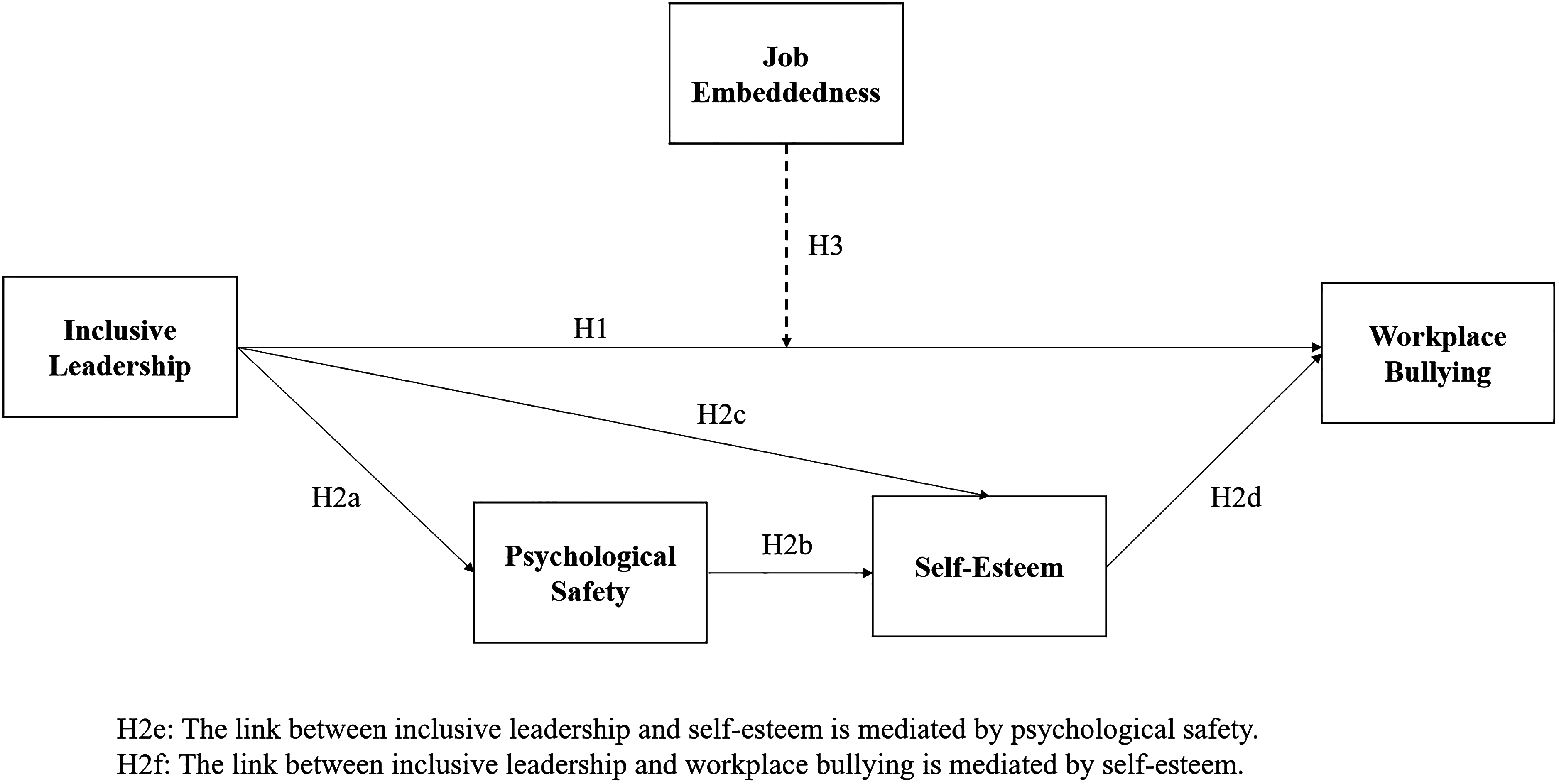
Research model.
Method
Sample and Procedure
Following ethics approvals, we recruited full-time employees in Australia through the Qualtrics Panel Management. This is a common data collection practice in management discipline and yields valid and reliable responses (see, for example, Ng et al., 2019). We assured respondents about the confidential and anonymous treatment of the data. All respondents provided informed consent prior to completing the online survey. Data were collected at two points in time, two weeks apart, to separate the dependent variable (i.e., WB) and one of the mediators (i.e., psychological safety) from other variables. A priori power analysis using G*Power software determined the minimum required sample size for the study. Using the F test (Linear multiple regression: fixed model, R2 deviation from zero), the effect size of 0.33 (determined from projected Squared Multiple Correlation of .25), α err prob = .05, with the recommended statistical power of 80%, and the total number of predicators (maximum number of arrows going to the outcome variable including the control variables) being 7 in this study revealed a sample size of 51 would be sufficient (Faul et al., 2009). Following the recommendation by Beck (2013), the effect size f2 of the model in G*Power is determined as: f2 = the proportion of the variance explained by R2/(1 − R2). As this is a priori test, an estimation of R2 of 0.20 produced f2 of 0.25 which was entered into G*Power and the effect size calculated was 0.33.
In Time 1, 303 respondents completed the survey; they were invited to complete the second part of the survey after 2 weeks. This resulted in 226 complete responses collected in Time 2, representing a dropout rate of 25%. To ensure the number of responses was sufficient in providing the required statistical power, we also did a post hoc test in G*Power. Using the F test (Linear multiple regression: fixed model, R2 deviation from zero), the effect size of 0.33, α err prob = .05, the total number of responses of 226, and the total number of 7 predicators, revealed that the number of responses would provide a statistical power of 0.99 (Faul et al., 2009).
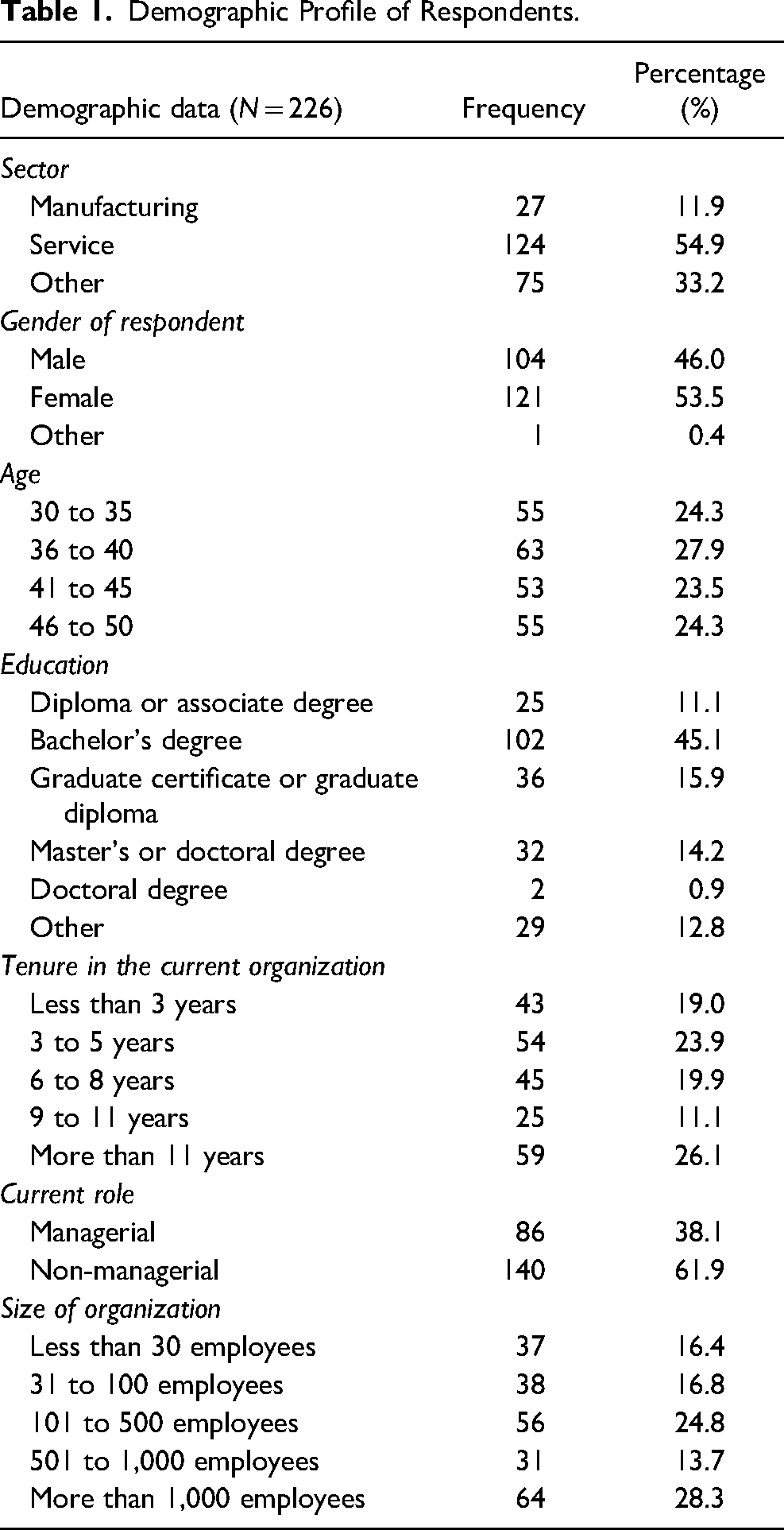
Respondents represent a broad range of occupations (both service and manufacturing), tenure levels, and organizations in Australia. Around 54% of the sample was female. Table 1 summarizes the demographic profile of respondents.
Demographic Profile of Respondents.
In addition to supporting the hypotheses using a quantitative approach, at the end of the survey, the study asked some open-ended questions to further elaborate on the characteristics of leadership in nonbullying work environments versus bullying environments, participants’ experiences of WB and possible causes for experiencing WB.
Common Method Bias
We controlled for common method bias (CMB) using both procedural and statistical controls. For the procedural remedy, we separated the measurement of the predictor and criterion variables in our study design using our two-wave time-lagged study design. As suggested by Podsakoff et al. (2003), this remedy lowers bias in the retrieval stage of the response process by removing the saliency of any contextual cues present in the measurement environment and lowering the respondent's ability and/or motivation to answer the survey by using previous answers. For statistical remedy, we applied the unmeasured latent method construct (ULMC) technique. ULMC detects CMB by creating a method effect construct which is an aggregate of all manifest variables in the study, with no unique observed indicators (Richardson et al., 2009) and comparing the model fit for the ULMC model with the baseline model. In our study, as the baseline model was found to have a better fit than the ULMC model, no statistical evidence of CMB was found. In addition, we performed Harman's (1976) single-factor test to detect any potential CMB in the sample by loading all measurement items into factor analysis and examining the unrotated factor solution to determine whether the majority of variance was caused by one factor (Podsakoff et al., 2003). The analysis revealed the majority of variance explained in the model by a single factor (42.53%) was less than the threshold value of 50%, indicating that CMB was not a critical issue.
Measurement Instruments
The measurement instruments were all adapted from the literature. These scales were employed in the study because they all had good reliability and validity reports in prior studies. All survey items, except for WB, were measured on a 5-point Likert scale, ranging from 1 (strongly disagree) to 5 (strongly agree) and loaded highly on their latent construct.
Time 1
We measured WB in Time 1, using the validated scale developed by Escartín et al. (2017) comprising 12 items. Items were measured using the frequency of exposure to negative behaviors (i.e., never, now and then, monthly, weekly, daily). Only eight items had sufficient loading in the current study and were retained for data analysis. The scale with eight items showed good reliability with a Cronbach's alpha of 0.940. It had a mean score of 1.501 and a standard deviation of 0.812. A sample item is “I have been excluded from the celebrations and social activities organized by my coworkers.” We also measured psychological safety in Time 1, using four items adapted from Edmondson (1999). The scale showed good reliability with a Cronbach's alpha of .825. It had a mean score of 3.457 and a standard deviation of 0.908. A sample item is “It is safe to take a risk in this organization.”
Time 2
We used the inclusive leadership scale by Zheng et al. (2017) which has six items to measure inclusive leadership in Time 2, 2 weeks after Time 1. We asked respondents to assess their direct manager using the items provided and assured them about the anonymity of their responses. The scale showed good reliability with a Cronbach's alpha of .932. It had a mean score of 3.847 and a standard deviation of 0.844. A sample item is “My supervisor/leader shows respect and recognition for others.” Organizational self-esteem was measured in Time 2 using six items adapted from Pierce et al. (1989). The scale showed good reliability with a Cronbach's alpha of .891. It had a mean score of 4.033 and a standard deviation of 0.670. A sample item is “I am valuable at my workplace.” Job embeddedness was measured in Time 2 using five items adapted from Ng and Feldman (2013). The scale showed good reliability with a Cronbach's alpha of 0.923. It had a mean score of 3.481 and a standard deviation of 0.989. A sample item is “I feel attached to this organization.”
Analysis and Results
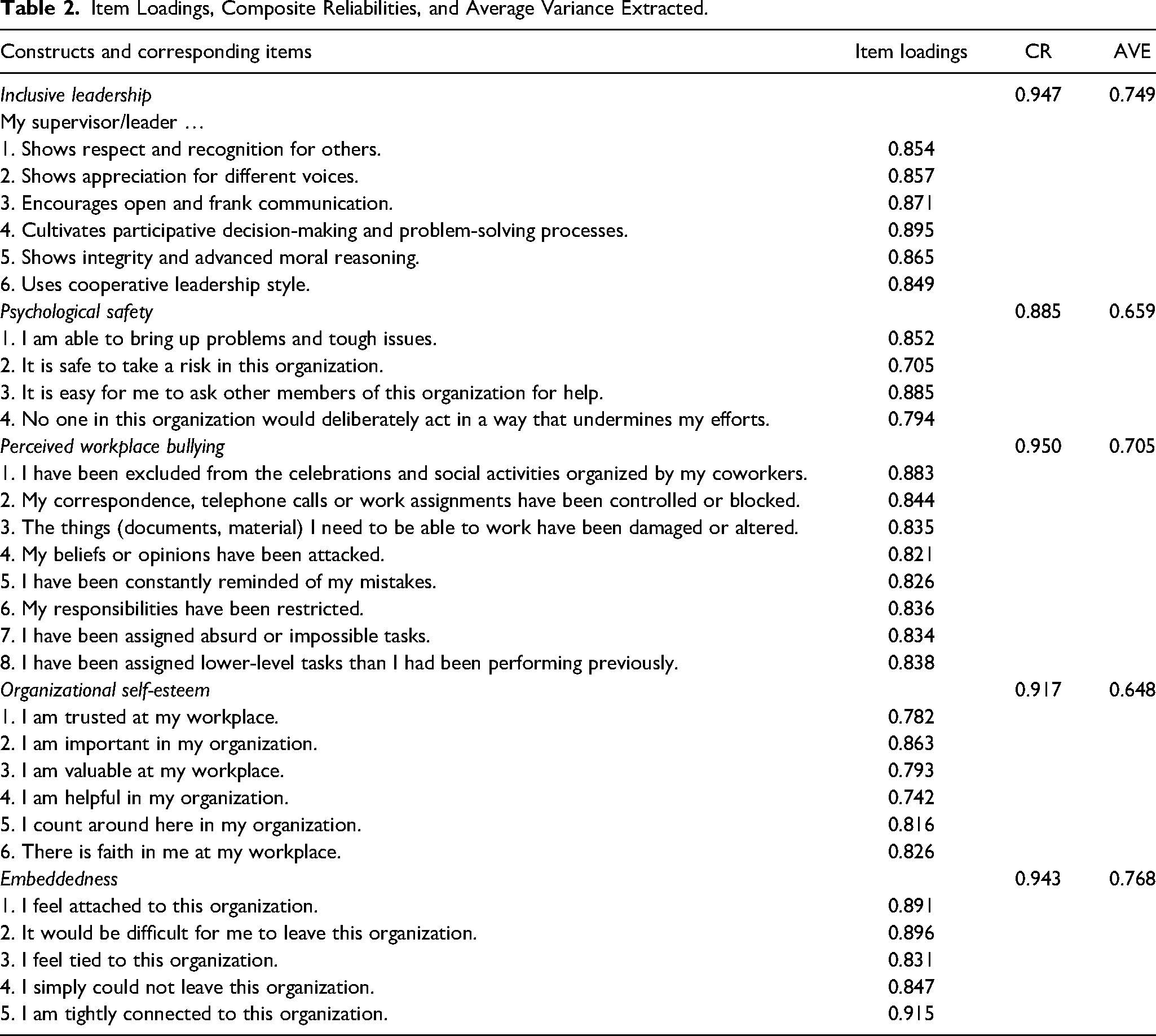
Study variables demonstrated acceptable loading, composite reliability, and average variance extracted (Table 2).
Item Loadings, Composite Reliabilities, and Average Variance Extracted.
We used the heterotrait-monotrait (HTMT) ratio method (Henseler et al., 2015) to evaluate the discriminant validity of the study constructs. This method was primarily developed to assess discriminant validity for variance-based SEM and is regarded as the efficient technique in assessing for such studies given the tendency of partial least squares SEM to overestimate factor loadings which can cause an increase in AVE values, making Fornell and Larcker's criterion less accurate (Voorhees et al., 2016). Table 3 reports the results of discriminant validity both through the HTMT method (above the diagonal element) and Fornell and Larcker criterion. Discriminant validity of constructs was established as the HTMT ratio was all below the ideal value of 0.85 (Henseler et al., 2015).
Discriminant Validity and Correlations Among Study Variables.
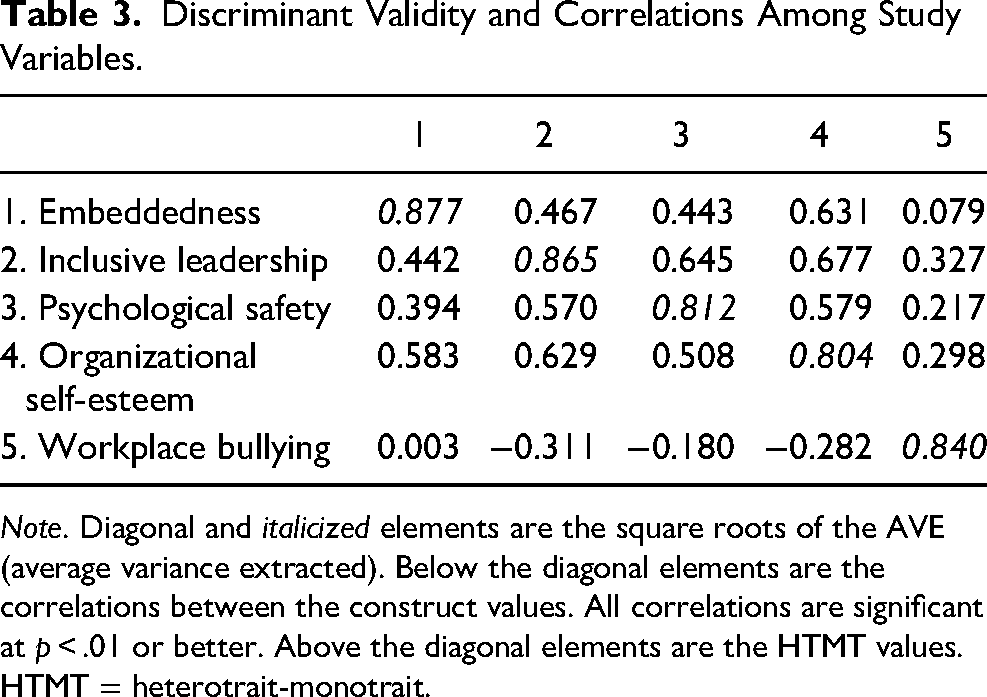
Note. Diagonal and italicized elements are the square roots of the AVE (average variance extracted). Below the diagonal elements are the correlations between the construct values. All correlations are significant at p < .01 or better. Above the diagonal elements are the HTMT values. HTMT = heterotrait-monotrait.
Upon demonstrating the convergent validity, discriminant validity, and reliability, and ensuring CMB was not a threat in our study, we tested our hypotheses using variance-based structural equation modeling (SEM) through SmartPLS. Our rationale for using variance-based SEM is the exploratory nature of this study which explores the association between two constructs which have been rarely examined in one study which represents a “theory-primitive” situation where a composite-based method of analysis is recommended (Wold, 1985, p. 589).
All study hypotheses were supported (Table 4). Inclusive leadership was found to be negatively associated with the perception of WB (CI: [−0.457, −0.132], β = −0.279, p < .001), supporting H1. The serial mediation path between inclusive leadership and WB via psychological safety and self-esteem was found to be negatively significant (CI: [−0.076, −0.008], β = −0.035, p < .04), supporting Hypothesis 2. Inclusive leadership was positively related to psychological safety CI: ([0.458, 0.677], β = 0.571, p < .001), supporting H2a. Psychological safety was positively related to self-esteem (CI: [0.086, 0.367], β = 0.223, p < .02), supporting H2b and was a mediator for the relationship between inclusive leadership and self-esteem (CI: [0.047, 0.221], β = 0.127, p < .004), supporting H2e. This study reveals that inclusive leadership is positively related to self-esteem (CI: [0.369, 0.643], β = 0.507, p < .000), supporting H2c, and self-esteem is negatively related to the perception of WB (CI: [−0.431, −0.109], β = −0.273, p < .001), supporting H2d. The meditation effect of self-esteem for the relationship between inclusive leadership and perception of WB is also significantly supported (CI: [−0.235, −0.054], β = −0.139, p < .003), supporting H2f. Overall, inclusive leadership has a significant and negative total effect on WB (Total effect β = −0.359, p < .000).
Results of the Structural Model Analysis.
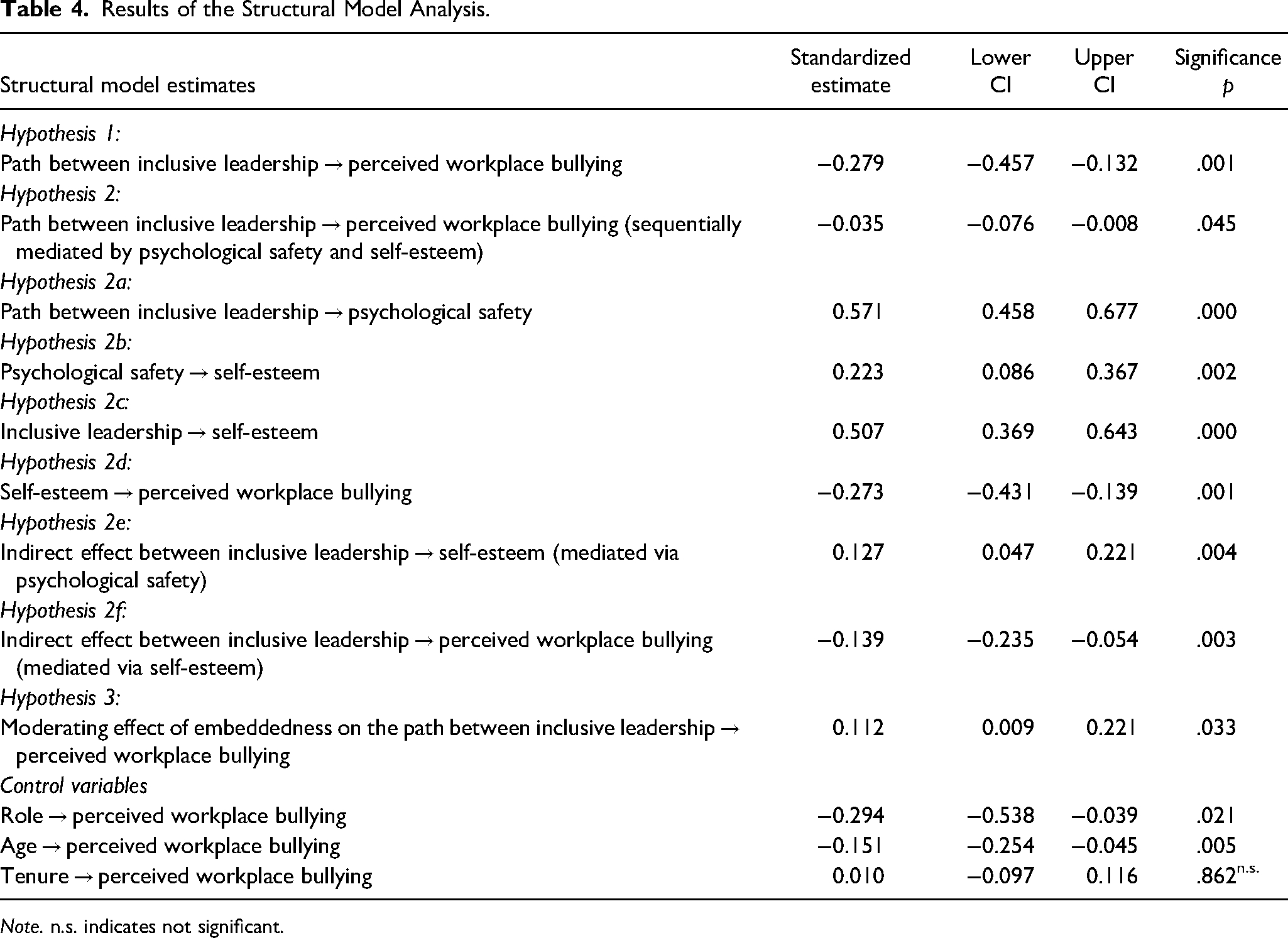
Note. n.s. indicates not significant.
Finally, job embeddedness was found to significantly moderate the relationship between inclusive leadership and perception of WB (CI: [0.009, 0.221], β = 0.112, p < .03), supporting H3. Our moderation analysis findings (Figure 2) reveal that the negative association of inclusive leadership and WB is accentuated when an employee does not feel “stuck” at work (i.e., high embeddedness).
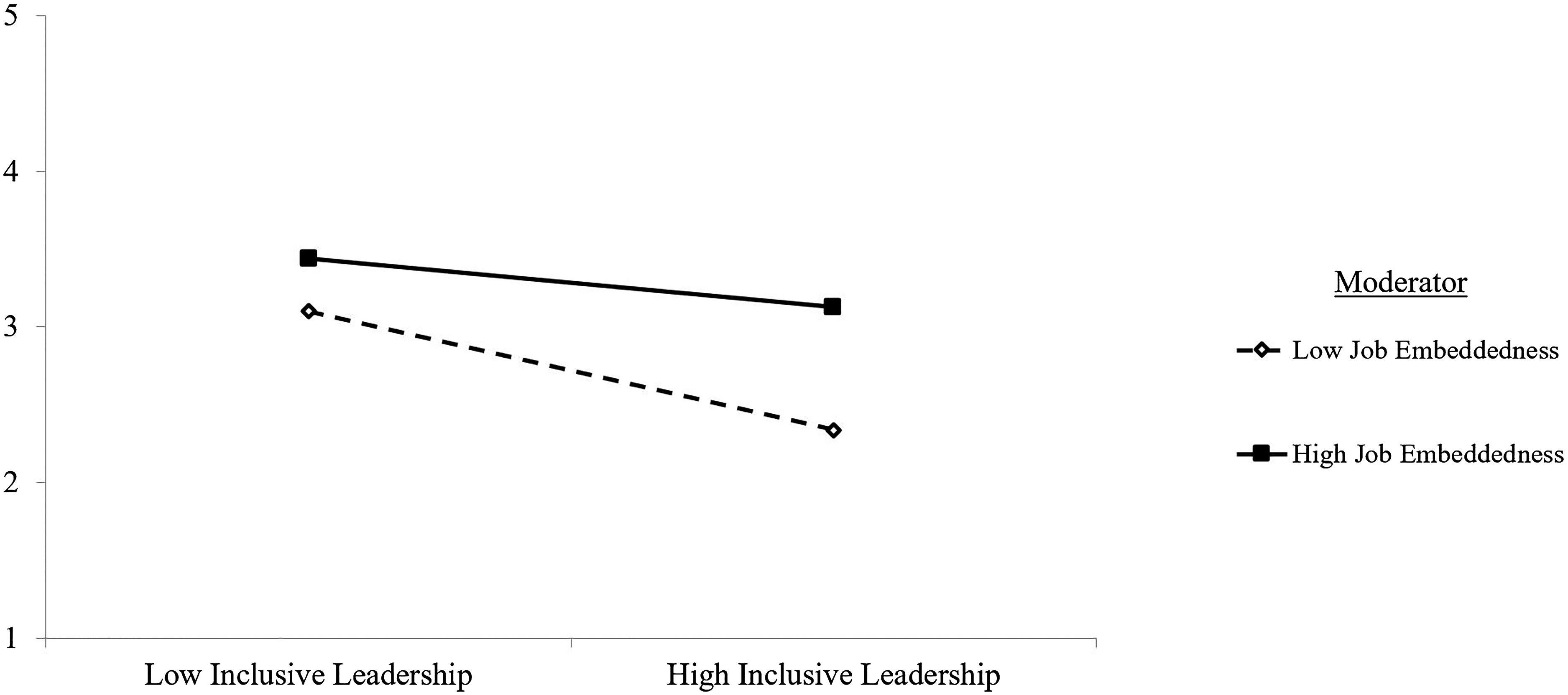
Moderation analysis.
In addition, to triangulate study findings, five open-ended questions were included in the online survey. The questions asked respondents to; (1) use up to five descriptors to provide a picture of their current workplace; (2) use five labels to describe the leadership in their immediate work area considering their line manager and the leadership in their organization as a whole; (3) whether they were bullied in their current organization; (4) the nature of bullying behavior and the reason why it took place; and (5) if anything was done to put a stop to these behaviors. Overall, 302 respondents provided answers to the abovementioned questions. We utilized a thematic analysis technique (Terry et al., 2017) to categorize the descriptors of bullying versus nonbullying work environment with a focus on leaders’ behaviors. The results of the thematic analysis show that the influence of cultural diversity, intolerance for differences, racism, homophobia, and in-group out-group behaviors were the most prominent themes that emerged from the data. This underlines the role that inclusive leaders could play in managing diverse teams to minimize prevalence of WB. Specifically, study respondents collectively described characteristics of a leader in a non-bullying environment as being “accessible, available, responsive, open-minded, inclusive, caring, respectful, empowering, transparent and approachable” (N = 84 respondents) which largely aligns with practices of inclusive leaders. In contrast, a leader in a bullying environment was described as “biased, racist, selfish, unavailable, disrespectful, manipulative, intimidating and belittling” (N = 25 respondents). Moreover, respondents believed that the following factors promoted WB: “Just being different” (Respondent 149), “Not being part of the crowd” (Respondent 26), “If the person is looking different from the majority of them” (Respondent 270), “Different race and background” (Respondent 90), “Because culture in the company is not good” (Respondent 73), “Lack of communication between senior Management. No opportunity to talk” (Respondent 213). As noted by respondent 209, “I was excluded from meetings, I was asked to change or limit my role on a project, I was asked to engage with the rest of the team only in certain ways. I could not be myself.” In addition, respondent 276 noted, “My direct boss took a great dislike to me and made it his mission in life to make the workplace a miserable place to be for me. I was reprimanded on several occasions unnecessarily. I was quite outspoken and outgoing and willing to challenge things if there was a problem. He was from an old school mentality that the boss rules with no question from subordinates.” Collectively, insights shared by respondents corroborate that a lack of inclusive practices of a leader, poor psychological safety, and being from a minority or diverse background (out-group) are key factors contributing to bullying experiences.
Discussion
Victims of WB are continuously exposed to negative behaviors that make them feel humiliated and threatened which can lead to physical and psychological health issues (Feijó et al., 2019). Research has also shown that WB results in greater levels of stress, anxiety, irritability, and depression, and lower levels of job satisfaction, productivity (e.g., Gillen et al., 2017; Janssens et al., 2016; Salin, 2003), and well-being (Hayat & Afshari, 2021), higher levels of absenteeism and illness, violence and conflict, a low self-image, and reduced organizational efficiency (e.g., Cooper et al., 2004; Hannabuss, 1998). Victims often take their bullying experiences home, which can disrupt their family life and create tension between family members (Hannabuss, 1998).
Apart from the harmful effects of WB on individuals, the behavior can also lead to negative organizational outcomes such as higher levels of turnover and absenteeism which impose huge costs on organizations to recruit and train new employees (Samnani, 2013; Sidle, 2010). Higher levels of bullying in the workplace may create an impression among employees that they are not respected or valued, which can deplete their work engagement and performance (Loh et al., 2010), preventing organizations to grow and improve productivity.
While there is extensive research on the important association between different styles of leadership and WB, the effect of inclusive leadership has remained relatively unexplored. In our study, we provided support for the negative relationship between inclusive leadership and perception of WB and uncovered the mechanism through which inclusive leadership is related to WB by supporting the serial mediation effect of psychological safety and self-esteem. Study findings also supported the mediation effect of psychological safety for the relationship between inclusive leadership and self-esteem as well as mediation effect of self-esteem for the link between inclusive leadership and perception on WB. Additionally, we found support for the moderating role of job embeddedness to determine the boundary condition of the link between inclusive leadership and the perception of WB. In particular, the negative relationship between inclusive leadership and perception of WB is weaker for those with high embeddedness, unveiling the dark side of embeddedness in our study.
Theoretical Implications
The results of our study have several important contributions. First, our findings demonstrate inclusive leadership has a negative association with WB. By integrating SIT, ODT, and VPT, our study extends the literature and answers the questions of why and how inclusive leadership is negatively related to WB. We support that inclusive leaders by creating a psychologically safe environment could help their employees satisfy their need for self-esteem (Shore et al., 2011), and dampen their perception of WB. This aligns with the findings of prior studies that focused on charismatic (Samnani & Singh, 2013), autocratic and democratic (O’Moore & Lynch, 2007), authentic (Laschinger et al., 2012), and ethical leadership (Islam et al., 2018). The beta coefficient for the total effect of inclusive leadership on WB is −0.36, which is comparable to the beta coefficient in the studies outlined above, where it ranged from −0.34 to −0.44. The current study extends the leadership literature on WB and offers a unique theoretical contribution by providing empirical evidence on the crucial role of inclusive leaders in reducing WB.
Inclusive leaders are distinguished from other leaders as they focus on creating a sense of belongingness among their employees and valuing their unique contributions (promoting organizational self-esteem). Instead of assimilating individuals’ needs toward a collective goal, inclusive leaders support their sense of belongingness and facilitate their unique contributions (Randel et al., 2018). By providing a psychologically safe climate, inclusive leaders give a chance to employees to voice up and exchange their diverse opinions, which can create fruitful cooperation among team members. Therefore, inclusive leaders consider all team members as insiders rather than outsiders, which helps employees have a higher sense of self-esteem and belongingness. (Ashikali et al., 2021).
Our study findings show that inclusive leaders contribute to lower levels of WB perception. This finding is justifiable through the lens of SIT (Tajfel & Turner, 1986). When employees work with an inclusive leader who creates a psychologically safe environment and promotes their sense of self-esteem, the chance of experiencing negative work behaviors, may be reduced. This is because self-esteem is a vital personality variable that impacts individuals’ behaviors and plays a significant role in the occurrence of WB (Bowling et al., 2010). The literature suggests that individuals with low self-esteem possess poorer coping abilities and are less resilient which could make them targets of WB (Li et al., 2020). In an organizational context, employees with higher self-esteem display a stronger sense of performance and may be less receptive of adverse effects compared to those with low self-esteem (Paul & Devi, 2020; PM et al., 2022).
The second important theoretical contribution of our study is connecting the links to explain the mediating mechanisms through which inclusive leadership is negatively related to WB. Our findings show that inclusive leaders create a psychologically safe environment which is crucial in enhancing employees’ organizational self-esteem. Moreover, inclusive leaders promote employees’ organizational self-esteem which is crucial in reducing the perception of WB. Integration of ODT, SIT, and VPT helps to explain this process. According to ODT (Brewer, 1991), belongingness and uniqueness are the two essential human needs and inclusive leaders can help employees satisfy these needs (Shore et al., 2011). Inclusive leaders do this by providing a psychologically safe environment which promotes employees’ positive intention, engagement in constructive conflict, trust for one another and participation in decision-making (Edmondson, 1999). In a psychologically safe environment, employees can pursue collective goals and contribute their unique ideas which enhances their sense of self-esteem (Schein, 1992).
SIT (Tajfel & Turner, 1986) highlights that individuals need to identify as group members or be included in their team to improve their self-esteem. Leary (2009) posits that employees’ self-esteem will be diminished when there is rejection and exclusion. Based on our findings, inclusive leaders create a psychologically safe environment which is crucial to help employees contribute their unique ideas and perspectives which can lead to stimulating their sense of self-esteem. This aligns with what Nembhard and Edmondson (2006) found regarding how inclusive behaviors enabled group cohesion and reduced inequalities. Moreover, leaders’ inclusiveness was found as the key factor impacting team dynamics (Edmondson, 1999; Hult et al., 2000) that could also boost employees’ self-esteem (Randel et al., 2018).
In line with previous studies, we found support for the negative relationship between self-esteem and perception of WB; having low self-esteem and being from a vulnerable group (i.e., minorities and women) can make employees the main target for WB (Einarsen et al., 2011; Matthiesen & Einarsen, 2001; Samnani & Singh, 2016). This finding can reasonably be justified through the perspective of VPT (Elias, 1986) highlighting the vital role of individuals’ behaviors and traits in making them the target of WB (Cortina et al., 2018; Sliter et al., 2015). When employees demonstrate negative behaviors such as being anxious, distressed, and dissatisfied, they could attract bullying behaviors (Tepper et al., 2006). Thus, we posit, that when employees’ self-esteem is higher, their perception of WB is lower. As prior research supports, higher self-esteem makes individuals more confident in their abilities, therefore, they think more positively about themselves (Schwarz & Clore, 2007). This positive and clear self-concept helps individuals endure less emotional distress in the face of unexpected events. Individuals with high self-esteem are more likable, build better relationships, and leave better impressions compared to individuals with low self-esteem who are uncertain about themselves and struggle to maintain satisfying relationships which leads them to experience more rejection and become a target of WB (Brown, 2010). In the same vein, Li et al. (2020), found a significant relationship between low self-esteem and the higher likelihood of reporting oneself as a target of WB.
The third unique contribution of this study is revealing the dark side of embeddedness yet again in the context of negative work behavior. Our findings support the moderating role of embeddedness in determining the boundary condition of the link between inclusive leadership and WB. The negative association between inclusive leadership and WB is weaker for employees with higher levels of embeddedness. Study results echoed the findings of prior research supporting the contrasting effect of embeddedness as a moderator in negative work situations such as WB, workplace aggression, and workplace deviance (e.g., Burton, 2015; Marasi et al., 2016; Singh, 2019). The justification for why highly embedded employees engage in negative behavior or experience negative behavior more is due to the fact that they are stuck in the organization (Marasi et al., 2016). Being tied to the organization and having little opportunity to leave the organization due to various organizational, community or family reasons can put employees in a situation of “stuckness.”
Our study sheds light on how inclusive leadership and embeddedness act as two opposing forces. Specifically, increased inclusive leadership is associated with a reduced perception of WB, while with the increase in embeddedness, this relationship becomes weaker. Embeddedness neutralizes the negative effect of inclusive leadership on the perception of WB and weakens its strength. Although embeddedness has been considered a positive factor in prior organizational studies, our study confirms its negative effect, when employees perceive they are too tied up in the organizational web (Singh, 2019).
Practical Implications
Translating our study findings into practice, our study provides several practical implications. The study attempts to provide insights into how inclusive leadership behaviors are negatively related to employees’ perception of WB, unveil the mechanism and determine a boundary condition for this relationship. Study findings can inform managers, supervisors, and leaders in organizations to practice inclusive behavior and create a psychologically safe environment for employees that encourages them to take risks, collaborate, support each other and contribute their unique ideas. This ensures employees will not be restricted by groupthink and are encouraged to openly share their views even if it goes against the status quo within the organization. Leaders could be inclusive by displaying openness, availability, and accessibility to their employees and satisfying employees’ needs for belongingness and self-esteem (Randel et al., 2018). Employees with low self-esteem are known to be the main target of WB. Inclusive leaders can reduce WB by enhancing employees’ self-esteem. Therefore, we suggest that managers should develop a set of practices that support employees as group members, ensure fairness and equity among the group, encourage cognitive diversity, and help employees share their unique contributions. As posited by Riordan (2014, p. 1), “diversity is useless without inclusivity.” It is therefore advisable that organizations and managers take a proactive approach in embracing diversity and inclusion into their practices to decrease WB.
Moreover, we have found embeddedness works against the effect of inclusive leadership by reducing the strength of the link between inclusive leadership and WB. This implies that embeddedness could be a double-edged sword which can have both favorable and unfavorable consequences. While embeddedness has some positive effects in terms of creating ties with the organization, it can also have negative consequences if this feeling turns into a sense of being stuck—having little opportunity to leave due to strong organizational ties (Singh, 2019).
Limitations and Future Research
The first limitation of the study is the use of self-report measures which could raise the concern for CMB. We have, however, utilized various techniques as outlined in the methodology section to ensure CMB is not a concern in interpreting the data in this study. We also collected data 2 times to reduce the CMB. Given mediators in the study, it would be beneficial to collect data in three waves in future studies, though that might limit the response rate. Another area that could be explored in future studies is focusing on whether holding a managerial role could potentially lead to any different results. A multigroup analysis of managerial versus non-managerial roles could be worth investigation. This study is cross-sectional which provides empirical evidence for the significant relationship between the variables and does not claim causality of the relationships. A randomized field experiment study would be advantageous to provide insights into the causal relationships between the variables. Specifically, it refers to an experimental design that includes two comparison groups, manipulated independent variables, and random assignment to the two comparison groups. Such a design allows us to measure the change in a dependent variable that stems from no cause other than that of the manipulated variable (Antonakis et al., 2010).
Moreover, future studies can compare different leadership styles and explore whether a particular leadership style (such as inclusive leadership) could have a stronger or weaker effect on the perception of WB compared to other styles of leadership (e.g., ethical, authentic, and charismatic leadership). In the current study, we found support for the relationship between inclusive leadership and WB mediated by self-esteem. Future studies, however, can explore the mediating effect of belongingness in the mentioned relationship. Recent research suggests that inclusive leadership can enhance employees’ resilience capacity (Gong et al., 2023) which can enable them to perform better in the face of adversity and hardship. Therefore, resilience capacity can be considered as a possible mediating variable in future studies investigating the link between inclusive leadership and WB.
Our study revealed the dark side of embeddedness, which is worth studying further to better understand why and how job embeddedness could positively relate to WB. An experimental or longitudinal design is recommended to elucidate the relationship between job embeddedness and WB. In the current study, we did not find a significant difference between the diverse groups of employees (i.e., age, gender, role, and tenure). Future studies could provide insights into how the investigated model could be different across diverse groups of employees considering carer responsibilities, and ethnic and language backgrounds.
Conclusion
We explored the relationship between inclusive leadership and perception of WB and the mechanism through which these two are related. Our results show that there is a negative association between inclusive leadership and WB. Study findings support the mediation effect of psychological safety and self-esteem. Additionally, by examining the boundary condition of embeddedness in the relationship between inclusive leadership and WB, we uncovered the dark side of embeddedness. Overall, our study provides further understanding and insights into the relatively unexplored role of inclusive leadership and WB, the mechanism of such relationship and its boundary condition.
Footnotes
Data Not Available Due to Ethical Restrictions
Due to the nature of this research, participants of this study did not agree for their data to be shared publicly, so supporting data is not available.
Declaration of Conflicting Interests
The authors declared no potential conflicts of interest with respect to the research, authorship, and/or publication of this article.
Funding
The authors disclosed receipt of the following financial support for the research, authorship, and/or publication of this article: This work was supported by Edith Cowan University (School of Business and Law Strategic Research Fund).
