




Abstract
In this article, we integrate social exchange theory with insights from contingent self-esteem to explain why leader transparency (LT) might not always be reciprocated by enhanced follower voice. We theorize that when leaders are transparent, they initiate a social process that offers the exchange of honesty by signaling that the work environment is psychologically safe enough for followers to express their opinions in return. Yet, for individuals whose self-esteem fragilely relies on the approval of others (i.e., self-esteem based on others’ approval), reciprocating transparent communication is more difficult because speaking up exposes their self-worth to the potential for rejection. We test our model at the individual and team level. In Study 1 (individual level), we find that LT is positively related to follower self-rated voice one-month later through enhanced follower psychological safety, but only when follower self-esteem based on others’ approval is low as opposed to high. In Study 2 (team level), we find that team LT is positively related to leader-rated team voice six-months later through team psychological safety; however, only when team level self-esteem based on others’ approval is low, but not high. These results underscore that leader transparency can be reciprocated with enhanced follower voice, but only when followers have secure and stable self-esteem.
Keywords
Introduction
The value of candor is popularizing. Organizations are increasingly advocating for more direct and open communication at work, with expectations that “straight talk” establishes valuable opportunities to disagree, make mistakes, and hear from less powerful perspectives (Bennis et al., 2008; Culbert, 2008; Vogelgesang & Lester, 2009). An open flow of communication, both bottom-up and top-down, has been argued to enable organizations to learn and respond in fast-paced, volatile environments (Morrison, 2011) and forms the basis of information sharing and coordination upon which high-quality collaboration and performance rest (Brunell et al., 2010; Connelly & Turel, 2016; Seto & Davis, 2021). Despite the importance of open communication for organizations, being direct and transparent is far from easy. Speaking openly, which includes voicing concerns and delivering negative feedback, is an interpersonally risky behavior that can result in damage to image (Ashford et al., 1998), or social risks like being embarrassed or even ostracized by others (Kish-Gephart et al., 2009). As a result, a finer understanding of the factors that encourage individuals to overcome the psychosocial risks that limit open communication is required.
A substantial body of evidence accumulating from the study of voice—“the expression of constructive challenge intended to improve rather than merely criticize” (Van Dyne & LePine, 1998, p. 109)—suggests that leaders play an important role in setting the right tone to foster open communication (Morrison & Milliken, 2000). A variety of positive leadership styles, including ethical leadership (Neubert et al., 2013; Walumbwa & Schaubroeck, 2009), transformational leadership (Detert & Treviño, 2010; Duan et al., 2017; Liu et al., 2010), and authentic leadership (Hsiung, 2012; Liang, 2017; Walumbwa et al., 2008), have been reported to promote employee voice (see Morrison, 2023 for a review). This research indicates that employee voice is enhanced when leaders create supportive environments by listening to employees’ input and by taking action when employees speak up to them (Detert & Treviño, 2010; Gao et al., 2011; Janssen & Gao, 2015; Tangirala & Ramanujam, 2012; Walumbwa & Schaubroeck, 2009). What is missing, however, is a precise understanding of how leaders’ own communication style affects follower voice. Do leaders, by communicating openly and transparently, inspire open communication in followers? This question is particularly interesting given that leaders expressing their honest opinions do not necessarily have others’ interests at heart, and their messages hold no guarantees of morality (Sparrowe, 2005). Indeed, Alvesson and Einola (2019) argued that saying what one truly thinks may be more indicative of a narcissistic disregard for context rather than a positive leader behavior, which can have negative implications for voice (Helfrich & Dietl, 2019; Huang et al., 2020). This raises the question of how followers view their leader's direct and open communication and more specifically, if all followers interpret candid communication as an encouragement to speak up, or if some followers do not appreciate such candid communication and thus, do not speak up.
To address these questions, we consider the interaction between the leader and follower in which we pinpoint our focus on the leader's transparent communication style and examine how this communication style is received by followers. In particular, we examine whether leader transparency (LT), which we refer to as the unfiltered revelation of the leader's thoughts and feelings to followers, encourages followers to voice their opinions openly in return. Our research aims to investigate why LT might increase follower voice, and who is most likely to respond in kind to an open and direct leader.
To address the question of “why,” we frame the relationship between LT and follower voice as a transactional process that can be understood from a social exchange perspective (Cropanzano & Mitchell, 2005) whereby a transparent leader initiates an exchange in which open and honest communication is the exchanged good. We argue that leaders play an important role in extending an invitation for open communication to the organization as their place on the organizational stage is a highly influential position from which to send out messages and role-model behavior for followers (Vogelgesang et al., 2013). Through their transparency, the leader enacts interpersonally risky behavior and, in modeling self-disclosure, signals to the follower that they can trust that they are safe to be honest and vulnerable in return (Detert & Treviño, 2010; Hsiung, 2012; Mayer et al., 2012). In line with social exchange theory (SET), we examine the relationship between LT and voice through psychological safety or the belief that one's work environment is safe for interpersonal risk taking (Edmondson, 1999).
A social exchange perspective also allows us to address the “who” question by examining which exchange partners are likely to respond well to LT, and consequently, reciprocate transparency. Social exchanges inherently involve risk because a favor might not be returned, resulting in lost investments (Cropanzano & Mitchell, 2005; Molm, 1994). When the exchanged goods concern open communication and expressing one's opinions and feelings, there is an additional social risk because sharing ideas, suggestions, and feedback is a vulnerable experience that opens the door to judgment, criticism, and rejection (Edmondson, 1999). In other words, the exchanged good—honesty—involves additional risk. To take this risk, individuals must feel secure in themselves. Such unequivocal confidence is conceptualized well by secure versus contingent self-esteem (Kernis, 2003; Kernis, 2005). Whereas secure self-esteem is solidly based on one's personal acceptance of self, contingent self-esteem rests precariously on factors outside of the individuals, such as the approval of others.
To understand who feels secure enough to reciprocate transparency, we integrate the principles from SET with insights from the literature on secure self-esteem (Kernis, 2003) and psychological safety (Edmondson, 1999) to propose that voicing one's opinion in response to LT is particularly daunting for followers whose self-esteem is based on others’ approval (SEBOA) (Crocker et al., 2003; Deci & Ryan, 1995; Kernis, 2003, 2005) because it requires the willingness to be vulnerable. As a result, we expect that individuals high in SEBOA are less likely to feel safe in response to the transparency of their leader, and accordingly, less likely to reciprocate the leader's transparency through voice.
Our conceptual model, as depicted in Figure 1, is tested in two studies that each focus on a different level of analysis. In Study 1, we examine the dyadic exchange between leader (LT) and follower (voice) at the individual level. Next, because leader-follower interactions occur within an interdependent group climate, followers are affected both by experiences in first-person but also observed second-hand (Rusbult & Van Lange, 2008; Van Lange et al., 2014). Using insights from social information processing (SIP), we suggest that the implications of LT might reach further than individual followers, affecting group experiences and behavior as a whole. Hence, Study 2 examines our model at the team-level.
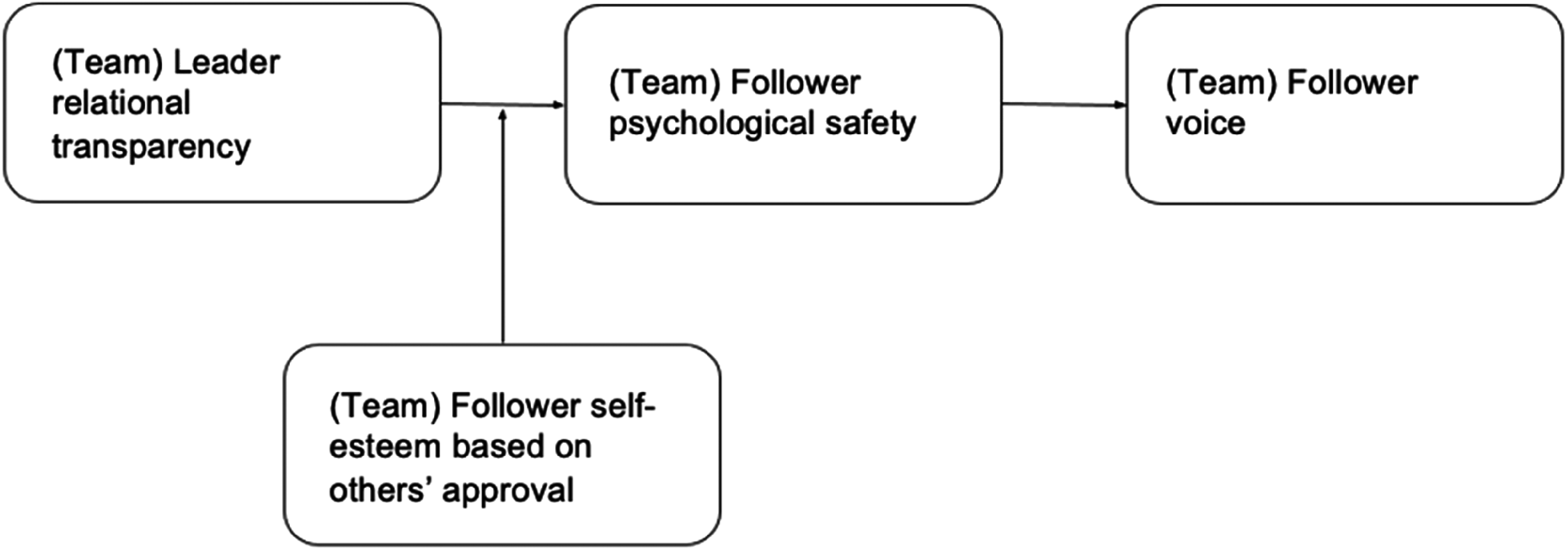
Hypothesized theoretical model.
Our research makes various contributions. Research examining how leaders promote voice has primarily considered leader behaviors and characteristics (e.g., leader humility: Rego et al., 2022), follower characteristics (e.g., core self-evaluations; see Chamberlin et al., 2017 for a review), and contextual moderators (see Morrison, 2023 for a review) but rarely considers leader behavior in combination with follower characteristics (Detert & Burris, 2007; Janssen & Gao, 2015; Morrison et al., 2011). Such a joint examination is important given that communication involves two partners whose characteristics influence the outcome of an interaction. Indeed, performance appraisal and feedback scholars have shown that miscommunications stem from failing to adjust to how one's message is understood by others (Schaerer et al., 2018). Similarly, our research investigates how a leader's transparent communication style is received by followers. In particular, we zoom in on an attribute within the follower (i.e., SEBOA) to advocate for more individualized consideration that recognizes open and direct communication might not be equally beneficial for everyone.
Second, we provide a refined theoretical explanation for the emerging understanding that there are contagion effects in work relationships where voice begets voice (Ng et al., 2021; Subhakaran & Dyaram, 2018). We apply SET to show that leaders who start an exchange relationship by being transparent create an environment in which followers feel safe to speak up by offering the exchange of honesty, and accordingly, vulnerability. Our research thereby advances theoretical insights into how organizations can foster open communication and responds to the recent call for a more nuanced understanding of the relational and contextual factors that cultivate voice (Davidson et al., 2017; Morrison, 2023).
Third, the examination of follower SEBOA as a moderating personality trait reveals possible limitations to LT and distinguishes which employees will (and will not) respond well to transparent leaders. Our study thereby extends literature that argues that role modeling and observing open communication encourages individuals to speak up (e.g., Yan et al., 2022) by investigating if there are employees for whom transparency is less well-received (Burris et al., 2008; Burris et al., 2013; Fast et al., 2014).
Finally, by examining our model at the individual and team level, which other voice scholars have recommended investigating further (Bain et al., 2021; Morrison, 2023), we acknowledge that leader–follower interactions do not occur in a vacuum (Rusbult & Van Lange, 2008; Van Lange et al., 2014). Theoretically, our two-study design allows us to test the notion that leaders’ transparent behavior is a valuable resource that can encourage individual voice behavior, but also the voice behavior of a team, as an entity in itself.
Theory and Hypotheses
Social Exchange Theory
SET views workplace relationships as the container where resources can be exchanged through a series of repeated transactions between two or more individuals (Mitchell et al., 2012). The quality of these exchanges can exist along a continuum ranging from short-term economic quid-pro-quo transactions, to open-ended, mutually rewarding social exchanges characterized by trust and reciprocity (Organ, 1988, 1990). The content of the exchange can take a variety of forms and can include instrumental help, emotional support (Cropanzano & Mitchell, 2005), or as we suggest, the vulnerability that arises when honest opinions and feelings are shared. In social exchange, the premise is that if one person initiates the offering of any good, they create an environment of trust that encourages the other actor to reciprocate. When a leader begins interacting with one of their followers, the social exchange process is initiated (Eisenberger et al., 2004; Farrell & Rusbult, 1981; Rusbult et al., 1988). In response to the leader's action, followers trust that they are entering a reliable relationship, and enact a reciprocal response (Gergen, 1969; Gouldner, 1960). Over time, high-quality exchanges (e.g., sharing information, listening, and trust) result in a mutually rewarding stable relationship between the leader and follower (Cropanzano et al., 2017).
LT, Follower Voice, and Follower Psychological Safety
LT refers to the unfiltered revelation of the leader's thoughts and feelings to followers, which results from a leader's predisposition to communicate in an open, forthright, and sincere manner (Kernis & & Goldman, 2006; Walumbwa et al., 2008). When leaders reveal their true thoughts and emotions, followers may interpret their honesty as a sign that the leader is willing to be vulnerable. If the leader engages in open and transparent communication repeatedly, this behavior plays an important role in cultivating a container where followers feel sheltered within a safe and trusting relationship. By disclosing their true thoughts and feelings, LT thus creates a psychologically safe environment by displaying cues that the relationship is safe for followers to undertake in risky behavior, like being vulnerable (Edmondson, 1999, 2003; Kahn, 1990; Kernis, 2003). In such environments, showcasing transparency extends an invitation for followers to be vulnerable in return. Thus, LT may encourage followers to be more willing to speak up because LT seeds psychological safety in their followers.
Secure Self-Esteem as a Condition of Safety
To this point, we have argued that a leader's open and transparent communication creates a safe work climate and accordingly, can be interpreted as an invitation for the follower to be open and vulnerable in return. There are, however, boundaries to creating such open and honest communication in organizations (Edmondson, 1999; Edmondson & Lei, 2014). Just because a leader extends an invitation for open communication, it does not ensure that all followers will feel comfortable accepting their bid because reciprocating transparency requires followers to feel secure enough about themselves to share who they really are (Kernis, 2003, 2005).
The extent to which individuals feel confident enough to be vulnerable and disclose their honest opinions and feelings is captured well by the concept of secure self-esteem (Kernis, 2003). Kernis’ (2003) seminal paper sought to distinguish high self-esteem from secure self-esteem by accounting for whether the source of self-worth was contingent on feedback from the external world or intrinsically rooted in self-acceptance and thus, inherently stable. Similarly, Crocker and colleagues (2003) argued that the security of self-worth could be measured on a continuum of internal (e.g., what you think of yourself) and external (e.g., what others think of you) sources. Contingent self-esteem refers to self-evaluations that are predicated solely on external sources such that one's worth is a function of external validation or “dependent on matching some standard of excellence or living up to some interpersonal or intrapsychic expectations” (Deci & Ryan, 1995, p. 32). In particular, SEBOA is a form of contingent self-esteem that rests on social approval and acceptance (Crocker et al., 2003).
In contrast, secure self-esteem is more stable over time and context because it is based on the extent to which individuals “like, value and accept themselves, imperfections and all” (Kernis, 2003, p. 3). While SEBOA is based on continuous external reinforcement, secure self-esteem is based on intrinsic factors, like one's sense of authentic self and inner values (Deci & Ryan, 2000; Kernis, 2003; Ryan & Deci, 2000). Here, an individual's self-esteem relies less on the approval of others because optimal self-esteem is rooted in who one truly is, rather than their accomplishments or what others think of them.
Since open communication requires the exchange partners to reveal their own thoughts, feelings, and opinions, a potentially vulnerable act, we propose that the extent to which a follower feels safe enough to reciprocate an initial gesture depends on how much they rely on external validation. Part of the social exchange process entails making assessments of risk when sharing information and ideas with the other party. When interacting with transparent leaders, a follower with secure self-esteem may respond in kind because they feel secure sharing their personal opinions or challenging ideas as their self-esteem is not burdened by the need for social approval. Relative to a person with secure self-esteem, however, followers with SEBOA will engage in the extra effort of estimating what the appropriate response is in order to obtain the approval of others, or mitigate the risk of disapproval, because they feel insecure about the good being shared (honest and open communication). As such, honestly expressing oneself in response to LT may be too risky because they will struggle with the possibility that their response may not be met with approval. Simply put, an invitation for open communication will fail to create safety if followers are not confident about their thoughts and feelings and in fact, are concerned about whether others will approve of their opinion.
In sum, we argue that follower SEBOA will moderate the impact of LT on individual followers’ felt psychological safety. Those low in SEBOA will more likely experience transparent leader communication as a positive initiating action because they are less reliant on the approval of others and thus feel secure enough to reciprocate the invitation to vulnerably share their feelings and thoughts (Detert & Burris, 2007). In contrast, for followers with high SEBOA, a leader's transparent communication style may not generate as much psychological safety because they feel less confident about expressing their opinions and feelings (Ferris, 2014). Honest self-disclosure may simply be too vulnerable if their self-worth is reliant on the approval of others. In turn, followers who do not feel psychologically safe are less likely to reveal their true feelings and beliefs in general (Kahn, 1992), and their improvement-oriented ideas specifically (Edmondson, 1999). Accordingly, previous research has shown a strong positive linkage between psychological safety and voice (Edmondson & Lei, 2014). Thus, we hypothesize a moderated mediation relationship as follows:
Hypothesis 1a: Follower SEBOA moderates the relationship between LT and follower psychological safety, such that the positive relationship is attenuated when follower SEBOA is high (compared to low).
Hypothesis 1b: Follower SEBOA moderates the indirect effect of LT on follower's voice through follower psychological safety such that the indirect positive effect is attenuated when follower SEBOA is high (compared to low).
LT, Voice Psychological Safety and SEBOA as Collective Properties of the Team
Team-Level Properties
Given that leaders interact with multiple team members, and leader and follower interactions are embedded in social environments observable by others, LT can be considered a team-level property that should also influence team processes (e.g., team leader authenticity: Hannah et al., 2011). Collective property is said to emerge at the unit level when interactions contribute to multiple members in a group experiencing similar reactions (Bliese, 2000; Hazy & Ashley, 2011). We expect that LT will reflect the team's shared perceptions of LT given followers interact directly with the leader's transparent communication style, and observe the leader communicating transparently with others. In other words, team LT encourages common interpretations of the social context that will generate some degree of convergence in the teams’ assessment of LT (e.g., Chan, 1998).
Psychological safety and voice can also be viewed as collective properties of the team and aggregated to the team-level as the lower-level characteristics share the same essential properties (Bliese, 2000). Like individual psychological safety, team psychological safety concerns whether interpersonally risky acts, like disclosing one's true thoughts and feelings, will be punished by others in the team (Edmondson, 1999). Yet, distinct from individual followers feeling safe about their own voice behavior (e.g., Detert & Burris, 2007), team psychological safety assesses shared perceptions that all team members are safe to be vulnerable in the group climate (Edmondson, 1999). Similarly, voice can also be aggregated to the group level of analysis to capture the overall level of voice in the team (e.g., Morrison et al., 2011). Whereas individual voice reflects one person's tendency to speak up, team voice reflects the extent to which the team as a whole expresses their true thoughts and feelings.
Finally, while follower SEBOA reflects an individual difference, team SEBOA describes the team members’ additive composition on the extent to which they base their self-worth on the approval of others (Chan, 1998; Chen et al., 2005). Past research has shown that team composition, or individual traits of team members, can influence the affective, behavioral, and cognitive components of teamwork (Bell et al., 2018). In additive compositional models, individual attributes are equally weighted because it is assumed that each member's attribute exerts the same degree of influence across individuals and team levels (Bliese, 2000). Following recommendations that aggregation models should be theoretically grounded (Kozlowski & Bell, 2003), we deliberately chose an additive aggregation model (Chan, 1998; Chen et al., 2005) because the effects of SEBOA can emerge from any one on the team rather than as a function of the most or least secure member of the group. No matter how securely anchored one member's self-esteem is, simply observing others with SEBOA may influence the collective opinion of how fragile the team's self-esteem is as a whole, and thus promotes convergence in the group's assessment of the team's trait SEBOA (e.g., Lin et al., 2012). Each additional unit of SEBOA in the team climate increases the number of cues that can be observed by team members inducing contagion effects and influencing shared perceptions that the team's worth relies on the approval of others (e.g., Leroy et al., 2021).
Social Information Processing
A SIP approach (Salancik & Pfeffer, 1978) offers a theoretical mechanism for why team LT affects team voice through team psychological safety. SIP argues that in social contexts, individuals depend on others for cues on how to interpret the situation and then adapt their attitudes, behavior, and beliefs accordingly (Salancik & Pfeffer, 1978). Influential others play a key role in establishing social norms that guide attitudes and behavior in groups (O'Reilly & Roberts, 1975). Due to their positional power, leader behavior inherently holds greater approval and thus, carries greater normative social influence (Ruben & Gigliotti, 2016), or “an influence to conform with the positive expectations of another” (Deutsch & Gerard, 1955, p. 303). Leader transparency thus serves as a “display rule” (Ekman, 1973) in the social environment that affects information processing not only by coloring the interpretation of norms shared by members of the group (e.g., Festinger, 1954), but also by inspiring adaptations in behavior (Salancik & Pfeffer, 1978).
Applying SIP to our conceptual model, a team's shared perception of LT may seed team psychological safety because experienced and observed exchanges of leader transparency and reciprocated follower transparency acts as a cue to team members that the broader social climate is safe enough to be vulnerable. We expect that team LT reflects the group's recognition that transparency is valued by the leader and normalizes that it is safe for the team to disclose their true thoughts and feelings (Ilgen et al., 2002; Schein, 1996). In groups with high ratings of team LT, more social cues exist that lead the team to infer that the social environment is safe for expression. An abundance of social cues that signal transparency is valued further normalizes that the social context is psychologically safe enough to be open and vulnerable, decreasing the risk of speaking up and increasing the likelihood the of team voice (e.g., Edmondson & Lei, 2014).
The Moderating Role of Team SEBOA
We expect that team SEBOA may dampen the potential positive effects of team LT on psychological safety by influencing how social cues, like team LT, are interpreted in the group. Teams with high SEBOA represent groups where, on average, self-worth is based more on the approval of others. These teams will develop lower levels of team psychological safety when their leader communicates openly as the team will exhibit less receptivity to group norms that call for transparency, or potentially vulnerable disclosure, in return. High SEBOA teams will have to navigate mixed cues in their social environment about the group's state of psychological safety as some members will welcome team LT, but other members will respond apprehensively. These inconsistent social cues create confusion and insecurity, which are contagious, impeding the development of a safe team climate as members struggle to determine group norms around speaking up in the team (Halbesleben et al., 2013; Leroy et al., 2021). In sum, high SEBOA teams are more likely to contain insecure follower reactions to LT, increasing cues that the group climate is unsafe and foregoing the opportunity to establish essential norms that lead teams to believe that it is safe to be vulnerable and speak freely in the group (Bandura, 1986). Applying this logic to our team-level model, we expect that team LT is less strongly positively related to team psychological safety, resulting in less team voice in high SEBOA teams as compared to low SEBOA teams. Put formally:
Hypothesis 2a: Team SEBOA moderates the relationship between team LT and team psychological safety, such that the positive indirect relationship is attenuated when team SEBOA is high as compared to low.
Hypothesis 2b: Team SEBOA moderates the indirect relationship between team LT and team voice through team psychological safety, such that the positive relationship is attenuated when team SEBOA is high as compared to low.
Study 1: Leader–Follower Dyads
Method
Participants and Procedure
We identified 27 small-to-medium-sized service organizations (70% for-profit, 21% healthcare, and 9% governmental) in Belgium willing to participate in a survey study on transparency in the workplace. Our sampling focused on established teams—defined for our purposes here as composed of one team leader and a minimum of three team members—within these organizations. Given time and work-load constraints, we asked HR representatives to randomly select the number of (qualified) teams in their organization that could participate without hindering daily operations. This led to us receiving the e-mail addresses of 407 employees in 60 teams across participating organizations. These employees were informed by their HR representative about the study and encouraged to participate, but also clearly told that their participation was entirely voluntary.
We collected survey data in two stages. At time 1, a total of 223 (55%) employees completed measures on their leader's transparency, their level of SEBOA, and psychological safety. At time 2, one month later, followers were asked on a second survey to rate their own voice behavior. After reminders, completed surveys (across both time periods) were obtained from a total of 204 employees (50%) from 46 teams (average team size = 4.43, range 1–10). On average, the organizational tenure of these employees (followers) was 12 years (SD = 9.42) and their mean age was 40 (SD = 9.63). Sixty percent of the followers held graduate degrees and 51% were women. To partially assess the effects of nonresponse bias, we tested for differences between followers who completed both surveys and those completing only the time 1 survey. We found no significant differences in any of the study variables (p > .05).
Measures
Leader Transparency
We measured respondents’ perspectives on LT using items from the Authentic Leadership Questionnaire (ALQ, Walumbwa et al., 2008) and the Authentic Leadership Inventory (ALI, Neider & Schriesheim, 2011). More specifically, we used the following five items (α = .81), rated on a five-point Likert scale ranging from never (1) to almost always (5): “my leader clearly states what he/she means,” “my leader openly shares information with others,” “my leader expresses his/her ideas and thoughts clearly to others,” “my leader tells me the hard truth,” and “my leader displays emotions exactly in line with feelings.” We excluded two items from the ALQ measure of transparency that were either more clearly positively oriented toward follower voice (“My leader encourages everyone to speak their mind”) or less ambiguous regarding the leader's own ego-defensiveness (“My leader admits mistakes when they are made”). These items were also excluded from the ALI-measure for showing cross-loading with the other subcomponents (Neider & Schriesheim, 2011).
Psychological Safety
We measured the willingness to be vulnerable with follower psychological safety using three items adapted by Detert and Burris (2007) from Edmondson (1999). Although originally conceptualized at the team level of analysis (Edmondson, 1999), this measure assesses individual respondents’ perceptions about how safe they feel about speaking up (Detert & Burris, 2007). These three items (α = .74) were assessed on a seven-point Likert scale, ranging from completely disagree (1) to completely agree (7). A sample item is: “It is safe for me to speak up around here.”
Follower Self-Esteem Based on Others (SEBOA)
We measured follower SEBOA with five items (α = .90) developed by Crocker et al. (2003) and rated on a five-point Likert scale ranging from strongly disagree (1) to strongly agree (7). Conforming to the recommendations of Ferris (2014), we used the subscale most relevant to our theoretical arguments: contingent self-esteem geared toward gaining others’ approval. Sample items are: “My self-esteem depends on the opinions others hold of me,” and “I can't respect myself if others don't respect me.”
Follower Voice
Looking at past work that has used self-ratings for voice (e.g., Holley et al., 2019), we assessed follower voice with four items on a 5-point Likert scale from Van Dyne and Le Pine's (1998) six-item measure (α = .81). Sample items include. “I speak up in this group with ideas for new projects or changes in procedures” and “I communicate my opinions about work issues to others in this group even if my opinion is different and others in the group disagree.” We excluded two items from this measure (see also Burris, 2012) that reflect more general organizational citizenship behaviors rather than employee voice specifically (i.e., “I keep well informed about issues where my opinion might be useful to my work group” and “I get involved in issues that affect the quality of work life here in this group”).
Analytical Approach
Because of the multilevel nature of our data, with employees nested in teams and teams nested in organizations, we first ran a three-level null model in Mplus (Muthén & Muthén, 2012), to examine the variance of our model variables at three levels. The variance at the organization level was very small (LT = 1.6%, psychological safety = 0.7%, voice = 0.3%, SEBOA = 0.4%), whereas there was some variance at the team level (LT = 11.4%, psychological safety = 7.2%, voice = 3.4%, SEBOA = 8.5%). To control for the variance at the team level, we analyzed our data using stratified regression modeling in Mplus (Muthén & Muthén, 2012). Stratified models (TYPE = COMPLEX) compute standard errors that take stratification and nonindependence of observations into account. In addition, we used the robust maximum likelihood estimator (MLR), which provides estimates with standard errors that are robust to nonnormality and nonindependence of observations (Muthén & Muthén, 2012).
To test the hypothesized interaction effect, we first created an interaction term from the centered predictor and moderator variables. We included this centered cross-product, along with the uncentered predictor and moderator variable in our model. We modeled our first stage moderated mediation model following Model 2 of Preacher et al. (2007), with paths between x–m, m–y as well as direct effects between x–y and the moderator z and interaction term xz predicting m and y. To describe and plot the interaction effect, we report the simple slopes of x–m at one standard deviation above and below the mean of follower SEBOA (Aiken & West, 1991; Dawson, 2014). We also report the range of significance, specifying at which values of the moderator the path between x and m is significant (Preacher et al., 2006). Finally, following the recommendations of Preacher and colleagues (2007), we calculated the indirect effects of LT on voice via psychological safety at one standard deviation below and above the mean of SEBOA, and provided the 95% CIs of the estimate of the indirect effect.
Study 1. Results
Measurement Model
We validated our measurement model using confirmatory factor analysis (CFA). A CFA on our measurement model showed that our focal independent, mediating, moderating, and dependent variables of LT, follower psychological safety, follower SEBOA, and follower voice fit a four-factor model reasonably well (Hu & Bentler, 1998, p. 1999): χ2 (113) = 210.08 (p = .01), SRMR = .05, RMSEA = .06, CFI = .95. To further test whether the various constructs in the CFA models reported above were distinct, we ran alternative CFA models where we alternatively combined the items of each factor. In all cases combining these items significantly worsened the fit (p < .05). Table 1 reports fit indices for the measurement model and comparison models.
Study 1: Fit Indices for Estimated Measurement Models.
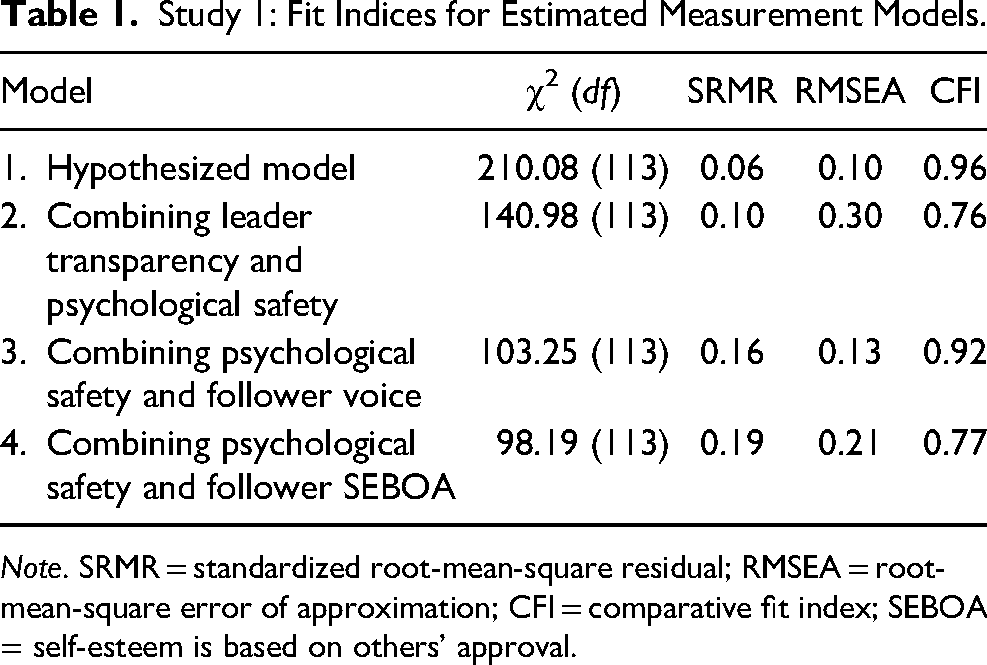
Note. SRMR = standardized root-mean-square residual; RMSEA = root-mean-square error of approximation; CFI = comparative fit index; SEBOA = self-esteem is based on others’ approval.
In Table 2, we provide a summary of the means, standard deviations, correlations, and internal consistency estimates for all study variables. LT is positively correlated with follower psychological safety (r = .32, p < .001) and follower voice (r = .26, p < .001). Similarly, followers’ psychological safety and voice are positively correlated (r = .31, p < .001).
Study 1: Means, Standard Deviations, and Intercorrelations Among Variables.
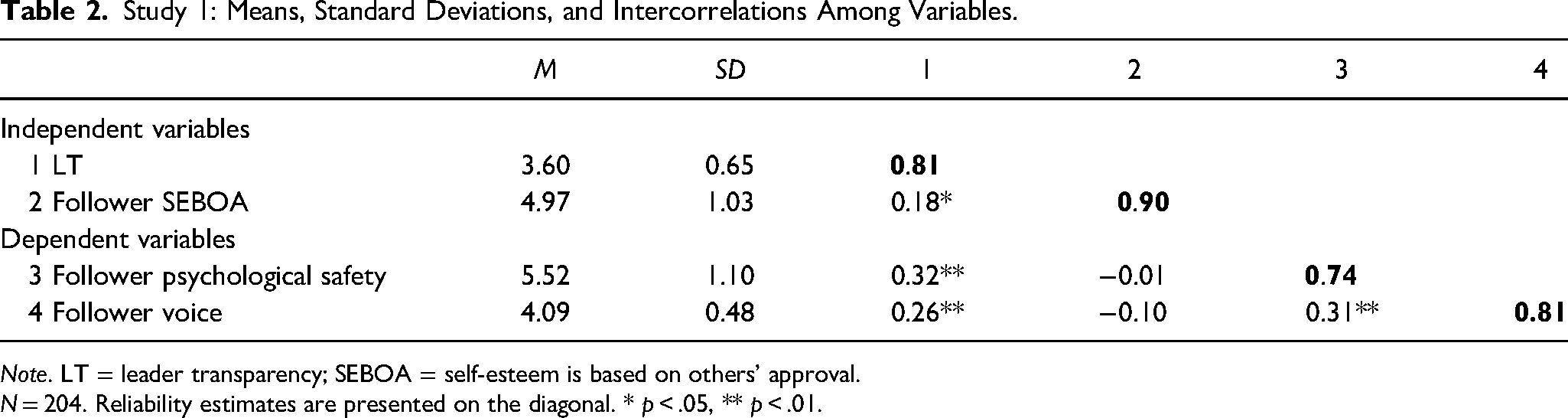
Note. LT = leader transparency; SEBOA = self-esteem is based on others’ approval.
N = 204. Reliability estimates are presented on the diagonal. * p < .05, ** p < .01.
Hypothesis Testing
In Hypothesis 1a, we predicted that the positive relationship between LT and follower psychological safety is moderated by follower SEBOA. Hypothesis 1b predicted that the indirect effect between LT on follower voice, through follower psychological safety, is moderated by follower SEBOA. Table 3 reports the results of this first-stage moderated mediation model. LT is positively related to follower psychological safety (b = 0.47, SE = 0.14, p < .01) and the interaction term of follower SEBOA and leader LT on follower psychological safety is significant (b = −0.36, SE = 0.12, p < .01). In Figure 3, we show the interaction effect of LT and follower SEBOA on psychological safety. In line with H1a, the effect of LT on follower psychological safety is positive for low follower SEBOA (b = 0.84, SE = 0.13, p < .001) but not significant for high follower SEBOA (b = 0.10, SE = 0.23, p = .68). 1 A range of significance analysis showed that the relationship between LT and psychological safety is significant for SEBOA scores lower than 5.34 (scale 1–7). In our sample, 88 (43%) of the participants have scores on SEBOA higher than 5.34.
Study 1: Path Analysis Results for Moderated Mediation Model.
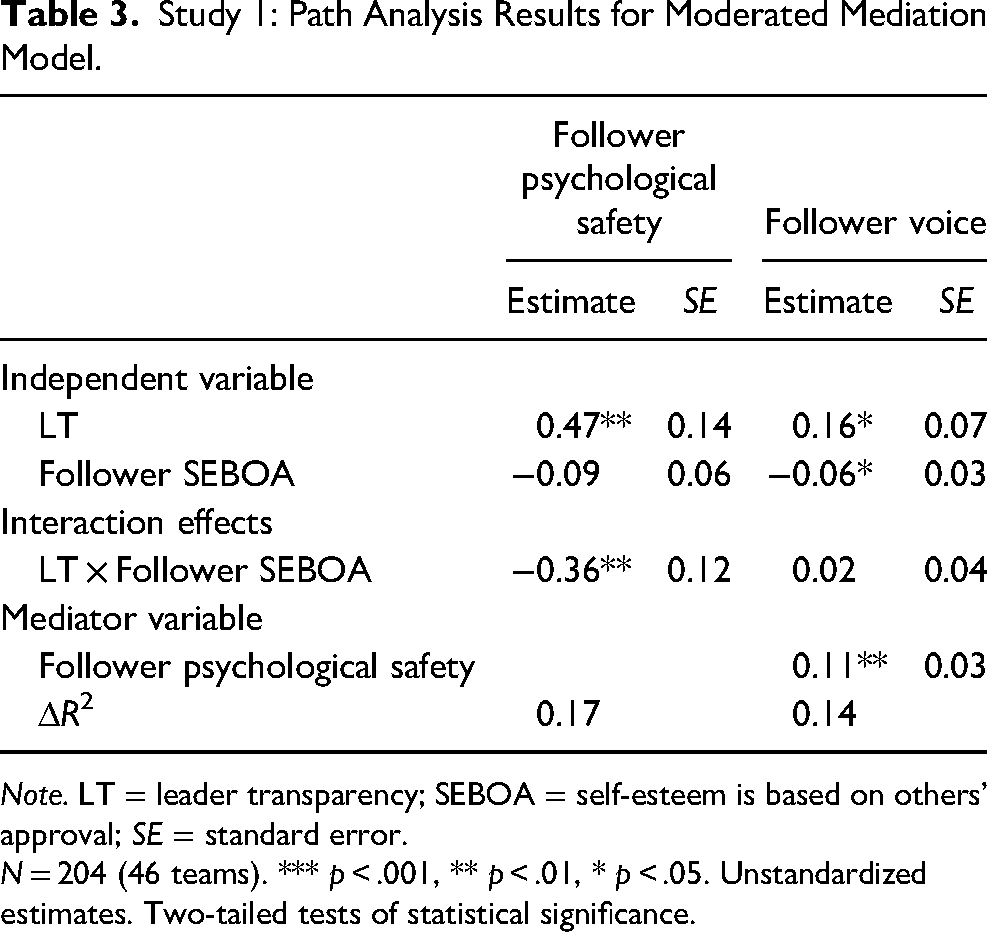
Note. LT = leader transparency; SEBOA = self-esteem is based on others’ approval; SE = standard error.
N = 204 (46 teams). *** p < .001, ** p < .01, * p < .05. Unstandardized estimates. Two-tailed tests of statistical significance.
Next, to test Hypothesis 1b, we estimated the indirect effect of LT on follower voice through psychological safety for high and low values of SEBOA. Table 3 shows that follower psychological safety is positively related to follower voice (b = 0.11, SE = 0.03, p < .01). The indirect effect of LT on follower voice through psychological safety is significant for low SEBOA (b = 0.091, SE = 0.030, CI [0.034, 0.153], but not for high SEBOA (b = 0.011, SE = 0.026, CI [−0.035, 0.508]). These results are consistent with Hypothesis 1b and specify that LT is only significantly positively related to voice when follower SEBOA is low as opposed to high. 2
Study 1. Discussion
The results of Study 1 provide support for the moderating role of follower SEBOA in the relationship between LT, follower psychological safety, and voice. Our findings suggest that when followers have a more stable sense of self-esteem that is not hinged on the approval of others, LT initiates a social process that creates a climate of safety for vulnerability to be exchanged between parties. Yet, if the follower's self-esteem is based on the approval of others, no amount of openness on the leader's behalf seems to be able to shift perceptions of safety or voice behaviors because followers high in SEBOA inherently experience sharing their opinions and thoughts as a risky proposition. These effects of LT are likely not solely limited to specific leader–follower relationships. Given LT can influence a broader psychological voice climate (Morrison et al., 2011), and in light of research that finds even witnessing interpersonal exchanges can illicit feelings of shame, fear, and anxiety in the observer (Miner & Eischeid, 2012; Miranda et al., 2020), Study 2 aggregates our model to the team level of analysis.
Examining how follower SEBOA attenuates the relationship between team LT, team psychological safety, and team voice behaviors refines Study 1 in three ways. First, although follower voice was separated in time, and moderation effects generally minimize concerns about same source biases (Podsakoff et al., 2003), the fact remains that the data were collected from the follower which may bias the data if, for example, the follower had recently received a negative performance appraisal. By aggregating measures to the team level of analysis, we alleviate bias related to any specific follower (Bliese, 2000) and reduce concern about common method bias (Podsakoff et al., 2003). Second, Study 2 uses other-reported measures by using leader ratings of team voice. Finally, Study 2 allows for the examination of the theoretical rationale that LT may be viewed as a social cue that may affect how attitudes around psychological safety develop in the team, and in turn, affect group voice behavior.
Study 2: LT in Teams
Method
Participants and Procedure
We identified a sample (N = 93) of medium-to-large service organizations (50% for-profit, 26% healthcare, and 24% governmental) in Belgium willing to participate in our survey study. Our sampling focused on identifying teams (one leader and a minimum of three followers) within these organizations. Because we were interested in replicating and extending the previous results at the team level of analysis, we emphasized to our company contacts that to be included these teams needed to share common goals and undertake interdependent tasks to achieve these goals (Kozlowski & Bell, 2003). HR representatives of each company provided the researchers with the e-mail addresses of eligible team members and leaders. In total, we received contact information for 2303 followers and 350 team leaders.
We contacted potential participants through e-mail, asked them to complete a web-based survey, and followed up with a reminder after two weeks. To enable us to match the data of followers with that of their leaders, respondents were sent surveys via unique Internet addresses, linked to their e-mail addresses. Because of this personal identification of data, respondents were ensured that only aggregated (organizational level) results would be reported back to their organization, such that it would not be possible to identify data provided by individual respondents or even by specific teams. This was important not just for ethical reasons but also because our study was aimed at understanding open communication between leaders and followers, thus our research design needed to ensure sufficient psychological safety for respondents to feel they could be honest.
We administered the surveys in two stages. At time 1, a total of 1,842 (80%) followers completed measures on team LT, team psychological safety, and team SEBOA; likewise. At time 2, 6 months later, leaders were asked to rate team voice. We chose a significantly longer time period than for Study 1 to allow sufficient time for team processes to fully occur (Mitchell & James, 2001). Completed surveys were obtained from a total of 280 leaders (80%) from 81 organizations. Our dataset thus includes 280 teams (mean team size = 5.60, range 3–18). Seventy percent of leaders held graduate degrees, 65% were women, their mean age was 44 years (SD = 10.16) and their mean tenure was 8 years (SD = 9.49). On average, follower tenure was 9 years (SD = 10.50) and their mean age was 39 (SD = 8.30). Seventy-nine percent of followers held graduate degrees and 66% were women. We assessed potential nonresponse bias by comparing followers’ responses to the study variables among those whose leaders did and did not participate at time 2. We found no significant differences (p > .05).
Measures
Team Leader Transparency (LT)
We used the same five items (α = .89 in this sample) to assess team LT as in Study 1. Because our interest lies in LT at the team level of analysis, we averaged this measure within each work team. Aggregating LT was based on the assumption that team LT would be relatively consistent when viewed by different team members and it allowed us to bypass the influence of personal biases. In support of our aggregation decision (Bliese, 2000), we found an average r wg of .76 (mdn = .78), using a uniform null distribution, an ICC(1) of .34, and an ICC(2) of .68.
Team Psychological Safety
We measured team psychological safety with the seven items (α = .89 developed by Edmondson (1999). These seven items are measured with a seven-point Likert scale, ranging from completely agree to completely disagree. Sample items are: “Members of this team are able to bring up problems and tough issues” and “It is safe to take a risk on this team.” Because individual team members reported on the behavior of their teams, psychological safety is represented as a referent-shift model of aggregation where the team's convergence in LT is determined by the compositional average of individual-level perceptions to represent the same phenomenon but at a higher-level ((Klein & Kozlowski, 2000; Kozlowski & Hults, 1987; Schneider & Bowen, 1985). In support of our aggregation of this measure to the team level of analysis, we obtained an average rwg of 0.84 (mdn = 0.87), using a uniform null distribution, an ICC(1) of 0.35, and an ICC(2) of 0.69. To reduce the potential effects of common method bias (Podsakoff et al., 2012), we employed a split-sample approach where we randomly used half of the team members’ ratings to compute the average LT score and the other half of the team members’ ratings to calculate team psychological safety.
Team Self-Esteem Based on Others (SEBOA)
We measured team SEBOA using the same SEBOA measure as in Study 1, on a scale ranging from 1 to 7. The internal consistency reliability estimate for this scale in this sample was 0.78. At the team level, we focus on team members’ additive composition of SEBOA, as a collective property of the team (Chan, 1998; Chen et al., 2005). In line with our focus on personality traits, composite aggregation in this case is best modeled following a summary index model (Chan, 1998; Chen et al., 2005), we neither assumed nor tested for agreement among members’ SEBOA.
Team Voice
To measure team voice, we adapted four items of the six-item measure (α = .85) of LePine and Van Dyne (1998) to the group level of analysis with a referent-shift model of aggregation such that they could be rated by the leader with regard to the overall level of voice in the team (see also Morrison et al., 2011). All items were rated on a 7-point Likert scale, ranging from completely disagree (1) to completely agree (7). A sample item is: “To what extent do members of your team speak up with ideas for new projects or changes in procedures?”
Analytical Approach
Because of the multi-level nature of our data, with teams nested in organizations, we first ran a two-level null model in Mplus. Because there was some variance at the organization level (LT = 3.9%, psychological safety = 7.9%, voice = 5.5%, SEBOA = 8.8%), we analyzed our data using stratified regression modeling in Mplus (Muthén & Muthén, 2012), similar to Study 1. We used the same analytic strategy as used in Study 1 to test our moderated mediation model. Thus, we estimate the simple slopes and indirect effects at high (M + 1SD) and low (M−1SD) scores of team SEBOA, and we calculated the range of SEBOA values at which the relationship between team LT and team psychological safety is significant.
Study 2. Results
Measurement Model
A CFA differentiating between team LT, team psychological safety, team voice, and team SEBOA showed a reasonable fit: χ2 (164) = 259.51 (p = .01), SRMR = .07, RMSEA = .07, CFI = .94. Additionally, we ran CFA models that combined the items for various factors and in all cases, this significantly worsened the fit (p < .05) (see Table 4 for fit indices).
Study 2: Fit Indices for Estimated Measurement Models.
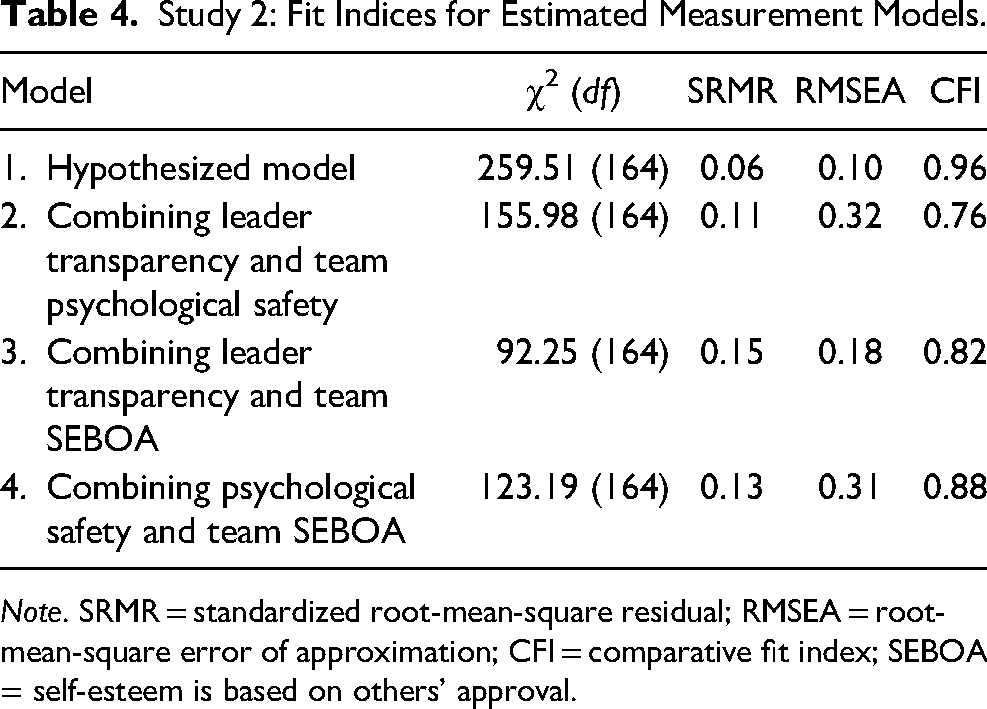
Note. SRMR = standardized root-mean-square residual; RMSEA = root-mean-square error of approximation; CFI = comparative fit index; SEBOA = self-esteem is based on others’ approval.
In Table 5, we provide a summary of the means, standard deviations, correlations and internal consistency estimates for all study variables at the team level of analysis. All focal variable intercorrelations are in the theoretically expected directions. Team LT is positively correlated (r = .35, p < .001) with team psychological safety, and team psychological safety is positively related to leader-rated team voice (r = .57, p < .001).
Study 2: Means, Standard Deviations, and Team-Level Intercorrelations Among Variables.
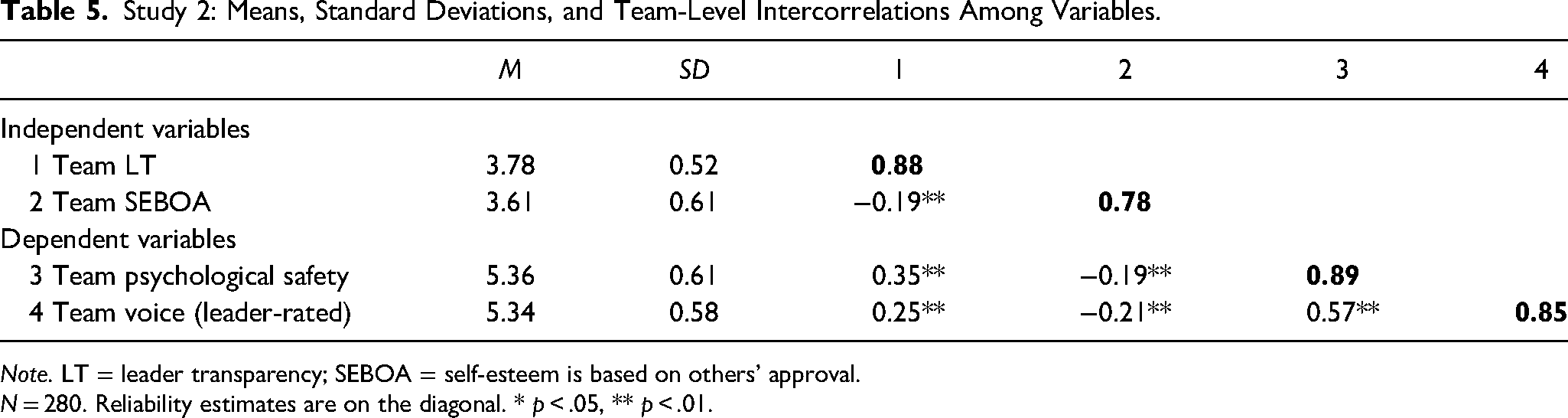
Note. LT = leader transparency; SEBOA = self-esteem is based on others’ approval.
N = 280. Reliability estimates are on the diagonal. * p < .05, ** p < .01.
Hypothesis Testing
The estimates for each relationship in our moderated moderation model are summarized in Table 6 and depicted in Figure 2. We find a significant positive relationship between team LT and team psychological safety (b = 0.43, SE = 0.08, p < .001), as well as between team psychological safety and team voice (b = 0.55, SE = 0.05, p < .001). In addition, we find a significant effect of the interaction term between team LT and team SEBOA on team psychological safety (b = −0.26, SE = 0.12, p < .05). In Figure 3, we depict the interaction effects on team psychological safety for high and low levels of team SEBOA with team LT (Aiken & West, 1991; Dawson, 2014). Interestingly, the relationship between team LT and team psychological safety is positive and significant for low levels (M−1SD) of team SEBOA (b = 0.59, SE = 0.11, p < .001) and for high levels (M + 1SD) of team SEBOA (b = 0.27, SE = 0.12, p = .02), 3 even though the slope estimate is weaker for high team SEBOA (see Figure 3). The range of significance analysis further specified that the slope between team LT and team psychological safety is only significant for team SEBOA values lower than 3.82. In our sample, this means that for about 10% of teams with the highest scores on team SEBOA, the relationship between team LT and team psychological safety is not significant. These results offer support for H2a showing that the relationship between team LT and team psychological safety is stronger when team SEBOA is low as compared to high.
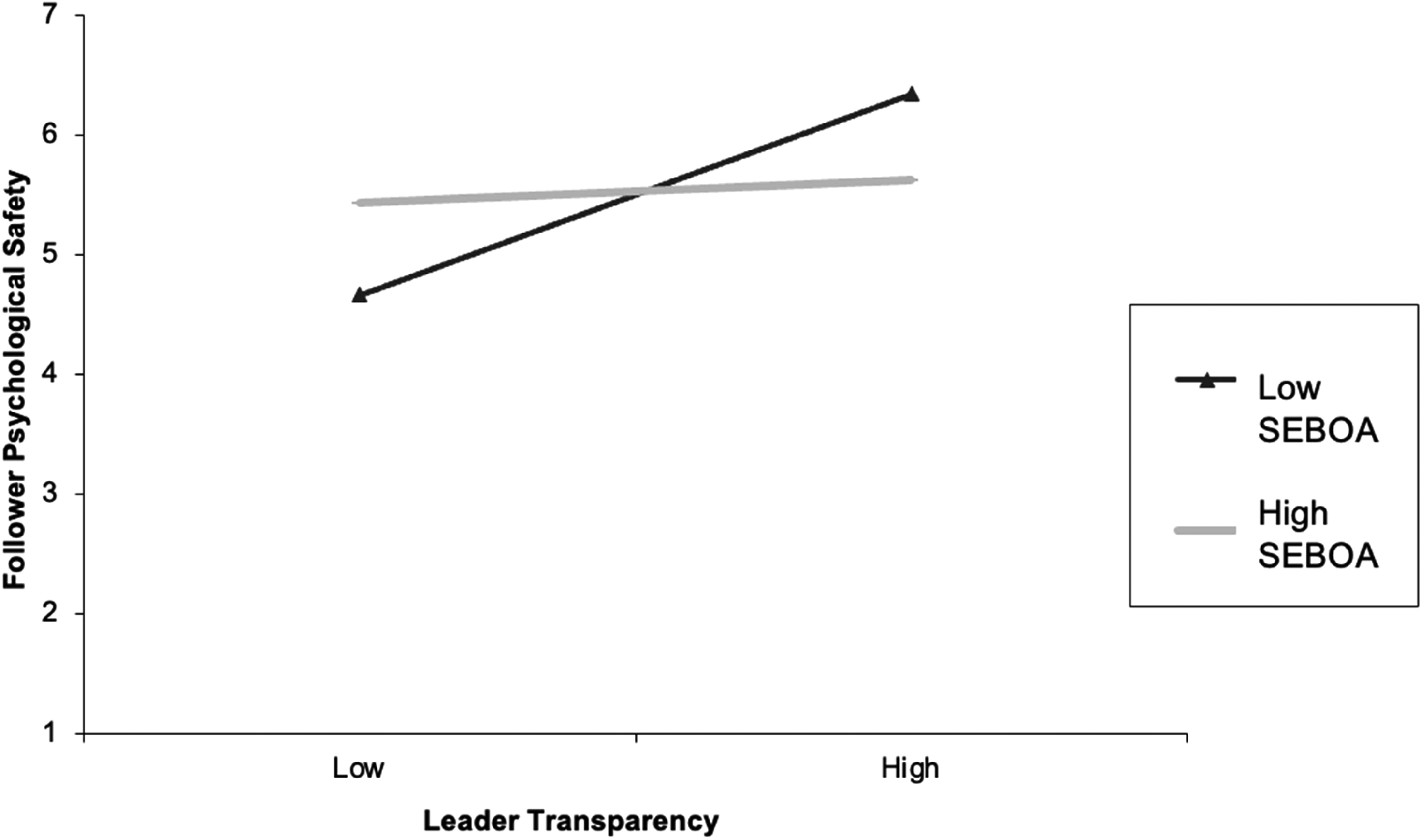
Study 1: interaction effect between LT and follower SEBOA on follower psychological safety.
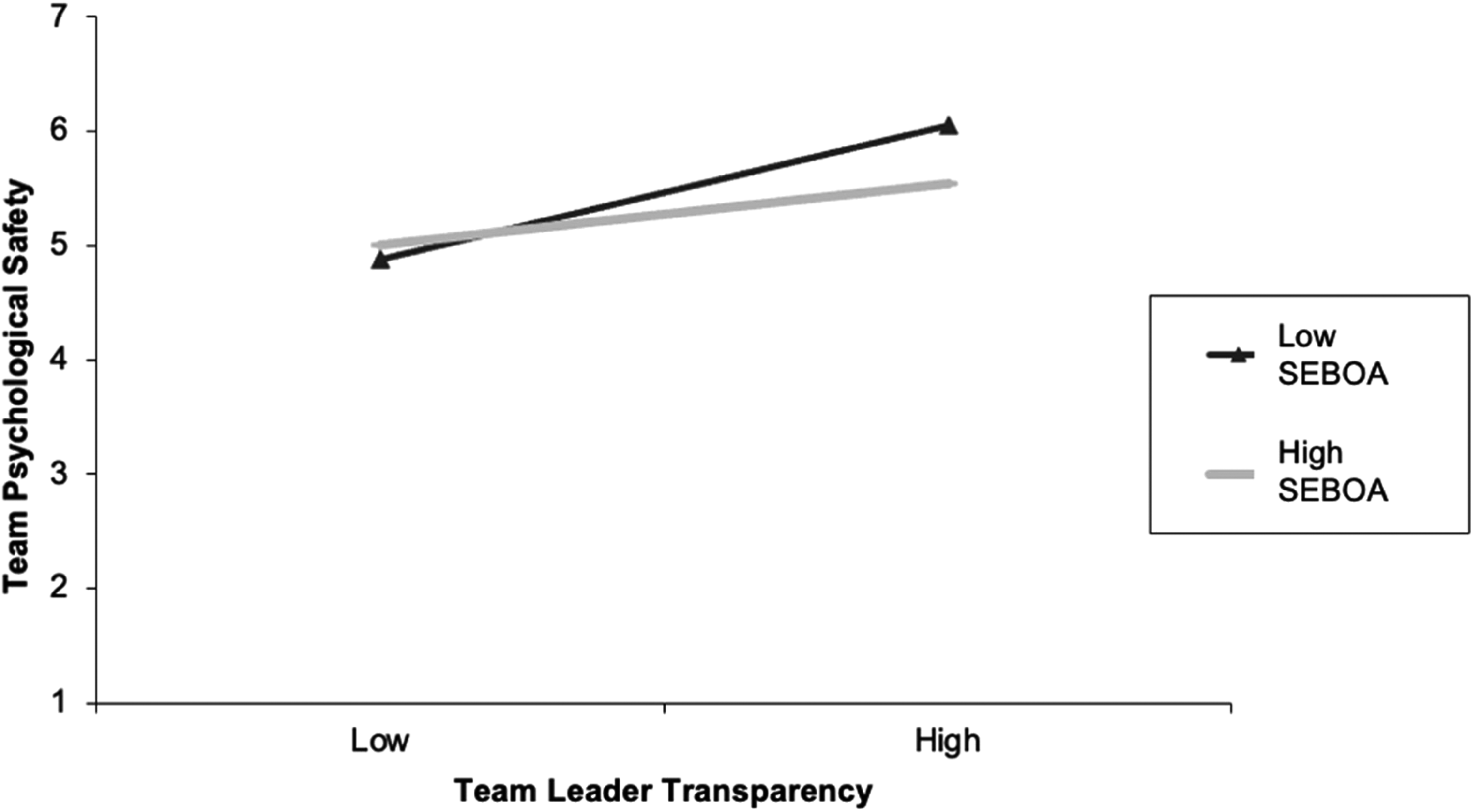
Study 2: interaction effect between leader transparency and team average approval seeking on team psychological safety.
Study 2: Nested Path Analysis Results for Moderated Mediation Model.
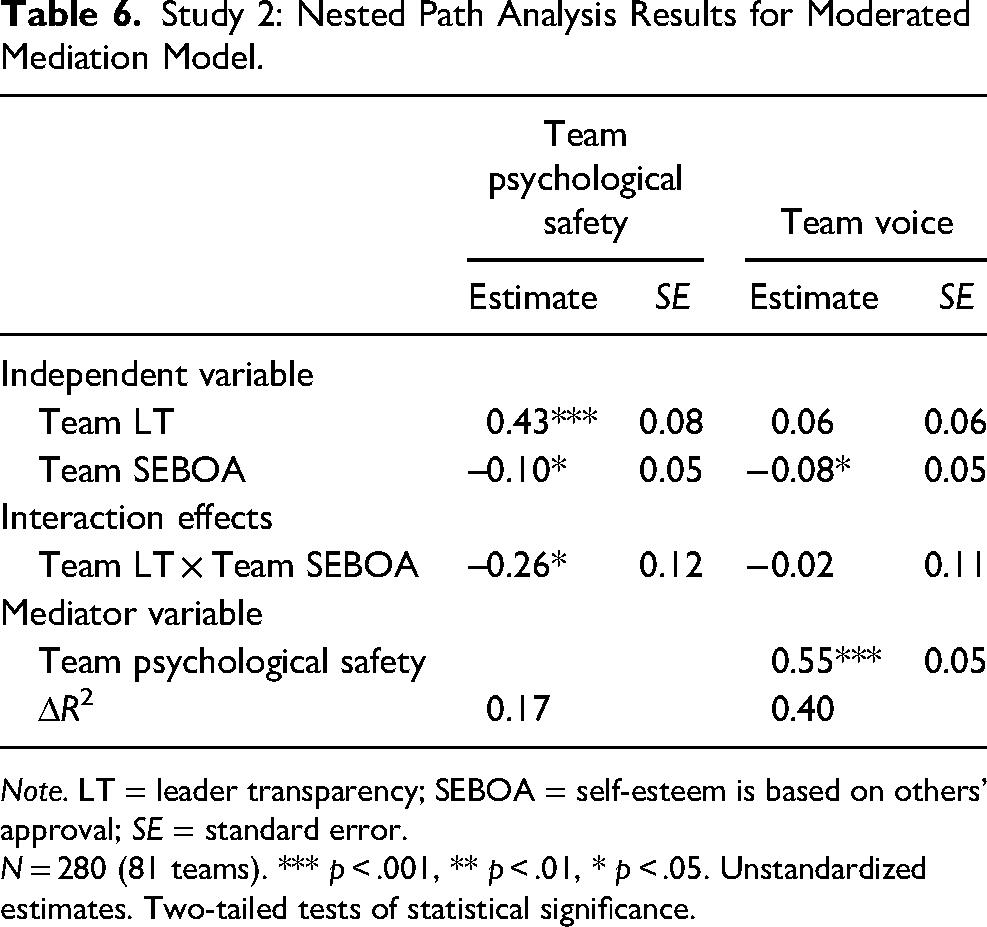
Note. LT = leader transparency; SEBOA = self-esteem is based on others’ approval; SE = standard error.
N = 280 (81 teams). *** p < .001, ** p < .01, * p < .05. Unstandardized estimates. Two-tailed tests of statistical significance.
Finally, we estimated the indirect effects of team LT on team voice through team psychological safety for high (M + 1SD) and low (M−1SD) levels of team SEBOA. This indirect effect is significant at low team SEBOA (b = 0.32, SE = 0.06, p < .001 CI [0.201, 0.452]) and high team SEBOA (b = 0.15, SE = 0.06, p = .02, CI [0.026, 0.269]). These results are consistent with Hypothesis 2b and specify that team LT is more strongly positively related to team voice when team SEBOA is low as opposed to high. 4
Study 2. Discussion
The results from Study 2 replicate our Study 1 findings offering a robust test of our model and demonstrating that the effects hold when measured at both the individual and team level. In most teams, team LT signals that the quality of social exchange is one that can be characterized as trustworthy and safe. The region of significance analysis conducted demonstrates that for the vast majority of teams (90%), the effect of team LT on psychological safety is positive and significant. But, for teams with very high SEBOA (the highest 10%), team LT does not establish team psychological safety. This aligns with the results for Study 1, which similarly showed for high SEBOA followers, the relationship between team LT and psychological safety is nonsignificant. Interestingly, we discovered that the cut-off point that determines when team SEBOA becomes influential lies higher in teams than it does for individual followers. It is possible that in teams, the moderating effect of team SEBOA gets diluted because the group may be composed of members with secure self-esteem, who offer a keel that steadies the team as a whole by providing additional social cues that signal the climate is safe to be vulnerable. In other words, even if a team scores high in SEBOA (e.g., a full standard deviation over the mean), there may be members with low SEBOA who respond to team LT in a positive manner that buffers the effect on team psychological safety.
General Discussion
This article set out to investigate why and for whom a leader's transparent communication style results in employee voice. Guided by insights from SET, we found that LT encourages follower voice because followers feel psychologically safe to do so. Leaders, by communicating openly and transparently, model disclosure and create an environment of trust and vulnerability in which followers feel safe to reciprocate open communication. Yet, LT was not a beacon of safety for all followers. A more in-depth consideration revealed that LT did not positively relate to psychological safety among followers who base their self-esteem on the approval of others. These findings suggest that this group of followers might not feel safe enough about themselves to be vulnerable and reciprocate with voice, despite their leader showcasing such openness. Our model—predicting that LT is less strongly related to psychological safety, and consequently follower voice when followers are high in SEBOA—was supported at the individual (Study 1) and team (Study 2) level, thereby providing robust support for our theoretical framework. In highlighting the importance of SEBOA in both individuals and teams, this study contributes to the literatures on leadership and voice in several ways.
First, our research extends past research within the voice literature that has largely predicted employee voice by either leadership behaviors (Avey et al., 2012; Li & Tangirala, 2021), or follower individual dispositions (for reviews see Chamberlin et al., 2017; Morrison, 2023; Mowbray et al., 2014) such as signaling a confident, proactive, approach orientation (e.g., Detert & Burris, 2007; LePine & Van Dyne, 1998; Liang et al., 2012). Our interactive approach considers the combination of a leadership behavior (i.e., LT) and a follower trait (i.e., SEBOA), which allows us to examine for which type of follower LT is beneficial. By looking at both LT and follower SEBOA, our study responds to the call for more voice research that considers factors related to both speakers and voice targets in order to better understand the conditions that foster honesty, despite its clear potential risks to those who do (Detert & Burris, 2007; Janssen & Gao, 2015; Morrison et al., 2011; Tangirala & Ramanujam, 2012). By applying a social exchange framework, we pinpoint that the leader's own direct and open communication style can serve as the content of exchange in which exchanging honest thoughts and feelings creates a psychologically safe environment that followers need in order to voice their opinions. Furthermore, our results confirm the notion suggested by Mowbray et al. (2014) that even when leaders or management practices exist to encourage voice, opportunity alone does not predict when followers speak up. Our results suggest it is not that followers with fragile self-esteem never feel safe, but that when it comes to the security required to speak openly, even when leaders are transparent themselves, high SEBOA followers did not feel safe enough to voice their opinions.
Second, our research sheds light on the possible limits of leader transparency as some have questioned whether leader transparency is always positive (e.g., Gardner et al., 2021; Sparrowe, 2005), but scant theory-driven research has examined when and why it might not be universally beneficial (Lemoine et al., 2019). Our findings underscore that LT is not effective in creating a safe environment in which followers speak up for those followers who have self-esteem that is contingent on the approval of others. These findings fit with the idea that being transparent—and expressing this directly in communication with followers—is not always positive (Alvesson & Einola, 2019), or more specifically, not positive for all followers (e.g., Burris et al., 2013; Fast et al., 2014). We encourage future research to examine whether leaders who are transparent but lack other characteristics, such as the tendency to solicit opinions from others and welcome opposing viewpoints (i.e., balanced processing: Neider & Schriesheim, 2011), may create contexts where LT not just attenuates voice but suppresses it altogether.
Third, this study responds to calls for exploration of not only more explicit drivers of voice such as personality variables like extraversion and proactive personality (e.g., Chamberlin et al., 2017; Guzman & Fu, 2022), or human resources management practices (Mowbray et al., 2014), but also intrapsychic, implicit feelings that may be deeply rooted within and subconsciously hindering speaking up (Detert & Edmondson, 2011; Fast et al., 2014; Kish-Gephart et al., 2009). Our findings show that contingent self-esteem, and particularly self-esteem that is based on the approval of others, is an important consideration in the social exchange of open communication, an inherently vulnerable process. While past research has examined follower self-esteem in relation to voice with the expectation that higher general self-esteem (Brockner et al., 1998) or core self-evaluations (Chamberlin et al., 2017; Mowbray et al., 2014) will promote voice (cf., Premeaux & Bedeian, 2003); our findings demonstrate that the fragility of self-esteem also matters (Kernis, 2003).
Finally, by examining these relationships at the individual and team levels, our study answers calls to investigate psychological safety at multiple levels of analysis. Edmondson and Lei (2014), for instance, argued that “a focus on just one level is likely to provide an incomplete, or even inaccurate, understanding” (p. 49). Our team-level results demonstrate how individual characteristics, like SEBOA, can give rise to a collective trait that influences how the team interprets cues from the leader's behavior and accordingly, how safe interactions feel in the social environment. While the majority of the existing literature has focused on voice as a dyadic social exchange between the leader and the follower, by examining the model at both levels, our work considers how collective experiences in the team can influence voice for the team as a whole. Future research could explore the precise team processes driving the emergence of group voice. Team information elaboration, for example, refers to the exchange, discussion, and integration of information relevant to the task (van Knippenberg et al., 2004). Team SEBOA could influence the quantity and quality of information members put forward into the group as well as the extent to which shared information is considered and integrated because teams with higher SEBOA are less likely to offer novel information or challenge ideas since their value ultimately depends on the approval of others.
Limitations
Despite our efforts to minimize limitations by conducting two complementary studies, there remain certain methodological boundaries to our work. We adopted both proactive and reactive strategies to account for common method bias by separating the measurement of scales in time and by source, and by using a multi-level design (Lindell & Whitney, 2001). While these strategies enhance the validity of our findings, future studies should replicate our findings using different rating sources and different measurement instruments. As one example, future research could consider other-rated measures of SEBOA. Kernis (2003) further suggested that contingent, fragile self-esteem can also be measured by looking at the stability of self-esteem over time, utilizing measures of social desirability and self-deception, and considering discrepancies between implicit and explicit measures of self-esteem (Randolph-Seng & Gardner, 2013). Such measures are more easily manipulated and captured in a laboratory setting, which would be a useful venue to further support the implied causal effects of our model.
A second set of limitations concerns the causal directionality of our findings. For practical reasons related to survey fatigue concerns, we were not able to collect all of our model variables at all points in time. While we have a strong theoretical framework to support our hypotheses, the lack of baseline measures prevents us from drawing any causal inferences from our data. Additionally, our sampling frame was restricted to employees in small-to-medium-sized service companies in Belgium, which may limit the generalizability of our findings. While our two relatively large survey studies suggest that the effects we found are robust across the multiple organizations in our sample, future investigations could further replicate our findings by drawing (theoretically informed) samples from individuals residing in other countries and/or organizational settings/cultures where SEBOA may be more acceptable and even laudable (e.g., Eastern collectivist cultures: Crocker & Knight, 2005; Crocker & Park, 2004).
Practical Implications
Our results can guide managers who are seeking to encourage open and direct communication in their teams. Our results suggest that leaders who communicate openly and directly can invite followers who have more secure self-esteem to voice their opinions. However, our findings also reveal that not all followers will find comfort in the presence of managerial candor. We encourage leaders to consider the recipient of their communication and temper their interactions for those followers who seem to base their self-esteem on the approval of others. In other words, whereas leaders can be transparent with confident followers, it will be important to be aware that unbridled transparency might not create feelings of psychological safety among those with more fragile self-esteem.
More broadly, because the workplace tends to reward achievement over failure, politeness over honesty, and compliance over dissent, our results highlight how a true culture of candor is unlikely to prevail, or at a minimum, do much good, in organizations where many followers have self-esteem based on external validation. Indeed, Study 1 found that 62% of participants scored high in SEBOA (i.e., above the sample average). We expect that this number may only increase given young adults are developing their self-esteem in a backdrop of social networking sites where external validation is the main currency, so much so that the next wave of employees has been called “generation validation” (Stapleton et al., 2017, p. 142). Based on the insights from this research, direct communication can clearly have benefits and entice followers to speak up in return, but only when followers do not rely heavily on the opinions of others to feel confident about themselves. Therefore, to reap the benefits of transparent leaders, employees and employers might need to work on secure self-development, for example, through self-compassion interventions that cultivate self-love and acceptance (e.g., Dodson & Heng, 2022). Examining interventions, such as mindfulness or self-compassion training, that can cultivate the awareness and self-acceptance required to offset SEBOA would be an interesting line of inquiry for future research (e.g., Neff & Vonk, 2009).
Conclusion
In a set of studies examining relationships at the individual and team-level, we examined the influence of a specific leader behavior, LT, on follower voice through psychological safety. To take follower characteristics into account, we integrated the concept of secure versus contingent self-esteem to find that when self-esteem is based on the approval of others, the effects of LT on follower's voice are attenuated because psychological safety is not sufficiently experienced. These findings provide new knowledge that offers some caution around the relentless pursuit of candor and leader transparency in organizations and offers practical implications to help managers better understand how and with whom they should use transparency to encourage voice in their followers and teams.
Footnotes
Declaration of Conflicting Interests
The author(s) declared no potential conflicts of interest with respect to the research, authorship, and/or publication of this article.
Funding
The author(s) received no financial support for the research, authorship, and/or publication of this article.
