




Abstract
Leader character has emerged as a critical foundation for leadership. In spite of the view that leader character can be developed, there has been limited holistic attention to what it takes to develop character. Character requires conscious development, and that conscious development not only requires an understanding of what character is, but how the anatomy of character enables and inhibits character development and expression. By anatomy, we refer to the four underlying anatomical systems—physiology, affect, behavior, and cognition (PABC)—that function independently, and in an interrelated manner, to support the development of character. For illustration, we offer the practice of listening to music as a means to develop character, highlighting the links between the PABC systems and character development.
Leader character has emerged as “an indispensable component of leadership and its development” (Hannah & Avolio, 2011, p. 979). Character, based in virtue ethics, has many associated definitions (see Hackett & Wang, 2012 for a review); however, they often conflate what character is with what it is intended to do or serve—including morality, excellence, human flourishing, one's highest aspirations as a human being, and benefits to the self and others (Hackett & Wang, 2012). In addition, character is generally imagined in its virtuous state and therefore misses the potential to examine how it may operate as a vice. Thus, we define character as an interconnected set of habituated patterns of thought, emotion, motivation or volition, and action (Bright et al., 2014) that satisfy very specific criteria, identified by Peterson and Seligman (2004), as being virtuous. This definition offers the potential to bridge descriptive accounts of what character is with prescriptive accounts of what it could/should be. A critical aspect of the bridging is to understand how character can be developed.
Although leader character can be developed (Crossan et al., 2013b; Wang & Hackett, 2016), there has been limited holistic attention to what it takes to develop character (Park & Peterson, 2009). This oversight is not simply a pedagogical matter. Failing to understand leader character and its development will certainly obscure, and possibly misguide, research into leader character specifically, and leadership research more generally. Further, without understanding what it takes to develop character, researchers and practitioners are left with an inadequate account of leader character and how it functions. Furthermore, there is a danger of falling into the trap of excessive positivity (Alvesson & Einola, 2019). As Alvesson and Einola (2019, p. 383) vociferously state “the field is strongly in need of replacing upbeat ideologies fueling fantasies of the morally grounded, ethical, good, powerful leader being the central subject creating all sorts of positive outcomes through adopting the right leadership formulae, with theoretically more solid and less ideological research.” We agree with the need for theoretical and empirical grounding, which motivates our investigation of the anatomical underpinnings of leader character—physiology, affect, behavior, and cognition (PABC). However, we disagree with the prescription to “replace” theories without first examining why they may not be living up to their promise.
The importance of understanding leader character and how it can be developed is critical, since the very existence of character and its relevance has been questioned by scholars. Alzola (2008, p. 343) notes, “Using evidence from experimental psychology, some social psychologists, moral philosophers, and organizational scholars claim that character traits do not exist and, hence, that the philosophical tradition of virtue ethics is empirically inadequate and should dispose of the notion of character to accommodate the empirical evidence.” However, we propose that the dismissal of character arises from a misunderstanding about what character is and how it can be developed. Whereas personality traits are largely innate, relatively stable over time (McCrae & Costa, 1990), and with few theoretical or empirical links to virtues, character is a set of virtuous behaviors that can be developed (Park & Peterson, 2009).
A holistic examination of character development acknowledges that character requires conscious development (Bright et al., 2014), and that conscious development not only requires an understanding of what character is, but how the anatomy of character enables and inhibits character development and expression. By anatomy of character, we are referring to the four PABC systems that function both independently and interrelatedly to support the development of character.
We seek to make four core contributions: (1) forge theoretical connections between the PABCs and leader character development by drawing on a multidisciplinary perspective; (2) deepen theoretical understanding of the nature of leader character; (3) offer a new perspective on human functioning that serves to elevate the role of leader character in management theory; and (4) enliven leader character theory by providing insight into activating the PABCs to develop leader character through music. Collectively, these contribute to leadership and management theory more generally and leader character more specifically, by providing deeper understanding into the nature of leader character and how it can be developed.
The theoretical development proceeds through a sequence of arguments to unpack the PABC character framework shown in Figure 1. We begin with leader character, revealing that it is more than the sum of its parts, requiring coherence among its dimensions. We also address that character development occurs along a continuum. We then examine the anatomical underpinnings of character by defining and then exploring the coherence of the PABCs. With these two foundations in place, we demonstrate how the PABCs influence the development of character, and vice versa, how the development of character can influence the PABCs. We use music therapy to illustrate the theoretical links between the PABCs and leader character development. We conclude with implications for research and practice.
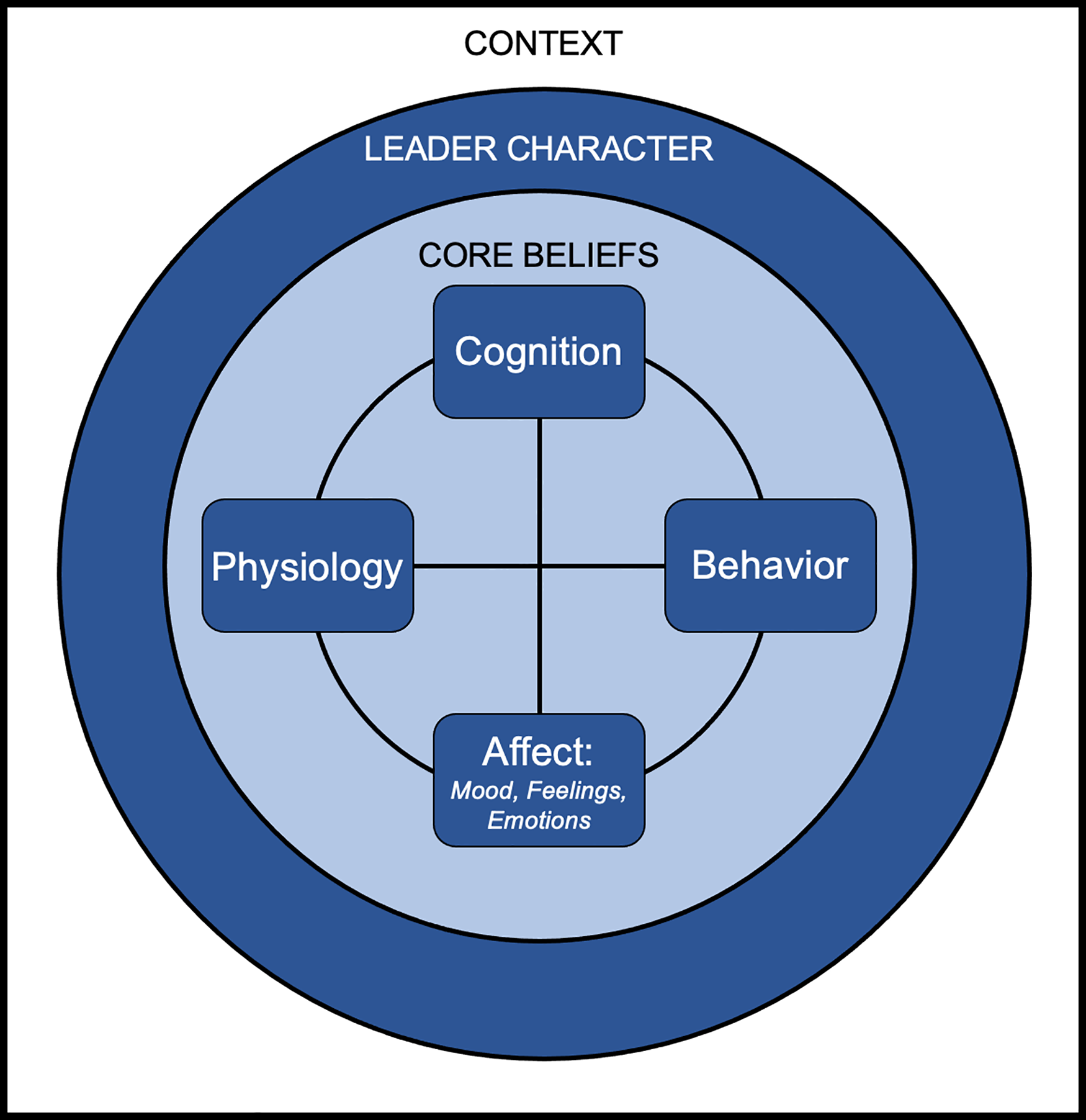
Physiology, affect, behavior, and cognition (PABC) character framework.
Leader Character: More Than the Sum of Its Parts
Leadership development research (see Day et al., 2014) has begun to expand its focus beyond individuals’ competency (Cullen-Lester et al., 2017) to examine leader character (Sturm et al., 2017). Where competency is more about what a leader can do, character, arising from the habitual behaviors anchored in virtues, is more about who a leader is (Baumrind, 1998; Sturm et al., 2017). Furthermore, the development of leader character is a foundation that informs the effectiveness of both leadership competencies and leadership style (Sturm et al., 2017), thus it has implications for leadership theory more broadly. With its focus on the disposition to lead, as opposed to the position to lead, leader character applies to all individuals in organizations, and hence broadens its reach beyond the purely positional leadership domain to management theory more generally. It is not our intention to cast leader character as a heroic form of leadership wherein context does not matter as per the critique made by Alvesson and Einola (2019)—quite the opposite. We recognize the recursive relationship between character and context and conclude that without strength of character that context will prevail. As shown in Figure 1, character can be viewed as mediating the relationship between context and the PABCs. It is our aim to describe what it means to develop leader character so that subsequent research can adequately assess the recursive relationship between character and context.
In their seminal work pulling together research in philosophy, psychology, and sociology, Peterson and Seligman (2004) identified a set of character strengths and virtues that contribute to individual well-being. Building on Peterson and Seligman's research, Crossan et al. (2017) used an engaged scholarship approach with over 2,000 leaders to identify a set of character dimensions and associated behaviors that not only contribute to individual well-being, but also sustained excellence in organizations. The result is the Leader Character Framework (Crossan et al., 2017) with 11 interconnected dimensions of character, each with a set of observable behaviors (see Figure 1). Judgment, or what Aristotle referred to as “practical wisdom” (Aristotle, 2011), is at the center of the other 10 character dimensions and associated behaviors. While judgment has its own set of behaviors associated with its development, the character dimension of judgment also relies on all of the dimensions of character as needed from moment to moment, context to context. Importantly, the character dimensions also interact to support one another. Our theorizing is not dependent on the framework of character employed, with one caveat—the recognition within a character framework of the interconnected nature of the dimensions of character as this is a precondition for what could be a virtue, operating as a vice.
As Aristotle maintained, any dimension of character when not supported by the other dimensions of character can operate as a vice (Aristotle, 2011). Thus, for example, a high level of courage without a high level of temperance to support it may operate as recklessness. The interconnected nature of the dimensions of character, distinguishes it from psychological capital and more generally positive organizational behavior research, where constructs such as optimism, hope, confidence, and resiliency are typically studied independently, with little attention to the virtues/vice issue associated with character. Termed the “goldilocks problem” or the “too much of a good thing” problem (Antonakis et al., 2017), examining positive attributes in isolation has proven to be problematic. This can be problematic for leadership development when individuals are encouraged to focus on their strengths. Whereas focusing on strengths may be important for competence development (Spreitzer, 2006) it can be counter-productive for character development. Nonetheless, research supports the view that character-related behaviors can be developed and provides preliminary insight into some of the PABC underpinnings (Peterson et al., 2008). For example, Luthans et al. (2001) provide support that optimism and confidence can be developed.
The Continuum of Leader Character Development
Crossan et al. (2018) portrayed leader character development along a continuum (see Figure 2). They explained that at the most advanced level, all of the dimensions of character are highly developed, interconnected, and they are robust across contexts and time. Because there has been limited attention to leader character and its development, we anticipate there are few examples of individuals with strong character, leading to the premature conclusion by some social psychologists and sociologists that character does not exist because individuals cheat, lie, and act in unethical ways when the context is manipulated (Tenbrunsel & Smith-Crowe, 2008). Yet, it is important to acknowledge that within all ethical conduct studies, there are positive deviant individual outliers, but to our knowledge, there has been no examination of the strength of character of these individuals.
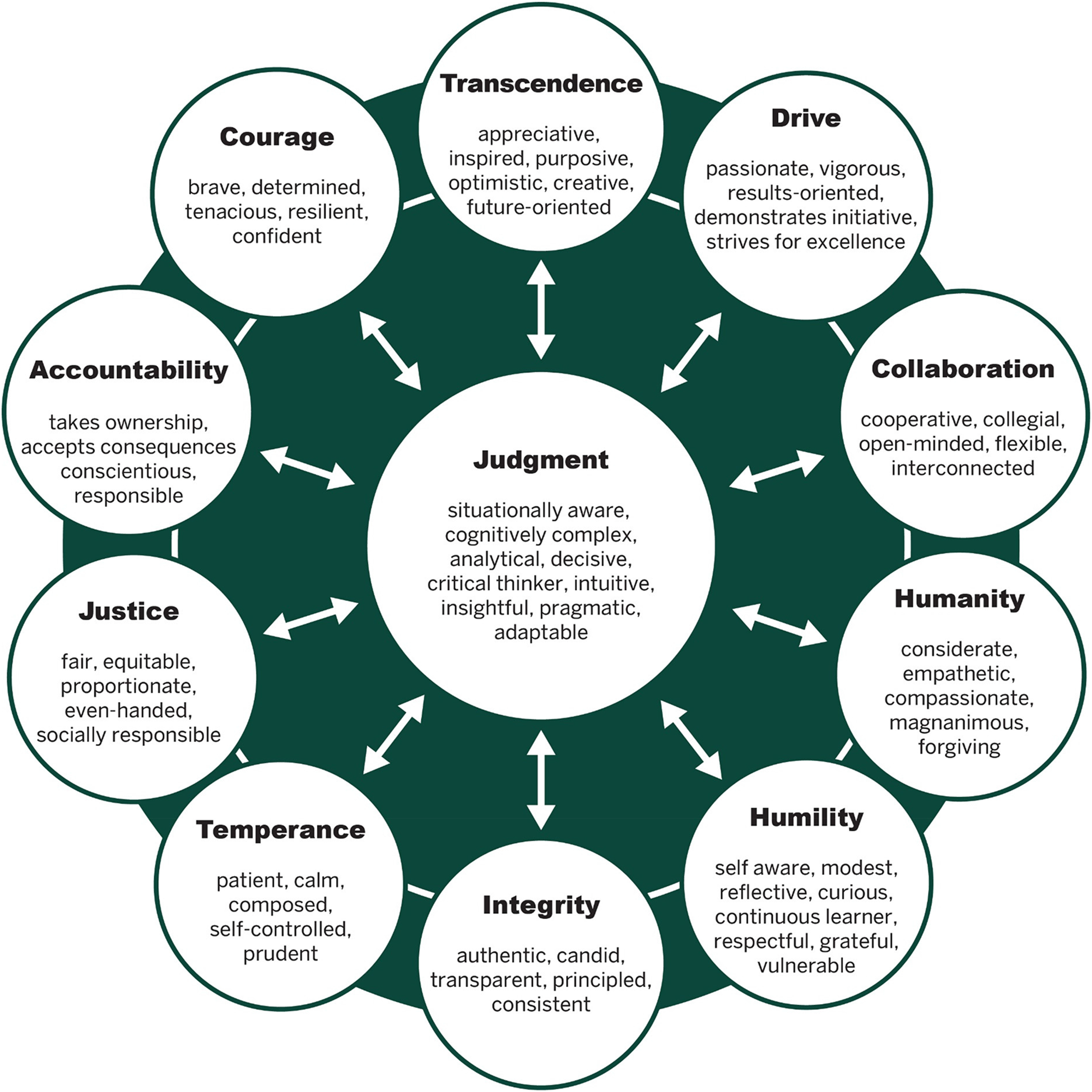
Leader character framework (Crossan et al., 2017).
At the left end of the continuum, the dimensions of character can be activated. Situations can activate character (for better or worse), which is akin to the activation of personality traits as described in trait activation theory (Tett & Burnett, 2003; Tett & Guterman, 2000). Trait activation theory postulates that there are latent “potentials” (for a trait) residing within individuals and that trait-relevant situations can bring the trait to the surface in the form of behaviors (Tett & Burnett, 2003). However, we propose that character activation differs from trait activation in a number of key ways given the unique properties of virtues (Sturm et al., 2017). First, because the virtuous behaviors associated with character can be developed, they are not simply activated by the situation (Crossan et al., 2013a, 2013b). Instead, they are consciously developed and activated through self-awareness and reflection by the individual (Quick & Wright, 2011) and chosen in the moment; leader character, then, can influence situations (Crossan et al., 2013a, 2013b).
Moving along the continuum to the right, each dimension of character can be developed and further strengthened through the interconnection among the dimensions. The interconnected nature of the character dimensions differentiates character from personality trait activation because the activation of one's personality trait (such as introversion) does not suggest that another personality trait (such as agreeableness) is activated as well, nor that it should be (Tett & Burnett, 2003). In contrast, leader character comprises a set of interconnected dimensions (Crossan et al., 2017), such that strengthening one dimension requires strengthening the others in order that the dimensions of character operate in their virtuous state, not their vice state. In addition, there is potential that strengthening one dimension enables development in another dimension. For example, activating transcendence, and in particular strengthening one's sense of purpose, may help to activate other dimensions such as drive and courage because greater meaning is attached to the activities being undertaken. Also, deactivation of a dimension of character could also influence other dimensions of character. For example, an individual may become less vulnerable (behavior associated with humility) as a result of a negative experience, which might then adversely affect other dimensions of character, such as their level of authenticity or bravery.
“Leaders are thought to acquire virtues through learning and continuous practice, such that virtuous behavior becomes habitual (Bragues, 2006). Of course, habits can be lost due to a lack of practice (Verplanken et al., 2005), which implies that once leaders acquire a virtue, it is sustained only through continuous practice; virtue is lost in the absence of practice” (Wang & Hackett, 2016, p. 12). Aristotle suggests that virtues are acquired through practice such that to become a better pianist, one must practice piano—implying that, for example, to be more courageous, an individual must practice acts of courage (Bernacer & Murillo, 2014). Unfortunately, there has been limited examination of what it means to acquire virtues through learning and continuous practice. We contend that developing character requires training and development, and far more than has been currently theorized, particularly with regard to character that is sustained across contexts and time.
Physiology, Affect, Behavior, Cognition (PABCs)
Developing awareness and understanding of how the PABCs function to support or undermine character development is a critical foundation of leader development. Individuals are more or less developed around each of these anatomical systems in terms of their awareness and ability to regulate the system, opening up the possibility that leader development can be enhanced by attending to the PABCs, or compromised because of lack of attention. Although there are practices that support the development of each of the PABC systems, the systems are also interrelated (McCraty et al., 2009), as shown in Figure 1. We rely on the term coherence within the system and coherence across the systems to describe optimal functioning. “Coherence across [these] response systems is adaptive, creating optimal conditions for the organism to cope successfully with significant challenges and opportunities” (Sze et al., 2010, p. 804). Incoherence within a system is captured in several phenomena, such as cognitive dissonance (Jarcho et al., 2011) and heart rate variability (HRV; McCraty & Zayas, 2014). Incoherence (McCraty et al., 2009) across the systems occurs, for example, when a person fails to understand (cognition), the physiological or emotional (affect) stress they are experiencing. This concept of coherence is consistent with the need for connectivity as identified by Hannah et al. (2013, p. 398) in their examination of neurological leader self-complexity where they state—“connectivity refers to the extent that parts of the brain are working together in a synchronous manner.”
Impediments to character development may arise at the level of the PABCs as depicted in Figure 1. These impediments to optimal functioning include lack of awareness of how the anatomical system is functioning, attempts to suppress the system, as may be the case with affect when individuals try to suppress emotion, and inattention to the role the system plays in support of the other systems, as in the case of physiology (e.g., breathing slowly and deeply), and cognition (e.g., focusing one's attention on a task). To overcome possible impediments, we propose that practices to develop character need to consider the PABCs to ensure a weakness in one of the anatomical systems is not preventing the development of character.
There is precedent for examining the role of the PABC systems in learning and development. Cognitive-behavior theory (CBT) is an intervention that treats mental health conditions and psychological distress that are maintained by cognitive factors; the therapeutic approach focuses on shifting core beliefs, which, according to CBT, employ all four PABC systems (Hofmann et al., 2012). By altering one of the automated maladaptive responses in the PABC system, CBT shifts certain beliefs that are contributing to the maintenance of emotional distress and behavioral problems (Hofmann et al., 2012).
Although CBT could be applied to leadership research, it has not. The relationship between core beliefs and leader development has been introduced into the leadership literature but not thoroughly examined. McCauley et al. (2006) examined the use of constructive-development theory and how an individual's way of developing their understanding of self and the world may enhance leadership effectiveness. McCauley et al. (2006) identified Kegan’s (1994) theory that suggested an individual's moral development stage would influence what type of leader they may be. Further, Caldwell et al. (2002) pointed out that there are fundamental differences between the core beliefs of leaders that should be examined because of the central role core beliefs play in judgment and decision making. Although a direct connection can be drawn between CBT and core beliefs, laying the foundation for the relevance of the PABCs, CBT has not taken into account the development of leader character as a way to work with the PABC systems. In the case of CBT, the focus of development is largely around addressing behaviors that are dysfunctional for the individual with common applications in the areas of anxiety and stress. Whereas the theory we propose could be used to address these same issues, we also suggest that the PABC theory addresses well-being more generally and sustained excellence, as advocated in the leader character literature. As depicted in Figure 1, we position leader character as both relying on the PABC systems and also influencing the PABC systems in a type of mediating role between a context and a leader's core belief. For example, a leader may be afraid of making a mistake or being embarrassed and must overcome this fear (a cognition) to develop the vulnerability needed for the character dimension of humility. Likewise, positive affect is commonly linked to being creative, as is captured in Fredrickson’s (2004) broaden-and-build theory (Ashkanasy et al., 2017), and creativity is an important underpinning of the character dimension of transcendence. Although each of the PABCs has been extensively researched with broad application, as shown in Table 1, we focus on defining and briefly describing each of the PABCs and then addressing how they interrelate to provide the foundation for the connection to leader character development.
Leader Character Behavioral Development.
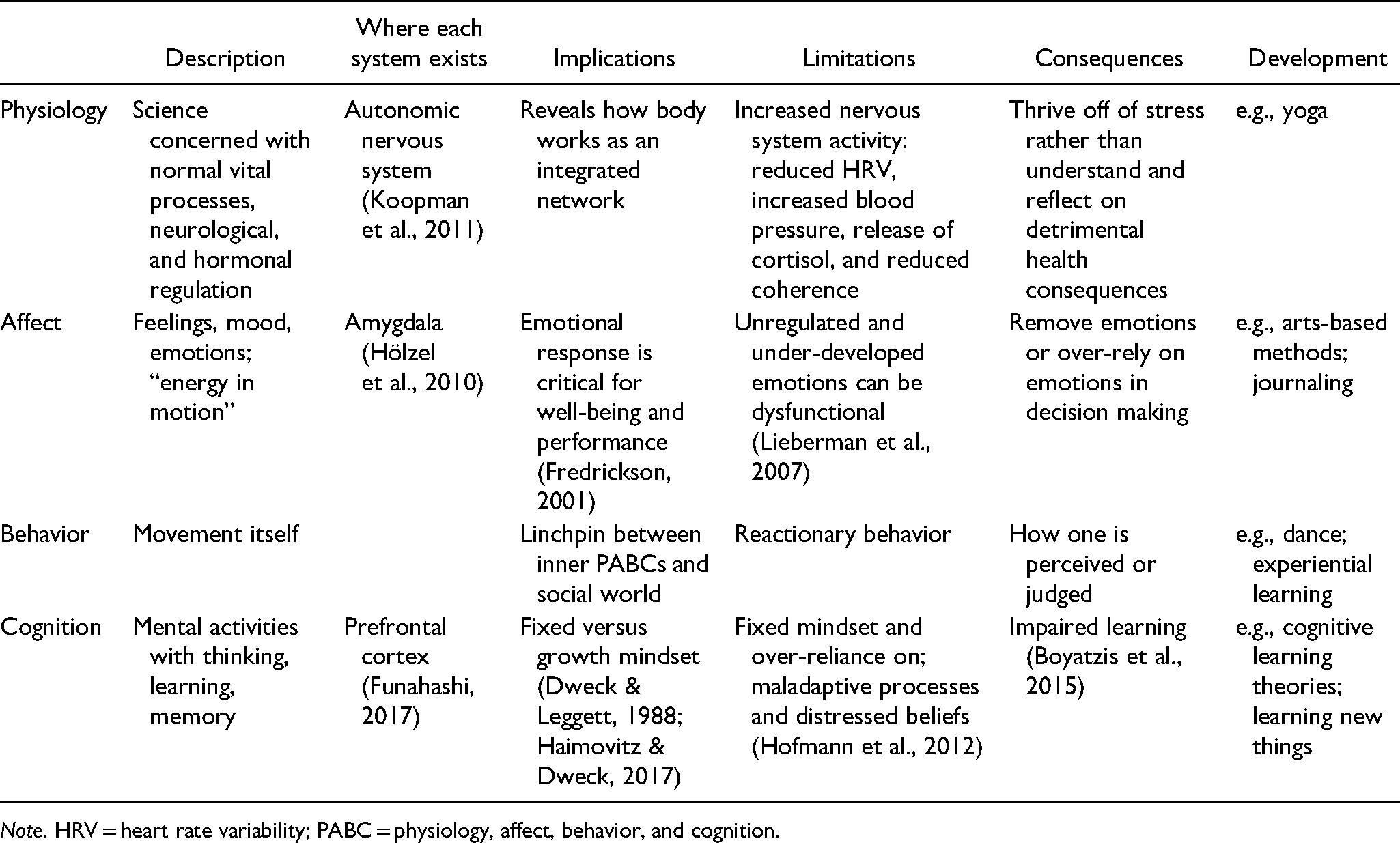
Note. HRV = heart rate variability; PABC = physiology, affect, behavior, and cognition.
Behavior
Whereas character focuses on a set of virtuous behaviors, the underlying anatomical system refers to behavior more broadly defined as “(1) Any response emitted by or elicited from an organism. (2) Any mental or motor act or activity. (3) Parts of a total response pattern” (Wolters Kluwer Health, 2008, p. 183). Although the definition of behavior might include aspects of cognition (“any mental … act or activity”), we address cognition separately.
Cognition
Cognition is defined as “(1) The mental activities associated with thinking, learning, and memory. (2) Any process whereby one acquires knowledge” (Wolters Kluwer Health, 2008, p. 332). There are several aspects of cognition that will serve to influence the other systems and the development of character. Cognition operates at both conscious and unconscious levels. Conscious thought processes are intentional, controllable, successive, and accessible to awareness (Bargh & Morsella, 2008). The unconscious is operationally defined as the influences or effects of stimulus processing of which one is not aware (Bargh & Morsella, 2008). These unconscious, unintentional mental processes are pervasive and have a prevailing influence over higher mental processes (Bargh & Morsella, 2008). Character development requires conscious cognitive processes and bringing to consciousness that which may be operating unconsciously, such as unconscious bias. Furthermore, individuals differ in the development and activation of the two brain hemispheres (left and right) that are highly integrated and involved in information processing (McCraty et al., 2009), with areas in each that specialize in linguistics and logic as well as in emotion, perception, and intuition (Corballis, 2014). Leadership development tends to rely on only some aspects of cognitive function while neglecting others such as perception and intuition. Particularly relevant to character development is that the cognitive theories one holds influence how malleable one considers their personal characteristics (intelligence, various forms of ability, and personality) to be (Dweck & Leggett, 1988)—referred to as fixed versus growth mindsets (Vandewalle, 2012). When individuals associate with having a fixed mindset, the person is limited to believing that they have a certain amount of ability and intelligence and perceive future success as improbable (Haimovitz & Dweck, 2017; Vandewalle, 2012). Alternatively, individuals who associate with having a growth mindset believe that abilities can be developed with hard work, good strategies, and helpful instruction from others (Haimovitz & Dweck, 2017).
Affect
Affect is “the emotional feeling, tone, and mood attached to a thought, including its external manifestations; especially as demonstrated by postural and facial expressions” (Wolters Kluwer Health, 2008, p. 41). Conceptually, affect varies along two dimensions: positive or negative arousal (e.g., excited, calm) and pleasant or unpleasant valence (e.g., happy, sad) (Posner et al., 2005). There are three major components associated with affect: feelings, mood, and emotions. The Latin origin for the word emotion comes from émové—“energy in motion.” Emotions arise from an individual's perspective of their situation, whether it is immediate, imagined, or recalled (Ellsworth & Scherer, 2003). Emotions are triggered by stimuli, which set off an influx of physiological, behavioral, and experiential responses (Ekman, 1992; Foolen et al., 2012). Emotions unfold over relatively short time periods, usually occur in an instance that is personal or meaningful, and invoke a conscious or unconscious reaction (e.g., facial expression) (Ellsworth & Scherer, 2003; Fredrickson, 2001).
Physiology
Relative to affect, cognition, and behavior, physiology has been neglected in leadership research and practice, in part because it is largely unobservable and its complex scientific underpinnings often lie beyond the expertise and understanding of management researchers and practitioners (Passarelli, 2015). Thus, we allocate more attention to identifying some of the critical physiological underpinnings, which we refer to later. Physiology is defined as “the science concerned with the normal vital process of animal and vegetable organisms, especially as to how things normally function in the living organism rather than to their anatomic structure, their biochemical composition, or how they are affected by drugs or disease” (Wolters Kluwer Health, 2008, p. 1209). Physiology reveals how the body works as an integrated network, from the smallest part (cells) all the way to the whole body (Bartsch et al., 2015), and how the body reacts and adapts to its environment. Although physiology has tended to be neglected in leadership development, failure to appreciate the function and limitations of physiology not only hampers development, but impedes healthy functioning of the system. Central to understanding physiology and its implications for leadership development is the nervous system, which is comprised of two main subdivisions: the central nervous system and the peripheral nervous system (Heinbockel, 2018; Koopman et al., 2011). The central nervous system includes the brain and the spinal cord and acts as the body's control center, delivering data to the rest of the body, whereas the peripheral nervous system is a network of nerves that processes changes in the internal and external environment, constantly relaying this information to the central nervous system (Koopman et al., 2011). Within the peripheral nervous system is the autonomic nervous system, which controls homeostasis through its two antagonistic systems: the sympathetic and parasympathetic systems (Koopman et al., 2011). Both of these systems work without conscious effort; however, the sympathetic system is termed the “fight-or-flight” response because it is most active under stressful circumstances, whereas the parasympathetic system is for “rest and digest” (Koopman et al., 2011). Sensory information is transmitted from the peripheral to the central nervous system (Heinbockel, 2018). When the body senses a stimulus (external or internal), this message is relayed to the central nervous system where it is cognitively assessed and registered and dictates the necessary response. The response may include a muscular response, which is observable through the movement of the human body, or it may include less observable responses such as a nervous system, endocrine system, or digestive system response.
Physiology must be stabilized in order to have enough energy to activate and execute tasks effectively. Specifically, correct breathing and attending to energy requirements affect the stability of the physiological system (McCraty et al., 2009). HRV measures cardiac variability by determining the variability in the intervals between successive heartbeats (Gard et al., 2014). HRV is a marker for functioning of the autonomic nervous system: low HRV (less variability in the heart rate) is associated with aging, higher body mass index, obesity, and decreased health (McCraty & Zayas, 2014) and is related to physical and mental health problems that have been linked to sick leave and early retirement (Dijkstra et al., 2019). HRV also reflects self-regulatory capacity, with HRV increasing with high effort to control one's thoughts, emotions, and behaviors.
Stressful events are known to trigger fight-or-flight responses due to activation of the sympathetic nervous system (Sherman et al., 2009). Excessive or prolonged activation of the sympathetic nervous system increases susceptibility to negative mental and physical health outcomes, such as suppressed immunity and increased vulnerability to diseases such as cancer (Sherman et al., 2009). This brief summary reveals that there is physiological hardwiring of the body that, when not understood or attended to, can be incoherent and dysfunctional, thus undermining the development of character.
Interrelationship of PABCs
The PABCs operating together, coherently in an interconnected fashion, support leader character as shown in Figure 1. Trait activation theory (Tett & Burnett, 2003) reveals how context or situations activate personality traits, and our theorizing brings to light how developing character can mediate the relationship between context and the core beliefs that are anchored in the PABCs. In this section, we describe the interrelationship between the PABCs. While coherence occurs within and across systems, we structure the following discussion by focusing on one system and its relation to the others.
Cognition—Physiology, Affect, and Behavior
The interrelationships among the PABC elements are particularly well researched with respect to disorders. For instance, people with posttraumatic stress disorder experience changes in their psychological responses (cognition) but no longer have the ability to temper their physiological responses to stress (Leeds, 2009). Chronic states cause acts of indecisiveness, hesitancy, and the inability to focus (Leeds, 2009)—the result of chemicals in the blood and the condition of the nervous system affecting the ability to sense and think (Foolen et al., 2012). Chronic stress and anxiety disorders are associated with persistent physiological changes (Hölzel et al., 2010). However, relatively brief periods of cardiac coherence training have given rise to significant improvements in physiological self-regulation and significant improvements in a variety of cognitive functions, thereby increasing coherence of the systems (McCraty & Zayas, 2014).
The role of cognition as it affects behaviors is particularly interesting with respect to visualization. Whether an individual is physically performing an action or simply visualizing the task, the brain is stimulated in the same way, activating the motor cortex (Markland et al., 2015). Mental imagery accesses the cognitive, emotional, and behavioral representations in the individual's memory (Markland et al., 2015). However, it appears that the visualization needs to be in the observer's motor repertoire, similar to how dancers simulate observed actions of other dancers, but only those who perform familiar dances (Slepian et al., 2014). Similarly, free play affects the prefrontal cortex, which is the area of the brain that controls complex thinking, reasoning, and executive function (Funahashi, 2017). Specifically, play enhances the plasticity of the prefrontal cortex (Kolb et al., 2012).
Physiology—Affect, Behavior, and Cognition
Physiological coherence is the quintessence of what has been termed “flow state” defined as a state of maximum efficiency and effectiveness, with minimal distractions or notice of time (Csikszentmihalyi, 1975; Watkins, 2013). Flow state requires coherence within and across all anatomical systems (Chin & Kales, 2019). HRV becomes chaotic under stress (low-frequency HRV), shutting down the frontal lobes of the brain, but a coherent heart rate (high-frequency HRV) enables the body to enter a highly efficient mode of functioning: elevated parasympathetic nervous system activity (Chin & Kales, 2019), faster reaction times, improved hormone balance, improved cardiac health, improved immune system activity, improved emotional balance, and improved thinking (McCraty et al., 2009).
Coherence in physiology is reflected in the pattern of the heart's rhythm and can be influenced by self-induced positive emotions (McCraty et al., 1995). During the experience of positive emotions, a sine wave-like pattern naturally emerges in the heart's rhythm without any conscious changes in breathing. A coherent flow of information is processed in the physiological system, specifically within the central and autonomic nervous systems, and helps determine the quality of feelings and emotions one experiences (McCraty & Zayas, 2014). This shift in heart rhythm is important for function with regard to facilitating higher cognitive functions, creating emotional stability, and facilitating states of calm (McCraty & Zayas, 2014).
Coherence is achieved through techniques (mental and emotional self-regulation) that are meant to be used in the moment one is stressed or preparing for an upcoming challenge. Paced breathing, for instance, increases coherence (HRV) between breathing and heart rhythms through the medulla; these techniques shift the participant's physiology into a coherent and balanced functional state, which is reflected in the pattern of the heart's rhythm (McCraty & Zayas, 2014). Alternatively, negative emotions (e.g., frustration and anger) are associated with a more incoherent pattern and increased sympathetic response (McCraty et al., 1995), suggesting that negative emotions may have a depleting physiological effect. When an individual experiences negative emotions frequently and for long periods of time, the result is chronic stress (Scott et al., 2015), which adversely affects heart coherence (McCraty & Zayas, 2014) in addition to depleting cognitive function (Scott et al., 2015).
Affect—Physiology, Behavior, and Cognition
Affect can simply be identified as positive or negative and positive affect can enhance cognitive functioning and performance, compared to negative affect (Berman et al., 2008). Affect is linked to specific behavioral tendencies which can manifest in different ways. For example, fear is linked with the urge to escape, anger with the urge to attack, disgust with the urge to expel, etc. (Fredrickson, 2001). The broaden-and-build theory of positive emotions (Fredrickson, 1998) states that certain discrete positive emotions (e.g., joy, interest, contentment, pride, and love) all share the ability to broaden people's momentary thought–action repertoires, widening the assortment of thoughts and actions that come to mind. Joy, for example, broadens the mind by creating the desire to play, be innovative, and be creative (Fredrickson, 2001). Conversely, negative emotions trigger narrow, immediate survival-oriented behaviors as, for example, with fear, which produces the urge to escape (Conroy & Berry, 2017).
When people's momentary thought–action repertoires are broadened, the assortment of thoughts and actions that come to mind is widened; a broadened thought–action repertoire then builds long-term, enduring personal skills and physical, intellectual, social, and psychological resources, which are available for future threats (Fredrickson, 2001, 2004). Play, for instance, builds lasting social bonds and connections, which can create ensuing social support and contribute to brain development (Fredrickson, 2001).
Moreover, individuals experiencing positive affect demonstrate a preference for variety, in addition to being flexible, creative, integrative, open-minded, and efficient, thereby reinforcing a cognitive ability that is broad and flexible (Fredrickson, 2001, 2004). In particular, independent positive emotions broaden the assortment of thoughts and actions momentarily present. Alternatively, distinct negative emotions restrict thoughts and actions. Resilient individuals rebound from stressful experiences more quickly and efficiently (Tugade & Fredrickson, 2004). More resilient participants exhibit significantly faster returns to baseline levels of cardiovascular activation following a speech task (Tugade & Fredrickson, 2004). Moreover, as predicted by the broaden-and-build theory, this difference in time needed to achieve cardiovascular recovery is mediated by differences in positive emotions (Fredrickson, 2004). Thus, momentary experiences of positive emotion can build enduring psychological resources, eliciting an upward spiral toward emotional well-being (Fredrickson & Joiner, 2002).
The ability to alter one's emotional response is central to overall well-being (McCraty & Zayas, 2014) since the neurophysiological mechanisms (e.g., nervous system and vagus neural pathway) that translate emotional expression to the cardiac system (i.e., heart) affect how someone regulates emotion (Porges et al., 1994). Therefore, exercising the affective system by being aware of emotions as they arise is important for optimal high-level cognitive functioning (decision making), controlled physiological response (focused breathing), and appropriate behavior (tempered) (McCraty & Zayas, 2014).
Behavior—Affect, Cognition, and Physiology
Often, behavior change interventions are based on cognitive processes rather than affective processes (Conroy & Berry, 2017). However, when a person does not enjoy doing a specific task or associates with it negatively (e.g., bad memory), the likelihood of the individual repeating the task is low. Over time, experiences accumulate, and people create memories based on their individual associations of the concept of a particular task with affective experiences. When a person is exposed to cues that recall the experience, relevant memories are activated, and activation can spread to closely related concepts (Conroy & Berry, 2017). Concepts with strong automatic affective evaluations have been shown to activate regions of the brain associated with emotions (Conroy & Berry, 2017).
Emotional stresses result in a number of physiological responses in the body known as “allostatic load” (McEwen et al., 2015), which negatively affects an individual's overall health. However, gross motor play can diminish the allostatic load (Burdette & Whitaker, 2005). “Play,” the spontaneous activity in which individuals engage to amuse and to occupy themselves (Burdette & Whitaker, 2005), has the potential to improve overall well-being: physical, emotional, social, and cognitive (Burdette & Whitaker, 2005). For example, a smile during play reflects multiple physiological processes in the body that can improve health (Burdette & Whitaker, 2005). Further, social connections can positively affect a person's well-being (Yang et al., 2016). Unstructured play cultivates brain development and contributes to achieving social connections (Csikszentmihalyi, 1975). Empathy, for example, is an ability that emerges in early childhood and affects meaningful affiliations and partly arises from the experience of free play (Burdette & Whitaker, 2005).
Likewise, posture, or the act of sitting or standing in relation to the proper anatomical position, is related to mood and emotion, which in turn affects how one thinks and feels (Nair et al., 2015). Research shows that correct, upright posture improves self-esteem, mood, and overall affect in addition to reducing fatigue, in both healthy and depressed people (Wilkes et al., 2017). Research has also suggested that sitting upright during a cognitive task, as opposed to being slumped over, actually reduces fatigue and improves mood and self-esteem, which aids in building resilience to stress (Nair et al., 2015). Therefore, researchers have concluded that autonomic states and physical behavior influence affective responding (Nair et al., 2015).
The foregoing discussion has defined the PABCs and provided theoretical and empirical examples of how they relate. Understanding the PABCs and their interrelationship is important for leadership development more generally, particularly around shifts in core beliefs about self, core beliefs about others, and core beliefs about the world, which may be dysfunctional for leaders and/or their followers. We continue our theorizing focusing on the development of leader character, to demonstrate how the PABCs influence the development of character and vice versa, how the development of character can influence the PABCs, which in turn can influence leadership development more broadly.
Leader Character's Reliance on the PABCs
Each dimension of character relies on the healthy functioning and coherence of the PABC systems; thus, development of leader character requires development of the PABCs. Because the PABCs are interrelated, it is not productive to isolate a system with a dimension of character, although for illustrative purposes, there are some specific connections that are more obvious or observable than others. For example, exercising temperance (being patient, calm, composed, self-controlled, and prudent) (Crossan et al., 2017) requires personal awareness of affect and physiology to gain control over those systems (McCraty et al., 1995). Muscle tension and chaotic heart rate (incoherence) occur as a result of a perceived threat (Streeter et al., 2012). In response to this threat, the sympathetic nervous system is activated (Sherman et al., 2009), triggering a fight-or-flight response (Porges et al., 1994). The prefrontal cortex, which controls higher thinking such as decision making, attention, and memory (McCraty et al., 2009), can be taken “offline” making the stressed person respond defensively (McCraty & Shaffer, 2015). Without this higher thought, a person may react to a stressful situation by slamming a door or yelling instead of reacting sensibly. If an individual lacks awareness and regulation of the physiological system underpinning the development of temperance, efforts to develop temperance will be thwarted (Seijts & Gandz, 2018; Seijts et al., 2017).
In this section, we provide a few examples of the reliance of leader character development on the PABCs, recognizing that each behavior (element) associated with the development of the dimensions of character would benefit from examination, keeping in mind that the behaviors themselves are ideally interconnected and support one another. This coherence among the elements and dimensions of character mitigates the possibility that what should operate as a virtue, does not operate like a vice. With this caveat of interconnectivity in mind, we offer some examples. The behaviors associated with drive (passionate, vigorous, results oriented, demonstrates initiative, and strives for excellence) reveal a physical, cognitive, and affective vitality (Crossan et al., 2017). For example, drive would be compromised if a person relies predominantly on the cognitive system and does not reap the benefits that a coherent affect and physiological system provides. Passion is not a purely cognitive endeavor since passion and affect cue cognition (Foolen et al., 2012). Vitality implicates physiology, for without a coherent physiological system to support it, the expression of vitality will be both limited and compromised (McCraty & Zayas, 2014).
Someone who does not often emote or who has not developed and strengthened their affective system will be compromised in their capacity to listen and develop empathy (Drollinger et al., 2006), a key behavior associated with humanity (Crossan et al., 2017). A person may be able to cognitively process the information but will be challenged in appreciating how the information resonates with them emotionally (Hargreaves et al., 2018). Thus, there is an impediment to leader character development.
Research has shown that fluid arm movement leads to a fluid cognitive processing style (fluent, free-flowing, and flexible thinking) (Slepian & Ambady, 2012), which supports the behaviors associated with the character dimension of collaboration (being flexible and open-minded, for example) (Crossan et al., 2017). Also associated with fluid arm movement are specific implications for the character dimension of justice, as revealed in someone who behaves fairly and equitably and is proportionate, even-handed, and socially responsible. The role of sensorimotor states in fluid social cognition, for instance, shows consequences for social judgment and behavior (Slepian et al., 2014). Thinking differently in one domain (e.g., fluid movement) influences how an individual responds to social targets in an unrelated domain (e.g., fluid thinking about gender), which facilitates curiosity (Ryan & Deci, 2000), and diminishes stereotype activation (Slepian et al., 2014). Slepian et al. (2014) showed that study participants who made or observed fluid arm movements categorized faces more often as biracial, were more concerned with racial inequalities, and endorsed stereotypes less than those who made non-fluid arm movements.
Although the behaviors associated with judgment may appear to have a strong cognitive emphasis, failing to account for the role of the other systems in supporting judgment would be a mistake (Floris & Cuganesan, 2019). The ability to focus, concentrate, and remember is largely dependent on how much emotional stress (related to the physiological and affect systems) is being experienced (Scott et al., 2015). In addition to contributing to low cardiac coherence (McCraty et al., 2009), stress has been identified as a primary contributor to lower cognitive performance, such as an impaired working memory and the inability to pay attention (Scott et al., 2015). Coherence requires the prefrontal cortex to maintain self-regulation, strategic thinking, decision making, empathy, and relatedness, in order to facilitate cortical function and down-regulate activity in the amygdala for optimal personal function and psychosocial well-being (Froeliger et al., 2012; Lieberman et al., 2007). Erratic cardiac patterns affect mental processes, including blocking one's ability to think clearly (McCraty & Zayas, 2014). Moreover, emotional stress impacts immediate and long-term cognitive function and is a contributor to many of the mental health problems in society today (Ellis & Thayer, 2010), which can translate into time lost at work (Scott et al., 2015). Thus, in order to function optimally and make sound executive decisions, the affective system needs to be exercised regularly (Floris & Cuganesan, 2019). Attending to negative stressors and being aware of how to effectively handle each stressor will help to develop one's character (e.g., Crossan et al., 2013a, 2013b). For example, yoga has been proposed to affect self-regulation, both in short- and long-term responses, through parasympathetic control and physiological reduction of prolonged emotional reactivity and its associated autonomic responses (Gard et al., 2014).
Transcendence and its associated behaviors (appreciative, inspired, purposive, future-oriented, optimistic, and creative) are characterized by positive emotions (Crossan et al., 2017). Positive emotions broaden the scope of perception, cognition, and behavior (Fredrickson, 2001), which enhance creativity and intuition (McCraty et al., 2009). Creativity, for example, functions most optimally when the individual is in a positive affective state (Fredrickson, 2004). Frequent experience of positive emotions can predict resilience and psychological growth (Tugade & Fredrickson, 2004), improve health status, and positively affect the body's physiological systems (McCraty et al., 2009). Further, repeated positive emotions transform people into more creative, knowledgeable, resilient, socially integrated, coherent, healthy individuals (Fredrickson, 2004; McCraty & Zayas, 2014; McCraty et al., 1995).
To be brave, determined, tenacious, resilient, and confident—behaviors associated with the character dimension of courage (Crossan et al., 2017)—also necessitates that the PABCs work in unison. The fight-or-flight response triggered by the physiological system can deprive a person of courage because fear takes over (i.e., elevated sympathetic response; Porges et al., 1994). Accountability and its associated behaviors of taking ownership, accepting consequences, and being conscientious and responsible (Crossan et al., 2017), rely heavily on learned behaviors. However, it is equally important to have well-developed cognition about what it means to be conscientious (Day et al., 2014). Similarly, affect (e.g., positive emotions) brings feelings of engagement and attachment (Boehm & Kubzansky, 2012; Boyatzis et al., 2015) to the responsibility.
The behaviors associated with humility (being self-aware, modest, reflective, curious, a continuous learner, respectful, grateful, and vulnerable) (Crossan et al., 2017) rely heavily on cognition, as revealed in being self-aware, reflective, and curious. But these behaviors are also linked heavily to affect. Indeed, exercising vulnerability places significant demands on the affect system. Often the fear of being vulnerable prevents individuals from developing vulnerability. Finally, integrity has strong connections to cognition, particularly for being principled and consistent, both of which require clear thinking. However, being transparent and authentic also reveal the importance of the affect system. The expression of integrity is not a purely cognitive endeavor and without affect, individuals often withhold important aspects of who they are or how they feel about things, which may inhibit the development of candor.
In summary, all dimensions of character and their associated behaviors rely on all of the PABC systems. Impediments to the development of character, and indeed leadership development more broadly, will arise when individuals are not aware (Crossan et al., 2013a, 2013b) or cannot regulate the underlying system, and when leadership development methodologies privilege a system, as is often the case with cognition, and neglect the remaining systems (DeRue & Myers, 2014).
Music as a Practice to Activate the PABCs and Develop Character
As described in this section, music provides clear connections to the PABCs and provides the added benefit that it has been connected to the development of leader character (Crossan et al., 2018). We focus on music, as an arts-based leadership development practice, to illustrate the theoretical links between the PABCs and leader character development.
Music and the PABCs
There has been extensive research associated with how listening to music affects listeners in a variety of positive ways (Karageorghis & Priest, 2012; Novotney, 2013; Simon, 2015) providing preliminary insight into the connections to the PABCs. Unlike many leadership development practices that tend to be cognitively focused (DeRue & Myers, 2014), music influences all of the PABCs (Schäfer et al., 2013). Examining the science associated with how music relates to the PABCs provides a point of departure that can be usefully used to interrogate whether and how leadership development addresses the PABCs. Breaking down the link between music and the PABCs, we draw attention to the five elements of musical compositions—rhythm, melody, pitch, harmony, and interval (Murrock & Higgins, 2009)—that invoke physical responses (Clark et al., 2015), as well as cognitive and physiological responses (Murrock & Higgins, 2009). Rhythm relates to physiology and affect and can be used, for example, for treatment or therapy of emotional ailments (Nnamani, 2016). Melody instigates a change or intensifying of mood, thought, or emotion along a continuum, therefore activating the affective system (Murrock & Higgins, 2009). Pitch is associated with frequency of the sound and a faster pitch relates to a stimulating response, whereas a slower pitch causes a relaxed response, thereby influencing the emotional response and listeners’ mood state (Murrock & Higgins, 2009). Harmony, the combination of pitches to form sounds, creates a distinct identifying composition, which resonates with people on a personal level (Murrock & Higgins, 2009). The interval, or tempo of the music, affects physiology with regard to coordination, fluidity of movement, and invokes an emotional response (Murrock & Higgins, 2009). Research demonstrates that tempo can invoke higher-level cognitive processing to regulate movement in Parkinson's patients (Ashoori et al., 2015). Moreover, the tempo of music affects arousal (i.e., state of excitement to calmness), whereas mood is affected by the mode of a song (i.e., minor or major chord) (Husain et al., 2002). Thus, music with a fast tempo and major key tends to excite and support high-energy activity (e.g., exercise), whereas music played in a minor key with a slow tempo generally relaxes listeners (e.g., preparing for sleep) (Clark et al., 2015; Husain et al., 2002; Salimpoor et al., 2009).
Listening to music affects each of the PABCs. Music affects the physiological system by exciting and inhibiting processes in the autonomic nervous system (Ellis & Thayer, 2010), which is sensitive to the rhythm, pitch, and dynamic elements in music (Clark et al., 2015). Music can also be used to activate the affective system, through associations, memories, experiences, moods, and emotions (Schäfer et al., 2013). Music can trigger an emotional response; mood is significantly improved in the presence of preferred music (Lesiuk, 2010), thus having an effect on the affect system (Clark et al., 2015). Listening to music affects cognition by redirecting attentional resources to the current task (Lesiuk, 2010). The frontal cortex detects the incoming music stimulus, which is also responsible for updating working memory, directly influencing cognitive processing, attention, and processing of sensory information (Lesiuk, 2010). Finally, music has also been used to influence behavior (Witek et al., 2014), be it the listener's coordination and movement, social interaction, or motor control (Murrock & Higgins, 2009). The syncopation, or beat of the music, is associated with body movement and dance (Witek et al., 2014). The beat of the music (i.e., rhythm), for instance, improves motor deficits in a variety of movement disorders (Ashoori et al., 2015). Having established the links between music and the PABCs, we illustrate the connections to leader character development through a music-based workshop.
Music and Character Development
Crossan et al. (2018) described how music can be used to influence the different leader character dimensions shown in Figure 1, however they did not draw the connection to the PABC underpinnings. By activating the PABCs, music can shift specific behaviors associated with character. For example, someone who is learning to be vulnerable may be fearful, and the physiological response would be elevated heart rate, often leading to inaction. By taking a few slow, deep, rhythmic breaths (McCraty et al., 2009), individuals can confront their fear, compose themselves, and gain or recapture coherence. Because music affects behavior through rhythm and can encourage free-flowing movement (Slepian et al., 2014), listening to music supports being flexible and open minded—behaviors associated with the character dimension of collaboration (Crossan et al., 2017). Being open minded offers greater perspective, which, in turn, activates aspects of judgment and humanity (Slepian et al., 2014). Further, listening to music affects an individual emotionally (Hunter & Schellenberg, 2010; Salimpoor et al., 2009). Transcendence (e.g., optimism) and temperance (e.g., calmness) often come as a result of the awareness brought to the affective system when listening to inspiring or relaxing songs, respectively (Navarro, 2015). The listener's emotional state is improved and physiological incoherence (i.e., heart rate variability and blood pressure) is reduced (Karageorghis & Priest, 2012). Because of this physiological and affective arousal, the character dimension of drive is activated. Listening to music during activities that individuals perceive as requiring drive (associated with the behaviors of being results oriented and striving for excellence) will reduce perceived effort and enhance a person's overall affective experience (Ellis & Salmoni, 2019). The following reflection provided as an example of how music influences character also reveals the PABC underpinnings:
In reflecting on why these songs are important to me, it may come back to the sense of balance. I think intrinsically I’ve known that I’m out of balance and focused too much on drive and accountability. Music calls to me the other dimensions, in interesting and in nuanced ways, and I do believe enriches my soul. There are times when I get absolutely obsessed with a song, and it may just be one chord, or one lyric, that I want to listen to over and over and over again. … If I think about that in my real life, I think I’m trying to find a place where I can bring different dimensions of my character together and begin to blur the line between me as a professional and me in my everyday life (Crossan et al., 2018, p. 59).
There is currently little research addressing how to develop leader character (Byrne et al., 2018) and, as Crossan et al. (2018) established, developing the dimensions of character requires more than one intervention to foster new habits. We support arts-based methods, such as the music workshop, as innovative approaches to activate the PABCs for character development. Listening to music is a popular leisure activity that transcends cultures (Schäfer et al., 2013), is omnipresent, and accessible among diverse populations (Ellis & Salmoni, 2019). Although we use music as an illustration, it can also serve as a methodology to study leader character development.
Implications for Research and Practice
Leadership research and leadership development have tended to focus on cognition and behavior with little regard for the coherence among the PABC systems (e.g., Dóci et al., 2015). Elevating the role of physiology and affect, alongside cognition and behavior, as important underpinnings of leadership is critical. Neglecting them provides a limited picture of the foundations of leadership and, therefore, does not appropriately inform what it takes to develop leaders. Understanding the role that the PABC systems play in character development informs the underlying theory of character and reinforces the premise that potential virtues may operate as vices when not operating in a coherent way (Crossan et al., 2013a), in the same way that the PABC systems can be dysfunctional when not coherent.
This notion of coherence in both the PABC systems and in leader character development is an important shift. Currently, leadership theories and leader development are often compartmentalized (Mango, 2018), and this compartmentalization tends to neglect the important connective tissue that creates coherence, thus running the risk of turning potential virtues into vices by emphasizing one facet of the overall system and losing sight of others (Crossan et al., 2017). Focusing on coherence may help to address current conundrums in leadership, such as the “too much of a good thing” phenomenon (Antonakis et al., 2017), where the relationship between intelligence quotient (IQ) and perceived leader effectiveness is found to be curvilinear in an inverted U, indicating a moderate IQ at about the 120 range is better than lower and higher. Future research could examine the PABC underpinning of high IQ individuals to assess the level of coherence. We further posit that strength of character is likely to moderate the relationship between IQ and perceived leader effectiveness such that the optimal combination is high IQ and strong character. Although this example focuses on IQ, there are many examples in leadership where researchers focus on aspects such as authenticity, humility, empathy, compassion, or courage, for example, in isolation of the other dimensions and elements of character. We see the shift to examine coherence and the interconnected nature of character as an important theoretical underpinning to address the critique of excessive positivity raised by Alvesson and Einola (2019). In addition, the educational context tends to privilege cognition and rewards certain character-related behaviors such as being analytical and cognitively complex, but perhaps undermine other character dimensions such as humility, humanity, and collaboration (Byrne et al., 2018).
Understanding leader development in terms of the interconnected nature of the PABCs and the dimensions of character will serve a wide scope of leadership research. Attending to the PABC systems in the development of character will demand new approaches to leadership development. Although we used music for illustration, practices such as yoga, mindfulness, improvisation, and meditation that attend to the PABCs are shifting from the margins to become more legitimate (Bermant, 2013; McCraty et al., 2009; Schure et al., 2008; Sun et al., 2015). The development of the PABCs is even evident in elite sport as athletes are encouraged to develop their physiological and affect awareness to enhance their performance (Gross et al., 2018; Kaufman et al., 2018; Sun & Wu, 2011). Arts-based methods may also provide novel approaches to activate the PABCs for character development. We described methodologies that highlight awareness of the PABC systems and the character dimensions to support behavior change; however, there is need for future research to examine how these systems work to support leader character development over time to form habits.
Although there is a significant agenda for future research, we highlight four promising areas. First, there is a need to empirically examine the functioning of the PABC systems in leader character development. Physiological measurements such as heart rate monitoring, cognitive neuroscience imagery, and existing measures around movement can be coupled with self-reported measures of affect to provide deeper insights into the functioning of these systems as they relate to leader character development. In particular, there is a need to better understand some of the underexplored systems, such as the role physiology plays.
Second, it will be important to examine whether there may be sequencing in the development of the dimensions of leader character. For example, since temperance has a strong physiological component that may impede cognitive function when impaired, it may be that being able to develop temperance could provide the patience, calm, and self-regulation to address challenging dimensions of character development such as courage. Preliminary insight for this sequencing comes from Sosik et al. (2019) who found that self-control is necessary to activate certain dimensions of character. Humility may also play a critical role—without the self-awareness, reflection, and vulnerability associated with humility, individuals may find their learning compromised (Nielsen & Marrone, 2018).
Third, the dynamic of time needs to be addressed to understand how leader character develops, or erodes over time. The continuum of leader character development shown in Figure 3 merits examination to better understand how individuals move from the activation of character at a point in time, such as a workshop, to how that behavior forms a habit that is sustained across contexts. Replicating prior studies that have examined phenomena, such as cheating or other dysfunctional behavior, inserting character should serve to address whether strong character may explain positive outliers or how character development plays a moderating role.
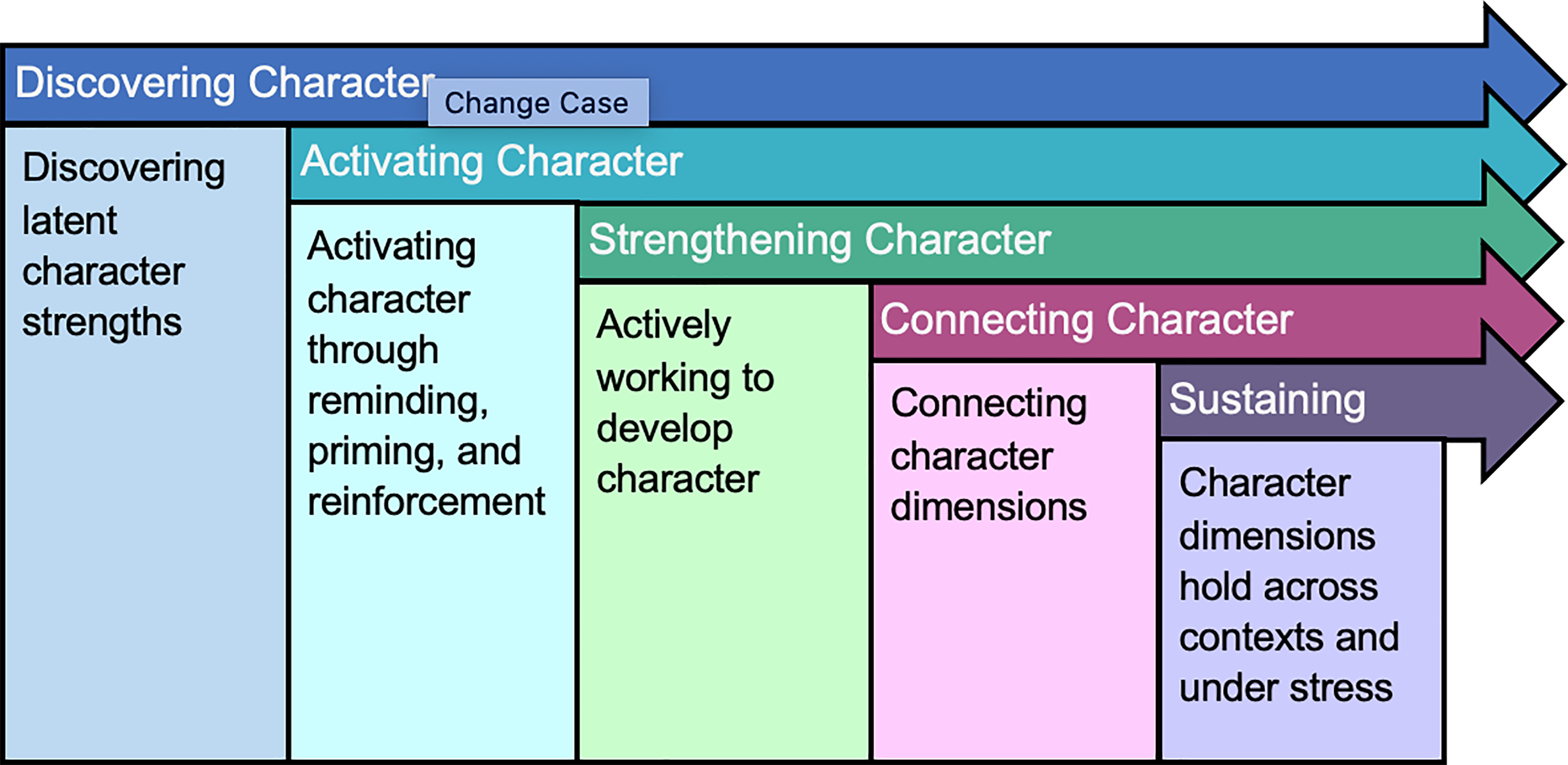
Leader character development continuum (Crossan et al., 2018).
Finally, it will be important to examine the various outcomes of leader character development. Although leader character has been linked to personal well-being and sustained excellence in organizations (Seijts et al., 2017), there is a dearth of research examining the range of associated outcomes that might result from character development. There are many possibilities. For instance, heavy workloads, deadlines, and typical workplace stressors can often amount to serious psychological consequences, such as burnout (Valcour, 2016). Too much stress can lead to negative health consequences, such as increasing one's susceptibility to a wide range of medical conditions (e.g., hypertension) and the incidence of disease (e.g., cold and flu). Therefore, identifying psychological resources, such as the development of leader character, enabling individuals to cope with stress, should aid in minimizing rates of physical illness (Sherman et al., 2009). Similarly, physical activity may prevent psychological and physical stress-induced suppression of the immune system, reducing the susceptibility and severity of infectious diseases caused by stress (Fleshner, 2005). Physical activity can also improve emotional well-being by minimizing anxiety, depression, aggression, and sleep problems, while improving mood (Burdette & Whitaker, 2005). Being stuck in an unpleasant emotional state (fight-or-flight) can be devastating and result in detrimental performance—reduced creativity and inability to think clearly, both of which result in a greater risk of poor decision making and difficulty concentrating (Boyatzis et al., 2015). Leaders who spend more time in an unpleasant emotional state have a greater negative impact on the team's performance (Boyatzis et al., 2015). Conversely, leaders who have the ability to moderate their emotional reactivity in situations that would usually produce fear could positively affect the team's overall emotional state. Practicing mindfulness can help with training this ability by regulating pathways and reducing emotional reactivity (Froeliger et al., 2012).
Conclusion
Prior research has established the importance of leader character development for well-being and sustained excellence, however there has been little holistic understanding about what it takes to develop character. Understanding the anatomical PABC systems as they relate to leader character development not only yields a better understanding about the nature of leader character, but also prompts consideration of new approaches to developing character as illustrated with the music workshop. Both the PABC systems and leader character can be exercised and developed. We have theorized how the PABC systems and leader character interrelate and exposed how deficiencies in the PABC systems can undermine leader character development. These theoretical underpinnings will enable a more robust analysis of the development of character with respect to the coherence of the PABC systems and how they support character development. Understanding what character is and how it can be developed affords the potential to examine whether strength of character explains how different people function in the same context. Importantly, this holistic and integrative approach to leader character development may help address the current conundrums in leadership that have derived from a compartmentalized approach, providing important connective tissue to support optimal leadership and leadership development.
Footnotes
Declaration of Conflicting Interests
The authors declared no potential conflicts of interest with respect to the research, authorship, and/or publication of this article.
Funding
The authors disclosed receipt of the following financial support for the research, authorship, and/or publication of this article: We gratefully acknowledge the financial support of the Ian O. Ihnatowycz Institute for Leadership at the Ivey Business School, Western University.
