




Abstract
Developing others is a core component of effective leadership in many leadership theories. However, prior research has focused primarily on observable developmental behaviors, leaving a gap in understanding the self-concepts that may underlie and sustain such behaviors. We extend current theory by suggesting that developing others can be a part of leaders’ core identity that impacts followers. We create and validate the developmental self-concept (DeSC) scale to assess the extent to which leaders construe developing others as central to their leader identity, feel efficacious in fostering follower growth, and feel motivated to do so. Across four studies, we establish the DeSC's psychometric properties and predictive utility. Study 1 supports a three-factor structure with an overarching DeSC factor. Study 2 provides convergent and discriminant validity evidence relative to relevant constructs. Study 3 demonstrates predictive validity in a dyadic field study, with leaders’ DeSC scores predicting direct-report ratings of leadership behaviors and follower outcomes. Study 4 further demonstrates predictive validity in judgment and decision contexts, with higher DeSC scores predicting stronger preferences for developmentally oriented job candidates and greater perceived value alignment with a developmental organization. Overall, the DeSC offers a new tool for studying developmental leadership as an identity-based construct and for evaluating leader development efforts with implications for shaping organizational cultures.
Many leadership theories suggest that developing followers is a core aspect of effective leadership (e.g., Avolio et al., 2004; Eva et al., 2019; Gardner et al., 2021; Pelaez Zuberbühler et al., 2023; Rafferty & Griffin, 2006). Although such theories generally emphasize leaders’ developmental behaviors, such behaviors are influenced by many factors, including internal drives, external policies, and even followers’ expectations (Ayoko et al., 2023; Behrendt et al., 2017). However, little is known about whether leaders internalize follower-oriented behaviors into their self-concept or how such internalization translates into behavior. Understanding the centrality of follower development to a leader's self-concept is important for a variety of reasons, not least because authentic developmental behaviors require consistency between a leader's behaviors and sense of self (Gardner et al., 2005). Moreover, the ability to measure the centrality of developing others to a leader's sense of self could prove valuable for leader development programs attempting to influence leader characteristics deeper than mere skills, such as identity and motivation. To date, however, no such measures exist. The present studies present initial validation evidence for a measure designed to assess the extent to which development is central to a leader's sense of self.
Research on effective leadership consistently highlights developing followers as one of its core components. Across numerous leadership frameworks, effective leaders are described as supporting followers’ growth through practices such as coaching, empowering others, attending to individual developmental needs, and creating conditions that enable learning and advancement (Avolio et al., 2004; Bass, 1999; House, 1996; Kouzes & Posner, 2023; Walumbwa et al., 2008).
More recently, Peláez Zuberbühler and colleagues (2023) discussed a framework called coaching-based leadership (or CBL), defined as “providing support and helping employees to identify opportunities to achieve individual developmental goals” (p. 649; see also, Cox et al., 2023). Peláez Zuberbühler and colleagues (2023) found that leaders’ higher CBL scores were linked to increased psychological capital (efficacy, optimism, perseverance, and resilience) among followers. Psychological capital, in turn, was associated with higher work engagement, which predicted improved work performance. These results align with Lee et al.'s (2019) work demonstrating the mediating role of daily coaching behaviors in the link between transformational leadership and positive outcomes (e.g., work engagement, turnover intentions) and Akdere and Egan's (2020) research on transformational leadership's influence on employee and customer outcomes through support for development.
Leader Developmental Self-Concept
Leader self-concept—commonly referred to as “leader identity” and defined as the cognitive representation of oneself as a leader that informs emotion, cognition, and behavior (Priest & Middleton, 2016)—has long been recognized as a central factor in shaping leaders’ potential and performance (Day & Harrison, 2007). It predicts numerous outcomes, including leaders’ competency and promotion opportunities (Kragt & Day, 2020), leader emergence (Guillén et al., 2015), and the development of both specific leadership skills and broader leadership capability (Miscenko et al., 2017).
However, merely defining oneself as a leader is not enough. Specific beliefs about what kind of leader one is (or aspires to be) also impact leadership behaviors and outcomes (Hannah et al., 2012; Lord & Hall, 2005; van Knippenberg et al., 2004). These include beliefs about development, although prior work (e.g., Reichard et al., 2017) has focused primarily on leaders’ self-development intentions and behaviors, rather than whether they internalize the development of others as central to their leader identity.
Given the well-documented impact of leaders’ developmental behaviors, including coaching, mentoring, providing challenging opportunities, and supporting employees’ pursuit of personal and professional goals, on both followers’ work experience and broader organizational outcomes (Bass, 1999; Ellinger et al., 2003; House, 1996), it is important to determine the extent to which leaders internalize follower development into their own self-concepts. To date, research has primarily focused on the extent to which leaders exhibit developmental behaviors. Although measuring developmental behaviors is important, it is possible for a leader to practice such behaviors without fully internalizing them into their self-concept. Indeed, one might argue that an authentically developmental leader must both practice developmental behaviors toward followers and construe their leadership role as one that is centrally developmental in nature. In other words, an authentic practice of follower development should spring from an internalized belief that development is a core, defining aspect of one's own mental model of leadership.
Measuring leaders’ developmental self-concepts alongside their observable behaviors could help determine whether leaders’ developmental behaviors reflect authentic internal values or are simply performative responses to external pressures. Such determinations will be critical for creating sustainable, systemic, and impactful change regarding developmental leadership practices. We therefore define a leader's developmental orientation as being a function of both a developmental self-concept and developmental behaviors, each of which is a necessary but insufficient component of what it means to have a developmental orientation as a leader. Being able to measure a leader's developmental self-concept in a valid and reliable manner could be useful to leader developers interested in determining the impact of their efforts and to anyone hoping to understand the processes by which leaders come to help others within their organization to grow, both personally and professionally.
Drawing from research on leader identity (Chan & Drasgow, 2001; Hiller, 2005; Lord & Hall, 2005) and broader social-psychological perspectives on views of the self (Leary & Tangney, 2003), we argue that a valid measure of a leader's developmental self-concept should capture (1) beliefs about the centrality of development in defining leadership, (2) self-efficacy for developing others, and (3) motivation to develop others. While self-efficacy and motivation are conceptually related and typically correlated concepts (Chan & Drasgow, 2001; Hiller, 2005), they are not interchangeable; a leader might feel capable of fostering others’ growth but be unwilling to do so, or vice versa. This multi-dimensional view aligns with social-psychological theories of the self-concept, which both emphasize and distinguish between self-defining beliefs, self-evaluations, and motivations at individual, relational, and collective levels (for review, see Leary & Tangney, 2003).
Surprisingly, we know of no measures capturing developmental self-construal among leaders, a gap the present research was intended to address. Across four studies, we present initial validation evidence for such a measure, called the developmental self-concept (DeSC) scale. Study 1 examined the DeSC's structural validity and reliability. Study 2 examined the DeSC's discriminant and convergent validity with other constructs in its nomological network. Study 3 was a dyadic field study examining whether leaders’ DeSC scores predict direct reports’ perceptions of developmental leadership and turnover intentions. Finally, Study 4 investigated whether leaders with more developmental self-concepts are attracted to developmental organizations and are predisposed to hire developmentally oriented people for supervisory or managerial roles, thereby shaping their organizational contexts to be more developmental.
Study 1
Study 1's primary goal was establishing the DeSC's factor structure. Given the distinct nature of the DeSC's three subscales, we expected it to exhibit a complex factor structure, including three factors corresponding to the self-definition, efficacy, and motivation subscales, and an overarching factor onto which all the subscales loaded highly. We designed Study 1 as a two-part investigation. In Study 1A, we aimed to identify the factor structure through exploratory factor analysis (EFA). Study 1B then utilized confirmatory factor analysis (CFA) on a second sample to examine the data's fit with the hypothesized structure.
Our formal hypotheses were as follows:
Study 1A - Exploratory Factor Analysis
Method
Item Generation
In creating the DeSC, we intended for each item to reflect one of three theoretically grounded dimensions: developmental self-definition (how central developing others is to one's identity as a leader), developmental efficacy (confidence in one's ability to foster others’ growth), and developmental motivation (desire to develop others). We followed Colquitt et al.'s (2019) content validation guidelines, prioritizing both definitional correspondence and domain representativeness in discussions among our research team, resulting in an initial pool of 26 items reflecting the intended subscales. To ensure practical relevance and content coverage, we also consulted with a leader development professional to refine the wording of our items to enhance both their clarity and breadth of applicability to leaders working in different domains.
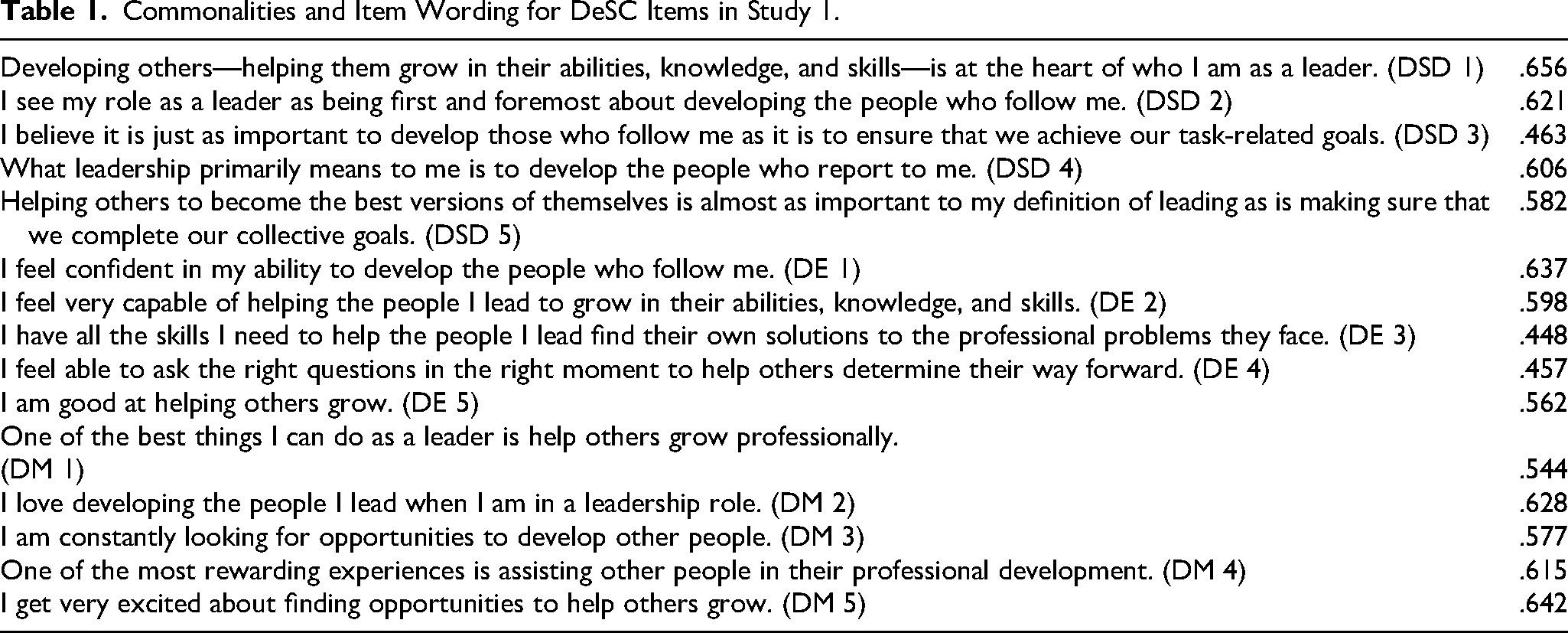
After several rounds of discussion, we selected five items per subscale that we believed were the most conceptually appropriate and face valid items for their respective constructs (see Table 1). We anticipated that some items might be dropped based on empirical performance (e.g., cross-loadings or low factor loadings; see Method and Results sections). To assess definitional distinctiveness (Colquitt et al., 2019) before formally evaluating structural validity, we recruited three leader development subject matter experts to sort all the items into three categories corresponding to the DeSC's proposed subscales. These SMEs reliably categorized all items into the theoretically intended subscales, with only one exception—one SME classified a motivation item (labeled DM1 in Table 1) as a self-definition item. We thus retained all 15 of these items for our formal structural analyses, which we describe below.
Commonalities and Item Wording for DeSC Items in Study 1.
Participants
We recruited 350 participants from Prolific, guided by recommendations from Comrey (1988), Clark and Watson (1995), and Guadagnoli and Velicer (1988), who suggest 300–450 participants as sufficient for scale construction. We opted for 350, as this sample size would allow us to ensure a suitable minimum sample size after excluding data for quality concerns.
Using Prolific's screening tools, we restricted recruitment to individuals in leadership, supervisory, or managerial roles with at least one subordinate. Participants had to explicitly affirm that their current workplace role involved “directing, coordinating, or overseeing the activities of other people” to take our survey.
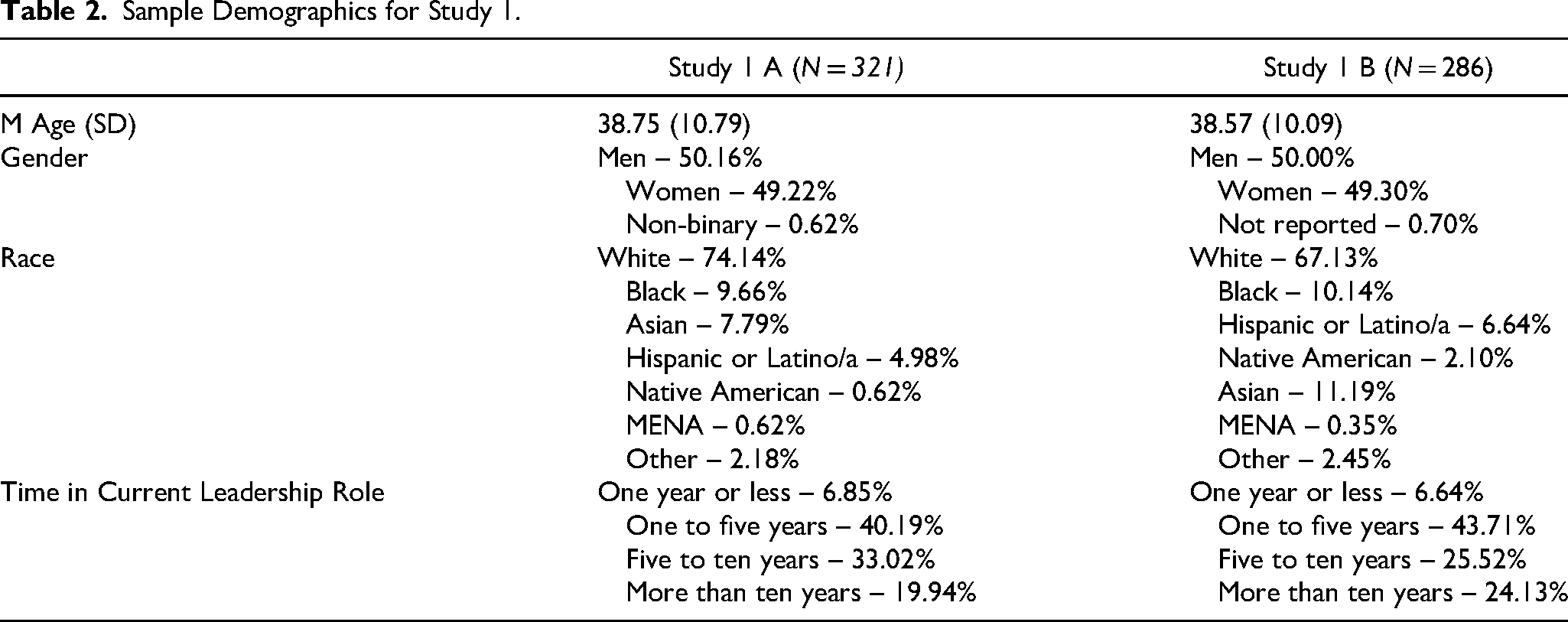
Per Malamis and Howley's (2022) recommendation, we excluded data from participants whose average response time fell below three seconds per item, leading to 29 participants’ data being omitted. Our final sample included 321 participants, and their demographics are included in Table 2.
Sample Demographics for Study 1.
Measures
All study measures were administered using Qualtrics.
Demographic Information. Following the leadership role screener, participants completed a demographic questionnaire assessing their gender, ethnicity, age, education, and the industry in which they work.
Developmental Self-Concept. Participants then completed the 15-item Developmental Self-Concept (DeSC) Scale. This measure was designed to have three subscales: developmental self-definition, developmental efficacy, and developmental motivation. Each hypothesized subscale contained five items and was rated on a five-point Likert scale (1 = “Disagree strongly,” 5 = “Agree strongly”).
The developmental self-definition (DSD) subscale assessed the degree to which participants perceived developing others as a central part of their identity as a leader (e.g., “Developing others—helping them grow in their abilities, knowledge, and skills—is at the heart of who I am as a leader”) and exhibited strong reliability in this sample (α = 0.89). The developmental efficacy (DE) subscale assessed the degree to which participants felt confident and capable of developing their followers (e.g., “I feel very capable of helping the people I lead to grow in their abilities, knowledge, and skills”) and likewise exhibited strong reliability (α = 0.87). Finally, the developmental motivation (DM) subscale assessed how much participants desire and seek out opportunities for developing others (e.g., “I love developing the people I lead when I am in a leadership role”) and, as with the other two subscales, demonstrated strong reliability (α = 0.89).
Results
Before conducting the exploratory factor analysis (EFA), we assessed the suitability of our data for such analysis. The Kaiser-Meyer-Olkin (KMO) measure verified the sampling adequacy (KMO = 0.936) indicating an excellent level of common variance favorable for a reliable factor analysis, while a significant Bartlett's Test of Sphericity (
We tested hypothesis 1.1 by conducting an EFA using principal axis factoring and Promax rotation. Three factors emerged, explaining a cumulative 69.38% of the total variance. All commonalities were above 0.40, further indicating the suitability of these data for factor analysis (Costello & Osborne, 2005; see Table 1).
To consider an item as loading onto a factor, our criteria were a minimum loading of at least 0.32 (Tabachnick & Fiddell, 2000). An item was considered as cross-loading when it loaded at least 0.50 on two or more factors (Tabachnick & Fiddell, 2000) and the difference between loadings was less than 0.10 (Gorsuch, 2014). Obtained loadings corresponded to our expectations, with three distinct factors emerging (Table 3) and all factors correlating moderately with each other (Table 4), with no items cross-loading on multiple factors. Because no items exhibited weak loadings or problematic cross-loadings, all 15 items were retained for subsequent analyses.
Item Loadings for the DeSC in Study 1.
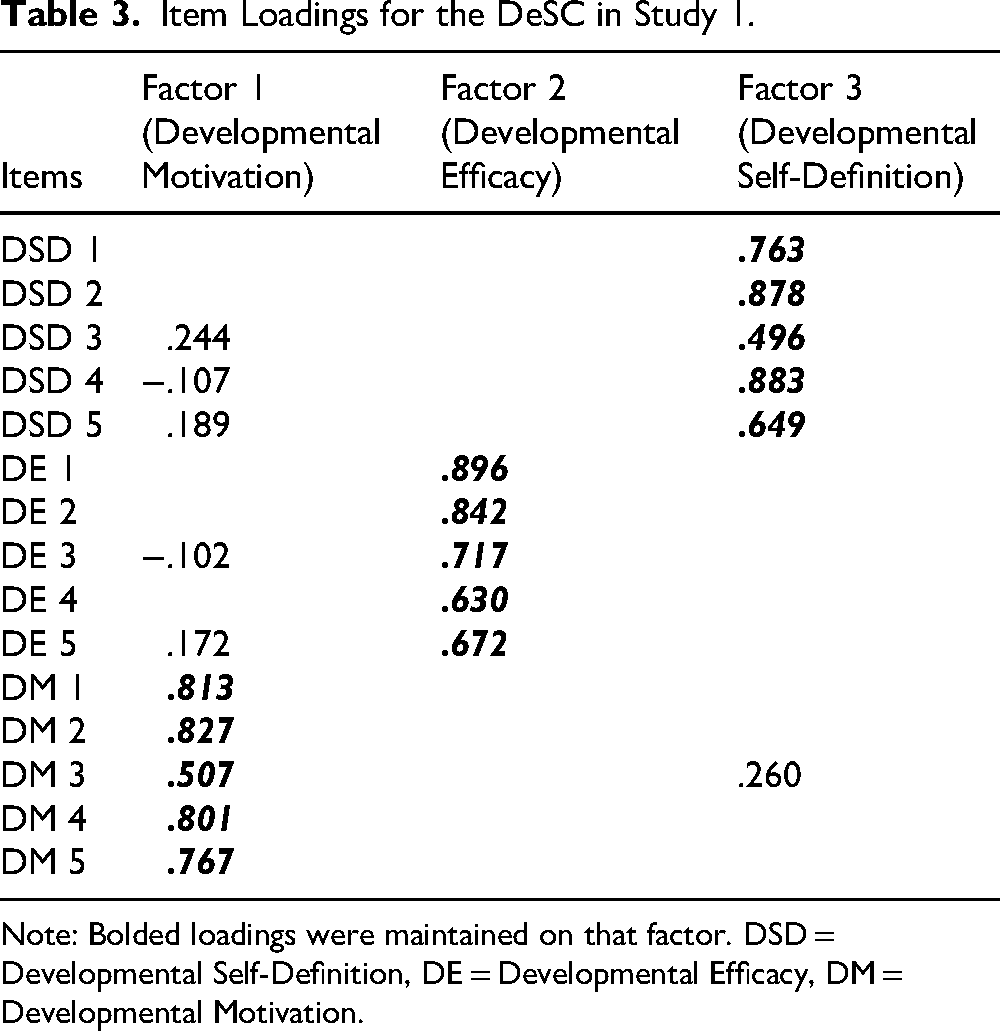
Note: Bolded loadings were maintained on that factor. DSD = Developmental Self-Definition, DE = Developmental Efficacy, DM = Developmental Motivation.
Correlations among the Subscales of the DeSC and with the Total Scale Score in Study 1.
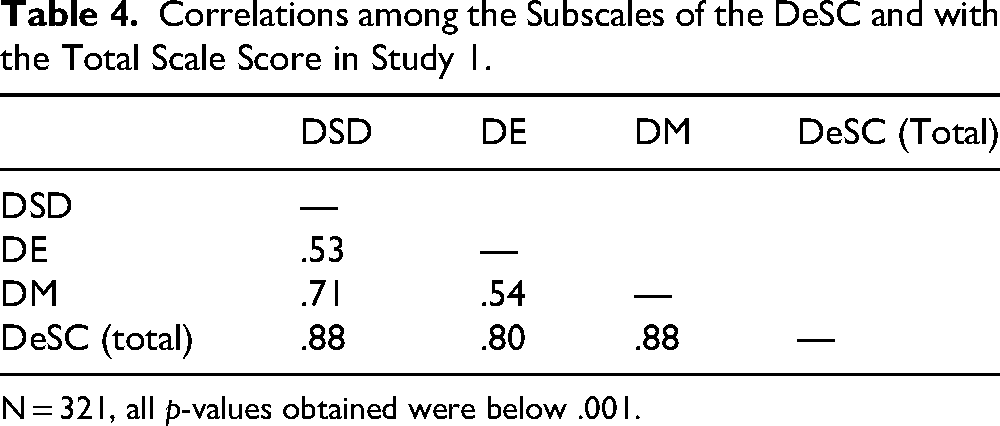
N = 321, all p-values obtained were below .001.
Study 1B – Confirmatory Factor Analysis
Method
Participants, Procedure, and Measures
We recruited 380 participants from the same Prolific sample pool as in Study 1A, using the same screening questions and time standards (i.e., requiring 3 s per item).We also included one reverse-coded invariance-check item per DeSC subscale, scored on the same 5-point Likert scale. For instance, the DSD subscale included the item, “My primary responsibility as a leader is to ensure that my team accomplishes its tasks and goals.” Participants’ subscale averages were compared to their responses on these items, and participants scoring “0” (indicating no variation) on any invariance check was removed. This resulted in excluding 90 participants’ data (including four who also failed the response time criterion) leaving a final sample of 286 (see Table 2) that we deemed suitable for confirmatory factor. Other than the invariance-check questions, participants completed the same measures as in Study 1A. All subscales of the DeSC exhibited strong internal reliability estimates (DSD α = 0.88; DE α = 0.86; DM α = 0.88).
Results
We assessed model fit according to Hu and Bentler's (1999) standards, focusing on a Comparative Fit Index (CFI) above 0.95, a Root Mean Squared Error of Approximation (RMSEA) score of less than 0.06, and a Standardized Root Mean Square Residual (SRMR) of less than 0.08. Given the chi-square test's known limitations (Bollen, 1989), especially sensitivity to sample size and correlated items, we report chi-square results but did not rely on it as a fit index.
Confirmatory factor analysis revealed poor fit for unidimensional model according to every fit index, χ(90) = 607.54, p < .001, CFI = 0.79, RMSEA = 0.14, SRMR = 0.09. However, a three-factor model achieved adequate fit for all indices save chi-square, χ(87) = 147.81, p < .001, CFI = 0.98, RMSEA = 0.05, SRMR = 0.04. A a chi-square difference test revealed this three-factor model to fit the data significantly better than the unidimensional model, Δχ2 (3) = 459.73, p < .001, supporting hypothesis 1.2.
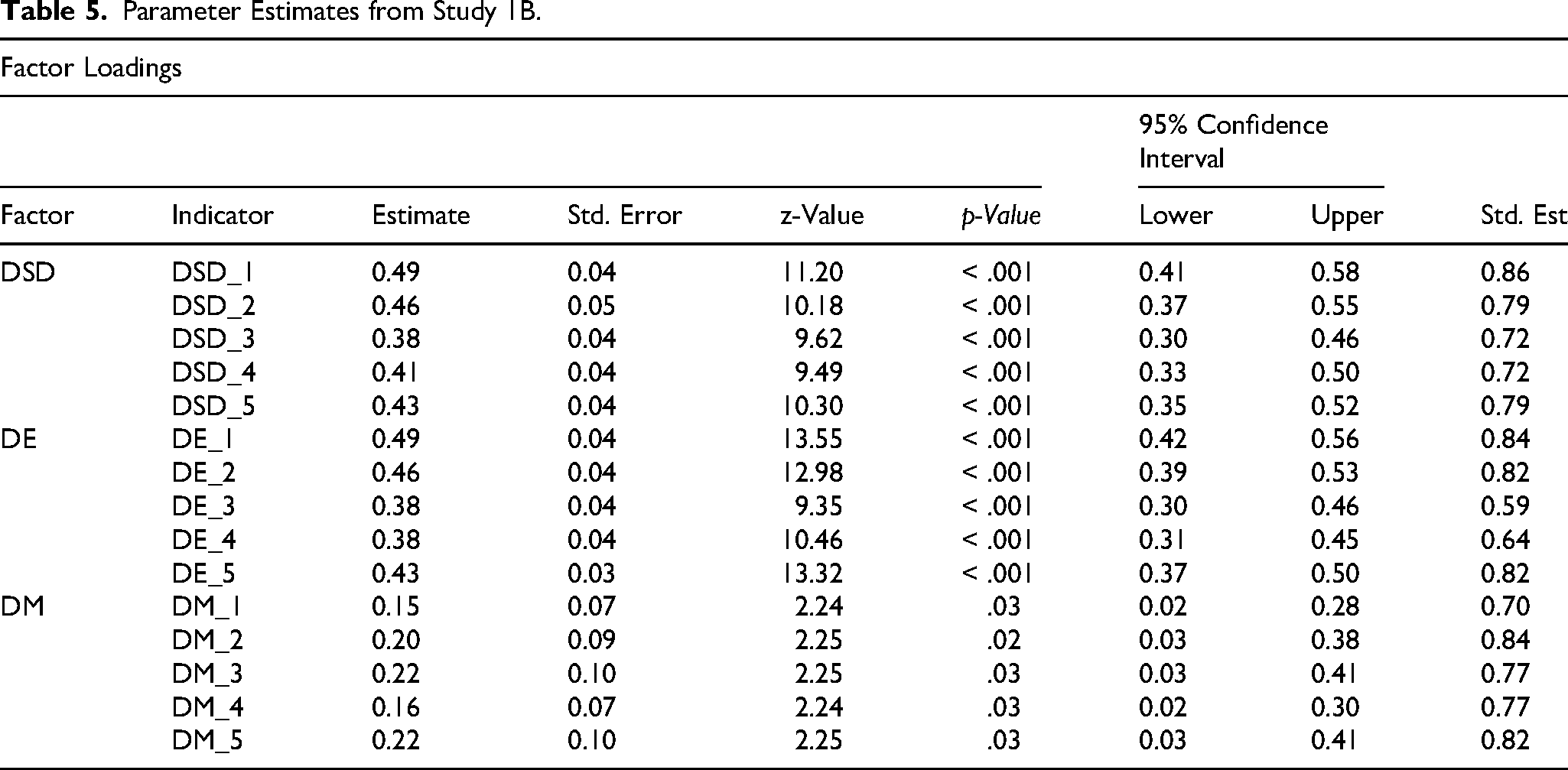
We next tested a three-factor model with a second-order, overarching factor, which necessarily yielded the same fit indices as the independent three-factor model, χ2(87) = 147.81, p < .001, CFI = 0.98, RMSEA = 0.05, SRMR = 0.04. This equivalence in fit suggests both models adequately represent the data. However, we retained the second-order model, supporting Hypothesis 1.3, due to its theoretical coherence, aligning with the conceptualization of developmental self-concept as a unified yet multifaceted construct. In this refined model, all loadings for the first-order factors were significant, with loadings on the DSD subscale ranging from 0.72 to 0.86, on the DE subscale from 0.59 to 0.82, and on the DM subscale from 0.70 to 0.82 (see Table 5). For the second-order factor loadings, each first-order factor showed robust associations with the overarching developmental self-concept, with loadings of 0.81 for DSD, 0.73 for DE, and 0.96 for DM (see Table 6).
Parameter Estimates from Study 1B.
Second-Order Factor Loadings from Study 1B.

Test-Retest Reliability
To assess the DeSC's test-retest reliability, we re-sampled 115 participants from Study 1A three or more weeks after the initial assessment. As in Study 1B, we employed invariance items to ensure data consistency, leading us to exclude 10 participants’ data. This resulted in a final sample of 105 participants, which is adequately sized for test-retest reliability analysis using intraclass correlation coefficients (ICC; Kennedy, 2022). Per Fleiss (2011) and Cicchetti (1994), the DeSC demonstrated acceptable test-retest reliability both as an overall scale (ICC = 0.83, 95% CI = [0.76, 0.88]) and across its subscales (DSD ICC = 0.74, 95% CI = [0.63, 0.81]; DE ICC = 0.72, 95% CI = [0.61, 0.80]; DM, ICC = 0.78, 95% CI = [0.69, 0.84]).
Discussion
Study 1 began the process of establishing and validating a new measure of a leader's development self-concept. Using both exploratory and confirmatory factor analyses, Study 1 demonstrated that the DeSC contains three sub-factors. An overarching, second-order factor further shows that the DeSC reflects a cohesive construct (i.e., an “overall” dedication to developing others in one's role as a leader) whose subscales—developmental self-definition, developmental efficacy, and developmental motivation—are related yet distinct elements. Thus, there is potential value in considering both total scores on the DeSC and scores on its individual subscales, depending on the specific questions being examined. Scores on the DeSC also exhibited reasonable levels of consistency over time.
It is worth noting that we had anticipated dropping items from the DeSC based on empirical performance. However, all items met our maintenance criteria. Given that the scale is not overly long, and that all items demonstrated strong fit in the CFA, we saw no theoretical or empirical justification for item removal. Having established the DeSC's structural validity, we next sought to establish its convergent and discriminant validity by relating the DeSC to other relevant constructs in Study 2.
Study 2
In Study 2 we began examining the DeSC's discriminant and incremental validity, to show that it represents a novel construct. We therefore examined the DeSC's associations (while controlling for relevant covariates) with relevant measures, namely the self-liking/self-competence scale (revised) (Tafarodi & Swann, 2001), the personal growth mindset scale (Dweck, 2006), the big five inventory-15 (Lang et al., 2011), the empathic concern scale (Davis, 1983), measures of psychological entitlement (Campbell et al., 2004), narcissistic grandiosity (Rosenthal, 2005; Rosenthal et al., 2020), and Machiavellianism (Jones & Paulhus, 2014), measures of leader identity and leader self-efficacy (Hiller, 2005), and the coaching-based leadership scale (Peláez Zuberbühler et al., 2023).
We were particularly interested in the association between the DeSC and coaching-based leadership (CBL). CBL emphasizes trusting, supportive, and respectful leader-follower relationships and includes behaviors intended to foster followers’ development based on coaching behaviors (Nicolau et al., 2023; Peláez Zuberbühler et al., 2020, 2023). Though both the CBL and the DeSC focus on promoting followers’ growth, the DeSC's focus is broader, focusing on a leader's self-concept, rather than coaching behaviors, and is applicable across different developmentally oriented leadership frameworks. This distinction enabled us to explore how the DeSC's internal, self-concept focus aligns with related leadership behaviors.
We expected the DeSC would be positively associated with constructs linked to growth orientation and effective leadership, including developmentally focused leadership behaviors and adaptive personality traits, having weaker positive associations with general self-evaluative measures. In contrast, we anticipated negative associations with maladaptive traits such as psychological entitlement and narcissistic grandiosity. Specific hypotheses regarding the direction and magnitude of these associations are presented in Table 7.
Hypothesized Associations Between the DeSC and Other Measures in Study 2.
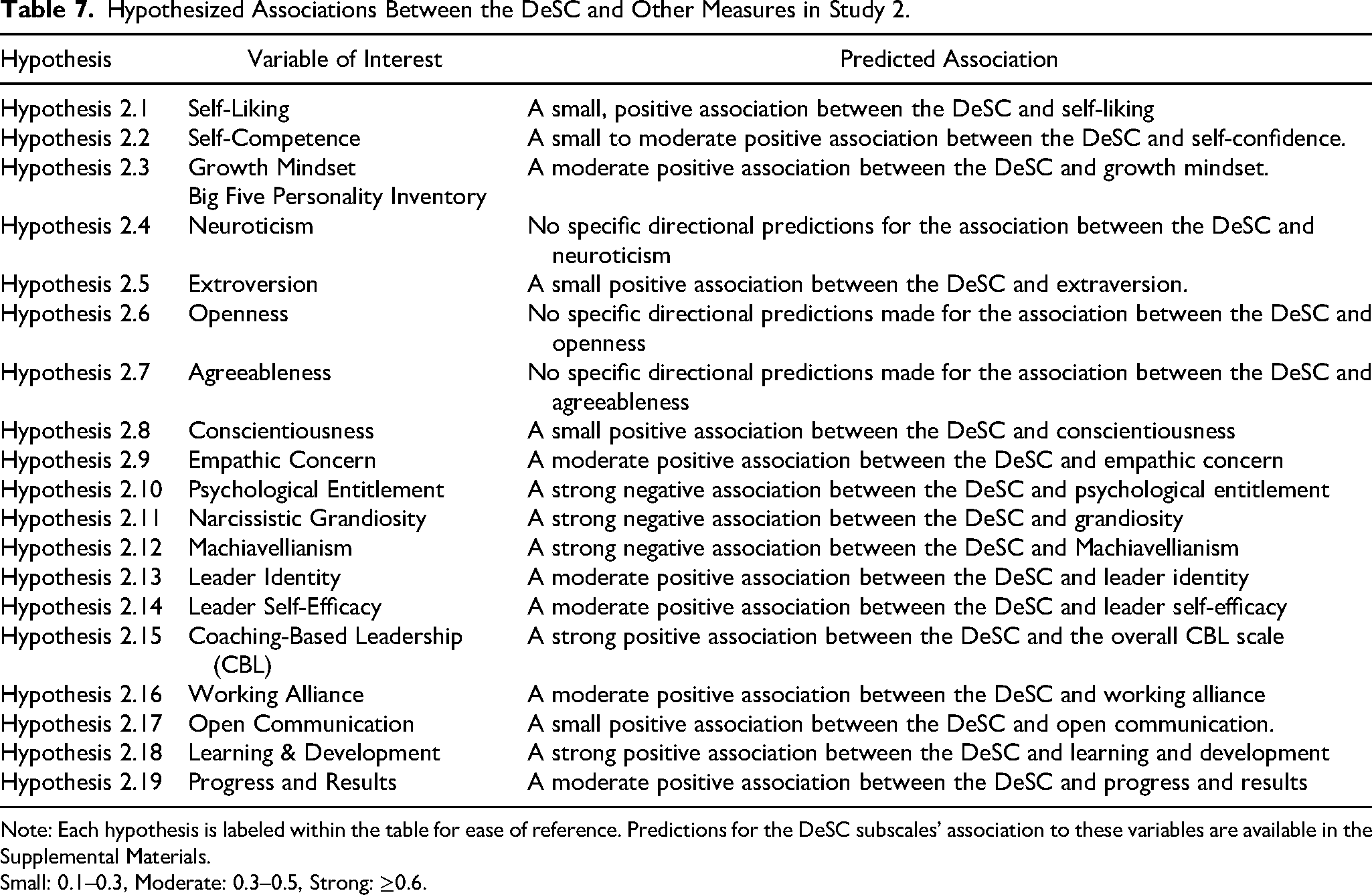
Note: Each hypothesis is labeled within the table for ease of reference. Predictions for the DeSC subscales’ association to these variables are available in the Supplemental Materials.
Small: 0.1–0.3, Moderate: 0.3–0.5, Strong: ≥0.6.
Method
Participants and Procedure
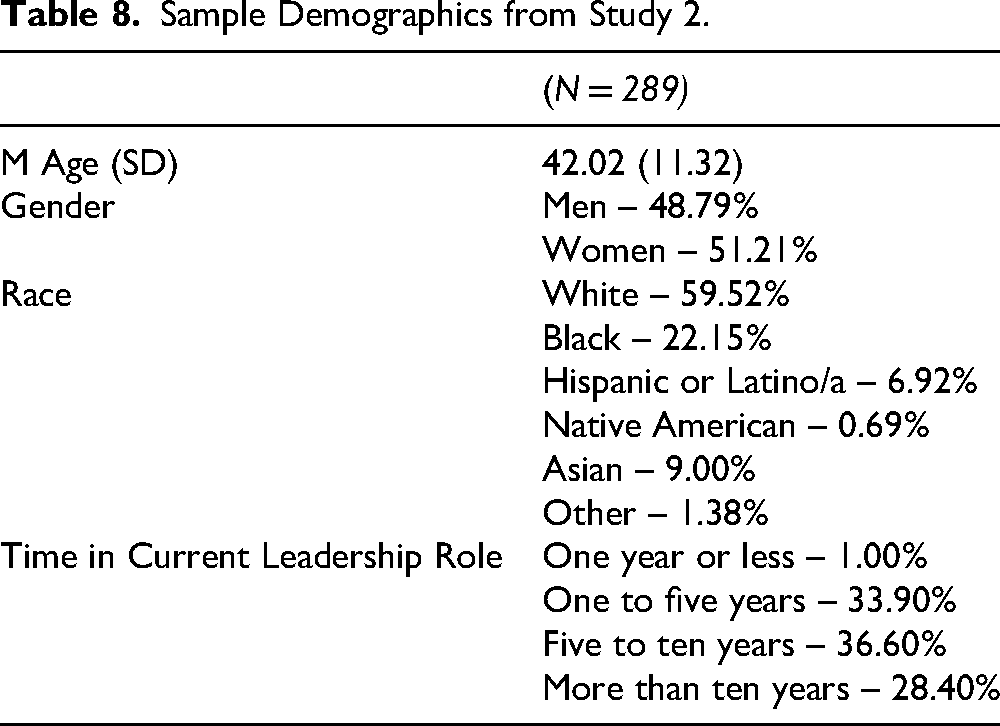
We initially recruited 350 participants, anticipating potential data quality issues as in Study 1B and seeking to maintain a suitably powered sample capable of detecting small to medium associations, per the recommendations of Cohen (1988). Participants were recruited from the same sample pool as Study 1 but had not taken part in either Study 1A or 1B. Study measures were administered using Qualtrics. All study measures after the leadership role screening questions, the consent form, and demographics were administered in random order, including the DeSC. Thus, rather than use the invariance response-check items we had used in Study 1B, we instead included two attention check items from Curran and Hauser (2019), excluding data of participants failing either attention check, as well as the same response time criterion from Study 1 (Malamis & Howley, 2022). We excluded 61 participants’ data based on these criteria, leaving a final sample of 289 that we deemed suitable to detect moderate-sized effects, based on a priori power analysis with an alpha level of .05 and a power of .80 (Cohen, 1988). Demographic information is reported in Table 8.
Sample Demographics from Study 2.
Measures
Demographic Information. Participants completed the same demographic questionnaire as in Study 1.
Developmental Self-Concept. Participants completed the 15-items of the DeSC as in Study 1. The total DeSC exhibited excellent reliability (α = 0.94), as did all its subscales (DSD α = 0.90; DE α = 0.88; DM α = 0.91).
Self-Liking/Self-Competence. We used the 16-item (α = 0.93) self-liking/self-competence scale-revised (SLSC-R; Tafarodi & Swann, 2001) to assess participants’ global self-esteem. All items are rated on a 5-point Likert scale (1 = Disagree strongly, 5 = Agree strongly). The eight item (α = 0.93) self-liking subscale assesses participants’ affective approval of and comfort with themselves (e.g., “I am secure in my sense of self-worth”). The self-competence subscale consists of eight items (α = 0.82) assessing participants’ sense of themselves as capable and able to effectively respond to the world around them (e.g., “I am highly effective at the things I do”).
Growth Mindset. Participants’ views of peoples’ ability to grow and adapt were assessed using the personal growth mindset scale (Dweck, 2006). This measure consists of four items (α = 0.80), rated on a four-point Likert scale (1 = “Disagree strongly,” 4 = “Agree strongly”) that assess whether one believes that people can change and grow (e.g., “No matter what kind of person you are, you can always change substantially”).
Personality. We employed the 15-item big five personality inventory (Lang et al., 2011) to assess participants’ personality traits. This scale measures each of the five traditional personality traits via three items each: neuroticism (α = 0.81), extraversion (α = 0.77), openness to experience (α = 0.80), agreeableness (α = 0.60), and conscientiousness (α = 0.62). Participants complete 15 sentences with the stem “I see myself as someone who…” using a 7-point Likert scale (1 = Disagree strongly, 7 = Agree strongly).
Empathic Concern. We assessed participants’ tendencies to feel empathy for those around them (e.g., “I often have tender, concerned feelings for people less fortunate than me”) using the empathic-concern subscale of the interpersonal reactivity index (IRI; Davis, 1980, 1983). This scale consists of seven items (α = 0.88), measured on a five-point Likert scale (0 = Does not describe me well, 4 = Describes me very well).
Entitlement. The psychological entitlement scale (Campbell et al., 2004) was used to assess the degree to which participants felt they were inherently deserving of privileges and special treatment beyond others (e.g., “I demand the best because I’m worth it”). This scale consists of nine items (α = 0.89), rated on a 5-point Likert scale (1 = Strongly disagree, 5 = Strongly agree).
Grandiosity. We utilized the narcissistic grandiosity scale (Rosenthal, 2005; Rosenthal et al., 2020) to assess the degree to which participants demonstrated an unrealistically positive view of themselves. This scale consists of 16 adjectives (α = 0.96) that participants rate on a seven-point Likert scale (1 = Does not describe me well, 7 = Describes me extremely well). This scale's descriptors include terms like “Heroic” and “Unrivalled,” emphasizing aspects of power and uniqueness; “Glorious” and “Prestigious,” which reflect perceived personal high status and dominance; and “Brilliant,” and “Powerful,” which capture the cognitive and dominance-related aspects of grandiosity.
Machiavellianism. We used the nine-item (α = 0.84) Machiavellianism subscale of the short dark triad scale (Jones & Paulhus, 2014) to assess the degree to which participants positively valued manipulative, transactional, and instrumentalizing approaches to interpersonal relationships. This scale consists of nine items (e.g., “Avoid direct conflict with others because they might be useful in the future”) that participants evaluate using a 5-point Likert scale (1 = Disagree strongly, 5 = Agree strongly).
Leader Identity. Participants’ personal self-categorization of themselves as a leader was assessed by the four-item (α = 0.92) leader identity scale (Hiller, 2005), which assesses the degree to which participants see themselves as a leader and how important this is to their overall self-concept (e.g., “If I had to describe myself to others, I would include the word ‘leader’”) using a five-point Likert scale (1 = Not at all important, 5 = Extremely important).
Leader Self-Efficacy. We used the leader self-efficacy scale create by Hiller (2005; Chan & Drasgow, 2001) to assess participants’ perceived confidence of their abilities to lead (e.g., “I am confident that I can lead a group to perform effectively”). This scale consists of seven items (α = 0.96), rated on a 7-point Likert scale (1 = Disagree strongly, 7 = Agree strongly).
Coaching-Based Leadership. Participants’ endorsement/perception of themselves as a leader able to create supportive, empowering environments that facilitate employees’ professional growth and development was assessed using the coaching-based leadership scale (CBL; Peláez Zuberbühler et al., 2023). This measure consists of 16 items (α = 0.95), rated on a seven-point Likert scale (1 = “Strongly disagree,” 7 = “Strongly agree”) that evaluates the extent to which leaders engage in coaching behaviors across four subscales.
The “working alliance” subscale of the CBL assesses the degree to which leaders care for their employees (e.g., “I truly care about my employees”) and consists of three items (α = 0.87). The “open communication” subscale assessed the degree to which a leader listens to their employees and responds appropriately to their concerns (e.g., “I ask questions that help employees to better understand their situations, identify causes, and see possible actions for improvement”) and consists of four items (α = 0.86). The “learning and development” subscale assesses the degree to which leaders actively seek to develop those they lead, both as a matter of perceived personal responsibility and tangible behaviors (e.g., “My employees’ learning and development is one of my main responsibilities”) and consists of five items (α = 0.88). Finally, the four item “progress and results” subscale (α = 0.87) measures how leaders work to accomplish goals with their followers (e.g., “I always ask my employees to inform me about the progress on their objectives”).
Self-Deceptive Enhancement. We used the self-deceptive enhancement (SDE) subscale of the balanced inventory of desirable responding (BIDR-16; Hart et al., 2015) to measure participants’ tendency to view themselves in an unrealistically favorable way. The SDE consists of eight items (e.g., “I never regret my decisions”) rated on a 7-point Likert scale (1 = not at all true, 7 = very true) on which participants rate the degree to which statements describe them. Due to a clerical error, one item (“I am a completely rational person”) was not included in our survey. However, the resulting 7-item scale still demonstrated adequate reliability (α = 0.79), and as we were primarily using it as a covariate, we chose to use this reduced version.
Results and Discussion
Bivariate zero-order correlations between the DeSC and its subscales with all outcome variables, as well as descriptive statistics for the same, are presented in Table 9.
Zero-Order Correlations Between the DeSC and Measures from Study 2.
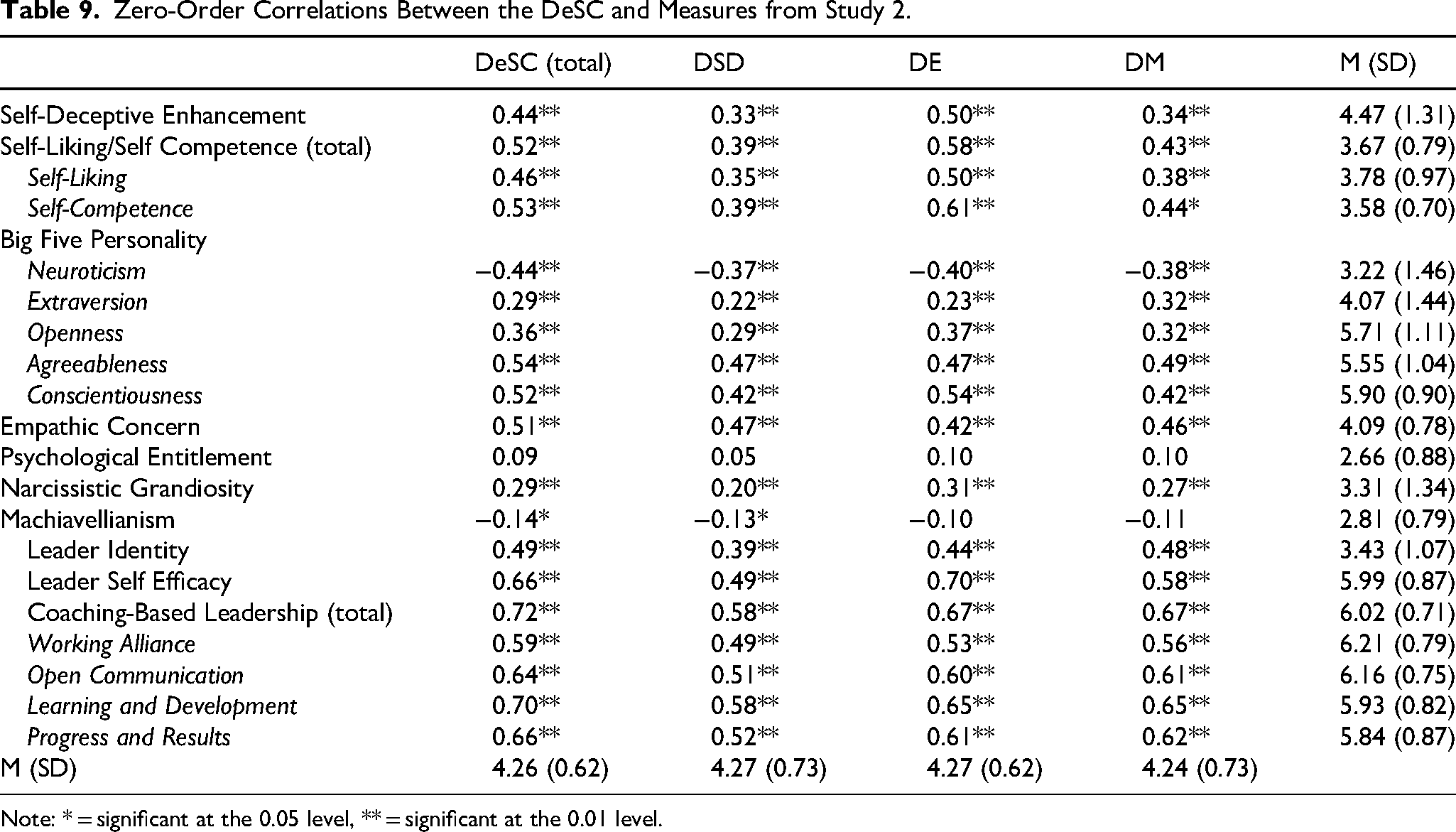
Note: * = significant at the 0.05 level, ** = significant at the 0.01 level.
To test our hypotheses, we ran a series of OLS regressions predicting our outcome variables from the total DeSC scale while controlling for gender (dummy coded as 1 = male, 0 = female), time spent in a leadership role, and self-deceptive enhancement (SDE) 1 . Full details for these models are presented in Table 10.
Regression Models from Study 2 Using the Full DeSC Scale.
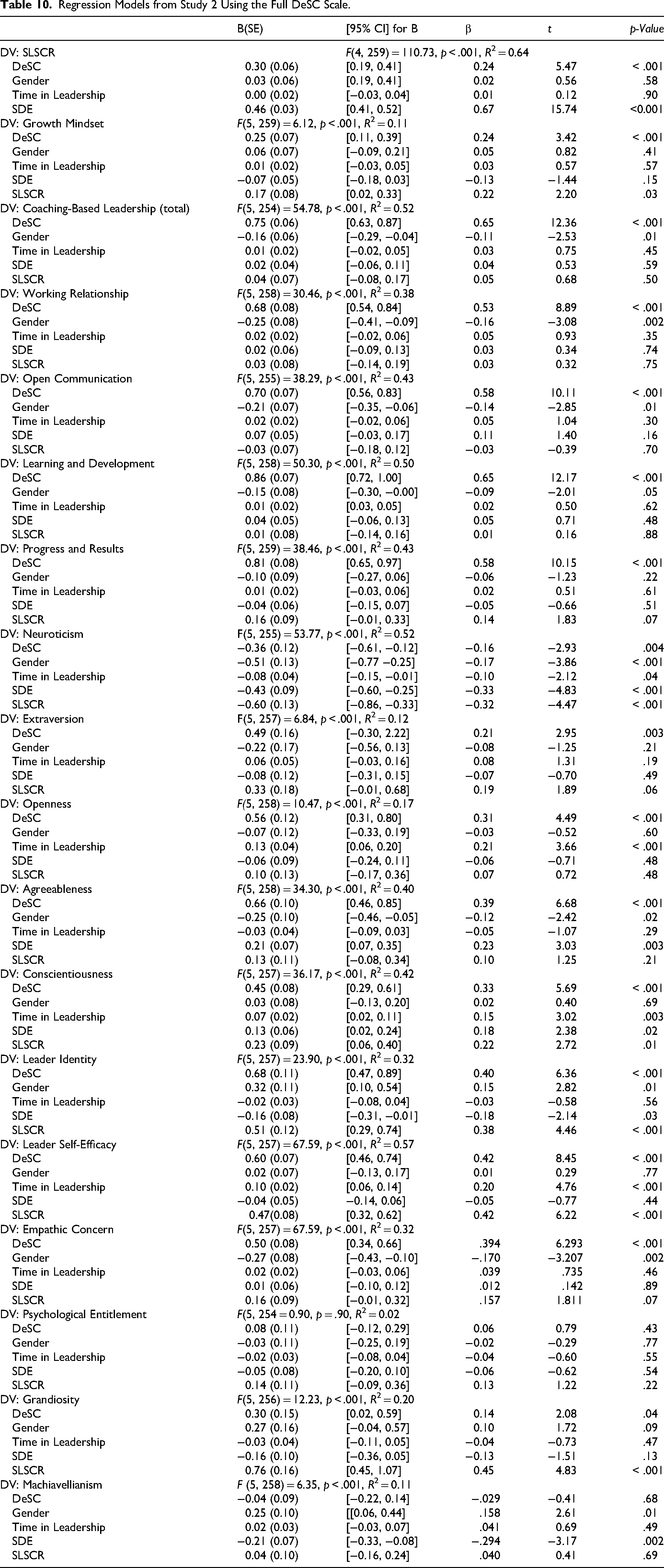
As predicted, the DeSC exhibited a small but significant association with global self-esteem (SLSCR). As a result, the SLSCR scale was included as a covariate in all further analyses to ensure that observed associations reflected the specific developmental aspects of self-concept captured by the DeSC, rather than general positive self-regard. As shown in Table 10, the DeSC was significantly related to growth mindset, extraversion, conscientiousness, openness to experience, agreeableness, neuroticism (negatively), and empathic concern, supporting our hypotheses. In addition, the DeSC exhibited a positive association with leader identity, leader self-efficacy and all aspects of coaching-based leadership. Unexpectedly, there was no relation with psychological entitlement or Machiavellianism, and there was an unexpected positive association (albeit a small one) with grandiosity.
Overall, Study 2 supported the DeSC's convergent and discriminant validity, demonstrating it to be a distinct construct that uniquely captures the centrality of developing others to a leader's self-concept. However, an important question remains regarding the DeSC's impact on leader behavior and follower experience. All outcomes in Study 2 relied on leader self-reports, which are appropriate for assessing the self-concept but limit our ability to draw conclusions about how a developmental self-concept translates into leader behaviors and how those behaviors are experienced by followers. To that end, in Study 3 we moved beyond strictly self-report data by using a dyadic design to examine how leaders’ DeSC scores predicted follower-rated leadership behaviors and followers’ experiences.
Study 3
Although Study 2 demonstrated a positive association with theoretically relevant leader characteristics (e.g., empathy, leader identity) and self-reported behaviors (specifically, dimensions of the coaching-based leadership scale), leadership self-concepts are particularly meaningful if they guide leader behaviors enough to shape followers’ experiences. As such, we conducted an additional study examining the connection between the DeSC, leader developmental behaviors (as viewed by followers), and follower outcomes. Leaders with a strong developmental self-concept should be more likely to engage in behaviors that directly support follower growth, which are in turn experienced by followers as developmental leadership and influence how followers evaluate their work environment and their prospects within it (Kragt & Day, 2020).
In a dyadic field study, supervisors completed the DeSC, and their direct reports rated their supervisors’ developmental leadership behaviors on a version of the coaching based leadership scale used in Study 3. In addition, we measured direct reports’ turnover intentions and self-efficacy to develop in their own careers. These outcomes were selected as parsimonious yet meaningful indicators of followers’ work experiences and perceived development, capturing both how followers experience their supervisors and how they view their own growth and future prospects (Day & Harrison, 2007; Konovsky & Cropanzano, 1991). Specifically, we included turnover intentions, as they represent a downstream organizational outcome that has been consistently linked to developmental and growth-oriented leadership behaviors across multiple leadership perspectives (Akdere & Egan, 2020; Lee et al., 2019; Pelaez Zuberbuhler et al., 2023). We also included career advancement self-efficacy as a face-valid indicator of perceived personal development, reflecting followers’ confidence in their capacity to grow and progress in their careers as a consequence of their supervisors’ developmental leadership.
We hypothesized: H3.1: Leaders’ DeSC scores will predict higher direct-report ratings of their supervisors’ developmental leadership behaviors on the CBL. H3.2: Leaders’ DeSC scores will predict lower direct-report turnover intentions and higher career advancement self-efficacy. H3.3: Direct-report ratings of supervisors’ developmental leadership behaviors on the CBL will statistically mediate the association between leaders’ DeSC scores and (a) direct-report turnover intentions and (b) career advancement self-efficacy.
Method
Participants and Procedure
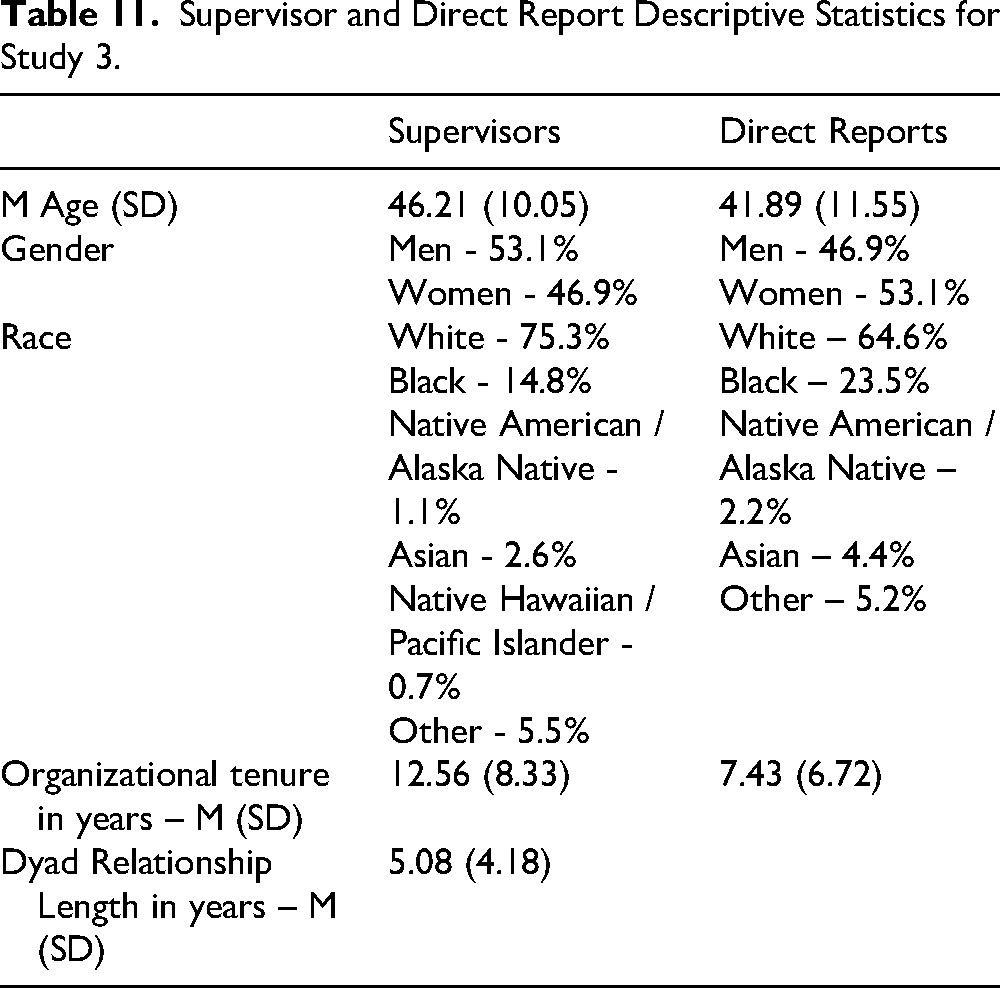
Participant recruitment was carried out by Qualtrics Panels, which identified supervisor–direct report dyads and administered all survey instruments, including their own demographic measures, all on the same day. Qualtrics verified that all responses were provided by real individuals rather than bots or AI, and delivered the final, de-identified dataset upon completion of data collection. Data were maintained only for dyads in which both members had completed all measures (see below), leading to a final sample of 271. Demographics for both supervisors and direct reports in these dyads are available in Table 11.
Supervisor and Direct Report Descriptive Statistics for Study 3.
Measures
Developmental Self-Concept. Supervisors completed the 15-item DeSC as in Studies 1 and 2, which exhibited excellent internal reliability (α = 0.95) 2 .
Supervisor Developmental Behaviors. Direct reports completed the subordinate-report version of the CBL (Peláez Zuberbühler et al., 2023), which parallels the self-report version used in Study 2 and assesses supervisors’ leadership behaviors from the follower's perspective. Consistent with this study's focus on observable developmental behavior, we focused on two CBL subscales, which we combined for the sake of simplicity (and because separately they exhibited nearly identical patterns in all analyses we report here for their composite)—Learning and Development, and Progress and Results—which capture concrete leadership behaviors directly related to supporting follower growth and goal attainment. Besides their theoretical relevance, these subscales also exhibited the strongest associations with the DeSC in Study 2 (see Tables 7 and 8). Our nine-item composite of these two subscales exhibited excellent internal reliability (α = 0.94).
Turnover intentions. Direct reports’ turnover intentions were measured using three items (α = 0.85; e.g., “I would not leave my job if a similar role were available in another organization”) rated on a 5-point Likert scale (1 = strongly disagree, 5 = strongly agree), adapted from Konovsky and Cropanzano (1991). These items were presented as intention to remain with the organization, and so a higher score indicated lessened turnover intention and direct reports’ increased willingness to stay with their current organization.
Career Advancement Self-Efficacy. Career advancement self-efficacy was assessed using a brief three-item (α = .85) measure rated on a 5-point Likert scale (1 = strongly disagree, 5 = strongly agree). Items assessed direct reports’ perceived self-efficacy regarding their future career (e.g., “I have confidence in my ability to overcome barriers to advancing in my career”), consistent with prior work on self-efficacy and coping with career-related barriers (Luzzo & McWhirter, 2001). This variable was conceptualized as a proxy indicator of the degree to which direct reports perceived themselves as having developed capabilities and momentum toward future career progress.
Results and Discussion
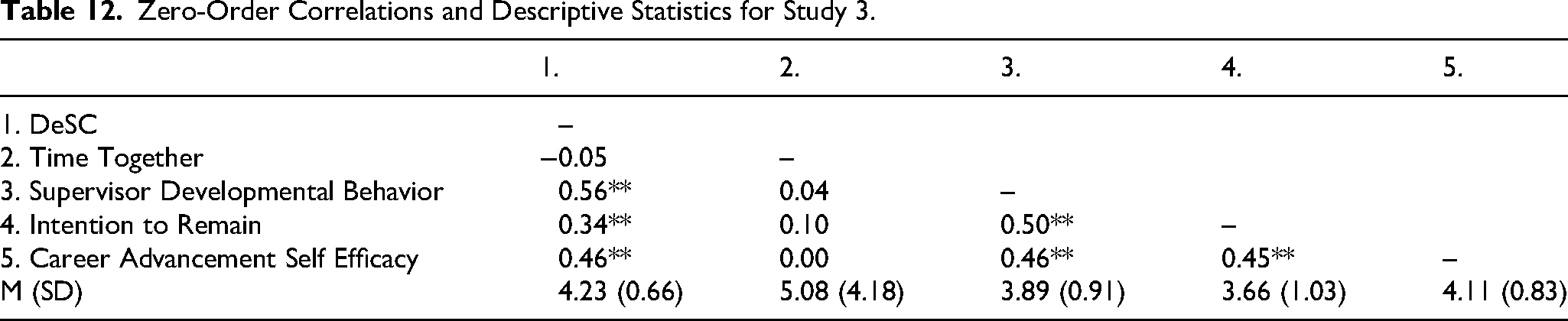
Zero-order correlations and descriptive statistics for all variables are shown in Table 12. We tested our hypotheses with a series of regression models, regressing the outcome variables onto the DeSC, while controlling for dyadic tenure (i.e., how long the supervisor and direct report had worked together), and the genders of each dyad member (dummy coded as 0 = women, 1 = men). We report full regression models in Table 13.
Zero-Order Correlations and Descriptive Statistics for Study 3.
Regression Models from Study 3.
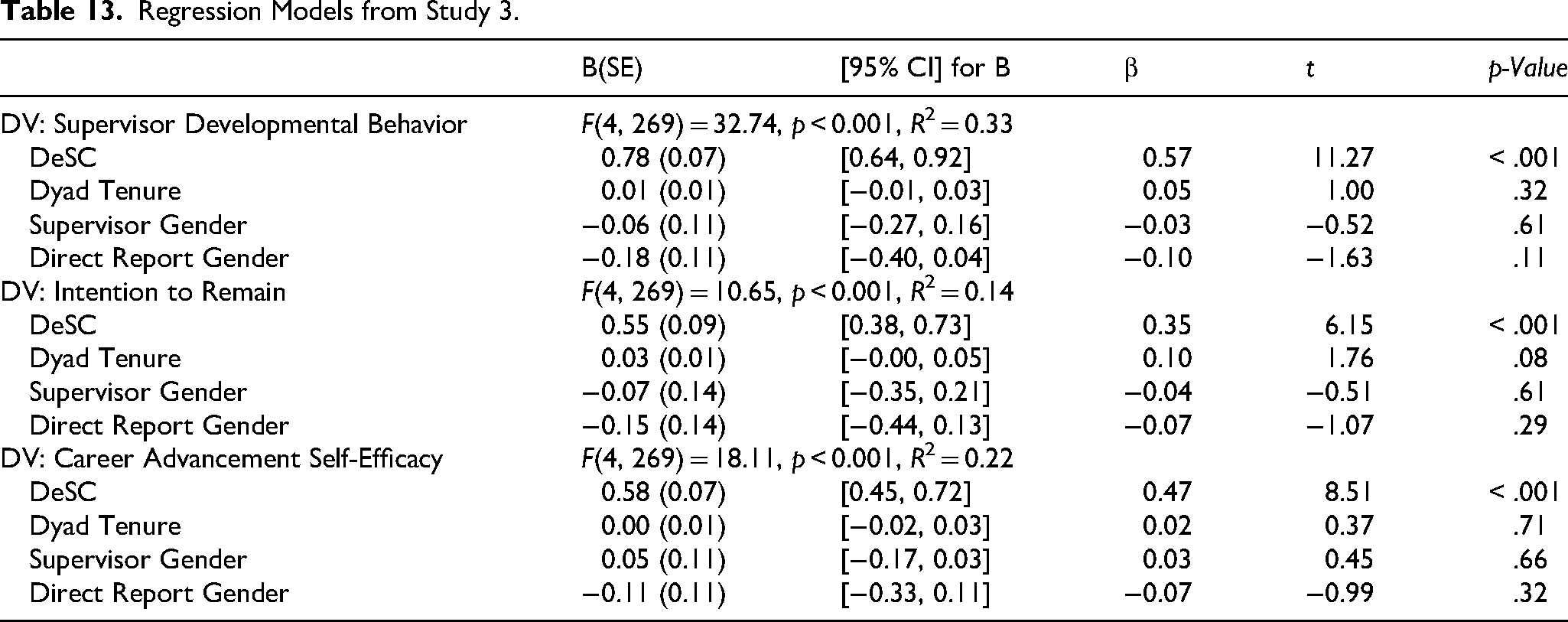
Hypotheses 3.1 and 3.2 were both supported, with supervisors’ DeSC scores significantly predicting their direct reports’ ratings of supervisors’ developmental behaviors on the CBL (β = 0.57, p < .001), direct reports’ turnover intentions (β = –0.35, p < .001), and direct reports’ career advancement self-efficacy (β = 0.47, p < .001). No covariates were significant in any models.
We tested H3.3 using a simple mediation model in PROCESS (10,000 bootstrap samples; Hayes, 2022), examining whether the association between supervisors’ DeSC scores and direct reports’ turnover intentions (H3.3a) and career advancement self-efficacy (H3.3b) were statistically accounted for by direct reports’ ratings of supervisors’ developmental behaviors, while controlling for dyadic tenure and supervisor and direct-report gender.
Supervisors’ DeSC scores significantly predicted higher followers’ ratings of supervisors’ developmental behaviors on the CBL (B = 0.78, SE = 0.07, p < .001). In turn, supervisors’ developmental behaviors significantly predicted lower turnover intentions (B = –0.49, SE = 0.07, p < .001). The direct effect of DeSC scores on turnover intentions was no longer significant in the presence of the mediator (B = –0.17, SE = 0.10, p = .094), but the indirect effect of DeSC scores on turnover intentions through coaching based leadership was significant (ME = –0.38, SE = 0.08, 95% CI = [0.23, 0.55]), supporting Hypothesis 3.3a (Figure 1).
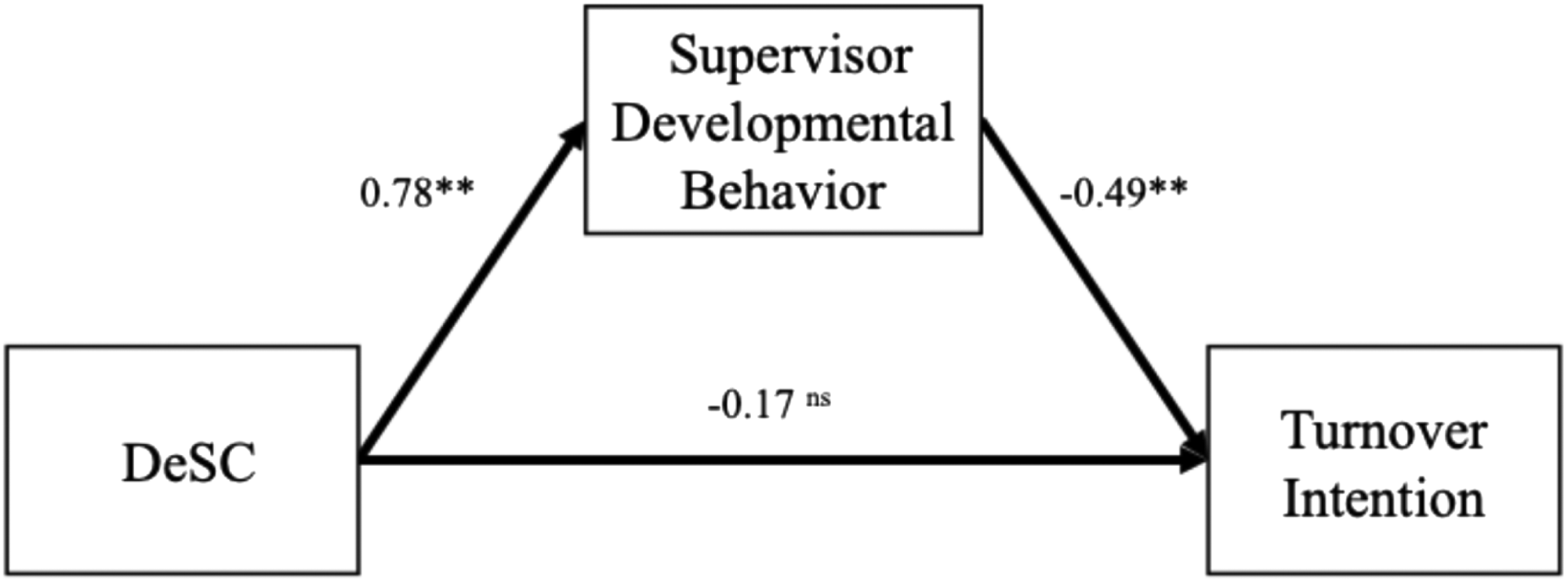
Mediation model for direct reports’ turnover intentions in study 3.
We next tested whether follower's ratings of supervisors’ developmental behaviors mediated the association between leaders’ DeSC scores and direct reports’ career advancement self-efficacy. Leaders’ DeSC scores significantly predicted higher ratings of supervisors’ developmental behaviors (B = 0.78, SE = 0.07, p < .001), which significantly predicted career advancement self-efficacy (B = 0.27, SE = 0.06, p < .001). However, the direct effect of DeSC scores on career advancement self-efficacy while controlling for supervisors’ developmental behaviors remained significant (B = 0.37, SE = 0.08, p < .001). The indirect effect of DeSC on career advancement self-efficacy through developmental behavior was also significant (ME = 0.21, BootSE = 0.07, 95% CI [0.08, 0.35]), indicating partial mediation and supporting Hypothesis 3.3b (Figure 2).
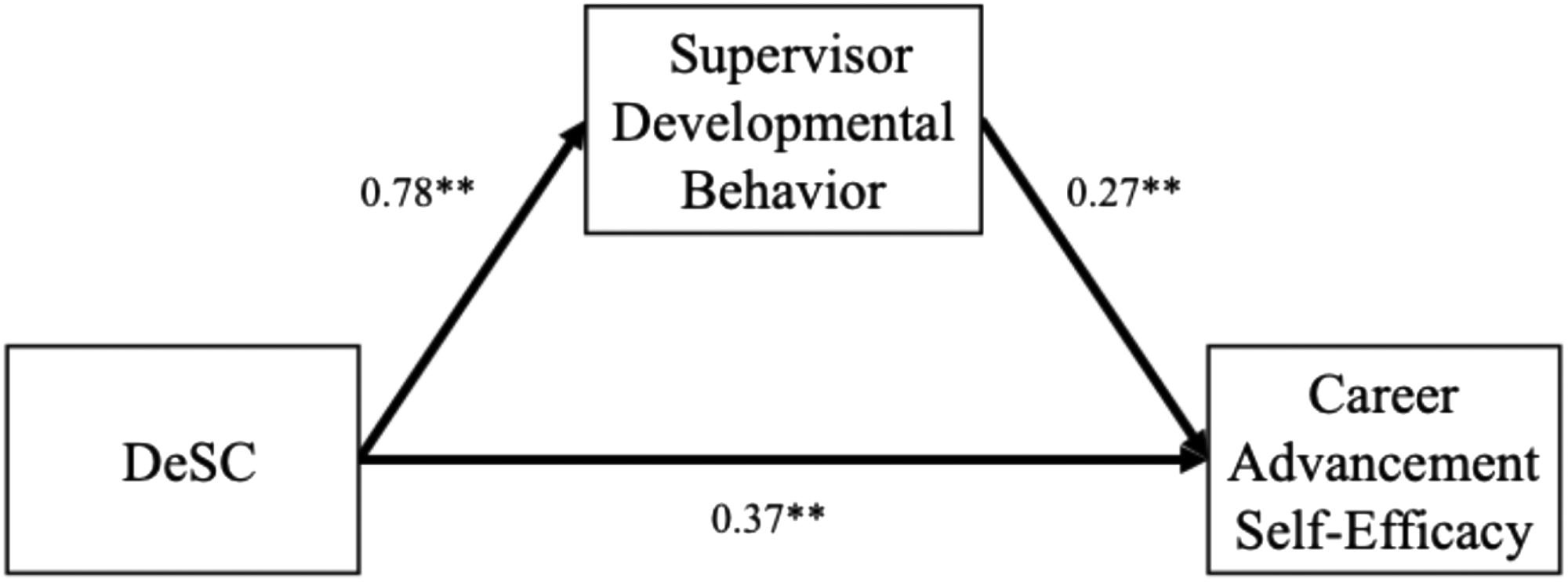
Mediation model for direct reports’ career advancement self-efficacy in study 3.
Study 3's results supported all hypotheses, with supervisors’ self-reported DeSC scores predicting direct reports’ perceptions of supervisors’ developmental behaviors, their own turnover intentions, and their career advancement self-efficacy. Mediation analyses indicated that follower-rated developmental behaviors by leaders accounted for these associations, suggesting that leaders’ developmental self-concepts are behaviorally expressed in ways that shape followers’ work experiences. Notably, leaders’ developmental behaviors fully mediated the association between the DeSC and turnover intentions, but only partially mediated the association between the DeSC and career advancement self-efficacy. This suggests that follower retention is primarily driven by enacted leadership behaviors, whereas followers’ self-efficacy is only partly influenced by leadership behaviors. Although these findings extend the DeSC's predictive validity beyond self-report, Study 3 relied on brief outcome measures and did not directly assess how leaders’ developmental self-concepts influence the judgments and decisions that shape organizational contexts, a limitation that we addressed in Study 4.
Study 4
Although Study 3 showed that the DeSC was associated with leader behaviors and follower outcomes, we also wanted to explore how leaders’ developmental self-concept might impact leader decision making. We designed Study 4 to examine how leaders with stronger developmental self-concepts might shape their organizational contexts. Leaders might self-select into organizations that reflect their developmental values and actively reinforce this fit through decisions that shape culture, particularly through hiring decisions, which are among the most powerful mechanisms for shaping organizational culture (Bottger & Barsoux, 2011; Kristof-Brown et al., 2005; Vleugels et al., 2023). Thus, leaders with high DeSC scores should both self-select into organizations with developmental values and favor job applicants with developmental leadership orientations, either through explicit perceptions of value similarity or implicit positive attraction.
Study 4 examined these possibilities by investigating if DeSC scores predicted leaders’ responses to (1) job postings from developmental vs. non-developmental organizations and (2) developmentally vs. non-developmentally oriented job candidates.
Our hypotheses were as follows:
We also investigated if the DeSC's effects on applying and hiring decisions might be mediated by either overt perceptions of value alignment or more general feelings of positivity. Specifically, we examined if high-DeSC leaders would be overtly conscious of shaping their organizational environments by self-selecting into developmental organizations and hiring developmental candidates, or if they would do so implicitly, by perceiving developmental organizations and candidates in a broadly positive light, without recognizing their developmental value alignment with the organization or candidate. We therefore investigated the following research question:
Method
Participants and Procedure
Participants were recruited via CloudResearch Connect in two stages. To avoid revealing the study's purpose, we assessed DeSC scores in an initial prescreening survey restricted to individuals in supervisory roles with a 95% approval rating and at least 10 completed projects on the survey platform. After data cleaning using the same invariant responding criterion used in Study 2, the sample pool consisted of 390 participants. At least one week later, participants completed the main survey, described as assessing workplace norms related to the hiring process, and were compensated $1.50.
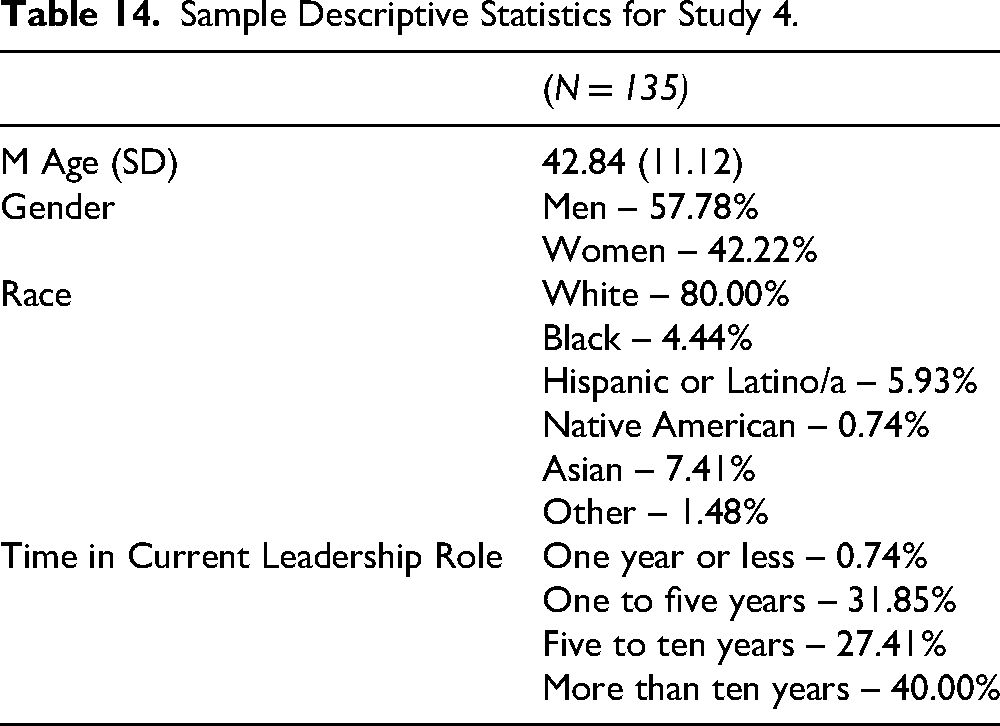
We recruited 150 participants, 17 of whom were excluded for failing at least one of the same attention checks as Study 2. This final sample size was deemed suitable for detecting moderately sized effects based on an a priori power analysis with an alpha level set to .05 and a power of .80 (Cohen, 1988), and full demographics are reported in Table 14.
Sample Descriptive Statistics for Study 4.
Measures
All study measures were administered on Qualtrics. Participants’ demographic information was assessed at prescreening at the same time as the DeSC. In the second session a week or more later, participants completed the BIDR and BFI. Participants were randomly assigned to complete either the company or candidate rating task first. The developmental and non-developmental options within each task (company or candidate) were presented in randomized order.
Participants completed the same demographic questionnaire and DeSC scale as in Studies 1 and 2. The DeSC scale showed excellent internal reliability (α = 0.93). Additionally, participants completed the 16-item balanced inventory of desirable responding (BIDR-16; α = 0.88) to control for self-report biases and the 15-item big five inventory (BFI). Our pre-registered analysis plan was to control only for agreeableness (α = 0.61) and extraversion (α = 0.85), due to these traits’ theoretical applicability to leadership. However, given that all five personality traits were significantly related to the DeSC in Study 2, we decided to control for neuroticism (α = .78), conscientiousness (α = .67), and openness to experience (α = .77) as well.
Experimental manipulation and perceptions of companies and candidate. All materials are accessible on this study's OSF page: https://osf.io/2p6bs/.
In the company rating task, participants were instructed to imagine the postings were for positions in their own field and were shown (in randomized order) two postings for an operations manager position. The developmental company posting was constructed to represent a “deliberately developmental organization” (DDO; Kegan et al., 2016), emphasizing values like growth, communication, supportive feedback, collaborative goal setting, and learning from mistakes. In contrast, the non-developmental posting emphasized operational efficiency, performance metrics, and strategic outcomes, without mentioning personal or team development.
Participants rated each company on 12 items using a 5-point Likert scale (1 = Disagree Strongly, 5 = Agree Strongly), from which three variables were created: 1) application intention, derived from four items (e.g., “I’d apply for a job at this company”; non-developmental: α = 0.91; developmental: α = 0.92); 2) workplace values similarity, derived from four items (e.g., “This company seems to share my workplace philosophy”; non-developmental: α = 0.92; developmental: α = 0.94); and 3) positive company perceptions, derived from three items after excluding a reverse-coded item with poor item-total correlations (e.g., “This company seems trustworthy”; non-developmental: α = 0.83; developmental: α = 0.87).
In the candidate rating task, participants evaluated two equally qualified job applicants for an operations manager position. We told participants that both candidates had responded to two prompts: “Describe a time you grew from failure” (both responses emphasized personal adaptation, not developing others) and “What does leadership mean to you?” In this latter prompt, the developmental candidate emphasized creating a developmental culture as a leader, while the non-developmental candidate emphasized performance and organizational goal alignment.
Participants rated each candidate on 12 items a 5-point Likert scale, from which three variables were created: 1) hiring intention, derived from four items (e.g., “I believe this applicant would perform well in the role”; non-developmental: α = 0.89; developmental: α = 0.91); 2) applicant values similarity, derived from four items (e.g., “I share this applicant's vision for leadership”; non-developmental: α = 0.88; developmental: α = 0.92); and 3) positive applicant perceptions, derived from three items after excluding one poorly correlated reverse-coded item (e.g., “This applicant seems likable”; non-developmental: α = 0.83; developmental: α = 0.93).
Results and Discussion
Zero-order correlations and descriptive statistics for all variables are shown in Tables 15–17. All analyses were pre-registered and are available at OSF: https://osf.io/wjbck/overview.
Zero-Order Correlations Between the DeSC and Control Variables for Study 4.
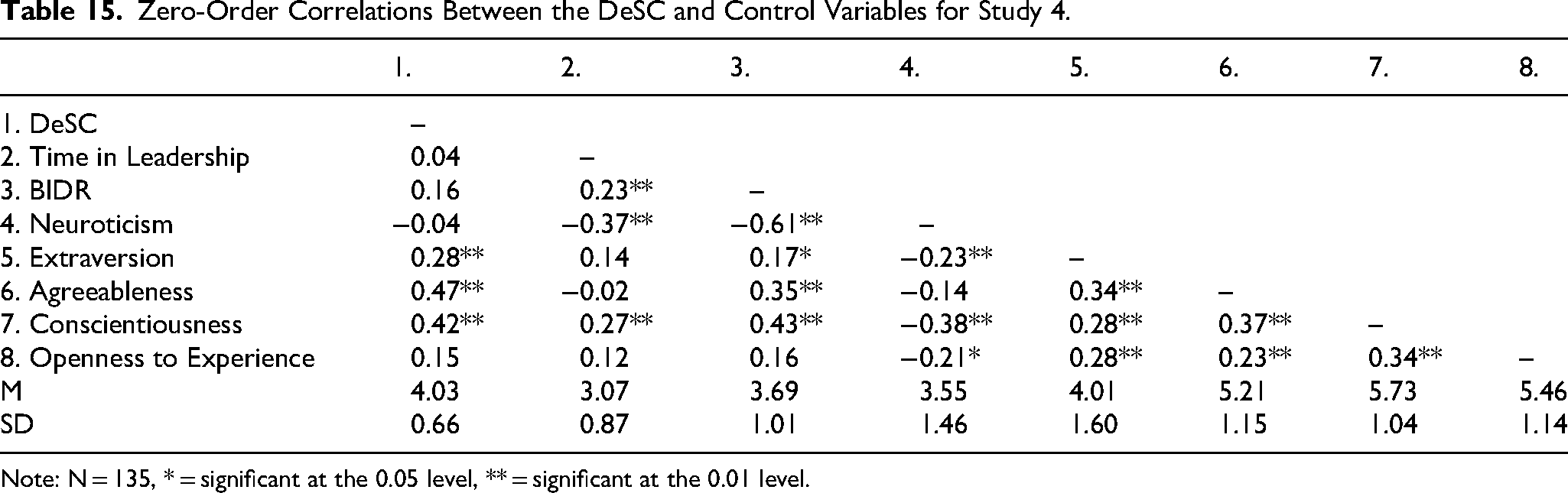
Note: N = 135, * = significant at the 0.05 level, ** = significant at the 0.01 level.
Zero-Order Correlations Between the DeSC, Control Variables, and Each Outcome variable in Study 4.
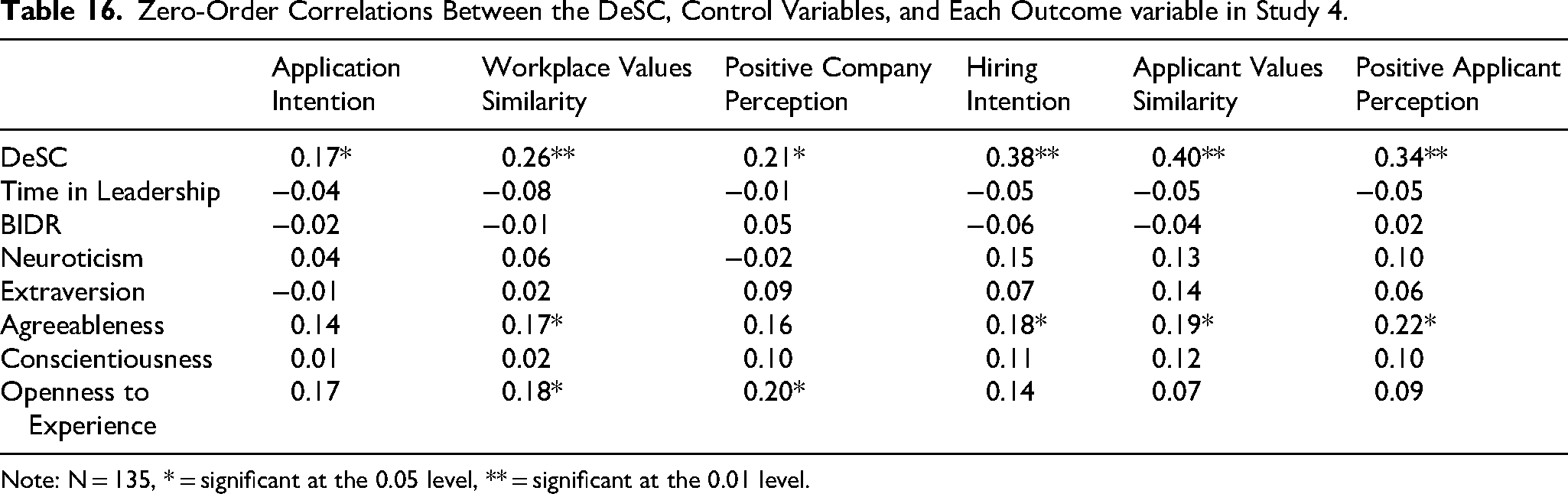
Note: N = 135, * = significant at the 0.05 level, ** = significant at the 0.01 level.
Descriptive Statistics and Zero-Order Correlations Between Developmental and non-Developmental Company and Applicant Perceptions in Study 4.
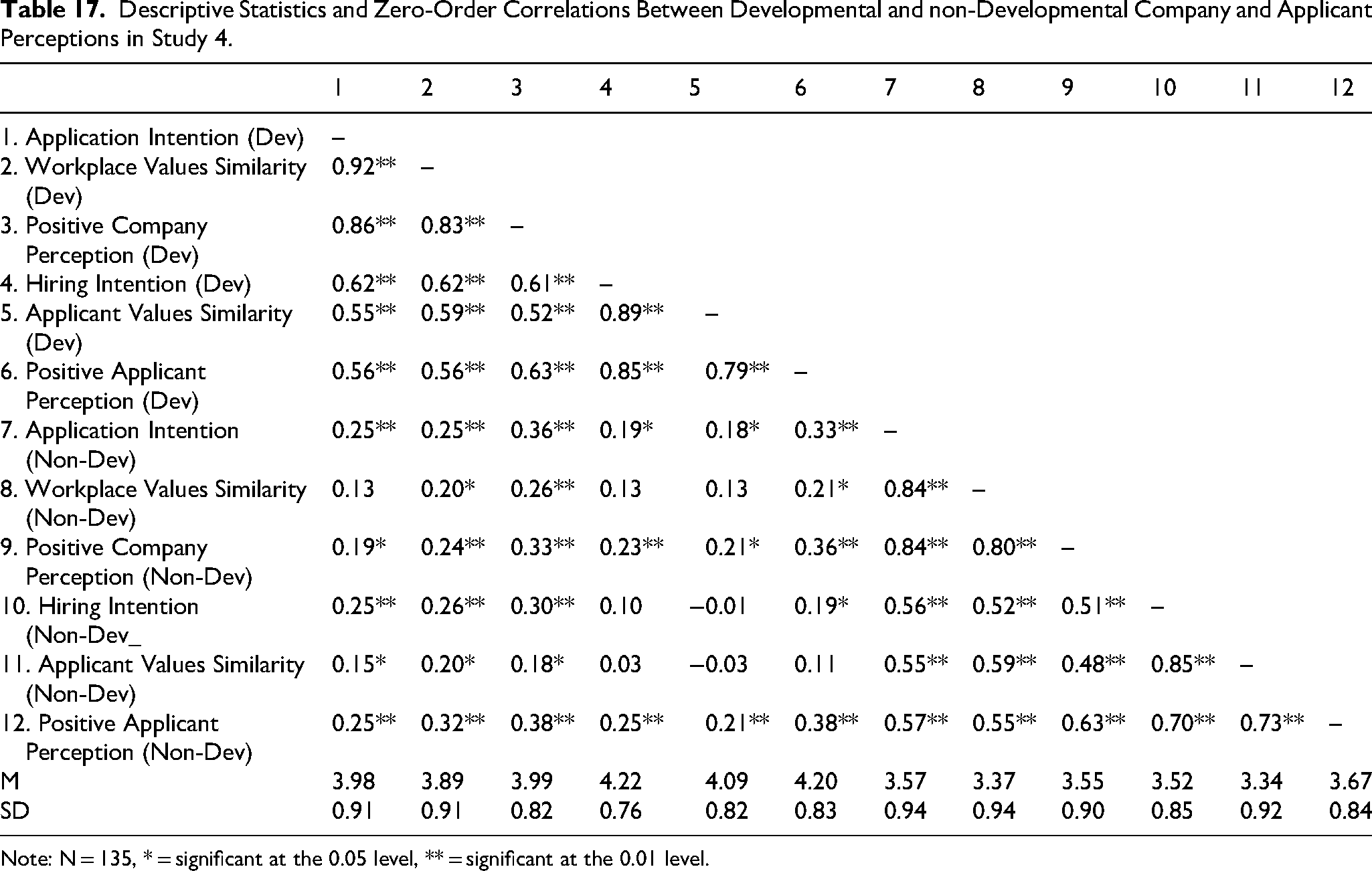
Note: N = 135, * = significant at the 0.05 level, ** = significant at the 0.01 level.
We tested hypotheses using OLS regression models predicting responses to developmental targets (organization or candidate) from DeSC scores, while controlling for social desirability, personality traits, leadership tenure, gender, and responses to non-developmental targets to account for general positive response bias. Full results are reported in Table 18.
Regression Models from Study 4.
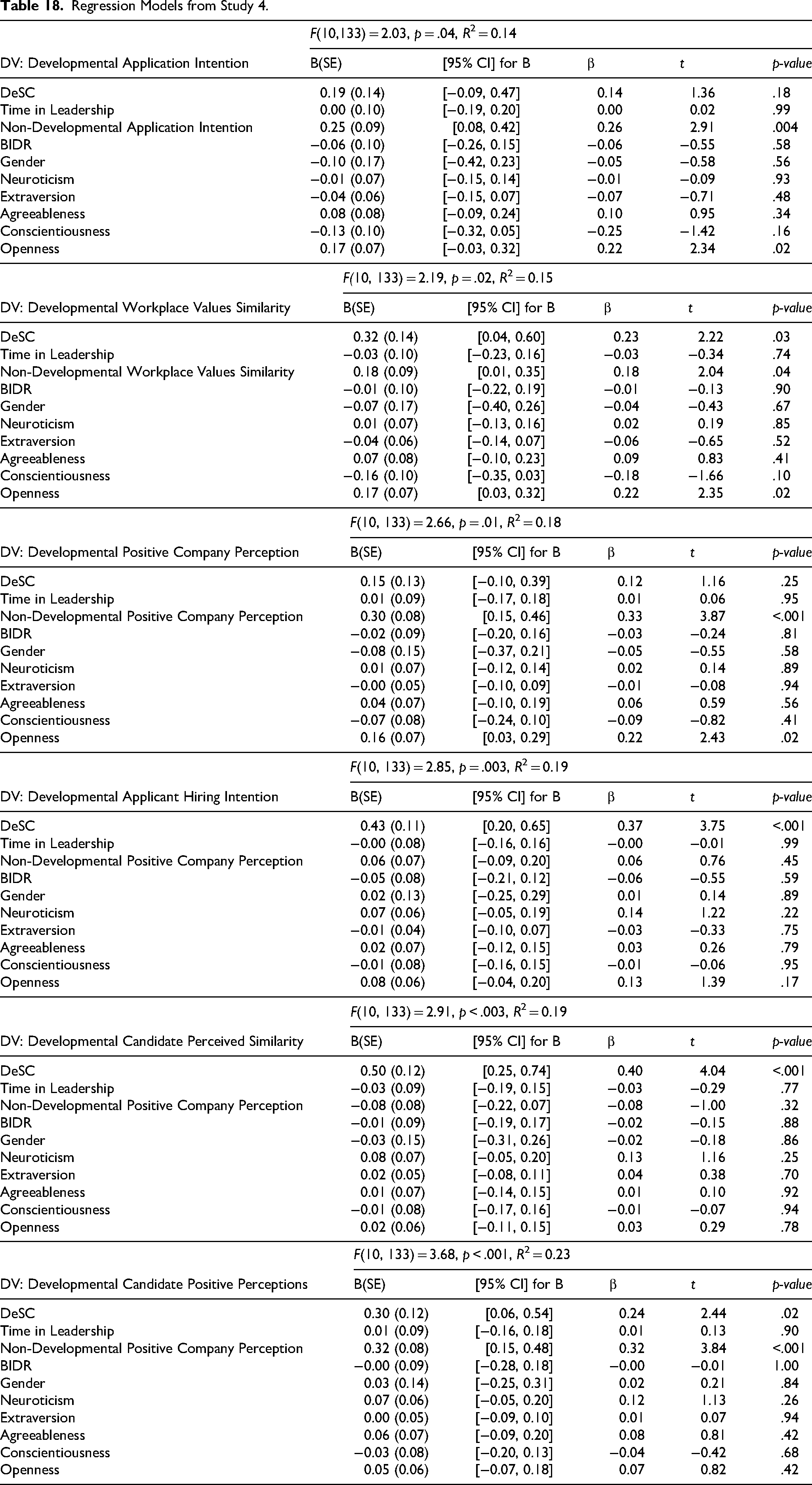
Responses to the developmental organization posting provided modest support for our hypotheses. DeSC scores did not predict intention to apply (H4.1a) or positive perceptions of the company (H4.1c) but did significantly predict perceived values similarity with the developmental organization (H4.1b; β = 0.23, p = .03). Thus, only one of the three hypotheses for the company-rating task was supported, requiring no further mediation analyses.
Results were stronger for evaluations of the developmental candidate. DeSC scores significantly predicted intent to hire the developmental applicant (H4.2a; β = 0.37, p < .001), perceived values similarity (H4.2b; β = 0.40, p < .001), and positive perceptions of the candidate (H4.2c; β = 0.24, p = .02).
Next, we examined whether the association between DeSC scores and hiring intention for a developmental candidate was mediated by perceptions that the applicant shared participants’ values or by more general positive perceptions. We tested this via parallel mediation analyses in PROCESS macro with 10,000 bootstrap samples (Hayes, 2022) while controlling for gender, time in leadership, personality traits, and ratings of the non-developmental candidate. The DeSC had significant indirect effects on hiring intention through both perceived applicant values similarity (ME = 0.25, SE = 0.10, 95% CI [0.13, 0.59]) and positive applicant perceptions (ME = 0.12, SE = 0.05, 95% CI [0.03, 0.22]), with the indirect effect through perceived values similarity being stronger (see Figure 3).
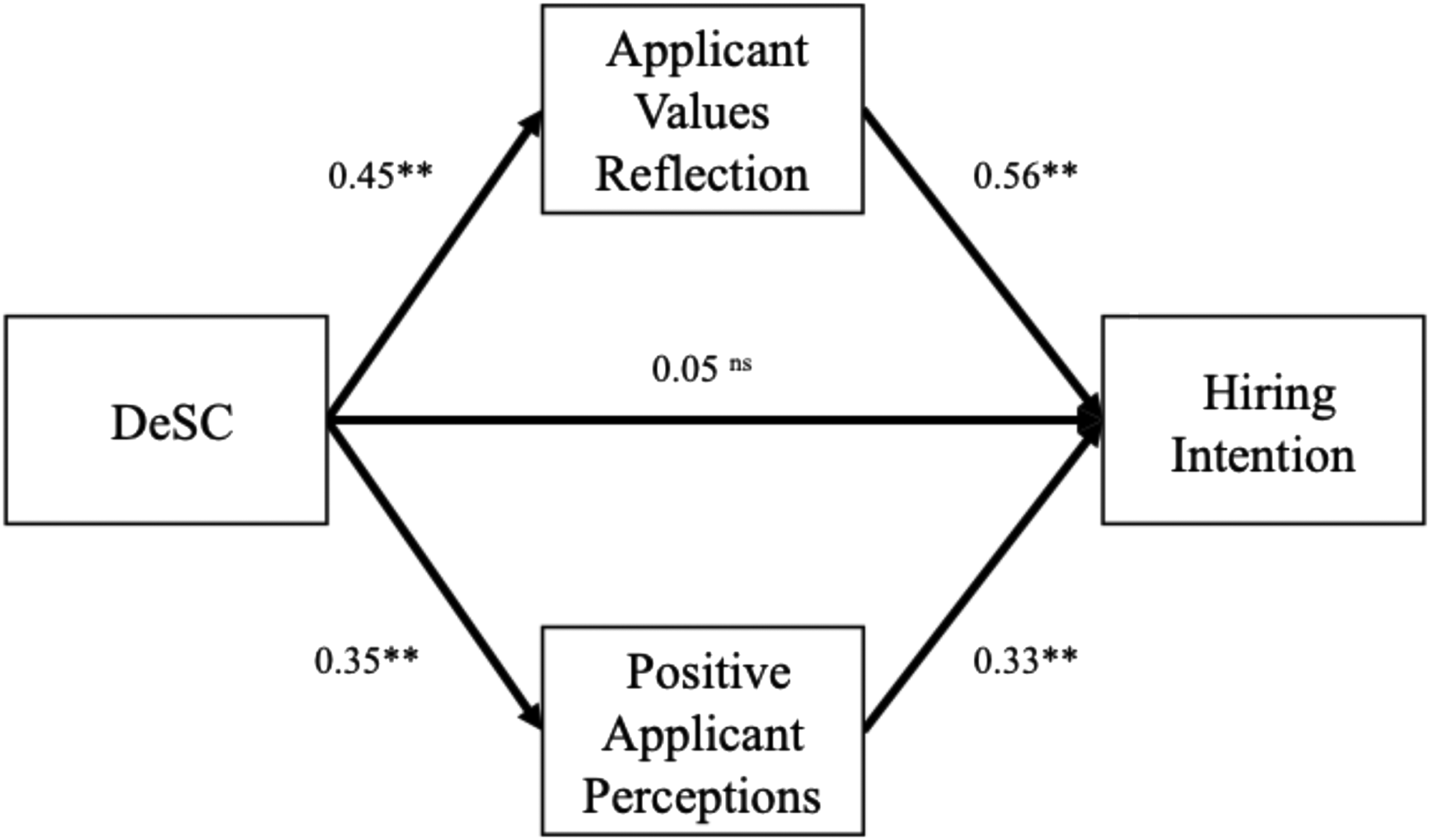
Significant mediation model from study 4.
Overall, Study 4's results demonstrate the DeSC's utility for understanding how leaders shape their organizational environments. Leaders with higher DeSC scores were more likely to favor developmental organizational cultures (in part) and to select developmentally oriented job candidates, suggesting that leaders’ developmental self-concepts can systematically influence organizations. In supportive environments, such leaders might foster cultures emphasizing growth, collaboration, and developing others, with effects that extend beyond individual followers to broader organizational systems (Day, 2024). At the same time, these findings raise the possibility of feedback loops or “closed ecologies” within organizational cultures (Vleugels et al., 2023). If developmental leaders cluster in particular contexts, less developmental organizations may struggle to attract or retain such leaders, potentially perpetuating non-developmental dynamics.
Study 4 also suggests that the DeSC might operate differently when people judge collectives (companies) versus individuals (job applicants), consistent with evidence that individuals and collectives are evaluated differently as a matter of social cognition (de Dreu et al., 2008; Kerr & Tindale, 2004; Kerr et al., 1996). Finally, mediation analyses indicated that both perceived value similarity and more general positive perceptions helped explain the association between the DeSC and hiring intentions, suggesting that leaders’ developmental self-concepts shape organizational decisions through both value-based and affective pathways. Overall, Study 4 highlights how identifying and supporting high-DeSC leaders may help organizations foster developmental cultures that benefit employees, teams, and broader organizational systems.
General Discussion
The developmental self-concept (DeSC) scale advances leadership theory by capturing the extent to which a leader conceptualizes developing others as central to their leader identity. Across four studies, the DeSC was positively related to theoretically relevant constructs (Study 2), positively predicted follower ratings of coaching based leadership, and indirectly predicted follower self-efficacy and turnover intentions (Study 3). In addition, the DeSC was positively associated with leader behavioral intentions (Study 4) by predicting perceived values similarity with a developmental organization, and stronger intentions to hire a developmental candidate, both because of perceived value alignment and generally positive candidate perceptions.
A central question emerging from this research is whether a developmental self-concept can, itself, be developed. While leaders with highly developmental self-concepts might drive positive organizational change, the process through which a developmental self-concept grows remains unexplored. For example, can leaders change their developmental self-concepts, or is this a relatively stable trait? Future research could examine interventions for fostering developmental self-concepts, including structured coaching programs or trainings focused on reflective practices and growth-oriented mindsets.
Additionally, the DeSC being a self-report measure offers unique opportunities for assessing leaders’ developmental orientations over time, making it a promising tool for evaluating the effectiveness of leader development programs (Day, 2024). Incorporating the DeSC into leader development interventions could help identify high-DeSC individuals early and provide targeted support to amplify their impact. Additionally, embedding DeSC-related principles into leader development programs could foster developmental self-concepts in emerging leaders, thereby broadening the pool of individuals capable of cultivating growth and resilience within their organizations.
The DeSC (and the broader notion of having a developmental self-concept) also has practical implications for organizational decision-making. For example, organizations could use the DeSC to inform team-building strategies, pairing high-DeSC leaders with teams or environments that could most benefit from a developmental orientation. Additionally, leadership development programs could utilize the DeSC to assess participants’ growth trajectories, ensuring that individuals who are most likely to contribute to a developmental organizational culture receive suitable opportunities and resources.
The DeSC also has both short- and long-term implications for organizational outcomes. Leaders with high DeSC scores might influence both teams and workplaces in enduring ways, particularly in environments that are themselves developmental. Longitudinal research could explore how high-DeSC leaders shape organizational cultures, foster team cohesion, and promote individual growth over time (Vleugels et al., 2023). Future work could also examine the DeSC's performance relevance, including how high-DeSC leaders are perceived, their likelihood of being hired or promoted, and how their behaviors contribute to organizational success.
Limitations and Future Directions
While our findings support the DeSC's validity and potential impact on followers, there are important limitations to these studies worth considering. First, our studies focused on individual-level outcomes. Future research should explore the broader systemic impact of high-DeSC leaders within and beyond their own organizational contexts. One topic worth examining might be if high-DeSC leaders influence organizational change by fostering developmental cultures or driving innovation. Longitudinal and experimental methods would be especially valuable for examining such topics.
Additionally, our samples were drawn from WEIRD (Western, Educated, Industrialized, Rich, and Democratic) populations, leaving the DeSC's cross-cultural generalizability unknown. Cross-cultural studies examining the DeSC's relevance and validity in non-WEIRD populations could provide valuable insights into its global utility.
Conclusion
Overall, the DeSC represents a distinctive, reliable, and promising tool for advancing both research and practice, supporting both individual leaders and the broader organizational systems in which they operate. Indeed, leaders with a higher developmental self-concept have followers who see them as exhibiting more developmental leadership and who, in turn, have higher self-efficacy for advancing in their careers and lower turnover intentions. We believe that integrating the DeSC into organizational systems could have a fundamental and positive impact on how leadership is developed and practiced, allowing for more developmental cultures prioritizing growth, collaboration, and sustainable impact to be created.
Supplemental Material
sj-docx-1-jlo-10.1177_15480518261442990 - Supplemental material for Leadership as Development: Validating the Developmental Self-Concept Scale for Leaders
Supplemental material, sj-docx-1-jlo-10.1177_15480518261442990 for Leadership as Development: Validating the Developmental Self-Concept Scale for Leaders by Aaron L. Pomerantz, Ryan P. Brown, and Stefanie K. Johnson in Journal of Leadership & Organizational Studies
Footnotes
Ethical Considerations
All research described herein was conducted with the review and approval of the Rice University IRB (IRB Numbers IRB-FY2024-341, IRB-FY2025-138).
Consent to Participate
All participants gave anonymized consent to the use of their data and sharing of that data in anonymous form.
Author Contributions
Dr. Johnson and Dr. Brown conceptualized the Developmental Self-Concept (DeSC) scale and contributed to the initial scale items. Dr. Brown provided the theoretical foundation for the study. Dr. Pomerantz designed the surveys, collected the data, conducted the analyses, and served as the primary author of the manuscript. Dr. Brown supervised portions of the analyses and contributed substantially to the writing of the manuscript. Dr. Johnson ensured the study was aligned with current leadership scholarship. All authors contributed to editing and finalizing the manuscript.
Funding
The authors received no financial support for the research, authorship, and/or publication of this article.
Declaration of Conflicting Interests
The authors declared no potential conflicts of interest with respect to the research, authorship, and/or publication of this article.
Data Availability Statement

Supplemental material
Supplemental material for this article is available online.
Notes
Author Biographies
References
Supplementary Material
Please find the following supplemental material available below.
For Open Access articles published under a Creative Commons License, all supplemental material carries the same license as the article it is associated with.
For non-Open Access articles published, all supplemental material carries a non-exclusive license, and permission requests for re-use of supplemental material or any part of supplemental material shall be sent directly to the copyright owner as specified in the copyright notice associated with the article.
