



Abstract
Despite the exponential growth in the evidence base for stroke rehabilitation, there is still a paucity of knowledge about how to consistently and sustainably deliver evidence-based stroke rehabilitation therapies in clinical practice. This means that people with stroke will not consistently benefit from research breakthroughs, simply because clinicians do not always have the skills, authority, knowledge or resources to be able to translate the findings from a research trial and apply these in clinical practice. This “point of view” article by an interdisciplinary, international team illustrates the lack of available evidence to guide the translation of evidence to practice in rehabilitation, by presenting a comprehensive and systematic content analysis of articles that were published in 2016 in leading clinical stroke rehabilitation journals commonly read by clinicians. Our review confirms that only a small fraction (2.5%) of published stroke rehabilitation research in these journals evaluate the implementation of evidence-based interventions into health care practice. We argue that in order for stroke rehabilitation research to contribute to enhanced health and well-being of people with stroke, journals, funders, policy makers, researchers, clinicians, and professional associations alike need to actively support and promote (through funding, conducting, or disseminating) implementation and evaluation research.
Introduction to the Problem
The burden of stroke due to illness, disability, and early death is set to double worldwide within the next 15 years. 1 There have been major advances in acute stroke management (eg, the widespread implementation of thrombolysis and endovascular clot retrieval), but despite this, the majority of people who survive a stroke live with some form of ongoing disability.2,3
The evidence base for stroke rehabilitation is growing exponentially 4 with numerous interventions clearly of benefit to particular cohorts of stroke survivors (eg, repetitive task–oriented training, 5 constraint-induced movement therapy, 6 and circuit class therapy 7 ). However, effect sizes in rehabilitation trials tend to be more modest and benefits tend to be more short term than those of acute pharmacological and surgical interventions after stroke, which may lessen the political and social pressure to ensure implementation of effective rehabilitation interventions. The nature of the available stroke rehabilitation evidence may contribute to the elusiveness of implementation of rehabilitation 8 with audit data from the United Kingdom, Canada, and Australia indicating that many evidence-based stroke rehabilitation interventions are not routinely applied in clinical practice.9-11 Lack of implementation of evidence-based interventions has recently been highlighted as one cause of global underuse of effective healthcare interventions, which leads to unnecessary suffering and disability. 12
In 2009, a point of view article published in Neuroreha-bilitation and Neural Repair 13 considered why the traditional model of a “translational research pipeline” had not resulted in improved rehabilitation practice for stroke survivors. The authors concluded that more interaction was needed between patients, frontline clinicians, and clinical and basic scientists. Nine years later, we argue that there is a missing link in the research translation pipeline, due to the lack of knowledge and skill regarding research-informed implementation of evidence-based practice.
From our experience as implementation researchers in stroke rehabilitation, the missing link in the research translation pipeline is not due to a lack of “pull” from clinicians or patients as suggested by previous authors, 13 rather we have found that clinicians and patients actively seek assistance to apply the evidence in clinical practice. However, evidence generated from a clinical trial may not easily transfer to a clinical setting, because rehabilitation services need to provide care for people who may present with more complex needs than the carefully selected participants who consent to take part in clinical trials. Furthermore, clinicians may have competing demands and different skills than those held by research trial staff. Changing clinical practice is notoriously difficult, due to the presence of a myriad of personal, professional and system level barriers. Implementation of new evidence-based interventions in clinical settings relies on clinicians knowing about, understanding, and believing the evidence and having the motivation and skills to be able to apply this in practice.14-16 Furthermore, the local ward or health service must be adequately resourced and have a positive culture toward evidence implementation.14-16
Dedicated implementation strategies are usually required for successful implementation—without a specific implementation plan, it takes an average of 17 years for new research evidence to become embedded into usual care, 17 which is unacceptably long. The need to know more about how to optimize evidence implementation in clinical practice has prompted the development of implementation science, a research stream defined as, “the scientific study of methods to promote the systematic uptake of research findings and other evidence-based practices into routine practice.” 18
Just as substantial work needs to be done to keep developing and testing the effectiveness of new clinical interventions with larger effect sizes and long-term benefits, so too is further work required to develop and test strategies to enhance the uptake of evidence in practice. Research is required to build a stronger knowledge base regarding how to implement evidence, accounting for the complex interrelationships between the nature of the proposed change (including factors such as how different it is from usual practice, how complex it is), the context (including factors such as time and resources, competing priorities) and the people doing the implementation (including factors such as skills, motivation, readiness for change).
This article highlights the paucity of new evidence available to clinicians and researchers striving to translate stroke rehabilitation research findings into practice or to improve health service delivery, and we offer our points of view on why this is a problem and how it should be addressed.
Exploring the Problem
Clinicians tend to scan a discrete selection of journals to keep abreast with the latest research. 19 To review the literature likely to be read by rehabilitation clinicians, a selection of leading journals in the field of stroke rehabilitation was pragmatically identified by reviewing the 15 highest impact journals listed in the Thomson Reuters 2015 Journal Citation Reports in the Rehabilitation category. The specialty journals Stroke and Lancet Neurology (highest impact factor specialty stroke journal and clinical neurology journal, respectively) were also included for review. The title and scope of each journal as presented on the journal website was examined by 2 reviewers (EAL and LAC), and journals were excluded if the scope did not include publishing research relating to clinical care or rehabilitation for people with stroke.
Of the journals that passed the first screen, a second selection process was performed by reviewing the articles published in 2016. Journals were excluded if no publications in 2016 included stroke survivor participants.
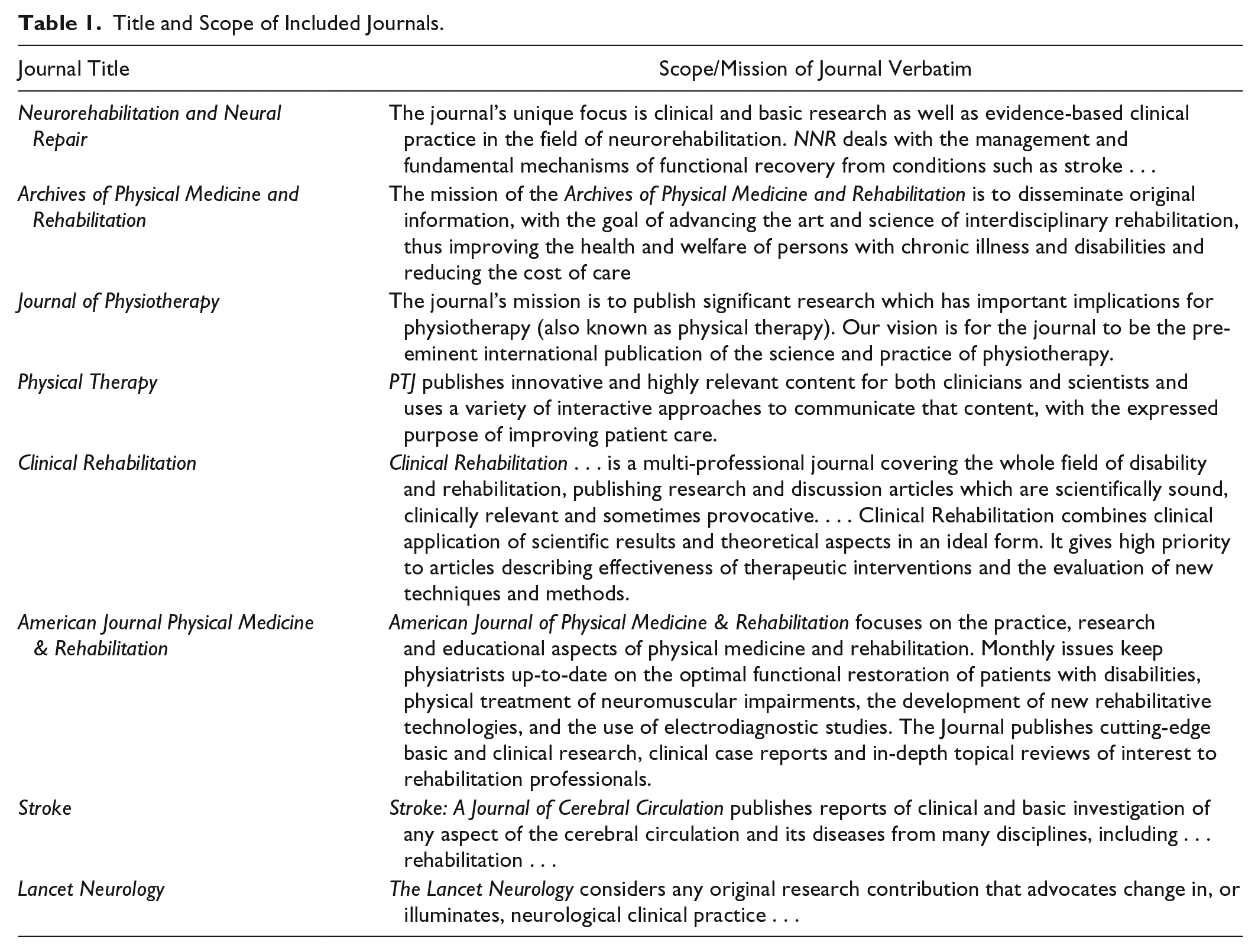
Eight journals were included in our final review. The title and scope of each of the 8 journals is shown in Table 1 and the process of journal and article selection is presented in Figure 1. The appendix contains details of the 17 screened journals.
Title and Scope of Included Journals.
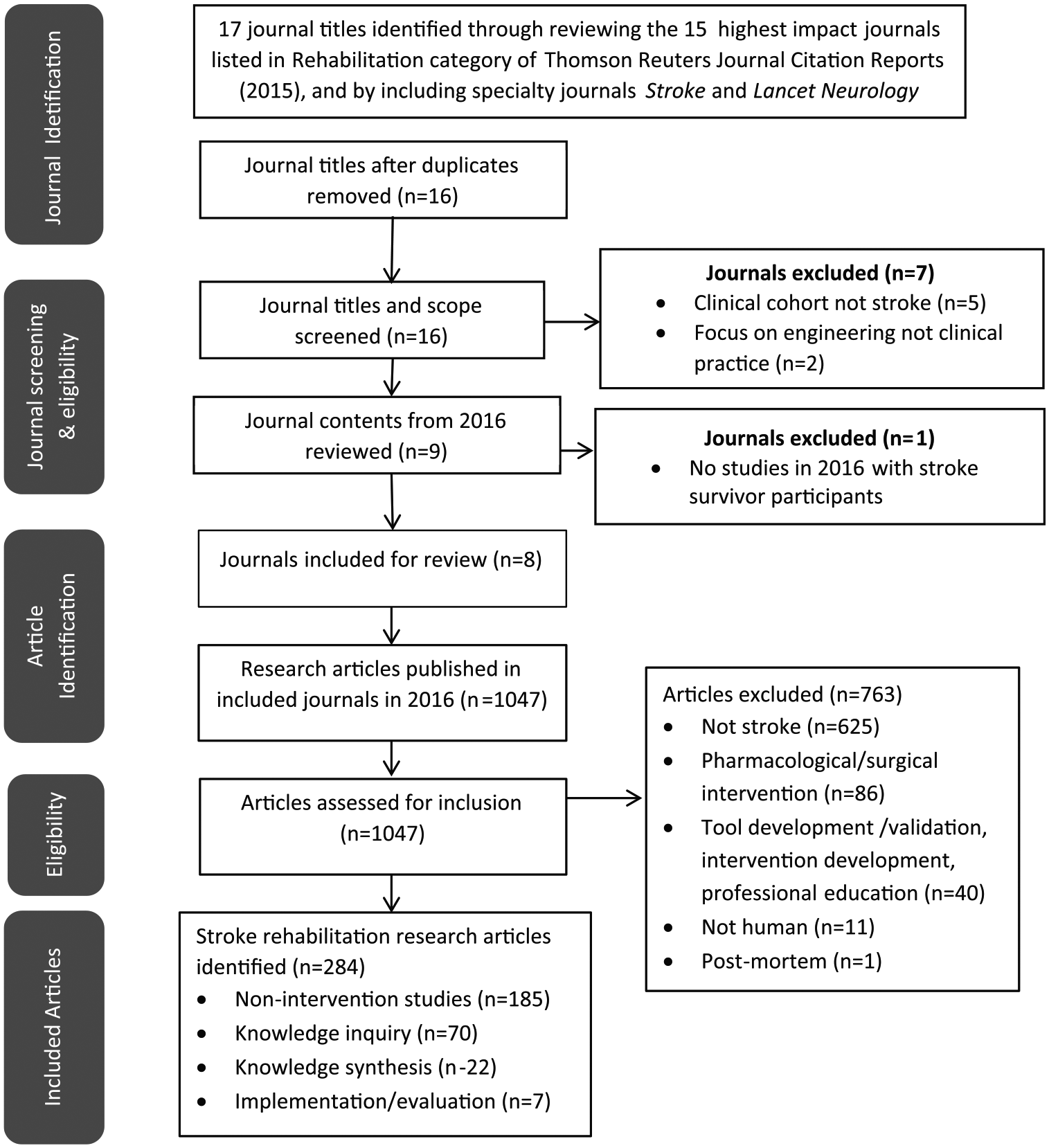
Process of journal and article selection.
All research articles published in the 8 included journals were independently reviewed by 2 reviewers (shared between EAL, LAC and BMC) to determine what sort of clinical stroke research was published in 2016.
Articles were excluded if the participants were not humans with stroke, if the studies were undertaken postmortem, if the focus of study was not on outcomes of people with stroke or health service for people with stroke, or if the research was investigating solely pharmacological or surgical interventions. We excluded reports on pharmacological and surgical interventions because the majority of these studies were conducted in the hyperacute stage. Furthermore, we wanted to focus on rehabilitation interventions that are underpinned by the principles of rehabilitation that have been defined as coordinated multidisciplinary team care, individualized goal setting, high-intensity practice, and task-specific training. 2
We categorized the included articles according to where in the research-to-practice trajectory they were conducted, guided by the Knowledge to Action framework. 20 Categories comprised the following:
Knowledge inquiry: First-generation knowledge regarding efficacy of interventions to manage stroke, for example, randomized controlled trials or before/after studies of nonpharmacological or nonsurgical interventions
Knowledge synthesis: Systematic reviews, meta-syntheses, scoping reviews, or realist reviews of nonpharmacological or nonsurgical interventions for people with stroke
Implementation and evaluation: Application of findings from knowledge syntheses to clinical practice or population health
In addition, we created a category for the following:
Nonintervention studies: These were defined as studies examining clinical features of stroke, including prognostic indicators, risk factors, associated conditions, biomarkers of stroke, and observations of stroke recovery trajectory.
These categories and their course in the research translation pipeline are shown in Figure 2. Decisions made by the 2 reviewers in relation to categorization of articles were checked for accuracy and any discrepancies were resolved through discussion with all 3 authors.

Translation pipeline for categories of research studies.
Results
Between January and December 2016, a total of 1047 research articles were published in the 8 included journals. A total of 763 of these articles were excluded, because participants had not had a stroke (n = 625), the research was investigating pharmacological or surgical interventions (n = 86), the article described another research focus such as outcome tool development or validation (n = 40), studies were not conducted with human participants (n = 11), or research was conducted postmortem (n = 1).
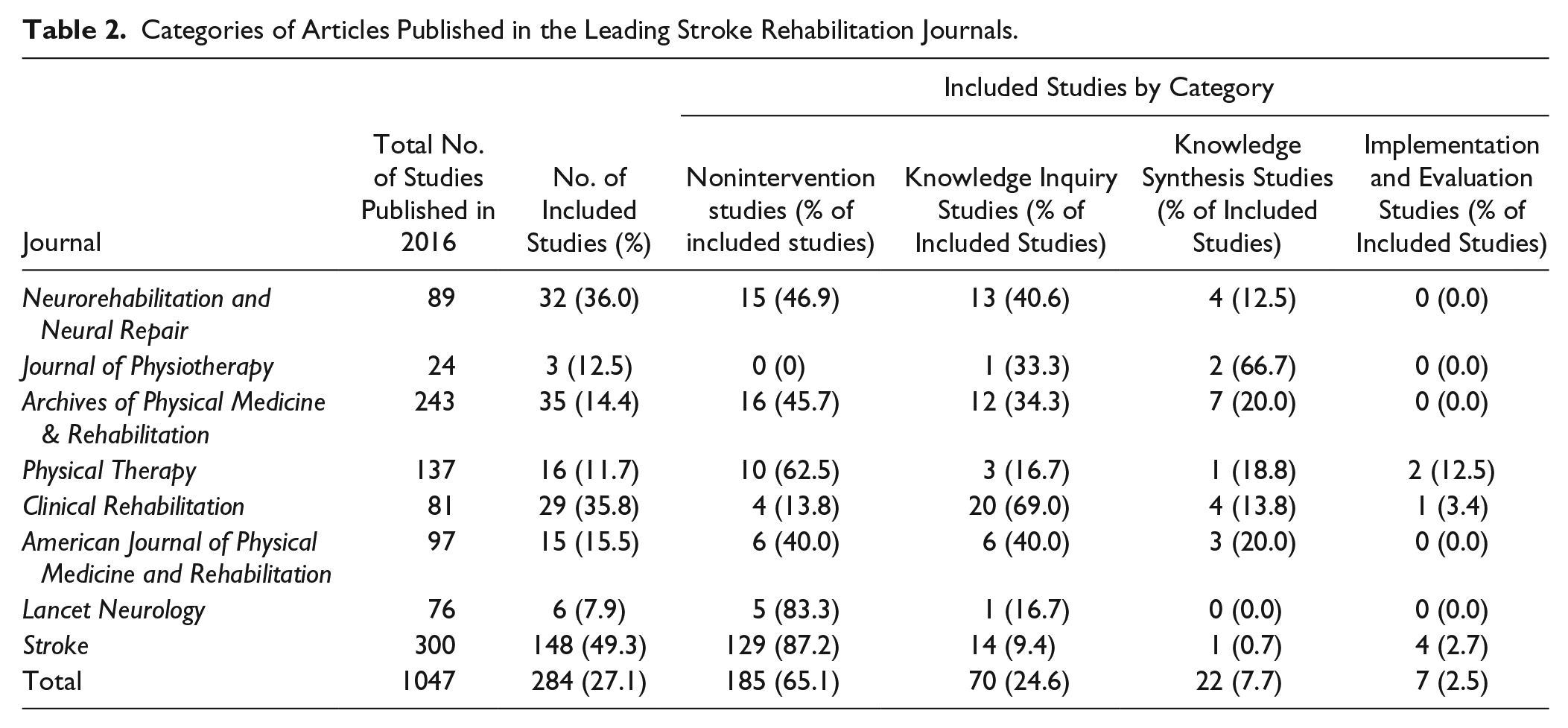
The included 284 articles were categorized as follows: 185 nonintervention studies (65.1% of included studies), 70 knowledge inquiry studies (24.6%), 22 knowledge syntheses (7.7%), and 7 implementation or evaluation studies (2.5%). The comparison of the percentage of articles published from the different categories is presented in Figure 3. The breakdown of the different categories of research published in the included journals is presented in Table 2.
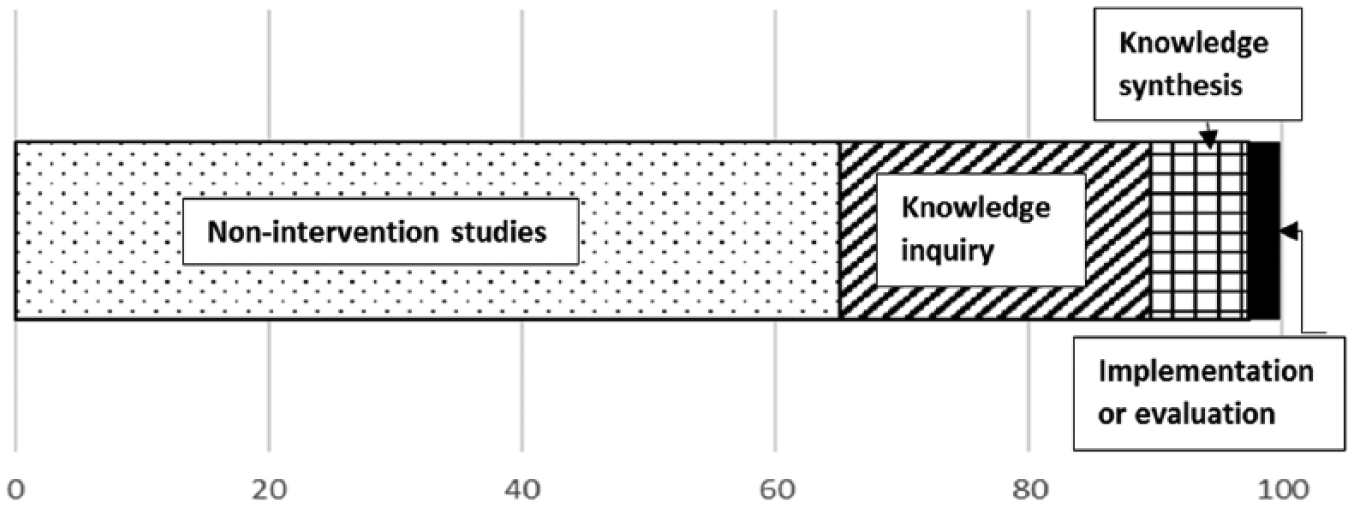
Percentage of included articles in each category.
Categories of Articles Published in the Leading Stroke Rehabilitation Journals.
Of the 7 articles that presented implementation or evaluation of nonpharmacological, nonsurgical management after stroke, 3 presented findings regarding delivery of rehabilitation services,21-23 whereas the remaining 4 articles presented findings regarding quality of care in the acute poststroke period.24-27 One rehabilitation study evaluated the real-world implementation of early supported discharge, 21 and the other 2 rehabilitation studies examined physical therapists’ self-reported adherence with recommendations from clinical guidelines (electrical stimulation and provision of education about community-based exercise).22,23 Details of the 7 implementation and evaluation studies are presented in Table 3.
Implementation/Evaluation Studies Published in Leading Stroke Rehabilitation Journals in 2016.
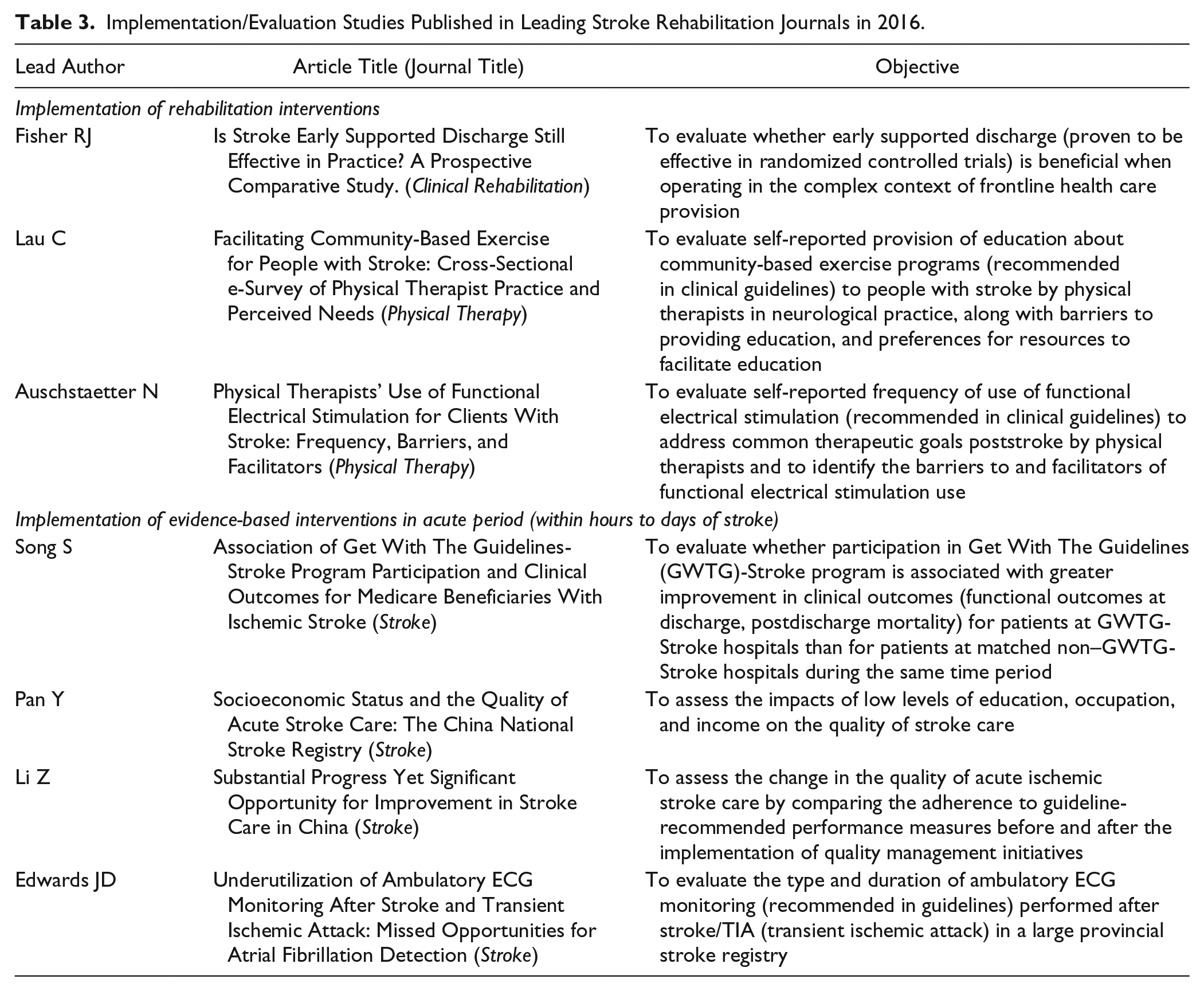
To give some indication whether implementation and evaluation research is actually being conducted and not being published, or whether this essential aspect of stroke care is not being researched at all, we scanned a selection of international trial registers (https://www.clinicaltrials.gov, http://www.anzctr.org.au/ and https://www.isrctn.com/). We identified 5 ongoing and 4 completed stroke rehabilitation studies that could be considered implementation or evaluation studies. Using the trial identifications, we determined that all 4 of the completed studies had published results in Implementation Science journal.28-31 This led us to explore whether rehabilitation implementation/evaluation publications tend to be clustered in general health services journals, rather than journals designed for clinicians in a particular field. We scanned the titles of publications in 2016 from Implementation Science, Health Affairs, BMJ Quality & Safety, and BMC Health Services Research and identified 5 articles reporting on implementation or evaluation research in stroke rehabilitation29,32-35 (one was already identified through trial registration search described above).
Our results indicate that literature published in the leading stroke rehabilitation journals is heavily weighted to exploration and clinical investigation of stroke via the conduct and publication of nonintervention studies, followed by studies reporting on the efficacy of interventions. The evidence base regarding how to apply new or preexisting research knowledge is barely changing, because only a handful of articles were published in 2016 with a focus on the implementation or evaluation of the use of evidence-based rehabilitation interventions in clinical practice. Seven implementation or evaluation studies were published in leading stroke and rehabilitation journals in 2016 and 5 publications were identified in health services journals. Of note, only the publications in the health services journals reported on strategies to implement evidence-based interventions, with these studies respectively comparing education with a multifaceted intervention to improve the assessment of rehabilitation needs after stroke 29 , using a multifaceted intervention to increase the amount of arm therapy after stroke, 32 a multifaceted intervention to improve therapists’ proficiency in using virtual reality systems, 33 a train-the trainer intervention to improve dysphagia management, 34 and a comparison of quality improvement training plus feedback to feedback alone to improve deep vein thrombosis prophylaxis and dysphagia screening after stroke. 35 In contrast, the implementation and evaluation studies in the rehabilitation and stroke journals reported on an evaluation of current provision of early supported discharge 21 and barriers to delivering evidence-based practices.22,23 It is a concern that information regarding how to overcome barriers and change clinical practice was only published in nonstroke or rehabilitation journals, because when research is published in nonspecialty journals, this “scatter” can reduce the likelihood of clinicians being aware of, and making use of this research. 19
Solution and Recommendation for Strategies
Suboptimal uptake of evidence-based therapies by clinicians has been highlighted as a key causes of underuse of effective health care interventions globally 12 and therefore should be a focus of ongoing research. More work is required to determine exactly how to ensure evidence-based rehabilitation interventions are provided to people with stroke. At present, incentives and funding opportunities for researchers to conduct implementation research are growing but have historically been less available and thereby implementation research has been underappreciated. The advent of effectiveness-implementation hybrid trials wherein clinical effectiveness and implementation can be investigated concurrently may be one way to overcome this barrier. 36 Furthermore, the growing emphasis on demonstrating impact beyond simply publishing results may encourage more researchers to conduct implementation research. Impact relies on successful translation of knowledge from research to enable improvements in human health, quality of life, and broader scale benefits to the community or environment health, 37 so investing in research to determine how best to translate research findings into clinical practice to generate a positive impact should be seen as a priority to the research and clinical community. There are promising signs that the research landscape might be changing to support this type of work, with governments providing funding to support collaboratives to conduct research translation, implementation and evaluation (eg, Advanced Health Research and Translation Centres commenced in Australia in 2015, 38 Collaborations for Leadership in Applied Health Research and Care commenced in the United Kingdom in 2008 39 ) with a view that producers and users of research work together throughout the research process so that the research answers clinically important questions and any strategies used are more likely to be suitable to implement in the clinical setting. Governments are also providing research funding dedicated for translation, implementation and evaluation projects (eg, ongoing work by Canadian Institutes of Health Research which have funded knowledge translation work since 2000 40 and the National Institute of Health in the United States, which has allocated funding for dissemination and implementation research projects since 2007 41 ).
The increased funding for implementation has not as yet translated into increased implementation research publications in stroke rehabilitation journals. This may be due to a time lag, or it may highlight a need for a change in editorial focus from stroke rehabilitation journals. Publications in clinical journals need to be relevant to real-world clinicians, so it would be of value to publish not only clinical research findings but also articles that can be used to guide how to apply the new evidence or implement clinical guidelines in clinical settings. Some journals have specific article categories such as systematic reviews; one option to promote research translation would be to introduce a category pertaining to research implementation or health service evaluation. This promotion of implementation data reporting through having dedicated journal sections has proven successful in other clinical areas, for example, Diabetes Care journal.
The academic community could support research translation by recognizing the importance of research regarding implementation of evidence-based practice and health service evaluation research, by conducting more hybrid efficacy-implementation studies and collaborative implementation research with clinical partners. Finally, for researchers conducting implementation research and journal editors selecting which manuscripts to publish, publication of implementation and evaluation research in clinical journals in preference to health services journals would increase the likelihood that the research will come to the attention of clinicians, who are one of the main target audiences for this information.
Limitations
It is important to acknowledge that this is a perspective article, not a systematic review. We have used robust methods and a narrow scope, because we wanted to focus on publications that stroke rehabilitation clinicians would be most likely to access and read. In doing this, we have selected leading rehabilitation journals along with Stroke and Lancet Neurology, and it is acknowledged that some clinicians might well subscribe to journals not included in our review. Nonetheless, there is a translation gap in getting the currently available implementation evidence in front of clinicians and the clinical journals they are most likely to read.
Semantic factors affecting the decisions of reviewers when categorizing articles could be viewed as a potential limitation of our methods. However, the 3 authors work in different countries and come from different professional backgrounds and this diversity has enabled a broad perspective to be taken for the review. Additionally, a decision was taken to err on the side of being overinclusive in terms of deciding whether an article could be categorized as implementation or evaluation, meaning that the proportion of articles categorized as implementation or evaluation, if anything, is likely to be an overestimate.
This review highlights in a striking fashion the lack of focus within the academic community on the implementation of evidence-based interventions within stroke rehabilitation practice, with less than 3% of stroke rehabilitation research published in the leading stroke rehabilitation journals addressing implementation or evaluation. Given the ongoing need for rehabilitation after stroke, it is imperative that a greater focus on implementation is shown by researchers, publishers, funders and professional bodies in order for people with stroke to benefit from the best possible evidence-based care.
Footnotes
Appendix
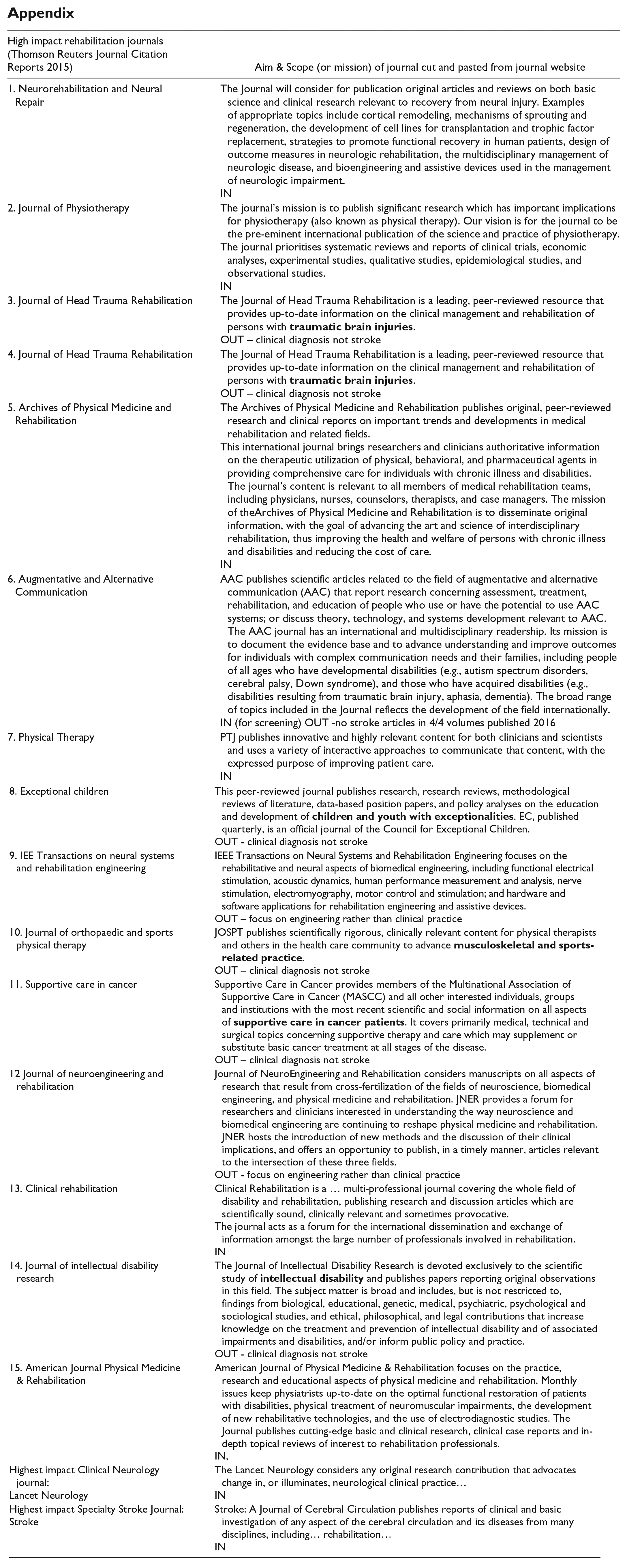
| High impact rehabilitation journals (Thomson Reuters Journal Citation Reports 2015) | Aim & Scope (or mission) of journal cut and pasted from journal website |
|---|---|
| 1. Neurorehabilitation and Neural Repair | The Journal will consider for publication original articles and reviews on both basic science and clinical research relevant to recovery from neural injury. Examples of appropriate topics include cortical remodeling, mechanisms of sprouting and regeneration, the development of cell lines for transplantation and trophic factor replacement, strategies to promote functional recovery in human patients, design of outcome measures in neurologic rehabilitation, the multidisciplinary management of neurologic disease, and bioengineering and assistive devices used in the management of neurologic impairment. IN |
| 2. Journal of Physiotherapy | The journal’s mission is to publish significant research which has important implications for physiotherapy (also known as physical therapy). Our vision is for the journal to be the pre-eminent international publication of the science and practice of physiotherapy. The journal prioritises systematic reviews and reports of clinical trials, economic analyses, experimental studies, qualitative studies, epidemiological studies, and observational studies. IN |
| 3. Journal of Head Trauma Rehabilitation | The Journal of Head Trauma Rehabilitation is a leading, peer-reviewed resource that provides up-to-date information on the clinical management and rehabilitation of persons with OUT – clinical diagnosis not stroke |
| 4. Journal of Head Trauma Rehabilitation | The Journal of Head Trauma Rehabilitation is a leading, peer-reviewed resource that provides up-to-date information on the clinical management and rehabilitation of persons with OUT – clinical diagnosis not stroke |
| 5. Archives of Physical Medicine and Rehabilitation | The Archives of Physical Medicine and Rehabilitation publishes original, peer-reviewed research and clinical reports on important trends and developments in medical rehabilitation and related fields. This international journal brings researchers and clinicians authoritative information on the therapeutic utilization of physical, behavioral, and pharmaceutical agents in providing comprehensive care for individuals with chronic illness and disabilities. The journal’s content is relevant to all members of medical rehabilitation teams, including physicians, nurses, counselors, therapists, and case managers. The mission of theArchives of Physical Medicine and Rehabilitation is to disseminate original information, with the goal of advancing the art and science of interdisciplinary rehabilitation, thus improving the health and welfare of persons with chronic illness and disabilities and reducing the cost of care. IN |
| 6. Augmentative and Alternative Communication | AAC publishes scientific articles related to the field of augmentative and alternative communication (AAC) that report research concerning assessment, treatment, rehabilitation, and education of people who use or have the potential to use AAC systems; or discuss theory, technology, and systems development relevant to AAC. The AAC journal has an international and multidisciplinary readership. Its mission is to document the evidence base and to advance understanding and improve outcomes for individuals with complex communication needs and their families, including people of all ages who have developmental disabilities (e.g., autism spectrum disorders, cerebral palsy, Down syndrome), and those who have acquired disabilities (e.g., disabilities resulting from traumatic brain injury, aphasia, dementia). The broad range of topics included in the Journal reflects the development of the field internationally. IN (for screening) OUT -no stroke articles in 4/4 volumes published 2016 |
| 7. Physical Therapy | PTJ publishes innovative and highly relevant content for both clinicians and scientists and uses a variety of interactive approaches to communicate that content, with the expressed purpose of improving patient care. IN |
| 8. Exceptional children | This peer-reviewed journal publishes research, research reviews, methodological reviews of literature, data-based position papers, and policy analyses on the education and development of OUT - clinical diagnosis not stroke |
| 9. IEE Transactions on neural systems and rehabilitation engineering | IEEE Transactions on Neural Systems and Rehabilitation Engineering focuses on the rehabilitative and neural aspects of biomedical engineering, including functional electrical stimulation, acoustic dynamics, human performance measurement and analysis, nerve stimulation, electromyography, motor control and stimulation; and hardware and software applications for rehabilitation engineering and assistive devices. OUT – focus on engineering rather than clinical practice |
| 10. Journal of orthopaedic and sports physical therapy | JOSPT publishes scientifically rigorous, clinically relevant content for physical therapists and others in the health care community to advance OUT – clinical diagnosis not stroke |
| 11. Supportive care in cancer | Supportive Care in Cancer provides members of the Multinational Association of Supportive Care in Cancer (MASCC) and all other interested individuals, groups and institutions with the most recent scientific and social information on all aspects of OUT – clinical diagnosis not stroke |
| 12 Journal of neuroengineering and rehabilitation | Journal of NeuroEngineering and Rehabilitation considers manuscripts on all aspects of research that result from cross-fertilization of the fields of neuroscience, biomedical engineering, and physical medicine and rehabilitation. JNER provides a forum for researchers and clinicians interested in understanding the way neuroscience and biomedical engineering are continuing to reshape physical medicine and rehabilitation. JNER hosts the introduction of new methods and the discussion of their clinical implications, and offers an opportunity to publish, in a timely manner, articles relevant to the intersection of these three fields. OUT - focus on engineering rather than clinical practice |
| 13. Clinical rehabilitation | Clinical Rehabilitation is a … multi-professional journal covering the whole field of disability and rehabilitation, publishing research and discussion articles which are scientifically sound, clinically relevant and sometimes provocative. The journal acts as a forum for the international dissemination and exchange of information amongst the large number of professionals involved in rehabilitation. IN |
| 14. Journal of intellectual disability research | The Journal of Intellectual Disability Research is devoted exclusively to the scientific study of OUT - clinical diagnosis not stroke |
| 15. American Journal Physical Medicine & Rehabilitation | American Journal of Physical Medicine & Rehabilitation focuses on the practice, research and educational aspects of physical medicine and rehabilitation. Monthly issues keep physiatrists up-to-date on the optimal functional restoration of patients with disabilities, physical treatment of neuromuscular impairments, the development of new rehabilitative technologies, and the use of electrodiagnostic studies. The Journal publishes cutting-edge basic and clinical research, clinical case reports and in-depth topical reviews of interest to rehabilitation professionals. IN, |
| Highest impact Clinical Neurology journal: Lancet Neurology |
The Lancet Neurology considers any original research contribution that advocates change in, or illuminates, neurological clinical practice… IN |
| Highest impact Specialty Stroke Journal: Stroke |
Stroke: A Journal of Cerebral Circulation publishes reports of clinical and basic investigation of any aspect of the cerebral circulation and its diseases from many disciplines, including… rehabilitation… IN |
Declaration of Conflicting Interests
The authors declared no potential conflicts of interest with respect to the research, authorship, and/or publication of this article.
Funding
The authors disclosed receipt of the following financial support for the research, authorship, and/or publication of this article: EAL was supported by National Health and Medical Research Council (NHMRC) Centre for Research Excellence in Stroke Rehabilitation and Brain Recovery (1077898) and an NHMRC early career fellowship (1138515).
