




Abstract
To fulfil its third mission and equip students with the appropriate competencies to address complex societal issues, Vrije Universiteit Amsterdam (VU) offers undergraduates the chance to learn about issues that transcend the confines of their own discipline through the cross-disciplinary Broader Mind Course (BMC). This study investigates to what extent this 40-hour course may elicit transformative learning (TL) that can significantly trigger changes in students’ awareness, perspectives, and behaviour. We gathered and analysed qualitative data (n = 41) to determine: 1) whether indications of emergent TL outcomes as proposed by Hoggan were visible in students’ accounts and 2) what structural and interpersonal elements either facilitated or impeded this learning process. Our findings show that activating, creative exercises, productive conflict in group discussions, psychological security, and sufficient time – which is particularly challenging for HEIs – are crucial elements for TL. Therefore, when designing for TL, higher education institutes (HEIs) should carefully consider these four aspects.
Universities and higher education institutes (HEIs) have faced growing challenges to extend their core functions of research and education towards a so-called ‘third mission’, which is broadly defined as ‘a contribution to society’ (Abreu et al., 2016). This challenge has its roots in various developments, such as the rise of the knowledge economy, globalization, and environmental and financial crises (Rubens et al., 2017). This ‘third mission’ urges HEIs to seek new ways to play a meaningful role in society and equip students with the appropriate competencies to address complex societal issues (Horn et al., 2022a). However, the strategic repositioning towards this ‘third mission’ might also lead to ‘narrow vocationalism’ (i.e. focusing educational content on skills applicable to a specific vocation or industry), since HEIs are increasingly seen more as businesses rather than institutes of scholarship and education (Fasenfest, 2021).
Navigating these often conflicting tensions, transformative learning (TL) can be a powerful pedagogy to offer both practical and intellectual skills such as critical thinking, since transformative education is ‘a means for the development of the competencies required to engage in communicative action and thereby participate more effectively while living in a pluralistic, deliberative, participatory democracy’ (Hoggan & Kloubert, 2020, p. 299). Recent work in TL has included various scoping reviews for TL in health pedagogy (Van Schalkwyk et al., 2019) and sustainable health goals (Cottafava et al., 2019); tools and elements conducive to TL (Baumgartner, 2019); evidence for the importance of considering emotional learning in TL (Förster et al., 2019; Singer-Brodowski 2022); and tools for the quantitative assessment of TL outcomes (Cox, 2021). The framing of TL outcomes (Hoggan, 2016a) and processes (Dike & Chukwuorji, 2022) is well established, and the body of literature on the topic of fostering and promoting transformative learning is rich (e.g. Cranton, 2016; Fleming et al., 2019; Taylor, 2009; Taylor & Laros, 2014; Washburn, 2021). Yet, few studies focus on how short courses may trigger TL as experienced by higher education students. This is particularly relevant since higher education typically offers short courses characterized by relatively strong extrinsic motivators and standardized learning activities and goals, all of which potentially challenge the fostering of TL. Although TL in a short timeframe was suggested by Hoggan and Cranton (2015) and empirically studied for management course attendees (Durant et al., 2016), this remains an understudied topic.
This study reports on research on TL in a short, 40-hour introductory course at Vrije Universiteit Amsterdam (VU) in response to its aim to achieve its third mission and to equip students with a broad perspective (VU, 2021). The Broader Mind Course (BMC) 1 offers all VU undergraduates the chance to learn about and discuss subjects that transcend the confines of their own disciplines by discussing and reflecting on societal issues. The aim is for students to become aware of their own roles, behaviour, predispositions, and biases. Through its diverse representation in student cohorts, the BMC is a cross-disciplinary course (Choi & Pak, 2006), which, despite its potential to induce emergent TL among students, has not to date been studied academically.
This article aims to: 1) identify whether indications of emergent TL outcomes can be observed in the students’ accounts with respect to this short HEI course and 2) determine what elements in the course design students experience as facilitating or impeding TL. Since we gathered our data immediately after completion of the course, we are aware that we cannot draw conclusions about the long-term TL outcomes (i.e. ‘relative stability’) (Hoggan, 2016a). We gathered qualitative data from 41 students who completed the BMC, using individual and group interviews to answer the research question: ‘what elements – both in terms of structural elements (e.g. course design) as well as interpersonal elements (e.g. group dynamics and communication) – contributed to potentially triggering TL?’
Answering this question helps gain a better understanding of how indications of emergent TL can be achieved in a short-term course in a HEI. Since it cannot be assumed that a 40-hour course will produce demonstrable long-term TL outcomes, we focus on providing insights into structural design elements and interpersonal strategies that can be deployed to stimulate TL. These insights may help inform the design and implementation of short courses that can promote emergent TL outcomes in other HEIs.
The Relation Between Transformative Learning Processes and Outcomes
TL stems from the theory of perspective transformation outlined by Mezirow (1978) and describes the change processes that individuals undergo as they come to question their values and beliefs in such a way that they experience a fundamental shift in their interpretation of experiences and the bases for their actions. Although the term was first coined to describe the processes that take place in non-formal adult learning, the theory is also applied to understanding learning among university or HEI students (e.g. Johansson & Felten, 2014).
Mezirow (1978) initially identified 10 phases in the TL process which for practitioners were later grouped into four phases (Mezirow, 1997): (1) disorienting experience; (2) critical reflection; (3) learning; and (4) reintegration into one’s life (see Figure 1). According to this grouping, transformative learning starts with a disorienting dilemma: this can occur either within a facilitated learning environment, or in an unfacilitated, everyday life setting (Mälkki, 2012). Then, through critical reflection on previous experiences, learners are better able to understand themselves and their learning process. Then, learning occurs through reflective discourse, where previous experiences, assumptions, and beliefs can be revised by discussing the experiences with peers to develop a clearer understanding. Finally, this learning can be reintegrated into one’s life, resulting different behaviour and action (Mezirow, 2000). An overview of the four phases of the TL process as defined by Mezirow (1997) and the TL outcomes as defined by Hoggan (2016a).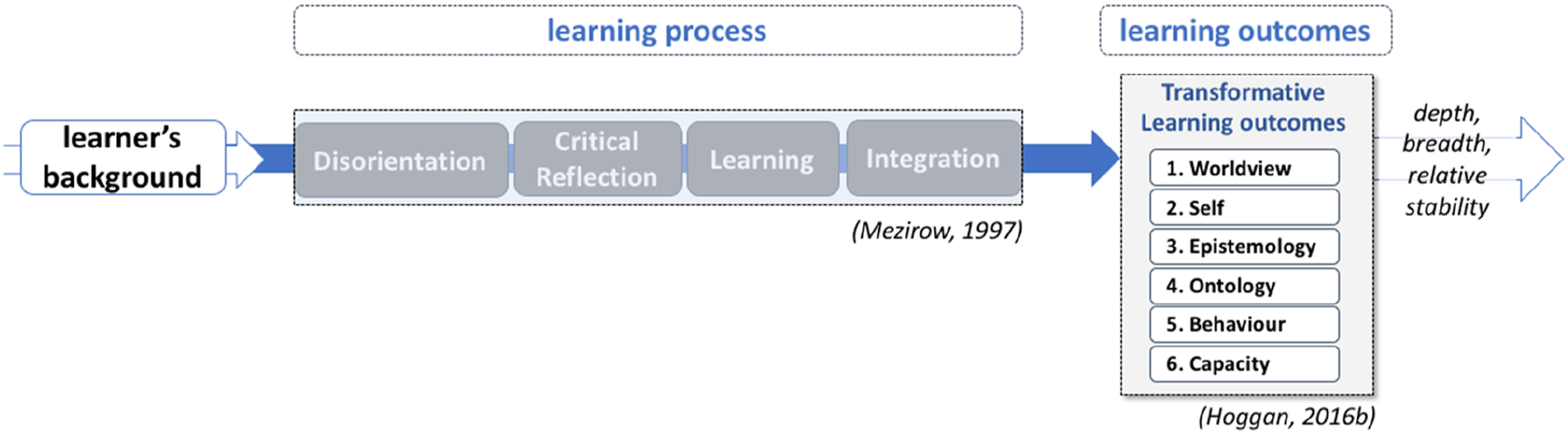
Over the past 40 years, there has been growing interest in, and critiques of, Mezirow’s original theory from diverse disciplines (e.g. Howie & Bagnall, 2013; Taylor & Cranton, 2013). One of the most common critiques is that the term is often used to refer to any kind of significant learning outcome (Howie & Bagnall, 2013). To address this issue and simultaneously create more clarity in the ever-expanding body of literature deploying various definitions of TL, Hoggan (2016b; 2016a) proposes a distinction between the original theory, called perspective transformation, and a metatheory of transformative learning. The latter describes a wider range of understandings of TL, including other kinds of outcomes than Mezirow originally described. It refers to ‘processes that result in significant and irreversible changes in the way a person experiences, conceptualizes, and interacts with the world’ (Hoggan, 2016a, p. 77).
Hoggan identifies six broad categories with various subcategories of possible TL outcomes. These are: (1) worldview; (2) self; (3) epistemology; (4) ontology; (5) behaviour; and (6) capacity (see Figure 1). To assess whether a specific learning outcome is transformative, Hoggan (2016a; 2016b) proposes to assess the depth, breath, and relative stability of these learning outcomes, with TL being characterized by the combination of all three.
The Broader Mind Course
The BMC covers 40 hours – equivalent to one European Credit Transfer and Accumulation System (ECTS) – spread out over four months (February–May). As the course is extra-curricular, it is followed in parallel to students’ undergraduate program. Students receive a certificate of participation and an indication on their diploma on successful completion. An exception is Dentistry, for which the course is a compulsory part of the first-year curriculum.
Course Design: Cross-Disciplinary, Blended Learning
The Different Themes per Track.
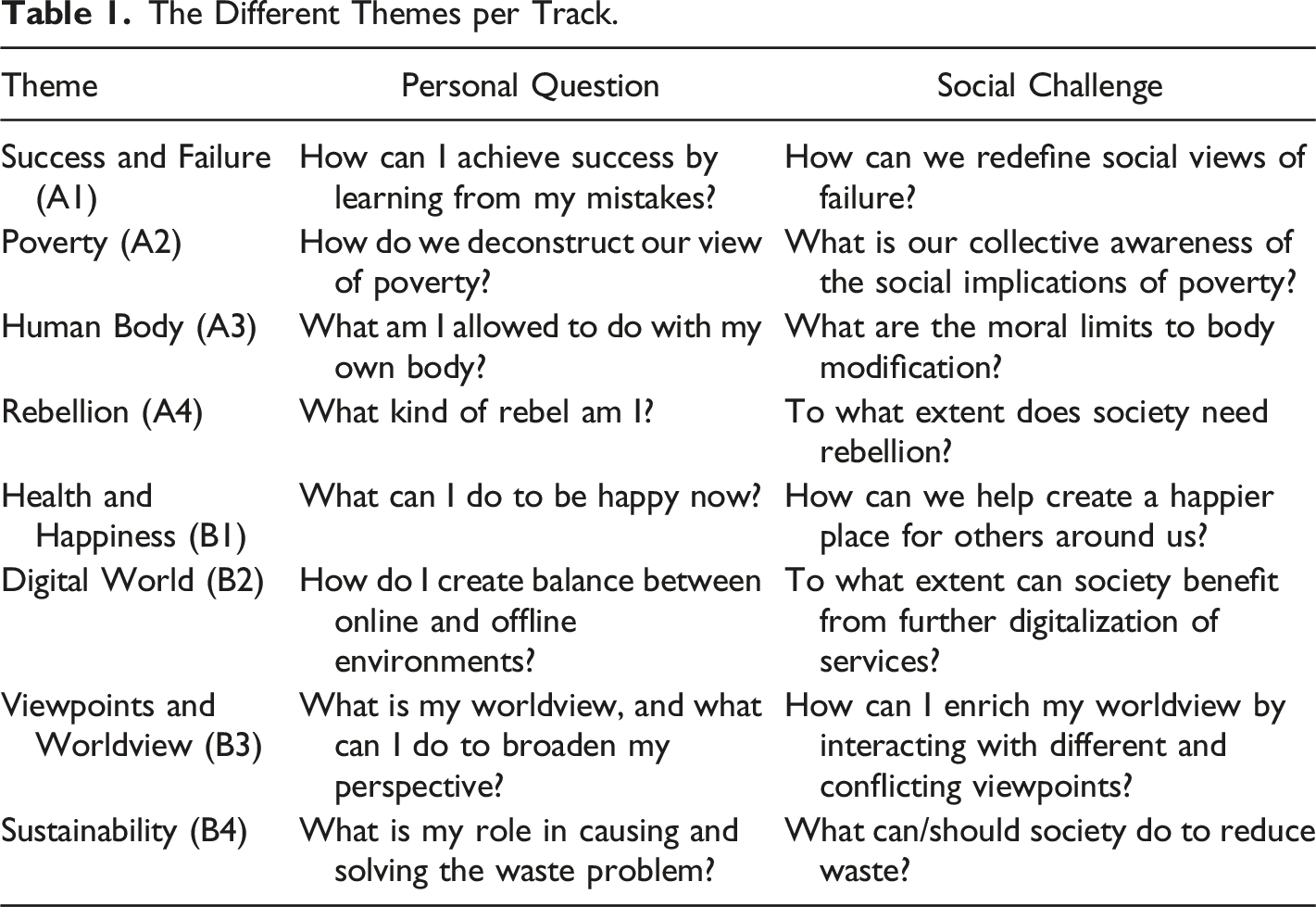
After enrolment in one of the tracks, students are divided in groups of approximately 20, which are as diverse as possible with respect to academic discipline and motivation (by distributing mandatory and voluntary students evenly across the groups). The groups are facilitated by a ‘guide’: these are master’s students who receive extensive training before and during the course.
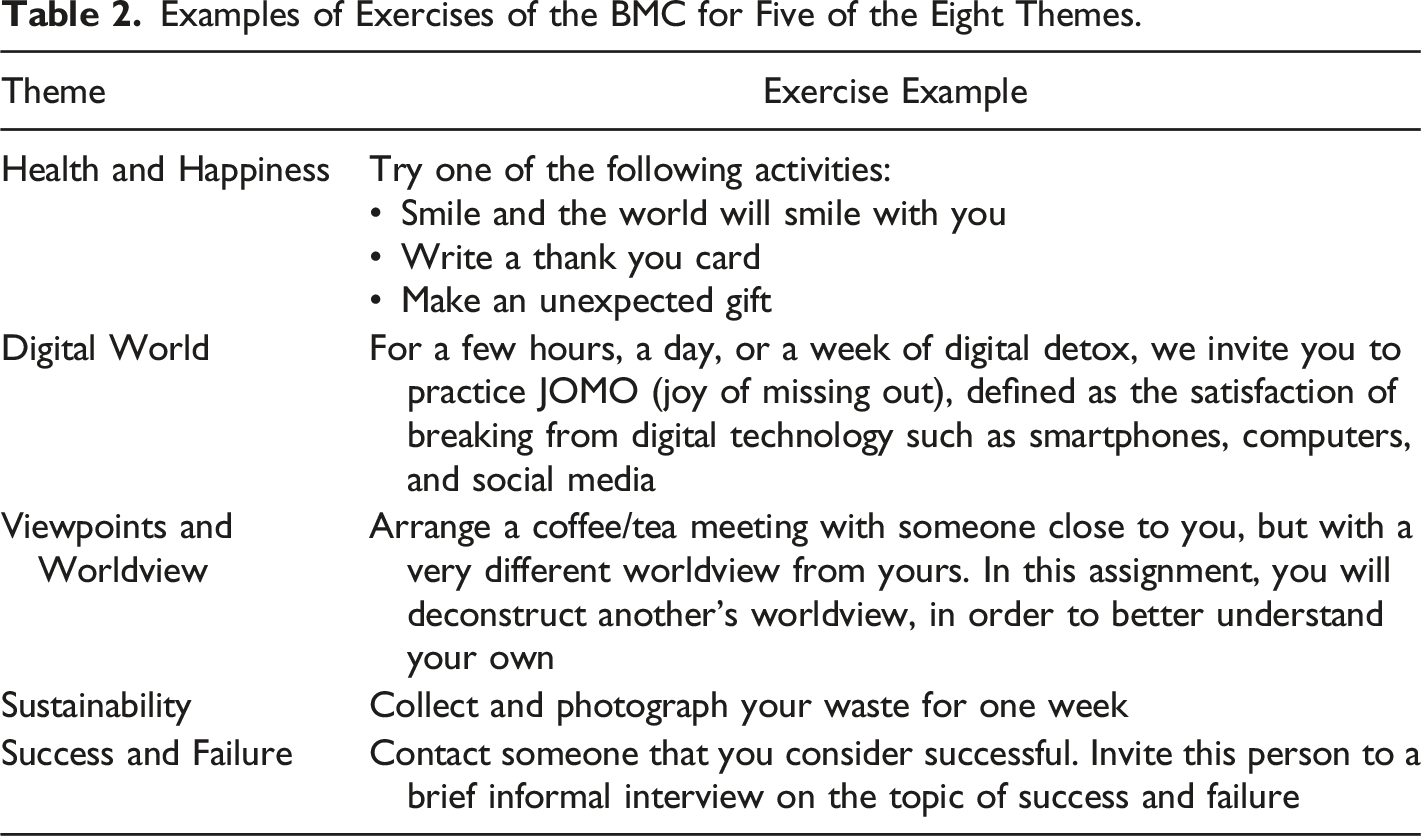
Examples of Exercises of the BMC for Five of the Eight Themes.
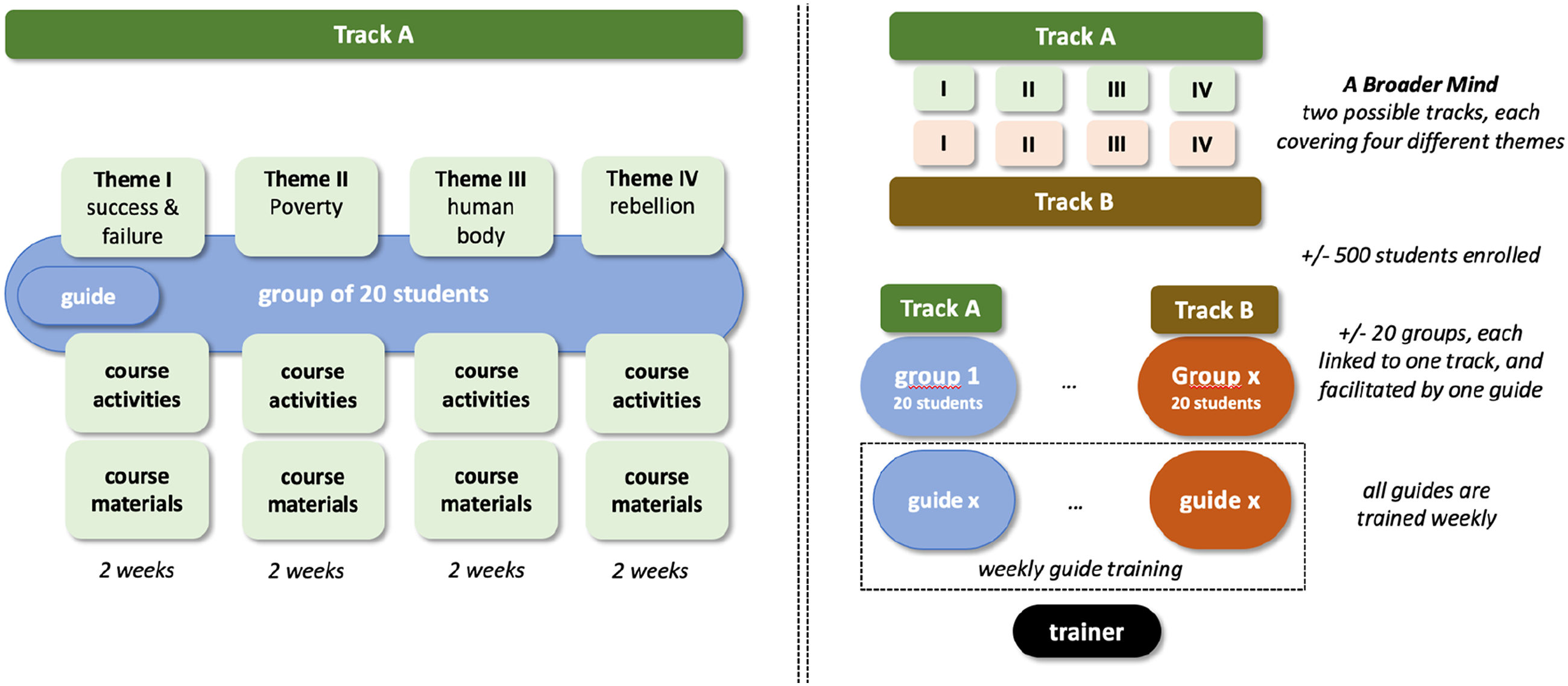
A visual overview of the Broader Mind Course (BMC). Note. The left panel illustrates how a single student, as one of a group of approximately 20 that is facilitated by a guide, experiences the BMC. The group engages with four themes. The right panel illustrates how the BMC offers two tracks (each with four themes). There were around 500 students enrolled. It also shows that a trainer provided weekly trainings to the guides that facilitated a student group.
Since the course aims to broaden students’ minds, it may potentially provide opportunities for students to experience TL in the sense of Hoggan’s (2016a) metatheory.
In 2021, 521 students enrolled in the BMC (277 in track A and 245 in track B), of whom 328 obtained a certificate (including the Dentistry students for whom this was mandatory and who received 1-ECTS for their participation). In 2022, 510 students enrolled in the BMC (281 in track A and 229 in track B) of whom 279 obtained a certificate. These students came from all nine faculties within VU: Faculty of Dentistry (160 in 2021/148 in 2022), Faculty of Science (101/134), School of Business and Economics (75/45), Faculty of Social Sciences (60/63), Faculty of Behavioural and Movement Sciences (44/45), VUmc School of Medical Sciences (35/34), Faculty of Humanities (23/21), Faculty of Law (21/20), and Faculty of Religion and Theology (2/0).
Methodology
To maximize opportunities to gauge students’ reflections on potential TL, we adopted a qualitative research approach based on semi-structured interviews and group interviews. Personal interviews gave students the opportunity to describe their experiences in their own language and group interviews allowed students to build onto each other’s comments and insights. Our combined approach thus enabled us to collect rich data. Nonetheless, we acknowledge that interviews contain students’ self-reporting, which has its limitations in assessing TL, although other techniques also face assessment challenges (Hoggan & Cranton, 2015).
Semi-Structured and Group Interviews
We created an interview guide based on important elements of TL based on the six broad categories as identified by Hoggan (2016b; 2016a), such as students’ changing perspectives, behaviour, and attitudes (relating to worldview, self, behaviour, and capacity) and students’ reflection on their overall growth and learning in the course (relating to epistemology, behaviour, ontology, and capacity), ability to express opinions, critical thinking, and reflexivity. For each of the elements, three to four questions (with additional probing questions) were formulated to see whether students felt if the course contributed to changes in (one of these) elements, with questions such as ‘Do you feel that this course challenged your opinions?’ or ‘Do you feel like you’ve acquired new values throughout this course?’ We also tried to identify whether students felt the course enabled them to grow as an undergraduate (academically and/or intellectually), or as a person, and how they see themselves in relation to society, and whether they felt different after the course than before. Similarly, we aimed to map what elements students felt facilitated or impeded TL.
Sampling
All students who enrolled for the BMC were invited to participate in the study through an announcement on the online learning aspect of the course and by their guides. Towards the end of the course, emails were sent to all students who had completed the course to ask whether they were willing to participate in an individual- or group interview. Since we experienced recruitment challenges in both 2021 and 2022, we offered students €15 to compensate for their time investment, which ensured that diverse voices were heard, not only the most motivated or positive students. In total, 41 students participated in the study. In 2021, 21 students from eight (out of nine) faculties participated in interviews (there were no students from the Faculty of Religion and Theology). In 2022, 20 students of seven faculties participated in the course (not from the Faculty of Religion and Theology or from the Faculty of Behavioural and Movement Sciences).
Data Collection
The first two authors conducted the individual- and group interviews after completion of the course in May, June, and July. The interviews and focus groups lasted approximately 1 hour.
Data Analysis
All individual- and group interviews were recorded and transcribed verbatim. We used an inductive–deductive coding approach: the first two authors individually coded the same two interviews in Word, using the three stages ‘noticing’, ‘collecting’, and ‘thinking’, as described by Friese (2022), in an iterative manner. By comparing the inductively created codes, we created a rough coding structure and started drawing deductively on Hoggan’s (2016b; 2016a) typology. After three cycles of coding, a codebook was created in Atlas.ti. Any new themes that emerged during the coding procedure were incorporated. The final coding comprised 44 codes in five main categories: change of attitudes, change of perspective, communication, facilitating and impeding elements for TL, and opinions about the course. We also coded the eight main social themes by using attribute codes. The data analysis allowed us to determine what types of learning outcomes were perceived, and what factors facilitated and impeded potential TL.
Research Ethics
All students who participated in the study gave written informed consent about the use of their data for scientific research and were told they could withdraw from the study at any time. The audio recordings were saved on a safe drive. All participants have been anonymized. None of the authors were responsible for or involved in teaching students in this course or for providing topical content. The third author was responsible for the training of the guides in the course. The first, second, third, and last author were involved in the evaluation of the course. This evaluation, which was independent from the design, implementation, and delivery of the course, informed the current study. As such, the researchers who collected the data (first and second authors) were unfamiliar faces to the students they interviewed, minimizing possible bias in student reports. Thus, we argue that the researchers were independent in their data collection, analysis, interpretation, and reporting about the course.
Results
We first highlight several indications of emergent TL from students’ accounts before focusing on elements of the course that they felt facilitated or impeded this process. Our study is not intended to assess the depth, breath, and relative stability of TL outcomes, which would require a longitudinal approach. Rather, our focus (and accompanying methodology) is on understanding and providing insights what potentially triggers emergent TL in a short, 40-hour course.
Indications of Emergent Transformative Learning
In this section, we use examples of students’ accounts in which indications of emergent TL are listed according to Hoggan’s (2016a) six main categories.
Worldview
TL outcomes in the worldview category refer to significant shifts in one’s understanding of the world, such as a change in assumptions, beliefs, values, and expectations, and new awareness (Hoggan, 2016a).
Some students report having acquired new perspectives through participation in the course. The following quote shows that for one student, the main learning from the BMC is that he now values the ability to disagree on a topic, which raised new awareness and understandings of his worldview: The most important thing I took away is to be more open to everything, and especially, first of all, to see everything from a different perspective, that when you have a certain opinion about something, that you always try to look at it from another side. And really do your best to try to understand that side […]. And then not that you must agree with it, but that you, yes, agree to disagree (R5-21).
Self
TL outcomes in the category of ‘self’ could lead to changes in the personal narratives that students construct, as well as to changes in how empowered they feel, or how responsible they feel for certain issues or problems around them (Hoggan, 2016a).
As the following quote demonstrates, learning more about ‘Sustainability’ by participating in the BMC initially increased this student’s worries about the problem of plastics, but also inspired her to take responsibility for her own behaviour: I noticed that when you learn more about a subject [on sustainability], I thought: yes, it’s such a big problem and on such a large scale, what can I do? I could very well separate my plastic, but there are super-sized companies that for every piece of plastic I separate, produce I don’t know how many more things made of plastic. But in the end, [...] I also learned what my responsibility is in these things. It’s very easy to let other people change the world. […] What I did learn is that you can do it in your own environment. [...] Even small things can have an effect (R12-21).
Epistemology
Epistemological change in TL outcomes refers to learners adopting a new way of knowing (Hoggan, 2016a).
When one student was asked if she felt that this course enabled her to grow as a student, she said that being exposed to different viewpoints changed how she perceives the world: I feel like […] as a university student, you carry with yourself the power of knowledge, and empowering that knowledge by broadening it with perspectives and viewpoints and understanding it from multiple viewpoints, that is really powerful. So, do I feel like it has in-depth broadened my knowledge of the course? No. Has it changed my approach, and will it forever have changed the way I approach things? Yes. And will that be good? Yes (R1-21).
Ontology
TL outcomes in the category of ‘ontology’ refer to changes in the way a person exists in the world (Hoggan, 2016a).
The following quote illustrates such a shift, in describing how the course theme ‘Rebellion’ changed the student’s assumptions (which relates to ‘worldview’) and how she perceives herself in relation to others (which relates to ‘self’), which eventually affected her ways of being (‘ontology’) and contributed to feeling more confident: It’s okay to not follow the rules, and […] to think out of the box. I’ve always felt that I was different, […] I’ve seen a lot of the world […]. It used to make me feel weird and insecure, but now I’m just like: […] I have seen more and therefore my insights and views and perspectives on life are more enriched. So, ‘Rebellion’ gave me the means and tools to switch my mindset, actually. And with that mindset I now stand stronger when I wake up, if that makes sense. […] And therefore, I stand here with more confidence (R1-21).
Behaviour
Changes in the category of ‘behaviour’ relate to new or different actions that learners deploy, in line with their newly acquired perspectives (Hoggan, 2016a).
One student describes how, before taking the course, she felt that she could not engage in discussions about the bio industry, for instance, since she sometimes still ate meat. However, by discussing her own assumptions with others during the course, and thus adapting her worldview, she realized that she could also take small steps towards more sustainable behaviour, rather than seeing it as an ‘all or nothing’ issue: I was always thinking about [sustainability], but I was also like, yes, becoming a vegetarian or a vegan is a very big step for me, because […] I was like, […] then I must go full on, you know, then I want to do it right from the start, one hundred thousand percent. […] And I think that by having these discussions and talking about it with everyone, it has also become more like, oh yes […], I only cook vegan. And if I go out for dinner, then I’m a bit more lenient or if I’m at home with my grandmother who thinks that chicken soup is vegan, then I can eat chicken soup there (R18-21).
Capacity
‘Capacity’ refers to developmental outcomes whereby learners experience changes in their abilities (Hoggan, 2016a). This also includes developing a greater awareness, which can be seen in the quote below. There are elements of changes in the category of ‘self’ (‘I’m a different person’) and ‘behaviour’ (‘I now buy a homeless person something’), but also changes in ‘capacity’: I must say that before the course and over the course, now, I am a different person. […] To be more thoughtful about other people. […] Homeless people aren’t here so much [in the Netherlands], but back home, they are. When you don’t see them anymore, you think they don’t exist, but they still do exist. And then when you see a homeless person, then I either buy them something or […] give him whatever I have here because I don’t need that much (R13-21).
Process of Transformative Learning
In this section, we focus on two main elements that students mentioned as potentially facilitating or impeding the TL process: structural (course materials and activities) and interpersonal (various interactions among the students and with their guide).
Structural Elements: Course Materials and Activities
Respondents differed about whether they experienced the course materials and activities as facilitating or impeding the potential TL outcomes identified. They also addressed the length of the course and how much time was spent on the different topics. For example, when asked if they felt whether the course brought about any changes in perspective, some students said that the course materials were not deep enough to create such a change, although others disagreed: R2: Going more in depth could improve the course. R1: Yeah, I agree with that. It was very, like, superficial. […] R3: I would disagree, […] because it’s an additional course and people can actually use only a very limited amount of time for it. […]. But it’s called ‘a broader mind’, right, about seeing a lot of different things, at least to me. […] I now know at least a little about the topics. […] And if I’m interested, I can go deeper into these topics myself (GI 1–22).
Course activities were often mentioned when describing indications of emergent TL, especially the more creative individual exercises, like making a collage or a video, or activating exercises, like keeping a gratitude journal. These were mentioned as stimulating critical thinking, reflexivity, and, for some, even changes in perspective and behaviour. For example, after a digital detox exercise for the theme ‘Digital World’, one student said that although the assignment did not necessarily change the way she perceives the Internet, since ‘I feel like there’s not much you can do about it’, it did make her realize that she can change her own behaviour and attitude towards it: I often realize that when I got bored, I just went to Instagram and just watched videos all day. So, I started to intentionally bore myself to, yeah, just sit on the couch and watch a butterfly. I think that was some of the things that I found quite interesting. Like, I just went into a garden and look at all the insects I could find. I found this tiny butterfly instead of looking at my Instagram account like ‘oh yeah, another video of some girl putting on make-up’ (GI 1-22).
For another student, photographing her waste for a week for the ‘Sustainability’ theme made her more aware of plastic and changed her behaviour regarding its use: Then you start thinking about solutions to the plastic problem and you start to look around more and just analyse daily life a little. For example, the fact that people are always buying each other presents that are wrapped in plastic, or just presents altogether, it’s a bit over the top. I’m thinking more and more about that, and I want that to be different. It was a trigger for that, because you also had to take photos of your waste. So yes, we did become more aware of it (R14-21).
Another student mentioned that the assignment of interviewing someone he considered successful altered his thinking on the influence of upbringing: In particular, the interview I had with my best friend about ‘Success and Failure’ was an eye-opener as to how incredible the impact can be if, for example, your parents are very negative towards you. I didn’t really experience that in my youth. [...] Sometimes, because of how you grew up, you have the idea that you can do it, don’t worry about it. But it’s very easy to say that to someone who has been belittled since childhood, so yes, that does make you think about what an impact that can have on people (R7-21).
Interpersonal Elements: Communication and Group Dynamics
Apart from individual assignments and personal study, students had weekly group meetings, facilitated by guides, to discuss the topics together. Most students enjoyed interacting with students from different disciplines. As one student commented, the group discussions allowed her to get beyond her disciplinary ‘bubble’ and discover that she had ‘common grounds’ with people she would have never met otherwise (R8-21). Another student said how much he learnt from engaging in debates with peers from different backgrounds: I think the biggest learning from the course […] is about the communication progress between me and the fellow students. I think that’s very exciting for me, because […] culturally speaking, we don’t… Chinese don’t really argue with other people, unless you have very solid evidence. So, for me, arguing with people can be challenging, […] but during the learning process, I think I feel more confident to at least speak up for myself, even though it probably will not be agreed with by other people. But […] before all this learning process, I probably just kept it to myself (R9-21).
Students often mentioned psychological security and the willingness to participate as a necessary component for productive discussions. When students are unmotivated, or unwilling to share, this impedes the learning process: Personally, I’m very outspoken person and I love experiencing new kind of views, but I think others were not that open, which I totally respect, but almost all the dentist[ry] students […] were like ‘why do I need to be here, like this is so unnecessary, I will not learn anything in this course’, and then in the last lesson, they said: ‘I have not heard anything’. So, if a student comes with this mindset within the discussion, laughs about other opinions, or like rolls their eyes, then obviously you don’t really feel accepted (GI 10–22).
Another element that students felt could impede potential TL outcomes was the lack of productive conflict. When students were too similar, it was harder to get a good debate going. One student expressed that he experiences ‘too few real discussions, especially when it came to difficult subjects’ (R17-21). According to him, this was due to the group consisting of students who all voluntarily signed up for the course, and therefore ‘have the same view on certain things’.
From the students’ accounts, it became evident that the guides play a crucial role in the learning process by ensuring psychological security and a lively debate. Since the guides are postgraduate students, they are closer to the undergraduates than faculty members: What was different [as opposed to regular courses, FD] was the relationship to our guide, because […] I felt like we were all on the same level and this influenced a lot I think I would say how we all felt in the course. Because I felt a lot freer, and I felt like I can ask a lot more questions and be more critical because I feel like I could express in a more honest way (R1-21).
However, some students reported that their guide was unable to facilitate the learning process. As one student commented, her guide was ‘very quiet all the time’ and unable to adequately react to the more passive dentistry students (GI 2-22).
In some cases, structural and interpersonal elements were discussed jointly. One student mentioned that the combination of the course materials, the exercises, the group, and also the guide gave him the confidence to change his behaviour: Growing up in the Middle East, plastic wasn’t really something that I felt I should stop using, but this theme made me feel that yes, I should. […] So […] I started using metal bottles instead of plastic ones. […] But even after I started taking the initiative, there were moments I thought: no. Because it’s literally, everyone around me uses so much plastic, what would me changing one plastic water into a metal bottle do? But the guide, the students, the content, they were again and again emphasizing the same point that one person starting would start the change. And I think that really gave me some confidence to make an initiative (R4-21).
Discussion
Although the BMC is only a 40-hour course, which is not part of the formal undergraduate curriculum (except for those studying Dentistry), we observed indications of emergent TL in qualitative data gathered from 41 students. Admittedly, this short course and immediate data gathering mean we cannot draw conclusions about the long-term TL outcomes, our study did reveal changes in awareness, perspective, and behaviour among some undergraduates. We therefore consider our approach to be potentially valuable in planting the seed for TL. This means that courses like these can be a means for HEIs to engage with their third mission and equip students with the appropriate competencies to address complex societal issues and play a meaningful role in society.
Important elements that we observed to be facilitating or impeding TL were both structural (such as the course design) and interpersonal (such as group dynamics and communication within the group and with the guides). In terms of structural elements, we saw that the activating, creative exercises of the course, such as a digital detox, keeping a gratitude journal, or photographing one’s waste for a week were most likely to trigger change. The course materials and discussions encourage students to embark on a debate and to be able to disagree with one another. In these discussions, it became clear that students can best learn from each other when the group is not too diverse, but not too similar either in terms of disciplines, ideals, principles, and beliefs. The cross-disciplinary group composition contributes to this diversity, but other differences are important too. Nooteboom et al. (2007) inferred that when people have had different life paths and in different environments, they interpret, understand, and evaluate the world differently. This leads to the notion of cognitive distance between people. Initially, as cognitive distance increases, it has a positive effect on learning through interaction. When people with different knowledge and perspectives interact, they stimulate and help each other to stretch their existing knowledge to bridge and connect diverse forms of knowledge. This is related to Vygotsky’s (1962) Zone of Proximal Development (ZOPED). Major cognitive distance, however, precludes sufficient mutual understanding to use those opportunities. Therefore, there needs to be ‘a balance between cognitive differences and similarities in groups’, namely, ‘an optimum level of cognitive diversity’ (Meslec & Curşeu, 2013, p. 2).
In terms of interpersonal elements, students reported that the guides were crucial in establishing a safe atmosphere, motivating students, engaging them in discussions, and facilitating deeper discussions when students experience a lack of productive conflict. As guides are postgraduate students and thus in closer proximity to undergraduates than faculty members, this can foster a learning environment that is more intimate and less hierarchical. Furthermore, we saw that students who signed up voluntarily were generally more willing to participate and perhaps more receptive than those who were obliged to take the course. This is in line with reports of the importance of intrinsic motivation for critical self-reflection and thus for TL (Horn et al., 2022b). Fowler et al. (2015) stress the importance of first determining people’s readiness for change. Exploring the willingness to embark on self-examination and critical assessment of one’s assumptions can be done by completing the pre-course ‘readiness for change questionnaire’. Although this may indicate students’ willingness and motivation, it does not resolve the tension between extracurricular and mandatory participation. This raises the additional question for HEIs that seek to stimulate and support TL, of how to nurture the essential intrinsic motivation in a higher education system that is dominated by extrinsic motivators such as exams, grades, and deadlines (Kahu, 2013).
In both structural and interpersonal elements is the crucial factor of time. We realize that fostering emergent TL is time consuming, which is compromised by the relatively short-format design of most HEI courses. This also accounts for building trusting relationships that allow students to develop the confidence to deal with learning on an affective level. Furthermore, there is limited time to adequately address intense personal experiences before the end of the course in the current system (Taylor, 2009). Since the BMC course, even though only 40 hours, is spread out over four months – and three teaching periods of VU – students engage with the course readings, activities, and with their peers for a longer period. This helps to support fostering emergent TL in the limited set-up of current HEI environments.
Limitations
Our aim was to see whether, within a relatively small university course, it was possible to achieve outcomes that indicate emergent TL outcomes, and if so, what facilitated or impeded this. While our findings suggest incipient changes among some students, we could not go into the depth, breath, and relative stability of these changes since we gathered data immediately following the course. Furthermore, our study was limited to a self-selected sample of students, which may have influenced our findings. There was also a significant drop-out rate from initial enrolment, which may be explained by the fact that for most of them it is extracurricular. Since students may enrol for several parallel courses, they may find the study load is excessive and either not show up or drop out.
Recommendations for Further Research
Firstly, to assess whether we can speak of TL outcomes, research should also be done on the relative stability, demonstrating that the change is not temporary (Hoggan, 2016a). It would therefore be relevant to conduct a longitudinal study and explore how students reflect on this course a few years after participation.
Secondly, through participation in this course, students developed certain competencies, such as self-reflection, openness, awareness, and effective communication. However, to participate fully and thus develop these competencies, students benefit from being open to different perspectives to start with and recognizing and appreciating differences. This relates to Merriam’s (2004) suggestion that a person must have a specific level of cognitive functioning to be able to engage in rational discourse and critically reflect on TL. Additional research is required to explore the necessity of specific competencies and their cultivation through the process of TL.
Lastly, in line with this, we also saw that some students gained self-confidence by participating in the course, which is addressed in phase nine of Mezirow’s 10 phases. According to Hoggan and Hoggan-Kloubert (2023), research on this particular phase has to date been mostly ignored. Although our findings show some ways in which students became more confident, there is a need for more research to better understand how to achieve this.
Recommendations for Universities and Higher Education Institutes
Remarkably, this predominantly extracurricular course attracted students from all faculties at VU. This indicates a great interest in this type of course among undergraduates, and a willingness to engage in complex societal issues. This means that such a course could be a promising approach for HEIs to teach students different, more appropriate competencies to address complex societal issues, and thus engage in their third mission.
If HEIs wish to design a course aimed to elicit TL among students, we recommend: 1) making the course elective across faculties (as opposed to an extra-curricular course) to minimize a lack of motivation and offer participants an optimal TL process; 2) to consider group size and composition to ensure sufficient diversity, reflection, and productive conflict; 3) to pay close attention to recruiting and training facilitators who can safeguard group dynamics; and 4) allow for sufficient time for such a course. This may imply that it runs for a longer period of time than regular courses.
Lastly, if HEIs are unable to design an extra course, they can experiment with elements of the specific activities, assignments, and discussions offered by the BMC – which relate both to social and personal issues – within their regular curricula, as these can act help promote reflection and awareness.
Conclusion
From qualitative data gathered in 2021 and 2022 at the end of the BMC, we observed some emergent TL in several students’ accounts. Important elements that we observed to be facilitating or impeding TL were both structural (such as activating, creative exercises, and course materials that allowed for group discussion) and interpersonal (such as a safe atmosphere, productive conflict, and group dynamics). In both structural and interpersonal elements is the crucial factor of time, which is compromised by the relatively short-format design of most HEI courses. Therefore, student motivation, group composition, the training of guides or facilitators, and time need to be considered if HEIs want to include TL pedagogies in their curriculum to contribute to their third mission.
Footnotes
Declaration of Conflicting Interests
The author(s) declared no potential conflicts of interest with respect to the research, authorship, and/or publication of this article.
Funding
The author(s) received no financial support for the research, authorship, and/or publication of this article.
