




Abstract
This paper presents a reliable tool for measuring transformative learning in undergraduate social work education, the Social Work Transformation Survey (SWTS). The SWTS was developed from a qualitative theoretical model and translated into quantitative scales. The study collected data from 248 undergraduate students from eight countries who participated in a transnational project using creative journaling to facilitate transformative learning. Structural equation modelling was used to validate the internal structure of the SWTS. We then confirmed the measures’ reliability, and subsequently the effectiveness of creative journaling practices as a pedagogy for facilitating transformative learning in social work students. This paper highlights the potential of combining qualitative and quantitative research approaches to develop educational evaluation tools for higher education settings and presents one specific measure for transformative learning.
Introduction
The COVID-19 pandemic created emotional and logistical challenges in the realm of learning and required social work education across the globe to creatively adapt its pedagogical approaches. Social work’s inherently relational nature necessitates innovative methods to foster coping, management, and adaptation skills in this transformative era. Consequently, there is a clear call for transformative pedagogies to be employed. Critical pedagogies can facilitate transformative learning, self-awareness, and reflexivity, and assume a vital role in equipping emerging social work practitioners with the resilience required to confront the challenges of our times while aiding others in navigating uncertainty (Morley et al., 2020).
Social work education has an emphasis on the social, emotional, and relational aspects of teaching and learning that require educators to explore creative, innovative, and transformative methods to facilitate student growth and development. As (Afrouz, 2021) aptly states, we must incorporate the concepts of risk and uncertainty into the social work curriculum and establish a dialogic and reflective process. This prepares our students to engage in reflexive processes, a pivotal strategy in confronting uncertainties.
One valuable approach to nurturing self-awareness, reflexivity, and the ability to navigate dilemmas is through critically reflective practice. This approach equips emerging practitioners with the resilience necessary to face challenges and support others in navigating uncertainty.
This project brought together an international team of educator-researchers, each with backgrounds in social work and social policy, hailing from eight different countries: Canada, India, Israel, Jersey Island, Spain, Sweden, the United Kingdom, and the United States of America. The team wanted to investigate whether the use of reflective journaling practices (Capous-Desyllas & Bromfield, 2020; Collins, 2021; Hubbs & Brand, 2010; Stevens & Cooper, 2009; Sudriman et al., 2021; Vinjamuri et al., 2017), could facilitate transformative learning and professional socialization. To accomplish this, the larger project employed a mixed-method design, specifically the Sequential Explanatory approach (Creswell & Plano Clark, 2017). This design encompassed two phases: the first phase involved an original 60-question learning survey, while the second phase incorporated focus group interviews. The mixed methods approach followed an “iterative, cyclical approach,” as articulated by (Teddlie & Tashakkori, 2010), wherein both deductive and inductive processes informed the research questions and analysis. This approach enabled in-depth data integration by establishing connections and linkages within the findings.
The focus of this paper is the learning survey, named the Social Work Transformation Survey (SWTS), which draws from Mezirow’s theory of perspective transformation and is grounded in a model capturing the transformation process of social work students (Damianakis et al., 2019). The primary objective of this paper is to assess the validity of the SWTS through a series of statistical analyses.
Transformative Learning in Social Work
Transformative learning involves profound shifts in students’ perspectives and their construction of meaning, and it is a crucial aspect of social work education. Critiques of the concept of transformative learning argue that it describes nothing more than positive learning experiences, driven by the argument that it is not possible to measure and that it only resides in the realm of theory (Newman, 2012). For others, transformative learning is multidimensional and interconnected, involving profound changes in the self across dimensions beyond the cognitive (Pang, et al., 2023). Several studies have demonstrated that transformative learning can occur among social work students, leading to significant personal and professional growth (Damianakis et al., 2019). These studies have identified key teaching strategies that facilitate transformative learning, including critical reflection, exploration of assumptions, tailored pedagogy to individual learning needs, peer interactions, faculty relationships, and mentoring (Damianakis et al., 2019; McCusker, 2013).
The relevance of transformative learning theory extends to addressing contemporary challenges in social work education, such as environmental issues as it promotes deep understanding and change (Jones et al., 2015). In addition, social learning in the context of transdisciplinary research, closely related to transformative learning, is enhanced by factors like clarifying values, collaboratively constructing research questions with stakeholders, and achieving a balance in power dynamics (Herrero et al., 2018). However, it is essential to acknowledge the inherent complexities in measuring transformative learning and establishing causality, as highlighted by McCusker (2013).
Incorporating transformative pedagogical methods is crucial for nurturing students’ critical reflection skills and meaning-making capabilities. This approach is increasingly adopted to shape critical thinking and reflective learning experiences for adult learners in higher education (Zhang & Dempsey, 2019). Within social work education, transformational learning is evident in students’ personal and professional development, growth, and socialization experiences (Larrison & Korr, 2013). Transformational learning theory, as articulated by Mezirow (2012), sheds light on the transformational process students experience when their newly acquired knowledge challenges their existing beliefs. This theory comprises four key components: (1) encountering a disorienting dilemma; (2) engaging in critical reflection on assumptions, beliefs, and values; (3) exploring new ideas and roles; and, (4) building confidence and skills in newly identified roles and relationships while integrating new information into their actions (Mezirow, 2012).
Mezirow’s framework (1981) suggests that students grapple with dilemmas when new knowledge challenges their existing ways of thinking. This tension prompts students to reflect on their ingrained assumptions, facilitating the integration of prior and new knowledge into a new framework of meaning (Mezirow, 1981). While numerous scholars have explored transformative education in social work (e.g., Bay & Macfarlane, 2011; Capous-Desyllas & Sinclair, 2014; Jones, 2009), Damianakis et al. (2019) provide valuable empirical insights into Mezirow’s transformative learning theory within graduate social work education, both in the classroom and in field education, within a Canadian context (Archer-Kuhn et al., 2020). Damianakis et al. (2019) delineated the process of student transformation, while their work in 2019(b) identified the critical pedagogical factors essential for supporting student transformation in graduate social work education.
Critical Reflection Pedagogies as Triggering Transformative Learning
Critical reflection serves as a cornerstone in the development of social work students, providing them with the essential ability to scrutinize their own assumptions and consider alternative perspectives. Numerous studies and research papers have explored the teaching of critical reflection to social work students, collectively aiming to cultivate their critical thinking skills and foster reflective practice. Askeland and Fook (2009) emphasize that critical reflection plays a vital role in helping social workers understand the theoretical foundations and inherent value of their profession. This foundational understanding serves as a cornerstone for effective social work practice.
Theobald (2017) discovered that instructing Australian social work students in a model of critical reflection enhanced their capacity for critical thinking during field placements. Critical thinking then informed their actions and decision-making in real-world scenarios. Moreover, Karvinen-Niinikoski (2009) suggests that critical reflection equips social workers to adapt to the ever-evolving landscape of their field. It empowers them to reorient their practice as needed, though it also underscores the pressing need to address political issues and societal challenges. Lay and McGuire (2010) present a structured framework for teaching critical reflection within graduate social work education in the U.S. This framework guides students on a journey from basic reflection to a higher level of reflexivity deeply rooted in critical social theory, aligning with the overarching mission of the social work profession. Oterholm (2009), while reflecting an earlier time, discusses the utilization of online tools to teach critical reflection to geographically dispersed Norwegian social work students during their field placements. These digital resources encourage students to explore power relations and embrace alternative perspectives, irrespective of their physical location.
In Australia, Morley and O’Bree (2021) underscore the indispensable role of critical reflection in enabling social workers to uphold their core values, especially within the constraints of neoliberal organizations that may inadvertently undermine these values. In a broader context, Bay and Macfarlane (2011) introduce social work students in Australia to critical reflection through the lens of poststructural theories like Foucault. This approach seeks to disrupt ingrained assumptions and nurture students into becoming autonomous thinkers capable of critically analyzing society and social work practices.
Lastly, Das and Anand (2014) offer strategies for teaching critical reflection to social work students in both the UK and India within the framework of an international exchange program. In these cross-cultural contexts, critical reflection aids students in developing an understanding of international social work, global citizenship, and cultural competency, all within a critical framework.
Measuring Transformative Learning
Snyder, L. G. and Snyder, M. J. (2008) suggest that students’ self-assessment of independent learning can be nuanced, leading to a call for diverse data approaches to effectively detect transformative learning. In the realm of higher education, efforts to explore transformative learning experiences have predominantly leaned on qualitative methodologies for capturing and analyzing these experiences, as observed by Malka (2022). However, there exists a pressing need for further development and comprehension of transformative learning within higher education, with a specific focus on Social Work.
In response to this challenge, introducing quantitative methods to complement existing qualitative research on social work students’ transformative learning experiences (or not) in social work becomes an interesting proposition. Stuckey and Cranton (2013) suggest that scales offer a means to enhance the validity and reliability of evaluating learning experiences and quantifying the processes underpinning transformation. Within higher education, educators can utilize these scales to gain insights into the evolving processes and enhance their grasp of outcomes. These scales introduce a valuable instrument to the Transformative Learning discourse, addressing the complexity of the concept and the demand for accurate, dependable, and user-friendly measures to assess students’ transformative learning experiences.
While crafting a single comprehensive scale capable of encapsulating every facet of transformative learning proves challenging, there are notable surveys that have withstood rigorous statistical validation. The Critical Reflection Questionnaire by Kember et al. (2000) assesses the extent to which students engage in reflective practices. The Learning Activity Survey developed by King (2009) and the Transformative Learning Survey created by Stuckey, Taylor, and Cranton (2013/22) have all contributed to advancing knowledge and understanding of transformative learning. The challenge for all surveys is comprehensive testing: King and Stuckey et al.’s instruments have not seen widespread adoption in replication studies, except for those conducted by their original authors. It can be argued that an instrument’s validity can be gauged by its continued use in new research endeavours. Furthermore, concerns can be raised regarding the reliability and validity of the surveys due to the disparity between the number of items on the questionnaire and the number of responses (Romano, 2018). Cox (2021) posits that reflection plays a pivotal role in the process of transformation. In addition to highlighting the significance of reflection, Cox also delves into the evaluation of reflection through diverse approaches. Notably, Cox introduces the TROPOS subscales as a means to assess reflection. The research by Cox reveals a positive correlation between the TROPOS subscales and transformative learning (TL). Nevertheless, it underscores the necessity for further research and replicability studies to strengthen the credibility of these findings. Walker (2018), guided by the framework of Mezirow, took a different approach and developed the Transformative Learning Environments Survey (TLES). This survey has demonstrated its robustness as an assessment tool, effectively gauging students’ perceptions of their personal transformation and the degree to which the learning environment facilitates such transformative experiences. Furthermore, transformative learning surveys have not been confined solely to educational contexts. They have been adapted and validated for use in non-educational settings, as exemplified by the development of a quantitative measure for parent empowerment through transformative learning by To et al. (2022).
While these surveys represent valuable tools, their application in new environments requires adaptation and validation. The incorporation of validated surveys and quantitative methods, which move beyond the retrospective qualitative approach, offers promising avenues for advancing our comprehension of this intricate concept (Romano, 2018).
Rationale for This Study
The rationale for this study is twofold: first, existing research specifically focused on transformative learning in social work education needs to be expanded; and second, there is a need to bridge the gap between qualitative and quantitative approaches in social work research. Our study aims to fill this gap by employing a two-step approach to create a survey grounded in theory and experience. This approach allows us to cross over from induction (qualitative) to deduction (quantitative) and provide a higher level of abstraction for analysing the underlying empirical structure.
We recognize that social work education highly values critical thinking and reflective learning. Our hope with this project is to create a survey that captures the meaningful educational experiences of social work students and contribute to the ongoing discussion surrounding transformative learning within social work education utilizing transformative learning theory as a framework. This theory can guide the creation of meaningful educational experiences and inform the measurement of meaningful educational outcomes (Zhang & Dempsey, 2019).
This paper reflects the testing of our survey, in the creation of a measure, SWTS. Our survey was created based on the findings of a 4-year qualitative study with 40 social work graduate students (Damianakis et al., 2019). In the Damianakis study, the authors identified three dominant themes that emerged from the students’ interviews: (1) transformation is a process of feeling displaced, re-evaluating, and surfacing; (2) transformative outcomes are multidimensional and embody personal and professional learning; and, (3) transformative learning is a holistic experience. The survey used in this paper was generated from Damianakis et al. (2019) findings and displays an innovative way to link qualitative and quantitative research.
Methodology and Methods
Sample
Distribution of Frequencies and Percentages of Participants According to Country of Origin.
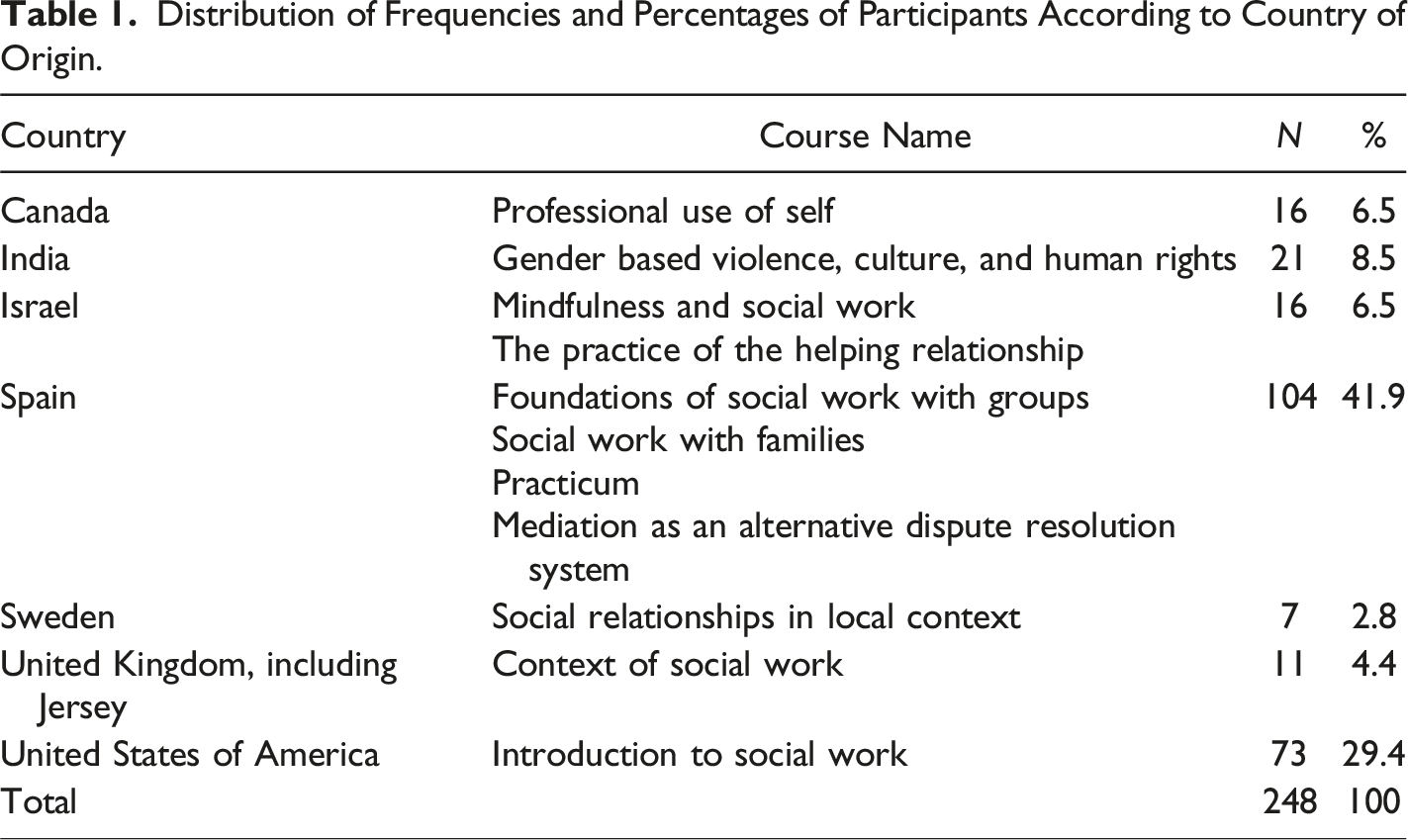
A sample of 127 cases was obtained in the first wave and 121 in the second wave. The undergraduate students were between 20 and 35 years old, and 94.5% of the sample is under 30. There is a higher presence of female participants; 86% are female (SD = .35). The feminized character of social work studies is present in all universities. The sample we have obtained is representative of the student population within the social work faculties where this research was conducted. To illustrate this, consider the example of the Social Work Faculty at UCM (Spain) in 2016, where 84% of undergraduate students were women (information sourced from the Equality Unit of the Complutense University of Madrid, https://www.ucm.es/cifras-en-la-ucm). Currently, 86.8% of enrolled students are women (Data provided by the UCM Academic Management and Coordination Service). To rigorously assess potential differences between groups, the calculation of factorial invariance is the appropriate method. Factorial invariance is defined as confirming that the measurement properties of the instruments or their items remain consistent across the groups under evaluation, regardless of the construct being measured by the instrument. To achieve this, it is necessary to estimate the model separately for two groups (one composed of men and the other of women), and it is essential that these groups have comparable sample sizes. However, this requirement becomes next to impossible in populations where the majority of students are women.
The differences in the number of participants in each country are due to the voluntary nature of the activity, the ratio of students per class each year, the number of teachers involved in the project in each country (e.g., in Spain there were four teachers involved, while in all other countries only one), as well as the compulsory or optional nature of the subject in which the journaling was applied (generally compulsory subjects had more participants than optional subjects).
According to the distribution by year of study, 33.4% of undergraduates are in their first year, 41.7% in their second year, 16.7% in their third year, and 8.2% in their fourth year.
Ethics
Each educator-researcher attained ethical approval at their respective institutions via the formal processes and procedures required at each location. It was crucial for the researchers that information regarding the project was transparent and accessible to the students. To explain the research in clear and concise terms for the students, the research team, with the support of social work student research assistants, created a website that served as a survey portal and opened to an external site (access the website here: https://bok.uni.mau.se/). When the students clicked on the survey link, they were presented with an information letter outlining the research aims and seeking their participation. The survey and letter were available in four languages (Spanish, Hebrew, Swedish, and English). Survey answers were password-protected.
Design
A pre-experimental cross-sectional study (Campbell & Stanley, 2005) was conducted without a control group, given the characteristics of the measurement instrument that requires the participants to carry out the transformative learning process through a reflective process.
Students who had used the journaling activity during the semester responded to the questionnaire developed ad hoc from the theoretical model of Damianakis et al. (2019). Two 5-point Likert-type scales were designed (1: strongly agree, 5: strongly disagree)—the TT scale on ‘transformative learning outcomes ‘and the TL scale on ‘transformative learning’.
Recruitment
Students were recruited after the completion of their course. Potential participants were provided information about the study (Letter of Information) including access to the questionnaire via a link provided by the lecturer at the end of the fall and spring semesters. Students who chose to participate in the study on their own time completed informed consent when they clicked on the link. Once consent was provided, the questionnaire opened for participants to complete on Survey Monkey.
Procedure
The data collection was carried out through the application of an online questionnaire completed in SurveyMonkey by a social work research practicum student. The questionnaire was developed based on the theoretical model of transformative learning proposed by Damianakis et al. (2019) and considering the criteria and objectives of the research. Each student utilized the journaling activity (known as the BoK; see Wallengren-Lynch et al., 2023) throughout the semester as a normed experience in their course.
Implementing a specific pedagogical method across various sites with varied institutional norms and teaching approaches is a complex enterprise that requires a great deal of consideration, adaptation, and flexibility by all of the educator-researchers involved. This meant numerous online meetings, discussions, and planning.
Validation by expert assessment was carried out to rate the effectiveness of the TT and TL structural models (Escobar-Pérez & Cuervo-Martínez, 2008). The procedure established two mechanisms for identifying the experts: university teaching in the faculties where the project was carried out and experience in educational evaluation. Based on these criteria, eleven experts from different universities were selected to participate in the whole process. All of them accepted to participate and none of them was a member of the research team. The evaluation was carried out using the individual evaluation method, given the high percentage of agreement in the first consultation. The instruments were sent by email: the scales and their statistics as they appear in this document, the BoK instructions for the teacher and the students, and the instructions for the experts requesting a minimum score that the student must obtain in each item to achieve the objective, competence, or skill that the item describes. Experts and learners used the same scale in the application of the questionnaire (5-level Likert-type).
Variables and Measuring Instrument
Means and Standard Deviations of the Items Tested.
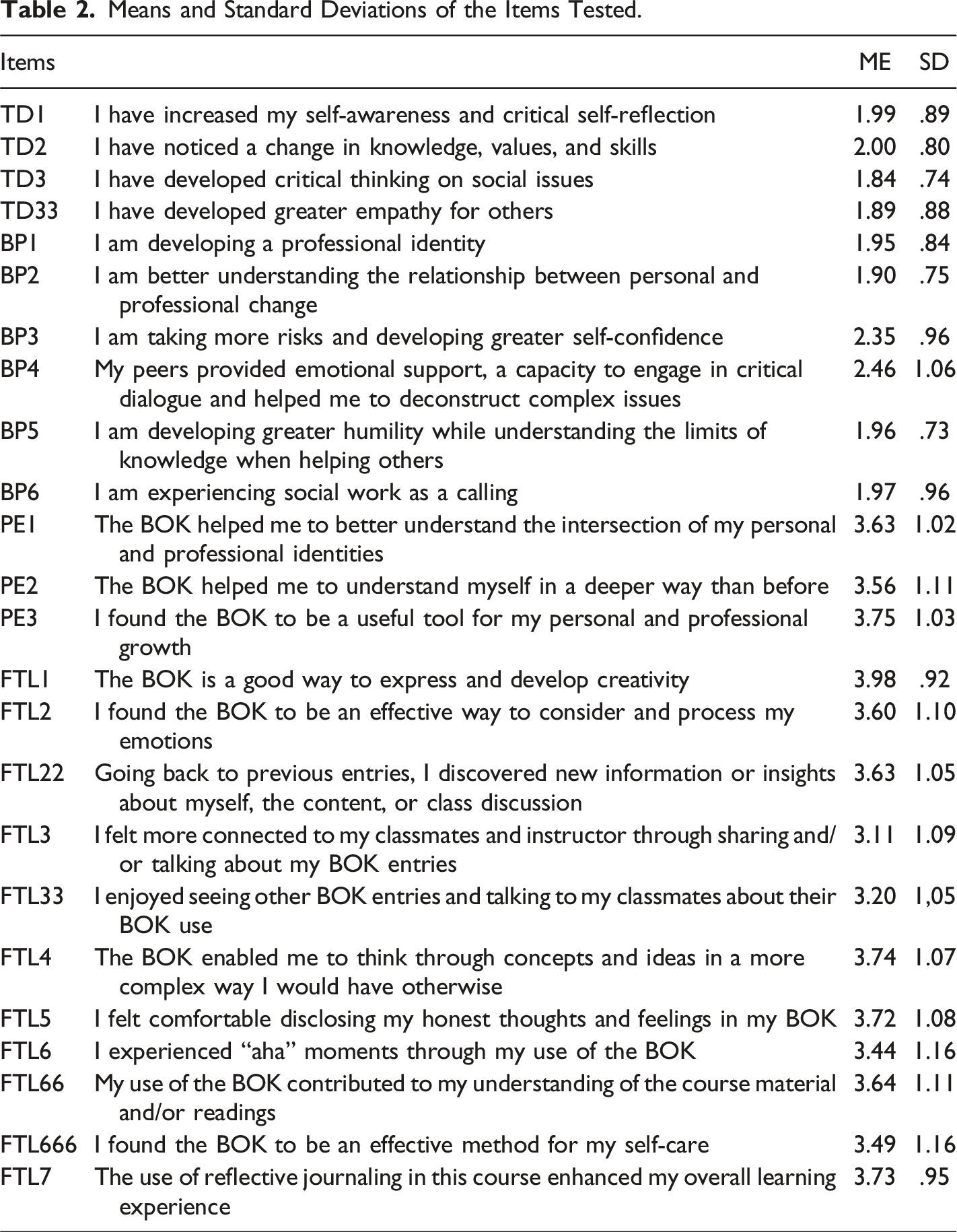
The statistical package SPSS (v. 28) was used for descriptive analysis of the data and ordinal alpha coefficient and the ordinal alpha coefficient, and LISREL (v. 8.8) was used for structural equation analysis. Descriptive analyses of the data provide the sample characteristics and the scales’ items. Structural equation modelling was used to examine the internal structure’s validity and confirm the measurement model. The reliability of the dimension scores was also calculated.
Results
Using the maximum likelihood method, the polychoric covariance matrix, and following the model of Damianakis et al. (2019), a confirmatory factor analysis was performed to evaluate the factor structure of the TT and TL scales.
Factor Analysis Scale Transformative Learning
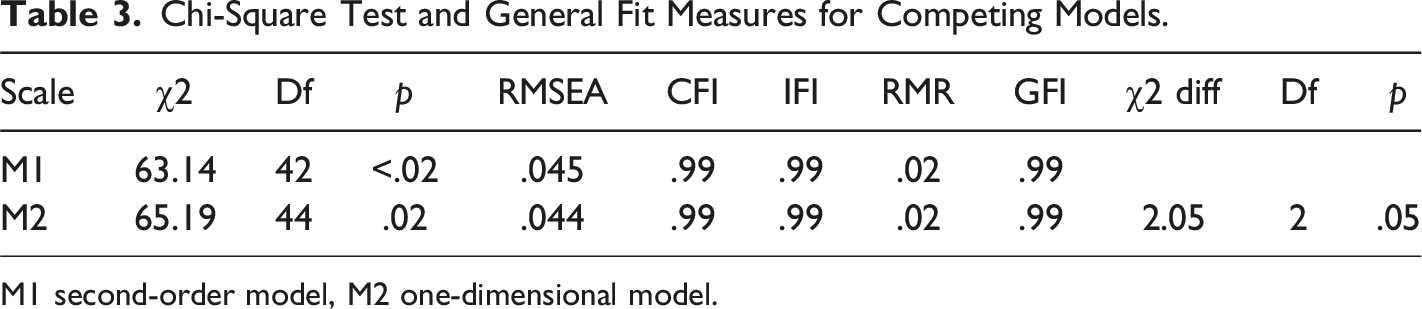
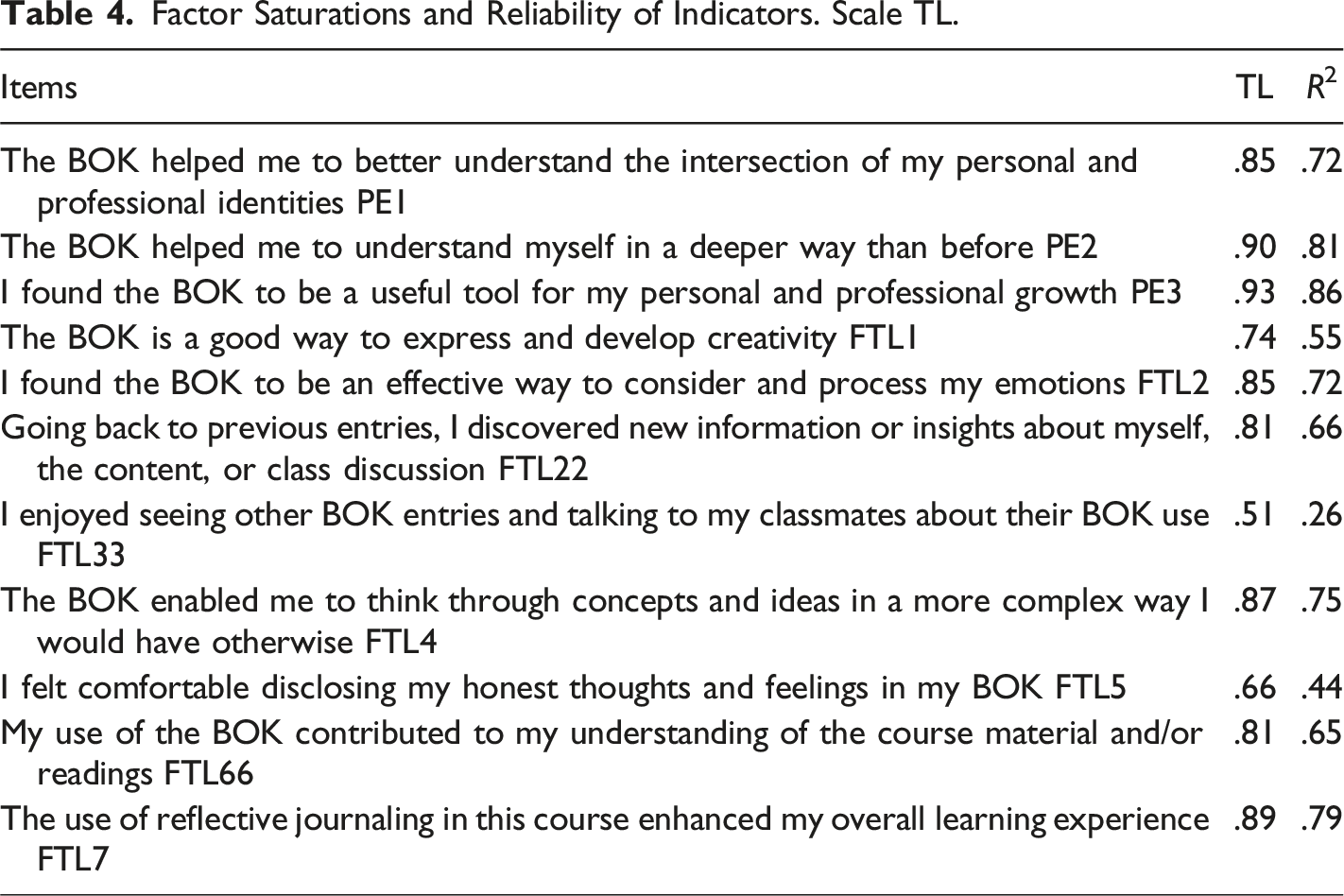
A second-order factor model corresponding to the structure established by the authors is tested (Figure 1). Given the high correlation of the factors >.95, a one-dimensional model was tested (Figure 2). The likelihood ratio test shows that the second-order model does not significantly improve the one-dimensional model (see Table 3). The one-factor model was chosen for the sake of parsimony and given the high correlation of the factors showing no discriminant validity (Henseler et al., 2015). Second-order structural model for the TL construct. One-dimensional structural model for the TL construct. Chi-Square Test and General Fit Measures for Competing Models. M1 second-order model, M2 one-dimensional model.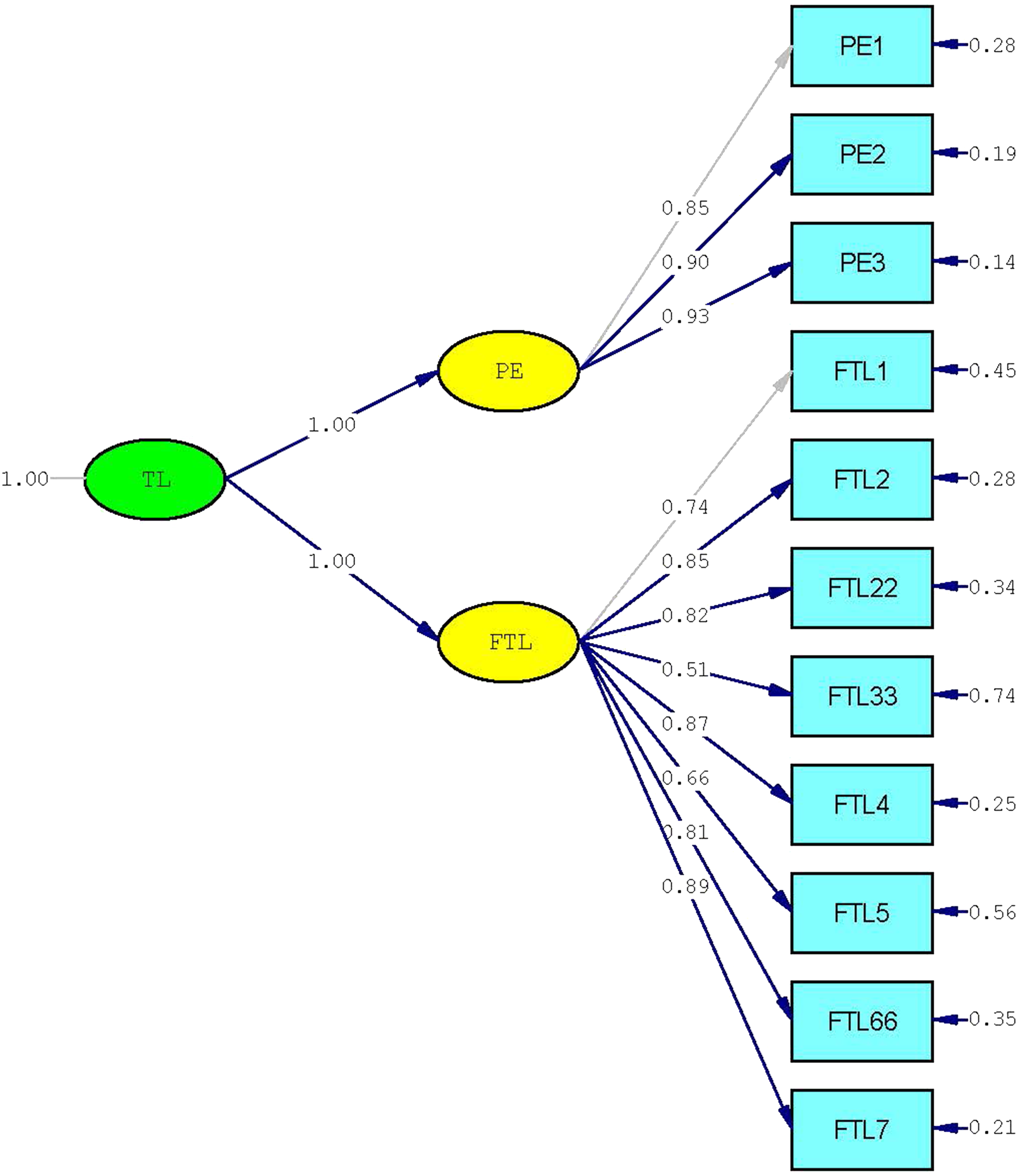
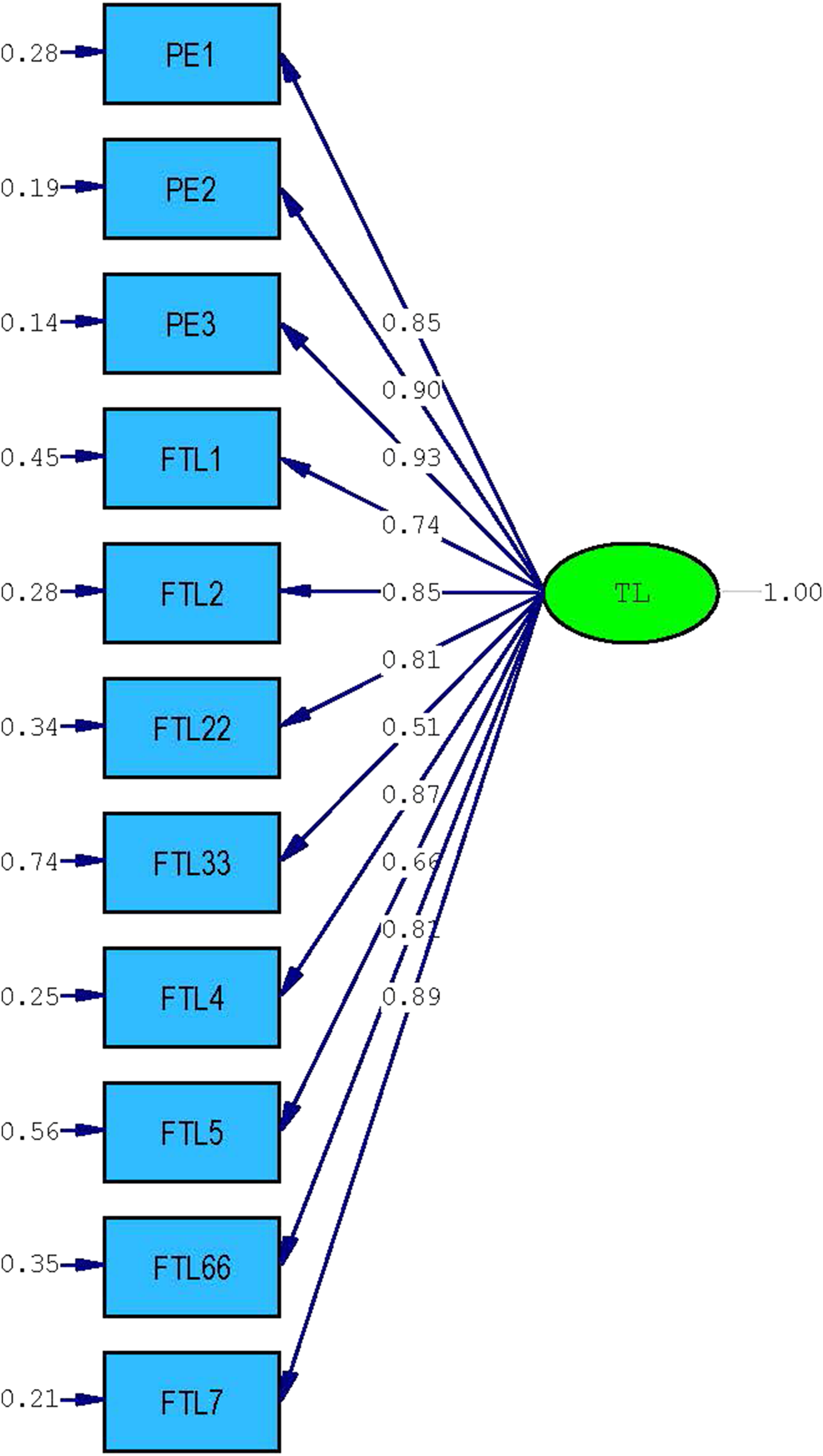
Factor Saturations and Reliability of Indicators. Scale TL.
Factor Analysis Scale Transformative Learning
A second-order factor model corresponding to the structure established by the authors was tested (see Figure 3). The saturations for all items were statistically significant and had optimal fit indices (see Table 5). The t-statistic is significant for all items with values >.30. Second-order structural model for the TT construct. Goodness-of-Fit Indices TT Scale.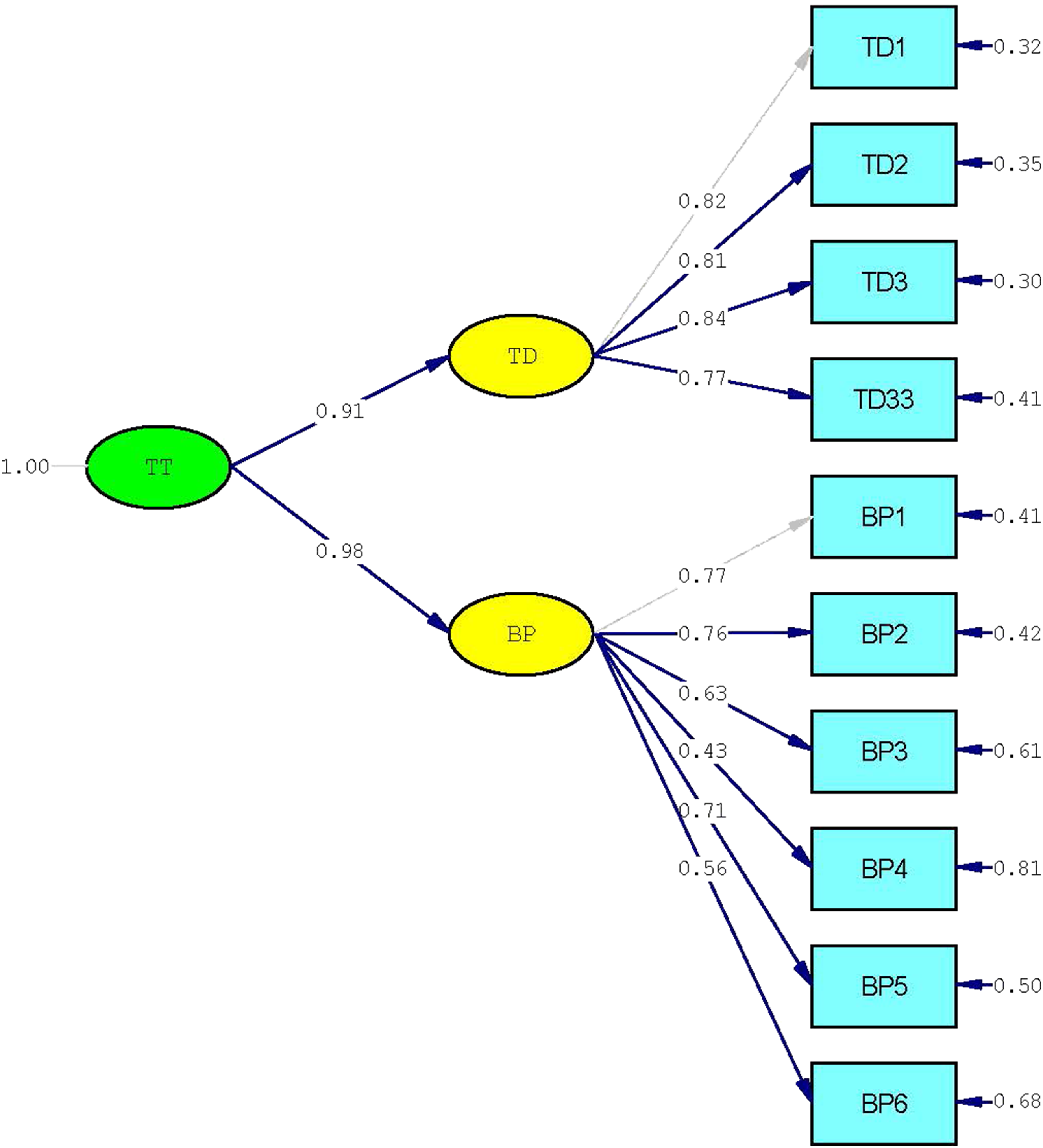

Reliability of TT and TL
The values show good reliability on all scales and in all cases (Espinoza & Novoa-Muñoz, 2018).
Internal Consistency Coefficients of the TT and TL Scales and Factors.
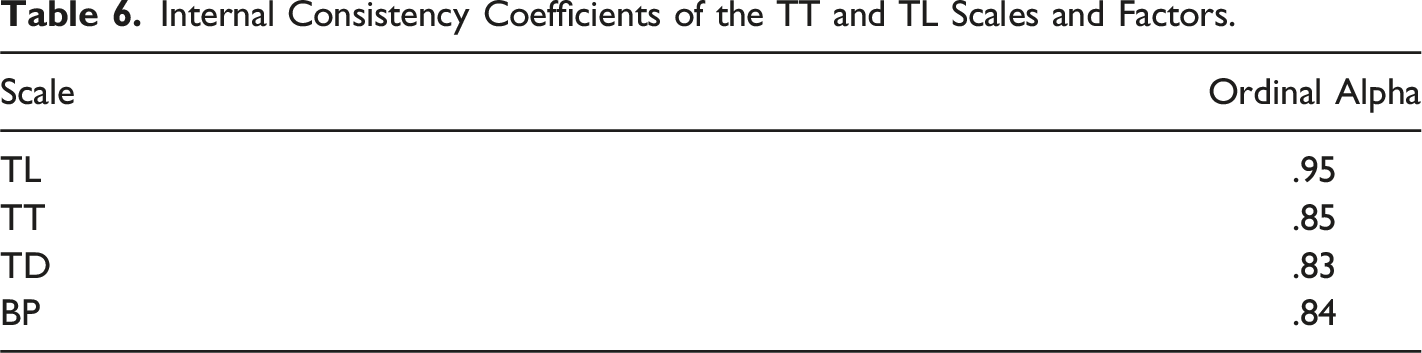
The ordinal alpha value is based on the polychoric inter-item correlation matrix (more suitable for ordinal data) rather than the Pearson’s covariance (correlation) matrix used for the calculation of Cronbach’s alpha (more suitable for continuous data). Thus, ordinal alpha is more appropriate for estimating internal consistency when the data are ordinal (Peters, 2014). In the framework of factor analysis, it can be easily calculated using the factor loadings obtained from the tetrachoric/polychoric correlation matrix (Dominguez-Lara, 2018; Zumbo et al., 2007).
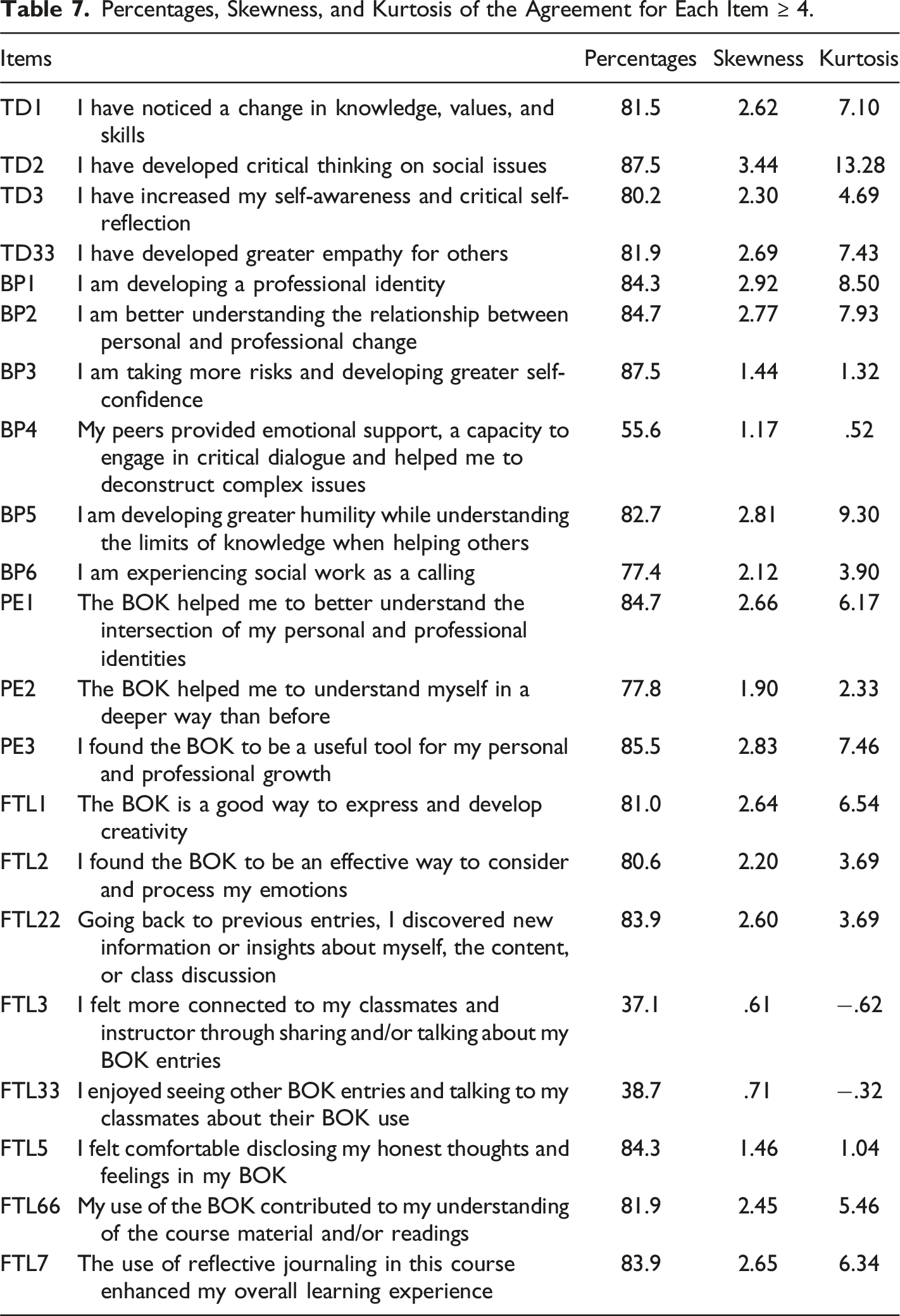
Eliciting Experts and Evaluation of the Tool in the Sample
Percentages, Skewness, and Kurtosis of the Agreement for Each Item ≥ 4.
Discussion
The primary objective of this paper was to assess the validity of a tool we have denoted as the Social Work Transformation Survey (SWTS). This measure is a unique fusion of Mezirow’s theoretical framework and empirical qualitative insights derived from Damianakis’ et al. work in 2019. The SWTS was subjected to testing within the context of a pedagogical approach of journaling known by Larrison and Korr (2013) as “Book of Ken” (BoK), characterized by its emphasis on critical reflection. The integration of quantitative and qualitative research techniques represents a novel and promising avenue for advancing the field of social work education. New approaches in the studies of TL should encourage dialogue among researchers utilizing qualitative, quantitative, and mixed methods as the trajectory of TL theory development leads to new challenges (Pang et al., 2023). This methodological blend can offer researchers a more comprehensive perspective on intricate teaching of social issues and the corresponding interventions. The SWTS offers researchers who study transformative learning the development and validation of a quantitative survey instrument for assessing transformative learning in higher education, the SWTS (Walker, 2018).
This study demonstrates a process where a theoretical model that is grounded in qualitative research undergoes transformation into a quantitative scale and is subsequently subjected to rigorous statistical analysis. This innovative approach serves as a bridge between the traditionally distinct realms of qualitative and quantitative research, yielding a standardized instrument to evaluate transformative learning and its associated outcomes.
One notable contribution of this research is the introduction of a refined quantitative lens through which to explore the multifaceted dynamics of transformative learning. The resultant research instrument is both new and original, boasting a robust theoretical foundation. Its flexibility and reliability can facilitate swift and accurate assessments of various elements within the context of social work education.
The meticulous evaluation of the scale’s metric properties underscores its reliability and validity, rendering it suitable for application among university-level social work students. This measure can effectively gauge transformative learning and differentiate between aspects such as deep learning, critical thinking, personal growth, and professional identity development. Consequently, SWTS serve as an invaluable tool for appraising pedagogical methodologies within the sphere of social work education and applied across diverse international contexts. While the assessment of pedagogical methods linked to transformative learning is a relatively nascent endeavour, this study offers an exemplary model of how a theoretical framework can be translated into a quantitative scale.
The study’s outcomes underscore that students from diverse countries, cultures, and linguistic backgrounds held a favourable perception of the pedagogical approach (journalling activity) under evaluation. Furthermore, the findings suggest that the scales employed in this study possess the adaptability and versatility to yield similar results in varying social work educational settings. This discovery carries significant weight in light of the overarching objective of social work education—to cultivate critical-minded social workers whose perspectives and mindsets are transformed.
Conclusion
The scales employed in this research have demonstrated acceptable reliability and validity metrics. Enhancing their applicability and generalizability could also be achieved through further validation across diverse social work educational settings and with varied populations. Moreover, the development of novel scales designed to capture distinct facets of transformative learning could facilitate a deeper comprehension of this phenomenon.
Although this research evaluation has revealed that students possess positive perceptions of the journaling activity, the translation of these perceptions into sustained alterations in their cognition and behaviour remains a subject for future investigation. It is paramount to ascertain how the Social Work Transformation Survey (SWTS) performs when tested alongside alternative critical reflection pedagogical tools in on-campus settings.
Subsequent research endeavours might include follow-up assessments aimed at evaluating the enduring impact of transformative learning outcomes over time. It would be exciting to see the survey used in connection to other pedagogies in social work education, such as photovoice and poster work or to any of the examples identified in the previously in this paper (e.g., Das & Anand, 2014; Bay & Macfarlane, 2011). Furthermore, exploring the intricate interplay between transformative learning and its role in driving social change holds significant promise. While transformative learning is commonly perceived as a catalyst for social change, the precise nature of this relationship remains elusive. Future research could delve into how transformative learning experiences translate into tangible actions that promote social justice and equity.
This research has effectively demonstrated the applicability of transformative learning scales in diverse educational contexts. Nevertheless, conducting further comparative analyses could shed light on how distinct pedagogical approaches, institutional cultures, and social contexts influence the transformative learning process.
A limitation of this study pertains to the absence of an intersectional analysis of transformative learning. While transformative learning is typically investigated in relation to individual experiences and identities, it is imperative to acknowledge the complex interplay of various identity markers, such as race, gender, class, and others, and their impact on the transformative learning journey. Future research initiatives could explore how these intersecting dimensions shape transformative learning outcomes.
This study offers a valuable illustration of how the fusion of quantitative and qualitative research methodologies can yield a transformative learning scale and facilitate the evaluation of a pedagogical approach. The authors hope that educators in higher education settings across various disciplines will draw inspiration from this approach. Furthermore, this research underscores the necessity for ongoing testing and refinement of the scales employed to assess transformative learning, especially within the context of social work education.
Footnotes
Acknowledgements
The authors would like to thank the student volunteers who gave their time to this project: Melisa Lopez, Erika Melisa Gutierrez, and Iride Sánchez from Spain and Clare Hodgkin, UK and Paige Saddler the USA. These students helped with survey design and recruitment. A special thanks goes to Kemi Adebayo for her dedication and field practicum work on this project as a research assistant. The authors would also like to thank Esther Mercado Garcia, Marta Blanco Carrasco, Einav Segev, Lisa Chen Henglien, and Nishi Mitra who contributed to the project. Finally, the authors are grateful for the support and sponsorship of our project by the International Association of School of Social Work (IASSW).
Declaration of conflicting interests
The author(s) declared no potential conflicts of interest with respect to the research, authorship, and/or publication of this article.
Funding
The author(s) disclosed receipt of the following financial support for the research, authorship, and/or publication of this article: This work was supported by the IASSW.
