




Abstract
This article explores learning processes that underpin ecovillages as place based ‘sustainability initiatives’. Through the theoretical lens of place- based transformative learning (PBTL), developed in earlier work (Pisters et al., 2019, 2020), empirical data from life-story interviews and photovoice sessions from three ecovillages is analysed and discussed. The results support, illustrate and deepen the meaning of the four dimensions of the theoretical framework: connection to place, compassionate connection, creativity and transgression. They show how the co-existence of ‘community’ and ‘disruption’ is essential in PBTL where community brings connection, cohesion and stability to a change process whereas disruption paves the way for disrupting old structures and experiment with new ones. This article shows how a change in inner consciousness is related to alternative practices and structures that re-define relationships with ourselves, other humans and the material, more-than-human world.
Introduction
Transition studies and place-based research indicate that solutions to the wicked problems we are facing today emerge at the local level (Barca et al., 2012; Haxeltine et al., 2013; Roep et al., 2015). At this level, the complexity of unsustainable processes can be grasped and solutions can be created that are responsive to particular place-based configurations. So-called rooted learning-based solutions take local histories, dynamics and capacities as a starting point for co-creating solutions (Kronlid, 2014). While there is a growing body of research on ‘niche innovations’ (Avelino et al., 2014; Haxeltine et al., 2013), which we refer to in this article as sustainability initiatives, little research has been done on the actual learning that takes place in these sustainability initiatives. In this study, we attempt to understand the character of the learning processes that underpin place-based sustainability initiatives.
Increasingly, scholars are exploring such learning processes through the theoretical lenses of transformative (TL) and transgressive learning (TGL). Based on some key works on both TL (see Pisters et al., 2019) and TGL (Lotz-Sisitka et al., 2015, 2016), we come to the following composite descriptions. Transformative learning refers to learning processes that trigger a profound change in ones’ values, principles and ways of understanding, interpreting and experiencing the world. Ultimately such changes represent a shift in consciousness. These processes typically involve being exposed to alternatives, mirroring different perspectives and inviting forms of dissonance. Transgressive learning explicitly seeks to disrupt structures that keep certain (often hegemonic and resilient) values, principles and ways of understanding and seeing the world intact; it does so by questioning the taken for granted, making the ordinary problematic and engaging in forms of resistance.
From the perspective of sustainability, both TL and TLG represent a certain normative direction. TL typically involves a shift in consciousness from a modern, instrumental consciousness to an ecological one characterized by the understanding of interdependence and a relational understanding of our world and everything that exists in it. TGL, on the other hand, seeks to trigger systemic change by challenging and disrupting hegemonic structures of power that lead to global dysfunction.
Based on these theoretical perspectives, we created a place-based perspective to TL (PBTL) (Pisters et al., 2019). In previous work, we explored PBTL processes at the individual level among people living in ecovillages (Pisters et al., 2020). In this article, the focus is on learning at the community/collective level.
Ecovillages are an example of place-based sustainability initiatives. They demonstrate a track-record for radically decreasing their environmental footprint. Although they are local and relatively small by nature, most are not isolated islands and are increasingly linked through national, international and transnational networks (Kunze & Avelino, 2015; Litfin, 2009). The Global Ecovillage Network (GEN) aims to support and strengthen its member communities and connect them to each other to create more power and agency to spur wider systemic change. GEN also collaborates with other like-minded networks including the Transition Network and Permaculture movement. Via a number of channels, ecovillages promote their vision and ideas on sustainable lifestyles: via educative courses, the inclusion of (long-term) volunteers, (political) activism, local and regional co-operation (e.g. organic farmers, food networks, the creation of a new education system such as the community of Tamera). These are all ways in which intentional communities can lead to TL and TGL. Furthermore, an intentional community is a learning process in and of itself, since developing thriving communities is a challenging process (nine out of ten ecovillages initiatives fail due to social problems, Joubert & Alfred, 2014). Even if an initiative is successful, sustainability involves continuous learning (Chambers et al., 2013). GEN, as well as other initiatives, aim to be a platform supporting communities’ learning and development processes.
This paper aims to develop a better understanding of TL and TGL in these communities. We do this by using the most recent version of our theoretical framework of PBTL to analyse empirical material collected in Finland and Portugal. The main question this paper addresses is: ‘Are the four dimensions of PBTL (as developed in Pisters et al., 2020) reflected in collective learning processes in the communities of Kurjen Tila, Väinölä and Tamera? And if so, how?’
Theoretical Framework
We understand PBTL as a learning process that involves a shift in consciousness at the individual and/or collective, systemic level (Pisters et al., 2019, 2020). Our framework of PBTL is the result of a) an extensive literature review (Pisters et al., 2019) of the concept and use of transformative learning in relation to sustainability transitions as well as additional literature that goes deeper into sub-topics (e.g. Clark & Wilson, 1991; Gunnlaugson, 2005; 2007; Lange, 2004; 2012; Neff, 2011; Newman, 2014; O’Sullivan & Taylor, 2004) b) insights from our own empirical work (Pisters et al., 2020) testing the initial framework as developed in Pisters et al., (2019) and c) the additional analysis of recent literature that deepened or helped conceptualize existing and new insights (e.g. Lange, 2018; Lotz- Sisitka et al., 2015, 2016).
Based upon our initial literature study (Pisters et al., 2019), we understand consciousness as evolving in the interaction between the self, the social and the material (ibid, Newman, 2014), which includes the non-human and more-than-human. With the term ‘more-than-human’ we refer to beings, traits, phenomena and experiences that remain unacknowledged in most modern, dualistic ontologies, including the spiritual and somatic, intuitive and animistic forms of knowledge (Abram, 2017). PBTL is a dynamic process that takes place in this space of interaction, following a relational ontology (Barad, 2003; Gamble et al., 2019; Lange, 2018). In Pisters et al. (2019), we developed our initial theoretical framework based on three themes: connection, compassion and creativity. In Pisters et al. (2020), we tested this framework empirically and concluded that all three dimensions were indeed confirmed by the empirical material. Additionally, we concluded that the learning journey of community members often started with a sense of critique towards current unsustainable hegemonic structures (ibid). Based on this, another theme was added to the framework: ‘transgression.’ Themes were also reframed as ‘dimensions’ with two oppositional qualities. The resulting four-dimensional framework (Figure 1) is the basis for this article. A four-dimensional impression of PBTL.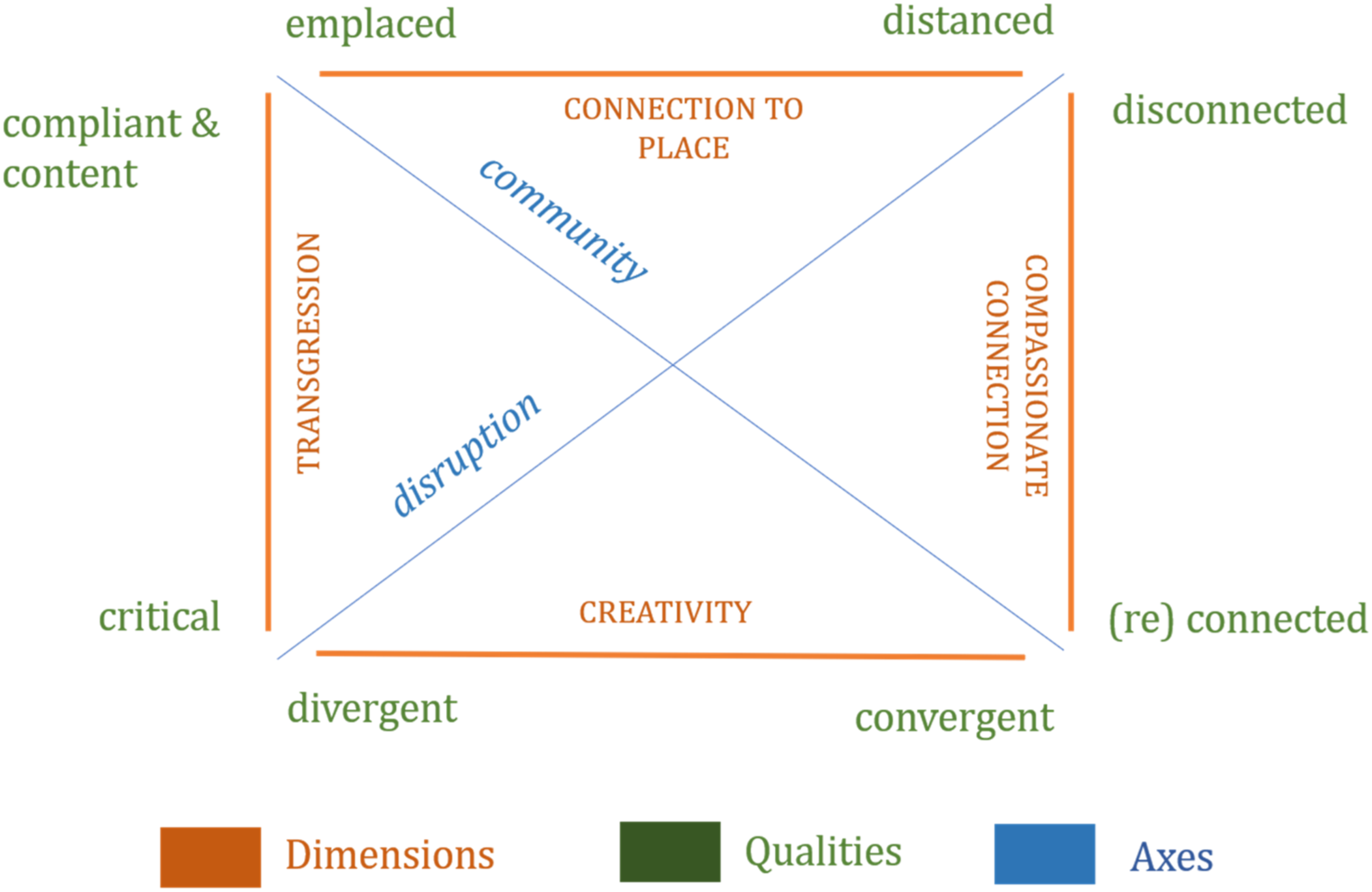
The four dimensions are: connection to place, compassionate connection, creativity and transgression. Each dimension has two oppositional qualities that can be understood as the different sides of the same coin. Every quality also ‘corners’ with a complementary quality from another dimension: being distanced, for example, corners with being disconnected in order to be re-connected, while the quality of being critical corners with the quality of being divergent and so on. Lastly, two axes emerge from the four corners: community and disruption.
Connection to place is about being emplaced in the day-to-day life of a community in a specific geographical location (physically, ecologically, socially, culturally, spiritually and politically) while being relationally connected to more distanced people and places in an increasingly globalized world (Pisters et al., 2019). Being emplaced involves being connected to (community) values, to (local) culture including (re)appreciating traditional ecological knowledge and lifestyles (Lam et al., 2020; Lange, 2004, 2012), to the non-human and more-than-human and to our bodies and senses (Pisters et al., 2019). Being emplaced in a community requires a certain level of being compliant, adhering to a set of guidelines, common norms and social constructs, which allows for the functioning of daily life. Furthermore, a certain level of being content is key within a change process, in order to accept the imperfect nature of current realities (Pisters et al., 2020). Being emplaced in a place and community, and finding contentment in this state, makes the upper right corner of the framework a space of stability. This sense of stability functions as a stable basis from which to engage with the opposite, more disruptive, corner of PBTL where the qualities of being critical and being divergent meet.
Balancing the quality of being emplaced is that of being distanced: the ability of communities and initiatives to be conscious of, and harness relations to, people and places that are physically distant (Massey, 2004). This involves keeping permeable ‘boundaries’ to be in constant, dynamic interaction with the world outside. This may include being part of wider national and international networks (Litfin, 2009). The quality of being distanced corners with that of being disconnected under the dimension of compassionate connection. This is about looking at ourselves and others with compassionate awareness from a witness perspective (Gunnlaugson, 2007) in order to not exclusively identify with one particular ideology or perspective. It includes a relationship with our own inner world, while at the same time recognizing our common humanity which is essential for cultivating compassion for both ourselves and others (Neff, 2011). To be ‘re-connected’ refers to compassionately connecting with others (people as well as non-human beings). When we feel our life is connected to the life of that which suffers (human and non-human), we feel an urge to alleviate the suffering and ensure that our actions cause the least harm (Bannon, 1973; Pfattheicher et al., 2016). This awareness of interconnection can have a spiritual character (Vieten et al., 2006).
The quality of being re-connected corners with that of being convergent, which reflects the social quality of the dimension of creativity: the ability of people to come together to do things, organize parts of their lives together and take social and collective action. Convergent creativity specifically acknowledges the value of materializing alternative ideologies as opposed to merely protesting, criticizing or sending knowledge into the world (Haluza-DeLay, 2008). This collective quality is balanced by that of being divergent, which is about embracing difference and authenticity and feeding this into the collective for it to be dynamic. Difference creates spaces where new things can emerge (Williams, 2013, pp. 11–13). A monoculture stagnates the possibility for change and newness, eliminating potential and creativity. From this perspective, (human) creativity is not something that is simply possessed by one ‘masterful agent’ but something that flows through and between diverse agents (Connolly, 2013, p. 407), including non-human ones.
Cornering the quality of being divergent is the quality of being critical, from the dimension of transgression. This involves not overidentifying with a specific community or place and maintaining a critical perspective. From divergence and authenticity, space is created to be critical towards taken-for-granted norms, values and institutions inside and outside the communities a person considers themself part of. The ability to be critical is the opposite of doing business as usual, of complying with explicit and implicit social norms, and of resorting to one hegemonic modern worldview. Critique is key in TGL (Lotz-Sisitka et al., 2016; Chaves et al., 2017).
From these four dimensions, two axes emerge: community and disruption. Community is about forging authentic connections based on diversity; these connections converge to collectively manifest a vision that reflects the collective achieved agency. Disruption is about change, where ‘internal disruption’ is about the possibility to diverge from the idea of ‘normal’ in spaces that celebrate diversity instead of forcing an undynamic form of convergence. ‘External disruption’ is about change brought about in wider societal structures through the practice of community itself. The presence of both disruption as well as community balances a PBTL process. Disruption involves friction, dissonance and possibly conflict, while the axis of community allows for recalibration, new relationships and continuous evolvement through new constellations.
Methodology
After an extensive phase of orientation, three communities were identified for the study: two in Finland and one in Portugal. Apart from pragmatic reasons for selecting communities (including language, accessibility and willingness to participate in the research), we looked for diversity in character between the communities, openness to, and integration with, the ‘outside’ world and dedication to a vision of transformation.
‘Väinölä’, a theosophical community located in central Finland, was founded in 1978. Its inhabitants are mostly above 50 years old; no children currently live in the community. All members have a Finnish nationality. Väinölä was created to put the theosophical idea of ‘brotherhood’, living together with others without violence, into practice.
Kurjen Tila is a relatively new community in central Finland, initially established around a biodynamic farm. Kurjen Tila was found by families who wished to live in the countryside yet in a social context. With one exception, all members are originally from Finland. Apart from permanent members, a new group of volunteers from all over Europe joins the community every year.
As both Finnish communities are relatively small (fewer than 40 members), the Portuguese community of ‘Tamera’ was selected as it is one of the largest ecovillages in Europe in the Global Ecovillages Network (GEN). The community was created in 1995 by its three German founders holding a strong vision of a peaceful culture based on love and non-violence in all areas of life (Duhm, 2015). Tamera has around 200 permanent members of all ages, as well as hundreds of visitors every year. Members and visitors are from all nationalities, religions and cultures, although a large share of its members is of German origin. Community members live in smaller sub-groups organized around a particular work domain such as (solar) technology, permaculture and artistic and creative work. Tamera has an influential and inspirational role in the European network and proliferates itself as a ‘Peace Research and Education Centre.’
Research Methods
The research followed an ethnographic approach (see for example Dewan, 2018) combining life-story interviews with photovoice sessions. The main researcher (Pisters, S.R.) paid multiple visits (of several weeks) to all three communities over the course of two years (spring 2017–spring 2019). In the Finnish ecovillages, the researcher joined daily life in the community, conducted life-story interviews and organized photovoice sessions. Due to the significantly larger scope of Tamera and the limits set by the community, the time and scope of the research conducted in Portugal was more limited. The researcher spent one month as a guest participating in several courses in Tamara, allowing for experiencing the community and getting acquainted with some of its members. Life-story interviews were conducted a year later on a return visit.
Nineteen life-story interviews were conducted, seven from Kurjen Tila, six from Väinölä and six from Tamera. Sampling of community members was done in a pragmatic manner. As the interviews required time and willingness to speak about personal matters, a more structured selection procedure was not deemed suitable, even though there was a general aim to keep a balance in age, gender and, when applicable, different nationalities. Some members were personally approached by the main researcher or by the contact person in the community, while others subscribed to a list after an invitation email and introductory meeting.
The semi-structured interviews took the form of dialogues between researcher and members. Themes that were discussed included community members’ general feelings about the community project, their first experiences in the community, difficult moments, decisive moments leading to their commitment to stay and lessons learned during their time in community.
Photovoice is a method that uses photographs to elicit stories of participants by discussing the meanings behind photographs taken by participants. Photovoice generally has three main goals: (1) to enable people to record and reflect their community’s strengths and concerns, (2) to invite critical dialogue and knowledge about personal and community issues through large and small group discussion of the photographs and (3) to enable communities to reach policymakers (Wang, 1999). This research focused on the first two goals.
Participants were asked to take photographs that represented (1) a meaningful moment, (2) a difficult moment, (3) something they were proud of, (4) a favourite place and (5) the purpose of their life in the community (one photo per theme). These pictures were discussed in participatory focus group sessions. 1 The aim of the group sessions was to elicit the stories behind the pictures, evoking accounts of meaningful aspects of community life as well as its challenges. Participants were therefore given the space to decide what they would like to tell each other and/or the researcher; as such, they were given power to decide what topics were important to talk about (Mankowski & Rappaport, 2000).
Recordings of both life-story interviews and stories and dialogues that unfolded during the photovoice sessions were transcribed and analysed using the data analysis software DEDOOSE 2 and analysed as ‘narratives’ (Mankowski & Rappaport, 2000; Smith, 2000). 3 A thematic analysis (Riessman, 2002) was used both to analyse the life-stories and the photo induced narratives. The analysis focused on finding ‘significant life experiences (SLE)’ (Howell & Allen, 2016): memories that play a conscious role in individuals’ and groups’ accounts of meaningful experiences. The narratives have been mainly analysed vertically (at the community level); they have also been analysed horizontally to find common themes between participants. These SLE’s were coded using the themes and subthemes of the initial theoretical framework (Pisters et al., 2019) as codes, and adding on to these when necessary.
The methodology for this research has been reviewed and approved by the Natural Resource Institute Finland (Luonnonvarakeskus [Luke]), where the main researcher worked at the time this research was conducted. The research proposal has been reviewed in accordance with the ethical principles of the Finnish Advisory Board on Research Integrity which are committees whose task it is to make sure that research participants are protected from any harm.
Results
The quality of being emplaced (from the dimension connection to place) is reflected in the empirical material in four ways. Firstly, in all three communities the non-human was regarded as an inherent part of community life. Nature was considered a source of wellbeing: ‘The soul rests when looking at this scenery’ (KT_PV_3).
4
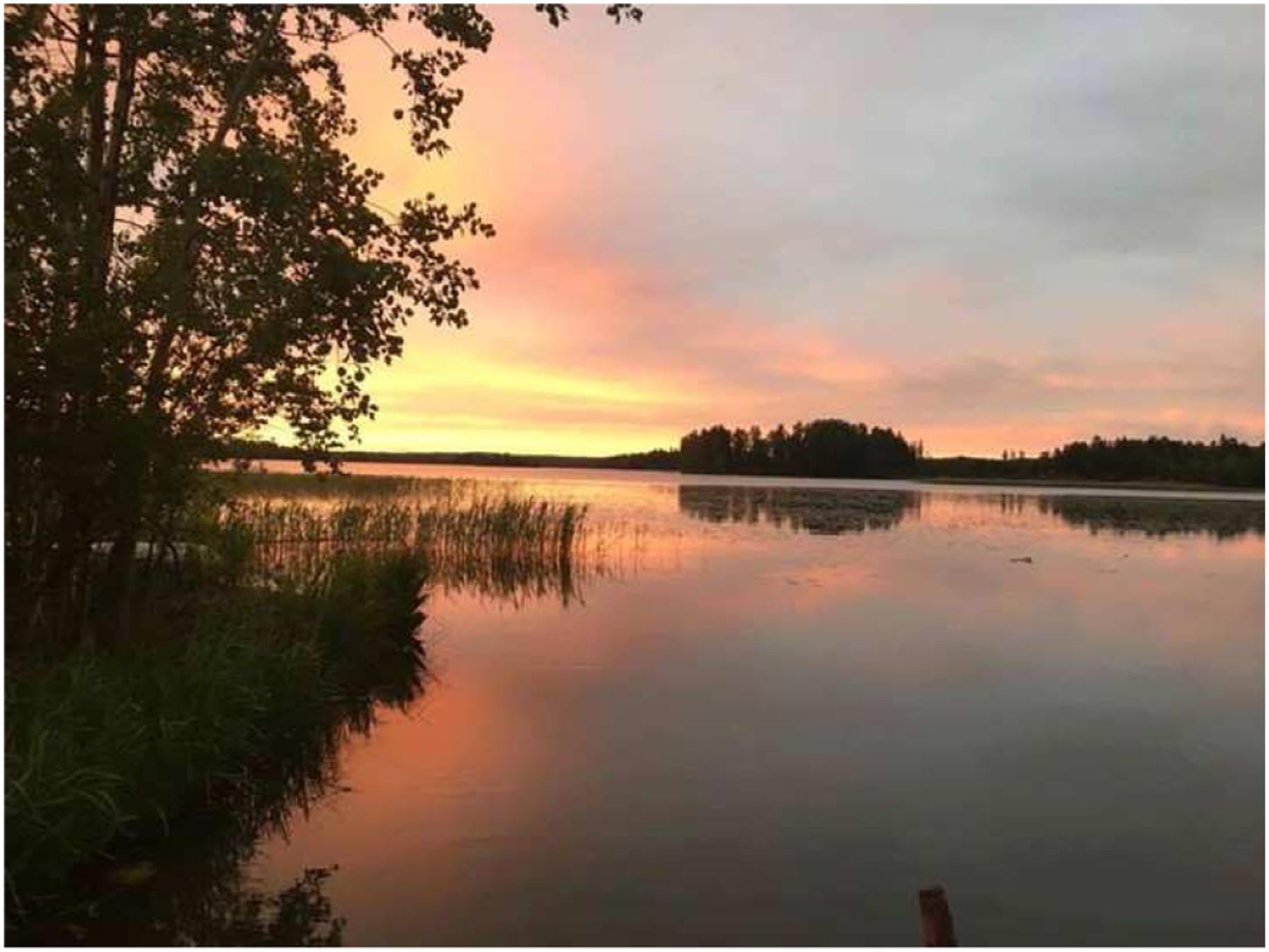
The community of Kurjen Tila aspires to offer institutionalized ‘Green Care’ for people with mental or physical challenges. As one participant mentioned, enjoying the beautiful view of the fields is already a form of ‘green care’ (KT_PV_2). Being more in nature and in contact with producing and consuming healthy food also served as an inspiration for healthier living (KT_PV_4). For one of the volunteers, the months in the community in a country like Finland, where nature is all around, embodied a kind of living that is ‘healthy and stress free, or at least less stressful.’ Many pictures of the view of the natural scenery around or close to the community were shared by volunteers as favourite places or favourite moments (Figures 2 and 3). View of the fields (KT_PV_1). View of the lake (KT_PV_4).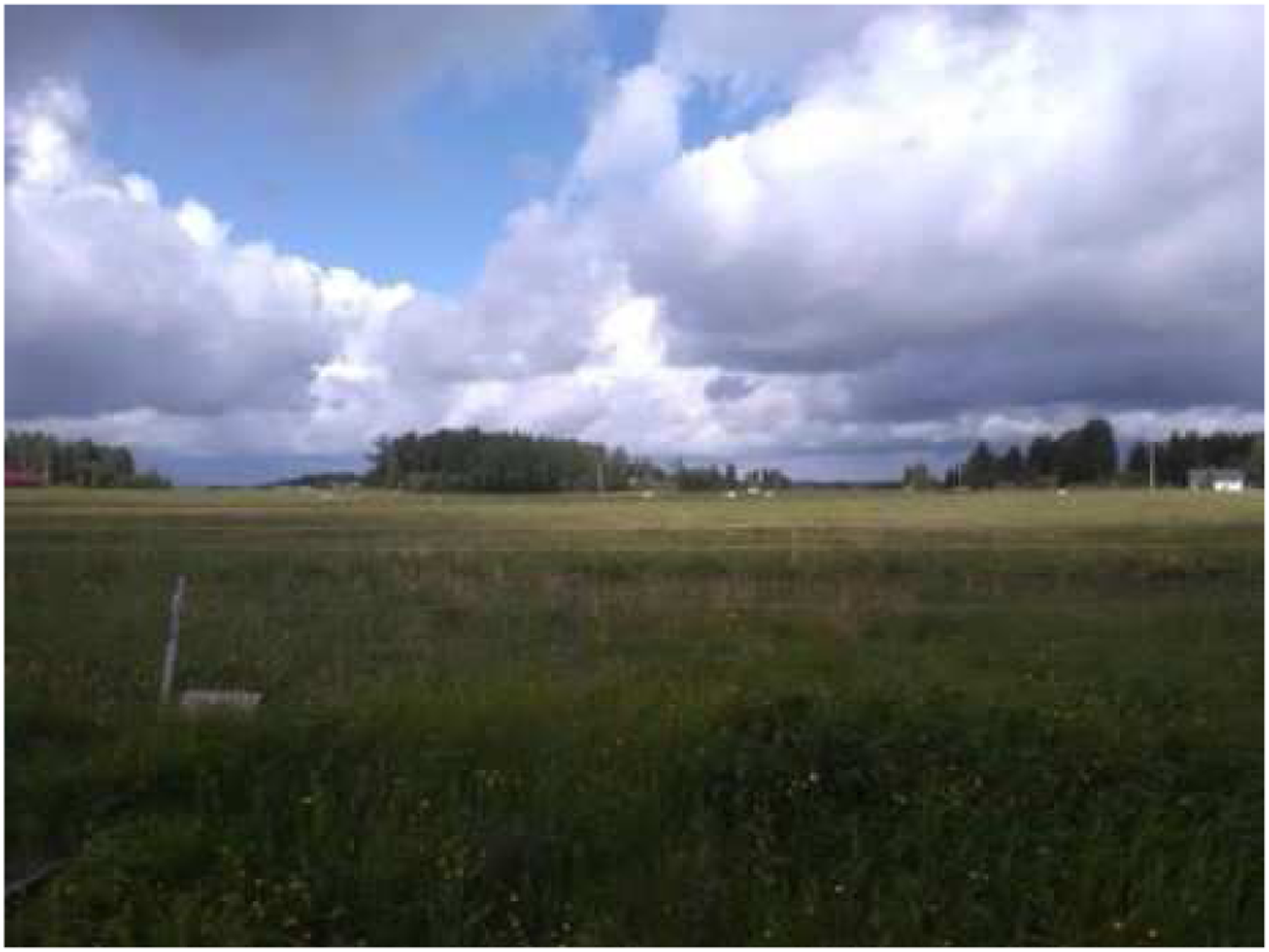
Nature was also perceived as a caretaker of the community in providing an abundance of water and food in response to being cared for by the human community (Figure 4). For example, members describe ‘caring for the soil’ (KT_3) or creating space for water to return to the deserted landscape and witnessing how nature responds in abundance (T_2). Furthermore, for many members, the non-human is perceived as not just ‘matter’ but as animated and spiritual (more-than-human). Water in the once deserted landscape of Tamera.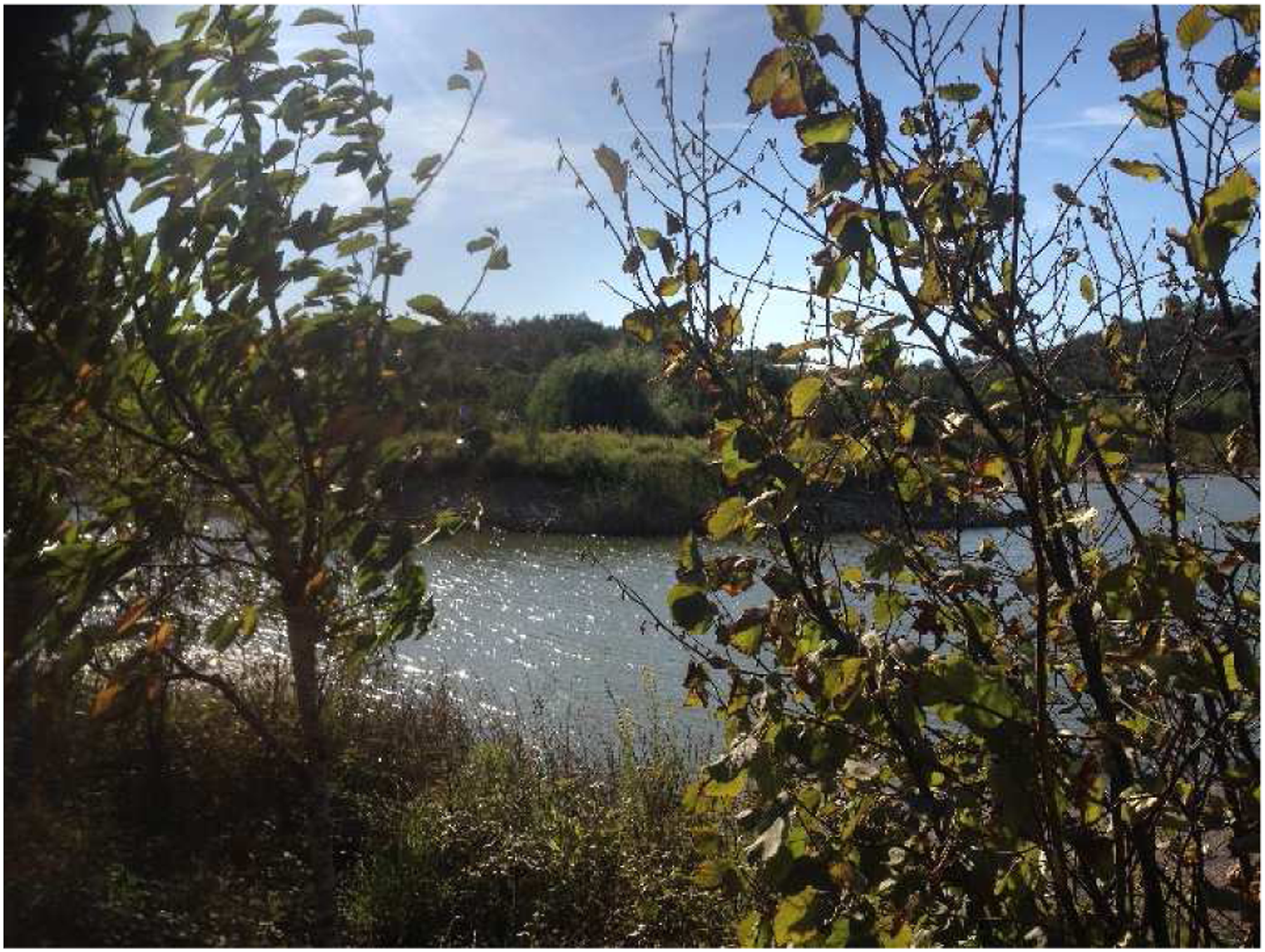
Secondly, being emplaced was reflected in re-connecting to a (lost) sense of community, including both the human aspect (by being part of a ‘tribe’) as well as the non-human aspect (in the experience of being part of natural cycles). One community member (T_5) contemplated whether certain ‘sustainable’ practices like buying organic tomatoes in a supermarket reflect a bigger longing to be more connected to natural cycles of life. Similarly, the renewed interest in spiritual practices and personal development might reflect a deeper longing for a different kind of world and for community. For him, Tamera is a place where visitors who come for just one particular reason are invited to place this issue in a bigger social, ecological and political picture.
Third, the quality of being emplaced was reflected in experiencing the physical grounds of the community as a place imbued with meaning. Choosing the geographical location of Tamera was considered, for example, to have been a spiritual or intuitive choice (T_6). Another participant describes the influence of non-human aspects on the energy of a place, ‘The apple trees bring in their own feeling, they are already so old, because of them the apple garden feels like a living room to meet others and meditate’ (V_PV_1) (Figure 5). Apple trees in the garden. Note. Taken by participant (V_PV_1).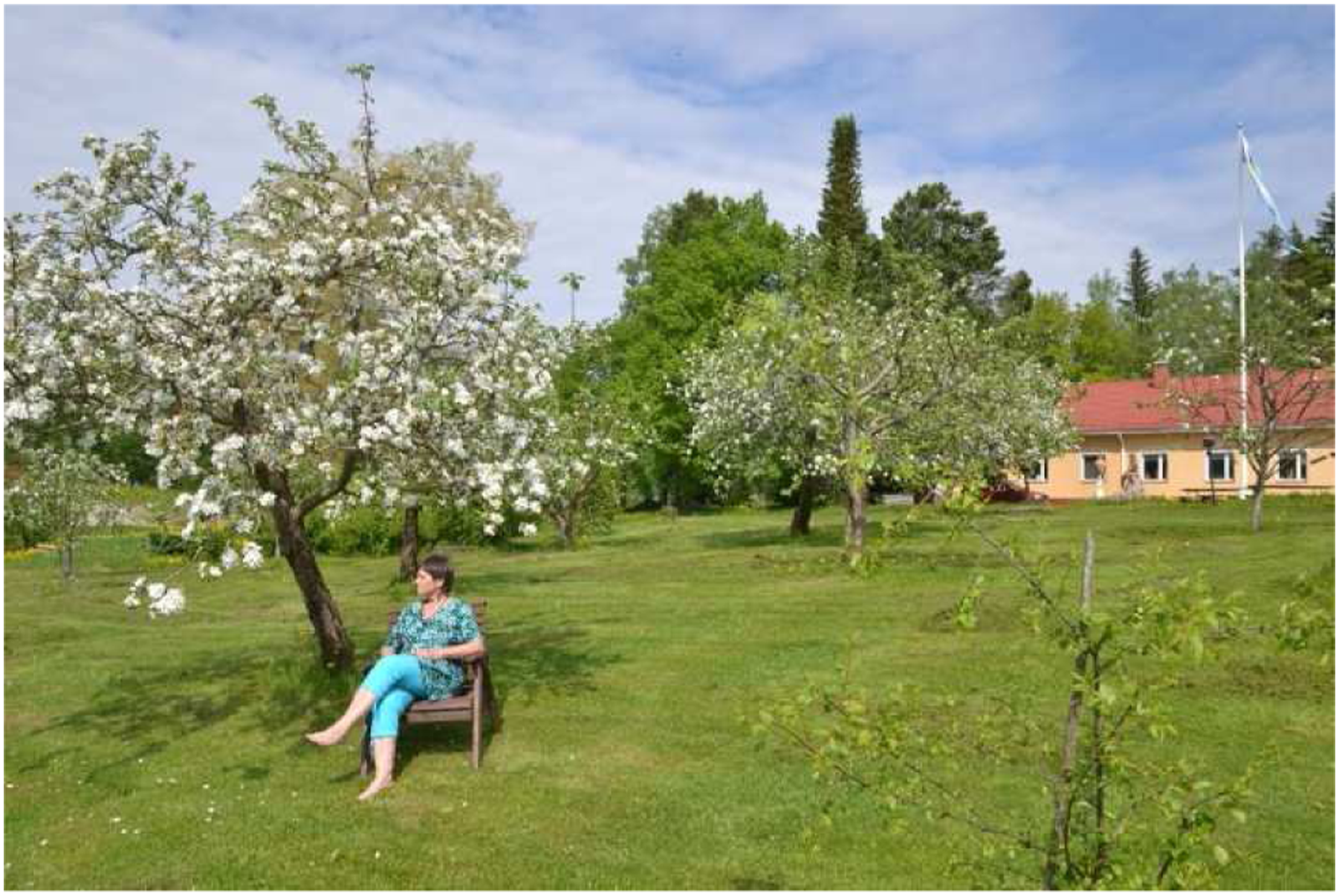
In all communities, participants mention the value and meaning of spaces to retreat in solitude to as well as spaces to meet each other in. This reflects the qualities of being both distanced and (re)connected. Sometimes, however, the meaning of a certain place does not correspond to the current reality of participants. For example, one participant described how communal places that used to reflect togetherness now feel like unapproachable territory due to a major conflict she experienced in the community (KT_PV_1, Figure 6). View of communal area. Note. Taken by participant (KT_PV_1).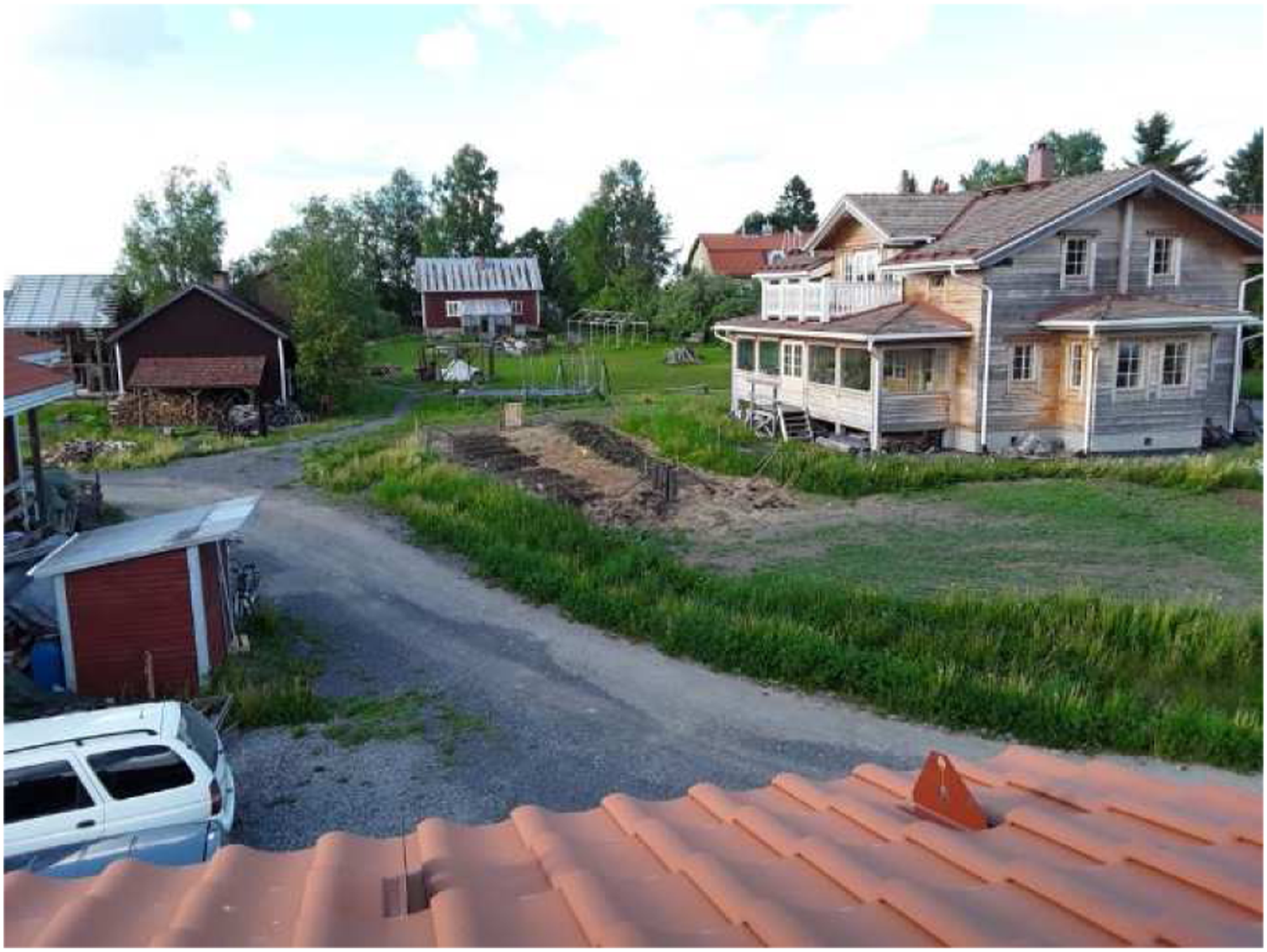
The last reflection of being emplaced concerns the ways in which communities physically shape their place through creative practices, including building, farming and landscape design. These practices often arise from being critical and embodying acts of transgression. These are discussed under the dimension of creativity.
Cornering emplaced are the qualities being compliant and content, which represent a sense of stability, at times even stagnation. One member from Väinölä reflects on how it is difficult for her as someone from the younger generation to ignite change (V_3). Not many new relationships are formed and the future of the community is uncertain. ‘I will probably be the caretaker of 25 elders’ she jokes, then adds, ‘We don’t know what the future will bring’ (V_3). As the community has been established now for 40 years, members have engrained habits and life routines, which are difficult to change (V_5). This does, now and then, lead to some tension between different community members. In the absence of a strong visionary and spiritual leader, ‘There might be more differences in how people think this work should be done and how to develop’ (V_5). This shows how being divergent can challenge being compliant and content. Another member speculates about the reasons for which younger people rarely join the community. He feels it is hard for young people to enter because ‘This way of living is quite hard’ and as he says, ‘does nothing to satisfy one’s egoistic desires’ (V_4). Furthermore, he feels, they lack the kind of fiery leadership that their initial visionary leader had. Similarly, in Kurjen Tila tension arose from a conflict between the initial vision and new input, demonstrating the potential disruptive impact of challenging a state of being compliant and content (K_4) by being critical. The community did not have clear, built-in structures to navigate conflictual situations nor prior experience, which led to an escalation of the situation and affected the wellbeing of its members (KT_PV_3). One participant in particular felt the community had missed the opportunity to work through this conflict as a community: ‘In my experience we did not try to solve it when it was still possible. We totally lost that opportunity because there were some people who did not want to do it in time and then it was too late’ (KT_PV_3). Participants mentioned that indeed individual learning had occurred, but not so much learning at the community level (KT_PV_3).
Triggered by the conflictual situation, some of the members of Kurjen Tila reached out to national and international networks, reflecting the quality of being distanced. The tension field between being emplaced and distanced is essentially about the balance between focussing on internal community dynamics and connecting to the world outside by taking in visitors, connecting to networks, becoming involved in local and global politics and connecting and collaborating with other places. According to one of the members from Kurjen Tila, being part of a community learning project among nine European National Ecovillage Networks is ‘really empowering’ 5 on a personal level. The community is also working with an external facilitator in collaboration with the Finnish ecovillage network (SKEY). 6
Another theme concerning the quality of being distanced is the connection to the wider environment in which the community is located. In Tamera, for example, the community consisted initially of mostly German members; developing connections with its Portuguese environment only became a priority in later years (see also Esteves, 2017). One Portuguese member explains: ‘We were very few non-Germans at the time; there were just a few of us and we were all a bit forgotten. It was not easy for me. I felt there was a missing link to the roots of where we were in the region’ (T_4). The community invited this member to become their Portuguese liaison with the local, regional and national (political) environment. As a result, Tamera changed drastically in its connections with the external world. As the Portuguese liaison explains, ‘You cannot compare today’s community with the Tamera I met 12 years ago.’ Apart from being better integrated in its environment, Tamera also started to focus more on the ecological part of their vision. This more tangible and ecological work helped to develop relationships with the Portuguese population and attract more Portuguese visitors who were interested in learning how this community turned a piece of deserted land into a fertile, green area (T_4). Another member reflects on how a 3-week pilgrimage through the country motivated her to learn about the land and its inhabitants I saw so many things that I did not see before when I just drove through the country. I felt so much love for the people there – so much appreciation for how they live and how they try to maintain their life. And at the same time, I felt the pain of the country, of the land … I want to be part of this country more and to see how the knowledge that is being gathered in Tamera can help to improve the situation of the people in Portugal (T_6).
This account reflects the qualities of being re-connected as well as being emplaced. Reconnecting in a compassionate way is essential for establishing the deep relations that are needed to function well in community. This requires both individual inner work (Pisters et al., 2020) as well as ‘social’ inner work in collective spaces. In Tamera, the social and inner work required to build a functioning community of ‘trust’ is the core of their project. In our daily life together, it is the very simple things – such as an unfulfilled need for contact, a striving for dominance, competition for love and sex, jealousy, unconscious negative projections, the fear of being judged – that have destroyed groups from the inside in hundreds of community projects since the sixties (Dregger, 2015, p. 110).
According to Tamera’s philosophy, and moving beyond the community level, deeply ingrained negative structures and conflicts in our personal love and sexual relationships translate into violent collective structures (Dregger, 2015; Duhm, 2015). Such issues cannot be solved only by individual inner work. For this reason, Tamera intensively works with these topics at the community level and even beyond in their educational programs for guests, using a variety of tools and approaches they have experimented with over the years. The community of Väinölä also emphasizes the inner work that is needed in order to keep social community relationships functional. When faced with challenges in community life, it is necessary to turn inwards. As one participant mentions, ‘I know the difficulties are inside of me’ (V_6), reflecting the quality of being disconnected as an inherent part of compassionate connection (Figure 7). Symbolizing the necessity to turn inwards ‘standing on your own feet. Note. Taken by participant (V_PV_2).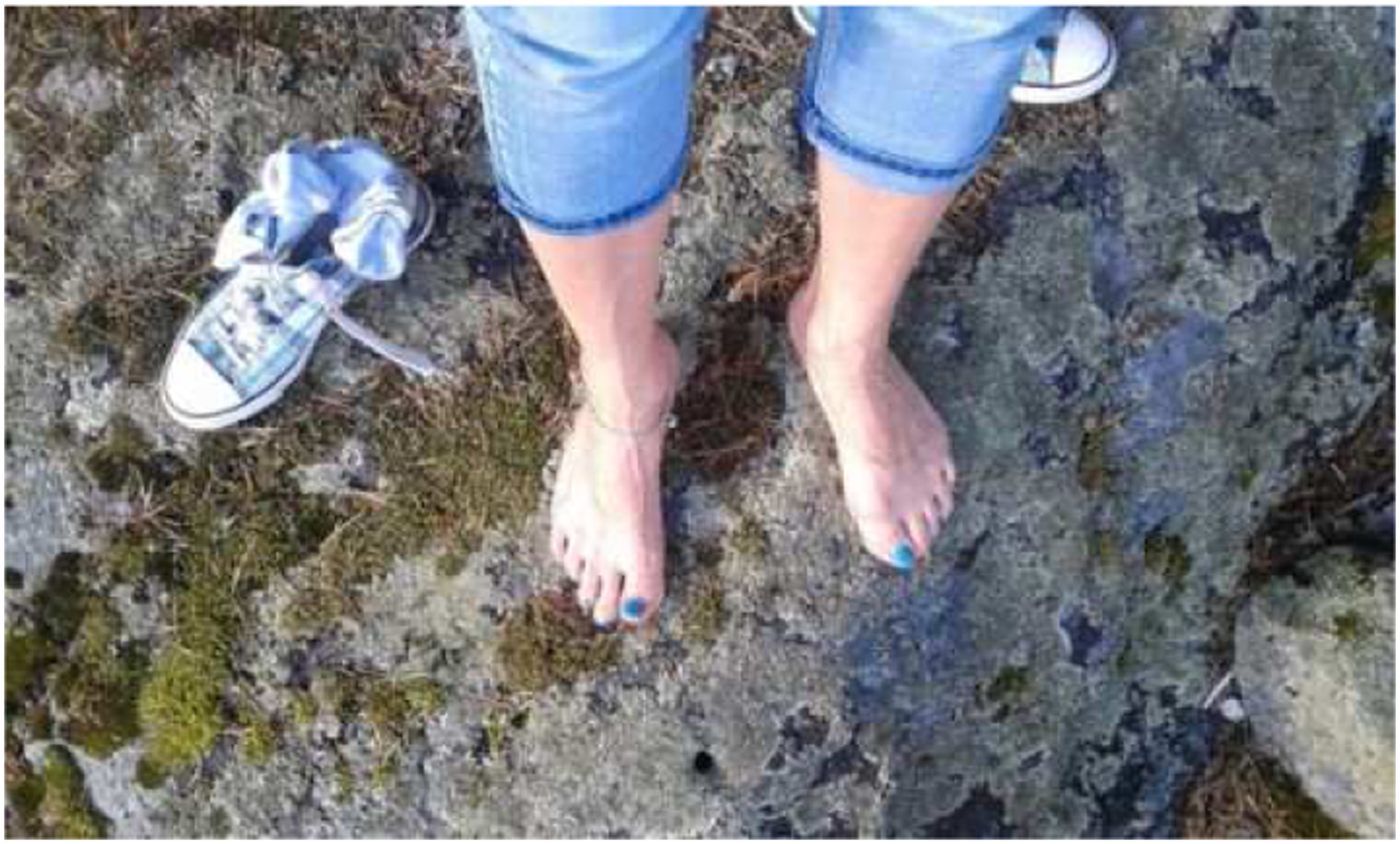
Another participant describes that, for her, working with body-centred practices, including working with horses, helps her cultivate the qualities of unselfishness, love and wisdom of the heart, which are needed for community life: ‘The mind can invent things that are not really so clear; on the contrary, if you manage to open you heart, what comes from it is clearer and more authentic’ (V_3, Figure 8). Symbolizing an open heart as a result of body-centred practices. Note. Taken by participant (V_PV_2).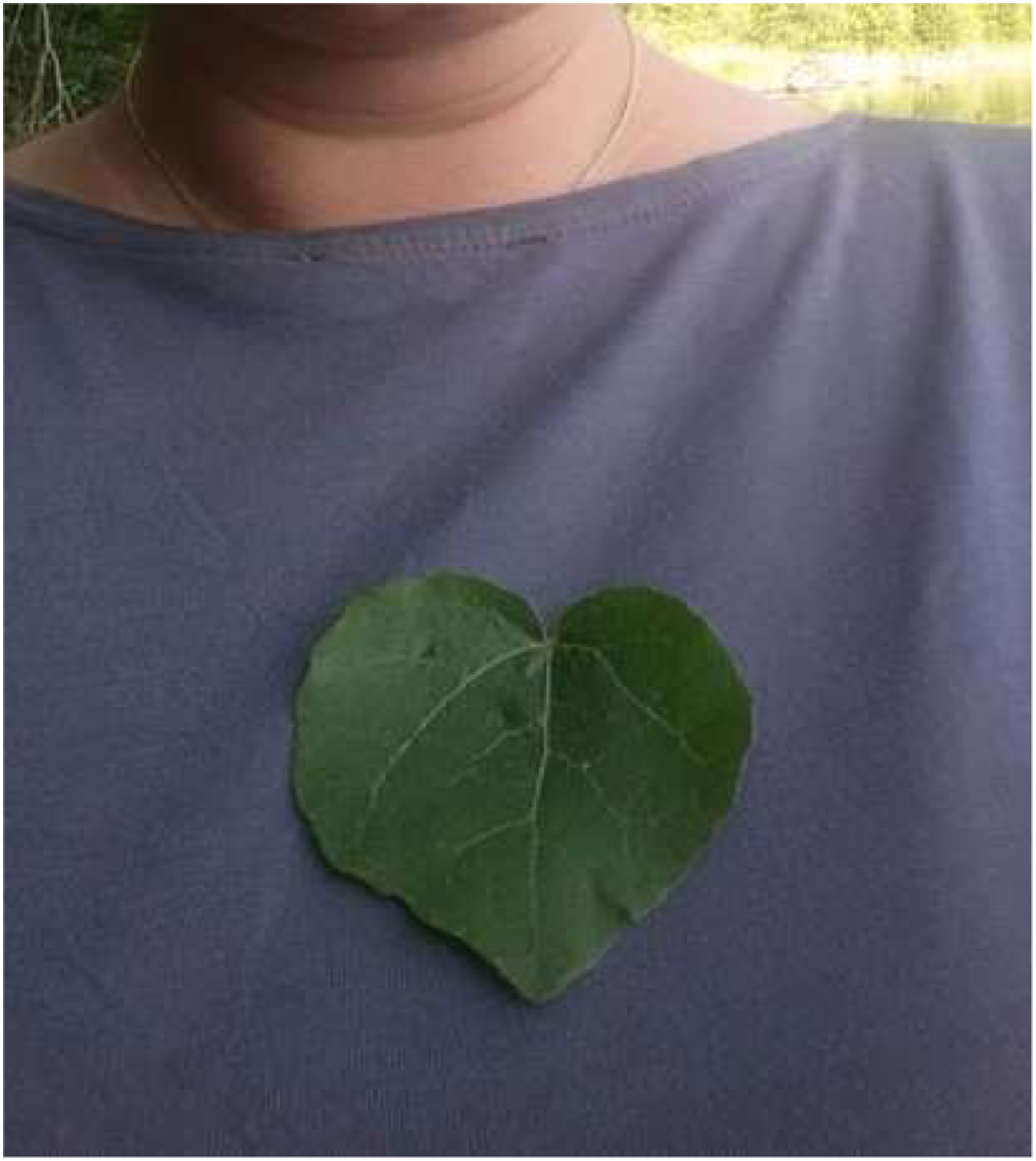
Another type of compassionate connection concerns the relationship and collaboration with the more-than-human world (Harmin et al., 2017). One member of Tamera describes the spiritual dimension of this relationship by recalling an experience she had during a workshop on finding ways to communicate with the spiritual and natural world. During the workshop, they visited the site where a huge dam construction was planned, for which disastrous environmental impacts were foreseen, and the subject of large demonstrations. ‘We went there to see what the message of the wildlife was – the message of nature. And I received very strong messages’ (T_4). She recalls it was easy for her to get into a meditative state where she was able to receive these messages because she had an already-established meditation practice.
Being divergent, from the dimension of creativity, cornered with being critical from transgression, is reflected in practices that embody an alternative perspective, ontology or worldview and a critique of hegemonic structures and practices that sustain these. An example from Tamera is their critique of technological innovation driven by economic optimization (Sareen et al., 2018). Tamera aims to find ‘a technological paradigm in which we are co-operating with life instead of trying to get profits’ (T_3). If you try to develop a technological system that fits into the existing capitalist paradigm, this member argues, you end up exploiting life rather than supporting and co-operating with it. A different approach does require, according to him, a functioning community of trust because ‘If you have a technology that brings life and joy and does not degrade the surroundings but costs three times as much as an alternative, you might as well not bother’ (in a capitalist environment).
Tamera has successfully manifested this vision in the ‘solar village’, a test field for developing technology for decentralized energy supply with the aim of achieving energy autonomy (Dregger, 2015, pp. 50–75; Sareen et al., 2018). ‘Living with technology’ is an essential part of their approach. It allows for a direct experience of the impact of technology on daily life as well as the learning process of embedding new technology in a community (Dregger, 2015, p. 59).
Being convergent is about creating things together while compassionately relating to other beings. The most straightforward example of being convergent concerns communal projects and the value of doing things together. One participant recalls the value of building a compost shed together with some of the volunteers. ‘If time for talking with each other is also valued as part of a work process, something more than the mere constructing of a compost shed occurs: a meaningful encounter between a group of people has taken place’ (KT_PV_1). Similarly, another participant shared how a simple task like repairing the sauna can become something ‘nice and comfortable’ when doing it together (KT_PV_2). In fact, some perceive a lack of communal projects to be a problem. Even though there is a lot of creative work going on in the community, most of the time this involves everyone working on his/her own individual project (KT_PV_1, Figure 9). The communal compost shed. Note. Taken by participant (KT_PV_1).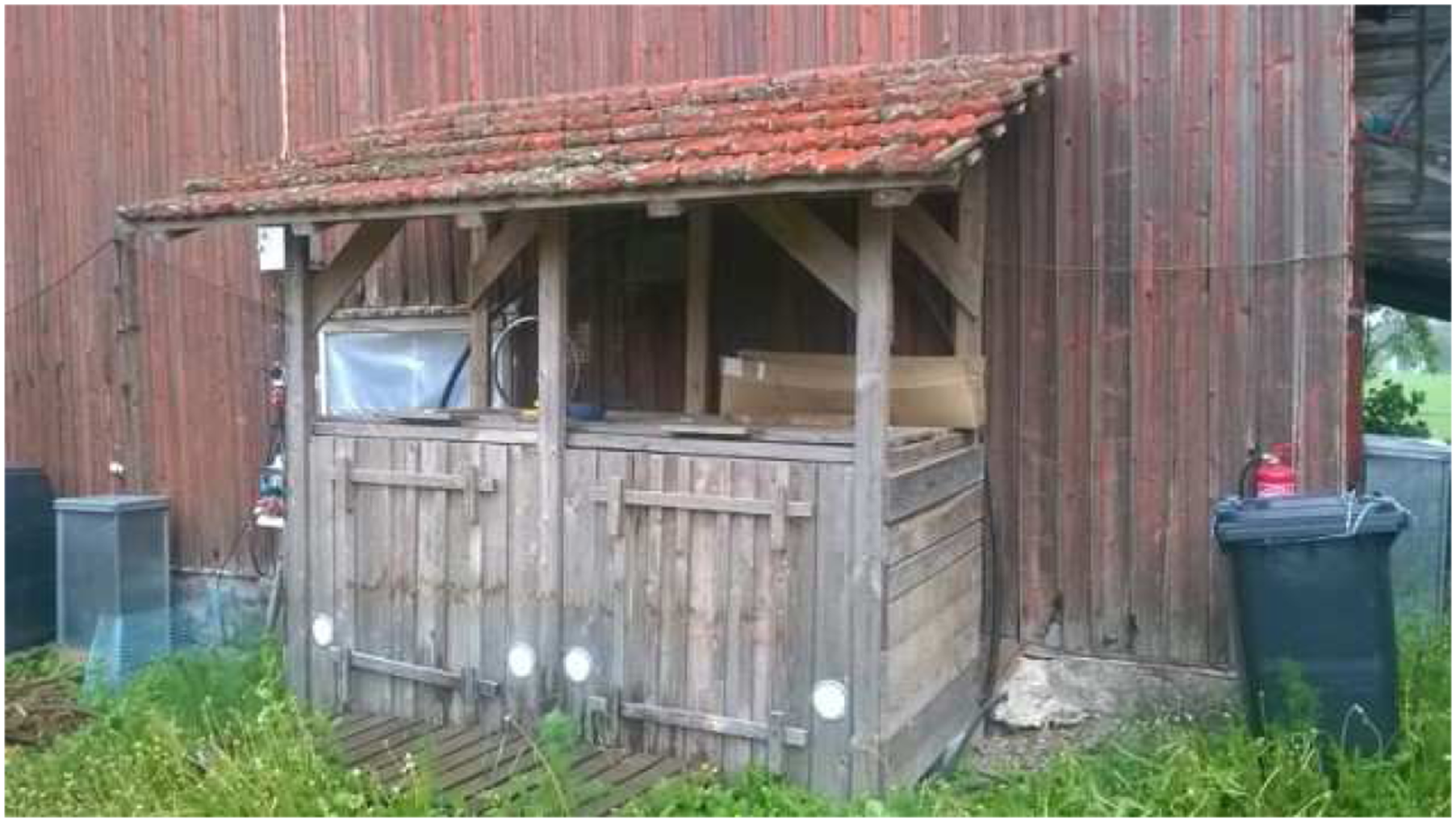
The quality of being divergent is key to a healthy and dynamic kind of convergence in that it evades exclusion and narrow-mindedness. The integration of long- or short-term visitors in the community of Kurjen Tila, for example, reflects the quality of being divergent as it is brought into the collective. The presence of long-term volunteers from different European countries is generally perceived as very positive and enriching, especially given that the Finnish countryside is not a particularly diverse and international environment. The presence of these volunteers not only influences the immediate community, but has a wider impact. One community member mentioned that she is happy that Kurjen Tila is a place where her children come into contact with people from outside of Finland. 7
A first example of bringing the quality of being divergent into that of being convergent is including non-human beings in the creative process of shaping a community. Tamera dedicated an area of six-hectares to research how to communicate with animals, plants and unseen beings.
8
They used, for example, group meditation to learn the language of an old oak tree: We trained in it for a long time. Using group meditation, we wrote down what everyone perceived during the meditation. In the beginning, one perceived this, the other this. After some time, however, everyone in the group started to perceive the same things; we had learned the language of the tree. You need to trust your own perception and the perception of the tree.
9
Another related example from Tamera concerns the manner in which a diversity of cultural and spiritual inspirations is brought into the community and converges into new rituals (Figure 10): ‘We do learn a lot from indigenous peoples. But we are not Colombians or Aboriginals, we have to find our own way, find our own rituals.’
10
Statue of a rooster in Terra Deva, Tamera.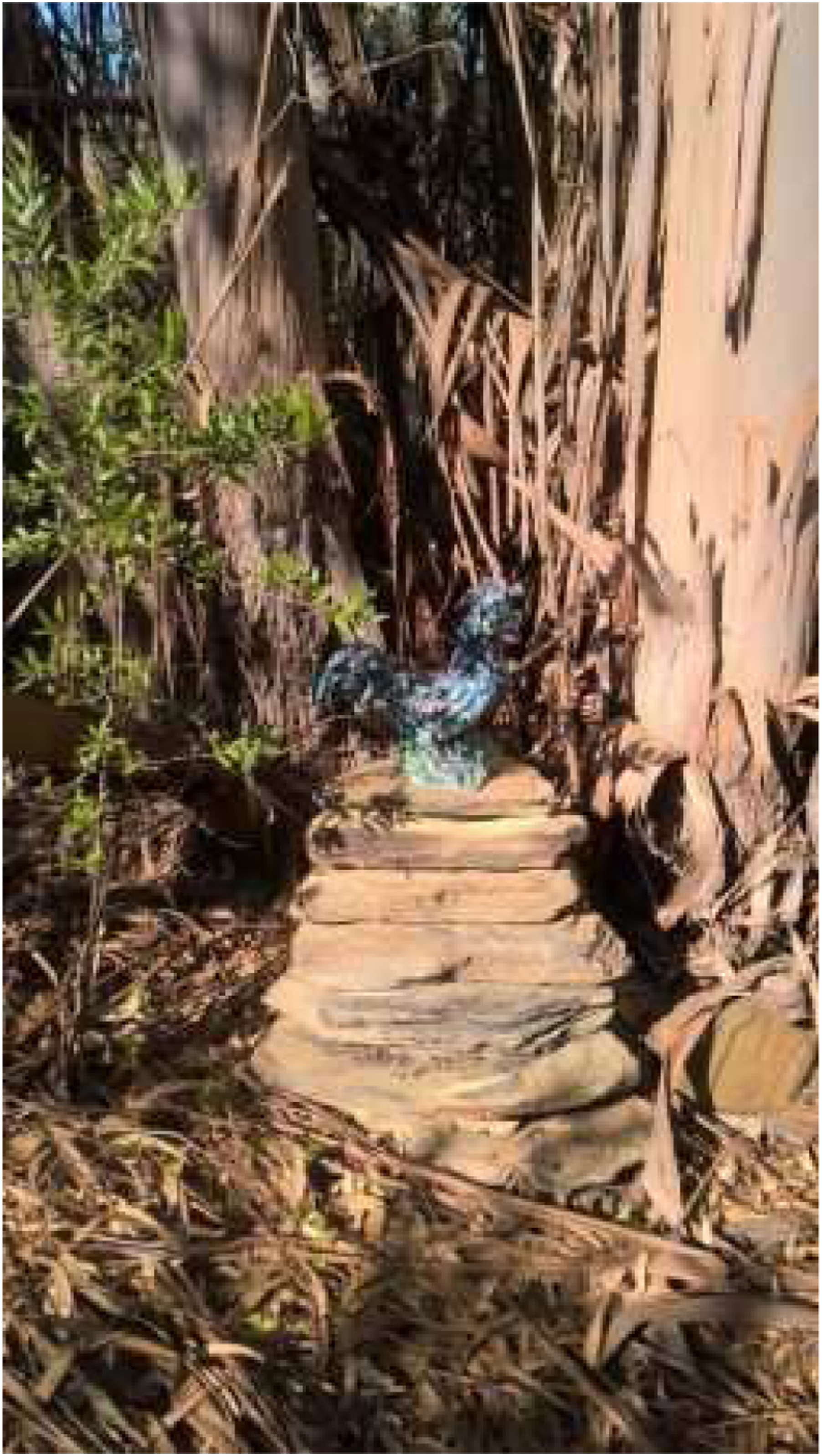
An example of failing to bring the quality of being divergent into that of being convergent is found in hierarchical (rather than democratic) decision-making processes. As one member from Kurjen Tila mentioned, even though the community appears to use democratic decision-making, in reality there is a quite clear, be it informal, hierarchy in decision-making processes; this results in some people making decisions without integrating diverse perspectives (KT_4).
Discussion and Conclusion
The results reflect the co-existence of the two axes of community and disruption intersecting the four-dimensional framework of PBTL. More specifically, the combination of these two axes involves embodying transgressive structures that are characterized by an energy of change and by episodes of disruption, while at the same time integrating a sense of stability through being emplaced in a specific environment and social structure. Doing things in a different way from a ‘community intelligence’ perspective may lead, in and of itself, to transgressive disruption of (for example) competition and economic incentives, as we have discussed in the example of technological design in Tamera. Differently, long-existing structures may sometimes block this process, be they on a structural/external level or on an individual/internal level, and need to be overcome. Examples of such challenges reflected in the results include hierarchical decision-making, male dominance, competition, jealousy and a culture of economic productivity. The analysis of more structural and institutional influences was beyond the scope of this research but needs to be considered to understand the potential and the challenges of initiatives like ecovillages. A pressing example is the predominant ‘whiteness’ of members of sustainability networks (Ferguson & Lovell, 2015) and the inability of many ecovillages to meaningfully address racial and class inequities (Chitewere, 2010). This has implications for how to judge the quality of being divergent.
Transgressive Creativity and Transformation in Consciousness
The results show how a community structure can facilitate political-economic re-positioning towards dominant markets and technology by transgressive creative practices including community-supported agriculture, or, as in Tamera, technological design in renewable energy. As discussed, Tamera’s Solar Village is based on supporting life instead of an economic logic, thereby disconnecting creativity from commercial viability. This allows for creativity to be linked to wisdom, distinguishing between ideas and innovations that will have positive social, ecological and political effects and those that won’t (Feldman, 2008). Cultivating this sense of wisdom might require a different state of consciousness. As Frawley (2006, p. 182) argues, ‘The consciousness that we have developed as a civilization …is inadequate to handle the complex technologies that we have produced or to enable us to apply them in harmony with the greater life around us.’ The findings in this article support the argument that a transition to sustainable societies may only succeed through major transformations both at personal and collective levels (Kunze & Woiwode, 2018). This is not a new perspective; integral philosophy texts have long acknowledged the necessity of a transformation in human consciousness to sustain and elevate life on earth. 11 This requires transcending human-nature dualisms and re-evaluating the meaning of human life. In doing so, the project of sustainability, with its aim to also sustain our own human life, is justified (Abram, 2017; Orr, 2002).
Transgression, Conflict and Community
Disruption, as we have seen in the results, can lead to conflict and separation if a group of people is not able to harness the potential of disagreement and hold the temporary chaos that comes with it. Diverse viewpoints, however, do ‘bring into focus and explore the strengths and weaknesses of attitudes, assumptions, and plans’ (Butler & Rothstein, 1987, p. 37). The art of community then lies in creating spaces that welcome, nurture and support disagreement without hostility and fear (ibid). Learning how to do this as a community is a process and often requires the wider support and knowledge of networks and allies, reflected by the current situation in Kurjen Tila and confirmed by Kirby (2003) and the presence of organizations that have as purpose to support conflict management situations, decision-making and facilitating group processes.
The vision of a community project can be a point of disagreement and conflict when it is challenged by newcomers, as shown in this article. Alfred and Joubert (2007) argue that the vision that unites the community can initially not be held between more than three people. If an idea is shared too early with too many people, it may lose its coherence and strength, risking chaos in a community project. Together with people who feel connected to the initial vision and with whom a common higher goal is shared, community is about continuously re-creating a vision: ‘Visioning is an ongoing process of focussing intention, which will never be completed’ (Alfred & Joubert, 2007, p. 23). This shows the intricate balance between space for being divergent and critical in a community and the need to maintain the core of its vision intact in order to ensure its longevity and stability.
Bringing Compassion into Transgression
Disruption and dissonance are part of a process of transgression (Wals & Peters, 2017). To successfully move through a transgressive phase, however, there is a need to bring compassion into transgression. Dissonance, disruption and conflict can lead to more violence and separation if they are not met with compassion and the right tools to navigate these spaces of transgression. The website of the community learning incubator CLIPS 12 states that successfully facilitating community projects asks for ‘an attitude of empathetic benevolent curiosity’ about the human being in general, and about every participant in the concrete group situation. 13 Azriel Cohen (2014), artist and intercultural facilitator, argues that many groups fail because they dive into painful issues before establishing this sense of group stability. ‘When the balance is restored’ however, ‘it will be much easier to touch the pain.’ 14 This also shows how compassionate connection, is needed in processes of conflict and transgression.
Another way to bring compassion into potentially disruptive community processes is linked to the quality of being disconnected. Von Lüpke (2014, in Joubert & Alfred, 2014) argues that communities need grown up, responsible people that are aware of their own potential instead of people who pursue life in a community as an answer to their personal problems. According to Von Lüpke, this kind of attitude or expectation often leads to crises in communities, or worse, to the collapse of the community. According to him, the solution of rendering a community sustainable lies in a simple paradox: members of it at times need to retreat alone. This perspective reflects the vision of Väinölä where members, when faced with a difficulty, have learned to turn inwards.
Lastly, the communities themselves are also places in which members, to a certain extent, become disconnected from mainstream society. From there, they become re-connected to the world. As Sargisson (2007, p. 398) points out, ecovillage members are, on the one hand, often attuned to opening themselves spiritually and socially. On the other hand, to sustain their identity and purpose as a group, they need to maintain a social, ideological and normative distance to the surrounding society, which she refers to as ‘estrangement’ (Sargisson, 2007; Westskog et al., 2018).
In conclusion, despite the relatively small number of communities and cases analysed, this article has contributed to sharpen the anatomy of place-based transformative (including transgressive) learning in sustainability initiatives, and valorized the process as described in our theoretical framework. It shows how community and disruption are two axes of PBTL in sustainability initiatives. The results reflect how a change in inner consciousness is related to alternative practices that re-define relationships with other humans, the more-than-human world and ourselves.
Future research can deepen the understanding of PBTL by unravelling socio-economic structures that enable or block inclusion in such learning processes. This in itself is part of PBTL and is about awareness of whose perspectives (being divergent) and whose opinions (being critical) are being excluded and included and how these affect sustainability initiatives. Issues to be addressed include the balance between forming a group of like-minded people and inviting diversity, as well as the potential of diversity within a community versus diversity of communities collaborating and supporting each other.
Footnotes
Acknowledgments
The authors want to thank the financing institutions who made the 3-year research project Sustainable Place Shaping (SUSPLACE) possible: the European Union’s Horizon 2020 research and innovation programme under the Marie Skłodowska-Curie grant agreement No 674962. Furthermore, our sincere gratitude goes to the communities that committed to participate in this research
Declaration of conflicting interests
The author(s) declared no potential conflicts of interest with respect to the research, authorship, and/or publication of this article.
Funding
The author(s) received no financial support for the research, authorship, and/or publication of this article.
