




Abstract
Although General Strain Theory (GST) has been widely used to explain delinquent behavior, few studies have examined whether the sources and effects of strain differ across developmental stages. Drawing on GST, this study investigates developmental differences in how various stressors influence delinquent behavior using two waves of nationally representative panel data from South Korea. Regression and decomposition analyses compare adolescence and early adulthood to assess changes in strain exposure and effects. Results show that adolescents experience significantly higher levels of stress and delinquency than in early adulthood. Parental, financial, and appearance stress significantly predict delinquency during adolescence but lose their effects later, with only peer stress remaining significant in early adulthood. Anger and low self-esteem consistently predict delinquency across both stages, suggesting that emotional vulnerability persists over time. Decomposition results indicate that most developmental declines in delinquency stem from changes in the effects of strain rather than reductions in strain exposure. These findings highlight that the types and impacts of strain evolve with age.
Introduction
Many life-course criminologists have focused on individuals’ dynamic life transitions, experiences, and changes and their effects on criminal careers, especially during adolescence and early adulthood periods. The general age–crime curve, for instance, illustrates that criminal behavior tends to peak around ages 16 or 17 and gradually declines as individuals age (Farrington, 1986; Moffitt, 1993; Piquero et al., 2003). Juvenile development literature also argues that the onset of delinquent behavior typically coincides with biological and psychological turning points generally associated with puberty and systemic changes (Felson & Haynie, 2002; Najman et al., 2009). Even among those show delinquent behavior at their adolescent years, only a limited number of juveniles persist in a criminal trajectory, while most who engage in delinquent acts during adolescence desist from future offending–a pattern described as “adolescence-limited offenders” (Moffitt, 1993). Consequently, scholars have emphasized that individuals’ criminal behavior is likely to change over time, and various theoretical perspectives have been proposed to explain these developmental patterns (e.g., the age-graded theory of informal social control; Sampson & Laub, 1992).
However, despite its wide utility and popularity in explaining juvenile criminal behavior, general strain theory (GST) has received relatively limited attention in explaining changes in criminal behavior over the life course. GST posits that strains arising from various sources generate negative emotions, which in turn increase the likelihood of engaging in delinquent behavior. Although the theory was originally developed to explain why certain individuals commit more crimes than others, scholars have argued that it can also account for different offending trajectories across the life span (Agnew, 1997, 2006; Eitle, 2010; Hoffmann & Cerbone, 1999; Slocum, 2010; Slocum et al., 2005). For instance, adolescence–an important phase in the life course–is characterized by exposure to a greater number and intensity of strains conducive to crime compared to childhood or adulthood, as adolescents often navigate a more unstable, demanding, and dynamic environment (Agnew, 2009). Adolescents are particularly vulnerable to the effects of strain due to substantial biological, psychological, and social changes occurring during this developmental stage (Hoffmann, 2010; Timmermans et al., 2010). However, relatively few studies have examined the core propositions of GST within a life-course framework, particularly the idea that adolescents experience a greater volume of strain and are more sensitive to its effects compared to adults.
Accordingly, this study seeks to explain variations in criminal behavior across different time points in one’s life based on the general strain theory (GST) framework. Specifically, the study has two main objectives. First, it examines whether stressful life events vary significantly at different stages of individual development. Second, it assesses whether these stressful events exert distinct effects depending on the stage of the life course. To address these questions, two waves of a longitudinal panel study conducted in South Korea are analyzed. Korean adolescents are often exposed to intense academic pressure to gain admission to top-tier universities, which has been linked to elevated levels of stress, unhappiness, and even suicide (Han et al., 2025; Moon & Morash, 2017). Drawing on data from a Korean juvenile panel, this study evaluates the applicability and contribution of GST to developmental criminology. The following sections elaborate on the theoretical foundations of GST and its relevance for understanding distinct patterns of delinquent behavior across different stages of individual life.
Backgrounds
General Strain Theory and Korean Structure
General Strain Theory (GST) explains a causal mechanism in which various types of strain lead to negative emotions, in turn resulting in deviant or criminal behavior (Agnew, 1992, 2006). By extending classic strain theory, Agnew (1992) identified three primary sources of strain: (1) the failure to achieve desired goals, (2) the removal of positive stimuli, and (3) the presentation of negative stimuli. When individuals encounter these stress-inducing circumstances, their corrective or coping responses may manifest as criminal or deviant behavior. GST also underscores the role of internal emotional states such as anger, frustration, or despair as mediating mechanisms linking strain to delinquency (Agnew, 1997; Moon & Morash, 2017). Perceived strains may lead to deviant behavior; however, this relationship is often indirect. Exposure to strain primarily increases levels of negative emotions such as anger, frustration, or despair which, in turn, serve as the driving force behind criminal or deviant actions. The core mechanism of General Strain Theory (GST) has been extensively examined, and a large body of empirical research supports its explanatory power in understanding individuals’ deviant or delinquent behaviors (Agnew & White, 1992; Broidy, 2001; Jang & Johnson, 2003; Mazerolle et al., 2003; Piquero & Sealock, 2000; Thaxton & Agnew, 2018). International studies also demonstrate that GST’s core mechanism applies consistently across diverse sociocultural contexts (Mazerolle & Maahs, 2000; Paternoster & Mazerolle, 1994).
South Korean society imposes structurally high levels of strain on adolescents, with intense academic competition as a defining feature (Song, 2020; Yun & Kim, 2020). The entrance-exam-centered education system, rooted in both post-war modernization and Confucian educational values (Choi & Park, 2013; Lee, 2006; Sorensen, 1994), reinforces the equation of success with admission to prestigious universities, generating prolonged academic stress (Han et al., 2024; Moon & Morash, 2017). Empirical data indicate that grades and entrance-exam pressure constitute a leading reason for suicidal ideation among Korean teenagers (Jung et al., 2024; Kim et al., 2024), with elevated stress levels persisting before and during the COVID-19 pandemic (Kim et al., 2021). This environment functions as a structurally and socio-culturally legitimized strain that produces emotional exhaustion and deviant coping among youth, consistent with GST’s emphasis on strains perceived as unjust yet socially pervasive (Agnew, 2001; Jeon & Chun, 2017; Song, 2020). Additionally, South Korean parenting has traditionally been characterized by hierarchical family norms emphasizing filial piety and parental authority (Chao, 1994; Kim et al., 2012; Park & Cho, 1995). Although recent scholarship documents generational and cultural shifts in parenting practices in contemporary South Korea (Kim, 2023; Lee & Han, 2021), hierarchical expectations and performance-oriented pressures continue to shape many adolescents’ social experiences. These dynamics, combined with appearance-centered values (Lee et al., 2017), generate multiple social pressures. Adolescents experience these pressures in a social climate, where expressing emotions or seeking help, is difficult due to stigma and loss of face concerns (Bu et al., 2023; Kim & Yon, 2019), directly corresponding to GST’s condition of limited legitimate coping resources (Agnew, 2006).
GST has proven highly applicable in explaining Korean adolescent delinquency when accounting for cultural and structural specificity. Academic stress, the most dominant strain in South Korea, exerts disproportionately strong influence on youth behavior. Studies using national panel data report that academic pressure predicts both aggressive and status-related delinquency more robustly than peer or family strains (Moon et al., 2009; Moon & Morash, 2017; Song, 2020), with academic strain identified as a primary strain source due to cultural expectations (Moon et al., 2009). Interpersonal strains, including bullying victimization and parental abuse, also play critical roles by eliciting emotional responses that mediate pathways to deviance (Cho & Galehan, 2020; Kim & Ha, 2020). Anger serves as a full mediator between strain and youth violence, meaning strain’s effect on violence is entirely transmitted through anger rather than direct pathways (Lee, 2024), underscoring the centrality of negative emotional arousal in GST’s causal mechanism.
GST’s conditional effects hypothesis finds substantial empirical support in South Korea. The criminogenic impact of strain is amplified among adolescents with low parental supervision, weak attachment to adults, or delinquent peer associations (Moon et al., 2009; Moon & Morash, 2017). Conversely, protective effects of social support, positive school climate, and resilience significantly mitigate strain’s negative impact (Choi et al., 2023; Jeon & Chun, 2017; Jeong & Park, 2024), with parent and teacher relationships showing significant protective effects through emotion mediation (Jeong & Park, 2024). These findings suggest that strain-induced emotions are central to delinquency development, with adolescents’ social ecology playing a critical role in either mitigating or intensifying these processes, offering both validation and contextual extension of GST in a society characterized by unique structural and cultural features.
General Strain Theory and Life-Course Perspective
One of the common empirical findings in life-course criminology suggests that individuals’ criminal involvement changes over time, typically increasing during adolescence and subsequently declining as they transition into early adulthood (Farrington, 1986; Moffitt, 1993; Piquero et al., 2003). From the perspective of General Strain Theory (GST), Agnew (1997, 2006) contended that GST can effectively account for life-course variations in criminal behavior, particularly the process of desistance from crime. By integrating the principles of GST with those of social control and social learning theories, Agnew (2006) proposed that variations in the magnitude of experienced strain and in individuals’ emotional or behavioral responses to strain help explain why many adolescents engage in delinquent acts during youth but desist as they transition into early adulthood (p. 111).
Agnew (1997, 2006) offered several compelling explanations for why adolescents experience higher levels of strain compared to both children and adults. First, during adolescence, individuals are increasingly exposed to novel and challenging strains as parental supervision and protection diminish. With reduced external control and guidance from adults, adolescents are more likely to encounter adverse circumstances and struggle with the resulting strains. Second, relative to both children and adults, adolescents operate within a more demanding social environment–encompassing family, school, and community contexts–where they frequently experience failure and negative treatment from significant others. Heightened expectations, stricter rules, increased responsibilities, and intensified performance pressures collectively create conditions in which adolescents face more setbacks than successes. For example, academic achievement becomes a salient source of evaluation during middle and high school years, and poor academic performance can serve as a critical strain that elevates negative emotions, ultimately increasing the likelihood of involvement in delinquent behavior (Ford & Schroeder, 2008; Han et al., 2025).
Lastly, adolescents’ limited autonomy in pursuing desired goals can further intensify their experience of strain. Many of the goals valued during adolescence are associated with adult privileges and independence–opportunities that adolescents often perceive as deserved but unattainable due to social and institutional constraints. This discrepancy between aspirations and actual autonomy fosters heightened frustration and strain, which, in turn, may increase the likelihood of engaging in delinquent or deviant behavior (Piquero & Brezina, 2001).
Agnew (1997, 2006) further emphasized that individuals’ reactions to stress differ across developmental stages, as do their coping mechanisms for managing strain derived from stressful life events. Specifically, the effects of strain among adolescents may be amplified due to their limited and less effective coping strategies. In contrast, adults typically possess greater cognitive, emotional, and social resources that enable them to mitigate or escape the sources of strain such as leaving stressful family or school environments. Consequently, adults are less likely to exhibit extreme emotional or behavioral reactions to stress, including engagement in criminal or deviant behavior (Hoffmann, 2010). In addition, as adolescents transition into early adulthood, they typically gain greater autonomy and control over their surrounding circumstances, which provides them with more effective options for coping with strain (Agnew, 2006). Adolescents, by contrast, tend to possess less developed social and problem-solving skills than adults. While children with similarly limited skills often benefit from the protection and guidance of adult caregivers, adolescents experience reduced external support and supervision, leaving them more vulnerable to the adverse effects of strain (Agnew, 1997).
Taken together, it can be hypothesized that adolescents experience a greater volume of strain than individuals entering early adulthood, largely due to the more stressful social environments and the psychological and physiological transitions characteristic of this developmental stage. Moreover, adolescents are generally considered more sensitive to strain, as they possess fewer coping resources and exhibit less developed social and problem-solving skills, which may exacerbate the impact of strain on their emotional and behavioral outcomes.
Current Study
This study seeks to investigate developmental differences in delinquent behavior between adolescence and early adulthood within the framework of General Strain Theory (GST). While prior GST research has largely focused on specific life stages, relatively few studies have directly compared strain processes across developmental periods using longitudinal data. By examining strain, negative emotions, and delinquent behavior at two distinct developmental stages within the same panel dataset, this study provides a developmental test of GST across adolescence and early adulthood. Drawing on contemporary extensions of GST that underscore its applicability to life-course variations in criminal behavior, the present analysis examines distinctions not only in delinquency levels but also in experienced strains and negative emotional responses across developmental stages. Specifically, this study posits three hypotheses: (1) the volume of strain is greater during adolescence than during early adulthood; (2) negative emotional states are more intense in adolescence than in early adulthood; and (3) adolescents, being more susceptible to stress, exhibit a higher propensity for delinquent behavior relative to individuals in early adulthood.
Methods
Data and Sample
This study analyzed data from the Korean Youth Panel Survey (KYPS), a nationally representative longitudinal dataset collected between 2004 and 2009 by the Korean National Youth Policy Institute (NYPI). The KYPS was designed to gather comprehensive information on Korean adolescents’ academic, social, environmental, physical, and mental development. Two age cohorts–elementary and middle school students–were selected through multistage cluster sampling and followed for six years. Specifically, over 100 schools were randomly chosen across the country, and students were then randomly selected from within these schools. The analytic sample focused on the middle school cohort that was in eighth grade (approximately 14 years old) in the first wave (2003) and in college students (approximately 19 years old) in the sixth wave (2008). In the first wave, 3,449 students participated, and by Wave 6, 2,967 remained, resulting in an attrition rate of 13.7%. For the purposes of this study, Waves 1 and 6 were used to compare distinct crime-related behavioral patterns at two key developmental stages. Adolescence marks a period of rapid physical and psychological change, and students in the second year of middle school differ meaningfully from those at the early adulthood 1 . In line with life-course criminology, which consistently shows that offending typically peaks around ages 16–17 and declines thereafter (Monahan et al., 2009), following the previous literature on crime distinction two critical time points (e.g., Thomas & Vogel, 2019) the analysis restricted the sample to these two time points to capture meaningful developmental contrasts in delinquent behavior.
Measures
Delinquent Behavior
To capture the levels of delinquent behavior of juvenile respondents, this study utilized five dichotomous questions. Respondents were asked if they had engaged in various delinquent activities in the past 12 months with a binary response scale (yes = 1, no = 0). Specifically, severe assault against another person, gang fight, robbery, larceny, and threatening other people were employed to capture the levels of delinquent behavior. The responses were summed and the aggregated value for each delinquent type indicates more involvement in delinquent behavior.
Strains
According to General Strain Theory (GST), one of the major sources of strain is stressful life events (Agnew & White, 1992). In the current study, similar to prior GST research (e.g., Broidy, 2001), various types of stressors that participants were experiencing were operationalized as measures of strain. Specifically, five types of strain were captured by measuring different sources of stress: parental stress (a summed index of four items), academic stress (four items), peer stress (three items), appearance stress (three items), and financial stress (three items) (e.g., Moon et al., 2012; Yun et al., 2014). Parental stress consists of four items measuring whether respondents felt stress in their interactions or relationships with their parents (e.g., I felt a lot of stress because of extensive monitoring by my parents). Responses range from none = 1 to all the time = 5, and higher scores indicate greater parental stress (Cronbach’s α = .87). Academic stress is measured using four items assessing how much stress respondents experience from their academic performance or studies (e.g., I felt a lot of stress because of poor academic performance at school). Responses are recorded on a five-point Likert scale (Cronbach’s α = .77). Peer stress is measured with three questions assessing the extent to which respondents experience stress from peer relationships (e.g., I felt a lot of stress because my friends disrespected me). Higher scores on the five-point Likert scale indicate greater peer stress (Cronbach’s α = .83). Appearance stress captures the level of stress respondents feel regarding their physical appearance (e.g., I felt a lot of stress due to my weight). Three items are used, with higher scores indicating more appearance-related stress (Cronbach’s α = .72). Finally, financial stress represents the degree of stress respondents feel about their monetary situation (e.g., I felt a lot of stress because I couldn’t afford to buy things I wanted). Three items are used, with responses measured on a five-point Likert scale (Cronbach’s α = .82).
Negative Emotions
According to General Strain Theory (GST), negative emotion plays an important mediating role in the mechanism linking strain to delinquent behavior. Strains lead to negative emotions, which in turn increase the likelihood of involvement in criminal behavior. Two types of negative emotions were examined in this study: anger and low self-esteem. Anger was measured using four items that asked respondents to indicate how strongly they agreed or disagreed with statements related to anger-related behaviors or traits (e.g., I consider myself an explosive person, soon to blow up). Each item was rated on a five-point Likert scale ranging from 1 = strongly disagree to 5 = strongly agree. Responses were summed, with higher scores indicating greater levels of anger (Cronbach’s α = .71). Low self-esteem was assessed using three items that asked respondents to report their level of self-esteem (e.g., I often believe that I am a failure). Each item was rated on a five-point Likert scale ranging from 1 = not at all to 5 = a great deal. Higher summed scores indicated higher levels of low self-esteem (Cronbach’s α = .75). The specific measurement items are presented in Table A1.
Control Variables
To account for other confounding effects, three control variables were utilized in the study. First, low self-control was measured with two items. Self-control has been considered as a core and consistent covariate of delinquent behavior (Pratt & Cullen, 2000). Respondents were asked whether they agree with the statement such as “I tend to give up when something gets hard and complicated” and “I tend to not finish homework on time.” Five-point Likert scale response option was given and higher scores indicate low levels of self-control. Other two control variables capture socio-demographic status of respondents. Gender is measured with a dichotomous variable (male = 1). Household income is measured in Korean currency (10,000 won units, approximately $9) and serves as an indicator of respondents’ financial status, with higher scores representing higher financial status.
Analytic Approaches
This study investigates developmental differences in juvenile offending within the General Strain Theory (GST) framework. Analyses proceed in three stages. First, paired-sample t-tests compare mean levels of strain, negative emotion, and delinquent behavior between adolescence (Wave 1) and early adulthood (Wave 6). Second, negative emotion is regressed on strain variables to assess the mediating mechanism posited by GST. Then, delinquent behavior is modeled as a function of strain and negative emotion using negative binomial regression, given the count nature of the dependent variable (Osgood, 2000). As a result, six separate regression models are estimated across age groups and outcome variables. In the analysis, missing data raise concerns about potential bias in inference and the accuracy of parameter estimates (Brame et al., 2009; Brame & Paternoster, 2003). Missing data were primarily observed in Wave 6, with approximately 25% of cases missing on the income variable. In contrast, about 7% of cases were missing in Wave 1, including approximately 6% missing on the income variable. Examination of missing data patterns indicated that approximately 9% of cases had missing values across all variables, while about 8% of respondents did not report their household income only. An additional 3% of cases showed missingness only for the parental stress and academic stress variables. The pattern of missingness suggested that the data were unlikely to be missing completely at random. Little’s MCAR test further confirmed that the missing data were not completely at random (χ2 = 214.75, p < .001). To address this issue, multiple imputation by chained equations (MICE) was employed. This procedure imputes missing values through a series of univariate regressions, matching variables with missing observations to those with complete information to generate plausible estimates (Royston & White, 2011).
Finally, a multivariate nonlinear decomposition analysis is employed to disentangle the effects of changes in strain composition and coefficient differences. Unlike traditional regression models, this approach allows for simultaneous assessment of both compositional and structural changes in key predictors (Even & Macpherson, 1993; Nielsen, 1998). In this context, increased levels of strain in early adulthood (or vice versa) may be associated with higher levels of negative emotion or delinquent behavior (characteristic effects), or with stronger effects of strain observed at specific time points (coefficient effects). To address this distinction, Blinder (1973) and Oaxaca (1973) introduced a method to decompose group differences into portions attributable to characteristics and coefficients. The Blinder–Oaxaca decomposition framework estimates group differences in the dependent variable as a function of both mean-level (characteristic) differences and slope (coefficient) differences, as illustrated by the following simplified equation.

More specifically, Blinder-Oaxaca decomposition model calculates the difference in the following equation.

Results
Descriptive Statistics and Mean Comparisons
Results of Mean Comparison Tests
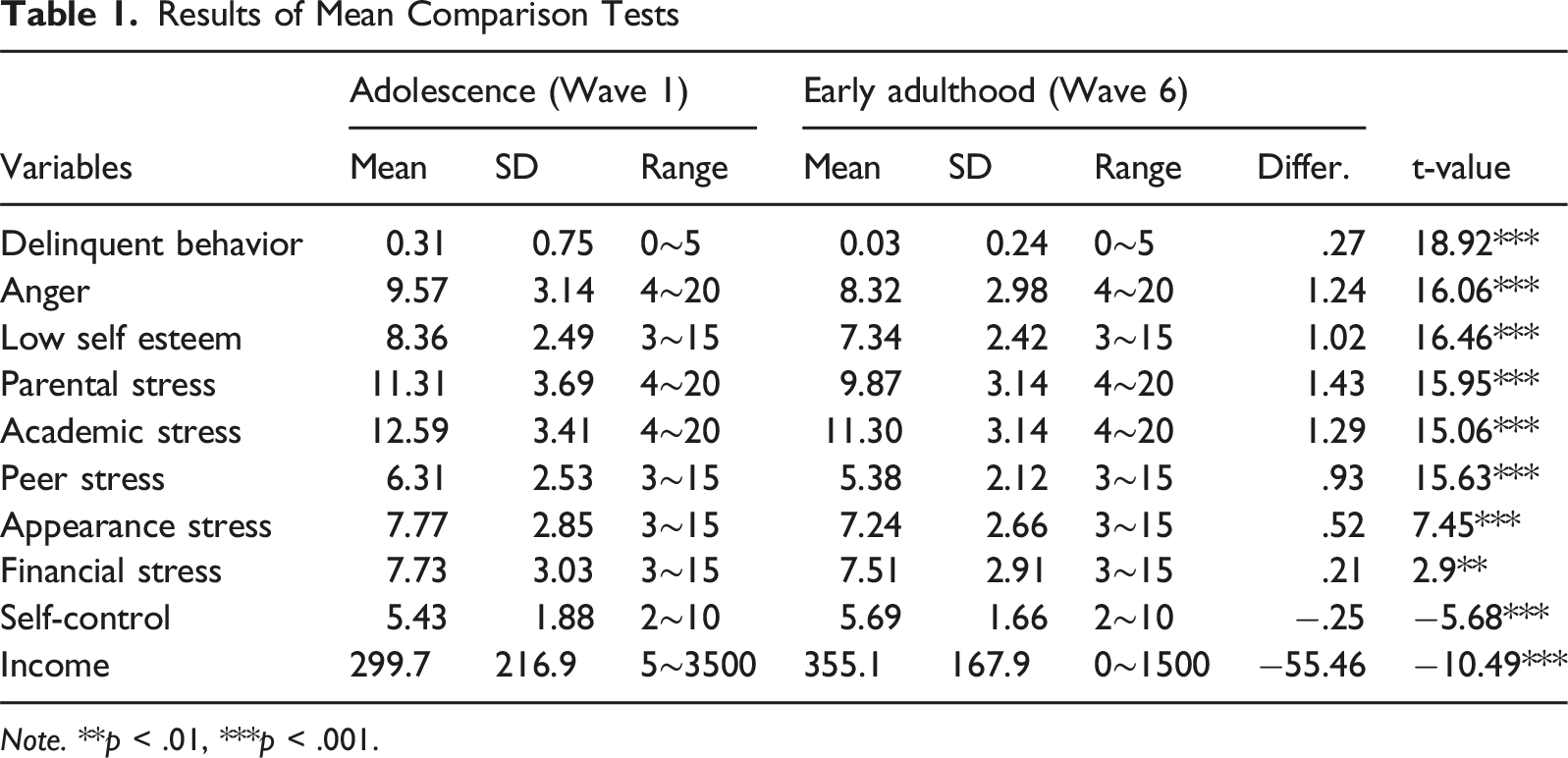
Note. **p < .01, ***p < .001.
Regression Analyses for Negative Emotions
Regression Analysis for Anger and Low Self-Esteem
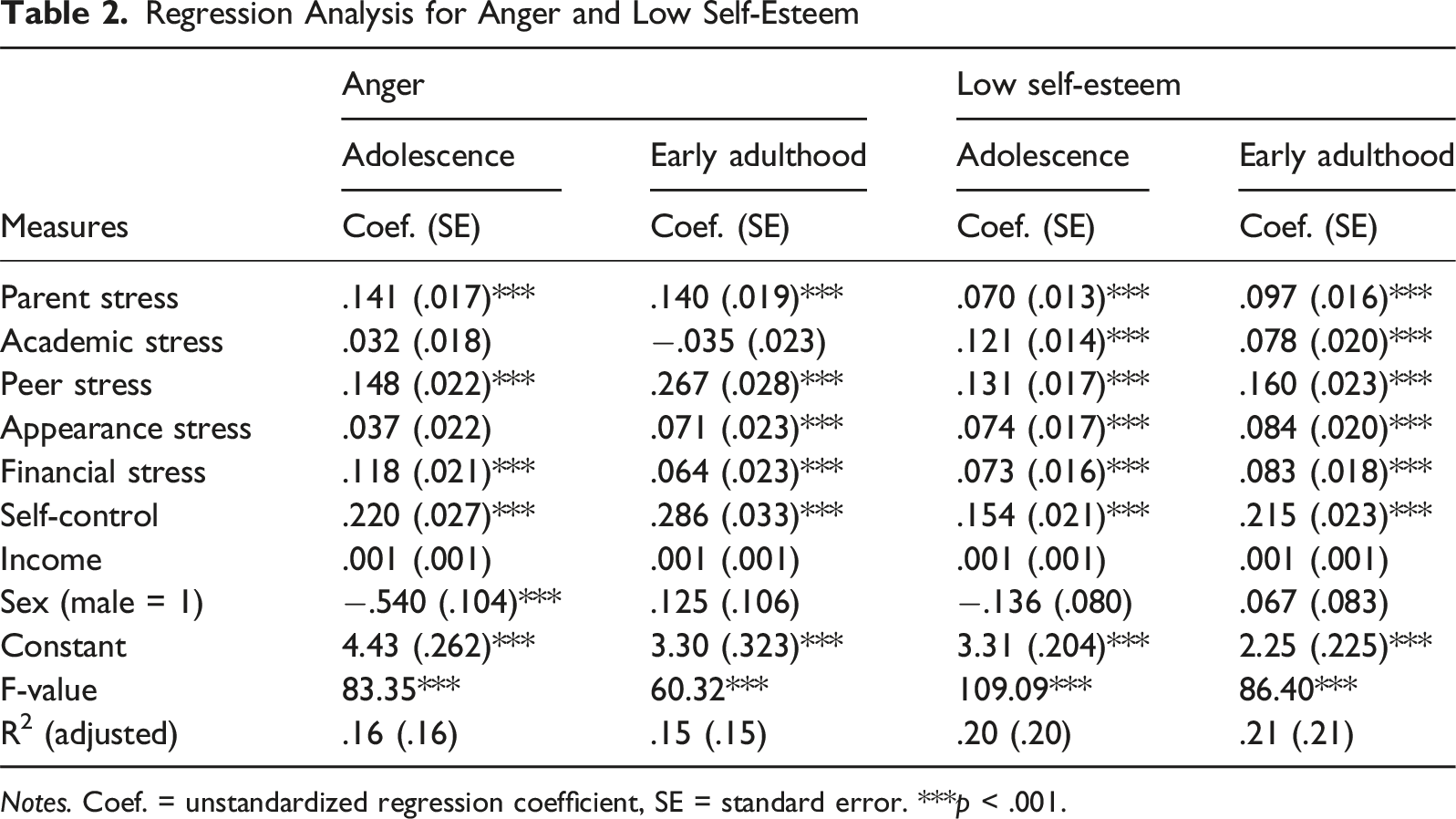
Notes. Coef. = unstandardized regression coefficient, SE = standard error. ***p < .001.
For low self-esteem, the regression results show no substantial differences between adolescence and early adulthood in either the direction or magnitude of associations. All stress variables–parental, academic, peer, appearance, and financial–are positively and significantly associated with lower levels of self-esteem in both periods. In other words, higher perceived stress in any domain corresponds with greater feelings of low self-esteem throughout development.
Regression Analyses for Delinquent Behavior
Negative Binomial Regression for Delinquent Behavior
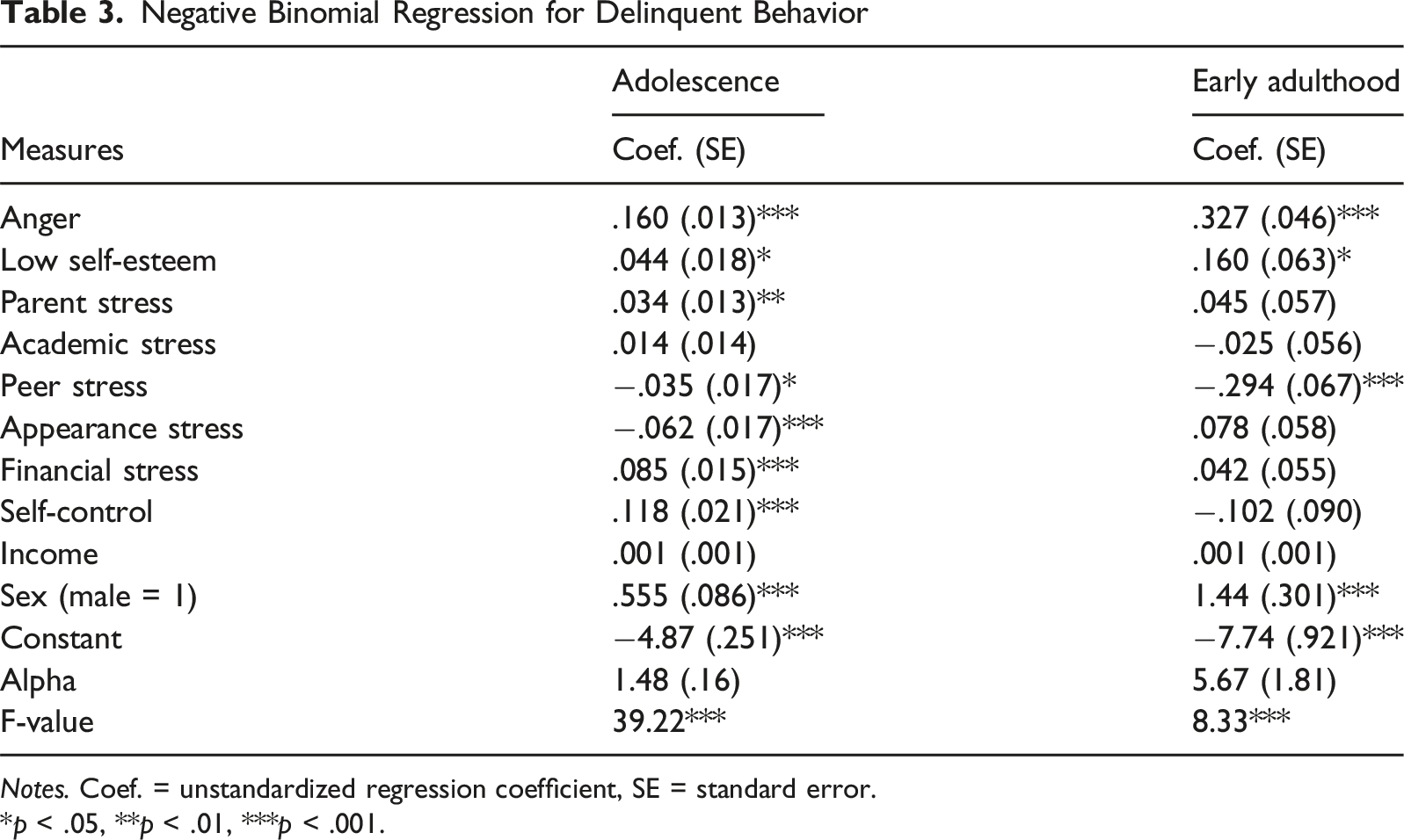
Notes. Coef. = unstandardized regression coefficient, SE = standard error.
*p < .05, **p < .01, ***p < .001.
Blinder–Oaxaca Decomposition
Results of Blinder-Oaxaca Model
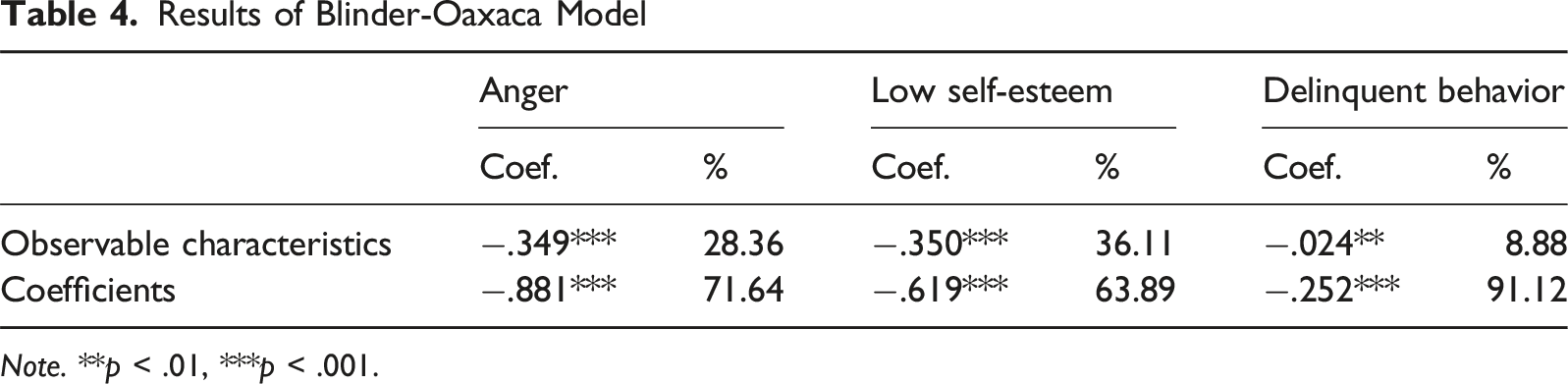
Note. **p < .01, ***p < .001.
Discussion
The present study builds on prior research that has sought to advance understanding of the applicability of General Strain Theory (GST) to dynamic patterns of criminal behavior across the life course. Although GST has been extensively employed to explain criminal behavior in diverse contexts, relatively few studies have examined how its propositions contribute to life-course criminology. Accordingly, the current study investigated whether adolescents experience higher levels of strain and are more vulnerable to the amplified effects of strain compared to individuals in early adulthood. Importantly, the delinquency measure employed in this study captures serious and antisocial behaviors, which enhances the interpretive weight of the findings in a context often characterized by relatively low rates of serious youth crime.
Results from multiple statistical analyses yielded several noteworthy findings. First, the study revealed that individuals during adolescence report higher levels of perceived strain and negative emotions, as well as greater involvement in delinquent behavior, relative to their early adulthood period. The mean levels of strain and negative emotional states measured in this study were significantly higher among adolescents, a pattern consistent with Agnew’s (1997, 2006) assertions that adolescents are exposed to more stressful social environments both at school and at home. In particular, the differences were most pronounced for parental and academic stress. Within the Korean context where academic success is strongly emphasized as a prerequisite for entry into nationally prestigious universities, academic and parental stress among adolescents are particularly salient sources of strain. Numerous studies analyzing Korean juvenile data within the GST framework have similarly demonstrated that academic failure and related strains serve as powerful predictors of delinquent behavior among Korean adolescents (Han et al., 2025).
Second, the effects of strain on delinquent behavior appear to vary across developmental stages. Regression analyses indicated that while the relationships between strain and negative emotions were consistent across both periods, the influence of strain on delinquent behavior differed substantially between adolescence and early adulthood. Specifically, parental and financial stress were positively associated with delinquent behavior during adolescence, but these effects were not significant in early adulthood. This finding suggests that certain forms of strain play a more critical role in shaping delinquent outcomes during adolescence than later in life; in the current study parent stress and financial stress. Agnew (2001) also emphasized that particular strains are most likely to result in criminal behavior. This theoretical framework helps explain why structurally embedded strains, such as parental or academic stress, may exert stronger effects during adolescence when coping resources and social controls are still developing.
Furthermore, the significance of specific strains may diminish over time as individuals acquire more coping skills and experience lower levels of strain during early adulthood. The results of the Blinder–Oaxaca decomposition analysis provide additional insight: a substantial portion of the gap in negative emotions between adolescence and early adulthood was attributable to differences in the mean levels of strain, whereas the majority of the difference in delinquent behavior was explained by changes in the effects of strain and intercepts. The finding indicates that the desistance from crime typically observed during early adulthood may result from the development of more adaptive coping strategies and the expansion of legitimate behavioral alternatives, both of which condition the strain–deviance process proposed by GST.
Taken together, these findings underscore the importance of considering developmental differences in the mechanisms proposed by GST. Future research should further examine the distinct coping processes employed by adolescents and adults, thereby enhancing understanding of how GST contributes to life-course criminology and the broader explanation of desistance from crime.
Despite the notable contributions of this study, several limitations should be acknowledged. First, the measures used in this study rely on participants’ self-reports, which raises the possibility of shared method variance. Although self-report measures have long been regarded as a valid and widely used approach for studying delinquency (Thornberry & Krohn, 2000), they may still be subject to social desirability bias, recall error, and response distortion (Huizinga & Elliott, 1986; National Research Council, 2003). In addition, because the KYPS dataset does not include linked administrative or external records, it was not possible to validate participants’ reports using independent data sources. As a result, the observed associations among strain, negative emotions, and delinquent behavior may partially reflect common method bias. Future research would benefit from incorporating multi-informant data or administrative records to better address this limitation.
Second, while this study attributed differences in coefficients and their significance to variations in coping strategies or skills across developmental stages, these mechanisms were not directly measured. As extended GST perspectives suggest, the effects of strain are often conditioned by factors emphasized in complementary theories, including social bonding, self-control, and social learning theories. Subsequent research should thus investigate how these conditioning factors interact with strain to explain developmental changes in offending behavior.
Third, although age 14 and age 19 were conceptualized as representing adolescence and early adulthood, respectively, the developmental distinction between these stages may be less pronounced in the South Korean context. Many 19-year-olds remain socially and economically dependent on their families, particularly given high rates of university attendance and delayed transitions into stable employment (Arnett, 2000). This trend toward extended adolescence may attenuate contrasts between the two waves and complicate strict developmental interpretations. In addition, identical measures were used at both ages to ensure comparability across waves; however, certain constructs may function differently across developmental stages. Future research should consider age-specific measures and more finely grained developmental designs to better capture life-course variation in strain processes.
Finally, romantic stress represents a potentially salient source of strain for this age group, yet it was not directly measured in the present data. Although appearance-related stress may partially capture concerns tied to romantic desirability and relationship-related pressures, it cannot be treated as a direct proxy for romantic strain. Accordingly, the absence of an explicit measure limits our ability to evaluate whether and how romantic stress uniquely contributes to negative emotions and delinquency. More broadly, strains are not static across adolescence. As adolescents age, new strains (e.g., romantic relationship instability or emerging adult-role expectations) may arise, while other strains may diminish in salience. Because the study relies on the available measures at ages 14 and 19, it cannot fully capture age-graded shifts in the strain landscape across adolescence and the transition to early adulthood.
Overall, this study sought to extend GST by examining how life-course variations in strain and emotional response contribute to different patterns of offending, particularly the process of desistance. The findings provide empirical support for the proposition that adolescents experience higher levels of strain and that the effects of strain differ between adolescence and early adulthood. By directly comparing strain processes across adolescence and early adulthood using longitudinal panel data, this study contributes to ongoing efforts to integrate GST within a developmental and life-course perspective. Accordingly, continued efforts to refine GST within a developmental framework are warranted to advance theoretical and empirical understanding of the mechanisms underlying the onset and desistance of delinquent behavior.
Footnotes

Funding
The author(s) disclosed receipt of the following financial support for the research, authorship, and/or publication of this article: This study is supported by a scholarship provided by Korean Society of Criminology in America (KOSCA).
Declaration of Conflicting Interests
The authors declared no potential conflicts of interest with respect to the research, authorship, and/or publication of this article.
Note
Appendix
Author Biographies