




Abstract
We examined criminal records across adolescence for a sample of young people processed through a statewide Children’s Court (N = 2366) between 2012 and 2018, some of who were referred to a group conferencing program (n = 836). We also examined associations between different program elements and subsequent rates of recidivism, including victim, police, and family participation in the conference process. Recurrent-event survival analysis indicated group conferencing was associated with substantive reductions in the likelihood of recurrent recidivism (26–40% reduced likelihood), controlling for individual propensity for recidivism and both static and time-varying predictors. Within conference completers, binary logistic and negative binomial regression indicated conferences attended by secondary victims and primary police members were associated with larger reductions in post-conference recidivism, compared to conferences with primary victim participation only. Importantly, recidivism likelihood and rates did not differ between those attended by no victim or those attended by a primary victim.
Introduction
Over the past 3 decades, group conferencing has grown in popularity as an approach to implement principles of restorative justice (RJ), a philosophical framework focused on collaborative, rather than adversarial, processes for addressing the aftermath of crime (Sherman & Strang, 2007). A group conference typically involves the person charged with a crime, victim(s), families and supporters of both, a police officer, and other stakeholders (Maxwell et al., 2006) participating in a facilitated discussion about how to address harm caused and prevent recurrence. The process is presided over by a trained convenor. Conferencing is most widespread in juvenile justice (Zinsstag et al., 2011).
As a judicial mechanism, conferencing aims to meet victim needs and reduce crime, and there is empirical support that conferencing meets both aims (Sherman et al., 2015). However, several factors limit the evidence base’s utility. First, researchers often conceptualize evaluations as a test of RJ principles, rather than a specific application of a program model guided by RJ principles (Daly, 2016). This has led researchers to combine dissimilar programs and populations to test RJ theory (Bergseth & Bouffard, 2007; Wilson et al., 2017), or alternatively, to ignore programs that do not embody what is viewed by some as the ideal program model, i.e., a face-to-face victim meeting (Sherman et al., 2015).
Underpinning these conceptualizations, researchers disagree whether conferencing reduces recidivism via exposure to a victim’s perspective and the emotional valence of the conference process (Rossner, 2014; Sherman & Strang, 2007), the outcome plan reached by a consensus-based decision-making process (Becroft & Norrie, 2015; Maxwell et al., 2006), or perhaps a combination of both. Empirical research has largely favored the former explanation (Sherman & Strang, 2007), yet this may be because few researchers have considered other mechanisms that may differentiate the effects of conferencing from conventional justice processes (Latimer et al., 2005; Ward et al., 2014). Further, studies often focus on binary outcomes (recidivism vs. non-recidivism) that do not describe gradual desistance processes (i.e., how crime likelihood varies over time; Amorim & Cai, 2015) and thus cannot examine conferencing as a potential “steppingstone event” within a longer change process.
Further, conferencing researchers typically face both conceptual and methodological challenges that reduce generalizability (e.g., exclusive focus on low-risk youths; Hayes, 2005; Piggott & Wood, 2019). Together, such limitations have contributed to a gap between conferencing theory and practice, where the evidence base does not represent many real-world conferencing programs, and the mechanisms through which conferencing may reduce recidivism remain untested (Saulnier & Sivasubramaniam, 2015; Ward et al., 2014).
In this article, we attempt to address these limitations by (1) using life-course analyses to estimate the effect of conferencing on recidivism among attendees versus non-attendees while controlling for key risk factors, within-individual crime propensity, and the timing of conferencing participation during adolescence, then (2) examining how attendance by different stakeholders may be related to subsequent rates of recidivism, after controlling for key risk factors. The conferencing program we investigated differs from programs investigated in prior research in important ways. Typical conferencing programs divert the individual out of the justice system, but the present program operates in the Children’s Court as an option prior to sentencing. As such, youth participants in the current program are a higher-risk sample than considered in most prior research, characterized by higher-severity and higher-frequency criminal histories and higher risk for detention following sentencing. Importantly, in this program, conferences may proceed without a direct victim, providing opportunity to more explicitly test associations between victim interactions and subsequent recidivism.
The following sections provide context for the present study and rationale for the analytic approach. We provide a brief overview of conferencing studies, focusing on two methodological approaches: between-group studies that compare young people who participated in group conferencing and those who did not, and within-group studies that compare various conference characteristics among young people who participated in group conferences. The former studies are critical to establishing conferences’ value as an alternative to traditional justice processing, whereas the latter are necessary to determine what aspects of conferencing may contribute to its efficacy.
Between-Group Studies
Between-group designs establish the effect of conferencing on crime reduction by comparing recidivism outcomes of conferencing participants versus youths subject to conventional approaches, such as court appearance or diversion programs. Two meta-analyses focused exclusively on randomized experiments, included only conferences featuring face-to-face victim interactions, and reached different conclusions whether conferencing was associated with significant reductions in recidivism. Sherman et al. (2015) pooled experiments of youth and adult conferencing programs and found a small but statistically significant effect favoring conferencing over controls. By contrast, Livingstone et al. (2013) included only the youth programs in the Sherman et al. (2015) study but found no overall effect on reducing youth recidivism.
Results of primary experimental studies were similarly equivocal. Three showed slight differences in recidivism at 12 months follow-up favoring the conferencing group (McCold, 2003; McGarrell, 2001; Sherman et al., 2000), whereas two experiments reported lower recidivism frequency among the conferencing group at 2 years compared to controls, but no difference in recidivism prevalence (McGarrell & Hipple, 2007; Shapland et al., 2008). One experiment published 12-year follow-up data showing no difference between conference and control groups in recidivism prevalence or time-to-recidivism (Jeong et al., 2012).
These studies had methodological rigor, yet some practical, conceptual, and methodological problems limit generalizability. Primarily, a lack of sizeable effects may be due to the low recidivism base rates in the low-risk samples (e.g., averaging fewer than one crime per year in Sherman et al., 2000). In other words, participants may not have needed any intervention to desist from crime (Lipsey, 2009). Second, all programs required direct victim participation, and tests compared conferencing as an alternative to prosecution. Yet, many jurisdictions use conferences for serious crimes at various stages of youth justice processing, with optional victim participation (Zinsstag et al., 2011). Further limitations included analyses that combined youth and adult samples (Sherman et al., 2015), problems with randomization (McCold, 2003), difficulties procuring referrals from police (Sherman et al., 2015), and having a control group consist of numerous diversion options rather than a homogenous court condition (McGarrell & Hipple, 2007).
Less rigorous, quasi-experimental, observational studies tend to provide stronger support for conferencing. Luke and Lind (2002) initially reported statistically significant differences in recidivism outcomes favoring conferencing over court groups; however, later re-evaluation (Smith & Weatherburn, 2012) indicated no difference. More recently, those referred to a conferencing program were 33% less likely than non-participants to recidivate after controlling for individual characteristics (Broadhurst et al., 2018). Taken together, these studies indicate potential benefits of conferencing but highlight a clear need for further research.
Within-Group Studies
Within-group designs examine how differences in the conferencing process may relate to subsequent recidivism. Primary studies indicated interpersonal dynamics and perceptions of procedural fairness within a conference can be related to reduced recidivism, such as reaching outcome plans by consensus (Hayes & Daly, 2003), youth expressing remorse during a conference (Hipple et al., 2014; Maxwell & Morris, 2001; Rossner, 2014), and a stakeholder taking responsibility to oversee the outcome plan (Hipple et al., 2014). Conference-enhanced perceptions of police legitimacy (Mazerolle et al., 2021) and youth displays of respect for police (Hayes & Daly, 2003) were both related to lower recidivism. By contrast, recidivism was higher when youth and their parents felt shamed by the process (Maxwell & Morris, 2001) or the conference was not “restorative” (e.g., where the youth showed low remorse, no apology, and a defiant reaction; Hipple et al., 2014, 2015).
Although interpersonal dynamics in any justice-based group-format program are important (Lloyd et al., 2014), participant characteristics likely directly contribute to both the conference’s interpersonal dynamics and recidivism (e.g., via negative attitudes towards authority). Researchers have paid relatively little attention to conference features that are largely independent of the youth’s criminogenic characteristics, such as victim participation or role of police. In Kimbrell et al.’s (2023) meta-analysis, effect sizes were no larger among programs with face-to-face victim meetings than programs without victim participation (similarly, see Hayes & Daly, 2003; Maxwell et al., 2004). Bouffard et al. (2017) found multiple restorative justice practices were associated with reduced recidivism compared to court processing, with no differences between those featuring direct, indirect, or no victim interaction. Hipple and McGarrell (2008) examined conferences run by police versus civilian convenors and found no statistically significant differences in recidivism outcomes.
Present Study
Although prior studies suggest conferencing has potential to reduce crime, the literature has found small reductions across diversion programs with low-risk youth. Because conferencing programs in many jurisdictions address more serious crimes committed by higher-risk youth (Zinsstag et al., 2011), it is important to evaluate programs as they operate in the field. Further, most prior researchers have assumed victim interaction represents both an ideal and the underlying impetus for behavior change, limiting consideration of variations in stakeholder participation or tests that might point to other explanatory mechanisms.
In this study, we examined the association between conferencing and recidivism among young people with a high crime base rate and greater potential for impactful behavior change. Additionally, we modeled conferencing as a potential “steppingstone event” within a desistance process by using a life-course analytic approach to identify changes in patterns of crime recurrence after program completion, rather than limiting analysis to the likelihood of any one recidivism event. Finally, we extended previous work by examining differences in recidivism associated with type of stakeholder participation, including victims, family, and police. However, because we gathered data retrospectively, we could not examine change in psychosocial characteristics, the emotional valence of the conference process, experiences of shame, or perceptions of procedural justice. We tested the following hypotheses: 1. Conferencing participants will have a lower likelihood of future recidivism following program completion and compared to similar participants who did not attend a conference. 2. Conferences involving a primary victim will be associated with lower rates of recidivism compared with conferences not attended by a victim. 3. Conferences involving the youth’s family will be associated with lower rates of recidivism. 4. Controlling for conference features, individual characteristics will still incrementally predict recidivism.
Method
Program Context
Youth Justice Group Conferencing began in Melbourne, Australia in the mid-1990s as a pilot program and was implemented state-wide in 2006 as a Children’s Court of Victoria pre-sentence process (Child, Youth and Families Act, 2005). The Court refers youths to the group conferencing agency when youths enter guilty pleas for offences serious enough to require community supervision. Conference participants attend preparation meetings prior to the conference. A conference is a guided group conversation about: (1) what happened, (2) who was affected and how, and (3) what can be done to address the harm. An agreed-upon outcome plan is mutually designed to hold the young person accountable for their behavior.
Unlike most programs included in prior conference research, Youth Justice Group Conferencing includes youth charged with personal injury offences and youth who are on remand or facing periods of detention. The program only excludes sexual crimes and crimes that caused death. Conferences may address multiple criminal charges simultaneously or may be focused on a single charge. Victims invited to participate may participate directly, be represented by a family member or other supporter, or have a victim-impact statement read by another participant. If victims decline the invitation (or cannot be contacted), a victim support worker usually contributes the perspective of a general victim.
Participants
Descriptive characteristics of full sample.
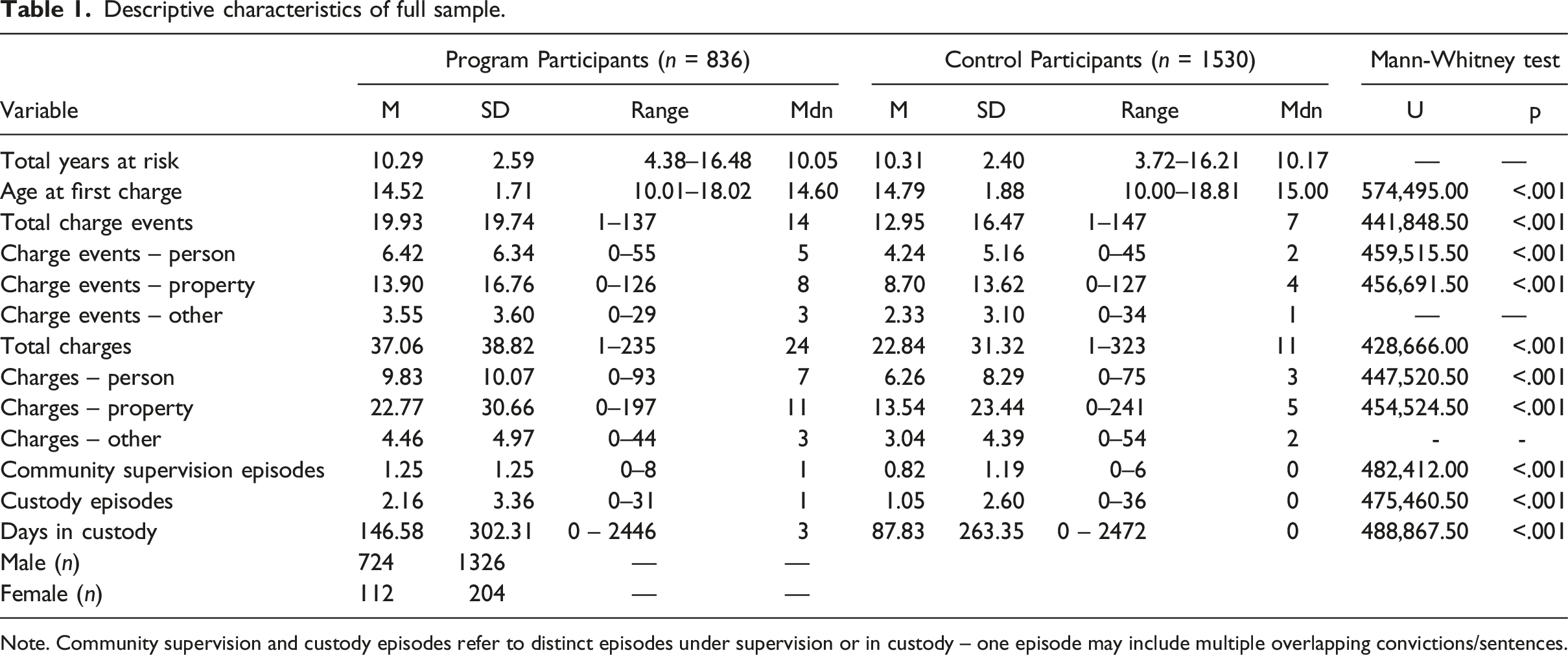
Note. Community supervision and custody episodes refer to distinct episodes under supervision or in custody – one episode may include multiple overlapping convictions/sentences.
Descriptive characteristics (frequencies) of participants observed for 2 years following conference completion.
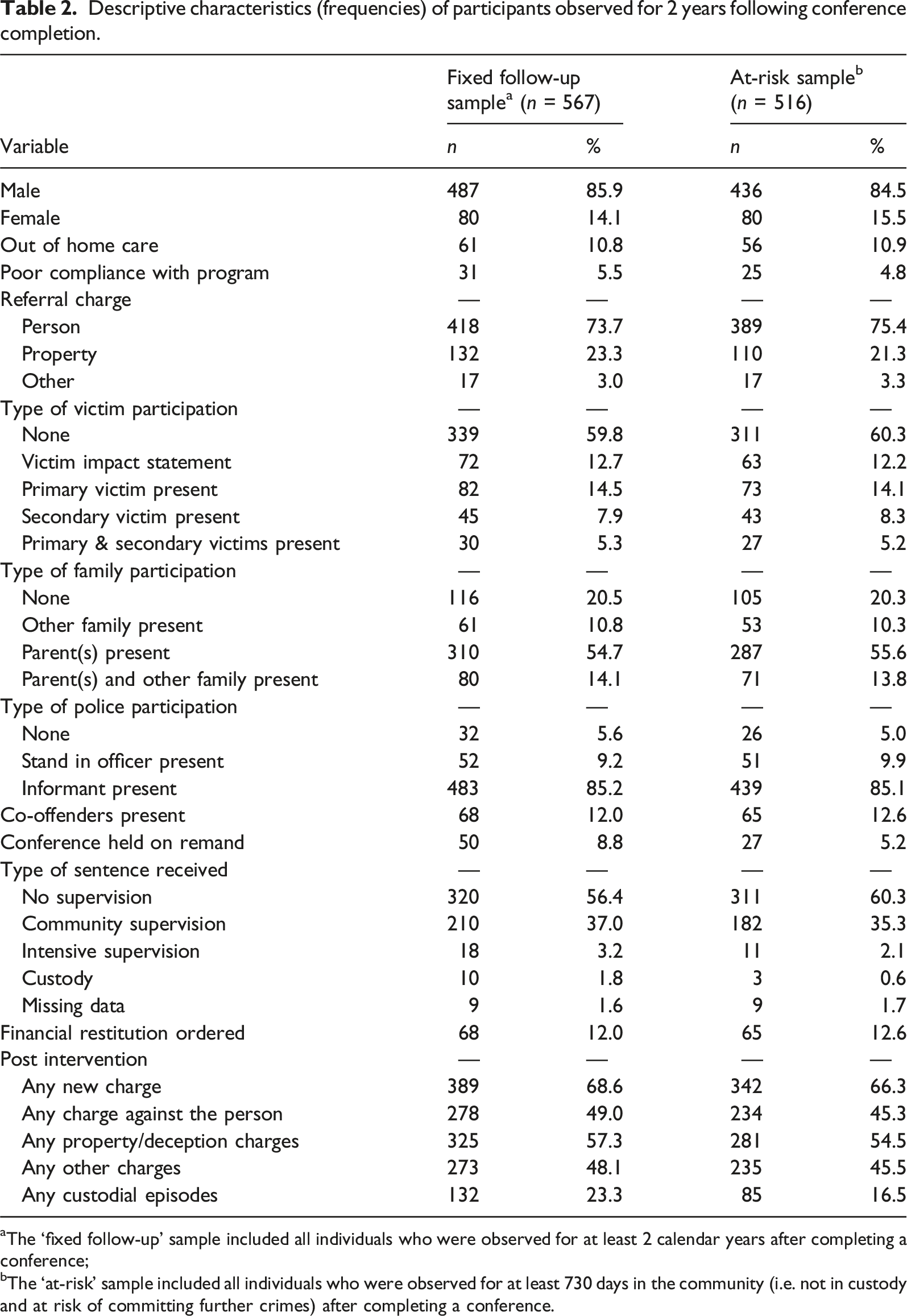
aThe ‘fixed follow-up’ sample included all individuals who were observed for at least 2 calendar years after completing a conference;
bThe ‘at-risk’ sample included all individuals who were observed for at least 730 days in the community (i.e. not in custody and at risk of committing further crimes) after completing a conference.
Procedure and Measures
We obtained data from four sources: (1) the conferencing program provider’s case files, (2) conference court reports, (3) the state police database of arrests and charges, and (4) the CSA’s linked justice systems database. The first author accessed the case files and court reports on site at the conferencing program provider’s offices. We coded variables relevant to hypothesized mechanisms for conference efficacy (e.g., victim participation, participation of other stakeholders) and potential confounds (e.g. out of home care placement, court outcomes). Deidentified police data were released by the state police’s research unit. CSA data were deidentified prior to data linkage.
Recidivism
State police provided criminal histories for all 2366 individuals that included all lifetime charges through June 30, 2019. We used charges as our outcome to increase sensitivity, because there is substantial lag between crime commission and court outcome, such that conviction data would contain incomplete records of recent outcomes (Ringland, 2013).
We conceptualized the charge event as the day on which any crime or set of crimes occurred. When multiple charges occurred on the same day, we recorded number and type of charges. We aggregated charge types into three categories: crimes against the person (e.g., acts intended to cause injury, dangerous acts endangering persons, including violations of restraining orders), property and deception crimes (e.g., burglary, theft), and other crimes (e.g., drug and public order offences). Higher-risk youth are likely charged more readily than young people without prior justice contact. To limit the impact of this, we removed from analysis all traffic and vehicle regulatory crimes, miscellaneous crimes, and crimes against justice procedures. We focused on crimes in the community, removing from analysis charges that occurred in custody.
The CSA justice database provided the total number of community supervision and custodial periods served with youth justice and adult corrections. Time at risk was calculated by subtracting time spent in custody (on remand or sentence) from total time.
Demographics and Individual Characteristics
We obtained demographic and individual characteristic information (i.e., age, gender, out of home care status, and criminal history) from the conferencing program provider’s case files, conference court reports, and the CSA justice database. Unfortunately, race and ethnicity data were not uniformly recorded in program files and, therefore, were not considered further in our analyses. We coded but discarded other covariates due to insufficient numbers (e.g., developmental or intellectual disability status, whether the victim was the youth’s parent, and whether an interpreter was required).
Conference Variables
We coded conference variables from participant program files and court reports.
Referral crime type
Categorized as (1) Crimes against the person, (2) Property and deception crimes, or (3) Other. We coded the most severe charge when participants were referred to the program with multiple charges. Notably, there was no clear distinction that would allow us to create subsamples defined as young people with charges for crimes against the person or young people with charges for property and deception crimes. Youth referred for crimes against the person tended to have prior and subsequent charges for property and deception crimes, and vice versa.
Victim participation
There were five mutually exclusive categories of victim attendance: (1) Primary victim attendance only (i.e., a person directly harmed by the crime), (2) secondary victim attendance only (i.e., individuals indirectly harmed by the crime, including parents or support people of primary victims; or, in the case of some property crimes, representatives of companies or organizations), (3) attendance by both primary and secondary victims, (4) victim impact statement(s), where a victim did not attend but prepared a statement read at the conference, and (5) No victim participation.
Family participation
Coded as present or absent and defined broadly to include anyone who represented the youth’s long-term socio-ecological system, including parents, siblings, grandparents, aunts/uncles, foster parents, godparents, or long-term family friends.
Police participation
There were three mutually exclusive categories: (1) Primary police members (i.e., arresting officer or another member of the investigative unit), (2) stand-in youth-resource officers or, in one case, an Aboriginal liaison officer, and (3) no police participation.
Co-offender participation
Coded as present when co-offenders participated in the same conference versus absent.
Poor compliance with the conference process
Coded as compliant versus poor compliance. In the absence of data assessing young peoples’ internal engagement, we used behavioral markers of poor engagement with the conference process when serious enough to be noted in the young person’s file. Examples included reports of multiple missed preparation meetings without notice, leaving preparation meetings early without notice or reason, absconding from the conference, or being argumentative within the conference. Files did not explicitly describe positive engagement; thus, compliance with the conference process does not necessarily imply meaningful or internally driven engagement with the conference. Unfortunately, court reports did not consistently document the number of preparation meetings.
Court Outcomes
Conference outcome plans were largely homogenous with too little variation for analysis (i.e., all typically included an apology letter and agreement to engage in a prosocial activity and disengage from antisocial peers), and no records were available to indicate whether the youth completed these plans. Instead, we coded court outcome variables from case files, including the sentence imposed and whether financial restitution was ordered. We further classified outcomes according to the level of supervision to include: (1) Non-supervisory court outcomes, such as dismissal, diversion, or good behavior bond; (2) Supervisory orders, including a period of mandatory meetings with a youth justice case manager; (3) Intensive supervisory orders, including a minimum amount of weekly contacts with a youth justice case manager and mandated activities such as school or work; and (4) Custodial sentences. Nine reports were missing sentencing data; we retained these cases as (5) Missing.
Analytic Strategy
This cohort is a higher risk group than most other conferencing studies, characterized by higher frequency and severity offenses. Thus, we expected recidivism frequency to be a more meaningful indicator of program efficacy than binary prevalence. As such, our analytic strategies focused on the relationship between conferencing and longitudinal changes in criminal records following the intervention.
Recidivism Likelihood Associated with Conference Referral and Completion
The Cox proportional hazards regression model (see Singer & Willet, 2003) allows unequal follow-up times and time-varying covariates measured at unequal intervals. We used an extension of this model (see Amorim & Cai, 2015) to examine recurrent charge events across program and control participants’ adolescent lifespans, including prior to and following conferencing intervention. We selected a random effects model (Klein, 1992). Because this model clusters recurring events within individuals, it controls for individual differences in propensity to experience recidivism, and, thus, coefficients indicate whether time-varying covariates are associated with higher or lower risk relative to each individual’s base level of risk. In other words, controlling for all other model variables, the coefficients representing the effects of conferencing can be interpreted as both between-person effects (e.g., among people with the same individualized risk for recidivism, what reduction in likelihood of recurrent recidivism is associated with completing the program?) and within-person effects (e.g., given a young person’s individualized risk of recidivism, what reduction in likelihood is associated with the shift from program non-completion to completion?).
Because age of criminal responsibility commenced at age 10 years in Victoria (the state jurisdiction), we began time at risk for each individual on their 10th birthday, with observation ending for the full sample on June 30, 2019. We entered gender, age at first charge, and criminal history as it accrued with each charge event as a time-varying covariate. We also entered time of conference referral and time of conference completion as time-varying covariates. This separates referral effects from completion effects and treats conference referral as a separate state, such that there were both post-referral periods and later post-completion periods. Some participants had multiple referrals after they did not complete the program at their first referral. We considered them as having been referred until they completed the program after a later referral, or, if never completed, until the end of the study period. Several participants completed multiple conferences. We considered them to have completed the program after the first conference and removed the subsequent referrals. We conducted analyses in R version 3.6.3 (R Core Team, 2020) using the ‘coxme’ package (Therneau, 2020).
Recidivism Likelihood Associated with Conference Features
Among participants who completed a conference, we used binary logistic regression to examine whether conferencing variables (e.g., victim participation) were associated with likelihood of any new criminal charge during the 2-year follow-up. We used negative binomial regression to determine associations with rates of charges across 2 years (730 days) in the community (i.e., non-incarcerated). We separately analyzed all charges, charges for crimes against the person, and property/deception charges.
We included demographic and individual-level characteristics: gender, age at first charge, age at intervention, compliance with conference process, out of home care status, and number of prior criminal charges. We also included variations in conference elements: type of victim participation, family participation, type of police participation, co-offender attendance, and whether the conference was conducted when the young person was incarcerated on remand. Finally, we included two court related outcomes: the type of sentence imposed and whether the court ordered financial restitution. We conducted these analyses in SPSS version 25 using the Generalized Linear Models function (IBM, 2017), using default settings for the binary logistic models and log link and estimated parameters for the negative binomial models. We checked model assumptions prior to analysis.
Results
Descriptive Statistics
Between Group Samples Characteristics
As displayed in Table 1, it is notable the program group was a higher risk cohort than the control group. Program participants were initially charged at a younger age, accumulated more charge events and charges of all types, experienced more community supervision and custody episodes, and spent more days in custody. Restricting the control group to individuals who ever experienced custody or supervision orders reduced these cross-group differences, but conclusions drawn from model results did not substantively differ when conducting analyses on this reduced sample, so we report analyses using the full control group.
Program Group Sample Characteristics
Within the program group (n = 836), 752 individuals (90%) completed the program successfully; 84 individuals (10%) were referred but did not complete. Most referrals contained a crime against the person as the most serious charge (n = 644; 77.0%) followed by property and deception charges (n = 172; 20.6%) and few referrals for other charges (n = 20; 2.4%). The mean time between referral to sentencing was 87 days (SD = 38.93).
Descriptive characteristics (averages) of participants observed for 2 years following conference completion
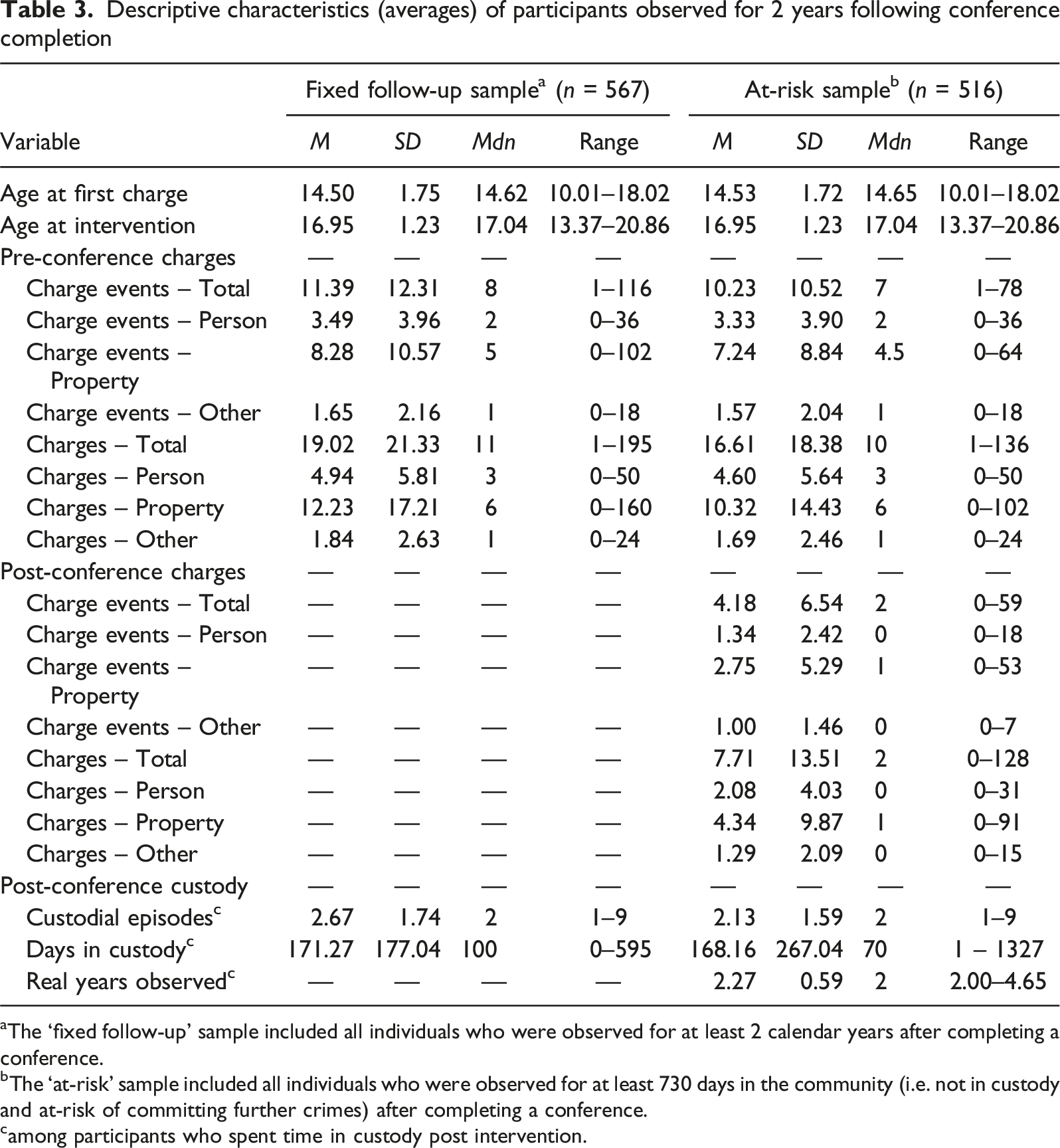
aThe ‘fixed follow-up’ sample included all individuals who were observed for at least 2 calendar years after completing a conference.
bThe ‘at-risk’ sample included all individuals who were observed for at least 730 days in the community (i.e. not in custody and at-risk of committing further crimes) after completing a conference.
camong participants who spent time in custody post intervention.
Between Group Analyses
Random-effects survival analysis models with robust standard errors using key risk factors, conference referral and conference completion to predict recurrent charge events among youth.
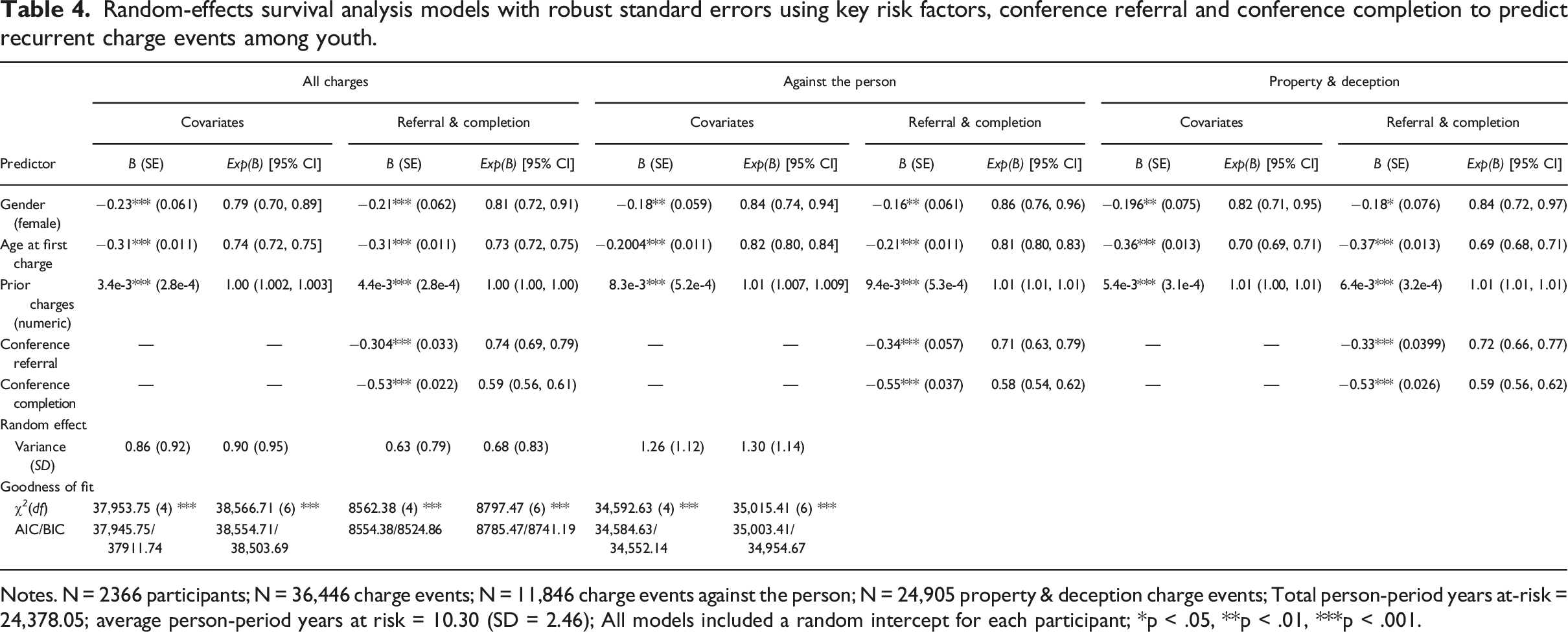
Notes. N = 2366 participants; N = 36,446 charge events; N = 11,846 charge events against the person; N = 24,905 property & deception charge events; Total person-period years at-risk = 24,378.05; average person-period years at risk = 10.30 (SD = 2.46); All models included a random intercept for each participant; *p < .05, **p < .01, ***p < .001.
Within Group Analyses
Binary logistic regression models to predict the likelihood of new charge by charge outcome type during a 2-year fixed-follow period after conference participation.
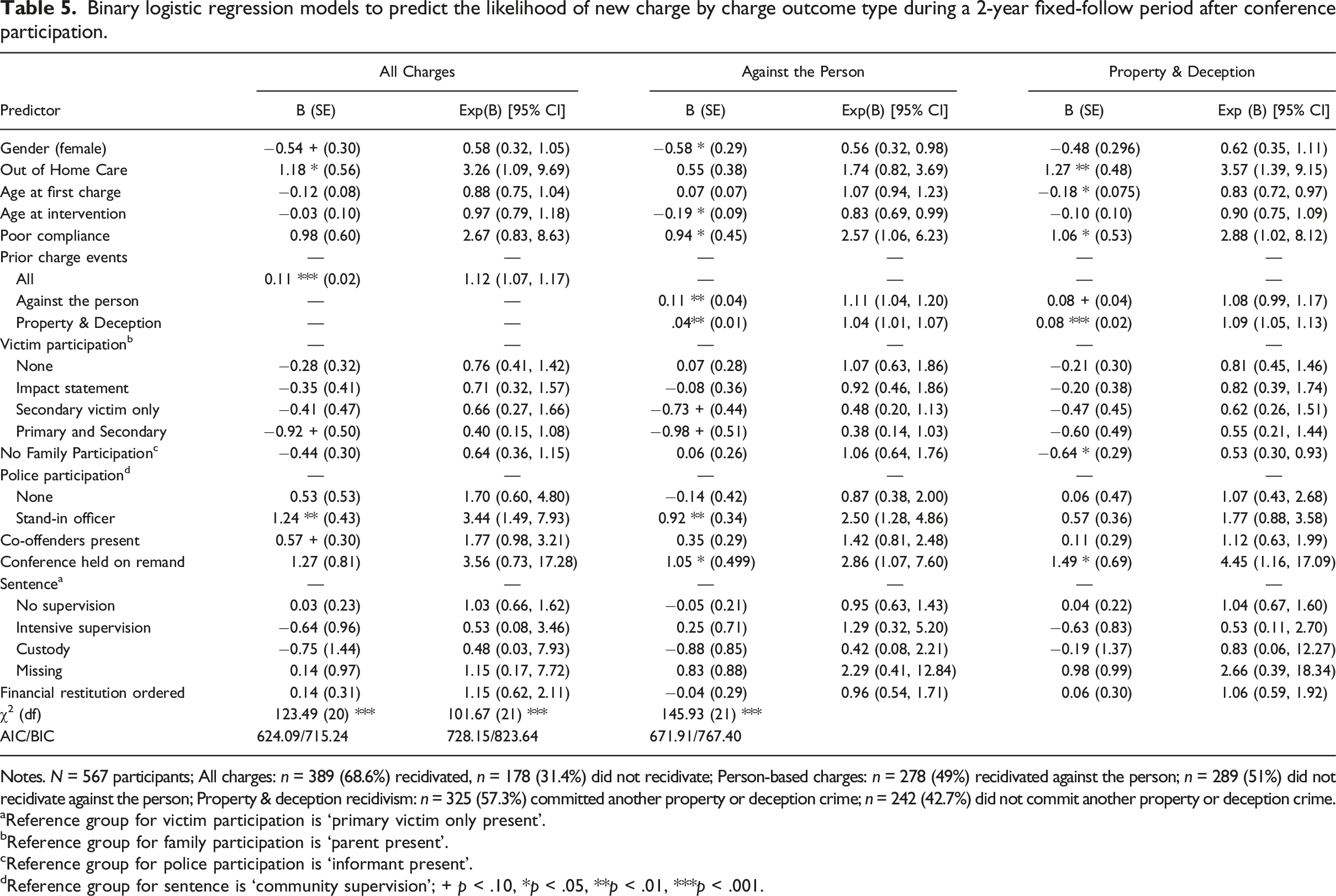
Notes. N = 567 participants; All charges: n = 389 (68.6%) recidivated, n = 178 (31.4%) did not recidivate; Person-based charges: n = 278 (49%) recidivated against the person; n = 289 (51%) did not recidivate against the person; Property & deception recidivism: n = 325 (57.3%) committed another property or deception crime; n = 242 (42.7%) did not commit another property or deception crime.
aReference group for victim participation is ‘primary victim only present’.
bReference group for family participation is ‘parent present’.
cReference group for police participation is ‘informant present’.
dReference group for sentence is ‘community supervision’; + p < .10, *p < .05, **p < .01, ***p < .001.
Negative binomial regression models to predict the rate of charges accrued in 2 years ‘at-risk’ in the community post-conference.
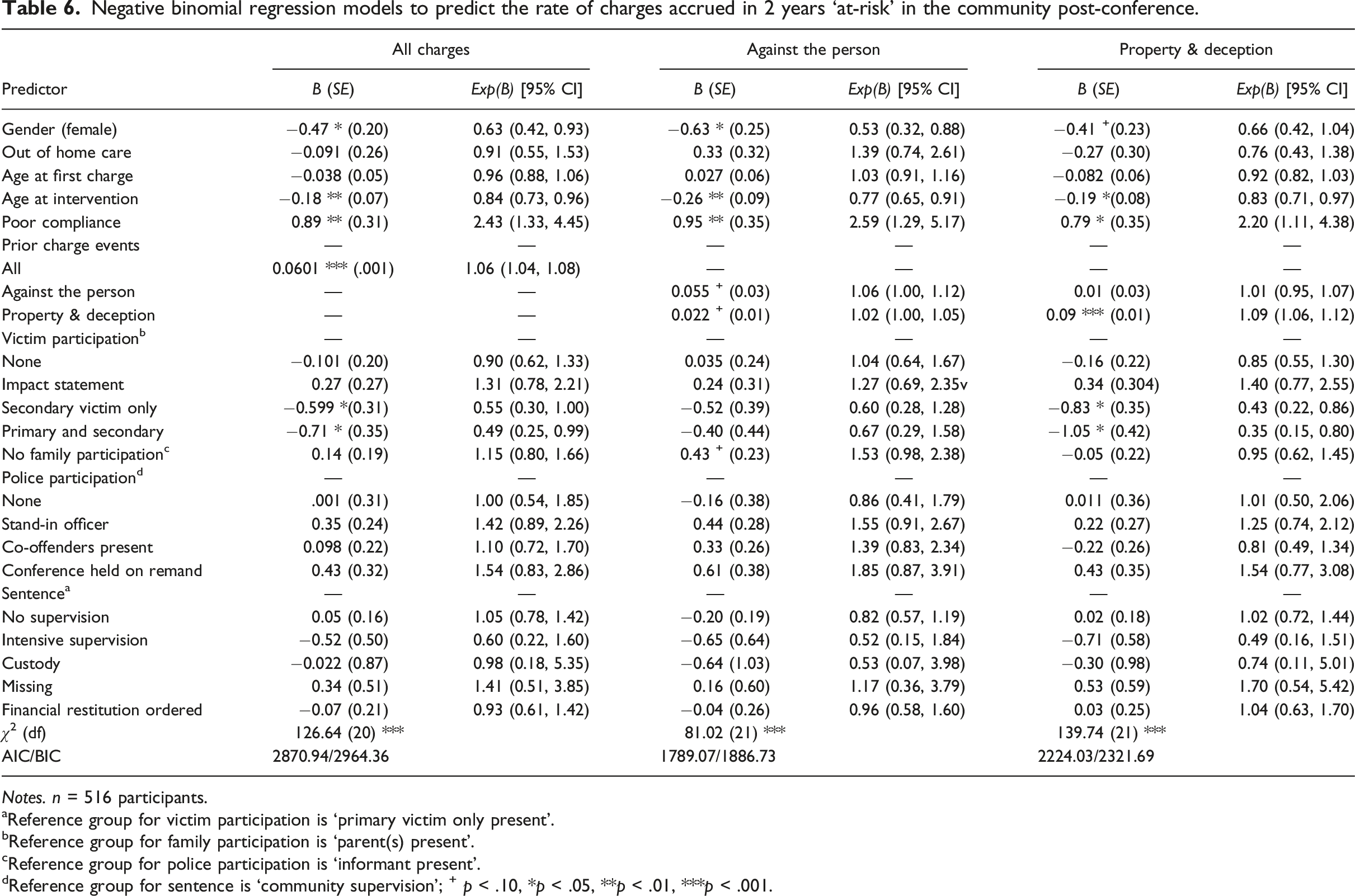
Notes. n = 516 participants.
aReference group for victim participation is ‘primary victim only present’.
bReference group for family participation is ‘parent(s) present’.
cReference group for police participation is ‘informant present’.
dReference group for sentence is ‘community supervision’; + p < .10, *p < .05, **p < .01, ***p < .001.
Individual Characteristics
Individual characteristics, especially number of prior charge events, were strong predictors of a new charge and rates of charges. Compared to males, females had approximately 40% lower likelihood of new charges and a 40% lower rate of charges across 2 years; however, this effect was not consistently statistically significant after controlling for all other variables in the model. Similarly, out of home care status and age at first charge were inconsistently or only marginally associated with likelihood of a new charge or rate of charges in the complete models. By contrast, age at intervention was a statistically significant predictor across charge outcomes. Participants who were older at the time of conference completion had a lower rate of charges, even though participants of all ages were about equally likely to have at least one charge, net of all control variables.
Criminal history was a strong and consistent predictor. Both subtypes of prior charge events (person and property) predicted likelihood of future crimes against the person (with marginal statistical significance for rate of person-based charges). Past property charges marginally predicted likelihood of crimes against the person and significantly predicted likelihood and frequency of future property charges.
Importantly, evidence of poor-compliance with the conference process was associated with higher rate of charges throughout the 2 post-conference years, such that partial or non-compliance was associated with an overall 2.6 times higher rate of person-based charges and 2.2 times high rate of property or deception charges, compared to full engagement or compliance. Evidence of partial compliance was unrelated to the overall likelihood of a new charge or property charge; however, individuals who were non-compliant were around 2.6 times more likely to accrue a further person-based charge.
Variations in Stakeholder Participation
Victim Participation
With primary victim attendance as the reference group, it is first notable that likelihood and rate of charges across all outcome categories did not differ when victims were not present or when only an impact statement was read. However, conferences in which primary and secondary victims attended together were associated with a 60% lower likelihood of recidivism, and a 51% lower rate of charges, compared to primary victim participation alone. Reduced likelihood was particularly strong when examining prevalence of person crimes (although only approaching statistical significance) and a lower rate of property charges, both lower by over 60%. Further, compared to conferences attended by primary victims only, conferences where secondary victims attended without a primary victim were associated with a 45% lower rate of overall charges, a 57% lower rate of property-based charges, and marginally associated with a 48% lower likelihood of accruing a further person-based charge.
Other Participants
Lack of family participation inconsistently predicted outcomes across charge types, associated with a marginally significant 53% higher rate of person-based charges, but a 47% lower likelihood of property recidivism. Conferences with co-offenders were marginally associated with a higher likelihood of a further charge. Compared to police informant participation, conferences attended by a stand-in officer were associated with 3.44 times greater likelihood of overall post-conference recidivism, and a 2.5 times higher likelihood of person-based recidivism. Conferences held while the young person was remanded were associated with higher likelihood of person and property recidivism, but not charge rates; however, this is likely a marker of greater pre-existing risk, rather than an effect associated with the custodial setting of the conference.
Sentencing Outcomes
After controlling for individual characteristics and conference structure, neither court-imposed sentence nor financial restitution were significantly associated with outcomes.
Discussion
In this study, group conferencing was associated with meaningful reductions in youth recidivism after accounting for important control variables, the timing of conference completion within adolescence, and individual differences in recurring risk during late adolescence. Importantly, we observed these effects in a cohort of youth who were higher risk relative to controls who were not referred to conferencing. Consistent with our first hypothesis, conferencing referral alone (including meetings to prepare for the conference) was related to a 26% reduced likelihood of repeated recidivism then increased to a 40% reduced likelihood upon completion, controlling for individualized propensity to accrue recidivism events across adolescence.
The most complex and unexpected finding related to our second hypothesis. Rather than concluding that recidivism reductions are clearly and specifically related to primary victim attendance, the strongest effect of reduced recidivism occurred when a secondary, indirectly impacted victim attended the conference in addition to or without the primary victim. Notably, our first set of analyses showed conferencing was associated with reduced recidivism, despite most conferences in this sample omitting victim participation. Thus, the commonly proposed hypothesis that primary victims are the most critical ingredient of an effective conference was not well supported.
We found some, but inconsistent, support for our third hypothesis; the presence of familial social support (defined broadly) at the conference was associated with lower future rates of crimes against the person. However, having family present was associated with a higher likelihood of property recidivism. This finding highlights the complex nature of family systems among higher-risk youth. Developmental and life-course theories of offending acknowledge that although families, and parents in particular, can contribute to prosocial development and desistance, they may also contribute to a young person’s propensity for crime as well as to their ongoing criminal involvement (Farrington et al., 2012). Group conference organizers should assess this on a case-by-case basis, rather than assuming that family involvement will certainly be an advantage.
Finally, model results supported our fourth hypothesis and the conclusion that conferencing theorists must attend to features of individual youth within conferences. In particular, both participant non-compliance and degree of prior involvement in crime were related to recidivism after accounting for variation in conference structure. Female and older participants demonstrated lower post-conference recidivism rates. It is particularly useful for group conference facilitators to consider pre-existing vulnerabilities and current pathways because desistance theories highlight that adopting a prosocial identity is a process rather than a single event (Shapland et al., 2008). For young people who are deeply entrenched in substantial prior criminal involvement, stakeholders should not expect a group conference to be a silver bullet solution. Rather than being inherently sufficient to cease criminal behavior, group conferencing is more likely a steppingstone event that helps spark, continue, or complete a change process, by allowing a young person with high criminal involvement to hear alternative perspectives about themselves, understand how their behavior affects others, imagine how a desisted life could be different from their present experiences, develop agency toward desistance, and build social capital for the change process (Shapland et al., 2008).
Contribution to Evidence Base and Practical Implications
Our findings expand the body of evidence that suggests conferencing can reduce recidivism, including among higher-risk youth participants characterized by serious crimes. Most prior research has concerned diversion options for low-risk young people and minor crimes (Sherman et al., 2015). Prior research on pre-sentence programs is limited to two between-group studies with contradictory findings (Broadhurst et al., 2018; Smith & Weatherburn, 2012) and two within-group studies (Hayes & Daly, 2003; Maxwell et al., 2004). Our findings were similar to Broadhurst et al. (2018), which is encouraging, though further replication is needed. Importantly, our findings suggest that conferencing is effective for higher-risk youth and should not be relegated to the “shallow end” of criminal justice as a diversionary mechanism for low severity cohorts.
Our findings also support the small number of studies that question the assertion that the victim meeting is the conferencing mechanism that reduces recidivism (Bennett et al., 2018; Bouffard et al., 2017; Hayes & Daly, 2003; Wilson et al., 2017). Although some program models present victim-offender mediation as interchangeable with conferencing, our findings indicate that these are two separate models involving unique mechanisms of change. This is important for several reasons. When victims decline to participate, some programs in the USA and UK have offered alternative interventions (e.g., Bouffard et al., 2017) or referred young people back to court (McCold, 2003). Our findings suggest that conferencing is an appropriate model that can accommodate various modes of victim participation while also meeting the aim of reducing recidivism. Denying a willing young person the opportunity to attend a conference or delivering another program type (e.g., victim impact training) on the basis of victim preference may be a lost opportunity for rehabilitation.
Further, outcomes varied based on who attended the conference such that the presence of secondary victims, primary police members, and the youth’s family were all associated with variability in recidivism outcomes. This suggests fundamental interpersonal elements occur within conferencing that may contribute to recidivism reductions beyond basic elements of the conferencing format. Notably, secondary victims, primary police members, and the participant’s family are all able to speak about the indirect effects of the youth’s behavior. From the perspective of theories of procriminal cognition (Helmond et al., 2015), high-risk young people attend a conference with well-rehearsed cognitions that justify their actions towards their direct victim. They may have long-held beliefs about why their direct victim deserved victimization or were not truly harmed by the crime (i.e., techniques of neutralization and mechanisms of moral disengagement). However, it is plausible that young people may attend conferences unprepared for the contributions of secondary victims and the police informant. Hearing about indirect harms from these attendees may make it more difficult for youth to deny the broader harms arising from their behavior, creating dissonance that requires alterations in attitudes and long-standing behavior patterns.
Alternately, from the perspective of desistance theory (Maruna et al., 2004), it may be that a fuller gathering of multiple community representatives who are invested in the young person (beyond only the primary victim) enhances the young person’s imagined self as a desisted person. Hearing that multiple community members, including secondary victims and police informants, are invested in their success and articulate a goal for the young person to become a fully accepted and valuable community member may strengthen the young person’s internal sense of agency toward desistance. Broadly, this research suggests that the link between the conference experience and subsequent behavior may be mediated by some psychological changes (i.e., learning) that may have subsequent behavioral effects (e.g., changes to the young person’s social milieu or efforts toward desistance). We did not measure individual beliefs and further research on the psychosocial mechanisms associated with changes in post-conference behavior is needed.
Another contribution was our use of recurrent event survival analyses to examine program efficacy while modeling longitudinal charge data throughout adolescence. Most between-group studies have life-course data spanning 10 or more years (Hipple et al., 2015; Woods, 2009), but have either not published longitudinal findings (Strang et al., 2015), or have used binary, recidivism rate, or time-to-recidivism outcomes, i.e., analytic strategies that omit much detail (Broadhurst et al., 2018; Hipple et al., 2015; Smith & Weatherburn, 2012). Using recurrent event survival analyses with time-varying predictors has distinct benefits over these other methods for understanding the association between conferencing and crime trajectories. In particular, researchers examining conferencing through the theoretical lens of crime desistance arguably benefit from using more life-course-relevant methodologies.
Limitations and Directions for Future Research
There are important limitations within retrospective observational designs, including the potential for selection bias and lack of systematically recorded data for research purposes. Even after controlling for key risk factors related to outcomes, our study design still does not allow us to assert that conferencing caused the reduced likelihood of recidivism among conference completers. Further, we did not randomly assign the presence or absence of conference attendees, so our analyses of conference structures are similarly observational, not experimental. However, the difficulties undertaking randomized experiments of justice processing are well documented, especially to recruit enough participants to achieve high levels of statistical power (Shapland et al., 2008; Strang & Sherman, 2015). Further, randomized experiments of conferencing have been correctly criticized for prioritizing research design over generalizability (Hayes & Daly, 2003; Piggott & Wood, 2019). Observational studies can fill an important gap in the literature regarding variations in conferencing practices with understudied populations.
In our within-conference variation analyses, we chose to interpret marginally statistically significant effects despite a relatively high number of analyses performed. Because we first conducted a single omnibus between-group analysis that showed that group conferencing was associated with reduced recidivism, we suggest it is reasonable to interrogate variables that might help explain this overall finding. Further, our goal for using many similar models was to ensure findings and effect sizes remained consistent when controlling for many possible confounding variables and specifying several definitions of recidivism. However, effects should be interpreted with caution pending replication.
Due to limitations in our data, we were unable to assess differences in outcomes associated with participants’ race or ethnicities. Melbourne is an ethnically diverse city, with approximately half of all people having parents who were born overseas and who speak a language other than English at home. As such, we know the conferencing group is very multicultural overall, we just do not have the data available to provide a breakdown. Although the conferencing intervention was designed to be culturally responsive, additional research is needed to validate results across demographic groups. We are aware of only one study that specifically compared outcomes across First Nations and non-Indigenous youth. Although results suggested that conferencing may be less effective for First Nations young people, findings were significantly skewed by a small number of young people who offended at a high rate (Rossner, 2014).
We make several suggestions about future research directions. First, we encourage more research on various contexts in which conferencing practices occur, including programs that vary by (a) stage of justice processing, (b) participant risk, and (c) the attendance and role of victims, police, and family. Second, the psychosocial mechanisms that mediate the relationship between conferencing and recidivism remain unclear; we encourage more systematic assessment of young people’s characteristics, both those pre-existing prior to the conference and those that may change in the aftermath of the conference. Last, the research methods used in many prior conferencing studies have been unsuited for developing a nuanced understanding of how conferencing may impact a criminal career. Researchers stand to benefit from greater uptake of life-course methodologies in conferencing research.
Footnotes
Declaration of conflicting interests
The author(s) declared the following potential conflicts of interest with respect to the research, authorship, and/or publication of this article: This project was reviewed and approved by all participating agencies and approved by the Department of Justice Human Research Ethics Committee and Swinburne University of Technology Human Research Ethics Committee. The authors declare that this research was conducted in accordance with the ethical standards as laid down in the 1964 Declaration of Helsinki and its later amendments or comparable ethical standards. Due to the retrospective nature of this study, this project was granted a waiver of consent. This article was prepared in accordance with the American Psychological Association’s Quantitative Journal Article Reporting Standards (JARS).
Funding
The author(s) received no financial support for the research, authorship, and/or publication of this article.
Data Transparency Statement
Most data described in this article is owned by Court Services Victoria and we accessed it with CSV permission via Jesuit Social Services and the Crime Statistics Agency. Victoria Police own the criminal history data, which we accessed with permission from the Vic Pol RCC and JHREC. We can share the data only with written permission from the participating agencies and the President of the Children’s Court of Victoria. Analysis code is available by emailing the corresponding author. Data were collected and analyzed as part of Robert Bonett’s Doctoral Thesis. The full thesis is available at  . These data have not been published elsewhere. The study was not preregistered and results require replication.