




Abstract
This study examined youth probationers’ risk profiles at the start and the end of probation and the types of transition in risk profiles over time. It further identified the association between the transition types, their adverse family background as well as their probation completion status. Using a sample of 935 youth probationers in Singapore, a latent transition analysis was conducted based on seven dynamic domains captured in the Youth Level of Service/Case Management Inventory 2.0. Based on the risk profiles, three subgroups of youths were identified: (1) the “De-escalators” had reduced risk in one or multiple domains; (2) the “Persistors” continued to have moderate risk in most domains; and (3) the “Escalators” showed an increase in risk levels in one or multiple domains. Compared to the De-escalators, the Persistors and Escalators were less likely to complete their probation orders. Further analysis revealed that youths from nonintact families or families with conviction history showed higher relative risk in being Persistors. These findings contribute to our understanding on the changes in probationers’ risk profiles over time and provide information for early and more targeted intervention efforts.
Youth crime is a costly social issue, which receives great attention from scholars and policy makers. The Risk–Needs–Responsivity (RNR) framework has been developed for risk assessment and treatment of offenders and is widely adopted by youth rehabilitation services around the globe (Bonta & Andrews, 2016). Following this framework, risk assessment tools (such as the Youth Level of Service/Case Management Inventory [YLS/CMI]) have been developed to identify the risk and needs of youth offenders (Hoge & Andrews, 2002, 2011). A significant body of research has provided empirical evidence on the validity of these tools by examining the relationship between risk scores and youth recidivism (Chu & Zeng, 2017). Majority of these studies assessed risk levels at a single time point, and empirical research on changes in dynamic risk factors remains to be sparse (Mulvey et al., 2016).
In addition to the literature on test validity using traditional linear methods, recent research has started to use a person-centered approach to examine the profiles of youth offenders (Campbell et al., 2018). Such approach has been used to classify youth offenders into latent subgroups based on their characteristics of risk and needs in multiple domains and therefore improve the planning of interventions and the accuracy of risk assessments (Chng, Chu, Zeng, Li, & Ting, 2016). However, little research has adopted the person-centered approach to examine the types of transition in risk profiles over time.
To fill this research gap, this study aimed to identify subgroups of youth probationers based on their dynamic risk factors at the start and end of probation orders and the patterns of transition over time. The relationships between the types of transition, the youth offenders’ adverse family background, and their probation completion outcome were also examined to provide further insights on the potential utility of such classifications.
Youth Offenders’ Risk Profiles
Offender risk assessment has a long history of classifying cases into different subgroups in order to match interventions to the individual risk and need levels. Two different approaches have been used to create risk profiles: (a) a variable-centered perspective that ranks the importance of various risk factors in predicting recidivism and (b) a person-centered approach to classify youth offenders into subgroups with homogeneous needs.
The variable-centered approach
As indicated by its name, the traditional variable-centered approach aims to explain relationships between variables of interests (e.g., different risk domains). Numerous studies have documented the risk and needs of youth offenders and examined the effects of certain risk factors on recidivism, which is commonly used as a measure for the outcome of youth rehabilitation and reintegration services. A meta-analysis of 23 published studies with 15,265 juveniles was conducted to identify risk factors predicting juvenile recidivism (Cottle, Lee, & Heilbrun, 2001). It suggested that offense history, nonsevere pathology, family problems, conduct problems, use of leisure time, and delinquent peers were strong predictors of youth reoffending.
The YLS/CMI, and subsequently the YLS/CMI 2.0, has been used across the globe to evaluate the risk and needs of youth offenders and to predict their reoffending behavior (Hoge & Andrews, 2002, 2011). The association between YLS/CMI scores (total or domain) and the recidivism of youth offenders has been well-established in both the Western (McGrath & Thompson, 2012; Onifade et al., 2008; Rennie & Dolan, 2010; Schmidt, Campbell, & Houlding, 2011) and the Asian contexts (Chu et al., 2015; Chu, Yu, Lee, & Zeng, 2014; Li, Chu, Goh, Ng, & Zeng, 2015). For example, Rennie and Dolan (2010) examined a custody sample of 135 youths in England and found prior and current offenses, education/employment, family circumstances/parenting, peer relations, substance abuse, and attitudes/orientation to be significantly associated with higher rates of recidivism. Similarly, McGrath and Thompson (2012) found that in the Australian Adaptation of the YLS/CMI, prior and current offenses, education/employment, peer relations, substance abuse, and attitudes/Beliefs were significant predictors of recidivism. Using a sample of 3,264 youth offenders in Singapore, Chu et al. (2015) also demonstrated that YLS/CMI total and domain scores were significant predictors for general recidivism and that the family circumstances/parenting domain was one of the strongest predictors. The results were replicated in another study with 701 youth probationers in Singapore (Li, Chu, Xu, Zeng, & Ruby, 2018). These findings supported the utility of the variable-centered approach in youth offending research.
The person-centered approach
In addition to the abovementioned research from the variable-centered perspective, a handful of studies have adopted a person-centered approach to identify underlying groups of youth offenders based on their distinct patterns of risk and needs. These studies include latent class or profile analysis on youth offenders’ violent, antisocial or delinquent behavior (Odgers et al., 2007; Vaughn et al., 2011), psychiatric symptoms and substance use (Vaughn, Freedenthal, Jenson, & Howard, 2007), and adverse family background (Chng et al., 2016).
For example, Schwalbe, Macy, Day, and Fraser (2008) conducted a latent class analysis (LCA) to identify youth offenders’ need profiles based on three static risk factors and 11 dynamic risk factors from the Joint Risk Matrix assessment instrument. Based on a sample of 542 youth offenders in the United States, five classes were identified: (1) a low-need group, (2) a serious school problem group, (3) a hostility-inattention group, (4) a high-risk and family-history group, and (5) a substance abuse and peer delinquency group. From these findings, the authors then recommended different intervention strategies for the subgroups. For example, the elevated school behavior problems for Class 2 youth suggested the addition of school-based interventions on truancy and behavioral management.
In another study with 1,362 youth probationers in the United States, Campbell and colleagues (2018) found three distinct profiles based on eight domains from the YLS/CMI: (1) Minimal Intervention Needs with low scores on all domains, (2) Social Behavior and Social Bonding Needs with high scores on the education/employment, family and parents, and personality and behavior domain, and (3) Maximum Intervention Needs with high total risk score. The results also showed that the Maximum Intervention Needs group had a much higher recidivism rate and thus required more comprehensive interventions to simultaneously address multiple risk factors.
In summary, the variable-centered approach focuses on examining the relative importance of various risk factors or domains in explaining the variance in an outcome variable, while the person-centered approach is well-suited to organize multiple risk dimensions. The person-centered approach assigns individuals to latent subgroups based on shared risk profiles and addresses questions concerning group differences in the population of youth offenders. Nonetheless, to the best of our knowledge, no studies have examined youth offenders’ YLS/CMI ratings from the person-centered perspective using an Asian sample. As YLS/CMI provides a holistic and systematic risk assessment, such analysis could help to identify and describe qualitatively different risk profiles among youth offenders.
Types of Transition in Risk Profiles
Similar to the studies examining risk and needs at a single time point, researchers also used both variable-centered and person-centered approaches to study changes in risk levels. Most of these studies examined changes in risk scores in specific domains, while a few others examined the patterns of transition in latent profiles.
The variable-centered approach
There have been many studies examining the changes in risk levels using a variable-centered approach. Brown, Amand, and Zamble (2009) identified six risk factors (substance abuse, social support, employment, negative affect, perceived problem index, and expectation of positive outcomes of crime) that changed over time and contributed to explaining recidivism. In a study with 12,302 youth from residential placement, Baglivio and colleagues (2017)[Please clarify whether Baglivio and colleagues (2017) refers to Baglivio, M. T., Wolff, K. T., Jackowski, K., & Greenwald, M. A. (2017). A multilevel examination of risk/need change scores, community context, and successful reentry of committed juvenile offenders. Youth Violence and Juvenile Justice, 15, 38–61 or Baglivio, M. T., Wolff, K. T., Piquero, A. R., Howell, J. C., & Greenwald, M. A. (2017). Risk assessment trajectories of youth during juvenile justice residential placement: Examining risk, promotive, and “buffer” scores. Criminal justice and behavior, 44, 360–394.] found that six of the 17 change scores, specifically school status, use of time, relationships, drugs and alcohol, antisocial attitudes, and aggression, as measured by the Residential Positive Achievement Change Tool, significantly affected 1-year recidivism rates. Similarly, studies using YLS/CMI also found evidence for the utility of change scores. Using a sample of 200 Canadian youth offenders, Clarke, Peterson-Badali, and Skilling (2017) found that the inclusion of changes in dynamic risk scores improved predictive accuracy.
However, there have also been studies that did not find support for the use of change scores. In a study with 156 youth on probation, Viljoen and colleagues (2017) failed to find a relationship between the changes in youth’s risk total scores and changes in reoffending over a 2-year follow-up period using both the Structured Assessment of Violence Risk in Youth (SAVRY) and YLS/CMI. The findings suggested that a youth’s risk on average was more predictive of reoffending than changes in such risks. However, these results need to be interpreted with the considerations of a few factors: other variables included in the analysis, the time frame of reassessment, and the interventions received during the follow-up period. Mulvey and colleagues (2016) recommended routine risk/need assessments as they found that a youth’s risk/need did not change in a uniform sequence across domains and time.
The person-centered approach
Recently, latent growth modeling approaches from a person-centered perspective, such as latent transition analysis (LTA) and growth mixture modeling, have been increasingly used in youth offender studies to identify latent subgroups of individuals that share common characteristics or behaviors at different time points and to reveal the changes in subgroup membership over time. For example, LTA has been used to understand psychosocial functioning problems among youths over time (Dembo, Wareham, Poythress, Meyers, & Schmeidler, 2008) as well as to understand changes in substance use behavior (Lanza & Bray, 2010; Lanza, Patrick, & Maggs, 2010; Maldonado-Molina & Lanza, 2010). Using two longitudinal datasets consisting of 582 parolees, Hochstetler, Peters, and DeLisi (2016) found three trajectories of risk assessment scores based on the Level of Service Inventory–Revised. The three trajectories included a stable and high trajectory group, a group with a high but declining risk trajectory, and a small, low-risk group with little change. Such classifications were found to be better predictors of recidivism as compared to the youth’s last risk scores or simple change scores. However, the sample of the study consisted mainly of adult prisoners.
Other studies combined the two approaches to identify subgroups of trajectories in different risk areas. In a longitudinal study with 5,205 male youth offenders, Hilterman, Bongers, Nicholls, and Nieuwenhuizen (2018) identified three to four transition trajectories for each of the following five areas: antisocial behavior, family functioning, personality, social support, and treatability. Taking antisocial behavior for example, majority of the sample (72.8%) were mild persistors with low levels of antisocial risk throughout the 18-month period. The second largest group was found to be the high persistors (23.2%), who had high risk at the start and showed limited decrease. A small group of the youth were rapid escalators (4.3%), who had a low initial status of antisocial behaviors but escalated rapidly to a high level. The study also examined factors associated with group membership. For example, being younger in age increased the odds of being in the rapid escalator trajectory.
In addition, group-based method was used to track changes at multiple time points and examine subgroups of trajectories. Based on multiple assessment in residential service, Baglivio and colleagues (2017)[Please clarify whether Baglivio and colleagues (2017) refers to Baglivio, M. T., Wolff, K. T., Jackowski, K., & Greenwald, M. A. (2017). A multilevel examination of risk/need change scores, community context, and successful reentry of committed juvenile offenders. Youth Violence and Juvenile Justice, 15, 38–61 or Baglivio, M. T., Wolff, K. T., Piquero, A. R., Howell, J. C., & Greenwald, M. A. (2017). Risk assessment trajectories of youth during juvenile justice residential placement: Examining risk, promotive, and “buffer” scores. Criminal justice and behavior, 44, 360–394.] identified distinct trajectories of risk and promotive factors of 6,442 youth offenders, which revealed the difference in the overall risk reduction progress among youth offenders throughout their residential placement. Their study focused on the trajectories of overall risk and promotive scores at multiple time points but did not reveal the changes in various risk domains.
The above findings indicated the importance of examining patterns of change over time, as well as the correlates and outcomes of change. However, to the best of our knowledge, no prior research has used YLS/CMI to systematically examine the transition patterns of youth offenders’ profiles over time and to understand their changes of risk and needs in multiple areas. Moreover, few studies have explored the possible reasons for being in certain transition patterns. Numerous studies highlighted the important influences of family factors (e.g., family criminality, parental substance use, and family disruption) on youth offending and reoffending (Chu et al., 2015; Farrington, 2010). Nonetheless, limited research has studied the influences of adverse family background on the changes in youth offenders’ risk profiles over time.
The Present Study
Despite the low crime rate in Singapore (Li et al., 2018), various regimes have been put in place to address the needs of youth offenders. Probation is one major community-based rehabilitation regime, which has adopted the RNR framework as a theoretical and empirical-based approach for offenders’ risk assessment and intervention. The YLS/CMI, and subsequently the YLS/CMI 2.0, was chosen as the primary risk assessment measure for local youth offenders (Chu et al., 2015).
This study identified underlying classes of youth probationers in Singapore based on seven dynamic risk domains as measured by the YLS/CMI 2.0 and examined the changes in class membership from the start to the end of their probation orders using LTA. The relationship between changes in class membership and probation completion was analyzed, to test the validity of the classification of the changes in youth offenders’ risk profiles. Furthermore, the association between the changes in class membership and adverse family background was also examined to understand factors influencing the dynamics of youth offenders’ risk profiles for early and more targeted intervention.
The following four research questions were examined in this study: What are the youth offenders’ risk profiles at two time points: the start and the end of probation? What are the types of transition in youth offenders’ risk profiles from the start to the end of probation? Are there any differences in the probation completion status across different types of transition? Is adverse family background associated with the types of transition?
Data and Method
Participants
This study included a sample of 935 youth probationers who were discharged between 2014 and 2015. They were aged between 11 and 19 years at the start of their probation orders (M = 16.06, SD = 1.46). Among them, the majority were males (n = 812, 86.8%). Approximately 64.8% (n = 603) of them committed nonviolent nonsexual offenses (e.g., theft, substance use, and mischief), followed by 28.5% (n = 265) who committed violent but nonsexual offenses (e.g., causing hurt, robbery, and rioting). A small group (n = 62, 6.7%) committed sexual offenses (e.g., molestation and having sex with a minor). 1 On average, the length of probation orders was about 19 months. In the sample, 731 youth probationers (78.2%) completed the orders, and 204 probationers (21.8%) had their orders revoked due to their poor response to supervision or reoffending. Among the noncompleted cases, 83 (40.7%) were due to reoffense during the probation order.
Variables
Risk factor
This study used the YLS/CMI 2.0 (Hoge & Andrews, 2011) to measure the risk and needs factors for youth offenders. It comprises of 42 items in eight domains, including one static domain (i.e., prior and current offenses/Dispositions) and seven dynamic domains (i.e., family circumstances/parenting, education/employment, peer relations, substance abuse, Leisure/Recreation, Personality/Behavior, and attitudes/orientation). The risk assessments were conducted at two time points (i.e., the start and end of probation orders) for all youth probationers. The item scores in each domain were aggregated to obtain a total domain score, which were then categorized into the low risk category and the moderate/high risk category for each domain. 2 The binary scores of the seven dynamic domains of YLS/CMI 2.0 at the start and the end of probation were used to examine the change of youth probationers’ risk profiles. The binary score of the static domain at the start of probation was used to measure the criminal history of youth probationers.
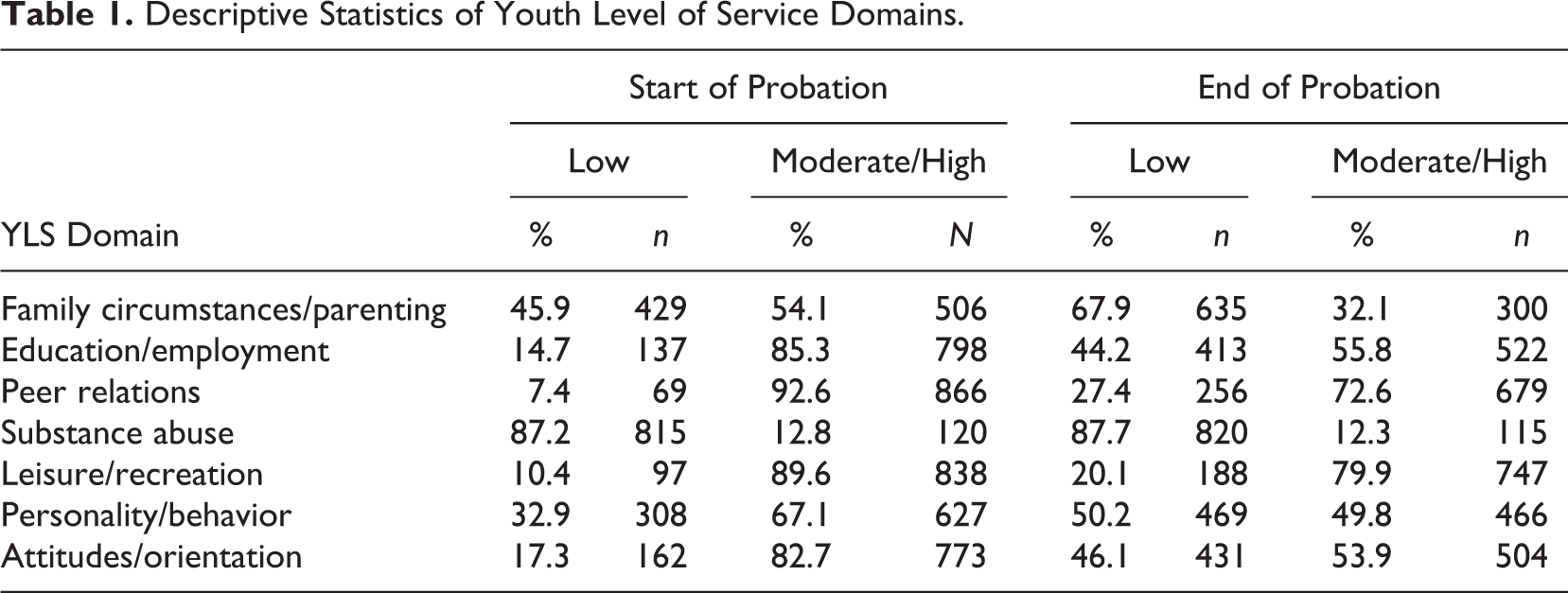
The frequency and percentages of youth probationers at low versus moderate/high levels of risk in the dynamic domains at the start and end of probation are reported in Table 1. Most of the youth probationers were assessed to be moderate/high risk in the domains of education/employment, peer relations, Leisure/Recreation, and attitudes/orientation at the start of probation. However, the proportion of probationers assessed to be at moderate or high risk for the dynamic domains declined at the end of probation.
Descriptive Statistics of Youth Level of Service Domains.
Adverse family background
Four variables were used to measure adverse family background of youth offenders before their admission to probation service. Nonintact family referred to the absence of a biological parent. Caregiver conviction measured whether the caregiver(s) of the youth was convicted of any offense. Caregiver drug use indicated whether the caregiver(s) currently or formerly abused drugs. Caregiver health captured whether the caregiver(s) has been diagnosed with any physical or mental health condition. The above factors were coded as binary variables, with 1 indicating the presence of the adverse family background factor and 0 otherwise.
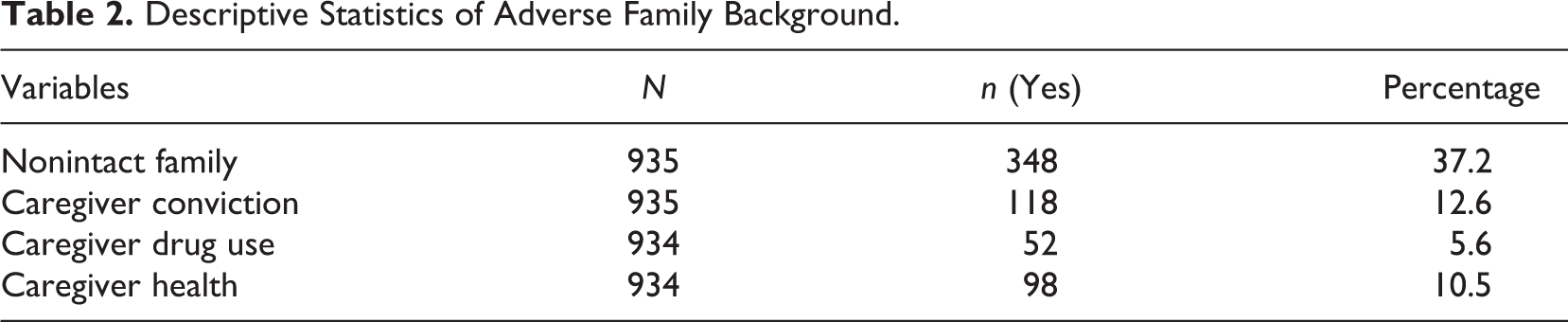
The frequency and percentages of adverse family background factors are reported in Table 2. Note that one case in the dataset had missing information on caregiver drug use and one case had missing information on caregiver health, which were not included in the analysis related to adverse family background.
Descriptive Statistics of Adverse Family Background.
Probation outcome
This study collected data on probation completion, which referred to whether a youth probationer completed the probation order based on official record. Probation noncompletion occurred when the probation order was revoked due to reoffending or repeated violations of the supervision rules during the probation period. Completion was coded as 0, whereas noncompletion was coded as 1.
Furthermore, information on whether the probation noncompletion was due to reoffense or technical violations was obtained. The variable was coded as 1 if the youth probationer reoffended during the probation order, and 0 otherwise.
Order Length
Information about the length of the probation order for each youth offenders was collected in this study, which was measured in months.
Demographics
This study collected demographic information on individuals’ gender and age at the start of order.
Procedure
The approval for the current research study was obtained from the Ministry of Social and Family Development. The ratings of YLS/CMI risk domains were assessed and recorded by probation officers. Three research assistants were trained and subsequently conducted the case file coding. Multiple sources of information at the start of probation orders were utilized to code for youth offenders’ adverse family background, including case reports prepared by the probation officers, psychological reports, charge sheets, statement of facts, previous assessment and treatment reports, and school reports. The coding for the probation completion status was based on the final summary at the end of probation orders.
Analytical Strategy
LTA was conducted on the seven dynamic risk domains of YLS/CMI 2.0 at the start and end of probation. LTA is a longitudinal extension of LCA, which is a person-centered research strategy that identifies underlying classes of individuals based on their distinct configurations of observed variables and assigns individuals to their most likely classes. LTA extends LCA by estimating the changes and transitions of class membership over time using longitudinal data.
The analyses were conducted in three steps. First, LCAs were conducted to identify latent classes based on the risk scores at the start and the end of probation, respectively. The number of classes at each time point was determined by assessing the model data fit using several criteria: The Akaike’s information criterion, the Bayesian information criterion (BIC), and the sample-adjusted BIC, and the Lo–Mendell–Rubin test. The best fitting model at each time point was selected based on the above model fit information, parsimony, conceptual meaningfulness, and class sizes of various class solutions.
Second, LTA was performed to examine the transitions in risk profiles from the start to the end of probation. This examined if the underlying structure of the identified classes remained the same or varied across time. This was tested by examining the fit indices of two competing models: (1) constraining the item-response probabilities to be equal at the start and end of probation and (2) allowing the item-response probabilities to be freely estimated without parameter restrictions at the two time points. If there is a significant difference between the two competing models, the one with the better model fit would be adopted (Lanza et al., 2010; Maldonado-Molina & Lanza, 2010). Types of transitions in risk profiles were identified based on the changes in latent class membership over time.
Subsequently, logistic regression analyses were conducted to examine whether the types of transition profiles were related to different probation completion outcomes, and whether adverse family backgrounds would affect the types of transition profiles. Age at admission, gender, and criminal history were controlled for in the analyses.
Results
Overall, three-class solutions at both time points were found to be the best fit based on the model fit indices (Table 3) and the size of each class. Although the LCA at the start of probation orders showed that there were significant differences in model fit indices between three-class and four-class solutions, one of the classes in the four-class solution reported an extremely small sample (n = 7, 0.8%). Therefore, the three-class solution was selected.
Fit Indices and Entropy for Two-to-Five-Class Solutions at the Start and End of Probation.
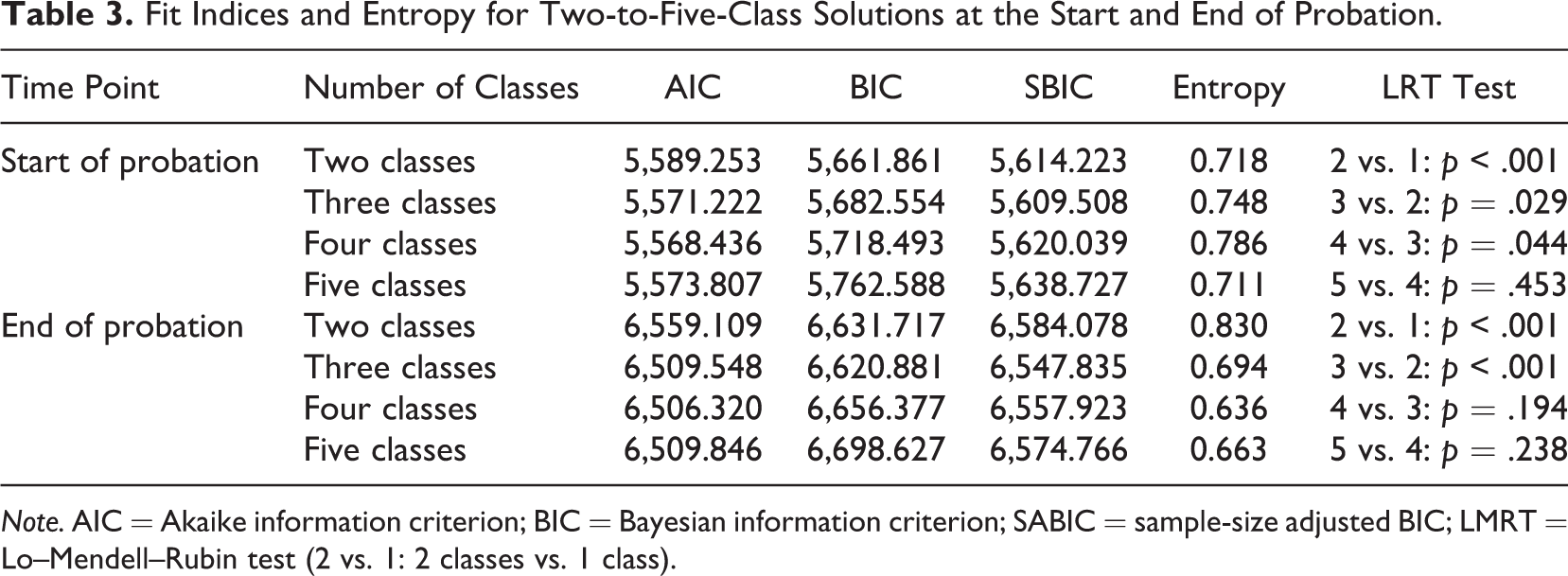
Note. AIC = Akaike information criterion; BIC = Bayesian information criterion; SABIC = sample-size adjusted BIC; LMRT = Lo–Mendell–Rubin test (2 vs. 1: 2 classes vs. 1 class).
Subsequently, an LTA with three classes at each time point was performed. The three-class model with different item-response probabilities at the two time points was found to have better fit as compared to a more restricted model with no changes across time, likelihood ratio G2(16,327) = 1,521.85 for the model with restriction over time and G2(16,304) = 1,406.13 for the model without restriction over time, the difference G2(23) = 115.72, p < .001. The details of these latent groups are provided below.
Risk Profiles at the Start and End of Probation
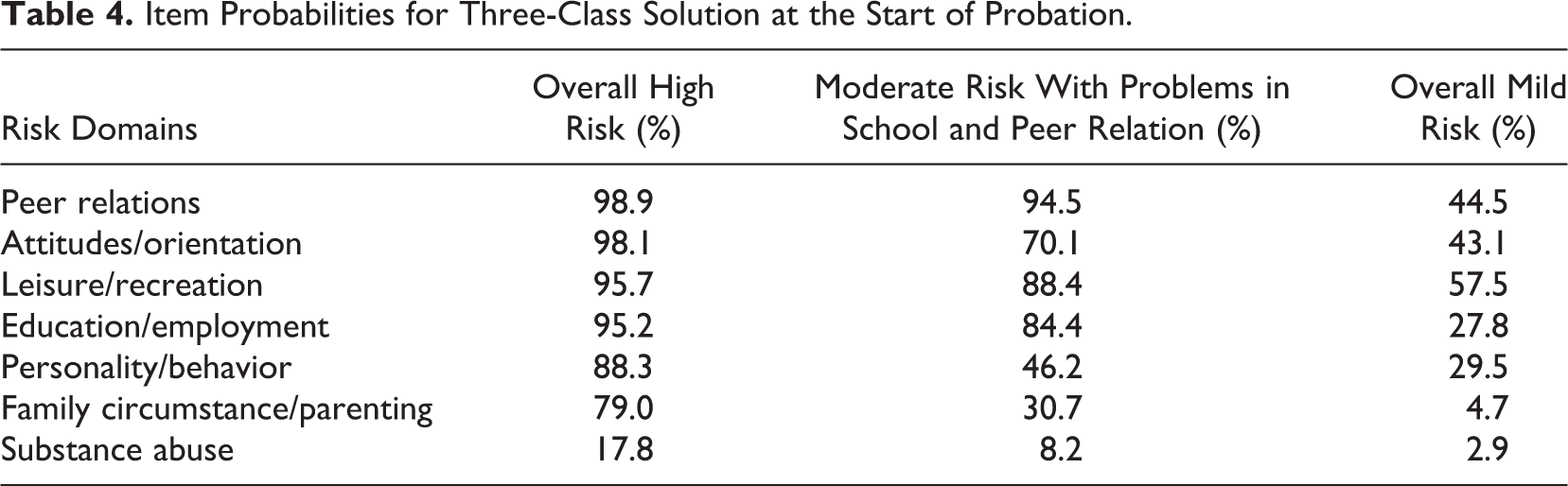
The three-class solution at the start of probation is shown in Figure 1, and the item probabilities are reported in Table 4. At the start of probation, the “Overall High Risk” class (n = 485, 51.9%) showed high probability of moderate/high risk in most domains, except for substance use. The “Moderate Risk with Problems in School and Peer Relation” class (n = 379, 40.5%) had above-average probabilities in education/employment, peer relation, and leisure/recreation. The “Overall Mild Risk” class (n = 71, 7.6%) showed below-average probabilities in all the seven domains.
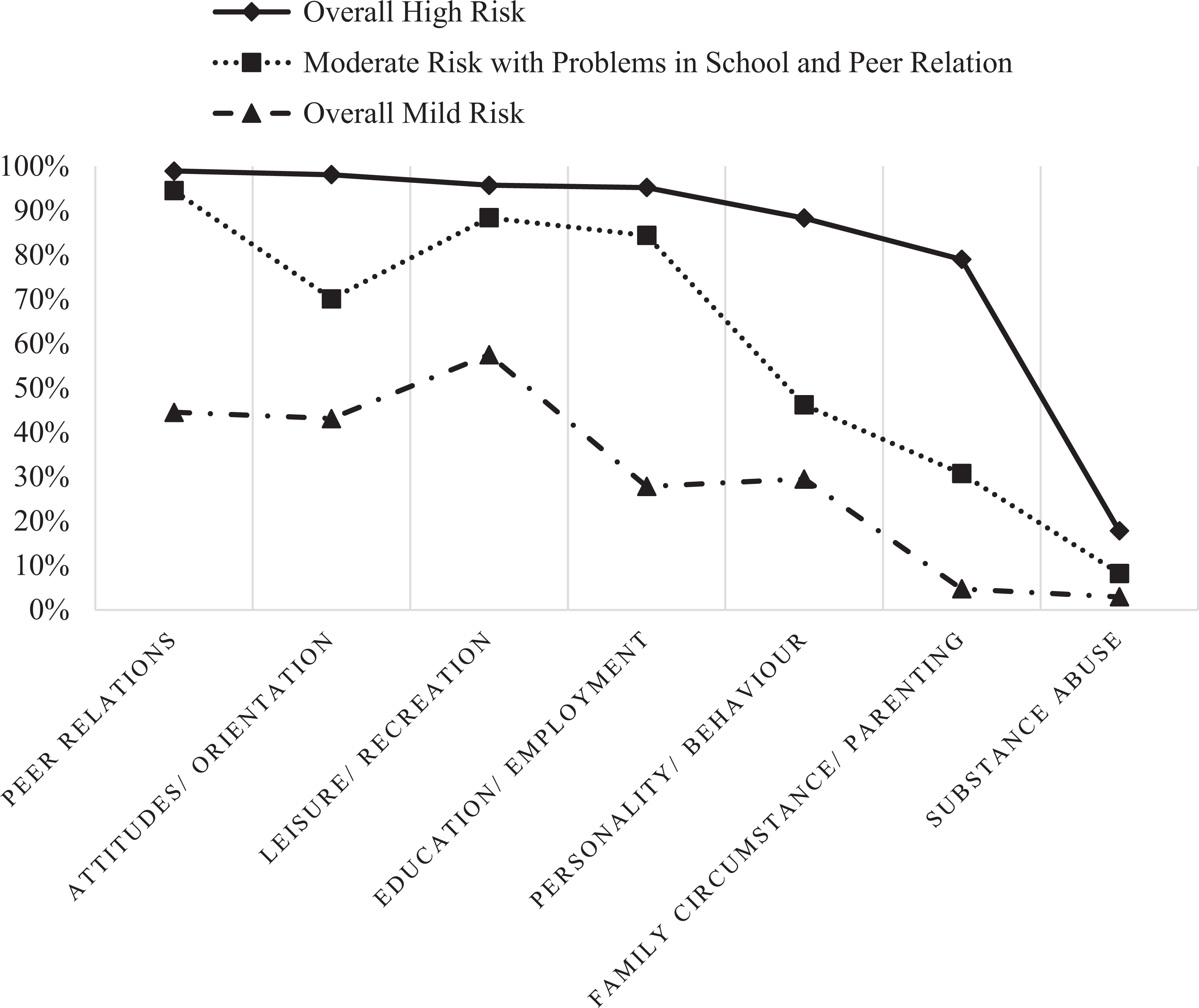
Probability of Youth Level of Service risk domains at the start of probation.
Item Probabilities for Three-Class Solution at the Start of Probation.
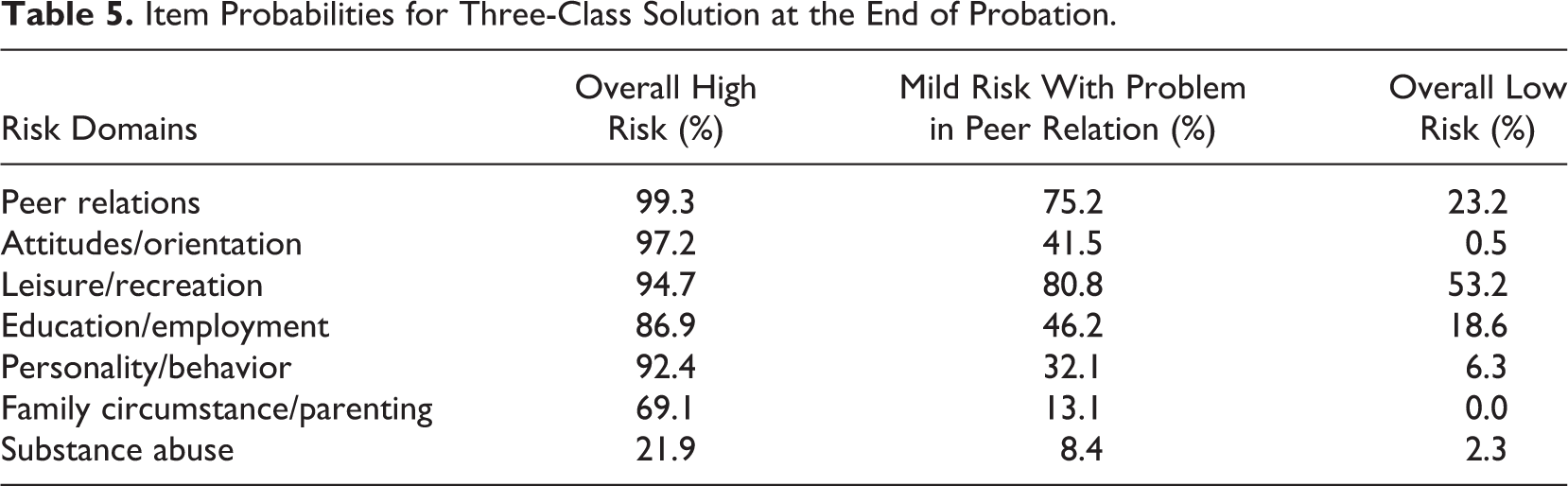
The three-class solution at the end of probation is shown in Figure 2, and the item probabilities are reported in Table 5. A similar Overall High Risk class (n = 378, 40.4%) was found, though with slightly lower probabilities in family and education risk domains. In the “Mild Risk with Problem in Peer Relation” class (n = 338, 36.2%), the probabilities of having moderate or high risk in most domains, especially the education/employment domain, declined as compared to the Moderate Risk with Problems in School and Peer Relation class at the start of probation. However, the probabilities of having moderate or high levels of risk in peer relation and leisure/recreation remained relatively high. The “Overall Low Risk” class (n = 219, 23.4%) had low probabilities of having moderate and high risk in all domains. As compared to the Overall Mild Risk class at the start of probation, this class also showed a decrease in the probabilities of having moderate and high risk in most domains.
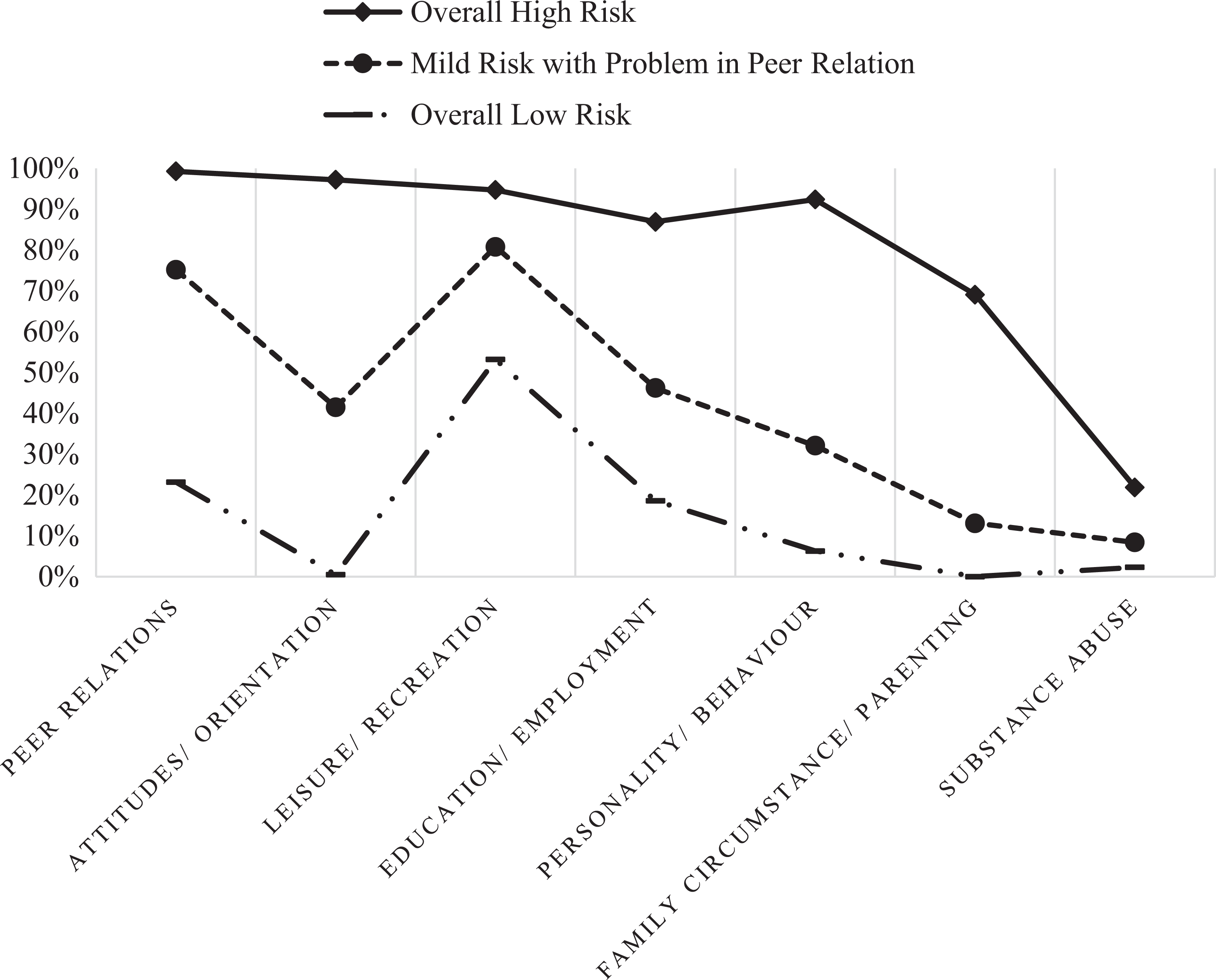
Probability of Youth Level of Service risk domains at the end of probation.
Item Probabilities for Three-Class Solution at the End of Probation.
Types of Transition From the Start to the End of Probation
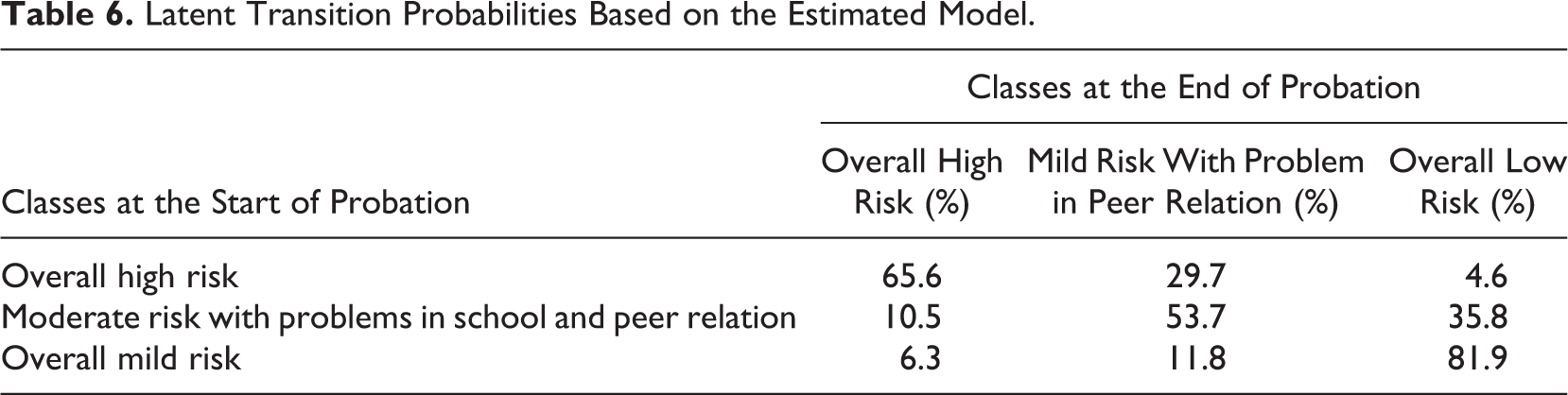
Probabilities of latent class membership transition are reported in Table 6. The parameters reflect the probability of having a certain risk profile at the end of probation conditional on the risk profiles at the start of probation. For example, youth in the Overall High Risk class at the start of probation had a probability of 65.6% to remain in the same class and a probability of 29.7% to be classified into the Mild Risk with Problem in Peer Relation class at the end of probation. Based on the changes of class membership from the start to the end of probation, three distinct types of transition profiles were identified the “De-escalators,” “Persistors,” and “Escalators.”
Latent Transition Probabilities Based on the Estimated Model.
The De-escalators was the largest group of all three. It comprised of five different subtypes between the two time points, but all with a similar declining risk trajectory over time, as shown in Figure 3A. Taken together, this type of youth probationers made up 59.2% of the sample (n = 554). Further examination of this group showed that there was a significant decline in their mean total YLS/CMI score from the start to the end of probation (M = 12.20, SD = 5.17 at the start of probation, M = 5.89, SD = 3.82 at the end of probation, F = 843.33, p < .001).
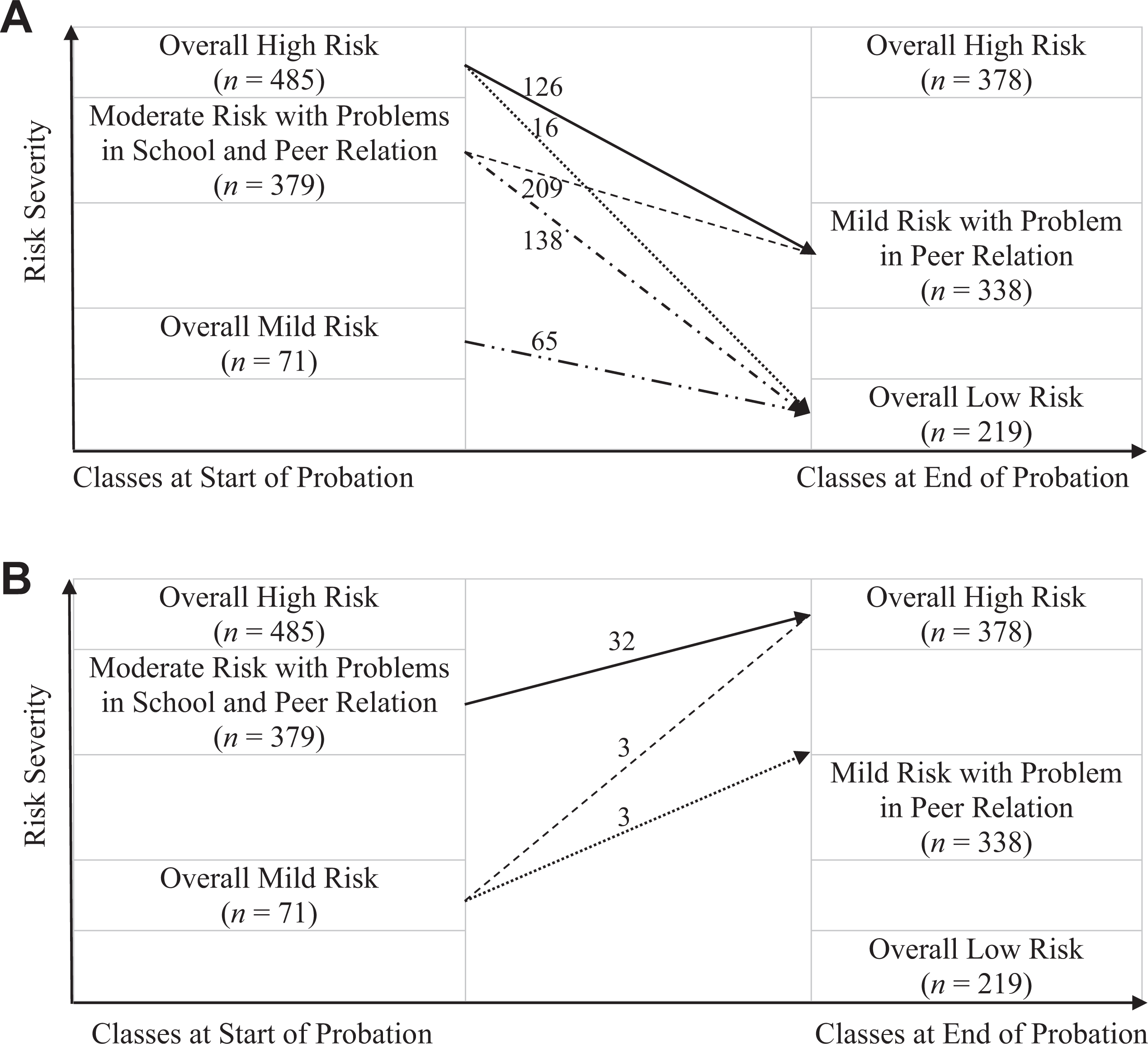
The changes of class membership for (A) the “De-escalators” and (B) the “Escalators.”
The Persistors type of youth probationers remained in the Overall High Risk class at the start and the end of probation. It included 343 probationers and made up about 36.7% of the sample. Their mean total YLS/CMI score was found to remain relatively unchanged at the moderate level (M = 18.47, SD = 4.59 at the start of probation, M = 18.23, SD = 4.92 at the end of probation, F = 0.59, p = .443). In other words, this group of youth had relatively higher risks comparing to the other youth probationers (hence labeled as Overall High Risk), although their actual risk levels were in the moderate range based on the YLS scoring.
The Escalators was the smallest group, with only 38 youth offenders (4.1% of the sample), who showed an increase in the severity of risk in one or multiple domains from the start to the end of probation, as illustrated in Figure 3B. There was a significant increase in their mean total YLS/CMI score from low to moderate levels based on local norms (M = 10.50, SD = 4.37 at the start of probation, M = 15.58, SD = 5.51 at the end of probation, F = 19.16, p < .001).
Types of Transition and Outcome of Probation
To compare the differences in probation completion, descriptive analysis showed that only 2.5% (14/554) of the De-escalators did not complete probation, as compared to 39.5% (15/38) of the Escalators and 51.0% (175/343) of the Persistors. The pattern of the results was supported by a logistic regression controlling for demographics (Table 7). Other factors being fixed, the Persistors and Escalators tended to have higher likelihood of probation noncompletion as compared to De-escalators (OR = 39.51, SE = 11.92, p < .001 and OR = 24.21, SE = 10.61, p < .001, respectively). In addition, length of the probation order had a positive and significant association with probation noncompletion (OR = 1.08, SE = 0.03, p = .003). Youth probationer’s risk in prior and current offenses/Dispositions was also positively associated with probation noncompletion, which was significant at the marginal level (OR = 1.49, SE = 0.31, p = .054). Age at admission and gender were found to have little impact on probation completion.
Results of Logistic Regression on the Outcome of Probation.
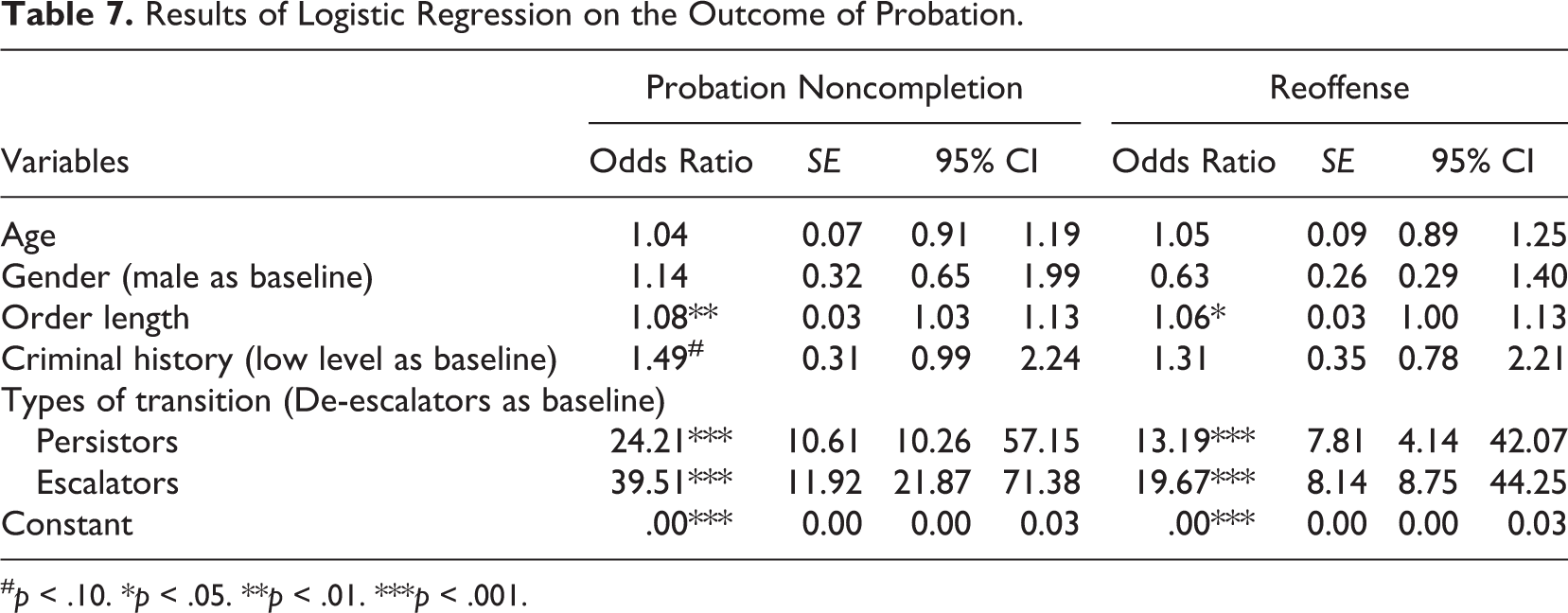
#p < .10. *p < .05. **p < .01. ***p < .001.
The differences across transition types in reoffense during the probation order were also tested using logistic regression. As reported in Table 7, the Persistors and Escalators had a higher likelihood of reoffending during the order as compared to De-escalators (OR = 19.67, SE = 8.14, p < .001 for Persistors and OR = 13.19, SE = 7.81, p < .001 for Escalators). In addition, the length of probation order had a positive and significant association with reoffense during the order (OR = 1.06, SE = 0.03, p = .043).
Adverse Family Background and Types of Transition
A multinomial logistic regression was carried out to examine whether adverse family background would affect the transition types when demographics had been accounted for (Table 8). Overall, several factors (e.g., age, criminal history, nonintact family, and caregiver conviction) were found to distinguish the transition types between Persistors and De-escalators.
Results of Multinomial Logistic Regression on Types of Transition (De-Escalators as Baseline).
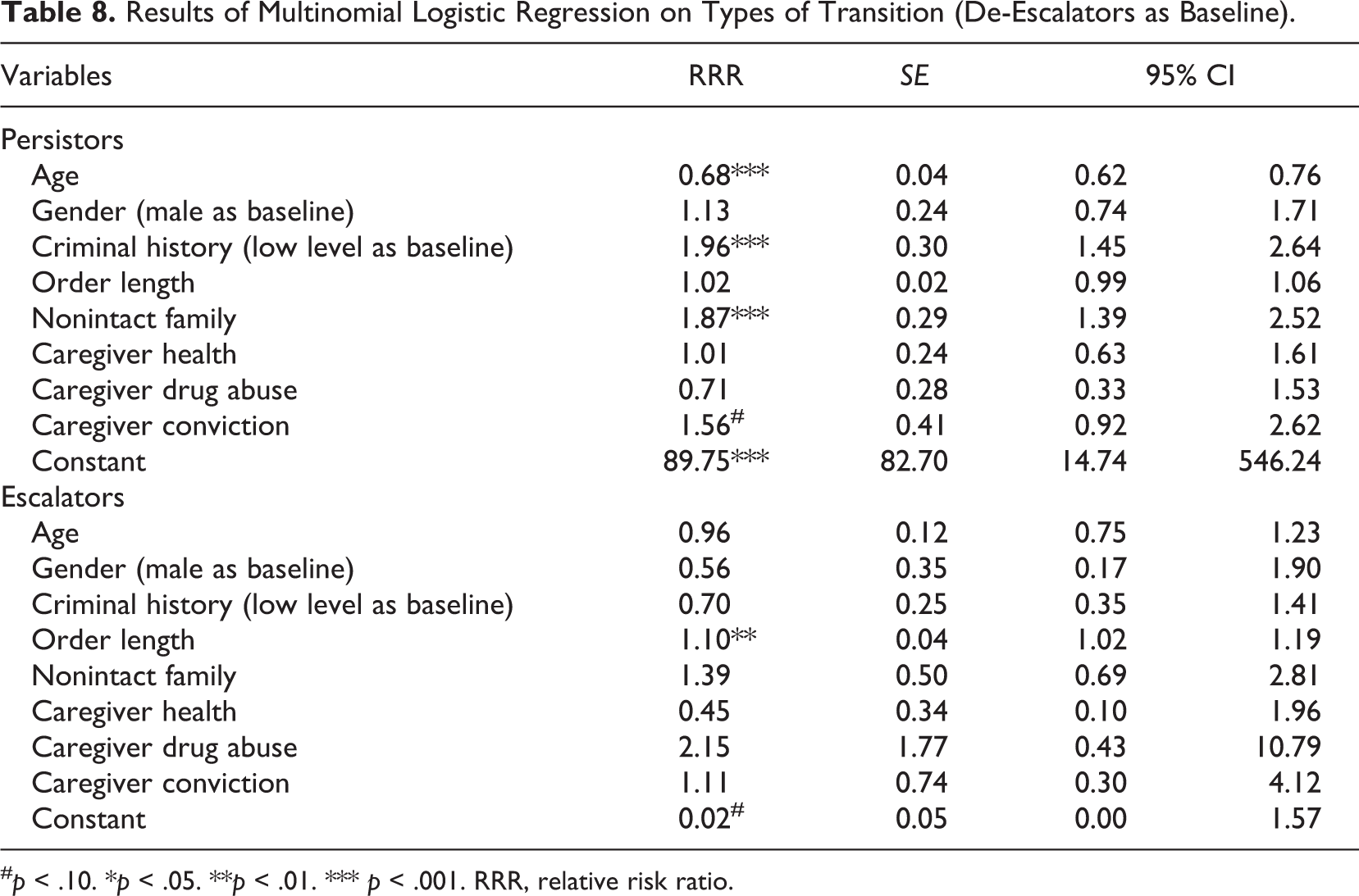
#p < .10. *p < .05. **p < .01. *** p < .001. RRR, relative risk ratio.
In terms of adverse family background, youth probationers from nonintact families were associated with about 87% increase in the risk of being Persistors, which was statistically significant at high level. Youth probationers with convicted caregiver(s) were associated with about 56% increase in the risk of being Persistors, and the association was significant at marginal level.
Besides, younger youth probationers were more likely to be Persistors than De-escalators. With a 1-year increase in age at admission, the relative risk ratio of being Persistors to De-escalators was reduced by 32% (p < .001). The relative probability of being Persistors compared to being De-escalators was 96% higher for youth probationers with moderate/high level of risk in criminal history than youth probationers with low level of risk in criminal history (p < .001).
The length of the probation order was found to have a positive and significant relationship with the risk of being Escalators. With a 1-month increase in order length, the risk of being Escalators relative to De-escalators was increased by 10% (p = 0.009). However, none of the included family background factors distinguished the transition types between Escalators and De-escalators at p = 0.05 level, possibly due to the small sample size of Escalators.
Discussion
In this study, we classified youth probationers who shared similar risk profiles into distinct classes and examined the types of transitions from the start to the end of probation orders with a total of 935 youth offenders on probation in Singapore. The findings shed light on the following areas for youth probation research and practice:
Risk Profiles
Three distinct classes were identified at both the start and the end of probation. The three classes at each time point were similar to the concept of low/moderate/high categorization from YLS/CMI scores using the variable-centered approach. The difference is that the risk profiles found in this study from the person-centered approach provided extra information on the risk/needs areas for each particular profile group. For example, the results showed that around 40% of youth probationers at the start of order would have high probability of moderate/high risk in education/employment, peer relation, and leisure/recreation. This information would be useful for resource planning so as to enhance school and extracurricular activities for these youth offenders. Comparatively, merely knowing that 50% of youth probationers are of the moderate overall risk level would be less useful. However, these profiles are an essential first step toward understanding how profiles change and their relation to important outcomes. If the group of moderate risk level had poor outcomes akin to the high-risk group, then one would know that both groups are important for resource allocation. The present study thus shared the benefits of a typological research approach and provided a holistic view of youth offenders’ risk profiles. Moreover, this study identified risk profiles at different time points, without assuming the stability of class membership over time. This contributed to our understanding on the dynamics of risk and needs of youth probationers.
Comparing these findings with the profiling study by Campbell and Colleagues (2018) who also identified three classes among youth probationers from the United States of America, the size and the composition of the classes were quite different between the two studies. For example, 16.9% of the U.S. sample was found to be in the “Maximum Intervention Needs” group, as compared to about 51.9% of Singapore youth offenders being in the Overall High Risk group at the start of order in the present study. Despite the different labeling, both groups represented youth with moderate-level risks as assessed by YLS. Although there was a lower proportion of the U.S. sample in this relatively higher risk group, the average total score was higher for the U.S. group (M = 22.31) compared to the Singapore group (M = 18.47). In particular, the Maximum Intervention Needs group in the U.S. study scored much higher on prior/current offenses than the Overall High Risk group in this study (2.66 compared to 0.67). In this study, about half (n = 463, 49.5%) of youth probationers had no previous police warnings, no prior contact with any diversionary programs, community-based and institutionalized rehabilitation services, which led to a relatively low risk level in prior/current offenses. Additionally, the Overall High Risk group in this study scored much lower on substance abuse than the Maximum Intervention Needs group in the U.S. study (0.25 compared to 2.23), which is consistent with the lower prevalence of drug-related crime in Singapore compared to Western countries. These findings highlight the possible differences in characteristics of the youth probationer population in different countries and the importance of culture-specific studies in this area.
Types of Transition
Based on the changes of risk profiles from the start to the end of probation, three transition types were identified—the De-escalators who had reduced risk in one or multiple domains over time, the Persistors who continued to have moderate or high risk in most domains, and the Escalators who had an increase in risk levels in one or multiple domains. Significant differences in outcomes of probation were found across the three transition types. The Persistors and Escalators tended to have a higher likelihood of probation noncompletion as well as reoffense during the probation orders, as compared to the De-escalators. The findings substantiated and supported the validity of the three types of changes in youth offenders’ risk profiles.
De-escalators
Findings derived from this study indicated that the risk levels for majority of youth probationers (59.2%) reduced over time and hence formed the De-escalators group. The result is similar to what Hochstetler and colleagues (2016) found with parolees in the United States; specifically, about 50% of their sample was in a declining risk trajectory. The findings suggested that the probation regime is able to address and reduce the risk and needs issues of youth offenders, through the provision of various programs to help youth offenders improve their academic performance, develop self and social awareness, and build healthy and positive relationships with families and peers.
One interesting fact about these De-escalators is that the rate of change might be different among the five different subtypes within the group. For example, among those who started from the Overall High Risk group, 126 moved to the Mild Risk with Problem in Peer Relation, while another 16 experienced a more drastic change by the end of probation order to move to the “Overall Low Risk” group. Future studies could explore with greater depth the differences among these subtypes to determine possible factors that could lead to a faster rehabilitation.
Persistors
The results showed that approximately 36.7% of youth probationers in this sample were Persistors, whose risk levels in most domains remained moderate or high at the end of their orders. This finding is also similar to the study on parolees in the United States by Hochstetler and colleagues (2016); they found that about 33% were in the Consistently High-Risk group. In another study on male youth offenders, Hilterman and colleagues (2018) found that 23% of their sample was high persistors. However, it is unclear whether the risk levels are comparable among these studies, although these groups referred to youth with the highest risk/needs in each respective setting.
The findings indicated the importance of reviewing and refining the rehabilitation programs to better address the risk and needs of Persistors. Further analysis in the present study revealed that adverse family background, particularly the absence of biological parent(s) or caregiver(s) having conviction history, was associated with higher risk of being Persistors relative to De-escalators. Future research is needed to explore the mediational pathways between these family factors and youth outcomes: Is having an absent parent/convicted caregiver a proxy of poor supervision? Is having a convicted caregiver damaging to parent-child attachment due to the inconsistent presence? Are caregivers with conviction more inclined to certain parenting styles? Understanding these will help for the crafting of more targeted interventions. Nevertheless, it would be beneficial for the rehabilitation service to focus more on family related interventions or provide additional support for youth offenders from these families. Apart from general parenting programs, this group of probationers may require more intensive dosage of family-related programming and monitoring to ensure that their unique risk/needs issues are addressed. Underlying issues surrounding the family circumstances would need to be explored further and intervened accordingly. The timeliness of these interventions mal also be critical as interventions provided at the early stages of probation orders may reduce the chances of their probation orders being revoked. Apart from interventions during probation, early intervention efforts in schools or diversionary programs for youths from disadvantaged families could also be explored. In addition, youths with prior criminal history was found to have a higher risk of being Persistors. It implies that rehabilitation service may focus more on youths with prior offenses to address their risk and needs.
Escalators
There was a small group of youth probationers who had an increase in risk and needs after the probation orders (i.e., Escalators). This comprised about 4.1% of the sample, which corresponded well with the findings from Hilterman and colleagues (2018) who found that 4% of their youth offender sample was rapid escalators. A closer analysis showed that a longer probation order may lead to a higher risk of being Escalators. Youths with a longer probation order may have greater association with other delinquent youths under probation, which may lead to negative outcomes (Dishion, McCord, & Poulin, 1999; Level & Chamberlain, 2005). Nonetheless, the analysis did not find any family background factors associated with this group of youths, though this could be due to the small group size. Another possible explanation is that our analysis included youth probationers who did not complete the orders, that is, those who had multiple violations or committed new offenses during the orders. The risk assessment at the end of probation would take into considerations such changes in behavior, which could contribute to the increase in risk levels for this group of youth offenders. Moreover, there could be other family risk factors linked with Escalators but were not captured in this study. Although this is a small group of youth probationers, it is the most challenging and vulnerable group. Thus, it may be beneficial to study this group of youths further by expanding the risk and protective factors pertaining to the family and other domains in future research. This allows for a more comprehensive examination of factors influencing the increase in their risk of reoffending and identify possible opportunities for interventions.
In summary, youth probationers in Singapore had distinct transition types from the start to the end of their probation orders. Family risk factors, such as family intactness and caregiver’s conviction history, were associated with certain types of transitions. The insights derived from this study could provide useful information for preventive and intervention efforts to review or fine-tune intervention programs related to youth rehabilitation and to be more responsive to youth probationers with different risk and needs.
Limitations
This study had a few limitations. First, this was a retrospective study using case file information. It shared the limitations of the retrospective chart review method (Gearing, Mian, Barber, & Ickowicz, 2006). One major limitation was that relevant information could be missing or not available, since data were not initially recorded or collected for research purposes. To overcome this methodological limitation, and particularly to address sampling and power issues, this study used two entire cohorts of probation cases. All available relevant case files were included and reviewed to provide as much information as possible.
Second, this study examined the dynamic risk profiles of youth offenders in the Singaporean context. Interpretation should be made with caution when generalizing the findings to other countries or regions. It would be rewarding for future studies to apply the current model to samples with different economic, political, social, and cultural backgrounds to examine the robustness of the findings in this study.
Third, this study examined the dynamics of youth probationers’ risk profiles in the community setting but did not estimate the effectiveness of a particular treatment in the controlled environment. The probation service in Singapore provides community-based rehabilitation. Youth probationers can continue with most of their day-to-day activities in the community but are required to undergo a general intervention regime and also receive specific interventions and services depending on their individual risk and needs. In this study, information about the specific treatment programs that probationers received during their orders was not available. Future research could include such information to control for the type and duration of intervention that each probationer received or further examine the effectiveness of a particular treatment program.
Fourth, this study looked at the risk profiles of youth probationers at two time points—the start and the end of their probation orders. One possible future direction of research is to collect information on reassessments of risk profiles of youths during their probation order (e.g., 6 months after the start of the probation order). This could help to reveal a clearer picture on the change in risk profiles throughout the entire supervision.
Conclusion
This study identified transition types in youth offenders’ risk profiles at the start and end of probation orders and revealed family risk factors associated with different types of transitions. The majority of youth probationers were found to de-escalate in risk, reflecting that the rehabilitation service is able to address the needs of these youth probationers. Other youth offenders were found to persist or increase in risk and could be vulnerable to further reoffending. Closer analysis of risk and protective factors associated with different groups of youth offenders would significantly contribute to the youth rehabilitation service and provide insights for early or more targeted intervention.
Footnotes
Declaration of Conflicting Interests
The author(s) declared no potential conflicts of interest with respect to the research, authorship, and/or publication of this article.
Funding
The author(s) received no financial support for the research, authorship, and/or publication of this article.
