



Abstract
This scoping review synthesized existing literature to identify knowledge gaps, inform policy and practice, and guide future research on people with disabilities in war settings. Following PRISMA guidelines, 18 articles were included after a systematic screening of studies retrieved from electronic databases, including PsycNET, PubMed, and Social Services Abstract. A thematic analysis using the International Classification of Functioning, Disability and Health (ICF) model revealed significant challenges faced by individuals with disabilities during conflicts, such as heightened emotional distress. War exacerbates dependency on others and on technological aids during emergencies, a situation worsened by inaccessible environments and limited access to information. People with disabilities encounter physical barriers, lack essential services, require knowledge, benefit from psychosocial support, rely on civil society organizations, and must navigate policy challenges. By employing the ICF model and drawing on insights from the conservation of resources theory, this study highlights the dire circumstances of individuals with disabilities in conflict settings. The findings underscore the need for inclusive crisis response policies, accessible infrastructure, continuity of medical and rehabilitation services, trauma-informed care, and dedicated budget allocation for disability rights initiatives.
Introduction
The psychosocial impact of war represents a significant public health crisis, affecting millions globally and creating both immediate and long-term mental health care needs. Research consistently shows a two- to three-fold higher prevalence of mental health conditions among those exposed to conflict compared to unexposed populations (Carpiniello, 2023). The trauma manifests primarily as anxiety (30.7%), depression (28.9%), and post-traumatic stress disorder (PTSD; 23.5%), with civilians exhibiting significantly higher rates than military personnel (Limaj et al., 2024).
The mental health burden extends beyond the immediate conflict period, with studies demonstrating that symptoms can persist or even intensify over time (Carpiniello, 2023; Limaj et al., 2024). While war has such deleterious effects on all populations, it may have particularly harmful effects on people with disabilities, who face unique vulnerabilities and challenges during armed conflicts. This scoping review examines the challenges faced by people with disabilities in war settings, using the International Classification of Functioning, Disability and Health (ICF) model to systematically analyze and synthesize existing literature.
The World Health Organization defines disabilities as the link between an individual’s medical condition, such as physical or psychological impairment, and their ability to function in their environment (World Health Organization, 2002). This approach recognizes both medical impairments that affect people with disabilities and society’s role in their inclusion in the general population in all aspects of life. According to the World Health Organization, an estimated 1.3 billion people worldwide live with a disability, a number that continues to rise (World Health Organization, 2023).
People with disabilities are disproportionately disadvantaged in crisis contexts, facing heightened vulnerability during emergencies. Furthermore, those with significant support needs, referring to individuals requiring extensive and pervasive support across multiple life domains (TASH, 2021), face the greatest risks. They encounter discrimination in accessing essential services and disaster injustice through inadequate resource distribution (Emerson, 2021; Grills et al., 2017; Ton et al., 2019).
During natural disasters, they face a greater risk of death or injury while confronting exploitation, abuse, and neglect in emergency settings (Malpass et al., 2019; Palenewen, 2024). Their challenges stem from their impairments and pre-existing socioeconomic inequalities, further complicated by emergency shelters lacking appropriate accommodations for their specific needs (Reinhardt et al., 2011; Twigg et al., 2011). The COVID-19 pandemic exemplified these vulnerabilities, as individuals with physical and intellectual disabilities (IDs) experienced reduced health care access, significant lifestyle disruptions, mood disturbances, decreased physical activity, higher mortality rates, and severe limitations to essential support services (Doody & Keenan, 2021; Lebrasseur et al., 2021).
These systemic barriers mean that individuals with significant disabilities and extensive support needs, who depend most heavily on accessible services, specialized accommodations, and continuous care, often experience the most severe consequences of conflict while remaining excluded from both research and humanitarian responses. In the context of armed conflicts, Priddy (2019) provided a comprehensive analysis of how these vulnerabilities were amplified. The research documented elevated risks, including targeted killings, human shielding, and sexual violence. The lack of access to emergency communication, evacuation protocols, and refugee camps compounded their vulnerabilities. Even after the conflict subsided, they encountered barriers to justice and reparations. Hence, despite constituting a significant portion of the population in conflict zones, persons with disabilities often find their needs sidelined. Humanitarian services remain inaccessible, with a notable absence of disability-specific support (Priddy, 2019).
Article 11 of the United Nations Convention on the Rights of Persons with Disabilities states that people with disabilities may be at risk during humanitarian emergencies. Therefore, it emphasizes the responsibility of states to ensure the protection of such people in situations of risk, including armed conflicts (United Nations General Assembly, 2020). However, the availability of reliable, comprehensive, and disaggregated data concerning disabilities in conflict zones remains insufficient. Current data sets frequently omit certain disabilities and demographic groups, posing a significant obstacle to formulating effective policies and advocacy initiatives.
To address this gap, states and humanitarian agencies must prioritize collecting inclusive data and ensure that services are accessible to all individuals, including those with disabilities. By improving data collection practices and enhancing accessibility, policymakers and advocates can understand and address the specific needs and challenges faced by persons with disabilities in conflict settings (Priddy, 2019).
Conceptual Framework for the Review: The ICF
Disability is a complex, dynamic, and multidimensional phenomenon. Over the past decades, fundamental changes have occurred in the conceptualization of disability, transitioning from an individual, medical perspective to a structural, social perspective, often described as a movement from a “medical model” to a “social model” (World Health Organization, 2011). The medical model frames disability as an individual medical problem requiring treatment to restore normalcy (Engel, 1977), while the social model considers disability a socially generated problem resulting from societal barriers rather than individual traits (World Health Organization, 2002). However, both models face criticism for creating false dichotomies and presenting incomplete understandings of disability experiences (Anastasiou & Kauffman, 2013; Campbell, 2009; Hehir, 2007).
These critiques led to the biopsychosocial approach, embodied in the ICF (World Health Organization, 2002). The ICF represents a synthesis of medical and social perspectives, defining disability as a multifaceted phenomenon influenced by individual health conditions and contextual factors. In this framework, disability and functioning are the outcomes of interactions between health conditions and contextual factors, including the external environment (social attitudes, architectural features, and legal structures) and personal factors (gender, age, coping styles, and social background).
The ICF classifies human functioning across three levels: body or body part functioning, whole person functioning, and whole person functioning within the social context. The key components include body functions (physiological functions, including psychological functions) and body structures (anatomical parts); activities (execution of tasks) and participation (involvement in life situations); and environmental factors (physical, social, and attitudinal environment). Disability manifests as impairments (problems in body function or structure), activity limitations (difficulties in performing tasks), and participation restrictions (challenges in engaging in life situations; World Health Organization, 2002).
Research has demonstrated the ICF’s effectiveness in diverse contexts, including clinical rehabilitation, educational assessment, and social policy development (Leonardi et al., 2022). It provides a comprehensive framework for analyzing challenges faced by people with disabilities in conflict zones by integrating biological, individual, and social perspectives on disability, thereby enabling a systematic understanding of how environmental factors in conflict settings interact with individual impairments to create unique barriers.
Research Objective and Rationale
Despite documented vulnerabilities of people with disabilities in crisis contexts (Priddy, 2019), a systematic examination of how armed conflicts affect this population is still lacking in the literature. Addressing this gap is particularly important, as Article 11 of the United Nations Convention on the Rights of Persons with Disabilities emphasizes the states’ responsibility to ensure the protection of people with disabilities in situations of risk, including armed conflicts (United Nations General Assembly, 2020). This research therefore synthesizes existing literature to identify knowledge gaps, inform policy and practice, and guide future research aimed at improving the support and protection of people with disabilities in conflict settings. The findings from the reviewed articles are analyzed through the lens of the ICF. Specifically, this scoping review addresses the following research question: What challenges do individuals with disabilities face in war contexts?
Method
Search Strategy
The scoping review followed the PRISMA guidelines (Tricco et al., 2018). Three electronic databases were used to find articles on people with disabilities in the context of armed conflicts: PsycNET, PubMed, and Social Services Abstracts. For each characteristic (war and disabilities), multiple terms were used to identify as many relevant articles as possible. The search strategy was based on previous reviews of the characteristics of war (Attanayake et al., 2009; Jordans et al., 2009; Khorram-Manesh et al., 2021; Slone & Mann, 2016) and people with disability (Gur & Reich, 2023a, 2023b). The complete list of search terms used in this review is available in the Supplementary Material.
Selection Criteria
Studies were included if they focused on people with disabilities in the context of armed conflicts. No limits were placed on the publication date or participants’ age. Both quantitative and qualitative studies were included in the review. However, studies were excluded if they did not focus on people with disabilities in the context of armed conflicts or were not published in English. Articles that were literature reviews were excluded.
Selection of Studies
To strengthen credibility, the author and a research assistant independently conducted the scoping review at each stage of the process. Two independent reviewers screened 2,994 articles, achieving an initial agreement rate of 98.9% (2,962/2,994 articles). During the screening process, 2,942 records were excluded. The remaining 52 reports were assessed for eligibility. Of these, 34 were excluded: 22 were not studies, nine did not focus on disabilities, and three did not include war contexts. In addition, the researchers searched Google Scholar using the search terms to identify any further articles that met the inclusion criteria; this yielded no additional articles. This resulted in a total of 18 articles included in the review (See Figure 1).
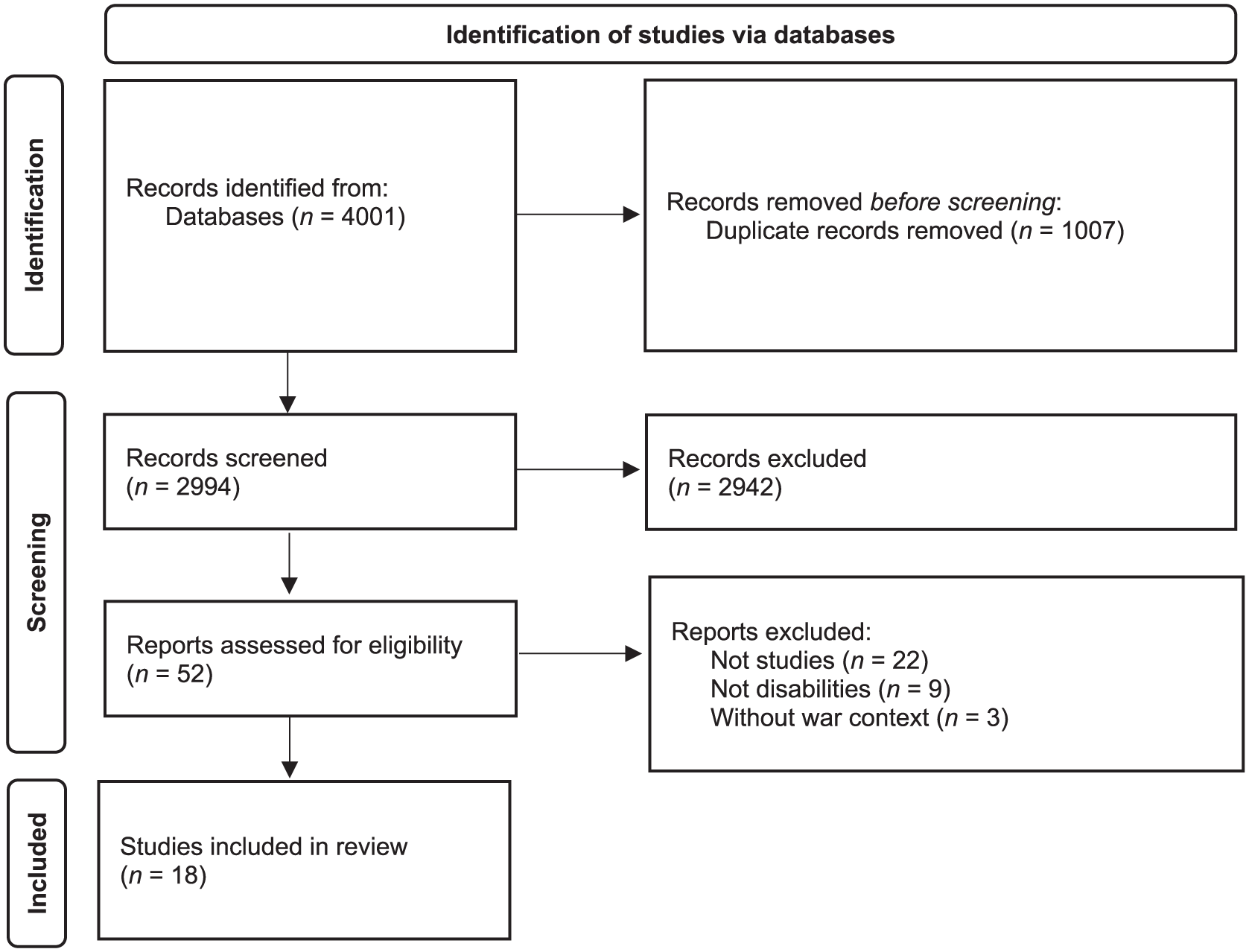
Review Process of Articles for Inclusion in Systematic Review (PRISMA Flowchart).
Data Coding
Disability Classification and Terminology
For consistency across international terminologies, all studies were recategorized using standardized definitions based on current evidence-based classifications. Intellectual and developmental disabilities included studies examining significant limitations in intellectual functioning and adaptive behavior (encompassing the U.K. term “learning disabilities,” the U.S. term “intellectual disabilities,” and developmental delays). Specific learning disabilities included studies of specific academic skill deficits affecting reading, writing, or mathematics (referred to as “learning difficulties in UK” and “learning disabilities in the US”).
Autism referred to studies specifically focusing on participants with autism spectrum disorders (ASDs), recognizing the unique characteristics and support needs of this population. Physical disabilities included studies examining individuals with physical mobility, motor function, or other bodily function. Sensory disabilities included studies of individuals with vision, hearing, or other sensory impairments. Diverse disability included studies with samples comprising a variety of disability types. Unspecified disability encompassed studies addressing disability as a broad social category without specifying particular conditions.
Thematic Analysis
To ensure credibility, the author, with assistance from a research assistant, conducted the thematic analysis following Braun and Clarke’s (2012) six-phase approach. In the first phase (data familiarization), both researchers independently read all 18 articles to familiarize themselves with the content. In the second phase (generating initial codes), they individually performed open coding of the results sections, identifying key challenges faced by people with disabilities in conflict zones. In the third phase (searching for themes), codes were organized into potential broader themes based on similarity and conceptual relationships.
In the fourth phase (reviewing themes), the author and research assistant jointly reviewed the preliminary codes and themes, discussed the main narratives evident in the data, and resolved discrepancies through consensus. In the fifth phase (defining and naming themes), themes were refined and defined to capture the essence of the data. In the final phase (producing the report), the main themes were organized according to the ICF framework to present the findings clearly and comprehensively, categorizing challenges as related to body functions/structures, activities and participation, and environmental factors.
Results
Overview of Included Studies
This scoping review examined 18 studies published between 2006 and 2023 that investigated the experiences of people with disabilities in conflict and post-conflict settings. The studies represented a diverse geographic distribution, spanning four continents, with notable clusters in the Middle East (six studies; primarily Israel and Lebanon) and Eastern Europe (four studies; primarily Ukraine and Serbia). Publication trends showed increased research interest in recent years, with five studies published between 2021 and 2023, of which three specifically addressed the Russian invasion of Ukraine, indicating growing scholarly attention toward disability experiences in contemporary conflicts.
The majority of research utilized qualitative methodologies (14 studies), reflecting an emphasis on understanding lived experiences and complex social phenomena. The reviewed literature encompassed a broad spectrum of conflict contexts, including active warfare (seven studies), terrorism/political violence (four studies), post-conflict settings (two studies), and refugee situations (one study).
Most studies focused on documenting experiences and impacts rather than testing interventions, except for Dababnah et al. (2019), who explicitly tested a culturally sensitive intervention. This suggests that the field is largely in an exploratory phase. The emergence of research examining intersectionality, such as disability with gender (Samararatne & Soldatic, 2015) or ethnicity (Ngo et al., 2013), represents an important development in understanding the complex vulnerabilities of people with disabilities in conflict zones.
Characteristics of Articles Included in the Review
Table 1 summarizes the main characteristics of the reviewed articles. The sample sizes ranged from a small sample size of five participants (Vromans et al., 2023) to a large sample of 579 participants (Yamada et al., 2021). In nine studies, participants were people with disabilities (Berger et al., 2015; Boyarchuk & Koshmaniuk, 2023; Dias et al., 2012; Finzi-Dottan & Kormosh, 2016; Samararatne & Soldatic, 2015; Santos-Zingale & McColl, 2006; Shpigelman & Gelkopf, 2017, 2019; Yamada et al., 2021). In two studies, the participants were parents or carers of people with disabilities (Čolić, 2023; Zuurmond et al., 2016), while in one study, participants were both people with disabilities and their parents (Ngo et al., 2013). Two studies included service providers (Apukhtina et al., 2023; Vromans et al., 2023), and in one study, participants were a combination of teachers and parents (Dababnah et al., 2019). In two studies, the participants were disability activists (Wehbi, 2011, 2012), while in one study, the participants were a combination of activists and service providers (Mac-Seing et al., 2022).
Characteristics of Articles Included in the Review.
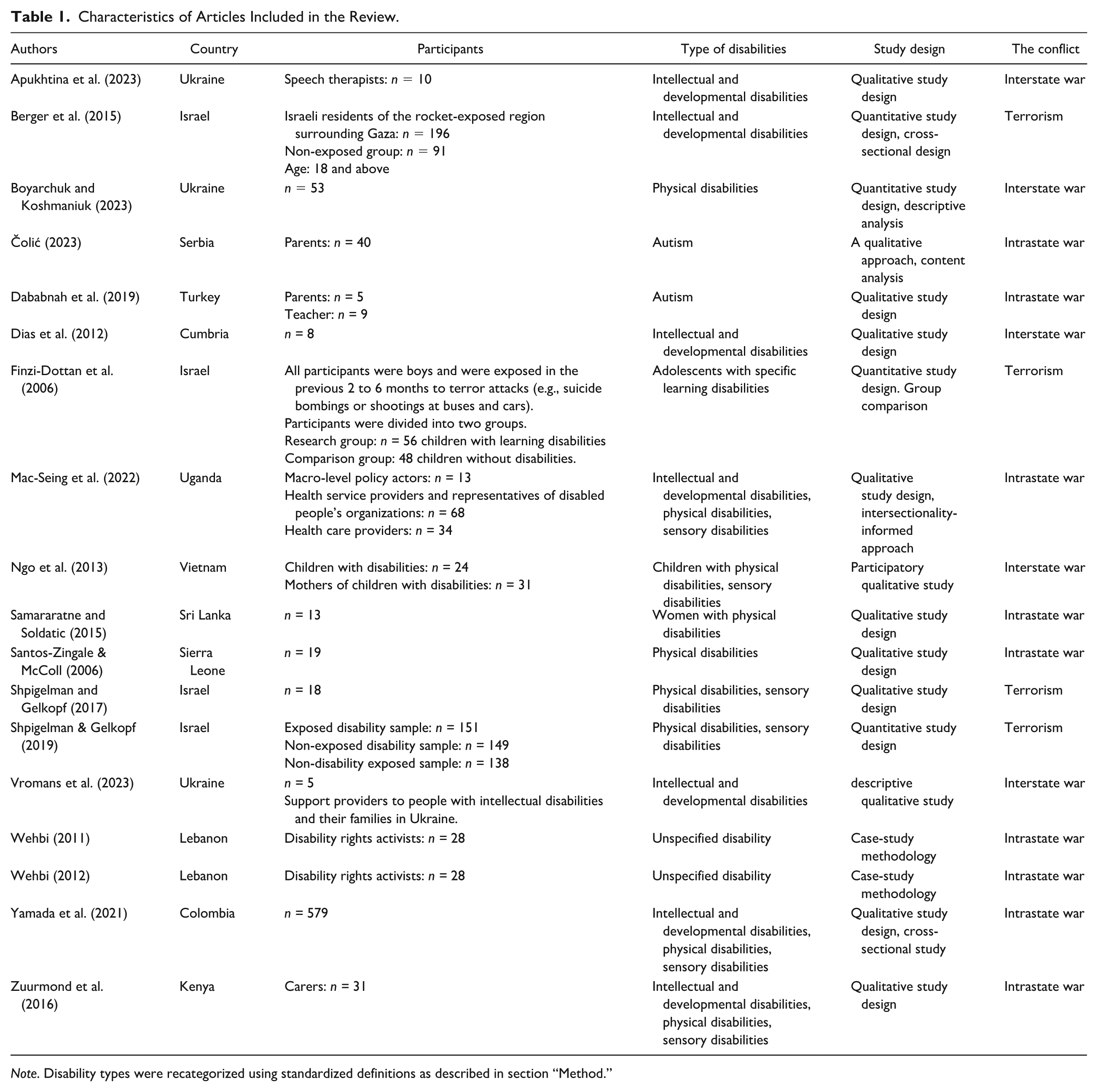
Note. Disability types were recategorized using standardized definitions as described in section “Method.”
Disability types included four studies on intellectual and developmental disabilities (Apukhtina et al., 2023; Berger et al., 2015; Dias et al., 2012; Vromans et al., 2023), one study on specific learning disabilities (Finzi-Dottan & Kormosh, 2016), two studies on ASD (Čolić, 2023; Dababnah et al., 2019), one study on spina bifida (Boyarchuk & Koshmaniuk, 2023), three studies on physical/sensory disabilities (Santos-Zingale & McColl, 2006; Shpigelman & Gelkopf, 2017, 2019), three studies on diverse disability (Mac-Seing et al., 2022; Ngo et al., 2013; Yamada et al., 2021), and four studies on general disability (Samararatne & Soldatic, 2015; Wehbi, 2011, 2012; Zuurmond et al., 2016).
The studies were conducted worldwide. Four studies were conducted in Israel (Berger et al., 2015; Finzi-Dottan & Kormosh, 2016; Shpigelman & Gelkopf, 2017, 2019), and three studies were in Ukraine (Apukhtina et al., 2023; Boyarchuk & Koshmaniuk, 2023; Vromans et al., 2023). Two studies were conducted in Lebanon (Wehbi, 2011, 2012). One study each took place in Colombia, Cumbria, Kenya, Siberia, Sierra Leone, Sri Lanka, Turkey, Vietnam, and Uganda (Čolić, 2023; Dababnah et al., 2019; Mac-Seing et al., 2022; Ngo et al., 2013; Samararatne & Soldatic, 2015; Yamada et al., 2021; Zuurmond et al., 2016).
The study designs included 14 qualitative studies (Apukhtina et al., 2023; Čolić, 2023; Dababnah et al., 2019; Dias et al., 2012; Mac-Seing et al., 2022; Ngo et al., 2013; Samararatne & Soldatic, 2015; Santos-Zingale & McColl, 2006; Shpigelman & Gelkopf, 2017; Vromans et al., 2023; Wehbi, 2011, 2012; Yamada et al., 2021; Zuurmond et al., 2016) and four quantitative studies (Berger et al., 2015; Boyarchuk & Koshmaniuk, 2023; Finzi-Dottan & Kormosh, 2016; Shpigelman & Gelkopf, 2019).
Regarding conflict types, the reviewed studies encompassed three types of conflict. Five studies examined “interstate wars between nation-states: historical conflicts,” including World War II (Dias et al., 2012), the Vietnam War (Ngo et al., 2013), and the contemporary Ukraine-Russia conflict (Apukhtina et al., 2023; Boyarchuk & Koshmaniuk, 2023; Vromans et al., 2023). Nine studies focused on intrastate wars, including civil wars such as the Syrian conflict (Dababnah et al., 2019) and the Sri Lankan conflict (Samararatne & Soldatic, 2015), internal armed conflicts in Colombia (Yamada et al., 2021), Sierra Leone (Santos-Zingale & McColl, 2006), Kenya (Zuurmond et al., 2016), and Uganda (Mac-Seing et al., 2022), and post-conflict settings in Serbia (Čolić, 2023) and Lebanon (Wehbi, 2011, 2012). Four studies investigated terrorism, examining the impact of suicide bombings and targeted shootings (Finzi-Dottan & Kormosh, 2016) and chronic rocket attacks and political violence (Berger et al., 2015; Shpigelman & Gelkopf, 2017, 2019) on civilian populations. This distribution reflected the diverse conflict contexts in which people with disabilities experienced heightened vulnerabilities.
An Analysis Through the ICF Lens
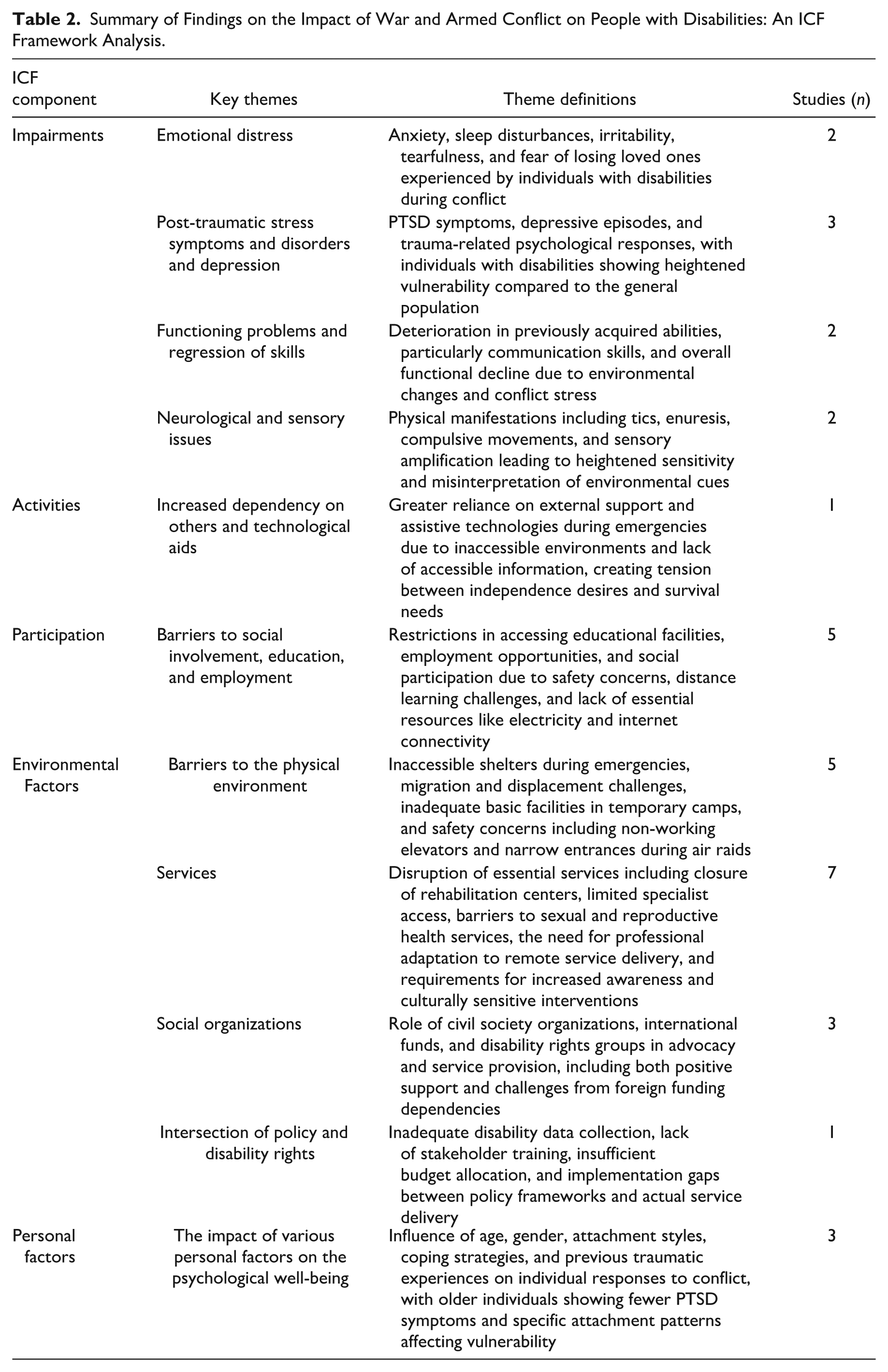
Table 2 presents the findings organized according to the ICF framework.
Summary of Findings on the Impact of War and Armed Conflict on People with Disabilities: An ICF Framework Analysis.
Impairments
Impairments are problems in body function or structure, such as a significant deviation or loss (World Health Organization, 2002). While war and armed conflict result in injuries that cause impairments, it is crucial to recognize their specific impact on individuals already living with disabilities. The impairments experienced by individuals with disabilities during wartime and armed conflict encompass various domains, including emotional distress, PTSD, depression, functioning problems, regression of skills, and neurological and sensory issues.
Emotional Distress
Boyarchuk and Koshmaniuk (2023) reported that over two-thirds of respondents highlighted the detrimental effects of war on children’s mental health, with increased anxiety, sleep disturbances, irritability, tearfulness, and fear of losing loved ones being prevalent manifestations. Similarly, Shpigelman and Gelkopf (2017) found that emotional responses to exposure to threats during conflict included high levels of anxiety, helplessness, and fear.
PTSD and Depression
The impact of war on individuals with disabilities in terms of PTSD and depression is significant, as evidenced by several studies. Berger et al. (2015) found that individuals exposed to war exhibited higher levels of post-traumatic stress (PTS), PTSD, and functioning problems, particularly among those close to the Qassam rocket falls and those displaced during conflict. Similarly, Finzi-Dottan et al. (2016) highlighted significantly elevated PTSD scores in individuals with learning disabilities, with personal involvement in terror attacks exacerbating PTSD levels.
Moreover, traumatic life events emerged as a significant predictor of PTSD in individuals with learning disabilities. Shpigelman and Gelkopf (2019) further emphasized the heightened vulnerability of individuals with disabilities to war-related trauma, as evidenced by higher levels of post-traumatic stress symptoms (PTSSs) and depressive symptoms compared to other groups. Notably, traumatic life events, disability, and exposure to war and terror were identified as predictors of PTSS and depressive symptoms in this population.
Functioning Problems and Regression of Skills
Apukhtina et al. (2023) observed that individuals with IDs, who relocated due to conflicts experienced regression in skills, particularly in communication, attributed to substantial environmental changes. This regression was notably pronounced in individuals with comorbid disorders, including ASD and behavioral and emotional-volitional disorders. Similarly, Berger et al. (2015) found that individuals with disabilities exposed to war exhibited higher levels of functioning problems. Proximity to Qassam rocket falls during the conflict was associated with increased functioning problems. In addition, displaced individuals showed a tendency toward more functional problems, although statistical significance was not reached.
Neurological and Sensory Issues
Apukhtina et al. (2023) found that people with ID displayed manifestations of neurological symptoms, including tics, enuresis, and compulsive movements. Similarly, Shpigelman and Gelkopf (2017) observed sensory amplification among participants with sensory impairments during emergencies. Individuals with visual impairments reported heightened awareness of information passing through their dominant senses, leading to increased sensitivity to noise and heightened tension. However, misinterpreting sensory cues often resulted in intense negative emotional arousal.
Activities
Activity is the execution of a task or action by an individual. Activity limitations are difficulties an individual may have in executing activities (World Health Organization, 2002). The impact of war on individuals with disabilities is particularly evident in their increased dependency on others and technological aids during emergencies. Shpigelman and Gelkopf (2017) highlighted how inaccessible physical environments and a lack of information prompted individuals to rely heavily on external support during crises. However, this dependency often exacerbated distress levels as individuals contended with conflicting desires for independence. Despite their efforts to minimize dependence, tasks such as seeking shelter during rocket alarms necessitated assistance. Furthermore, individuals with sensory impairments faced additional challenges, relying on technological aids, such as hearing aids and implants, to stay informed during emergencies.
Participation
Participation is involvement in a life situation. Participation restrictions are problems an individual may experience in involvement in life situations (World Health Organization, 2002). The reviewed studies suggested that the dynamics of participation restrictions among people with disabilities during wartime underwent a significant transformation. This occurred as individuals navigated various stages of conflict, from the tumultuous conditions of temporary camps to the complexities of transitioning into more stable, permanent settlements. Along this journey, social involvement, education, and employment emerged as primary domains affected by evolving restrictions.
In temporary camps, the primary challenges revolved around basic survival and self-care (Santos-Zingale & McColl, 2006). These extended to social interaction and support systems, with factors such as the quality of relationships, attitudes of others, and accessibility to essential services, including medical care and assistive devices, hindering participation (Santos-Zingale & McColl, 2006).
Transitioning to more permanent settlements did not alleviate participation restrictions; instead, the restrictions manifested in different forms (Santos-Zingale & McColl, 2006). Major life areas, such as employment and education, continued to be affected, impeding individuals’ integration into society (Santos-Zingale & McColl, 2006). Environmental barriers, including transportation limitations, inadequate medical care, and lack of access to assistive devices, further hindered participation in daily activities. Moreover, governmental programs failed to support individuals with disabilities adequately, exacerbating their marginalization and hindering their integration into society (Santos-Zingale & McColl, 2006).
The disruption caused by war significantly affects access to education, with barriers such as distance to schools, safety concerns forcing individuals into bomb shelters, and a lack of essential resources, such as electricity and internet connectivity (Boyarchuk & Koshmaniuk, 2023). Children and youth are particularly affected, facing challenges in attending school regularly and accessing educational facilities due to safety concerns and logistical difficulties (Boyarchuk & Koshmaniuk, 2023).
Environmental Factors
Environmental factors comprise the physical, social, and attitudinal environment in which people live and conduct their lives (World Health Organization, 2002). During conflict and war, individuals with disabilities confront several challenges associated with accessing and navigating their physical environments. These challenges exacerbate existing difficulties and pose significant threats to their safety and well-being.
Barriers to the Physical Environment
The upheaval caused by conflict often results in internal and external population migration—uprooting families, including those with members with disabilities—in search of safety and stability (Apukhtina et al., 2023). As families seek refuge in unfamiliar territories, individuals with disabilities face challenges accessing necessary support services, such as speech therapy. Furthermore, temporary camps, which offer refuge to those fleeing conflict zones, present unique challenges to individuals with disabilities, with limited access to social support networks and essential services (Santos-Zingale & McColl, 2006).
During war, individuals with disabilities face obstacles in meeting basic needs and ensuring self-care. Temporary camps often lack critical facilities, such as clean toilets, water sources, and supplies, compounding their challenges (Santos-Zingale & McColl, 2006). Moreover, specific disabilities, such as spina bifida, exacerbate concerns regarding access to food, living conditions, and safety (Boyarchuk & Koshmaniuk, 2023). In addition, according to Vromans et al. (2023), the scarcity of necessities during war further jeopardizes the physical and mental well-being of individuals with disabilities, as large residential facilities face shortages of essential resources, such as staff, space, food, and medicine.
Ensuring the safety of individuals with disabilities during wartime poses significant challenges, particularly concerning access to protective shelters during air raids and bombings. Inaccessible physical environments, characterized by non-working elevators, narrow entrances, and a lack of accommodations for mobility aids, exacerbate the difficulties faced by individuals with disabilities in seeking refuge during emergencies. These barriers impede physical access and contribute to heightened anxiety and stress (Boyarchuk & Koshmaniuk, 2023; Shpigelman & Gelkopf, 2017).
Services
During conflicts, the provision of essential services for individuals with disabilities becomes compromised, compounding the challenges of accessing necessary support systems. Apukhtina et al. (2023) underscored the challenges encountered in delivering medical support to individuals with ID amid conflicts. The closure of rehabilitation centers and the relocation of specialists due to safety concerns contribute to the scarcity of essential services (Boyarchuk & Koshmaniuk, 2023). Moreover, the destruction of daycare centers and care organizations during wartime aggravates resource scarcity and workforce shortages, raising concerns about the quality of life and post-war support for individuals with ID (Vromans et al., 2023). The absence of essential services during conflict heightens the physical and emotional challenges of individuals with disabilities and their families. With local communities lacking in permanent disability services, families are compelled to seek support elsewhere, aggravating their concerns about survival and livelihoods (Apukhtina et al., 2023; Ngo et al., 2013). Mac-Seing et al. (2022) highlighted the persistent impacts of conflict on access to disability services even after its cessation. Hence, the breakdown of formal systems impedes access to services for individuals with disabilities.
During conflicts, individuals with disabilities face formidable challenges in accessing medical and rehabilitation services, aggravating their existing vulnerabilities. Apukhtina et al. (2023) highlighted the dire circumstances encountered by individuals with ID in Ukraine, where closures of sanatoriums and limited access to specialists intensified the struggle for essential medical care. Similarly, Boyarchuk and Koshmaniuk (2023) noted the adverse effects of war on outpatient and inpatient medical care, compounded by logistical hurdles and shortages of health care professionals. Mac-Seing et al. (2022) highlighted multiple barriers to accessing sexual and reproductive health services for individuals with disabilities, exacerbating their health care disparities during conflicts. Concurrently, Boyarchuk and Koshmaniuk (2023) emphasized that the closure of rehabilitation centers, logistical challenges during air raids and blackouts, and financial constraints profoundly impacted rehabilitation services.
During conflicts, professionals swiftly adapt services to cater to the evolving needs of individuals with disabilities. Apukhtina et al. (2023) illustrated how speech therapists in Ukraine shifted focus to crisis management support and remote consultations for parents. Vromans et al. (2023) highlighted creative solutions, such as online support and remote communication, ensuring ongoing assistance for individuals with ID despite economic challenges.
During conflicts, the need for knowledge among individuals with disabilities and their caregivers becomes increasingly vital. Mac-Seing et al. (2022) highlighted the importance of addressing the lack of understanding and awareness surrounding sexual and reproductive health services among individuals with disabilities. They emphasized the necessity of equipping health care providers with the knowledge and skills to effectively support the sexual and reproductive health needs of this population, mitigating existing disparities. Similarly, Samararatne and Soldatic (2015) underscored the significance of promoting legal literacy and awareness among women with disabilities, particularly in post-conflict settings, such as Sri Lanka. Their findings emphasized empowerment through increased knowledge about rights and access to resources, highlighting the transformative potential of education and awareness initiatives in fostering autonomy and inclusion among individuals with disabilities.
Among the reviewed intervention studies, only one focused explicitly on psychosocial interventions for individuals with disabilities. Dababnah et al. (2019) conducted an intervention study to address the needs of children with ASD and their families affected by the Syrian Civil War and displacement. The research assessed the feasibility and acceptability of a culturally sensitive intervention designed for Syrian refugee children with ASD who experienced trauma. It revealed positive outcomes, with participating parents and teachers expressing satisfaction with the program’s appropriateness for children with ASD. Participants reported gaining valuable knowledge about ASD and acquiring new skills to support the development and behavior management of children with ASD. Specific benefits included reduced challenging behaviors, improved social skills, and increased confidence among parents and teachers in managing these behaviors. The intervention enhanced the well-being of children with ASD and fostered positive changes in family dynamics, contributing to the social inclusion and empowerment of individuals with ASD and their families.
Social Organizations
During conflicts, social organizations, such as civil society organizations, play a crucial role in advocating for the rights of individuals with disabilities and addressing barriers to essential services (Boyarchuk & Koshmaniuk, 2023; Mac-Seing et al., 2022). They work alongside international funds and public organizations to provide support, although challenges persist in accessing necessary services, such as treatment and rehabilitation (Boyarchuk & Koshmaniuk, 2023).
Foreign funding in disability rights activism during wartime can have both positive and negative impacts. While it may provide much-needed resources and support, it can introduce complexities and tensions. Activists involved in grassroots organizations often face challenges stemming from conditions imposed by foreign funders, leading to duplication of services, lack of coordination, and mistrust within the community. Moreover, the strategies and approaches of funders may not always align with the local context, marginalizing disabled people and altering the original mission and identity of local organizations as they become more institutionalized due to the requirements set by foreign donors (Wehbi, 2012).
Intersection of Policy and Disability Rights
Mac-Seing et al. (2022) shed light on several critical challenges and obstacles faced by policy actors in Uganda. One of the foremost hurdles was the inadequate collection and monitoring of disability data and service delivery. Despite the Ministry of Health incorporating a column for disability information in its patient registry book, data collection remained inconsistent, and health service providers lacked training in its utilization. Hence, workshops were organized to facilitate direct engagement between policy actors and individuals with disabilities to enhance the understanding of their experiences and needs. Moreover, policy actors underscored a lack of awareness and training among key stakeholders, particularly health professionals, which impeded effective execution. This gap in implementation resulted in inaccessible services and infrastructure, posing further challenges to the realization of disability rights.
The study identified issues related to prioritization and budgeting within governmental frameworks. While awareness was acknowledged as vital for policy implementation, a lack of prioritization and budget allocation was deemed detrimental. Governmental financial capacity was perceived to be influenced by policymakers’ worldviews and a general insensitivity toward disability issues, exacerbating the challenges faced by individuals with disabilities during conflicts.
Personal Factors
Personal factors include gender, age, coping styles, social background, education, profession, past and current experience, overall behavior pattern, character, and other factors that influence how disability is experienced by an individual (World Health Organization, 2002). The impact of various personal factors on the psychological well-being of individuals with disabilities is evident in several studies. Berger et al. (2015) found no significant gender differences in PTS, PTSD, and functional problems among individuals with ID.
Age demonstrated an inverse relationship with PTSS, indicating that older individuals exhibited fewer symptoms (Berger et al., 2015). Previous traumatic events were significantly correlated with functioning problems, although not with the general PTS score (Berger et al., 2015). Finzi-Dottan et al. (2006) highlighted the significant contribution of attachment styles, particularly anxious and avoidant patterns, to PTSD vulnerability, especially when combined with exposure to traumatic events. Coping strategies, such as avoidance and developing emergency routines, were commonly employed by individuals with disabilities to reduce distress and enhance their sense of safety during challenging situations (Shpigelman & Gelkopf, 2017).
Rigorous Assessment
For assessing bias risk, we used the “Standard Quality Assessment Criteria for Evaluating Primary Research Papers from a Variety of Fields” provided by Kmet et al. (2004). The assessment method has been designed with two distinct scoring systems: qualitative and quantitative studies. This assessment tool has been used before in reviews within the field of disabilities (Gur & Bina, 2023; Gur & Reich, 2023a). All the reviewed articles had clear and well-defined objectives, and the sample size was appropriate. Likewise, in all studies, the study design was appropriate and evident. The sampling strategy was relevant, justified, and adequately described in all but one study. The context for the study was clear and connected to a theoretical framework or broader body of knowledge. Data collection methods and analysis were clearly and systematically described in all but one study. Verification procedures to establish credibility were described fully in 9 articles, partially in 3 articles, and not established in 1 article. Reflexivity was fully demonstrated in only four articles, partially in 2 articles, and not at all in 7 articles.
Discussion
War profoundly affects the mental health of affected populations (Carpiniello, 2023; Limaj et al., 2024). People with disabilities are particularly vulnerable during armed conflict, as recognized in Article 11 of the United Nations Convention on the Rights of Persons with Disabilities (United Nations, 2020). Nonetheless, data on disabilities in conflict zones remain scarce. This lack of reliable data hinders the development of effective policies and interventions to address the needs of individuals with disabilities in such settings (Priddy, 2019). Hence, this scoping review synthesized existing literature to address the knowledge gap on the experiences of individuals with disabilities in conflict settings.
By examining available literature, this review identified knowledge gaps, informed policy and practice, and highlighted directions for future research to enhance support and protection for people with disabilities during armed conflicts. This discussion addresses three key issues: first, the use of the ICF model to comprehensively understand the challenges faced by individuals with disabilities in conflict settings; second, research gaps concerning their experiences, with areas needing further exploration and future study; and third, implications for practice and policy in promoting the rights and inclusion of people with disabilities in armed conflicts.
Understanding People with Disabilities’ Challenges in Conflict Settings: A Biopsychosocial Approach
Analyzing the results of the reviewed articles through the ICF lens provides a comprehensive framework for understanding the complex interactions between individuals with disabilities and their environments, particularly in contexts of conflicts and wars. The ICF model offers a holistic approach, encompassing impairments in body function or structure and activity limitations, participation restrictions, environmental factors, and personal factors (World Health Organization, 2002). The ICF’s analysis provides an understanding of the multifaceted challenges faced by individuals with disabilities during wartime, ranging from physical and psychological impairments to dealing with their physical and social environments, experiencing barriers in accessing essential services, and coping with the impact of their personal factors on their experiences.
In accordance with the ICF model, this review indicates that the impact of war on individuals with disabilities spans multiple domains. Regarding impairments, individuals experience heightened emotional distress, elevated levels of PTSS and depression, regression of skills, increased functioning problems, and manifestations of neurological and sensory issues. Regarding activity, individuals with disabilities become more dependent on others and technological aids during emergencies. Regarding participation, persistent barriers hinder social involvement, participation in education, and employment.
Environmental factors further exacerbate challenges, as individuals encounter barriers in the physical environment, lack essential services, require knowledge, benefit from psychosocial support, rely on civil society organizations, and navigate challenges in policy implementation. Furthermore, personal factors, such as age, gender, attachment styles, coping strategies, and previous traumatic events, impact the experience of individuals with disabilities during wartime. However, these findings represent a subset of experiences, recognizing that there are likely additional dimensions and experiences yet to be explored comprehensively.
The challenges experienced by individuals with disabilities in conflict settings, as identified in this review, parallel findings of research on other crisis contexts, such as natural disasters and the COVID-19 pandemic (Emerson, 2021; Grills et al., 2017; Ton et al., 2019). Across these diverse emergency situations, similar patterns of heightened vulnerability, service access barriers, and disproportionate impacts emerge (Doody & Keenan, 2021; Lebrasseur et al., 2021; Malpass et al., 2019). These parallels suggest that the challenges faced by people with disabilities during armed conflicts reflect broader systemic issues rather than circumstances unique to warfare.
The conservation of resources theory, which encompasses the notion of spirals of losses, provides valuable insights into the experiences of individuals with disabilities during wartime. According to the theory, individuals seek to acquire and safeguard resources essential for their well-being, including material possessions, personal attributes, and social support (Halbesleben et al., 2014).
Individuals with disabilities in conflict zones experience cascading resource losses, beginning with environmental barriers, which compromise their functional abilities, leading to increased dependency, further limiting participation opportunities. As Hobfoll et al. (2016) expounded, each loss diminished the pool of resources available to individuals for coping or recovery, initiating a downward spiral of escalating resource depletion. This cycle is particularly pronounced for individuals with disabilities who are already resource-challenged and their limited resources become further strained while addressing immediate survival needs. Consequently, these loss cycles gain momentum and strength over time, leaving individuals increasingly unequipped to confront future challenges (Sonnentag & Meier, 2024).
Considerations for People with Significant Disabilities
While this scoping review encompassed people with disabilities broadly, the findings have particular significance for individuals with significant disabilities who may face the greatest risks during armed conflicts. As noted earlier, these individuals require the most pervasive support across multiple life domains. TASH characterizes this population as historically most vulnerable to segregation, abuse, neglect, and institutionalization, requiring protection from unsafe disciplinary practices, such as seclusion and restraints (TASH, 2021). This vulnerability is magnified in conflict settings due to their reliance on consistent caregiving, specialized equipment, and accessible environments (Petry & Maes, 2007).
Service disruptions documented across multiple studies are particularly catastrophic for people with significant disabilities. Vromans et al. (2023) reported shortages of staff, space, food, and medicine in residential facilities during the Russian invasion of Ukraine, conditions that would have been life-threatening for individuals dependent on constant medical monitoring, feeding assistance, and complex medication regimens. The environmental changes and resulting regression in communication skills observed by Apukhtina et al. (2023) among individuals with ID suggested severe consequences for those with significant disabilities who relied on familiar caregivers and routines for basic survival.
The communication challenges identified throughout the literature become exponentially more severe for individuals with significant disabilities. Mac-Seing et al. (2022) documented communication barriers and health care providers’ lack of knowledge about disability. However, for individuals with complex communication needs who depend on specific assistive technologies or trained communication partners, these barriers become life-threatening. When health care systems are disrupted and providers lack disability knowledge, individuals with significant disabilities become unable to communicate basic medical needs or pain symptoms, resulting in fatal consequences.
The environmental barriers described throughout the reviewed literature have distinct implications for people with significant disabilities. The inaccessible shelters, inoperative elevators during air raids, and disrupted transportation documented by Boyarchuk and Koshmaniuk (2023) and Shpigelman and Gelkopf (2017) would render evacuation and emergency response nearly impossible for individuals dependent on specialized mobility equipment or continuous medical support. This underscores an urgent need for emergency preparedness protocols specifically designed for this population’s unique vulnerabilities during armed conflicts.
Addressing Research Gaps in Disability Studies in War-Affected Contexts: A Roadmap for Future Investigations
While qualitative methodologies have dominated the research landscape on people with disabilities during war, there is a promising opportunity for future investigations to adopt mixed-methods approaches. By merging qualitative and quantitative methods, researchers can delve deeper into the complexities of disability-related phenomena, providing a more holistic understanding. Moreover, longitudinal studies offer a valuable avenue for exploring the dynamic nature of disability experiences in war contexts. These insights can inform targeted interventions and support systems tailored to evolving needs.
Incorporating participatory research methods is essential for ensuring that the voices and perspectives of individuals with disabilities are at the forefront of the research agenda and for promoting knowledge co-creation. Moreover, exploring the intersectionality of disability with other social identities, such as gender, age, and minority status, is critical for understanding the nuanced experiences of marginalized populations. Despite the importance of psychosocial interventions for individuals with disabilities affected by war and armed conflict, research in this area remains limited. Future studies should prioritize exploring the effectiveness of psychosocial interventions in mitigating the impact of trauma and promoting resilience among this population.
In addition, there is a noticeable lack of research on the experiences of parents and families of individuals with disabilities in wartime settings. Future studies should examine the connections between the psychosocial resources available to parents, their influence on coping mechanisms, and key parenting aspects such as parental efficacy and parent-child interactions.
The scoping review and ICF analysis revealed that while extensive evidence exists regarding impairments and environmental barriers faced by this population, there is a notable dearth of research focusing on activity limitations, participation restrictions, and personal factors. This gap is particularly concerning for individuals with severe disabilities in conflict zones, who may face the greatest risks when care systems and support networks are disrupted. Future research should prioritize investigating these neglected aspects and examining how armed conflicts specifically impact people with severe disabilities, including those requiring constant medical care, intensive daily support, and complex assistive technologies. Furthermore, there is a need to develop methodologies to capture the experiences of people with extensive support needs during conflicts, including proxy measures, caregiver reports, and observational studies.
Limitations
There are several limitations in this scoping review that warrant consideration alongside the findings. Despite efforts to conduct a thorough search, some relevant studies may have been inadvertently overlooked due to human error. In addition, excluding non-English language studies may have omitted valuable insights from other language publications. Moreover, the inclusion criterion of peer-reviewed literature may have excluded relevant studies published in different formats. While the review process involved two researchers to mitigate errors, the possibility of unintentional exclusions cannot be eliminated.
An important limitation is the lack of research specifically examining people with extensive support needs during armed conflicts. The reliance on interview-based methodologies across most studies inherently excluded individuals with significant ID, complex communication needs, or those requiring constant medical support.
Implications for Practice and Policy
Establishing inclusive disaster response policies is imperative to address the unique needs of individuals with disabilities during emergencies. Particular attention must be paid to individuals with extensive support needs, as they face heightened vulnerability during conflict situations. The policies should include provisions for accessible evacuation procedures, communication strategies, and support services to ensure the safety and well-being of individuals with disabilities. In addition, enacting policies that prioritize inclusive infrastructure development is crucial. This involves retrofitting buildings and facilities to meet accessibility standards, such as installing ramps, accessible toilets, and accommodations for mobility aids in temporary and permanent settings. Safety measures in shelters are essential to protect individuals with disabilities during emergencies.
Furthermore, conducting assessments of physical environments in temporary camps and shelters to identify barriers to accessibility for individuals with disabilities is necessary. Continuity of medical and rehabilitation services is vital during conflict situations. Strategies should be developed to ensure that individuals with disabilities can access essential care, including remote consultations, mobile clinics, and outreach programs. In addition, service providers should receive training regarding the needs of individuals with disabilities during conflict to provide culturally sensitive care and address barriers effectively. Prioritizing budget allocation for disability rights initiatives within governmental frameworks is essential.
Professionals and service providers should adopt a trauma-informed care approach to effectively address emotional distress, PTSS, and depression in individuals with disabilities affected by conflict. In addition, it is essential to develop individualized support plans tailored to the specific impairments and needs of individuals with disabilities in conflict-affected areas. Ensuring that mental health services are accessible to individuals with disabilities, including those with sensory impairments, is essential. This may involve providing alternative communication methods, such as sign language interpretation or accessible materials for individuals with visual impairments. Hence, prioritizing research and data collection on the experiences and needs of individuals with disabilities in conflict settings is necessary.
Supplemental Material
sj-docx-1-rps-10.1177_15407969251404390 – Supplemental material for People with Disabilities in War Contexts: A Scoping Review Using the ICF Model
Supplemental material, sj-docx-1-rps-10.1177_15407969251404390 for People with Disabilities in War Contexts: A Scoping Review Using the ICF Model by Ayelet Gur in Research and Practice for Persons with Severe Disabilities
Footnotes
Declaration of Conflicting Interests
The author declared no potential conflicts of interest with respect to the research, authorship, and/or publication of this article.
Funding
The author received no financial support for the research, authorship, and/or publication of this article.

Supplemental material
Supplemental material for this article is available online.
Editor-in-Charge: Elizabeth Biggs
Author Biography
References
Supplementary Material
Please find the following supplemental material available below.
For Open Access articles published under a Creative Commons License, all supplemental material carries the same license as the article it is associated with.
For non-Open Access articles published, all supplemental material carries a non-exclusive license, and permission requests for re-use of supplemental material or any part of supplemental material shall be sent directly to the copyright owner as specified in the copyright notice associated with the article.
