




Abstract
This study examines the understandings and beliefs about disability of teacher candidates in a credential program to teach students with extensive support needs and shows how reading first-person narratives by disabled authors in a course influenced these understandings and beliefs. The study used deductive thematic coding to analyze reflective assignments from 21 teacher candidates and semi-structured interviews of seven candidates. Four themes were developed through the coding process including current beliefs, expressing discomfort at disabled authors’ experiences, the reflective process, where they made deep connections to personal experiences in their work, family, and community settings, and a resolve to change their teaching practice. The study recommends adding the perspectives of the disabled individual in teacher preparation texts, creating cognitive dissonance in teacher preparation programs as a first step toward changing ableism in the educational system, including veteran teachers in this conversation through university-school partnerships to encourage diversity, equity, and inclusion for all students.
Keywords
A disturbing reality in public schools across the United States is that students with extensive support needs (ESN), or those who require personalized support to fully participate in inclusive communities and schools and take the state’s annual alternate assessment, often receive limited instruction in segregated classroom environments focused on functional skills or basic literacy (Wehmeyer et al., 2021). In addition, these students are less likely to receive engaging instruction and access to well-crafted, relevant texts (Kurth et al., 2016). The substandard quality of instruction for students with ESN and their exclusion from general education can partly be attributed to teachers’ low expectations for their academic progress because of their beliefs about disability, which impacts goal-setting, classroom materials, where the students are placed, and whether the instruction is student-centered or teacher-led (Bock & Erickson, 2015). Further, research shows that some educators perceive students with ESN as deficient and difficult, leading them to view expert special education teachers as saintly caregivers who keep the students under control (Ruppar et al., 2023). These negative attitudes toward teachers and students justify segregation and reinforce ableism.
Therefore, while education in content and pedagogy is necessary and important in teacher preparation programs, it is also essential to look at the teacher candidates’ beliefs about disability. Scholars have shown that teachers’ beliefs are critical to the academic success of their students (Schussler et al., 2010; Talbert-Johnson, 2006). However, teacher candidates are not always trained to disrupt their deficit beliefs or examine the social context in which their students live or learn (Gay & Kirkland, 2003; Howard, 2013).
Teacher beliefs and attitudes about disability may be so deeply ingrained that they often go unnoticed by the teacher. Broderick and Lalvani (2017) note that the process of changing teachers’ established beliefs may be challenging, as preservice teachers may resist challenging their beliefs and feel uncomfortable with changing their perspectives. Festinger (1957) introduced the term dissonance to refer to the discrepancy between opposing cognitions or beliefs and the psychological discomfort that arises from it. When a person experiences dissonance, they may feel discomfort, which motivates them to take action to deal with it. Dissonance can be reduced by removing dissonant beliefs, adding new consonant (confirming existing) beliefs, reducing the importance of dissonant beliefs, or increasing the importance of consonant beliefs. Beliefs that are less resistant to change will change more quickly than those that are more resistant.
Gorski (2009) suggested harnessing this cognitive dissonance to teach social justice pedagogy effectively. He noted:
My job, as an educator, is to create an atmosphere in which more learners respond . . .letting new and sometimes discomforting information into their consciousness, however painful or confusing it might be to do so. My job, as well, is to facilitate experiences in which learners strengthen their wills against the temptation to enact intellectual or emotional armor, the temptation to disallow new information into their consciousnesses for fear of the intellectual and emotional ramifications of doing so (Gorskyi, 2009, p. 54).
The current study showcases one such tool to create cognitive dissonance to disrupt deficit beliefs about disability, namely, using writings by disabled authors.
Throughout this paper, the author has chosen to use identity-first language instead of a person-first language. Identity-first language emphasizes the person’s identity as an integral and valuable part of who they are. By using terms like a disabled person instead of a person with a disability, the author recognizes that these aspects are not mere attributes to be separated but essential components of a person’s identity. This language choice respects the social and cultural significance of these identities and aligns with the preferences of many in the disabled community.
Literature Review
There is substantial evidence in prior research about the importance of teacher beliefs in determining the performance of disabled (Klehm, 2014; C. Wilson et al., 2022). Hornstra et al. (2010) found that the teachers’ implicit attitudes predicted their students’ achievement scores even when they reported explicit positive attitudes to be socially acceptable. The researchers noted that teachers’ implicit attitudes could affect their fast and intuitive reactions, especially when teachers teach multiple students simultaneously. Klehm (2014) surveyed general and special educators in New England and found that teachers’ beliefs in disabled students’ ability to learn and achieve higher-level thinking predicted the proficient scores of these students on their achievement test.
Research also shows that teacher beliefs toward inclusion can help or hinder the effective implementation of inclusive education, especially for students with ESN (Castello & Boyle, 2013; de Boer et al., 2011; Ruppar et al., 2015; Timberlake, 2016). A positive attitude by the teachers was more important than their knowledge and skills when supported with appropriate school resources for effective implementation of inclusion (Avramidis & Norwich, 2002; Boyle et al., 2020; Pearce, 2009). Furthermore, scholars have proposed that due to varying expectations from teachers toward students with mild and ESN, the experiences of students with ESN in inclusive classrooms differ significantly from those of students with mild or no disabilities (Giangreco & Broer, 2005). According to Cook (2004), general education teachers often set low expectations for students with ESN as compared to students with milder disabilities, attributing their poor performance to their inherent abilities rather than poor instruction. Similarly, Cameron and Cook (2013) suggested that teachers’ attitudes toward students with ESN impact their priorities, leading them to focus more on social and functional outcomes than academic outcomes for these students. Conversely, for students with milder disabilities, their academic outcomes are given more attention.
Fortunately, research shows that training and education can change teachers’ negative attitudes toward disability and inclusion. Swain et al. (2011) demonstrated that when an introductory special education course was combined with a 24-hour practicum with disabled students, the teachers’ attitudes toward inclusive practices, as measured by a modified version of the Attitude Toward Inclusion Instrument, a 20-item survey using a Likert-type scale, were positively impacted. Similarly, Pearce (2009) showed that by providing collaboration time with special education teachers and providing knowledge about disabilities, secondary school teachers in Australia acquired positive attitudes toward inclusion. Finally, Taylor and Ringlaben (2012) showed, through attitude scales and semi-structured interviews of teacher candidates, that a special education introductory course on inclusive practices generated more positive attitudes toward inclusion. Teacher attitudes were measured using the Opinions Relative to the Integration of Students with Disabilities (ORI) Scale and the Teachers’ Sense of Efficacy Scale (TSES).
Ruppar et al. (2018) recommend including among the essential skills for teachers in teacher preparation programs, recognizing the historical impact of ableist structures, identifying and challenging ableist decision-making, and being innovative problem-solvers as transformative educators. To teach these skills, teacher preparation programs must strategize the most efficient approach to recognize and confront any ableist presumptions in their prospective teachers.
Discursive Practice
Discursive practice refers to how language is used to describe and represent things and how it is shaped by and shapes social structures, relationships, and power dynamics. Disability scholars use discursive practice as a form of resistance against hegemonic theories of disability and impairment that attribute disability to inherent deficiencies and positions of powerless victims. Disability studies scholars challenge the societal, political, and economic contexts within which disability is constructed, shifting the focus from the individual as pathological to institutional and structural pathologies within the educational system (Longmore & Umansky, 2001). According to Siuty (2019), developing a critical inclusive teacher identity is a multifaceted process encompassing a teacher’s personal history, teacher preparation, and teaching practice. Teacher candidates often bring experiences shaped by dominant ideologies around normalcy, which must be disrupted and interrupted during teacher preparation programs and their teaching practice. These views have been supported by other scholars in the field. Bialka and Morro (2017) utilized coursework to encourage teacher candidates to critically reflect on their ability privilege through concepts such as ableism, rhetoric, and accessibility. Students gained insight into their ability-based privileges by writing blog posts analyzing how their abilities provided them with specific advantages and benefits in response to critical readings. In addition to writing blog posts, participants participated in reflective interviews following the course. The findings showed that the teacher candidates recognized the impact of the activities on their consciousness, leading them to become more aware of their ability-based privileges and the unconscious benefits they had received from their able-bodied identity.
Peters and Reid (2009) provide examples of two courses that have used discursive practices in their teacher preparation programs. These programs problematize common notions of disability and normalcy, examine the historical, legal, cultural, and societal contexts of education, provide alternative depictions by incorporating counter-hegemonic narratives, feature learning opportunities that encourage the connection between emotional and cognitive knowledge, emphasize the importance of ongoing reflection, and encourage advocacy (Peters & Reid, 2009). First, they describe a course by Michigan State University in 2006, Diverse Learners, in which, through discussions and questioning traditional texts and stereotypes, students began to resist discrimination and support inclusive school practices. Short-term assessments showed a shift in attitudes toward including disabled students in general education classrooms. Follow-up research indicated that those who have taken the course expressed more confidence and a commitment to including diverse students in their classrooms.
The second example that Peters and Reid (2009) provide is the courses in the Teacher’s College in Columbia on learning disabilities and disability studies that challenged the dominant deficit notions through interdisciplinary and diverse discourses, including the voices of disabled people, who preferred to view disability as a sociocultural and sociopolitical construct. The course aimed to disrupt the deficit notions and to explore how the medical and pathological models served only the interests of schools. The authors state that students were initially surprised by the notions that inclusive education could be viewed as a civil right and that disability studies theory could inform practices in educating disabled students. The teacher candidates initially supported status quo in schools, and contended that making instructional modifications to accommodate diverse learners would contradict current educational laws. However, students later reported that the most impactful assignments in the course involved reflecting on the consequences of different discourses for disabled students and their families rather than prioritizing efficient schooling.
Reflecting on Writings of Disabled Authors
As discussed earlier, popular culture, media, medical journals, and textbooks shape society’s and teachers’ beliefs about disability through their stereotypical depictions of disabled people. However, these depictions often do not accurately reflect the actual experiences of disabled people. To promote high expectations for disabled students in schools, teachers must examine how negative portrayals of disability have influenced their beliefs about diversity and how this impacts their teaching and expectations of students. Teacher candidates need to gain an experiential understanding of what it means to live with a disability rather than just learning instructional strategies to address it. Reflective writing assignments can be valuable for preservice teachers and practitioners to connect research, personal experiences, and future practices (Schon, 1968; Seltzer, 2022). Reflection can encourage investigation and questioning, leading to greater understanding and learning (Jones, 2011; Moon, 2006).
Research suggests that reading and reflecting on books in a group, known as developmental bibliotherapy, can increase participants’ empathy toward others and create positive attitudes toward differences (Kidd & Castano, 2013; S. Wilson & Thornton, 2006). Mills and Jennings (2011) demonstrated that when preservice teachers participated in literature circles where they read books about characters with disabilities, it positively impacted their attitudes toward these students. The researchers stated that the participants observed, interpreted, and sought to deepen their understanding of literature and the world and communities around them. They critically examined their surroundings to gain academic knowledge and supported each other as learners. Similarly, Estes-Sykes (2017) showed that during literature circle meetings, where preservice teachers read young adult literature with disabled people as protagonists, the participants showed empathy toward the difficulties faced by the main character with a disability. The participants also discussed how reading the book highlighted aspects of disability they had not considered before. Finally, Donne (2016) used book study groups to teach graduate students about assistive technology and communication devices by providing young adult literature about characters using these devices. The students found the book study helpful and stated they could use it with their students.
Grounded in previous research that has demonstrated the need to change teacher beliefs toward disability to enhance educational outcomes for students with ESN, this qualitative research examined teacher candidates’ (in a credential/Master’s program for teaching students with ESN) understandings and beliefs about disability and how reading first-person narratives by disabled authors in a course influenced these understandings and beliefs. The research was foreshadowed by the question: How did the teacher candidates respond to first-person narratives by disabled authors that challenged traditional understandings and beliefs about disability using reflective writing in a course in the credential program for teaching students with ESN?
Method
After obtaining Institutional Review Board (IRB) approval, the researcher analyzed reflective assignments from 21 teacher candidates and interviewed seven of these candidates. These individuals were enrolled in a required course for special education credential for teaching students with ESN, titled Movement, Mobility, Sensory, and Health. The researcher chose thematic analysis due to the qualitative nature of the research and the tool’s flexibility (Braun & Clarke, 2019). The researcher employed deductive coding and theoretical thematic analysis, to examine teacher candidates’ attitudes and beliefs about disability and their implications for classroom conduct.
Researcher Positionality
My identities and experiences as a parent of a disabled adult son and a former university neighborhood teacher were integral to this research, particularly in developing the research question and theoretical framework for the thematic analysis (Bratlinger et al., 2005). Although I utilized memo writing and member-checking techniques to be aware of any biases and assumptions that may have influenced my research, I perceived my researcher subjectivity not as an obstacle to knowledge creation and advancement but instead as a resource in my research, as suggested by Gough and Madill (2012). The subject of my research as well as its framing are informed by my experiences with my son and my students. As such, I used my subjectivity as a lens to view and interpret the data. For example, I actively sought examples of deficit framing and asset-based beliefs in the teacher candidates’ writing, drawing on my experience as a parent and a teacher in a school setting to analyze the data in its social and cultural contexts. My teaching experiences also provided me with a deep understanding of the realities of the classroom. For instance, I could experientially relate to the writings of the participants when they mentioned the limited clothing options for their students but emphasized the need for simplicity to make changing clothes at school easier and accommodate families’ financial limitations.
Furthermore, I used my background as a parent and teacher to cultivate empathy and connection with the teacher candidates. Through sharing my experiences, I aimed to create a safe and welcoming space that may have encouraged the teacher candidates to write more candidly about their thoughts and emotions. As a result, my subjectivity proved to be a valuable resource, enhancing the research process.
Reflective Assignment
The reflective assignments for this course were conducted through online discussions of readings from the book Disability Visibility by Alice Wong (2020). The book comprises 37 nonfiction essays that deal with different aspects of living with a disability. Contributors to the volume represent a broad range of disabilities with moderate to ESN, including physical (e.g., Harriet McBryde Johnson), psychiatric (e.g., Liz Moore), and sensory impairments (e.g., Haben Girma & Jeremy Woody), and explore topics such as medical trauma, personal and family relationships, careers, art, history, and politics. The book takes an intersectional approach to disability studies and activism, including authors who are queer, women, and/or people of color, and examines how their multiple identities intersect with their disabilities. Disability visibility is one component of the Disability Visibility Project (DVP), which Wong established as an ongoing initiative to collect, preserve, and disseminate disability media and culture through multiple mediums, including books, a digital archive, a podcast, and a blog. This book was chosen because it contains a variety of essays that explore the diverse experiences of people with disabilities related to movement, mobility, sensory function, and health, which aligns with the topics covered in the course. The course was in a hybrid format, and students were assigned six reading sessions (11 narratives from the book) and reflective writings to complete during the online weeks. They posted their reflections and responded to two of their classmates’ postings. The readings and prompts used for the assignments are detailed in Table 1. The researcher adapted the prompts from the discussion guide for disability visibility created by Naomi Ortiz. The discussion guide can be found on the website of the Disability Visibility Project at https://disabilityvisibilityproject.com/.
Readings and Prompts Used in the Course Assignment.
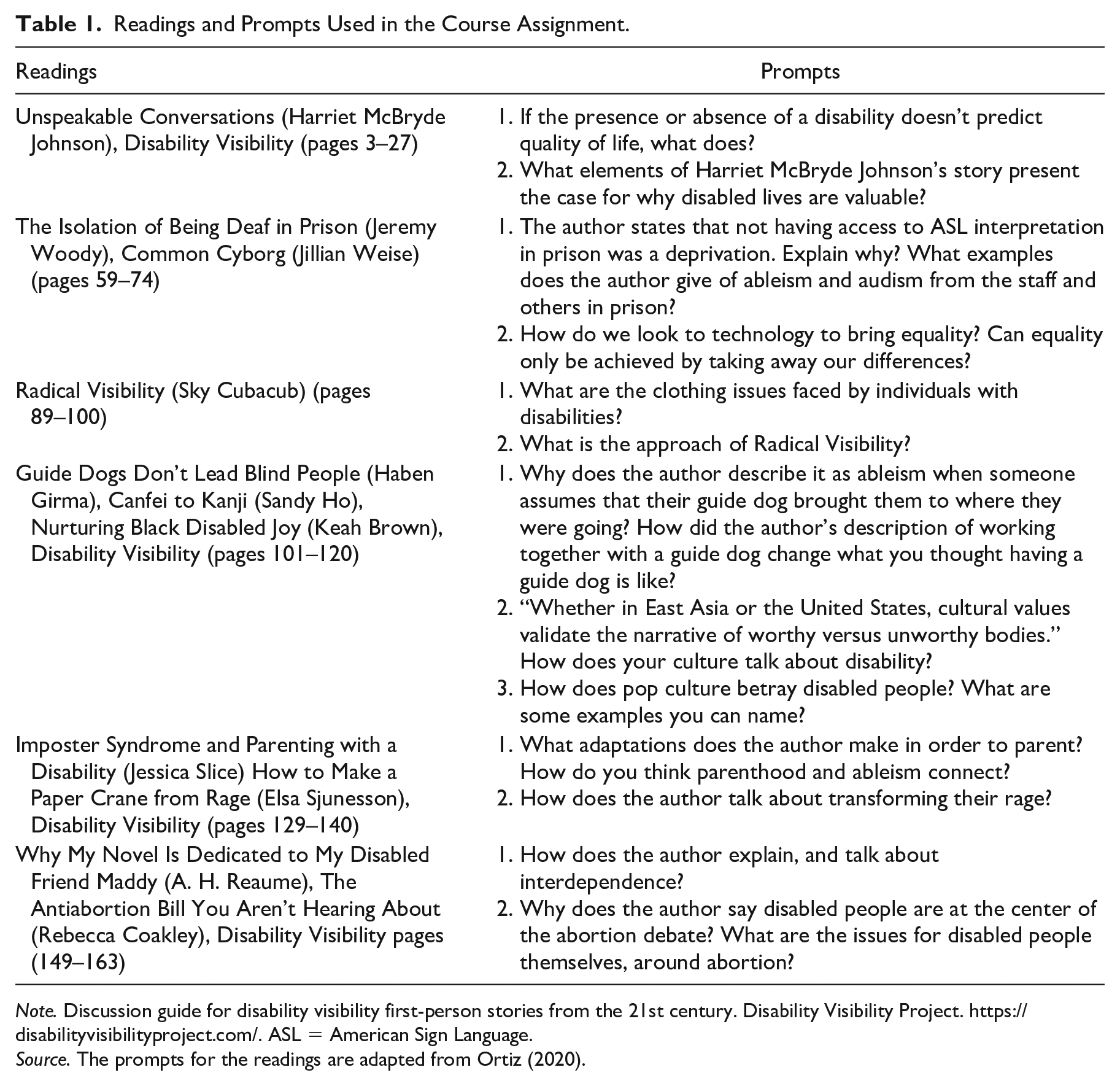
Note. Discussion guide for disability visibility first-person stories from the 21st century. Disability Visibility Project. https://disabilityvisibilityproject.com/. ASL = American Sign Language.
Source. The prompts for the readings are adapted from Ortiz (2020).
Participants
After the researcher posted the grades for the course, she contacted the students in the course via email to request permission to use their assignments for research purposes and to ask if they would be willing to participate in an interview. Out of the total number of students contacted, 21 permitted their assignments to be used for the research, while seven volunteered to participate in an interview. All participants were between 24 and 45 in age and were enrolled in the Master’s program for special education or the credential program for teaching students with ESN. Out of the total number of participants, there were 18 female and three male candidates. In their reflections, three participants self-identified as LGBTQIA+. As to their cultural identities, 14 participants identified as white, three as Latina, one as Middle Eastern, and four as Asian/South Asian. In addition, two participants identified themselves as having autism, and one identified as having attention deficit disorder. All but two participants were currently interns or on emergency credential in classrooms with students with ESN.
Data Collection
Data were collected through the reflective assignments of the students and the interviews. There were 118 initial postings and 246 responses to other classmates’ postings. The postings were between 154 and 325 words long, while the responses to classmates’ postings were between 37 and 73 words long. The interviews were between 30 and 45 minutes long and were conducted via Zoom. The interviews were transcribed using the NVivo transcription software and then manually checked for accuracy. The interview was semi-structured using the questions: What are your thoughts on the readings from disability visibility?; Was there a particular chapter that resonated with you, and if so, why?; Did you learn anything new about disability or encounter new perspectives you had not considered before in the readings? If so, what?; Have these readings influenced or changed your perceptions of individuals with disabilities or your perceptions of your students’ abilities? If so, in what ways?; Will you be implementing any changes in your classroom practices as a result of these readings? If so, what changes do you plan to make? The researcher followed up with additional questions for clarification and to gather more information based on the students’ discussions. The interview, therefore, allowed for member checking, ensuring that the information gathered was accurate and reflective of the students’ experiences, and triangulation of data.
Data Analysis
Following the guidelines for thematic coding set by Braun and Clarke (2019), the researcher first familiarized herself with the reflective assignments by reading the transcripts multiple times and noting initial ideas. The researcher used a combination of deductive and inductive coding in the analysis. The deductive codes that were used for developing initial codes were: current beliefs about disability, critical reflection of beliefs about disability (Mills & Jennings, 2011), learning a new aspect of disability that they had not previously considered (Estes-Sykes, 2017), participant’s empathy toward the feelings of the disabled (Estes-Sykes, 2017; Kidd & Castano, 2013; S. Wilson & Thornton, 2006), changing attitudes toward differences (Mills & Jennings, 2011), using new knowledge to change their teaching practice (Donne, 2016).
Then, using the framework of the deductive codes stated earlier, the researcher extended these codes by inductively coding the interviews and assignments leading to 23 initial codes. Thus, the deductive codes derived from the literature were elaborated and modified in this step to reflect the patterns emerging from the data. For example, in the deductive code, participants’ empathy toward the feelings of the disabled was elaborated to include participants’ empathy with their experiences with disabled family members, disabled community members, and their students at school. Then, it was further extended to participants seeing the authors’ experiences as common human experiences, particularly in regard to clothing, prejudice, and emotions. Then, new codes were added, including student-perceived barriers to empathy, and the presence of disabled participants enhancing the creation of empathy. Finally, the deductive code participants’ empathy toward the feelings of the disabled was extended to eight codes through inductive coding.
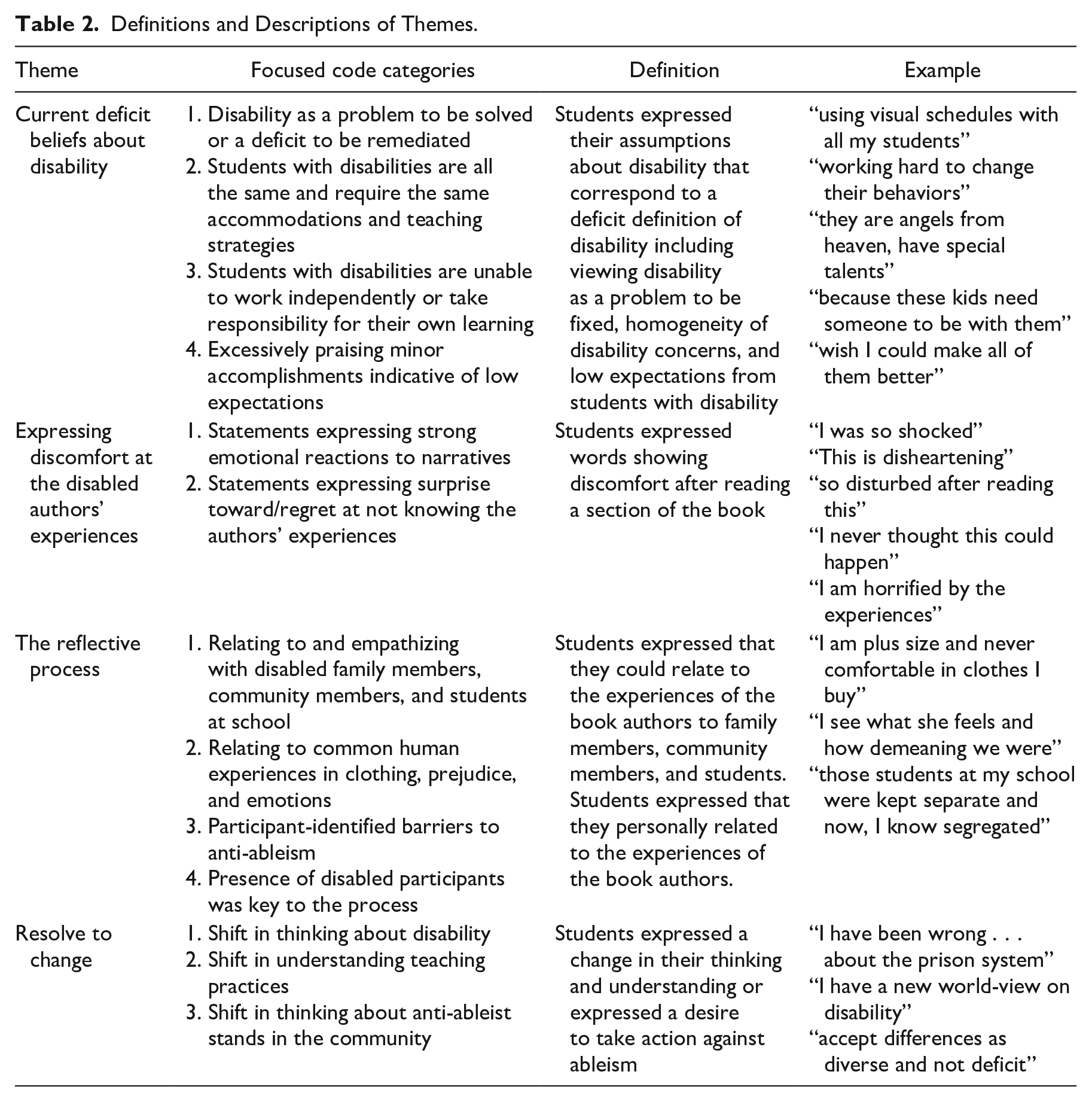
The focused coding process resulted in 13 codes, consolidating some initial codes into broader categories, identifying recurrent and significant codes, and recognizing similarities between codes from various respondents or sources. Following this, the researcher consolidated the focused codes into potential themes that could answer the research questions and allowed for meaningful insights and conclusions. The researcher then defined and named the themes, relating the analysis to the research question, and included extract samples to provide evidence for each theme. Table 2 shows the description and definition of the themes.
Definitions and Descriptions of Themes.
Methodological Integrity
To ensure methodological integrity, the researcher employed member-checking through interviews and analytical memo writing according to Saldaña’s (2021) guidelines. During the interviews, the researcher always allowed the participants to provide any additional information not covered in the questions. Moreover, the interviews provided opportunities for member-checking, enabling the participants to clarify the ideas expressed in their postings. Through these interviews, the participants reiterated and further expounded on their reflections, adding clarity to the coding process. Further, to protect student confidentiality, all names were anonymized before coding with pseudonyms and only the researcher had the key to the codes. These measures helped to enhance the reliability and validity of the study’s findings.
Results
As the researcher thematically coded the data from the reflective assignments and the interview transcripts, there were four patterns that were evident in the students’ reactions to the readings. These themes included current beliefs about disability, embracing new perspectives on disability, the reflective process, and a resolve to change.
Current Beliefs About Disability
An indication of the teacher candidate’s current beliefs about disability was obtained from the first posting by candidates in the discussion, when they introduced themselves and their teaching philosophy, described their students and classrooms, and triangulated with students’ interviews. Specifically, the researcher looked for language that indicated a deficit perception of disability, such as using stigmatizing or outdated terms to describe disabled students, a lack of awareness or sensitivity toward disability issues, negative or stereotypical descriptions of disability, and low academic expectations for disabled students.
For example, Jean’s statement, “just like students with autism like puzzles. . .” indicated a stereotypical assumption that students with autism have the same preferences and interests.
There were also instances of statements that reflected a deficit perception of disability and saw disability as a problem to be solved. For example, Mary wrote that her team “was always working hard to change their behaviors so that they could be welcomed in the mainstream classes.” Vera wrote that she felt very sad looking at her students and wished she “could make all of them better.” Mary and Vera confirmed these beliefs in the interviews, as they talked about their initial assumptions about disability.
Moreover, some statements revealed a paternalistic and condescending attitude toward disabled students and perpetuated the idea that they depend on non-disabled people for help. For example, Fiona wrote that she was in this field because she wanted to “help these innocent kids,” and her students “were angels from heavens” having “special talents” and should be treated as “gifts from God.” Fiona also echoed these beliefs in the interview saying, “I am very religious and I guess my beliefs are shaped by what I hear in church.” In sum, these statements suggested that the teacher candidates, either consciously or unconsciously, had developed a certain level of deficit thinking through their past personal experiences.
Expressing Discomfort at Disabled Authors’ Experiences
Most students experienced initial mental discomfort from learning new perspectives about disability that challenged their own established beliefs about disability. A content analysis of the words used to react to the readings was conducted. There were 207 words that were identified, out of which 189 words showed a theme of discomfort ranging from surprise to extreme shock. These words are shown in Figure 1, which displays a word cloud of the reported emotions in their postings. Although these reactions were seen through all the readings, they were more clustered and numerous in the initial weeks of the course. These words show the extent of their discomfort that arose from being exposed to a new world-view from the narratives of the disabled authors that made ableism visible to them. The teacher candidates used words like shock, horror, appalling, surprised, disturbed, and disheartened. Only the three students who identified as disabled reported not being surprised by these events narrated in the readings. The topics that resonated most among the students, as evidenced by the number of words in the discussion threads were the debate on screening for disability in fetuses and consequent abortion in the reading Unspeakable Conversations (Harriet McBryde Johnson), lack of clothing choices for disabled students in the reading Radical Visibility (Cubacub), the lack of access to primary care, facilities, and education in prison for the disabled in the reading The Isolation of Being Deaf in Prison (Woody), and intersectionality and cultural perceptions of disability in the reading Canfei to Kanji (Ho), Nurturing Black disabled Joy (Brown). For example, Mary wrote about how horrified she was at learning about the pervasive ableism that the disabled authors had to face. She expressed her discomfort saying, “I could never have imagined the problems that disabled people face to buy decent clothes.” In another instance, John said, “I am very disturbed by the lack of facilities for the disabled prisoners.” Similarly, Julie talked about not realizing that her community shared ableist beliefs saying, “I felt as if I had been hit by lightning. I see this discrimination all the time, and it never occurred to me.” Fiona also wondered about the multiple oppressive nature of intersectionality, “This is so disheartening. I wonder, if Stephen Hawking had been a black disabled woman, would he have been given the same opportunities?”
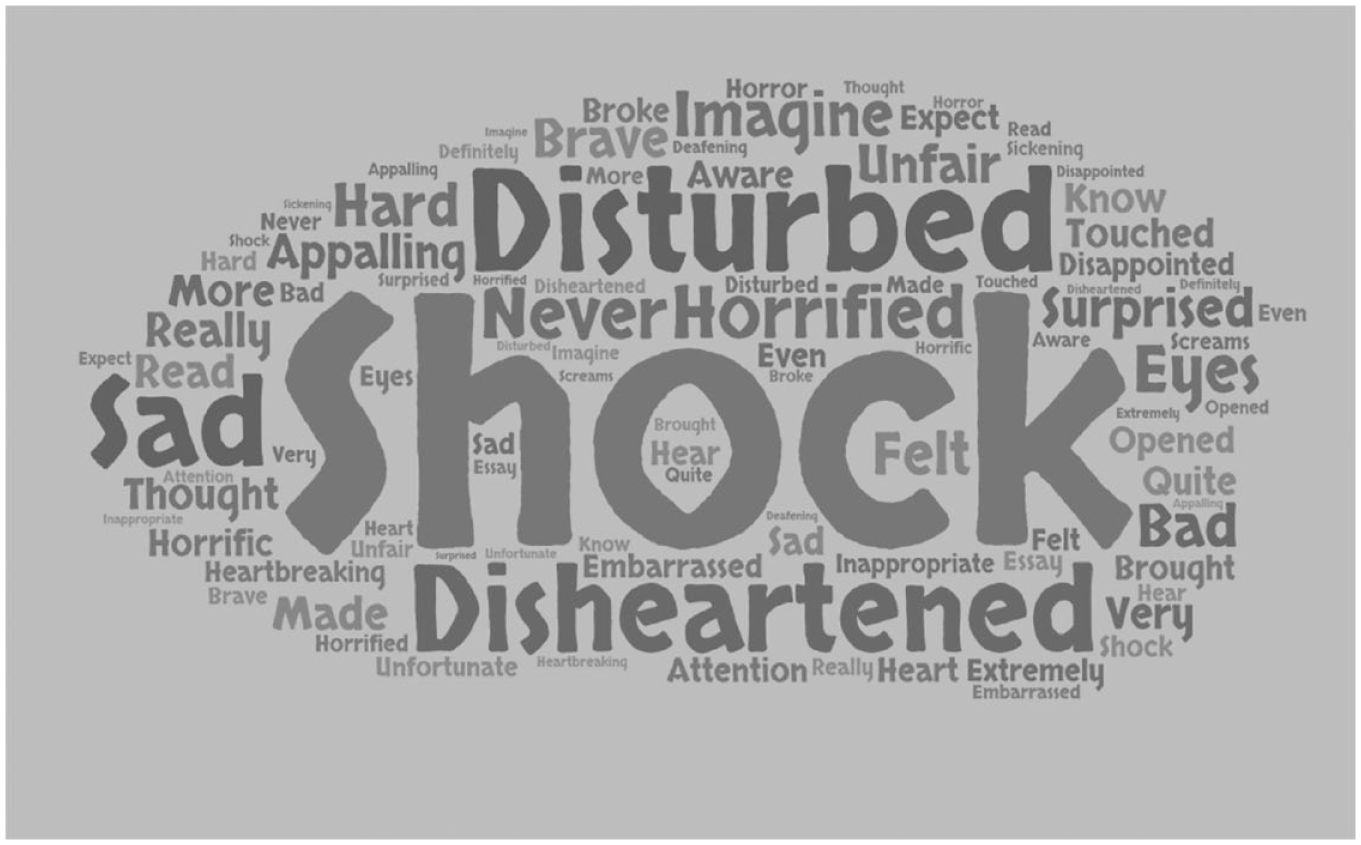
Word cloud showing reactions of teacher candidates to the readings.
In interviews, the participants reiterated their experience with initial discomfort at the readings. For instance, Linda said, “I had absolutely no idea, it was so shocking.” Other participants indicated that they had never been exposed to experiences of the disabled with Mary mentioning, “It has always been someone else talking for them.” The data convincingly indicated that teacher candidates held a dominant ideology that was unknowingly ableist. When confronted with the actual experiences of disabled people, the candidates experienced strong emotions.
The Reflective Process
Data indicated that as the teacher candidates read the disabled authors’ narratives, they empathized with the disabled authors and made connections to their personal experiences with family members, prior encounters with the disabled, and their students at school. For instance, Miranda wrote about Woody’s prison experience in The Isolation of Being Deaf in Prison, “If I had been in his place, I would have fought with all the authorities.” Fiona responded to her saying, “I can hear his screams in my ear even now.” Further, the teacher candidates saw the experiences of the disabled authors as common human experiences. The participants saw commonalities in access to clothing (size availability, sensory issues with clothing, and gender-biased clothing), experiences with prejudice (due to race, gender, age, and sexual orientation), and emotional experiences (rage, hostility, and anxiety). For instance, Linda wrote responding to clothing issues discussed in Radical Visibility (Cubacub), “Every day I get dressed, I ask myself, “Is this lesbian enough?” Similarly, Gloria wrote, “I can understand not finding the right clothes, I am plus size and never comfortable in clothes I buy from the stores.” Gary related to the author’s frustration and anger with his own life experiences.
Then, the teacher candidates also made connections with experiences with their family members and community. Jean remembered how her family always treated her adult disabled cousin like a child saying, “Now, I see what she feels and how demeaning we were.” Laura commented on how families in her church would talk about another family with a disabled child and lamented, “I see the ableism in my community and understand what the author is saying.” John remembered “those students at my school” and how they were always “kept separate and now, I know segregated.” He recalled a moment of ableism where they were referred to “as the students from the yellow bus.”
Further, the teacher candidates made connections between the narratives of disabled authors and the experiences of their students with ESN. The candidates better understood their students’ needs and perspectives, especially those who may have difficulty expressing themselves. For example, Gloria wrote of the clothing problems of her student who used a wheelchair and realized they had limited choices. Henry connected incontinence issues in one of his students to Johnson’s description of her experiences in Unspeakable Conversations.
Moreover, the narratives helped candidates like Jessica and Fiona understand their students’ emotions with emotional disturbances or communication difficulties. After reading How to Make a Paper Crane from Rage (Sjunneson), Jessica could empathize more deeply with her students’ feelings and experiences. Fiona also mentioned that these narratives were so useful to her, “as my students cannot always let me know what they feel.” Linda hoped that her students who were “mostly non-verbal” would be able to “one day, communicate their problems as well as this author.” Kiara reflected after reading Common Cyborg (Weise) “the AAC (augmentative and alternate communication) devices are so automated with few choices for voices that resembled the student’s families.” By connecting the narratives of disabled authors to their students’ experiences, teacher candidates were able to gain a better understanding of their students’ needs and perspectives, and, ultimately, provide more effective support.
The participants frequently noted that they had not been aware of this “part of the life of the disabled people” (Kiara). Further, the presence of three teacher candidates who identified as disabled in the discussions was key in enabling the participants to put the stories in context. Mary mentioned during the interview, “When Maria (who identified as autistic) talked about her experiences, it made me bring the book close to our classroom.” Jerry noted that reading the disabled participants’ posts “hit home” and he was better able to “relate to their condition.”
A Resolve to Change
Data from the reflections and interviews showed that the teacher candidates expressed a shift in their thinking about disability and their proposed actions in their classroom. The overall shift in their thinking was expressed through statements such as “I realized that I have been wrong about I thought about the prison system (Laura),” “I understand how true equity is not taking away differences but the full inclusion of the differences (Gloria),” “I have a new world-view on disability (John),” and “I admit that the author’s narrative changed my views on ableism (Fiona).” Linda, who felt that the narratives changed the way she saw her students, wrote:
I always looked at my students and felt sorry for them. Now, I look at them and feel that I want them to be able to do what they love in their lives. I saw them as defective and now I see them as perfect the way they are. I guess that is the real change in my views.
The teacher candidates also expressed their shift in thinking on topics related to the readings. For instance, Mary noted after reading the chapter on attributing too much power to guide dogs, “I realized that I need to reconsider how I view my students with AAC devices. Those devices don’t talk. The students do.” Similarly, Jerry noted that the reading Canfei to Kanji (Ho) helped him to pay more attention to the language used to describe disability. He wrote:
Language matters a lot. By using language that demeans them, makes them useless, calling them a burden, by praying to God for mercy on them, to forgive them etc., we are pushing the same narrative that they are somehow not needed or valuable. I want to be able to accept differences as diverse, not deficit.
After reading Woody’s prison experience in The Isolation of Being Deaf in Prison, the teacher candidates engaged in a lengthy discussion about American Sign Language (ASL) in the prison system and whether it could be offered as a language elective in schools. Gary expressed his excitement about everyone knowing ASL, stating, “How awesome it would be for everyone to know ASL!” The discussion centered around the importance of ASL as a form of communication for the deaf and hard of hearing. The teacher candidates also discussed the benefits of offering ASL as an elective in schools, such as increasing accessibility and inclusivity for deaf and hard-of-hearing students and fostering a deeper understanding and appreciation of deaf culture. For instance, Jerry noted, “I can suggest this at our staff meeting, let’s see where it goes.” Fiona responded to Jerry, noting, “I think elementary schools can do this, it should start from there. I can also mention this to our principal.”
The teacher candidates also expressed that they would change their actions in their community and their classroom because of the readings. For instance, Maria wrote:
I am definitely going to point out ableism in my social circles. I see ableism in my friends’ comments and during my family get togethers. They don’t know that they are being ableist. But then, before this course, I did not either. They are all caring, loving people, but now I see that they are very ableist, as was I.
Sania, who was into fashion and clothing, said, “I was looking into the websites mentioned for radical visibility and this will be my new passion.” Gita was concerned about her family’s actions and shared, “There is so much ableism in my family and how they see disability, mostly as a tragedy that I want to confront that.” In addition, the participants shared that they wanted to change the way they view students in their classrooms. Jerry said that he wanted “to view students with disabilities without an underlying pity or sadness.” Several participants shared that they wanted to talk to their school administrators about putting together a staff training on ableism and how it shows up in many unexpected places at school. Gloria wrote, “We have to change the attitude of the teachers, if they don’t change, how will the students change?” There was a long thread of discussion on reacting to student behavior after the reading of How to Make a Paper Crane from Rage (Sjunesson). Participants talked about wanting to learn new ways of responding to the behaviors of students with ESN while keeping students’ dignity during the process. For instance, Kiara wrote:
Behavior intervention does not always work. Next time, I will use a little compassion and understanding when my student gets upset. Sometimes behavior plans treat them like patients or something. Maybe showing a little compassion may work. Similarly, Jerry wrote: I know that we are constantly manipulating students with reinforcers, reminding them of consequences and taking away privileges and so on. Does that not demean them? Does that not make them into objects that we can manipulate to do what we want them to do? I like the idea of treating them always with dignity, like individuals who have a right to feel what they are feeling, only showing them how to express it appropriately. Mary responded to Jerry: I agree that we manipulate the students’ behaviors a lot. We have to do it because it is in their plans. But I am with you, I will put more effort at understanding what they are feeling and validating their feelings. Somehow, we look at behavior as this observable measurable stuff, and not look at the feelings and emotions behind the behavior.
Overall, the findings suggest that the participants started the course with some degree of ableism, experiencing discomfort upon reading the works of disabled authors but through reflection and introspection made meaningful connections to their own lives and work and showed a readiness to change their beliefs and practices regarding disability.
Discussion
The study affirmed many of the previous findings in the field of teacher beliefs, which revealed that teacher candidates started the course with negative presumptions about disability without realizing it (Broderick & Lalvani, 2017). Further, the study’s results align with previous research that has suggested the efficacy of discursive practice, reflection, and bibliotherapy in teacher education programs in challenging and disrupting deficit notions toward students with ESN (Donne, 2016; Estes-Sykes, 2017; Longmore & Umansky, 2001; Mills & Jennings, 2011; Peters & Reid, 2009). In addition, an important finding of this study was the degree of cognitive dissonance that the participants expressed in their reflections. The study’s findings indicated that teacher candidates expressed substantial discomfort when they read the narrative of the disabled authors. However, they were open to changing their beliefs rather than justifying their existing beliefs. By contrast, Broderick and Lalvani (2017) found their students more resistant to change and recommended integrating anti-ableist coursework throughout the teacher preparation program to disrupt ableist dysconsciousness (unconscious bias).
Second, the study’s findings pointed to the importance of reflective writing in increasing introspection among teacher candidates. Gay (2010) recommended that teachers thoroughly examine their personal beliefs regarding race, class, culture, ethnicity, and experience to prepare for cultural diversity. Through their reflections during the course, the teacher candidates not only empathized with the experiences of the disabled, but could see these as common human experiences, and made connections to experiences with individuals with ESN in their families, communities, and school settings. Thus, critical self-reflection may initially cause cognitive dissonance but ultimately leads to new self-awareness and beliefs about disability for teachers. They can then use this knowledge to reflect on the politics of inclusion and exclusion in schools. This aligns with research that suggests changing deficit thinking requires personal experiences and feelings in addition to book knowledge (Broderick & Lalvani, 2017; Jones, 2011).
Finally, the teacher candidates demonstrated a willingness to transform their thinking and teaching practices for students with ESN, resolving to confront ableism in their families, communities, and schools. Some candidates were eager to discuss this topic with other teachers and expressed interest in reading other works by disabled authors. By acknowledging and reflecting on their biases and behaviors, teacher candidates can gain a better understanding of the experiences of their students with ESN to work toward creating more inclusive and equitable learning environments for all students (Jones, 2011).
Limitations
A study based solely on the reflective writings of students and a few student interviews is limited in its scope and may not capture the students’ full range of experiences or perspectives. First, the study’s findings may not apply to other student populations or courses because the sample may not represent the broader teacher candidate population. Second, students who voluntarily participated in the study may have had different experiences, beliefs, or attitudes than those who did not. Furthermore, the researcher conducted the interviews without the presence of a co-facilitator, potentially raising concerns about the overall trustworthiness of the interview process. In addition, students might have been motivated to portray themselves in a favorable light or offer socially desirable answers in their reflective writings and interviews due to the positionality of the researcher as their professor. Finally, some of the interview questions may have led the students to foresee the purpose of the research and biased their responses. However, in spite of these limitations, the study provided an insight into how to disrupt orthodox notions of disability and include narratives by disabled authors in teacher preparation programs.
Implications for Practice
Teacher training programs for students with ESN have largely focused on evidence-based practices driven by empiricism and behaviorism. While these practices have greatly improved the educational experiences of ESN students, they have pushed aside the lived experiences of disabled people that should have been a part of the knowledge base for teachers (Marlowe & Maycock, 2001). This study pointed to the importance of including the lived experiences of the disabled people in teacher preparation programs as a first step toward challenging ableism in the educational system. Thus, teaching can become a tool to challenge injustice, and teachers can be empowered to create change within unsatisfactory systems (Ruppar et al., 2023). Rather than learning about disabled people, the focus should be on learning from them. It is essential to center the knowledge of disabled people as experts about their bodies, their learning, and their challenges.
Second, the study demonstrated that by reflecting on the narratives of disabled authors, the teacher candidates could relate more effectively to their students in the classroom. Through this process, they gained a deeper understanding of their students’ motivations and behavior, which could lead to more student-centered instruction and improved classroom management practices. The study’s insights into the environmental barriers faced by disabled individuals nudged the participants to look at the obstacles to accessing education instead of setting low expectations for their students. By understanding the nuances of individual motivations and attitudes, educators can refine their curriculum design, instructional methods, and assessment techniques. For instance, a deeper understanding of what motivates students can inform the creation of assignments that are both challenging and relevant to their interests, promoting higher levels of intrinsic motivation and better performance. Some teachers even reported modifying their behavior intervention plans to reflect greater compassion and understanding of their students’ emotions. These changes can create a more inclusive and welcoming classroom environment for students with ESN.
Implications for Research
Before narratives of disabled authors can be part of selection materials for teacher education programs, comparative studies would be needed to assess the varying effects of different narrative styles, personal experiences, and disability-related themes. These studies could also compare how teachers in general education and special education credential programs interact with the materials and contribute to developing a more meaningful curriculum that maximizes the potential for transformative learning experiences among teacher candidates.
Further research is also needed to follow up on the graduates of the credential program at their schools to verify how these changes have influenced their teaching practices. Longitudinal studies that follow graduates into their early teaching careers can provide valuable insights into the lasting impact of their teacher preparation. In addition, research that examines the impact on student outcomes and experiences can provide a more comprehensive picture. Researchers could assess indicators such as student engagement, academic performance, and social-emotional development to ascertain whether teachers who were exposed to diverse perspectives are more adept at creating inclusive and supportive learning environments.
In conclusion, this qualitative study examined teacher candidates’ reactions to narratives by disabled authors about their lived experiences with disability. The study’s findings provided evidence that students became aware of their dysconscious ableism while reading narratives by disabled authors and attempted to challenge the traditional, deficit notions of disability in students with ESN. In addition, this realization prompted teacher candidates to resolve to change their teaching practices with students in their classrooms.
Footnotes
Declaration of Conflicting Interests
The author(s) declared no potential conflicts of interest with respect to the research, authorship, and/or publication of this article.
Funding
The author(s) received no financial support for the research, authorship, and/or publication of this article.

Editor in Charge: Zachary Rossetti