



Abstract
This qualitative research explored the underresearched area of subjective meaning(s) of travel for U.K. baby-boomers, from an occupational perspective. Using a descriptive phenomenology, a convenience sample of eight baby-boomers was recruited using social media. Participants took part in semistructured interviews, and narratives were analysed using thematic analysis. Four themes were generated: (a) travel is important to me, (b) travel changes through time, (c) travel facilitators and barriers and (d) travel as a shared experience. Participants perceived travel as a meaningful and health-promoting occupation that represented freedom, choice, independence, connection and achievement. Greater comfort was sought with age while financial constraints and deteriorating health were considered barriers to travel. The therapeutic value of travel as a meaningful occupation should not be underestimated. Travel providers might consider providing meaningful, accessible and desired travel opportunities for this cohort while examining their potential economic benefits to society.
Plain Language Summary
Using interviews, this research explored the understudied experiences and meaning eight baby-boomers associated with travel. Baby boomer refers to a generation born between 1946 and 1964. Travel was largely linked with holidays/vacations and considered a symbol of life. It was viewed as a health promoting, meaningful activity providing memories, opportunities for connection and personal development. Travel preferences changed over time, while finances and health presented barriers to travel. Findings are in-depth and may be applicable to older people, although using social media may have excluded others from taking part in the research. For occupational therapists, this research highlights the importance of benefits of travel and proposes future research to promote accessible and meaningful travel. It also encourages research into social and economic differences and the potential economic benefits the baby-boomer generation can contribute to wider society through engaging in travel.
Keywords
Introduction
From ancestral migration to modern space exploration, travel is considered a fundamental human occupation. As a ‘gateway occupation’, travel enables other activities including food acquisition, socializing and exercising. Indeed, the COVID-19 pandemic highlighted the consequences of restricted travel, particularly in relation to well-being and engagement in other essential occupations (Lättman et al., 2023). Thus, travel could be vital for human existence.
With socio-temporal and socio-economic influences, the definition of ‘travel’ is subjective with variables in impetus and distance. However, the Cambridge University Press (2021) describes travel as simply moving from one place to another. This suggests travel can range from a single step to space exploration. Presenting a wider perspective of travel, this definition was utilized in this research.
Baby-boomers, born from 1946 to 1964, are a generation known for shared values and characteristics (Rogerson & Kim, 2005). They are the first to benefit from a lifelong welfare state and a longer life expectancy, for example, 78% of babies born in 1946 lived to 70, compared to 58% in earlier generations in the United Kingdom (the Office for National Statistics [ONS], 2018). The elimination of mandatory retirement in the United Kingdom suggests baby-boomers may continue working longer, boosting already buoyant incomes. Subsequently, they may possess greater travel access than prior generations (ONS, 2018).
A literature search was conducted to identify existing research, inclusive of grey literature regarding travel and baby-boomers. The search period from 2000 to 2025 yielded 139 articles; few however, explicitly addressed meaning (n = 7). Literature involving children and those in languages other than English were excluded. Multiple inferences regarding potential meanings associated with travel were clustered into broad themes relating to personal growth, connection and well-being.
Personal Growth
Personal growth is the conscious and deliberate desire to improve oneself (Weigold et al., 2013). Research suggests travel could foster this by encouraging introspection and spirituality (Kuo et al., 2019) while increasing self-awareness and creating a sense of accomplishment (Zhang, 2023). Although related to specific modes of travel, both Wensley and Slade (2012) (walking) and Feighan and Roberts (2017) (cycling) also concluded these modes of travel facilitated meaning-making through identity, interaction and challenge. Both studies were occupation-focused and suggest travel could be a mechanism through which personal growth is achieved, lending credence to the likely importance of personal growth in the meaning of travel for baby-boomers.
Connection
Using interviews(n = 20), Hillman (2013) explored the health and social needs of ‘grey-nomads’. Drawing parallels with North American ‘snowbirds’ (Wu & Pearce, 2016), Hillman (2013) described grey-nomads as people of Australia whom, postretirement, tour northern Australia for 3 to 4 months to escape colder seasons. Hillman (2013) concluded social connections formed a large part of the travel experience and were perceived as necessary.
Although using a sample of occupational therapists (n = 14), rather than baby-boomers, Eagers et al. (2022) highlighted the importance of physical activity, leisure and connection in creating a meaningful transition into retirement. While not explicit, this could suggest the inclusion of travel within leisure is important for retirees and warrants investigation. Furthermore, Puyané et al. (2025) identified breakdowns in social connections as a risk factor in loneliness and isolation. While diluted by diverse sample ages, inferences drawn concerning the likely importance of connection in meaning of travel are nevertheless compelling.
Well-being
The most prolific area of research concerns the role of travel in well-being. Though lacking consensus, well-being can be recognized as an individual’s experience and their subsequent evaluation of such experiences (Michaelson et al., 2012). Indeed, revealing its significance, the United Nations Tourism’s (2025) Tourism Agenda 2030 cites well-being as an objective of travel.
Incorporating many forms of travel, tourism, particularly social tourism, may support baby-boomers’ well-being, including aspirations for rejuvenation through spa and ageing treatments (Patterson & Balderas-Cejudo, 2022). Similarly, tourism is linked to enhanced eudaimonic and subjective well-being (Sie et al., 2021). A large Japanese study (n = 626) advocated a relationship between occupational participation and quality of life in older adults (Shimokihara et al., 2025). Given travel’s potential wellness benefits, exploring its occupational meaning for baby-boomers is timely.
Attracting greater travel specificity, Mollenkopf et al. (2011) suggested travel is perceived as important and with restrictions linked to decreased life satisfaction in older people. Furthermore, Sanford et al. (2018) identified an association between driving cessation and a loss of independence, identity disruption and poor well-being. This both underscores the positive influence travel can have on well-being and draws attention to consequences of travel interruption. Subsequently, well-being may hold significance in the meaning of travel for baby-boomers.
Although existing research suggests personal growth, connection and well-being may be associated with the meaning of travel attributed by baby-boomers, at times, limitations arise from outdated studies and sample heterogeneity. For example, Lättman et al. (2023) included participants from previous generations, while Sie et al. (2021) explored an Australian sample exclusively. Subsequently, findings may not be representative of the baby-boomer cohort and transferability to other cultures could be restricted.
Literature largely focused on travel motives and lacked a clear and comprehensive understanding on what travel means for baby-boomers. This research explored U.K. baby-boomers’ subjective meanings associated with travel to elucidate its quintessence. Rooted in occupational science, it aimed to generate further research and recognize travel as a meaningful occupation within this cohort.
Methodology
Design
Congruent with an interpretive and relativist ontology, this research sought to elicit the subjective meanings associated with travel, through interactions between researcher and participants. A descriptive phenomenological approach was utilized for its compatibility with exploration of subjective meanings. Therefore, this research sought to describe the multiple subjective realities baby-boomers created surrounding the meaning of travel, consistent with a constructivist epistemology. Furthermore, Stanley and Nayar (2015) endorse the qualitative approach within occupational therapy and occupational science in seeking an understanding of the position of occupation within people’s lives. Using inductive reasoning alongside the qualitative approach allowed meaning to be generated from data, which in this research, was related to travel and baby-boomers.
Participants and Setting
This research recruited eight consenting participants, born between 1946 and 1964 inclusive (aged 55–74 years), based in the United Kingdom, to participate in semistructured online interviews. Table 1 details inclusion and exclusion criteria.
Participant Inclusion and Exclusion Criteria.
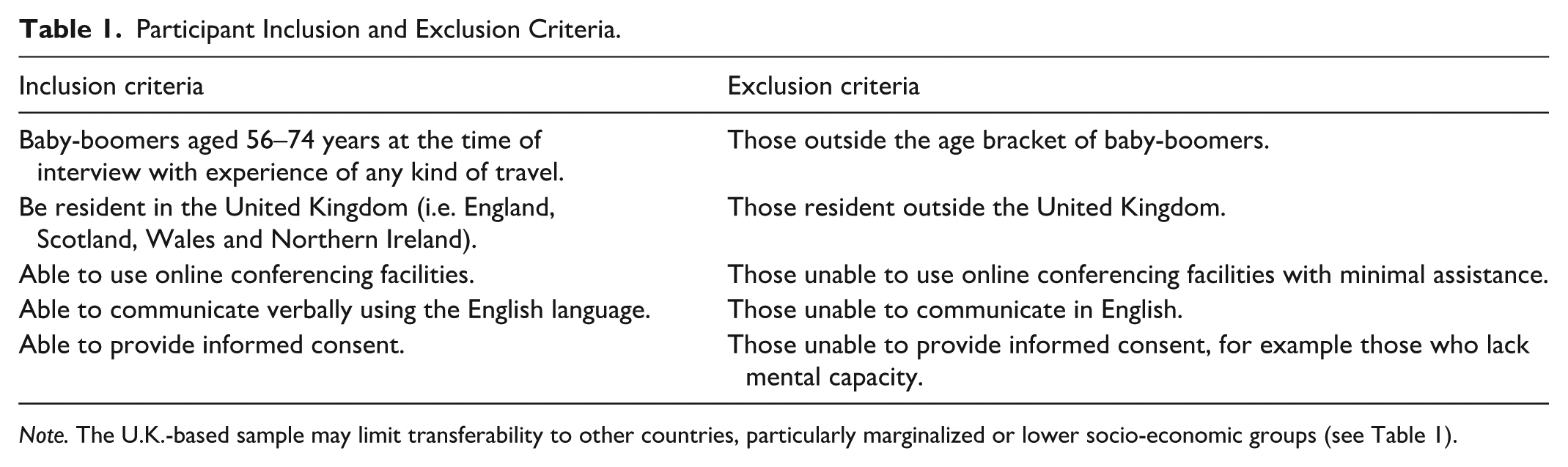
Note. The U.K.-based sample may limit transferability to other countries, particularly marginalized or lower socio-economic groups (see Table 1).
A convenience sample was recruited via social media platforms X© and Facebook©. Although associated with sampling bias, the use of existing participant networks in recruitment via snowballing was nevertheless consistent with the ontology of this research and, therefore, utilized simultaneously.
Data Collection
An interview protocol was developed based on Feighan and Roberts’ (2017) research exploring the meanings associated with cycling. The interview protocol was piloted to identify practical issues with some modifications to language made. Questions included the following: Can you tell me about a recent time you travelled that means something to you? What do you get from travelling? and What would you miss most if unable to travel?
Online interviews lasted between 10 and 35 min (M = 22.05), were audio-recorded and transcribed verbatim by the researchers. Transcripts were returned to participants via email with no changes requested, thereby enhancing dependability. Notes were written after each interview to add depth to the analysis and facilitate transcription.
Data Analysis
The six phases of reflexive thematic analysis as outlined by Braun and Clarke (2022) were utilized, immersing and coding across the entire data set. Codes, subthemes and themes were collated using Microsoft Excel. Themes were anchored in the meaning of travel for baby-boomers. The researchers engaged in reflexivity through journals and discussions to ensure transparency, while acknowledging the value of the researcher’s influence on the research.
Ethical Considerations and Consent
This research was approved by an institutional ethics committee and encompassed the principles of the Data Protection Act (2018). Explicit and informed written consent was obtained electronically from participants before participation.
Findings
Eight participants (mean age n = 65) residing in England took part in interviews. Table 2 summarizes participant demographics.
Participant Demographics.
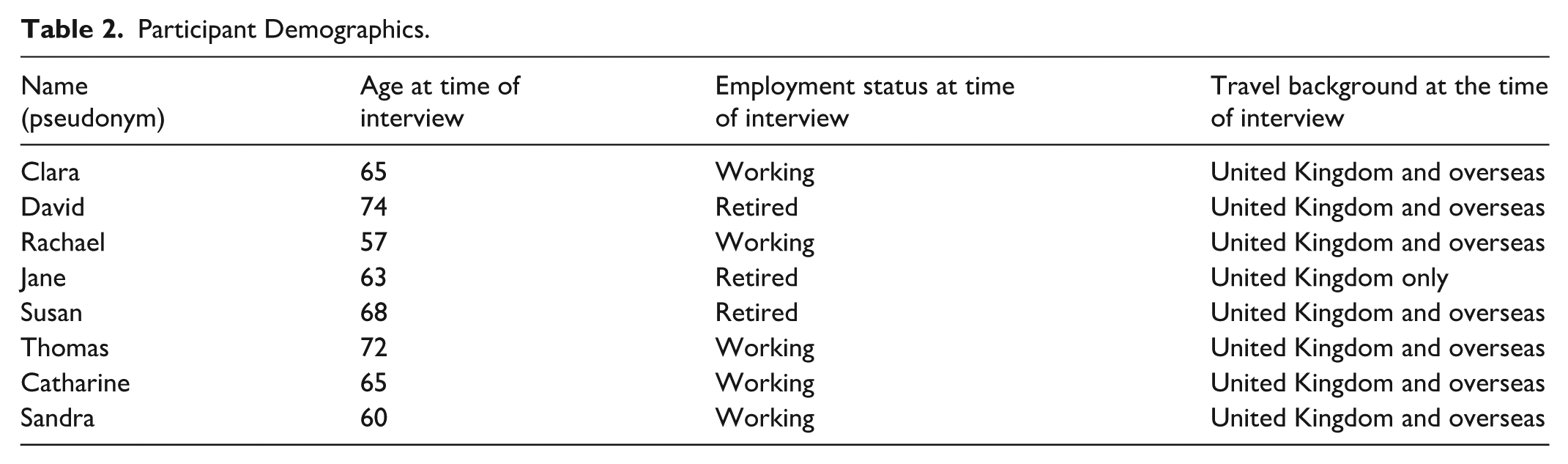
The data set resulted in 117 codes and included descriptions to facilitate consistent application through analysis. Codes were grouped together regarding meaning to produce four themes. Figure 1 summarizes the relationship between themes and subthemes.
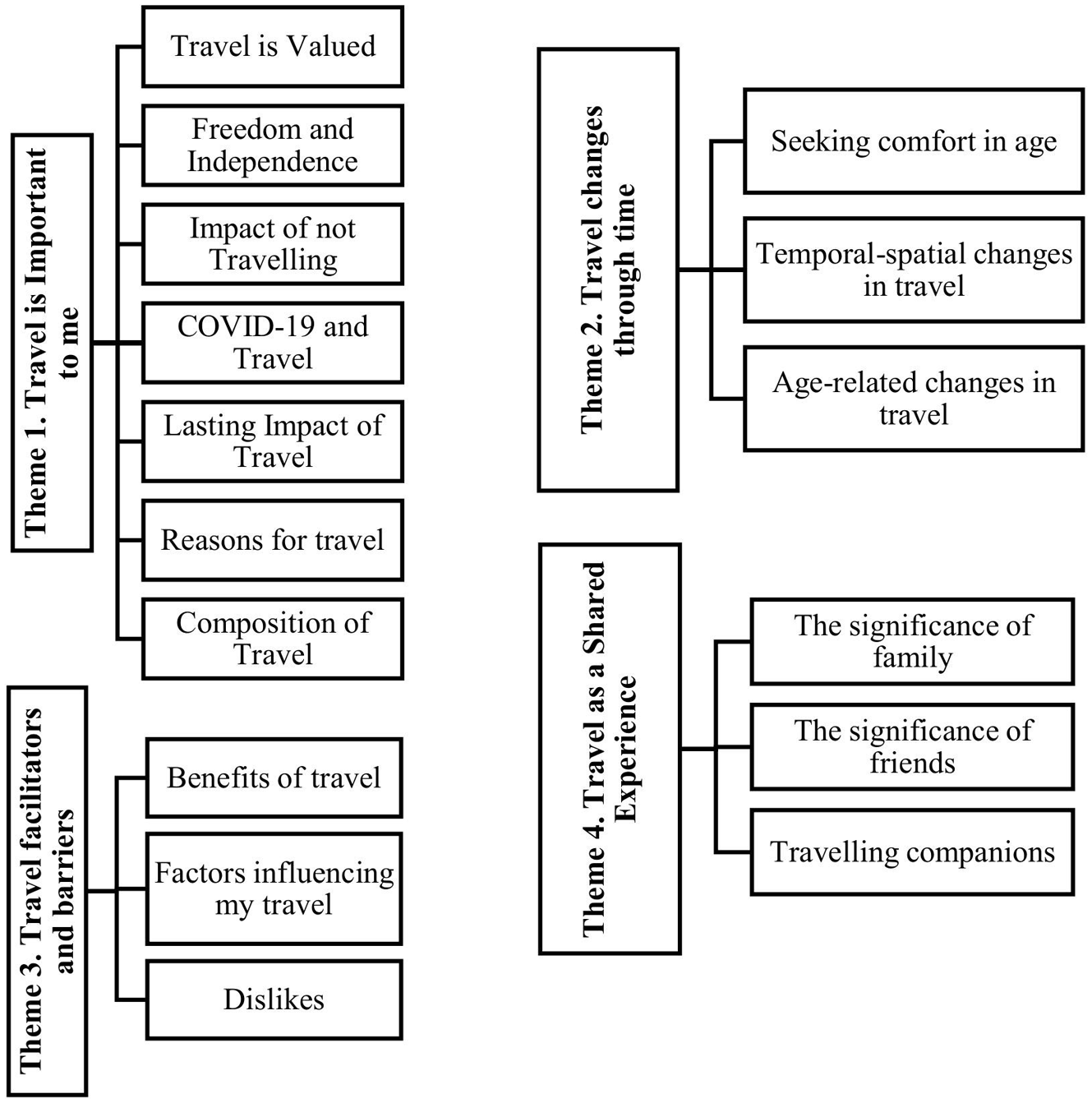
Overview of Themes and Subthemes.
In the reporting of the findings, ‘several participants’ indicate responses from two to three participants while ‘most’ indicates six to seven.
Theme 1: ‘Travel is Important to Me’
The most prominent theme explored the value and importance of travel in the lives of those interviewed. Drawing on participant’s perceptions regarding what constitutes travel, this theme also captured the impact of being unable to travel, either through COVID-19 or other reasons. Travel is recognized as a meaningful activity, and one enabling engagement in other activities.
Travel was considered both an important and a valued occupation across all narratives. This was expressed both explicitly ‘. . . travel is important . . . to me, I need to be able to feel I can get out . .’. (Clara) and implicitly ‘[travel is] . . . emblematic almost [of life] . . ’. (Thomas). Most participants conveyed gratitude for the opportunities they had for travel and recognized it was not something everyone could to engage in.
However, while all participants valued travel, aspects varied. For example, while David enjoyed the journey, Thomas referred to long-haul travel as ‘tedious’, indicating destination was valued over the journey.
Several participants commented on the freedom enjoyed as part of travel and its representation of independence. When COVID-19 restrictions eased Catherine described travelling for the first time as ‘. . . a lovely sense of freedom. . ’. while Susan detailed the independence provided by car travel. Although not all participants commented on the freedom and independence enjoyed through travel, this appeared to be an underlying feeling shared across the data set. For example, through mode of travel, Sandra indicated a sense of freedom,
. . . and that was an adventure because we went on the train . . . it was a long journey, but I enjoyed that because . . . I could run up and down the corridor . . . [compared with car travel].
David also conveyed how coach travel opened opportunities he would not have otherwise had ‘ . . . it also takes us to places that we probably wouldn’t . . . consider going on our own . . ’. (David).
Several participants noted travel disruption was or would be isolating and restrictive. Such sentiments were associated with poor health and well-being, I think that’d have real impact on your wellbeing. . . (Rachael).
All participants also shared what they would miss if unable to travel, for example ‘. . . being somewhere different . . ’. (Susan), ‘. . . the adventure . . ’. (Sandra), ‘. . . the people, cultures, and food . . ’. (David), ‘. . . active thoughts.’.. (Clara).
Travel disruption was described as ‘depressing’ (Susan), and others described feeling ‘isolated’ through being unable to travel (Catherine).
Storytelling and memory recollection gave insights into the lasting impact of travel experiences, with participants indicating travel extended beyond a physical act. Most participants recalled pleasant memories of travel, . . . they were special times and then when my dad got a car . . . we went the whole three miles . . . sat in an airfield and had a picnic . . . it sticks in your memory . . . (Susan).
The implicit joy participants felt from sharing and reminiscing about their experiences was woven throughout their narratives.
The most common reasons for travel shared across the data set were to seek out natural scenery, warmer climates, social interaction and new experiences.
. . . meeting different people . . . a different approach to life . . . scenery, the vistas which you get enormous variety. . . (Thomas).
Most participants associated travel with holidays/vacations for pleasure, . . . when I think travel, I think I’m going . . . on holiday . . ’. (Susan).
Theme 2: Travel Changes Through Time
This theme captures the changes in travel witnessed and experienced by participants. It not only considers changes that occur through life stages and the ageing process but also characterizes the wider temporal and spatial changes influencing travel, including increased car and air travel.
Reflecting on developments or events in the social world, participants described temporal-spatial changes in travel they had experienced, for example ‘. . . increasing affordability of travel.’.. (Catherine) and ‘. . . growth in road networks.’.. (Sandra). Older participants described experiences before air and car travel became common, . . . we didn’t have a car, when I was a boy. . . my parents were . . . in that generation just before car ownership became the norm. . . (David).
Whereas younger participants described changes in the experience of car (Susan) and air travel, . . . I can remember, you checked in . . . it was straightforward and there was quite a lot of leg room. . . (Catherine).
All participants described age-related changes in their experiences of travel through advancing age, including a deterioration in ‘physical stamina’ (Sandra), and an increase in discomfort ‘. . . the joints have protested a bit from sitting around for too long . . ’. (David). Some also conveyed psychological changes in travel related to the ageing process, for example becoming ‘. . . more panicky . . . more stressful’ (Sandra).
Many participants conveyed changes in their attitude regarding travel as they had aged, for example from being a ‘passive traveller’ to ‘being in control’ (Clara) and in distances travelled, . . . as you get older . . . from personal experience, [I] don’t particularly want to travel so far. . . (Jane).
Drawing parallels with temporal-spatial changes in travel, participants also described how life stages such as having children changed their forms of travel, . . . we had a fortnight in [country] and then we had the kids and went camping for twenty years. . . (Sandra).
There was consensus across the data set suggesting greater comfort was sought and perceived as a higher priority as participants aged.
When younger, some participants described how they ‘. . . catnapped on the coaches . . ’. (David), slept ‘. . . on a beach.’.. (Thomas) or slept in ‘. . . insalubrious places . . ’. (Rachael).
Theme 3: Travel Facilitators and Barriers
This theme highlights the challenges and benefits participants identified when travelling. Travel was widely described as challenging, with orientation difficulties noted by over half of participants.
. . . knowing where you’re going . . . that’s a challenge, I’m useless at finding my way anywhere . . ’. (Clara).
Other challenges highlighted affordability, access and airport usage.
Well . . . affording it as we get to retirement . . . [and] you have to start thinking about access. . . (Sandra). I mean you have to negotiate the whole airport thing . . . the whole effort of. . . getting to an airport, organising parking . . . (Rachael).
Aside from the challenges, some aspects of travel were unfavourable, including worrying about fellow travellers and tight schedules. However, most participants cited travel planning, responsibility and airport attendance as the most disliked aspects of travel, It [airport] is awful . . . the constant on off, sitting around . . . then activity to get on, on board. . . (Thomas).
Several benefits were identified by participants. Most described experiencing other cultures and people as virtues of travel and as something they desired. Such experiences were also associated with personal growth and enlightenment through interaction and connection.
I love seeing other places and people. . . seeing a different culture (David).
Furthermore, travel was described as fostering a ‘. . . sense of appreciation of home’ (Sandra).
Although participants described a range of factors influencing their travel including environmental concerns, marriage and travel sickness, health and finances were most cited as barriers to travel. Most participants perceived the presence of money as a facilitator and lack thereof, as a barrier to travel.
Theme 4: Travel as a Shared Experience
This theme explores the shared experience of travel across the lifespan. While lone travel is possible, this theme recognizes potential enhanced meanings associated with travel when shared with others.
Travel with family was a key subtheme. Most participants’ youth travel involved family members ‘. . . beginning of the summer holidays, I would wait . . . with my mum. . . looking for the bus. . ’. (Clara). In adulthood, most participants also described holidaying with or visiting their own children. When COVID-19 restrictions eased, participants’ first journeys were often to see family members. Although David recalled travelling alone, for most participants, travel was a family affair.
Like family, friends also provided an impetus for travel or influenced travel location for some ‘. . . I’ve always gone to places with other people . . ’. (Jane). While the value of travelling with friends and companions featured within participant narratives, these were surpassed by the value of experiences of travelling with family.
Discussion
Utilizing a phenomenological approach, findings sought to explore the subjective meaning(s) of travel within the baby-boomer generation in the United Kingdom. The research design enabled participants to create their own sense of the meaning of travel. The four themes generated as part of this research were, travel is important to me, travel changes through time, travel facilitators and barriers and travel as a shared experience. These themes are explored within the key areas of meaningful and health-promoting occupation, connection, changing travel choices, and facilitators and barriers. This may inform occupational therapy practice and generate further research around the importance of travel to baby-boomers.
Travel as a Meaningful and Health-Promoting Occupation
Participants associated travel with domestic and international holidays/vacations, reflecting U.K. trends towards leisure as the primary motivation for overseas travel (ONS, 2023). It was seen as enjoyable, extending beyond a physical act. Despite varying expectations, travel was consistently viewed as a significant part of life, reflecting the theme travel is important to me.
Meaningful occupation has been associated with activities that are considered worthwhile or create a sense of ‘flow’ (Ikiugu, 2019). It can also be defined as an activity that occupies time and brings meaning and purpose to life, inclusive of activities individuals both want and need to do (World Federation of Occupational Therapists [WFOT], 2025).
For participants in this research, travel represented freedom, meaning through new experiences, relaxation, connection and improved mental health. They associated leisure travel with physical and mental health benefits through access to better weather, while enabling a break from routine. It also created opportunities for exercise and a greater sense of achievement. Indeed, it was perceived as emblematic of life. Although not all meaningful occupations enhance health, occupational therapy holds that engagement in meaningful occupations can promote health and well-being (Mello et al., 2020). Travel may thus be a meaningful and health-promoting occupation for baby-boomers. These findings align with previous research indicating travel’s contribution to well-being through psychological restoration (Kuo et al., 2019), physical activity (Feighan & Roberts, 2017) and life transitions (Li & Chan, 2021).
In the seminal theory of occupation, Wilcock (2006) suggests health is achieved through a synthesis of the interdependent dimensions of doing, being, becoming and belonging. This provides a useful mechanism for understanding the value of travel and association with health. Participants engaged in travel (doing), reflected on their identity (being), pursued growth and self-development (becoming) and fostered connection (belonging), echoing literature on the relational aspects of travel (Patterson et al., 2017).
Increasingly, contemporary tourism and well-being research indicates a positive association between travel and health (Sie et al., 2021). Through questionnaires in Chinese tourist destinations (n = 622), Zhuang and Wang (2024) concluded travel provided a positive influence on mental health. Furthermore, utilizing existing longitudinal data from 2008 to 2018 and subsequent in-depth interviews (n = 8) of Chinese adults aged 65+, Qiao et al. (2022) surmised tourism could be associated with a reduced mortality risk in older adults. Despite the lack of established causality and homogeneous participant samples, such findings further posit a beneficial connection between travel and well-being.
When unable to travel, participants described feeling ‘depressed’ and ‘isolated’ suggesting a detrimental effect on health and well-being. This sentiment was consistent with literature borne out of the COVID-19 pandemic (Carlsson et al., 2022). Implications included psychological distress, anxiety and depression (Kelly, 2021), further indicating a relationship between travel and health. Therefore, occupational therapists need to consider the value of travel as a meaningful occupation, together with its therapeutic potential in promoting individual and population health.
Connection
Participants in this research often travelled with spouses or partners and frequently visited family or friends, highlighting travel as a shared experience. Reconnecting with family was a key priority once travel resumed after the COVID-19 pandemic. These experiences suggest travel may foster social connection, consistent with research linking travel to social networks (Eagers et al., 2022). Moreover, this research supports the findings of Hillman (2013) and Wang et al. (2024) indicating travel may create and strengthen both interpersonal and intergenerational connections. Subsequently, this research contributes to the growing occupational therapy evidence-base by highlighting the potential therapeutic role of travel in the formation and maintenance of social connections.
Connection is defined as a sense of belonging involving resource sharing, emotional grounding and physical support (Klussman et al., 2020). Despite cultural and gender critiques, Maslow (1943) identified connection as a key aspect in the pursuit of self-actualization. Similarly, in their theory of self-determination, Deci and Ryan (2012) posit growth and motivation arise when needs for competence, autonomy and connection are met. The findings of this research highlighted opportunities through travel that could support the creation of self-actualization and self-determination.
Returning to the occupational science constructs of doing and belonging, Hitch et al. (2014) specifically argued engaging in meaningful occupations (doing) fosters a sense of belonging. Baby-boomers in this research described a sense of belonging through travel, echoing findings on cycling as an occupation (Feighan & Roberts, 2017). Overall, the shared nature of participants’ travel supports a relationship between travel, connection and belonging. This relationship could be harnessed within the domain of occupational therapy.
Changing Travel Choices
In this research, travel choices were shaped by social factors, including air travel accessibility (Sezgin & Yolal, 2012), age-related responsibilities and socio-economic status. Most participants holidayed in the United Kingdom while raising children, reflecting research on the cost and accessibility of family travel (Hall & Holdsworth, 2016). Davison and Ryley (2013) similarly found reduced travel and increased cost sensitivity among parents.
As children themselves, many participants in this research recalled camping and domestic holidays, travelling internationally only in adulthood. Interestingly, in 1968, just 15% of U.K. holidays were taken overseas (Fabian, 2021), compared with 52% of Britons taking holidays abroad in 2023 to 2024 (Association of British Travel Agents, 2023). While direct comparison is limited by differences in population scope and holiday type, the data reflect a clear rise in overseas travel, aligning with participants’ accounts in this research. Travel costs were stated as a major barrier in youth, congruent with broader U.K. trends pre-1970, when lower incomes and higher relative holiday costs limited international travel (Fabian, 2021).
Participants contrasted youthful travel, for example sleeping on buses, with a later preference for more comfortable and meaningful experiences, consistent with research into air travel (Hankovská, 2018). While comfort is subjective, this shift may reflect improved financial circumstances with age. This would be concordant with sociological and marketing research suggesting financial buoyancy is evident among some baby-boomers (Patterson & Balderas, 2020) and illustrates that travel changes through time.
Facilitators and Barriers
Health and finances emerged as key travel barriers in this research. Financial issues were prominent in youth, while health concerns, anticipated or existing, intensified with age. This complements literature highlighting age-related physiological barriers to travel, including musculoskeletal decline, sensory impairment (Mackett, 2017), reduced energy and lack of companionship (Moal, 2020). Although discussed to a lesser extent within participant narratives, some described facilitating factors in travel, for example accessible accommodation. This is consistent with the Equality Act (2010) which requires individuals with disabilities to receive equal access to tourist attractions and accommodation.
While some participants in this research shared positive accounts of support from the travel industry, such experiences appear to lack universality. With its focus on enabling engagement in meaningful occupations (WFOT, 2025), occupational therapy is well positioned to inform and facilitate access to travel as a meaningful occupation for example, for those travelling with dementia or hidden disabilities (Warren et al., 2023).
Research into the benefits of leisure, social and physical activity on transitions (Eagers et al., 2022; Levasseur et al., 2022) demonstrates the importance of these domains on well-being. Although travel is not mentioned specifically, each area could include travel. Therefore, with the findings of this research, there is an indication travel within retirement may benefit well-being, signalling the potential value of occupational therapy in enabling travel.
Limitations of Research
This research highlighted the meaning of travel for baby-boomers for consideration in the development of future research. Limited to those living in the United Kingdom (Table 1), the sample may restrict transferability to other countries including those in marginalized and lower socio-economic groups. A more comprehensive participant profile beyond those outlined in Table 2 may offer greater insights into barriers associate with travel for example, disability or income status. The use of Facebook© may have narrowed the participant range.
Implications for Occupational Therapy Practice and Future Research
It is important for occupational therapists to consider the benefits of travel as an occupation and the impact travel disruption may have on baby-boomers’ health and well-being. Occupational therapists have expert knowledge of potential challenges across the travel chain with modes of transport and can inform policy and guidance development. Findings may also influence the travel industry in ensuring meaningful, accessible and desired travel opportunities exist for this cohort. Future research needs to utilize a greater number and diversity of baby-boomers and explore socio-economic differences on the meanings associated with travel. With an ageing population and unstable economy, it may also be helpful to further explore the potential economic benefits baby-boomers could provide to society through travel.
Conclusion
This research explored the subjective meaning(s) eight baby-boomers associated with travel, from an occupational perspective. Findings revealed baby-boomers were not a homogeneous group with variations in type, frequency, distance and expectations of travel. Beyond its physical act and the leisure domain, analysis illustrated travel represented freedom, choice and achievement while creating opportunities for personal growth. Health and finances were perceived as barriers to travel, with personal health of most concern. Findings were discussed in relation to existing literature and indicated a role for occupational therapy in facilitating travel. Travel is a meaningful occupation for the ‘baby-boomer’ generation which may hold therapeutic, touristic and economic potential.
Footnotes
Author Note
The authors are submitting their original work. Both have ownership rights of the work and can supply all necessary permissions for the reproduction of any copyright works not owned by them. The authors are submitting this research for first publication within the journal. It is not published nor is it being considered for publication elsewhere.

Ethical Considerations
This research was approved by the University of Plymouth’s Faculty of Health Research Ethics and Integrity Student Committee (19/20-608) and was consistent with the Helsinki Declaration 2024. Participant consent was obtained using an electronic written consent form which was emailed to each participant and needed to be completed before their participation. Participants were given the opportunity to withdraw their consent until data analysis began.
Funding
The authors received no financial support for the research, authorship and/or publication of this article.
Declaration of Conflicting Interests
The authors declared no potential conflicts of interest with respect to the research, authorship and/or publication of this article.