



Abstract
Transitioning to adulthood is a complex and challenging process for youth with complex communication needs (CCN) and/or who use augmentative and alternative communication (AAC). This scoping review examined and consolidated available evidence documenting transition barriers and facilitators. Eight databases were searched systematically using complex communications needs/augmentative and alternative communication, transition programs, and adulthood as key terms. Participants aged 14–35 years and interventions focused on transition to occupations, including education, employment, leisure pursuits, or socializing/relationships. The search yielded 3459 records, which were screened by three independent raters. Twenty-three articles met the inclusion criteria. Studies focused primarily on employment (n =18), postsecondary education (n = 10), and socializing/relationships (n = 13). Programs experience and outcomes varied. Enabling factors included organizations, transition-focused programs, and social networks. Barriers included low expectations, lack of programs/supports, and limited literacy skills. Future studies must include richer descriptions of programs/services and participants, while more work is required to explore long-term outcomes.
Plain Language Summary
This scoping review examined and consolidated available evidence on the transition to adulthood occupations for youth with complex communication needs and those who use augmentative and alternative communication (AAC). Factors enabling successful transition included organizational support, transition-focused programs, and social support networks. Barriers included low expectations, lack of supportive programs, and limited literacy skills. This review highlights the need for future studies to focus on programs and services supporting occupational participation and exploring long-term outcomes.
The transition to adulthood is a critical period associated with changes in roles and the acquisition of new freedoms and responsibilities (Holyfield & Caron, 2019). Bronfenbrenner (2005) identifies this transition as an ecological change, whereby the roles of children change and develop in accordance with societal expectation; however, the journey to adulthood is not homogeneous with individuals choosing different pursuits based on unique internal and contextual factors (Fussell et al., 2007). For youth with complex communication needs (CCN) the transition to adulthood occupations can present additional challenges.
Youth with CCN are a heterogeneous population and include persons with speech and/or motor impairments, developmental disabilities, autism spectrum disorder (ASD), or cerebral palsy (CP) (Cafiero, 2001; Light et al., 1988, 2007). Many persons with CCN benefit from the use of augmentative and alternative communication (AAC), which includes methods and means of communication, including technology, designed to support everyday communication where natural speech is inadequate (American Speech-Language-Hearing Association [ASHA], 2023). The intent of implementing AAC systems and strategies is to provide a successful method of communication to enhance participation in valued activities and occupations (Williams et al., 2008). Research exploring the transition to adulthood among youth with CCN who use AAC is scarce. Knowledge about factors supporting this transition is needed to help design interventions that focus on occupational participation.
Occupational participation has been defined as “having access to, initiating, and sustaining valued occupations within meaningful relationships and contexts” (Egan & Restall, 2022). A wide variety of occupations play a critical role in the successful transition to adulthood, such as employment, postsecondary education, leisure pursuits, and socializing within friendships/relationships. Meaningful employment is associated with higher quality of life (Hult et al., 2020; Magnano et al., 2019); however, fewer than 5% of individuals with CCN are employed and those who are, often encounter challenges securing and maintaining employment (Light & McNaughton, 2015; McNaughton & Arnold, 2010; K. Muller, 2014). K. Muller (2014) reported that the most common barriers to employment for individuals with CCN who use AAC are “educational barriers, AAC system barriers, job-finding barriers, job-training barriers, negative societal attitudes, funding and benefits barriers, and transportation barriers” (p. iii). Higher levels of educational attainment have been found to be associated with more successful employment outcomes among people with disabilities (Hollenbeck & Kimmel, 2008; Ipsen, 2006; Lindsay et al., 2019; Mwachofi et al., 2009; Sevak et al., 2015), including individuals who use AAC (K. Muller, 2014). Furthermore, young adults with disabilities have been reported to discontinue attending school at significantly higher rates than their non-disabled peers, and a smaller proportion receive postsecondary education in comparison to non-disabled peers (Blackorby & Wagner, 1996). For individuals with CCN, the communication demands associated with participation in postsecondary coursework and attitudinal barriers presented exceptional challenges (Atanasoff et al., 1998).
While occupations such as education and employment provide a keen sense of fulfillment, leisure activities are also essential in cultivating meaning throughout adulthood (Pandey & Agarwal, 2013). Hajjar and colleagues (2018) identified numerous benefits to engagement in leisure activities including opportunities to develop relationships and the promotion of independence. These opportunities may be particularly critical for individuals with CCN who experience higher rates of loneliness, restricted social networks, are less likely to participate in extracurricular activities and organized social activities than their same age peers and are more likely to take part in independent passive activities including watching television and listening to music (G. King et al., 2014; G. A. King et al., 2005).
For youth without disability, friendships often involve time spent in informal socializing rather than in structured activities (Hartup & Stevens, 1999). With age, mutual affection and support become defining characteristics of friendships and relationships (Sherman et al., 2000). Due to the complexities of their communication, navigating the social world may be particularly challenging for individuals with CCN (Ballin & Balandin, 2007). They may experience significant difficulties with social interactions and relationships. For example, youth with CCN have been found to experience difficulties in creating and maintaining friendships, while adults who used AAC have been reported to find speech-generating devices ineffective in social situations (Balandin, 2002; Ballin & Balandin, 2007). Researchers have also noted that young people who used AAC are often excluded from peer conversations due to their slow rate of communication (Wickenden, 2011). Research suggests that individuals with CCN lack meaningful relationships in adulthood and have limited employment and volunteering opportunities (Batorowicz & Smith, 2020; Lackey et al., 2023; Lund & Light, 2007; Trembath et al., 2009). However, research also suggests that access to AAC provides valuable support to individuals with CCN who want to work or volunteer (Lackey et al., 2023; Renner et al., 2023; Trembath et al., 2009). Overall, findings suggest that despite the benefits of AAC systems and strategies, individuals with CCN also face many challenges in participating in meaningful and preferred adulthood occupations.
Documenting research evidence about the transition to participation in employment, postsecondary education, leisure occupations, and socializing is important to identify needed supports and prevent social isolation among individuals with CCN. Thus, the purpose of this scoping review was to identify barriers and supports to the transition to adulthood (in relation to the above areas) for young people with CCN who use AAC.
Methods
A scoping review methodology was selected over a systemic review due to the project’s exploratory focus and limited availability of research on the topic. The review was conducted using the Preferred Reporting Items for Systematic Reviews and Meta-Analyses (PRISMA) guidelines (Tricco et al., 2018) and Joanna Briggs Institute (JBI) Reviewer’s Manual for scoping reviews and consisted of six steps: (a) identifying the research questions; (b) identifying relevant studies; (c) study selection; (d) charting the data; (e) collating, summarizing, and reporting the results; and (f) consultation (Peters et al., 2020).
Inclusion and Exclusion Criteria
The review included peer reviewed sources published between 1989 and 2022. Only studies that met the predefined PCC (Population, Concept and Context) criteria were considered: (a) participants aged 14–35; (b) participants used alternative or augmentative communication (AAC), or had complex communication needs (CCN); (c) quantitative and qualitative research design (d) journal publications, conference proceedings and doctoral dissertations/theses; (e) programs/services/experiences/interventions related to transition to occupations including leisure/recreation pursuits, employment/training/job placement, postsecondary education; friendships/relationships/socializing, or interests/hobbies (f) abstracts and full-text available in English. All genders of participants were included. The rational for selecting participants aged 14 to 35 years of age was based on the Society for Adolescent Health and Medicine and World Health Organization’s definitions of youth (Bray et al., 2022; Moreno & Thompson, 2020; Society for Adolescent Health and Medicine, 2017; World Health Organization [WHO], 2014).
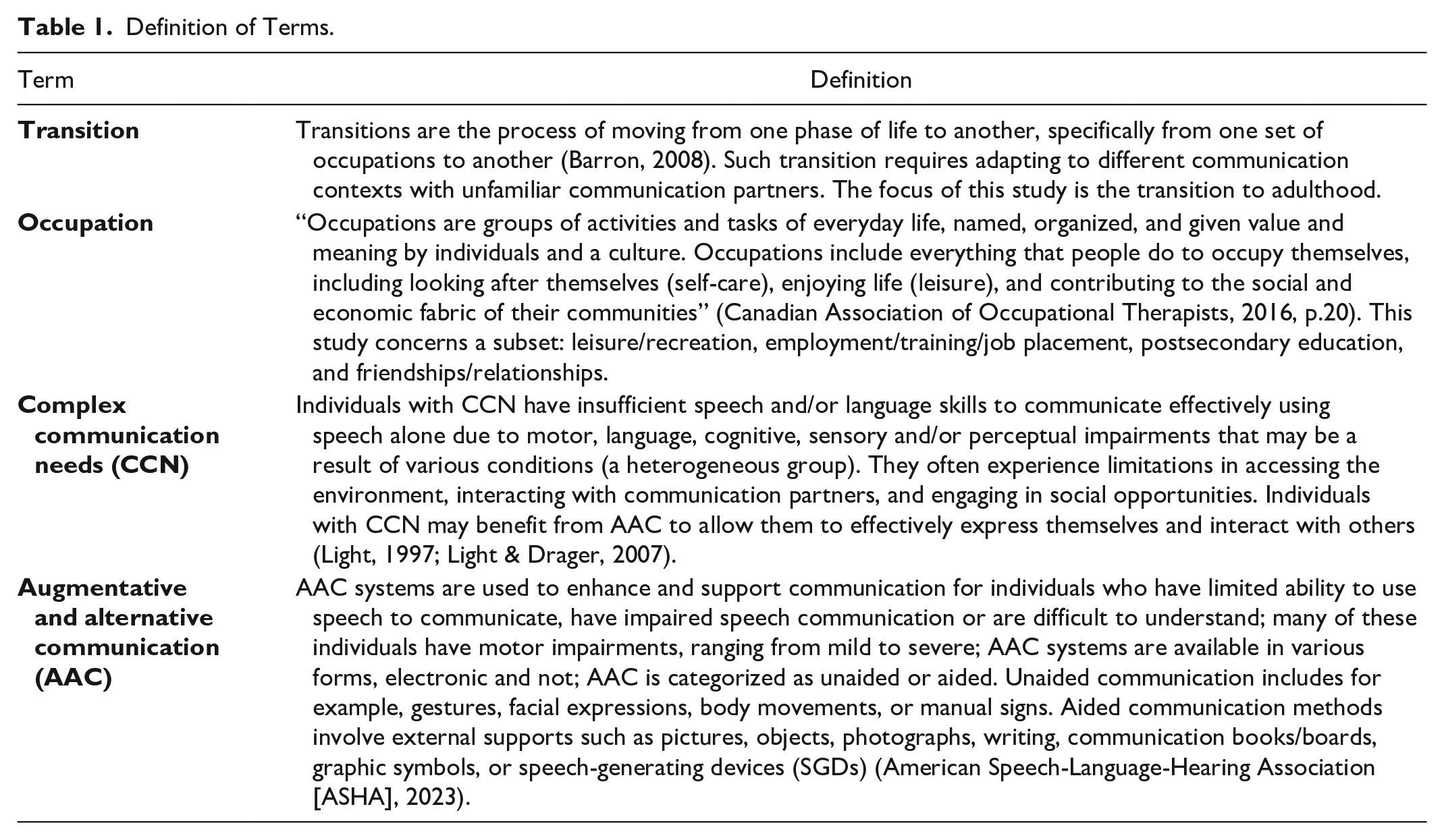
The following publications were excluded: (a) books, book reviews and training modules/manuals; (b) participants without communication and/or speech impairments, “specific language impairments” only, D/deaf or hard of hearing, and ASD who used speech only rather than augmentative and alternative communication (as supplementing or replacing speech); (c) conceptual/theoretical papers on transition that did not describe actual programs/services/interventions; (d) sources lacking description of program; (e) studies focused solely on transitions related to some aspect of self-care. See Table 1 for the definitions of key terms relevant to inclusion criteria.
Definition of Terms.
Search Strategy
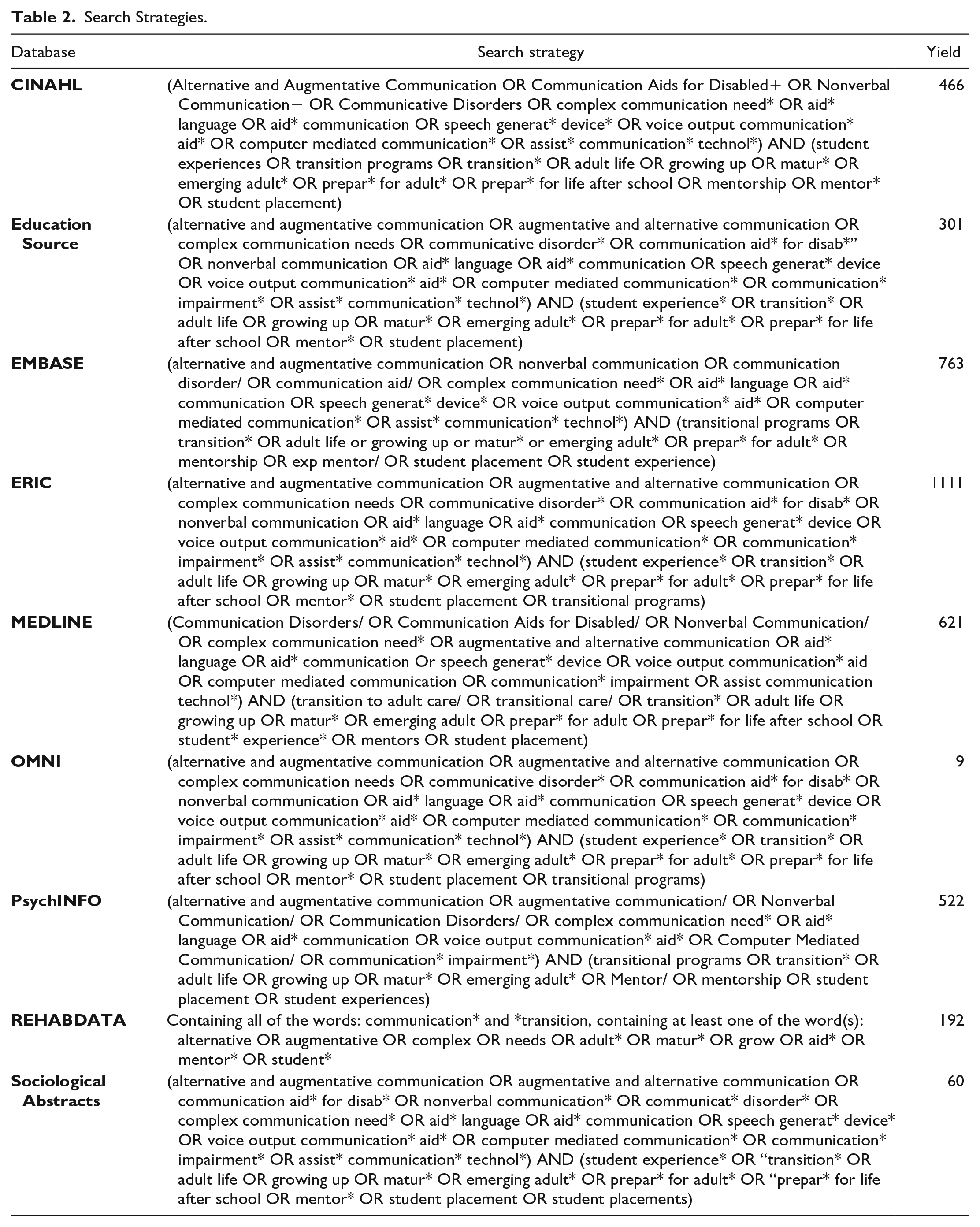
The search strategy was developed and conducted in consultation with a librarian from the University’s Faculty of Health Sciences. Following the JBI guidelines (Peters et al., 2020), first, the research team identified synonyms and keywords for the two key concepts of this review: augmentative and alternative communication and transition to adulthood. Next, the eight most relevant databases were selected for a comprehensive and systematic search: CINAHL, EMBASE, ERIC, PsycINFO, MEDLINE, REHABDATA, Sociological Abstracts, and Education Source. Because databases use different subject headings, index terms or controlled vocabulary terms, search terms were identified uniquely for each database and applied to the search strategy (e.g., MeSH for Medline). Search techniques such as Boolean, nesting, phrase selection, truncation, and wildcards were used to build an effective search within each database. During this process, the librarian provided guidance and input into designing and refining the search. Table 2 outlines details of the final search strategy used for each database.
Search Strategies.
Study Selection
All identified citations were uploaded into the Covidence platform and duplicates were removed. Titles and abstracts were screened by two independent reviewers and evaluated against the inclusion criteria. Potentially relevant studies were retrieved in full and reviewed in detail against the inclusion criteria by both reviewers. Disagreements that arose between the reviewers at any stage of the selection process were resolved through discussion with the other co-authors. The results of the search are presented in a Preferred Reporting Items for Systematic Reviews and Meta-analyses flow diagram (PRISMA; Figure 1). A total of 23 studies met the inclusion requirements.
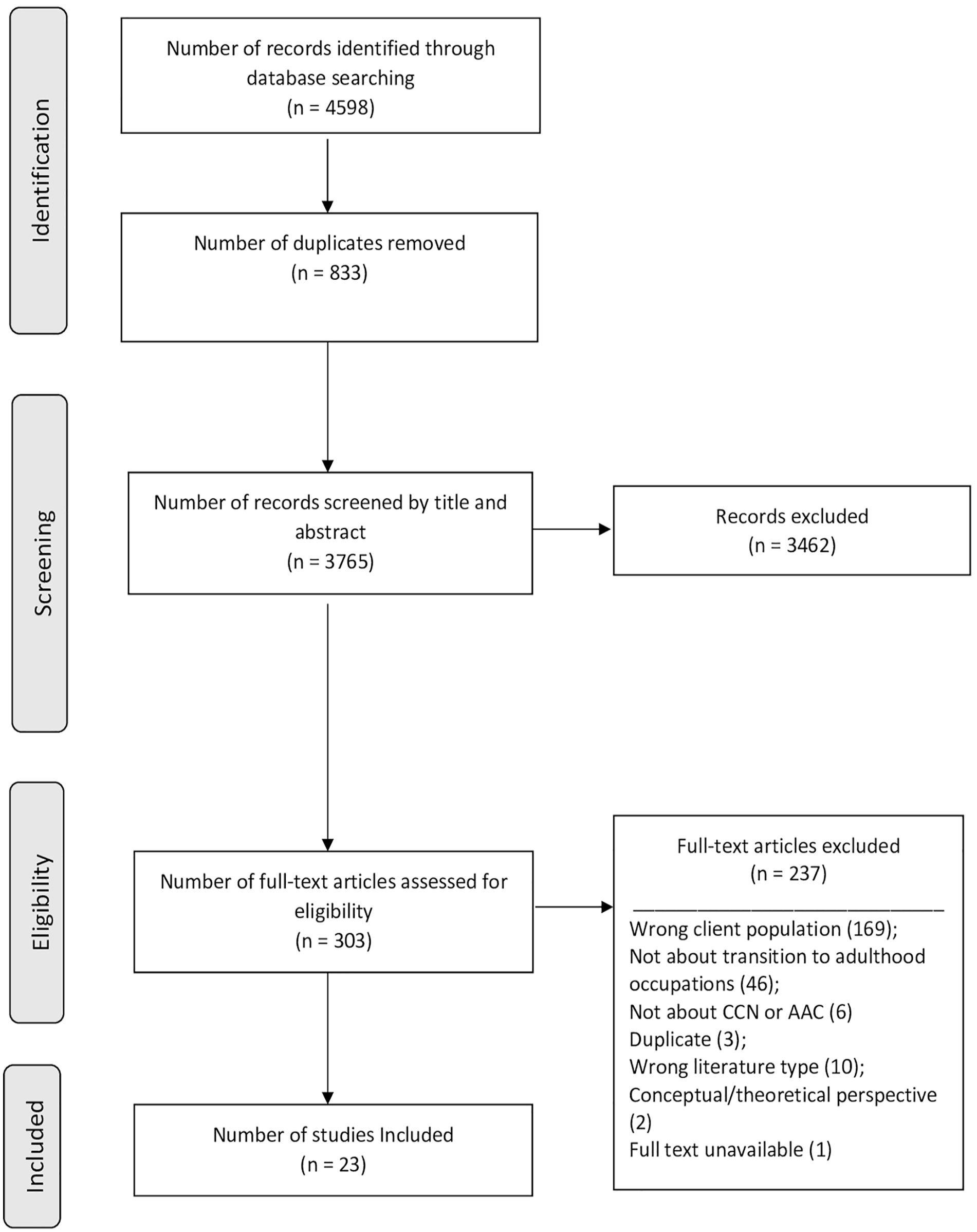
PRISMA chart indicating the selection process.
Results
Study Characteristics
Out of 23 studies, 18 were conducted in the United States; two in the United Kingdom; one in Australia; one in Finland; and one in Canada. There were 15 qualitative studies, seven had both quantitative and qualitative components, and one was a systematic review. Out of 20 studies that described a sample size, the largest number of participants was 26. Eighteen studies had fewer than 10 participants including four studies with only one participant. Most studies included participants with multiple diagnoses. Eleven studies had participants with CP, nine with a diagnosis of ASD, three with intellectual disabilities, one study involved individuals with Down syndrome, and five studies participants were youth with a diagnosis of pervasive developmental disorder not otherwise specified (PDD-NOS), epilepsy, genetic disorders, and head injuries. Participant diagnoses were provided, though information about the nature and extent of physical, cognitive and communication impairments and functional characteristics of participants was rarely detailed.
Out of 23 studies, 17 explored experiences of young people and six discussed specific programs/services/interventions (see Table 3). Most of the studies described experiences unique to each participant or groups of participants: however, information about the efficacy of transition-specific programs and transition outcomes was limited. Six articles focused on specific program/service/intervention and described the related experiences and outcomes of participants (Clegg et al., 2012; Cohen & Light, 2000; Gilson et al., 2017; Mbangamoh et al., 2008; McDonough & Revell, 2010; Müller et al., 2018). Two of these papers described programs focused on the transition to adult life in general (e.g., improving communication skills to facilitate the transition to adulthood contexts; Cohen & Light, 2000; Mbangamoh et al., 2008), three were related to employment (Gilson et al., 2017; McDonough & Revell, 2010; Müller et al., 2018) and one explored the outcomes of participants who were formerly enrolled in a particular school service (Clegg et al., 2012). Of these six articles, only Clegg et al. (2012) measured occupation-focused transition outcomes. The other five articles reported participant involvement and satisfaction outcomes (e.g., frequency of participation, self-reported rating of satisfaction) or efficacy of communication (e.g., mean length of utterance, rate of speech generation).
Characteristics of Studies.
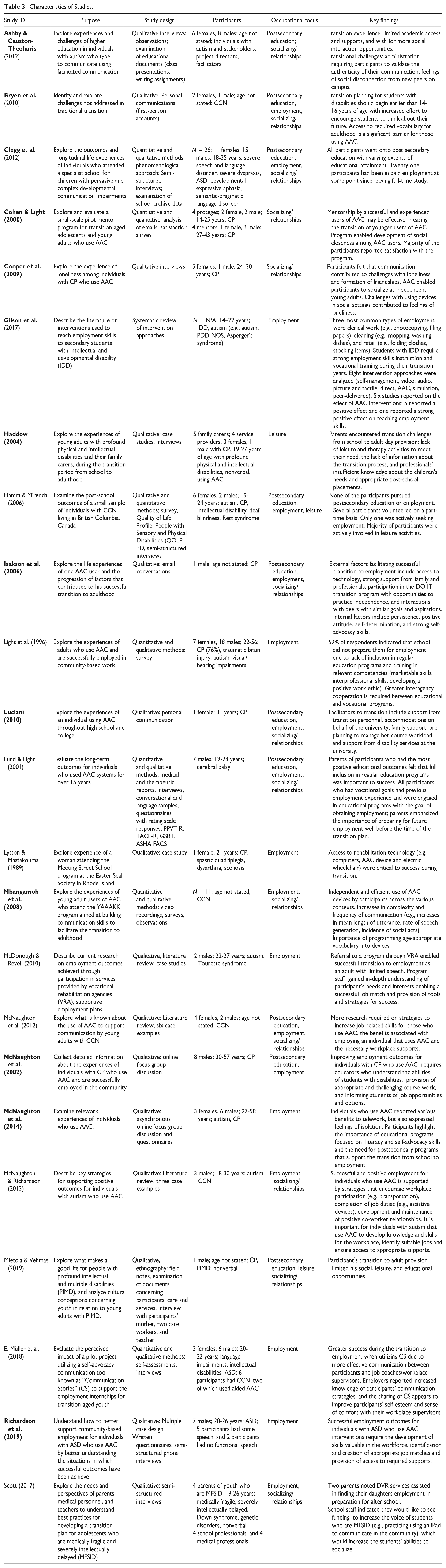
Out of 23 studies, 18 addressed employment, 13 socializing and relationships, 10 postsecondary educations, and three leisure experiences and outcomes. Only two studies evaluated occupation-focused longitudinal outcomes, in which adult participants’ engagement in occupations was examined as an outcome of their transition to adulthood (Clegg et al., 2012; Lund & Light, 2001). Clegg et al. (2012) measured the proportion and extent of adult participants’ engagement in employment, postsecondary education, and socializing/relationships after attending a school for individuals with pervasive and complex communication impairments as children. Lund and Light (2001) explored the long-term outcomes, including educational and vocational achievement, as well as experiences of friendships, of a group of seven young men with CP who used AAC systems for at least 15 years. See Table 3 for summary.
Barriers to Transition to Adulthood
Expectations and Attitudes
Several studies reported that youth with CCN felt that others dismissed or questioned their abilities and held low expectations for their transition outcomes. For instance, individuals with CCN encountered negative societal attitudes toward their desire to pursue postsecondary education and employment opportunities (McNaughton et al., 2002, 2012). Participants also reported instances of schoolteachers, education assistants, transition personnel, and program staff stifling their beliefs of self-efficacy and limiting their opportunities to participate in experiences that would enhance their success in adulthood occupations (Isakson et al., 2006; McNaughton et al., 2002; Mietola & Vehmas, 2019). Mietola and Vehmas (2019) reported that during one participant’s transition from secondary education to adult day programming no effort was made to engage him in any further learning opportunities to enable his growth, prompting his parents to transfer him to a vocational special education program. McNaughton et al. (2002) reported that individuals felt society had low expectations for their future employment, including educators not challenging students or preparing them for the workforce. Lund and Light (2001) found that the changing attitudes of peers as they aged into adolescence and adulthood was a barrier to developing friendships. As one participant’s mother noted “when you hit high school, they’re [students are] not very compassionate” (Lund & Light, 2001, p. 99).
Lack of Transition-Focused Programming and Services
Many studies reported a lack of access to these necessary supports. Light and colleagues (1996) found that 13 of 25 participants who used AAC reported feeling that school left then unprepared for employment due to a lack of instruction on employment related skills, including interpersonal qualities, work ethic, dependability, punctuality, commitment, and pragmatic concerns such as transportation and taxes. Similarly, Richardson and colleagues (2019) found that a lack of support from schools and employment services contributed to an inability for participants to acquire skills necessary for employment (e.g., managing money and counting change). Moreover, other researchers noted that students with CCN experienced a lack of transition planning/preparation for employment, and that their academic experience did not transfer to the workforce (McNaughton et al., 2012, 2014). Parents also expressed the need for increased resources and services to support individuals with CCN in relation to vocational pursuits (Hamm & Mirenda, 2006).
Parents of youth who used AAC noted that a lack of services was commonly due to two reasons: age specificity and geographic location. Services became sparse as individuals with CNN entered adulthood, and many families in smaller communities reported an ongoing lack of services (Lund & Light, 2001). Parents and caregivers also noted that a lack of employment supports, including finding suitable employment opportunities and accessing appropriate accommodations to support employment, was a significant challenge (Richardson et al., 2019). Parents also identified a lack of accessible information on navigating the transition process (Haddow, 2004). Employed individuals with CCN who used AAC reported a lack of mentorship programming throughout their transition to employment, noting that the opportunity to meet someone successfully employed with CCN who used AAC would have had a positive impact on them (McNaughton et al., 2014).
In situations where programs and services were sufficiently available, accessible and effective use of these services was limited due to a lack of interagency collaboration between educational and vocational programs (Light et al., 1996). For example, a parent reported a lack of support from the school system when applying for their child’s vocational rehabilitation services, resulting in difficulties in establishing an appropriate vocational transition plan (Scott, 2017). In addition to a lack of preparatory transition programs and services for youth, Clegg and colleagues (2012) found insufficient support for specific communication needs. Among parents of 26 individuals who had attended a school for children with CCN, a primary concern was the lack of specific supports for young adults with speech, language, and communication needs in postsecondary settings, where only general support for learning needs was available.
Limited Literacy Skills, Vocabulary, and Access to AAC Technology
Four studies reported limited literacy skills as a barrier to engagement in postsecondary education, employment, and socializing/friendships (Clegg et al., 2012; Cooper et al., 2009; Lund & Light, 2001; McNaughton et al., 2014). Clegg et al. (2012) illustrate the challenges of reading work documents and utilizing work-specific vocabulary without adequate literacy skills. The authors also found that literacy support in postsecondary education was needed but not adequately provided. Cooper et al. (2009) reported that among six young adults who used AAC, literacy skills significantly impacted their ability to engage in conversation with others, affecting their ability to socialize, develop and maintain relationships. Lund and Light (2001) noted that participants who had the greatest difficulty with receptive language and literacy also had less successful academic outcomes.
Two studies identified the importance of access to age-appropriate vocabulary programmed into AAC devices during the transition to adulthood (Bryen et al., 2010; Mbangamoh et al., 2008). Inadequate vocabulary limited the ability to effectively and appropriately engage in adult communication subsequently influencing participation in relationships. Bryen et al. (2010) identified eight distinct contexts for which transition-age students need specific vocabulary, two of which included employment and college.
Three studies focused on AAC technology limitations (Cooper et al., 2009; McNaughton et al., 2012; Richardson et al., 2019). Richardson and colleagues (2019) identified various AAC technology-related challenges in the workforce, such as the time required to program AAC devices, time to navigate to the appropriate vocabulary and malfunctioning or uncharged devices. In addition, the type of AAC device used in the workforce was found to be prohibitive at times. For example, one employer explained that an employee with ASD only utilized a picture communication book; however, it would have been beneficial for this individual to use speech output. Individuals who used AAC also expressed challenges with regard to communicating with peers, including issues with intelligibility, time-consuming nature of AAC, lack of privacy when third parties were needed to support communication, and the difficulties associated with the fast pace of communication (Cooper et al., 2009; McNaughton et al., 2012). McNaughton and colleagues (2012) proposed that to better support the needs of individuals with CCN, AAC technology needs to be easily understood, fast and easy to access, support advocacy and decision-making and be usable during peer-interactions.
Facilitators of Transition to Adulthood
Supports in Educational Settings
Participants who used AAC reported that support and accommodations from faculty and staff were beneficial during their transition, including visual supports in the classroom, small class sizes, professors willing to meet to discuss course expectations and accommodations, providing readings lists ahead of time, and allowing tests to be completed in alternate formats or postponed as necessary (Ashby & Causton-Theoharis, 2012; Luciani, 2010). Another facilitator noted by Lund and Light (2001) was supportive and inclusive educational settings, parents with strong beliefs in inclusive education who advocated for their children’s full inclusion into regular education classes through postsecondary school. Bryen et al. (2010) provided specific suggestions for transition planning that enhances access to required vocabulary in adulthood. These suggestions were (a) establishing goals for life after school (education or training) and determining the necessary vocabulary required to be successful in those contexts; (b) teachers and therapists encouraging students to advocate and be assertive in asking for necessary vocabulary; (c) emphasizing improvements in literacy skills for persons who use speech-generating devices (e.g., being able to program/add their own vocabulary); and (d) developing a low-tech communication aid as a back-up.
Support From Organizations and Employers
Supports from organizations, including companies/employers and postsecondary institutions, were critical to the transition to adulthood occupations. Müller and collegues (2018) described how the use of “Communication Stories” enabled effective communication between employer and participants in internship positions and involved participants outlining their communication preferences in written form, which was then shared with supervisors and supports in the workplace. Employers reported that the quality of interactions improved as they gained a better understanding of the participant’s language preferences and their own role as a responsive communication partner. Studies have also found that employers found it most effective to provide quality training specific to their needs at the beginning of employment to establish retention of skills over time (McNaughton & Richardson, 2013). Contributors to successful employment included employers commitment to supporting individuals with AAC, understanding of disability issues, being supportive of accommodation needs, and valuing specific personal strengths and skills (Isakson et al., 2006; McNaughton & Richardson, 2013).
Transition-Specific Programs and Services
Transition enabling programs included supportive employment programs, vocational agencies, work-based learning programs, camps, qualified personnel supporting transitions, and mentorship. School and community-based vocational rehabilitation programs and services were found to facilitate employment and included assessments, guidance, training, and placements specific to individual participants (Isakson et al., 2006; Lytton & Mastakouras, 1989; McDonough & Revell, 2010; Scott, 2017). McNaughton and Richardson (2013) reported that structured work experiences were a beneficial strategy to improve the job skills of individuals with CCN. These experiences also served as an opportunity to provide education to the community and employers on the various skills and knowledge that individuals that used AAC bring to the workforce. Lund and Light (2001) found that participation in educational programs with a focus on developing work-related skills and experience in preparation for the transition to employment is a key facilitator, prompting the authors to recommended that young people who use AAC connect with role models and engage in work experiences to foster the belief that future employment is attainable.
Programs that focus on adult life in general were observed to enable greater independent use of AAC devices by participants across various occupations, including postsecondary education, employment, and socializing/relationships (Isakson et al., 2006; Mbangamoh et al., 2008). Luciani (2010) found that attending one community college class each semester, while still attending secondary school, to gradually prepare for future postsecondary enrollment was a successful approach for students using AAC. Finally, Gilson et al. (2017) evaluated the effectiveness of various vocational instructional programs essential in preparing students with intellectual and developmental disabilities (IDD) for the world of work. The authors systematically reviewed research on instructional methods used to teach employment skills to secondary students with IDD and found that approaches incorporating AAC were successful.
Support Networks
Participants with CCN stressed the importance of various supports during their transition into adulthood, including, parents, family, friends, community service organizations, personal care assistants, high school teachers, transition teams, and classroom aids (Cooper et al., 2009; Isakson et al., 2006; Luciani, 2010; Richardson et al., 2019). Parents were typically identified as the main source of support. Luciani (2010) described the role of mothers as “the driving force to success,” taking on multiple roles and responsibilities to support postsecondary education success (e.g., test taking assistants, attending school advising meetings, working collaboratively in choosing courses). Lund and Light (2001) also noted the importance of parents and family supports with regard to accessing services that contributed to positive outcomes for youth. Cooper and colleagues (2009) noted the importance of families as key supporters. Richardson and colleagues (2019) described parents and employers as critical supports to successful employment and employers and co-workers as key supports regarding learning and understanding workplace expectations. McNaughton and Richardson (2013) also highlighted the importance of developing and maintaining relationships with co-workers for individuals with autism who use AAC, noting that both employment-related support and social support are two key factors that contribute to successful employment (McNaughton & Richardson, 2013). Mentorship programs enabled adolescents who use AAC to establish and develop social closeness with others and provided an effective way for them to benefit from the insights of experienced adult AAC communicators (Cohen & Light, 2000).
Discussion
This review found that research exploring the transition to adulthood occupations for youth with CCN focused primarily on employment, postsecondary education, and socializing, with a few studies addressing leisure pursuits and specific transition-focused programs/services. The studies were mainly qualitative with a small number of participants. The findings suggest multiple barriers and facilitators to transition and highlight the importance of collaboration among community service providers including secondary and postsecondary personnel, parents/caregivers, individuals with CCN, vocational rehabilitation agencies and day programs to enhance successful transitions to adult life.
Barriers to the transition to adulthood occupations were low expectations held by support personnel and transition stakeholders, lack of available programs/services, and limited opportunity to develop literacy skills and vocabulary. Low expectations as a barrier to the transition to adulthood appears to be consistent with research pertaining to other disability groups. Stewart and colleagues (2001) concluded that for youth with physical disabilities, the number one change required was people’s attitudes. Lack of available programs/services is also a challenge among a wider range of disabilities. For example, studies exploring the transition to adulthood of young people with intellectual disability found that parents felt that there was a lack of available options for their child after they had left secondary education (Leonard et al., 2016). Parents also reported difficulty and stress navigating the system and expressed a need for programs to focus on independence and social supports (Leonard et al., 2016; Nucifora et al., 2024). Researchers exploring the transition to adulthood among children on the autism spectrum, found that the success of the transition to adulthood was linked to understanding the expectations of youth of on the autism spectrum, their parents, and service providers (Curtiss et al., 2021). Kirby and colleagues (2020) found that parents with higher expectations engaged in more transition-focused planning. Furthermore, parents and professionals stressed the critical role that service availability plays in shaping these expectations. The importance of working together with parents throughout their child’s transition to adulthood has been highlight by many researchers (e.g., Curtiss et al., 2021; Nucifora et al., 2024).
Our review found that the factors facilitating the transition to adulthood for youth with CCN included support from organizations, transition-specific programs/services, and strong social networks. The review suggests that key facilitators in the transition to postsecondary settings are supportive staff, transition personnel, instructors, and inclusive classroom environments. Available programs and services that positively contributed to the transition to adulthood occupations included online mentorship, summer camps, internships, collaboration with community agencies and employers, and specialized education services. Support networks, mentorship opportunities, and peers were also found to facilitate the transition to adulthood for youth with physical disabilities (Stewart et al., 2001).
Consistent with broader disability research, our findings highlight the importance of a coordinated approach during the transition to postsecondary education for students with disabilities (Sundar et al., 2018). Research that focused on transition planning underscores the importance of educators, therapists and school personnel working together with students and family members (Trainor et al., 2019). The success of the transition relies on encouraging families to participate in discussing hopes and dreams for their children’s postsecondary education (Trainor et al., 2019). To value the aspirations and dreams of postsecondary students with disabilities, researchers also stress the need for accessibility legislation, policies, and practices to be anchored in Article 24 of the United Nations Convention on the Rights of Persons with Disabilities (Jacobs, 2023; UN General Assembly, 2007).
Our review also suggests that some individuals with CCN had successful employment experiences (Eliason et al., 2015). Differences in employment experiences and outcomes among the participants appear to be complex and multifactorial, and influenced by education level, as well as the nature and severity of the participant’s disability. The transition to employment was reported to be enhanced by focusing on specific skill development (e.g., self-advocacy, interview preparation, and maintaining employment), implementing workplace support individuals, matching individuals’ skills to suitable job opportunities, and constructing the environment to enable communication with various communication partners. In alignment with the facilitators to employment identified in this scoping review, some regulations (e.g., from United States) outline the type of pre-employment transition services to support students with disabilities in transitioning from secondary school to postsecondary education and eventually competitive employment opportunities. These regulations reflect the importance of job counseling, work-based experiential learning, workplace readiness training (social skills development), peer mentoring and self-advocacy (Sundar et al., 2018).
The presently limited literature exploring leisure activities, reveals challenges for individuals with CCN to engage in meaningful leisure pursuits during the transition to adulthood. Participants reported a lack in the availability, accessibility, age-appropriateness, often resulting in disengaging, isolating, and passive experiences of leisure activities. Other researchers have also noted that transition-aged youth with disabilities are more likely to engage in activities that are solitary and passive in nature, such as watching television (King et al., 2005). The current scoping review suggests that there is a need to provide greater services and supports to enable individuals with CCN to be actively engaged in a wider range of age-appropriate leisure activities according to their interest.
The difficulties noted in our review with regard to social participation of individuals with CCN during the transition to adulthood are echoed in the broader disability literature. A nation-wide analysis of longitudinal outcomes of youth with various disabilities found that participants were at risk of experiencing social challenges after high school (King et al., 2005; Wagner, 1993). Similarly, a qualitative study by Stewart and colleagues (2001) found that parents of adult children with disabilities described negative changes in their children’s postsecondary social environments. Parents noted that a lack of services and day programs available to their children limited their opportunities to engage socially and develop relationships. Findings from the current review suggest that to foster the development and maintenance of social opportunities and relationships throughout the transition to adulthood for individuals with CCN, the focus should be on the provision of services targeting the development of peer connections (e.g., through in-person community programs, or technology such as social media, texting), providing access to age-appropriate vocabulary to facilitate communication with peers, and adapting the environment to enable communication with various communication partners (e.g., allowing sufficient time to construct messages, providing peer-only spaces when possible to provide the opportunity for communication in the absence of adult parents/caregivers).
Implications for Occupational Therapists
The findings of this review advance our understanding of the transition into adulthood for individuals with CCN and highlight five important considerations for occupational therapists and practitioners. First, it is important to consider the unique life goals of each individual as they transition to adulthood, especially with regard to secondary education and how it may relate to later education or further training toward employment. Second, it is important to consider the provision of AAC systems and necessary accommodations to support the specific communication and physical needs of each person. This includes providing both access to transition-specific vocabulary and appropriate access method to operate AAC systems, including SGDs. The findings of this review highlight the importance of focusing on the development of literacy skills and autonomy. Third, we need to consider the environment-level interventions: (a) increasing knowledge of AAC and disability, addressing misconceptions about abilities; (b) working with community organizations (e.g., employers) to help problem solve unique accommodations required for individuals to pursue their goals. Fourth, it is important to consider the need to develop specific programs and evaluate their impact on occupational participation, especially long-term impacts. These programs can be co-designed with people with CCN and their families. Our findings highlight the benefits and needs of incorporating vocational transition plans and mentors. Finally, this review highlights the importance of supportive networks with parents and families acting as vital sources of support.
Limitations
This scoping review was limited to English language studies only. Research studies conducted and reported in other languages that are within the scope of this review may exist and provide valuable insights on the diversity of cultural experiences in relation to the transition to adulthood. Furthermore, the authors’ perception of what occupations are considered most representative of adulthood is influenced by their cultural norms and therefore may not reflect diverse cultural values in the transition process. Given the paucity of research exploring the transition into adulthood for individuals with CCN, the studies reviewed spanned several decades of research, although some of the details of programs are undoubtedly dated, our review shows that the key issues in relation to occupational participation in areas of employment, social relationships, and leisure pursuit remain relevant today.
Future Directions
Further research is needed to evaluate the occupation-focused outcomes of participants enrolled in specific programs/services/interventions, especially those that are focused on socializing/relationships and leisure. Studies including measurements of long-term occupation-focused transition outcomes can help us better understand the success of various programs over time with relevance to life satisfaction and well-being. Future studies should also measure occupation-focused outcomes, such as the proportion of participants meeting their life goals and aspirations. Furthermore, it would be valuable for future research to focus on programs that target specific goals of individuals with CCN. In future studies, more details and specificity are needed with regard to participant characteristics, including their physical and communication abilities. In addition, reporting findings specific to participants with functional limitations along with results relevant to an overall group of study participants could help researchers and practitioners draw relevant conclusions.
Conclusion
This scoping review identified several barriers and facilitators that youth with CCN face during the transition to adulthood occupations. These individuals have the right to fulfill their life aspirations and participate in occupations that they find meaningful. Findings indicate that only a small proportion of studies focused specifically on transition programs/services that support employment, education, and relationships, with the fewest studies addressing leisure and recreational occupations. The facilitators identified in our review include organizational support, transitioned-focused specific programs, and social support networks. Conversely, the barriers included a lack of supportive programs and low expectations for individuals with CCN. Together, these findings highlight the importance of collaboration and the need to provide opportunities for people who use AAC, including specific transition-focused programs that focus on employment, leisure adulthood pursuits, and relationship building and involve the support of parents, friends, community service organizations, high-school teachers, and transition teams. The findings of this study underscore the need for further research. AAC devices to augment communication are essential to ensure success in the transition to adulthood, but research on best practices is needed to support young people’s participation in meaningful occupations according to their unique preferences and life aspirations.
Footnotes
Key Takeaways
• The main barriers to occupational participation identified were a lack of adequate support and low expectations in the abilities of people with CCN.
• The main facilitators to occupational participation identified were interventions that focused specifically on transition to adulthood and supportive networks.
• More research is needed to develop, describe, and evaluate intervention programs to support the transition to adulthood occupations for individuals with CCN.
• There is a need to measure the long-term impact of services and programs supporting employment, relationships, leisure goals and life aspirations of individual using AAC.
Declaration of Ethics
As per the Queen’s University Office of Research Ethics guidelines, ethics clearance was not required for this scoping review because the review did not involve any intervention staged by the researcher, or direct interaction with the individuals or groups; the dissemination of research results does not allow for identification of specific individuals; the information is legally accessible to the public and appropriately protected by law.
Declaration of Conflicting Interests
The author(s) declared no potential conflicts of interest with respect to the research, authorship, and/or publication of this article.
Funding
The author(s) received no financial support for the research, authorship, and/or publication of this article.
