



Abstract
Information and Communication Technology (ICT) tools and Assistive Technologies (AT) can support people with Down Syndrome (PDS) and Intellectual Disabilities (PID) in increasing their self-confidence and independence, enhancing skills, and competences, participating in leisure activities. For families of PDS/PID, professionals, non-formal caregivers and volunteers, the challenge is to appreciate the benefits of ICT Tools in promoting inclusion. The aim of this study is to present the interdisciplinary and multidimensional scope of the DS Leisure project aiming at promoting the inclusion of PDS/PID through innovative ICT tools and their participation in inclusive leisure activities. Particularly, 24 individuals were asked to assess the global satisfaction and performance of PDS/PID, as well as the exploitation of ICT tools. Findings suggested that PDS/PID specific social, decision-making, and communication skills were significantly improved after their participation in the Experiential Activity and the e-Training platform was positively rated and considered a constructive learning experience.
Introduction
‘Intellectual Disability’ (ID) affects between 1% and 3% of the world population and is characterized by multiple conditions that impair brain’s development before and during birth or in early childhood years. 1 In particular, ID is associated with significant limitations in both intellectual functioning and adaptive behaviour, with the latter covering a wide range of everyday social and practical skills. 2 Among the major related conditions to ID, ‘Down Syndrome’ (DS) is the most common one, affecting more than five million people worldwide. 3 Specifically, DS is a genetic disorder caused by an additional chromosome (chromosome 21) which causes developmental delays to physical and mental conditions that are associated with consequences in the areas of cognitive, linguistic, speech-motor and social development.4,5 In comparison with typically developing peers, People with DS (PDS) face problems in communication and social skills, since it is challenging for them to express themselves. 6 Consequently, they have fewer opportunities to participate in out-of-school activities 7 and, thus, are at risk of being poorly integrated into society. 8 However, there is a common perception that participation in physical, leisure, recreational and self-improvement activities has undoubtedly important developmental, health and social benefits for people with disabilities. 9 Many studies have empirically supported the role of social relations and active leisure experiences in happiness and well-being.10,11 This suggests the need for ongoing support of PDS and other IDs in order to develop and enhance the skills necessary for effective use of leisure time and to facilitate full inclusion. 12
It is clear that the increasing deployment of ICT tools in society presents new possibilities and solutions, 13 sets an innovative basis for future learning and promotes inclusion. 14 Due to their intellectual limitations, PDS need efficient support and stimulation to function individually, thus software could be designed in such way in order to facilitate and introduce the sequence of steps to achieve success. 15 ICT tools can extend the learning process beyond the school by helping PDS and PID to practice and maintain skills between courses and increase motivation to change their behaviours and daily life. 16 Particularly, Assistive Technologies (AT) may contribute in building self-confidence, independence and in achieving high quality of life for PDS,17,18 while at the same time in providing assistance during leisure time and participation in social activities. 19 Additionally, the interaction with serious games can be an effective approach for PID, as long as they are specifically designed considering their unique characteristics and cognitive abilities. 20
Research has shown that the field of inclusion of individuals with special needs has advanced and has received essential development since 2000, 21 while the support of PID, in order to help them overcome challenges in specific areas, is addressed as an essential aim by many research approaches. 22 A series of ICT tools and AT, which are addressed to provide support and assistance to a generic or specific learning skill for PDS and PID, are presented in the literature. For instance, SMART ANGEL is oriented to support the inclusion of people with intellectual disabilities by providing them with accessible software products supporting their daily life, in-house independent living, urban mobility and training, 23 while the project Poseidon aims at enhancing independence of PDS and triggers their inclusion into society by using AT focusing on different areas of daily living. 24 Moreover, systems based on the utilization of game elements and gamification tools, including the HATLE, a computer aided tool on an Android platform that provides a multimedia playful learning environment 15 and Stella Software, an online application aiming at enhancing PDS cognitive and mental functions. 25 Furthermore, the presence of learning management systems is also essential, including the online learning system to help persons with developmental deficiencies acquire basic skills in order to be able to perform daily living activities. 26
While it could be argued that the use of online e-learning systems has grown considerably over recent years 27 and there is a more extended deployment of ICT tools aiming at helping PDS/PID to communicate with others, improve their academic performance and motivation, however there are not enough technological applications tailored to their specific needs. 15
Purpose of the study
The aim of this study is to present the interdisciplinary and multidimensional scope of the DS Leisure project, a unique and innovative training program for improving quality of life of PDS/PID, with the objective to promote the inclusion of PDS/PID through an innovative ICT tools integrated approach and the participation in inclusive leisure activities. In particular, this study focuses on the assessment of (1) global satisfaction of PDS/PID participating in Leisure Experiential Activity, (2) pre-post evaluation of PDS/PID performance in Leisure Experiential Activity and (3) exploitation of ICT tools included in the project’s e-Training platform.
The DS Leisure project
The DS Leisure project 28 promotes the inclusion of PDS/PID through an innovative integrated approach based on the participation in inclusive Leisure Activities and the development of high quality adapted ICT tools tailored to the needs of individual low-skilled or low-qualified PDS/PID. Pedagogical design of the project took into account the multisensory principle, where it is highlighted that memory is reinforced when learning occurs simultaneously through multiple senses, such as visual, auditory, tactile-kinesthetic and articulatory-motor. 29 In this regard, priority was given to the design and development of accessible and legible presentation of the training materials, as well as to the continuous provision of motivation and maintenance of interest and engagement in the activities. In addition, DS Leisure followed a user-centred approach so as to remove the barriers that undermine inclusion of PDS/PID when technology – enhanced learning tools are designed without accessibility in mind, 30 while participatory design was implemented by offering direct involvement of PDS/PID, families, caregivers and professionals of the leisure sector, in the design, development, and validation of the training program.
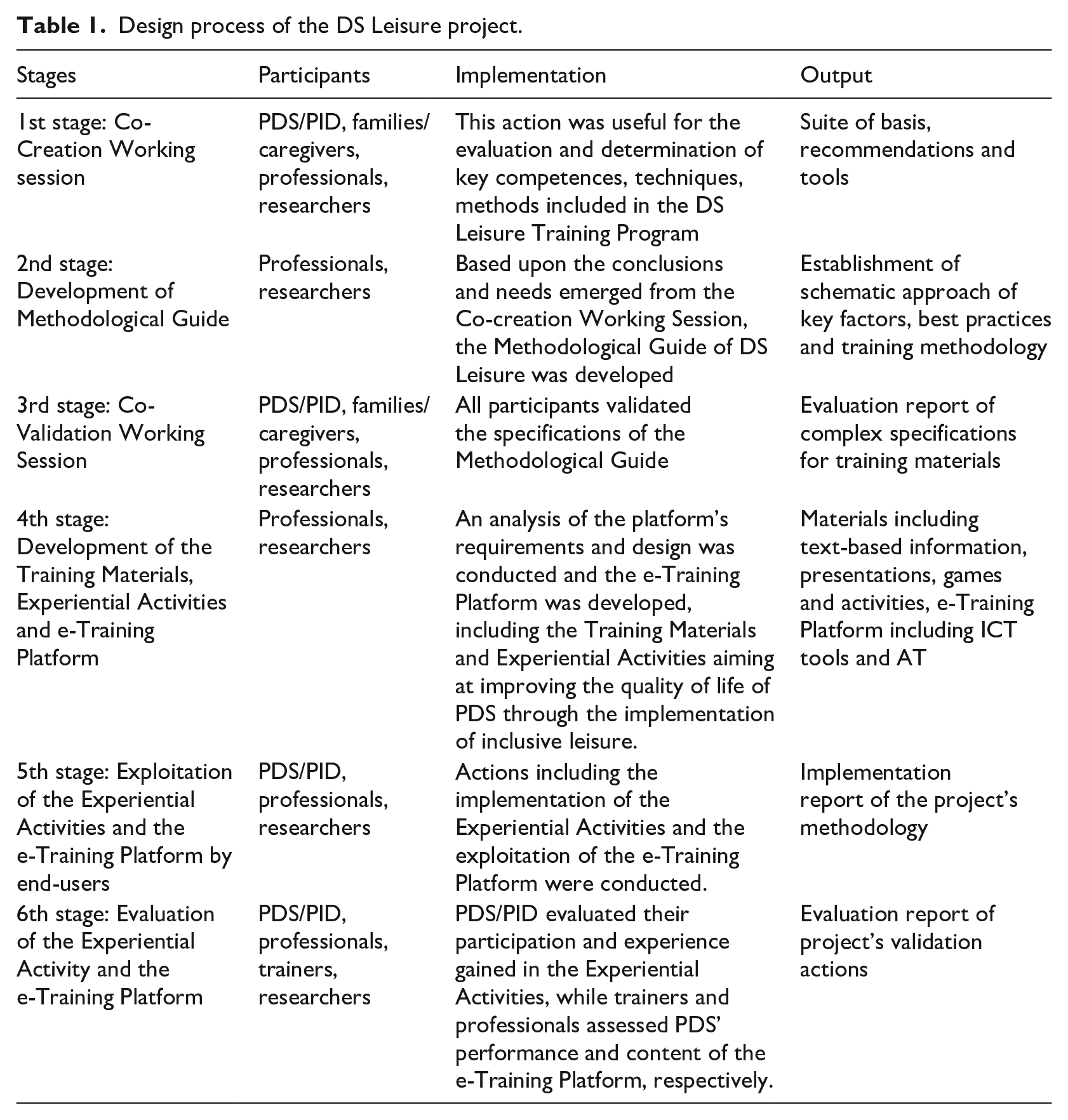
The innovation of the DS Leisure project lies in the adoption of Living Labs methodologies and guidelines aiming at enabling the direct involvement of a quadruple helix of stakeholders and creating holistic solutions through developing the services from the end-user point of view. 31 Thus, a systemic active involvement and partnership of PDS/PID, families, caregivers and professionals of the leisure sector was conducted through the deployment of multi-method approaches. Building upon this Living Labs’ perspective, co-creation and co-validation sessions were designed and developed in such way in order to ensure the successful and sustainable involvement of all stakeholders in the design process of the project (Table 1).
Design process of the DS Leisure project.
Key outputs of the project
Through the implementation of the DS Leisure project the above main intellectual outputs have aroused: (i) Co-created Methodological Guide for training PDS/PID and their supporters on the implementation of Inclusive Leisure, (ii) Training Materials for creating and improving the critical competences of PDS/PID and professionals of the leisure sector, (iii) Experiential Training Activities for enhancing the practical training within real environments and (iv) e-Training platform, including supporting ICT solutions for the implementation of the Training Materials and Experiential Training Activities.
Experiential training activities
The Experiential Activities were designed with the objective of assuring the immediate and customized acquisition of competences that facilitate social inclusion. Furthermore, they were addressed to PDS/PID in order to practically train them in participating independently in leisure time activities within real environments. In particular, PDS/PID had to perform an activity of their preference in small groups by following a series of steps with which they have been previously acquainted through the e-Training platform.
The e-Training platform
The DS Leisure e-Training platform was based on Moodle Learning Management System. 32 Of utmost importance was to set the goal to ensure accessibility in the platform and thus the World Wide Web Consortium (W3C) Web Accessibility Initiative 33 provided essential guidance in designing an accessible interface. Colours, font size and all call-to-action elements, including images, buttons or hyperlinks, were adjusted for optimum display to people with disabilities, while badges were used as a good way of celebrating achievement and showing progress for learners (Figure 1).
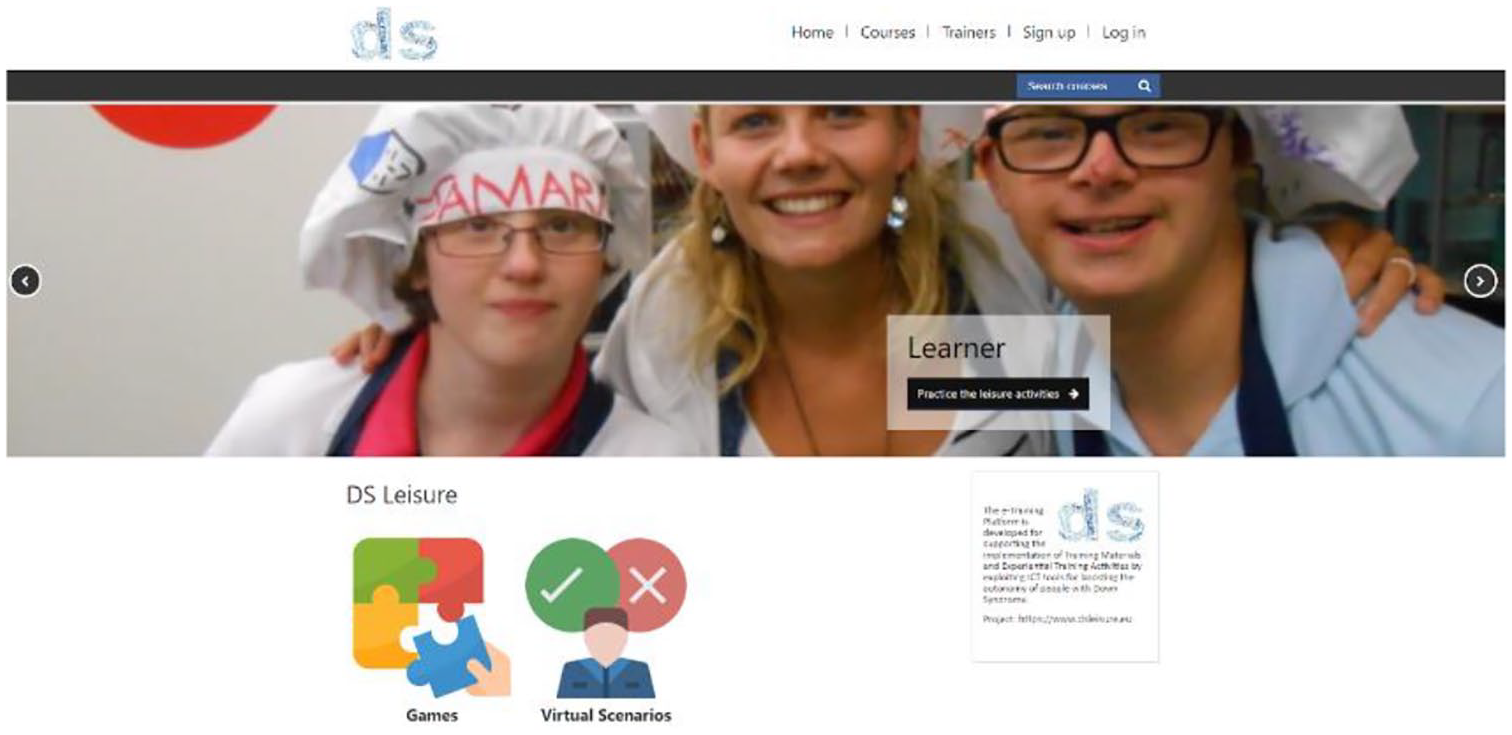
DS Leisure e-Training platform.
The e-Training platform was enriched with seven (7) Games and ten (10) Virtual Scenarios tailored to PDS/PID routine operations and inclusive leisure activities. Development of Games and Virtual Scenarios aimed at training the key competencies identified in the co-creation session, including promoting autonomy and inclusion of PDS/PID, increasing self-awareness and self-management, developing social and digital skills and enhancing transversal skills. In particular, Games addressed training PDS/PID in designing their personal leisure plan and participating in various leisure activities, while their content was developed in relation to understanding the potential leisure activities, setting criteria of preference, listing steps in the right order, preparing to go into the action etc. Furthermore, Virtual Scenarios, which are problem-based learning activities, encouraged PDS/PID to make real-life decisions related to daily living leisure activities, including going to the cinema or a concert, making a restaurant reservation, using public transportation, handling money transactions etc. (Figure 2).
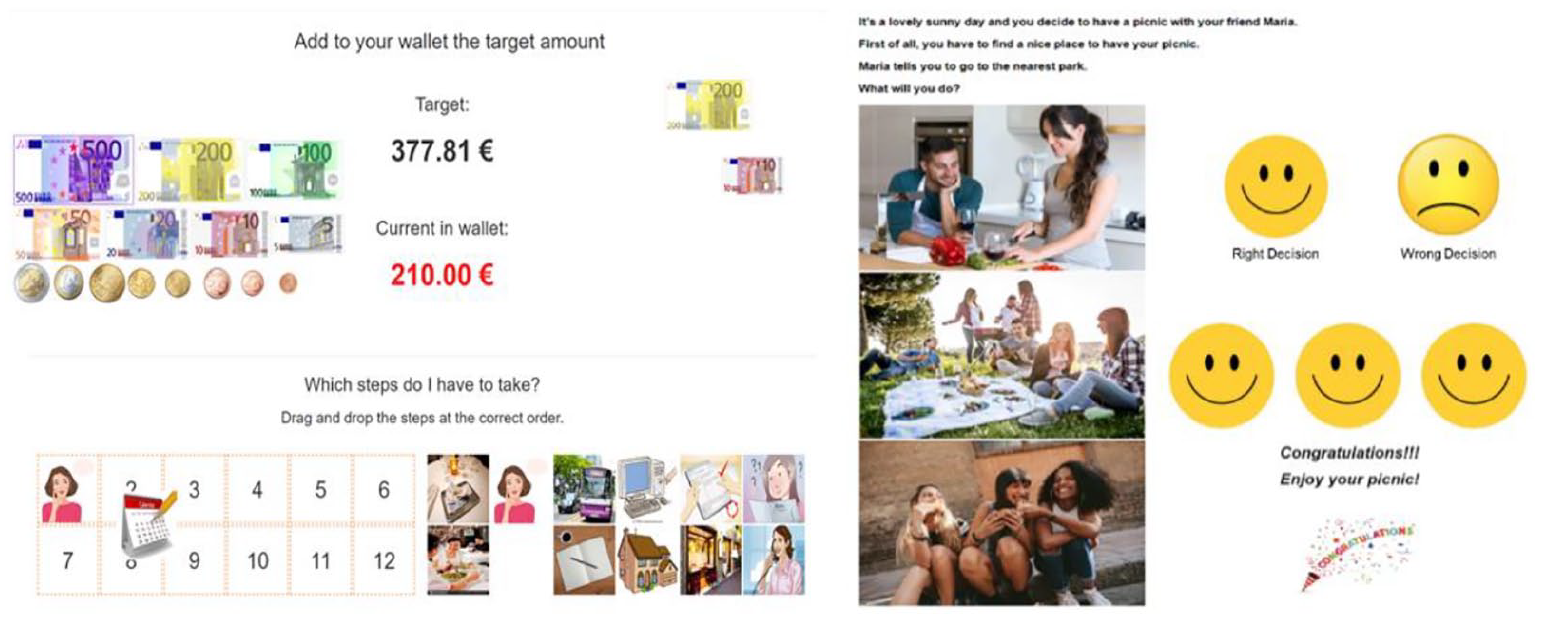
Interface of the Games and Virtual Scenarios.
Method
Participants
A total of 24 individuals participated in this study, belonging to three distinct groups: (a) PDS/PID, (b) Trainers and (c) Professionals working in the support of PDS/PID. More specifically, three
Procedure
In this subsection, stages 5 and 6 of DS Leisure project’s design process (Table 1) are described. The DS Leisure project was implemented in the premises of a Mixed Living Centre – Daily Care Occupation & Training for Disabled People in the county of Imathia, Greece. Six (6) adults with DS and ID completed a three (3) week leisure training and worked in the e-Training platform, while three (3) trainers coordinated the training process and supported trainees’ performance.
Face to face indoor activities were conducted, where trainees participated in six (6) lessons using the e-Training platform. In particular, three workstations were created for the training in the e-Training platform. At each workstation, two trainees worked in-group on a laptop by the supervision and support of one trainer and workstations were set in a way that could facilitate the collaboration between the trainees during the interaction with the Games and Virtual Scenarios. An outdoor Experiential Activity was also conducted in which trainees agreed on organizing a disco party in an outdoor venue for multiplier events. The basic objectives of this Experiential Activity were to train PDS/PID in organizing a leisure activity on their own, classifying the necessary steps and essentials, as well as dealing with public transportation, street orientation and financial transactions. Six (6) trainees participated in a one-hour workshop, including preparation and guidelines for the Experiential Activity and in a one-hour shopping in the local mall to buy all the necessary essentials, while separate roles were assigned to each of them. Five (5) professionals, four (4) representatives of the leisure sector and fifteen (15) caregivers/volunteers also joined the Experiential Activity as supporters, whereas more than thirty (30) guests attended the party. After the completion of the training program, assessment was conducted in two levels: in relation to (a) the Experiential Activity and (b) the e-Training platform including Games and Virtual Scenarios.
Instrumentation – assessment
The data presented in this study emerged from the assessments regarding PDS/PID performance and their global satisfaction participating in the Experiential Activity, as well as from professionals’ evaluation of the Games and Virtual Scenarios included in the e-Training platform. More specifically, an
In reference to the e-Training platform, professionals were asked to interact with the Games and Virtual Scenarios and evaluate, subsequently, a series of aspects based on the principles of Game Playability (PLAY) using a 5-point Likert scale ranging from 1 (strongly disagree) to 5 (strongly agree) [34]. In particular, a
Results
Evaluation of PDS/PID performance (D111)
Trainers were asked to evaluate PDS/PID performance before and after participating in the Experiential Activity. A paired-samples t-test was conducted to compare different variables in pre- and post-conditions of PDS/PID (before and after the intervention). There was a significant difference in the scores with regard to the PDS/PID social skills before (M = 3.17, SD = 0.75) and after (M = 3.83, SD = 0.40) intervention; t(5) = −3.16, p = 0.025). In particular, this finding means that after the completion of the Experiential Activity participants adopt behaviours adapted to the various contexts to a greater extent. In addition, higher scores were reported and a significant difference was found in decision making skills before (M = 2.00, SD = 0.89) and after (M = 2.83, SD = 1.16) intervention; t(5) = −5, p = 0.004. Specifically, this finding indicates that PDS/PID are more inclined to propose activities for the group after the Experiential Activity. Lastly, results also showed a significant difference in the scores for participants’ communication skills before (M = 3.16, SD = 0.40) and after (M = 3.83, SD = 0.41) intervention; t(5) = −3.16, p = 0.025, which implies that PDS/PID express their needs, desires and thoughts to a greater degree.
PDS/PID evaluation of the experiential activity (D112)
PDS/PID evaluated their global satisfaction after participating in the Experiential Activity. In particular, all participants stated that they fully enjoyed their participation in the Experiential Activity, while the majority of them (83,3%) appreciated the usefulness of the workshops initially conducted, including preparation and provision of guidelines for the Experiential Activity. In addition, neither of the participants faced any problem with transportation to the venue and the majority of them (83,3%) declared that they dealt with all financial transactions needed successfully. During the Experiential Activity most of the participants (83,3%) felt that they behaved well and properly, while more than half of them (66,6 %) declared that they asked for help and support. Overall, all of them clearly stated that the Experiential Activity was a significantly constructive experience for them and that they were willing to participate again in such a leisure activity.
Evaluation of the games (D113a)
Descriptive statistics analysis
This subsection presents the results from professionals’ evaluation regarding the playability of Games. As shown in Table 2, all items had their means scored slightly higher than 3, ranged between 3.00–3.69, which indicates that the Games were neutral to positive rating. Participants exhibited a higher acceptance (M > 3.50) in relation to the information given to the user (item 14), the absence of unnecessary burden (item 12), the positive challenges (item 3), the clear goals (item 4) and the screen layout efficiency (item 13). On the other hand, specialists gave moderate and lower rating (M < 3.50) for the ability of the games to keep users interest (item 1, 2, 7), support different game styles (item 5), give control to the users (item 6), provide efficient audio/visual content and feedback (item 8, 11) and require instructions (item 9).
Descriptive statistics ensued from the Games questionnaire (D113a).
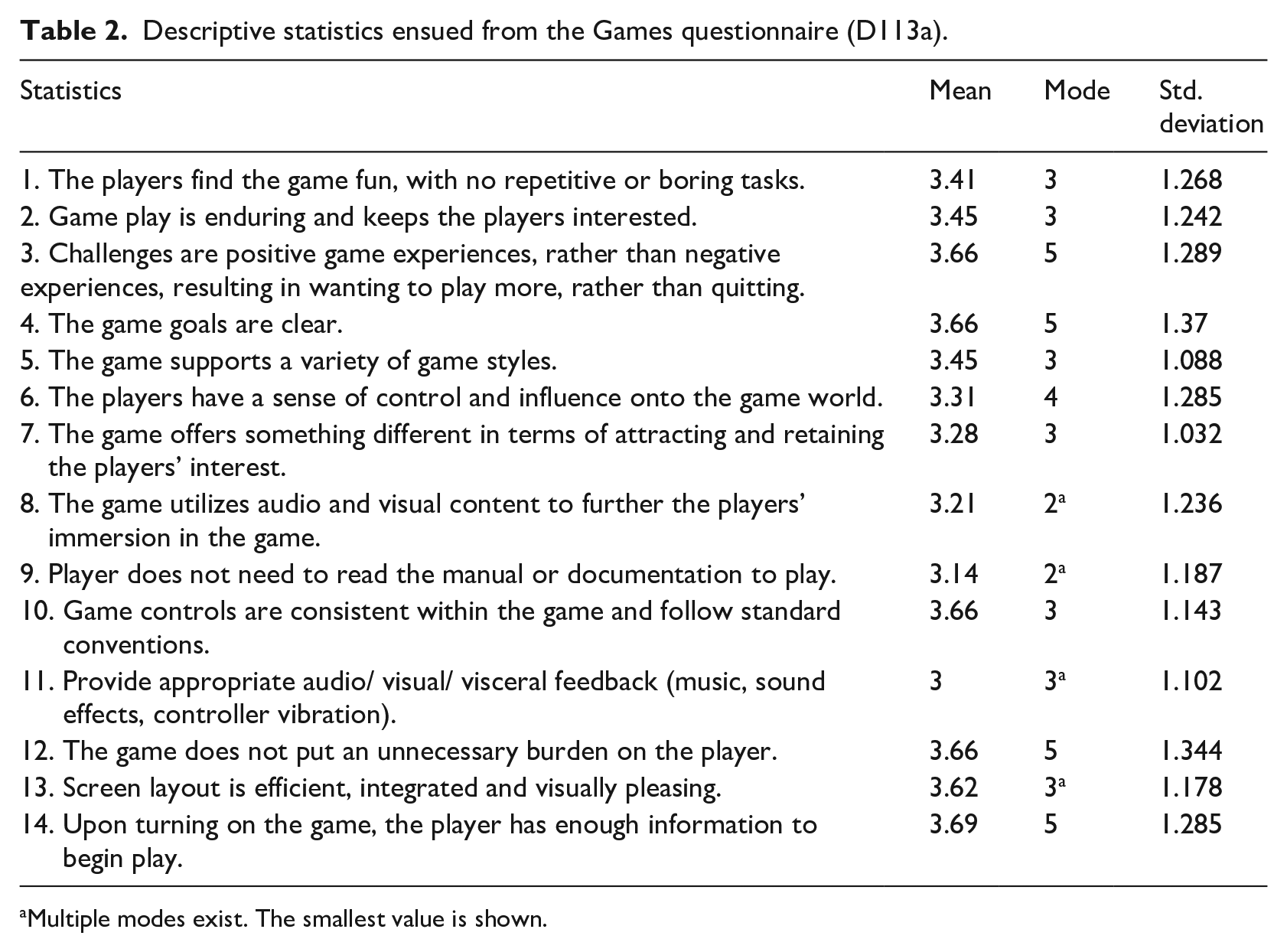
Multiple modes exist. The smallest value is shown.
Correlation analysis regarding the games
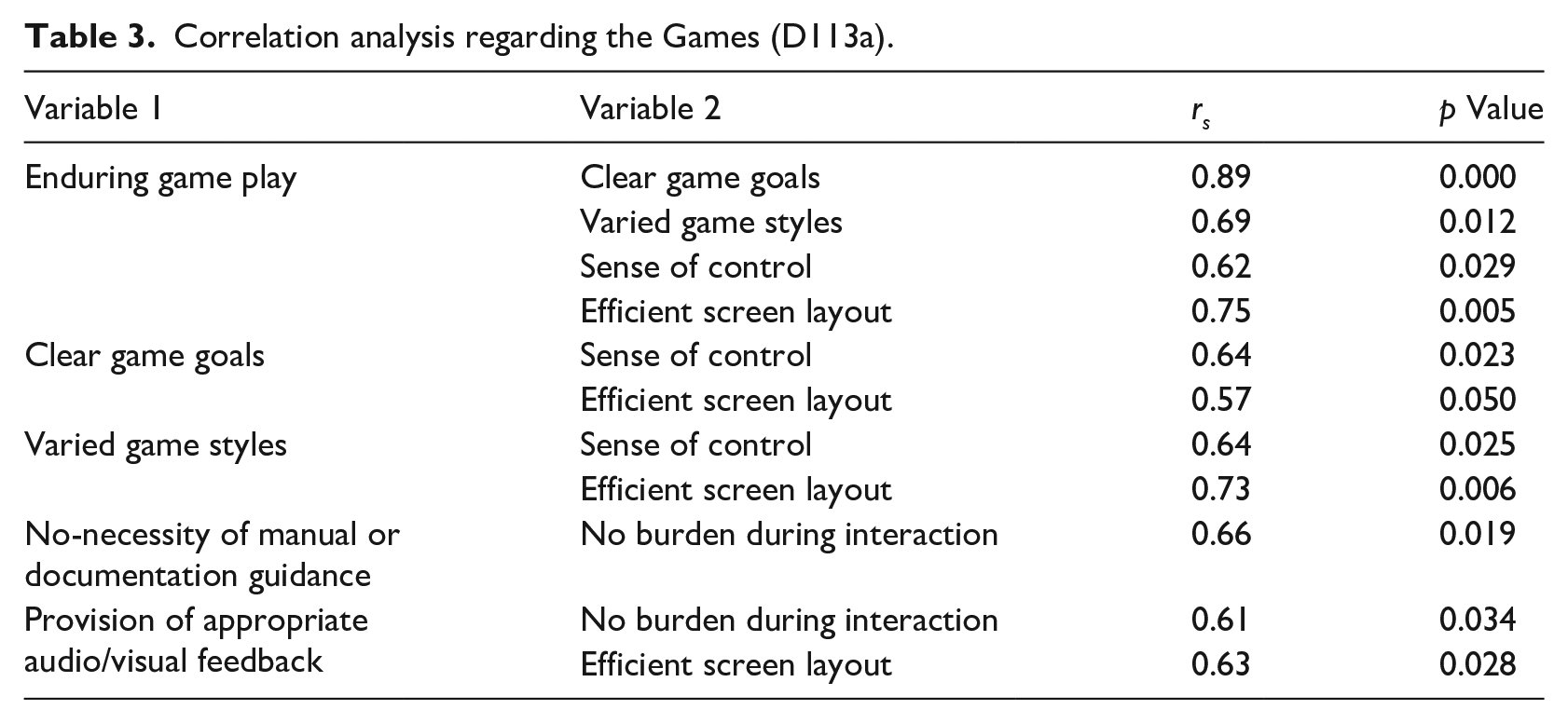
A Spearman correlation coefficient was used to identify the relationship between the questionnaires items related to heuristics of games playability, 34 as shown in Table 3, which explicitly shows the variables that indicated a significant positive correlation. In particular, the enduring game play of the Games was significantly and positively related to clear games’ goals, varied game styles, sense of control to the user and efficient screen layout. Furthermore, the clarity of games’ goals and varied game styles were both significantly correlated to the sense of control, as well as to the games’ efficient screen layout. In addition, the correlation analysis signified a positive relationship between the no-necessity of guidance through manual or documentation and no burden during interaction. Lastly, the appropriate audio/visual feedback provided to the games was interrelated to no burden during the interaction and the games’ efficient screen layout.
Correlation analysis regarding the Games (D113a).
Evaluation of the virtual scenarios (D113b)
Descriptive statistics analysis
Table 4 presents the descriptive statistics (i.e. Mean, Mode and Standard Deviation) for each item of the Virtual Scenarios retrieved from professionals’ evaluation. On the whole, the mean scores ranged between 3.21 and 3.83, suggesting a moderate to high acceptance of the Virtual Scenarios. Participants most often agreed or strongly agreed with the majority of the evaluation items (i.e. 6 out of 10), underpinning the value of the Virtual Scenarios in terms of story immersion (item 2), training decision-making (items 1, 3, 4, 6) and overall learning experience (item 10). On the other hand, they most often expressed a neutral opinion towards their difficulty level (item 5) and skill gains regarding management (item 9), money transactions (item 7) and use of transportation (item 8).
Descriptive statistics ensued from the Virtual Scenarios questionnaire (D113b).
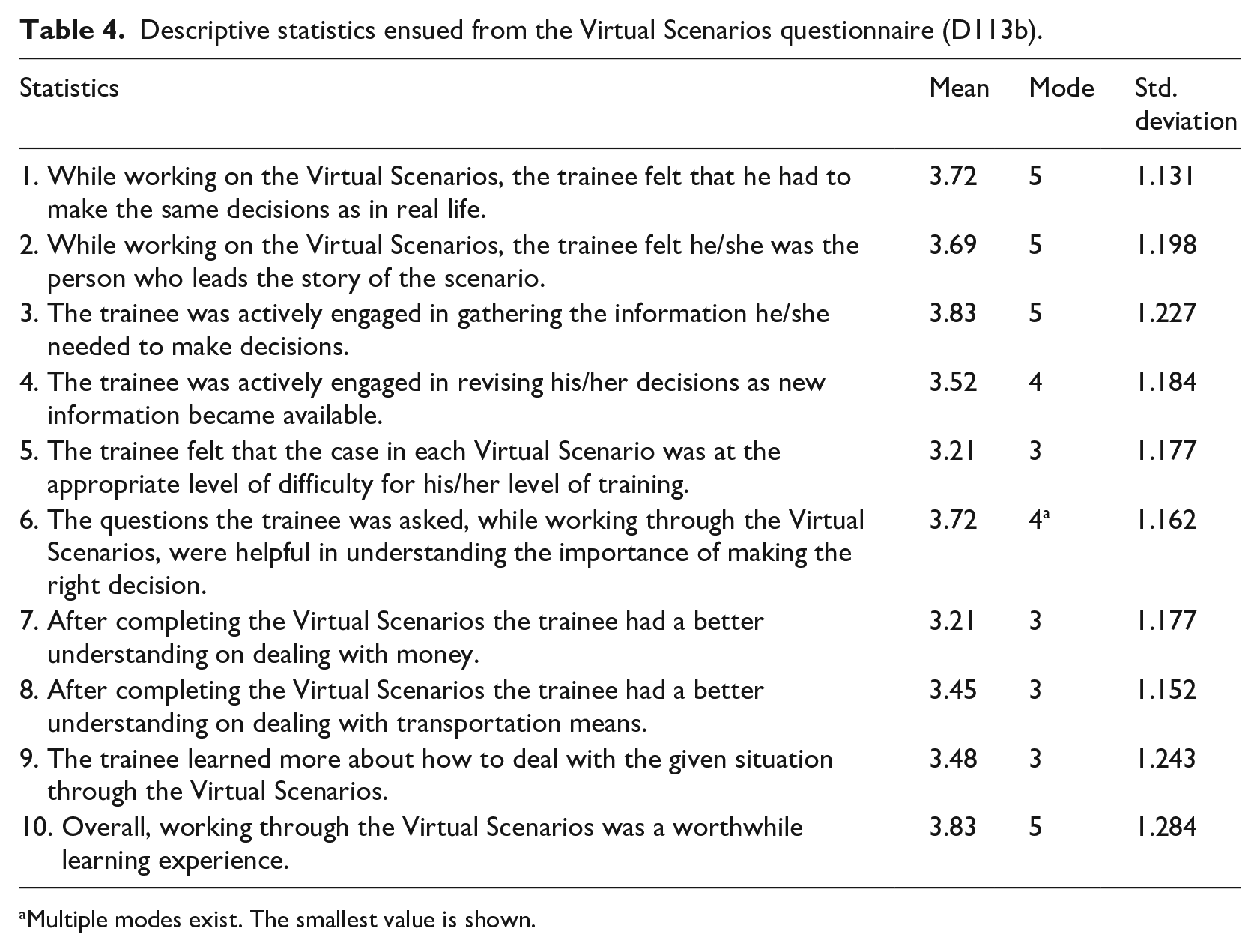
Multiple modes exist. The smallest value is shown.
Correlation analysis regarding the virtual scenarios
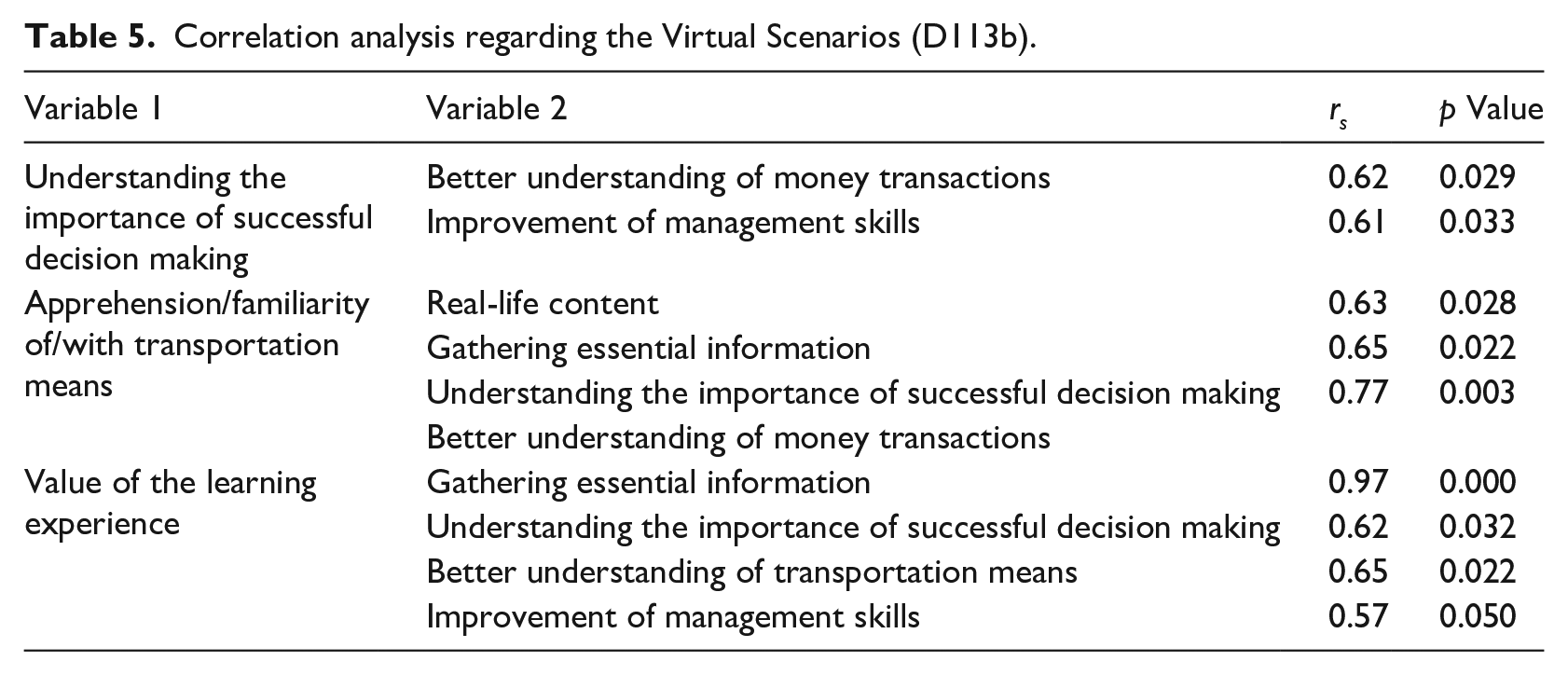
Data obtained from the questionnaire regarding the Virtual Scenarios were also analysed using Spearman’s correlation analysis (Table 5). Among the variables that indicated a significant and positive relationship, PDS/PID understanding of the importance of successful decision making was correlative with the better understanding of money transactions and the improvement of their managerial skills. Moreover, PDS/PID better understanding of the transportation means was significantly interrelated to Virtual Scenarios’ content adhesion to real life, PDS/PID engagement in gathering essential information during the interaction with Virtual Scenarios, the understanding of the importance of successful decision making, as well as their better understanding of money transactions. Finally, Virtual Scenarios’ value as a constructive learning experience was significantly and positively correlated to PDS/PID engagement in gathering essential information, the importance of decision making, the better understanding of transportation means and improvement of management skills.
Correlation analysis regarding the Virtual Scenarios (D113b).
Discussion and conclusions
The systematic marginalization of PID from organized leisure activities 35 as well as the conventional practice of designing ICT tools for this group of people with no consideration of their needs 18 is the two-fold gap that undermines inclusion and the challenge tackled through the DS Leisure project. In DS Leisure project, sound pedagogical approaches were supported by participatory design in order to develop a training program for improving quality of life of PDS/PID through inclusive leisure, based upon the exploitation of ICT tools tailored to the needs of this population. PDS/PID, families, caregivers and professionals of the leisure sector were all involved across the whole course of the project and actively participated in the design, development, and validation of the training materials, ICT tools and methods. The evaluation of the training program demonstrated successful outcomes both in terms of competences and learning satisfaction in PDS/PID, and acceptance of the ICT tools (i.e. Games and Virtual Scenarios) from the professionals working in their support. Specifically, social, communication and decision-making skills were significantly improved after the participation of PDS/PID in the six lessons of the DS Leisure e-Training platform and the Experiential Activity. Additionally, PDS/PID showed high self-efficacy during their participation in Experiential Activity, expressing a strong belief in their ability to meet the challenges of this particular situation, and also perceived this challenge as an enjoyable and constructive experience. Professionals positively appraised the playability of the Games and they mentioned story immersion, training in decision-making and the overall learning experience as the main factors that contributed to the adequacy of the Virtual Scenarios.
Despite the limitation of the small PDS/PID sample, evaluation of the training program was multi-faceted and encompassed feedback from varied groups of stakeholders, including trainers, trainees and professionals. Although it is often difficult to attribute outcomes to the participatory process or to some other contextual or design features, the potentialities of participatory research in increasing the quality of outputs and outcomes produced are well-documented 36 and are reflected upon the promising results of this study, as well.
Based upon these results, there is the scope of achieving sustainability of the DS Leisure project through the mainstreaming and multiplication process of transferring its successful results to appropriate decision-makers in regulated local, regional, national or European systems. In this vein, a lifelong learning e-platform, as part of a wider training program provided primarily to people who work or are involved in the support of health and care provision (professionals, formal and informal carers, family members), will be launched. The overall training program will focus on providing care-related training based on DS Leisure project’s experiential learning techniques and simulation technology, delivered through online and face-to-face contact. Drawing together assets and experiences from a wide range of current and previous projects, the course will be divided into a series of distinct and mutually reinforcing areas related to PDS/PID and other vulnerable groups of people.
In addition, it could be argued that the COVID-19 pandemic and the restrictive regulations that have been implemented globally, have affected the whole spectrum of daily life and caused significant disruption to the provision of education, training and mobility opportunities for learners, trainers, educators etc. Necessary changes, therefore, have been set of utmost importance, whilst the deployment of such online learning systems that promote learning and provide social care and interaction has been accelerated.
Footnotes
Declaration of conflicting interests
The author(s) declared no potential conflicts of interest with respect to the research, authorship, and/or publication of this article.
Funding
The author(s) received no financial support for the research, authorship, and/or publication of this article.
