



Abstract
Individuals with a spinal cord injury (SCI) have challenges using transportation. Autonomous shuttles (ASs), if accessible, may support their transportation needs. This study quantified the perceptions of AS for adults with and without SCI, before and after riding in the AS. We hypothesized that the perceptions of AS for individuals with SCI would improve, by the greatest magnitude, after riding in the AS. This mixed-method quasi-experimental design included 16 adults with SCI and 16 age-matched controls. While there were no differences between the groups, both groups reported having fewer perceived barriers to using AS after riding in the AS (p = .025). After riding in the AS, both groups stated that the AS must be available, accessible, and affordable if they are to use AS. In conclusion, adults with SCI should experience AS if they are to accept and adopt this mode of transportation.
Introduction
Worldwide, between 250,000 and 500,000 people sustain a spinal cord injury (SCI) each year (World Health Organization, 2013). An SCI often leads to secondary health conditions, social isolation, and decreased community mobility, including unmet transportation needs, which can reduce opportunities for employment, education, and community participation (Bascom & Christensen, 2017; Duncan et al., 2015). Autonomous shuttles (ASs) may be one way to improve transportation use and access for individuals with SCI. Specifically, ASs are larger capacity autonomous vehicles (AVs), with ample space for a power wheelchair, and may become a more cost-effective, reliable, and accessible mode of transportation compared with paratransit or adapted vehicles. However, little is known about this topic as ASs are currently in pilot testing phases and are not yet required to be compliant with the Americans with Disabilities Act or Rehabilitation Act. Accordingly, this offers the opportunity to explore this area of research and integrate recommendations that will enable individuals with SCI to access and use ASs.
Individuals with SCI face social, financial, psychological, and physical barriers to access transportation and are more likely to be transportation disadvantaged compared with the general population (Darcy & Burke, 2018). Transportation-disadvantaged individuals often seek low-cost public transit but must still overcome the first-mile last-mile challenge (Boarnet et al., 2017). This challenge arises when individuals have difficulty getting from their starting location to a pickup location or from the drop-off location to their final destination. Specifically, individuals with SCI are highly susceptible to transportation inequity and the first-mile last-mile challenge. If ASs are accessible and available, individuals with SCI may adopt this mode of transit to become independent in their community mobility.
Studies have highlighted the importance of shared AV services as a mobility option for older adults and persons with disabilities (PwDs; Fagnant & Kockelman, 2015; Hwang et al., 2020). However, information is starting to emerge pertaining to the perceptions of people with mobility impairments (e.g., SCI, orthopedic injuries) and the use of AS (Etminani-Ghasrodashti et al., 2021; Feeley et al., 2020; Hwang et al., 2020). These studies included heterogeneous samples of PwDs and did not expose these populations to an AV. It is difficult to draw conclusions from a sample of participants with a variety of disabilities, and thus this study is focused on individuals with an SCI who have mobility impairments. Recent findings suggest that older adults (≥65 years old), with age-related mobility declines, report favorable increases in their perceptions (i.e., Intention to Use, Perceived Barriers, Well-being, and Acceptance of AS) of AS after riding in an AS (Classen et al., 2021). However, we know little about the perceptions of individuals with SCI related to AS. Open-ended responses from individuals with SCI may provide additional insight into their acceptance practices of AS that may not be reflected in currently validated measurement tools.
Individuals with an SCI must overcome additional barriers to accessing transportation, and thus are likely to have the most to gain from adopting AVs (Haboucha et al., 2017). For PwDs and older adults, barriers to using AS include distrust, equipment failure, cybersecurity, and lack of control of the vehicle (Classen et al., 2021; Mason et al., 2022; Taeihagh & Lim, 2019). It is unclear whether individuals with SCI will have these same barriers to AS adoption as their disability specifically impairs ambulation and community mobility.
The perceptions and needs of PwDs are often not solicited during AV development. Even among research focused on transportation needs of PwDs, researchers note that it is not feasible to include individuals representing all types of disabilities (Cordts et al., 2021). To promote transportation equity and accessibility, individuals with SCI or those with similar mobility impairments must be included during the pilot deployment phases so researchers can capture their lived experiences. Researchers who collaborate with AV companies and stakeholders have opportunities to disseminate and discuss feedback from individuals with SCI. These discussions could lead to manufacturers developing accessible vehicles to further promote transportation equity.
Rationale and Significance
AS may increase transportation choices and options for people with SCI if the AS is accessible, available, and acceptable. Using AS may increase the likelihood that people with SCI will accomplish their life roles in society, and participate in the community, with improved quality of life (Duncan et al., 2015). However, we know little about the perceptions, acceptance, and adoption practices of individuals with SCI related to AS. Exploratory inquiry is required to elucidate the perceptions, values, hesitations, and beliefs of individuals with SCI, and to understand barriers or opportunities for AS acceptance. Findings will benefit the target population and inform industry partners, transportation officials, and transportation advocacy organizations toward ensuring transportation equity.
Study Objectives
To address the aforementioned gaps of knowledge, this study used mixed methods to assess perceptions of people with SCI before and after riding in an AS. We expect (a) that individual’s perceptions (Intention to Use, Perceived Barriers, Well-being, and Acceptance of AS) of AS will be enhanced after riding in the AS, (b) that the greatest magnitude of change to the perceptions of AS will occur for individuals with SCI (vs. controls), and (c) that individuals with SCI will identify availability and accessibility as benefits or disadvantages of AS use.
Method
The university’s institutional review board (IRB no. 201802890) provided approval for this study. In this mixed-method quasi-experimental pretest–posttest design study, adults with and without SCI reported their perceptions of AS before and after riding on AS that operated on a fixed route.
Participants
Participants were recruited through study flyers, word of mouth, social media, the Veterans Affairs, and presentations with local stakeholder groups (i.e., rehabilitation facilities and hospitals) from December 2019 through May 2021. Individuals were screened for eligibility through a telephone survey. They were eligible to participate in this study if they (a) were 18 to 64 years of age, (b) were fluent in English, (c) showed no signs of cognitive impairment as determined by a score of >18 on the Telephone Interview Cognitive Status–30 (TICS-30; Brandt et al., 1988), and (d) were diagnosed with an SCI more than 6 months prior to participation in the study. All procedures were followed according to the revised (2000) Helsinki Declaration. Participants in the control group were a convenience sample who met identical inclusion and exclusion criteria but had no history of an SCI. Control participants were matched for age and sex. Twenty-three individuals with SCI expressed interest in participation and 16 met inclusion criteria and consented to participate in the study. Participants received a US$50 cash card and travel compensation of up to US$50.
Autonomous Shuttle
Vehicles range from having no automation (Society of Automotive Engineers [SAE] Level 0), partial automation (SAE Levels 1–3), or full automation (SAE Levels 4–5; SAE International, 2018). The EasyMile EZ10 AS was manufactured by Transdev (Figure 1) and was designed to operate in full automation (SAE Level 4) on a geofenced, fixed route. Per the National Highway Traffic Safety Administration (NHTSA) regulations, the AS had a safety steward onboard during vehicle operation. Prior to data collection, the AS was remediated by Transdev (operator) to include wheelchair securements, seat belts, and an Americans with Disabilities Act compliant ramp that was manually deployed by the AS safety steward (i.e., rather than the automated ramp that was manufactured by EasyMile). The AS was remediated to promote safety and accessibility and occurred due to a collaborative relationship between Transdev, City of Gainesville, and the University of Florida, which consisted of weekly meetings that allowed members to discuss logistics, observations, and feedback from pilot participants and occupational therapists who rode in the AS.
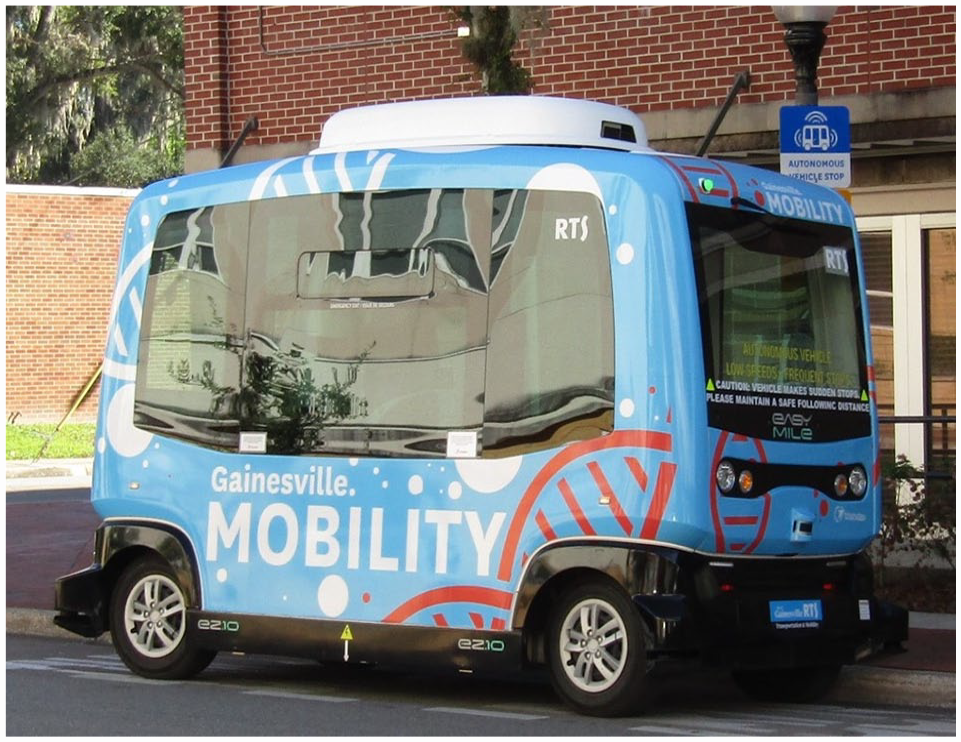
EasyMile EZ10 Autonomous Shuttle.
Route
Gainesville, FL. The AS 2.1-mile loop (≈20 min) was located in a downtown area requiring the AS to interact with other vehicles, cyclists, or pedestrians. The route included eight turns, six roundabouts, seven crosswalks, four primary intersections, and 15 streets that intersected the route. The hours of operation were 9:00 a.m. to 4:00 p.m. from Monday to Friday. The AS did not operate during inclement weather conditions that included heavy rain or fog. The exact route was used by Classen et al. (2022) and the physical, social, temporal dimensions of the route were detailed and analyzed by Classen and colleagues (2020).
Procedures
Participants provided written informed consent and were screened to ensure that they were eligible to participate in the study. Before riding in the AS, participants completed the Demographic Questionnaire, Driving Habits Questionnaire (DHQ; Owsley et al., 1999), and the Autonomous Vehicle User Perception Survey (AVUPS; Mason et al., 2021). After completing the questionnaires, participants rode the AS route. To mitigate the spread of COVID-19, study safety precautions were consistent with the Centers for Disease Control and Prevention (CDC) guidelines and included wearing a mask, frequent sanitization of the AS, and limiting passenger capacity to the research assistant, participant, and AS operator. There was no overlap between participant visits and thus they did not ride the AS with other participants. Participants completed the AVUPS again after riding in the AS.
Measures
Demographic Questionnaire
The demographic and medical history form was modified from the National Institute on Aging Clinical Research Toolbox and used to collect data on age, gender, race, education, relationship status, and employment status, and use of assistive devices.
Driving Habits Questionnaire
The DHQ is a self-reported interview-based measure that contains 34 items regarding driving exposure, space, status, difficulty, dependence, and crashes/citations. The factors driving status and driving dependence (i.e., whether the individual is often the driver or passenger while commuting in a personal vehicle) were summarized descriptively. Driving status has not been previously assessed but driving dependence has been previously shown to have moderate internal consistency and 5-day test–retest reliability (α = .572, intraclass correlation coefficient [ICC] = 0.572; Song et al., 2015).
Autonomous Vehicle User Perception Survey
The AVUPS consists of 20 visual analog scale items ranging from 0 (disagree) to 100 (agree). Participants placed a vertical dash on a 100-mm horizontal line to signify their level of agreement for each item. Participants also completed four open-ended items to detail the benefits and barriers to using AS (Items are detailed in Table 3). Based on the previous Mokken scale analysis (Mason et al., 2021), the AVUPS item scores were aggregated and loaded on to four subscales that included Intention to Use, Perceived Barriers, Well-being, and Acceptance of AVs. The AVUPS has previously shown acceptable face validity and the mean content validity index was 96% (Mason et al., 2020). Regarding 2-week test–retest reliability, the scales Acceptance (ρ = .76, ICC = 0.95), Intention to Use (ρ = .80, ICC = 0.93), Perceived Barriers (ρ = .73, ICC = 0.87), and Well-being (ρ = .72, ICC = 0.84) were strongly correlated and reliable (Mason et al., 2021).
Data Analysis
Descriptive statistics included age, race, education, marital status, employment, and driving status. Continuous data are presented as mean and standard deviation, whereas categorical data are presented as counts (n) and frequencies (%). The four AVUPS domain scores (dependent variables) were assessed for normality through visual examination (i.e., probability plots and histograms) and statistical tests (i.e., Shapiro–Wilk tests and Fisher skewness and kurtosis). Perceptions of AS (i.e., AVUPS scores) were compared using a two-way mixed analysis of variance (ANOVA) with group (SCI vs. control) as a between-subject factor and time (pre- vs. post-AS ride) as a within-subject factor.
Narrative responses from the four open-ended AVUPS items were coded using conventional content analysis (Hsieh & Shannon, 2005). This inductive approach is frequently used by transportation planners when there are a limited number of cases and information (Etminani-Ghasrodashti et al., 2021; Hsieh & Shannon, 2005). Following the content analysis method guidelines (Cullinane & Toy, 2000), two qualitative-trained researchers read and reread all open responses detailing the advantages and disadvantages to accepting and using the AS. Based on the frequency of occurrences in the open-ended responses, the researchers open-coded using the constant comparisons method to compare, conceptualize, and categorize the item responses into recorded units. After open coding, themes (e.g., three As: affordability, availability, and accessibility) and subthemes were developed from the codes (refer to Table 3) to align with existing studies focused on the acceptance and adoption of emerging transportation services. Data collation, mutation, analysis, and visualization were performed using R Version 4.0.2 (R Core Team, 2022) in RStudio. Significance level of α = .05 was set a priori and p values were adjusted to control for multiple comparisons using the Benjamini and Hochberg (1995) procedure. Data were managed using Research Electronic Data Capture (REDCap).
Results
The SCI group consisted of 16 participants (15 men, 1 woman; Mage = 44.4 years; SDage = 16.1), ranging from 20 to 62 years of age and self-identified as being White/Caucasian (81%) or Black/African American (19%). Twelve SCI participants (75%) reported having an incomplete injury and all but one participant (93.75%) used a wheelchair for mobility. No participant transferred from their wheelchair to a seat on the AS. The age- and gender-matched control group consisted of 16 participants (15 men, 1 woman; Mage = 44.4 years; SDage = 16.4), ranging from 22 to 64 years of age and self-identified as being White/Caucasian (56%), Asian/Pacific Islander (31%), or Black/African American (6%). Participant characteristics are displayed in Table 1.
Driving Habits and Demographics of the SCI and Control Groups.
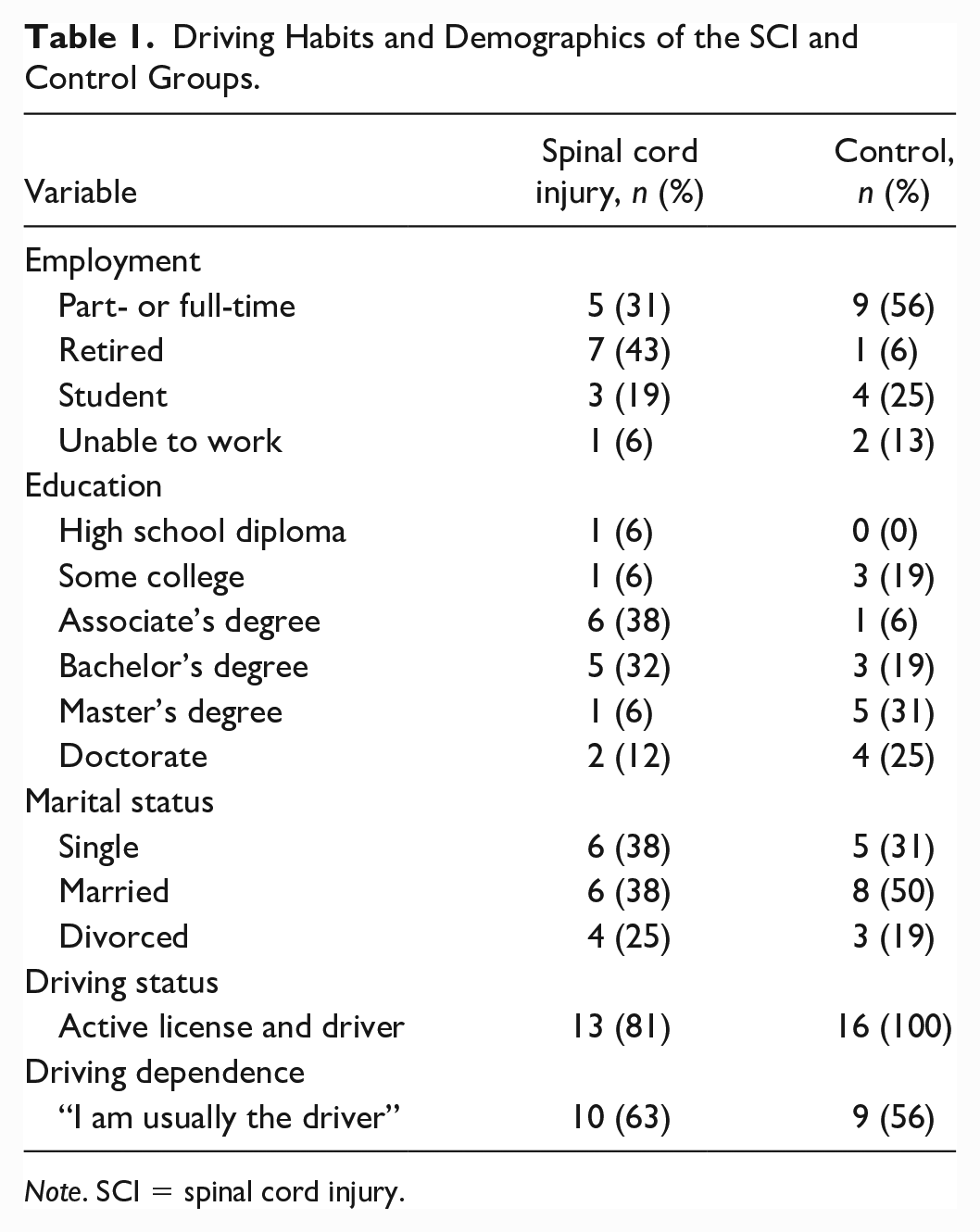
Note. SCI = spinal cord injury.
Descriptively, participants’ perceptions (Intention to Use, Perceived Barriers, Well-being, and Acceptance) of the AS improved after riding in the AS but there were no significant differences (ps > .05) between groups (Table 2). The two-mixed ANOVA revealed a time effect for Perceived Barriers, F(1, 60) = 3.26, p = .025. Participants reported decreased Perceived Barriers after riding in the AS (M = 20.5, SD = 13.1) compared with baseline (M = 29.3, SD = 17.4). However, no time effects were observed for Intention to Use, Well-being, or Acceptance of AS. Furthermore, no group effects or group-by-time interactions were observed for Intention to Use, Perceived Barriers, Well-being, and Acceptance of AS (Figure 2).
Results From the Mixed ANOVAs for Intention to Use, Perceived Barriers, Well-Being, and Acceptance of AS.
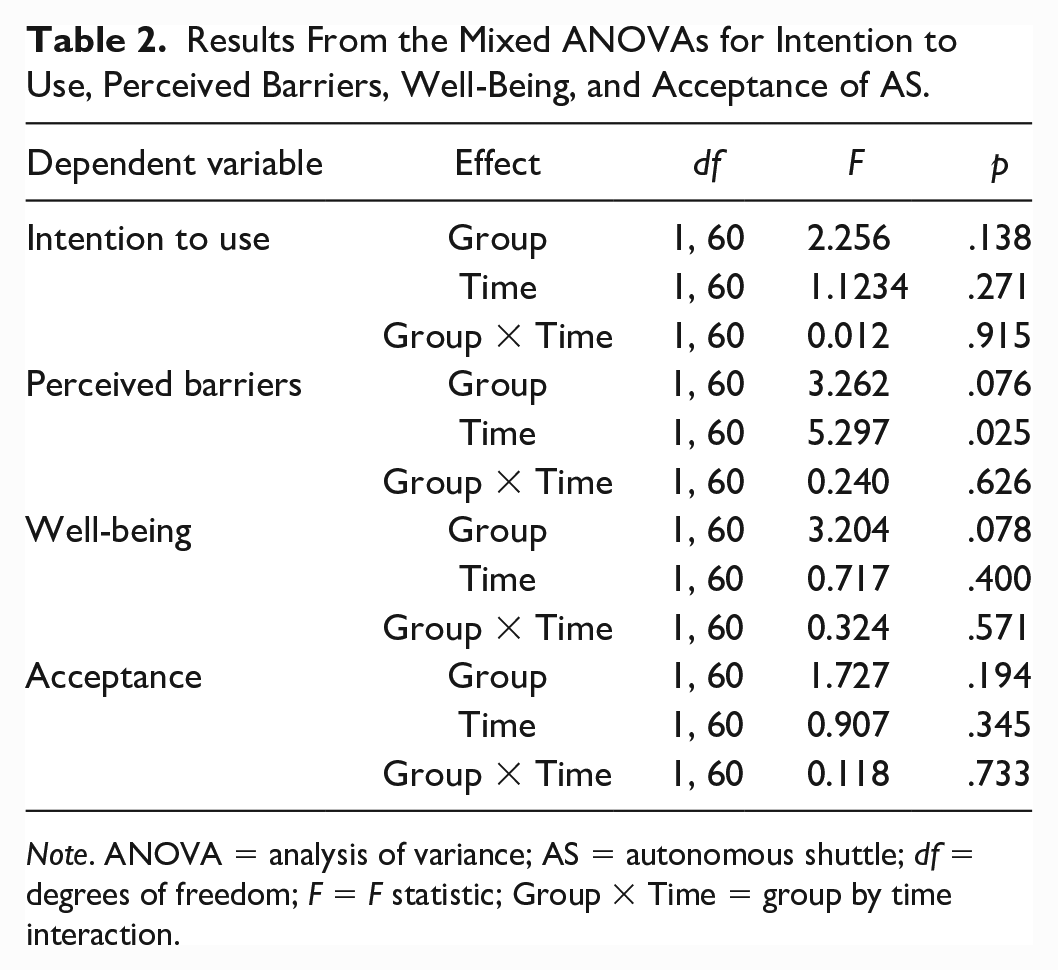
Note. ANOVA = analysis of variance; AS = autonomous shuttle; df = degrees of freedom; F = F statistic; Group × Time = group by time interaction.
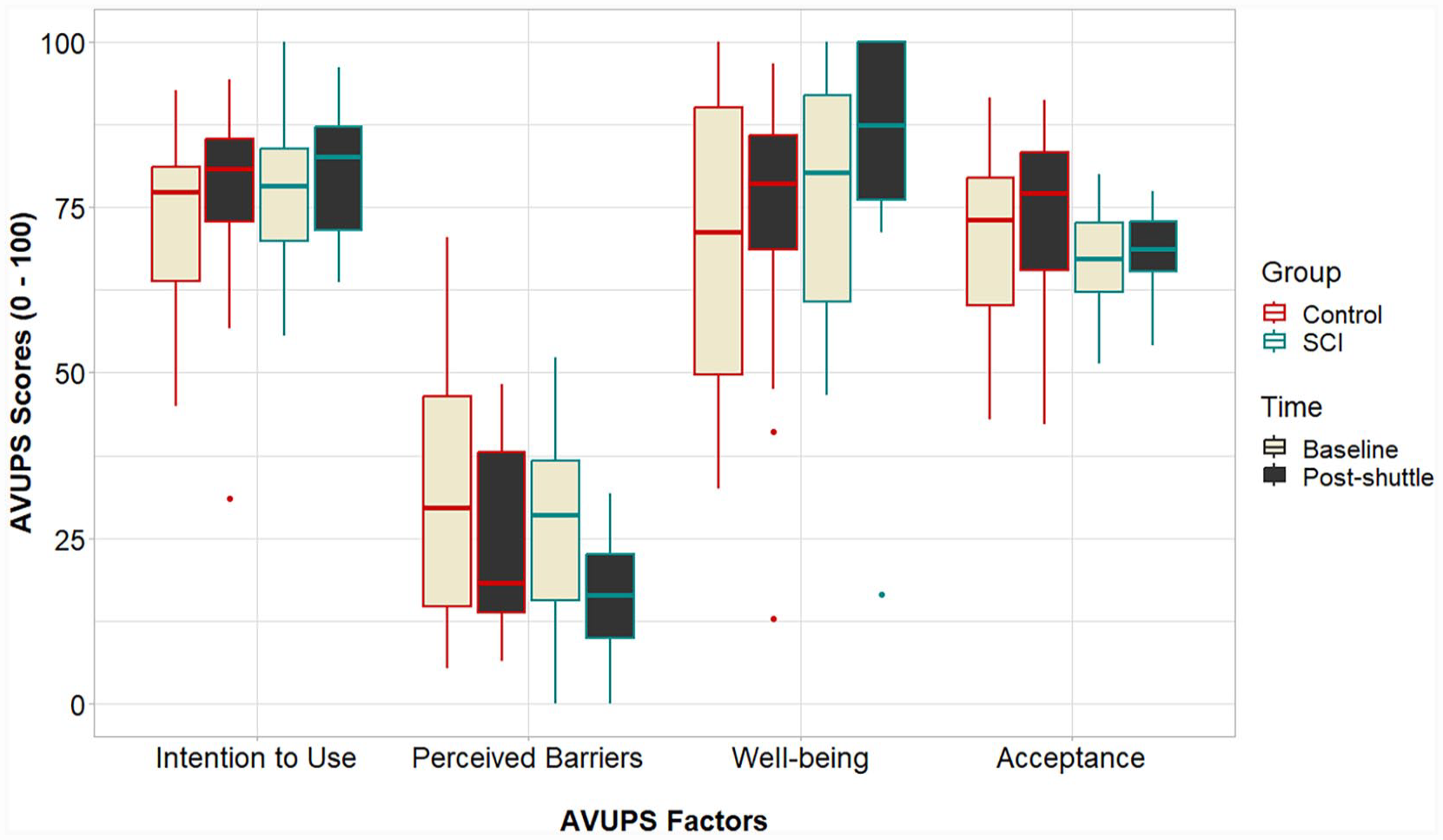
Perceptions of AS Before and After Riding in the Shuttle for SCI and Control Groups.
Individuals discussed the advantages and disadvantages that may promote or deter use of the AS (Table 3). Several subthemes were identified based on similar participant responses (e.g., AV breakdowns; system failure was labeled as the subtheme malfunctions, aligning with the broader theme of safety). Subthemes were categorized into themes, specifically the 3 As (accessibility, availability, and affordability; The Beverly Foundation, 2002), Convenience (comfort, convenient/inconvenient, multitasking, and efficient/inefficient [i.e., timing, speed, or passenger capacity of the shuttle), Independence (autonomy, functional decline, and driving declines) Security and Trust (cybersecurity, human drivers, lack of control, malfunctions, safety, and trust), Society (job loss, environmental sustainability), and Support (media, social, and training).
Participant Responses by Theme, Subtheme, and Participant Frequency Counts to the Four Open-Ended AVUPS Items and by Group, Before and After Riding in the AS.
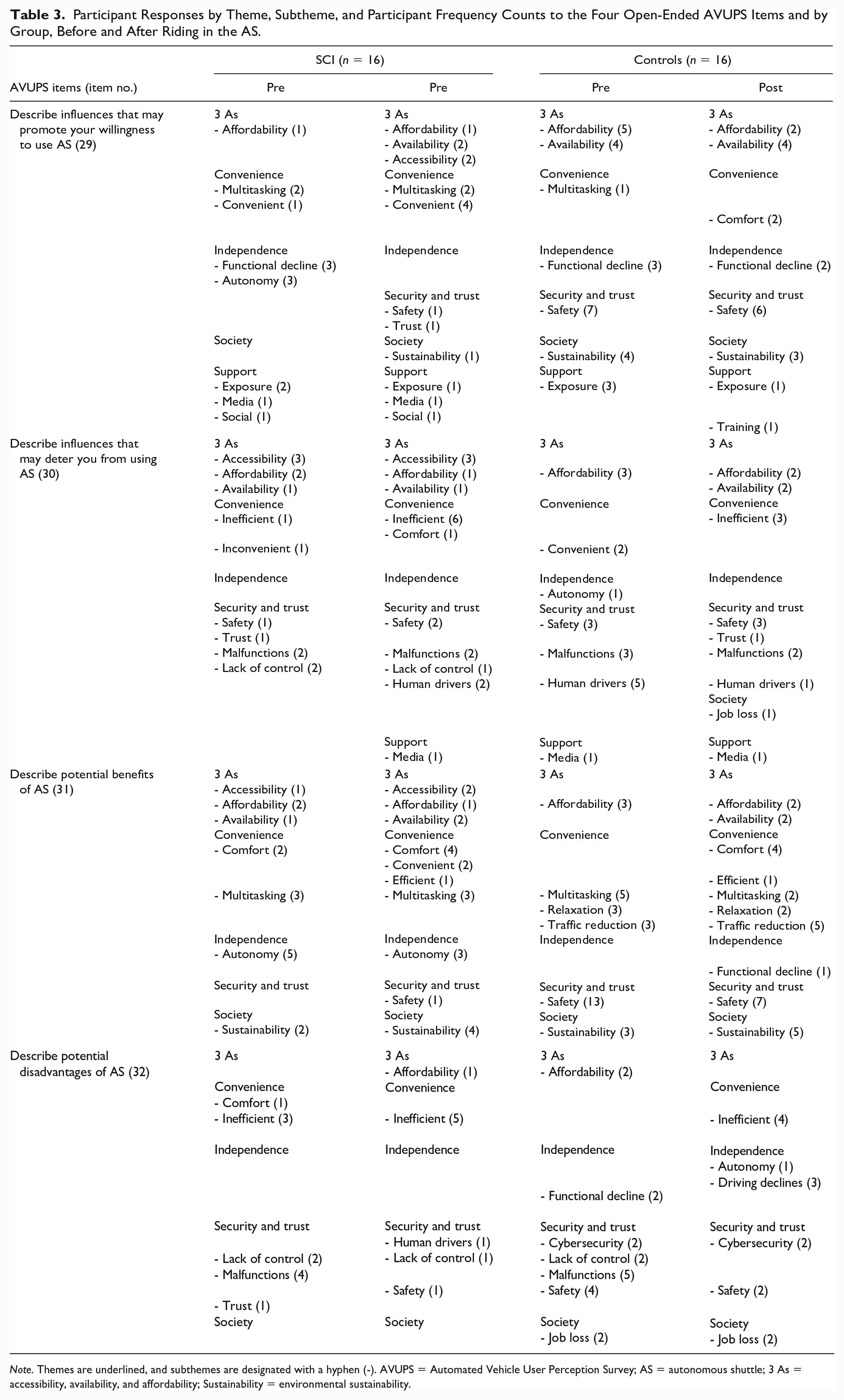
Note. Themes are underlined, and subthemes are designated with a hyphen (-). AVUPS = Automated Vehicle User Perception Survey; AS = autonomous shuttle; 3 As = accessibility, availability, and affordability; Sustainability = environmental sustainability.
Participant responses highlighted the importance of “time,” “slow,” “traffic,” and “speed” (Convenience—efficiency, convenient/inconvenient; Security and Trust—safety), “safety” and “accidents” (Security and Trust—safety), and “driving,” “skills,” and “control” (Independence—driving declines; Security and Trust—lack of control; Convenience—multitasking). Other words most commonly mentioned were “cost” (three As—affordability), “environment” (Society—environmental sustainability), “independence” (Independence—autonomy), and “availability” (three As—availability).
Prior to riding in the AS, individuals with SCI expressed concerns (AVUPS Item 30; Table 3) about the three As (accessibility, affordability, and availability), Convenience, and Security and Trust. Reasons that would promote AS use (AVUPS Item 29) for participants with SCI included Affordability, Convenience (multitasking, convenient), Independence (autonomy, functional decline), and Support (positive media coverage, social influence from friends and family, and AS exposure). Participants with SCI stated that the three As were potential benefits (AVUPS Item 31) identified before and after the AS exposure along with Convenience (multitasking, comfort), Independence, and the additional theme of Society (environmental sustainability). On the contrary, prior to the AS ride, control group participants also stated that the three As either promoted (or deterred) their use of AS and were comparable to the SCI group when mentioning Independence (functional decline mentioned as opposed to autonomy for those with SCI), Society, and Support. Control participants focused on affordability and availability (i.e., two of the three As), rather than accessibility of the AS (i.e., universal design and ingress/egress). Controls, who did not have disabilities, did not mention accessibility issues with the AS as a common concern.
Another area of difference is the mention of Security and Trust as a theme in only the controls prior to AS exposure. For example, seven controls stated that Security and Trust of the AS would promote use, whereas no SCI individuals mentioned this category before the ride. Moreover, 11 control participants stated that issues of Security and Trust were a possible deterrent as opposed to three participants with SCI. Security and Trust concerns were mentioned less frequently after riding in the AS for both groups. It appears that after the AS ride, these Safety and Security concerns changed to a higher appreciation of the technology and instead focused on the speed noticed by five of the SCI participants and four controls (Convenience—inefficient: “far too slow”). Participants in both groups mentioned that automation may mitigate climate change and support the environment (Society—environmental sustainability). Specifically, five controls identified that Society may benefit from “reduced fuel consumption,” “sustainability benefits for the environment,” and “less gas/pollution” while four with SCI mentioned these benefits. Controls noted that job loss (Society), cybersecurity (Security and Trust), and malfunctions (Security and Trust) would be either a disadvantage of AS or deter their use of AS. Several control participants documented that driving skills would eventually deteriorate once AS (and “autonomous vehicles”) are deployed (Independence—driving declines). Control participants commented that the “learning curve might be challenging in operating a self-driving vehicle” and many unknown factors still exist, such as cybersecurity (“hacker/bad programming”) and malfunctions (“system failure,” “bad weather”).
Discussion
This study compared the perceptions of AS between adults with and without SCI, before and after riding in an AS. We hypothesized that individuals’ Perceived Barriers, Intention to Use, Well-being, and Acceptance of AS will improve after riding in the AS and the greatest magnitude of change will occur for individuals with SCI compared with controls. Participants of both groups reported having fewer Perceived Barriers after riding in the AS compared with baseline. Although participants had relatively low Perceived Barriers of AS at the onset, their Perceived Barriers decreased after riding in the AS. These results are promising and suggest that individuals should be exposed to AS if they are to consider AS as a viable mode of transportation. Eventually, AS will need to be Americans with Disabilities Act–compliant to promote accessibility and community mobility. The AS was remediated prior to exposing participants to the shuttle, aligning with individuals with SCI reporting that Independence (e.g., not relying on others for rides), Security and Trust (e.g., safe positioning of wheelchair), and accessibility (e.g., ability to enter and exit the vehicle on their own) were factors that would influence their usage of AS.
Participants in both groups reported favorably to their Intention to Use, Well-being, and Acceptance of AS. However, these perceptions did not significantly change after riding in the AS. Descriptively, participants’ perceptions of the AS improved after riding in the shuttle, with similar trends between individuals with SCI compared with individuals without SCI. These findings support including AS in future transportation planning for individuals with or without SCI. Individuals with SCI prefer to use community mobility without assistance to reduce their reliance on caregivers and care partners (Biering-Sørensen et al., 2004). However, incorporating ASs in transportation planning is dependent on the cost (i.e., affordability), safety, and availability of ASs, which is currently being examined by transportation planners, city managers, and industry partners.
In this study, participants in the SCI and control groups frequently mentioned Security and Trust and three As (accessibility, affordability, and availability) as factors that would promote or deter the adoption of AVs. This aligns with the findings from Etminani-Ghasrodashti and colleagues (2021) in which people with and without disabilities reported that Safety and accessibility were the primary concerns that would deter the adoption of shared AVs. The three “As” incorporates accessibility of the AS (e.g., ingress and egress), affordability of riding in the AS, route access to health care facilities, occupation or community participation, and is affected by availability of the AS (i.e., hours of operation and capacity of the AV). To promote acceptance and adoption, the three As must be considered when developing and planning for AS deployment if we are to reduce transportation inequity (Etminani-Ghasrodashti et al., 2021).
If the public is to use ASs, they must trust that the ASs are a safe and reliable (i.e., not prone to malfunctions) mode of transportation. In this study, the ASs operated, as per federal mandate, below 10 miles per hour on a fixed route in a suburban environment that was relatively safe with minimum to moderate traffic congestion. After riding in the AS, participants in both groups reported decreased concerns of trust in the AS. Individuals with SCI were concerned about having sufficient control of the vehicle in times of emergency (e.g., malfunctions of the AS, traffic congestion, and inability to take over control of the AS). In both groups, participants noted that the AS was “too slow” and “not efficient” but would allow individuals with impairments (due to disability, intoxication, or age-related declines) to access transportation. Although our results are promising, our findings may not apply to other environments (e.g., congested or high-speed traffic, suburban, rural, night, and icy or snowy climates) or to other ASs with unique designs that promote accessibility and Safety.
This is the first study to assess the perceptions of individuals with SCI before and after riding in a highly AV. The ability to increase accessible transportation options for PwDs is recognized as a primary method to improve their independence, autonomy, and community participation (Bascom & Christensen, 2017; Hwang et al., 2020). Previous studies assessed the perceptions of PwDs toward AV transportation, but did not expose them to highly AVs (Bezyak et al., 2017; Hwang et al., 2020). To promote inclusion and strive toward transportation equity, researchers solicit opinions from a heterogeneous sample of adults with sensory, physical, and mental health disabilities (Bezyak et al., 2017; Hwang et al., 2020). The open-ended responses in this study are in line with focus group results from Hwang and colleagues (2020). Specifically, PwDs expressed the need for spontaneous and independent travel (Independence), concerns for reducing ride costs (three As), safety (Security and Trust), and communication between the vehicle and riders (three As, Security and Trust). These findings suggest that PwDs will need AVs to be accessible, affordable, available, safe and reliable, time-efficient, and support their independence to participate in the community.
The primary limitation of this study was the small sample size. As expected, it was challenging to find individuals with SCI who had flexible schedules to ride the AS Monday to Friday between 9:00 a.m. and 4:00 p.m. Finally, each participant drove their personal vehicle to the study site, and thus their perceptions were likely different from those unable to participate in the study due to transportation barriers. The primary strengths of this study were that the participants’ perceptions were assessed with a valid and reliable AVUPS, before and after riding in the AS that operated on public roads with ambient traffic, and the strict inclusion of participants with an SCI. This is in contrast to previous studies that solicited PwDs’ perceptions of AV without a lived experience in an AV (Etminani-Ghasrodashti et al., 2021; Hwang et al., 2020) or included adults with developmental or visual disabilities (Feeley et al., 2020) or physical and visual disabilities (Hwang et al., 2020; Mason et al., 2022). Researchers often incorporate universal design principles to investigate transportation barriers in a heterogeneous sample of PwDs (Etminani-Ghasrodashti et al., 2021; Feeley et al., 2020; Hwang et al., 2020). As observed in this study, an inclusive design approach offers numerous benefits specific to adults with SCI.
ASs should be included in transportation planning for people with SCI. Occupational therapists can promote this technology and advocate for ASs to be accessible by recommending suitable ramps for ease of ingress/egress, determining which safety measures (such as securement straps) are best at providing wheelchair stabilization, and a combination of tactile and voice controls. In addition, occupational therapists can discuss strategies to interact with this technology by providing opportunities to experience and have familiarity with AS to further promote universal design and participant acceptance of the AS. The AS may be a suitable option for those who have difficulty driving as it can facilitate participation in community mobility.
Lived experiences of PwDs, before, during, and after AS exposure, inform researchers and industry partners of the accessibility/affordability/availability needs, preferences, and steps to ensure inclusivity. These experiences with the AS provided the participants with the opportunity to better understand current capabilities and limitations of AVs, and how they may operate in a mixed transportation (i.e., human drivers and AVs) system. It is these experiences and perspectives that will assist in moving this technology forward.
Conclusion
This study quantified changes in perceptions of adults with an SCI and without an SCI before and after riding in an AS. Perceived Barriers to AS decreased after riding in the AS for both groups. These findings may suggest that the perceived barriers of using ASs are unclear to the public, owing to the novelty and lack of experience with this emerging technology. Raising awareness and exposing individuals to ASs may improve their understanding, acceptance, and adoption of ASs and other AVs. Yet Intention to Use, Well-being, and Acceptance of AS did not change after riding in the shuttle. The perceptions of SCI and control participants did not differ before or after riding in the AS. The open-ended responses from the participants suggest that ASs need to be accessible, affordable, available, secure, safe, trustworthy, and convenient if they are to adopt this mode of transportation. Understanding perceptions regarding AS may promote increased three As, adoption, and transportation equity for individuals with an SCI. Adults must experience emerging modes of transportation to elucidate their willingness to include AVs in travel planning. PwDs should be included during AV design, development, and deployment to determine whether these vehicles are accessible, easy to use, and inclusive. Should individuals with SCI or other mobility impairments accept and adopt this new technology, their evolving perceptions and feedback may lead to important steps toward transportation equity for PwDs.
Footnotes
Declaration of Conflicting Interests
The author(s) declared no potential conflicts of interest with respect to the research, authorship, and/or publication of this article.
Funding
The author(s) disclosed receipt of the following financial support for the research, authorship, and/or publication of this article: Supported in part by grant no. 45 from the Paralyzed Veterans of America Education Foundation (principal investigator [PI]: S.C.) and the University of Florida’s Institute for Driving, Activity, Participation, and Technology (I-DAPT).
