



Abstract
This review seeks to understand the literature on patient navigator programs (PNPs) that employ occupational therapists (OTs), including the role (conceptualization), functions (operationalization) of OTs who work as patient navigators (PNs) and the settings and populations they serve. This review also mapped the role of PNs to the 2021 Competencies for Occupational Therapists in Canada. Scoping review methodology by Arksey and O’Malley (2005) was employed. Data were analyzed thematically and numerically to identify frequent patterns. Ten articles were included. Within PNPs, OTs worked in hospitals and communities, but their role was rarely well-defined. Five competency domains (i.e., communication and collaboration, culture, equity and justice, excellence in practice, professional responsibility, and engagement with the profession) were evident in existing PNPs that included OTs. This review supports the increasing interest in OTs as PNs by demonstrating the alignment between the OT competencies and roles and functions of OTs working within PNPs.
Keywords
Introduction
Patient navigator programs (PNPs) are programs that involve a trained patient navigator (PN) to identify individual barriers to accessing care and assist with reducing delays in accessing a continuum of services to improve patient health outcomes (Wells et al., 2008). PNPs have been expanded to meet the diverse needs of care contexts (McBrien et al., 2018), yet there remains a lack of consensus regarding PN’s titles, job descriptions, credentials, competencies and training (Kelly et al., 2019). Some functions of PNs overlap with those of case managers (Kelly et al., 2019). Although the primary purpose of case managers is to fill gaps in services, such as by providing clinical consultation, the primary purpose of PNs is to help patients navigate existing health and social care services (Kelly et al., 2019). Moreover, PNs often are not restricted to a “predefined set of services,” in the way that case managers are (Dohan & Schrag, 2005).
The credentials and professional background of PNs can vary (Kelly et al., 2019). There is abundant data on the role of lay navigators (i.e., peers with lived experience; e.g., Budde et al., 2021). However, for the purposes of this review, we defined a PN as a health care professional that engages with patients and/or clients on an individual basis for a defined but ongoing period to increase access to components of the health care system and enhance chronic disease care (Kokorelias et al., 2021a). Various health care disciplines have taken on the PN role, including nurses, social workers, and occupational therapists (OTs; Kelly et al., 2019; McBrien et al., 2018). Much of the literature has explored the role of social workers (e.g., Browne et al., 2015) and nurses (e.g., Gilbert et al., 2011) in PN roles. Although OTs have served as PNs or in PNPs (Menendez, 2020), OTs as PNs remain understudied (Kelly et al., 2019). Consequently, there are no discipline-specific guidelines for OTs to deliver PNPs.
OTs may be uniquely suitable to contribute to PNP given their distinct professional training in rehabilitation, community re-integration, and functional assessment (Stout et al., 2019). OTs focus on how personal, environmental, and occupational factors intersect to influence one’s access to health services and recovery (Stout et al., 2019). As members of interdisciplinary rehabilitative teams, OTs support the assessment and management of functional impairment, provide strategies for self-management, and promote participation in meaningful occupation (Stout et al., 2019). These OT-specific skills may enhance PNPs, which ultimately might lead to improved health outcomes for adults living with chronic conditions who require ongoing care. Despite this potential for improvement, the evidence remains unclear as to the unique role OTs can have in PNPs and how they are currently contributing to existing PNPs; hence, research is needed on the role of OTs in PNPs to address this literature gap and inform the development of future PNPs.
The competencies that guide OT practice have been defined in various ways (Association of Canadian Occupational Therapy Regulatory Organizations [ACOTRO], 2021; Brown et al., 2007; Canadian Association of Occupational Therapists [CAOT], 2012; Chun et al., 2020). In Canada, the current set of competencies for OTs at all experience levels are outlined in the 2021 Competencies for Occupational Therapists in Canada (ACOTRO, 2021). This document outlines six domains of competencies: (a) occupational therapy expertise; (b) communication and collaboration; (c) culture, equity, and justice; (d) excellence in practice; (e) professional responsibility; and (f) engagement with the profession (ACOTRO, 2021). These six domains are described in Table 1.
Overview of the Six Domains of Essential Competencies of Practice for Occupational Therapists in Canada.
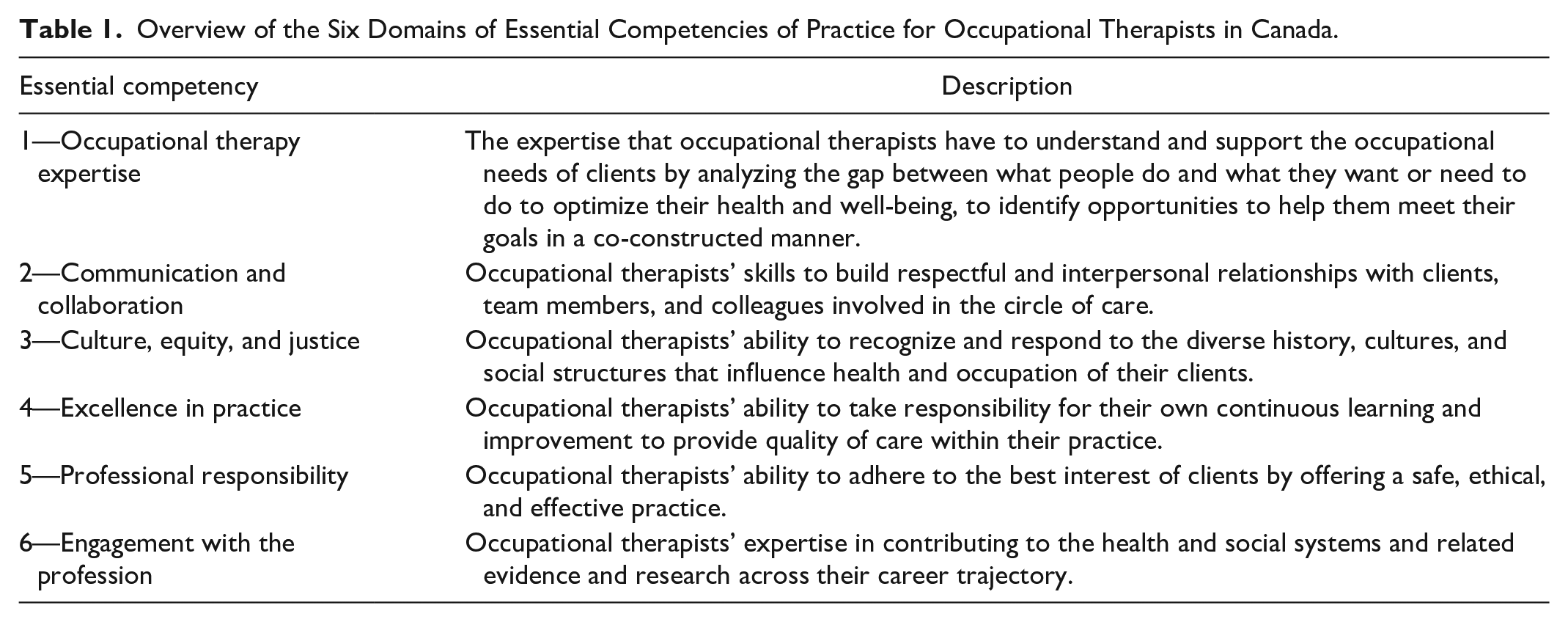
Although several factors determine the roles of OTs in a practice setting, including their scope and organizational policies, practices, and models of service delivery, these competencies provide an overarching guide for OT practice. An exploration of the degree to which these competencies are present within the current functions of PNs can help determine the unique skillset OTs may bring to PNPs and opportunities where OT competencies are not being used.
This scoping review aims to advance our understanding of OTs as PNs by (a) identifying and describing the literature on PNPs that employ OTs, including the role (conceptualization) and functions (operationalization) of OTs who work as PNs, as well as the settings and populations they serve; and (b) mapping the identified functions of PNs on the 2021 Competencies for Occupational Therapists in Canada. Here within, we refer to the term “mapping” to thematically understand the extent, range, and nature of PNs as it relates to existing frameworks (i.e., the 2021 Competencies for Occupational Therapists in Canada) (Arksey & O’Malley, 2005).
Method
Protocol and Registration
Scoping review methodology with a qualitative thematic analysis was employed (Arksey & O’Malley, 2005). The protocol for this scoping review was registered ( https://doi.org/10.17605/OSF.IO/ZSW9D ). We followed the Preferred Reporting Items for Systematic Review and Meta-Analysis Protocols extension for scoping reviews (see Supplemental File 1).
Positionality
This literature review began with the prior assumption that OTs could or should serve as PNs. The research team comprises Canadian researchers whose programs of research include the study of PNPs (KMK, MLAN and SLH), an information specialist (JH), and OT clinician-researchers (HS, ANT, ANM). The research team has attempted to support this position with a scoping review, drawing on the 2021 Competencies for Occupational Therapists in Canada.
Information Sources
PsycINFO, OT Seeker, OVID MEDLINE, EMBASE, OT Critically Appraised Topics (CATs), and CINAHL, including CINAHL Plus with Full Text were searched on June 7, 2021. In part, our selective search strategy was informed by other existing reviews on PNPs (e.g., Kokorelias et al., 2021b). Given the inconsistency of the term “patient navigation” within the literature (Kelly et al., 2019), a scoping literature review was deemed appropriate to identify “key articles” that could significantly help clarify the role for OTs within the context of PNPs (Singh et al., 2021). The search strategy was peer-reviewed by a Medical Information Specialist (librarian) using the Peer Review of Electronic Search Strategies framework (McGowan et al., 2016) and all feedback was incorporated (see Supplemental File 2 for the search strategies). There were no date limits or restrictions on article types to get a broad scope of the literature. Search terms included “occupational therapy” and “patient navigation” to avoid confusion with case-management literature. The search was updated on August 8, 2022, following a guideline for updating reviews (Moher et al., 2008). A hand search was performed to screen the reference lists of the included articles as well as in Campbell Collaboration; Agency for Health Care Policy and Research; American Occupational Therapy Association (AOTA) Evidence Briefs; and Canadian Occupational Therapy Foundation Critical Research Literature Reviews using the same search terms. To locate gray literature, including dissertations, two authors (KMK and JH) conducted Google searches and explored websites of organizations (e.g., National Cancer Institute) in August 2022 using the same search terms.
Eligibility Criteria
Inclusion and exclusion criteria were determined a priori. Articles were included if they were original research, commentaries, or letters to the editors and published in English. Articles had to focus on a PNP in any care setting for accessing a health service and explicitly include OTs in PNPs. Book reviews and conference abstracts were excluded, as were articles focused on the pediatric population. Disagreements were discussed with a third reviewer (SLH).
Selection of Sources of Evidence
Four authors (KMK, HS, ANT and AEN) conducted Level 1 (title and abstract review) and Level 2 (full article text review) screening in duplicate for all search results after deduplication of search results.
Data Charting Process
Two authors (KMK and JH) piloted a data abstraction with two articles. One author (KMK) abstracted data from the included publications using the final form developed in a team meeting prior to the pilot exercise. This final data abstraction form included study characteristics, type of article, description of PN roles and functions, and results. All data were abstracted in duplicate and then compared. Disagreements were resolved by a third reviewer (SLH). The abstraction form and procedures were informed by a previous review by Kelly et al. (2019) which identified nine key functions of PNs to build on existing literature. These functions included (a) advocacy, (b) care coordination, (c) case monitoring and patient needs assessment, (d) community engagement, (e) education, (f) administration and research activities, (g) psychosocial support, (h) navigation of services, and (i) reduction of barriers (Kelly et al., 2019, p. 27).
Synthesis of Results
Interpretative analysis occurred in two steps. First, we focused on identifying and describing the literature on PNPs that employ OTs, including the roles (conceptualization) and functions (operationalization) of PNs and the settings and populations they serve. This was accomplished using a codebook thematic analysis, whereby all authors independently reviewed the abstracted data to identify frequent patterns (e.g., numerical counts of study design and locations), similarities, and differences between the PNPs (Braun & Clarke, 2022). Next, the authors met regularly to discuss the themes they identified and listed all roles and functions identified within each PNP. The nine functions by Kelly et al. (2019, p. 27) informed the coding on functions. Next, we interpreted and mapped the identified functions of PNs onto the 2021 Competencies for Occupational Therapists in Canada. The authors then looked at each article to determine whether there was written evidence of each competency within each article, based on their interpretation. The determined patterns of competency adherence were then used to discuss implications for future research, policy, and practice over a series of team meetings (Braun & Clarke, 2022). We then disseminated the results in the Consultation phase (described below). The numerical counts of study characteristics were synthesized and presented in the results below.
Consultation
The preliminary findings of this work were presented to 14 key stakeholders (e.g., staff including three OTs, two managers, and two health care administrators) at one large urban hospital and one community care agency employing PNs during a series of three meetings (one during the planning of the research and twice during data analysis). These meetings provided an opportunity to receive feedback on the preliminary themes and identify actionable recommendations for future OT and PN practice, health care policy, and research.
Results
Ten articles were included in this scoping review (see Figure 1). Of the 10 included articles, one was a qualitative study, one was a mixed methods study, three were letters to the editor/commentaries (including pathway design), and five were quantitative studies. The included studies were predominantly conducted in North America (n = 8), with five from Canada and three from the United States. The remaining studies (n = 2) were conducted in the United Kingdom. All the articles were published within the last 12 years.
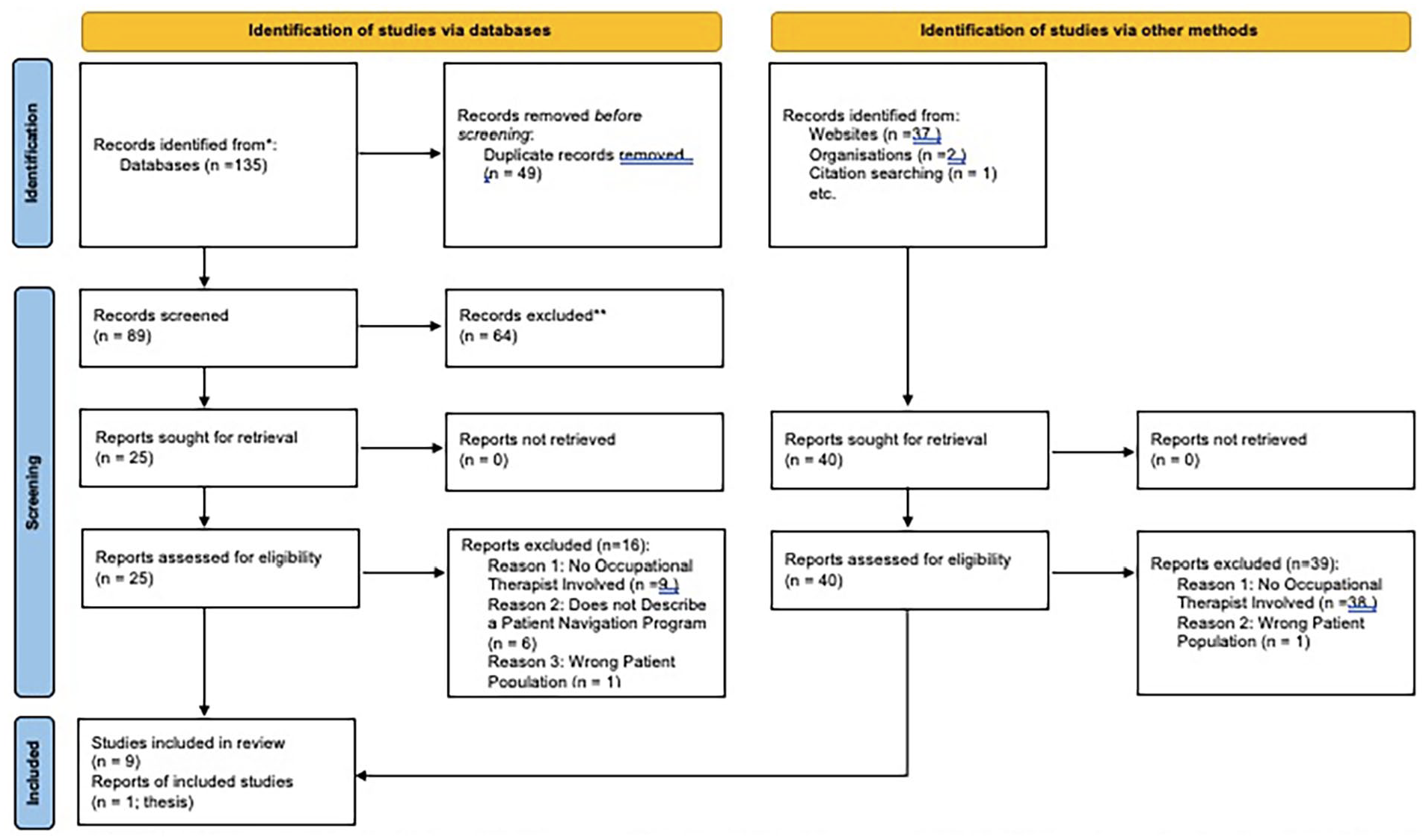
PRISMA 2020 Flow Diagram for New Systematic Reviews Which Included Searches of Databases Registers and Other Sources.
Almost all articles (n = 9) were implemented in community settings. Community settings included individuals’ homes (Milligan et al., 2018; Moore, 2013), care homes, as well as outpatient clinics (Dewan et al., 2014; Markle-Reid et al., 2020). The PNPs reported by Rosario and colleagues (2016) and Reid (2019) were implemented in both hospital and community settings. The remaining article was implemented in the hospital (Cornes et al., 2018). The characteristics of the included articles and interventions are reported in Table 2.
Characteristics of Included Studies and Interventions.
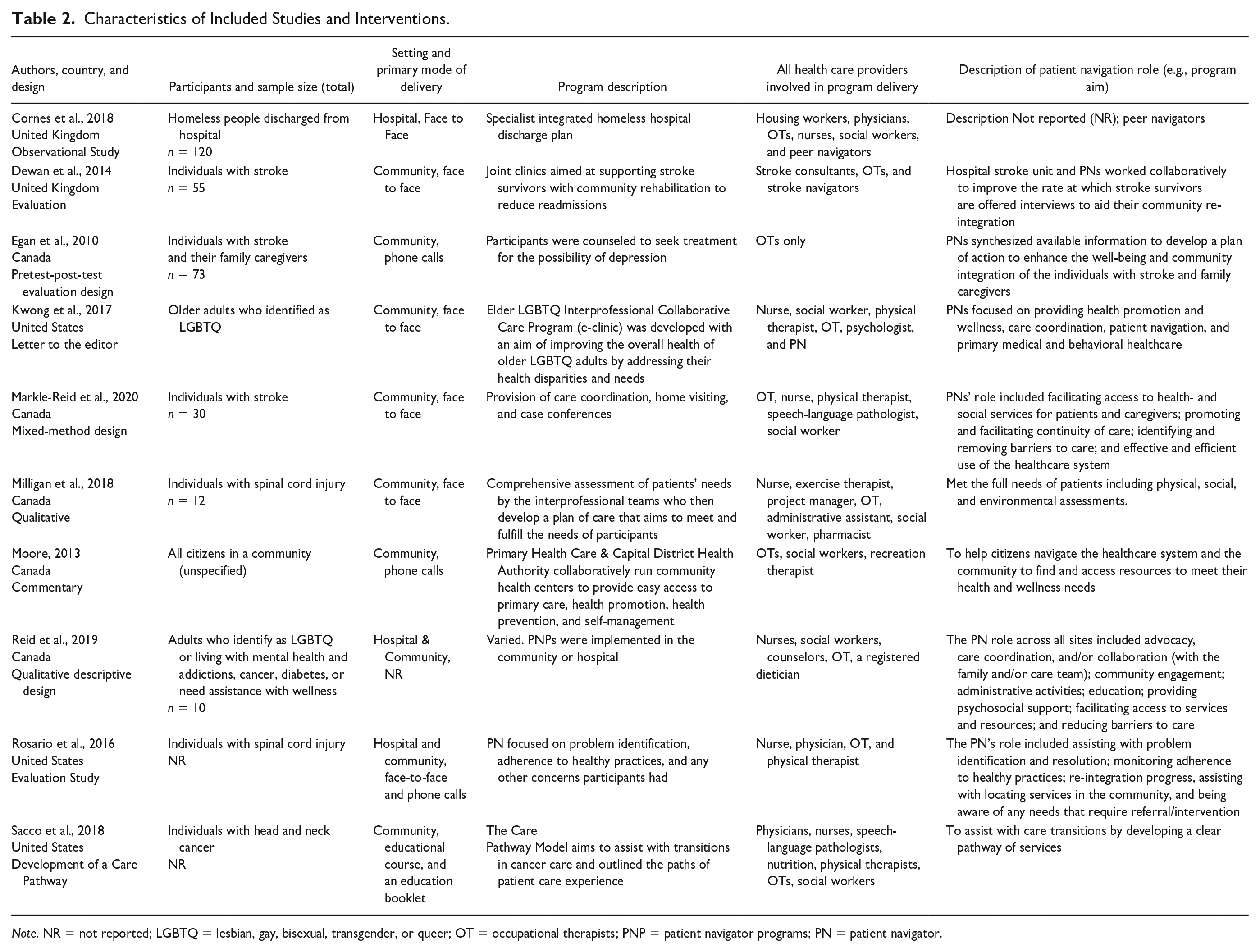
Note. NR = not reported; LGBTQ = lesbian, gay, bisexual, transgender, or queer; OT = occupational therapists; PNP = patient navigator programs; PN = patient navigator.
The PNPs were generally focused on a specific group, medical condition, or medical program rather than on chronic illness broadly. For example, one PNP focused on people experiencing homelessness and chronic illness (Cornes et al., 2018), older adults who identified as lesbian, gay, bisexual, transgender, or queer (LGBTQ) with chronic illness (Kwong et al., 2017), individuals living with cancer (Reid, 2019; Sacco et al., 2018), mental illness/addictions (Reid, 2019) and those with spinal cord injury (Milligan et al., 2018; Rosario et al., 2016). Three PNPs targeted individuals who had a stroke (Dewan et al., 2014; Egan et al., 2010; Markle-Reid et al., 2020). One PNPs included individuals of a particular community with and without a medical condition/illness (Moore, 2013).
Nine PNPs included multi-professional navigator teams (i.e., PNs with different professional backgrounds or multiple PNs assigned to a patient) but primarily consisted of social workers as PNs. One study only included OT-trained PNs (i.e., included no other professionals as PNs) (Egan et al., 2010). One study included housing and peer navigators (Cornes et al., 2018). Most interventions were delivered in-person, and one was delivered virtually (Sacco et al., 2018).
PNs’ Roles and Functions
Most articles (n = 8) described the PN role as a single-person role, although the exact titles for these roles varied (e.g., System Navigator (Markle-Reid et al., 2020), peer navigators (Cornes et al., 2018)). Two articles described the PN-role as a team-role and the titles for these roles also varied (i.e., Navigation Team Member Rosario et al., 2016) and Mobility Clinic Team Member (Milligan et al., 2018)). None of the articles provided an explicit definition of the PN role.
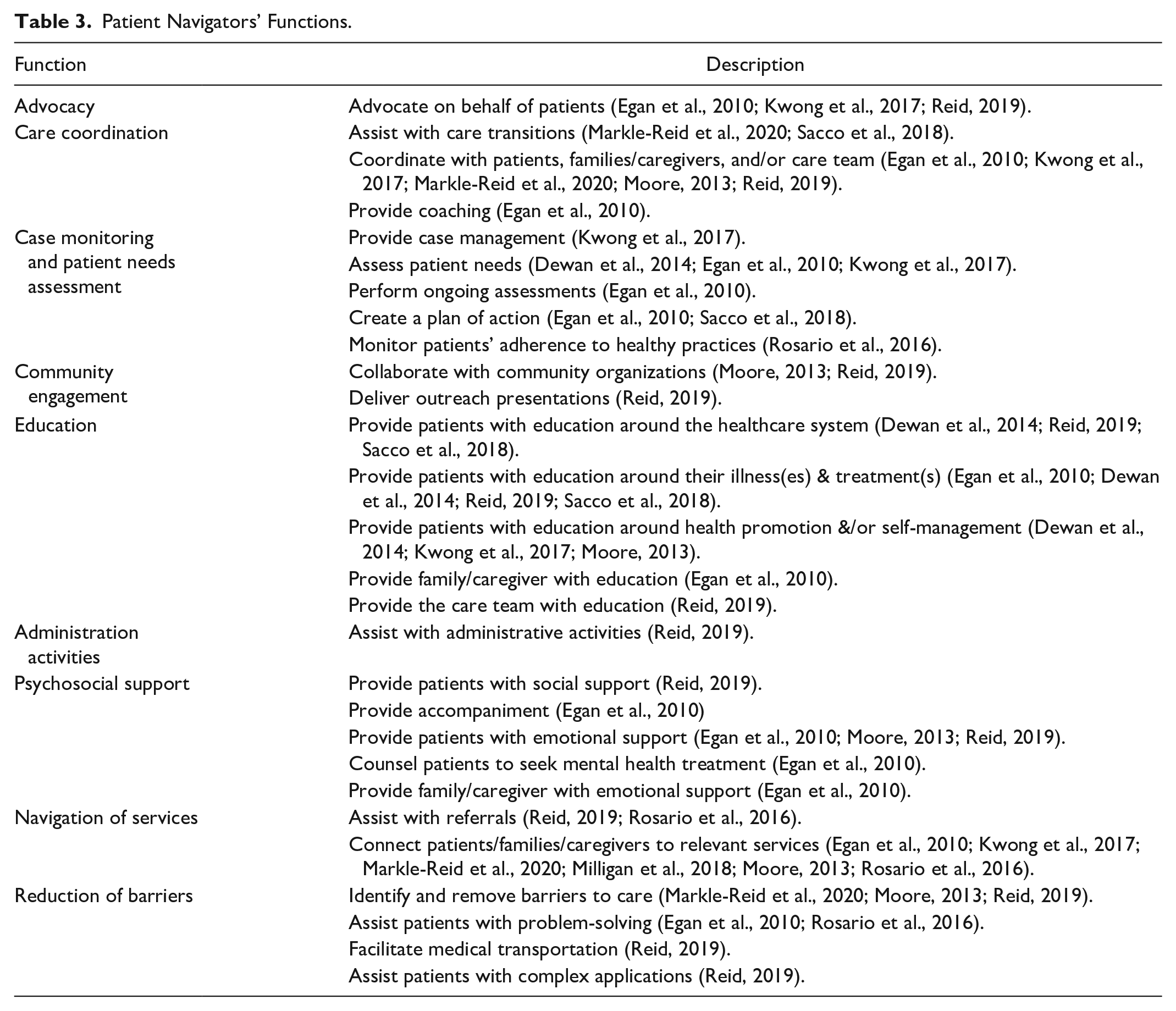
Functions of PNs included (a) advocacy (n = 3), (b) care coordination (n = 6), (c) case monitoring and patient needs assessment (n = 5), (d) community engagement (n = 2), (e) administration (n = one), (f) providing psychosocial support (n = 3), (g) navigation of services (n = 7), and (h) reduction of barriers (n = 5). These functions are further described in Table 3.
Patient Navigators’ Functions.
OT Competencies
Although none of the studies referenced any guidelines for competencies, our analysis suggested that the identified PN functions mapped onto five of the six OT competencies reported in the 2021 Competencies for Occupational Therapists in Canada were illustrated within the descriptions of PN roles. A synthesis of the identified competencies is reported in Table 4.
Examples of the OT Competences in Practice Within a PNP by a PN.
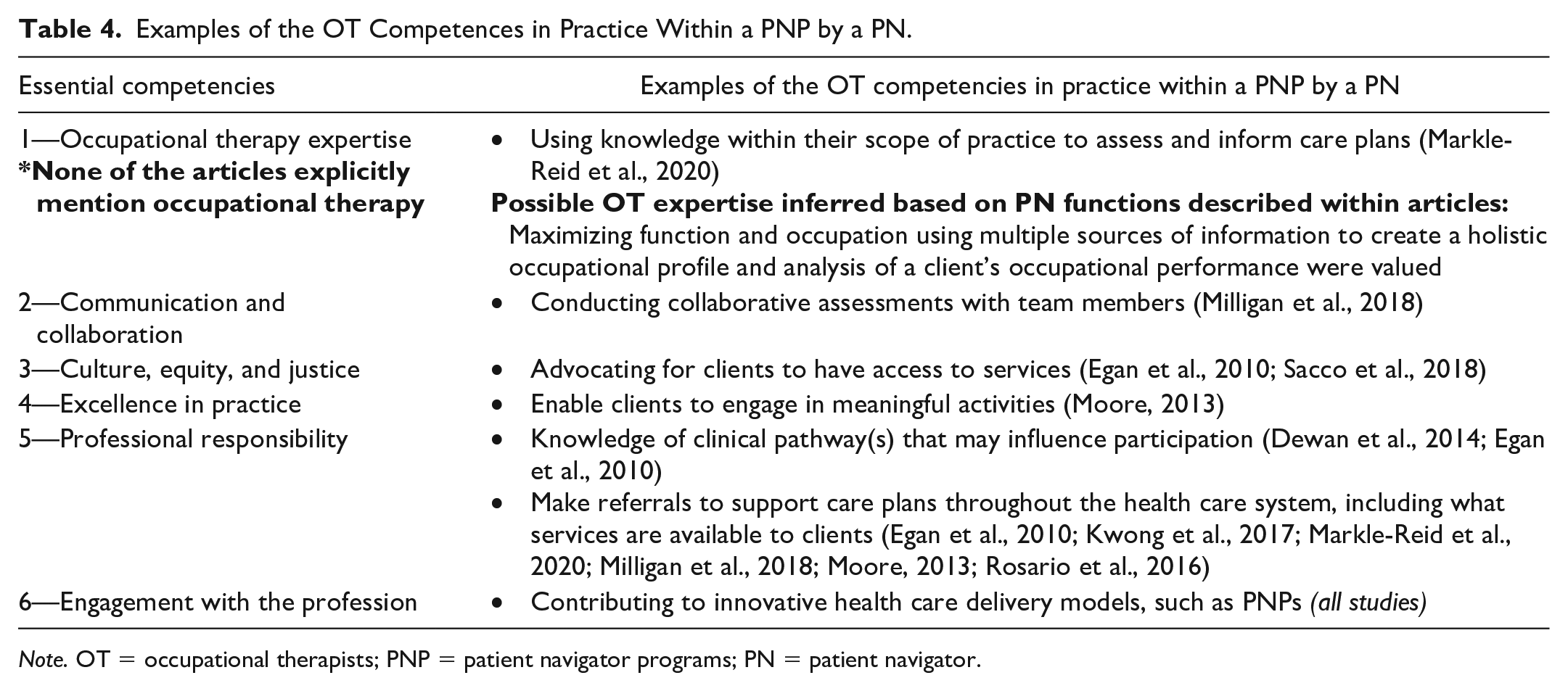
Note. OT = occupational therapists; PNP = patient navigator programs; PN = patient navigator.
Discussion
This scoping review aimed to (a) identify and describe the literature on PNPs that employ OTs, including the roles and functions of PNs as well as the settings and populations they serve; and (b) map the identified functions of PNs onto the 2021 Competencies for Occupational Therapists in Canada. This scoping review found that only 10 articles on PNPs that explicitly include OTs. As suggested by this low number of included articles, the gap in research exploring OTs as PNs is critical to address. This review also highlighted an important gap in current PNPs, whereby no navigator roles aligned with the Occupational Therapy Expertise competency. OTs can play a valuable role in advancing PNPs given their in-depth knowledge of the health care system, their client-centered approach, as well as their unique expertise in occupation. This review highlighted the five other competencies that OTs can bring to PNPs that can supplement the role of other disciplines (i.e., communication and collaboration, culture, equity and justice, excellence in practice, professional responsibility and engagement with the profession). For example, OTs have unique competencies related to community re-integration by supporting meaningful participation through referrals to other services that can lead to improved health outcomes.
Scholars encourage the increased presence of OTs within health service reforms and novel models of care (Moyers & Metzler, 2014). The articles included in this review primarily focused on the role of social workers and not specifically the Occupational Therapy Expertise competency domain, suggesting OTs’ clinical scope is not being fully explored within the context of patient navigation research. As OTs often work in numerous professions and health care teams in a variety of settings, PNPs may provide a critical opportunity for involving occupational therapy directly into strategies for reducing fragmentation in health care (Cason, 2015). The 10 included articles demonstrated the alignment of OTs (ACOTRO, 2021) to PN roles, including the unique skillsets they bring. Specifically, this review also suggests that OTs are already well-trained to meet the needs of PN, even if current PNPs are not focusing on their occupational therapy expertise.
Occupational therapy models and theories, such as the Person-Environment-Occupation Model (PEO; Law et al., 1996) and the Canadian Model of Occupational Performance and Engagement (CMOP-E; Davis, 2017) can provide OTs as PNs with a framework to inform their approaches when helping patients overcome barriers to accessing timely services. In using these frameworks, PNs would be encouraged to consider cultural, institutional, socioeconomic, physical, and social factors affecting one’s ability to navigate health and social care services (Law et al., 1996). Moreover, the frameworks would help OTs consider all the demands placed on individuals as they take on the occupation of being a patient, such that OTs as PNs can intervene in context and increase occupational performance in the patient role (Townsend & Polatajko, 2007). These models have been shown to guide effective clinical reasoning in similar areas of practice to enable occupational participation among adults with chronic health conditions (e.g., Mjøsund et al., 2021).
Given their focus on occupational roles and preservation of engagement in meaningful activities, OTs are uniquely qualified to provide caregivers with timely education and support to enable their navigational role. Furthermore, by considering navigational roles through an occupational therapy informed, person, environment, and occupational lens, OTs can provide a holistic view of barriers to independently accessing care that may help support clients after the PNP. However, the literature suggests that OTs’ professional identity may not be well understood by other care providers, resulting in OTs being underutilized within health care models (Turner & Knight, 2015). This may be one potential explanation for the limited inclusion of OTs in PNPs, and the lack of clarity on how the role of OT-PNs is conceptualized and operationalized. Establishing a unique discourse among fellow OTs around the key competencies OTs have within the context of patient navigation can foster the development of communities of practice (Turner & Knight, 2015) and advance OTs’ professional roles within this emerging field. Further education that provides specific guidance for teaching OTs about the intricacies of patient navigation may be warranted. Research is also needed on the outcomes of occupational therapy-led PNPs from those of other professionals in clinical quality improvement initiatives.
Additional research with OTs is needed to expand their role within new practice areas, such as PNPs (Rostek, 2020). The demographics of included PNs (e.g., age, sex, employment status, employment experiences) were not reported and should be captured more fully so that differences in experience, sex, and gender could be better understood. Further information about the types of community and hospital units should be reported to better understand the contexts that help support the employment of OTs as PNs. Future research is also encouraged to explore strategies to address the key concerns of OTs in acting as PNs, including strategies to avoid the duplication of function with social workers.
As PNPs originated in the context of cancer care (Freeman & Rodriguez, 2011), it is likely that social work professionals have traditionally been selected for these roles given their strong focus on promoting social equity through social determinants of health focuses (Craig et al., 2013). Nonetheless, OTs can assist individuals in developing better problem-solving skills and civic engagement (Turcotte et al., 2020). To capture a more fulsome understanding of the role and function of OTs as PNs, further work is needed from the perspective of providers, educators, managers, patients, and decision-makers. For example, an understanding from the perspective of PNP managers as to the hiring decisions that may exclude or facilitate the participation of OTs’ need.
Overall, our findings suggest that Canada leads research on PNPs that employ OTs in PNPs. This suggests an opportunity for the occupational therapy profession in Canada to further explore their role in PNPs through continued participation by OTs. This could include participating in program evaluations or research articles on PNPs to demonstrate their effectiveness as PNs. Future research should consider organizational-level factors that affect who performs PN roles, including readiness to implement PNPs with various professionals, such that it impacts the feasibility of participation (Kokorelias et al., 2021d) and factors that influence the characteristics of ideal navigators for various patient populations (Kokorelias et al., 2021c). To achieve this aim, we urge the profession to advocate for greater OT involvement in new and established PNPs. OTs advocating for their involvement within PNPs may help contribute to their engagement with the profession. The results of this review might be used by OTs to help them demonstrate their qualifications for PN role.
It is possible that this scoping review missed relevant articles, as only English publications were included. Our review was informed by the 2021 Competencies for Occupational Therapists in Canada, which were designed to inform practice in Canada. Although the competencies overlap with others (American Occupational Therapy Association [AOTA], 2021), we acknowledge that the practices of OTs may differ by geographic location. Our search was also limited to PNPs offered in the context of chronic illness and thus may have excluded programs focusing on acute conditions that involve OTs or within contexts in which the focus on chronic illness was unclear. As PN roles are often identified using various terms, our search strategy may have excluded articles that used different synonyms, given our lack of a standard classification.
Conclusion
This review revealed that OTs have unique competencies (e.g., the ability to recognize and respond to the diverse history, cultures, and social structures that influence health and occupation of their clients) that can advance patient navigation and evaluate the role of occupational therapy-led PNPs as a research priority. Advancing research in this area will be highly relevant in the face of ongoing barriers to health services (e.g., system fragmentation) in the years to come.
Supplemental Material
sj-docx-2-otj-10.1177_15394492231161283 – Supplemental material for Occupational Therapists in Patient Navigation: A Scoping Review of the Literature
Supplemental material, sj-docx-2-otj-10.1177_15394492231161283 for Occupational Therapists in Patient Navigation: A Scoping Review of the Literature by Kristina M. Kokorelias, Hardeep Singh, Alexandra N. Thompson, Amy E. Nesbitt, Jessica E. Shiers-Hanley, Michelle L. A. Nelson and Sander L. Hitzig in OTJR: Occupation, Participation and Health
Supplemental Material
sj-pdf-1-otj-10.1177_15394492231161283 – Supplemental material for Occupational Therapists in Patient Navigation: A Scoping Review of the Literature
Supplemental material, sj-pdf-1-otj-10.1177_15394492231161283 for Occupational Therapists in Patient Navigation: A Scoping Review of the Literature by Kristina M. Kokorelias, Hardeep Singh, Alexandra N. Thompson, Amy E. Nesbitt, Jessica E. Shiers-Hanley, Michelle L. A. Nelson and Sander L. Hitzig in OTJR: Occupation, Participation and Health
Footnotes
Declaration of Conflicting Interests
The author(s) declared no potential conflicts of interest with respect to the research, authorship, and/or publication of this article.
Funding
The author(s) disclosed receipt of the following financial support for the research, authorship, and/or publication of this article: Kristina M. Kokorelias’ post-doctoral fellowship was funded by the Slaight Family Foundation.
Ethical Approval
As this is a review of publicly available literature, ethics approval was not required.

Supplemental Material
Supplemental material for this article is available online.
References
Supplementary Material
Please find the following supplemental material available below.
For Open Access articles published under a Creative Commons License, all supplemental material carries the same license as the article it is associated with.
For non-Open Access articles published, all supplemental material carries a non-exclusive license, and permission requests for re-use of supplemental material or any part of supplemental material shall be sent directly to the copyright owner as specified in the copyright notice associated with the article.
