



Abstract
Occupational therapy practitioners use product-based activity-as-a-means to address occupational performance. This study aimed to describe this global use by mapping the different types of product-based activities, determining the diagnostic groupings they applied to and exploring their intended purpose within occupational therapy practice. The review was designed according to Arksey & O’Malley’s framework and studies published 2012 to 2022 were considered. Data were extracted in Covidence and analyzed in Excel software. The PRISMA-ScR flowchart was used for reporting. Fifty-three studies met inclusion criteria, and eight categories were created with art/art-making being used the most. Mental, behavioral, and neurodevelopmental disorders were reported across all categories mostly to improve higher-level cognitive and emotional body functions in mental health settings. Occupational therapists have the expertise to use various activities to achieve therapeutic outcomes for all individuals, regardless of their limitations. The review results can aid occupational therapists make evidence-based clinical decisions.
Plain Language Summary
Occupational therapists use product-based activities such as arts and craft as well as gardening to improve the mental health and well-being of persons who struggle with this. This review looked at the different types of activities, determining what groups of diseases and illnesses it is used for and the reason for using it in occupational therapy practice. The activities are used across all ages. In addition to using it for mental health and well-being, some occupational therapists use these activities to improve physical aspects of health and well-being.
Introduction
Client-centered occupational therapy practice includes the use of activities; seen as the constituent components of occupations shaping everyday life. From the early 19th century, the use of activities formed the foundation for occupational therapy practice. Both occupation and activities share characteristics such as engaging in time and providing a sense of meaning to the individual’s life (Pendleton & Schultz-Krohn, 2018). Occupational therapists’ choice of activities is influenced by different human events in context, legislation, policies, and health conditions (Hussey et al., 2007).
Nelson (1996) defined therapeutic activities as meaningful, purposeful occupational performance leading to accurate assessment, positive adaptation, and successful compensation. These therapeutic benefits are ensured through “occupational synthesis” (Nelson, 1996). It describes how occupational therapists construct activities in collaboration with the patient to achieve the desired therapeutic outcomes.
Trombly differentiated between two approaches through which this occupational synthesis can be achieved. The first, activity-as-means, constitutes using occupation as a change agent (occupational adaptation) (Trombly, 1995). This can be likened to using the activity of finger-painting to improve the muscles and movements required for in-hand manipulation of a pencil. These improved body functions and structures will subsequently result in improved writing ability (Brown & Stagnitti, 2013). This approach dates back to the 19th century and resembles the Moral Treatment Movement, started by Pinel, and further developed by Tuke (Hussey et al., 2007). They structured the daily lives of persons with disabilities and marginalized groups through engagement in various activities. The foundation of the Moral Treatment Movement is that participation in activities such as farming, physical exercise, and other vocational tasks resulted in productive engagement and reduced psychiatric sequelae (Kielhofner, 2009).
The second approach to using activities as a therapeutic modality is activity-as-end where successful participation is achieved through modifying the environment, compensating for limitations in performance components or learning new and/or adapted skills (occupational compensation) (Trombly, 1995). To showcase the difference between these two approaches; a compensatory approach to improved handwriting can include, but is not limited to, task-specific strategies. For example, the use of a pencil grip, allows the child to approach, learn, and perform the task of age-appropriate handwriting without the required body functions and structures (Missiuna et al., 1998).
After the Moral Treatment Movement, the shift to using activity-as-end intervention was seen during World War I and II; the Rehabilitation movement (1942–1960); and the start of the Information Age (1990–present) (Hussey et al., 2007). Programs designed for injured soldiers highlighted the rehabilitative benefits of active engagement within their daily lives and society. This integrated vocational and physical rehabilitation, nonoccupational modalities, and pharmaceuticals. The interest in evidence-based practice research and the formation of the World Federation of Occupational Therapists (WFOT) in 1951 resulted in a broadened scope of practice (Hussey et al., 2007). Occupational therapists became role-players in multiple domains of life including work, play, leisure, activities of daily living (ADL), social participation, rest, and sleep (Boop et al., 2020). Advancements in science, medicine, industry, and technology, which could aid in the execution of ADLs, placed emphasis on the use thereof during therapy. In the 21st century, the use of self-care activities as-an-end featured prominently in occupational therapy literature (Andersen & Reed, 2017; Creek & Lougher, 2011; Thew et al., 2011). Furthermore, technological advancements such as virtual reality, games or applications are used to address body function and structure or enable activity and participation (Harris & Reid, 2005; Reis et al., 2021; Tresser, 2012).
In response to the medicalization of the profession, literature from the 1970s advocated for a return to the traditional roots of occupational therapy, considering moral treatment and a humanistic approach, emphasizing occupation-centered practice (Hussey et al., 2007).
Fischer proposed using an occupational-related taxonomy to lessen the disparities caused by terminology that is used inconsistently (Fisher, 2014). A scoping review investigated the terminology to described occupation-based, occupation-focused and occupation-centered approaches, with reference to Fischer’s taxonomy (Ford et al., 2022). Ford et al. (2022) found that terminology was inconsistently applied, and literature does not conform to one model of practice, impacting how occupational therapists articulate the use of activities in practice. This disallows contemporary practice to return to occupation as the core theoretical underpinning (Ford et al., 2022). Terminology including activity, activity-based, ADL, tasks, occupational engagement, occupational participation, and function were used interchangeably. Therefore, to ensure coherency and transparency in the current review, we chose to use the International Classification of Functioning, Disability, and Health (ICF) (World Health Organization, 2001) together with the International Classification of Diseases (11th revision) (World Health Organization, 2022) as a framework. In addition, the concept of product-based activities was considered as a descriptor of the type of activities reported on in the selected studies. A set of requirements for product-based activities were compiled based on various definitions of activities used in occupational therapy practice that aligned with the objectives of the review.
Mullersdorf and Ivarsson’s (2016) referred to “creative activity,” that is, all generative activity (product-based activity) where concrete items or goods are created. This is naturally inclusive of the various activities constituted by “arts and crafts” but also encompasses activities such as gardening, baking, or sewing. The shift toward occupation-centered practice is still prominent in literature today (Hess-April et al., 2017; Wall et al., 2024; Wolf et al., 2015); however, there remains a gap in understanding the effective application of activities across all occupational therapy practice settings (Fisher, 2014; Ford et al., 2022; Missiuna et al., 1998; Nelson, 1996). A scoping review on this matter bridges evidence and practice and can also identify where gaps exist to suggest areas of future enquiry.
We conceptualized the term “product-based activities” to encompass all activities which produce end-products, which are concrete and tangible to the visual and/or tactile senses.
This scoping review aims to identify and map existing evidence spanning the last decade, regarding the global utilization of product-based activities as-a-means across occupational therapy practice. Reviewing the use of product-based activities may inform areas of clinical practice, education, and the potential need for future research.
Methods
The scoping review was conducted using the six-stage methodological framework of Arksey and O’Malley (2005) as expanded upon by Levac et al. (2010). The methodology and reporting of the scoping review was structured in accordance with the PRISMA-ScR (Tricco et al., 2018) extension for scoping reviews.
Identifying the Research Question
The research question which guided the scoping review was, “What is known from existing bodies of literature about the use of product-based activities-as-a-means in Occupational Therapy practice globally within the last decade?” In addition, the following objectives were identified: (i) mapping the different types of product-based activities, (ii) determining the diagnostic groupings they applied to, and (iii) exploring their intended purpose within occupational therapy practice.
Identifying Relevant Studies
Literature published between January 2012 and December 2022 were searched for using five databases (PubMed, Web of Science, CINAHL, Academic Search Premier, Scopus, and Google Scholar). An expert librarian assisted in the creation of the following search string: “Occupational Therapy” OR “Occupational Therapists” OR “Occupational Therapy Practice” AND “Occupational therapy activit*” OR “creative activit*” OR “recreational activit*” OR “leisure activit*” OR “play activit*” OR “technology activit*” OR “Occupation-based.” On each database, titles and abstracts were searched utilizing the search string. Literature written in English or Afrikaans were considered, as well as gray literature.
Study Selection
Articles from the final search results were imported into Mendeley Reference Manager software and then imported into Covidence software (an online application for structured literature screening and data extraction), where duplicates were removed. Covidence was utilized to decrease the risk of bias by eliminating human error. Uploaded papers were screened by applying inclusion and exclusion criteria in accordance with the two-stage process suggested for scoping reviews. The Inclusion criteria were literature reporting on product-based activities used as-a-means, specifically designed by occupational therapists or used by occupational therapists. Studies were excluded if the publication required additional purchasing or if they are not freely available. In addition, studies that involved ADL (e.g., brushing one’s teeth) with no concrete outcome, or had abstract or nonconcrete outcomes were excluded as they do not align with the focus of the study. Finally, studies written in languages other than English or Afrikaans were excluded due to translation limitations.
Prior to the first stage, we reached consensus on the eligibility criteria by screening the titles and abstracts of 10 randomly selected articles. Discussions ensured all researchers understood the criteria. In the first stage, we “double independently” screened the articles on Covidence by title and abstract (Arksey & O’Malley, 2005; Levac et al., 2010). Discrepancies were resolved by a third reviewer. The second stage involved double independent full-text screening of the remaining articles from stage 1. The final list of articles included was used in this scoping review. The selection process is shown in Figure 1.
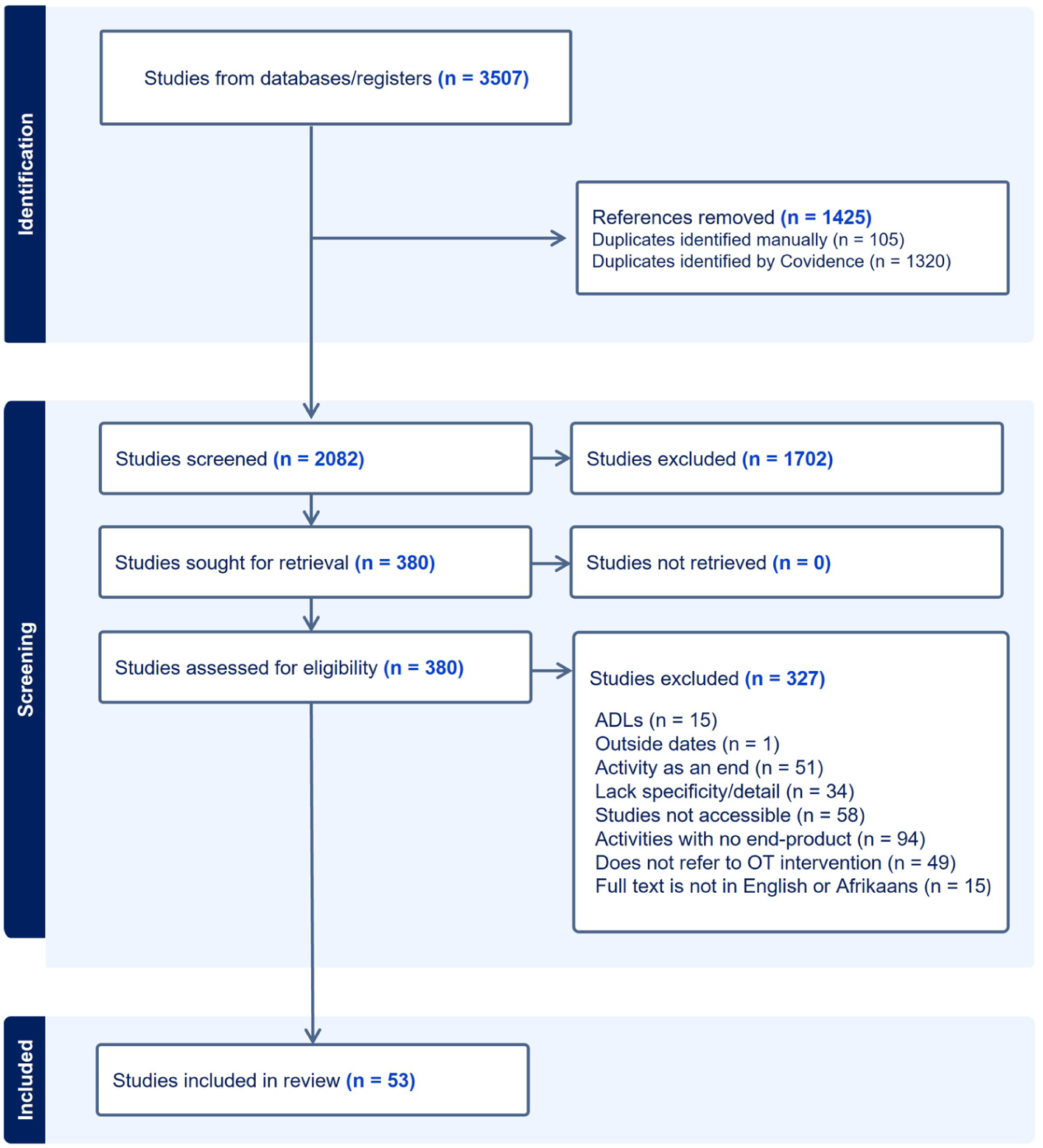
PRISMA-ScR Flowchart.
Charting the Data
We iteratively created a data extraction sheet according to the research objectives to extract baseline data. This was then used to create the data extraction template in Covidence. The final extraction categories included author detail, date of publication, categories of product-based activities, description of activities, age groups, diagnostic classification in accordance with ICD-11 and which area of the ICF is being addressed. The extracted data were captured through Covidence and converted into a Microsoft Excel spreadsheet which was utilized in creating the final data extraction table.
Collating, Summarizing and Reporting Results
The extracted data were analyzed using descriptive statistics and presented as a numerical summary. Narrative analytical summaries followed based on the objectives (detailing the types of activities used, with whom they are used and for what purpose).
Results
The database searches yielded 3507 titles and abstracts of which 1425 duplicates were removed during the import into Covidence. Around 2802 articles were randomly assigned to six researchers for the first screening, leading to the exclusion of 1702 articles based on predefined criteria. In the second stage, 380 full-text articles were reviewed by the team, resulting in 327 additional exclusions and 52 articles were selected for inclusion in the scoping review (see Figure 1).
Study Particulars
The scoping review aimed to explore the use of product-based activities-as-a-means within the last decade. The majority of articles were published in the year 2021 (n = 9) and the least number of articles in the years 2013 and 2014 (n = 2 respectively). The average of the data set is five (4.81–5) articles published each year. The number of yearly publications, pertaining to the use of product-based activities used as-a-means in occupational therapy practice, has increased from the year 2018 (n = 7), as all the subsequent years had more published articles than the mean of the data set.
The distribution of the studies according to the country they were conducted in can be seen on the world map in Figure 2. Eight studies included in the review did not specify the location.
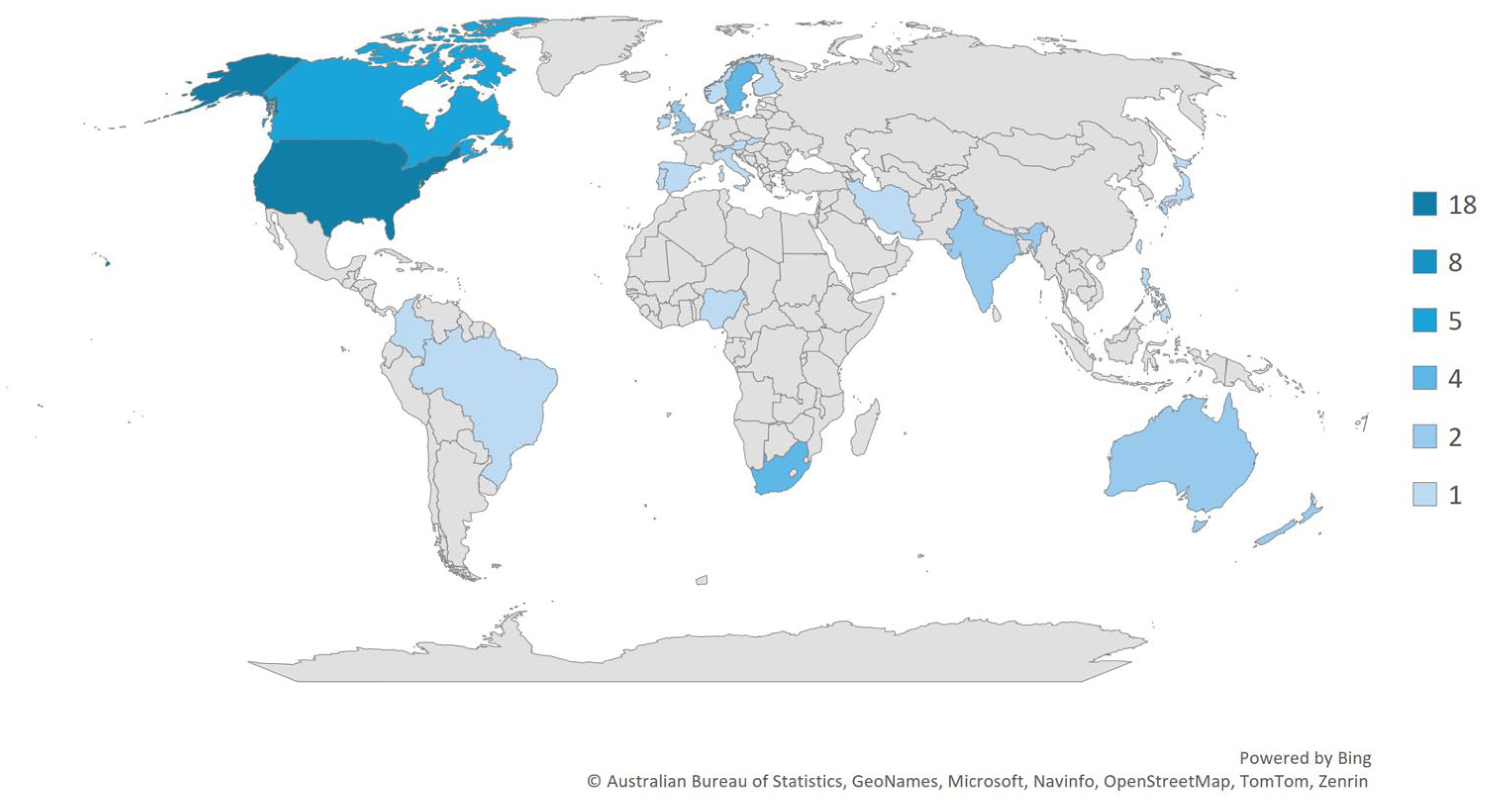
Global Frequency of Activities Used as-a-Means.
Different Types of Product-Based Activities
We analyzed the data and grouped activities that shared similar traits. The total activities, tallied within the 53 articles, amounted to 175 product-based activities. The 175 product-based activities were sorted into eight categories (with percentage and frequency) as depicted in Table 1.
Types of Product-Based Activities-as-Means Used in Occupational Therapy Practice Across the 53 Included Studies.
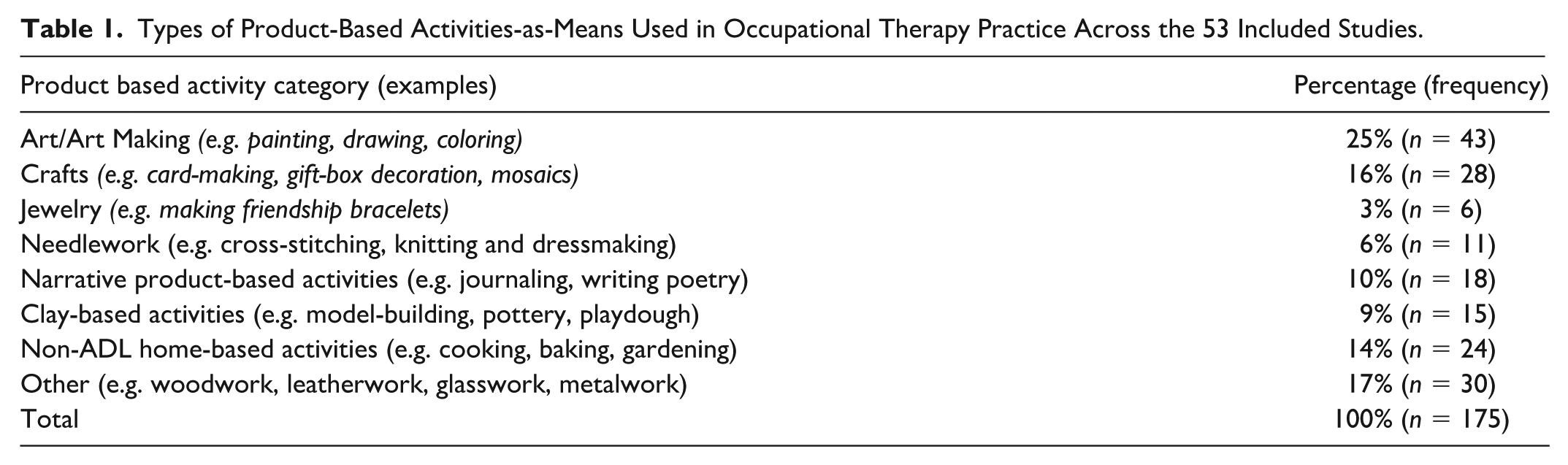
The “other” category included all the activities that did not fit into the descriptors of previous categories. Each product-based activity is listed under the appropriate category in the main data extraction table (Table 2).
Data Extraction Table.
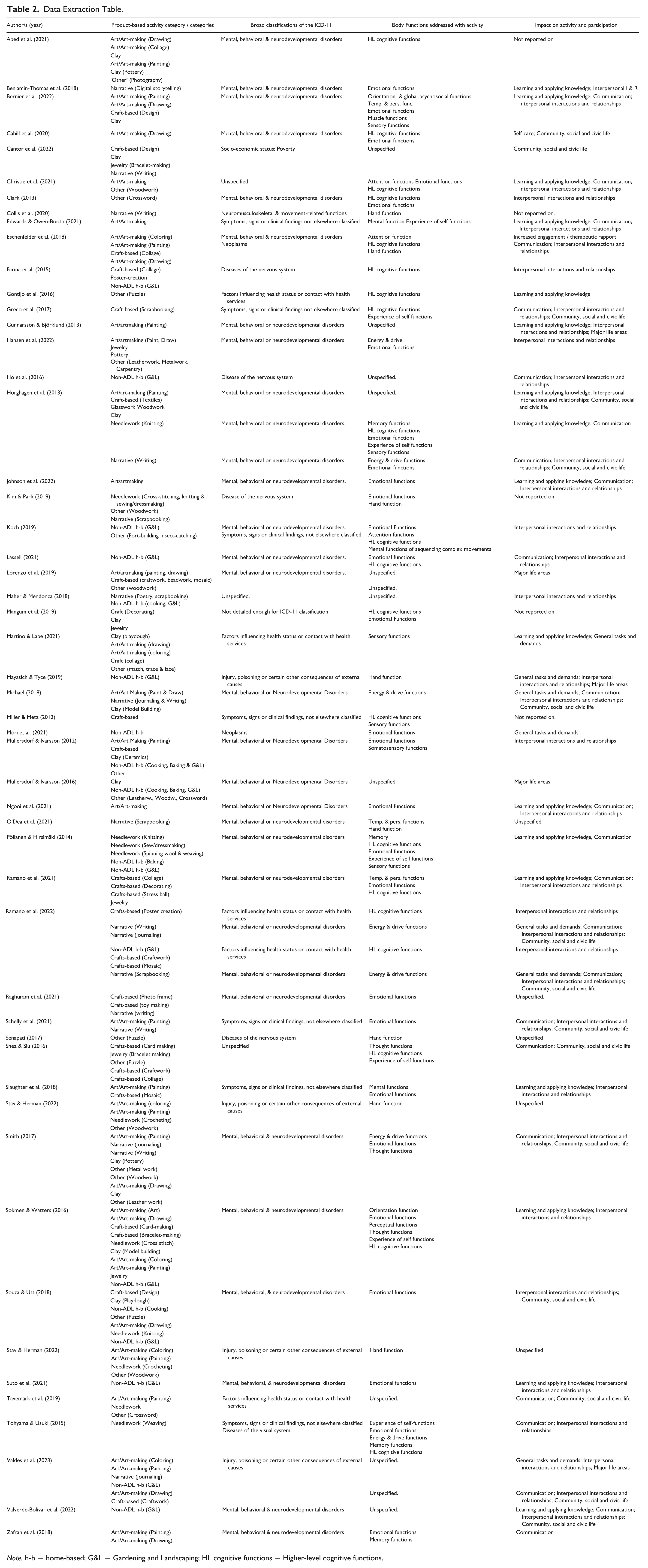
Note. h-b = home-based; G&L = Gardening and Landscaping; HL cognitive functions = Higher-level cognitive functions.
A discrepancy was noted in the extent to which activities were described. Some articles reported a broad category such as coloring (Eschenfelder et al., 2018; Sokmen & Walters, 2016; Valdes et al., 2023), but did not elaborate on the concept of coloring. Of the 17 articles that included gardening and landscaping, 11 do not specify exactly how gardening is used while the remaining six articles detail its use (Farina et al., 2015; Ho et al., 2016; Koch, 2019; Mori et al., 2021; Ramano et al., 2022; Suto et al., 2021). Other articles specifically stated the type of activity, such as making a stress ball (Ramano et al., 2021), but did not elaborate on the process. The articles that reported on craft-based activities or fell in the “other” category specified the activities by naming the activity and elaborating on the process.
With Whom Product-Based Activities are Used
The reporting of the diagnostic groups was done by identifying the diagnoses stated in each article and categorizing them according to the International Classification of Diseases, 11th revision (ICD 11). Over the 53 studies, 115 diagnoses were identified. Overall, 10 broad categories (see Table 2) were identified.
Product-based activities used as-a-means were predominantly used in the “Mental, behavioral or neurodevelopmental disorders” category (n = 72) as more than half of the diagnoses fall into this category of the ICD-11. A total of 13 diagnoses could not be categorized according to ICD-11 terminology, we used clinical reasoning to sort them in an appropriate category.
The various product-based activities used within the different age groups across the included studies, were classified by Erik Erikson’s stages of psychosocial development (Bishop, 2013), is depicted in Figure 3.
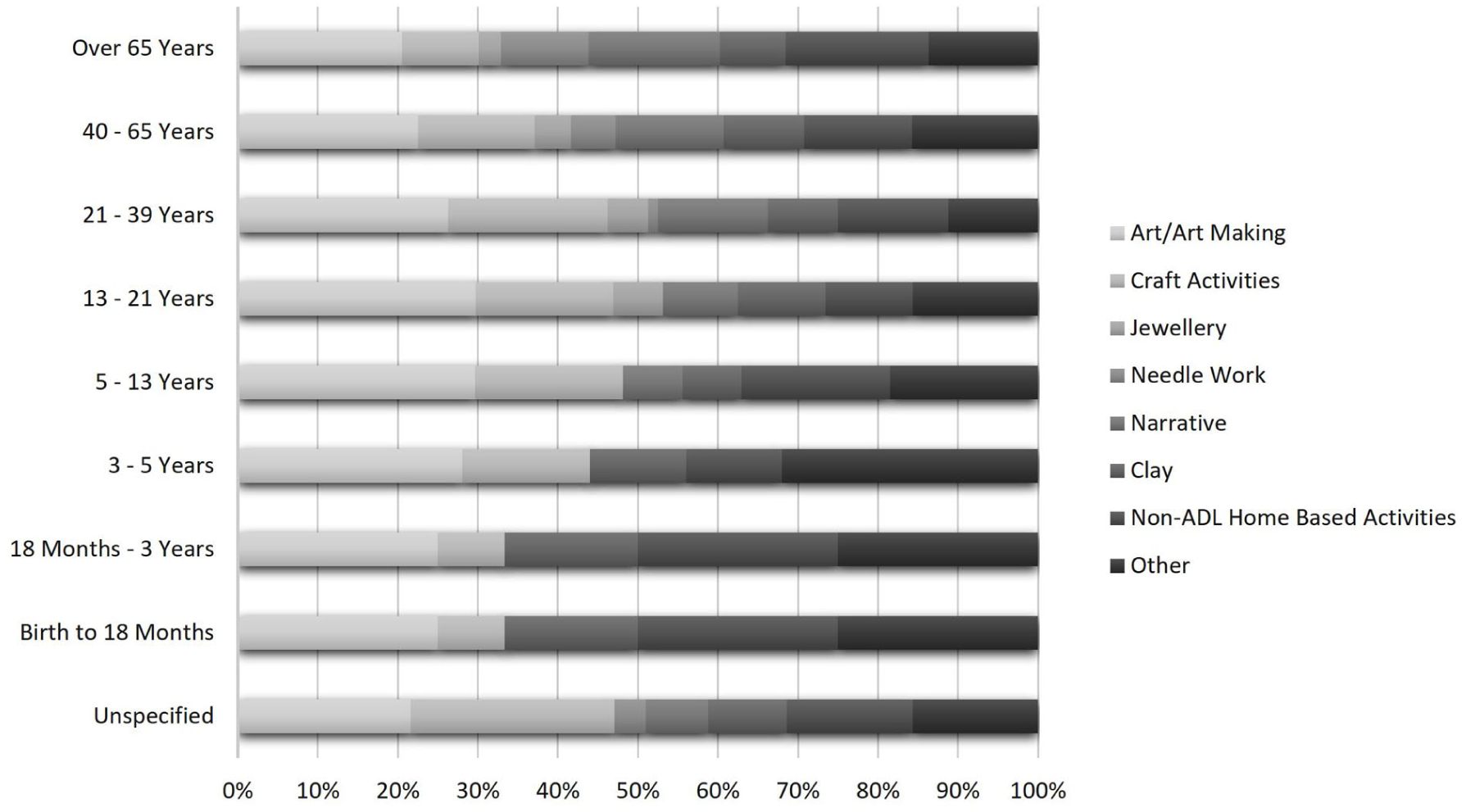
Prevalence of Product-Based Activities Used According to Erik Erikson’s Stages of Psychosocial Development.
In this review, the most frequent psychosocial stage is the age band of 40 to 65 years old, reported on 89 times over the 53 articles. Needle work and narrative-based activities were only used with persons aged 5 years or older, and jewelry making is only introduced from 13 years and older. Art/art-making and non-ADL home-based activities were the activities most consistently used across the psychosocial stages.
The Purpose of Product-Based Activities
The purpose of the product-based activities used as-a-means are reported on by referring to the phase of the occupational therapy process (Boop et al., 2020), and the type of session (individual or group). In addition, we reported on improvement in body function and structures, and/or subsequent improvement in activity and participation.
Across the 53 publications, it is evident that the majority of activities-as-a-means were used within the treatment phase of the occupational therapy process. There were five publications that made use of activities-as-a-means for assessment purposes (Cantor et al., 2022; Michael, 2018; Valdes et al., 2023; Zafran et al., 2018). In addition, six publications incorporated activities-as-a-means for both assessment and treatment purposes (Eschenfelder et al., 2018; Greco et al., 2017; Johnson et al., 2022; Ngooi et al., 2021; O’Dea et al., 2021; Pöllänen & Hirsimäki, 2014).
Data were also extracted on whether the product-based activities were facilitated during individual or group sessions. Many of the sessions conducted were group sessions (62.26%, n = 33), followed by individual sessions (15.09%, n = 8) and both individual and group sessions (13.21%, n = 7). Five of the articles (9%) did not specify what type of sessions were held.
The appropriate choice of an activity to use during occupational therapy practice is very important; therefore, the utility of the 175 product-based activities were matched with each activity category. Each activity category’s purpose was then matched with the different performance components (body functions and structures) it addresses and the possible impact it can have on occupational performance (activity and participation) (see Table 2). Three body function chapters were reported on within the 53 articles. Forty-four articles reported on “Mental functions,” 10 on Sensory functions and Pain’ and 18 on “Neuromusculoskeletal and Movement-related” functions.
Within mental functions, there is also a more prominent use of product-based activities to address specific mental functions (72.72%, n = 32) compared to global mental functions (27.27%, n = 12). Coordination (16.67%, n = 3), muscle strength (16.67%, n = 3), range of motion (16.67%, n = 3), and hand function (50%, n = 9) falls within the Neuromusculoskeletal and movement-related functions chapter reported on 18 times over the 53 articles. The sensory functions and pain body functions (19.23%, n = 10) are improved through product-based activities addressing additional sensory functions as 10 articles reported on somatosensory functioning and perception.
A summary of the product-based activity categories used as intervention to address the three most prominent limitations in body function and structures is depicted in Figure 4.
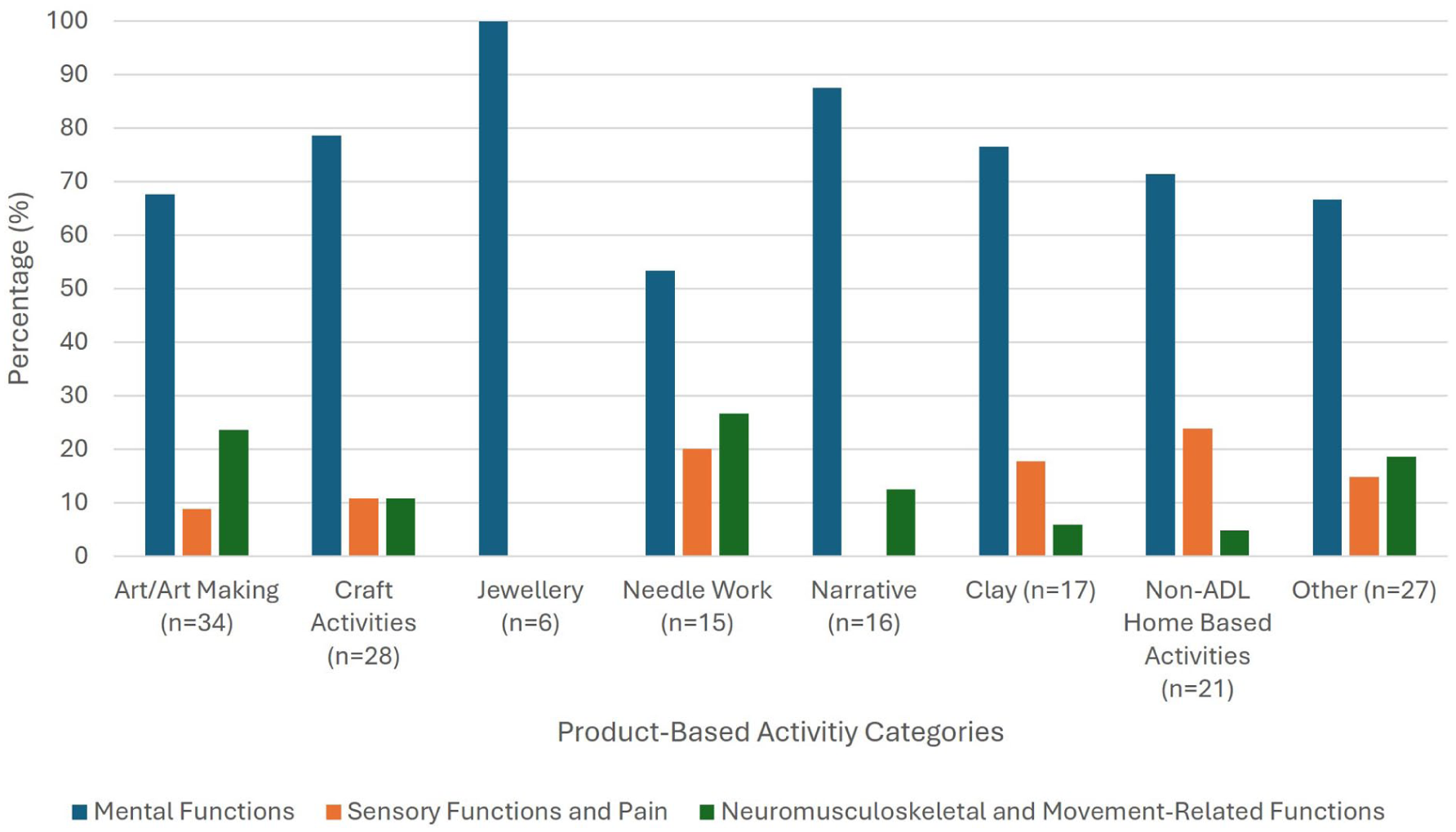
Frequency of Product-Based Activity Categories Used to Address Limitations in Body Functions and Structures.
Discussion and Implications
With this scoping review we aimed to identify and map existing evidence spanning the last decade, regarding the global utilization of product-based activities as-a-means across occupational therapy practice. We will address the objectives of the study, by discussing the different types of product-based activities used as a means, highlighting the diagnostic (refer to Figure 4) and age groups they apply to and justify their intended purposes within occupational therapy practice.
The current review highlighted that “Art and art-making” comprises of painting, coloring and drawing and was used in all age groups. It was frequently used with persons with Depressive disorders, unspecified and depressive symptomology to address aspects of body functions and structure such as emotional and higher-level cognitive functions.
Painting (including finger painting, paintbrushes and various types of paint, pencils, and drawing paper) was used for mental health interventions to improve emotional regulation, orientation, and social interaction (Cantor et al., 2022; Eschenfelder et al., 2018; Michael, 2018; Smith, 2017; Zafran et al., 2018). Coloring was used within mental health interventions to develop insight and abstraction (Eschenfelder et al., 2018). These findings are supported by the work of Johnson et al. (2022) who reported that the use of artmaking has significant benefit in adult mental health occupational therapy practice, ultimately improving occupational participation.
While improvement in physical aspects of body function and structure were not commonly reported on in the included literature, both painting and coloring were used to treat general hand function and upper extremity range of motion (Bernier et al., 2022; Eschenfelder et al., 2018; Sokmen & Walters, 2016; Stav & Herman, 2022; Valdes et al., 2023). Similarly, Kongkasuwan et al. (2016) found during a randomized controlled trial that creative art therapy improved physical function in persons post stroke. Drawing was also used as an assessment method, as outlined in the Tree Theme Method and was said to improve aspect of body function and structure such as attention, emotional regulation and drive functions (Gunnarsson & Björklund, 2013).
“Craft-based activities” were those that produced three-dimensional end-products. Some examples include card-making (Shea & Siu, 2016; Sokmen & Walters, 2016), gift-box decoration (Ramano et al., 2021) and mosaics (Slaughter et al., 2018). Although age groups were not specified in most instances, it appears to have been used mostly with adults. It was mainly used to treat disorders related to mental, behavioral and neurodevelopmental disorders. The primary diagnoses were depressive disorders unspecified, disorders of intellectual development unspecified, problems associated with absence, loss or death of others unspecified, personality disorders, feeding or eating disorders unspecified, anxiety or fear-related disorders unspecified, Alzheimer’s disease and behavioral problems/criminal activities. The purpose was to improve higher-level cognitive functions by developing insight, decision-making, abstraction, and self-management skills. Craft-based activities were also said to improve interpersonal interactions and relationships. Previous research confirms that occupational therapist values these type of activities in the assessment and treatment of persons with mental health disorders (Griffiths & Corr, 2007).
“Jewelry” activities, such as making friendship bracelets, were used with children 13 years and older as well as adults for treatment within the classification of mental, behavioral and neurodevelopmental disorders. The jewelry activity was used in interventions to improve thought content and control, as well as experience of self in addition to higher-level cognitive functions. More broadly, the activity was thought to improve aspects of activity and participation such as general communication, community life and social life. Shea and Siu (2016) confirmed that jewelry making improved thought, higher-level cognitive functioning, and orientation in persons with behavioral problems.
“Needlework” comprised of crocheting, cross-stitching, knitting, sewing, dressmaking, spinning wool, and weaving. It was predominantly used in the age-group of 13 to 39 years. The diagnostic categories were dementia (unknown or unspecified) and cerebral ischemic stroke with various body functions and structures being addressed such as emotional functions, memory, higher executive functioning, experience of self, sense of touch, perceiving vocalizations, muscle strength, bilateral hand function and bodily kinesthetic intelligence. The most prominent activity and participation category addressed was learning and applying knowledge. A scoping review explored the impact of needlework on mental health and well-being and supported the therapeutic benefit of needlework among persons with mental health disorders, serving as a vehicle toward improved social interaction and support “providing a sense of identity and belonging” (Le Lagadec et al., 2024, p. 1109).
“Narrative” consisted of journaling, writing poetry or letters and creating scrapbooks, with the majority being adults with depressive disorders, unspecified (mental, behavioral and neurodevelopmental disorders). Narrative activities were used to improve physical body functions and structures, such as hand function and fine motor skills (grasp function), in persons with unspecified injuries to the wrists or hands. The activities were also used to improve emotional control, motivation, expression, and experience of self. With regards to activity and participation, many narrative-based activities were used to address interpersonal interactions and relationships. These findings support the use of narrative activities as a means toward improvement in aspects of body function and structures (Collis et al., 2020).
“Clay-based activities” including clay, model-building and playdough were predominantly used in adults with mental, behavioral, and neurodevelopmental disorders. The focus on mental and emotional functioning is also evident to address motivation, mood, and thought control. Clay was used for sensory functioning in autism spectrum disorder and learning difficulties to improve tactile and proprioceptive functioning (Bernier et al., 2022; Martino & Lape, 2021). In addition, it addressed neuromusculoskeletal and movement functions specifically coordination and hand function. These activities were used in children for educational purposes (Martino & Lape, 2021). The use of clay to promote healing was advised by Fortuna (2019, p. 6) from her personal experience noting that “the therapeutic use of clay has changed my life.”
“Non-ADL, home-based activities”: Although cooking, baking, gardening, and landscaping are often utilized as activities-as-end in occupational therapy intervention, multiple studies spoke to using these within the activities-as-a-means approach. They are therefore grouped into the “non-ADL, home-based activities.” These activities were used over the whole life spectrum predominantly in the age group of 5 years and younger. The main area being addressed is mental, behavioral, and neurodevelopmental disorders. Both cooking (Müllersdorf & Ivarsson, 2012; Souza & Utt, 2018) and baking (Müllersdorf & Ivarsson, 2012; Pöllänen & Hirsimäki, 2014) were used for treating emotional functions by addressing stress and emotional regulation. The two most common diagnoses reported on were body distress disorder and unspecified pain. Regarding activity and participation, both cooking and baking were thought to improve interpersonal interaction and relationships. Gardening and landscaping formed the majority of this category and was most commonly used for diagnoses of Dementia and Alzheimer’s disease. The outcomes related to emotional functions were aimed to improve emotional regulation, reduction of stress and overall affect, while the higher-level cognitive functions were commonly aimed to improve planning ability (Farina et al., 2015; Koch, 2019; Lassell, 2021; Maher & Mendonca, 2018; Müllersdorf & Ivarsson, 2016; Ramano et al., 2022; Sokmen & Walters, 2016; Souza & Utt, 2018; Suto et al., 2021).
Interpersonal interaction, relationships and communication were addressed through gardening and landscaping. Research findings support the notion that therapeutic interventions such as gardening have the potential to maintain and improve the well-being of those with mental health illness (Wood et al,. 2022).
The “other” category was created after finding types of activities in the literature that did not overtly share similarities. These activities were used over all age groups. Woodwork, leatherwork, glasswork, and metalwork were used for mental, behavioral, and neurodevelopmental disorders to promote enablers such as emotional well-being, higher cognitive, or energy and drive functions; mostly for persons with depressive disorders unspecified. Lacing and tracing were also used for improving hand function, proprioception and coordination (Martino & Lape, 2021). Nature-based activities such as fort-building and insect catching were used to improve attention, sequencing, planning and problem solving for individuals with dementia, general mental health issues and disruptive behavior (Koch, 2019).
As improvement in any aspect of body function and structure has implications for the individual’s participation, possibly contributing to the overall improvement in activity and participation, we highlighted (in Table 2) how said improvement would impact which aspect of activity and participation. The main mechanism for the improved activity and participation across all included studies, was through activity-as-a-means intervention, since the product—based activities addressed specific aspects of body function and structure. This is evident in the example by Ho et al. (2016) where gardening was used to improve communication, interpersonal interaction, and relationships for individuals who suffered a cerebral ischemic stroke.
Study Limitations
Suitable literature may have been excluded as we only considered articles from the last 10 years. Studies that were not available through the databases to which Stellenbosch University subscribe, were not obtained. Studies on technology in activities as-a-means interventions were excluded for not being product-based.
Conclusion and Implication
This scoping review described product-based activities used as-a-means in occupational therapy practice. The majority of diagnoses addressed were mental, behavioral or neurodevelopmental disorders. The primary body functions targeted were mental functions, particularly emotional, and higher-level cognitive functions. Improvements in interpersonal interactions and relationships emerged as the most frequent outcome within activity and participation domains. The review identified a few studies focusing on product-based activities for physical diagnoses and many studies inadequately specify the intended outcomes of the activities used. This underscores the need for more comprehensive reporting.
The rise of telerehabilitation post-COVID-19, particularly nonproduct-based activities such as video gaming, could offer valuable insights for activity as a means intervention in occupational therapy. Occupational therapy students and practitioners can use this study results for evidence-based decision-making in activity selection and budgeting of materials and tools for clinical resources. In addition, this review can enhance occupational therapy education by identifying common activities to inform curriculum development. Overall, this review supports occupational therapists toward making informed, evidence-based clinical decisions, emphasizing their capacity to employ diverse activities for a wide range of therapeutic outcomes, regardless of the individual’s limitation.
Supplemental Material
sj-docx-1-otj-10.1177_15394492251360235 – Supplemental material for Product-Based Activities-as-a-Means in Occupational Therapy Practice Globally: A Scoping Review
Supplemental material, sj-docx-1-otj-10.1177_15394492251360235 for Product-Based Activities-as-a-Means in Occupational Therapy Practice Globally: A Scoping Review by Maatje Kloppers, Tamia Dreyer, Chloe Goodwin, Elrie Jansen van Rensburg, Gabriella Marriott, Gabriela Michaelides and Susan de Klerk in OTJR: Occupational Therapy Journal of Research
Footnotes
Declaration of Conflicting Interests
The authors declared no potential conflicts of interest with respect to the research, authorship, and/or publication of this article.
Funding
The authors disclosed receipt of the following financial support for the research, authorship, and/or publication of this article: This work was supported by Stellenbosch University Undergraduate and Honors research project funding (grant no. RP-22-11-004).
Ethical Considerations
There are no human participants in this article and informed consent is not required.
Consent to Participate
Not applicable.
Consent for Publication
Not applicable.
ORCID iDs

Data Availability
All data generated or analyzed during this study are included in this published article (and its supplementary information files).
Supplemental Material
Supplemental material for this article is available online.
References
Supplementary Material
Please find the following supplemental material available below.
For Open Access articles published under a Creative Commons License, all supplemental material carries the same license as the article it is associated with.
For non-Open Access articles published, all supplemental material carries a non-exclusive license, and permission requests for re-use of supplemental material or any part of supplemental material shall be sent directly to the copyright owner as specified in the copyright notice associated with the article.
