



Abstract
This paper used survey data to examine the college satisfaction and adjustment of Latinx transfer and nontransfer students. College satisfaction was measured by incorporating academic, institutional resources, and inclusive experience tenets. Multiple linear regression analysis showed two components of college satisfaction were associated positively with students’ college adjustment. First-generation students had lower college satisfaction than their non-first-generation peers. This study enriched existing literature by introducing new tools to examine Latinx transfer and nontransfer college experiences.
Introduction
Despite increasing rates of Latinx 1 students enrolling in college nationally, the degree completion gap between Latinos and their White peers has continued to widen. Excelencia in Education (2025) estimated that the graduation rate at 4-year institutions for Latino students in 2021 was 52%, whereas for White non-Hispanic students, it was 65%. Understanding the factors that shape Latinx students’ college experiences, whether transfer or nontransfer, is critical to addressing this persistent completion gap. When examining factors impacting undergraduate college retention, persistence, and degree attainment, researchers have often focused on college adjustment and satisfaction (Cabrera et al., 1999; Kuh et al., 2005; Ostrove & Long, 2007; Pascarella et al., 2011). In this study, I used survey data to gain a comprehensive understanding and highlight similarities and differences in the adjustment and satisfaction experiences of Latinx transfer students compared to those of nontransfer Latinx students at an elite public institution.
This study took place in California, home to over one quarter of all Latinos living in the United States (Reddy & Siqueiros, 2021). Latinx students comprised the largest racial group in California, from kindergarten to high school, representing 55% as of 2023 (U.S. Census, 2023). However, disparities in Latinx students’ pathways from high school to a bachelor’s degree remain clear. According to the California Cradle-to-Career Data System (2025), for Hispanic or Latino students who graduated high school in 2014 to 2015, 43% of students attended college but did not complete college; by 2022 to 2023, only 17% completed a bachelor’s degree.
Disparities in Latinx graduation rates impact wages and limit social and economic mobility. In California, the 25th percentile of annual income showed a $28,000 gap between high school and bachelor’s degree holders, amounting to more than $1 million in lost lifetime earnings (Public Policy Institute of California, 2005). Given these lifelong income disparities, this study sought to identify new ways to examine Latinx college satisfaction and adjustment, both of which are tied closely to persistence and degree completion.
Expanding on the work of Rios-Aguilar and Deil-Amen’s (2012) framing of fitting in as the process of adjusting to college, I explored: (a) students’ adjustment to college, and (b) students’ satisfaction with their college experiences through this lens. Both factors pertaining to the concept of fitting in rely on the institution’s academic and social systems. I defined college adjustment as a reciprocal relationship between the students and the institution, in which students become integrated into campus life and develop a sense of belonging by engaging with the institution’s practices across different domains of college life (Wolf-Wendel et al., 2009). I used a college adjustment measurement developed as a new tool to assess students’ holistic adjustment to college, encompassing five domains: academic belonging, student agency, community, faculty and academic advisor support, and equity. I used college adjustment as an independent and dependent variable in this study to examine its association with college satisfaction in meeting students’ needs and expectations, along with the role of environmental factors in the students’ college adjustment processes.
I used college satisfaction to refer to students’ perceptions of the quality of their educational experience at their institution. Based on prior research and factor analysis, I investigated three components of college satisfaction: (a) academic, (b) institutional resources, and (c) inclusive experience. I argued these three distinct, but related, components of college satisfaction may be associated with how well students adjust to college environments, based on prior studies that found a relationship between students’ academic and community belonging on academic integration (Torres & Hernandez, 2009), student resources available related to students’ success (Bettinger & Baker, 2014), and campus racial climate (Hurtado, 1992).
Specifically, in this study, I asked: Research Question 1: Is there a difference in mean college satisfaction for transfer and nontransfer Latinx students? Research Question 2: Is there an association between college adjustment and college satisfaction for Latinx students after controlling for transfer status, gender, household income, and first-generation? Research Question 3: Is there a difference in mean college satisfaction between transfer and nontransfer Latinx students after controlling for college adjustment, gender, household income, and first-generation?
Literature Review
Latinx College Adjustment
College adjustment varies by time frame and institutional context, especially for historically marginalized students. Their experiences are shaped by structural inequities and systemic factors, such as socioeconomic status, gender, the institution’s ability to support first-generation students, and the university’s ethnoracially segregated peer network layout (Hurtado et al., 2007; A. M. Johnson, 2018; Ostrove & Long, 2007; Pascarella et al., 2004). In 2015 to 2016, 44% of Latinx students were first-generation students, often relying on community and cultural capital to navigate college (Santiago et al., 2019). Experiences of microaggression and cultural exclusion also shape their adjustment, particularly at selective institutions (Yosso et al., 2010). These factors are especially relevant for Latinx transfer students, whose pathways and needs differ from first-time college enrollees.
Latinx Transfer Students and College Adjustment
The college adjustment process for transferring students is complex, as students are impacted by different elements of their new institution on academic, social, and institutional levels (Bailey et al., 2015; Fematt et al., 2021; Mayhew et al., 2016; Pascarella & Terenzini, 1991). Research on students who transfer to 4-year institutions has examined transfer shock, a temporary decline in grades during the 1st or 2nd semester after transfer (Graham & Dallam, 1986; Hills, 1965; Jaggars et al., 2023). Other researchers emphasized the social and psychological aspects of transfer students’ experiences, such as Pascarella and Terenzini’s (1991) use of cultural shock to describe their academic environment transitions. Others acknowledged the receptive transfer culture focusing on challenges shaping transfer students’ experiences (Murillo & Sandoval, 2025).
Latinx students also have other intersecting identities and backgrounds, which creates a different college adjustment experience (Nuñez, 2009). A limited body of work has focused explicitly on the adjustment levels of Latinx transfer students. For example, using latent class analysis, Fematt et al. (2021) examined how different subgroups participating in a 1st-year transfer course impacted their academic and social adjustment. Students in the course reported better adjustment and the least decline in GPA; however, only 18.8% (n = 151) of their sample were Mexican/Latino students (Fematt et al., 2021). Del Real Viramontes (2021) examined the transfer experiences of Latinx students more acutely using Yosso’s framework of community cultural wealth. Del Real Viramontes investigated the post-transfer journey of Latinx students (n = 10), revealing the lack of financial aid resources and social and academic support by the receiving 4-year institution prompted these students to rely on their aspirational, navigational, familial, and social capital as coping mechanisms.
Sanchez and Morgan (2022) conducted a study on Mexican and Mexican American students (n = 11), and among five emerging themes related to academic resilience during the transfer process, students emphasized the importance of mentor support. Furthermore, students emphasized the importance of forming a sense of community. Indeed, other scholars have showed that Latinx transfer students transitioning from 2- to 4-year institutions encounter a novel educational environment, from the broader university structure to individual interactions with peers (Mayhew et al., 2011). Their experiences in the postsecondary community notably diverge from their White counterparts (Wawrzynski & Sedlacek, 2003) and from those of students who transfer to more selective institutions (Rennick & Kim, 2021). Orientation programs and transfer seminars have proven beneficial for Latinx transfer students to help deliver initial community building required for their college satisfaction and adjustment (Farina, 2012; Mayhew et al., 2011). Of note, although I did not focus specifically on undocumented or DACAmented Latinx students in this paper, it is also crucial to underscore the importance of mentoring for first-generation Latinx students, including those who are undocumented or DACAmented, as such support has a significant impact on their college satisfaction and overall sense of belonging (Alaniz & Gloria, 2024).
College Satisfaction
In this study, I utilized Okun and Weir’s (1990) definition of college satisfaction as a “student’s cognitive evaluation of the overall quality of his/her college life at a particular institution of higher education” (p. 59). Researchers have used college satisfaction to examine how students’ college experiences relate to campus racial climate; sense of belonging; engagement; students’ views on the quality of their engagement with faculty; and outcomes such as success, persistence, and retention (Hickey et al., 2019; D. R. Johnson et al., 2014; Loes et al., 2024; Pascarella & Terenzini, 1991; Trolian et al., 2022). Researchers have also explored college satisfaction through meaningful faculty engagement, supporting students’ sense of belonging, satisfaction, and overall well-being (Einarson & Clarkberg, 2010; Trolian et al., 2022). In a longitudinal, multi-institutional study from Fall 2006 to Fall 2007, Pascarella et al. (2011) found effective instruction, characterized by organization and clarity, boosted 2nd-year reenrollment, mediated by students’ satisfaction with their educational experiences. Beyond academics, D. R. Johnson et al. (2014) found perceptions of the campus environment, such as friendliness and respectfulness at a selective research university, predicted institutional satisfaction for White students and students of color, influencing their 2nd-year retention. In contrast, Hawthorne and Young (2010) focused their research on the community college sector and found students who attended a community college before a 4-year institution reported lower satisfaction levels with their overall university experiences; first-generation minority students exhibited this trend notably. Additionally, first-generation Latinx students reported lower satisfaction levels with university and instructor performance compared to their second-generation Latinx peers.
Overall, college satisfaction in various areas of the postsecondary experience has been linked closely to student retention, success, institutional commitment, and degree attainment, with notable differences across racial and ethnic backgrounds (Fischer, 2007; Pascarella et al., 2011). To improve Latinx student outcomes, university personnel need to understand their college satisfaction and students’ intersectional identities, such as being a transfer or first-generation student.
Conceptual Framework: Latinx College Satisfaction
Building on previous studies, I focused on the college satisfaction of Latinx college students. Shifting away from precollege characteristics, I situated students’ lived experiences and perceptions to provide a holistic and representative view of their college experiences. Building on existing frameworks that emphasized the significance of Latinx college satisfaction and conducting factor analysis, I proposed a comprehensive conceptual model encompassing three key components: academic, institutional resources, and inclusive experience.
First, regarding academic satisfaction, I examined students’ classroom experiences and positive interactions with faculty, graduate teaching instructors, and peers—factors identified in the literature as critical to retention, persistence, and degree completion (McCallen & Johnson, 2020; Tovar, 2015). Social engagement, including relationships with peers and involvement in cocurricular and academic activities, positively influences the persistence of 2nd-year students (Wolniak et al., 2012). Building on prior research that highlighted peer relationships in helping students navigate their institutions and develop confidence in their intellectual identities (Deil-Amen, 2011), Benavides et al. (2022) found, despite this importance, most Latinx students in their study nonetheless reported a lack of meaningful friendships and peer support.
Second, institutional resource satisfaction encompasses student services that address students’ needs, housing, food security, and financial aid. Research on the resources available to students has shown a positive association with their success (Bettinger & Baker, 2014; Yosso & Solorzano, 2006), and students have identified campus resources as their primary source of support, which influences their retention and graduation (Benavides et al., 2022). Latinx students are more likely to experience housing and food insecurity, both of which are linked to lower grade point averages (GPAs) and a higher risk of dropping out (Hickey et al., 2019; Phillips et al., 2018).
Third, inclusive experience satisfaction entails students’ sense of belonging in classes, community on campus, and ability to advocate for themselves. Examining Latinx students’ sense of belonging, D. R. Johnson et al. (2007) found African American, Hispanic/Latino, and Asian Pacific American students reported a lower sense of belonging than White students. More recently, Duran et al. (2020) found that general campus engagement among first-generation Latinx students positively affected their sense of belonging. In higher education research, scholars have long explored the concept of self-advocacy regarding academic performance and students’ adjustment to college (Adams & Proctor, 2010; Murray et al., 2014). However, few studies have examined Latinx self-advocacy and college satisfaction specifically.
In this study, I sought to advance literature on Latinx college satisfaction by introducing a novel method for examining college satisfaction in subpopulations of Latinx college students by integrating three key components of students’ college satisfaction: academic, institutional resources, and inclusive experience. Furthermore, this approach allowed for the individual evaluation of each component’s distinct impact on college adjustment. Along with college satisfaction, I examined college adjustment using a bidirectional relationship and tested for association. First, I hypothesized a positive association between college adjustment and college satisfaction. Second, I hypothesized first-generation students are likely to experience different levels of college satisfaction compared to their non-first-generation peers.
Method
Data
Data were collected using the Undergraduate Student College Transition and Adjustment survey during the Spring 2023 semester at an elite public institution in California, using the institution’s system software. The Hispanic/Latino undergraduate student enrollment for Fall 2022 was 20% of total degree-seeking undergraduate enrollment. I emailed the survey to targeted programs for historically marginalized groups, major academic advisors, undergraduate courses, undergraduate student organizations, and affinity group centers on campus. This survey was developed using two previous surveys that measured student adjustment levels (Harbin, 1997; Laanan, 2004) and included 130 items; only 13 college satisfaction questions were used for this study, all of which were Likert-scale items (ranging from Not At All Satisfied, Dissatisfied, Satisfied, and Very Satisfied). Additionally, 10 questions assessed students’ familiarity with campus services and their frequency of accessing resources for first-generation, transfer, and disability support. Student demographic characteristics and academic data were also collected. Of 203 survey participants, 63 were Latinx students included in this study.
The college adjustment variable used in Models 1 and 2 was derived from a separate study. Students’ college adjustment was measured by incorporating five domains: academic belonging, student agency, community, faculty and academic advisor support, and equity. This tool was developed and validated to measure students’ college adjustment. I employed principal component and factor analysis with Varimax rotation to assess the construct validity of the college satisfaction instrument. Four factors had eigenvalues greater than 1; in relation to the theoretical framework, three factors were found. Items were retained for each factor only if they had loadings of 0.40 or higher in the factor analyses. Factor 4 had an item with negative loadings and another item that, based on previous frameworks, was placed on Factor 3. That shift left Factor 4 with only two items. These items were used to create a diversity variable. After removing Factor 4, the analysis revealed three theoretically meaningful subscales: (a) academic, (b) institutional resources, and (c) inclusive experience (see Table 1). Cronbach’s alpha was tested for internal consistency to test the reliability of each proposed college satisfaction subscale. Alpha values for each subscale were above .60, considered unacceptably low (Murphy & Davidshofer, 1994). Alpha values ranged from .70 to .79, considered acceptable.
Subscale Items Results of Loadings and Reliability Analysis.
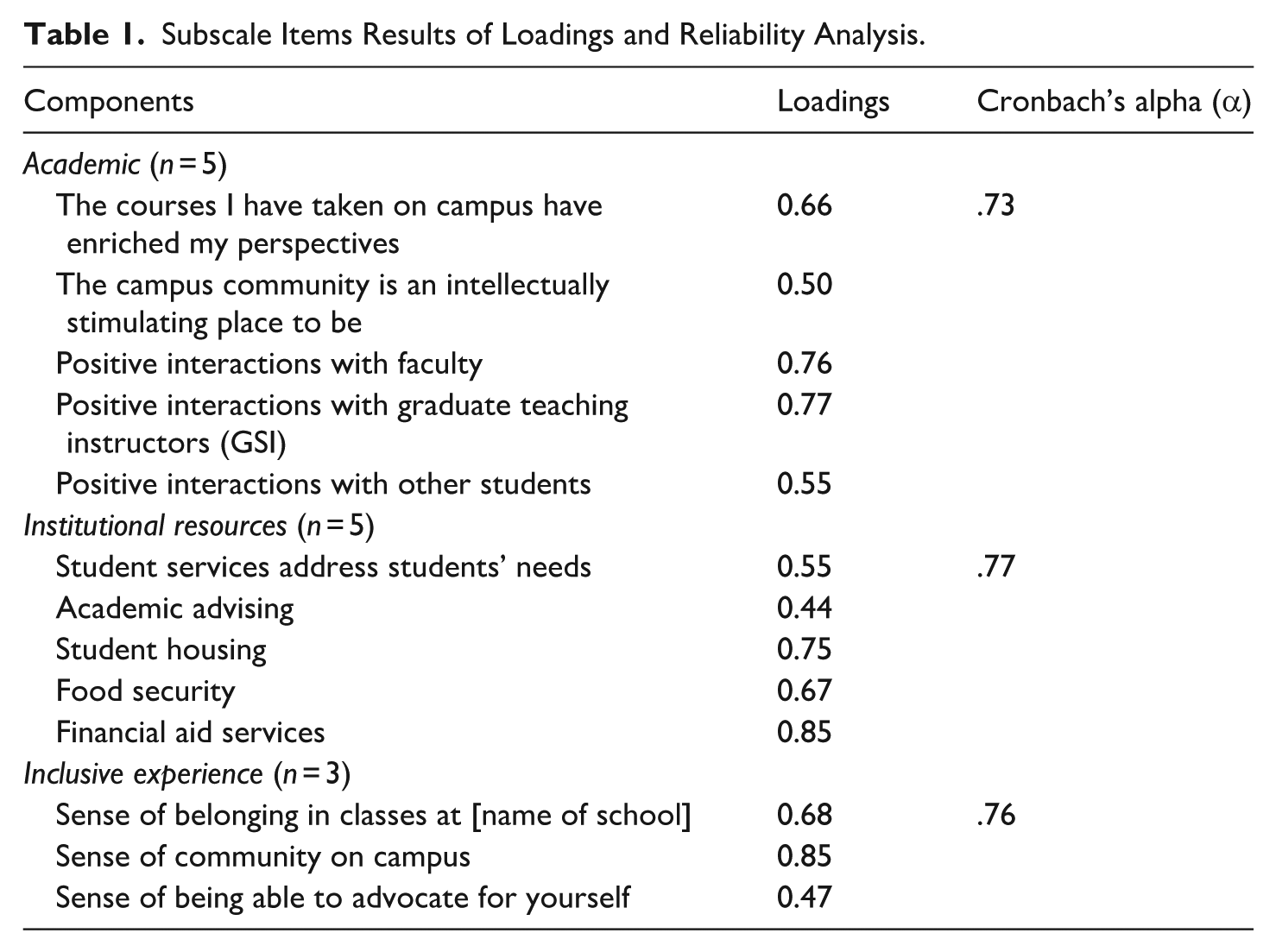
The outcome variables for this study were (a) college adjustment, a continuous logit weighted likelihood estimate based on 65 items (Model 1), and (b) college satisfaction, a continuous score, created by averaging 13 questions about students’ perspectives on college satisfaction and two faculty, staff, and administrators’ racial and ethnic diversity (Model 2). The explanatory variables for this study were (a) academic satisfaction, a continuous score created by averaging five academic college satisfaction questions; (b) institutional resources satisfaction, a continuous score created by averaging five questions about institutional resources satisfaction; (c) inclusive experience, a continuous score created by averaging three questions about inclusive experience; (d) first-generation status, a categorical dichotomous variable indicating a first-generation student = 1 or a non-first-generation student = 0; (e) gender, a categorical variable for female, male, and nonbinary, with female as the reference group; (f) socioeconomic status, a continuous variable ranging from 1 (less than $20,000) to 5 ($80,00 to $149,999) of parents’ household income. All income values were in increments of $20,000, except for the last value of $70,000; (g) transfer status, a categorical dichotomous variable indicating a transfer student = 1 or a non-transfer student = 0; and (h) diversity, a continuous score that was created by averaging two questions about faculty, staff, and administrators’ racial and ethnic diversity.
Statistical Analyses
For Research Question 1, a simple linear regression examined the differences in mean college satisfaction between transfer and nontransfer Latinx students. For Research Question 2 (Model 1), a multiple regression analyzed the association between college adjustment and college satisfaction for Latinx students after controlling for transfer status, gender, household income, first-generation, and diversity. For Research Question 3 (Model 2), a multiple regression investigated the difference in mean college satisfaction between transfer and nontransfer Latinx students after controlling for college adjustment, gender, household income, and first-generation.
Results
Descriptive Statistics
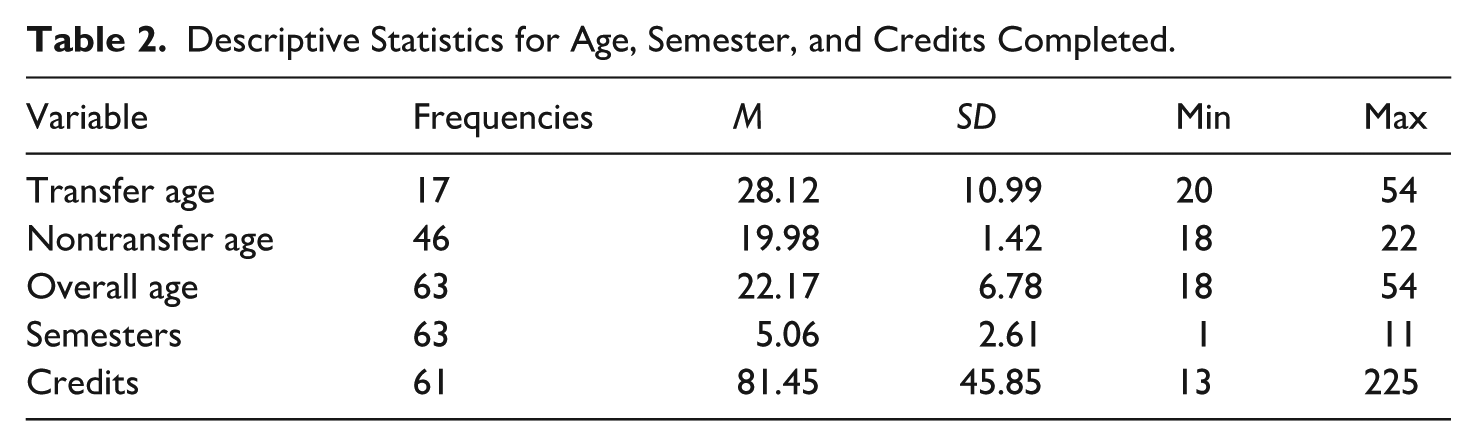
The sample consisted of 63 Latinx students, including 17 transfer students and 46 nontransfer students. A total of 60 students identified as Hispanic/Latina(o)(e)(x), whereas three students selected Other and listed Mixed (Mexican and White), White and Hispanic, and Mexican-Native as their identities. Overall, the study represented 20 majors, and Table 2 provides the descriptive statistics for the students’ ages, semesters, and credits completed. Figure 1A provides the descriptive statistics of students’ genders, Figure 1B provides the descriptive statistics of students’ disability status, Figure 1C provides the descriptive statistics of students’ family incomes, and Figure 1D provides the descriptive statistics of students’ GPAs.
Descriptive Statistics for Age, Semester, and Credits Completed.
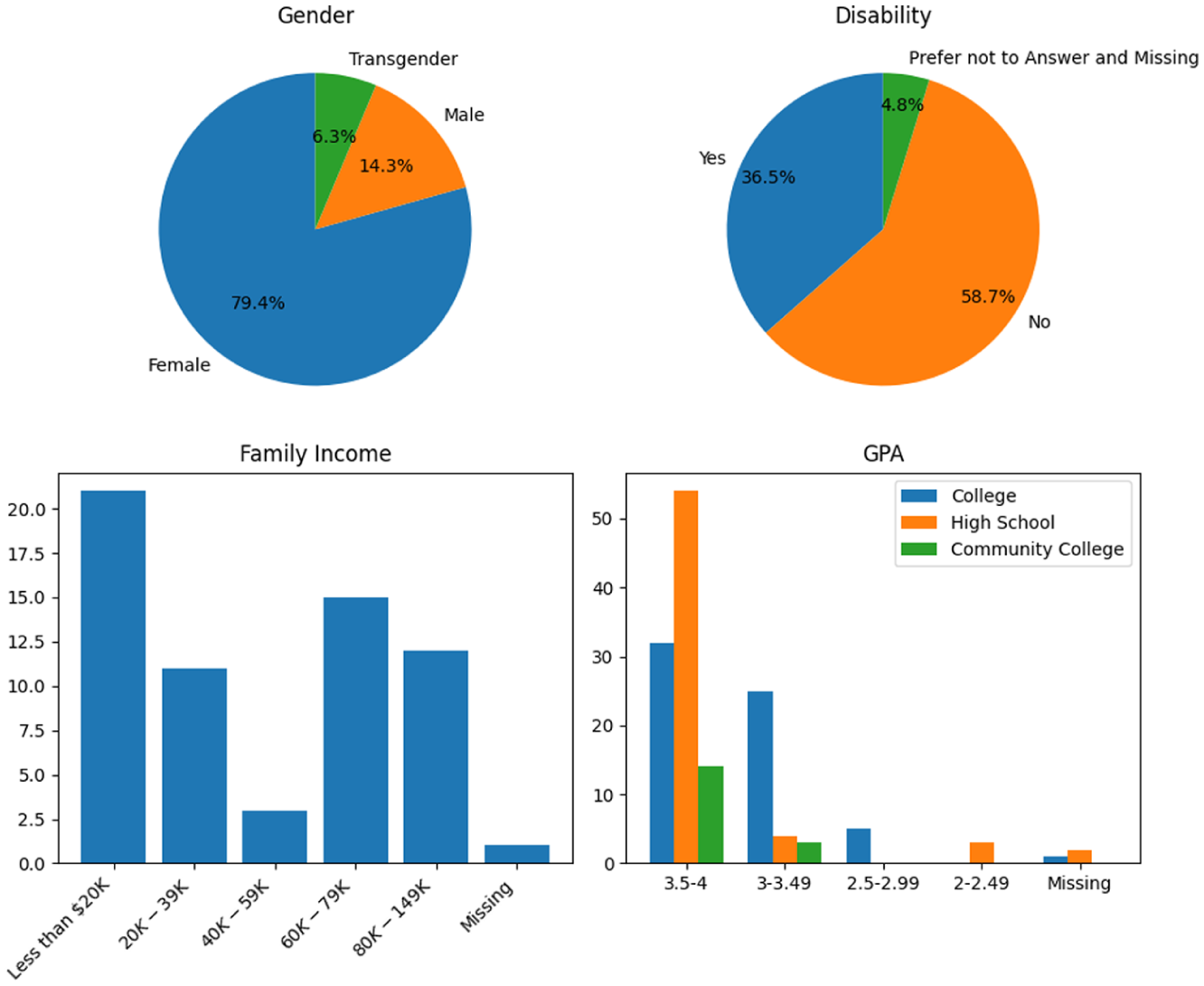
Student demographics: (A) gender, (B) disability status, (C) family income, and (D) GPA.
Student Resources and Students’ Perspectives on Barriers
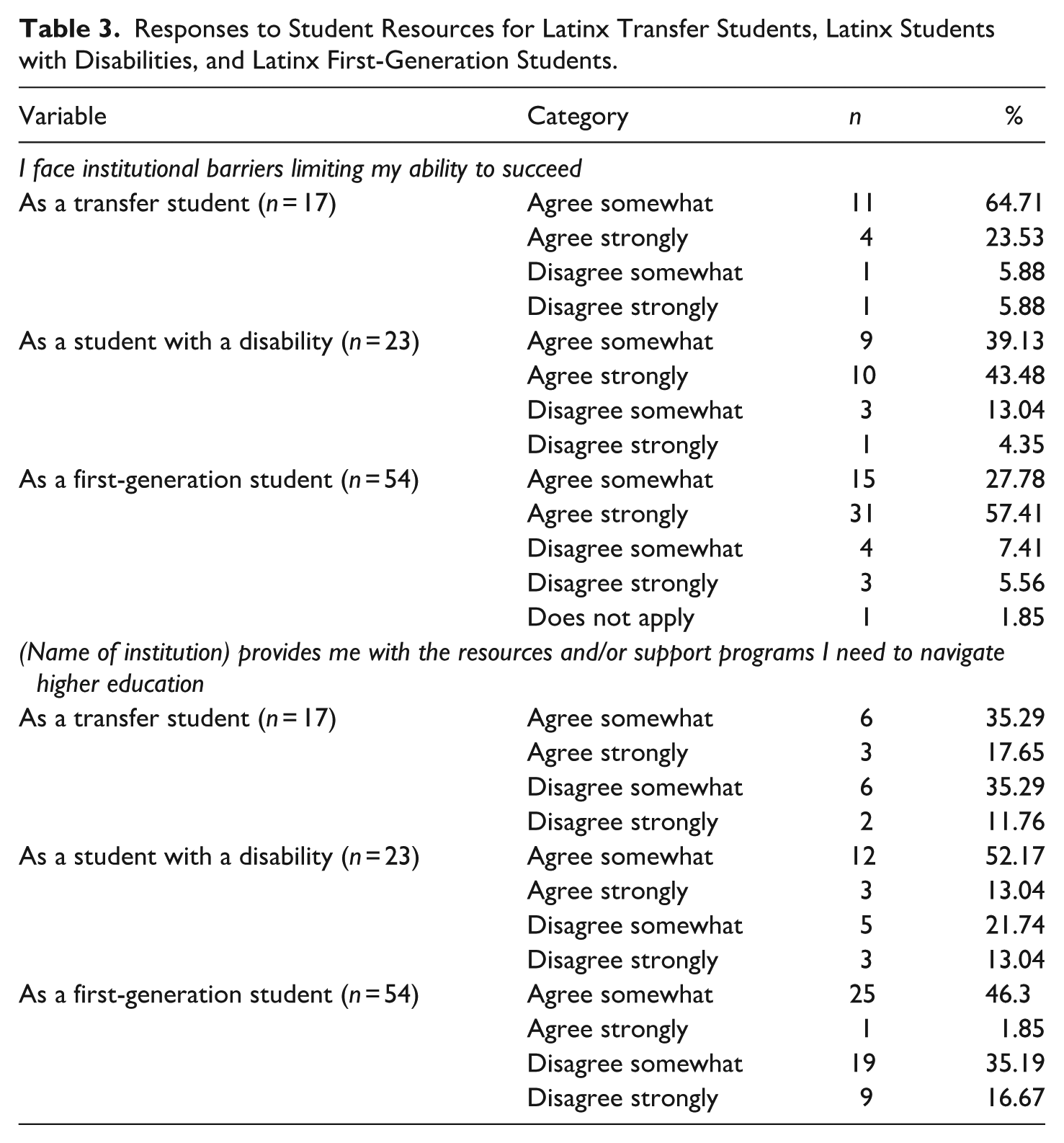
I conducted additional descriptive analysis for transfer, first-generation, and students who identified as students with disabilities to examine their perspectives on barriers to student resources (see Table 3). Most transfer students indicated they were either very familiar (n = 9) or somewhat familiar (n = 5) with the Transfer Student Center (TSC). When asked how often they utilized TSC resources, most transfer students reported using them occasionally (n = 6), followed by often (n = 5), never (n = 4), and very often (n = 2). For students with disabilities, the majority indicated they are familiar (n = 11) and very familiar (n = 8) with the Disabled Student’s Program (DSP). When asked about the frequency of their use of DSP resources, most students with disabilities reported they used them occasionally (n = 9), followed by often (n = 7), very often (n = 4), and never (n = 3).
Responses to Student Resources for Latinx Transfer Students, Latinx Students with Disabilities, and Latinx First-Generation Students.
Statistical Analysis
For Research Question 1, I conducted a regression to examine the difference in college satisfaction between transfer and nontransfer Latinx students. Results indicated, on average, transfer students reported 0.15 points higher college satisfaction than their nontransfer Latinx peers. However, this difference was not statistically significant (p = .24). For Research Question 2, the first multiple regression model examined the association between college adjustment and college satisfaction (i.e., academic, institutional resources, inclusive experience) for Latinx students after controlling for transfer status, gender, household income, first-generation, and diversity (see Table 4). Institutional resources and inclusive experience were positively associated with college adjustment, controlling for other covariates in the model.
Summary Multiple Regression for College Adjustment Outcome (n = 62).
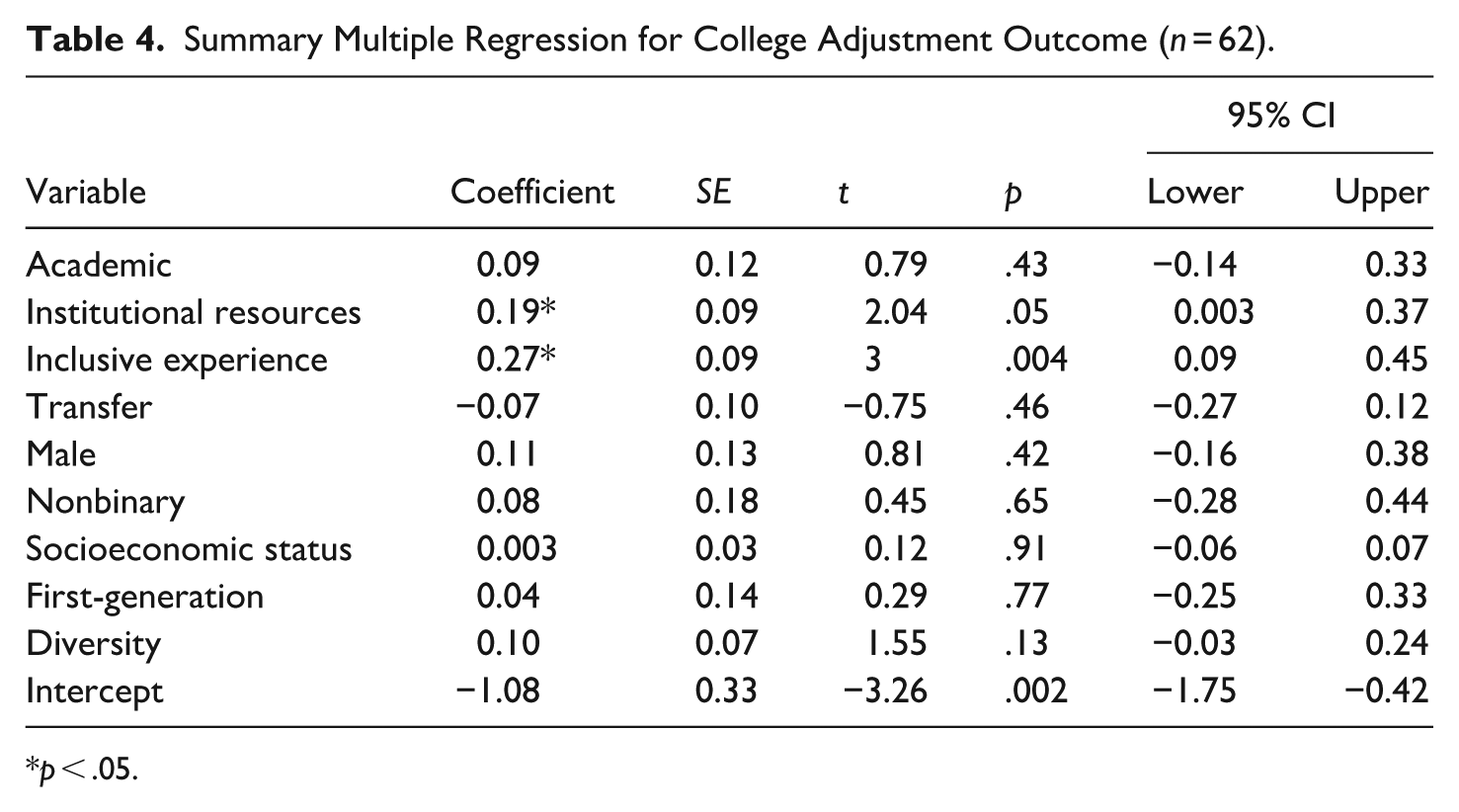
p < .05.
Building on Research Question 2, three regressions tested each satisfaction component and student characteristics. First, for every unit increase in diversity, the estimated mean institutional resources satisfaction score increased by 0.31, controlling for all other covariates in the model (p < .001). In addition, male students had .48 points higher institutional resources satisfaction than female students (p = .019). Second, for every unit increase in diversity, the estimated mean inclusive experience satisfaction score increased by 0.32, controlling for all other covariates in the model (p = .001). Moreover, first-generation students had 0.56 points lower for inclusive experience satisfaction than non-first-generation students (p = .011). For Research Question 3, Model 2 examined the difference in mean college satisfaction between transfer and nontransfer Latinx students after controlling for college adjustment, gender, household income, first-generation status, and work hours per week (see Table 5). College adjustment was positively associated with college satisfaction, and first-generation students had lower college satisfaction compared to their non-first-generation peers.
Summary Multiple Regression for Mean College Satisfaction Outcome (n = 62).
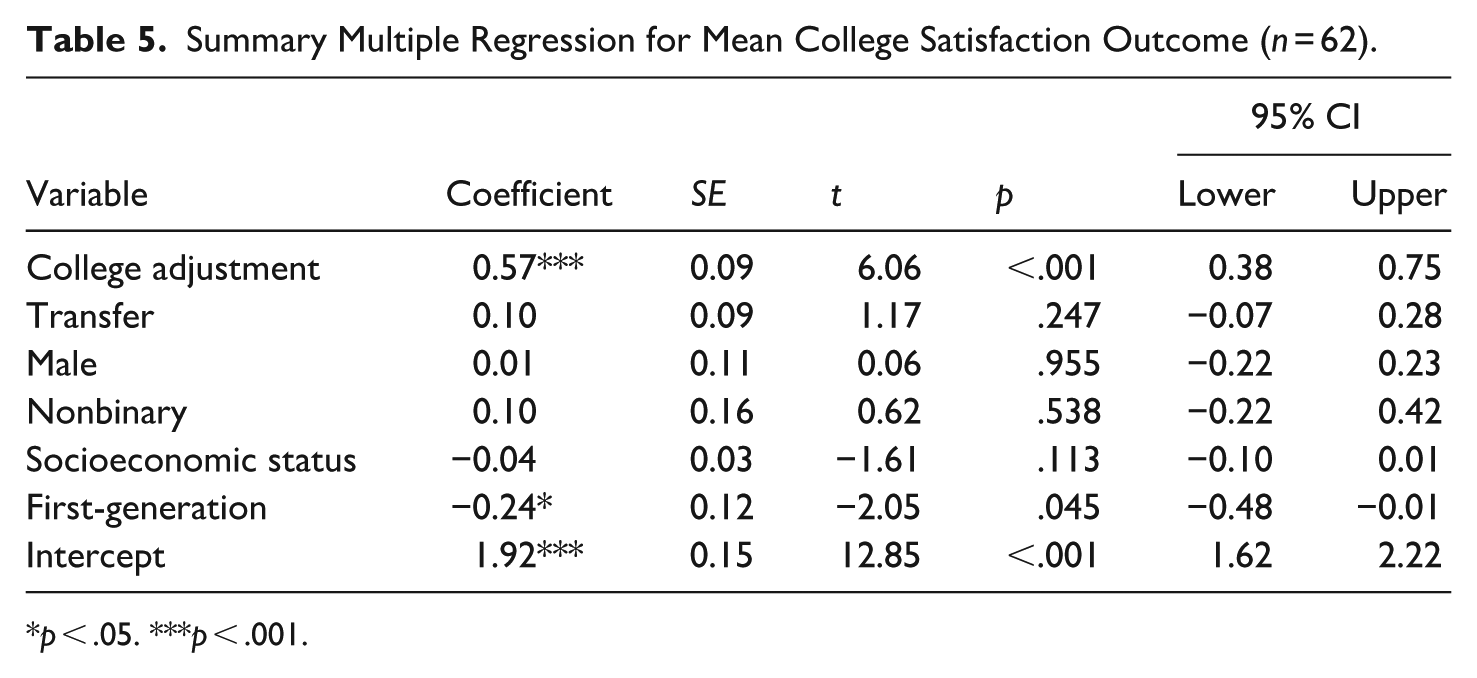
p < .05. ***p < .001.
Discussion
This study expanded on the general conversation in higher education about students’ college satisfaction and adjustment, focusing on Latinx transfer and nontransfer students. College satisfaction and adjustment have been linked to college persistence and outcomes. Degree attainment is crucial for achieving upward economic and social mobility, particularly for low-income, first-generation, and historically marginalized individuals. Many Latinx students come from low-income backgrounds and are the first in their families to attend college. When Latinx students graduate from high school and enroll in college, they often make generational leaps (Fry, 2002). As they enter 2-year and 4-year institutions, students’ experiences are shaped by the type of institution they attend; university-wide and departmental climates; resources available to students; sense of belonging and community; student agency; and the representation of ethnic and racial groups among administrators, faculty, and staff, among other factors, all of which impact their retention, persistence, and degree attainment.
Although research on college satisfaction has examined Latinx students’ experiences, this study contributed to understanding the complex lived college experiences of Latinx students attending a public elite institution that can vary in many ways from those of their White peers. I employed a Latinx college satisfaction conceptual framework based on three components: academic, institutional resources, and inclusive experience. Each college satisfaction component was analyzed independently and combined to obtain a complete picture of students’ college satisfaction. Overall college satisfaction and adjustment components described the fitting in student experiences (Rios-Aguilar & Deil-Amen, 2012). I argue these two components can help researchers understand students’ college transitions in different ways.
First, limited quantitative literature has examined the college experiences of Latinx students attending selective elite public institutions. A key contribution of this study was its exploration of the Latinx college experience for transfer and nontransfer students. I found no statistically significant differences in the mean college satisfaction of students between transfer and nontransfer Latinx students. Similarly, Woosley and Johnson (2006) found no differences in student satisfaction for transfer and nontransfer students at the academic level. This finding was important; literature on transfer students has discussed students experiencing a transfer and cultural shock during their 1st and 2nd semesters (Hills, 1965; Pascarella & Terenzini, 1991). I examined students across 1 to 11 semesters beyond their 1st and 2nd semesters of initial enrollment. One explanation for not finding a statistical difference in college satisfaction between transfer and nontransfer students is that college experiences are shaped or constrained by a system of inequality in higher education. This system of inequality can impact students’ overall college satisfaction regardless of their transfer status. On the other hand, Rennick and Kim (2021) examined differences in student engagement between transfer and nontransfer Latinx students, finding transfer students had lower engagement levels than their native students. Future researchers can examine the type of resources the university provides to transfer students, enabling them to achieve college satisfaction and engagement levels comparable to those of their nontransfer peers. Qualitative research on students’ testimonies of their college experiences can also highlight differences and similarities between transfer and nontransfer Latinx college satisfaction as they navigate and engage in an elite public institution.
Second, the literature examining students’ college adjustment and college satisfaction has found the availability of resources to students (Bettinger & Baker, 2014; Yosso & Solorzano, 2006) and academic and campus belonging (Pascarella & Terenzini, 1976; Wolniak et al., 2012) are influential components. I also found a positive association between institutional resources satisfaction and inclusive experience satisfaction on students’ overall college adjustment. These findings underscored the critical role of institutional support and inclusive campus environments in shaping students’ ability to adjust, persist, and succeed in college successfully. As noted in the work of Diaz-Gonzalez et al. (2025), the use of campus services fosters a sense of belonging among first-generation Latine college students.
Third, when examining each college satisfaction component separately, results showed association patterns with the ethnic and racial diversity of administration, faculty, staff, and first-generation students. Institutional resources and inclusive experience satisfaction were positively associated with ethnic and racial diversity of administration, faculty, and staff. Although institutional personnel must provide resources for students, they must also ensure meaningful ethnic and racial representation among university administration, faculty, and staff. As university personnel provide student resources, they must consider who is in contact with students and what their interactions mean for their success in higher education spaces.
Particularly for the inclusive experience satisfaction, the survey asked about students’ sense of belonging, sense of community on campus, and sense of being able to advocate for themselves. Results showed ethnic and racial diversity mattered as students experienced belonging, community on campus, and agency. Particularly, first-generation students showed lower inclusive experience satisfaction than their non-first-generation peers. More work needs to be done on interactions within each college satisfaction component to understand how each element’s macro and micro dynamics impact students’ success. Additionally, I observed a pattern of higher institutional resource satisfaction among male students compared to their female peers. As Gillen-O’Neel (2021) highlighted, a sense of belonging is crucial for student engagement, particularly for first-generation students. As administrators and practitioners work on improving Latinx college satisfaction, it is essential to understand the differences within each satisfaction component and its impact on Latinx students’ backgrounds.
Fourth, after combining all three components of college satisfaction (i.e., academic, institutional resources, and inclusive experience), I found a positive association between college satisfaction and college adjustment. In Model 1, only institutional resources and inclusive experience were statistically significant in the association with college adjustment. When all three of those dimensions were combined, including academic satisfaction, the aggregated significance effect was likely a result of a robust direct effect from institutional resources and inclusive experience. Torres and Hernandez (2009) similarly found Latino students attending urban institutions with an advisor were associated with higher satisfaction levels and academic adjustment. Overall, I found college satisfaction and college adjustment functioned directionally. As college satisfaction increased, students’ college adjustment increased, and vice versa.
Lastly, another significant finding revealed that first-generation students experienced lower college satisfaction compared to their non-first-generation peers. These results confirmed and extended previous work. For example, Hertel (2002) found first-generation students experienced lower social adjustment compared to their non-first-generation peers. Future research should include intersecting factors shaping Latinx students’ college experience.
Overall, this research provided a new approach to examining the college experiences of Latinx students through a bidirectional association between college satisfaction and college adjustment. As higher education personnel work toward increasing retention and graduation rates for Latinx students, administrators can use the results to inform the development of targeted programming that aids Latinx students at their institutions (Sánchez-Connally, 2018). Specifically, this study can inform emerging Hispanic-serving institutions (HSIs) and certified HSIs by focusing on the serviness component of students’ college adjustment and satisfaction, not only considering their Latinx enrollment but also addressing their retention and graduation rates. The study results provided a deeper understanding of the association between college adjustment and college satisfaction across various components, including academic, institutional resources, and inclusive experiences.
Students’ experiences are shaped and constrained by a multitude of systematic and institutional barriers and a system that requires cultural and economic capital for an individual to navigate successfully. As Latinx students make generational leaps in navigating higher education, this study can help improve their college experience and, ultimately, enhance students’ degree attainment. Policy development that prioritizes higher ethnic and racial representation among administration, faculty, and staff is essential in fostering inclusive environments that enhance students’ college adjustment and satisfaction, key drivers of students’ success, graduation rates, and long-term economic and social mobility.
Limitations and Future Research
One limitation of this study was the underrepresentation of men in the sample. Generally, the sample is representative in some ways of the Latinx gender divide in higher education. Nationally, Latino men enroll in college in lower numbers than their Latina female peers (Britton & Moreno Luna, 2022). Future researchers need to focus on male Latino college adjustment and satisfaction, given disparities in educational attainment by gender among Latinx students. Another limitation was that survey recruitment was done through programs and services for low-income, transfer students, and historically marginalized students. I hypothesize that students participating in these programs benefit from their services and, therefore, have a different college experience compared to those who do not participate in these programs. Future researchers can control participation in programming and compare it to students who do not participate.
This study took place at an elite public institution in California, and subsequent research can be conducted at a similar university to compare results across institutions. In addition, by obtaining a larger sample, researchers can control and account for additional factors that have been shown to impact students’ adjustment and satisfaction. A more extensive study will help compare the satisfaction of Latinx transfer students with that of Asian, Black, and White transfer students. Such comparison will help determine whether a particular institution would benefit from expanding resources to serve all transfer students by conceptualizing them as having similar experiences, or whether multiple targeted, programmatic efforts might prove more beneficial.
Lastly, this study was conducted in Spring 2023 and included students who had completed between 1 and 11 semesters. Participants likely had varying levels of experience with online, hybrid, and in-person instruction during the COVID-19 global pandemic. Future research should account for students’ enrollment time to understand the impact of pandemic-related college adjustment and satisfaction. For students enrolled during the pandemic, this study offered a critical snapshot of their unique adjustment, transition, and satisfaction experiences, underscoring the importance of examining how shifting learning environments shape their college journeys.
Footnotes
Acknowledgements
Thank you to Jose Roman Aguilar for the graphics.

Ethical Considerations
This study was approved by the Institutional Review Board.
Consent to Participate
All participants provided a digital informed consent.
Funding
The author disclosed receipt of the following financial support for the research, authorship, and/or publication of this article: This research was supported by the Mini-Dissertation Grant and Dissertation Fellowship from the California State University Chancellor’s Doctoral Incentive Program, and Dissertation Completion Fellowship from the University of California, Berkeley Graduate Division.
Declaration of Conflicting Interests
The author declared no potential conflicts of interest with respect to the research, authorship, and/or publication of this article.