



Abstract
Hispanic Serving Institutions (HSIs) across the US are working to identify and scale practices that intentionally serve the unique needs of Chicana/o/x and Latina/o/x student scholars. This study centers the voices of graduating undergraduate Chicana/o/x/Latina/o/x students as they reflect on their experiences at an HSI, sharing physical, academic, and social “entradas” that opened the “camino” to their academic success.
Introduction
Ever since I saw my fellow peers graduate side by side with their parents [at Chicano/Latino Graduation], I knew that I wanted that for myself more than anything. I think that event really helped me visualize graduating and seeing that as an end goal. Every time I struggled with class and/or life, I would imagine myself in that setting with my familia- Marcela, Graduating student and study participant.
To fully understand the entradas 1 (entrance points into university life and success) of Chicana/o/x and Latina/o/x students, 2 it is important to have a vivid picture of their end goals. As indicated in the quote above, graduation was visualized as a significant end goal for this student after they attended the Chicano/Latino graduation ceremony at Highland University, where there is a history of more than fifty years of proud Chicano scholarship, as well as scholarship from those with other ties to Latin America. They envisioned seeing themselves as a graduate attending this ceremony alongside their family. For this student, attending this ceremony was their entrada; it motivated them in their studies and forecasted their eventual salida (outcome/exit from the university).
Unfortunately, these salidas are not guaranteed for all students. Chicana/o/x and Latina/o/x students earn degrees from four-year colleges and universities at a rate that is 13% points lower than that of their White non-Hispanic counterparts (Excelencia in Education, 2023). While increasing and acknowledging the enrollment growth of Chicanas/os/xs and Latinas/os/xs in higher education is important, how students are served is more nuanced (Cuellar, 2015), which is well-articulated in the Multidimensional Conceptual Framework for Servingness at HSIs (G. A. Garcia et al., 2019). Within this framework, to ensure that more students reach their successful salida, institutions must carefully and thoroughly examine the caminos (pathways) that students take to reach their goals, including the initial entradas that propel them toward validating experiences and, ultimately, university success.
As we identify the role that entradas play in facilitating student success, educators, institutional leaders, and policy makers can all work to ensure that students begin college through a series of positive entry points or entradas and set the tone for their caminos and salidas (Stanton-Salazar, 2011). Ultimately, the goal is to ensure students exit the university with a degree and the tools, determination, and commitment to serve their families and society. But context is key, especially over the last 3 years, with the global pandemic taking a disproportionate toll on historically marginalized communities, as evident through disproportionate infection rates, inaccessible Wi-Fi connectivity, disparate impact on employment opportunities, food insecurity, and the need for additional health resources (Harper, 2020).
In this context, we explored the experiences of academically successful Chicana/o/x and Latina/o/x students impacted by the global pandemic and who graduated sometime during the global pandemic. We studied the student experience within a research university on the U.S. West Coast, a Hispanic Serving Institution (HSI) with a rich legacy of Chicana/o/x and Latina/o/x student success. This university has achieved near parity in outcomes between Chicana/o/x and Latina/o/x and other groups of students. Additionally, a survey of undergraduate students showed that 91% of Chicana/o/x and Latina/o/x students agreed with the statement, “I feel I belong at this university” (University of California, 2022).
To examine the student experience and student success at this institution, we took a qualitative and layered approach to understanding what it takes to produce an affirming, validating, and academically enriching higher education student experience for Chicana/o/x and Latina/o/x students, particularly during the early time period (entrada) in the students’ university experience. We defined servingness as the institution’s ability to promote a culture that enrolls, validates, and graduates Chicana/o/x and Latina/o/x students (Cano Matute, 2023; G. A. Garcia, 2019; Malcom-Piqueux & Bensimon, 2015). Through the experiences of graduating Chicana/o/x and Latina/o/x students, we explored the role that servingness plays in the student success narrative while delving deeply into university entradas. Our findings have implications for higher education policy, practice, and leadership as institutions re-emphasize their commitment to educational equity, especially for institutions concerned with and committed to deeper understandings of servingness, not solely enrolling, for Chicana/o/x and Latina/o/x students.
Literature Review
To gain a better understanding of students’ transition to university life, it is imperative to have a thorough grasp of the literature on HSIs and campus climate, validation theory for first-generation students, and the framework for “servingness” at HSIs. This knowledge lays the foundation for a successful approach to comprehending students’ entradas into university life.
Defining the Problem
Hispanic Serving Institutions are degree-granting public or private non-profit institutions that enroll 25% or more full-time equivalent (FTE) Chicana/o/x and Latina/o/x enrolled students (Excelencia in Education, 2022). They are unique in comparison to Historically Black Colleges and Universities (HBCU) and Tribal Colleges and Universities (TCU), given that HSIs were not founded with a specific mission nor curricula that specifically serve Chicana/o/x and Latina/o/x students (Hirt, 2006). Therefore, HSIs were formerly predominantly white institutions (PWI) and often remain predominantly white in enrollment but have met the 25% Latinx enrollment threshold. Nonetheless, there is a historical legacy of limited access and exclusion on university campuses, particularly for Chicana/o/x and Latina/o/x students (Hurtado et al., 1998).
The literature on HSI campus racial climate highlights the exclusionary institutional culture that Chicana/o/x and Latina/o/x students endure within their camino (Comeaux et al., 2021; Cuellar & Johnson-Ahorlu, 2023; Sanchez, 2019; Serrano, 2022). For example, 53% of Chicana/o/x and Latina/o/x students at an emerging HSI (eHSI) reported feeling racially stereotyped by white students/staff/faculty who assumed that Chicana/o/x and Latina/o/x students were not born in the United States, belonged to families of drug cartels or had only been admitted to the university because of their race (Sanchez, 2019). In addition, professors would hear these remarks during class and not address the anti-immigrant and racial remarks (Sanchez, 2019).
Another study at a 4-year HSI discussed how professors would glance awkwardly at Chicana/o/x and Latina/o/x students for asking questions or requesting help (Serrano, 2022). These patterns of exclusion demonstrate how institutions respond to diversity, racial conflict, and intergroup relationships on campus and, ultimately, the experiences and outcomes of Chicana/o/x and Latina/o/x students in higher education (Hurtado et al., 1998). Cuellar and Johnson-Ahorlu (2016, 2023) caution that even when Latina/o students report higher levels of belonging, their responses can sometimes mask more nuanced challenges with campus climate.
These studies show how faculty and peer-connection play a pivotal role in shaping the campus environment for students. However, many of these studies do not focus on the experiences of first-year Chicana/o/x and Latina/o/x and how they navigated their higher education journey despite this racialized campus culture at eHSIs and HSIs. Although many studies highlight the college transition and navigational experiences of Chicana/o/x and Latina/o/x students in higher education (Brooms, 2020; Musoba et al., 2013; Ramirez et al., 2023), we have not yet explored the nuances of a successful transition for Chicana/o/x and Latina/o/x students and how these structures, programs, and individuals facilitated student transformation and belonging at HSIs.
Defining Solutions
It is important for HSIs to recognize, value, and center the communities and familias (families) who have a strong influence and motivation for Chicana/o/x and Latina/o/x students (Dueñas & Gloria, 2022). In order to establish a supportive campus environment, educational institutions must address the experiences of students of color upon their initial enrollment. Specifically, Chicana/o/x and Latina/o/x students often arrive at college with a strong sense of familial identity and cultural background that has been shaped by their parents and communities. These factors are essential to a student’s personal journey and development (Castellanos & Gloria, 2006; Dueñas & Gloria, 2022; Yosso, 2005). Current literature provides insights into some of the ways this can happen, including through validating experiences and an institutional emphasis on servingness.
Rendón (1994) and subsequent theorists have laid a helpful foundation for understanding the needs of students who are the first in the family to attend college, including Chicana/o/x and Latina/o/x students. The seminal piece by Rendón (1994) defined validation in and out of the classroom as highly impactful for first-generation and underrepresented students. Students benefit when validating agents such as faculty, staff, and coaches proactively engage them with affirmation rather than waiting for them to initiate communication.
Additionally, it is important for validation to occur early in the college experience (Rendón & Muñoz, 2011). Institutional agents can provide meaningful connections to university success by validating Chicana/o/x and Latina/o/x students proactively and holistically (Alcantar & Hernandez, 2020; Hurtado et al., 2011). Pérez and Ceja (2010) use Rendón’s validation theory to outline important structures that institutions should have in place to provide a setting for validation for Latina/o/x transfer students. Zhang and Ozuna (2015) further explore validation for transfer students in STEM and identified specific community college, faculty, and family supports. Students benefit from validating experiences during their first year, with a stronger sense of belonging and higher retention rates, especially through intentional validating experiences in living-learning communities (Anderson & Blankenburger, 2023) and in courses that create a sense of familia (Romero et al., 2020). Centers where tutoring and peer mentoring can occur are also important for students to have a safe space (Amaro-Jiménez et al., 2023). In sum, validation is both a powerful conceptual framework and framework for practice within educational spaces, particularly in higher education. The current study explores more deeply the places and experiences in which Chicana/o/x and Latina/o/x students describe feeling validated early in their university journeys.
When validation of students becomes an institutional priority for an HSI, that institution is employing a model of servingness (G. A. Garcia et al., 2019). G. A. Garcia (2017) found that often administrators, faculty and staff perception of servingness was tied to only graduation and persistence rates for Chicana/o/x and Latina/o/x students. However, servingness cannot be reduced to one (or even two) factors but should manifest in multiple dimensions within the environment of an HSI (G. A. Garcia et al., 2019). The Multidimensional Conceptual Framework of Servingness in HSIs highlights four ways to conceptualize the structures of servingness a) outcomes; b) experiences; c) internal organizational dimensions and d) external influences (G. A. Garcia et al., 2019). In addition, there are indicators of servingness, which are measures that can be utilized to indicate whether or not structures are adequately and intentionally serving Chicana/o/x and Latina/o/x students. This framework emphasizes that servingness is a campus-wide commitment and the role administrators, faculty, and staff play are important in the influencing and validation of the Chicana/o/x and Latina/o/x student experience at HSIs. Examining the entradas, or early validating experiences of students, as this study does, helps institutions to identify those spaces and experiences that move them toward deeper levels of servingness.
Methods
This qualitative study explored the ways that graduating Chicana/o/x and Latina/o/x students identify their entradas to academic success. The data analyzed were part of a larger survey designed by the HSI Committee to gather both quantitative and qualitative data on Chicana/o/x and Latina/o/x student experiences at a research institution from students at the point of graduation.
Institutional Context
As Chicana/o/x and Latina/o/x students continue to become a demographic presence across the country’s colleges and universities and institutions strive for “HSI-status” by enrolling 25% Chicana/o/x and Latina/o/x students, many institutions are concerned with questions of servingness. HSIs are critical in providing a pathway for Chicanx/Latinx scholars to enter into university life and achieve success. For many students, HSIs are an entrada, what we define as an entrance point to university success.
The current project explores Chicana/o/x and Latina/o/x students’ entradas, an element of servingness at a Hispanic Serving Research Institution (HSRI), defined as HSIs classified as R1 or doctoral-granting institutions with high research activity (Marin & Pereschica, 2017). The institution has been recognized with the “Seal of Excelencia” for its efforts to effectively serve Chicana/o/x and Latina/o/x students, as marked by a 74.8% Chicana/o/x and Latina/o/x 6-year graduation rate and numerous successful student support programs. While this specific university became an HSI over 15 years ago, it now serves nearly 40% Chicana/o/x and Latina/o/x students, and recognizes that there is still work to do to better support undergraduate and graduate students at this HSRI.
Study Design
The HSI Committee at this institution, a standing committee including faculty, staff, administrators and students from across campus, formed in 2018. The committee has been leading the overall effort to gather and analyze data, then create interventions for Chicana/o/x and Latina/o/x student success. As part of the application for the Seal of Excelencia (Excelencia in Education, 2021), the HSI Committee commissioned a pilot survey of students who were planning to participate in the 2021 graduation ceremony for Chicana/o/x and Latina/o/x students, referred to in this paper by the pseudonym “Chicano/Latino Graduation.” This graduation celebration honors students’ personal success and academic achievements in the spirit and traditions of the Chicana/o/x and Latina/o/x culture. The rationale and instrument for the pilot survey were initially developed based largely on the Seal of Excelencia framework, particularly the emphasis on student retention and institutional culture. The committee prioritized student voices to better understand the student experience.
Participants
The survey instrument was sent in two waves. The first (pilot) wave was sent in May 2021 to the 327 graduating seniors who indicated they wished to participate in the graduation ceremony, and yielded 42 responses. As a result of our analysis from the first survey, the survey was updated to include questions more specifically about the entradas or earliest experiences of belonging on campus. The 2022 wave was then sent to 437 students (all graduating Chicana/o/x and Latina/o/x students), and received 51 responses. The surveys were conducted in English.
This population was selected because these students all identify as Chicana/o/x and Latina/o/x and have all achieved a measure of academic success, since they were graduating from a four-year institution. The analysis for this study includes qualitative responses from the 93 students in both the 2021 and 2022 waves of the survey. Since the design was an online asynchronous survey, rather than a series of interviews or focus groups, students’ responses were anonymous. Thus, this study does not include names of participants, and pseudonyms are used for the students quoted in this paper.
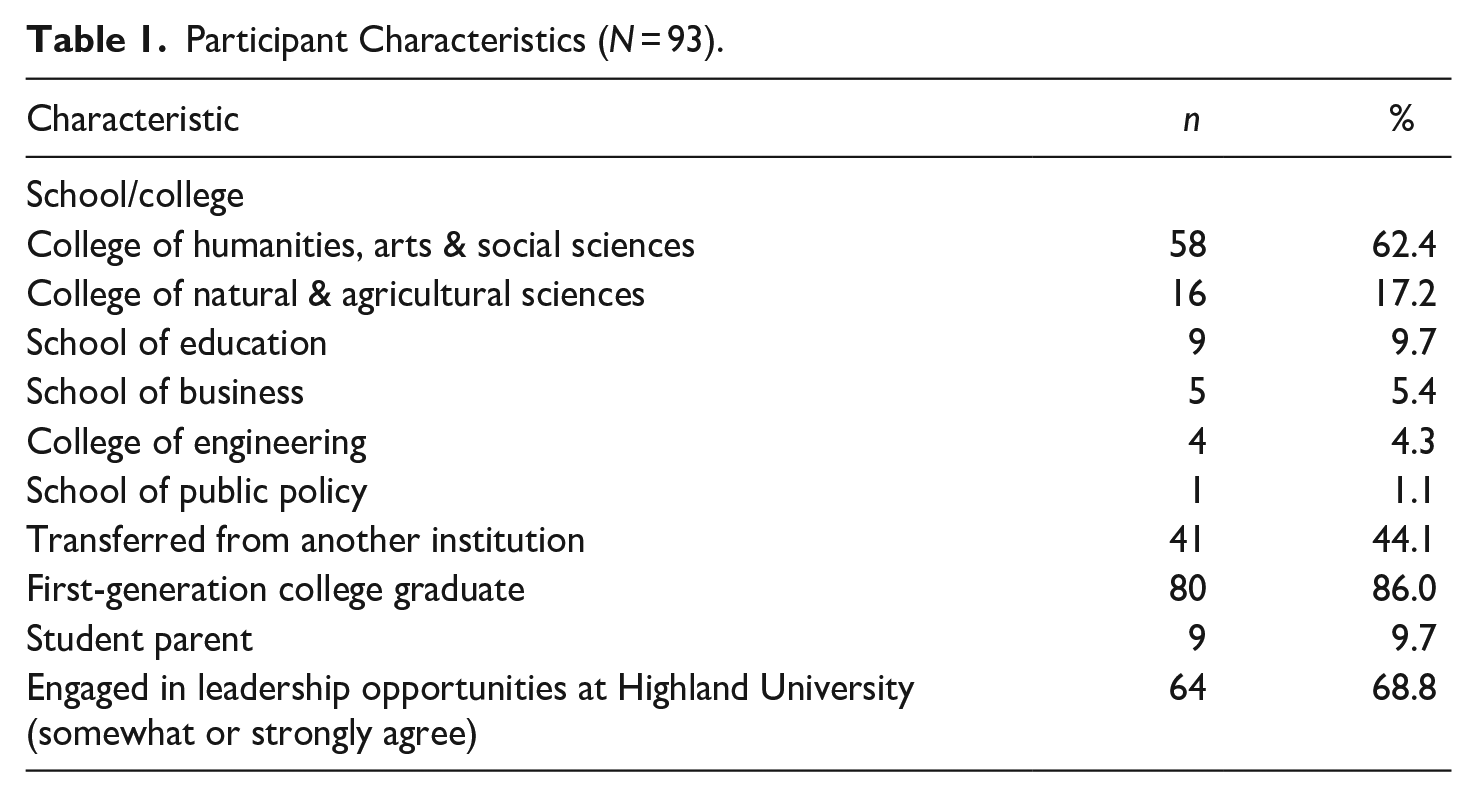
The survey respondents were all graduating Chicana/o/x and Latina/o/x students. Among the respondents from both waves of the survey, 44% identified as transfer students (either from community colleges or other four-year universities), and 86% as first-generation college graduates (see Table 1 below for additional participant information). While the relatively low response rate would pose some limitations for analyzing quantitative responses, since we are focusing on the qualitative responses for this study, we felt there was a robust set of in-depth responses to the open-ended questions for our analyses.
Participant Characteristics (N = 93).
Analytical Framework
In analyzing the first round of responses, we became particularly interested in the qualitative responses from students, describing the on-campus experiences that led to their academic success. This led to a deeper qualitative analysis by using the Multidimensional Conceptual Framework for Understanding Servingness (G. A. Garcia et al., 2019). We wanted to look at structures of serving and the impact of validating experiences w/in the structures, particularly those leading to non-academic outcomes. Thus, we coded the participants’ responses based on validating experiences, racialized experiences, and nonacademic outcomes.
Since many of the responses did not fit neatly into the categories of validating experiences in the framework, the group then approached the data for another round of analysis using a more emic approach to allow new categories to emerge from their descriptions (Creswell, 2007). From this lens, the researchers identified themes of university entrance points, or entradas (see Figure 1). We found it useful to combine the concept of entradas with the Multidimensional Framework to examine more closely the way students described specific agents and experiences that led to validating experiences within the structures, as described by G. A. Garcia et al. (2019).
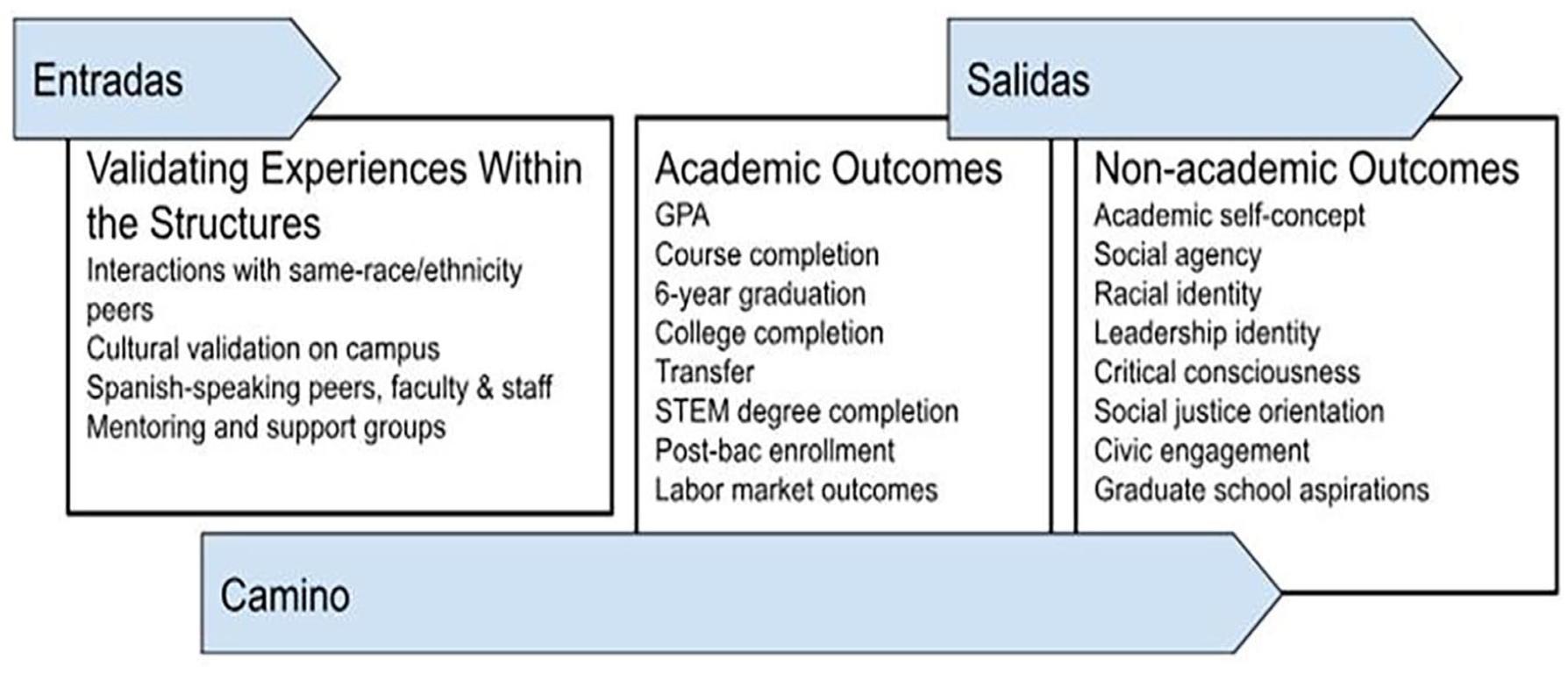
Conceptual model for entradas within the multidimensional framework for understanding servingness in Hispanic serving institutions.
Findings
Our findings suggest that Chicana/o/x and Latina/o/x students in our study connect through a variety of entradas, or university entrance points that introduce resources and services through physical spaces, academic agents, and social experiences. We label these three themes: Physical Entradas, Academic Entradas, and Social Entradas. We found that these entradas are not necessarily determined by a sequential timeline. Rather, they are multidimensional and can be organic, simultaneous, ongoing, and parallel to the student experience. For example, while students are becoming acclimated to their courses each academic term, they can experience cultural affirmation and community-building experiences through their housing experiences or other spaces, such as one of the many ethnic and gender programs on campus.
We found that entradas are complex, especially within the pandemic context. While some students had in-person entradas on campus, others (such as transfer students) had to settle for virtual entradas, missing many on-campus opportunities until their last year on campus. We also found that students’ experiences with entradas can happen long before they are matriculated students, such as attending a recruitment or cultural event on campus. Entradas can also provide transitional support that they build upon throughout their time at the university. For example, we learned that a student’s entrada experience could serve as a bridge for them, providing transitional support they build upon throughout their university camino, or journey.
Students in this study also served as facilitators of these entradas for their peers. Through their experiences as peer mentors, students then served as role models themselves, contributing positively to their overall university experiences, leadership opportunities, and ultimately, their overall academic success or salida (graduation). There were three entrada subcategories, defined below in Figure 2.
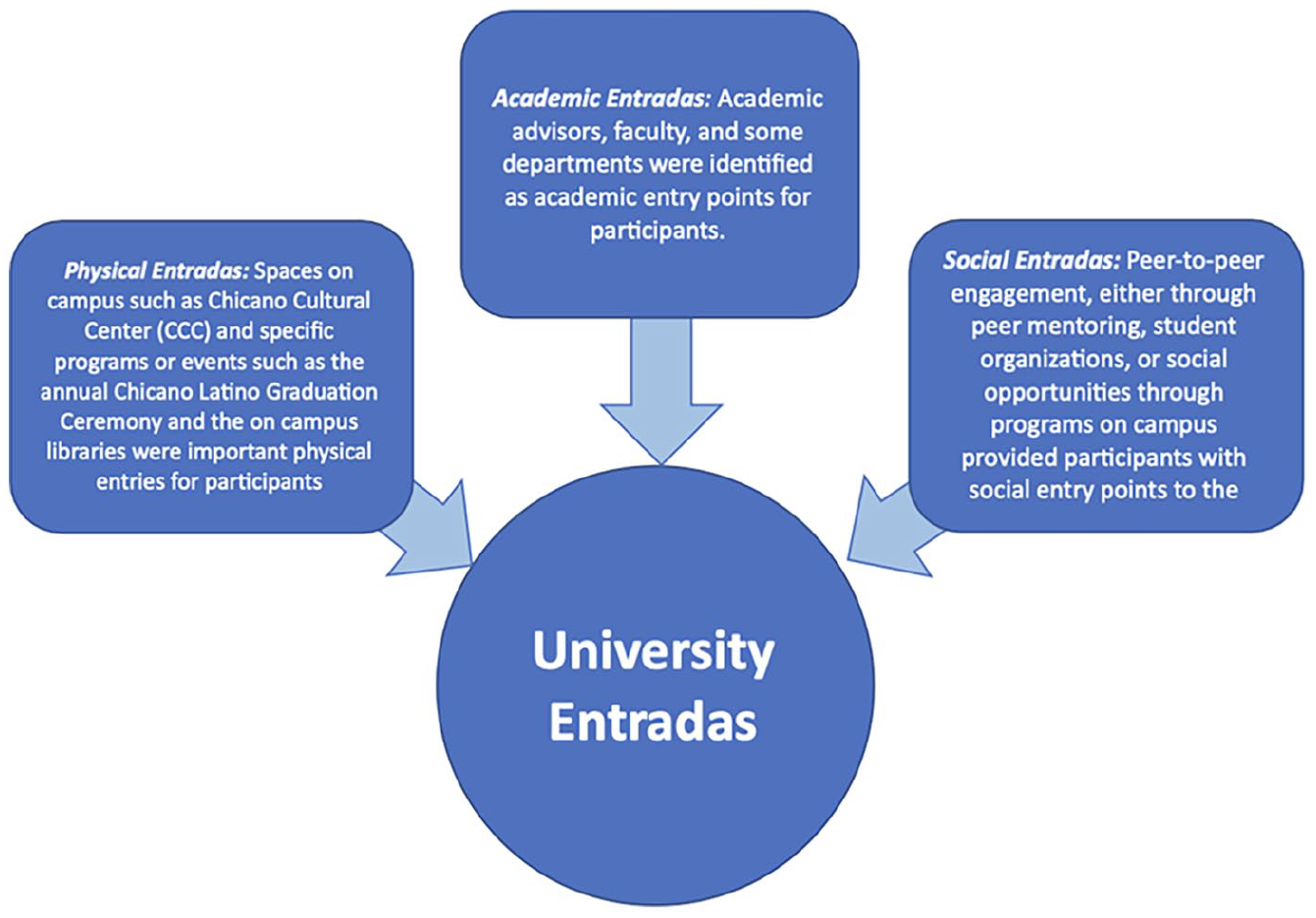
Physical, academic, and social entradas.
Below we present supporting data organized by each of the three findings described above. A key priority in this study was hearing from the voices and experiences of students via the open-ended survey responses, capturing the centrality of the student experience through student voice data available in this study. Because of this methodological nuance in which we gathered student voices anonymously, we refer to our participants more generically such as “study participant” throughout our data analysis. Where appropriate, we also integrate contextual data that helps tell the full story of university entradas for the Chicana/o/x and Latina/o/x students in our study.
Physical Entradas
We found that there are a series of spaces or physical entradas that Chicana/o/x and Latina/o/x students in our study identified as significant. Spaces like the many ethnic and gender program centers, the career services office, the library, and student’s academic departments all play a critical role in the student experience by creating an environment where welcoming and validating experiences can take place.
Chicano Cultural Center (CCC) as a Physical Entrada
One significant physical entrada was the Chicano Cultural Center (CCC), a physical space at the center of campus that provides academic, cultural, and social development through resources, programming and guidance. When students arrive at CCC, they are instantly and spiritually enveloped by a mural that captures the legacy of the Chicano Movement and serves as a surviving remnant of the Chicano legacy in the surrounding Highland community (Meza, 2023). The significance and physicality of the mural has become a symbol of educational opportunity, community values, and a reminder “Que La Lucha Continúa!.” The center recently celebrated its 50-year anniversary and brings a rich history that has advocated for the cultural recognition and support of Chicana/o/x and Latina/o/x students over the decades. In 1968, the only two Chicano faculty on campus at the time were highly involved with Chicano student activists, leaders, and outreach/recruitment programming in response to the structural and systemic racism within higher education (Cano Matute, 2022). These change agents were committed to intentionally serving Chicano students, which resulted in the founding of the CCC, the first of its kind among peer institutions (Cano Matute, 2022).
It is no surprise to see the role of the CCC emerge significantly in the data. For example, one student spoke about the validating and humanizing effects of spaces like the Chicano Cultural Center and how it allows students to be “themselves”: The space of [the Chicano Cultural Center] is the home for many students like myself. I feel that we can be our true selves. We speak Spanglish, we talk about food, and how our families and culture are so similar but different. We show our authentic selves.
Other students made the connection between the physical space and the social connections that helped them. The Chicano Cultural Center became a space to build community and facilitate peer connections by serving students with a common racial/ethnic identity: I was the most involved with [the Chicano Cultural Center] programs because I was surrounded with so many other students who struggled with the same issues that I did and were willing to help me whenever they could. Without [the Chicano Cultural Center], I probably would not have met my closest friends or peers to network with.
For many students, the programs, events, and leadership opportunities facilitated through [the Chicano Cultural Center] not only validate students culturally, as discussed above, but these opportunities blend or blur the academic and cultural identities of students as shared by the following student: The first time I truly felt like I belonged at [Highland University] was when I was on the committee for [CCC’s Mujer Empowerment Series]. It was the first time I was able to deeply engage with my culture on campus. It proved to be an incredibly validating experience because it felt like the academic sphere was finally able to recognize my personhood.
Physical entradas like the Chicano Cultural Center not only filled a cultural void or feeling of comfort while on a university campus but the space and opportunities offered created a home-away-from-home (Bernal, 2001; Delgado-Guerrero et al., 2014) type experience that students are looking for when they arrived at the university. The student below talks about the demographic differences they expected between their home community and the university. However, the Chicano Cultural Center helped create a home-type space and connected them with other students from their community: I felt the cultural shock because I was coming from a predominantly Black and Hispanic neighborhood to the dorms where most people were not from the same cultural background as me. That was until I found [the Chicano Cultural Center] and I met amazing people that were from different backgrounds but somehow still related to me and made me feel less alone.
Feelings of home were a salient finding in the data. Even if students are feeling isolated or alone in their day-to-day campus experiences, the programs and/or events provided by the people in physical entradas like the Chicano Cultural Center make a positive difference in the student experience, as stated by the student above.
The Library as a Physical Entrada
One unexpected finding was the role of the library as a physical entrada for students. When asked the question, “As you reflect on your Highland University experience, which experiences were most important to your success? (check all that apply),” a majority of respondents selected the library (see Figure 3).
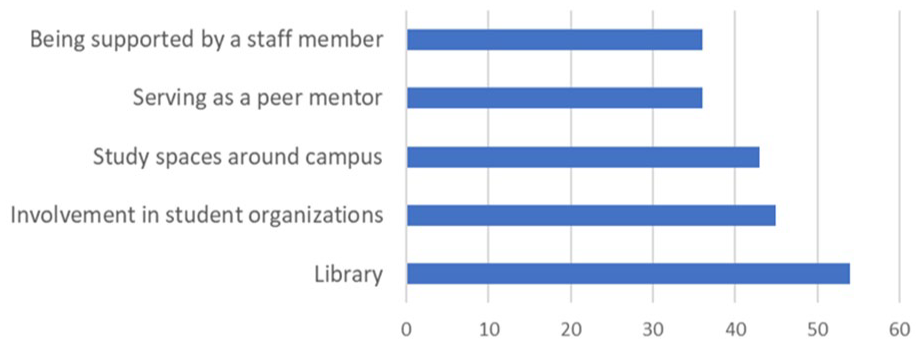
Top experiences most important to student success.
Many students in the study are first-generation college students, live with family or were forced to return home during the pandemic, and may be facing living circumstances that make studying a challenge, particularly during the pandemic, which is when the first two waves of data were collected. Common recurring words in their responses that were associated with the university library included “safe,” “quiet,” and “focus.” This was shared by students such as the following: “The library was a really peaceful and productive place for me to get my work done. Going to the library eased my anxiety I had around trying to focus at home.” Another student shared a similar experience as it relates to the significance of the library: “The library was my safe space where I had the most access to academic resources that allowed me to succeed in my undergrad journey.”
Several student responses also indicated that the library was a space for community building, for example, one described: The library also made me feel welcome and a part of a bigger community, when I was there, I identified with every student who was in there because we were all in there with a goal in mind, to study and complete our assignments.
The following student spoke of the library within the theme of discussing the limited access they had to the university during the pandemic. The pandemic forced a campus closure, making contact and communication with their advisor, professors, and teaching assistants (TAs) limited to remote contact: Because of social distancing implemented by [Highland University] I mainly contacted and had conversations with my advisor online through zoom. Same goes for office hours with my professors and TAs. I did physically attend the library multiple times this academic year on campus as it served as my main place to study.
In many ways, the library not only provided a physical entrada for students but created a vital access point to the university that students did not have in their course-taking experiences, specifically during the pandemic.
Another student spoke about the significance of the library’s role in facilitating their academic success by stating: “I fell in love with both libraries and its spaces to study. The library was significant to my academic success.” When students needed a place to study, the library served a critical role, especially when university access was a challenge.
In addition to the significance of the Chicano Cultural Center and the university libraries, students also spoke about the importance of other university spaces and services that were critical to their academic success. Student support offices, employment on campus, dorm living, and other ethnic and gender program offices such as the LGBT Resource Center and the Women’s Resource Center were specifically mentioned. The next section presents data on academic entradas that were identified as significant to the students in our study.
Academic Entradas
In addition to physical spaces, some students also identified specific academic programs or actors that served as entradas to validating experiences. Academic advisors are often the first point of contact between the student and their home department (Kot, 2014; Kuhn, 2008). Advisors help students set an academic plan and ensure that they are on a pathway toward academic success, and they also participate and/or facilitate important events and experiences for students, such as orientation, professional development opportunities, and community-building opportunities (Rendón, 2021). One student spoke about the role their advisor played in their academic success: “My academic advisor helped me create a plan for success in order to be able to graduate.”
Beyond the technical role advisors play for students, advisors played a critical role for students during the pandemic: “I felt welcomed on my first Zoom meetings with the academic advisor and [Highland University] staff. It actually made me feel comfortable to have Latino staff.” In addition to advisors being the first point of contact, especially during critical times such as the pandemic when all of the students’ contact with the university was through remote communication. However, the student above also spoke about the importance of their Latino advisor, a factor that helped them feel “comfortable.” Another student mentioned the importance of faculty diversity, appreciating “professors and colleagues being majority POC.”
Advisors also lift students up when they need it the most. When students are having academic or personal problems, advisors can often be the first point of contact for students. The critical role of advisors is highlighted by the student below: “I told my advisor that I was giving up, but he sent me an email that stated I was enough [student emphasis] and that there were other options.”
In addition to advisors, faculty also serve as academic entradas for students. While students are engaged with their classes, they may or may not be involved in any one or multiple ethnic and gender programs like the Chicano Cultural Center, student organizations, campus employment, a living and learning community, or others. If this is the case, a student’s academic department and the faculty they interact with are important entry points for students. As a research-intensive university, engaging with research opportunities, typically through a faculty member, are vital. Faculty mentorship serves as an important academic entrada to the university and also to a student’s respective discipline. Research opportunities socialize students into the field of research and plug students into opportunities far beyond their individual campus. One student spoke about the importance of this: I started conducting research with a faculty mentor since I transferred here to [Highland University]. The professor always believed in my abilities and mentored me to be a successful PhD applicant. Furthermore, a professor mentored me and prepared me for what a position in academia might look like. As a first-generation student, these mentorships were vital towards my success in academia.
Participation in a summer research program, along with the support from a faculty advisor, was also important for a student: “I participated in the [summer research] program and felt welcomed as a researcher and got to experience a community and be supported by my faculty advisor.”
One student spoke about the significance of research within the same breath as discussing the significance of ethnic and gender programs and the role they played in helping students navigate challenging spaces. This is another example of one entrada leading into another: These [ethnic] programs helped me feel like I belonged more so than my academic department or my research lab. These ethnic programs were always open and inclusive. Over time, I have grown to feel like I belong in the research lab, but there are moments where I feel outcasted and alone and not because I’m the only person there, but because I am a POC [person of color] in a space that is predominantly white.
Another student spoke about the involvement with an on-campus research team that facilitates community and familia, as an important academic entrada to the university: The first experience I had of feeling at home was when I first embarked on the [Participatory Action Research] team. [Maya] has been a tremendous asset to me finding community and familia here at [Highland University].”
This particular opportunity is not only led by a Chicana/Latina instructor/researcher/staff member but the research topic itself, along with the research process, centers on the voices of students and the history of Chicana/o/x and Latina/o/x history on campus. The project selected 12 Chicana/o/x/Latina/o/x undergraduate students at Highland University to serve as co-researchers through a 10-month research project that recovered the counter history of the origins of Chicano/Latino structures of serving at an HSRI. Furthermore, the course training and meetings fostered a sense of familia, providing a more intimate and transformative connection within the project for the co-researchers and participants.
In addition to advisors and faculty, a student’s academic department also provides another set of academic entradas for students. One student spoke about the importance of a transfer study room and the support of peers: “My academic department provided a transfer study room that was well staffed and got support from my peers.” Another student spoke about the importance of a wide-ranging web of support, specifically for transfer students.
Being in a transfer, first year seminar and with a peer mentor program helped me the most. I was able to relax and learn how to guide myself through out my two years at [Highland University].
Similarly, a student spoke of the excitement the transfer seminar facilitated for them as a new student on campus: “My transfer seminar. It made me really excited for what the future held.”
First-year and transfer seminars are often referred to as learning communities on this particular campus. One student described the community and support received in this space: Forming a group of peers in my first year through [the sciences] learning communities was very beneficial. It gave me a sense of community and support from a diverse group of students. . .
Unfortunately, not all students could capitalize on the many opportunities available on campus, largely due to the pandemic. For some students, their academic entradas may have been limited to remote contact and communication with their advisors, professors, TAs, and peers. However, there seemed to be much relief once they were able to return safely, as suggested by the student below. When students were asked about the most significant experiences or opportunities they had on campus, one student responded with: I didn’t get to experience [university] as much since I transferred during the pandemic, but the first time I step feet on campus, it was very nice and welcoming. I transferred from a community college, so it was very different.
Similarly, one student who is also a parent spoke about the ways that the pandemic limited their opportunities but then mentioned some of the positive experiences they had with the transfer seminar and basic needs and expressed their gratitude for the support they received: I didn’t have those experiences because of Covid. The transfer seminar class helped me successfully transition from Community College to the 4-year. Basic needs helped me survive during the pandemic since I was furloughed from my job. Target gift cards made a HUGE difference for my daughter and I. THANK YOU!
Students from various backgrounds, including the transfer students and student parent above, can all benefit from intentional academic entradas. The final section will explore the social entradas that facilitated Chicana/o/x and Latina/o/x students’ academic success.
Social Entradas
Social entradas are peer-to-peer engagement opportunities, either through peer mentoring, student organizations, or social opportunities available through campus programming. Within the context of the pandemic, there were structural barriers, such as the campus closure, that prevented students from engaging in-person. This is important to note because social opportunities are a vital part of the student experience in college. When such opportunities are denied, a student’s overall connectedness with a campus and one another can be stifled.
Further, it is important to acknowledge that social entradas are an important complementary experience to physical and academic entradas. There is no linear or step-by-step process that students follow to be connected to the university, one another or to be put on a pathway to academic success. Rather, the various entradas discussed in this paper are likely to happen simultaneously as students transition to the university. Nonetheless, social entradas, as determined by the data, were indeed significant to student success and a host of other rich experiences (i.e., leadership development) that have been identified in the literature.
Simply being surrounded by others was identified as a key experience that facilitated student success. One student stated: “Being surrounded by friends and being on campus.” Social entradas help students build a community or feelings of home. The importance of community was particularly notable during the pandemic when students were forced to be physically separate from one another. The significance of such isolation and feelings of being “alone” speaks to the significance of one’s peers and the on-campus experiences and opportunities that typically follow: It wasn’t until my last year at [Highland University] that I felt at home at [HU]. My first year, I struggled with getting involved on campus, and I was afraid of joining new things. I felt pretty alone because I did not have friends I felt comfortable attending club meetings with. After COVID, I really wanted to enjoy my last year at [Highland University]. I began reaching out to classmates and began joining clubs. Hanging out with friends and socials made me realize how [Highland University] felt like home.
Building friendships is also a key social entrada and is often characterized by feeling “safe and comfortable.” For the following students, receiving support from a friend who is also Latina was important to them: “The first experience of feeling at home was when I finally found a group of friends I felt safe and comfortable with. These girls resembled me in my struggles, up comings, and Latina identities.” Again, the timing of this study and its overlap with the height of the pandemic shows the significance of being with peers. One student stated: “During my last Spring quarter when I was on campus a lot and was able to make friends with my peers.”
In addition to peers, peer mentors and peer mentoring were a significant experience identified in the data. Students can receive mentoring and become mentors. Such opportunities are afforded through a variety of academic and other campus programming. These peer mentoring structures provide an important piece to the student success puzzle at the university. The following student talks about the significance of mentoring as a transfer student: “Having a transfer mentor helped me with crucial things such as how to successfully sign up for classes, how to look at the degree audit, and many other crucial things important to succeed as a student.”
Another student speaks to the importance of a peer mentor during a really challenging period: “Having a peer mentor was a big deal for me. I never had anyone share their experience and give me advice. Their support really helped my academic success during such an odd time we experienced.” Finally, student organizations, in general, played a critical role for students, especially during the pandemic when in-person entradas were essentially prevented by campus closures: “Being part of student organizations was good for me since I transferred during the pandemic. My first year at [Highland University] was completely online, and I only had a few classes in person my last year there.”
In summary, the student respondents in this study elaborated on their challenges, as well as the entradas that helped them find a sense of belonging. Navigating the university landscape can be difficult when first-generation students do not have an outlined path that can guide and support them throughout their camino. Many students can feel lost within a large university, but the physical, academic and social entradas described above opened the path.
Discussion and Recommendations
This study affirms that institutions striving to serve Chicana/o/x and Latina/o/x students need to develop specific, proactive, and early ways to help students enter into the camino of their college careers. Deepening the helpful structure from the Multidimensional Conceptual Framework of Servingness in HSIs, we argue that each university needs to identify its most effective physical, academic and social entradas for Chicana/o/x and Latina/o/x students and determine how to strengthen and replicate them so that all students can succeed.
We have much to learn from community colleges and teaching institutions, which were the original HSIs (Laden, 2004). Validation theory and the Multidimensional Conceptual Framework of Servingness in HSIs have been used to study Latino/a/x student success in these educational contexts (Pérez & Ceja, 2010; Zhang & Ozuna, 2015), and this current study expands on that knowledge by applying them in a research university context, and at HSRIs specifically.
Recommendations for Practice
Each context is different, and there is no formula or linear process to follow. Below are some recommendations for practice as a result of our findings:
Formalize an HSI committee; this group can be the champions who lead the work and should include student and alumni voices as key collaborators.
Consider the historical context of your institution. Here are some questions to consider: What has servingness looked like on your campus? What are the demographic and enrollment trends of your region? (Cano Matute, 2022; D. G. Garcia & Yosso, 2020; Morales, 1998).
Host a culturally affirming graduation ceremony, work with students to plan and execute this ceremony and/or connect with those already engaged in this celebration on your campus.
Consider strategic and intentional tools that will aid in capturing your institution’s story, such as: (a) An exit survey to understand the experiences of successful students; and (b) Heat maps—created by inviting students to visually mark physical locations on campus contributing to success can belonging—that can help institutions understand which spaces and places shape servingness.
Once entradas are identified, build on them intentionally. For example, if libraries are an entrada space for students, ensure that all students can find those resources easily. Or, if campus visits or orientations are important entradas for some students, invest in making sure meaningful connections are created regularly through the experience.
Create spaces for faculty and students to co-create entradas. For example, use research courses to engage students directly in the research process. Participants in our study spoke about the significance of engaging with a Participation Action Research study. And, consider “flipped” office hours; instead of waiting for students to come to an office, proactively reach out to them through physical entrada spaces such as ethnic program offices or libraries. This builds on the importance of intentional faculty connections (Alcantar & Hernandez, 2020; Hurtado et al., 2011).
Recommendations for Institutional Policy
Institutions and its leaders have the potential to create the conditions that amplify opportunities for servingness, and in the context of this article, university entradas. We heard from one student in our study that they initially felt excluded in the lab setting. However, the ethnic program offices created an entrada that eventually led to acceptance in the research setting. This example speaks to the importance of universities and departments needing to find ways to make these entradas more seamless for every student. The connections need to be explicit and institutionalized so that students do not each have to struggle to create them, as noted in other studies identifying strategies to promote a culture of academic success and resilience for Chicana/o/x and Latina/o/x at HSIs (Alcantar & Hernandez, 2020; G. A. Garcia, 2016; Gonzalez et al., 2020). Such policies might include:
Universities may consider how merit and promotion processes for faculty and staff value the notion of servingness into their expectations; departments may acquire a “servingness” score based on the aggregated scores of its faculty and staff, inclusive of classroom and lab/research context student engagement.
Program reviews should center on the role that servingness and university entradas play in shaping the student success expectations of the relevant program under review.
Departments should center servingness and university entradas as a key skill set required in future faculty, staff, and leadership searches.
Universities may consider awarding yearly “entrada” champions by providing an award for people across the institution who are realizing this work in their service to the university and students.
Universities can set “entrada” policies across the institution that include programs and initiatives that support student onboarding, such as recruitment, orientation, and welcome week events. These policies include adding entrada language to the above stated practices and provide practitioners/leaders with resources to support such efforts. This would require universities to dedicate a fund to support such efforts.
Integrate servingness and entradas as metrics to the overall student success metrics of the institution. Such a metric can evolve out of the findings from this paper, as a start and build it based on future research as well.
Recommendations for Research
In terms of future research, we have learned that peer mentoring, as a social entrada for students, plays a critical role in the student experience and peer mentoring (Leidenfrost et al., 2011; Moschetti et al., 2018). This requires further exploration, particularly at research universities. It is vital that institutions engage in systematic efforts to measure the impact of peer mentoring efforts. Future research could also refine quantitative and qualitative tools, such as the exit surveys and heat mapping outlined above, to ensure reliability and responsiveness to student needs and concerns. We relied on the Multidimensional Conceptual Framework of Servingness in HSIs to guide this analysis and have found the integration of specific physical, academic, and social entradas into those frameworks to be a useful framework future researchers can integrate into their scholarship.
As Hispanic Serving Institutions continue to expand, how and why they are producing student success is vital to understand. Institutions like the one examined in this current study must be at the forefront of creating entradas for students into learning, research, and ultimately their chosen salidas into careers, further education, and contributing to their families and communities.
Footnotes
Declaration of Conflicting Interests
The author(s) declared no potential conflicts of interest with respect to the research, authorship, and/or publication of this article.
Funding
The author(s) received no financial support for the research, authorship, and/or publication of this article.
