



Abstract
Mariachi programs entered the public schools in the Southwest in the late 1960s and early 1970s when the Chicano movement ushered in an awakening of pride in Mexican heritage. The purpose of this historical biography was to examine the life and career of mariachi educator Ezekiel (Zeke) Castro (b. 1939). Zeke Castro taught mariachi and orchestra in Texas for more than three decades. He influenced generations of mariachis and was a trailblazer in mariachi instruction within the field of music education. The contribution of mariachi educators to the history of music education is not well-documented and Zeke Castro’s story is significant. The culmination of Zeke’s work contributed to the establishment of several public-school mariachi programs and to mariachi becoming a sanctioned University Interscholastic League event in Texas.
“The link between mariachi music and traditions, roots and heritage goes beyond notions of authenticity or nationalism. For Mexican American artists, mariachi is a matter of identity and self-worth, especially in the context of school and professional settings, where the music, the symbols, and the language in which the songs are written has been marginalized.”
1
Mariachi originated in rural Mexico in the late-19th century and became a popular yet prohibited form of bar entertainment in Mexico City in the 1920s. In the 1940s, mariachis reached a status in which they were no longer banned from performing on the plazas and streets and instead became a symbol of pride and nationalism. 2 As Spanish evolved to become the second most common language spoken in the United States, 3 mariachi provided an emotional connection to Mexico for many immigrants. 4 In the 1960s and 1970s, the emergence of the Chicano Movement helped bolster the notion that mariachi symbolized pride in Mexican heritage. The movement sought to preserve Mexican cultural traditions and instill pride among those who previously felt shame regarding their culture or those that had simply assimilated into the Americanized culture. 5
The first mariachi education programs started at the college level with the University of California Los Angeles being the first in 1961. 6 Since then, mariachi programs have been documented in Texas, California, Oregon, Arizona, New Mexico and Nevada public schools. 7 Although pilot programs began in 2009, in 2019, mariachi became a fully-sanctioned event within the Texas University Interscholastic League (UIL), the largest inter-school organization of its kind that oversees athletic, academic, and music contests. 8 Jacinto Ramos Jr school board member from Fort Worth, Texas said, “The statewide competition is validating in the sense that UIL recognizes the significance and the impact the Mariachi music has on American society.” 9 The result of the inclusion of mariachi into school programs has caused mariachi itself to evolve. “The folding of mariachi curricula into public education resulted in generations of musicians who are more welcoming to women mariachis, more oriented toward technical proficiency, and more connected to the communities of practice that revolve around conventions.” 10
Belle San Miguel Ortiz (b. 1934) is recognized as starting one of the first school mariachi programs in San Antonio, Texas in 1966. 11 As a general music teacher, her impetus for starting the program was the realization that the music texts included many non-English language songs in German, French, or Russian, but few in Spanish. 12 In an analysis of music texts from the 1950s, 1960s, and 1970s, Silvia Feay-Shaw confirmed that as many as three and as few as zero songs originating in Mexican culture were included in standard texts. Often, the English translation was used for the lyrics with no reference to the original Spanish text. It was not until 1995 did more Spanish language materials begin to enter general music texts. 13
Belle Ortiz was inspired to become a teacher in part, due to her experiences growing up in San Antonio in which she remembers students being punished for speaking Spanish. A stigma associated with Mexican culture led to an erasure of cultural artifacts even among those with Mexican heritage. 14 Music texts have slowly moved toward a more pluralistic philosophy that honors cultural heritages beyond English-speaking countries which follows the trajectory of the educational philosophy regarding English as a Second Language learners. 15
Prior to the 1970s, English-only laws supported a punitive environment for Spanish speaking students. The first bilingual program was started in 1964 in Laredo, Texas in which Spanish speaking students transitioned from learning in their native Spanish language to speaking English only. In 1973, the governor of Texas, Dolph Briscoe, passed a law requiring all schools to provide bilingual instruction. 16 More recently there has been support toward “dual-language” instruction in which students are “taught literacy and academic content in English and a partner language.” The result is proficiency in both languages. 17 The inclusion of mariachi into school curriculums represents the evolution within education toward a more pluralistic philosophy that honors diversity among students and society.
Method
In this historical biography,
18
I conducted a series of oral history interviews with Zeke Castro, his wife, Dr. Aly Mercado Castro, and Karrell Johnson. Interviews with the participants were conducted in-person, by telephone, and using the video conferencing platform, Zoom.
19
Additional sources of data included newspaper articles, yearbook entries, and artifacts provided by the Castro family. Donald Ritchie, defines oral history in the following way:
20
Oral history collects memories and personal commentaries of historical significance through recorded interviews. An oral history interview generally consists of a well-prepared interviewer questioning an interviewee and recording their exchange in audio or video format. Recordings of the interview are transcribed, summarized, or indexed and then placed in a library or archives.
Zeke and Aly agreed to participate in the project with the stipulation that I interview the two of them together. I communicated with them via telephone and text throughout February, March, and April of 2022 to plan and develop questions for the formal interview. During this time, Aly sent me several pdf newspaper articles and photos that documented Zeke’s career successes. Aly requested a list of questions so that Zeke could take time to think about the answers. In May 2022, they sent me written answers to the initial questions with suggestions for other information they wanted to share. Zeke requested that he use the written answers as reference during the formal interview.
In Doing Oral History, Donald Ritchie suggests that repeated contact can help to establish an “intimacy that encourages candidness.” 21 I had played in a mariachi with Zeke and his son Chris in 1992 through 1994 so Zeke and I had known each other in the past. I did not know Aly as well but after a preliminary conversation about how they had met, we determined that Aly and my mother graduated high school together and were friends at that time. This shared connection led to a closer rapport and more candid conversations. For example, Aly was initially reluctant to talk about their time in Dallas because it held unpleasant memories. Once she felt comfortable enough to discuss this time period, I knew that we had reached a level of trustworthiness for the final interview.
On May 18, 2022, we met via video conference for a 2 hour “dress rehearsal.” On June 25. 2022 we met again for 4 hours via video conference to complete the final formal interview. I edited the transcription that was automatically generated on Zoom and submitted the interview and transcription to Zeke and Aly for their approval. The video and transcription were then submitted to the Voces Oral History Center at the University of Texas at Austin. Finally, on October 7, 2022, I conducted an hour-long semi-structured interview with Karrell Johnson regarding the Dallas ISD mariachi and his experience with the University of Texas String Project.
The following research questions guided my inquiry: (1) What were the events that led to Zeke teaching mariachi in the public schools? (2) How did Zeke and his wife Aly view Zeke’s legacy as it pertained to mariachi education? (3) How did Zeke’s guiding philosophy manifest in the events of his life and career?
Zeke’s Early Years
Ezekiel “Zeke” Robert Castro was born in Austin, Texas on July 15, 1939. His father, Manuel, was born in Mexico but his mother’s family, although of Mexican descent, was from Lockhart, Texas. They did not speak Spanish at home with the hope that their children would assimilate into the larger culture.
22
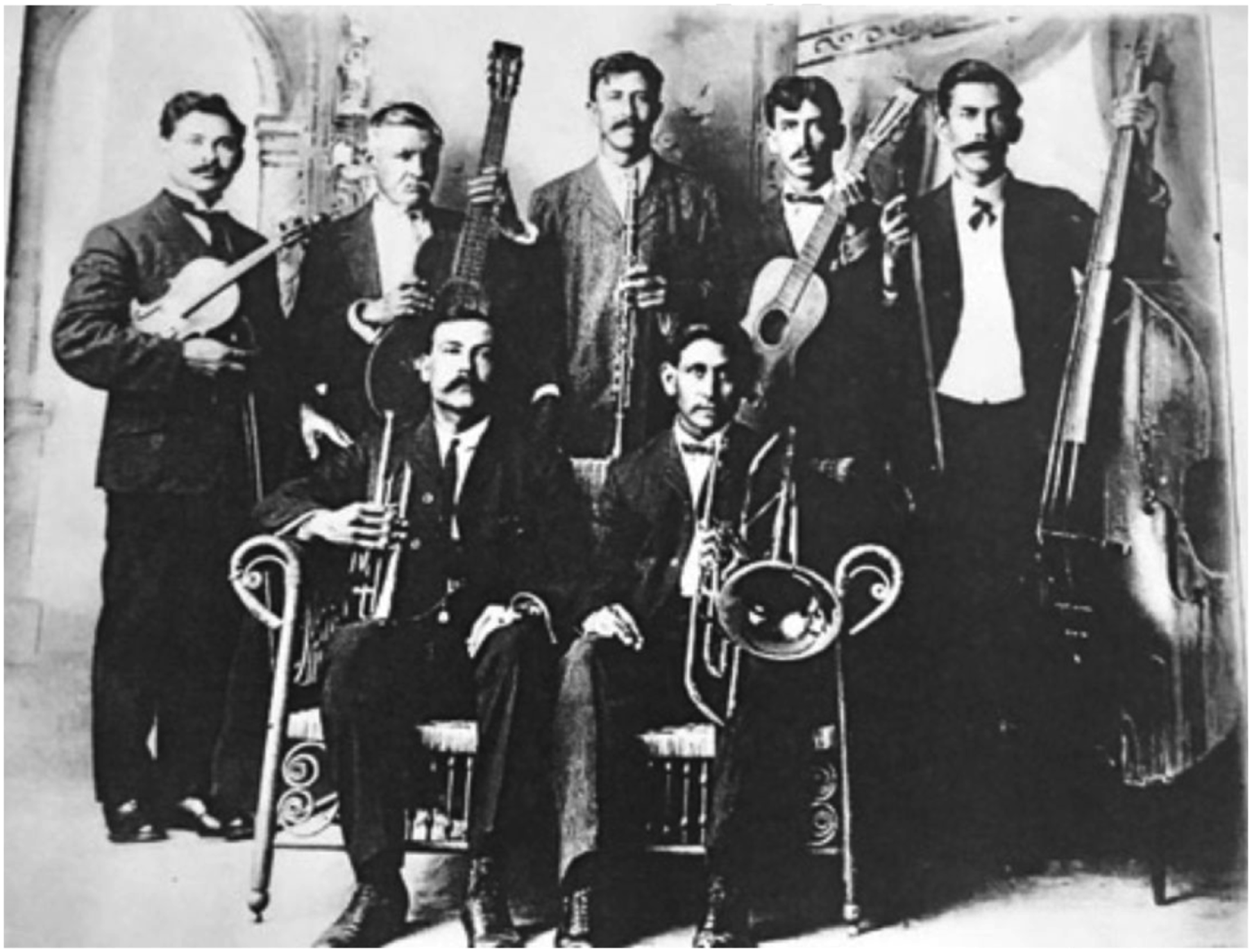
Zeke’s maternal grandfather, Ezequiel, was a musician who played in a band with his brothers and cousins. Ezequiel played brass instruments in the “Lockhart Mexican Band” and guitar and mandolin with another family group. Zeke attributes much of his talent for music to this family connection and he was happy to see it passed down to his own sons and grandsons. (see Figures 1 and 2) Lockhart Mexican band 1915. The Lockhart Orchestra.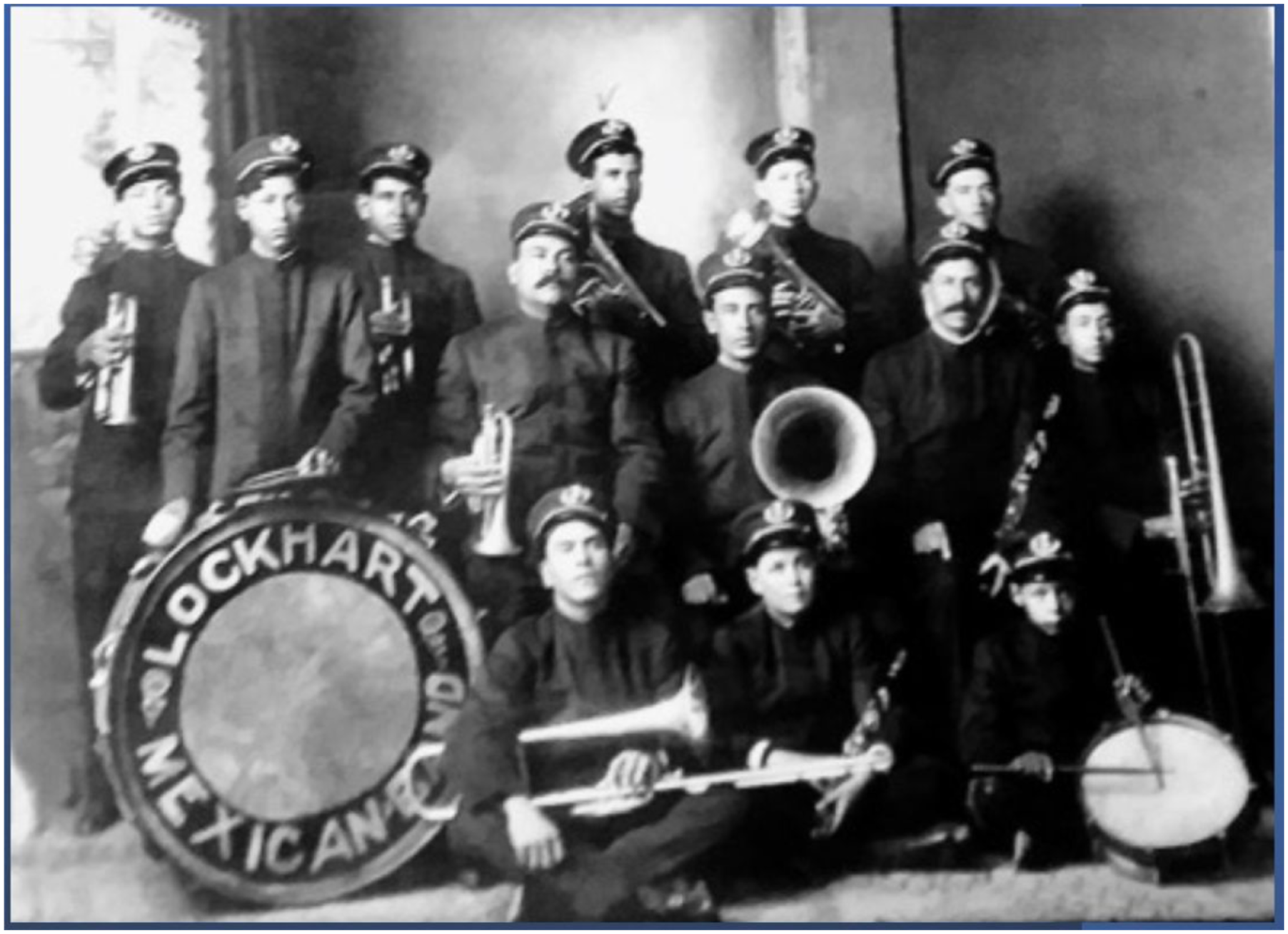
Zeke’s musical journey began in 1948 when he was offered the opportunity to learn the violin with the inaugural Junior String Project class organized through the University of Texas. Two students from each elementary school in the city, one boy and one girl, were sent offer letters to join the project. The students were chosen by the school music teacher based on grades, interest in music, and family support. 23 The class of 11 students 24 met three times per week and Zeke’s mother had to teach him how to ride the bus so that he could attend his lessons. He was the youngest student in the program, and felt proud to have such independence. 25 Because the program was new and unique, it received attention from the local press which added to Zeke’s sense of pride. 26 Perhaps a bit of foreshadowing that on one of Zeke’s first solo recitals, he represented Mexico by playing “Jesusita en Chihuahua,” a piece commonly performed by mariachi groups, for a program entitled “Melodies from Many Lands.” 27
Playing the violin in the Junior String Project became a part of Zeke’s identity. His social group were his fellow JSP students, and it was through them that he met his wife, Alicia (Aly) Mercado. 28 Aly’s sister Rose was in the JSP, and Aly attended all the concerts and many other project events. When Zeke and Aly started attending the same junior high school, they became good friends and in high school began dating. Aly remembers a time when she was in 8th grade and he was in 9th, “I was sitting up in my class or advisory, it was really up close to the stage, and I was so impressed with the way he was handling his violin that I just kind of took interest in him –as a friend really at the time.” 29 In high school, Zeke continued to excel on the violin, playing in the school orchestra, attending Junior String Project classes and lessons, and playing in the Texas All-State Orchestra for 3 years. 30
Growing up, Zeke and Aly both attended predominantly White-non-Hispanic schools and were encouraged by their parents to assimilate into the larger culture. Unlike Zeke’s parents however, Aly’s parents spoke Spanish at home. Aly’s mother was born in Mexico and her father was a first-generation immigrant from central Texas. In high school, using her Spanish speaking skills, Aly made friends outside of her elementary school cohort with “Mexican” 31 students from the East side of town while Zeke, who was shy, stayed within his music cohort. Throughout school, Aly was known as “Alice” and did not find out until she looked at her birth records at the end of high school that her name was actually “Alicia.” The Austin, Texas community did not display pride in Mexican heritage at that time. Zeke and Aly said that Austin had “no culture” when they were growing up. 32 Mexican and Black students were segregated on the East side of town and the choice for those of Mexican heritage was to assimilate or segregate and the latter choice severely diminished opportunities.
The Student Became the Teacher
When Zeke graduated high school in 1957, he was invited to attend the University of Texas at Austin to study music and teach for the Junior String Project. Many of his cohort from the first JSP class received a similar invitation, and most switched from violin to viola as Zeke did.
33
His experiences at UT were rich and valuable. (see Figure 3) He was given the opportunity to practice teaching, lead large ensembles, and become comfortable working with groups of young musicians.
34
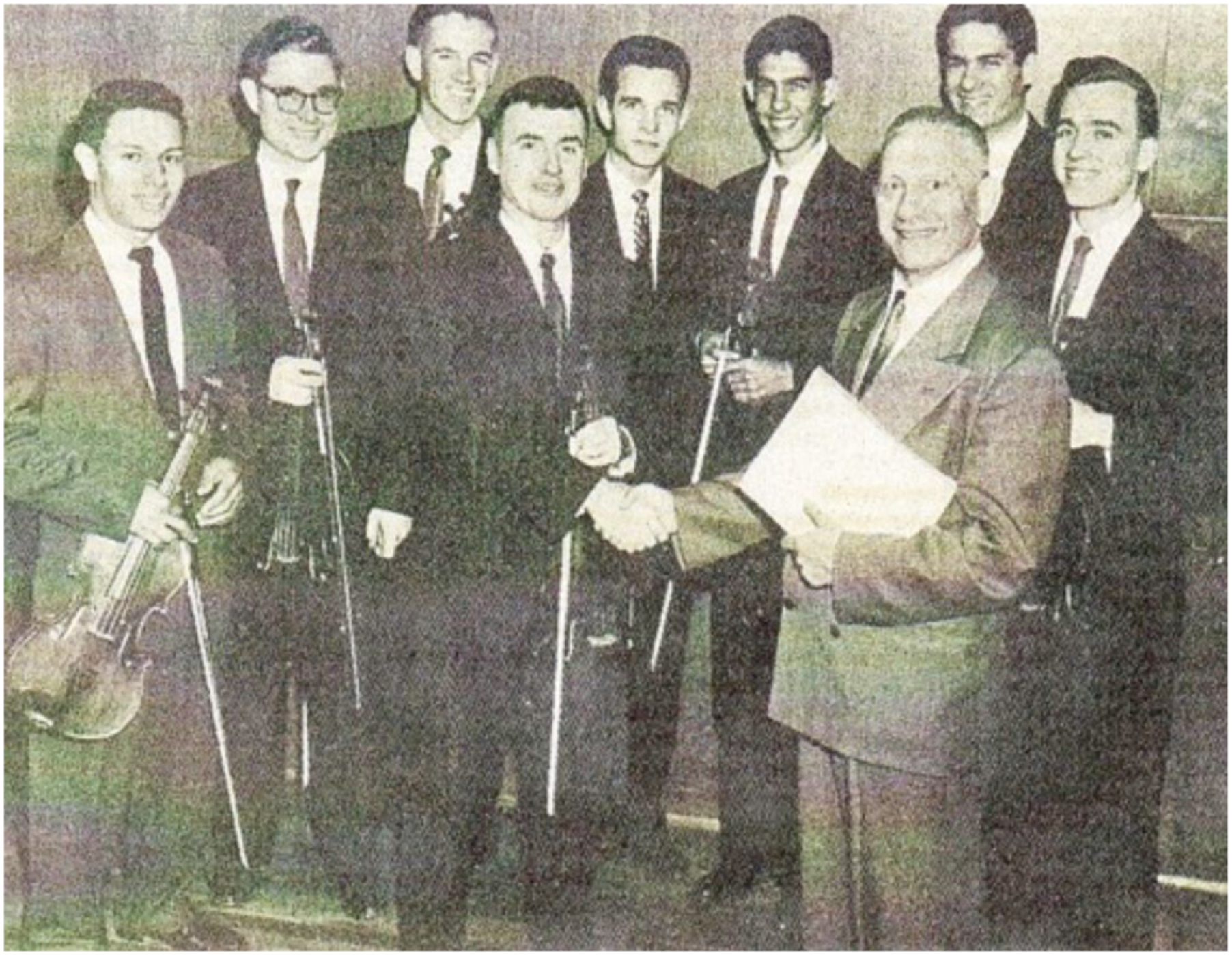
He was also given the opportunity to grow as a performer while studying with his mentor Albert Gillis, the viola professor and director of the Junior String Project. Gillis was a consummate violist and chamber musician.
35
From his group of students he had started “from scratch” as children, he formed a unique ensemble of viola players and took them on a tour of the Northeastern United States. The governor of Texas, Price Daniel, came to their send-off performance.
36
They played at Montclair University, Yale University, homes of wealthy sponsors, and Carnegie Hall.
37
(see Figure 4) Zeke had never travelled in this way, and he realized that there were many possibilities in the world outside of Texas. Perhaps this is why he felt free to move to Georgia when a former JSP teacher, Frank Crockett, invited him to teach strings at Columbus High School in Muscogee County.
38
Zeke graduated from the University of Texas in 1961 with a degree in viola pedagogy and left for Georgia. Zeke conducting the junior string project advanced ensemble 1961. The UT viola ensemble led by Albert Gillis 1958.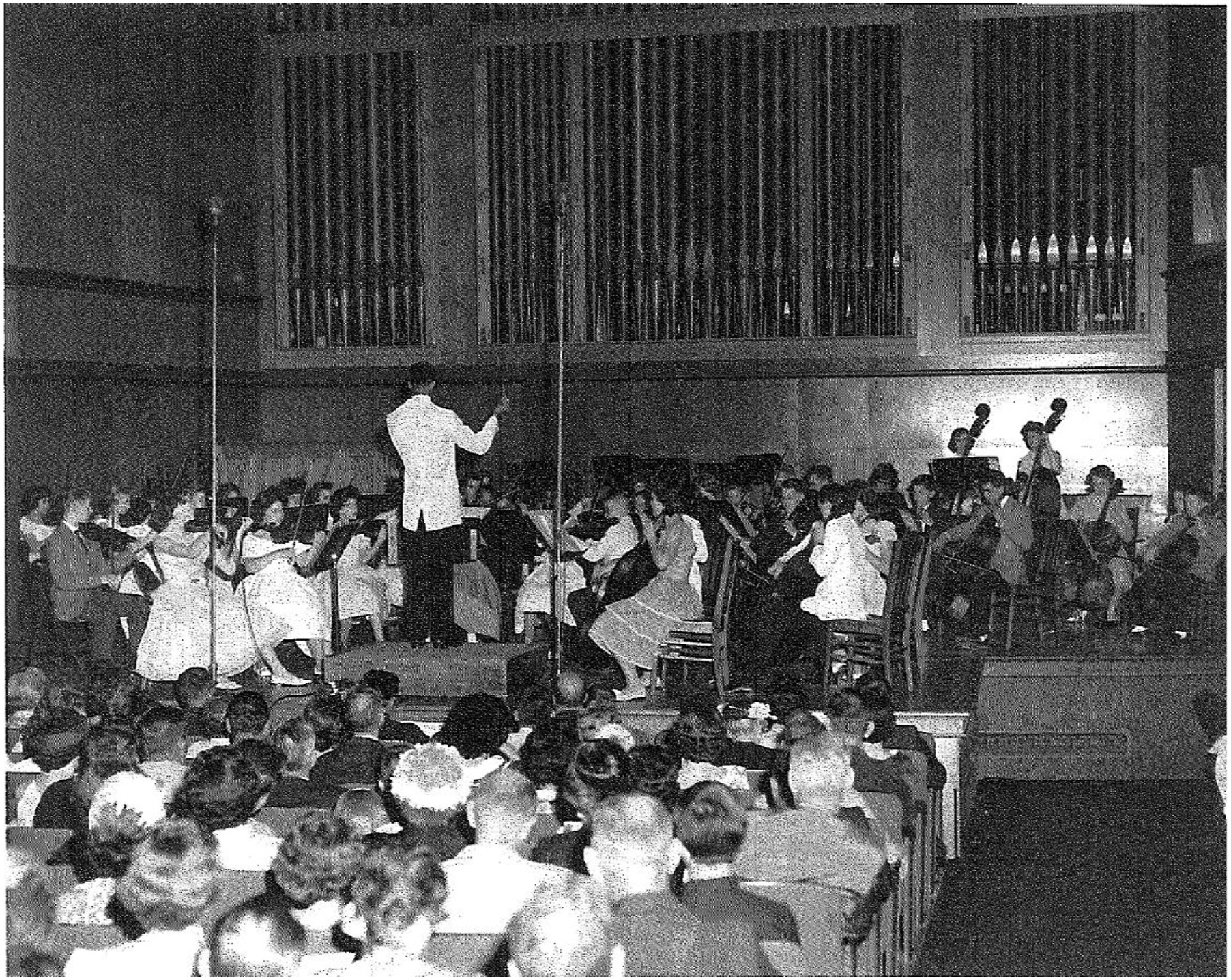
Early Career
In Georgia, Zeke taught strings and private lessons, and founded the Muscogee County Youth Symphony. 39 Aly remained in Austin to finish her education degree at UT. It was important to her parents that her degree certificate reflect the family name of Mercado. 40 Zeke visited occasionally, 41 and Aly graduated the following year in 1962. They married in August of 1962. 42 Their son Carlos was born in 1963. Zeke and Aly’s philosophy of treating students as family began during these early years of his career. Zeke and Aly recall parties with the youth orchestra members who brought gifts for their son. They even recall Carlos pulling up to stand for the first time with the assistance of a cello that a student was playing at the time.
In 1964, Zeke was accepted into a graduate program for music at the University of Southern California in Los Angeles, California and moved his family across the country. Before completing his graduate studies however, his mentor Albert Gillis presented Zeke with a teaching opportunity in Sunnyvale, California. The Sunnyvale school district also offered Aly a chance to implement the district’s first English as a Second Language (ESL) program. She had no guidelines for the program and by then, two very young children, but was successful and realized that she had found her career calling.
During this time, Zeke played with a variety of local symphony orchestras, a folk duo, and a Big Band in addition to teaching band and orchestra. Their commute from San Jose where they lived, proved to be too much, so they changed districts. Zeke transferred to Union School District to teach band and orchestra and Aly to San Jose Unified to organize their first Bilingual Education Program. Whereas ESL programs focus on the teaching of English to non-English speaking students of varying language backgrounds, bilingual programs focus on developing two languages, in this case English and Spanish. 43 This shift in philosophy supported an awakening of sorts in Aly. Much to the concern of Zeke, she became active in the Chicano movement. Zeke would tell her, “You don’t go to work, you go to war.” 44
In 1973, in addition to teaching, playing in various ensembles, performing viola in church, and conducting for the El Camino Youth Symphony,
45
a church member asked if he might want to learn mariachi violin at the local community college. His question was, “what is mariachi?”
46
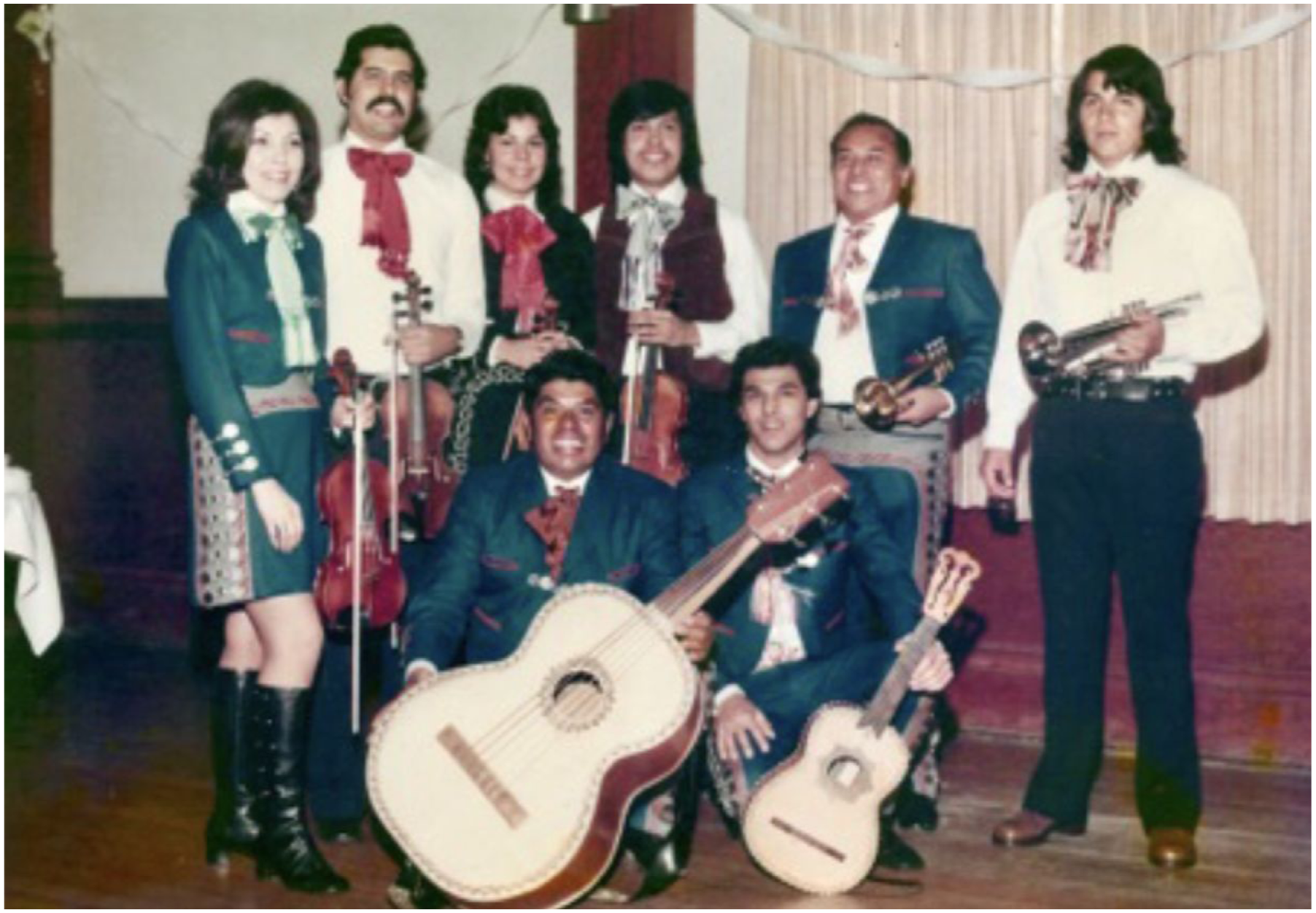
His first lesson was that mariachis learned music in the aural tradition by rote and did not use sheet music. He learned to ask “en que tono?” or “in what key” before each song. The first group started with simple repertoire and basic black and white uniforms but soon upgraded to slightly more traditional trajes
47
with jackets and ties and gogo boots for the females (see Figures 5 and 6). Zeke’s first mariachi ensemble 1973. California mariachi ensemble with trajes.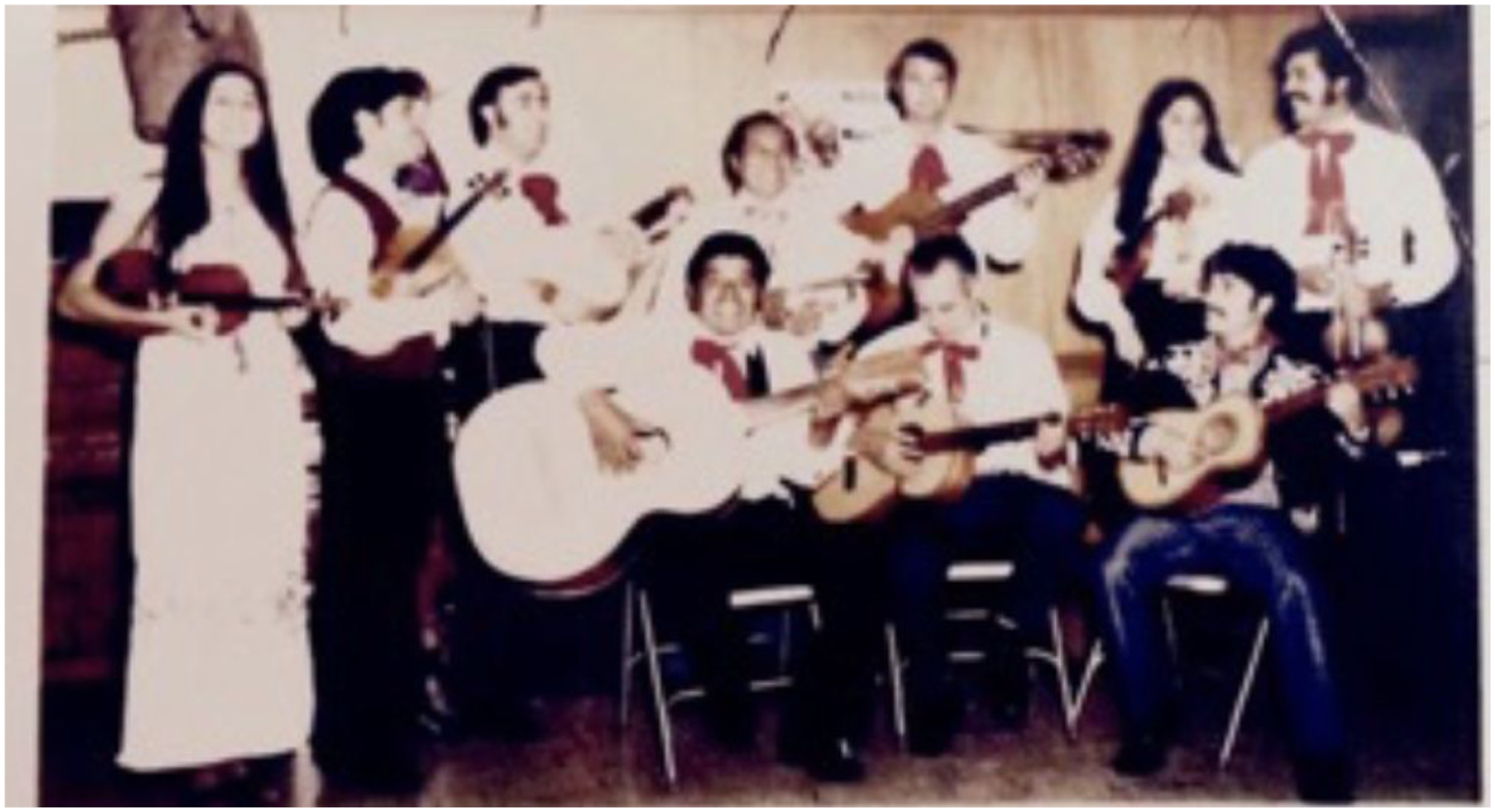
The Move Back to Texas
Across the United States in 1971, plans were underway to start a mariachi program in the Dallas Independent School District. 48 Dr. Ruben Gallegos, Assistant Superintendent in charge of program development, and Marjorie Murray Keller, instrumental music supervisor, collaborated to develop an authentic program for the Mexican American students to encourage a sense of pride in their heritage. 49 Keller, a string player and from San Antonio, brought orchestra instruction to Dallas schools in 1944 and developed a nationally-recognized robust music program. 50 Early mariachi instruction in Dallas focused on developing the violin and trumpet players.
In 1973, as Keller was beginning the retirement process, Karrell Johnson was hired as the fine arts director in Dallas, and charged with obtaining authentic mariachi instruments such as the vihuela and guitarron. Karrell was in the inaugural Junior String Project class with Zeke, and they attended the University of Texas together, so he called upon Zeke for assistance and to offer him a position in Dallas ISD. Zeke had just found out that the school district was eliminating the music programs for that year, so Zeke and Aly decided to accept positions in Dallas and move back to Texas. 51 For his first assignment, Zeke and Aly left their sons with their parents in Austin and drove to Mexico to obtain the instruments for the program. Their VW bug was too small for the venture so they traded it for a Volvo station wagon that could hold more cargo and had air conditioning.
They first went to Monterey to pick up the director of the Dallas mariachi program so that he could help with the instrument selection, and they all drove together to Paracho where the best instruments could be found. They had traveler’s checks issued by the district and had to go to the bank to exchange them for cash. It was so much money that they had wished that they had a suitcase to carry it all. 52 Their car was so filled with instruments once they were done that they had to take the mariachi director to Guadalajara so that he could take a plane back to Monterey.
On their drive back, Zeke and Aly stopped one night in a hotel for safety and had to take all the instruments inside with them. All was going smoothly until they reached Laredo the next evening. Border patrol impounded their car with all its contents, including their suitcases, to tag each instrument before they could cross. They spent a sleepless night in a hotel hoping they would be allowed to cross the border with their expensive inventory. They were relieved to be able to cross the next morning with all the instruments safely intact.
Zeke worked briefly for the Dallas mariachi program as a violin instructor and coordinator, 53 but while in Dallas, he primarily taught orchestra. Aly held the position of Supervisor for Bilingual Teachers, and it was then that she met her mentor, Nolan Estes, the superintendent of Dallas ISD. In 1978, Zeke established a Youth Symphony at Bishop College, a historically Black college in Dallas. This project was very important to Zeke and both his sons participated in the ensemble. However, the Dallas years proved to be difficult for the Castro family. It was revealed that their sons had health issues which caused them to seek a move back to their hometown of Austin where they could receive assistance and support from their family.
Coincidentally, pride in Mexican heritage was growing in Austin. School board member and later mayor, Gus Garcia, was pushing Austin Independent School District to start a mariachi program. San Antonio had held its first Mariachi Festival in 1979 and it created quite a bit of excitement for mariachi instruction. They needed a qualified teacher but did not know who to ask. In spring of 1979, Zeke called his friend and mentor, Phyllis Young, the director of the UT String Project who succeeded Albert Gillis and asked if she knew of any open positions. She then contacted John Pearson, the fine arts administrator and Pearson realized that Zeke could be his solution to the mariachi problem. 54
Teaching Mariachi
In fall of 1979, Zeke was hired to teach orchestra and start a mariachi program at Fulmore junior high with the hopes of it moving to the high school. 55 In 1980, the Travis High School mariachi program began. Zeke began this job with only rudimentary knowledge of mariachi, and little experience performing it. When he was asked to join a local group, Mariachi Estrella, he took the opportunity to learn more. In addition to developing a new program and “gigging” with the mariachi, Zeke was playing viola again with the Austin Symphony. He began to feel overwhelmed and decided that playing for the symphony was too demanding and did not inform his teaching within his new job, so he resigned at the end of that season. Although this was a good decision that allowed him more time with his family and to focus on his goals, some of his family members were disappointed that he left the symphony to devote so much time to “street music.” 56 In fact, his sister-in-law Rose who had been in the JSP with Zeke, never attended one of Zeke’s performances related to mariachi. She highly disapproved of the genre. 57 Aly said that she would ask, “how could you go from playing Carnegie Hall at age 17 to playing this Mexican low-life music?” 58 Although some family members were less supportive of his work in mariachi, the community more than made up for it.
After Zeke decided to focus on mariachi, he became the musical director and arranger of Mariachi Estrella. The group quickly gained notoriety and in 1980, they were invited by President and Mrs. Carter to perform at the White House for the “National Salute to Congress.” (see Figure 7) Meanwhile, Aly’s mentor, Dr. Estes, had transferred to UT as Director of Superintendent Training and she decided to pursue her doctorate in educational administration. Zeke with President and Mrs. Carter at the “Salute to Congress” event 1980.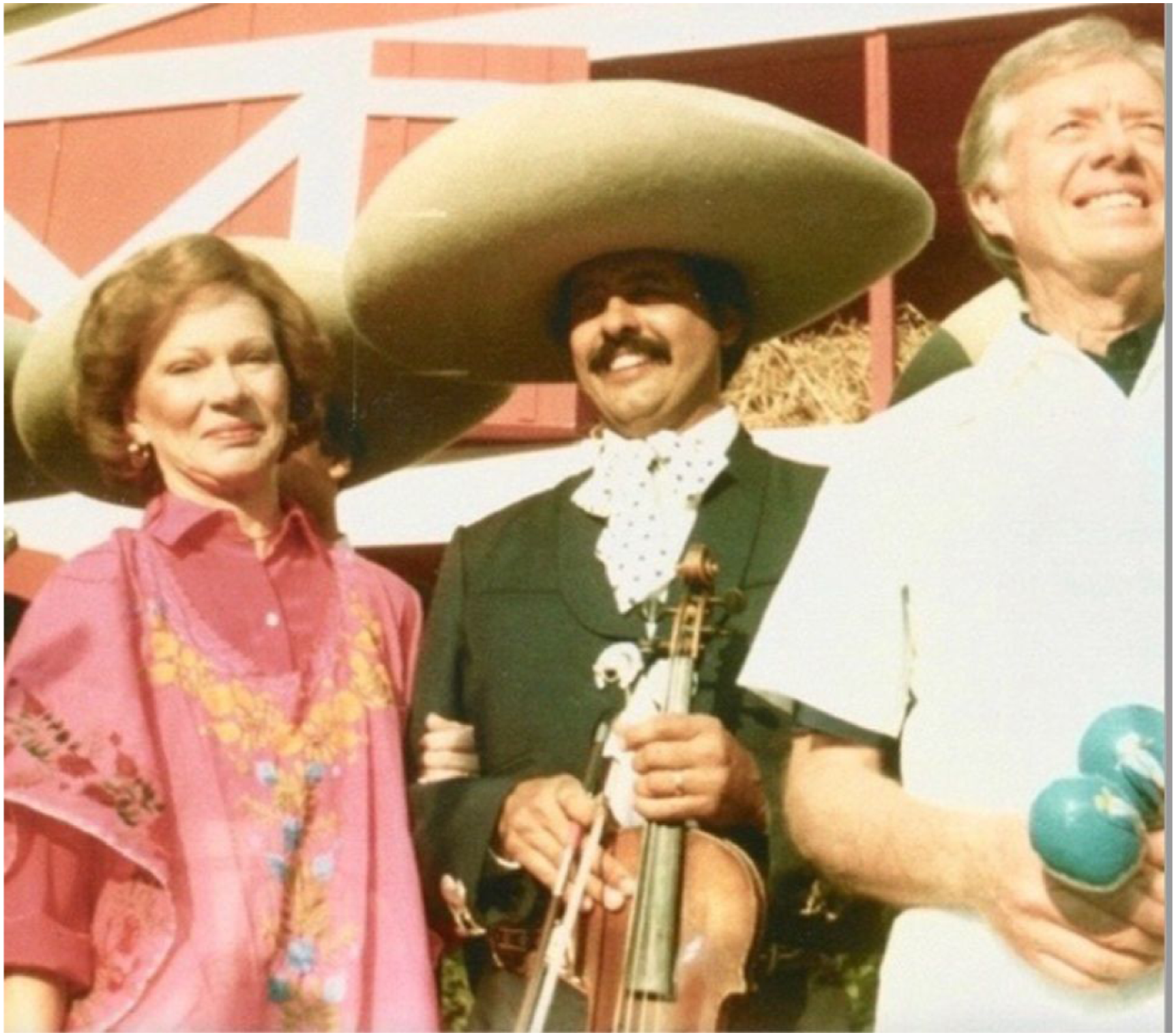
Both of their sons had taken Suzuki violin lessons in California and were active musicians in Dallas and Austin, but it was Chris who became interested in learning the guitarron with Zeke’s school group. Zeke realized he needed to know more about the instrument to teach it, so they again travelled to Mexico to obtain a guitarron that they affectionately refer to as “Old Betsy.”
59
(see Figure 8) Zeke and Chris in trajes.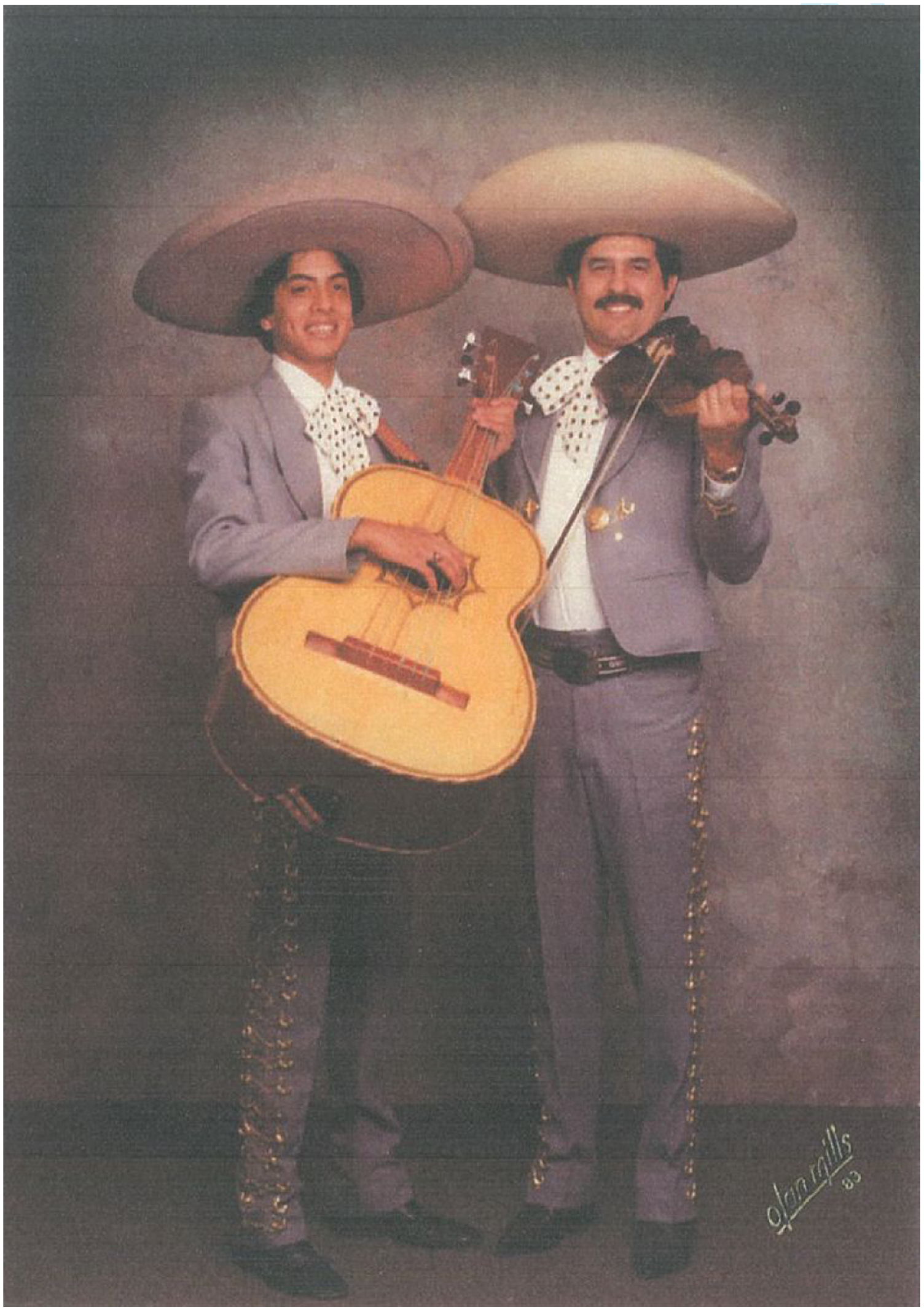
Zeke’s Teaching Philosophy Evidenced in His Accomplishments
In the second year of the program, the Travis High School Mariachi Rebeldes del Sur placed third at the annual mariachi festival in San Antonio.
60
(see Figure 9) The next year, the Travis mariachi was invited to Washington D.C. for the July Fourth Parade. They played on a float and several “mariachi mamas,” including Aly, sat on the float waving to the audience as they passed by.
61
In 1986, Zeke was selected as Teacher of the Year for the entire school district, a first among both music teachers and those of Mexican heritage.
62
The Castro family, students, and their families became a tight-knit group. This program was Zeke’s opportunity to mentor students and develop a new program much like he was mentored in String Project. He found many opportunities for the students to perform and travel to expand their world view. Much like his mentor Gillis, he brought in professional musicians to work with the students in masterclass settings. His ensembles were always diverse, there were always White, Black, and Asian students among those of Mexican heritage. (see Figure 10) This was important to him; he believed music should transcend the divisions in society. He was excited to share with students a pride in Mexican heritage and a fun hobby that could bring in extra-income throughout their lives. Another aspect that Zeke took pride in was making sure that his students were musically literate. He notated the arrangements for students and expected them to read the music before it was memorized. He felt this helped to legitimize the genre and placed it on the level of the band, orchestra, and choir programs in the schools.
63
Another way that he helped legitimize the genre was educating other music teachers about the mariachi curriculum and how it could be taught in schools. In 1988, Zeke was invited to present at the Texas Orchestra Directors Association (TODA) conference to be among the first mariachi clinics offered to Texas teachers.
64
Zeke was making a name for himself as a mariachi trailblazer in the Texas public schools. Travis high school mariachi ensemble wins third place 1981 Travis high school mariachi ensemble 1984.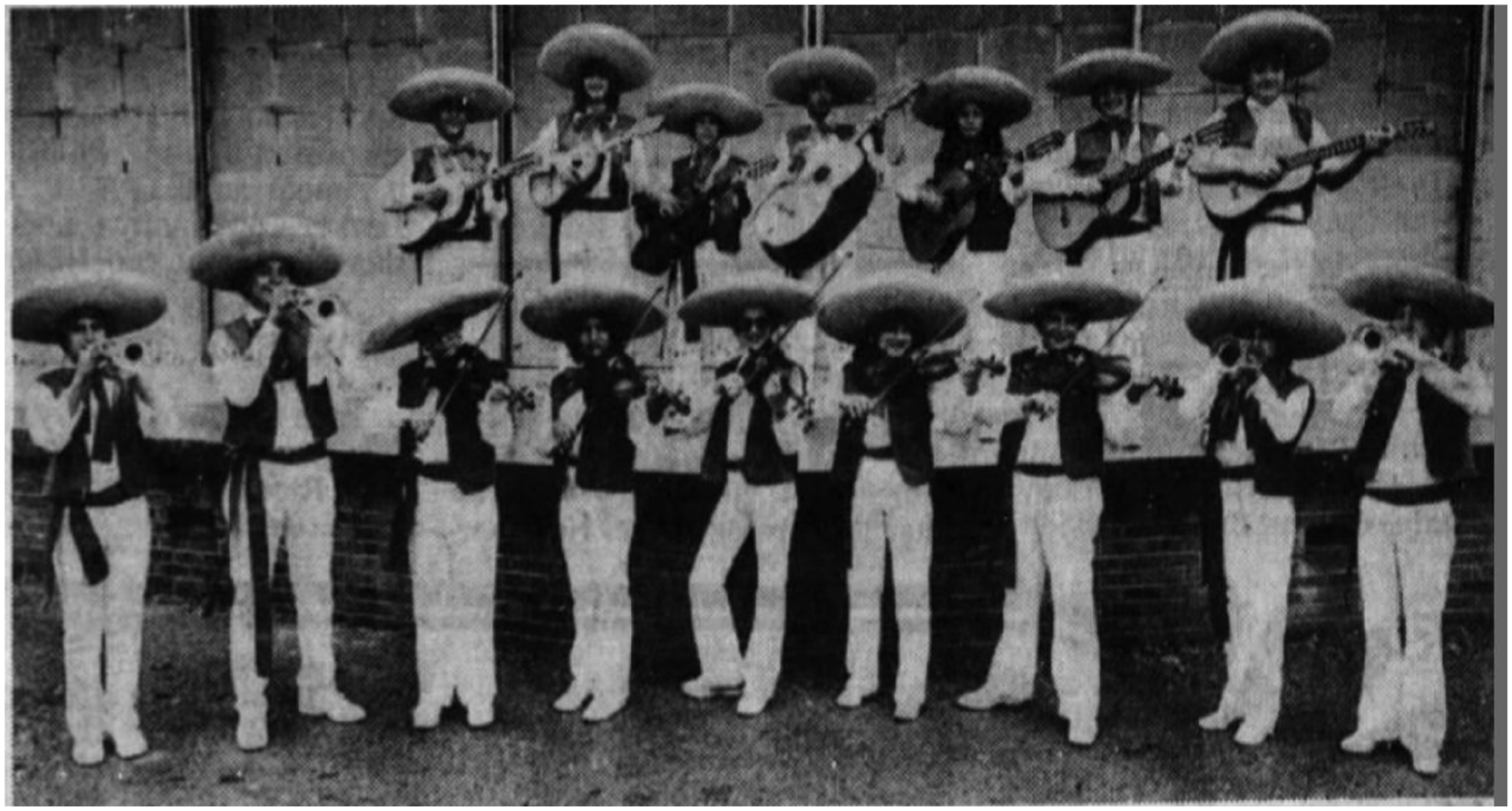
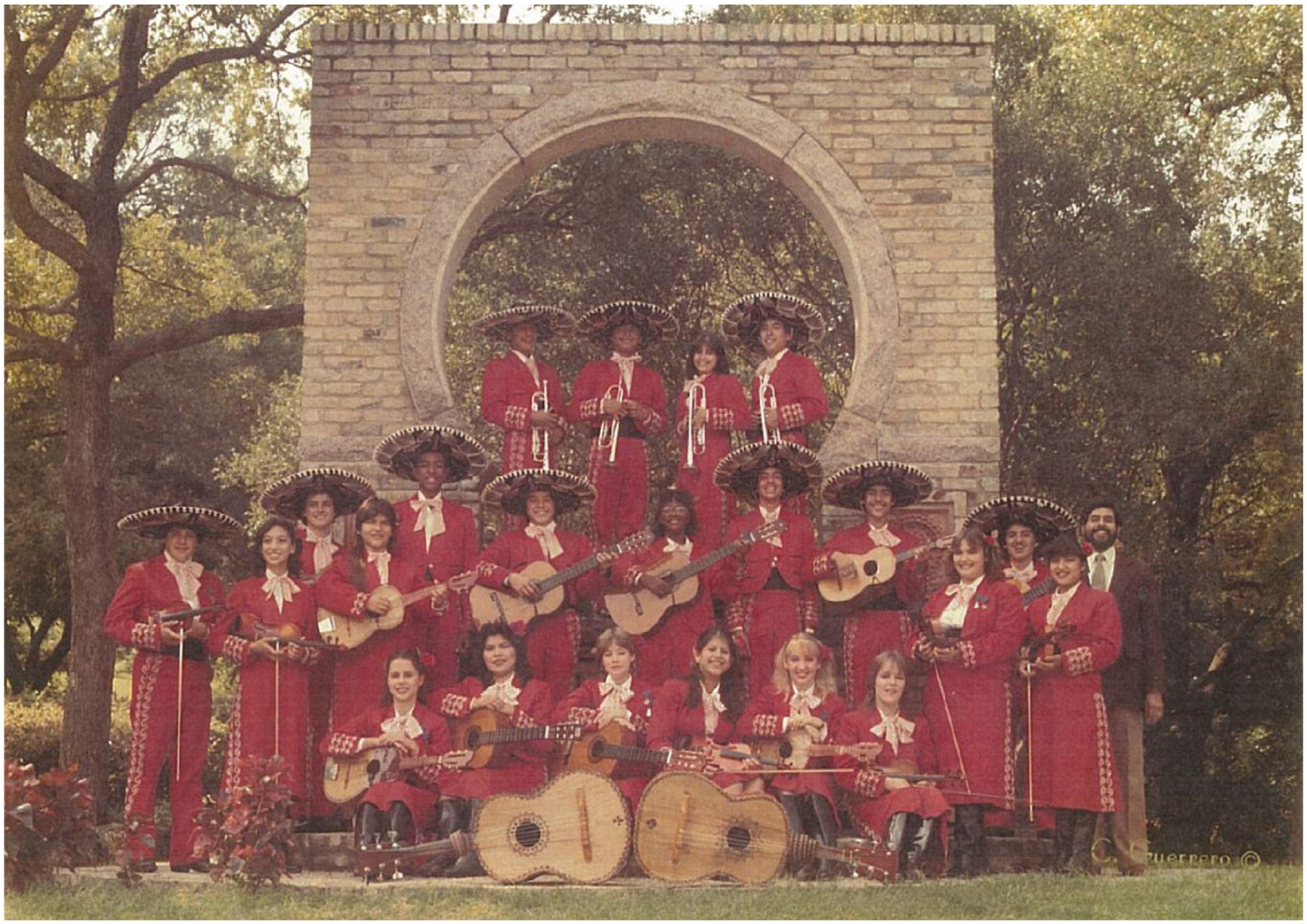
In 1989, Aly was completing her degree and accepted a superintendent internship in El Paso, Texas as one of the final requirements. The boys had graduated high school and this time, Zeke followed Aly to support her career. After the internship, Dr. Mercado-Castro held the position of principal in the El Paso School District. Zeke secured a job teaching orchestra and started a mariachi program at Del Valle High School in the Yselta Independent School District. 65 This program quickly took off, as the Travis program had, and remains strong to this day.
In 1994 they moved back to Austin and Zeke was able to return to teaching mariachi at Travis High School again. This era brought many more accolades and travel opportunities. The Travis mariachi attended national conferences, played for Prince Charles of England when he visited Austin in 1994 for Texas’ 150th birthday celebration, and performed for Governor Bush’s inauguration parades in 1995 and 1999. 66 In 1996, Zeke was featured in a national news story by Peter Jennings about how his students learned to carve out a career in mariachi from their experiences in his class. Friends and former students from Georgia, California, and El Paso called to congratulate him and thank him for his commitment and efforts. In 1998, Zeke received the Hispanic Leadership Award for Teacher of Music, Leadership, and Heritage from the Austin Hispanic Chamber of Commerce. 67
Retirement I and II
In 2001 Zeke decided to retire from Austin ISD and began working for the juvenile justice alternative education program (JJAE) run by Southwest Key. 68 Although his position was to teach math and science –a unique assignment for Zeke–he started a guitar program that was affectionately known as “The JJs.” The group performed for events which helped the students, and their families rekindle a sense of pride in their accomplishments. The Austin community had not forgotten his impact on mariachi music education in their city and in 2006 Zeke was given the Ruben Fuentes award “Celebrating Contributions to Mariachi Music Education.” 69 In 2008, to the delight of the community, Zeke expanded the guitar program into a mariachi program at the JJAE.
In 2011, Zeke was invited to be the mariachi instructor and lecturer at the University of Texas at Austin. He was thrilled to return to his roots as a musician, student, and teacher so he accepted this change in his post-retirement career. The UT mariachi program, although formed in 1977, had been inactive prior to Zeke’s appointment. The Mariachi Paredes de Tejastitlan thrived under Zeke’s leadership. (see Figure 11) Zeke started the first ever Longhorn Mariachi Camp in 2013 with nationally recognized mariachis teaching the camp and the UT mariachi group performing at numerous university events including the welcoming event for the International Yehudi Menuhin violin competition in 2014.
70
That same year, Zeke received the “Lifetime Achievement Award in Music” from the Emma Barrientos Mexican American Culture Center. In an article from 2015, Nancy Flores declared him “El Rey” of mariachi education and said, “music educator Zeke Castro has inspired generations of students and helped lift Austin’s mariachi music scene.”
71
In 2016 Zeke was invited to be a judge for the statewide University Interscholastic League (UIL) Mariachi Festival. The addition of mariachi to the UIL music events which legitimized the genre in the eyes of many music educators was a dream realized for Zeke.
72
In 2018, Zeke decided to retire in earnest,
73
but continues to play violin for family events. UT mariachi 2012.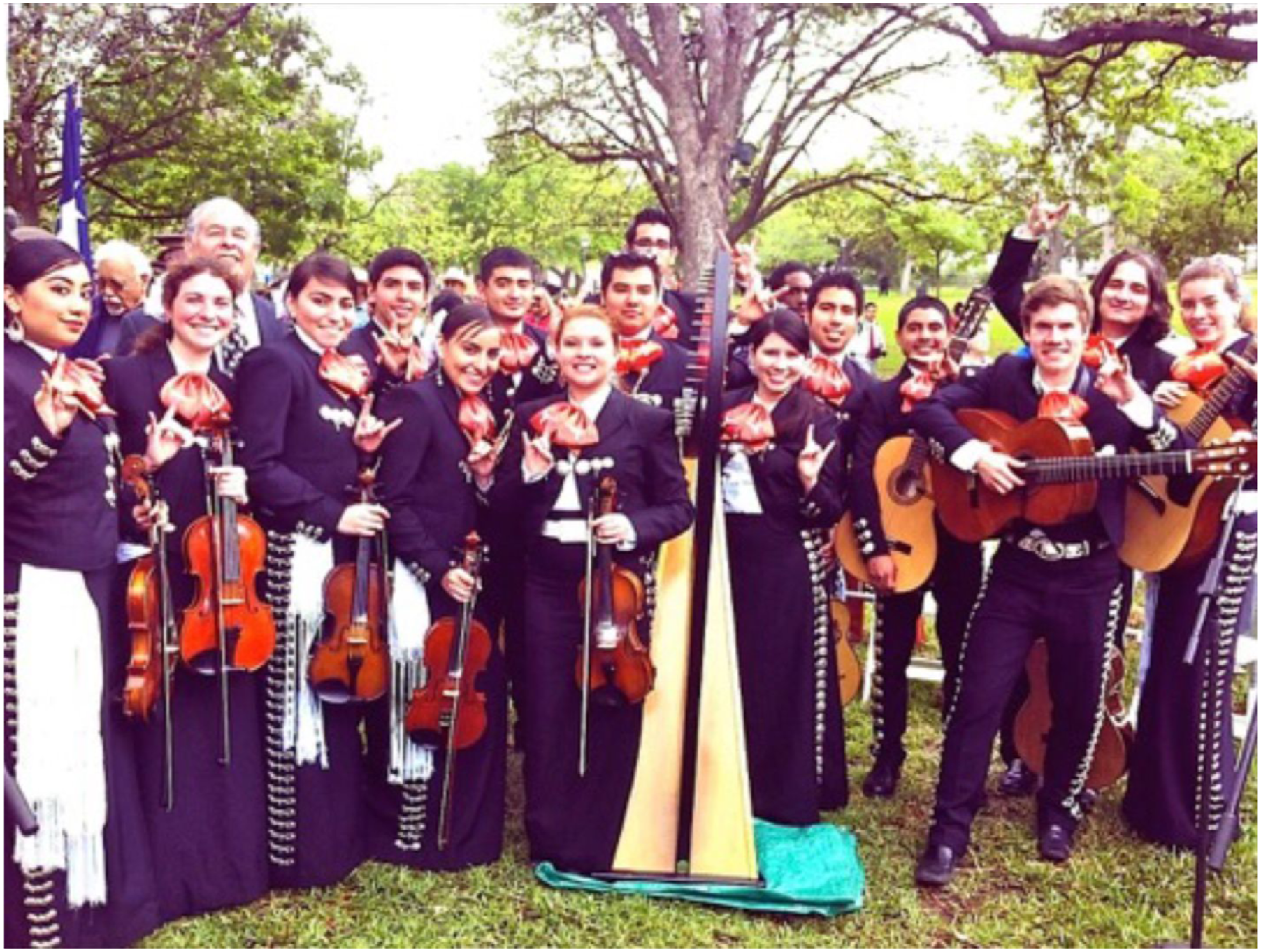
Zeke’s Legacy
Zeke’s legacy is rooted in his familial relationships with his students. Zeke and Aly viewed his legacy as the “music that he made with his family.” 74 Zeke believed that his duty as a teacher was to care for his students as a parent would. His guiding philosophy manifested in the group travel, inclusive ensembles, mariachi as a source of income for his students, and the pride he fostered in Mexican heritage. These elements seem to be the keys to his success as a mariachi music educator.
Zeke and Aly both formed close relationships with many of his former students throughout Zeke’s career. Contributing to a family dynamic regarding mariachi was the fact that their son Chris was an early member of the Travis Mariachi as was their son Carlos’ wife Terri. 75 Making music together strengthened their family bonds. Aly recalled a memory of someone from their California days and seemed to capture the essence of the relationships – parental. “Steve [came from] Bakersfield. He lives in Oakland, but we are still so close, and he looks to us as his parents. We have a lot of other kids besides our kids that call us their parents.” 76 In an interview published when Zeke received Teacher of the Year, students confirmed that it was mutual. “‘We’re like a family,’ said guitar player Chris Ford, a sophomore. He has that father image, to care for his students.” John Whitwall was also quoted, “He’s like a father figure.” 77 Zeke and Aly speak with pride about a many of his former students, such as Alex Ramirez, who started with Zeke at Fulmore. About Alex Aly said excitedly, “They do weddings and gigs, that’s what he does for a living.” Zeke chimed in, “They only [have to] play on Saturdays and Sundays at weddings!” 78 Aly also said that Alex would come in and help with the UT Mariachi trumpets as a gesture of gratitude to Zeke. Regarding another student Aly said, “Oh I just adored that John Whitwell, he was one of my boys.” Zeke said, “At the beginning, I couldn’t get him to stand up to play, he insisted on sitting down, this isn’t orchestra, this is mariachi! I had a hard time with him. Well Pepe [a member of Mariachi Vargas who spoke only Spanish] told him. I don’t know how they could understand each other but after that John never sat down in another chair.” Now, Aly says that they have been in touch with John recently and he was so thankful for the music and travel experiences. She said he cried hearing Zeke’s voice on the phone. 79
Just as Albert Gillis had expanded Zeke’s world view with his trip to the New York area, Zeke tried to do the same for his students. He took groups to various conferences in New Mexico and San Antonio. He took them to places such as San Francisco and Washington DC. He felt that travel and performing for people exposed his students to broader horizons and gave them a sense a pride in their accomplishments. Travel was an important part of education and this philosophy extended to their own children. Aly recalled, “We took them [their sons] on many camping trips when we were in California to Big Sur, we went to the giant redwoods and had our VW van go through the big tree that had the big hole. We took them to the extinct volcano Mount Lassen and then of course every summer to Disneyland and to the San Diego Zoo.” This travel, she felt, developed strong bonds and was good parenting. Good parenting and good teaching had similar elements according to Zeke and Aly. 80
Zeke’s mariachi ensembles had always been inclusive of students from a variety of cultural backgrounds and because of this, it is not unusual, even today in Austin, to see mariachi groups with Black, White, or Asian members. Zeke said, “I wanted students who were interested in learning how to play. I didn’t care about the color, I didn’t care if they couldn’t speak Spanish. I’ll show you how to pronounce those words, all you have to do is sing them when it comes time. And you know, I taught them how to play those instruments and they liked playing.” His UT Mariachi was no different, Aly expanded, “And again he had a multi-ethnic group in the UT Mariachi ensemble.” 81 They related a story about a UT student, Alan Chin, who was an “ace violinist” who played in the symphony and the mariachi. He became an engineer who continues to do mariachi gigs. 82
In May of 1994 the “School-to-Work Opportunities Act of 1994” passed in Congress. 83 It established a national framework for schools to connect what students were learning with how they would use it to make a living after graduation. Zeke’s mariachi program was a great example of this initiative. Aly explained, “[An] article was picked up by the Peter Jennings Nightly News program because of the focus on ‘school to work,’ which was emerging at the time.” 84 A news article from the time included this quote, “Castro also uses the music to impart a more practical lesson. Students learn that they can earn extra money in those charro 85 outfits. That, he explains, introduces them to the world of negotiation and leadership.” 86 During interviews, Zeke often spoke with pride about former students all over the country that gig for extra-income, teach, or otherwise make their living with mariachi. These former students used the skills he provided them to better their life not only emotionally but financially.
Pride in Mexican heritage was not a priority when Zeke and Aly were growing up, but it became a priority as they both evolved as teachers. As he learned more about mariachi, Zeke began to connect on an emotional level in a way that he could not in a symphonic setting. Zeke was quoted, “I’ve played for years in symphony orchestras, but they are entirely different from mariachi. Most symphonic conductors don’t want you to become emotionally involved in the music. With mariachi music you can become emotionally involved and be more intimate with the audience.” As a teacher he prioritized a sense of pride, particularly in learning about Mexican heritage. “They also learn the roots of heritage, and they learn pride because mariachis are proud musicians.” 87 The 1970s and 1980s were a time of awakening for many in the Texas Mexican American community and as a result, Zeke had a lot of support from the community whether it was Austin, El Paso, or the university-setting. This is evidenced by his numerous awards, support from Hispanic organizations and political figures, the parents who volunteered, and the press coverage he received.
In many ways, Zeke’s career paralleled the emergence of mariachi into U.S public education. When Zeke was asking “What is mariachi?” so too were many in the Southwest. In 1979, when he started his first program in Austin, he was learning many of the aspects of mariachi traditions along with the students. Just as Austin and the greater Texas community were embracing pride in Mexican heritage, Zeke was seeking a move back to his hometown. He was thrilled to be offered a chance to start a new program in a genre that he was just starting to fall in love with. He worked together with Austin Hispanic leadership to bring statewide and national visibility to this symbol of Mexican heritage. He wrote arrangements and conducted teacher workshops to help others, with similar symphonic backgrounds, to begin their own programs.
Conclusion
Rarely do careers unfold without influence from life’s circumstances, Zeke’s story is no exception. Zeke and Aly’s career paths intertwined and impacted each other. Their family life and the needs of their children influenced their career trajectories. Zeke considered his major legacy to be music that he made with his family. The lines between genetic family and students were often blurred. Zeke and his wife Aly welcomed his students into their family and shared their heritage, wisdom, and deep care. Zeke initially did not set out to establish and amplify public school mariachi programs in Texas, however this was the result.
Zeke Castro was a mariachi music educator whose influence was felt far beyond the reach of his individual classroom. The culmination of Zeke’s work contributed to the establishment of several public-school mariachi programs and mariachi becoming a sanctioned UIL event in Texas. His success as a mariachi music educator came because of the familial bonds he formed with his students. Zeke was a skilled and caring teacher who made a lasting impact on the field of music education.
Footnotes
Declaration of Conflicting Interests
The author(s) declared no potential conflicts of interest with respect to the research, authorship, and/or publication of this article.
Funding
The author(s) received no financial support for the research, authorship, and/or publication of this article.
