



Abstract
At annual, citywide festivals like Fiestas in the U.S. Southwest and Mardi Gras or Carnival in the South, LGBTQ events are often the hottest tickets in town. This recognition and celebration, in turn, is a key part of securing full citizenship--the sense of being an important, unattenuated member of society--for LGBTQ community members.
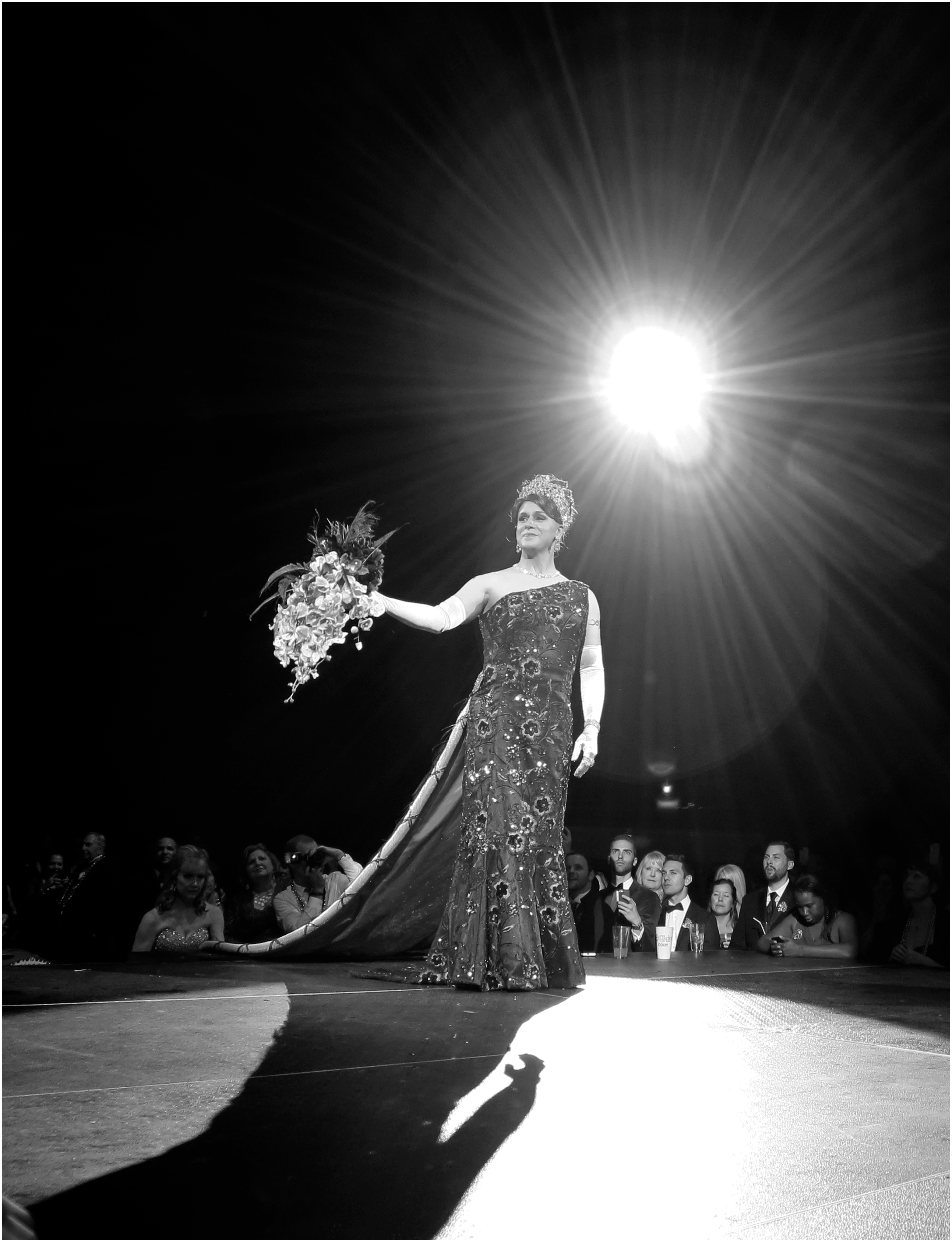
Entrance of the Queen of Apollo 2014, Baton Rouge, Louisiana.
Courtesy Amy L. Stone
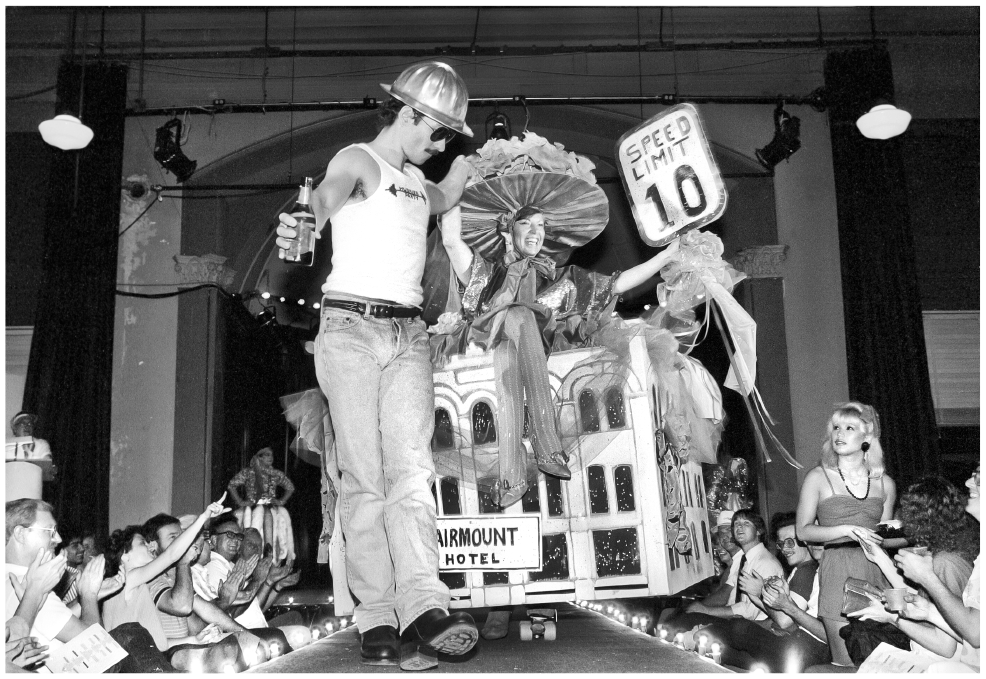
Scoring a last-minute, day-of ticket for the Fiesta San Antonio event Cornyation is almost unheard of, but somehow, I snagged one the very first year I attended. Cornyation is a campy, satirical sketch comedy show that critiques local and national politics, a show performed for almost 5,000 people over the course of three nights every April. The event has been organized by gay men since its start in 1951 as a hilarious satire of a local debutante ball, the Coronation of the Queen of the Order of the Alamo. Throughout my research about it, participants, organizers, and fans consistently described the show as one of the hardest tickets to get during Fiesta San Antonio, the citywide festival in San Antonio, Texas. Newspaper articles, too: “It’s always a hot ticket; most shows will sell out.”
In my four-city study of urban festivals, Cornyation was not the only festival event run by lesbian, gay, bisexual, transgender, and queer (LGBTQ) people that was a “hot ticket.” When I visited another city, Mobile, Alabama, where Mardi Gras is an entire season of the year, I discovered that the major LGBTQ Mardi Gras ball there, the Order of Osiris, was the first Carnival event to sell out every year. Members of the Order of Osiris bragged to me about how they were the most popular Carnival ball in town and about the annual begging of co-workers, friends, and family members seeking the coveted tickets.
I spent five years studying how LGBTQ people get involved in their city traditions, specifically citywide festivals like Fiestas in the U.S. Southwest and Mardi Gras or Carnival in the South. I studied festivals in San Antonio, Texas, Santa Fe, New Mexico, Baton Rouge, Louisiana, and Mobile, Alabama, all typical in the ways Fiestas and Carnival are celebrated in the Southwest and Gulf South. Two of the cities (Santa Fe and Mobile) have longstanding festival traditions that are carefully safeguarded by city cultural elites. I spent over 100 days observing festival events, conducted 101 interviews with LGBTQ people and other important festival organizers, and lived in each city for several weeks.
Festivals let us see how marginalized groups make a place for themselves in a city. I am interested in large public festivals like Fiesta San Antonio that are intended to include everyone, because these festivals are supposed to be a time when the city comes together as one to appreciate the diverse contributions of people within the city. But during festivals, whose culture gets included and valued, which events are allowed, and how different communities are represented, become socially significant and fraught questions.
Notably, who gets to participate in festivals or parades can be quite contested. For example, in 1995, the U.S. Supreme Court heard the case Hurley v. Irish American Gay, Lesbian, and Bisexual Group of Boston, in which a LGBTQ organization sued for the right to march in Boston’s famous St. Patrick’s Day Parade. The Court ruled that the parade organizers had the right to exclude the group, and all Irish LGBTQ groups were excluded from the parade for two decades, until an LGBTQ veteran’s group was allowed to march in 2015. In other words, a full decade after same-sex marriage became legal in Massachusetts, gay and lesbian groups were not allowed to march in the country’s most recognized St. Patrick’s Day parade. Legal rights do not guarantee full inclusion in events like festivals—and to truly be a full citizen one cannot be excluded from these kinds of events.
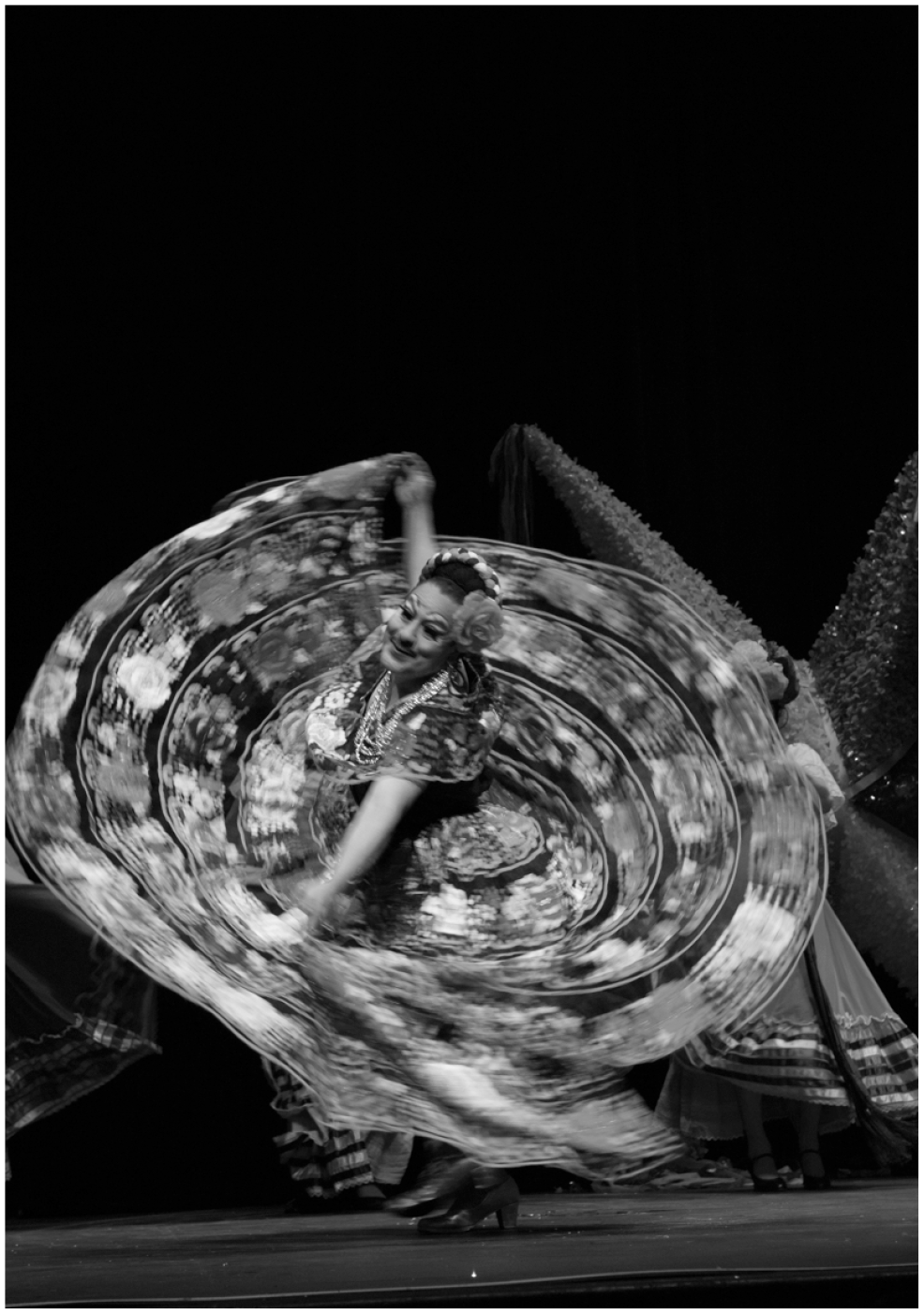
Pointless Sisters performance, Cornyation 2014, San Antonio, Texas.
Courtesy Lauryn Ferris
Filling the Recognition Gap
Sociologist Michele Lamont asserts that one issue faced by marginalized groups in society is a recognition gap, in which the positive social worth of a group goes unacknowledged and unrecognized by others. Indeed, many scholars have argued that part of marginalized groups becoming accepted in society is whether these groups are valued for their contributions to society and simultaneously recognized for their difference. Remedying the recognition gap is an important part of securing full citizenship—of being considered an important, unattenuated member of society.
In my study, LGBTQ participants in festivals often told me that the experience brought both a sense of being valued for their cultural contributions to their cities and respect for the glitter and fabulousness of LGBTQ culture. The biggest, boldest LGBTQ events associated with these citywide festivals partially remedy the recognition gap by encouraging the celebration of LGBTQ culture. In three of the four cities I studied, these events—the Krewe of Apollo ball in Baton Rouge, the Order of Osiris ball in Mobile, and Cornyation in San Antonio—were attended by thousands of people every year. At these proudly queer events, organizers estimate that approximately one-half to two-thirds of attendees are heterosexual, meaning, the events’ popularity is not niche but widespread. Between 2007 and 2017, time and again, I would read newspaper coverage consistently applying descriptive phrases that matched what I heard in interviews: “the one [event] you never want to miss,” “the hottest ball ticket in town,” and “one of the most coveted [tickets] of Carnival season.” That both LGBTQ and heterosexual folks clamored for a way into these events was a source of pride for event organizers, where the popularity affirmed a recognition for LGBTQ people’s cultural contributions to not only the festivals, but to their cities.
For example, in the 1990s the Krewe of Apollo Ball was a near-exclusive LGBTQ event with predominately gay male attendees. A krewe is a private membership organization that puts on Mardi Gras parades and/or private balls. Some members did invite parents, co-workers, or neighbors, but for the most part these events were LGBTQ events. Larry, one of Apollo’s founding members, remembered running into members of “straight krewes” who wanted to know, “How can I ever get to see an Apollo Ball? I heard about y’all’s productions and your costumes.” He told me, “we gradually invited those people along, and they were just overtaken. So that’s what’s opened all the doors up so much for so many people who want to be a part of it, you know?”
Many krewe members understood hetero attendance as a sign of support and community acceptance and felt proud theirs was a desirable event. When Josh, a 20-something gay bartender, attended his first Krewe of Apollo Ball, he was surprised at all the heterosexual attendees: “Like, I didn’t know there was this much support out there for us, and it’s great. Because we’re a southern state, and sometimes people are just not very open and accepting... so to go there and see people pay a hundred dollars to hang out with a bunch of gay guys is just insane to me.” Terrill, a White gay man who had been a member of Apollo for several decades, similarly described the influx of heterosexual attendees as a “symbol of acceptance” for both the krewe and the broader gay community. During our interview outside a coffee shop in Baton Rouge, a young Black member of Apollo marveled, “It’s weird, it’s crazy, it’s the social event of the season. Apollo is the big event that everyone wants to go to.... I think it’s something that brings not only together the gay community but the city as a whole.”
My study is full of examples of the inclusivity and popularity of the event: “Straight folks love to come to our balls,” Louise, a middle-aged White lesbian member of Osiris, noted over drinks. “I would say out of the 2,000 people we had there, 1,100 of them are straight. and because of that, when they see us out in the city, they are like, ‘Hey, I was at your ball!’ instead of, ‘Oh my god there’s the gay people.’“ Between gays and straights, Louise added, the ball had “helped the barriers go down,” and brought “a lot of respect for what we do.”Another White lesbian krewe member tells me that friends from her private Catholic high school often arrange their Carnival schedule around the Osiris ball, texting eagerly to try to learn the event’s date as soon as possible.
At all three of these events, there were some scattered concerns that their popularity with heterosexuals would make the events “less gay.” Performers in Cornyation who had been part of the show for several decades expressed fondness for the show in the 1980s, when it was underground and less popular. And the organizers of a few smaller festival events run by LGBTQ people carefully guarded against too much heterosexual popularity. However, even those organizers were pleased at how popular and valued the largest events had become for city residents of all stripes.
Valuing Gay Culture
During festivals, LGBTQ groups are publicly and widely recognized as contributing to their communities through their skillful, fabulous productions—lauded for putting on the most professional performances, the most amusing shows, the most coveted tickets. Often, marginalized groups realize they are recognized only for their respectable contributions, for the parts of their culture that are palatable to people outside the LGBTQ community. The festival events I studied, however, featured diverse aspects of LGBTQ culture.
Osiris krewe members, for instance, stressed that theirs was still a “gay ball” that heterosexual guests were permitted to attend. None of the krewe reported any pressure to clean up their acts or perform in a particular way to appease a heterosexual audience. Mostly, krewe members described the thrill of costuming and performing outrageous personae in front of huge crowds.
Jay, a young White gay man in Osiris, was adamant that heterosexual guests attended but did not shape the content of the event. “I was awed and amazed by the decadence and just the outright ease of being you with no judgment, no whatever,” he said. “Actual heterosexual people of our community and important political people are there and they’re not judging. You know what I mean? And now to see they fight for our tickets.” Jay described an ease with being himself, unconcerned about scrutiny within the krewe and at the annual ball. Having people fight over the tickets for the event made Jay and other group members feel wanted by their broader community.
Krewe of Apollo member during the 2015 ball, Baton Rouge, Louisiana.
Courtesy Amy L. Stone
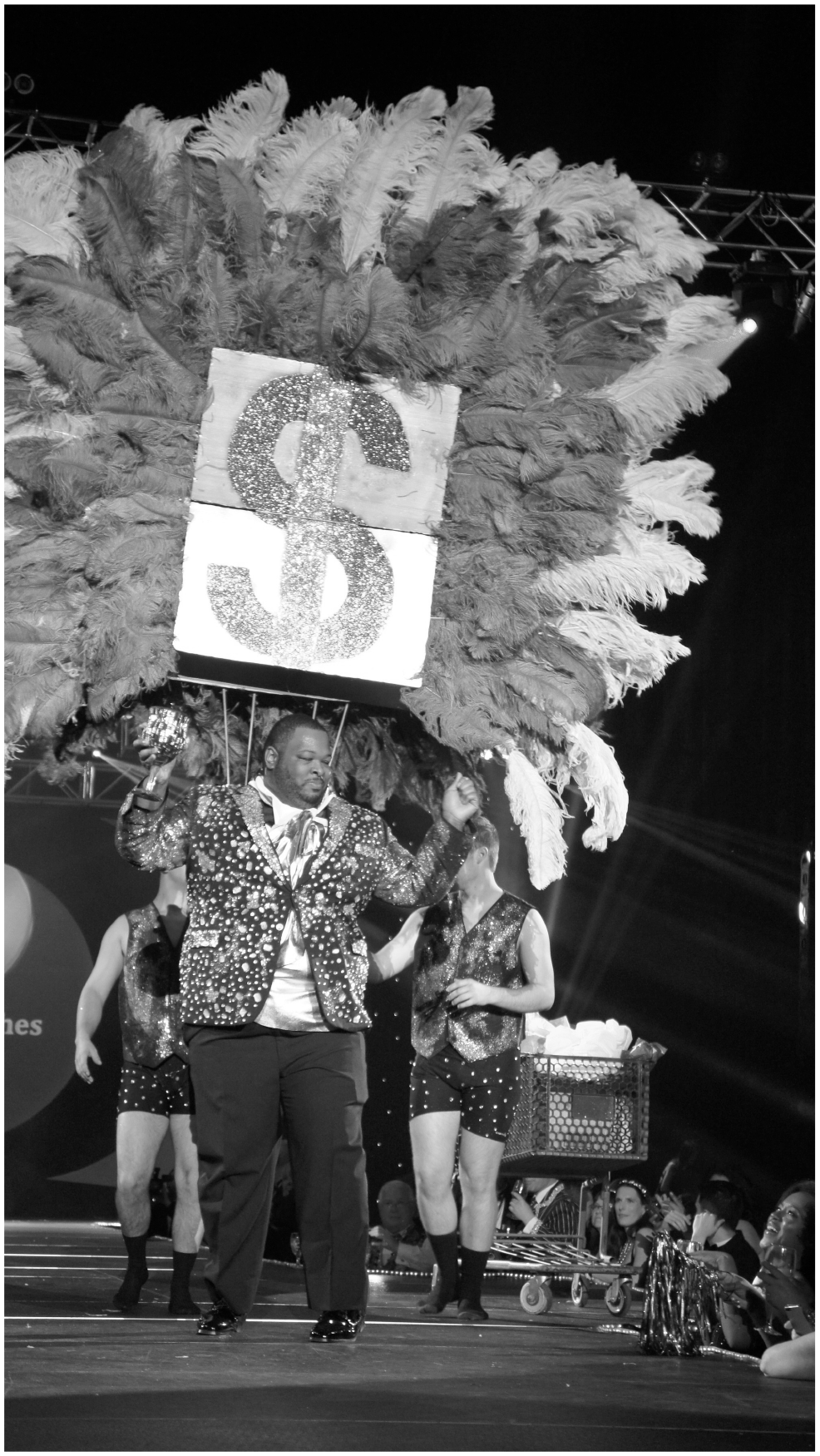
All three shows made copious use of bawdy humor, campy theatrics, and drag queens and kings. In Cornyation, performers made Lady Liberty a drag queen, mocked the National Rifle Association (NRA), and included all manner of cross-dressing. The royalty of the Krewe of Apollo ball included both a Queen and King, selected from the all-male group members; as always, the Queen was a man in elaborate drag, with a glittering Carnival crown and long decorated train, revealed dramatically at the end of the evening. Nowhere did I see any hesitation to proudly display LGBTQ culture to ball attendees, an unedited openness that is an important part of filling the recognition gap.
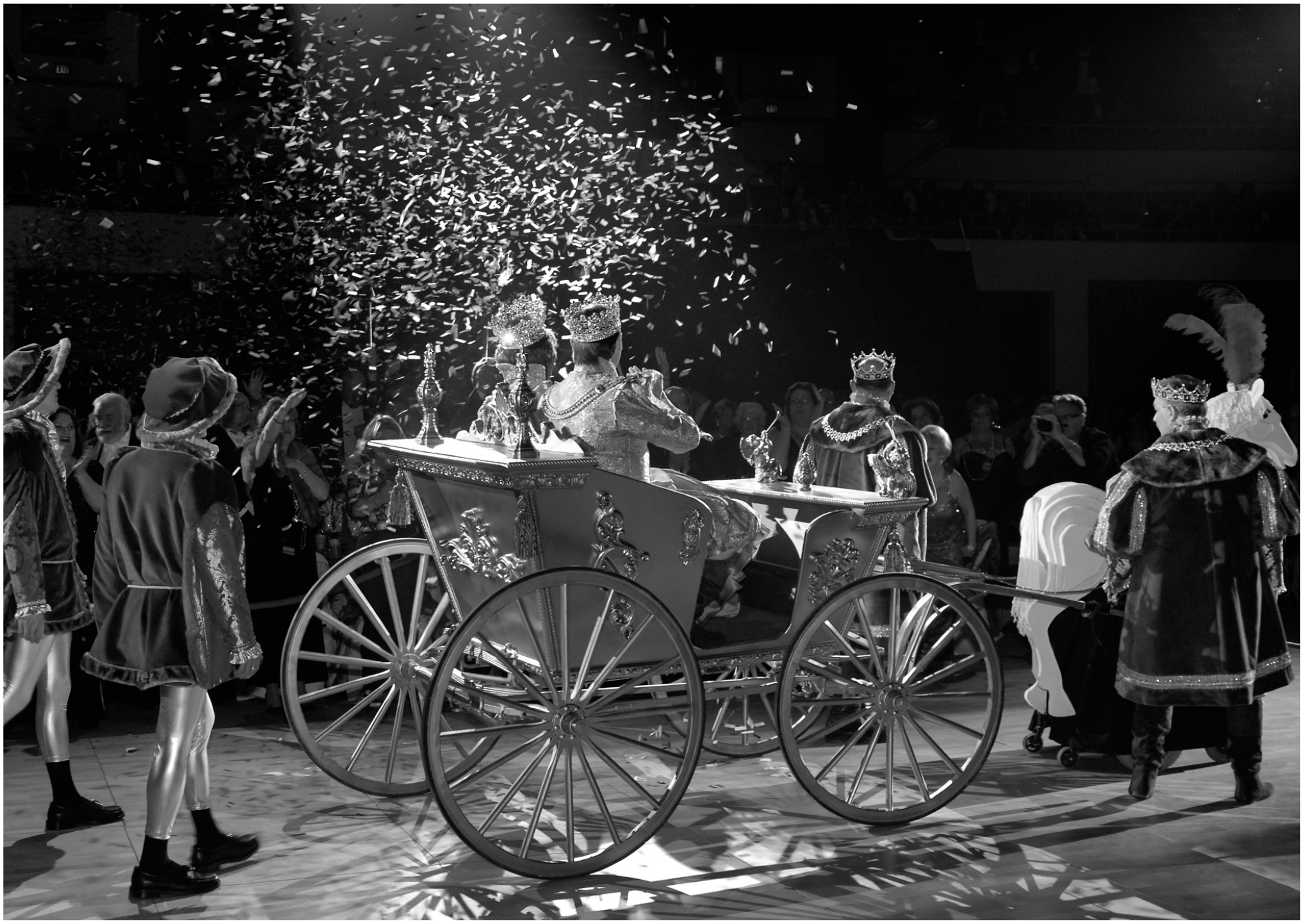
Entrance of the Order of Osiris Royalty, 2011, Mobile, Alabama.
Courtesy Rob Hillman
Limitations to Valuing Gay Culture
It’s key to note that, when LGBTQ culture is highlighted and appreciated by mainstream culture, it is disproportionately gay culture, with gay men being seen as fabulous artists. In fact, at these festival events, I saw more appreciation for camp, drag, and other gay aesthetics—along with an ethos of fabulousness—than any other identifiable part of the LGBTQ community. Even the LGBTQ community itself privileges White men at the expense of women, racial minorities, bisexuals, and gender-transgressive individuals. This can be alienating, especially when media coverage of these events omit public recognition for the women involved.
Despite these omissions, each event highlighted the diverse and inclusive nature of the LGBTQ community, including a commitment to featuring Latinx culture in Cornyation and resisting racial segregation in Mardi Gras events. Members of LGBTQ krewes in Baton Rouge and Mobile positioned their events in opposition to racially segregated Carnival events run by local elites. LGBTQ krewe members, such as an elite White man who was effusive about the Osiris ball, appreciated how “everybody comes out of the woodwork... it’s the only time you see everybody all together... it’s festive... It is Mardi Gras.” Max, a White straight member of Osiris, regularly sells two tables of Osiris tickets to the men in his other, high-status White men’s krewe in Mobile. He told me that one guy, attending for the first time, was profusely thankful for the tickets and told Max, “This is the way Mardi Gras should have been, because it is just so much fun. There’s no stress, no problems and everybody, no matter who you are, has fun.”
A Kind of Recognition
Having an LGBTQ festival event be so well regarded is not a revolutionary smashing of the gates of homophobia, a cataclysmic re-ordering of the social order, or a radical transformation of the social system. Being the hottest ticket does not remedy LGBTQ homelessness, poverty, or racial injustice. And yet, being celebrated at all is a profound experience of being wanted and desired for one’s unique contributions to city and community.
Cornyation performance in the 1980s, San Antonio, Texas.
Courtesy Al Rendon
Every single LGBTQ member of these major events that I spoke to described being proud and mildly astonished that they were the “hottest ticket in town.” To be celebrated or included is exponentially better than just being tolerated or allowed. I wasn’t surprised when interviewees cried when they talked about their parents attending the ball, tears that signaled joy and surprise at their parents’ support. There is a systematic way that morality politics interferes with the recognition of LGBTQ citizenship, in which religion, scientific, and cultural traditional create a barrier against this citizenship. These morality politics create rifts between parents and LGBTQ children and often deep feelings of shame for LGBTQ people.
Such moments reminded me of sociologist Deborah Gould’s work on organizing around AIDS, including her book Moving Politics: Emotion and ACT UP’s Fight Against AIDS, wherein she argued that the emotion work of organizing is a critical part of how movements are organized and sustain themselves. Pride in particular is a powerful emotion for bringing people together. Hence, the pride and tearful joy, the sense of being not only recognized but celebrated, that I witnessed may help sustain these festival organizations, which need energy and enthusiasm to organize spectacular events, every single year.
Of course, this desirability relies on constant labor. The recognition during festivals comes from the production of an entertaining event. That is, the recognition is conditional while the pressure is constant: You can’t get the positive recognition without putting on consistently heightened shows. Ernest, a White, 30-something member of Apollo, was adamant that “you have to live up to your reputation, year after year after year.” This reputation is constantly performed and never fully completed
Rights, however resentfully granted, have more lasting power than being wanted for an entertaining event. During my fieldwork for this project, same-sex marriage became legal throughout the country via Supreme Court ruling. Many of my participants were delighted to have the right to marry, yet they understood that exercising that right would remain a difficult hurdle. State and city authorities begrudgingly and inconsistently performed their duties regarding this newly enshrined rite. In Mobile, some city authorities who resisted same-sex marriage stopped issuing marriage licenses to any couples rather than give them to same-sex couples. Festival participants knew what it was to put on a coveted event, to have their performances and spectacles desired by city members and applauded by reporters, an experience that contrasted with being resentfully allowed rights.
The gay balls I studied were potent sites for building value around the LGBTQ community. They did not require respectability, just a good show. And so, festival events help fill the recognition gap for LGBTQ people in the South and Southwest. Because cultural membership is about being collectively defined as valued members of a community, balls can lead to a sense of citizenship and belonging, of meaning and significance. It can make one feel finally recognized for your contributions to your city.