



Abstract
Tristan Bridges and Kendall Ota on Who Needs Gay Bars? and Long Live Queer Nightlife.
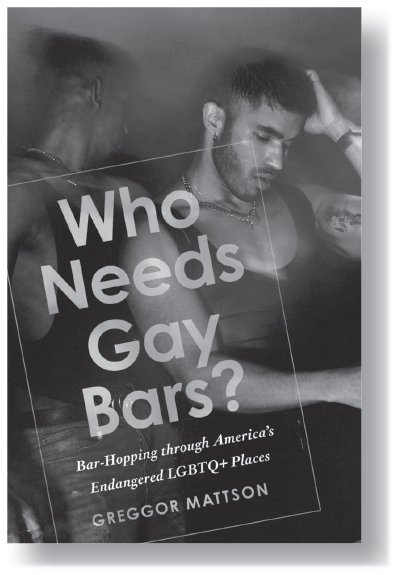
Who Needs Gay Bars? Bar-Hopping through America’s Endangered LGBTQ+ Places. Greggor Mattson Redwood Press, 2023
Long Live Queer Nightlife: How the Closing of Gay Bars Sparked a Revolution. Amin Ghaziani Princeton University Press, 2024
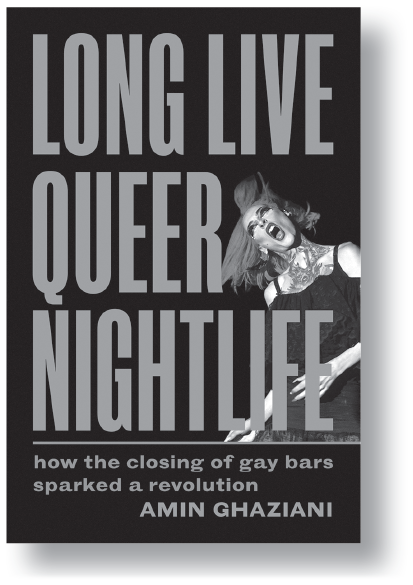
If you read about gay spaces in the news, it’s not uncommon to hear that gay bars appear to be in dramatic decline. In the United States, news media often read like stories of extinction, and in the United Kingdom, gay bar closures have been literally described as an “epidemic” (Ghaziani, p. 20). While there is actually less data on the number of gay bar closures than there should be, the hand-wringing itself often passes as evidence.
Contrary to popular concern, however, two new books on LGBTQ+ space and placemaking across the United States and in London complicate the ways the story about gay bars’ decline is often received. As Greggor Mattson writes in Who Needs Gay Bars? “Gay bars aren’t closing everywhere, they aren’t closing for the same reasons, and they are changing in surprising ways that serve old audiences and cultivate new ones. There is no one answer to the question ‘Who needs gay bars?’ because there is no one ‘who,’ no one set of ‘needs,’ and no one kind of ‘gay bar’“ (p. 9).
Mattson confesses that some of the U.S. bars featured in his book have closed since his work began. But new spaces opened, too. He emphasizes, “queer things cannot have straight histories” (p. 9). And this is useful to keep in mind as we consider how these new works by Mattson and Amin Ghaziani, author of Long Live Queer Nightlife, have helped us to understand what might be best understood as transformations rather than declines in LGBTQ+ spaces and placemaking. Indeed, as Ghaziani helps us to reframe, “The image of nightlife as besieged by an epidemic of closures obscures what else is happening—and the pursuit of that what else will guide us to places less travelled” (p. 5)… at least by sociologists.
Mattson’s study of gay bars across the United States and Ghaziani’s analysis of queer nightlife in London document this transformation in dazzling ways. Both Who Needs Gay Bars? and Long Live Queer Nightlife are equal parts documentation and celebration of the queer evolution in space, placemaking, and community.
Who Needs Gay Bars? and Long Live Queer Nightlife are equal parts documentation and celebration of the queer evolution in space, placemaking, and community.
What struck us reading these books is that both studies attempt to document something that is difficult to document. The discourse of “decline” invites a certain quantification: How many? How much? How fast? Yet, focusing on these queries alone distracts us from those transformations in queer spaces and placemaking that resist quantification. For instance, Ghaziani attended a series of club nights and interviewed over 100 people from an exceptionally diverse collection of QTBIPOC+ folks about their favorite nocturnal gatherings. But how many such events take place in London on an average weekend or over the course of a month or year is simply not easily quantifiable. Similarly, Mattson’s work took him to more than 300 gay bars and resulted in over 100 interviews (mostly with bar owners) in almost 40 American states. But Mattson is similarly unable to argue that the sample is representative of gay bars in the United States. Indeed, as both authors argue, asking that question is less productive than popularly assumed. Both projects ask what queer spaces mean, how they are used, and how they are changing—questions that resist quantification.
Who Needs Gay Bars? and Long Live Queer Nightlife are different projects, in different countries, using different methods to investigate different kinds of queer placemaking. And yet, what emerged from both studies is not productively understood with discourses of decline. Neither Mattson nor Ghaziani disagrees with the notion that space has been lost. But both studies, in different ways, focus on what is overlooked when we take a narrow (and narrowly dim) view of gay space and placemaking like that seen in mass media.
Mattson’s book is based on interviews with owners and employees from an incredible sample of U.S. gay bars. A great deal of qualitative sociological research on U.S. sexualities and LGBTQ+ people and community has reported on a very small collection of big cities, where only a fraction of the country’s LBGTQ+ people live. Indeed, Mattson’s approach includes covering establishments that represent only one space of many where queer folks connect in major cities like L.A., New York, and Chicago. But, noting “The most common way gay bars occur is alone in their town,” he also visits bars in smaller cities, where such establishments are sometimes the only visibly queer businesses or spaces around (p. 7). Part of what we loved about this book was the author’s intentional inclusion of diverse LGBTQ+ spaces throughout the text, rather than segregating lesbian bars, trans establishments, and bars associated with queer communities of color to specific chapters. Forgoing a similar geographic segregation, the book’s organization mirrors its theoretical thrust and the messy, uneven, and diverse accomplishment of contemporary queer placemak-ing in the United States. And while many of the bars Mattson visited are dominated by White gay men, many others suggest this stereotype of what gay bars are, or who they principally serve, is less than accurate.
Ghaziani takes a different approach. He did interview people who hosted the gatherings he attended, but his interviews are more often with patrons and his inquiry focuses on one city very intensely: London. While Ghaziani acknowledges that gay bars across London, like those in the United States, are closing in numbers that justifiably draw attention, he also argues that bar closures are best understood sociologically as a kind of disruptive event—”an unsettled moment of time… that alters our routines and the ideas we take for granted” (p. 14). Like Mattson, Ghaziani starts from stories of bar closures but quickly directs his attention to the ways QTBIPOC+ groups in London are responding to this shift. In club nights that are intentionally temporary but bustling with activity, Ghaziani discovers ephemeral queer spaces, the movement of which has historically typified queer culture and community-building. Rather than cling to oversimplified narratives of decline, Ghaziani identifies a kind of “subtle revolution” in which vibrant queer placemaking is happening outside the bar’s closing doors.
While straight people and culture are virtually absent in Ghaziani’s research, Mattson has to navigate straight presence as gay bars have—like gaybor-hoods—increasingly become spaces straight people make use of as well. Interestingly, those bars in Mattson’s work that seemed best able to navigate this transformation while remaining integral to queer community were lesbian bars. “I can’t know whether owners were telling me what I wanted to hear, were negotiating local antidiscrimination ordinances, were mindful of their local economic circumstances, were being inclusive of bi and pan and trans people in seemingly straight relationships, genuinely liked hanging out in mixed gay-straight environments, or some combination of all of these,” Mattson explains, but the lesbian bars in his study welcomed straight patrons (pp. 177-178).
This broad inclusivity is something Mattson argues should be celebrated, however cautiously. He also dedicates a chapter to Pulse nightclub in Orlando, Florida, the site of a tragic armed attack in 2016. Since that time, the site has begun being transformed into a museum and national memorial, authorized by President Biden, who described the lost lives as many things, but not as “LGBTQ+” or “Puerto Rican.” While this national-level recognition of the importance of a gay space is a kind of achievement, Mattson also notes that the acknowledgement was straight-washed and White-washed in ways that framed the memorial as “for everybody” (p. 309), leaving certain identities unrecognized in ways that felt more like tolerance than equality. To be sure, other chapters in the book delve deeply into identity, examining how safety is allocated in gay bars (that is, who gets to feel safe), bringing readers into the incredibly diverse collection of gay bars around the United States, including “post-gay” gay bars, an undocu-queer bar, and more.
Similarly, if in a different cultural context, Ghaziani’s research also brought him into an eclectic and diverse collection of club nights. The preface to his book opens with a Jewish-themed club night in East London, “Buttmitzvah,” that helps set the tone for the analysis to come. As Ghaziani’s Jewish friend shared that evening, “It’s all about having fun, not making fun! And for me, being Jewish is fun! Being gay is fun! This entire scene is coming from a place of celebration” (p. xiii). Helping document queer joy amid stories of bar closures, rights retrenchment, and hate crimes, as Ghaziani does, is an important project, sociologically, but also politically. Building on other work in sociology, Ghaziani’s Long Live Queer Nightlife intentionally aims to help fill what scholars Laurel Westbrook and stef m. shuster have called the “joy deficit” in sociology. He transports us to nights with similarly camp themes and intentionally provocative and edgy names: “Femmetopia,” “The CAMPerVAN,” “The Cocoa Butter Club,” “Pxssy Palace,” “Gayzpacho,” and more.
Indeed, many of Ghaziani’s interlocutors shared difficult stories of racism, ethnonationalism, and other forms of prejudice and discrimination they faced as queer people in London gay bars, contrasting those experiences with the more radically inclusive club nights where “White plus gay plus male is neither the assumed nor the default setting… [C]lub nights can counter the assumptions that a person had once made, the things they thought they knew or were true. The power of these parties is their ability to alter the understandings we inherit, to flip them over, to create and experience other worlds” (p. 134).
Club nights foster kinds of experimentation with excess less possible in other kinds of queer spaces. They are intoxicatingly amusing in ways that foster unique forms of queer joy. They may lack a kind of permanence some aspire to attain, but their very temporality is, as Ghaziani argues, an integral component of the joy they inspire.
Alongside the economic reality that might have encouraged the U.S. gay bar owners in Mattson’s book to open their doors to “everyone,” club nights in London illustrate a kind of experimentation with economic models (people pay to attend) that works around “some of the constraints that burden bars” (p. 101). Despite this, many aspire to more permanent venues. One club-goer at the Femmetopia club night told Ghaziani, “Look, I work in nightlife. I also work at a bar, I make art, and I’m broke… There’s less money in our community” (p. 103). This difficult reality provides some of the economic infrastructure for nightlife, business ownership, and more.
Club nights can’t be “closed” in quite the same way that bars can; and they also afford different kinds of community than those more permanent establishments are able to support. Throughout his book, Ghaziani documents the intense joy—queer joy—that the resulting intentionally diverse, queer pop-up scenes foster. Indeed, Ghaziani quotes a friend’s wisdom in the conclusion: “The fun you have says a lot about the world you want” (p. 209).
What is clear from these books is that queer spaces and placemaking practices are moving in new directions. It appears premature to label anything discovered here as evidence that we are “post-gay.” Rather, as has always been true of queer culture, novel pressures are fostering new kinds of connection and efforts to make and occupy space in queer ways that support queer community. There is a longing in some of Ghaziani’s respondents’ comments for the kinds of stability and permanence that some of the gay bars in Mattson’s work have achieved. But there are pressures on the gay bars in Mattson’s study to adapt to a shifting gender, sexual, economic, political landscape that Ghaziani’s club nights seem better poised to address. And while some gay bars in Mattson’s work are pushing back against the Whiteness and man’ness exhibited in many gay bars in the United States and United Kingdom, London’s queer club nights are addressing these issues in other ways. As it turns out, the accomplishment of contemporary queer placemaking mirrors queer life’s messy, dynamic, and joyful realities. In the gay bars that remain and in the often outlandish nightlife that’s bursting forth outside their doors, these invigorating new works remind readers that there is apparently no end to the fun—to the queer joy—to be had for those who love the nightlife.
The accomplishment of contemporary queer placemaking mirrors queer life’s messy, dynamic, and joyful realities.