



Abstract
Christopher N.J. Roberts on The Aeneid, The Constitutionalization of Law, and The War in Court.
Keywords
The Aeneid Virgil (David West, Translation and Introduction) Penguin Books, 2003

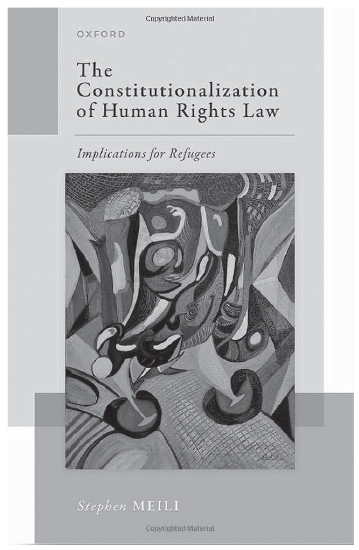
The Constitutionalization of Human Rights Law Stephen Meili Oxford University Press, 2022
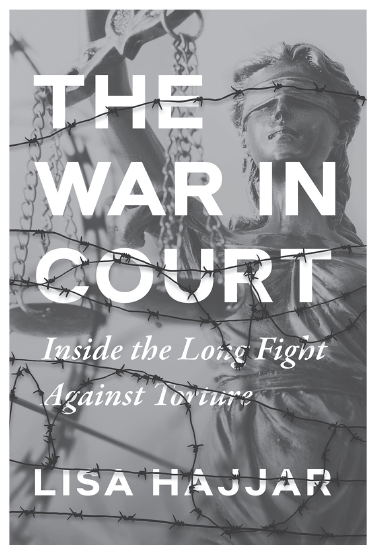
The War in Court: Inside the Long Fight Against Torture Lisa Hajjar University of California Press, 2022
I write this review for anyone who has ever stood in the shadow of an impossible problem and still asked, What can I do? Here, I share an idea about how a poet, a lawyer, and a sociologist have each answered the call of this question by sharing stories of the voiceless “others” who’ve been driven away, taken, or forced to flee their homes.
Over 2,000 years ago, in addressing this very question, the poet Virgil told the story of Aeneas, a man whose fate was to be an exile. He is a refugee, forced to flee his war-struck home. Virgil begins the epic with fundamental questions of human experience and hardship. What could Aeneas have possibly done to deserve such suffering? Why did he have to endure such cruelty?
In his vivid 2003 translation (Penguin Books), David West offers a helpful, synthetic introduction for readers, both new to and well-versed in The Aeneid. Among the many well-known scenes in The Aeneid, there is a beautiful passage in which Aeneas, by chance, comes across a Carthaginian temple that is under construction. Aeneas has been wandering the Mediterranean world for years in search of a new home. Lost and struggling—perhaps in vain, he doesn’t yet know—he is at a low point. Within the temple, he encounters an intricately detailed mural, itself a work, Virgil tells us, of local artisans and craftsmen. The mural depicts the longer history of the known Mediterranean world. Aeneas “reads” the mural like a history book— recognizing in it the consequential battles, the scenes depicting the Greek and Trojan kingdoms that once rose and fell. He sees fallen heroes. He cries for their sorrows as he shares the stories of their struggles. Aeneas, the refugee, longs to find a safer place to call his home.
The contemporary refugee crisis has its roots in all of the wars across the world combined. It grows in natural and human-made disasters: poverty, human rights abuses, climate change, food insecurity, economic crises, and governmental failures. With over 108 million people forcibly displaced in 2022, there are now more refugees than ever before in human history. And just as it has been for millennia, those forced to flee are simply looking for a safer place to call their home.
In his new book, The Constitutionalization of Human Rights Law, legal scholar Stephen Meili focuses on the lawyers who translate the harrowing stories of those who seek asylum into the language of law designed to provide for their protection. Although international treaties play a pivotal role in the protection of refugees, it is also true that over the past several decades, many countries have incorporated human rights law provisions into their domestic constitutions. While the motivations for doing so vary, the question Meili raises is an important one that is often overlooked: Do constitutions matter for protecting the rights of refugees? A massive literature asks similar questions about whether human rights treaties matter, and Meili offers a convincing display of the need to take the important role of domestic constitutions more seriously. To do so, he looks to the insights and experiences of lawyers using available constitutional provisions in their practice of law, as well as the comparative degrees of success they enjoy in doing so. What he finds from the lawyers in his five-country survey of Columbia, Mexico, South Africa, Uganda and the United States is that constitutions do matter, though context matters a great deal as well.
A major part of the “context” is whether one is talking about the United States or one of the other four countries in the study. Because the United States does not have a robust arsenal of human rights guarantees incorporated into its constitutional architecture, Meili writes, the Constitution itself “has thus become something of a liability, rather than the primary means of attack” (200) for lawyers, activists, and refugees. On the other hand, the human rights provisions that are incorporated into the constitutions of the other countries in the study offer refugee lawyers something to work with. Indeed, Meili’s interviews offer a fascinating window into the many strategic tools that lawyers use in such settings; among the most important of these tools is “controlling the narrative.” Refugee lawyers package, frame, and present their clients’ stories by cultivating relationships with reporters willing to investigate these cases. They also go to lengths to identify sympathetic clients and cases, such as those involving women and children. Controlling the narrative often also means avoiding cases that raise national security issues (195). The human rights provisions that have been incorporated into the constitutions of Columbia, Mexico, South Africa, and Uganda have offered these lawyers and their clients crucial legal ground to work from in sharing the stories of their clients.
In The War in Court: Inside the Long Fight Against Torture, sociologist Lisa Hajjar chronicles the efforts of hundreds of lawyers who fought to challenge the U.S. government’s practices of torture, long-term incommunicado detention, secret prisons, and other illegal practices during the “war on terror.” Hajjar offers the reader a deep and rich new set of stories tracing “what lawyers and their allies did to expose and challenge illegal government policies, why and how they waged this fight, and how their individual and collective actions forced the government to alter the way the ‘war on terror’ was waged.” Hajjar contends that if it were not for these lawyers, the torture program would have gone unchallenged, as there was never enough broad public opposition to halt it. She writes that, because the government justified its torture program with its own novel legal interpretations, key aspects of the war on terror developed into a “war in court” that was fought by lawyers. This battle over the U.S. government’s torture policy, Hajjar shows, had a significant impact on the post-9/11 legal landscape.
Hajjar’s book presents a clear story of not only the challenges that Guan-tánamo lawyers faced, but the lasting victories they enjoyed. But among the most interesting—and perhaps vexing— insights that Hajjar offers is one about unintended consequences. As the United States backed away from its torture program under intense legal scrutiny and political pressure, so, too, did it move away from its practice of capturing and detaining suspected enemies. Instead, targeted killings became the strategic focus of both the Bush and Obama administrations. Hajjar writes, “During Obama’s two terms in office, a handful of foreign terror suspects were captured alive—none of whom ended up in Guan-tánamo—while thousands of people died as a result of targeted killing operations” (xvii). After abandoning its torture program, she explains, the United States was unable to arrive at a workable detention policy as political opposition thwarted the possibility of establishing alternative detention sites within its borders. Killing enemies turned out to be easier than detaining them. From torture to targeted killings, Hajjar’s honesty and frankness captures a complicated, multidimensional story of the war on terror from those deeply enmeshed within its twisted ways.
Both Meili and Hajjar offer detailed portrayals of how lawyers fighting for particular causes are an integral part of bringing the experiences and stories of relatively voiceless people into the institutional corridors in which they matter. Although Meili and Hajjar focus on relatively contemporary issues, they reckon with a timeless dilemma: Is there safe passage and safe harbor for those who have been taken or driven away from their homes?
The Aeneid is a fitting companion piece to the two contemporary studies. In the Carthaginian temple, Aeneas is withered and weary. He assumes his struggles are unknown—that he and his crew don’t matter to anyone anywhere. But at once he is halted by a scene in which he recognizes himself and his comrades. There, painted on the wall in this foreign land, is the first evidence that his wandering struggles have not been in vain. He and his comrades had not only been recognized, but unbeknownst to them, their work and labors had already become incorporated into a new, emergent civic story by the trades-workers, craftsmen, and artisans who are building the temple. They are a people becoming—a foundational part of an emerging civic consciousness. He sheds more tears, not for sorrow alone, but also for a new hope of better things to come.
When standing in the face of impossible problems to all of those who’ve asked before, “What can I do?” we can take these works of a poet, a lawyer, and a sociologist, who in their own ways each shares the stories of voiceless-others with the hope of better things to come.