



Abstract
Citizenship, which proves harder-than-advertised to achieve through enlistment, may come second to the “poverty draft” in drawing immigrants into the U.S. military, but it matters for immigrants’ service and the lives they lead afterward.
iStockPhoto.com // overcrew
Ricardo was born in Mexico and moved to Texas in 1985, when he was eight. Ricardo’s parents were part of a long-term migration system which relied on recruitment by U.S. businesses seeking cheap workers with few rights. His father supported the family by working on dairy farms. Ricardo recounted a childhood burdened by food insecurity and economic precarity. As a teen, he milked cows alongside his father during school breaks, to help pay off family debts. Ricardo did well in school and attended college for a semester, but even with college loans, he routinely ran out of money for food: “So I remember being hungry. I would have like a dollar and I would buy a Kit Kat, the king size because it was bigger. But my head would start hurting, so much sugar rush. And I’d be like nah, I can’t be going through this. I would see my parents struggling with my fees from the university and I said no. I got to be a man, I got to step up. I don’t want to milk cows for the rest of my life. I just said, you know what? I want to join the army.” Ricardo dropped out of college before completing his first semester. Like many youth, Ricardo was drawn to the U.S. military by the promise of economic benefits. He wanted to have a better future than his parents.
Militarized culture and family histories of service feature in many enlistment stories.
iStockPhoto.com // zabelin
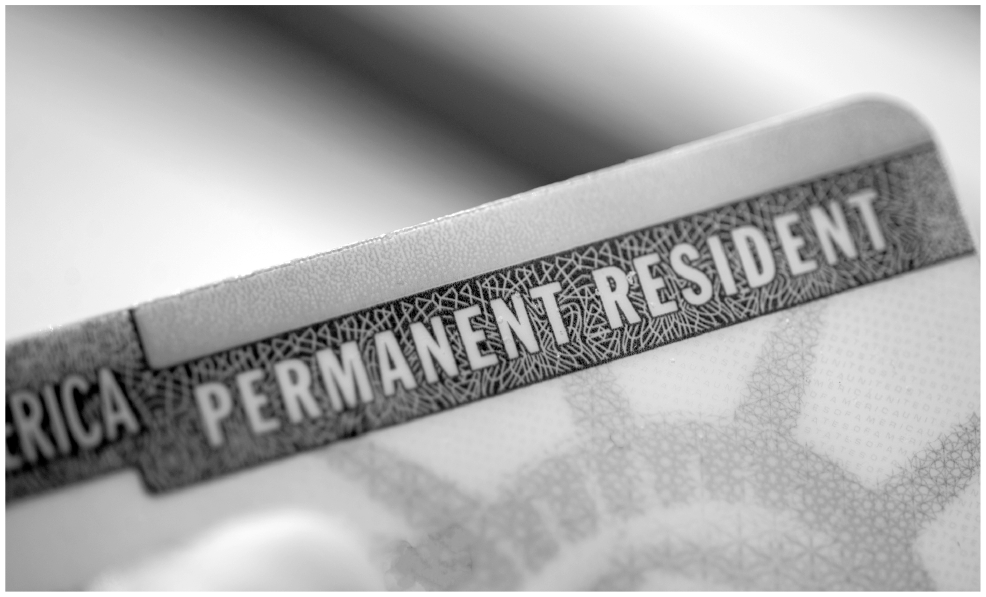
When he enlisted in the late 1990s, Ricardo had permanent lawful residency, colloquially known as the “green card.” Non-citizens who serve in the U.S. military are sometimes referred to as “green card soldiers.” Along with his parents, Ricardo was able to get a green card following the 1986 amnesty of undocumented agricultural workers. Ricardo informed the army recruiter that he was a green card holder and was told that he “wouldn’t have any problems becoming a United States citizen” after joining. Nevertheless, Ricardo emphasized economic factors over citizenship in his decision to join the army.
I met Ricardo while conducting research for my book, Green Card Soldier: Between Model Immigrant and Security Threat. He was one of 72 immigrants from 28 countries that I interviewed over the span of five years, all of them having enlisted in various branches of the U.S. military without having U.S. citizenship. I focused on non-citizens because military service is supposed to open up a fast track to naturalization for immigrants. However, many of my study pariticipants were like Ricardo: this fast track to citizenship was less important in explaining why they joined the military than economic and other factors. I tell the story of non-citizen service in the military, starting with life outside of the U.S. through to enlistment, service, and separation. U.S. citizenship may not be at the forefront of many green card soldiers’ minds when they enlist, but it can shape their experiences in the military and what happens after they leave it.
Transnational Roots
Culture is important in understanding military recruitment. Militarized culture in the United States means that war is legitimized as a solution to conflict, and the military is associated with honor and sacrifice. When militarism pervades public discourse, media, and cultural products, critical discussions of the U.S. military are elided in favor of vague proclamations about freedom. It is in the context of militarism that youth—whether born in the United States or elsewhere—enlist in the U.S. military. People all over the world consume U.S. cultural products, which can influence their view of the U.S. military before they migrate to the United States. For example, when I asked Anildo, who had grown up in Cape Verde, to share with me his story of enlistment, he cited watching U.S. movies before and after migrating to the United States in his mid-20s. He joined the army soon after migrating.
U.S. military bases—over 800 in 70 countries, according to political anthropologist David Vine’s book, Base Nation—can also set immigrants on a path to joining the U.S. military. There is robust local opposition to the environmental devastation, sexual violence, and community disruption that accompanies U.S. military bases. Indeed, I saw glimpses of opposition to the U.S. military across the world when some study participants discussed negative reactions to their enlistment by their family members and communities of origin. At the same time, people also form ties with the U.S. military abroad, such as through contract labor, and these ties can contribute to migration and subsequent enlistment. For example, Jung-soo, a South Korean immigrant, told me that his parents loved the idea of him being in the U.S. military. His mother, a nurse, worked as a U.S. military contractor during the first Gulf War. In fact, Jung-soo left Korea before doing his mandatory military service there, and he did not want to serve in the Korean military, preferring to enlist in the U.S. army. He thought that the South Korean military treated its soldiers worse, “like dirt pretty much,” and that soldiers got more respect in the United States. Like many of the immigrants I spoke to, Jung-soo cited the Hollywood blockbuster, Top Gun, and its star, Tom Cruise, in shaping his dreams of a military career.
The U.S. flavor of militarism is not the only one in the world. Many nations have distinct cultural formations that valorize military labor in different ways. I found that some immigrants translate another society’s militarism to the U.S. context. For instance, one Indian immigrant who joined the U.S. military, Amitabh, linked his physical fitness and daredevil fearlessness to his caste: “In 16th and 17th century, Brahmins have served in the military and they have helped the kings to win wars. They have been a warrior… I think that’s in me, so sometimes I like to brag… I’m never afraid of deployment.” A few immigrants I interviewed even served in other militaries before migrating to the United States. Others were continuing a family legacy of military labor. Researchers have shown that family legacies of U.S. military service are correlated with enlistment. I was able to see that this can work across borders.
Recruitment and Enlistment
There has not been a military draft in the United States since the Vietnam War. Since the transition to the all-volunteer era, well-funded advertising campaigns have infused militarism into U.S. culture and entertainment, from sports to Hollywood movies to video games. Recruiters have gained access to ever younger populations of working-class youth through public schools, a growing number of charter school military academies, and expanding Junior ROTC programs. And the U.S. military uses co-ethnic recruiters embedded in immigrant communities and tapped into immigrant social media networks. The scope of recruitment efforts through culture and outreach influences immigrants who migrated as children and their parents, as well as those who came as young adults.
One factor that is unique to immigrant enlistment is the promise of an expedited path to U.S. citizenship. Although members of the military and veterans must meet all the same requirements as civilian applicants for U.S. citizenship, they do not have to wait as long to become eligible for naturalization. While civilians must accrue five years of lawful permanent residency (three years, if they are the spouse of a U.S. citizen), the Immigration and Nationality Act specifies that lawful permanent residents are eligible after a year of peacetime service and an even shorter period in wartime. Between 2011 and 2017, members of the military were immediately eligible for naturalization. In a context of anti-immigrant policies and sentiment in the United States, it makes sense that some immigrants enlist to get the security of U.S. citizenship faster. U.S. citizenship protects immigrants from deportation, enables immigrants to help family members immigrate, facilitates international travel, and makes them eligible to vote. Truda, an immigrant from Poland, explained that what pushed her to enlist was fear that her lawful permanent residency status would be rescinded, as it was contingent on her disintegrating marriage to a U.S. citizen. She joined the U.S. military to protect herself from deportation.
In a context of anti-immigrant policies and sentiment, it makes sense that some immigrants enlist to get the security of U.S. citizenship faster.
I found that study participants who grew up in the United States with legal permanent residency tended to be less focused on and less aware of immigration processes. Many had not even realized that service in the military qualified them for naturalization. Mary, an immigrant from Kenya, told me she didn’t understand that enlistment would qualify her to apply for U.S. citizenship earlier, nor was citizenship brought up by her recruiter. At the same time, growing up in criminalized immigrant communities led other immigrants to view naturalization as sought-after protection. For instance, Angel, an immigrant from Mexico who grew up in the United States, said he felt good about becoming a U.S. citizen “because knowing that, hey, you don’t have to worry about being deported back, or you don’t have to worry about having to reapply for your green card.” Angel then told me about family members who had been deported.
Despite Angel’s feelings about getting U.S. citizenship, when he enlisted as a 17-year-old participant of the Junior ROTC program, the military was primarily a way to become independent of his family. Coming from a poor family limited his options for economic independence and made the military attractive. Research shows that the enlisted are disproportionately African-American, of lower socioeconomic status, aspire to attend college, come from larger families, have parents with lower levels of education, and live in proximity to military bases. According to a 2017 propensity to enlist poll by the U.S. Department of Defense, the top enlistment reason was paying for college. Although the most disadvantaged youth do not qualify for enlistment because they cannot pass the educational, fitness, and health requirements, results of quantitative research are consistent with what counter-recruitment organizers call “the poverty draft.” In other words, although there is not a formal draft, economic hardship pushes some youth into enlistment. When there is low unemployment and higher wages, the military has a harder time meeting its recruitment goals, which was the case in 2023.
The poverty draft is certainly working to push immigrants to enlist to pay for college or simply have a stable paycheck with benefits, but there are also factors unique to immigrants. One of the veterans I interviewed explained that she enlisted as an artillery specialist to collect the $10,000 signing bonus that comes with this high-risk occupation. The money helped fund legal fees for her brother, who was fighting deportation. When the U.S. government criminalizes immigration and erodes immigrant rights, immigrants can see military service as a way of securing those rights or as a tool to cope with being the target of immigration enforcement. They may enlist to get money that might keep a family member from being deported.
Non-citizens can enlist, but are excluded from many career opportunities, including officer positions, within the U.S. armed services.
iStockPhoto.com // jacoblund
Barriers to Naturalization and Career Advancement
Though the fast track to U.S. citizenship was not a major factor driving enlistment for many immigrants, some in my research realized that citizenship could shape their experience as service members. In the civilian world, most jobs are open equally to U.S. citizens and permanent residents. In the military, however, career opportunities are shaped by citizenship because of security clearances, from which non-citizens are excluded. Moreover, officer ranks are reserved for citizens. Gilberto, an immigrant from Mexico, explained that whether or not he was a citizen did not matter for being an infantry Marine, but excluded him from fields like intelligence that he would have otherwise qualified for by dint of his high test scores: “I could have gone into intelligence. But, I would’ve been limited to my clearances.
There’s certain ceilings that I would have hit because I wasn’t a citizen. I wouldn’t have been able to get promoted as quickly or to certain positions, because I wasn’t a citizen. I would be held back. But, as an infantry Marine, there’s no limitation.” As an infantry Marine, Gilberto was exposed to more risk of harm, and he sustained serious injuries.
Gilberto left active duty in 2001 without becoming a citizen. There was no assistance offered to him to go through the naturalization process. I found that many of those who enlisted before 2009 had a difficult time getting naturalized while in the military, despite being eligible. Military work, with its inflexible long hours, bases located far from immigration offices, and frequent moves, is not easily combined with the inflexible requirements for residency and appointments with immigration authorities. Joaquim, an immigrant from Brazil, recounted how difficult it was for him to find the time to deal with the naturalization process: “When you’re a soldier, you get up at five thirty in the morning. You don’t come home until six, seven o’clock. My first two years in the army, I was trying to go to sleep at eight, nine o’clock at night.” After Joaquim finally applied for citizenship with the encouragement of a supervisor (also an immigrant), he was shipped to Afghanistan. He had to wait for his deployment to end before getting U.S. citizenship.
Military work, with its inflexible long hours, bases located far from immigration offices, and frequent moves, is not easily combined with the inflexible requirements for residency and appointments with immigration authorities.
Between 2009 and 2016, programs and initiatives facilitated the military naturalization process, from waiving some biometric requirements to building naturalization into basic training. With the demise of these programs under the Trump Administration, naturalization through the military is once again fraught. That affects the military careers of immigrants and their concomitant exposure to harm.
Even for non-citizens whose service may make them eligible for a fast track to citizenship, economic factors like signing bonuses and educational stipends are among their primary reasons for enlistment.
iStockPhoto.com // Evgenia Parajanian
When immigrants in the military die in combat, they can receive citizenship posthumously. This special status is defined by the U.S. Citizenship and Immigration Services as “honorary status commemorating the bravery and sacrifices” of “an alien or noncitizen national whose death resulted from injury or disease incurred on active duty with the U.S. armed services during specified periods of military hostilities.” Over a hundred posthumously naturalized immigrants have had citizenship conferred on them in this manner since 2001, at the request of their surviving family members, who receive some immigration benefits. Notably, not all family members want posthumous naturalization.
The harm to immigrant U.S. military workers must be considered alongside the harm that they contribute to through their labor in the military. Immigrants play a unique role as foot soldiers in the U.S. war machine because the U.S. military needs their cultural and language skills in the hundreds of outposts across the globe, sometimes in the communities to which they trace their roots. For example, I spoke to Leila, an immigrant from Pakistan, who was recruited into the U.S. army and whose work included using her native Urdu to communicate with military contractors in Pakistan. Immigrant soldiers are also a powerful symbolic tool, contributing to an image of racial egalitarianism and meritocracy in the military and U.S. society.
Veterans and Deportation
I began this essay with Ricardo’s story of enlistment, driven by economic hardship and desire for social mobility. Although Ricardo’s army recruiter had told him that getting U.S. citizenship would not be a problem, Ricardo was not aware of the process: “I was so naive. I wish I would have asked, ‘Well, how does [naturalization] happen? Or do you become that [a U.S. citizen] after basic training?’ I wish that I was more awake. I was kind of like asleep. And he just told me everything I wanted to hear. And it sounded good.” Ricardo never became a U.S. citizen. When he was sharing his experiences with me in 2019, he had been living as a deportee in Mexico for over a decade.
The Migration Policy Institute estimated that 17% of immigrant U.S. military veterans were non-citizens in 2019. If convicted of an aggravated felony, these non-citizen veterans would face deportation along with other lawful permanent residents. The U.S. government does not keep track of how many U.S. military veterans it deports and estimates by advocates range from 3,000 to 30,000 deported veterans since 1996. Since Ricardo’s deportation in 2007, and in response to the bad press generated by veteran deportations, limited checks have been implemented by the Department of Homeland Security. Yet these provisions have been shown to be ineffective or ignored, and veteran deportations continue. Further, racial inequities in the criminal justice system, high rates of guilty pleas, and broad definitions of what constitutes an aggravated felony combined with overwhelming focus of the U.S. deportation system on men from Latin America and the Caribbean place non-citizen veterans at special risk of arrest and deportation.
Most immigrant veterans do not get deported. Yet, without the protection of U.S. citizenship, they remain at risk of deportation. Citizenship, which proves harder-than-advertised to achieve through enlistment, may come second to the “poverty draft” in drawing immigrants into the military, but it matters for immigrants’ service and the lives they lead afterward. For green card soldiers, whose military labor so often takes them to and across borders, we see the way citizenship operates to erect and maintain boundaries of inclusion and exclusion.