Abstract
Exploring an ever-dynamic, often-struggling city.
Cuba holds an especially charged, symbolic place for scholars, policymakers, and laypeople who envision the Americas as a space of shifting strategic alliances, cultural politics, and economic challenges. Esteemed cultural analyst Edward Said referred to this splicing of the world into categories of prospects as “imaginative geographies” that hinge significantly on the standpoint of whoever is mapping out friend and foe, the relatable and the abominable, across the unevenness of global space. For some, imaginative geographies render Cuba a stalwart pariah, a stubborn contrarian still clinging to its revolutionary banner. Others see Cuba as a daring beacon for Latin America, admiring its efforts to chart a different path than that ordained by its hegemonic neighbor 100 miles to the north. Between these stark depictions—which can both be true at the same time—Cuban landscapes and experiences are rather more motley and complex and can scarcely be fathomed by those who have rarely or never set foot on the island.
Cuba is in many ways distinct, having endured an extremely long period of seclusion from the mainstream of global commerce due to decades of American embargoes restricting far more than just trade between the two countries. Despite its isolation, however, the capital city of Havana is defined by various kinds of extroversion; it is outward-looking, loquacious, improvisational. Islands are often this way: literal as well as metaphorical archipelagoes immersed in seas of circulating people, things, and ideas. Such links are not new in Havana but have transformed at pivotal moments since European conquest through periods of formidable Spanish, American, and Soviet influence. The current situation juxtaposes defiant geopolitics with a flagging socialist project at home, leading record numbers of Cubans to seek any way off the island.
To illuminate the social and physical terrain of Havana today, this photo essay engages with the unmissable imaginative geographies that permeate the city while also capturing what feminist geographer Doreen Massey described in her career-culminating tome For Space as an “extroverted sense of place.” That is, I spotlight some of “the specific constellations of interrelations” that define the place yet have formative connections that reach beyond jurisdictional limits. The images here are an ode to an ever-dynamic, often-struggling city full of lessons about what has been and what could be, as much as they are a visual rendition of Havana’s imaginative, extroverted geographies.
A bilingual sociologist-geographer with more than two decades of research experience in Latin America, I took these photographs during repeated field trips I have led for London-based undergraduates to Havana starting in the mid-2010s; this set emphasizes images captured since the beginning of the COVID-19 pandemic. The global outbreak and its attendant shutdowns spurred a series of enormously consequential reforms by the Cuban state, only some of which have been related to public health. More impactful have been radical changes to the currency system, an overhaul in the nature of state staple provision, a greater show of force by the government toward its own citizens than at any point since the beginning of the revolutionary period, and an ongoing if beleaguered effort to “modernize” the economy through technology and tourism. For many Cubans, life has become much more materially challenging at exactly the same time that relative deprivation has become more obvious (particularly given the rapid diffusion of internet connectivity in the last half-decade, itself a feature of extensive Chinese infrastructural investment).
The images in this essay depict some of the ways that Havana is marked by tourism priorities, everyday local hardships mixed with dreams of elsewhere, state security concerns, foreign investment alongside decaying infrastructure, makeshift paths forward, and geopolitical traces of the United States, Turkey, Russia, Vietnam, China, Venezuela, and the rest of Latin America and the Caribbean. Each picture here, and the many more ultimately excluded from this series, could tell, as the adage goes, thousands of words; these are portraits of, to again quote Massey, “stories so far” in a place with no shortage of stories to tell.
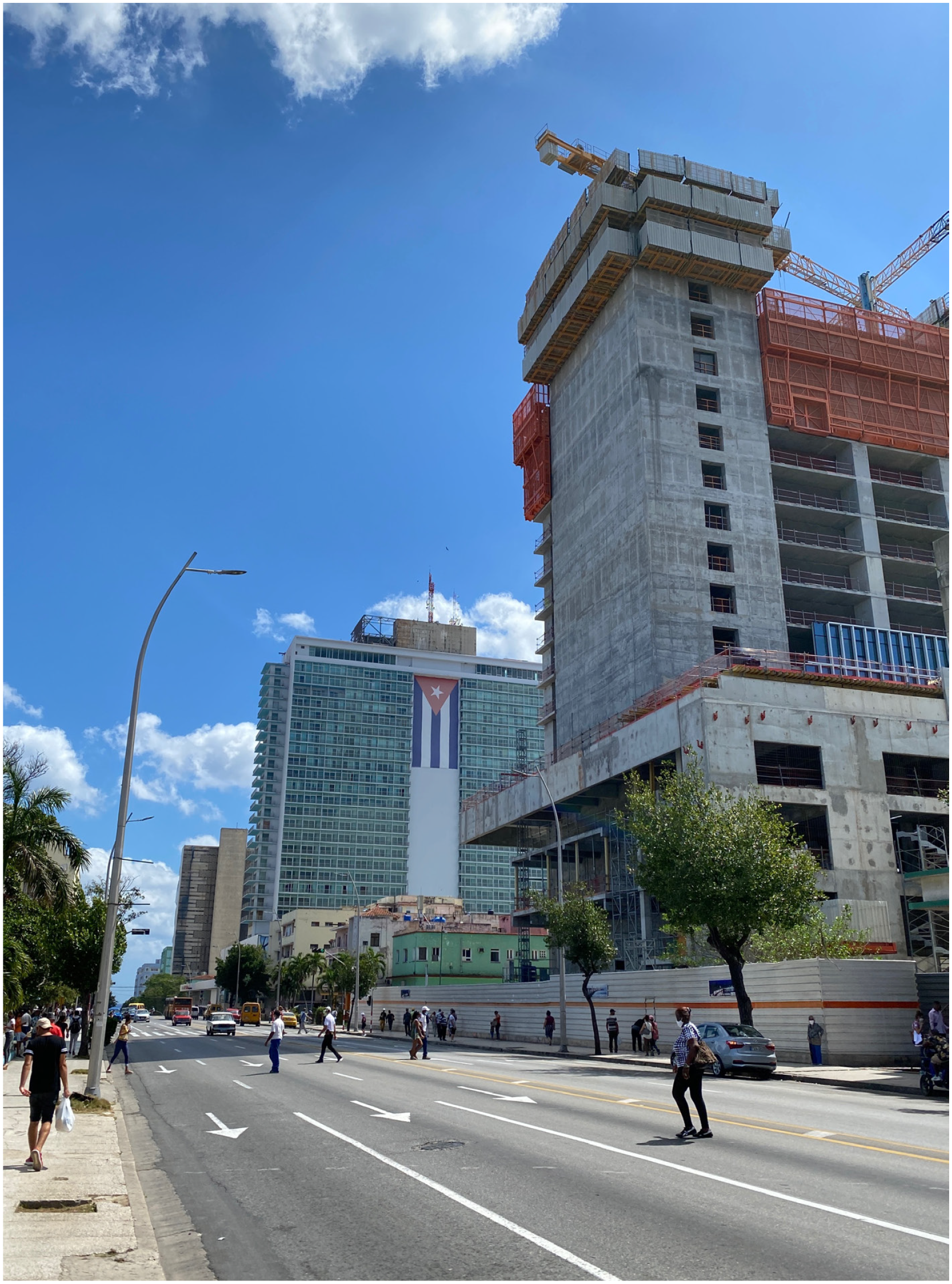
Hulking, partly abandoned transport and industrial infrastructure filtering intense sunlight onto sidewalks and streets near Havana Bay.
All photos © Ryan Centner
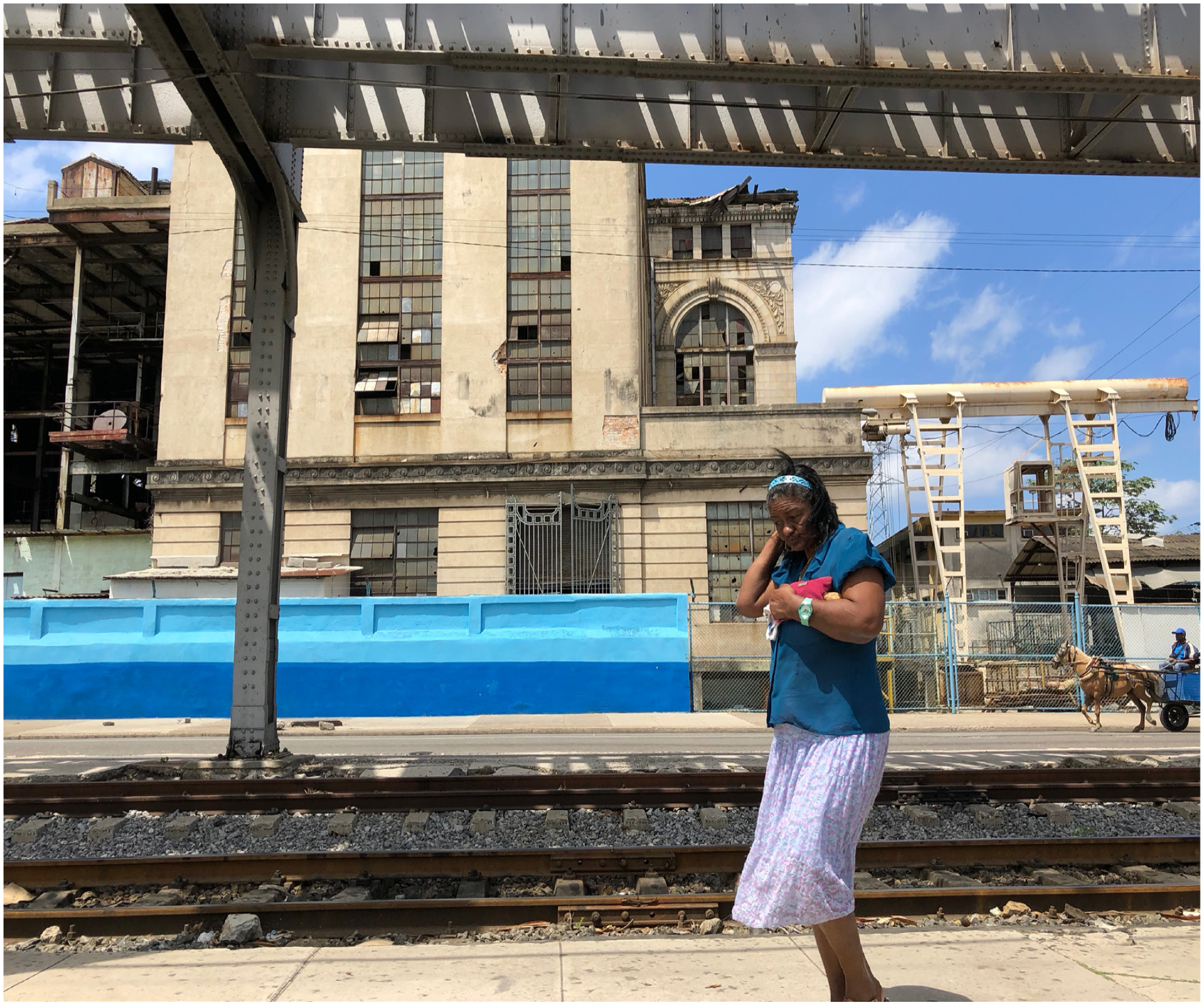
As just one example, the final image might appear as simply an unremarkable streetscape with a construction site in the foreground and an oversized national flag on a larger building in the background. But there is a far richer, layered tale here that is at once more imaginative and more extroverted: alongside Avenida 23, a key thoroughfare in the Vedado district, scaffolded contours of what will be Cuba’s tallest building are giving rise to yet another international luxury hotel. With its foundation set in the landmark “hueco” [hole] left behind by exploratory efforts to construct a Soviet-style metro system in the early 1980s, abandoned for four decades and never refilled until now, the new tower will overshadow the iconic majority-state-owned, flag-draped Habana Libre Hotel (itself formerly the Havana Hilton, commandeered by Castro for many of his early revolutionary press conferences in 1959). All of this is unfolding in a city where nightly hotel rates are relatively high yet accommodation occupancy is abysmally low. By contrast, Cuban citizens—whose entire monthly salary would be insufficient to book a single night in these hotels—queue for hours across the street under the blazing sun at the nationalized Heladeria Coppelia in order to access an ice cream cone affordable enough for their meager incomes.
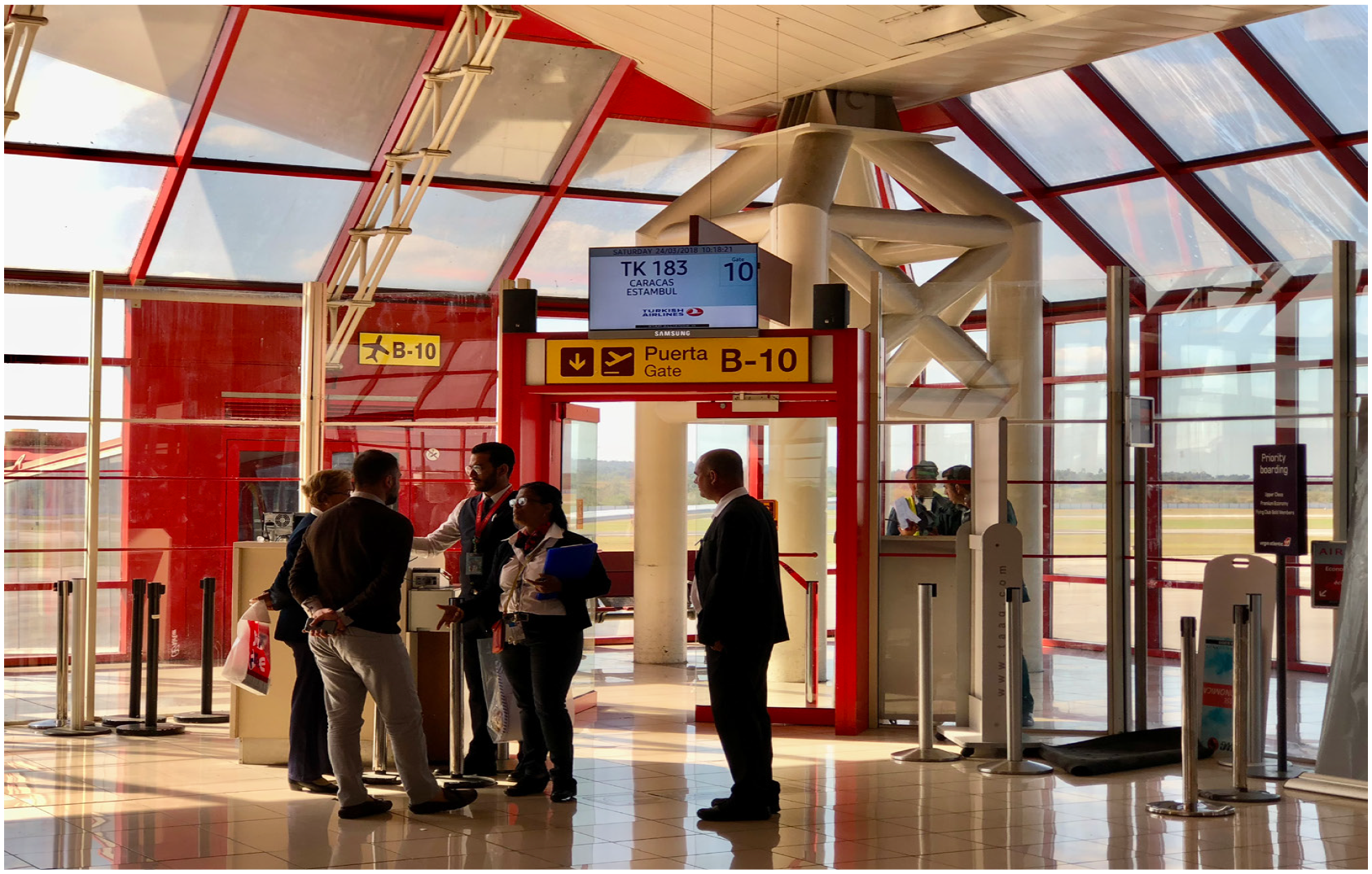
Departure gate at Aeropuerto Internacional Jose Marti (HAV) for a Turkish Airlines flight bound for Caracas, Venezuela, then onward to Istanbul.
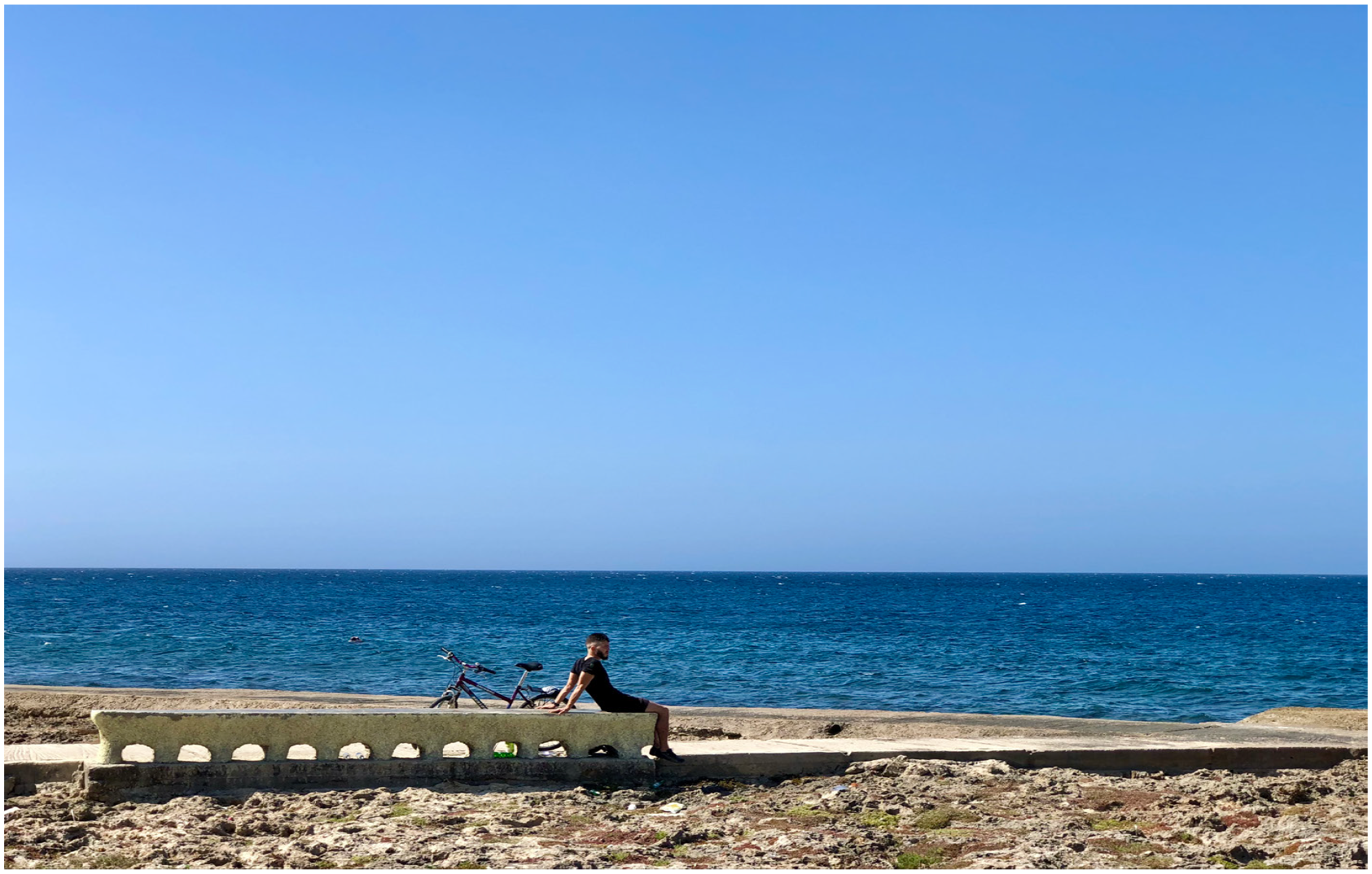
Looking out over the Straits of Florida, in the Playa district.
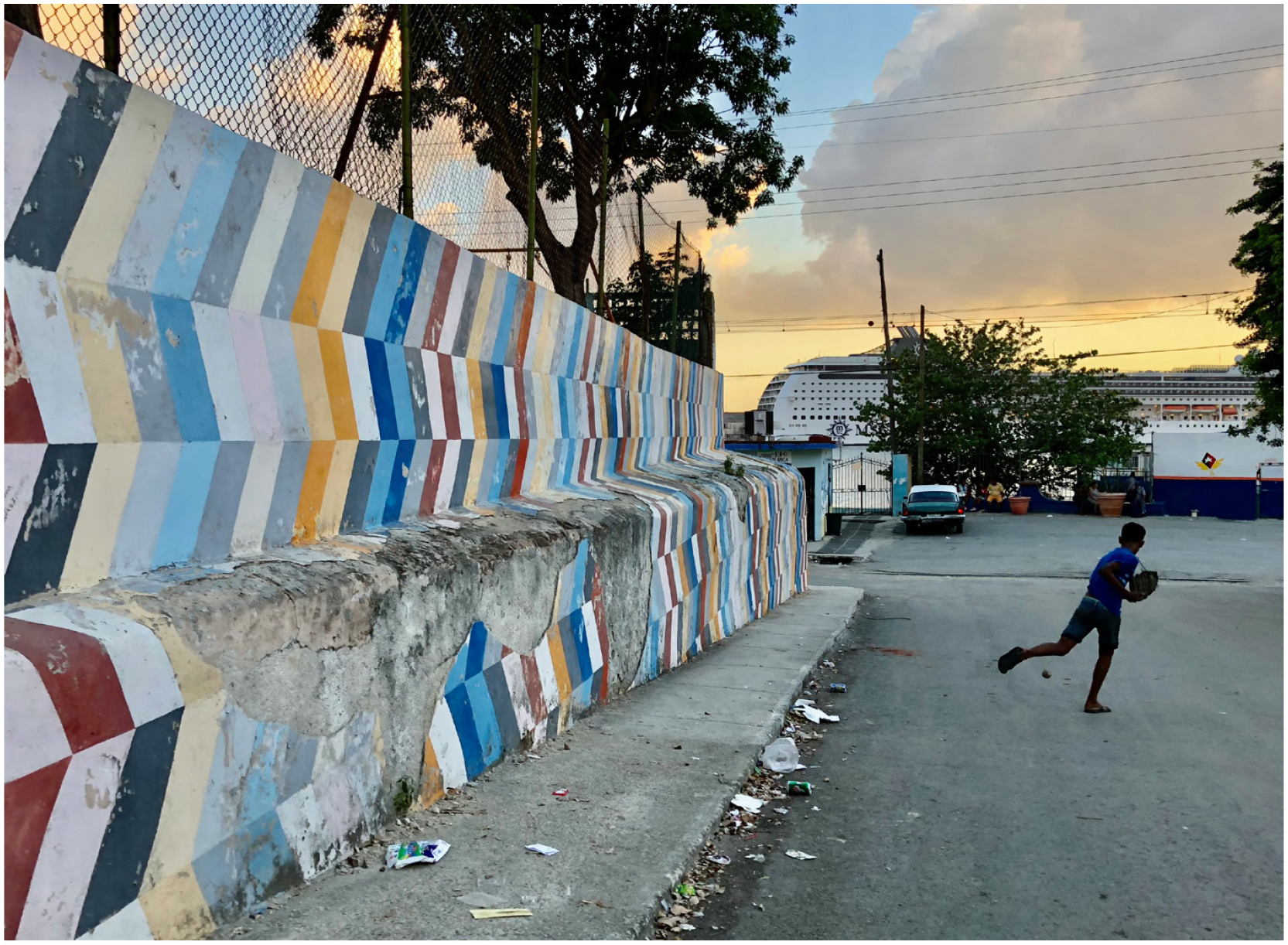
Backstreet baseball in the Casablanca neighborhood, with an enormous, docked international cruise ship looming in the background.
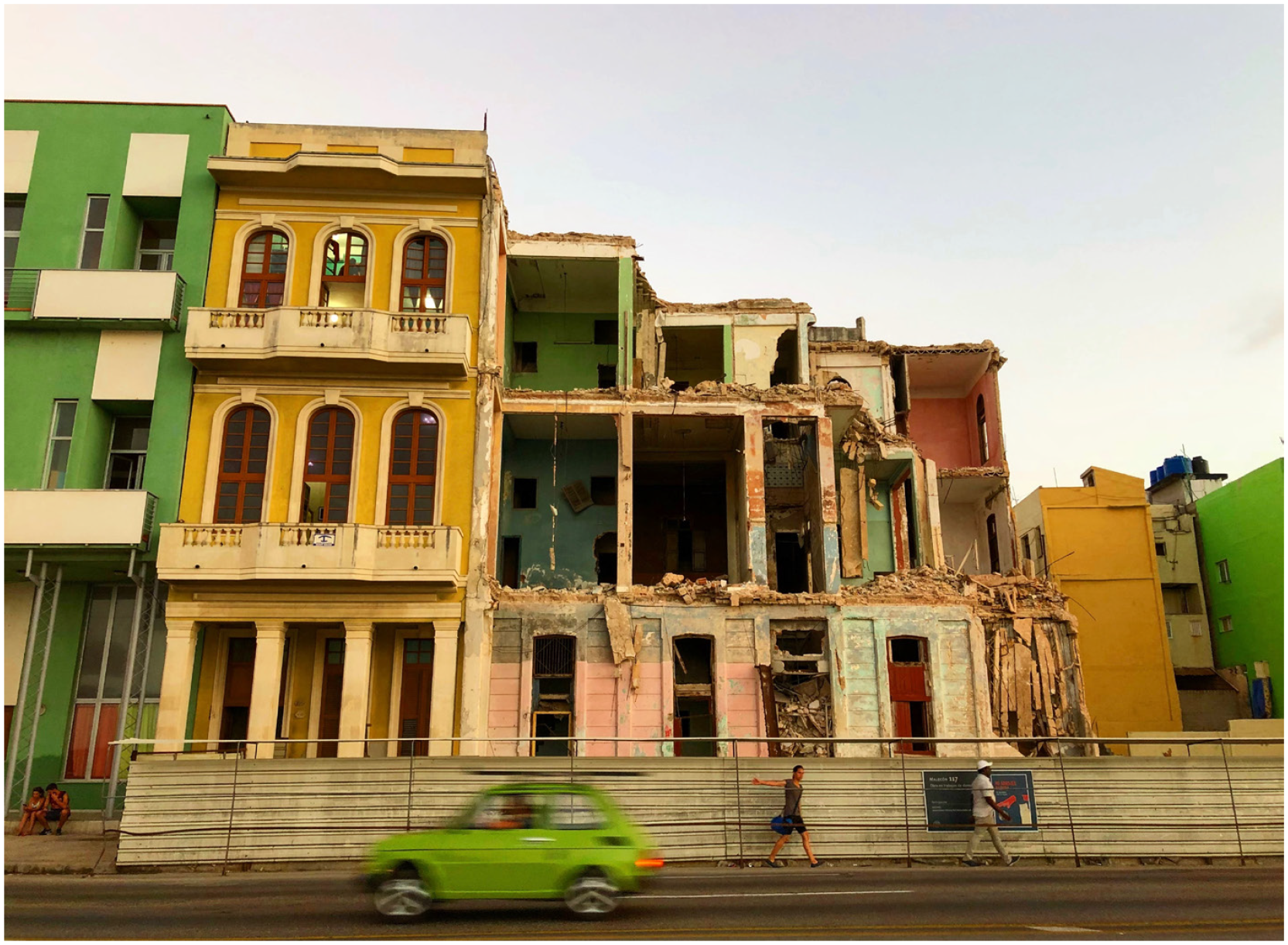
Along the Malecon waterfront, buildings in various states of demolition and redevelopment, partly enabled by foreign funding.
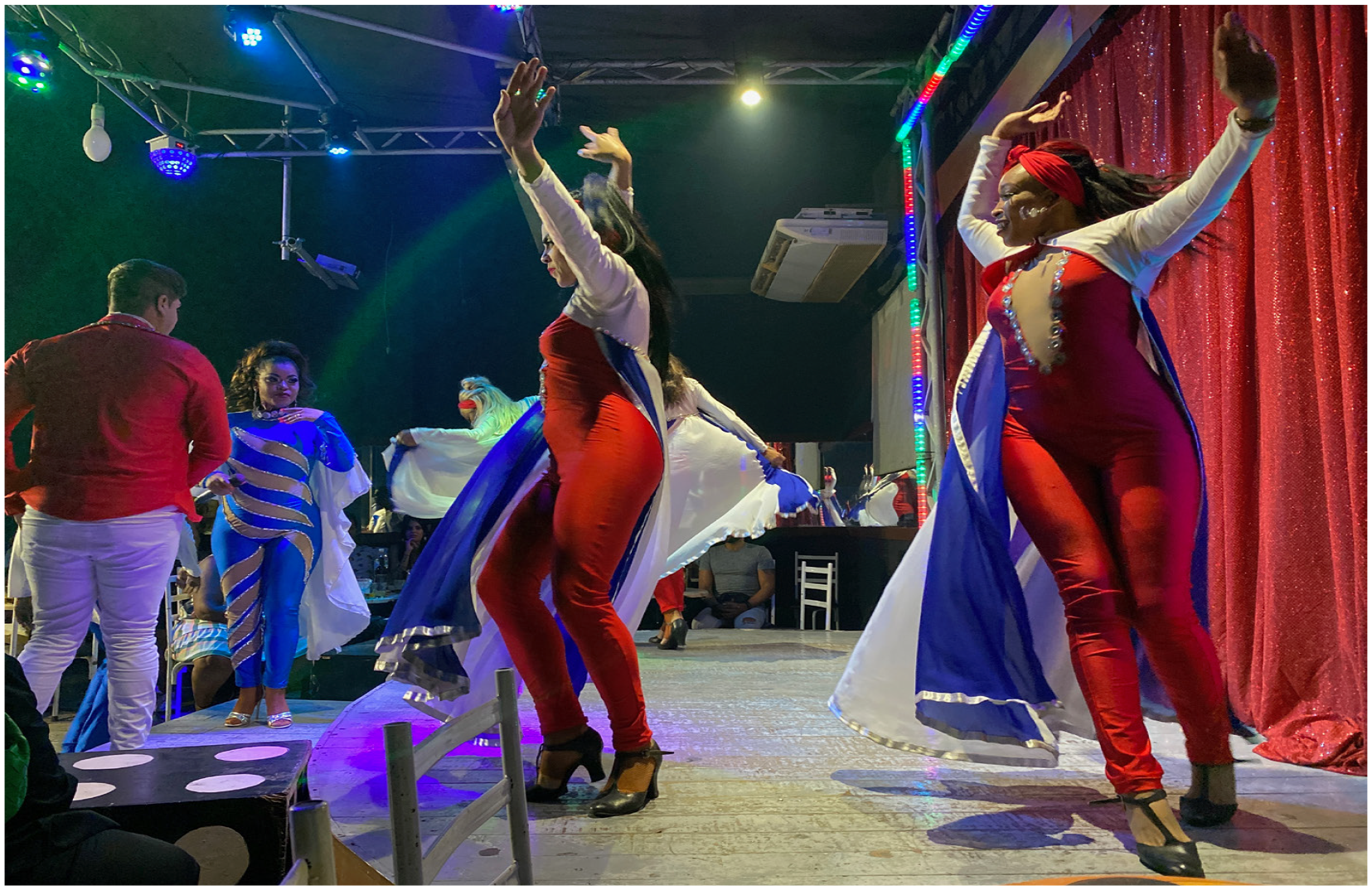
Nationalist performance, primarily for tourists, with dancers draped in likenesses of the Cuban flag.
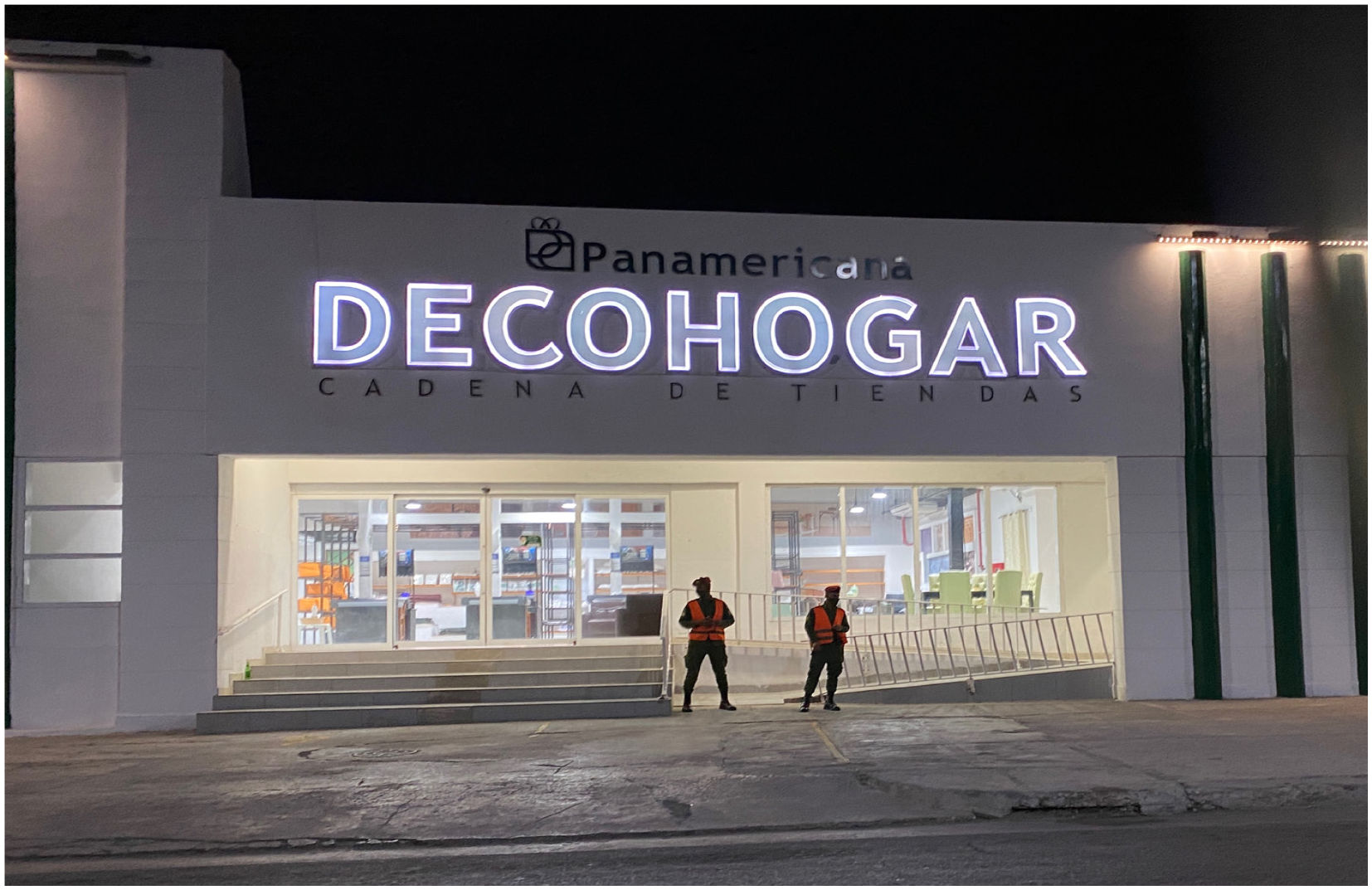
State security officers guard a home furnishings store that specializes in imported goods that are basic in quality but priced well above what an average Cuban salary could afford.
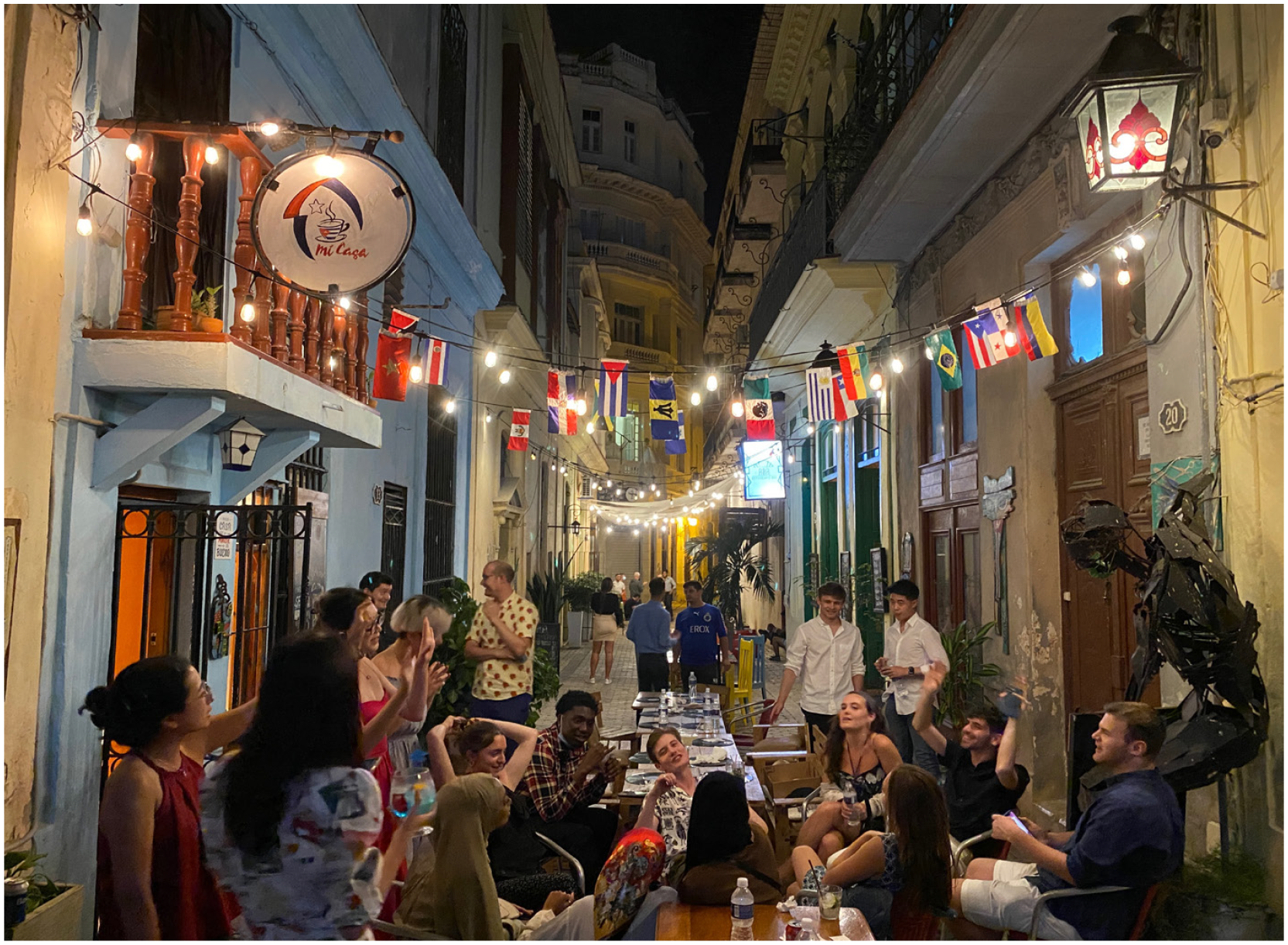
Diverse group of young tourists from Europe, celebrating a birthday in a Habana Vieja outdoor restaurant, under the flags of the Americas.
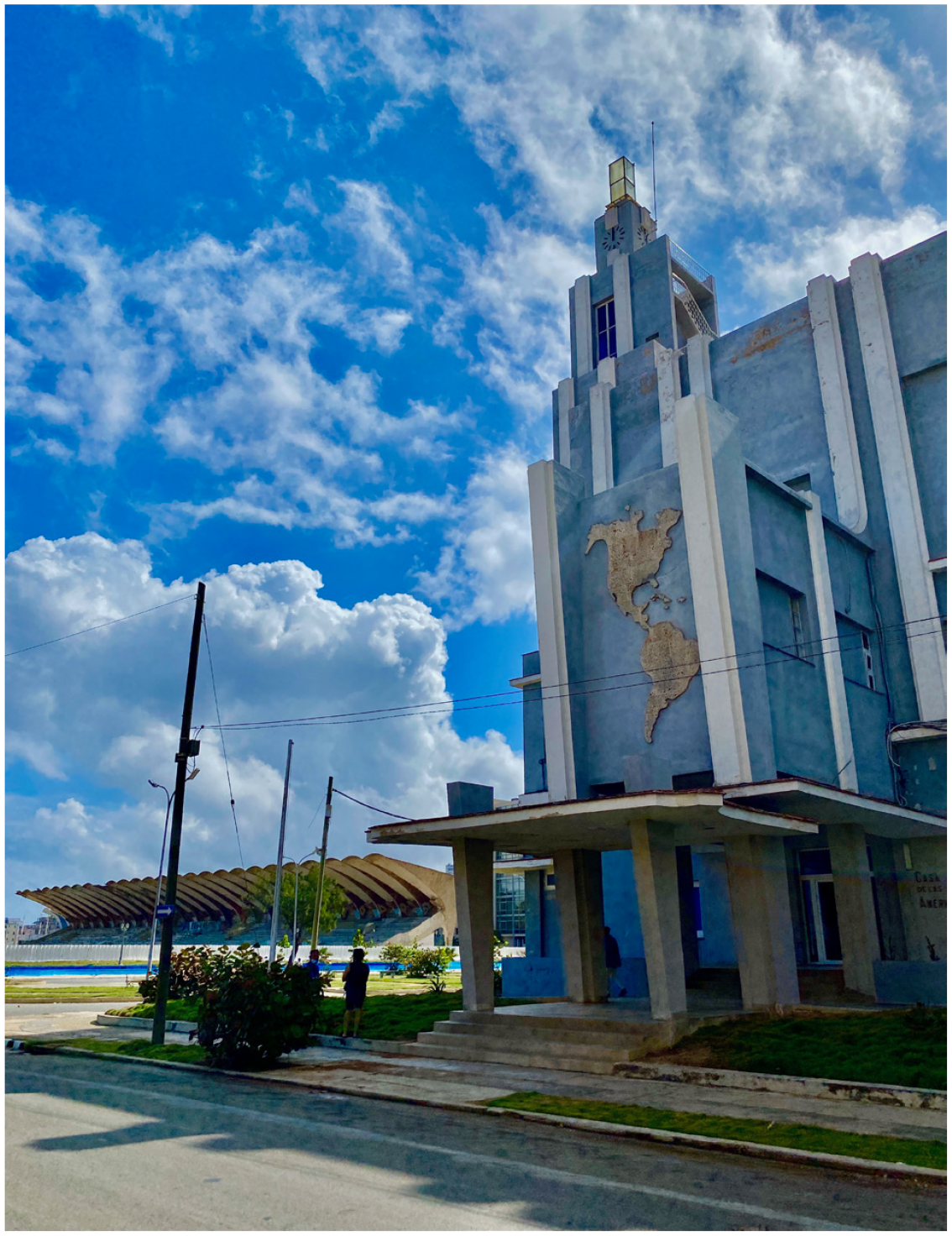
The cultural and research institute Casa de las Americas stands near a crumbling stadium that once hosted the Panamerican Games.
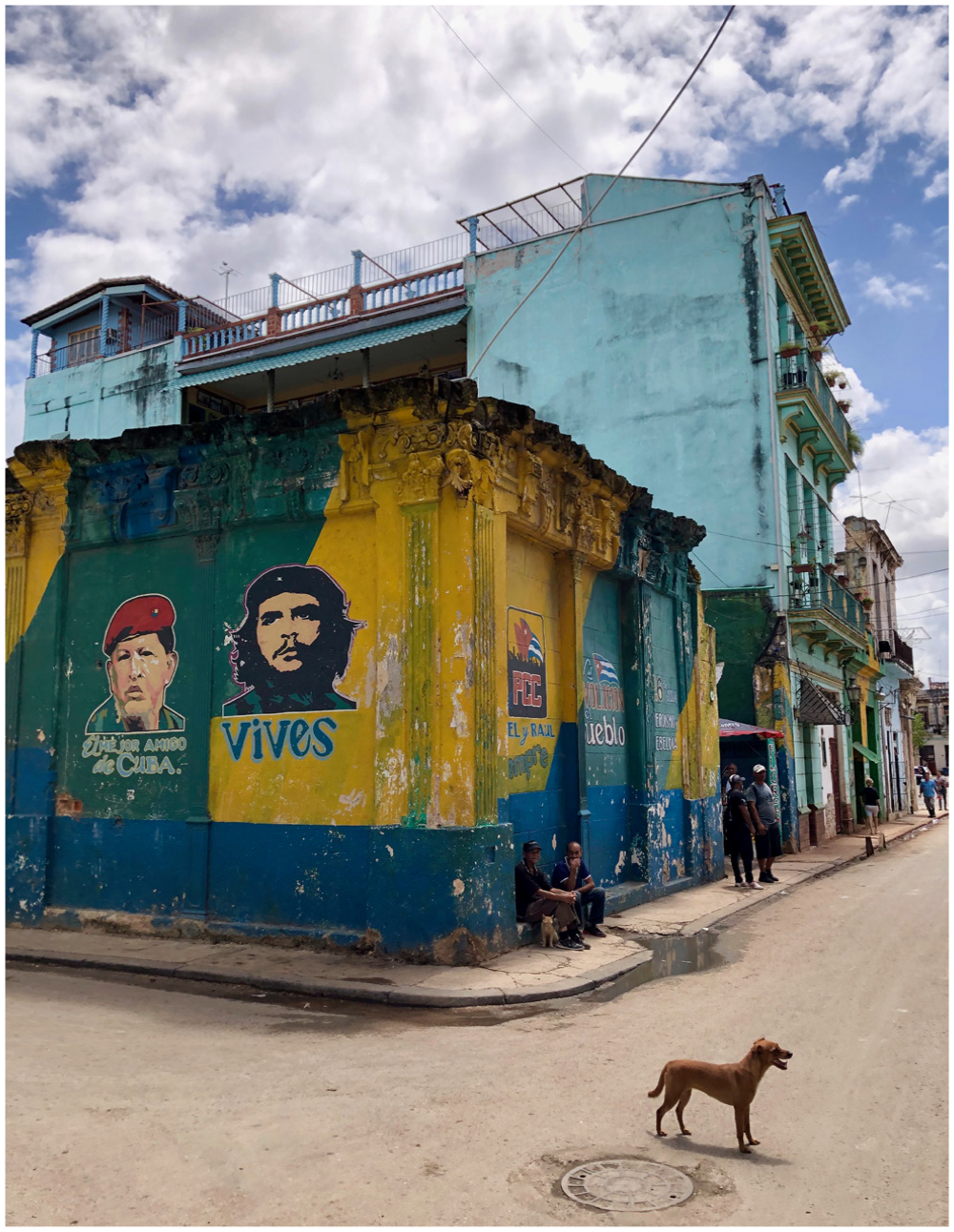
Antique buildings in Habana Vieja, including revolutionary adornments declaring that Che Guevara “lives,” and that Hugo Chavez is “the best friend of Cuba.”
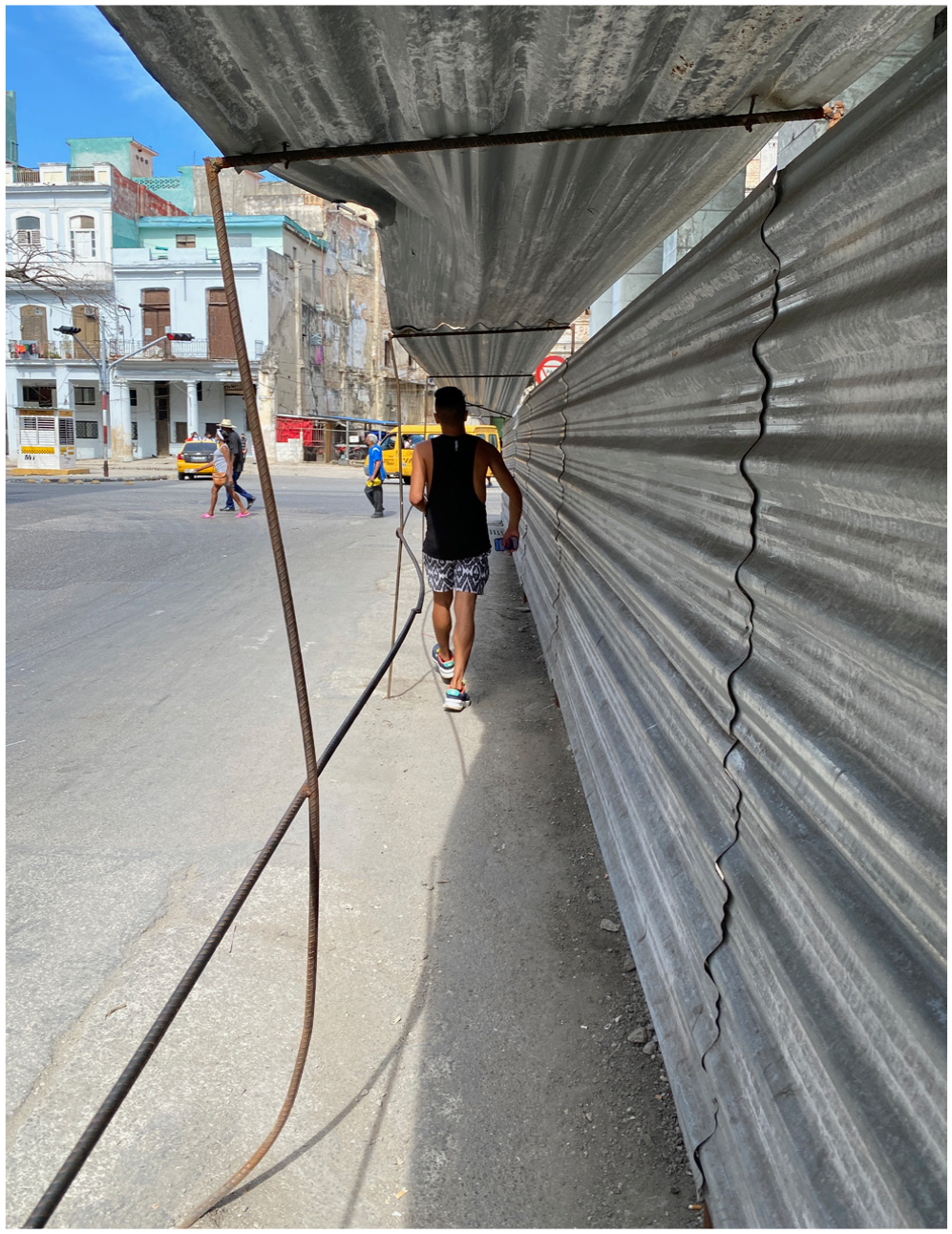
Precarious corrugated shields for pedestrians along vast redevelopment sites on the edge of Habana Vieja.
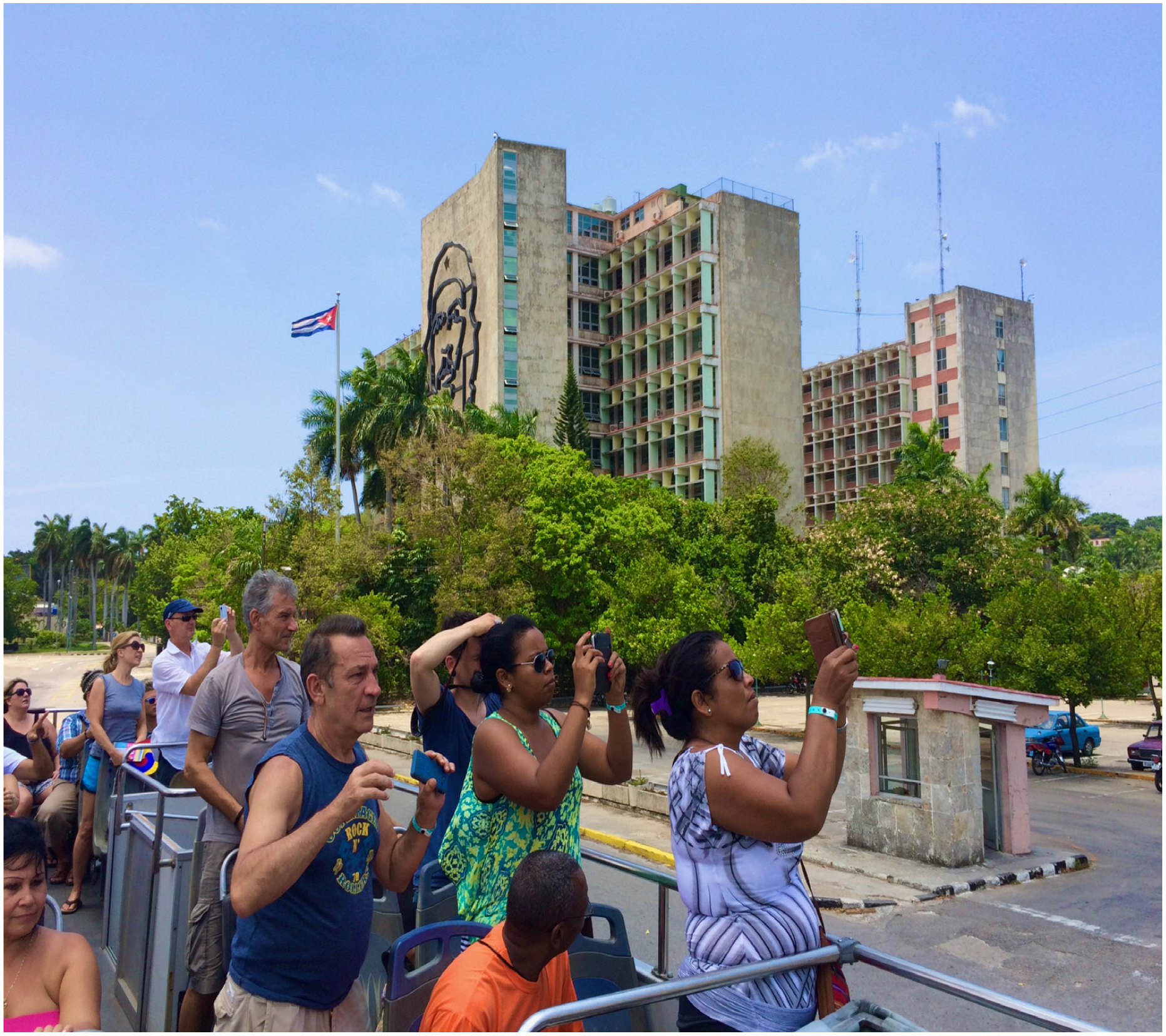
Tourists in an open-air bus clamoring to take photos of revolutionary icons inscribed on government buildings in Plaza de la Revolucion.
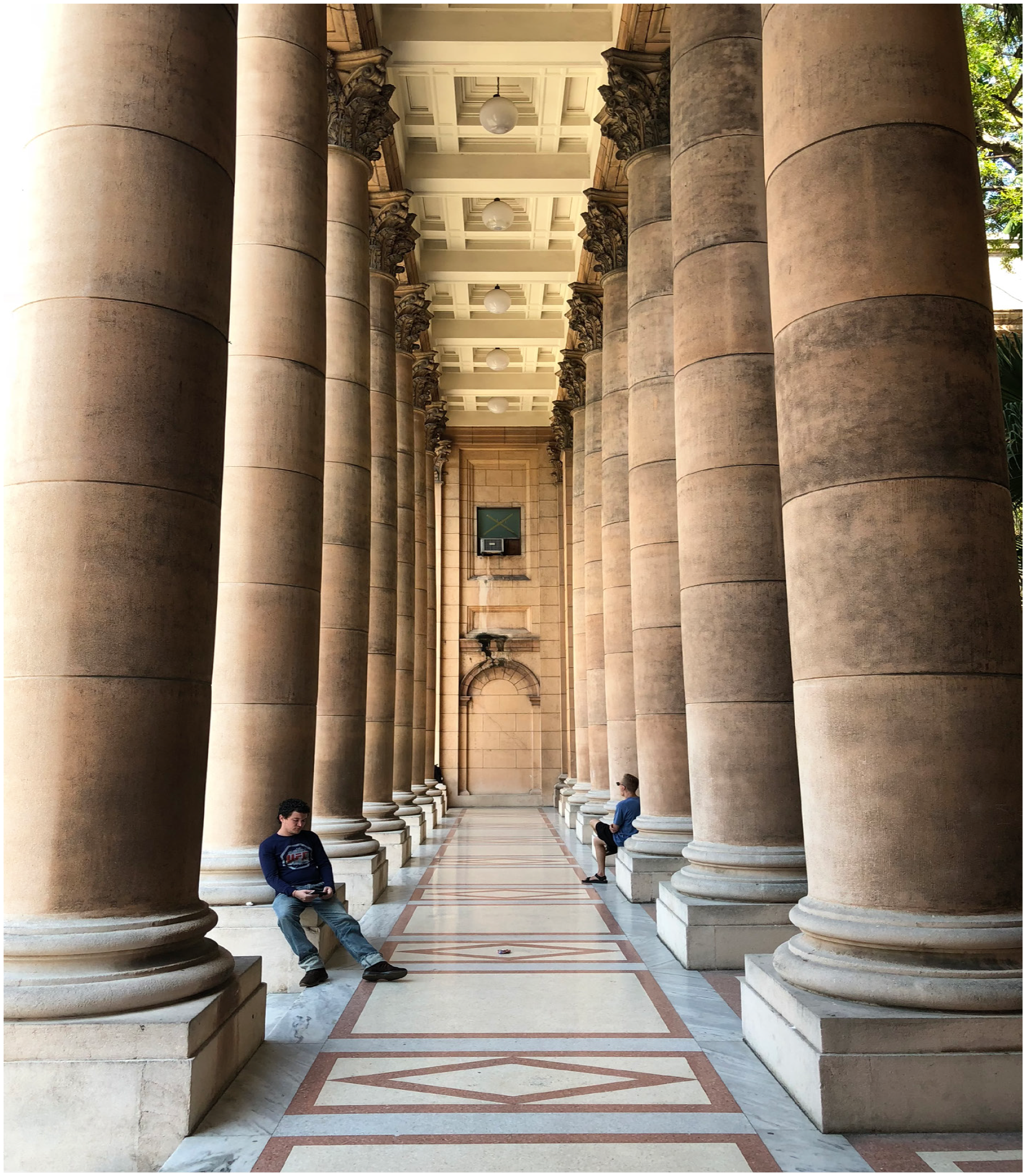
Pillars forming a breezeway with cooling shade for students and staff at the main campus of the University of Havana.
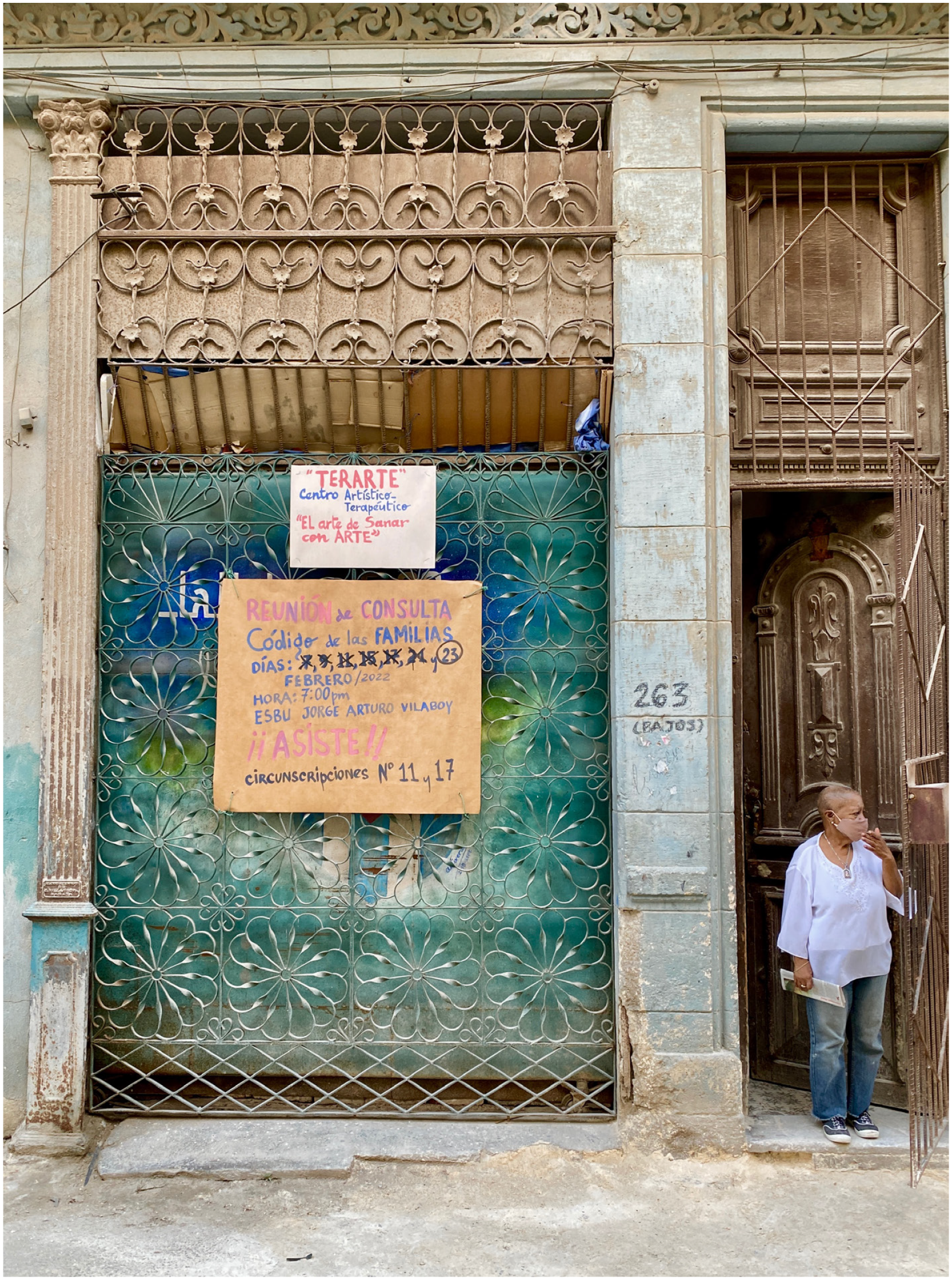
A handwritten sign announces Cayo Hueso neighborhood consultation meetings about the upcoming referendum to create a new “Family Code” for the first time since 1975. The reform passed in September 2022, and puts Cuba at the global forefront of de jure rights and protections related to sex, gender, sexuality, and families.
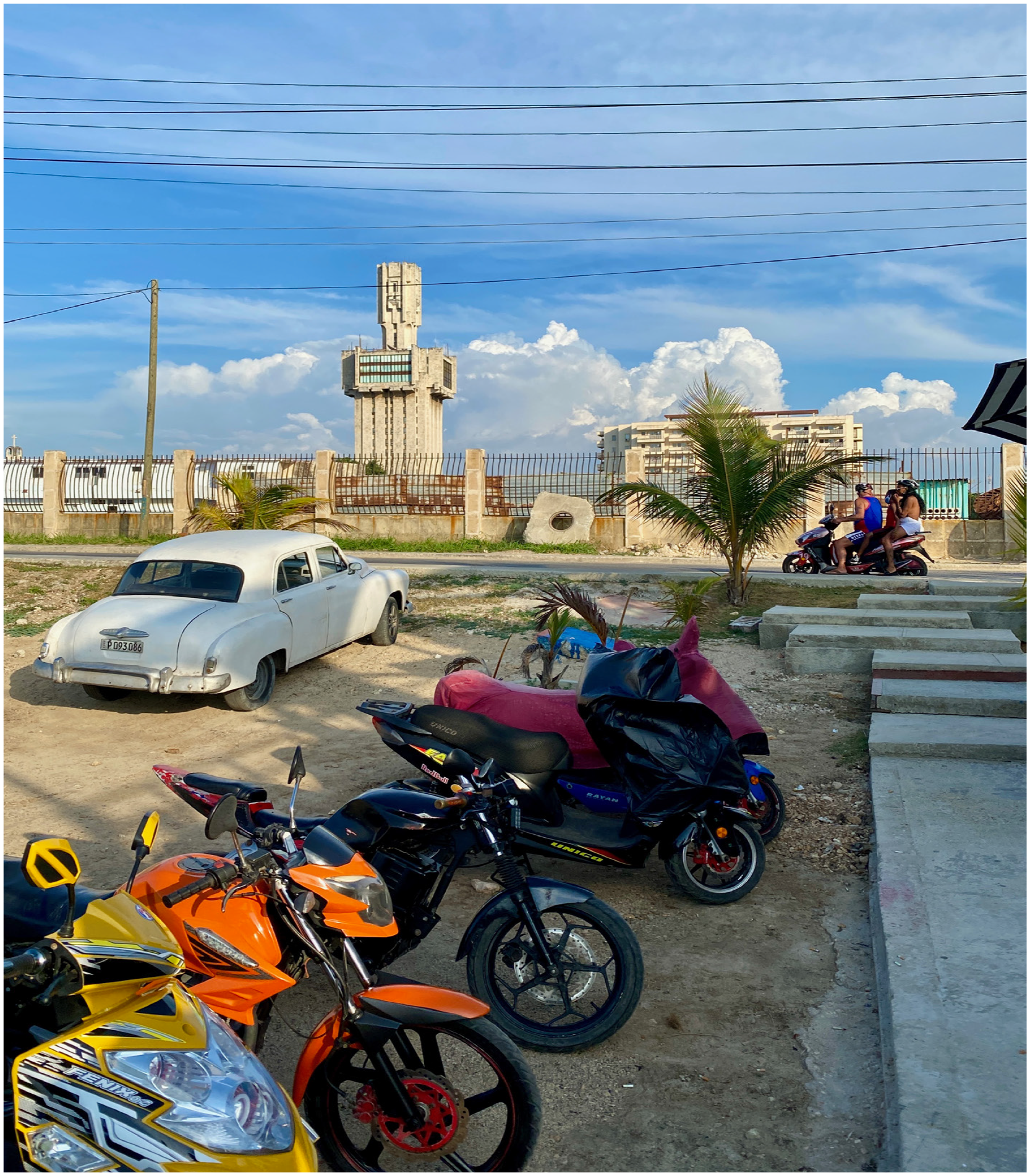
In the coastal Miramar area, motorcycles from China and Panama are parked near a 1950s American car, as a Cuban family loaded onto one such motorcycle zips along with the Russian Embassy (originally opened as the Embassy of the Soviet Union in 1987), hovering in the background.
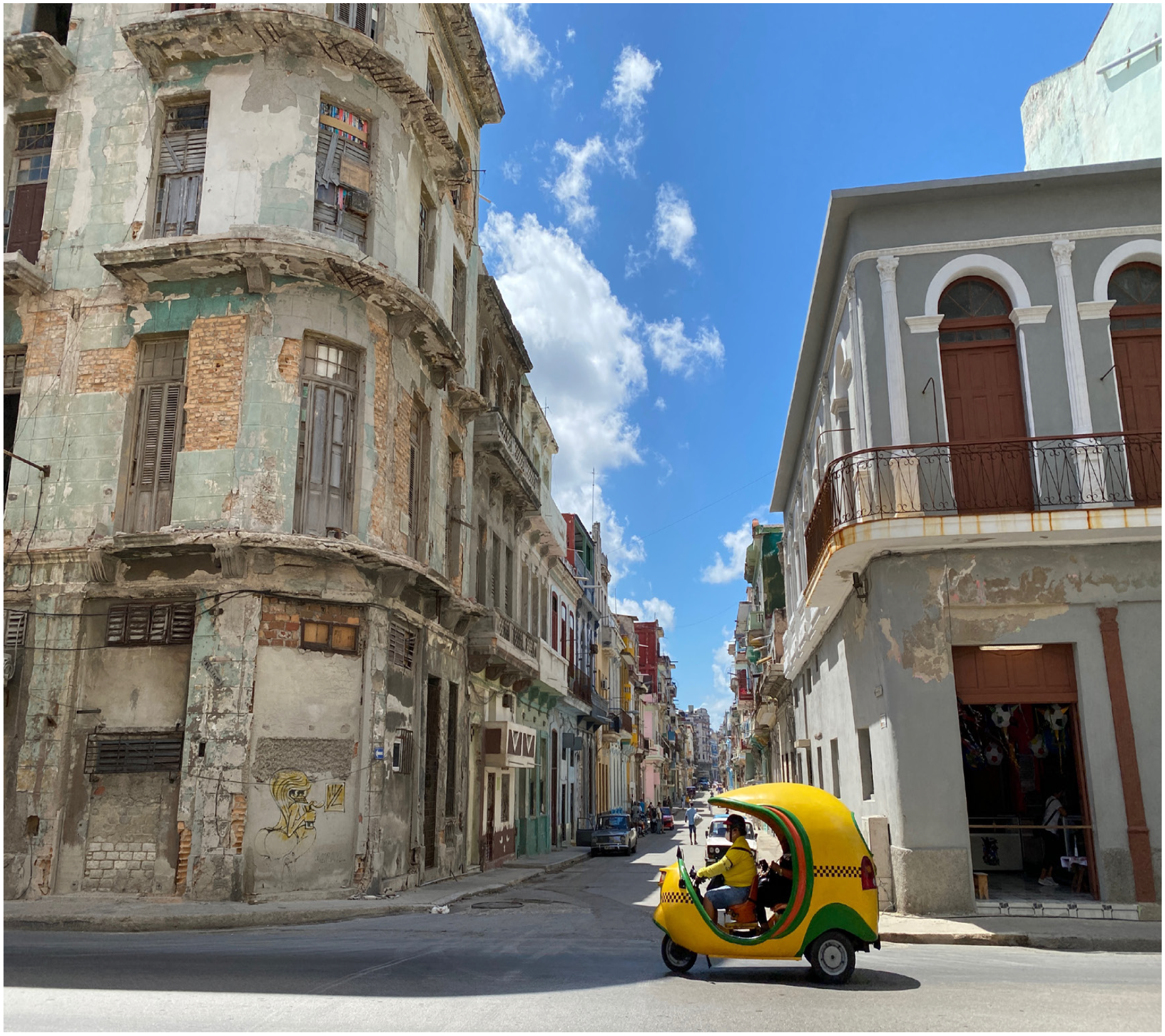
A tiny “cocotaxi”—which emerged in Cuba as motorized rickshaws with a coconut-reminiscent cover for transporting tourists in the late 1990s when first re-opening to mass tourism since the revolution—speeds past Centro Habana buildings that are rapidly deteriorating from intense Caribbean sun, salty sea air, and lack of maintenance.
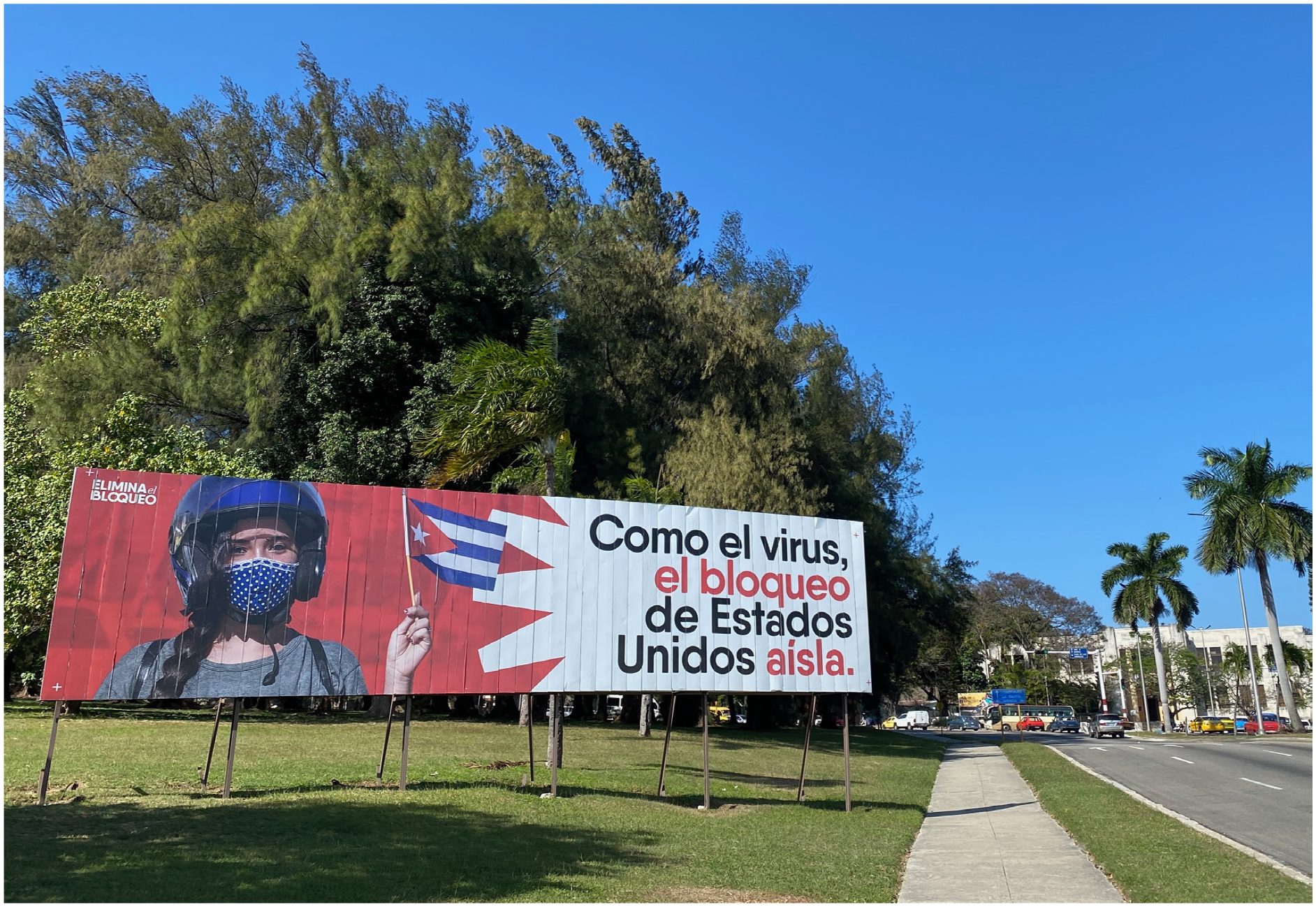
There is no advertising of commercial products or services in Cuba—only for government agencies, services, and messages. Near the Plaza de la Revolucion, on the long road between the airport and central Havana, a government billboard projects an analogy: “Like the virus, the blockade of the United States isolates.” The smaller text in the upper left corner repeats a common Cuban refrain: “Eliminate the blockade.”
“Torre K,” set to be Cuba’s largest tower at 154m (505.25ft) once completed, takes shape along Avenida 23 in Vedado. Slated to be another new luxury hotel, it will dwarf the Hotel Habana Libre (127m/416.67ft) in the background. The new tower has its foundations in a deep excavation originally made during the Soviet era to explore possibilities for a Havana metro system, which was ultimately never constructed.