



Abstract
Boundary maintenance, intergenerational cohabitation, conspiratorial thinking, and volunteerism in occupied ukraine: A snapshot of new research.
Keywords
A COVID-19 Trust Paradox
Disclosing a positive COVID-19 test result can be fraught in the best of circumstances. But in South Korea, the authors of a recent article in Social Science & Medicine find, the government itself stigmatized certain social groups through its wider releases of patient information. Consequently, the government generated a “trust paradox” in which members of these groups had to rely on the State’s services and follow its regulations while also being made more vulnerable to victim blaming.
Utilizing both media analysis and survey data, authors Ji-Bum Chung, Dahye Yeon, and Min-Kyu Kim examined who was more likely to be blamed for infecting COVID-19 and who was more likely to blame others. Their findings demonstrate that membership in certain social classes was disproportionately associated with being blamed for the pandemic. For instance, patients who were Christian were at a significantly higher risk of scapegoating because several highly publicized mass infections had begun in churches. Additionally, sexual minority patients were more likely to be accused of having COVID-19 because of widespread discrimination and prejudice against the LGBTQ+ community, a trend that was exacerbated by a superspreader event that began at a nightclub frequented by members of the LGBTQ+ community. Those doing the scapegoating, meanwhile, were found to be older South Koreans, those with more trust in the government, and those who had low knowledge about COVID-19.
Hospital Corpsman James Woo of the U.S. Navy fills a syringe with the COVID-19 vaccine at Navy Branch Health Clinic Chinhae, South Korea.
U.S. Navy Photo by Mass Communication Specialist Seaman Adam Craft, Public Domain
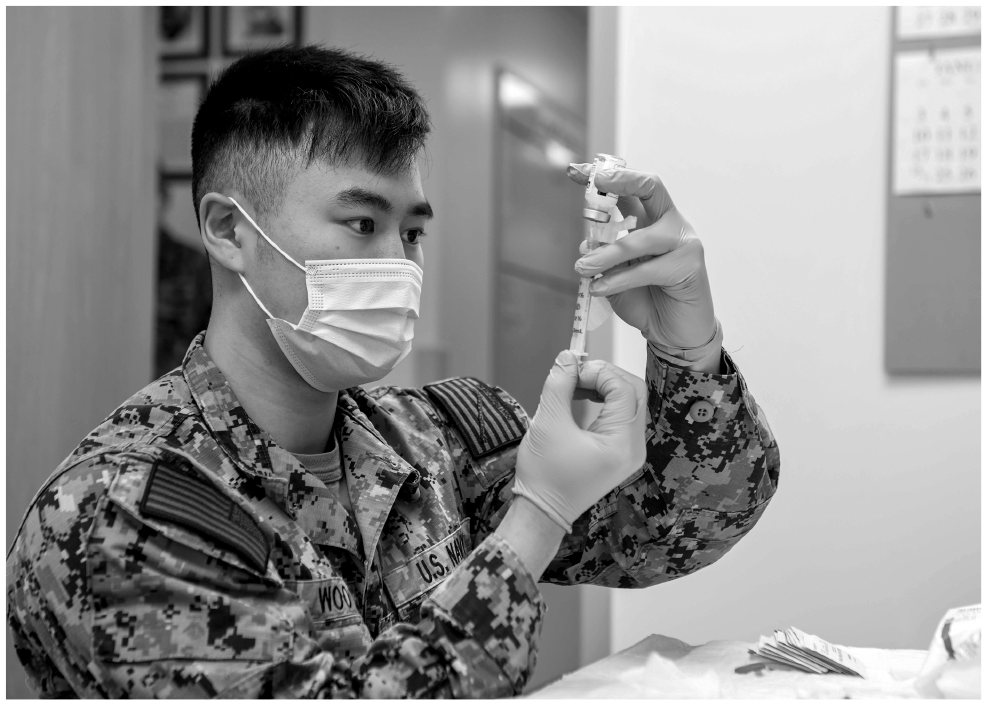
Because scapegoating undermines social trust, it has deleterious effects on help-seeking, which, in a pandemic, makes public and personal health more precarious. It is natural to seek to blame individuals and groups in times of crisis and trauma, and it is imperative that governments purposefully work to build the social cohesion that, instead, helps heal.
Anti-Immigrant Influence
Europe’s growing ethnic diversity stands in contrast to rising anti-immigrant sentiments, discrimination, and racism. To investigate beyond conventional survey methods and capture such sentiments as expressed online, sociologists Anastasia Menshikova and Frank van Tubergen waded into Twitter. There, using automated text analysis, they were able to determine a pattern by which online anti-immigrant rhetoric paralleled exposures to instances of anti-immigrant media.
As reported in the European Sociological Review, Menshikova and van Tubergen, along with a research team, first created a panel of 28,000 Twitter users in 39 regions in the United Kingdom. Then they worked to quantify the anti-immigrant sentiments contained within 500,000 tweets over a 1-year period. They found that people tweeted more negatively about immigrants in periods when they were more strongly exposed to the coverage of immigration in the news. This association applied both for national news coverage and the personalized set of outlets people followed on Twitter. In addition, Twitter users tweeted less negatively about immigrants if they lived in areas with more non-western immigrants and if they followed a more ethnically diverse group of people on the platform.
It appears that classic sociological theories still apply to online expressions of prejudice as social media becomes a site of boundary maintenance. Thus, what is often hailed as a tool for democratization may simply open new avenues for discrimination.
Behind Bullying
Research recently published in Gender & Society examines homophobic bullying among American high school students, finding that gender expression, rather than sexuality, may be the targeted characteristic.
Analyzing survey data from U.S. public high schools with a nearly 150,000-student sample size, Joel Mittleman further finds that the relationships between gender expression and bullying victimization are dramatically different for boys and girls. For boys, higher rates of “feminine” behavior appeared to account for most of the bullying they experienced, regardless of whether they were, as stipulated in the article, LGBQ or straight. Boys who reported being seen as “very feminine” were 3.5 times more likely to be picked on than boys who reported they were “very masculine.” Among sexual minority boys, being more “manly” was relatively protective against bullying. For girls, however, dressing, walking, and talking in gender-nonconforming ways were not the main explanation for their experiences of bullying. Rather, sexual minority girls faced a double-bind in a culture that values modesty: they were policed not only for expressing same-sex desires but also for expressing agentic sexual desire in the first place.
Maryland GovPics, Flickr CC
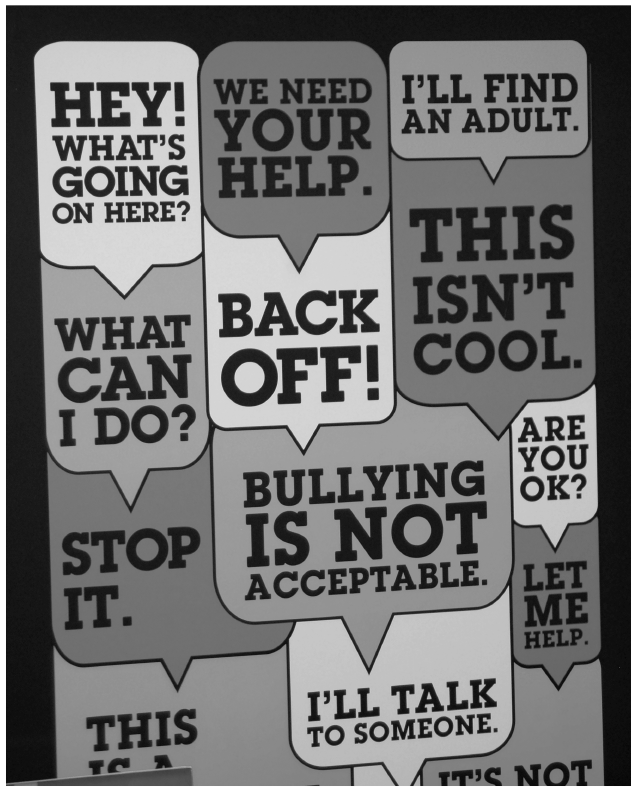
Exploring patterns within the murky boundaries between sex, sexuality, and gender has become essential to developing better policies to discourage bullying and offer appropriate help to victims. Mittleman’s study provides population-based support and surprises for existing social scientific insights: bullies do not simply police sexuality as a means to enacting homophobia, they also punish counter-normative forms of doing gender. It is yet another reminder that we must look beyond conventional wisdom when attempting to diagnose (and, consequently, treat) social problems, as other root causes may be hiding in plain sight.
More Family, More Time?
Coupled up and cohabitating—with your parents? Over the past 50 years, the number of households with more than one generation has grown dramatically all over the world. A recently published paper in the Chinese Sociological Review investigates how multigenerational living arrangements influence the time allocation of young spouses.
By surveying 9,359 couples, Muzhi Zhou, Man-Yee Kan, and Guangye He illustrate how paid work time, household and adult care time, and childcare time vary for working-age couples who live alone or with young or old parents. The findings indicate that the direction of support varies most prominently based on the age of the co-resident parents. Compared to those who do not live with parents, couples who reside with relatively young parents spend about 2.2 hours less time each week on housework and adult care, while those who reside with relatively old parents report 1.5 hours less paid work time and 0.7 hours more time on housework and adult care. Location matters, too: Rural wives living with elderly parents spend nearly 2 hours more on housework but 1.2 fewer hours on childcare per week.
Multigenerational living has its pros and cons for couples’ time use.
Matt Barber, Flickr CC
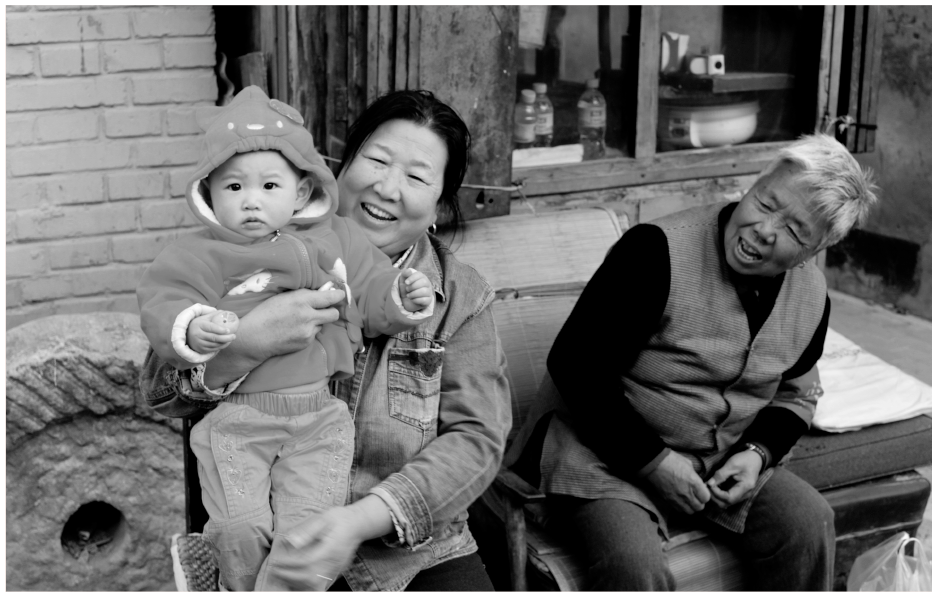
This study sheds light on the importance of identifying the direction of assistance when studying multigenerational families, as well as the high time cost of adult care, and it adds to our understanding of how such living arrangements affect the lives of adults. In light of research on China’s graying population, as well as the challenges COVID-19 posed to geographically dispersed families, studies on the form and function of extended family households help contextualize trends and explore the psycho-social implications of cohabitation.
Determining “Hate”
In 2020, the number of reported hate crimes in Canada rose by 37% to hit its highest recorded level. But what happens after reporting? Writing in the Canadian Review of Sociology, Timothy Bryan draws on 34 semi-structured interviews with police personnel as well as analysis of government and police policy documents to examine how the police make decisions about the pursuit of racially motivated and anti-Black hate crimes reported in the Greater Toronto Area.
Bryan’s interviews reveal that the majority of investigators find determining offender motivation the most difficult aspect of hate crime investigation: “In cases where officers determined that an incident was in fact a hate crime and were able to locate suspects and lay charges, the incidents were particularly egregious, involving deliberate acts that resulted in significant harm to victims.” While police claim that the circumstances of a given incident determined how police responded and whether a case was ultimately solved, the ability of police to identify incidents as hate crimes was dependent on the way police viewed and understood hate—aspects that rely, in turn, on officers’ own perceptions of race and racism.
Toronto police officers’ focus on hate crimes that are “extreme, deliberate, and intentional” can obscure other, more nuanced forms of hate experienced by Black and other racialized communities.
Tibor Kovacs, Flickr CC
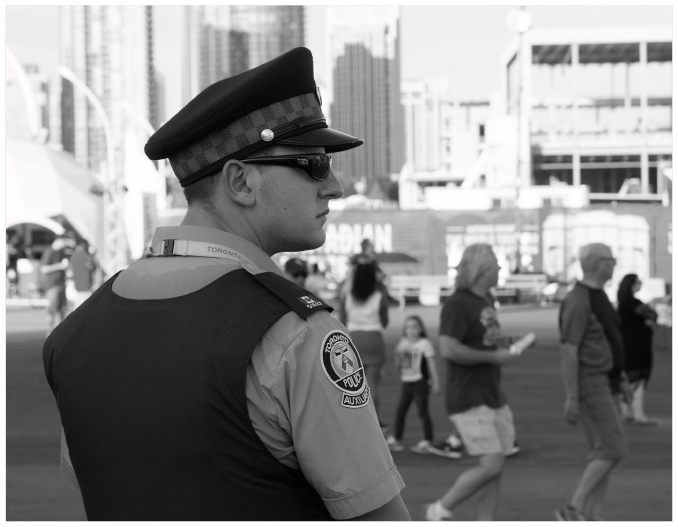
For many police officers, hate crimes are easy to identify when they are “extreme, deliberate, and intentional.” Recognizing hate crime in this form aligns with conventional notions of racism as extremism, notions that in many ways, support the dominant criminal justice framework around hate crime in Canada. However, the author argues that these notions of hate crime can be problematic, “because they prevent other expressions of racism experienced by Black and other racialized communities from coming into view.” As the author writes, “Furthermore, they fail to recognize the ways in which racism and anti-Blackness are woven into the everyday experiences and encounters of Black and racialized communities.”
What It Is to Be Ukranian
Civic engagement can take on many different forms: volunteering at a food bank, attending a town hall, and serving on a committee are just a few examples. During times of political unrest, as the needs of the community and country begin to coalesce, the lines between these various modes of civic engagement can become blurred.
In one of the first sociological assessments of life in wartime Ukraine, sociologists Olga Boichak and Brian McKernan examine the role volunteerism has played in sustaining and driving the national response to the Russian invasion. In doing so, they reveal how Ukrainian volunteers are creating new norms and forms of political resistance through their efforts.
Using data from interviews with 24 Ukrainian citizens involved in efforts to support the national military and civilian population, the authors unpack the stories volunteers employ to construct their identities and actions in a shifting political landscape. From these narratives, two main findings emerge. As reported in Cultural Sociology, volunteers work to define their efforts as contributing to something beyond fulfilling immediate material needs. Instead, they situate their actions as a form of resistance and in vital contribution to the functioning of the Ukrainian state. Additionally, volunteers work to create new norms of being a “good” citizen, grounded in acts that contribute to key institutions of the state like health care and education. This encourages a “strong civil society where citizens are actively involved in the political process.”
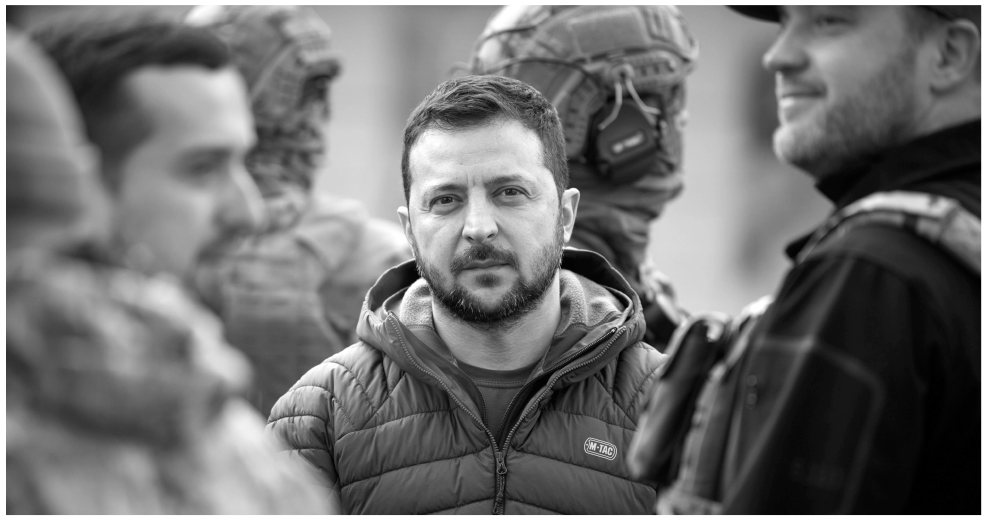
Ukranian President Volodymyr Zelenskyy attends a flag raising ceremony in the liberated city of Kherson, November 2022.
public domain
Extreme challenges, such as living under an invading force, demand a great deal from citizens. The Ukrainian people are answering the call of duty not only through military service but through civic service; along the way, they are creating new norms of engaged citizenship that are reconstructing the very notion of what it means to be Ukrainian. Thinking more broadly, we can see that periods of political unrest and uncertainty offer opportunities for societies and cultures to reimage what it means to be a member of the group.
Companions in Conspiracy
Why are conspiracy theories so alluring? Sure, we’ve all had a hunch about something that ran counter to conventional wisdom, but that is vastly different from a systematic belief that a group of powerful people is planning to carry out evil deeds. Yet, during COVID-19, conspiracy theories proliferated, especially on social media platforms like Twitter. Conventional explanations may blame strongman personalities and exploitative media algorithms, but a new study in the American Sociological Review highlights how conspiracy theories are also about sense-making and social connection during unsettled times.
Aggregating over 700,000 tweets from 8,000 users, including both humans and bots, Henrich Greve and his team of colleagues from Stanford University identified 13 distinct COVID-19 conspiracies that fell into two broad clusters: COVID-19 as a hoax or exaggerated threat (e.g., hospitals are secretly empty) and COVID-19 as a bioweapon spread intentionally by bad actors (e.g., Bill Gates or the Chinese). Importantly, human engagement with conspiracy theories was much more nuanced than bots’; non-human posts tended to focus on a single theory in an effort to stoke moral panic. For humans, engaging with one conspiracy theory was found to act as a “gateway” to engaging with multiple conspiracy theories, especially when faced with a perceived threat (e.g., rising case rates) and when their conspiratorial posts were affirmed by other users via retweets.
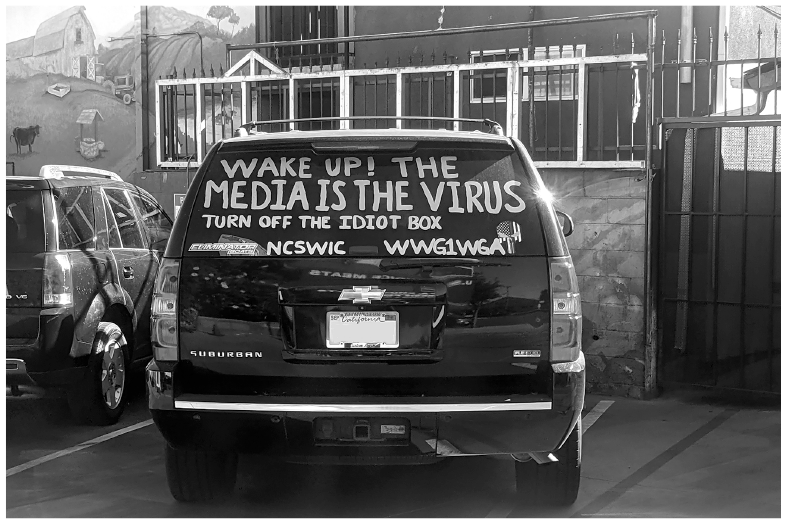
Conspiracies flourished during the COVID-19 pandemic.
Cory Doctorow, Flickr CC
Not surprisingly, when a user tweets and is engaged with by others, not only do they feel validation, but they become motivated to seek out further conspiratorial content in an act of “collective sense-making.” While we often think of conspiracy theories as irrational beliefs held by people wearing tinfoil hats, this research pushes us to consider how they also provide a sense of solidarity and security, both ontological and social, in times of unrest.
The Racist Palate
Elite cultural fields often lack diversity, and the fine dining field is no exception. Though we know that marginalized producers of cultural goods, such as artists and chefs, are often excluded from positions of prestige, much less is known about how racial inequality specifically affects how critics, and even the public, evaluate their products. In Social Problems, Gillian Gualtieri reports on her interviews with 120 critically recognized chefs in New York City and the San Francisco Bay Area and her analysis of 1,380 Michelin restaurant reviews.
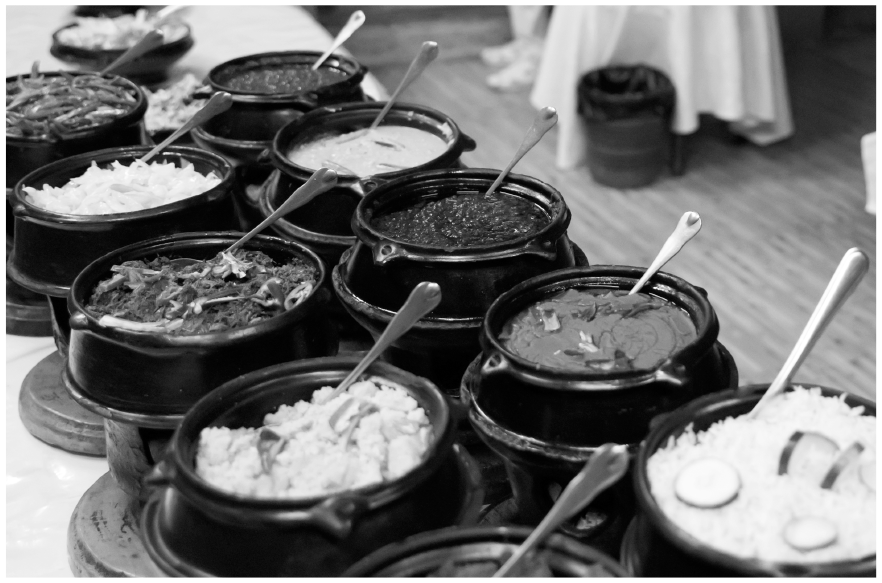
In “Discriminating Palates: Evaluation and Ethnoracial Inequality in American Fine Dining,” Gualtieri compares what she terms Ethnic restaurants and Classic and Flexible restaurants; the culinary products of the former are associated with non-Whiteness, while those of the latter are associated with Whiteness. Ethnic restaurants, she explains, are systematically devalued by the criteria of authenticity, which relies on subjective interpretation more than standardized measures. Classic and Flexible restaurants, on the other hand, are assessed in relation to standardized institutions of American fine dining. In interviews, Classic and Flexible chefs describe occupying a position of knowledgeable authority over their craft and valuing the opinion of formal institutions like Michelin. By contrast, for their restaurants to survive, chefs at Ethnic restaurants consistently discuss catering to diners’ “inconsistent, and often uninformed,” expectations based on previous experiences outside of the context of fine dining.
Ninara, Flickr CC
The findings reveal how inequality is reproduced through an assumption that White restaurants are the standard against which all U.S. restaurants should be evaluated. The ambiguous criteria of authenticity ensures that Ethnic restaurants are uniquely constrained by the inconsistent expectations of diners and critics. As a result, they tend to earn fewer stars and charge lower prices. Inequitable evaluation processes produce a system of value based on racial hierarchy, inflecting the ways chefs and critics understand and engage with their critical and creative work.