Abstract
Farm and food insecurity are intertwined challenges for the agri-food system. This brief draws on data from the USDA and other secondary sources to contextualize these problems and propose converting non-profit initiative into policy solution. Policy reform should augment SNAP benefits through an increase of their value for consumers when purchasing direct-to-consumer products from farmers. This would involve regulatory alterations that support purchases from Community Support Agriculture, federalizing the Double Up Food Bucks program within SNAP, or universalizing a direct-to-consumer food benefit for all consumers. Such changes tie together farm and food security, providing an opportunity to SNAP into justice.
The Supplemental Nutrition Assistance Program (SNAP) is a cornerstone of the American safety net, providing a means-tested benefit (i.e., income-based eligibility) to more than 21 million households in 2021. Beginning as the Food Stamp Program in 1964 during the War on Poverty, the SNAP program has united representatives of rural and urban constituencies by redistributing surplus commodity crops to address food and farm security.
In 2021, the Biden Administration reviewed the USDA Thrifty Food Plan, which is used to calculate the SNAP benefit per household. The evaluation led to a 21 percent increase in SNAP benefits that will support lower-income consumers to purchase more and higher-quality food. While the increase in SNAP benefits should be applauded for its potential to reduce poverty, it can have an unintended side effect.
Namely, increases in spending on groceries through SNAP often operate as a subsidy to grocery stores and other retailers rather than direct-to-consumer outlets, such as farm stands, farmers’ markets, or community supported agriculture (CSA). This can disadvantage small farmers who are more likely to participate in these localized channels, and often do not have the required certifications (e.g., GAP) or production volume to sell to large-scale retailers. In contrast to arm’s length markets like grocery stores, small farmers can utilize direct-to-con-sumer distribution channels to accrue more of the value of what they produce. The SNAP program could be used as a way to incentivize consumer participation in these channels, thereby linking food security with farm security.
Considering increases in SNAP are associated with decreasing food insecurity, increased consumption of healthy food, and increased sales for farmers, converting Double Up Food Bucks into public policy appears as an advantageous utilization of a non-profit initiative.
A program begun by the Fair Food Network in 2009, Double Up Food Bucks, demonstrates the benefits for farmers and consumers through localized channels by doubling the value of SNAP benefits when used at farmers markets. If the federal government adopted this program, rather than it being executed on a case-by-case basis with philanthropic dollars, it would further increase SNAP benefits above the Thrifty Plan adjustment while subsidizing small farmers and incentivizing consumers to eat locally. Even regulatory changes that allowed for more participation in direct-to-consumer channels directly by SNAP recipients could change the distribution of this subsidy across the food system to be more beneficial to small farmers. In a more universal vision that moves away from a means-tested logic based on income limits, providing economic support to the population at-large to purchase local food could further increase linkages between consumers in various strata and their geographically proximate farming communities. Any of these changes would increase the opportunities for sustainable agrarian communities and access to local, nutritious foods for low-income consumers.
Losing Farms, Consuming Hunger
After World War II, the United States witnessed a more than a two-thirds decline in the number of farms. In part, policymakers promoted institutional changes premised on the capacity of modern, technologically-intensive farming to provide abundant, cheap food. This benefited agri-business, processors, and retailers, by providing them more control over production and distribution thereby increasing their capacity to set lower prices and diminish price premiums from specialty and niche products. Food became cheaper, pushing farmers to get by with tinier margins and putting farms in danger of being sold, spurring on the concentration of more land in fewer farms. The trade-off for this change in agrarian structure was supposed to be a United States free of hunger. To an extent this is true, as production of important staples has caused food waste to be a more likely outcome of the agri-food system than insufficient supply.
Despite this abundance, more than 1 in 10 people living in the United States are food insecure. Food insecure households are more likely to report skipping meals, not being able to afford balanced meals, being worried about not having enough food, and eating less than they should. This is not due to insufficient production, but about purchasing power and unequal distribution of what is produced. Hence the importance of SNAP, because according to certain USDA estimates the SNAP program reduces the likelihood of being food insecure by 20 to 30 percent. Thus, as the number of farms declined, the trade-off to “end hunger” from consolidated, modernized farms failed to materialize. And the current model for how SNAP addresses hunger is knotted into this systemic contradiction. SNAP (in)directly subsidizes agribusiness, processors, and retailers who control a food system in which too many people living in the United States continue to be food insecure and too many farms are economically at risk.
Double Up Food Bucks and Consuming Food Security
To reverse the chronic crisis in farming, one component proposed by farmer civil society is parity. That would entail a price for produce, meat, and other agricultural goods that covers costs and a sustainable livelihood for farm families. Farmers participate in direct-to-consumer distribution channels to secure more of the value of what they produce, thereby increasing the likelihood of parity. Prices paid by consumers in direct-to-consumer channels are not necessarily higher, rather in some cases the farmer does not have to reduce the price they charge in order to sell in bulk to retailers, wholesalers, and other institutional purchasers. The 2015 Local Food Marketing Practices Survey by the USDA showed that farmers had $3 billion in direct-to-consumer sales, and USDA statistics also show a growth in direct-to-consumer sales by farms holding 1 to 9 acres from 2012 to 2017. The Economic Research Service found that farms with direct-to-consumer sales are more likely to stay in business when compared with farms without those sales.
Double Up Food Bucks programs support these sales and farmers by utilizing public-private partnerships to increase the value of SNAP benefits when utilized at farmers markets, amongst other retail outlets. Studies have shown that SNAP recipients tend to purchase more and higher quality food than non-SNAP recipients because of the economic security it provides. Additional SNAP benefits for direct-to-consumer would mean that farmers utilizing those distribution channels can have increased sales, while low-income consumers receive expanded benefits for purchasing local produce, meats, and value-added products. With 3.37 million Double Up dollars spent at farmers markets in 2020, this translates into thousands of farms and families positively impacted. Therefore, as the Fair Food Network states, “It’s a win-win-win: more healthy food for families, better business for farmers, and a boost for local economies.”
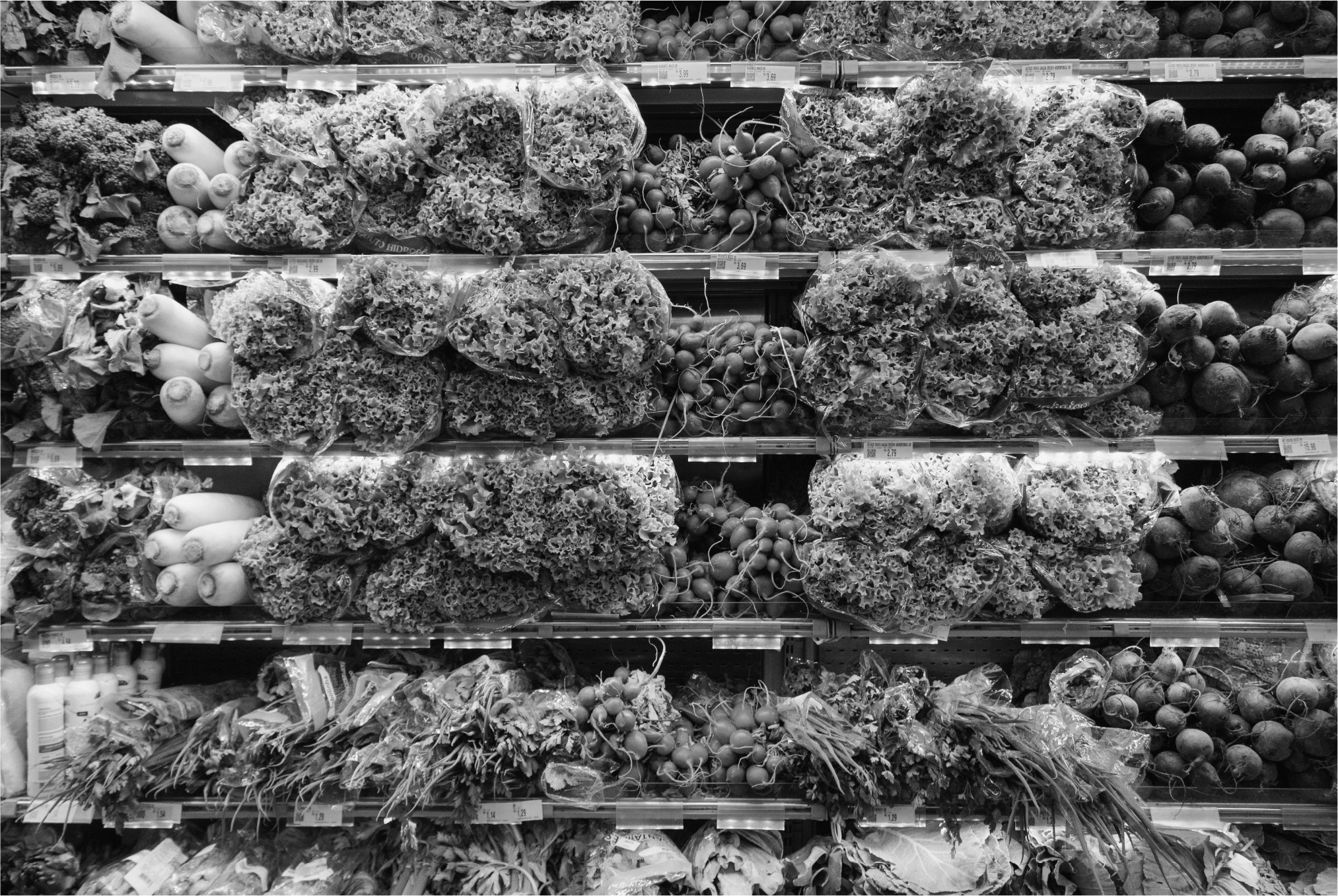
Increases in spending on groceries through SNAP often operate as a subsidy to grocery stores and other retailers rather than direct-to-consumer outlets, such as farm stands, farmers’ markets, or community-supported agriculture.
Pixabay
Reforming Snap for Direct-To-Consumer
There are three reforms that would benefit consumers and farmers utilizing SNAP and direct-to-consumer distribution channels. The first is the aforementioned regulatory alterations. This would require a change in SNAP rules for how benefits are disbursed. Currently, SNAP benefits are accepted at farmers markets or farm stands, similar to a grocery store, with the use of an EBT terminal. That can exclude certain direct-to-consumer channels, like Community Supported Agriculture (CSA), reliant on pre-harvest payments and membership fees. CSAs are a tool for farmers to share production risk with customers, as customers purchase a part of the harvest in advance. This would require that SNAP recipients receive an advance on their benefits to pay upfront for a CSA share, which translates into a recurring farm box over the course of a season.
The second is federalizing the Double Up Food Bucks programs within SNAP. While private partners are important for piloting innovative programs and community building, they do not have the federal government’s resources or scope. The USDA spends over $80 billion per year on SNAP, with a national household average of $239 dollars. A modest increase in this budget to expand benefits for direct-to-consumer purchases could support important additions to the approximately $6 billion spent in local food systems per year. Considering increases in SNAP are associated with decreasing food insecurity, increased consumption of healthy food, and increased sales for farmers, converting Double Up Food Bucks into public policy appears as an advantageous utilization of a nonprofit initiative.
If food programs provided more flexible benefits that incentivized buying produce at farmer’s markets instead of grocery stores, the economic impact of the program would be doubled.
Kevin Malik via Pexels
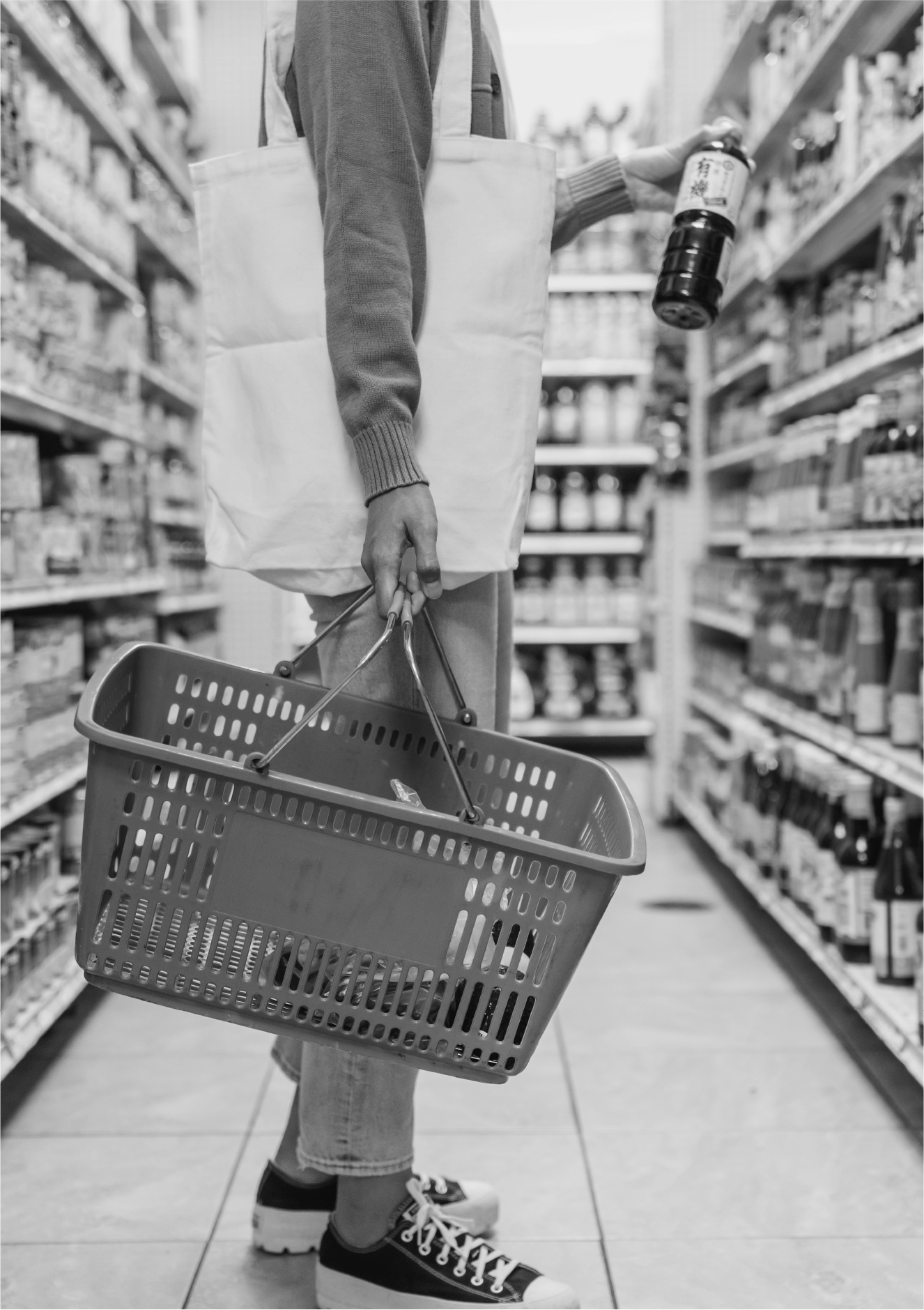
An even more expansive proposal would be to provide a universal benefit to consumers that could be used in direct-to-consumer channels with farmers. The means-tested cut-off for SNAP benefits is $2,871.00 gross monthly income for a family of 4, excluding large portions of the population that still do not earn a living wage. A monthly food incentive to be spent on direct-to-consumer products would reduce household food budgets, connect urban and rural areas, and support farm security. As was shown with the child tax credit in 2021, direct cash infusions can reduce poverty, add to savings, and increase social mobility. Similar benefits should be expected from a monthly food incentive modeled on Double Up Food Bucks, with the added effect of subsidizing small farmers.
As the Farm Bill comes up for renewal in 2023, policymakers should build upon recent changes that expanded SNAP benefits. Leveraging the Double Up Food Bucks model by federalizing it as a part of overall SNAP benefits would be a clear signal of government intent to support local, small farmers and more nutritious diets through an important expansion of the social safety net. It represents one possibility to SNAP into justice, directly tying farm security to food security nationally.
Food insecurity is not due to a lack of abundance, but rather due to unequal production and individual families’ access to the needed economic resources to purchase enough for a balanced diet without skipping meals.
Mattheus Cenalli via Pexels