



Abstract
Our essay addresses the real-life difficulties of discussing and describing gender inequalities. We acknowledge that, at times, falling back on binary heuristics might be necessary to communicate findings, but that this needs to happen in the context of a both/and approach. We argue that quantitative social science can be inclusive, even if there are limits to what data can be analyzed in depth. We conclude that a deep engagement with the complexity of sex, gender, race, nationality, sexuality, etc. remains an urgent, ongoing need across all disciplines.
Thinking, writing, and teaching about sex and gender is challenging but rewarding. The context and time-dependent nature of the very idea of “femininity” and “masculinity,” or the concept of biological sex as a multidimensional construct, can provide these “mind blown” moments for students. Depending on your perspective, you may even obliterate the idea of gender and even sex as stable or significant categories altogether.
However, the concept of gender as a social construct often gets lost in practical efforts to address and reduce gender disparities (for example, the gender wage gap between “men” and “women”). With public discourse steeped in binary assumptions about sex and gender, we need to address the vexing tradeoffs and simplifications we make about gender when engaging with policymakers and corporations about improving gender disparities. The discussions that involve “real world” policy debates, workplaces, and official statistics readily revert to a binary framework. We argue that as frustrating as this gap in our understanding of what gender is and how it is conceptualized in public discussion, we simply need to stick to a “both-and” approach.
A Pragmatic Plea
Despite many efforts to be more inclusive in data collection efforts, sex and gender continue to drive policy discussions about gender and gender-based disparities. The justification that “most people” are cisgender and that reporting outcomes for two genders captures “most people” is not easy to overcome when the very fact that gender continues to be a key stratification mechanism is not always accepted; some even argue that we as a society have “overcome” gender inequality between men and women (remember the repeated claims about how the United States had entered a “post-racial” era?).
The concept of gender as a social construct often gets lost in practical efforts to address and reduce gender disparities.
Tim Mossholder via Pexels

As a result, it still makes sense to discuss systematic differences in employment patterns, earnings, victimization, care obligations in terms of “binary” gender. It is equally important to point out, even if there is a lack of data due to sampling and measurement (more on that in a moment), that there is inequality within gender categories and that gender is complex and expansive. Obviously, not all people assigned female at birth identify as women. The experiences of people of color and sexually-diverse and gender-diverse people are likely to be different, not to speak of the great variation in individuals’ modes of gender expression.
We think of it as a scaffolding approach: If a policymaker in a conservative state asks us, as experts, why we should still care about “women’s issues,” we will highlight inequalities based on (presumed) binary gender and lead them intellectually to understand that within these binary categories, individuals’ experiences also vary along multiple other dimensions of marginalization. We will not (proverbially) hit them over the head that binary sex assigned at birth is not a great (at best) or even a potentially very damaging way to understand peoples’ life experiences.
Perhaps this is taking the easy way out, or, worse, maintaining the system of white supremacy heteropatriarchy through working in the framework of the gender binary.
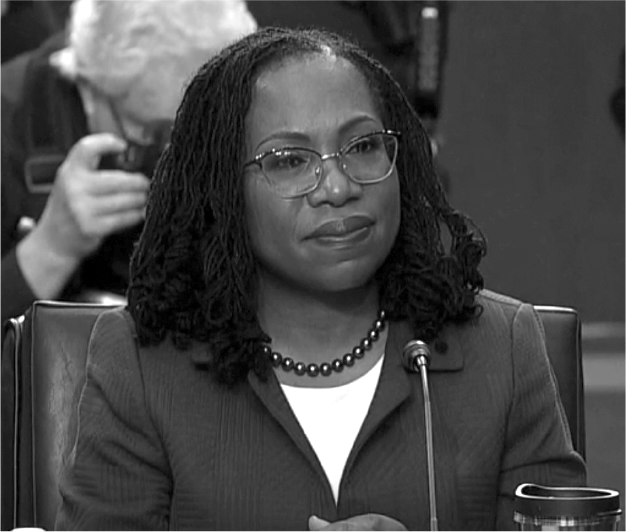
Certainly, Senator Marsha Blackburn (R-TN) accused Judge Ketanji Brown Jackson of taking the easy way out during her confirmation hearings, when Jackson was asked to define the word “woman.” Judge Jackson demurred, responding, “I’m not a biologist,” and stating that her job, as a judge, was to address disputes about gender, not to define it herself. Senator Blackburn found it troubling that Jackson could not provide a “straight answer” to such a fundamental question. Some commentators praised Jackson for highlighting the complexity of gender, whereas others critiqued her deference to biology, as if biology contained the “truth” about gender. Certainly, the more that biologists unpack the multiple layers of sexual differentiation (chromosomes, fetal gonads, fetal hormone exposure, internal reproductive genitalia, external genitalia, post-pubertal hormonal exposure and reproductive status), the messier the issue becomes, but this messiness cuts both ways. The vociferous debates about transgender girls’ participation in school sports prove that biology provides no tidy solutions—some advocates use biological arguments to support the right of transgender girls to participate in girls’ sports teams (i.e., if their testosterone levels are low enough, then this should eliminate any concerns about unfair advantage), whereas others use biological arguments to argue against transgender girls’ participation in girls’ sports (i.e., current testosterone levels don’t matter, because the muscle growth fostered by testosterone during puberty has already given these girls an unfair advantage). In the same way that biology fails to provide reliable answers about the legal and social status of LGBTQ individuals (is it a fixed trait? a mistake? a sin? a disability?), biology also fails to provide reliable answers as to the legal and social status of women, men, nonbinary individuals, trans individuals, etc. In the end, Judge Jackson’s approach may be the only tenable one: We should resist attempts to define gender, and simply focus on addressing disputes about gender in the diverse contexts in which they emerge.
We think the “both/and” approach is the only way to do so responsibly. Data collection efforts, especially those that are based on survey data, have multiple functions: we collect data to analyze and ask the questions we need, but we also collect “demographic” data to help readers, funders, and ourselves to compare our data to society as a whole.
Guidelines for surveys measuring of sexual orientation and gender identity (SOGI), (i.e., National Academies of Sciences, Engineering, and Medicine. 2022. Measuring Sex, Gender Identity, and Sexual Orientation) give us a good idea about how to go about asking about sex and gender. Still, even these guidelines fall short of true inclusivity, especially if they need to be “legible” to the “general public.” Even those members of the public who experience social marginalization themselves may lack the language to parse the specifics of their gender identity. For this reason, providing a rich and diverse set of response options about gender identity (alongside a rich and diverse set of response options for ethnic identity) provides only a partial solution to the problem of full inclusivity.
The definition of gender was a topic of inquiry and contention during the confirmation hearings for Supreme Court Justice Ketanji Brown Jackson in March 2022.
Public Domain Image Courtesy of CSPAN
Nevertheless, it is an important first step: Inclusive language on question-fall within traditional categorical groupings, the effort expended to capture and represent the full range of identities and life experiences remains critical to ensuring that the data we collect about the world truly represents the world, and not simply our expectations. It is our job, as social scientists, to ensure that our language and practices are fully inclusive naires, surveys, and other standard forms (from college admissions forms to job applications to health care intake forms) provides a critical opportunity to make sure that all individuals feel seen.
Even if the vast majority of respondents to a particular survey/questionnaire fall within traditional categorical groupings, the effort expended to capture and represent the full range of identities and life experiences remains critical to ensuring that the data we collect about the world truly represents the world, and not simply our expectations. It is our job, as social scientists, to ensure that our language and practices are fully inclusive to the broadest possible range of people without being confusing.
Even if the vast majority of respondents to a particular survey/questionnaire to the broadest possible range of people without being confusing.
Data reduction can be difficult and may even feel violent in some ways, especially when we take complex identities and reduce them to analyzable groups. But the solution is not to either abandon or privilege data reduction but engage in this practice transparently, mindfully, and responsibly so that we do not simply replicate the very inequities that have already marked the life experiences of our participants. Providing fully descriptive data on all of our participants’ multiple identities, alongside a transparent disclosure of the investigator’s data reduction practices, provides an example of a more responsible and mindful approach.
Even as we critique the long-standing practice of classifying individuals into categories, and strive for research approaches that capture the complexity and multidimensionality of individuals’ lived experiences, we can acknowledge that in everyday life and in mainstream social and institutional practices, binary categories such as “woman” and “Black” remain relevant tools for public discourse.
For example, the National Science Foundation and the National Institutes of Health have a long history of sidelining research on women’s health and failing to support women scientists. We can and must continue to advocate for these issues while also signaling that the category “woman” is a heuristic rather than a fixed type and that this category actually includes cisgender women, transwomen, and nonbinary individuals assigned female at birth. We must also consistently communicate that although a white heterosexual woman and a Latino transwoman are both “women,” their experiences diverge dramatically as a function of their other intersecting identities. We must strive to identify how best to improve the status of women without reifying and reinforcing a harmful gender binary, and without erasing the true diversity of women’s (and men’s) experiences across other social dimensions.
Although we might not be able to fully represent the full spectrum of gender identities in all of our scholarly papers and/or public reports, creating more inclusive strategies for the collection and dissemination of data about gender remain meaningful acts of social change.
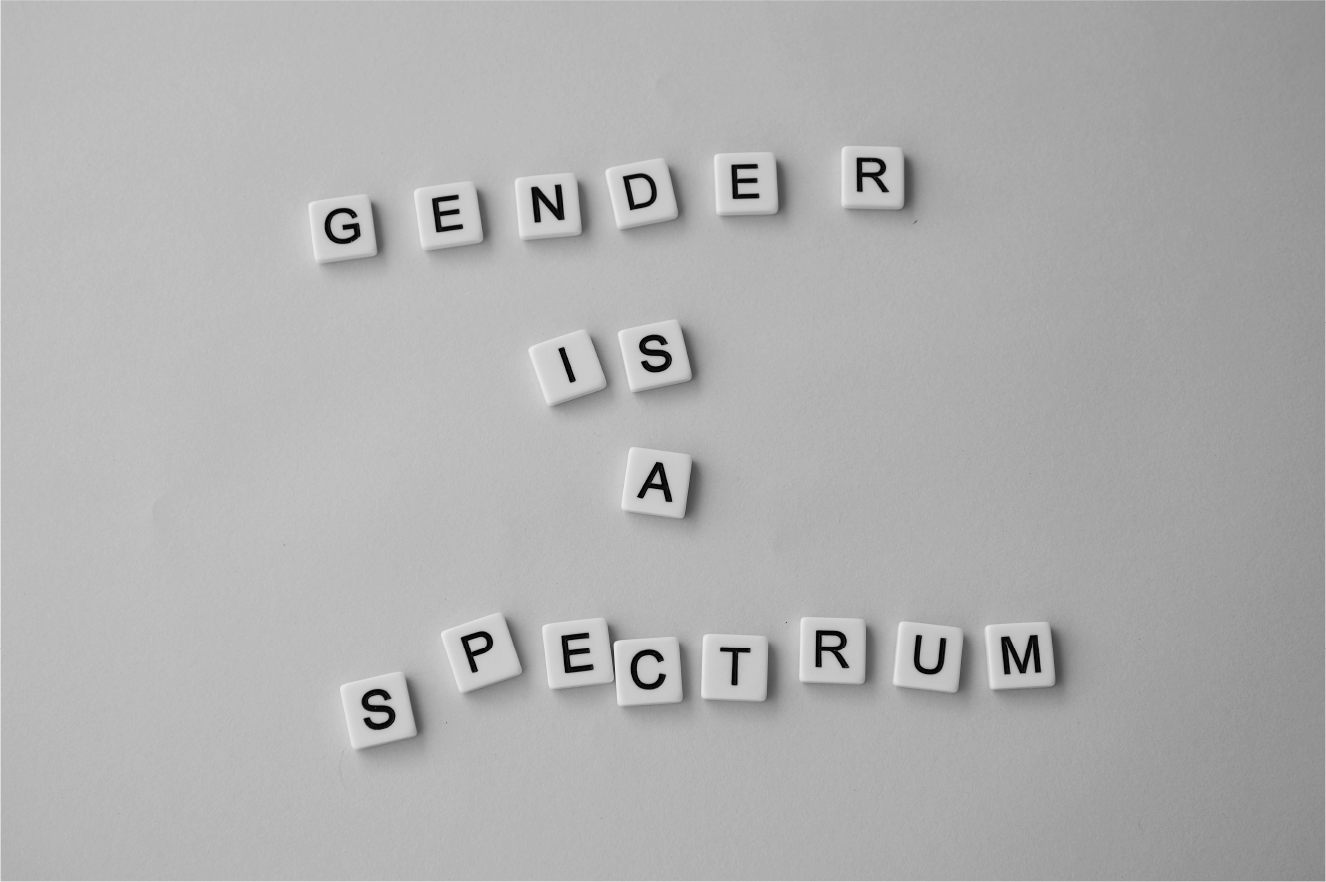
We should resist attempts to define gender, instead simply addressing disputes about gender in the diverse contexts in which they emerge.
Laker via Pexels
The “Woman” Problem—Beware the Terfs
We’d be remiss to not bring up the harmful discussions that often occur when discussions about gender (inequality) and gender diversity reach an impasse over who gets to “count” as a woman. Historically, some activists have argued that inclusion of transwomen in the category “woman” makes it more difficult to achieve gender equality, and ignores the unique forms of marginalization that affect women who were raised as women. Such claims, and their inherent privileging of the gender binary, fail to uphold progressive and feminist principles, and, in fact, simply replicate the same misogyny that underlies gender inequity more broadly.
Feminism is not actually feminist unless it is intersectional, trans-inclusive, and race-conscious. Yet this does not mean that we cannot rely on binary gender categories as heuristics that can help us describe and explain social inequalities in public discourse. We can and must strive for approaches that selectively employ binary language while resisting the historical privileging of these categories to oppress marginalized individuals.
Pragmatism Does Not Mean Giving Up
We readily acknowledge that overcoming the white supremacist hetero-patriarchy would help liberate us from oversimplified, static ideas of gender. However, as true pragmatists, we suggest that we continue to selectively employ binary language to describe and discuss disparities and inequities while simultaneously highlighting the fact that these categories are heuristics and not “natural” types and that the true diversity of experiences is more complex than can be captured with straightforward, analyzable groupings. The use of binary language can only be progressively employed alongside a deep engagement with the complexity of sex, gender, race, nationality, sexuality, etc. We will argue that in the training of health care providers, the multidimensional nature of sex and other presumably categorical human characteristics must be dramatically expanded.