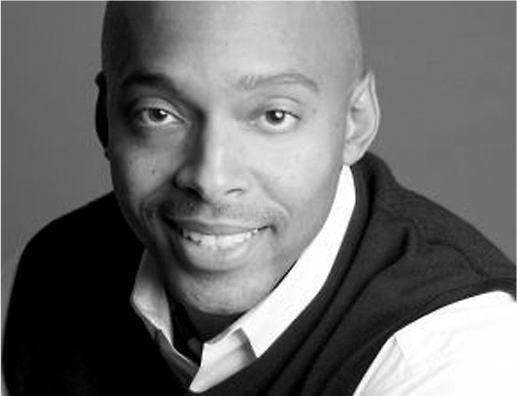
Khalil Gibran Muhammad is the Ford Foundation Professor of History, Race and Public Policy at Harvard Kennedy School. He directs the Institutional Antiracism and Account- ability Project and is the former Director of the Schomburg Center for Research in Black Culture, a division of the New York Public Library and the world’s leading library and archive of global black history. Before leading the Schomburg Center, Khalil was an associate professor at Indiana University. He recently sat down with Contexts Co-Editor Fabio Rojas and Production Manager Alisha Kirchoff to discuss his career and research.
Khalil Gibran Muhammad is the Ford Foundation Professor of History, Race and Public Policy at Harvard Kennedy School. He directs the Institutional Antiracism and Accountability Project and is the former Director of the Schomburg Center for Research in Black Culture, a division of the New York Public Library and the world’s leading library and archive of global black history. Before leading the Schomburg Center, Khalil was an associate professor at Indiana University. He recently sat down with Contexts Co-Editor Fabio Rojas and Production Manager Alisha Kirchoff to discuss his career and research.
Khalil Gibran Muhammad
Vasssar College via Flickr
FABIO ROJAS: You have a wide-ranging career that connects academic work and non-academic work, but how did you become an academic?
KHALIL GIBRAN MUHAMMAD: I grew up an only child on the South Side of Chicago and came of age in the 1980s. I was a precocious, early reader. I had an entrepreneurial streak in me, so early on, I would do door-to-door sales of candy. Eventually, I started working at 12 in the local computer store. I left for college at 17 to go to Penn and major in economics. My ambition was to join the corporate world, but I fell into a sharp interest in African American studies, US history, and cultural studies. I never considered changing majors, but I squeezed in as many of those classes as I could inside of my primary track, but I started to really second-guess the business track. Part of it was because of a bunch of things that happened on campus around culture wars over affirmative action and white students, saying black students were unqualified to be at Penn. I took a job working as a public accountant for Deloitte, but within two weeks, I knew I was never going to make it in that career. So, I plotted and planned for two years until I could basically take the GRE and make my way to Rutgers, where I pursued a PhD in history.
FR: You could have studied anything at the graduate level, what made you choose to be a historian?
KM: I wasn’t sure I wanted to be a historian at first. As I mentioned, I took several classes that fell roughly within an African American Studies minor. In my junior year, Rodney King was beaten by the California Highway Patrol, which was the Trayvon Martin moment for my generation. After that, I had a better idea of what I was interested in. Part of the reason I decided to become a historian was because of my best friend’s father, who was a historian. I admired him and still do. Also, I mentioned working for a computer store, and the guy who owned the computer store had been a University of Chicago graduate student fellow in history before he left the program to open the store. I ended up working for him for six years, and he had a huge influence on me.
FR: Now, let’s talk about the Schomburg specifically. Can you tell us a little bit about the mission of the Schonberg Center and why you wanted to be there?
KM: The center is the oldest and most significant collection of materials related to both the African American experience and the larger, global Black diaspora. The collection began in the 1920s when an Afro-Latino man from Puerto Rico moved to the United States and began collecting books that were by or about people of African descent. He was a fascinating person and went on to be a major figure in the Harlem Renaissance. This collection, originally housed in his Brooklyn home, was legendary because people like W.E.B. Du Bois would go to his collection to use it for their own academic studies because most predominantly white institutions didn’t have collections of Black material. The reason why Schomburg, who was little more than a mailroom clerk in the early days of his career, could afford these books was that they were completely undervalued by the market. Black people were publishing material, but few people were buying it, which drove down prices. The collection became so significant that it moved to the Harlem branch of the New York Public Library located at 135th Street and what was, at the time, Sixth Avenue, now called Malcolm X Boulevard. This was across the street from Harlem Hospital, the place where James Baldwin was born. This library was now at the epicenter of Black migrants coming from the South and from the Caribbean. The librarian knew they didn’t have material for these folks, but she knew about Schomburg’s collection and brokered a deal between the New York Public Library and the Carnegie Corporation, as well as the National Urban League, to bring it to Harlem. It’s a perfect origin story because it demonstrates the relationship of knowledge production to civil rights itself. It’s not an exaggeration to say that there are very few books written today that touch on any aspect of Black history that doesn’t consult the Schomburg archives. It’s been at the heart of cultural production, as James Baldwin famously said. Langston Hughes was a 40-year patron of the collection. Kenneth Clark, the famous social psychologist in his doll studies, did research at the library, which we have documented. We know that Harry Belafonte, Sidney Poitier, and Ozzie Davis all learned how to act there in a community theater program that was called the American Negro Theater. I could go on and on. So, when I got a call and ask if I was interested in becoming the director, it was a no-brainer.
FR: What took you from Schomburg back into the academic realm?
KM: Well, the work was intense, it was high stakes, it was multi-faceted. Unlike the typical college or university campus, the Schomburg was a campus without borders, and we were built for public access and public engagement. We were home to these famous collections, including the James Baldwin Collection and Maya Angelou’s papers. Anyone off the street of any background, no scholarly credentials whatsoever, just a curious learner, could come in and say, “I’d like to see those papers,” and that they would get access to it. So that meant that there were just a lot of interactions that were high energy and high touch. I used to joke that I felt a little bit like an elected official or a major pastor of a religious institution. After five years, I started to miss having the time to think and reflect and pursue ideas. I felt like much of what I had set out to accomplish, I had, in fact, accomplished, which meant tripling the number of people through our doors, resetting our programming to make it more relevant to a younger audience, raising a lot of money and leading an effort to do a major renovation. When all of that was basically either done or set in motion, it was a good time to time to move on to the next opportunity.
FR: You could be in an Africana Studies or History Department now if you wanted, so what motivated the shift to a public policy school?
KM: Well, interestingly, it was the mashup of having been a traditional historian, grounded in a history department with spending five years at the Schomburg, that made going to a public policy school very compelling. I spent a lot of time at the Schomburg center trying to close the gap between historical knowledge as published by academics and how the public engages history. I was keenly aware of how much knowledge was never translated or transferred from the stacks or the archives to public minds. I figured that if I could see up close how to position historical scholarship to be useful to people making decisions about what to do in the present or how to fix the future, then this was going to be an exciting and interesting opportunity.
ALISHA KIRCHOFF: What might be an illustration of that idea?
KM: A pointed example has been with the National Academy of Sciences. I started on a study looking at the growth of incarceration causes and consequences that was led by Jeremy Travis, who’s now at Arnold Ventures, and Bruce Western, who was then at Harvard. Now, I’m co-directing with Bruce Western a new study on reducing racial inequalities in the criminal justice system. I mentioned this because one of the ways that I’ve measured my own work is that more people, like my own social science colleagues, who are often closer to policy formation, have also begun to take a greater interest in historical narratives and invite historians into those spaces. And I think, having been at the Kennedy School for the past five-plus years, that influence has only grown and deepened.
AK: What does your upcoming research look like?
KM: I’ve been working on a book that I’m really excited about. It’s a book that takes stock of the last 50 years as a parable of personal responsibility. This is not an original insight per se, but I am trying to historicize it. I’m trying to pinpoint the precise moment when the kind of Black Power ethos of the early to mid-1970s gives way to a much more middle-class elite sensibility among black professionals; the idea that individual effort and hard work are the keys to success in America. I’m still constructing the approach to it. I want to uncover this story because I think it’s a wonderful cautionary tale for what we got right and what we got wrong with our own sense of racial progress in the wake of the civil rights movement.
AK: Do you have any final thoughts about bridging academia and the public?
KM: The moment we’re in now is what I like to call the anti-anti-racism backlash because that’s a little clearer than saying it’s a backlash against CRT. We’re pushing back on everything by affirming anti-racism as a core value in institutions, and I think that this is a perfect example of why history is so important. It’s quite predictable that in a moment of perceived racial progress, in this case, a black president and a social movement like Black Lives Matter, which essentially coincide with each other in many, many ways, has led to people saying, “We don’t want America to be changed because of the ideas and ethos of these various constituencies.” If we learned our history better, if we close the gap between academic research and public knowledge, we might not see these recurring patterns of progress and backlash, or they would at least be less threatening. I think history might be one of the few fields of knowledge that can help us disrupt this pattern.
Footnotes
Fabio Rojas is a Professor of Sociology at Indiana University and co-editor of Contexts.Alisha Kirchoff is a PhD Candidate in Sociology at Indiana University and the Production Editor of Contexts.