



Abstract
While there has recently been increasing attention to public memorials of Christopher Columbus and the national Columbus Day holiday, this article argues for a deeper, sociologically-informed reckoning with the implications of Columbus for racial, cultural, and national identity in the United States. It uses the Italian-American experience as an example that provides insights into immigrant arrival, assimilation, and identity in contexts of racialization and criminalization. Overall, the symbol of Columbus in the Italian American experience is particularly relevant to group identity and collective memory in the U.S., in a moment where many are reconsidering country’s historical narratives.
Spike Lee’s classic 1989 film Do the Right Thing powerfully depicts a day of racial tension in Brooklyn. The film centers on Sal’s Pizzeria in the black neighborhood of Bedford-Stuyvesant. The pizzeria owner Sal and his son Pino are proud of their Italian American culture and identity. Italian American music plays in the background and a “Wall of Fame” features portraits of notable Italian Americans. Pino makes racist comments, angrily ranting to the pizzeria’s Black employee, Mookie, about what he considers to be the insignificance of African history. At the end of the day, customers confront Sal—demanding that he add black leaders to his “Wall of Fame,” with Public Enemy’s “Fight the Power” blaring from Radio Raheem’s boombox speaker. The two sides yell racial slurs at each other, and Sal smashes the boombox with a baseball bat, which begins a fight that spills out into the street. After the police arrive and kill Radio Raheem with a chokehold, Mookie throws a trashcan through the pizzeria window, which incites the crowd to destroy the pizzeria.
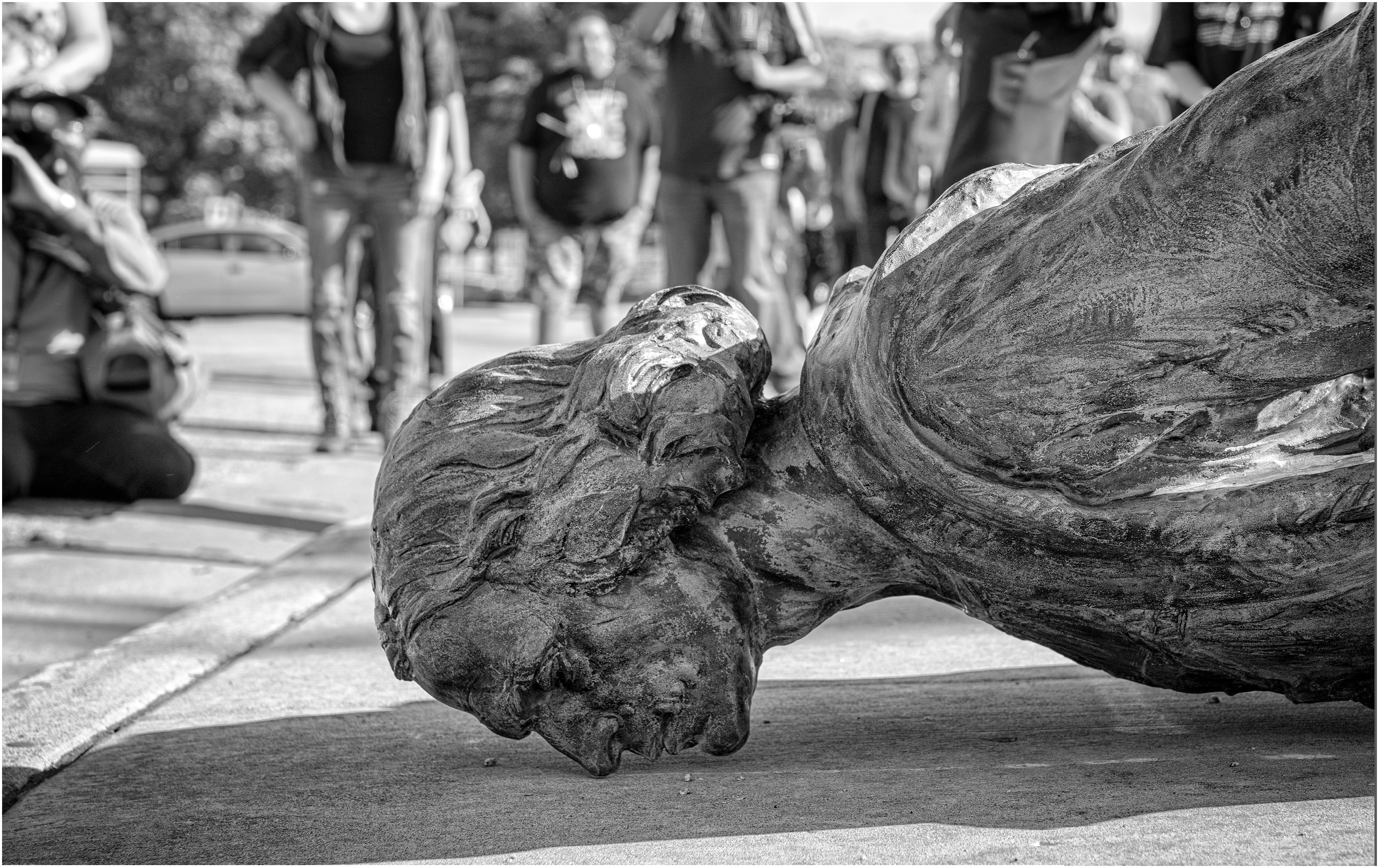
photo: The dismantled Christopher Columbus statue outside the Minnesota State Capitol
Tony Webster, Wikimedia Commons
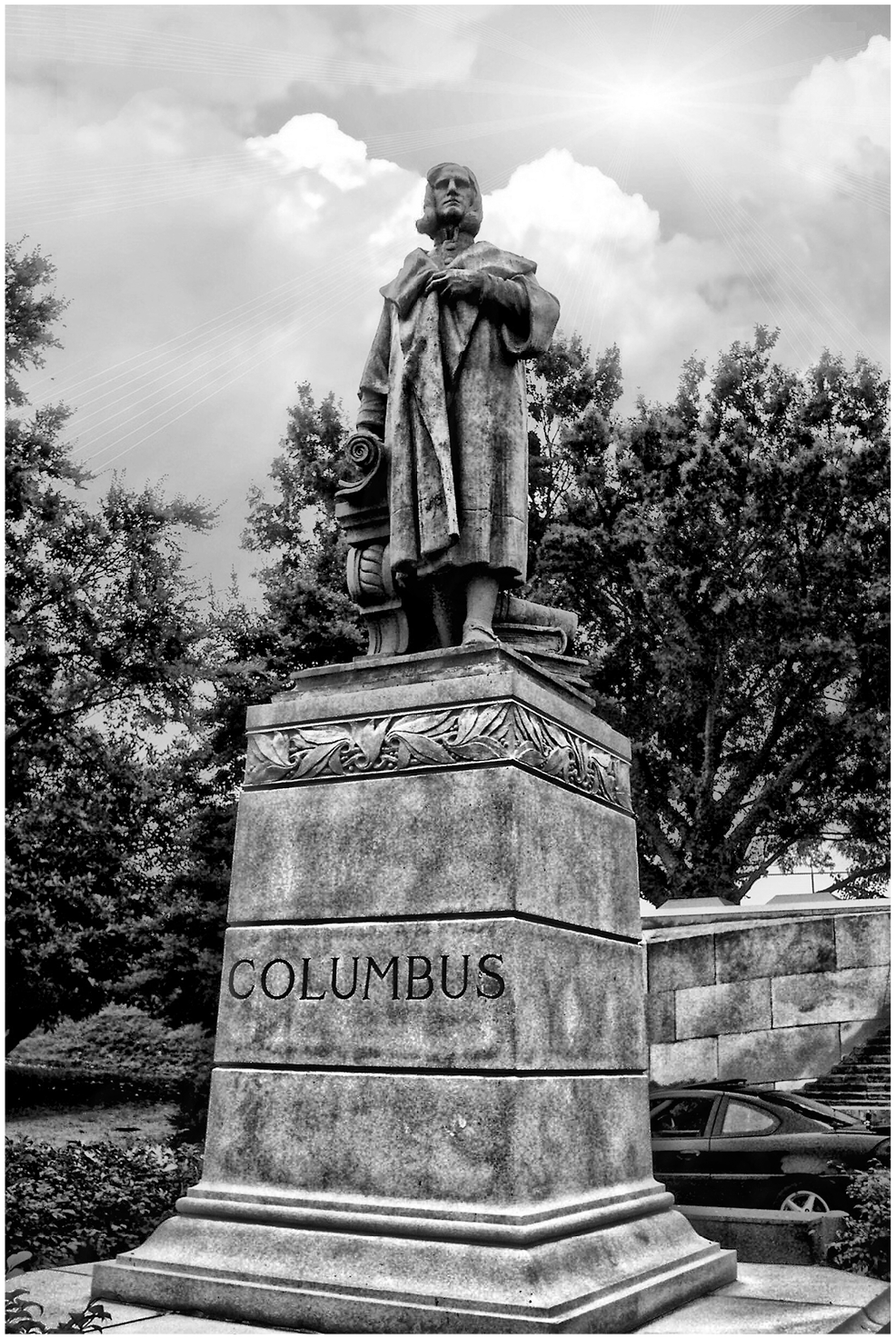
Columbus Monument in Richmond, Virginia’s Byrd park. This was a gift to the city of Richmond in 1927 from the local Italian community.
Onasill, Flickr
Overall, the film tells a story of anti-Black racism in Italian American attitudes and culture. This portrayal opens up questions about race, racism, collective memory, and history today. For instance, why is Italian American identity defined with hostility against African history and Black identity? Were Italians naturally racist against their neighbors when they arrived in the United States? Why is Sal so protective of maintaining a pure Italian American identity, even though his pizzeria serves few Italians?
In addition to racism and police violence, collective memory and cultural identity are also central themes in the film. It powerfully depicts how images and memory of historical figures can evoke fear, distrust, pride, community, and even violence.
These issues raised in Do the Right Thing continue to be relevant in the present moment when Christopher Columbus memorials are being critiqued or torn down across the United States. Like Sal, who angrily rejected changes to his wall of fame, Italian Americans often resist removing statues or memorials to Columbus, which typically celebrate Columbus as an Italian navigator and explorer who “discovered America.” In moments of public discussion about monuments, and each year in October, news stories about the Christopher Columbus superficially show two sides of a debate: traditionalist Italian Americans clinging to an antiquated holiday, and Native Americans with other activist allies pushing for acknowledgment of the brutal history of colonization.
Those interested in eradicating racism today must do more than dismiss Columbus supporters as racist, naive, conservative, or all three. Decrying individuals or groups as racist obscures the deeper systemic roots of racism that pervade United States culture and institutions. Increased public attention to Columbus presents a valuable historical moment to ask deeper questions about how Christopher Columbus became tied to Italian cultural identity and memory in the United States—and how the memorialization of Columbus can help us understand deeply entrenched ideas about race in the United States. While tearing down statues may be an appropriate response to the demands of Indigenous peoples (to acknowledge realities of racism and colonization in the United States), the act of removing statues is not enough. Columbus is ultimately an invitation to imagine new, more inclusive narratives that reckon with how Italian American heritage, and the family backgrounds of many who consider themselves white in the United States today, are intertwined with the history of racism and colonialism.
Scholars have long recognized that statues, memorials, and historical events are much more than moments of the past that are frozen in stone, concrete, museums, or textbooks. They are sites of collective memory, social identity, and political contestation, where groups assert dominance or compete for recognition and representation. Collective memory has been written about in sociology since its founding, from W.E.B. Du Bois who saw that a proper historical context about Black struggle in the United States would be crucial to overcoming racism, to Emile Durkheim and Maurice Halbwachs, who explored how historical memory has a collective and social dimension that is more than the memory of any individual. More recently, the social meaning and politics related to memorials have been of increasing interest to scholars and the wider public, as protests have emerged around a wide range of memorials, ranging from confederate leaders to Christopher Columbus.
While there are many possible ways to portray the history of Italian American immigration, the dominant story emphasized in textbooks and public memorials to Columbus was that the Italian American was a seeker of new opportunity who bravely conquered a harsh new world, with violence when necessary. The emergence of Columbus as a prominent Italian American symbol has implications not only for Italian American culture but also for the United States in a moment where many are grappling with the country’s historical and present-day injustices.
By looking more closely at the symbol of Columbus across the evolving experiences of Italian Americans, it is evident that racism endured and strengthened as waves of initially marginalized European immigrants came to the United States starting in the 1800s. Although Italian Americans are not a completely monolithic group, there are discernable changes in Christopher Columbus as a symbol over time.
The initial Italian arrivals to the United States were met with anti-Italian racism and xenophobia. In this era, Columbus was a symbolic foothold in society, as he arrived even before many of the Northern Europeans and therefore proved the unique Italian claim to “American-ness.” At the same time, to fully assimilate as accepted members of white society, Italians had to learn to see the world through the lens of race, which meant distancing Italian American culture from darker-skinned others, sometimes with violence. As a symbol of assimilation, Columbus helped to forge a sense of unified struggle and identity in Italian American culture during local gatherings and eventually an official national holiday.
Today, a similar process is unfolding. Only now, Italians are part of an established white society that implicitly and explicitly perpetuates racism. In the current era, Columbus is a symbol of nostalgia that serves to avoid fully reckoning with the transformation that Italian Americans experienced to become accepted members of white society. The reality of this transformation is difficult to reckon with because a great sense of loss came with assimilation.
The Italian American relationship to Christopher Columbus is not the niche issue of a single social group. It provides insight into the continuing racialization of immigrants and other marginalized groups. The idea of race continues to perpetuate fear about newcomers or longstanding racialized “others.” This racialization constrains people’s opportunities to gain a foothold in mainstream political, economic, and social life.
To contextualize debates about Columbus today, the following sections trace the evolving significance of Christopher Columbus over time, from Italian arrival to assimilation and nostalgia. In this story, it is clear that focusing only on Columbus as an individual can potentially obscure the deeper meaning and story of Italians in the United States. Italian Americans need new narratives and symbols, but so does the United States—not to rewrite history, but to better understand the realities of race, assimilation, and national identity today.
Early Italian Arrivals
Although people in the United States have been celebrating Italian explorer Christopher Columbus since the 1700s, Columbus Day was first celebrated as a one-time national holiday in 1892. This timing was no coincidence. That year, President Benjamin Harrison declared Columbus Day as a national celebration for the 400th anniversary of the “discovery of America.” Official national recognition of Columbus came in a period of unpreceded Italian migration to the United States and in a moment of an international diplomatic crisis.
Between 1880 and 1915, around 13 million Italians migrated out of Italy—with about 4 million Italians landing in the United States (note that the U.S. population was only approximately 100 million at the time, bringing the total number of Italians to nearly 5% of the population). Italian immigration surged in the context of the social unrest after Italian unification—following the inauguration of a new national Italian government.
Most Italian immigrants to the United States in that period were peasant farmers from the southern regions of Italy. In rural and remote areas of southern Italy, where people lived among others who mostly looked and spoke like them, southern Italian farmers would have had little conception of race—or at least they would not have considered themselves white. If anything, southern Italians were increasingly seen as racially inferior, as racial thinking was systematically introduced in Italy for the first time in the 1870s through Cesare Lombroso’s white supremacist racial theory. Lombroso argued that there was more crime and poverty in southern Italy because the southern Italians were born criminals with their “contaminated blood,” which, in his pseudo-scientific theory, was evidenced by their darker skin color, black hair, and more prominent facial features. These theories compounded the incentives of Northern Industrial Italian cities to distinguish themselves from the South, which sometimes meant that the South was politically and economically marginalized from the rest of Europe.
Columbus is an invitation to imagine new, more inclusive narratives that reckon with how Italian American heritage, and the backgrounds of many who consider themselves white in the United States today, is intertwined with the history of racism and colonialism.
In this context, many Italian migrants were fleeing poverty and social exclusion in Italy while also seeking an idea of “America.” Although most Italians initially settled in cities of the northeastern United States where many construction jobs were available, Italians settled all over the U.S. (Pietro di Donato memorialized the precarious life of Italian immigrants working dangerous construction jobs in the U.S. in his 1939 novel, Christ in Concrete).
As immigrants, Italian Americans were initially racialized. They looked different, often identified as Catholic, and had a different culture than the dominant Protestant Northern European immigrants who typically held political power in the northeastern cities. Early Italian arrivals were not entirely accepted into white society, and they were also criminalized. The media, politicians, and the general public typically viewed Italians as a primitive, violent, and untrustworthy group that intended to destroy United States communities and take over the economy.
One powerful example of the racialization and criminalization of Italian Americans was one of the largest mass lynchings in the United States, which took place when an anti-Italian mob lynched 11 Italian Americans in New Orleans on March 14, 1891 (portrayed with great detail in Richard Gambino’s powerful 1977 book, Vendetta). Several gunmen shot New Orleans Chief of Police a few months earlier, and the mayor told the police to arrest as many Italians as they could, without much evidence. Up to 250 Italians were arrested, and many were jailed. Although all were acquitted or given a mistrial, a mob of thousands—who collectively accused the Italian Americans of being part of a criminal conspiracy to take over the city—stormed the jail and killed eleven.
This was an international incident. Soon after the mob killings, the Italian government demanded the United States pay reparations to the dead men’s families and that the lynch mob face trial. President Harrison’s national 1892 declaration of Columbus Day was meant to symbolize a respectful mutual relationship between the United States and Italy. It was, at least in part, a symbol to placate the Italians—to show them that the U.S. did respect Italians as integral members of U.S. society. Indeed, this national recognition of Columbus showed that an Italian had made everything possible by “discovering America.” In reality, however, Italians faced a long struggle for acceptance and assimilation as they would remain social, political, economic, and cultural outsiders for decades.
In this story, it is clear that focusing only on Columbus as an individual can potentially obscure the deeper meaning and story of Italians in the United States.
Assimilation Into White Society
Like previous colonists, settlers, and immigrants, Italians assimilated into U.S. culture by implicitly or explicitly embracing the violence and individualism of white supremacy. In this context, Columbus took on multiple, and at times conflicting, meanings for Italians who were establishing themselves in the United States.
By identifying with Columbus, Italian Americans claimed that they belonged in their new country because their existence was fundamental to the origins and identity of the United States. This symbol of belonging was, however, strongly contested. In the late 19th century and early 20th century, many groups of more established Protestant and Northern Europeans argued that others had “discovered America” earlier—such as Icelandic-Norwegian Leif Erickson. After years of advocacy from Italian and Catholic organizations, Columbus Day became an official holiday in many cities and states in the early 20th century (it would not become an official national holiday until 1934).
Columbus was a clear symbol of social progress for this generation and group solidarity among immigrants. At the same time, he was also implicitly a symbol of the central cultural narrative in the United States—that of the settler colonist making his way through a harsh land using violence. The key was that Columbus became the ultimate symbol of someone who, along with the settler-colonists who would succeed him, used violence when necessary to survive in a harsh new land. Early explorers and colonists, like the many later waves of immigrants to the United States, saw the land that would become the United States as a means to remake their lives and fortunes. Ultimately, the method they would rely upon to do this, especially when all else failed, was violence.
In Italian American culture, Mafia-affiliated crime and violence is perhaps the most obvious example. Early Italian American enclaves (especially in northeastern cities) were precarious and marginalized in what the mainstream political class considered dirty slums. While most Italian Americans became low-wage workers or started small businesses within their community, the endurance of poor Italian neighborhoods made it obvious that “playing by the rules” would be a slow (or even impossible) climb up the economic ladder.
Without formal economic and political support, people organized informally to bring a sense of order and stability to neighborhoods with their own policing, urban development, and mutual aid. Because they were socially excluded from the rest of society, getting access to property and new sources of revenue was challenging, if not impossible. This also led some to work in areas that involved extortion, gambling, protests, bootlegging, and drug trafficking.
As sociologist James O’Kane describes, organized crime related to these activities was not peripheral to the assimilation and economic success of the Italian American community. It was a fundamental vehicle for social mobility among virtually all marginalized ethnic immigrant groups in the 20th century. Italian immigrants protected their territories and earnings with violence against any identifiable threat or outsider when necessary. It wasn’t as if everyone was participating in this or that there were always clearly defined “bad guys” and “good guys.” It was easy to brush off illegal, unethical, or harmful activity as if it was someone else’s choices—even while the political and economic power that those activities enabled were, at least partially, what opened the door to social mobility in the first place. As Italian neighborhoods became more socially, politically, and economically organized, sometimes through violence, the police and the government could no longer resist Italian American influence.
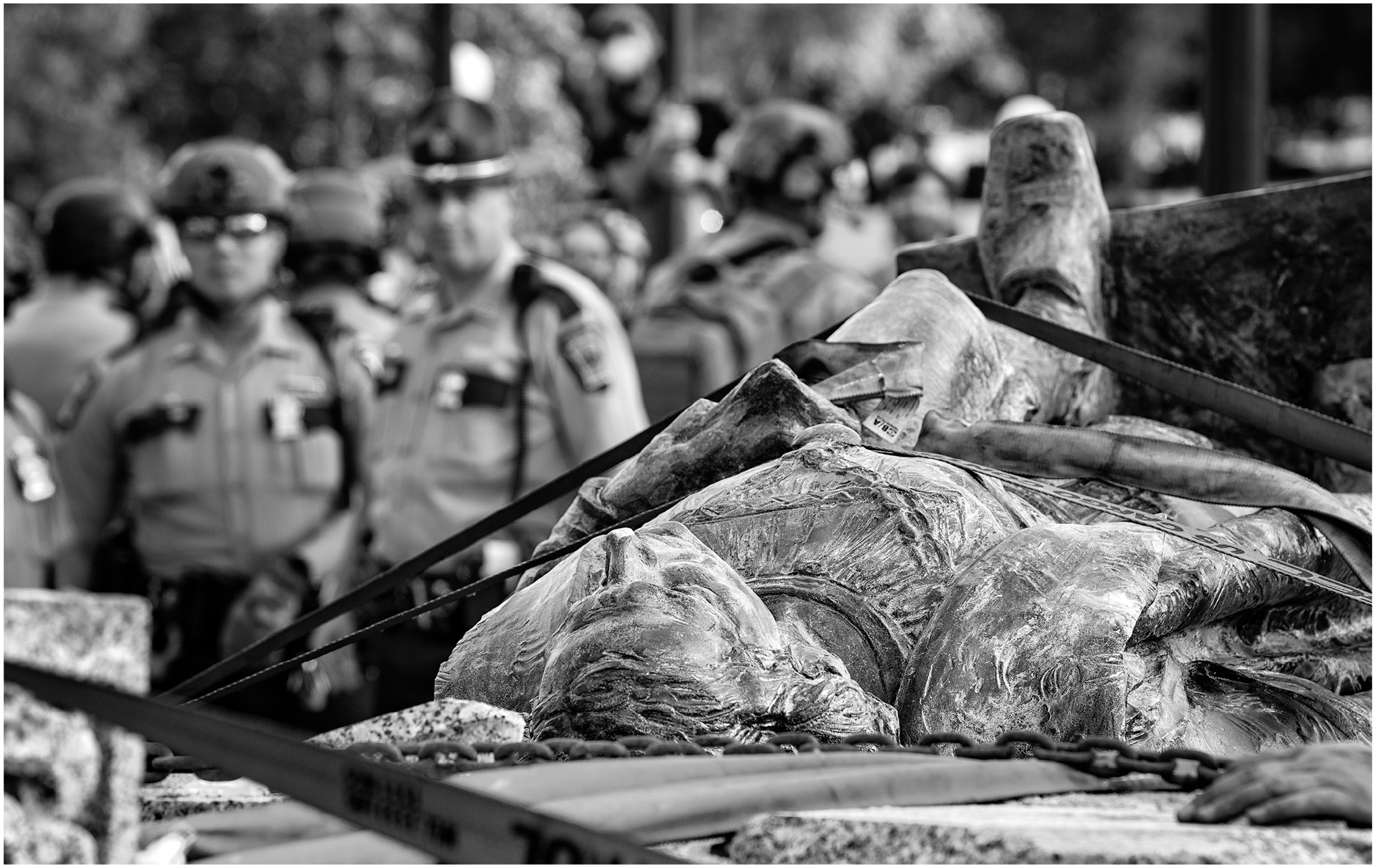
The fallen Christopher Columbus statue outside the Minnesota State Capitol is loaded onto a flatbed truck to be hauled away after a group led by American Indian Movement members tore it down in St. Paul, Minnesota, on June 10, 2020.
Tony Webster, Flickr
Italians also became precarious allies with the Irish, using political manipulation and violence to muscle their way to political and economic power. On the one hand, a common background that many had in Catholicism helped the two groups to see their shared humanity, and their sheer collective numbers were valuable to political machines like the infamous Tammany Hall. At the same time, turf battles ensued, as exemplified by Irish mobster Whitey Bulger’s covert support of the FBI to take down the Italian Mafia in New England. The struggle over limited access to resources and opportunity in the United States led the Italians and Irish to become accomplices, as often as rivals. They fought for economic resources and cultural authority in their ultimately successful attempts to gain a foothold in the white supremacist United States.
As musicians, actors, politicians, and others slowly began to succeed on this foundation, Italian Americans came to define themselves as different from other ethnic groups. They began to position themselves as a group that had more in common with the established white culture than with others, especially compared to the Black internally displaced migrants fleeing to northern cities from early 20th-century racist terror in the South.
As the 20th century progressed, Italian Americans increasingly secured formal jobs in established institutions and organizations that allowed them to support their immediate family. Many moved out of the old neighborhood and community to pursue a different form of success in the new suburbs.
By the end of the 20th century, Italian Americans had become implicit and explicit supporters of a white United States (as is powerfully symbolized in Do the Right Thing). Infamous moments of racism in New York City made national news when Italian Americans actively targeted, harmed, or killed those they now considered racially different—from the 1986 killing of Michael Griffith in Howard Beach to the 1989 murder of Yusef Hawkins in Bensonhurst. It’s not so much that these moments indicate how all Italian Americans were thinking and acting as individuals. Instead, it shows that some Italian Americans could see themselves socially in ways that would have been nearly impossible 100 years earlier. At the close of the 19th century, nativists targeted Italian Americans for their supposed racial difference. By the end of the 20th century, it was the Italian Americans who were targeting and racializing others (Michael Griffith, for instance, was a recent immigrant from Trinidad). Italians had effectively become white.
In this sense, Italians assimilated and gained a foothold in the United States through both hard work and also by embracing the identity of whiteness—which required that Italians accept exploitation and violence to defend their territories, as Christopher Columbus and the early settler colonialists did. The successful assimilation of Italian Americans owes itself, at least in part, to their ability to make their way through a harsh new world using violence. In opposing or distinguishing themselves from other groups not immediately identified as white, Italian Americans ultimately proved their final allegiance to a white United States.
The key here is that this is not uniquely an Italian American story. The symbol of Christopher Columbus is fundamentally at the core of what it means to be white in the United States. In this sense, Christopher Columbus is a powerful symbol of masculine whiteness more broadly. That is, in the United States, to be white is to be primarily an individual that is unencumbered by traditional culture and commitments—an individual who can forge through an unwelcoming and competitive world by meeting the harshness of society with one’s harshness when necessary. While it may seem like Italians came out as the winners, embracing the Christopher Columbus version of this history also brought on a great loss as other ways of living and being together were forgotten. This is the loss of culture, community, language, and tradition. It is a loss that creates a sense of uneasiness and even a longing to return to a nostalgic idea about how things once were.
Nostalgia for Fading Community and Tradition
To an outside observer, Christopher Columbus may seem like an odd symbol for Italian Americans (after all, Spain sponsored his initial voyages). In a country where people of Italian descent have succeeded in nearly every aspect of society, it might seem like many other Italian Americans could be memorialized. The appeal of Columbus today, however, is not just about romanticizing his actions in the 1400s. Instead, it is about remembering what Columbus meant to Italian Americans as a symbol of cultural pride and recognition. This is especially relevant today when Italian influence seems pervasive across the U.S., and, at the same time, forms of deeper Italian American community and tradition are being lost.
The question of Columbus is not purely an Italian American or Native American problem. It is something that all of those who consider themselves white, and everyone who lives on the land now called the United States, must consider.
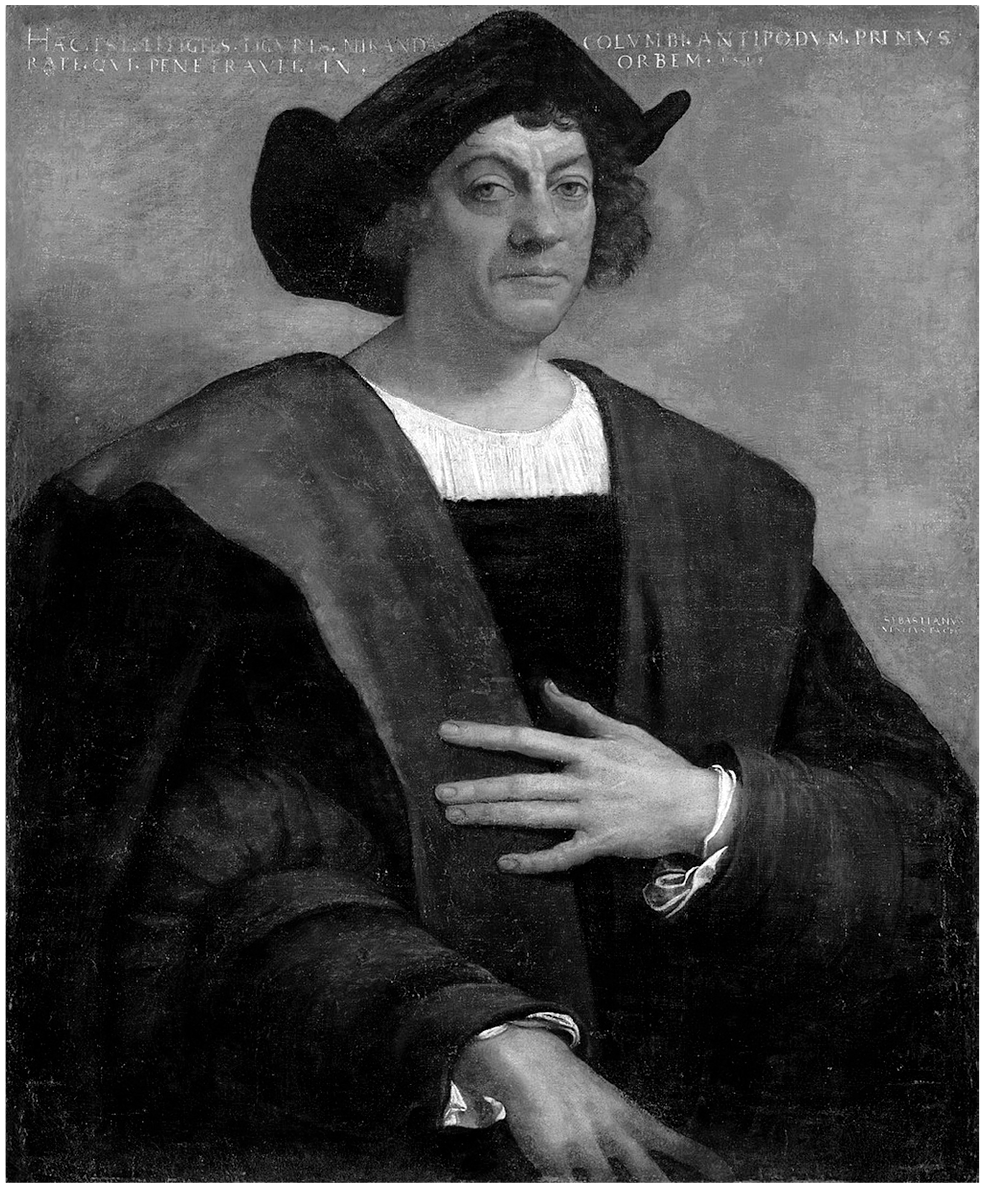
Portrait of Chirstopher Columbus.
In the current era, Italian American culture faces a paradox because of its success in becoming white. On the one hand, the integration of Italian food, music, and film into everyday life through media, “Little Italy” neighborhoods, and supermarkets represents the success of Italian Americans. At the same time, those who do still identify as Italian American sense that assimilation required the loss of tradition and community. Today “Little Italy” is thought of as a tourist destination or a place to get good food. Still, as small family businesses close down, the next generations pursue their own individual success, and new groups arrive to traditionally Italian neighborhoods, many storefronts in Italian American enclaves lie vacant.
James Baldwin wrote that “the crisis of leadership in the white community is remarkable—and terrifying—because there is, in fact, no white community.” This paradoxical statement demonstrates something at the core of the Italian American identity and culture. While race has very real material effects, it is ultimately socially made and remade. No one was “white” before they came to the United States. Rather than belonging to a community, whiteness was more about abandoning elements of ethnic or cultural identity that did not resonate with those in positions of power. Because race is a fundamental organizing principle of society in the United States, newcomers had to either accept it or resist and remain an outsider.
This is why to “become white” is to experience a sense of loss, rootlessness, and anxiety. It requires a certain form of subtle internal violence and superiority, whereby those who consider themselves white assume that they, and others who look like them, are destined for success. This high stakes and anxiety-provoking situation invites a violent paranoia at worst or a lurking dissatisfaction at best because failure is not an option. Whiteness is that sense of individualism, which seems innocently neutral but is built on a series of profound losses, moral compromises, and historical violence. Even though most Italian Americans may not have used explicit violence, everyone participated in the violence of conforming themselves to the exploitative demands of an individualistic and competitive white society.
The explosion of “ancestry.com“ and related sites among those who consider themselves white is a symptom of the nostalgia about what has been lost. In particular, Italian Americans visit Italy with family trees and rosy images of picturesque small towns of the “old country,” even if their ancestors were struggling peasant farmers.
Through this lens, Christopher Columbus might be a reminder—for those who can even remember—of Italian roots that give some sense of meaning, order, and comfort to an increasingly consumerist and individualistic existence in the United States. But in a broader sense, Columbus himself is not actually what Italians value. They remember the parades, the pride, the sense of community, and the feeling of finally being recognized as people who belong in the United States.
Rather than fully reckon with history, our textbooks and cultural narratives often romanticize immigration stories from the past. We turn to nostalgia rather than reckoning with how we have suffered from and been complicit with racism and white supremacy. It is easy to think social integration or assimilation is only about the exclusion of newcomers, but in reality, it is also about a society’s underlying culture and social organization that marginalizes and excludes.
Nostalgia for a romanticized past allows those who consider themselves white to see present day immigration through a racialized lens—to position themselves as fundamentally different (and implicitly, superior) compared to other human beings. Through this lens, it is easy to claim that “back in the day,” earlier immigrants did it differently, somehow worked harder, or played by the rules, even when there is so much in common to immigrant experiences in the United States across time.
The rise of Christopher Columbus as a singular hero, who “discovered America,” can make Italian American assimilation seem as if it is only a natural or inevitable outcome of hard work and cultural perseverance, instead of a contested social and political process that involved violence, exploitation, and ruthless individualism. The real Italian American heroes, then, who could replace Columbus in the collective memory, are those who resisted the violence of whiteness to create new life and opportunity through compassion, nonviolence, and community (for instance, immigrant advocate Frances Cabrini or civil rights leader James Groppi).
The question of Columbus is not purely an Italian American or Native American problem. It is something that all of those who consider themselves white, and everyone who lives on the land now called the United States, must consider. It demands new national stories and symbols. This requires more people to locate their particular experience within a larger narrative—to reconsider the assumptions present in their own identity. This is not to revise the past but to better understand what the United States actually is and can become. Columbus is, therefore an invitation to reconsider who we are, where we are going, and what we can do now to bring about a more inclusive and just society at all levels.