




Abstract
Every year the fashion industry sells 80 billion pieces of clothes to customers globally, generating $1.2 trillion in revenue. This hyper-exaggerated business model, known as fast fashion, is characterized by a super-fast turnaround of products and extraordinarily low prices. Fast fashion is critically challenged because it exploits workers, its environmental impact, and the detrimental effects of a growing global second-hand clothing trade on textile manufacturing in the Global South. This essay explores these issues and provides possible strategies to counter the fashion industries’ negative consequences.
Keywords
Every year the fashion industry sells 80 billion pieces of clothing to customers globally, generating $1.2 trillion in revenue. Overwhelmed by their purchases, people often quickly discard clothes. In the United States, about 85 percent of all clothing ends up in landfills. In an era of ever faster fashion cycles and constant consumption, a 2020 study by Rachel Bick found that the average American contributes about 80 pounds of textile waste annually to landfills. This hyper-exaggerated business model, known as fast fashion, is characterized by a super-fast turnaround of products and extraordinarily low prices. Some consider this turn the “democratization” of fashion because it made new styles available to people who could not previously afford such fashion. While this may be true, this process has immensely negative effects on workers, the environment, and global textile markets. Fast fashion is critically challenged because it exploits workers, its environmental impact, and the detrimental effects of a growing global second-hand clothing trade on textile manufacturing in the Global South. Bick writes that fast fashion encouraged excessive consumption by promoting a “more for less” mentality resulting in environmental and health hazards and social injustices. This essay explores these issues and provides possible strategies to counter the fashion industries’ negative consequences.
In April 2013, the Rana Plaza building in Dhaka, Bangladesh collapsed killing more than 1100 textile workers. In the New York Times, Jim Yardley illustrates that the aftermath of this tragedy revealed that many global fast fashion companies were producing under similarly substandard conditions as those at Rana Plaza. Five years later, also in the New York Times, Dana Thomas notes that the Rana Plaza production facilities were not the only site of its kind in Bangladesh and elsewhere. She reports that between 2006 and 2012, more than 500 workers died in textile factory fires in Bangladesh.
The Rana Plaza tragedy became a symbol of the exploitative conditions under which the workers, mostly young women, work to provide consumers in wealthy countries with cheap, fast-fashion items.
Francois Le Nguyen, Unsplash
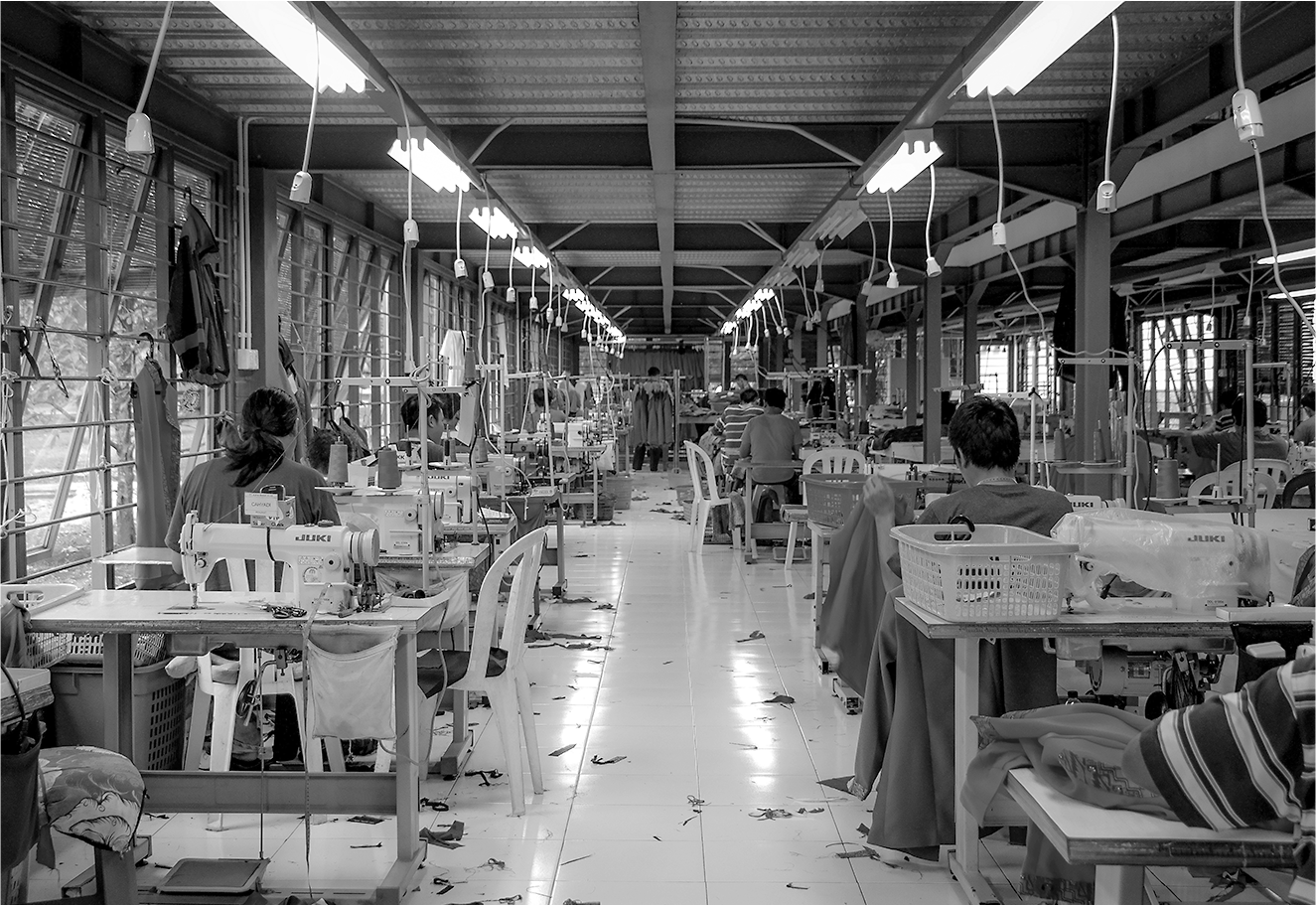
Soon after the tragedy of 2013, the garment industry largely returned to its old ways. Thomas reports that in 2018 the minimum wage for workers in Bangladesh remained $68/month, a typical salary for textile workers. The Rana Plaza tragedy became a symbol of the exploitative conditions under which the workers, mostly young women, work to provide consumers in wealthy countries with cheap fast-fashion items.
Fast-fashion not only exploits workers, but is also environmentally damaging. It takes about 400 gallons of water to produce cotton for a T-shirt, and 2,700 gallons of water for jeans. These numbers do not include the water needed for making and dying fabric. In a CNN article, Helen Regan reports how during the fabric production process in India, China, or Bangladesh, many of the chemicals used are released into rivers without much filtering. As a result, nearby rivers routinely turn red, blue, or green depending on what the color of production of the day is. While colors might be visible, the dangerous chemicals remain invisible, yet dangerous for local residents.
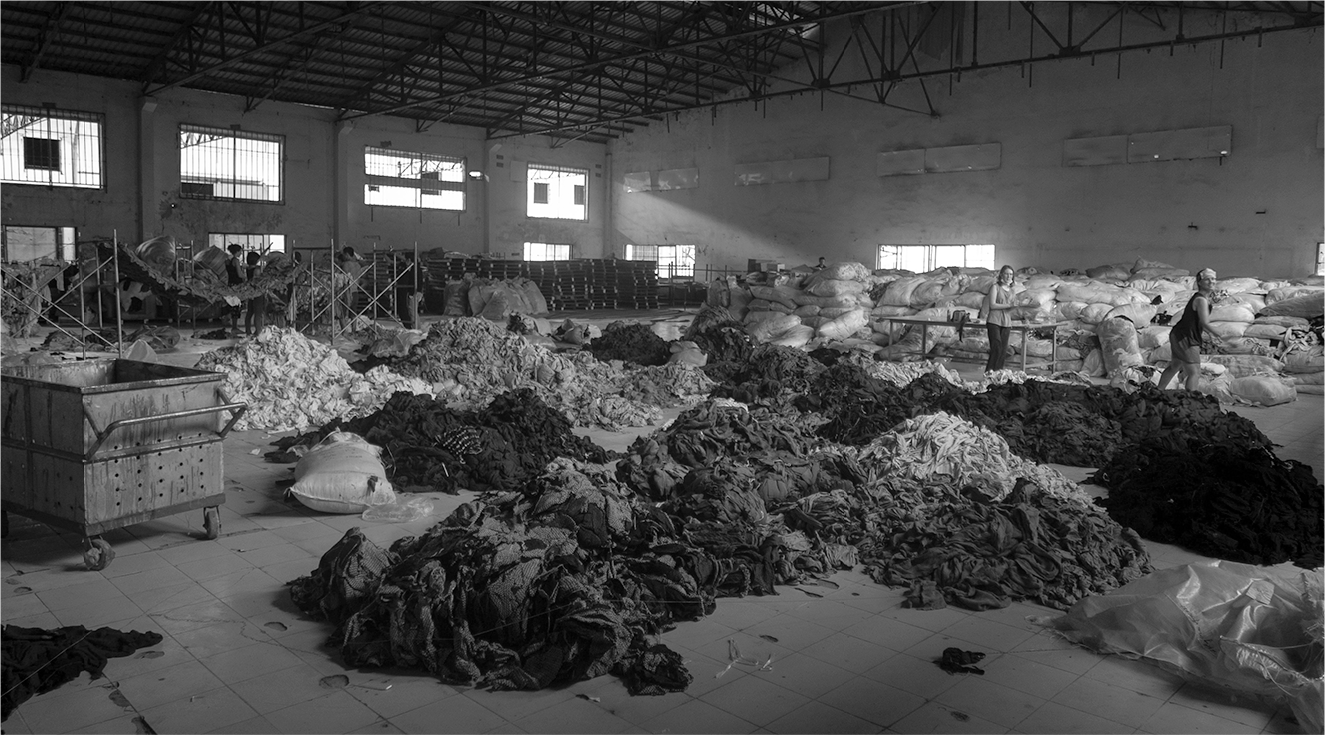
As consumers buy more clothes, they discard older pieces more rapidly to make space for newer pieces. As noted above, most textiles end up in landfills polluting the environment. Consumers who do not throw their old or unloved clothes in the garbage often donate to charities like the Salvation Army, hoping they will find a new home in the United States. However, charities are overwhelmed by the flood of textiles and can only sell a fraction of what they receive. In his book Clothing Poverty, Andrew Brooks notes that in the United States, Canada, and the UK, only 10 to 30 percent of clothing donated to charities is resold.
The mountains of clothes that charities cannot sell are sold to commercial traders, entering a vast global secondhand market. The United States exports 500,000 tons of used clothing annually, placing the burden of post-consumer textile waste on low and middle-income countries without the resources or infrastructure to support it. Andrew Brooks explains that this export of used clothes from Europe and North America dramatically impacts global textile manufacturing and markets. In many African countries, second-hand imports have all but killed local textile manufacturing. No local factory can compete with used Levi’s jeans that cost three dollars. African textile manufacturing cannot compete with the endless bales of second-hand clothes in their countries when residents in Luanda or Dakar can buy global fast fashion items a few months after they were sold in Europe or North America.
Additionally, only a small fraction of discarded clothes are recycled. In 2020 Kirsi Niinimäki found that less than 1 percent of post-consumer textile waste was recycled in a closed-loop (recycled into the same product). Very little that is thrown away is repurposed in a sustainable manner. When brands boast about using recycled materials, the repurposed materials only represent a minuiscule fraction of all textile waste.
How did we get to a system where workers are being exploited, the environment is polluted, and disadvantaged small textile industries are eliminated? All so that we can own so many clothes that we forget those in the back of our closets. Those younger than 30 years old have grown up knowing only fast fashion and its throw-away mentality, which has been dominant since the 1990s. In addition to changing the way we shop and the prices we expect from the industry, these practices have transformed our relationship to clothing. In the Los Angeles Times, Patt Morrison describes people’s relationship to their clothing before fast fashion.
The United States exports 500,000 tons of used clothing annually.
Rio Lecatompessy, Unsplash
People valued their clothing more. Some made their own clothing, they sewed dresses and knitted sweaters. People knew how to mend clothes and were not ashamed to do so. Many learned to make and mend clothes in home-ec(onomics) classes in school. Until the 1970s, clothing was produced domestically in the United States. Workers were paid U.S. wages which made clothes relatively more expensive. If someone bought a coat in the 1960s, they hoped to wear it for many years.
Fast fashion is critically challenged because it exploits workers, its environmental impact, and the detrimental effects of a growing global second-hand clothing trade on textile manufacturing in the Global South.
Can individuals really make a difference in this ocean of excessive and detrimental textile consumption? In an interview with Patt Morrison, Dana Thomas, a critical observer of fast-fashion, explained that changing how we value clothes is the first step towards change. While extensive policy changes are necessary, the impact of individual action is also very significant. One person’s actions can inspire and influence others. We can start by changing how we think about our shopping habits and informing ourselves about the environmental and human health impacts of our actions. We can wear clothes longer, and mend torn pieces. Most importantly, we can buy less. Another important individual contribution or act of resistance against excessive fashion is second-hand shopping, which reduces waste production associated with purchasing new clothes and reduces textile production’s environmental and social damages.
A 2016 study by Eleni Papaoikonomou demonstrates the importance of consumers’ perception of sustainable purchases and the value of making a difference by changing individual consumption patterns. Mindful and ethical consumption habits become “a form of resistance and an expression of identity,” comparable to other counter-culture consumer movements like minimalism. People counter mainstream consumerism by purchasing second-hand clothing, making a political point, and improving society by reducing waste and environmental degradation.
Consumers who avoid fast fashion often do so to make a critical political statement. Papaoikonomou’s study notes that “merely carrying out an ethical act” was not ethically valid if it was not done for the ‘‘right reasons.” While this idea might have some value, it also seems somewhat judgmental. Who determines what reasons are the right reasons? Isn’t a helpful act good just for what it is? Some genuine efforts are disregarded because they are “not doing enough” or “not doing it right.” I would disagree. I believe that any constructive and critical action, however small and whatever its motives, is a step in the right direction. Any effort to reduce waste and support sustainable practices should be encouraged. It is our responsibility as critical individuals to inspire others to work toward a more sustainable future by supporting efforts.
Very little that is thrown away is repurposed in a sustainable manner. When brands boast about using recycled materials, the repurposed materials only represent a minuscule fraction of all textile waste.
While shopping second-hand is a great first step towards reducing waste, consumers can take several steps to decrease their waste production. First, one can replace the fast fashion mentality with a “less is more” strategy by reducing consumption of clothing and buying fewer, perhaps higher quality and more expensive items that will last longer and, very importantly, be produced fairly. Consumers can familiarize themselves with materials that are better for the environment and more fairly produced. Many consumers believe that sustainable lifestyles require more wealth, but studies show that people are willing to pay more for sustainable and fair products. While sustainable options are often more expensive to purchase, they save money over time because they last longer.
Every year the fashion industry sells 80 billion pieces of clothing to customers globally, generating $1.2 trillion in revenue.
Fernand De Canne, Unsplash

The current model of the fashion industry needs massive changes. Consumers need to pressure the industry and hold companies accountable for the social and environmental cost of their production. We still have a long way to go to achieve more ethical consumption. However, as individuals, we have the power to alter our consumer habits to work toward a fairer global society and cleaner environment. The efforts of individual consumers can add up and initiate more comprehensive policy changes. The first step is to think critically about the context and consequences of consumption. The next step is to act according to the insight gained in this process. If many people took these steps, change would be initiated, and more people would be recruited to join this struggle.