




Abstract
This pictorial presentation of childhood aims to provide a visual depiction of the social value of the children in rural Punjabi socio-cultural context. I took these photographsin a village in south Punjab, Pakistan while doing an ethnographic inquiry about infant healthcare belief practices and the social value of the child in rural Punjab.
Keywords
In non-western contexts, children possess an economic value and they are expected to contribute to the household economy and take care of the parents. Montgomery (2009) in Anthropological Perspectives on Children’s Lives provides examples from the global south where children (particularly male children) guarantee the socio-economic security of their parents. Besides old age support and emotional satisfaction for the parents, children contribute to several household activities including looking after their younger siblings that released their parents to get engaged in other productive work and helping in domestic chores. In this way, children hold emotional and economic value for their parents. Their physical competency is acknowledged (according to their physical development), and they own a multifaceted value. According to the field research in the African context done by Abebe (2007) and Chant and Gareth (2003), published in Childhoods Today and Children’s Geography, the economic value of the children is attributed to their participation in the household economy either doing direct labor (such as working in the field) or doing domestic chores that free adults for economic activities. They are receivers and doers/givers at the same time. They are considered an important part of social and economic life and can be identified by their contribution. In line with these findings, my research Challenges Associated with Primary Education in Rural Punjab (2014) provides a picture of children in agrarian societies reporting several activities done by children that are seen as cultural upbringing (and future training) of the children and their participation in the household economy.
This pictorial presentation of childhood aims to provide a visual depiction of the social value of the children in the rural Punjabi socio-cultural context. I took these photographs in a village in south Punjab, Pakistan while doing an ethnographic inquiry about infant healthcare belief practices and the social value of the child. I declare that I hold the copyright for these photographs.
Context
Children are embedded in their socio-cultural context and perceived differently in diverse cultural settings. The book The Value of Children in Cross-Cultural Perspective edited by Trommsdorff and Nauck (2005) provides research findings from eight different societies. These studies report the role of cultural values, traditions, economic situations, interconnectedness, and family systems in situating childhood and the value of the children in various contexts. The children in rural contexts are seen in connection with what they are expected to contribute to the continuity of the societal system, well-being of the family, and security of the family economy. Children’s participation in domestic chores and other household activities is a part of their social and moral development and support for the parents and the family’s economy. Abebe and Kjørholt’s (2013) study Childhood and Local Knowledge in Ethiopia: Livelihoods, Rights and Intergenerational Relationships interprets children’s participation in family wellbeing as the core cultural value of the family, and a norm of socialization of children to become a valuable adult member of the society. In the global south, children are valued for their potential to ensure the economic safety of the parents (in the short and long term), and childcare is seen as a form of investment that children start paying back as they advance in their age. The economic support that children provide is ingrained in the family’s cultural and economic contexts. My research on the social value of the child in south-Asian context featured in Asian Ethnology (2016), Journal of Ethnology and Folkloristics (2017), and Asian Journal of Social Sciences (2018) revealed that the emotional and economic value of the child is ingrained in family’s cultural and economic contexts. Children regardless of gender hold a social value in pronatal (pro-baby) societies and they contribute as social actors in family wellbeing.
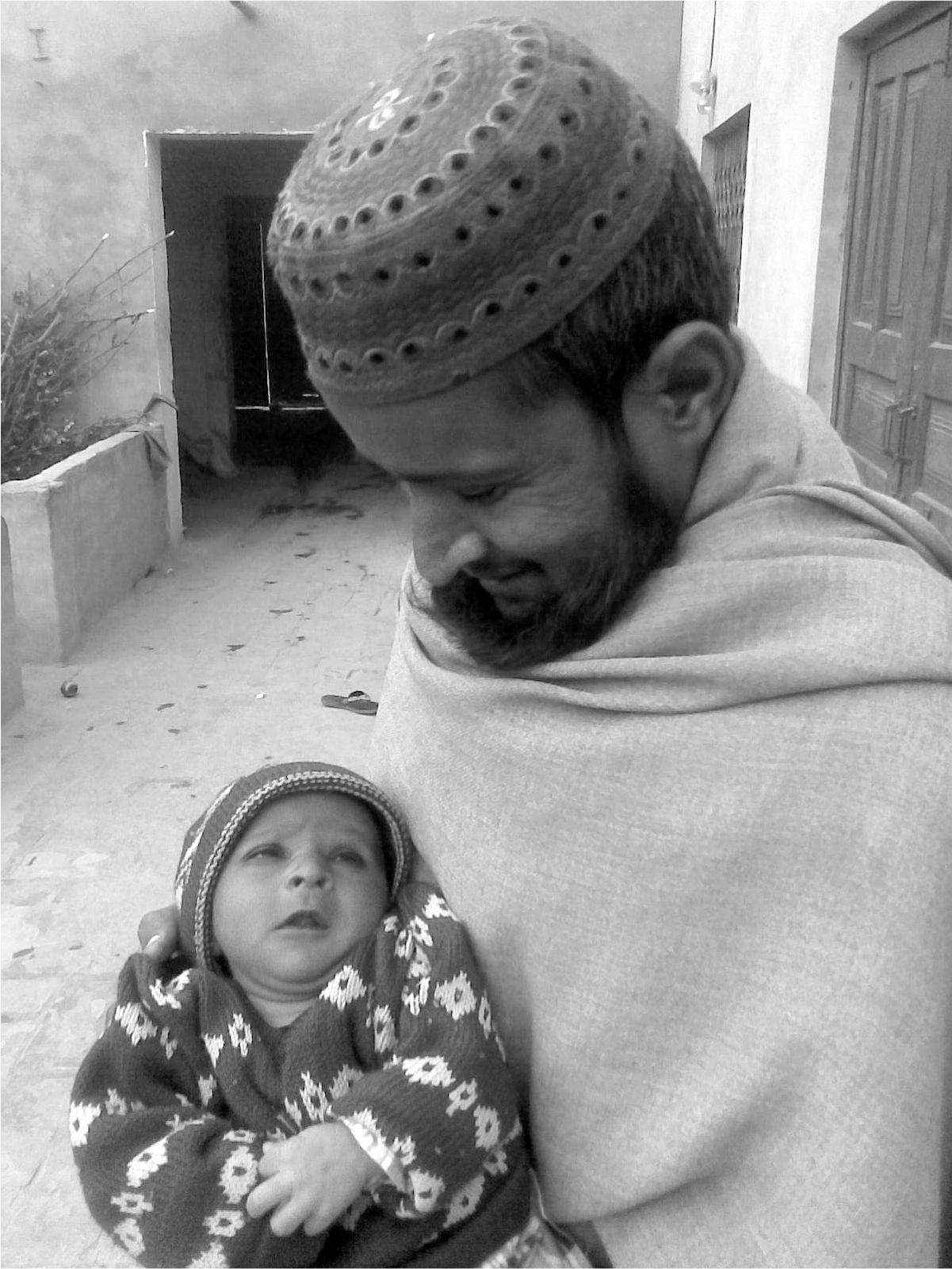
Ghafar is the eldest brother, and this is his second and only male child after a daughter. Ghafar cannot walk properly, and he has suffered from a bone disease since childhood. The birth of a male child means future support for the parents.
All photos ©Azher Hameed Qamar
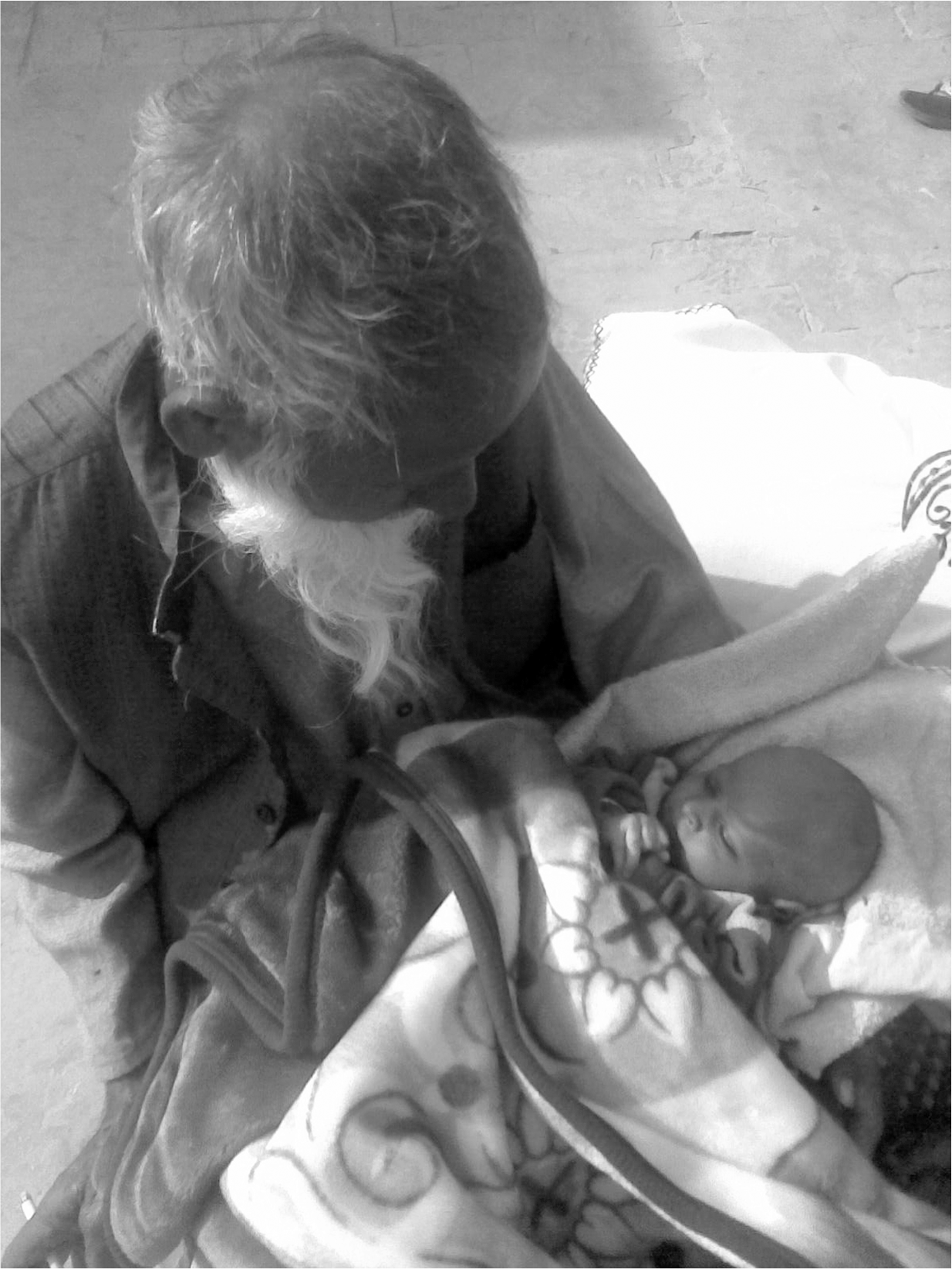
Ghafar’s father is a happy grandfather. He was worried about his disabled son and his future. In this picture, he is talking to his grandson. “Come on boy! Get up! Cattle are hungry, why not you feed them. I am old now.”
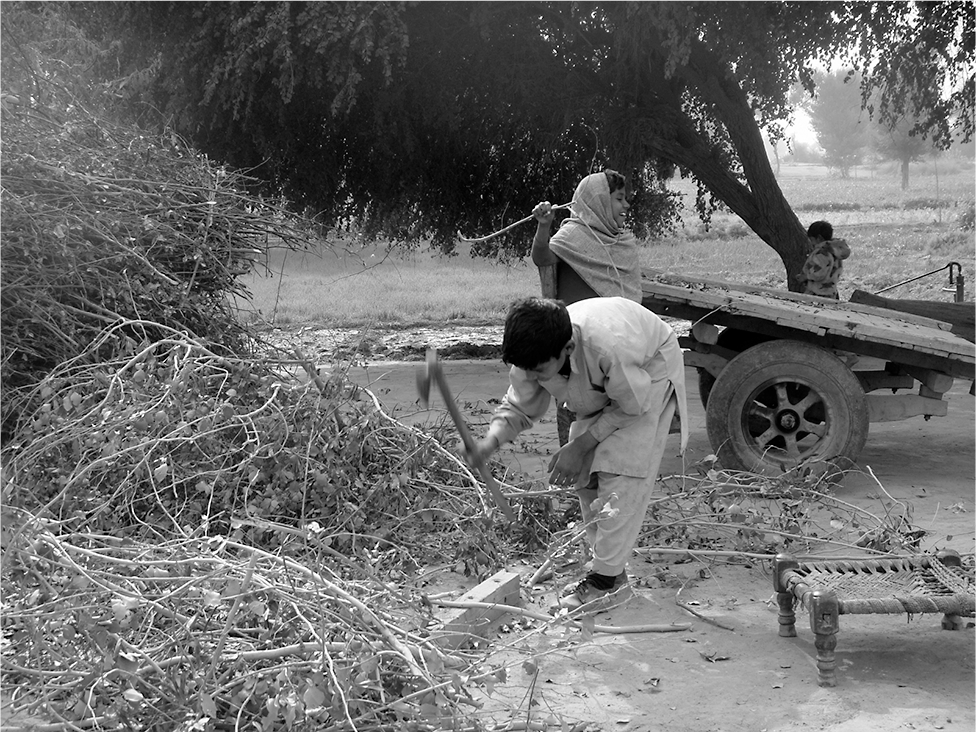
As soon as the child can hold and use an ax, preparing firewood is his job. Whenever his mother needs to cook something, this boy makes sure that there is enough firewood near the stove.
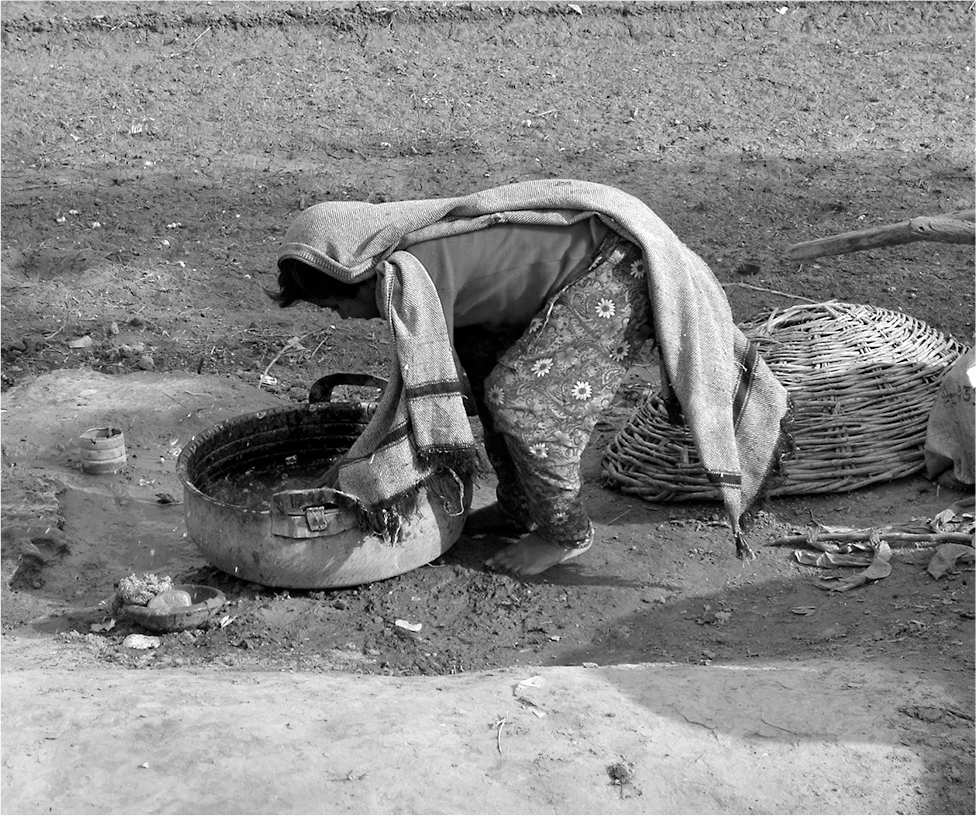
To serve tea and biscuits, her mother asked her to bring some plates and cups. She picked up a couple of cups and a plate and washed them before giving them to her mother.
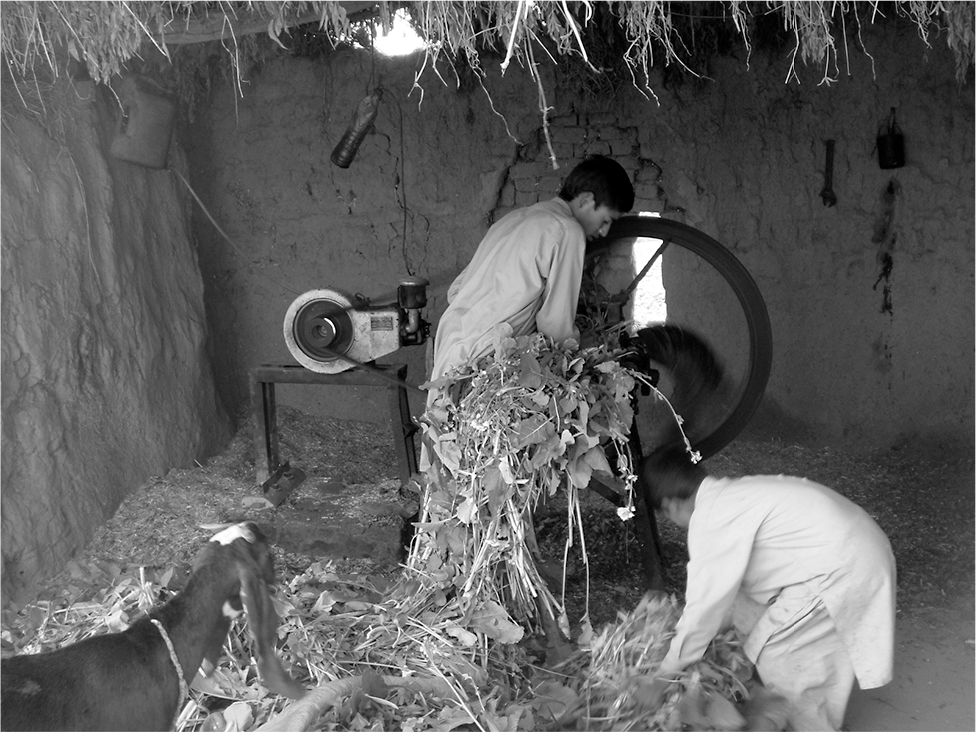
Preparing cattle feed is one of the routine domestic activities that children perform in the village. However, for this activity older child is supposed to operate the machine, and younger children support him. Children contribute to the family economy by taking care of the livestock.
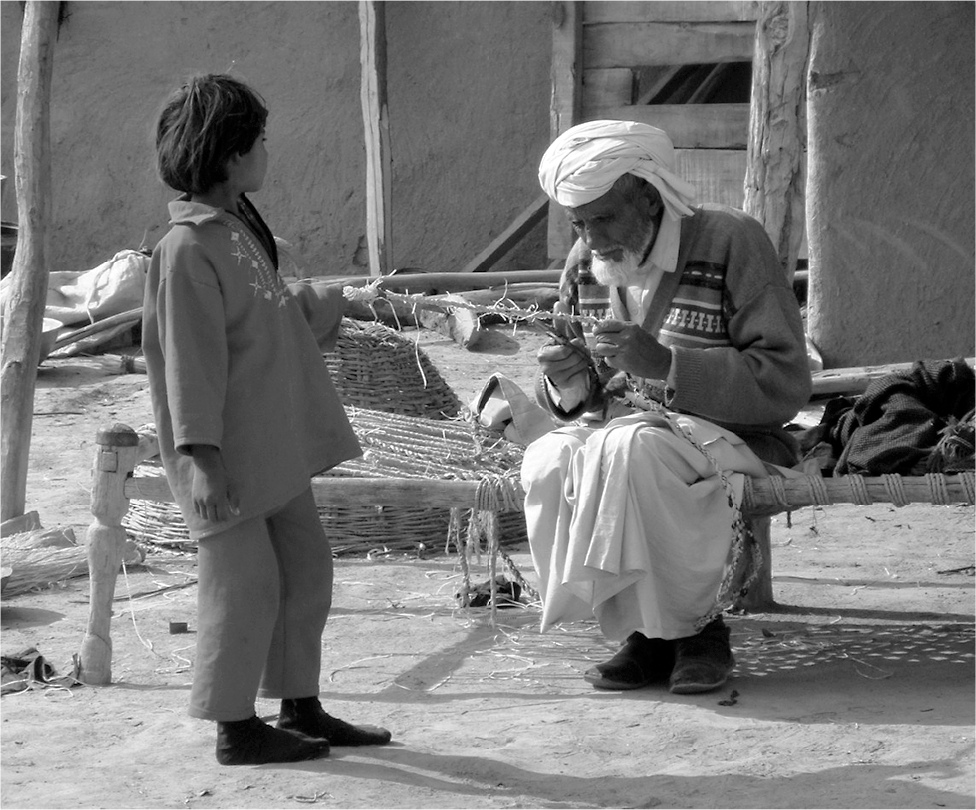
This girl was going out to play with her friends when her grandfather stopped her and asked her to help him twist a rope.
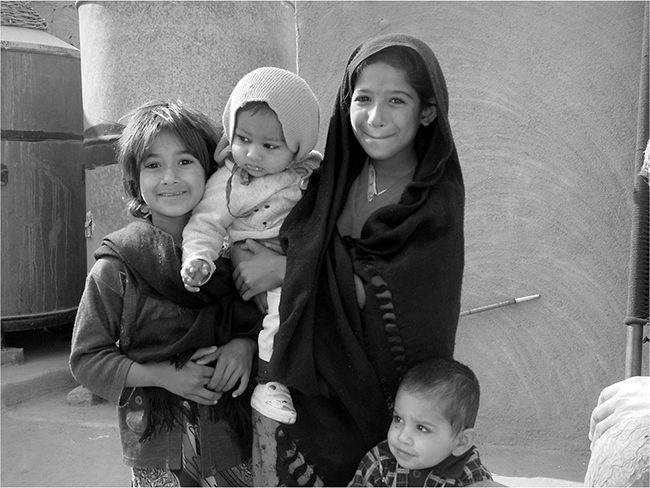
Playing with younger siblings is fun and brings joy to her. At the same time, this is an important supportive activity to free her mother for other economic activities. She has learned the basic childcare practices, such as cleaning and clothing the child.
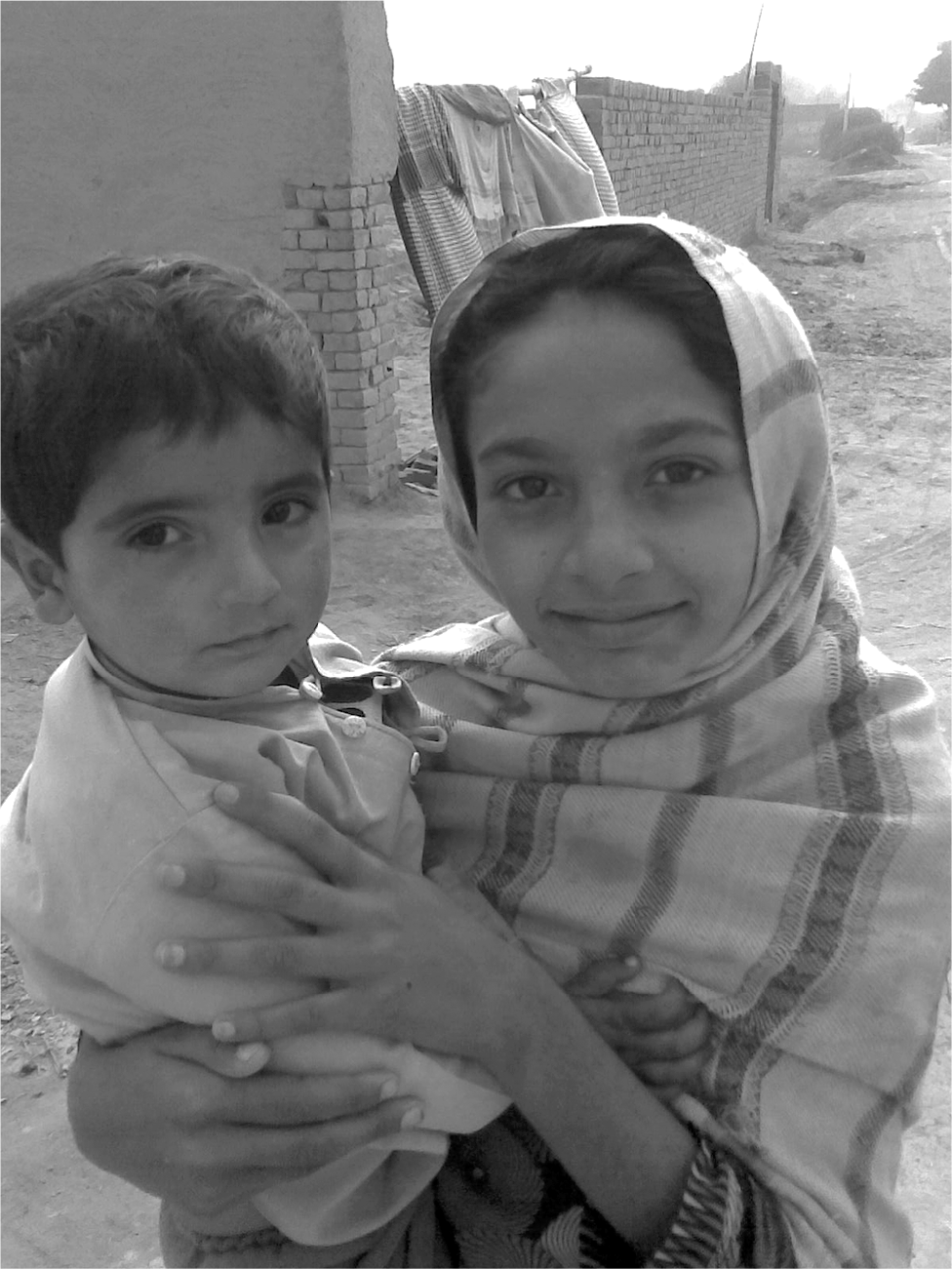
Taking care of the younger sibling is fun for this young girl. However, she also supports her mother while freeing her from babysitting, doing embroidery, and sewing clothes that support the family economy.
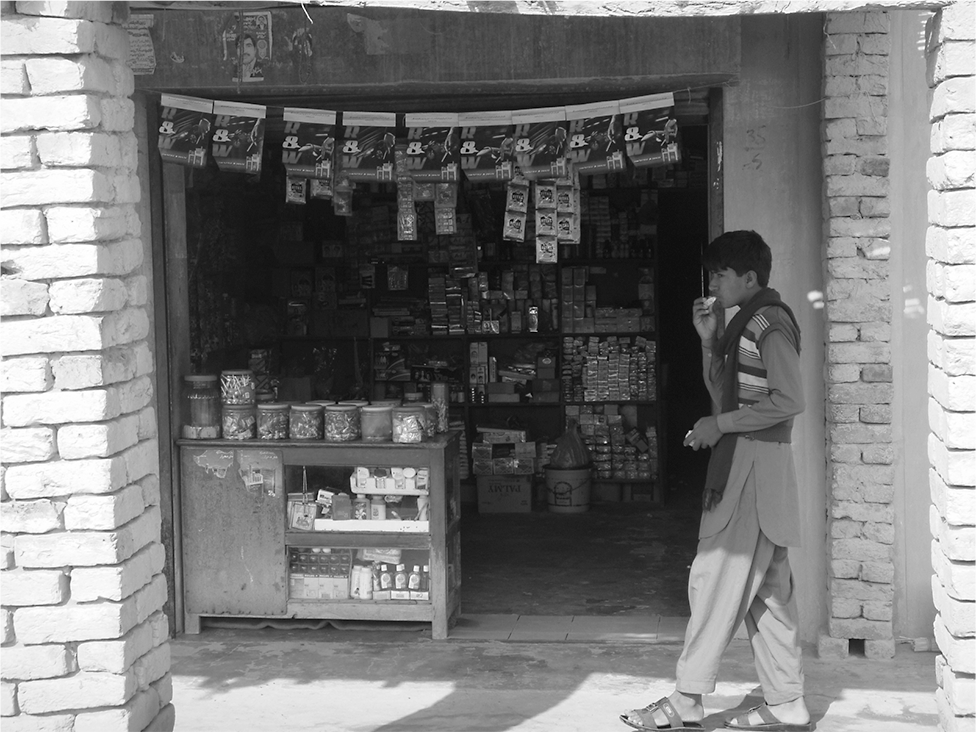
This is his father’s shop. Whenever his father goes to the city to buy stock, this boy runs the shop and supports his family.
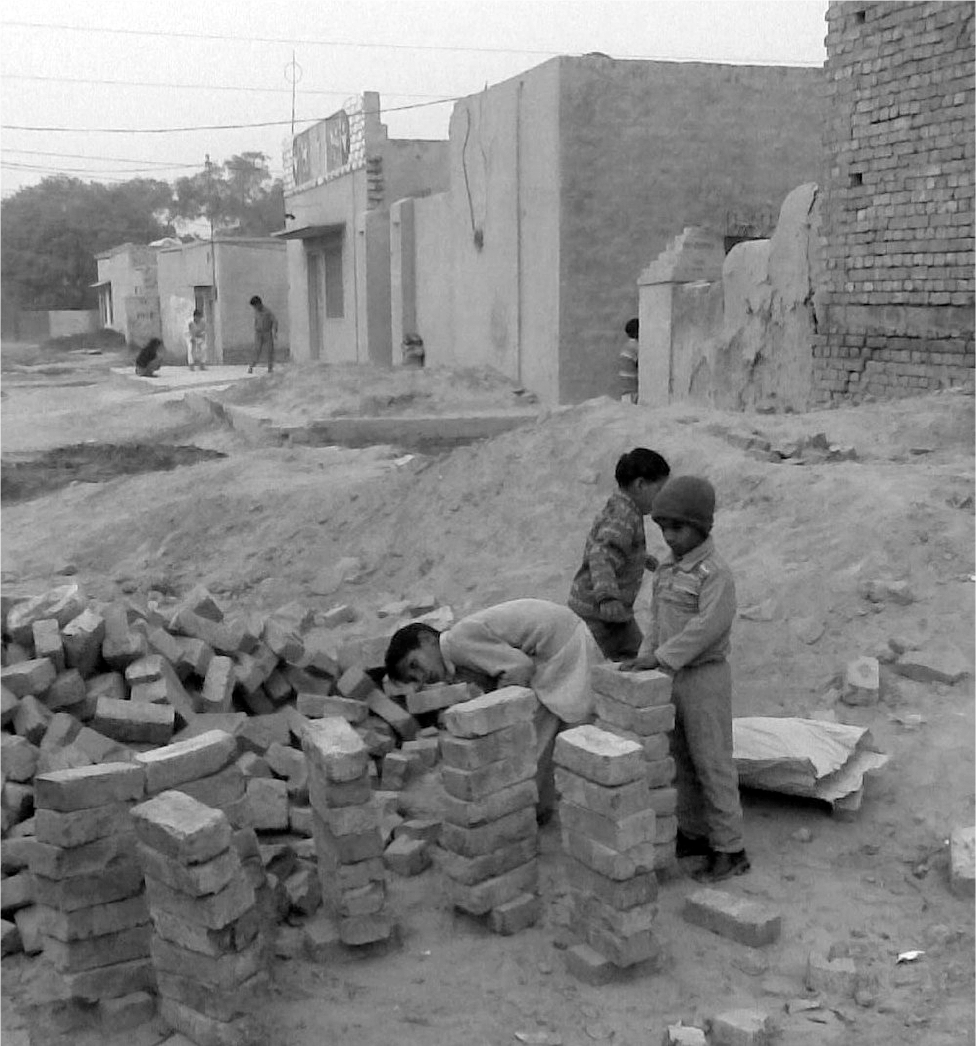
Their house is under construction; his father and elder brother are constructing it themselves. These children cannot pick up these bricks, but they can pile them up for their brother to pick.
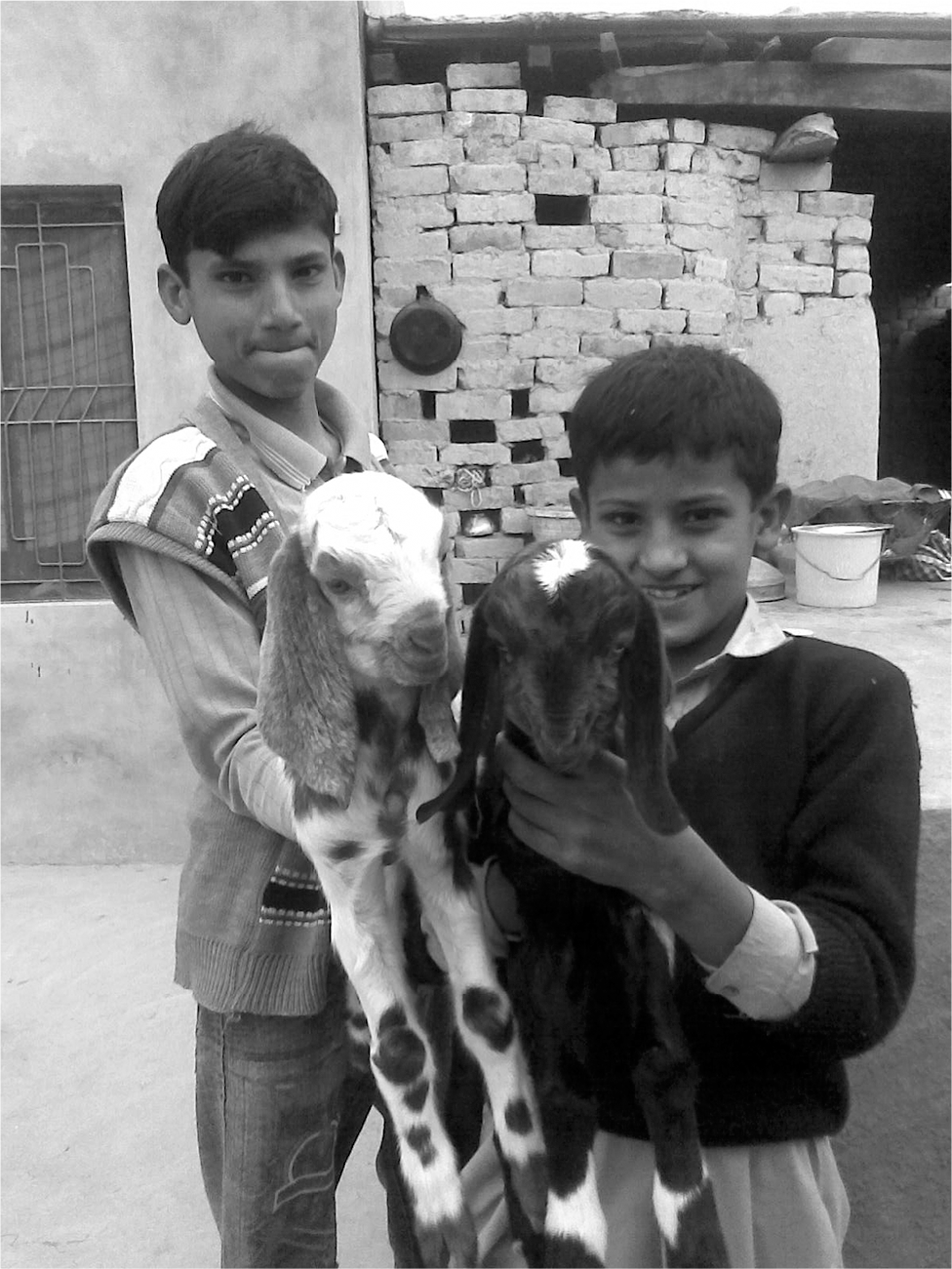
These two brothers were eager to show me their goats. It was their duty to take care of the goats. Their father deals in livestock, and every year on Eid-ul-Duha, he sells goats for religious sacrifice.
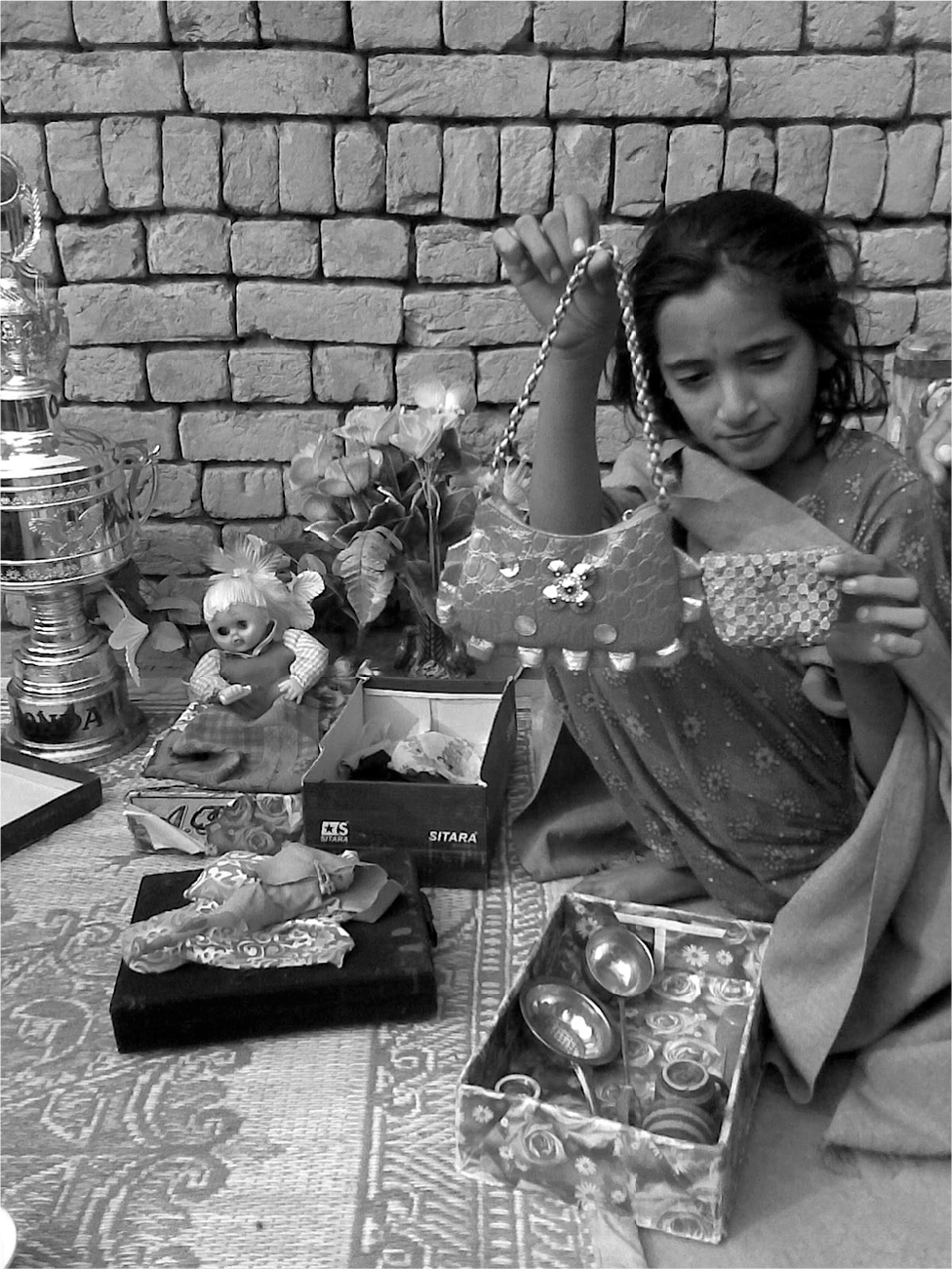
These girls invited me to their doll’s marriage, which was an enjoyable part of my fieldwork. They served some snacks, and I gave them money for the bride and the groom. I was surprised to see their knowledge about arranging marriage ceremonies.
All the above photographs provide a glimpse of the social construction of childhood in the rural Punjabi context. Children are valued and they are socialized to participate in the family economy. The activities they perform strengthen their attachment with their parents and the family. The numerical age of the children is not a determinant of their participation in rural life. Their gradually improving physical competency and exposure to different activities make them learn their role and duties. With changing livelihood strategies, particularly in developing countries where people are struggling for their economic well-being, children are participants in the socio-economic lives of the parents and family. They have been raised as ‘interdependent beings’ with their socio-economic value and a reciprocal relationship with the family. The cultural meanings of the economic value of the children are interwoven with their social value.