




Abstract
Four environmental forces will influence the future trajectory of U.S. universities: federal patronage, state subsidies, new technologies, and social movements promoting greater equity across racial-ethnic and gender lines. The article describes how they will influence universities and how their impact is influenced by the positional strength of universities, the interests of departments, and the strategic assessments of senior managers. I show how these enviornmental forces can be directed to strengthen, rather than to further weaken, universities.

The University of California, where I teach, has been on a roller coaster over the last year. An unexpected surplus has replaced the cratering California state budget. Nevertheless, we expect another round of budget reductions to make up for lost revenue during the pandemic year. We have witnessed bitter struggles over the budget allocations across the UC system, with veiled accusations of racism by the poorer against the richer campuses. We have been teaching remotely for over a year and anticipate returning to the classroom, though many courses remain online. The protests following the George Floyd murder have turned into a full-fledged social movement, at once demanding reckoning for the racial injustices of the past and, at least in the estimation of some, threatening to politicize knowledge production methods that have served the University well.
The tribulations of the UC system mirror those experienced by higher education institutions across the country. Twenty-one states cut their higher education budgets. Undergraduate enrollments barely held their own, and registrations at two-year colleges declined by ten percent, continuing a decade-long downward trend. Low-income, first-generation, and under-represented minority students struggled to stay in college as family finances faltered and support services suffered. Meanwhile, new international enrollments plummeted by 43 percent. Jobs for graduates remain scarce, intensifying concerns about the value of college degrees. And Republicans continued to rail against what they saw as a politicization of the arts, humanities, and social sciences, contributing to a surge in legislative efforts to restrict academic freedom.
The ups and downs of the pandemic year can be seen as intensifying longer-term trends. For decades, we have read reports about the crushing weight of student loan debt, the dispiriting erosion of state funding for universities, the seemingly endless expansion of the ranks of adjunct faculty. We know that college graduates in this generation do not always surpass their parents’ standard of living, and as many as 40 percent remain underemployed for long periods after graduation. Although access to postsecondary education has improved, racial-ethnic and socioeconomic gaps in graduation rates remain wide and have been growing wider. We also wonder whether the country’s investment in research is sufficient to keep up with the competition from Western Europe and especially China.
For decades, we have read reports about the crushing weight of student loan debt, the dispiriting erosion of state funding for universities, the seemingly endless expansion of the ranks of adjunct faculty.
In this article, I will provide what amounts to a long-range meteorological projection, focusing on the environmental forces affecting universities—and I will prescribe an approach that can direct these forces in a way that strengthens rather than further weakens universities.
I will adopt what organizational sociologists call an “open-systems” approach. The use of the term “open systems” is a way of saying that essential forces in the environment shape the trajectory of organizations. Sophisticated open systems approaches also pay attention to how these forces interact with the established positions of organizations within an institutional hierarchy, with the dominant structures internal to organizations—in the case of universities think mainly of academic departments— and with senior managers’ perceptions of the best paths forward. Managers’ perceptions are influenced by their standing in the higher education hierarchy and the status aspirations and anxieties associated with those positions. These structures and strategies channel the gales of change blowing in from the environment.
The U.S. Higher education landscape
I will begin with a few fundamentals about colleges and universities as organizations and the American higher education system.
A typical large research university has as many as ten to 15 major academic units, such as Colleges of Arts and Sciences and Schools of Engineering. Each of these units houses several academic departments. In a College of Arts and Sciences, one will find art history, biology, and political science departments, among many others. Faculties are organized primarily through academic departments, and departments are therefore the most critical educational units (and one of the most important political units) in the university. The faculty are organized in ranks from untenured assistant professors to senior professors who occupy endowed chairs. A proletariat of adjunct instructors, a stratum apart from the tenured and tenure-track faculty ranks, is now found on every campus and, in some cases, handles the majority of undergraduate teaching, especially in the first two years. Organized research units are interdisciplinary centers where faculty members, postdocs, and graduate students work on related topics. These can include such entities as a Center for Food Sciences or an Institute of Urban Development. Many large research universities have 100 or more such units. Administrative staff now typically outnumber faculty at most colleges and universities. They attend to internal organizational functions such as accounting, admissions, diversity and inclusion, human resources, security, and student clubs and organizations. They also attend to outward-facing functions such as alumni relations, donor relations, government relations, and industry relations.
The mainstream of American higher education comprises two price/quality hierarchies—one public and the other private and non-profit. For simplicity’s sake, I will refer to the latter as “private.” There are nearly equal numbers of institutions in the two hierarchies, over 1600 in each, but most public institutions are large, and most private institutions are small. Indeed, about half of the privates enroll fewer than 1000 students. The system also includes nearly 700 for-profit institutions whose job it is to educate and produce profits for investors. These have been in steep decline in recent years due to governmental regulation.
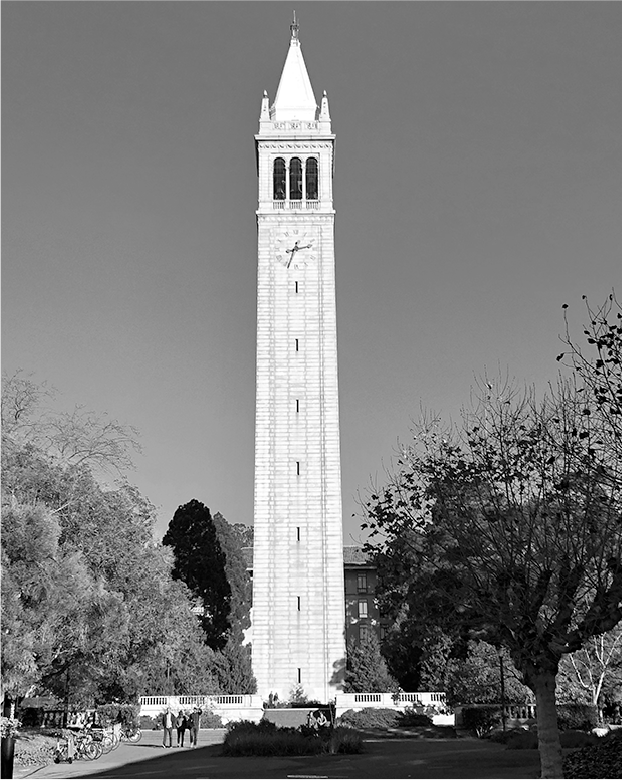
The Campanile on the campus of the University of California at Berkeley, one of the more well-resourced universities in the University of California system.
JoeGarity, Flickr cc
Public colleges and universities are the responsibility of the 50 American states. Among these state-subsidized institutions, the price/quality hierarchy starts at the base with low-cost public two-year colleges (known as community colleges). Next in line are public regional comprehensive universities. These four-year colleges offer mainly occupational-professional programs, with professors primarily focusing on teaching rather than research and recruiting primarily from their local regions. In the next tier are public research universities. They have large enrollments, offer a wide range of curricula, include many programs in graduate education, and employ professors who focus on research and teaching. Some two dozen public research universities stand out from the rest of the research university pack. They have familiar names like Berkeley, UCLA, and Michigan. They recruit internationally and are competitive with the leading private universities, though their undergraduate populations are often five or six times as large.
Not all private institutions are more selective than the leading public institutions, but they are nearly always significantly more expensive and recruit more often from higher-income families. At the bottom of this hierarchy are very few private two-year colleges. They are followed by a much larger number of minimally selective, often religiously affiliated baccalaureate-granting institutions, typically of small size. These are followed by the stratum of private master’s granting and doctoral-granting institutions. At the next level are private research universities of middling status. Next to the top are a few dozen highly selective liberal arts colleges with large endowments and few or no graduate programs. Many of these colleges have familiar names like Amherst, Swarthmore, and Williams. Approximately 20 highly selective private research universities are at the pinnacle, with billion-dollar-plus endowments and prestigious, highly productive, and well-paid faculty. These institutions include the most familiar names of all: Harvard, Princeton, Stanford, and Yale. Like elite public universities, elite private universities stand at a distance from the client-centered concerns of the majority of institutions and have the capacity to focus more resources and energy on knowledge production.
In the United States, taxpayers subsidize higher education in public institutions, but rarely at more than half of the cost per student. In contrast, donors subsidize private institutions—at one-third or more of the cost per student at institutions with solid endowments and much less than that everywhere else. Students and their families pay for the rest either from personal or family savings or applying for grants, loans, or community-based scholarships.
Four Powerful Environmental Forces
In the case of universities, there are potentially dozens of environmental forces that can matter from an open-systems perspective. Social scientists have often tried to tie them up in a singular framework, such as “academic capitalism” or “the rise of the market university.” I do not find these formulations to be very helpful. Instead, I will focus on the four largely independent environmental forces that I have highlighted in previous work as instrumental in shaping the trajectory of U.S. universities. They are federal patronage, state higher education budgets, technological opportunities, and movements for social inclusion. Given the shaping power of these environmental forces over four decades, I anticipate that their influence will continue to be highly consequential.
By federal patronage, I mean the financial resources the federal government allocates to colleges and universities in the service of budgeted public policy objectives. Federal patronage is decisive for academic research and financial aid. Research expenditures from federal sources stand at about $33 billion in 2018 dollars, and financial aid expenditures approximately $60 billion if one counts a reasonable estimate of loan defaults. Figure 1 shows the still-predominant role of federal funding of university research relative to states and localities, private industry, non-profits, and university self-support.
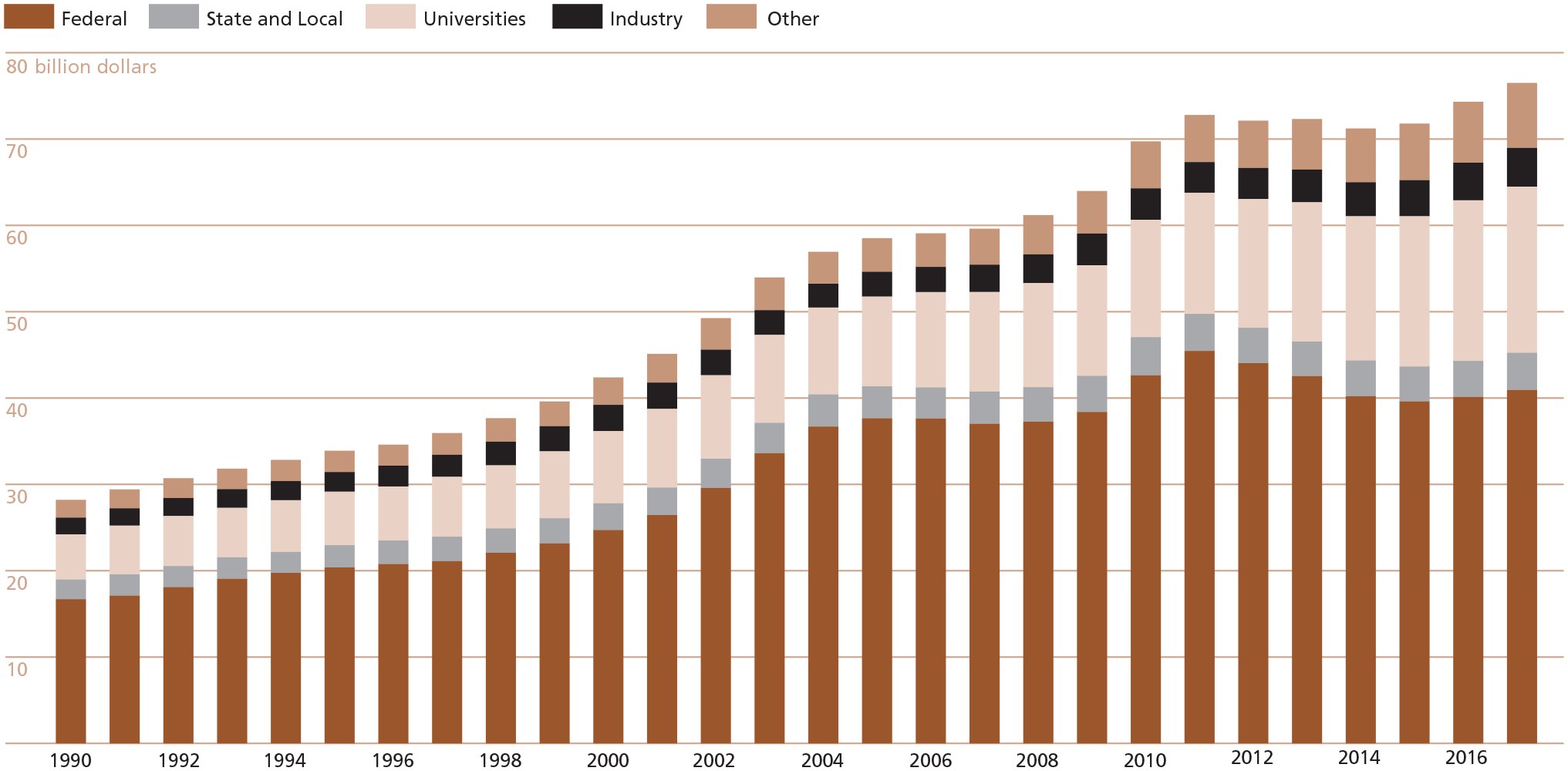
University R&D funding by source, 1990-2017 (in billions of FY 2018 dollars)
In research, federal patronage has been a primary source for the extraordinary productivity of academic scientists and engineers who have published more than 10 million papers over the last three decades in high-quality journals, according to the Web of Science. These include breakthrough discoveries in genetic engineering, quantum computing, renewable energy, cancer treatments, and many other areas that have improved the quality (and quantity) of life. Facilitated by larger scientific teams and broader access to data and materials, publications and citations more than doubled between 1980 and 2010 alone, according to research I conducted with Cynthia Carr, with remarkable gains in virtually every one of the top 185 research universities.
The precise direction of federal funding of science and engineering under the Biden Administration is still up in the air. Both the House and the Senate have passed bipartisan bills that will provide tens of billions of dollars in funding for the federal science agencies. These must now be reconciled. The House bill provides greater autonomy for the science agencies to make investments, while the Senate bill is more prescriptive and more intensely focused on competition with China. Yet both the Senate and the House have targeted spending on emerging technologies such as artificial intelligence and advanced computing. Given international competition, it is likely that applied science will continue to grow more important and that rivalries with Western Europe and China will loom large in budget allocations. For various reasons, the U.S. academic research enterprise remains relatively strong. However, it is not as dominant as it once was—and it is now increasingly dependent on institutionally generated funds as well as federal largesse.
By contrast, the financial aid system is faltering, and it will require repair to maintain current or higher levels of student access and completion. Expenses are going up faster than financial aid can keep up for lower and middle-income students. Many students think that they cannot afford to attend college—and others are burdened by loan repayments that come due early in their post-college careers when their incomes are lowest and least stable. It is already the case that many lower-income students are priced out of state flagship universities, according to Educational Trust studies, a trend that was accelerating even before the pandemic. The decade-long decline in community college enrollments is further evidence that those who are least able to afford higher education are opting out in larger numbers. Figure 2 shows the still-predominant role of federal grants, loans, and tax benefits as sources of student financial aid relative to programs in the 50 states, private loans, and campus sources.
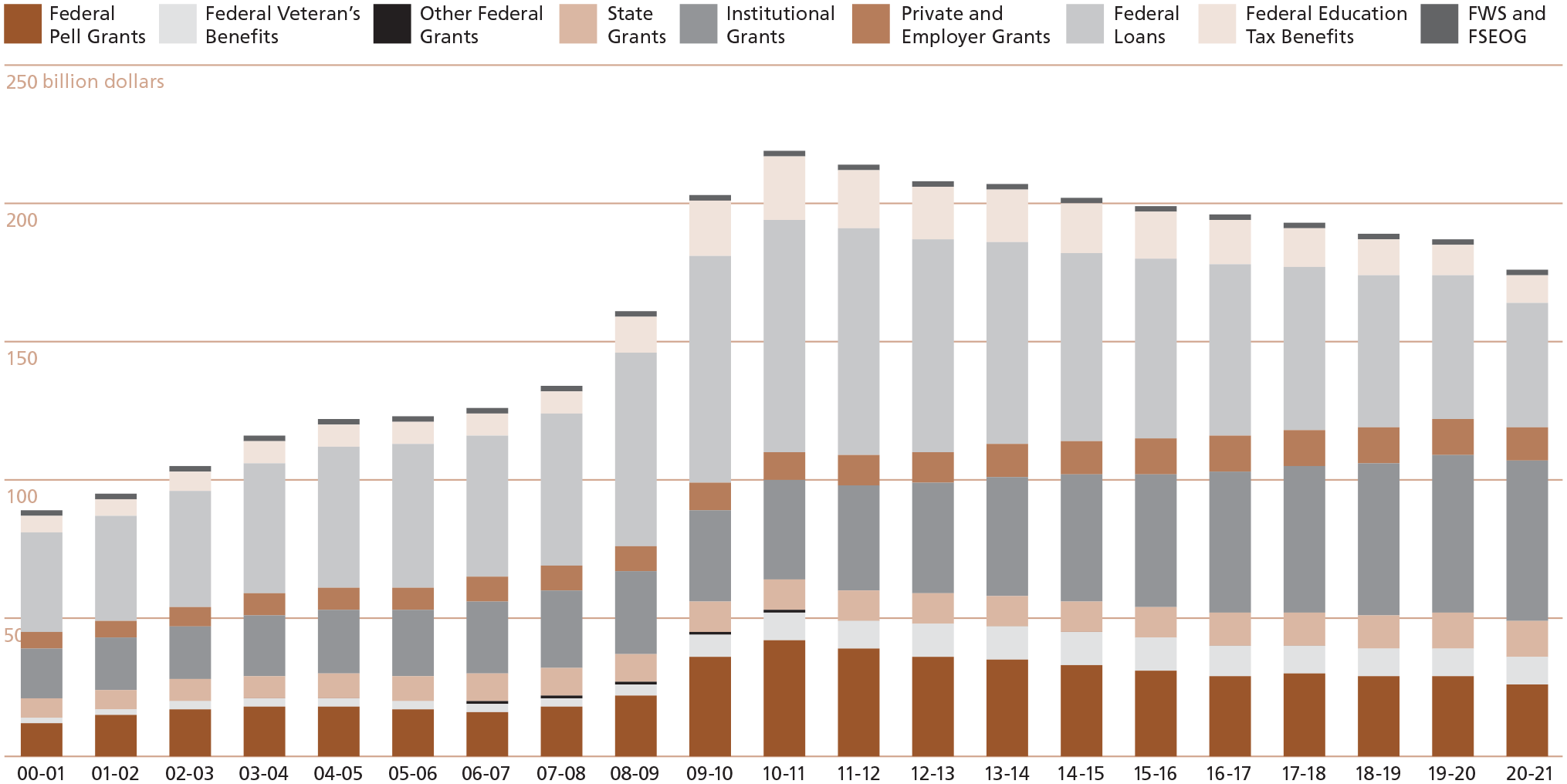
Total undergraduate student air by source and type (in billions of 2019 dollars)
State investments in public higher education systems, the second environmental force, have been unstable since the 1970s, falling during recession periods and rising during periods of prosperity but rarely reaching previous levels of support. Together with cost increases, these declining investments have contributed to tuition hikes. State investments continued on a downward trajectory during the pandemic year—with declines in nearly half of the states and flat budgets in most of the others. Many states now also limit or disallow tuition increases, putting public university finances in a vise. Budgetary constraints in public universities will consequently continue to encourage a focus on marketable fields, lean staffing, very large enrollments in high-demand majors, and the employment of ever-higher proportions of expendable teaching labor. The quality of undergraduate education will consequently continue to suffer.
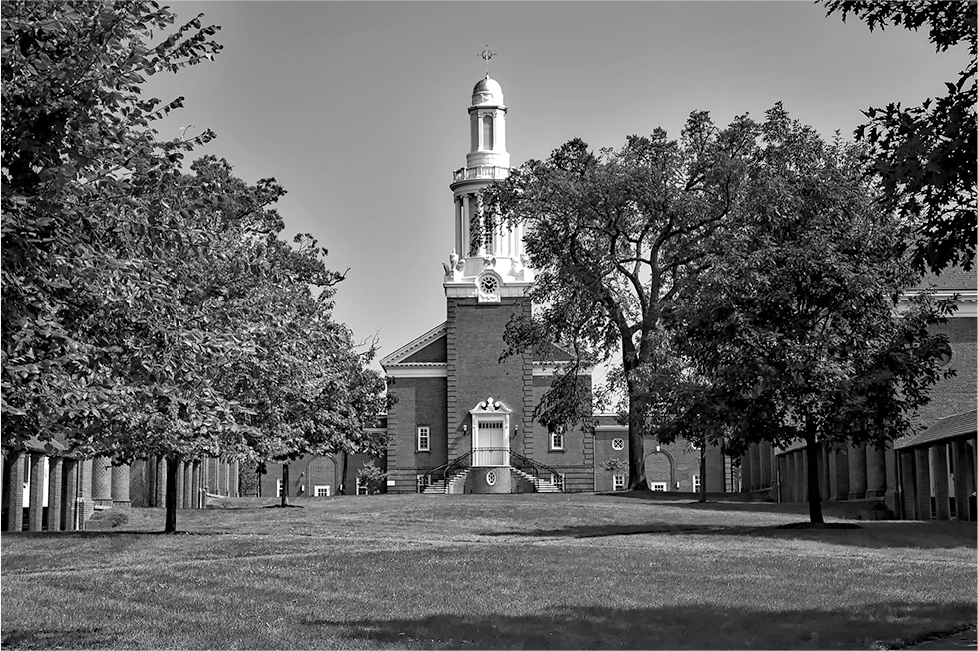
A landscape view of an iconic Yale University landmark. Yale is one of the “standout” private institutions in this study of U.S. universities.
David Mark, Pixabay cc
By contrast, there are reasons to be hopeful about the role of technology, the third environmental force. Researchers including the policy analyst Michael Gibbons and the sociologist Brian Uzzi have shown that the size of scientific teams has grown dramatically over half a century, and they have attributed much of this change to reliance on the ease of communication and the computing power that digital technologies allow. Digital technologies will continue to facilitate the output of university researchers while creating new opportunities for collaboration. They may also open new possibilities for improved undergraduate teaching through advances in adaptive learning systems, which provide feedback to students on their areas of weakness and are more patient and precise than most humans in explaining how to make improvements.
At the same time, technology-mediated remote learning has proven to be no substitute for the on-campus experience, at least not for traditional college-age students. The evidence from the first pandemic year suggests that most students find online classes lonely and alienating. Lower-division students, especially men, underrepresented minorities, and students with low GPAs, continue to fare poorly in the online environment. According to research, my team has conducted, students also miss campus clubs and organizations, which they deem “very important” to their college experience.
The fourth environmental force, the drive for social inclusion, has brought tremendous new talent and ambition into the university. It has contributed, albeit modestly, to reducing the inequalities that have plagued American society for a half-century. It has certainly broadened the research scope of academics to encompass previously neglected populations and regions of the world. At the same time, the changing demographics are a backdrop to intensifying political struggles that divide social-justice advocates from faculty whose research does not touch on race or gender inequalities. During the last year, it is likely that no academic discipline has escaped the accusation of serving as an instrument of white supremacy. Conservative state legislatures, in turn, have responded to this activism with efforts to ban the teaching of approaches such as critical race theory that focus on systemic racism. They have impinged on academic freedom in doing so.
Mediating Structures and Strategies
As I have indicated, environmental forces do not simply reshape institutions in their image. Pre-existing institutional strengths and vulnerabilities influence the capacity of colleges and universities to steer their own directions in a relatively autonomous way. Institutions with the advantages of financial stability, higher selectivity, increasing enrollments, and a wide range of curricular offerings (or a focus on high-demand fields) have greater independence from environmental forces and fare better in competitive and turbulent environments.
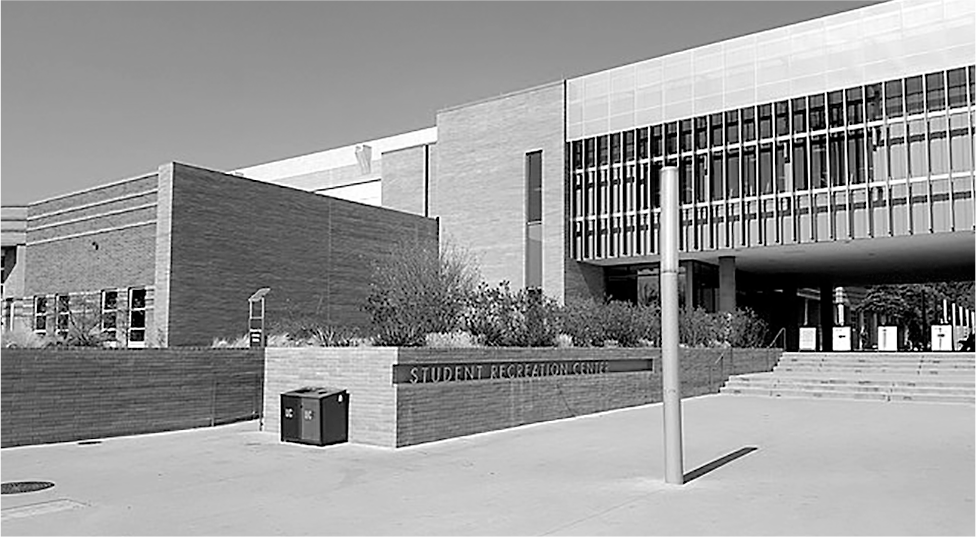
The student center at University of California Riverside, the author’s campus.
Spatms, Wikimedia Commons
In addition, environmental forces are filtered through the departmental structures that organize so much of academic life and through administrators’ perceptions of the opportunities and incentives in their environments. As long as academic departments control hiring and curriculum, they will significantly influence which subfields are supported, the extent of the shift toward applied research, how technology is adopted, and how the tensions between social movement activists and traditional scholars are resolved.
In the case of universities, there are potentially dozens of environmental forces that can matter from an open-systems perspective. Social scientists have often tried to tie them up in a singular framework, such as “academic capitalism” or “the rise of the market university.” I do not find these formulations to be very helpful.
Here are a few examples of the variability we can expect: The sciences and engineering are responsive to federal R&D priorities, of course, but tensions continue to exist between a federal government increasingly interested in technological innovation and the traditional role of the university as the fount of basic research The transformation of the sciences in applied directions is consequently slowed by the recognition that no other institutions have the time horizons that allow for the pursuit of basic research and by the investments of faculty in basic research topics. This recognition is behind the commitment of many scientists and engineers to curiosity-driven science.
Meanwhile, the arts, humanities, and social sciences are becoming more heavily influenced by power-centered epistemologies deriving from Michel Foucault and other European theorists and by specializations related to diversity, equity, and inclusion. The new power-centered epistemologies entered the American academy in the late 1970s, challenging the conventional notion that scholarship could be dispassionate and evidence-based. Beginning in the 1990s, social scientists began to demonstrate the faster growth trajectory of humanities and social science fields that engage with the experiences of women, minorities, and non-western populations. Many of these fields are strongly influenced by power-centered epistemologies.
A fundamental difference exists between the client-centered incentives of struggling colleges and universities and the knowledge production incentives of the three dozen or so leading universities. It is much easier to focus on knowledge production when resources and reputations are elevated. The vitality of the sector may depend on how the managers of research universities in the middle balance client-serving and knowledge production interests.
Today, our best estimates are that between one-quarter and one-third of professors in the arts, humanities, and social sciences strongly identify with social-justice activism inside and outside the academy. Over the last few years, we have seen a significant rise in conflicts between scholar-activists and those whose work is in specializations not closely related to social-justice concerns. Accommodation has been the norm, but accommodation is less likely in steady-state or contracting fields like many in the arts, humanities, and interpretive social sciences. Here, the struggles are intense or have been won already by scholar-activists. For all the representational benefits these developments bring, they threaten to place important disciplines at risk of constrained and overtly politicized agendas.
The incentives in the system, as they are understood by university administrators, also matter. A fundamental difference exists between the client-centered incentives of struggling colleges and universities and the knowledge production incentives of the three dozen or so leading universities. It is much easier to focus on knowledge production when resources and reputations are elevated. The vitality of the sector may depend on how the managers of research universities in the middle balance client-serving and knowledge production interests. The common approach has been to expand undergraduate enrollments built along client-centered lines to subsidize faculty knowledge production. But bottom-line considerations can put knowledge production at risk, and these considerations are more common where revenues are flat or falling. Here, concerns for revenue production take hold, and graduate education often suffers in the bargain.
Beyond this fundamental divide, we can expect that some universities will focus on each one of the environmental forces I have highlighted. Senior administrators understand that they cannot all compete equally for academic eminence. Therefore, they will innovate by trying to be a leader in a new kind of hierarchy. There will universities scrambling for leadership in interdisciplinary activities (as pioneered by Duke University in the 1980s), those trying to top the list of entrepreneurial universities (Northeastern University is an interesting example), technologically-enabled universities (Carnegie-Mellon is a leader here), and broad access, social-justice-oriented universities (such as the University of California-Merced). In some cases, national organizations have encouraged the development of new hierarchies, as in the case of the Carnegie Foundation’s creation of a new classification for “community-engaged” institutions.
And indeed, a few will attempt to incorporate all of the leading trends into ambitious new visions of the future. These new designs focus on committing universities to economic development and the solution of social problems through much more active interdisciplinary collaborations, enterprise models of external relationships, and vastly expanded access, often through massive online “campuses.” We see efforts to promote this model, most notably, at Arizona State University, which fashions itself as the “new American university” and the leader of the next wave of university development.
Students walking to class on a U.S. college campus.
Stanley Morales, Pexel cc

Better Paths are Possible
These are the predictions an organizational sociologist can make based on open-systems theorizing. Likely paths, however, are not necessarily desirable paths. I will therefore close with a brief overview of what desirable paths of development would look like for our increasingly troubled research universities.
Two regions stand out as centers of basic science and scholarship linked to vibrant “high-tech”-oriented economic development: Boston-Cambridge and the San Francisco Bay Area. These geographical centers of knowledge production and venture capital are vital to the future competitive position of the United States. As fuel for a still higher level of competitiveness, the country will need to nurture at least two or three more “mega-university complexes” on the order of these two. Leading candidate sites include the Atlanta region, greater Los Angeles, New York City, and the Research Triangle in North Carolina. The country also needs to build capacity in the middle range of universities above the top 100 and below the top three dozen to shore up knowledge production. These universities are suspended between resource uncertainties that encourage a focus on expanding undergraduate enrollments and the demands of their regions and states for highly trained professionals, economically-relevant research and scholarship, and solutions to social and environmental problems.
Desirable reforms to financial aid would include the doubling of amounts awarded in Pell Grants (an increase that did not make it into the Biden budget) and comprehensive implementation of income-contingent loan repayment so that students can pay back loans when they are better able than at the beginning of their careers. These approaches are superior to the alternatives that have been proposed in “free college” and loan forgiveness plans. The latter tend to provide more benefits for those capable of paying for college rather than for those who are struggling to do so.
This path would also lead to focused attention on the improvement of undergraduate education, the weakest part of the current structure of universities, including the shift of many contingent instructors to permanent teaching faculty lines based on the criterion of excellence in the classroom. It would also include adopting alternative forms of teaching evaluation using what we have learned from cognitive science to replace the validity-challenged forms currently used by students to assess their instructors. Remote education would continue to play an auxiliary rather than a leading role; for undergraduates, fully online degrees would be priced to reflect their lesser value relative to the on-campus experience.
Finally, instead of continuously shifting resources toward technical fields while starving other disciplines, university administrators should think again of the arts, humanities, and social sciences as more than instruments to accommodate current political agendas. We need to put them back into the business of illuminating the wide world of complex texts, pivotal events, and evolving social patterns while at the same time continuing to incorporate the texts, histories, and experiences of marginalized communities.
These steps would put universities on a stronger trajectory for the future. They are consistent with the open-systems approach because they do not deny the influence of environmental forces. Instead, they direct these forces along the tracks of value-rational practices that enhance rather than compromise higher education’s capacity for continuing contributions.
Footnotes
Supplementary Material
Please find the following supplemental material available below.
For Open Access articles published under a Creative Commons License, all supplemental material carries the same license as the article it is associated with.
For non-Open Access articles published, all supplemental material carries a non-exclusive license, and permission requests for re-use of supplemental material or any part of supplemental material shall be sent directly to the copyright owner as specified in the copyright notice associated with the article.
