



Abstract
Diversity at HBCUs, Black indigeneity and inequality in mexico, and sports, antiracism efforts, and public opinion. New research from the journals.
In the current era of multiculturalism, the cultivation of a racially diverse learning environment remains a positively embraced goal for many institutions of higher education. Yet, a deeper look into the specific mechanisms leveraged by universities to signal diversity reveals how diversity displays often operate to reify existing inequalities. For predominantly white institutions (PWIs), these diversity displays commodify racial difference and obscure the ongoing realities of racial inequality for financial and reputational gain. Despite false assumptions that historically Black colleges and universities (HBCUs) are self-segregating and exclusive to Black students, they too must adapt to the diversity imperative for institutional survival. Still, little research has examined how HBCUs respond to contemporary diversity pressures and come to incorporate diversity in institutional branding.
A snapshot from Hampton University’s Homecoming in October 2019.
Laura K. Wise
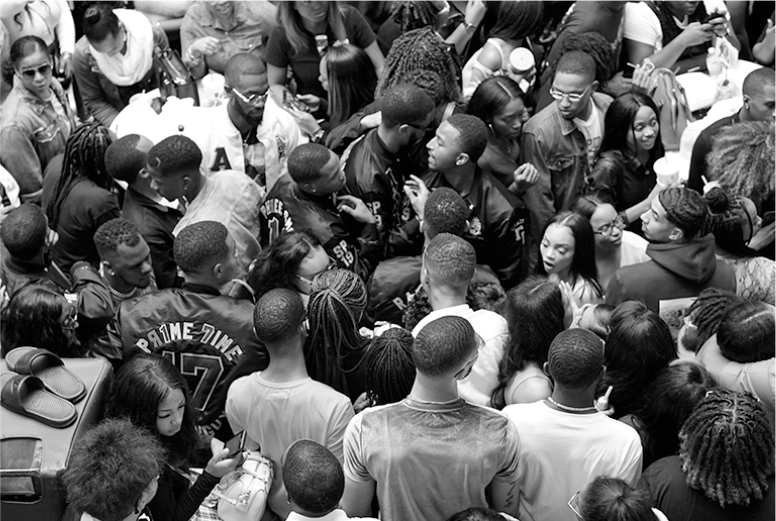
In Sociology of Race and Ethnicity, Oneya Okuwobi, Deborwah Faulk, and Vincent Roscigno use content analysis to interrogate visual depictions of students and the diversity discourses used in mission, vision, and impact statements found on the websites of 31 HBCUs. In doing so, the authors identify four patterns for communicating diversity on HBCU websites: (1) diversity as racial justice, (2) diversity beyond race, (3) diversity as an institutional value, and (4) diversity as an institutional characteristic. Findings suggest that the increased autonomy of private HBCUs relative to public HBCUs, allows for expressions of diversity to be explicitly linked to broader racial justice and consciousness-raising aims. In contrast, the diversity displays of public HBCUs more often communicate diversity as beyond race, as either an institutional value among many or an inherent feature of HBCUs.
ltimately, analyses of HBCU websites revealed an overrepresentation of white students, an omission of racial language, and a discursive detachment from histories of inequality. Consequently, the authors argue that HBCUs approach diversity much like PWIs: through the commodification of difference and disregard of structural racism. These findings highlight how the diversity displays of HBCUs may inadvertently reinforce racist logics, like racial capitalism, and undermine long-term racial equity goals through the prioritization of survival over sustainability.
Forcing a Patient’s Hand?
A central tenet among early psychosis intervention clinics is a shared aim to provide recovery services while maintaining the agency of their patients. The ideal of shared decision-making in antipsychotic medication, however, is difficult to achieve. In Society and Mental Health, Elaine Stasiulis, Barbara E. Gibson, Fiona Webster, and Katherine M. Boydell examine how these clinics structure and frame the recovery of those seeking treatment.
Relying on an institutional ethnography of an early psychosis intervention clinic, the authors find a gap between the clinic’s intent to provide recovery care and the experiences of the people being served. The organization of psychiatric care emphasizes measures of work and efficiency among clinicians. These measures include seeing more patients who are willing to adhere to prescribed recovery- care practices, such as adhering to medication. In turn, clinicians engage in enticement and negotiation to informally coerce patients to adhere to their medication. Rather than promoting the agency of young patients, the clinic focused on linking recovery to whether the patients adhered to their medication.
Stasiulis and colleagues conclude that the disjuncture between the intent of clinicians in providing recovery care and the real experiences among patients poses an important risk. When clinicians emphasize medication adherence rather than offer it as a choice among a range of recovery-care options, patients may choose to stop medication without the support provided by the clinic.
Black Indigeneity and Inequality in Mexico
In line with its historic embrace of a Spanish-Indigenous, mestizaje national identity, Mexico has long accounted for indigeneity in its collection of population data. However, Mexico has only recently begun to formally recognize and measure its Black population. Consequently, statistical analyses of ethnoracial inequality in Mexico have remained skewed in their consistent disregard for Black and Black-Indigenous populations. With contemporary data revealing a sharp increase in the percentage of people identifying as Black and Black-Indigenous, a more nuanced portrait of ethnoracial stratification in Mexico has become increasingly necessary.
African descendants in Oaxaca, Mexico.
Mariana Palafox-Jerry
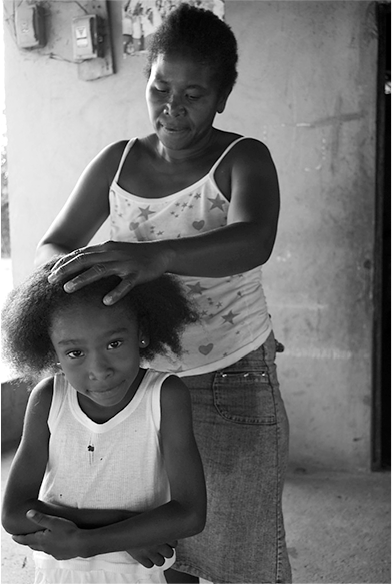
In Sociology of Race and Ethnicity, Christina A. Sue and Fernando Riosmena use government survey data to disentangle the relationship between rising Black and Black-Indigenous identification, population dynamics, and inequality measurements in Mexico. To do so, the authors assess the implications of using single category (multiracial classification is unobserved) and implicit dual-category (multiracial classification is observed but homogenized and additive) approaches for analyses of inequality and instead adopt an explicit dual-minority (multiracial classification is observed through direct identification with multiple categories) approach to examine socioeconomic differences across as well as within ethnoracial classifications. Ultimately, the authors find that ethnoracial inequality is most pronounced when individuals identifying as Black, Black-Indigenous, and Indigenous are explicitly parsed out and accounted for in statistical analyses.
The authors found heightened estimates of disadvantage for Black-Indigenous Mexicans through their methodological comparison relative to their exclusively Black counterparts. When accounting for specific ethnoracial-gender combinations, the authors highlighted a “quadruple oppression” experienced by Black-Indigenous women based on their race, ethnicity, gender, and class. These findings extend contemporary literature on multiracialism beyond its preoccupation with part-white mixtures to an explicit focus on dual minority classifications. Moreover, these findings contribute to growing methodological debates around the incorporation of multiracial classifications in statistical analyses.
Sports, Antiracism Efforts, and Public Opinion
Ibtihaj Muhammad is an American sabre fencer, and a member of the United States fencing team. She is best known for being the first Muslim American woman to wear a hijab while competing for the United States in the Olympics.
Marie-Lan Nguyen / Wikimedia Commons / CC-BY 3.0
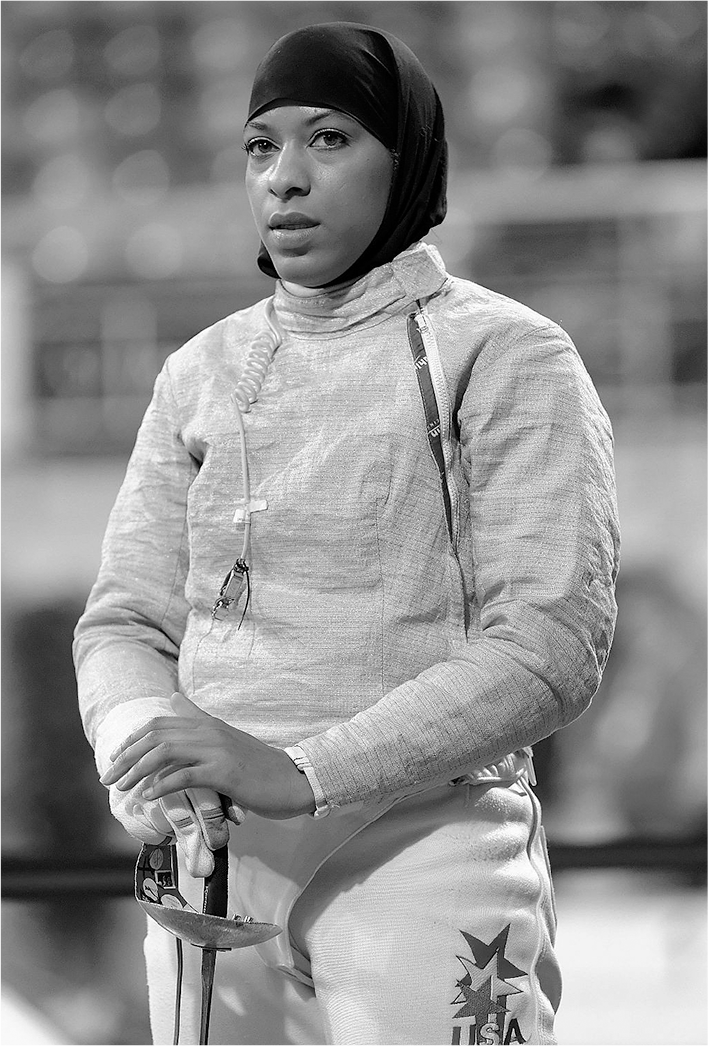
In their recent Socius article, Knoester and Rockhill explore public opinion of recent, positive changes in sports that hope to further antiracism and multiculturalism. They use data from the National Sports and Society Survey (NSASS) to assess public opinion on changing team names and mascots that appropriate Native American identities and cultures, as well as the acceptance of hijabs in women’s sports. The authors also make broader claims about how public opinion is linked to respondent’s dominant status, traditionalism, and whether knowledge of discrimination was associated with support of antiracist policies in sport.
The authors found that 47 percent of respondents expressed support for changing Native American team names and mascots. Also, more than 70 percent of respondents showed support for allowing hijabs to be worn in women’s sports. However, while most respondents supported these two steps towards progress, respondents who identified with dominant statuses or in-group identities disagreed. Knoester and Rockhill defined dominant statuses and in-group identities as respondents that represented major demographics of sports fandom: the white heteronormative Christian man. The authors also found that respondents identified as traditional–older respondents with conservative ideals and lived in rural areas—were resistant to these changes. Finally, the study demonstrated how respondents’ awareness of racial discrimination was associated with their support for changes in sports, such as renaming teams and allowing hijabs.