



Abstract
The book review explores Boystown by Jason Orne, a complex and explicit ethnography about the role of sex or sexualities in Chicago nightlife and community, inequality, and the ways queer sexualities struggle to survive the increasing assimilation of gays into the mainstream.
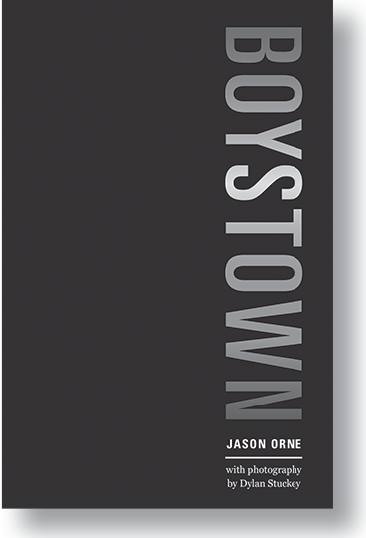
“To stay gay, Boystown becomes less queer” (p.12). What is it like to exist in the periphery and watch everything around you change? What does it mean to be “queer” in a world becoming more “gay”? Boystown by Jason Orne claims to be “a book about sex” (p.9), but this complex and explicit ethnography is about much more than the role of sex or sexualities in Chicago nightlife. This is a book about community, inequality, and the ways queer sexualities struggle to survive the increasing assimilation of gays into the mainstream.
Over the course of three years, Orne studied Chicago’s queer community and scene. Boystown pushes social, disciplinary, theoretical, and methodological boundaries in a variety of ways. The work calls into question the true cost of traditionally gay and queer neighborhoods in prominent cities (like Chicago’s Boystown) assimilating into mainstream society. Orne takes the reader on a journey inside spaces that, without an insider perspective, could not possibly be understood. These “lessons of the night” illustrate what the queer experience of Boystown means and could mean in a “post-queer” world. Orne takes a multilogical approach, blending together the voices of participants, the researcher, and the academic community to explore individuals drawn together by shared identity, experience, and sex. The book challenges notions of “progress” and investigates how the assimilation of queer and gay spaces is a mechanism of structural inequality that has made these places unrecognizable to many residents. The ever-changing space creates a new social dynamic in which Orne analyzes how and why the acceptance of “good gays” over queers produces new forms of inequality, further marginalizing those most at risk as these spaces change.
As a starting point, Orne grounds the book in an intersectional approach as he “seeks to understand the ways in which structures of social oppression— race, class, gender, sexuality and so on— interrelate” (p.11). Such an approach displays a growing attempt of scholarship to embrace individuals as multifac-eted. Orne relies heavily on Gayle Rubin’s notion of the “charmed circle” to show the conflict between heteronormativity and queerness. Carnal Sociology and the Chicago School’s view of relationship-based sociology came alive in the stories of place, pleasure and persecution faced by the men of Boystown. In many respects, Orne’s work provides new foundations for further research into communities rarely considered, or at least tangentially so, in mainstream society and academia.
Boystown—like other spaces pioneered for gay men looking for shared community—was built in the privacy and freedom of sexy communities, places where desire to grow and explore one’s self were not only welcomed but encouraged.
Orne generalizes aspects of the gay/ bi/queer experience as they attempt to illustrate the ways that gay, bi and queer men exist together in shared spaces. The most salient of forces that Orne describes is a shared shame. Orne explains this shame as mapped onto them by outside society, leading them to develop “queer relationships and communities” (p.57). This shame is shed in spaces where what Orne refers to as naked intimacy creates a sexy community. Orne’s notion of “naked intimacy” is a shared experience in which the physical act of being naked (to various degrees) brings people together. A “sexy community” is a network of sexual kinship, infused with naked intimacy and connected to spaces of erotic potential. These spaces not only break down barriers set by the charmed circle, but are simultaneously the products of need and desire. Boystown—like other spaces pioneered for gay men looking for shared community—was built in the privacy and freedom of sexy communities, places where desire to grow and explore one’s self were not only welcomed but encouraged. Boystown takes readers inside these spaces, hidden away in the back of gay clubs or bars, or pushed outside of Boystown altogether. Orne explains these back rooms are not just about sex; these spaces are about community. Indeed, they are enactments of community.
In an effort to paint the contextual scene of Boystown, Orne addresses the systemic problems that come with assimilation. First, the creation of Boystown as a “Gay Disneyland,” and second, the overwhelming amount of straight women “on safari” in these spaces. Gay Disneyland is a way that interviewees described the transition of the gayborhood into a tourist destination. Of all the tourists that make their way down Halsted St., the most prominent is the bachelorette and her entourage. The cliche and hackneyed “Woooing” can be heard across town, signaling to members of this sexy community that their space is about to be invaded by outsiders. When on safari, Orne notes that these women and even some “baby-gays” are blithely unaware of the cultural protocols to have the right to the authentic experience they seek.
Orne is critical of the ways individuals on safari alter the dynamics necessary for naked intimacy and sexy communities, noting that those on safari simultaneously contribute to and are a product of assimilation. Orne’s description of women on safari also delves into the gender dynamics at play and the way that women are seen in a place where men’s sexuality is what is valued and being a woman is seen as a barrier to the intimacy these men seek. This is most apparent when queer women are othered and blocked from entering queer and gay venues because men tasked with monitoring the space see women as a threat to the sexually charged and liberating atmosphere. The processes of assimilation Orne describes create these novel situations in which gatekeepers ignore the fact that some women may be seeking the freedom of sexually charged spaces as well and often serve as support for many young men exploring for the first time.
Within the broader study of gender and sexualities, Boystown is a book about sexualities. However, the way Orne crafts the narrative-based ethnography provides a multi-layered and intersec-tional examination of sexualities rooted in class, race, and most significantly, gender. Thus, though the focus of the analysis and fieldwork was sex and community, the racial makeup, class stratification, and gender hierarchies present prove to be crucial for understanding how the space operates and how the cultural knowledge required to navigate it is earned.
When addressing race, Boystown builds on other work examining sexual racism affecting gay and queer men of color. Yet it leaves the reader craving a deeper analysis into the experiences of these men, whose stories cannot be fully captured in a single chapter. Sexual racism and the racism associated with the segregation of Chicago is used by Orne to illustrate a parallel move towards gayness and whiteness, or the whiteness of gayness. Orne explains the historical connection queer spaces have with people of color, and the ways that mainstream gay acceptance in Chicago and the nation has led to the further exclusion of queerness and people of color in spaces that previously operated as sanctuaries. Orne addresses the class conflict within the community with detailed descriptions of the “the plastics” and other forms of upper-class gay men who dominate the newly main-streamed social and cultural landscape of “Gay Disneyland.” Orne attributes this to the growing power of the business owners and the wealthy in making decisions that privilege one small subset of the community. The sexy communities and the naked intimacy present in most cases are able to overcome the surface layers of race and class, and yet Orne acknowledges that this is now in jeopardy. Beyond race and class, Orne positions gender as even more challenging to navigate. After all, these sexually charged spaces are primarily intended for men; straight and queer women, or trans and nonbinary people have access, but no matter the intentions, are rarely welcomed.
In the broader study of queer sexu-alities and the role of gay, bi, and queer men in society, Boystown challenges us to think deeply about what assimilation means, as well as what the consequences of the transformations documented in this book have been and will be. The practices and worldviews that used to be core features of gayborhoods are being pushed out. Boystown does not claim to have the only answer to address increasing waves of assimilation. Yet a large portion of the book reads as though the queerness of the past has been lost. Is the new generation of gay, bi, and queer men wrong for assimilating? Orne provides one explanation when they state, “For many, assimilation isn’t possible... People will be left behind when gays assimilate.” Orne goes on to ask, “Who are those people going to be” (p. 149)?
Boystown offers a glimpse into the complex lives, erotic spaces, and war of normativity occurring in Chicago. It is masterfully written in a way that is simultaneously accessible and radical. The book is not universally applicable and does not strive to be. Instead, it attempts to use sex, gender, race, and class to reground the study of gay men’s experience. Boystown adds to the field of sexu-alities and gender by reminding people that the conversation is more complex than many of us realize and provocative answers require provocative questions.