




Abstract
Communities across the world have begun recording COVID-19 narratives for future memorialization efforts and commemorating those who have perished from the virus through online memorials. It is time to pair their efforts with national ones. Here, the author explains how.
The death toll of Americans who have perished from COVID-19 has surpassed 240,000. To put that number in perspective, it is eighty times those killed in 9/11, over four times the number of Americans who died in the Vietnam War, and over sixteen times the number of Americans who died from all forms of gun death (homicides, suicides and accidents) in 2019. It is clear that the pandemic is far from over. The Institute for Health Metrics and Evaluation predicts that by January 2021 the death toll will reach close to 400,000, making the novel coronavirus deadlier for Americans than World War II.
Markus Winkler via Flickr
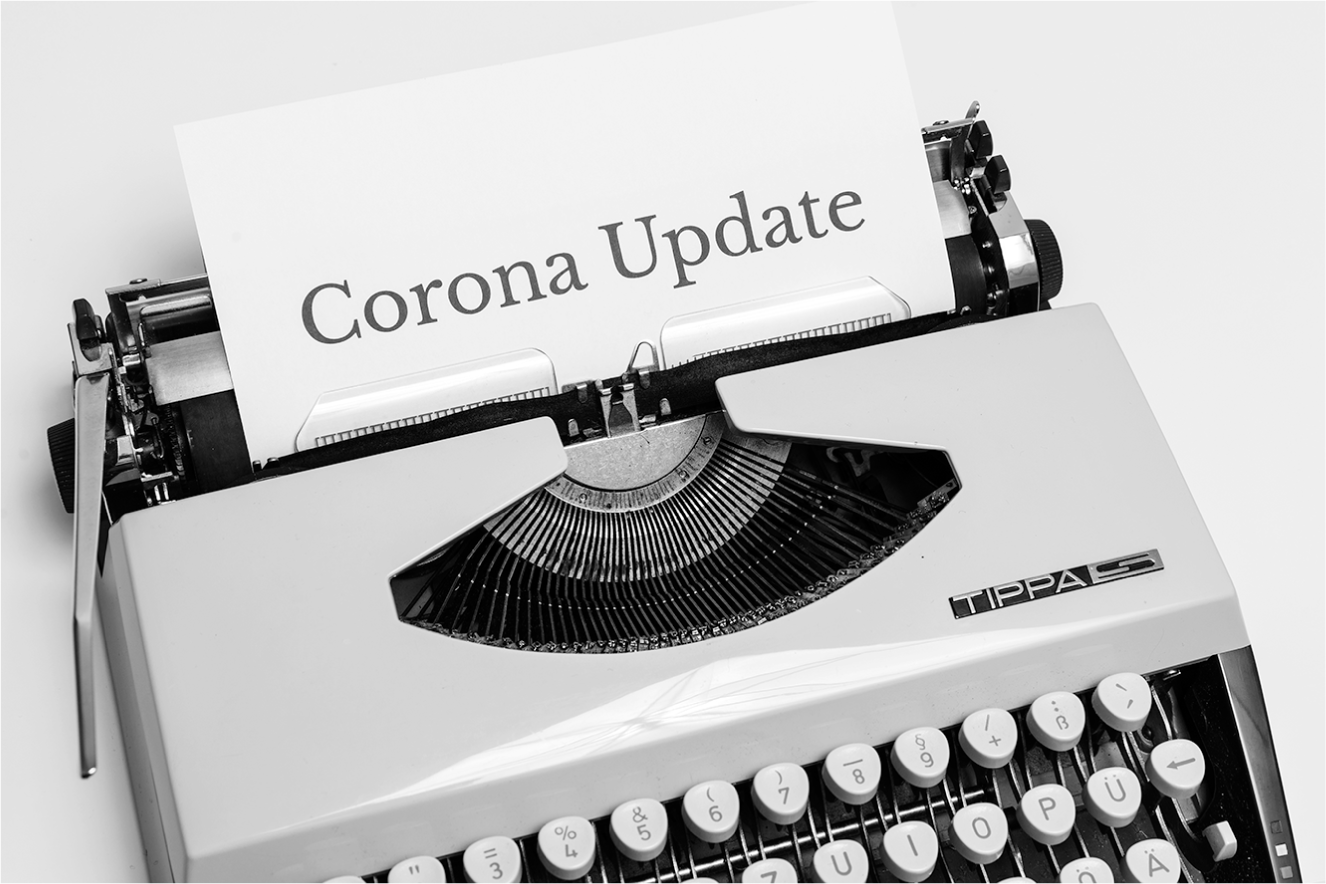
As I wrote about in April, in Mobilizing Ideas, communities are experiencing significant collective grief due to lives lost by COVID-19, with the scale of death requiring mass graves to accommodate its magnitude (from New York to Bolivia). Loved ones are deprived of traditional funerals, or the basic need to hold the hand of their loved one, as they move from this life to whatever is next. The loss extends beyond the official COVID-19 deaths, to those who also are silently suffering, as the majority of American adults are struggling with mental health and/or substance abuse, with overdose deaths rising as unemployment sores, and stress from COVID-19 destabilizes those already struggling with addiction. According to the World Food Progamme (WFP) of the United Nations, the number of people globally confronting food insecurity could soon double, for as the global economy faces the most catastrophic downfall since the Great Depression, many are encountering potentially life-threatening hunger. Such statistics, only half a year into the pandemic, signal it is time for us, as a nation, to begin developing a serious plan for how we will commemorate, possibly in less traditional ways than before, the historic spread of COVID-19, and its accompanying loss.
The WWII memorial in DC has 4,048 stars—one for every hundred deaths of U.S. military members. Current projections by the Institute for Health Metrics and Evaluation say that we will have nearly this many deaths due to the COVID-19 pandemic by early 2021.
Dan Dennis on Unsplash

In the aftermath of deadly natural disasters, wars, and mass violence, communities across the world often create memorials to honor those who lost their lives, providing a place for future generations to learn, grieve, debate, and remember. Some of the most familiar memorials in the U.S. are the Vietnam Veterans Memorial in Washington DC, the 9/11 Memorial in Manhattan, and the many Holocaust memorials that dot the U.S. landscape. Scholars have noted this contemporary cultural shift toward memorialization, exemplified in the emergence of memorials commemorating recent American tragedies such as Hurricane Katrina, mass shootings (such as those that took place in Sandy Hook, Las Vegas, and Orlando—all of which have memorials in the making) and gender and sexual-based violence, such as the Survivors Memorial opening up in Minneapolis this October. Less traditional memorialization efforts like art, activism, and cultural commodities have also taken shape in the U.S., such as the AIDS quilt that pays tribute to approximately 94,000 people. Communities across the world have begun recording COVID-19 narratives for future memorialization efforts and commemorating those who have perished from the virus through online memorials. It is time to pair their efforts with national ones.
The Institute for Health Metrics and Evaluation predicts that by January 2021 the death toll will reach close to 400,000, making the novel coronavirus deadlier for Americans than World War II.
Memorials are a vehicle that can assist in the transition from collective trauma to recovery. I have found this to be true in my own work, on memorials in Rwanda. Genocide survivors I interviewed shared that memorials matter greatly in their lives. Since the 1994 Genocide, Rwandans have built close to 500 memorials dedicated to commemorating the violence that claimed the lives of upwards of one million people. The seven larger, national memorials house the remains of thousands of victims and serve as centerpieces in annual commemorative rituals. These sites are spaces to honor loved ones and learn about the past, in an effort to create a brighter future.
In 2012, I interviewed a woman whose entire family was among the 5000 people who perished in a local church when it was bombed by the genocidal militia. She hid under dead bodies until it was safe to escape to a nearby swamp. Today, she lives across from the church-turned-memorial- where her families’ remains are housed. She visits the memorial often to pray, honor her family, plant flowers, or even to meet people from her neighborhood to discuss community happenings. She asserted that the memorial “gave her life” when she lost the will to live; that the space gave her a physical place to grieve and a place where others could witness the loss that survivors endured.
The genocide in Rwanda and COVID-19 are most certainly qualitatively different tragedies. However, the violence that took place in Rwanda devastated the institutions on which people depend upon to build a meaningful life-family, education, ritual, religion, etc.-mak-ing the effort to create new structures critical for survival, similar to the changes emerging in American social structures. Like COVID-19, the genocide in Rwanda unfolded fast, and often people did not have, as one survivor told me, “the luxury” to properly mourn their loved one’s death. This has made memorials even more important for some survivors. Memorials can heal grief by acknowledging the tremendous loss and honoring those who died and those who live on, in spite of unbearable anguish and heartbreak.
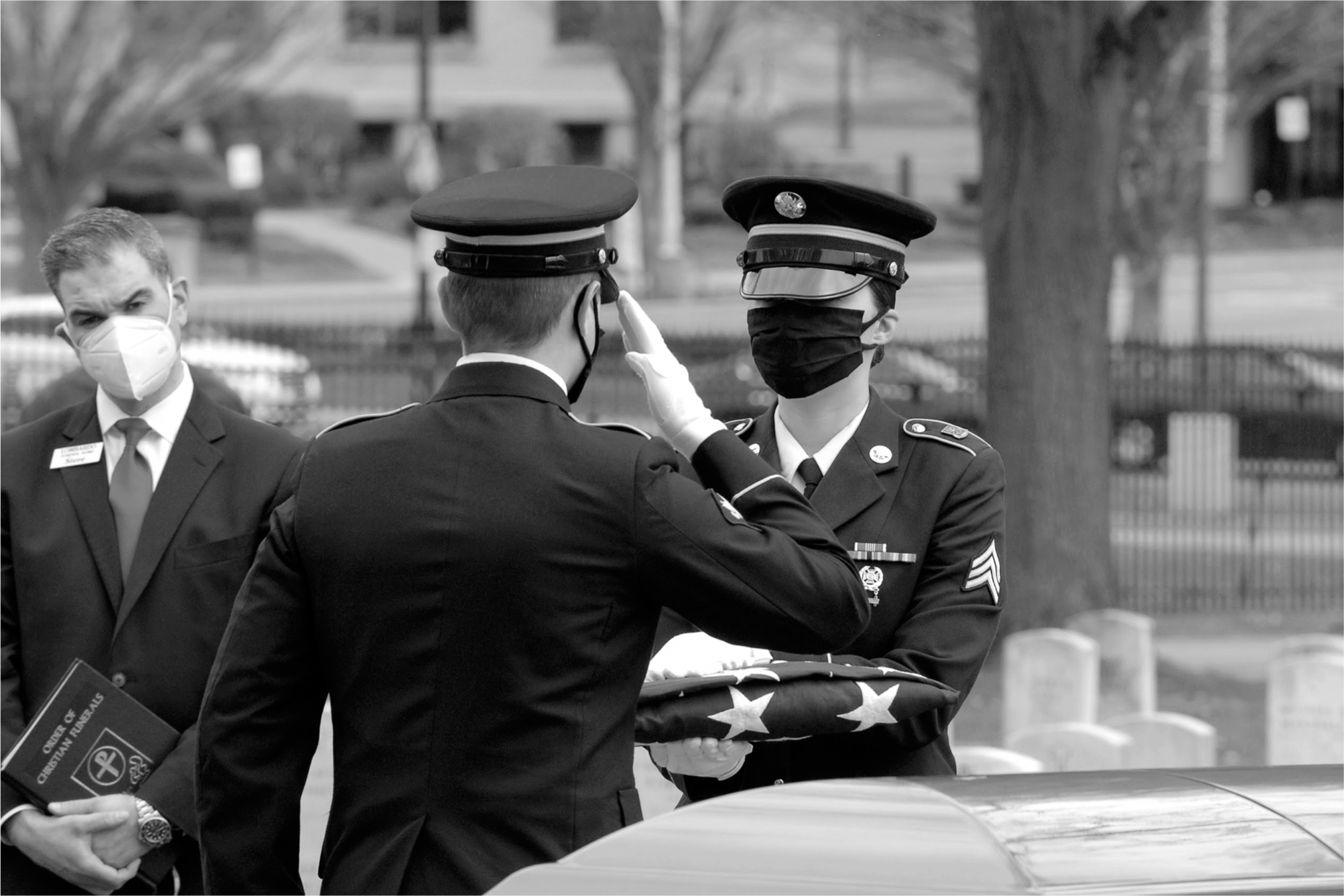
Social restrictions during the COVID-19 pandemic have drastically affected the way we memorialize those we’ve lost. This photo shows members of the New York National Guard at the memorial of a U.S. Army Specialist, where they had to wear masks and maintain social distancing.
New York National Guard via Flickr
To make memorials effective, we have to safeguard the memories of the diverse lives lost and acknowledge the inequality that the virus has exploited. As we devise ways to memorialize, we must ask difficult questions about why lives lost to COVID-19 are disproportionately poor and people of color. We must expose how those who suffer the most from the collapse of our global economy are those in poor, war-ravaged countries that were already in tenuous situations prior to the pandemic. As the WFP’s Chief Economist said: “COVID-19 is potentially catastrophic for millions who are already hanging by a thread. It is a hammer blow for millions more who can only eat if they earn a wage. Lockdowns and global economic recession have already decimated their nest eggs. It only takes one more shock—like COVID-19—to push them over the edge.”
In order for those of us who are living to serve proudly as a witness to the loss endured by COVID-19, we are obligated to remember the pain, inequality, and the failures that risked and stole lives. We can “give life” to those who need it most, through honest and thoughtful memorialization efforts, that must start now. Consequently, for memory to heal, memorialization requires us to face difficult pasts about this global catastrophe— even as they continue to unfold—with honesty, courage and dignity.