Abstract
Roman R. Williams and Taylor E. Hartson on exploring the adaptive reuse of buildings.
We live in a world characterized as increasingly secular. Particularly in Western societies, fewer people believe in god, pray, and attend worship services on a weekly basis. In the United States alone, the number of adults who identify as Christian dropped by twelve percent from 2007 to 2019, while the number of religious “nones” increased by nine percent. The title of a recent Pew Research Center study tells a familiar story: “In U.S., Decline of Christianity Continues at a Rapid Pace.” Similar to religious affiliation, religious attendance continues to decline, with more Americans saying they attend religious services only a few times per year or less. The shift is even more profound when comparing generations: younger people are less religious than older generations on nearly every measure.
These trends speak to what Peter Berger wrote in his classic book The Sacred Canopy (1967): “The modern West has produced an increasing number of individuals who look upon the world and their own lives without the benefit of religious interpretations.” Fewer people in the pews doesn’t just lead to spiritual consequences; there are tangible material consequences, too. Since most churches rely on members for financial solvency, fewer people means less money to maintain their buildings. In an increasingly secularized society, when a congregation no longer has sufficient membership to maintain ownership of their property, what happens to their house of worship?
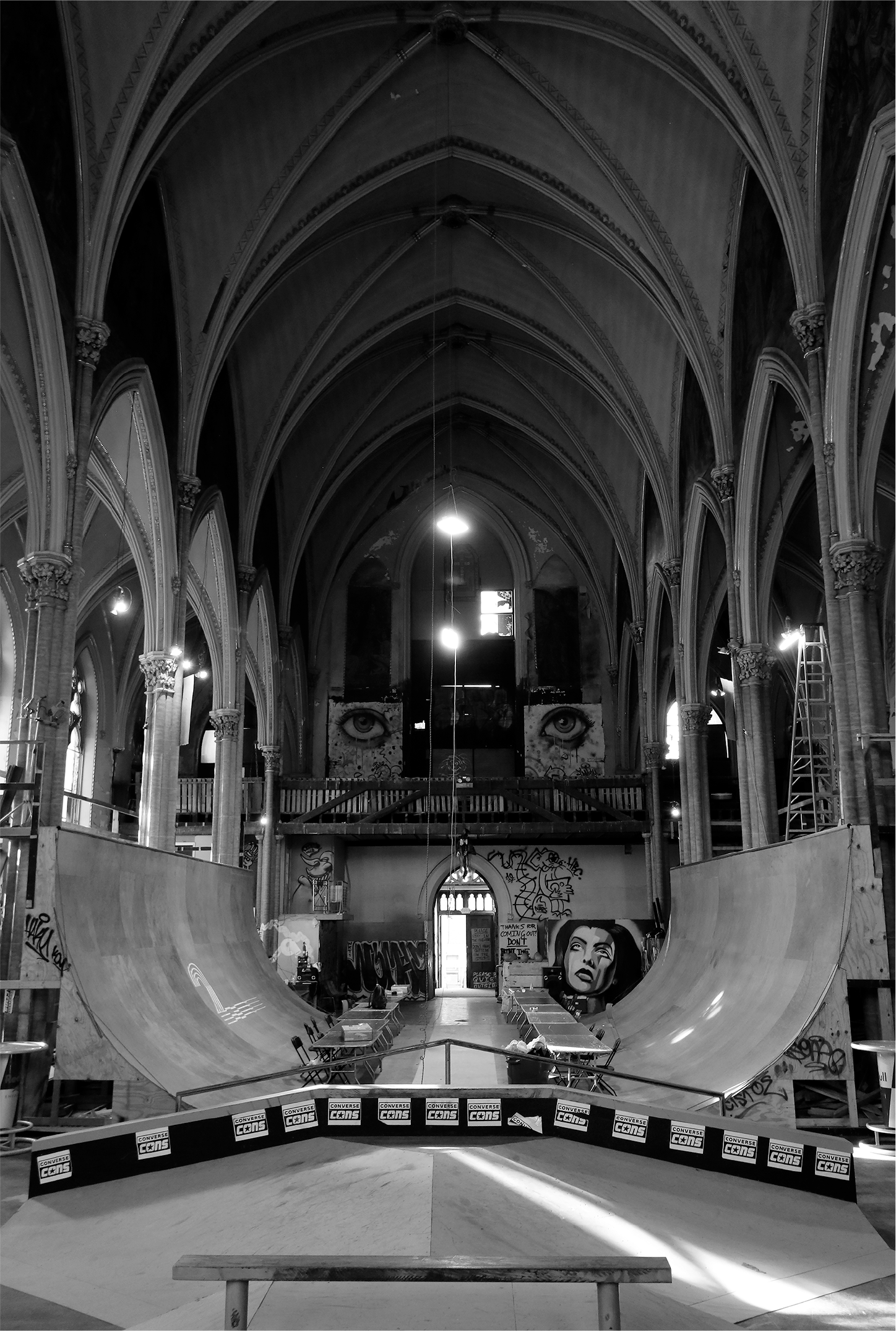
For many buildings, adaptive reuse is the answer. In almost every region of the United States and Canada, churches have been adapted for other uses. They become restaurants, residences, indoor climbing gyms, libraries, concert venues, community centers, and office space for businesses and nonprofits— at least one church has been transformed into a skatepark (photo on page 58). Many believe these transformed buildings are evidence of a decline in Christianity and the eroding importance of religion more generally.
In a recent project, we set out to search for cases of adaptive reuse of religious buildings using Google Maps and a database of addresses identified as potential conversions in the United States. In total, we found nearly two hundred cases of sacred-to-secular reuse over a fifteen-year period in thirteen cities, including Denver, Pittsburgh, Richmond, San Francisco, and Seattle.
However, another side to this story suggests our urban landscapes are not on a predetermined path toward secularization. During our search, we also discovered nearly two thousand instances of congregations repurposing secular spaces for worship—just under eleven times the number of secular reuse cases we discovered in the same thirteen cities.
Former stores, warehouses, shopping malls, garages, and movie theaters serve as places of worship, but they seem to draw less attention for some reason. As congregations wrestle with transforming urban spaces, former schools, wood factories, barber shops, and lighting warehouses are recycled into holy ground.
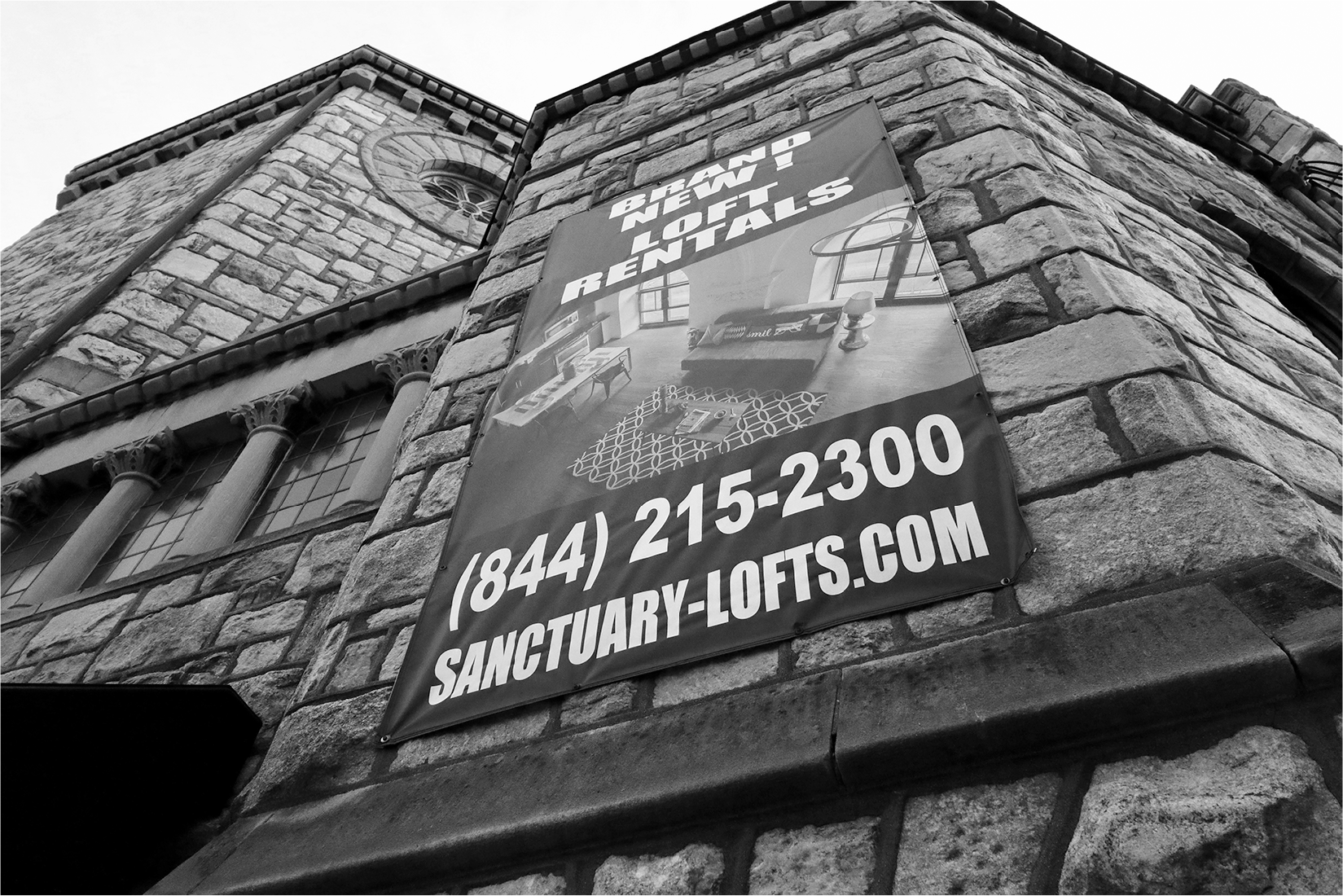
Sanctuary Lofts (Philadelphia, Pennsylvania). Located on the edge of the Devil’s Pocket neighborhood in Philadelphia, this Catholic church was built in 1889 and later sold to a Baptist congregation before becoming loft apartments in 2014. The building also makes a cameo appearance in the 1999 Bruce Willis film The Sixth Sense. According to Red Door Residential, the property’s leasing company, residents of Sanctuary Lofts can “rent a slice of heaven” in their choice of one-, two-, or three-bedroom apartments, each named after a different saint.
These examples and others like them raise important questions about the buildings in our cities. What makes a space sacred—or not? How does a church’s physical presence play a role in the experiences of its congregation or the wider community in which it stands? What rituals do religious people enact to sacralize or desacralize these buildings?
This relationship between the sacred, the secular, and the space each occupies indicates perhaps a new measure of secularization in urban contexts. Sociologists Michael Emerson and Lenore Knight Johnson suggest that urbanization creates a dialectic in which material expressions of the religious and the profane can respond to one another, each pushing the other to find new forms within the city. Secular social forces, such as the real estate market or zoning ordinances, push congregations to adapt their worship practices to formerly secular spaces. At the same time, religious social forces, such as the reverence of once-sacred space, push developers to preserve formerly sacred spaces as they adapt them for secular use.
Jay Demerath suggests that one’s thoughts or feelings about religious repurposing are shaped by how one thinks the world ought to be. These contextual dispositions toward questions of reuse depend on one’s relationship to the building in question. For example, a practicing Catholic living in Montreal certainly has an opinion about the hundreds of repurposed churches dotting the Quebecois landscape. Institutionalized religious and civic regulations inform how Catholics could or should think about these buildings; identities, memory, and the social fabric are at stake. Similarly, even religious individuals whose relationship to their religious building is not as heavily regulated may still value traditional religious architecture for the spiritual significance it has come to carry. Many religious people are left lamenting the loss of treasured houses of worship while simultaneously discounting industrial buildings repurposed for religious use.
Not everyone sees these converted religious buildings as a loss, however. Consider those for whom, whether religious or not, churches become part of their everyday landscape. Even when these buildings can no longer support their intended purpose, they do not lose their place in the social fabric of the community. To ensure the preservation of the building in the neighborhood’s landscape, someone may step forward to repurpose the building for a different use within the neighborhood—whether that’s a community member looking to outfit a gathering space for neighbors or a developer looking to market to the creative class.
In some cases, the conversion of these buildings may hinge on environmental and financial concerns. Urban planners and architects are faced with decisions about what to do with a building that has outgrown its intended use, and religious buildings are no exception. These projects present an opportunity to creatively design for more relevant uses while dampening the environmental impacts of demolition and new construction. Likewise, municipal leaders may find reuse appealing because they can maximize tax revenue and create novel experiences within the city.
Each of these interactions plays an important role in the dialectic between sacred and secular in urban spaces. While developers and preservationists shape the material building, those who interact with these buildings—whether through lament or paying rent—shape the symbolic presence of the building.
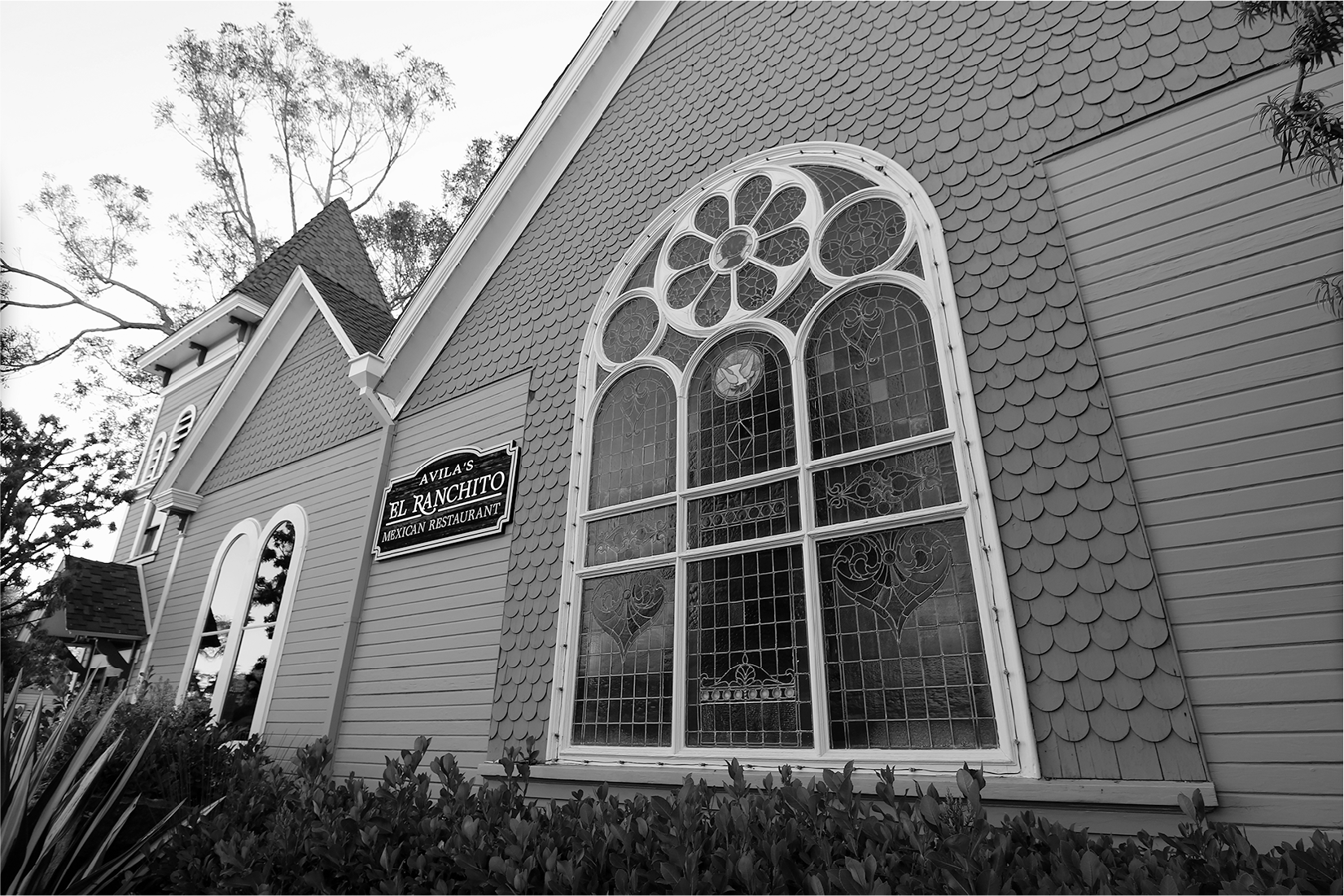
Avila’s El Ranchito Restaurant (Orange, California). Each location of this successful group of Mexican restaurants in the Los Angeles area is owned and operated by a member of the founder’s family. The Orange location is well-known for its historic building: a Baptist church built in 1888, which was transformed into the restaurant in 2011. The camarones a la diabla, a staple in many Mexican restaurants, is the only menu item with an overt reference to religion.
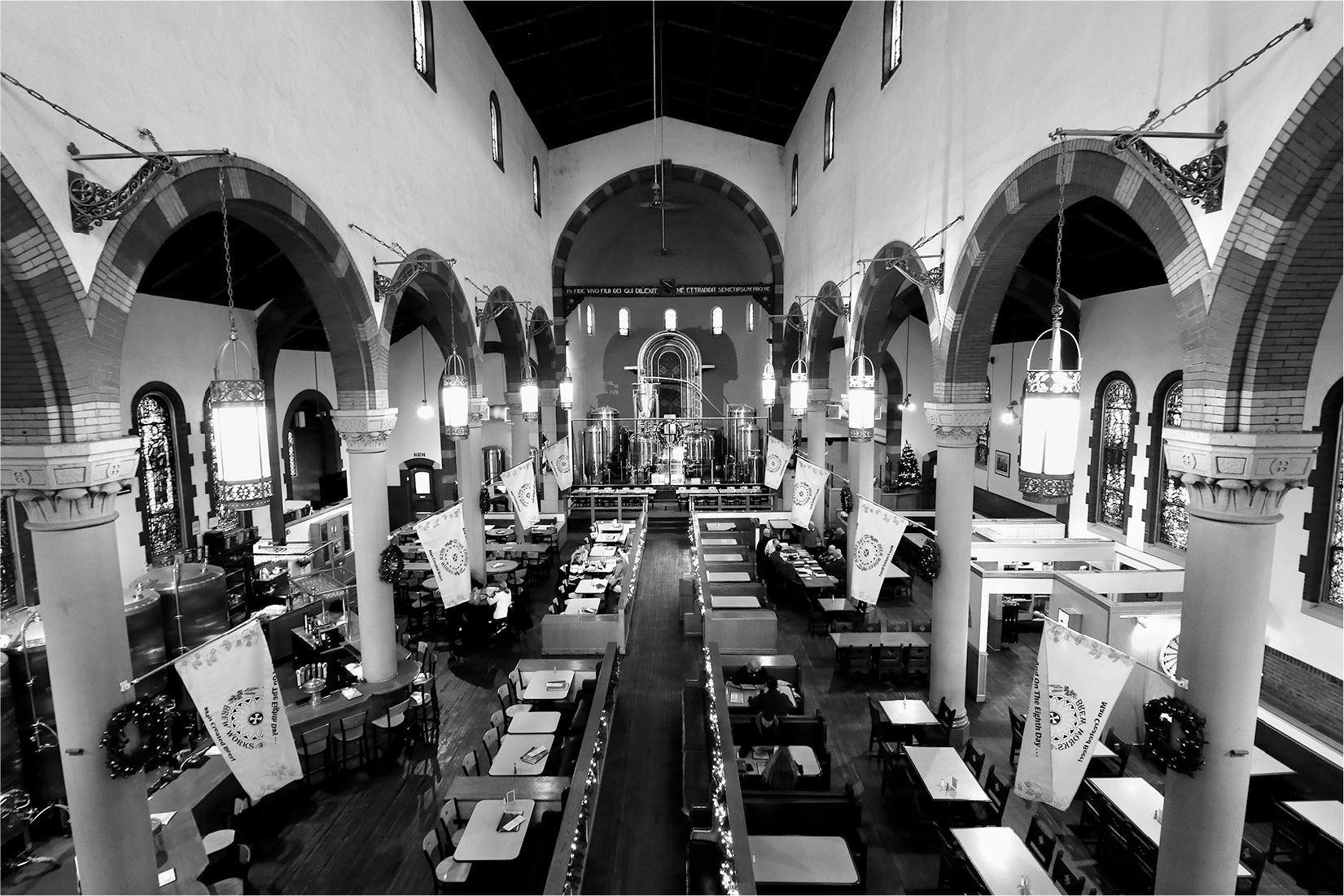
The Church Brew Works (Pittsburgh, Pennsylvania). St. John the Baptist Catholic Church was constructed in 1902 to provide a place of worship for a growing immigrant population in Pittsburgh. As mills and other industrial work hubs began to shut down in the area, members began relocating, and the parish disbanded. Today, pews are gathered around dining tables, and stainless steel fermenting tanks stand where the priest once celebrated mass.
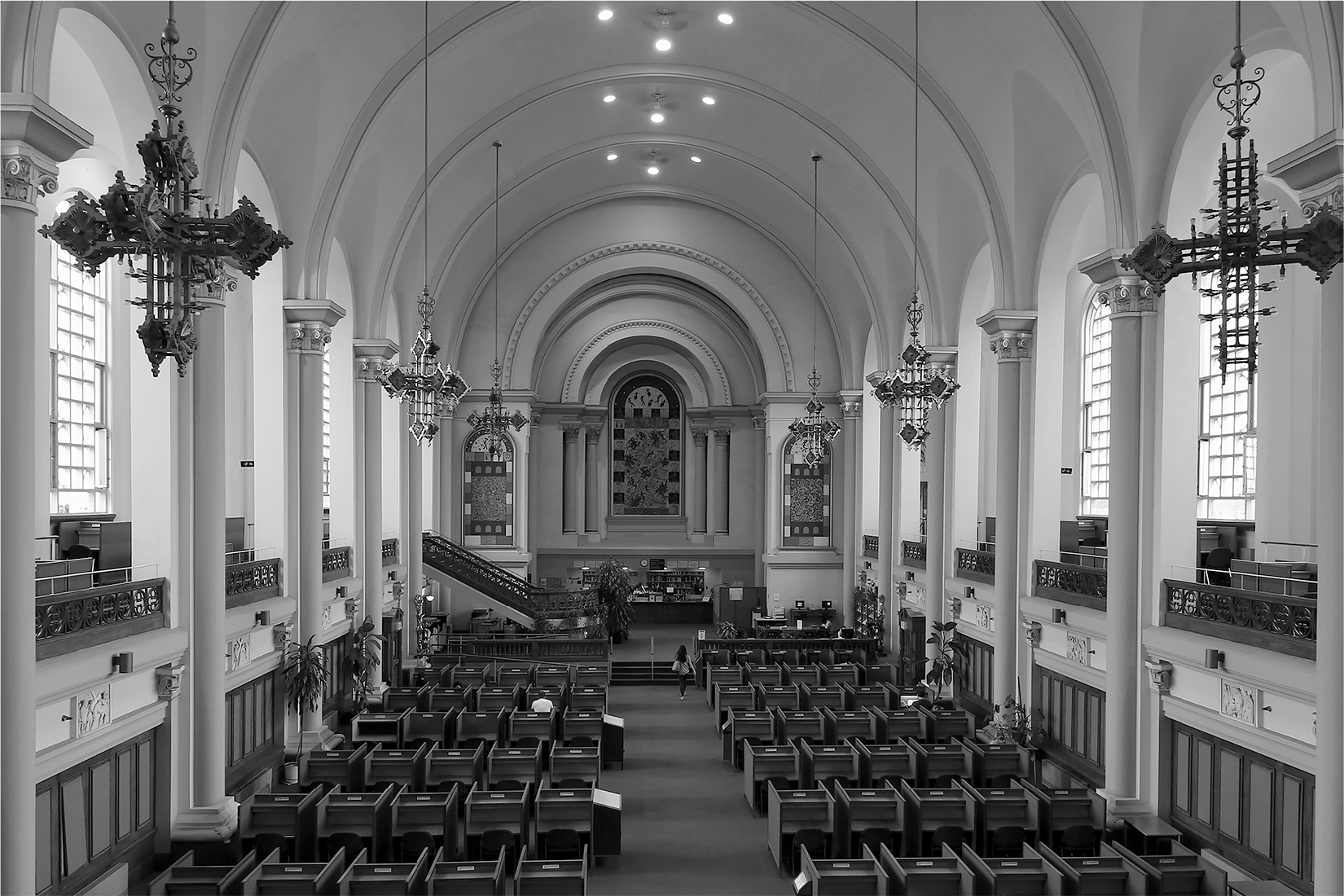
Dawson College Library (Montreal, Quebec). The buildings now occupied by Dawson College were originally built in the early 1900s for Les Meres des Sœurs de La Congrégation de Notre-Dame (the Sisters of the Congregation of Notre Dame). Years later, Dawson College took possession of the property and converted the chapel into its library, preserving the original architecture and light fixtures. The space creates a reverent cathedral of learning.
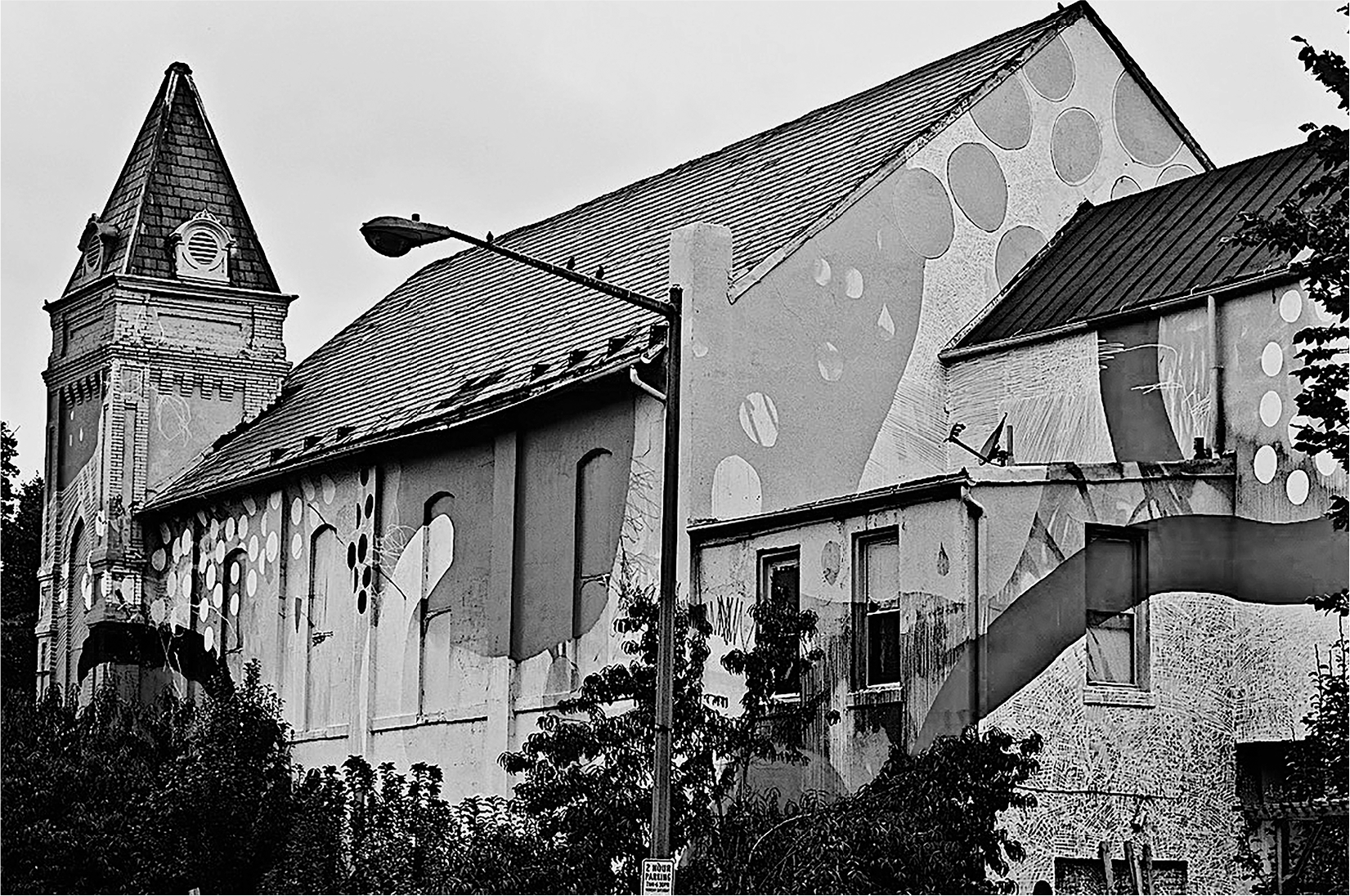
Culture House (Washington, District of Columbia). Friendship Baptist Church, built in 1886, was once a flourishing neighborhood gathering place. After their building survived the bulldozed fate of the rest of the neighborhood, the congregation relocated to a more spacious facility, leaving the building to a real estate developer. Today, it is a community hotspot once again comprising a newly renovated art gallery, event space, and community garden. The building is a work of art in its own right, painted by Atlanta-based muralist HENSE.
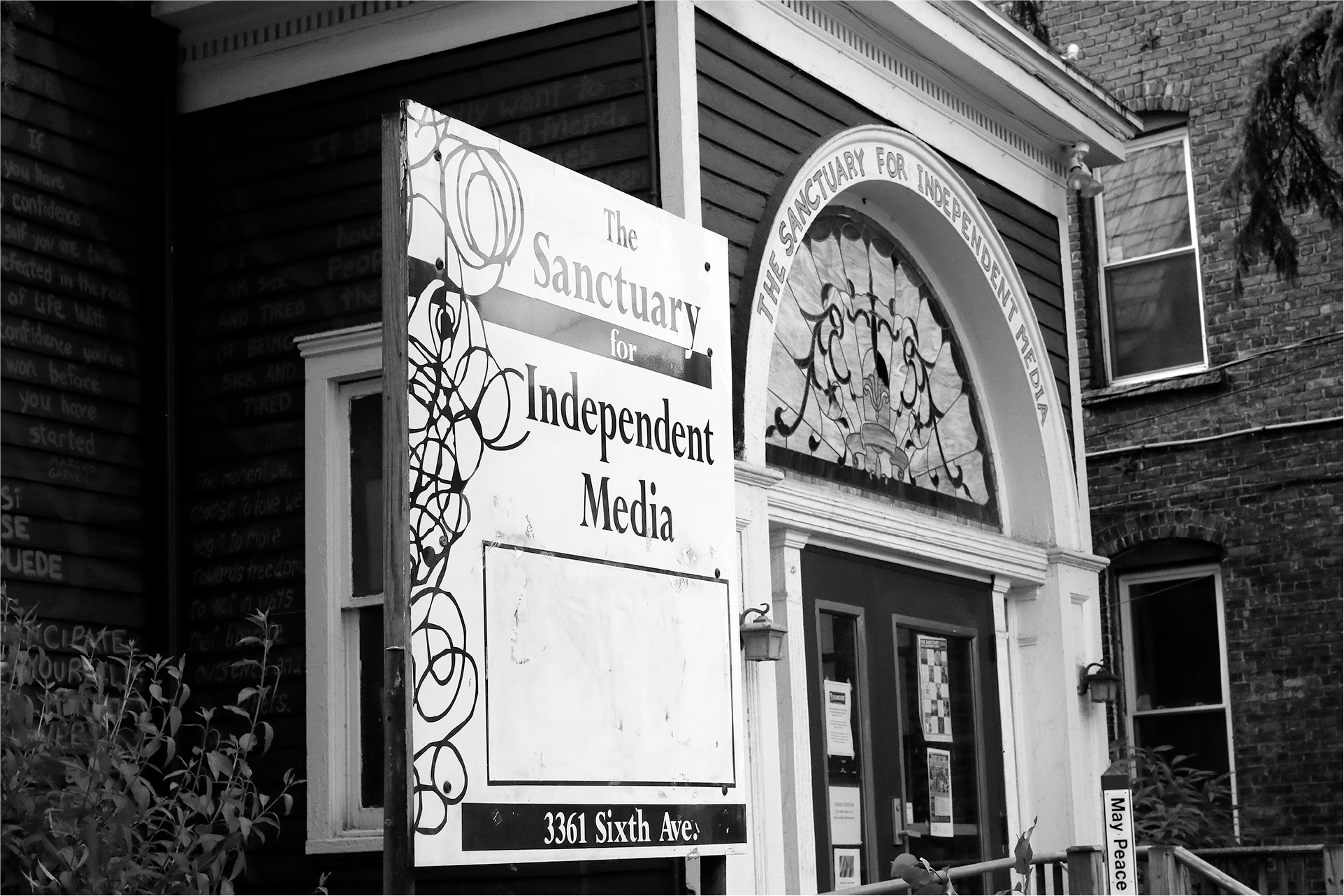
The Sanctuary for Independent Media (Troy, New York). A century-old church was transformed into a community-based media production facility in 2005. Operated by Media Alliance, the building contains a radio station, video production studio, and performance space, which serve as venues for community education and engagement dedicated to building a more democratic society.
SK8 Liborius (St. Louis, Missouri). Despite being designated as a city landmark in 1975 and a national historic place in 1979, the congregation of St. Liborius Catholic church closed its doors in 1992. The building was abandoned for over 20 years, leaving it vulnerable to looting and vandalism. Today, a ragtag group of skateboard enthusiasts—those who have often relied on abandoned spaces for their sport—is slowly renovating it into a skatepark. SK8 Liborius is the subject of Ashley Seering’s eight-minute documentary Sanctuary.
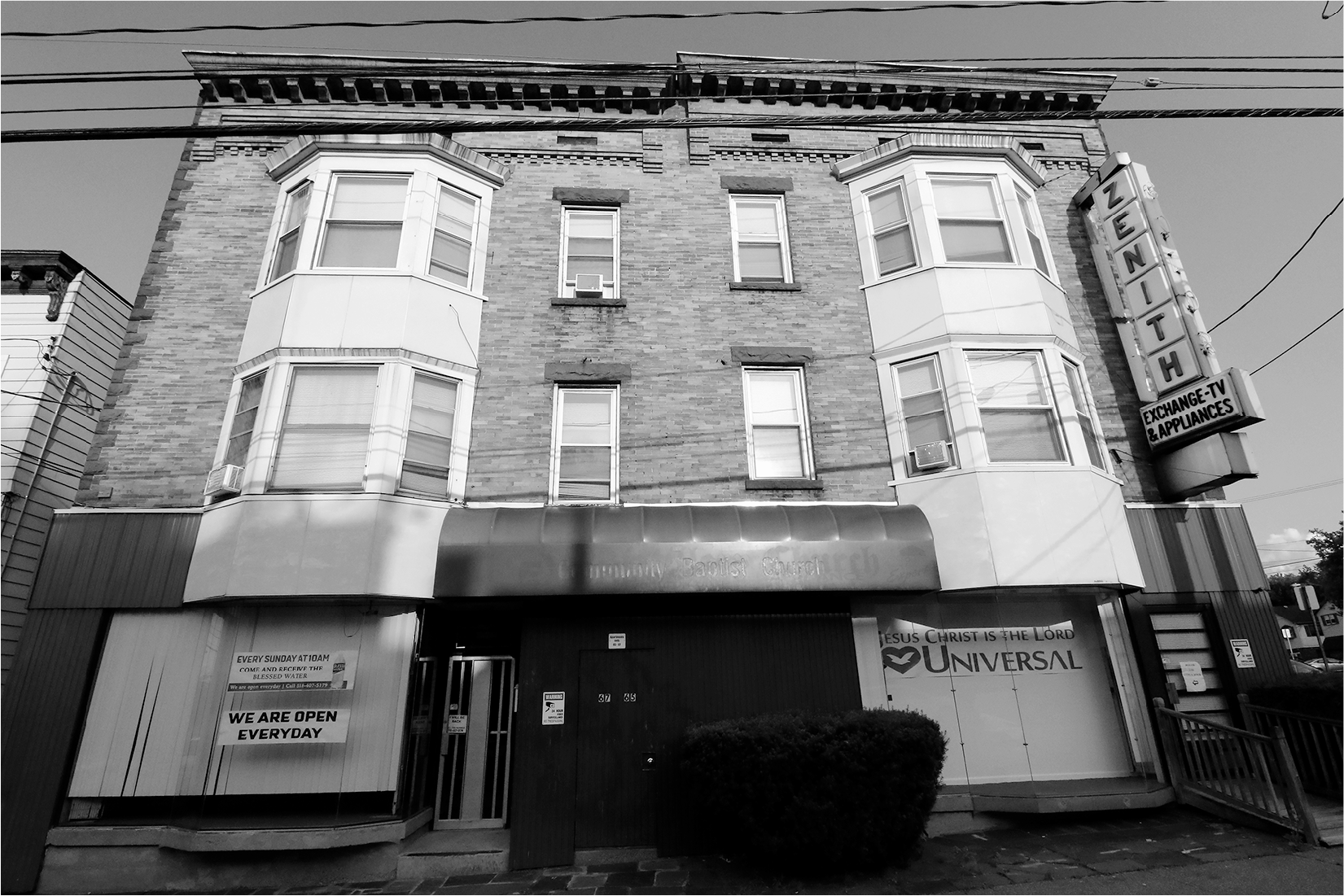
Universal Church of the Kingdom of God (Albany, New York). Like many other storefronts across the United States and Canada, this one has changed hands for a variety of reasons—a phenomenon Katie Day likens to hermit crabs trading out their shells in her book Faith on the Avenue. Prior to this storefront’s current occupants, this former Zenith appliance store was home to Community Baptist Church—the faint outline of their name is visible in the awning. The Universal Church of the Kingdom of God is a Brazilian evangelical brand with ambitious missionary efforts. Its flagship church is modeled after the biblical Temple of Solomon and takes up an entire city block in São Paulo, Brazil.
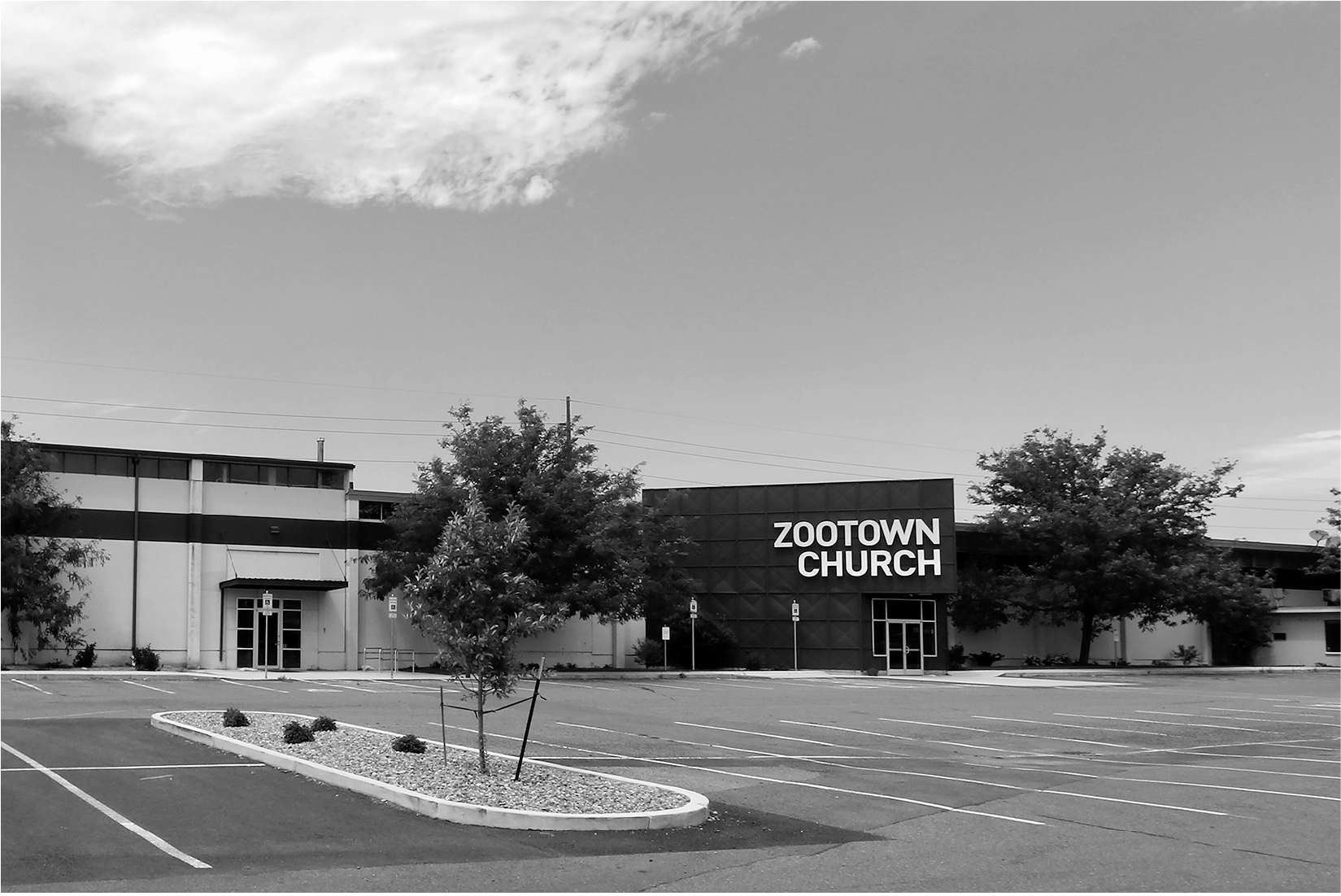
Zootown Church (Missoula, Montana). This renovated appliance warehouse on the edge of Missoula now houses a contemporary style of worship resembling a rock concert, complete with lights, artificial smoke, and an amplifier that always seems to be turned up to eleven (if you didn’t get that reference, you need to watch the mocumentary Spinal Tap).