




Abstract
Tensions and contradictions run through the upscale resort town of Aspen, Colorado. The fundamental disconnect between local incomes and the price of real estate could be called “the impossible math of Aspen, Colorado.” The answer to this equation is in the careful orchestration of diverse class interests through local politics, all to maintain Aspen’s value and authentic small-town character.
Paradox and contradiction are at the heart of social life and, by consequence, of keen interest to sociologists. The tensions and contradictions that run through the upscale resort town of Aspen, Colorado, can be illustrated in a simple question: How is it possible for a town to exist where the median household income is $70,000, but the median home price is about $4,000,000?
According to financial advisors, a household earning $70,000 per year can reasonably afford a home in the $225,000-325,000 price range—not the $4,000,000 price tag found in Aspen. While many of Aspen’s part-year and year-round residents live in homes valued in excess of $10 million, a substantial portion of its 7,000 residents are middle and upper-middle-class people who cannot afford to purchase any of the homes in Aspen. The fundamental disconnect between local incomes and the price of real estate is what I call the “impossible math of Aspen, Colorado.” What resolves this math equation—the X-factor that makes middle-class life in Aspen possible—is a careful orchestration of diverse class interests through local politics, all to maintain Aspen’s value and authentic small-town character.
The X-factor that makes middle-class life in Aspen possible—is a careful orchestration of diverse class interests through local politics, all to maintain Aspen’s value and authentic small-town character.
Conventional wisdom, drawn from research on social class, place-making, and urban development, suggests that a place like Aspen should not exist. Scholars like John Logan and Harvey Molotch, for example, argue that growth machine politics dominate development patterns in many municipalities. On the other hand, investors, politicians, and place entrepreneurs chase growth, offering tax abatements and other incentives to create jobs or to generate tax revenues, often through tourism and retail development. Such development deals may come at the expense of local residents—as Miriam Greenberg and Alessandro Busá show in their profiles of New York City—who suffer displacement from rising real estate prices and cuts to local services. In Aspen, however, rather than incentivizing developers with tax benefits, those who wish to build a hotel, restaurant, or retail space pay considerable fees—what urban planners call mitigations. Designed to both limit growth and promote the quality of life, these fees fund affordable housing, create transportation infrastructure, and protect land from future development. With its pay-to-play approach, Aspen uses a unique approach to growth, one that maximizes high quality and high revenue projects, but simultaneously benefits working locals.
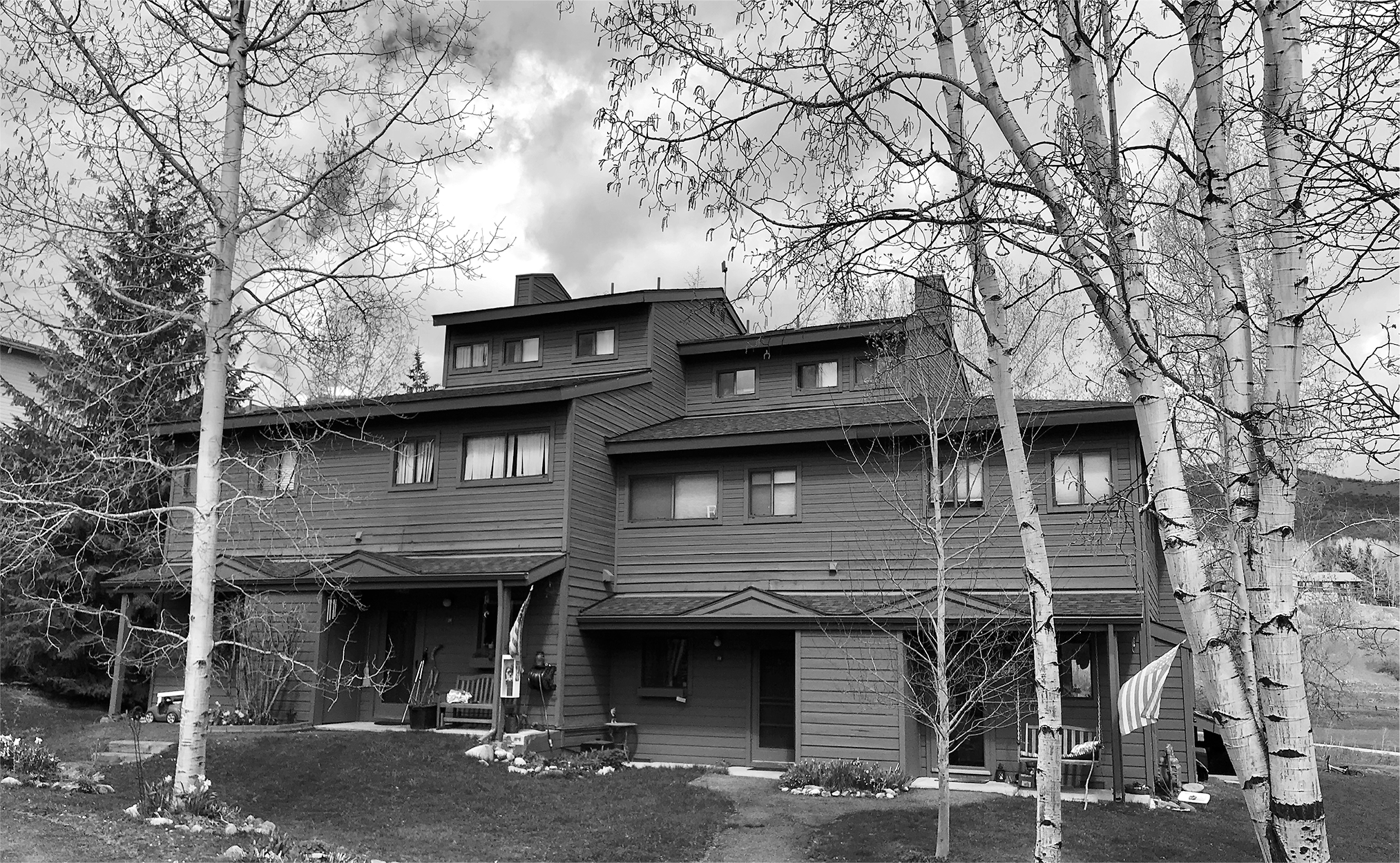
Affordable housing in Aspen, like the units pictured here, are funded in part by a voter-approved tax on all real estate transactions.
Don Stuber
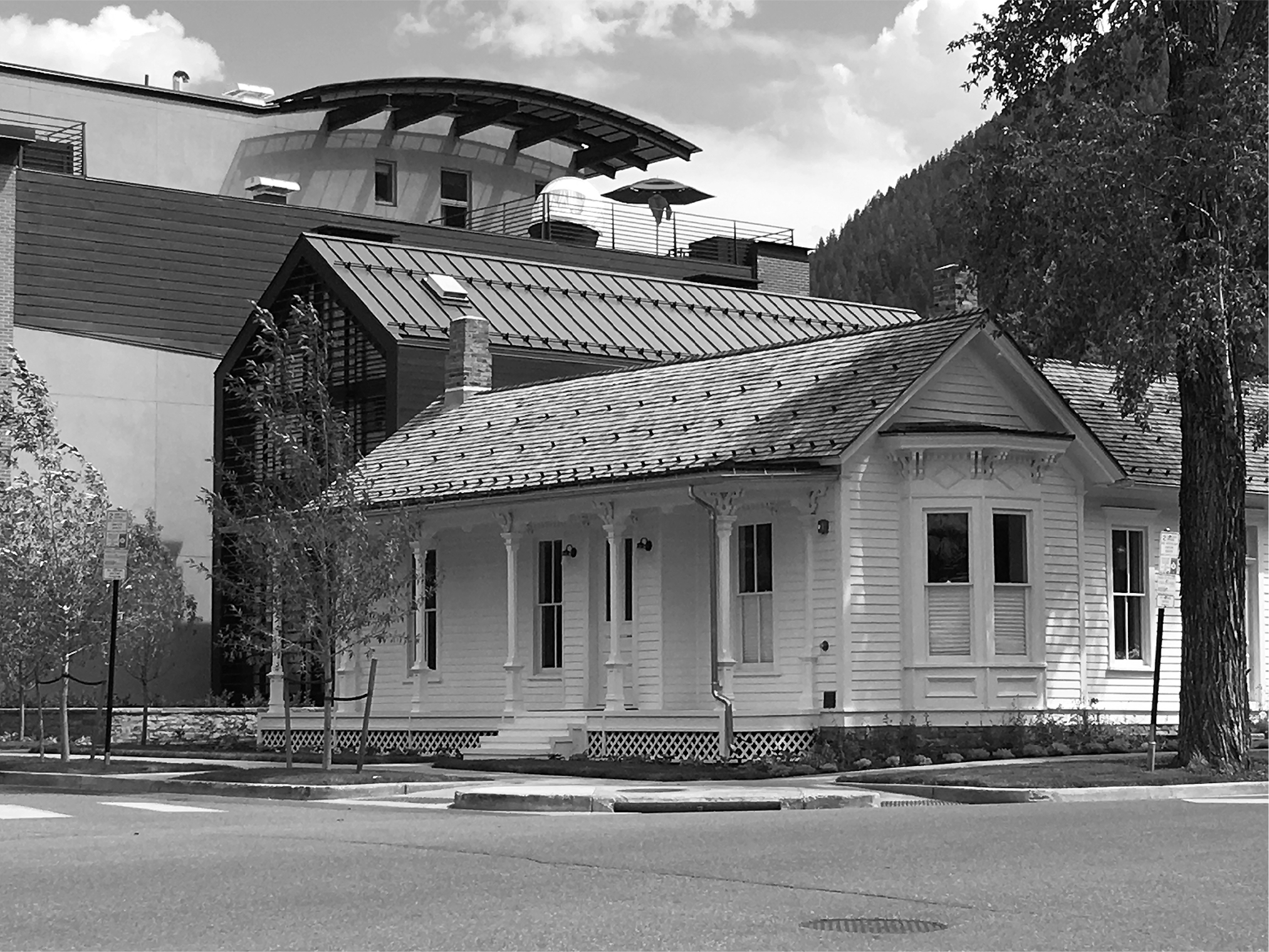
The sale of luxury homes, like the $16 million home shown here, funds the affordable housing program. This renovation to this old Victorian “Miners’ Cabin” features a modern addition on the side and a double basement, which was built to circumvent limitations on the size residences.
Jenny Stuber
Ethnographic work in other affluent communities similarly suggests that a place like Aspen should not exist. Although Aspen has the most expensive luxury real estate in the world, and is ranked as the 6th most unequal community in the United States, overt expressions of class exclusion and class tensions are rare. This stands in contrast to James S. Duncan and Nancy G. Duncan’s profile of Bedford, New York, and Corey Dolgon’s work on the Hamptons. Their research profiles the efforts of affluent residents using the “invisible walls of zoning” as a way to control growth and promote the economic and aesthetic interests of elites. Affluent residents do this by lobbying local municipalities to increase minimum lot sizes and setbacks (a structure’s distance from the right of way), and protecting open space and wetlands, thereby preserving the look, feel, and rural charm of their communities.
The high concentration of affluent residents increases the demand for lower-skilled and lower-paid laborers—yet these same residents often oppose the building of affordable housing in their communities. Some affluent residents have initiated additional efforts to limit the visibility of lower-income residents, many of whom are Latino, by passing laws that restrict their ability to look for work as day laborers and through informal means that regulate their access to the public parks where they play soccer and host community events. In these affluent communities, NIMBY-ism—”Not in my back yard”—seems to typify cross-class relations. In Aspen, by contrast, 3,000 affordable housing units dot the community, frequently abutting multi-million-dollar residences. While locals occasionally oppose housing projects that would compromise their beloved views of the mountain, the town’s extensive affordable housing program is treated as something of a local treasure. It is this affordable housing program that makes middle-class life possible in Aspen and answers the question of how working locals are able to live in a town where real estate prices far exceed their reach.
How this affordable housing program came into existence, and how it manages to garner the financial and social support that sustains it, requires explanation. I argue that it is Aspen’s unique place-based class culture that reconciles the apparent contradictions among the community’s various class constituencies. Used to illustrate how communities “do” social class, the notion of place-based class cultures brings together the material and symbolic aspects of social class. It provides a model for understanding how social class is implicated in notions of place, how it shapes place character and the process of placemaking, and how it guides a community’s response to class conflict.
Four core components make up this model. First are the place narratives that describe what a particular place is like; these are the origin stories and cultural touchstones that highlight a place’s essence or distinctiveness. Second, are the discourses that frame understandings of how social class works in that place; these discourses attend to which classes comprise the community, how they interact, and how their interests intersect. Together, these cultural understandings guide social action, which leads to the third element of the model: the institutionalization of class interests. This institutionalization exists informally in norms and interactions, and more formally in policies, procedures, and regulations.
Wrapping around these three components are the demographic and material traits that establish the conditions of possibility for how class operates and how it can be understood in a specific locale. A community like Aspen, with its spectacular beauty and strong tax base, may have more latitude in how it “does class” compared to a community that is quite average in its aesthetic advantage or ability to generate revenue. Like Japonica Brown-Saracino’s work that establishes a typology of gentrifiers, this model shows that how social class works in a specific place is a complicated affair, with material interests and cultural interests not always neatly mapping onto one another.
My work explores the yearlong process in which stakeholders and city government revised the land use code… [seeking] to meet the needs of wealthy individuals who invest in Aspen and who live and visit there, as well as the year-round residents who work to keep the town functioning.
One way that class interests have been institutionalized in Aspen, and the X-factor that makes middle-class life possible, is the land use code that guides local development. The land use code comprises the municipal ordinances that dictate what can be built where, in what form, by whom, and how. My work explores the yearlong process in which stakeholders and city government revised the land use code. This revision carefully attended to community goals that seek to meet the needs of wealthy individuals who invest in Aspen and who live and visit there, as well as the year-round residents who work to keep the town functioning.
First, it focused on maximizing small-town character. This was accomplished by ensuring that buildings remain small in scale (new buildings are limited to two stories) and historically appropriate, and by creating spaces that are pedestrian friendly, foster social interaction, and provide ample views of the mountains. Through these regulations, Aspen provides something of value to global elites: the ability to invest in and enjoy living, working, or vacationing in a community that makes a concerted effort to preserve its charm, character, and perhaps most importantly, its economic value. By creating scarcity and attending to the aesthetics of the built environment, Aspen’s City Council, in tandem with its city planners, seeks to preserve the unique character that many associate with this historic mountain town, while ensuring a limited supply of the “Aspen brand” that many find so desirable.
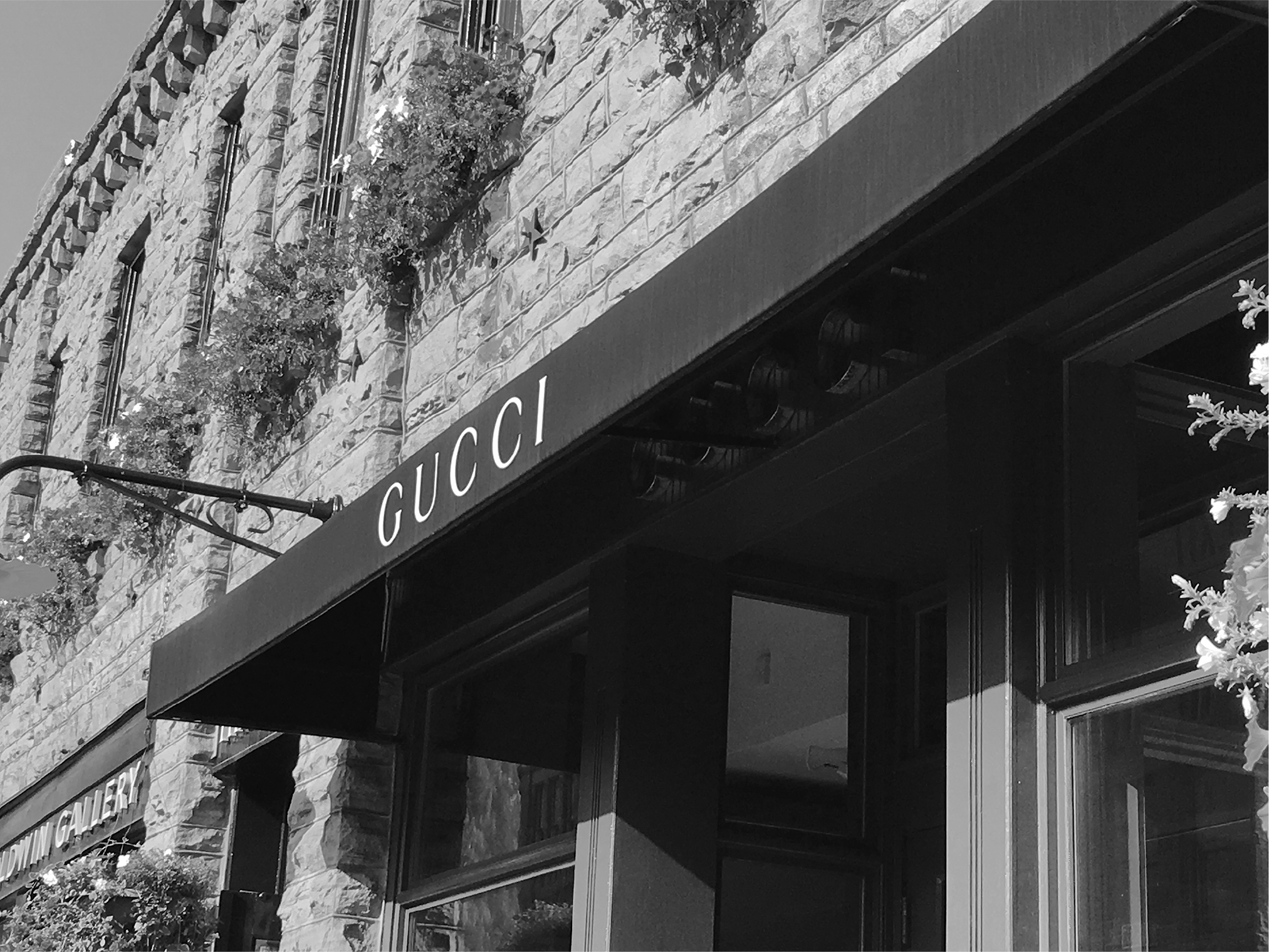
Simultaneously, the land use code gives middle- and upper-middle-class residents the opportunity to live the Aspen Dream: the ability to live in a beautiful place that offers an incredible quality of life, and become a homeowner—even when the forces of the free market are stacked against them. The impossible math of Aspen is resolved through this highly regulatory land use code that transfers economic resources from the uber wealthy and redistributes them to less-affluent locals. This is accomplished, in part, through exactions on developers, who pay some of the highest affordable housing mitigations in the country. This redistributive process is reinforced by regulations that create small-town character. It’s this very sense of charm that draws affluent visitors to town who visit boutiques like Gucci and Prada, and pay supplementary local sales taxes. It’s also reinforced by home buyers who pay an additional 1.5 percent. Real Estate Transfer Tax (RETT). Collectively, these taxes and fees fund an annual city budget of $118 million dollars—which translates to $16,000 per capita (in contrast to $2,300 in Jacksonville, FL). An estimated 85 percent of these revenues are paid by affluent people who neither live nor vote in Aspen.
Aspen’s land use code is carefully designed to protect the town’s historic charm. By limiting building sizes and preserving historic features, only high-end retailers can afford the rents in the commercial core.
Jenny Stuber
The revenues sustain the extensive affordable housing program that permits middle- and upper-middle-class locals to make Aspen their home. It also funds an extensive public transportation system and supplements the budgets of local schools—seen by many residents as comparable to private prep schools. These monies also allow the city to buy up parcels of land, through its “open space and trails” program, which both provides recreational space for visitors and locals and restricts the supply of land for development. While some of these policies drive up the price of real estate, further exacerbating the ability of locals starting their own businesses or purchasing homes in the free market, the benefits are so extensive that some of those I spoke to described working locals as a “subsidy class.”
While some of these [land use] policies drive up the price of real estate, further exacerbating the ability of locals starting their own businesses or purchasing homes in the free market, the benefits are so extensive that some of those I spoke to described working locals as a “subsidy class.”
The institutionalization of these policies, however, would not be possible without the cultural beliefs that sustain them. Narratives about place are a key feature of any place-based class culture, and locally discourses center Aspen’s exceptionalism, which emphasize notions of authenticity and excellence. Aspen is a real-place, locals insist; one that evolved organically from a rugged silver mining town in the 1880s to a ski resort with genuine European roots in the 1950s. It later emerged as a hippie enclave in the 1960s and ‘70s.
Aspen residents draw sharp boundaries between themselves and the nearby resort of Vail, which they see as an inauthentic planned community. They “put the place up over the weekend,” beverage distributor Scott Clendenning told me, “and tried to make it look like a Tyrolian village.”
It is, moreover, a place that embraces the “Aspen Idea”—the ethos that inscribes the tripartite emphasis of mind, body, and spirit on all that the town does. More than a mere ski resort, Aspen’s modern roots date back to the 1940s when a combination of Chicago industrialists and European intellectuals jointly reinvented the former mining town following the devastation it experienced when the silver market collapsed in the 1890s. Today, this history is alive and well, as the town hosts world-class art, dance, music, and thought-leadership—events accessible to visitors and locals alike. Together, these qualities comprise Aspen’s much sought after sense of place.
The model of place-based class cultures also incorporates narratives about social class, serving as both an input and output in the institutionalization of class interests. Local narratives highlight Aspen’s egalitarianism, framing it as an unpretentious place, one where celebrities and the uber wealthy can fly under the radar. It is a laidback place, where both developers and the mayor show up at City Council meetings in fleece jackets, work boots, and athletic gear. Nearly everyone I talked to invoked the bar at the Hotel Jerome as a central character mediating in Aspen’s class relations, a place where, in the words of former mayor John Bennett, “lined up would be carpenters, ski instructors, and bus boys and waiters and waitresses, and billionaires… [famed journalist] Hunter Thompson would be holding court at the end of the bar, and [famed actor] Jack Nicholson would be drinking a beer with his hat pulled down over his face.”
In Aspen, working locals are seen as a special breed—artists, dilettantes, and your friends’ son who took a gap year after graduating from Dartmouth and is now a permanent ski instructor with a real estate business on the side—who are worth getting to know and who play a key role in contributing to the town’s sense of authenticity. Plentiful opportunities allow for free or low-cost class mixing. Like many other locals, Former Mayor Bennett looks forward to summer’s annual music festival. While subscribers and ticket holders sit in reserved seats inside the tent, many other enthusiasts enjoy bottles of rosé sitting on blankets outside. Seated “outside for free,” Bennett and his wife see “multi-millionaires and, you know, and waiters and waitresses from our favorite restaurants. Everybody’s sitting out there and that’s great. It’s really cool.” In fact, for some, sitting on the grass outside the tent is even more authentically Aspen than paying for a ticket to sit inside. Although these egalitarian class relations were becoming more tenuous as the town became increasingly upscale, these sentiments still formed the core of many locals’ identities; they are so treasured that City Council endeavored to revise the land use code in part as an effort to institutionalize locals’ access to the town—residentially, commercially, and socially—well into the future.
Aspen constitutes a unique case where the downward distribution of economic resources seems to work—albeit, within limits. The supply of affordable housing does not meet demand, and many of the policies used to promote small-town character and protect the rights of locals simultaneously result in super-gentrification, pushing real estate further out of reach. Aspen’s ability to weave together the interests and needs of its diverse class constituencies is not a foregone conclusion. The city’s unity is the result of on-going work by local stakeholders—citizens, government, developers, and vacationers—who aim to preserve the town’s sense of place and value, and to “keep Aspen, Aspen.” What makes this possible are local narratives about place, discourses about how class is done in Aspen, and how these cultural understandings intersect and are institutionalized in policies like the land use code. While few communities have the resources or proclivity to mediate disparate class interests in this way, the notion of place-based class cultures is a flexible concept that can be applied to other locales, to help explain how they accomplish social class goals and mediate class differences.