Abstract
Rashawn Ray interviews Cenk Uygur from The Young Turks.
In July 2019, Contexts Co-editor Rashawn Ray had the chance to interview Cenk Uygur; Turkish-American broadcaster, lawyer, businessman, columnist, journalist, activist, political commentator, and founder of the TYT Network. In their conversation at the TYT Studio in Los Angeles the two discussed the power of digital and social media, competing curricula and alternative facts, and the 2020 U.S. Presidential election. Below is an excerpt of their conversation.
Digital Media and Competing Curricula
The Young Turks started off as a radio program. It now has a massive online presence. Why have you decided to stay online rather than continue to have a syndicated show?
I’ve done every form of media from radio, to TV, to online. The main difference is online, there are no gatekeepers. When I was a host at MSNBC, there were definitely restrictions and there were parameters for what you could say and couldn’t say on how that affected the power structure of the government. One of the downsides is that gets you a little bit further away from reality and from the truth in what you’re allowed to say.
But when you get into restrictions about what you can and can’t say about the government or a certain political party, well that’s very harmful. And so the reason we’re online is twofold. One is to just get rid of all of that and actually just appeal to the actual viewers. And [also] to do a program that is unrestrained, unchecked and is actually a watchdog rather than, for lack of a better or more polite way of putting it, a lapdog for the government. And secondarily, since you are better able to reach the audience in a pure way, it’s also the future and it’s going to win out in the long run.
What do you see is one of the biggest challenges for The Young Turks moving forward? How do you deal with competing curricula in the age of “alternative facts?”
I love talking to academics because I like how you’re framing it in terms of competing curricula. It’s true though. It’s really true. We live in a really interesting space because the Young Turks is literally the oldest show in internet history. And so that’s a hell of a thing and we have built credibility. And so, and what’s really interesting as an audience has grown, it is also contracted in some ways. It has weeded out the people who don’t want to hear rational thought.
Do you see cable news going obsolete or do you see that it’s still going to have a market?
[TV] was top down and if you wanted to get information, it was really broad and you really had to research. You had to go to the library, you had to look things up on microfiche. And so that created a small class of people who cared enough to be very educated on the issues and a huge majority of people who are very poorly educated on the issues because they were just getting broad, you could say information on television. You could say pulp on television.
Now the under 35 generation is growing up in the Google culture. So, Wolf Blitzer says this, but I Googled it. They go online and they find two things. One is wonderful, which is information, actual voting records, [politicians] donations that they got, and perhaps finding their real motivation for their votes and their actions. The second part is not wonderful. They find different communities, some of which are terrific, like a progressive community that empowers you. And some of which are horrific. Communities of conspiracy theories [like] I know the real reason is because the lizard people landed on Mars before they got to the moon before they took us over. And then there’s a whole ecosystem of people saying that is so true.
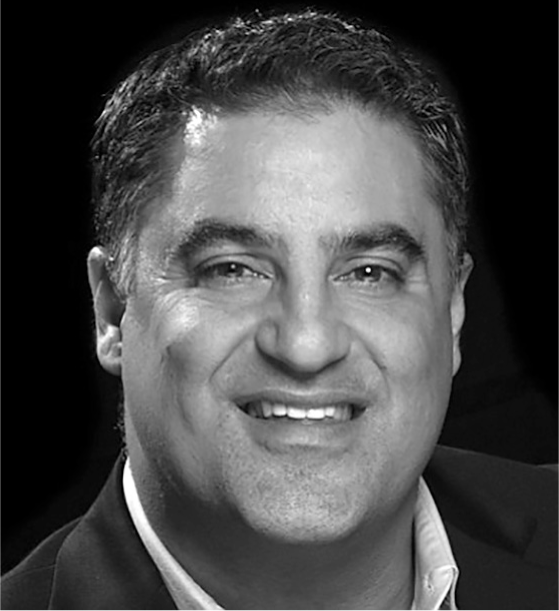
Cenk Uygur
Courtesy Cenk Uygur
The Vitality of Sociological Research
On TYT, you draw a lot upon sociological research. How do you think about the role of social science research? How do you see the vitality of sociological research and what more can academics do to kind of help the type of work that you’re doing?
We’ll start out with the facts before we go to analysis and perspective. If you’re going to go to analysis, you need to go to social science. So, let’s take an example. Okay. So an African-American is arrested and on that particular video it appears to be unjust. So if you just watch it in its own context, well, you’ve only told a fraction of the story.
So as a viewer, I think yes, but does that happen all the time? Was this just a one-time event? How often does that happen? I’m presenting it to you as a major story, then I’m trying to in a sense, mislead you about the context. On the other hand, if it happens all the time and a media outlet makes it seem like an aberration, then they’re misleading you by not giving you the proper context. So how are you going to resolve that?
You have to go to the facts; you have to go to social science. If you don’t, you’re not doing your full job in presenting the news. So then I would go, do African-Americans in that example, get arrested at a disproportionate rate? So. Okay. Then you look at the first and you find out [that] African-Americans are arrested about three to four times greater than White Americans are for smoking pot as an example. Right? You say, okay, well, do they smoke the three to four times more marijuana? That would be the natural next question. And it turns out no, they smoked marijuana at about the same rate as White Americans. Then, you have a context of this does happen all the time. This is disproportionate.
Election 2020
So there are some people who say there are too many people in the field, it’s completely too crowded. I’m curious what your thoughts are. Do you see it as too many people or do you see it as these ideas really are something that you’re seeing some transference and eventually we’re going to end up with a candidate or two, maybe a presidential person and a vice-presidential person from that same pool who now have certain ideas, and pushing policies that they previously wouldn’t have had if we didn’t have so many people.
I absolutely love it. I love how many people are in this race. Let me address the folks in the other camp who say, we should do something about it. Let’s break down that sentence. Who’s we? Who gets to decide who should get out of the race and who should be in the race and how many people are the right number of people in the race, and how many people aren’t? The folks who say that they don’t mean to, they’re usually well intentioned, but they don’t truly fully believe in democracy. They haven’t internalized it. So, democracy is a marketplace of ideas and the voters get to choose. They are “the we.”
Do you think that the United States is ready to have a woman president?
100%. This is a topic that frustrates me like many because Rashawn, the conventional wisdom is so wrong so repeatedly that it’s hard not to get frustrated. So, I heard when they said that a black guy couldn’t be president, I said they were wrong. And they said, “No, no, no. But, Cenk, you don’t understand, his middle name is Hussein. And Cenk, you don’t understand, after 9/11 a guy named Barack Hussein Obama, who’s an African American, has no chance of being president.” Rashawn, what I found unbelievable is how impervious they are to facts and reality. They were wrong about that. We were right about that. He did win and he won easily twice.
Then they say, “Well, I’m not sure about a woman.” Having learned, again, no lessons at all. If a guy named Barack Hussein Obama can win, you’re telling me that a woman can’t win even if 51% of the country is women? The reason they focus on superficialities is because they don’t want to focus on the substance. Because if you talk about the substance, well, the voters want things that are very, very progressive. Even Republicans do. I can back that up with poll after poll after poll. 52% of Republicans want Medicare for all. That blows people’s minds. Over 50% of Republicans want taxes raised on the rich. You never hear that on television, but the polling absolutely indicates 76% of Americans want taxes raised on the rich. That’s three quarters of the country. Yet, we did the exact opposite.
So why do I bring that up? Because it’s actually is about ideas. So, Elizabeth Warren can easily win because the voters, believe it or not, voters actually care about ideas. The central factor is what does she believe in. Since that makes the mainstream media uncomfortable, they try to avoid that topic by talking about physical characteristics. But I’m here to tell you without a shadow of a doubt, whether it’s a candidate that I believe in like Elizabeth Warren or one that I’m a little bit more skeptical about like Kamala Harris, they can definitely [win]. In fact, they would be a massive favorite to win.
… But you know we don’t truly have a democracy, the donors control more than the voters.
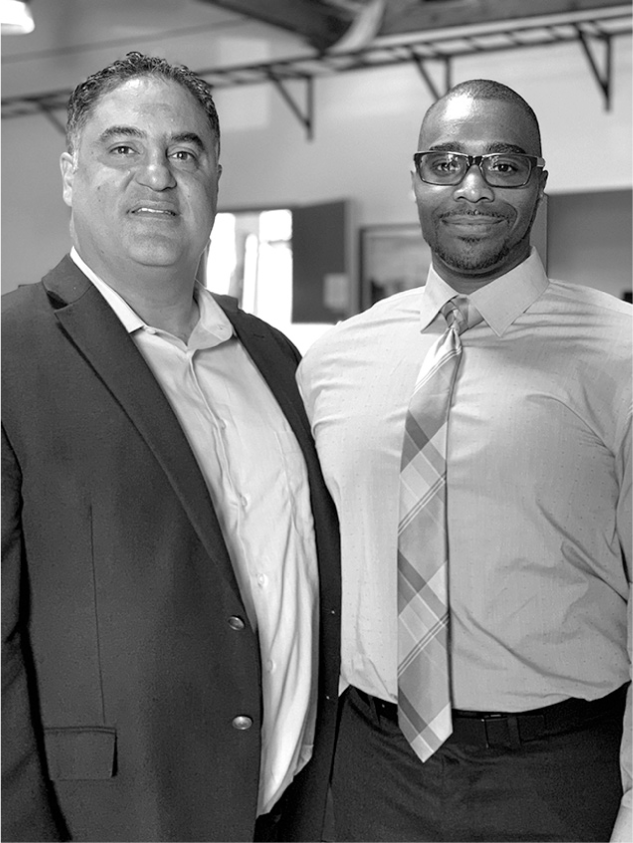
Contexts co-editor Rashawn Ray and Cenk Uygur at TYT studios in Los Angeles
Photo courtesy Rashawn Ray