




Abstract
American Indian mascots and legal status, intersectional leadership, and segregation: New research from the journals.
Being the Boss
Managing our own feelings and those of others—which scholars call “emotional labor”—on the job and off, is something we all have to do. Research has shown that, in workplaces, expectations about women taking on emotional labor has interfered with some women’s ability to cultivate professional authority and power. But these past studies have largely been based on the experiences of White women. How do race and gender intersect when it comes to understanding navigating professional leadership and emotion work?
Catherine Cassidy, principal of Southside High School in Youngsville, LA.
U.S. Department of Agriculture

In Gender & Society, Simone Ispa-Landa and Sara Thomas explore this question with a study of a racially diverse group of cisgender women who had recently become school principals. Through in-depth interviews across multiple years, it became clear that the women’s approaches and experiences differed sharply by race. It was a priority for the White women principals to be viewed as emotionally supportive and open to the influence of others. They saw acts of authority and expressions of care as being in conflict: two opposing imperatives necessitating careful balance. Over time, they gradually moved to a more “directive approach,” putting less emphasis on emotional nurturance in their leadership roles.
In contrast, the researchers found that the Black, Latina, and multiracial women principals took a directive leadership approach from the start. They did not perceive exercising authority and showing concern for others’ emotions as being in conflict. Rather, they saw these as a “blended project” that fit together in their leadership approaches—approaches that stayed consistent across the study years.
Understanding how leadership experiences and strategies differ across race and gender is critical for both researchers and practitioners. As this study underscores, there is simply no “one-size-fits-all” approach when it comes to how women navigate power, authority, and emotional work.
American Indians and Authentic Blood
In Sociology of Race and Ethnicity, Dwanna L. McKay explores the “real Indian” trope that polices American Indians. This trope of legitimacy stems from exclusionary policies set by the U.S. government, which regulate who is legally considered an American Indian. It is evoked when those identifying as American Indian are questioned based on legal status, culture, and phenotype. McKay further argues for ceding the scholar as the point of authority and privileging the perspectives of Indigenous people. Indigenous people are more than capable, McKay urges, of telling their own stories and making sense of their own realities.
McKay interviews 45 self-identifying American Indians from 29 different tribes across the United States. She finds that the racialized concepts of blood quantum (ancestry by blood percentage) and “Indian cards” are internalized by American Indians as the most important criteria for authenticity. These cards—racialized objects—are the result of a U.S. government money-saving efforts in which only registered tribes are able to access cards (so-called proof of Indianness). The Indian cards help tie blood quantum to a racial category of American Indian, and they are legitimized in a cultural and communal context that allows American Indians to rationalize their exclusionary nature. That is, American Indians have come, through marginalization by the U.S. government, to view blood quantum as a form of protection, culture, and belonging, and the Indian cards as signifiers of pride, responsibility, and belonging.
Though blood has become racialized, it has other Indigenous meanings that are useful in decolonizing how American Indians are labeled. Blood as a literal and figurative concept is essential for resistance and survival. McKay advocates for resistance against the stagnant racist trope of “real Indians.”
Sex Work and Status Perks
How do marginalized men working in illicit markets create opportunities to improve their own racialized masculine status? In Gender & Society, Sharon S. Oselin and Kristen Barber attempt to answer this question through understanding “status maneuvering” among men of color who participate in sex work. Status maneuvering is a process through which structurally marginalized people use proximity to more privileged people to access higher status. Through 19 in-depth interviews with cisgender men of color who have engaged in the street sex trade, the authors found this process at work: participants used encounters with privileged clients to temporarily improve their own social positions.
Among their respondents, status maneuvering required emphasizing similarities, rather than differences, with privileged clients and therefore attempting to approximate privileged masculinities. Men sex workers in the study boosted their relationships with White, upper-class, sometimes heterosexual men to emphasize their own ties to stereotypically dominant masculinity. In discussing these relationships, sex workers highlighted their ability to select the most beneficial clients—itself a sign of status among fellow sex workers. This framing minimized inequalities while emphasizing agency and status. Beyond framing, actually gaining material goods, such as clothing, alcohol, cars, and sometimes even legal employment, was important to many of the participants. Through relationships with wealthy, White men, they were temporarily able to access material goods that became visible status symbols further signaling similarities with privileged clients.
Male sex workers at the International Escort Awards (the Hookies), 2014.
istolethetv, Flickr CC.
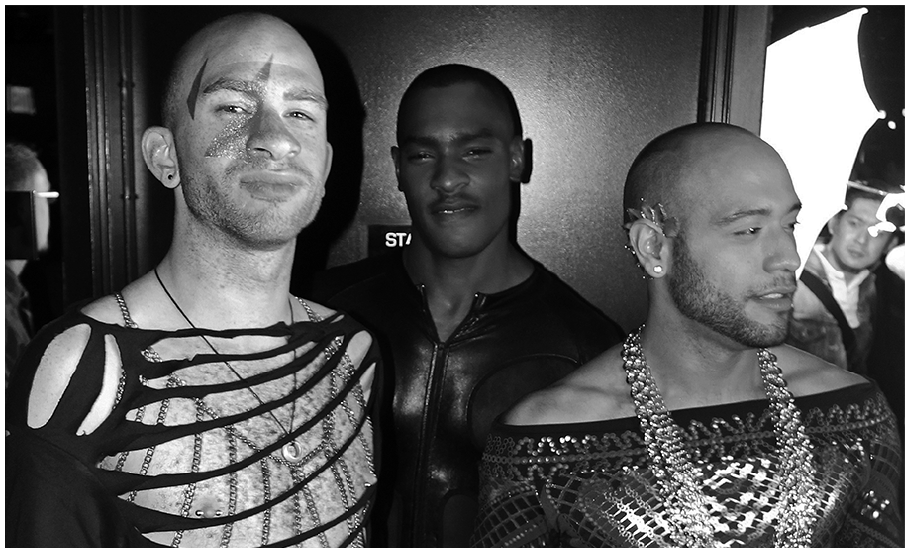
Oselin and Barber argue that through status maneuvering, marginalized men are able to resist the structural constraints that may otherwise limit their options, on the job and beyond. Their findings also demonstrate the permeability of social status boundaries.
To Hire or Not to Hire?
Kathyrn Decker, Flickr CC

Several studies show that decisions about who to hire contribute to occupational gender segregation. But what about the decision not to hire? In American Journal of Sociology, Ming D. Leung and Sharon Koppman test the “proportional prejudice” hypothesis: that employers are less likely to hire when the proportion of gender-atypical job applicants is higher than the proportion of gender-typical applicants. For example, if a disproportionate number of women applies to a stereotypically male job, the employers judge that something is “wrong” with that pool. Because applicants’ gender composition shapes employer opinions about skills, hiring teams select fewer resumes and more harshly evaluate those from pools with unexpected men/ women ratios. Subsequently, they hire fewer applicants from these “unusual” groups.
The authors used 2012 hiring process data from an online contract labor market that included information for 249,506 hiring entities and more than 150 different job types. They also interviewed 185 employers about their hiring decisions. They focused on IT and programming as well as writing and translation jobs, which are male and female stereotyped, respectively.
After considering applicants’ education, experience, and reputation ranking alongside job offer characteristics, results confirmed the proportional prejudice hypothesis. The higher the percentage of female applicants in the pool, the more likely it was that the employer would decide not to hire anyone from that pool for a male-typed job. Because women apply more to stereotypically male jobs than the opposite, “proportional prejudice” harms women more than men. Conversely, the likelihood to hire increases when the pool overrepresents women applying for female-typed jobs.
Employer bias appears to be amplified by the composition of applicant pools: the authors even report that larger proportions of Black, Asian, and older applicants in a given pool increased the likelihood of not hiring. These compounding effects contribute to labor market segregation.
Speak Spanish or Perish
Do you have to speak Spanish to be Latinx? In Social Problems, Lorena Garcia explains how middle-class adult children of Latinx immigrants use Spanish in order to claim membership to a Latinx ethnicity for themselves and their children. Through in-depth semi-structured interviews with 50 middle-class Latinx who grew up poor in Chicago, Garcia examines the factors shaping her respondents’ “language ideologies.”
The author explores how language ideologies differ among Latinx people and are shaped by the contexts in which they grew up. Immigrant status, location, ethnoracial and linguistic identification, and social mobility experiences all factored in.
Daniel Lobo, Flickr CC

While some Latinx participants felt united in their linguistic insecurities, others felt resistance to the idea that there was any “correct” way of speaking Spanish. These distinct language ideologies eventually led to differences in how they perceived their connection to a Latinx identity.
The most significant impact was on respondents’ expectations for their children. Parents who grew up poor believed that “linguistic capital” (knowledge of Spanish) in the form of bilingualism was important for their children. Their Spanish didn’t have to be “perfect”—any bilingualism was seen as beneficial for the kids’ future labor market opportunities and places within Latinidad. Garcia shows that Latinx immigrants do not assimilate in a trajectory like the one predicted for their White counterparts but instead have their own perception of “doing Latinx” through the use of language.
Criminalized for Just “Living”
The Baltimore uprisings following the murder of Freddie Gray in 2015 were fueled by systemic abuse and neglect of poor Black communities. They captured the nation’s attention. Now, an article in Socius by Melody L. Boyd and Susan Clampet-Lundquist documents how Black youth in Baltimore are criminalized for just “living.”
The study used participants from the Moving to Opportunities project, which examined whether housing vouchers increased upward mobility. Following up with some of the participants, Boyd and Clampet-Lundquist interviewed 150 youth (aged 15 to 24). Their accounts uncover the criminalization of daily routines in participants’ neighborhoods and schools.
Young people of color report avoiding police because they fear being profi led as they do mundane things.
Erin Nekervis, Flickr CC

Despite only one in five young men in the study reporting involvement in illegal activities, two-thirds reported negative interactions with the police. Many reported avoidance as a primary goal to prevent police harassment and abuse, modifying behavior to manage appearance and routines in ways that allowed them to stay out of the way of the police. They told the authors that schools served as an extension of the streets, because school officers behaved very similarly to police officers as they targeted, harassed, and even assaulted the youth. The use of metal detectors and strict consequences for minor infractions, including the use of mace and arrest, adds to this in-school criminalization.
As Black youth experience microaggressions and abuse by the police, their encounters with law enforcement tend to be traumatic. Whether direct or indirect, these interactions, in turn, contribute to Black youth developing mistrust of the police and the criminal justice system—regardless of their involvement in criminal activities. Cumulatively, these experiences can negatively impact the transition into adulthood.
Couples Sharing Money
How should couples share their income? Couples with greater relationship investments (e.g., having children together, being legally married) are expected to prioritize their families’ needs over their own economic independence. Further, we might expect such couples to establish more “collectivist money arrangements” (e.g., joint bank accounts). Still, the primary earner in the couple might be expected to withhold more money from a “shared pot,” due to feelings of greater entitlement to economic autonomy. To see how well expectation meets reality, Joanna R. Pepin explores how people reconcile competing cultural values in beliefs about sharing money in families.
Pepin designed a vignette-survey experiment to collect the first nationally representative sample of American adults’ beliefs about income sharing in families. Over 4,000 respondents were asked to read about a fictional couple described in one of 24 possible different vignettes. In each scenario, the couple differed by marital and parental status, relationship duration, and relative earnings. Respondents were asked to select whether the couple should have a “shared account,” “separate accounts,” or “shared and separate accounts.” For those who chose “shared and separate accounts,” respondents were also asked to determine how much money each partner should put in their individual accounts versus a shared account.
Pepin’s findings, reported in the Journal of Marriage and Family, reveal widespread support for collectivist approaches to money within families, with “shared and separate accounts” being the most commonly selected arrangement. A greater proportion of survey respondents favored married couples, compared to cohabiters, fully sharing their income. Parenthood and relationship duration did not garner greater support for fully sharing income among married couples, but they did among cohabitors. When respondents favored “shared and separate accounts,” the primary earner was expected to control a greater amount of the total household income. The preferred level of withholding was larger when primary earners were women. Pooled together in a shared account of family economics, Pepin’s findings underscore the complex interplay of beliefs about money, gender, autonomy, and family.
Decolonizing Sports Mascots
In Sociology of Race and Ethnicity, Cynthia Pelak challenges current sociological practices of teaching about settler-colonial racism. Settler-colonial racism is the social formation in which settlers steal Indigenous peoples’ land, eliminate their culture, and force assimilation to create and maintain a new nation-state. Highlighting American Indian sports mascots and American children “playing Indian,” Pelak shows how settler-colonialism dehumanizes people in the United States as racial “others.” She also explains the need for sociologists to debunk narratives that frame American Indians as a racial minority group seeking assimilation in a multicultural country.
Protestors greet the arrival of the Washington football team in Minneapolis, MN in 2014, where speakers included the city’s mayor and congressional representatives.
Fibonacci Blue, Flickr CC
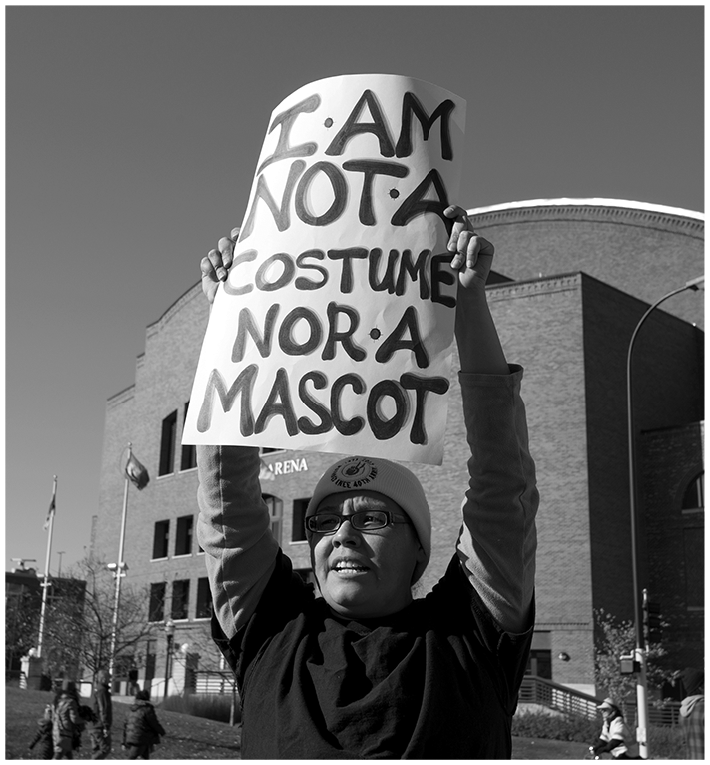
Emphasizing the importance of critical reflection, Pelak describes the process for unlearning problematic narratives about American Indians. She uses the phrase “moves to innocence” to describe non-Native people’s attempts to distance themselves from responsibility in the White supremacist domination of Indigenous people.
In an active-learning writing assignment, Pelak asked students to write a letter to the owner of the Washington, D.C. National Football League team. The mascot, which she calls the “R word,” is a derogatory slur for American Indians. Students argued to drop or keep the racist team name and logo. In her content analysis of students’ responses, she found that a majority argued for dropping the team name. However, students on both sides employed a rhetoric of honoring and an imperial/colonial frame to address settler-colonial racism. These disguised racialized discourse about American Indian stereotypes. Students used “moves to innocence” to assume a moral position, subsequently elevating Whiteness and normalizing settler-colonial violence.
By extending race-based theories to include a decolonial perspective, Pelak argues that sociologists can better identify the state as a perpetrator of land colonization and violent domination of Indigenous people. Placing “land” at the center of the sociological analysis of racism engages with the work of American Indian scholars who have always acknowledged land. In order to decolonize settler-colonial racism, we must unlearn assumptions, rethink the settler-colonial state, and center Indigenous voices.
Are Neighborhoods Actually More Diverse Today?
This 1938 map of Black and White neighborhoods in Washington, D.C. may not be all that out of date amid persistent, nationwide residential segregation.
U.S. National Archives

Do diverse neighborhoods remain diverse, or are they simply transitioning? In recent years, researchers have used neighborhood diversity as a measure of progress toward racial harmony and away from the legacy of segregation. While some people may perceive there are more racially diverse neighborhoods today, many speculate they are the result of changing demographics rather than integration.
In Sociology of Race and Ethnicity, Richard Wright and colleagues explore whether there is a substantial increase in highly diverse neighborhoods and for how long these neighborhoods remain highly diverse. They define highly diverse neighborhoods as ones in which there are three or more racialized resident groups and no single group is dominant (one group >45% or two groups >80%). They use 1990, 2000, and 2010 Census data to measure the total number of U.S. neighborhoods with high diversity and changes in neighborhood diversity over time.
The authors report that the number of highly diverse neighborhoods increased from 1990 to 2000, but leveled off in 2010. These neighborhoods, typically in large cities, did not remain highly diverse over time. Less than half maintained high diversity levels for over a decade. Most developed through a transition from White-dominated but diverse neighborhoods to majority-Latinx neighborhoods, signalling modern White flight.
Three major findings are developed: gentrification is fueling the emergence of White majorities from highly diverse neighborhoods; racial discrimination in housing persists (evidenced by the way that highly diverse neighborhoods were significantly less likely to form in cities with high percentages of Black residents); and nationally, despite increases in racial diversity, highly racially diverse neighborhoods only represent 1.5% of census tracts. The United States is a long way from desegregation.
Responses to Affirmative Action
Affirmative action, a remedy policy for past racial discrimination, is a highly controversial political issue in the United States. Those who support affirmative action see it as supporting racial justice. Those who oppose the policy see it as an obstruction to developing a color-blind society in which success is not predicted by race. In Social Problems, J. Scott Carter, Cameron Lippard, and Andrew F. Baird use critical discourse analysis to examine how color-blind and “group threat” frames of communication are used in support and opposition to affirmative action cases.
The authors analyzed 184 amicus briefs submitted in response to the Supreme Court’s high-profile Fisher v. The University of Texas at Austin affirmative action case. Amicus briefs are an ideal data source because they usually focus on the societal level implications of a case. The author’s analysis examined how the amicus brief authors employed sociologist Eduardo Bonilla-Silva’s four frames of color-blind rhetoric. Their analysis also considered what role group threat played in these frames of communication and how such threat related to color-blind frames.
The authors found that both supporting and opposing briefs relied heavily on color-blind, abstract liberal arguments. They ignored racism and discrimination by making vague appeals to political and economic liberal ideas such as individualism and equal opportunity. In the course of these arguments, authors of the amicus briefs used and conceptualized threat differently. Supporters argued that discontinuing affirmative action policies would threaten universities and underrepresented minorities. Opponents described the continuance of affirmative action as a threat to White access to resources, American values, and society as a whole. Based on these findings, Carter, Lippard, and Baird argue that authors of the amicus briefs intertwine threat frames with color-blind rhetoric in order to stoke racial animosity and delegitimize affirmative action. This was particularly true for those opposing affirmative action. They recommend future research investigate how these frames of communication may be used to persuade action against other ameliorative racial policies.