



Abstract
Job foraging, nonviolent regime change, and the fears of undocumented parents: new research from the journals.
Keywords
Nonviolent Protests and the Formation of Democracies
Can the barrel of a gun point the way to democracy? Some political scientists and sociologists seem to think so. Ali Kadivar challenges this convention in his American Sociological Review article, looking at whether unarmed protest campaigns rebelling against a regime predicts whether a new democracy will survive after the revolution. Kadivar analyzes original archival data on 112 new electoral democracies in 80 countries from 1960 to 2010. In testing the conventional wisdom, Kadivar defines “democracies” as regimes in which the leadership gained power through elections and “failed democracies” as those in which post-revolution power was attained through other means. Kadivar found that the longer an unarmed protest lasts, the more likely the new democracy will succeed.
South Africa in 2009, 15 years after its first democratic national election.
Paul Saad, Flickr CC
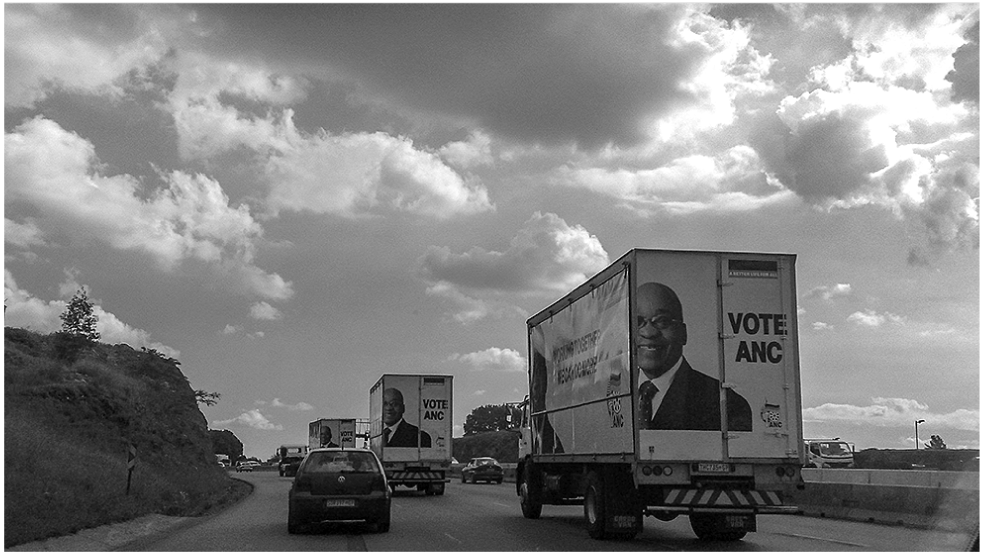
Kadivar highlights the importance of lengthy popular mobilizations, emphasizing that longer mobilizations allow time for leaders in protest movements to gain experience and solidify their democratic beliefs among citizens. He presents the South African case to illustrate how lengthy unarmed protests can produce stable democracies. Armed protest movements may produce some democratic stability, but this large-scale comparative study shows that nonviolence increases the chances of a lasting democracy.
What does Homeownership Buy?
They’re keys, but to what?
Public domain

Regardless of racial or ethnic background, there is a strong American preference for home-owning over renting. While this is found to be true time and again, the reasons why people of different races want to own a home vary, asserts Brian J. McCabe in a recent Sociology of Race and Ethnicity article. McCabe compares the motivations given by African Americans and Latinos to those of Whites for purchasing a home, whether for financial, social, ideological, or some other concern, to gain better understanding of homeownership as a tool toward greater racial equality.
Using data from the National Housing Survey, McCabe considered five prominent reasons for buying a home: stability, social status, housing conditions, residential choice, and economic opportunities. He found that African Americans and Latinos, compared to Whites, were more motivated to homeownership by the promise of building wealth and achieving higher social status. The only category in which Whites expressed greater interest than non-Whites was in convenience of location.
Prior literature has examined the structural barriers to homeownership faced by certain racial groups, including residential segregation and discriminatory lending, but McCabe’s work addresses micro-level concerns and motivations. While homeownership is desired by all, racial minorities more emphatically see this step as a way to establish wealth and status. Structural barriers still more negatively impact non-Whites and the returns on homeownership are markedly lower for racial minorities, yet, because homeownership is still a huge component of wealth acquisition in the U.S., McCabe’s work provides a new nuance to our understanding of racial stratification and the wealth gap.
Foraging on the Margins of the Labor Market
Finding a job is hard no matter who you are. But some people face more barriers to obtaining employment than others, including racial minorities and those with criminal records who have to “check the box.” In American Journal of Sociology, Naomi F. Sugie shows how the latter group of men navigate reentry into labor markets after incarceration.
Many men undergoing reentry after incarceration forage for short-term work to make ends meet.
Rej Natarajan, Flickr CC
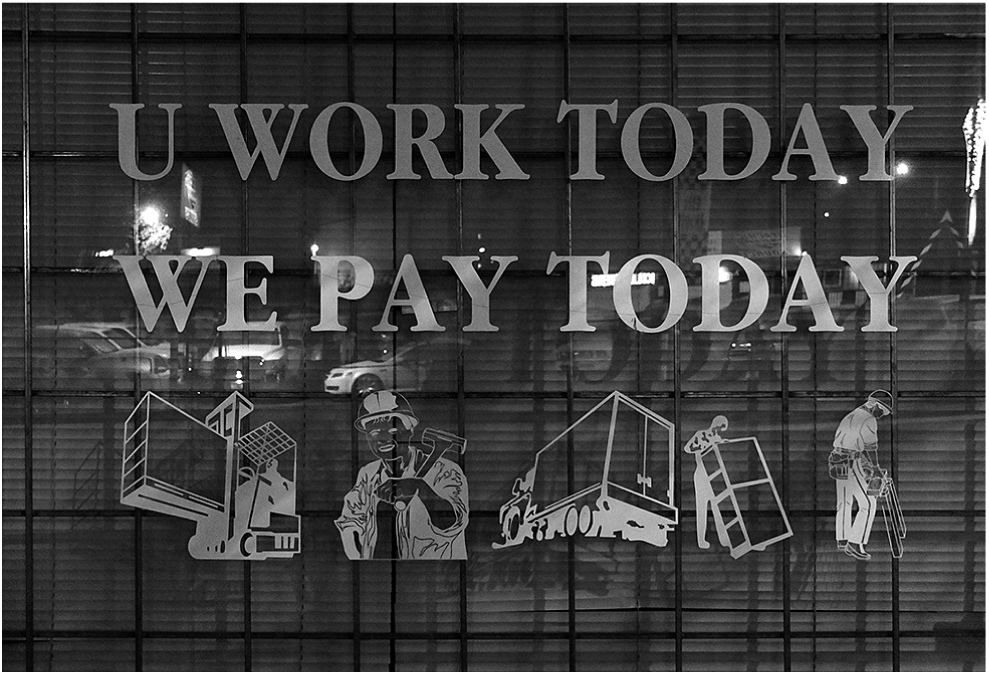
As part of the Newark SmartPhone Reentry Project, Sugie collected smartphone data from 133 men recently released from prison in Newark, NJ. The men were asked to participate for a period of three months, after which they could keep the provided smartphone. Sugie learned that the majority of respondents engaged in “foraging behavior”—taking on short-term jobs in a variety of industries as a way to make ends meet.
Initially, most participants spent about half of their time searching for long-term work, but almost half stopped searching after the first month. But their decreases in job search days were not linked to an increase in working days. Rarely did the men spend more than two days in the same job or even work the same job week to week during the three-month study period. Even those who found relatively consistent work still had less stability than people working Monday to Friday jobs. And among the typically older respondents who continued searching after the first month, foraging was necessary to meet day-to-day financial needs.
Workers who forage often lack the social integration and job protection associated with long-term employment. While this study looked at one group on the margins of the labor market, Sugie believes foraging may be prevalent among other groups that struggle to obtain traditional entry into America’s workforce.
Parenting Without Papers
Scholars of immigration and family have depicted the ways immigration enforcement policies affect Latinx children and families. Much attention has been paid to the long-term or permanent changes of family structure due to deportation or short-term economic instability, changes in daily routines, and emotional distress. Less attention has been paid to how immigration enforcement influences undocumented parents’ parenting practices, parent-child communication, and parent-child interactions. Jodi Berger and colleagues take up the study in their latest article in the Journal of Marriage and Family.
Through interviews with 70 undocumented parents in two Southwest U.S. cities from 2012 to 2013, the scholars identify three types of stressors associated with parenting while undocumented. First, general fear of the police leaves parents feeling trapped. Many states have barred undocumented people from obtaining driver’s licenses, meaning that mundane, everyday tasks are easily criminalized. Such restrictions places physical limitations on parents’ interactions with their children. Second, parents endure continual fear of deportation and separation from their children. This fear is heightened by the fact that many parents have not disclosed their undocumented status to their children. Third, parents report their children assuming responsibilities that help their family to navigate the restrictive nature of their status. Children mediate communication and monitor their own behavior to avoid bringing additional scrutiny to themselves or the family. This shifting of responsibilities leaves parents feeling disempowered and hesitant to exercise parental authority.
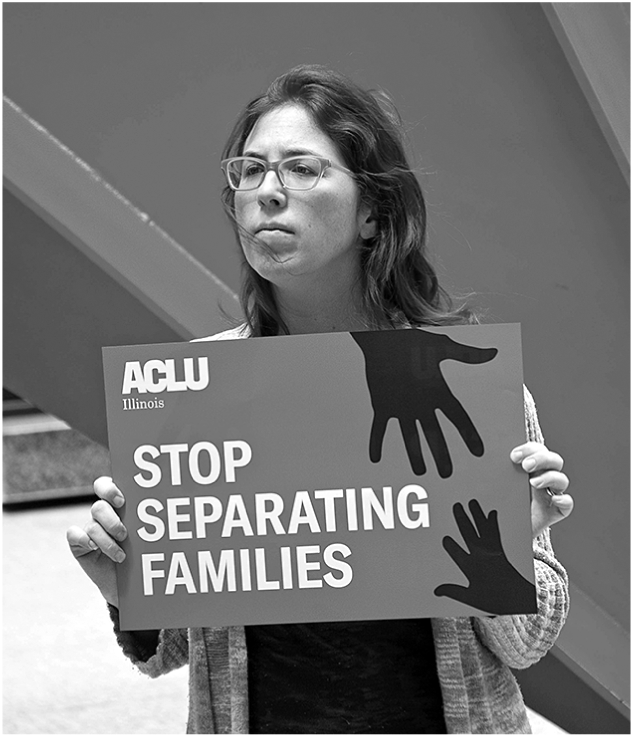
About 7% of U.S. children, close to 5.1 million, live with at least one undocumented parent. For undocumented parents, “illegality” colors most aspects of life, including familial well-being and parent-child interactions. The authors note that immigration enforcement has only heightened since they conducted their interviews. They suspect family dynamics and undocumented parents’ situations are even more precarious in today’s political climate.
Nearly 7% of U.S. children live with at least one undocumented parent. Here, a Chicago, IL protest in June 2018 against the Trump administration’s decision to separate undocumented asylum seekers from their children at U.S. borders.
Charles Edward Miller, Flickr CC
That’s Not My Size
Inconsistent clothing sizes reinforce the perception that some sizes are “better” than others.
Quinn Dombrowski, Flickr CC

If you’re a woman, at some point you’ve probably wondered why your clothing size is completely different from brand to brand. Katelynn Bishop, Kjerstin Gruys, and Maddie Evans investigate this common experience via ethnographic observation, focus groups, and interviews with women and clothing retailers. Their article in Gender & Society is one of the first to specifically examine clothing size as a contributor to female identities, and it shows that inconsistent sizing standards contribute to the development of both positive and negative self-concepts.
After meeting at a conference and seeing similar themes in individual research interests, the authors combined their three studies to examine the consequences of clothing sizes. Bishop, Gruys, and Evans examined bra sizes, plus-size clothing, and bridal wear, respectively. Collectively, they found that women were likely to make efforts to maintain or alter their physique in order to fit sizes that matched what they considered “normal.” In some cases, women simply refused to buy items in sizes bigger than what they felt they should wear, even when recognizing that the larger sizes were a better fit. But “normal” wasn’t the same across all women: standards of size and shape varied across race and class lines. Black and Latina women in particular displayed more acceptance of larger sizes without engaging in self-stigmatization.
Bishop, Gruys, and Evans conceptualize clothing sizes as meaningful yet unstable “floating signifiers” of identity and status. Some women are able to distance themselves from stigmatized size categories by claiming particular clothing sizes and standards. Others are not. This leads to inequalities across women in psychological, social, and material benefits associated with standards of physical beauty and size. The authors conclude that because there are inconsistent standards of clothing size, some women are able to construct positive identities and body image by aligning themselves with more positive sets of standards. However, these inconsistent standards and the way they are used by women as a tool in forming identity are still problematic because they uphold a hierarchy of attractiveness that perpetuates gender oppression through hegemonic standards of beauty.
Is Marriage Equally Isolating?
Studies on the social lives of married people has, thus far, overlooked LGBQ marriages and partnerships.
Brian Kusler, Flickr CC
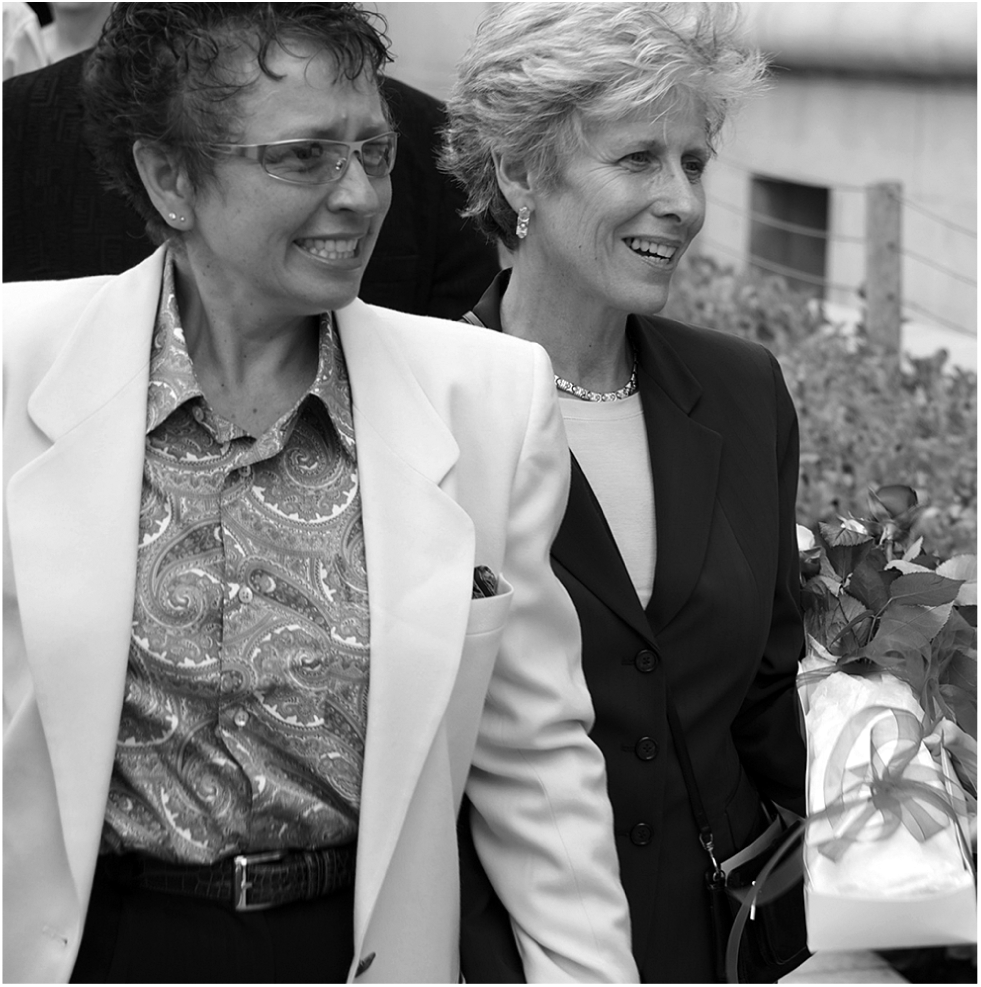
Marriage can be isolating, with married people retreating from social life and community connections to focus on their spouse. Historically, such research has centered on marriages between men and women. Now, using both survey research and interviews with 116 married and partnered people who identify as lesbian, gay, bisexual, or queer (LGBQ), Abigail Ocobock asks in The Journal of Marriage and Family whether marriage holds a similar isolating effect within these relationships.
The author finds that marital status and legal access to marriage have separate effects on connections to the broader LGBQ community. Parental status, rather than marital status, had the only statistically significant effect on the social factors measured; parents were less likely than non-parents to go out with friends two or more times per week. A small proportion of married participants indicated that they participated less in the LGBQ community (defined as engaging in organized activities, going to bars and clubs, and spending time with LGBQ friends) after marriage. Some of this was related to how respondents expected married people to act. Qualitative responses showed that some felt they should change their behavior to conform to social norms around marriage. In interviews, participants noted that access to marriage, rather than their own marital status, represented social acceptance and reduced their need for involvement in activist and non-activist LGBQ spaces.
Ocobock shows that the effect of marriage on social and community engagement is not universal. Legal marriage and cohabitation may have less distinctive effects for participants in this research specifically. At the time of the study, marriage equality had passed in their state, but not nationwide; interview responses showed that many had been in long-term, co-residential relationships before getting their marriage certificates. Relationships may be more related to changes in social behavior than the legal status of marriage. The sample in this study was predominantly White and highly educated, leaving open questions about other dimensions on which both access to marriage and marital status may operate differently.