



Abstract
Academic women, “street race” and health, and military pride: new research from the journals.
Like a Good Neighbor
Property ownership is associated with a host of benefits to neighborhoods, ranging from increased dedication to property maintenance to greater involvement in the community. Detroit was originally built for 2 million people, but fewer than 700,000 remain following mass out-migration. This means hundreds of vacant properties and abandoned lots. In a recent City and Community article, Claire Herbert discusses the four years she spent in Detroit volunteering, attending community meetings, and interviewing residents regarding the illegal use of these vacant properties.
City officials lack both the time and the resources to respond to calls about illegal property use, so residents have created their own system. “Squatters” turn vacant lots into gardens and empty houses into homes. “Deconstructors” scrap deteriorating buildings and tear them down. And “scrappers” fix up their own properties using salvaged materials. Neighborhood residents feel that this ethos of care helps improve the appearance and safety of their neighborhoods, with some telling Herbert that squatters are invested in the well-being of the community and are more likely to keep an eye on the neighborhood than law enforcement. Residents also report that they have no qualms about reprimanding squatters who break the rules by conducting illegal activities or failing to mow the lawn. When squatters seem to go against the norms of the neighborhood, residents may contact the property owner, alert utility companies to illegal hookups, or board up houses they believe should be left alone.
Detroiters widespread disdain for property laws and open support for those who defy them run counter to most theorizing on the impact of home ownership. Many owners have effectively abandoned their properties here, creating an opportunity for non-owners. And Detroit residents are tired of waiting for the city to pay attention to their communities. The informal vacant property use market and locals’ self-policing of it represents one innovative way of taking back their neighborhoods.
Gender Inequality in Academic Self-Citations
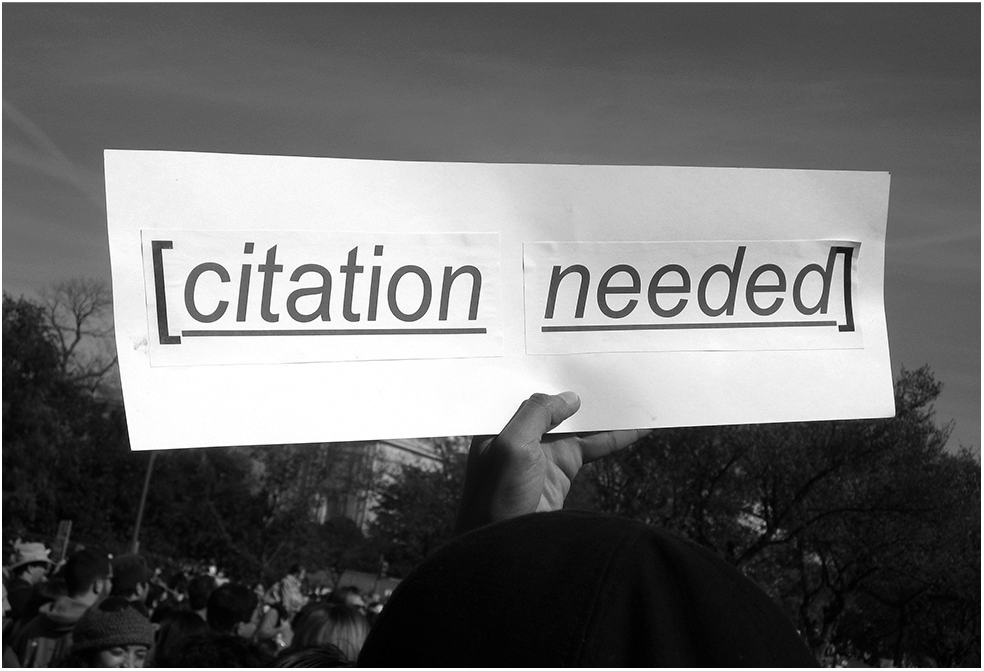
The “selfie” generation posts pictures of themselves, often aiming to boost their social media presence. For academics, selfies might also refer to self-citations, aimed to boost citation data on one’s own research. And according to Molly King and colleagues’ article in Socius, the academic selfie seems to be gendered.
Using data from the scholarly database JSTOR, the authors examined over 1.5 million research papers from 1779 through 2011. In calculating a self-citation rate, the researchers first combed through research papers to determine the gender of the author, then determined whether an author such as “Jane Smith” who quoted another “Jane Smith” in their paper was referring to their own research.
After reviewing the multi-discipline papers, King and colleagues determined that self-citations account for 10% of all references. Among scholars who cite themselves, men do so 56% more than women—and the gender gap has widened over the past two decades. There were also disciplinary differences. History and Classical Studies have the lowest women self-citation rate, while Ecology & Evolution, Molecular & Cell Biology, and Sociology have the highest.
Although the authors shy away from trying to determine if the self-citation gender gap is the byproduct of gender gaps within the academy, they are explicit in acknowledging that the self-citation gender gap is an important indicator of gender inequality in academic careers. They note that university hiring and tenure committees should be aware of this self-citation gap.
The Academic Partner Penalty
Women represent about half of the students enrolled in doctoral programs, but they are largely under-represented in tenure-track professor positions at research universities. Possibly this has to do with having a relationship partner seeking a similar job. In her article in the American Sociological Review, Lauren A. Rivera examined this “two-body problem”—when someone is on the academic job market alongside a partner who is in the same job market or another high-status profession—and its impact on the academic job market.
Performing a qualitative analysis of three junior faculty search committees at a large research university, Rivera found that committees actively considered women’s, but not men’s, relationship status when determining their hireability. Though it is illegal to consider relationship status when hiring, search committees considered it acceptable in this context because it is perceived to denote one’s likelihood to be willing to move and accept the position. Because the search committees only seemed to consider the relationship status of women applicants, the two-body problem was implicitly legitimated as a reason to reject women candidates. The underlying assumption is that men’s careers take precedence over women’s in a relationship.
Existing research tends to focus on gender inequalities as the result of women’s individual choices. Less attention is paid to the structural forces that keep women in lower status positions relative to men. Rivera’s research about how search committees make selections for new hires is an important revelation of how organizational practices and cultural stereotypes operate as structural constraints to maintain gender inequality in hiring.
Commitment can be costly for female academics.
Ted Rabbitts, Flickr CC

Access isn’t Enough
New York State’s groundbreaking tuition-free degree program will help thousands of middle- and lower-class families send their high school seniors to college. However, recent research in the Journal of Social Issues indicates that providing access to higher education isn’t enough to ensure their success.
Students from low socioeconomic backgrounds arrive at college with cultural experiences and emotional roadblocks over which they may stumble.
Researcher Mickaël Jury and his coauthors studied the experience of low-SES students in college and identified four key psychological barriers to success: emotional experiences, identity management, negative self-perception, and motivation. High-SES families that already include college graduates understand and equip their children with the skills they will need to navigate college academic and social culture. Sociologists from Pierre Bourdieu to Annette Lareau and beyond have noted that such high-SES families inherently promote and are familiar with the values of higher ed—achievement based on knowledge and independence rather than interdependence. But when students arrive on campus, those from low-SES backgrounds bring lower perceptions of their competency, experience greater emotional stress, and have higher drop-out rates and lower GPAs.
The authors suggest a number of strategies colleges and universities can implement to support all students while also addressing the needs of lower-SES students in their transitions to higher ed. Among their proposals: self-reflective activities helping students identify their strengths and personal values, thereby creating a positive identity and identifying emotional tools that can be utilized later on. Colleges, they write, should also organize student panels of juniors and seniors from diverse SES backgrounds, demonstrating to incoming freshman how other college students have capitalized on their background experiences and reinforcing that all life experience is valuable.
New York’s access-for-all initiative will open doors for many students who might not otherwise have the opportunity to obtain a college education. Now it is up to the institutions to support the students who walk through those doors.
A College of DuPage student receives her diploma, May 2017.
College of DuPage Newsroom, Flickr CC

“Street Race” and Health
What’s your “street race” and how does it impact your health? Unlike self-perceived or self-identified race, street race is what others assume a given person’s race to be. In their latest article in Sociology of Race and Ethnicity, Nancy López and her colleagues explore the relationship between these measures of racial identification and self-reported physical and mental health among Latinxs.
Using the 2015 Latino National Health and Immigration Survey, the authors find that those who self-identified as White had higher odds of reporting very good or excellent physical health compared to other groups. White street race also served as a higher predictor of reporting very good or excellent levels of mental health compared to other groups. When broken down by gender, men who reported their street race as Latino or Arab actually showed higher levels of self-reported physical health than other men. Conversely, only women who reported their street race as Mexican had significantly lower levels of physical and mental health than other women.
The authors end by calling attention to the growing and multidimensional Latinx population, which is projected to represent 29% of the U.S. population by 2060. Given that the normalization of attacks against individuals for what they look like is on the rise, the authors posit that measures such as street race may provide a more adequate measure of racialization than self-identification can alone.
At Casa Ruby, a “multicultural center and safe space” serving Latinx LGBT communities.
Ted Eytan, Flickr CC
Saluting Sexuality
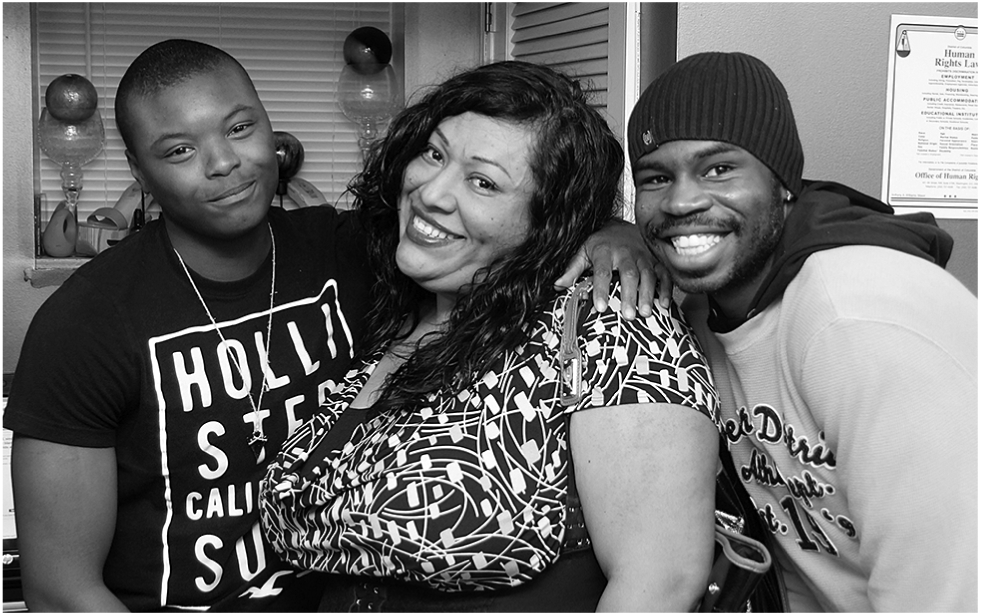
How does “outness” affect lesbian, gay, and bisexual (LGB) service members’ mental health? In Armed Forces and Society, Wyatt Evans and colleagues explore how one’s level of outness—and satisfaction with it—determine depression and anxiety symptoms in today’s American military.
Recruiting from the Military Times and on military installations, the authors administered online surveys to 236 current service members. Service members were asked to respond to questions regarding depression and anxiety, taken from the Generalized Anxiety Disorder 7 and Patient Health Questionnaire. Respondents’ level of “outness” was measured with an adapted Outness Inventory, a rating of one’s openness about sexual orientation. Respondents were also asked how satisfied they were with their outness, finding that higher levels of outness were associated with better mental health outcomes.
Given that military personnel and sexual minorities both have an increased risk of poor mental health outcomes, Evans and colleagues provide valuable insights for a group whose intersectional experiences may be overlooked. Regarding the mental health of LGB military members, outness and satisfaction are positively associated with decreasing depression and anxiety. In the post-Don’t Ask, Don’t Tell era of the U.S. military, then, there’s good news: fears of poor mental health outcomes among openly queer service members is not supported.
Dealing with the Difficult
Everyone knows a person who is just… difficult. One particular person might have even popped into your mind right now. Who are they? Why are they difficult? Why do you maintain that relationship? Shira Offer and Claude Fischer examine these questions in the American Sociological Review.
Their article draws from the University of California Social Network Study, comprising about 1,150 adults who describe over 11,000 personal and professional relationships. The study identifies two forms of constraints on relationships: interaction- and role-based. Interaction-based constraints maintain particular social ties. Difficult or demanding negative ties are more likely to occur when the interaction is persistent and unavoidable (for example, in the workplace). Respondents also considered someone to be difficult if they were the recipient of the respondent’s help.
Role-based constraints are related to the position of individuals within a social network. These positions affect how the relationship is perceived. Ties in less voluntary contexts are more likely to be named difficult. Older respondents were more likely to name aging parents. Younger respondents were more likely to identify close kin, especially women relatives (sisters and wives). And women are more likely to be involved in kinship networks, increasing the number of interactions they have in the first place.
There’s greater freedom in ties that are voluntary; a relationship with fewer constraints is easier to dissolve. It isn’t surprising then, that friends were less likely and co-workers and family more likely to be deemed difficult. As the saying goes: “you can pick your friends, but you can’t pick your family.”
Black Deaths Matter
It’s hard to imagine a more traumatic experience than the unexpected death of a loved one. But imagination often becomes reality for Black Americans, who are more likely than White Americans to experience the premature death of family members and friends. Debra Umberson’s article in the Journal of Health and Social Behavior investigates racial disparities in this experience and the resulting impacts on mental and physical health.
Using population-level data from four data sets, including the National Longitudinal Study of Youth, Umberson finds that Americans rarely experience the death of someone close to them until mid- or later-life—Black Americans, however, are the unfortunate exception. Black Americans experience losses earlier and more often in the life course than White Americans. For example, Black children were three times more likely than White children to lose a mother by age 10. Umberson argues that, similar to other social resources, close relationships are unequally distributed in the population.
So what does this mean for the health of Black Americans? Well, research shows that greater involvement in social relationships enhances mental and physical health and promotes longevity. Social relationships early in life foster a sense of security and predictability, and disruptions to these social ties through separation or loss produce mental and physical problems, such as hypervigilance and chronic stress. Consequently, racial disparities in the experience of the unexpected death of a loved one undermine social connections, positive health, and well-being across the life course. Greater attention must be dedicated to understanding the pathways through which death and loss disadvantage Black children and families. Ultimately, social and political action needs to convey the message that Black deaths matter.
Community members gather as police officers are cleared in the death of Jamar Clark, a Black man killed in front of friends and loved ones outside a North Minneapolis birthday party.
Fibonacci Blue, Flickr CC

When Teaching gets Painful
Societal debate over police brutality and the rhetoric of the 2016 presidential election have contributed to increasing racial tensions in America. Marisela Martinez-Cola noticed a change in the campus climate at Emory University while teaching a course on “Race and Ethnicity.” As hopelessness, anger, and despair increased, it became harder to discuss race in a way that wasn’t painful for everyone in the classroom. In her 2018 article in Teaching Sociology, Martinez-Cola attempts to provide guidance to other faculty members for dealing with these emotions in the classroom.
At the end of her course, Martinez-Cola requested input from students willing to share their emotional experiences and what they thought she could have done to make the class experience less painful. Martinez-Cola’s recommendations are based on student journal responses and her own emotional experiences over the semester. First, professors should attempt to acknowledge various racial identities and make sure students feel represented in the course material. This can be done by teaching beyond the common Black-White binary of race and investigating diversity within individual racial communities. Second, instructors should challenge the common use of Whites as the comparative standard in evaluations of people of color and their cultures. Third, faculty members should strive to recognize how their social position and identities may impact the classroom and students. Finally, professors should allow space in the classroom for the negotiation of emotions between themselves and students.
Although this list is not exhaustive, it can serve as a starting point for a more critical discussion of the implications of teaching in tumultuous times. Further, it is particularly important in sociology, a discipline that explicitly probes emotionally difficult topics like inequality, discrimination, and power.