



Abstract
Responsible fatherhood programs are the rare issue that can boast decade of bipartisan support, and interviews reveal the unintended yet powerful lessons they impart
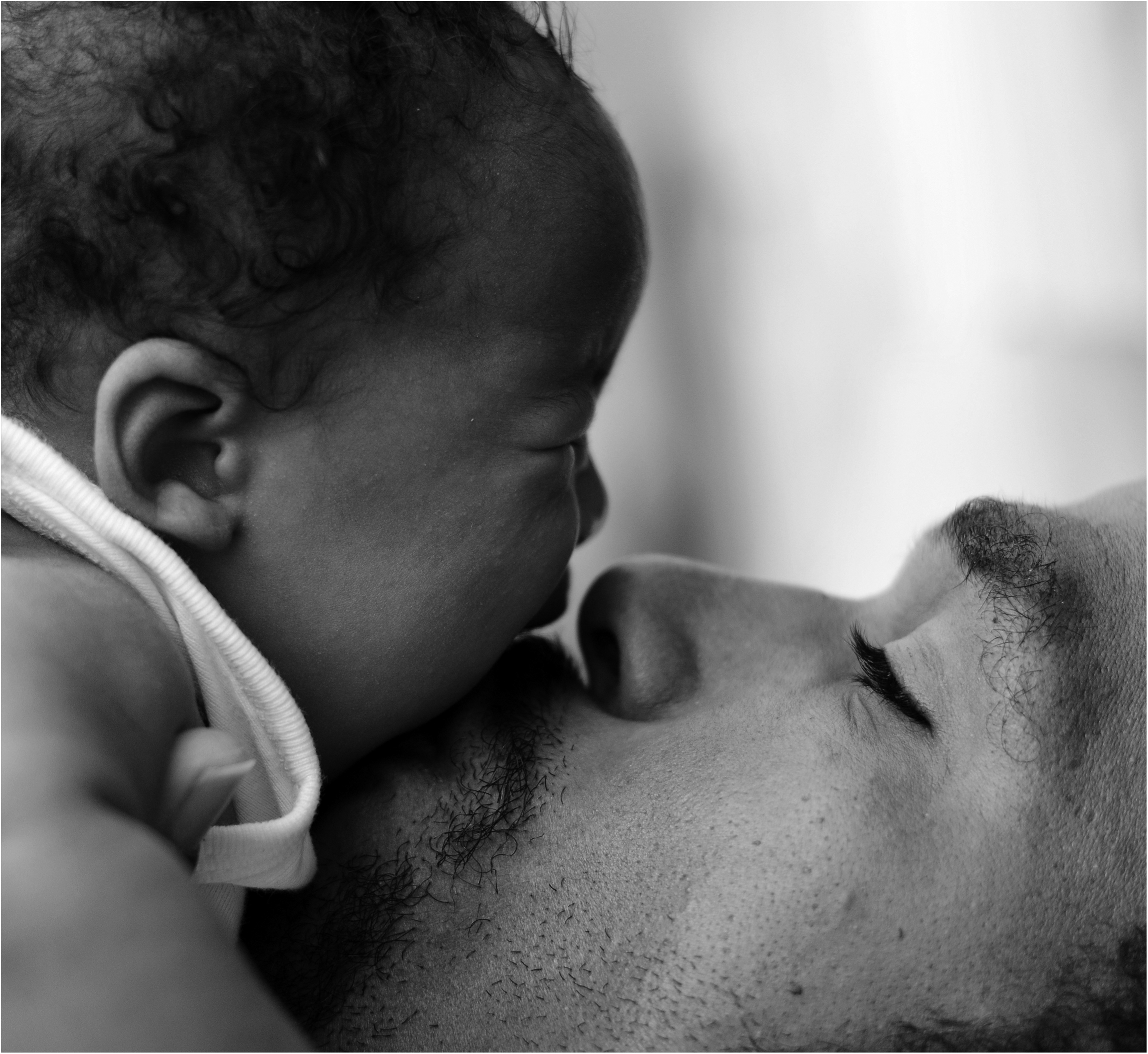
Cayden, 24 and Black, enrolled in DADS—a “responsible fatherhood” program funded by the U.S. federal government that provided education, job training, and relationship and parenting skills classes—with the hopes of finishing his high school diploma and finding steady work. Having grown up in poverty, Cayden stopped school before his senior year to care for his newborn daughter, Alisha. Since then, he struggled to find and keep jobs, went to jail for selling drugs, and had another child, a son named Cayden Jr., with a new girlfriend. Though he had not seen Alisha in more than two years because her mother moved away, he owed thousands of dollars in back child support to the government as repayment for her mother’s welfare aid. At one point, he moved to be near Alisha. But with a criminal record and no high school diploma, he could not find a job that would allow him to provide for himself and pay off that child support.
DADS seemed to offer a way out of this devastating dilemma. Cayden described the program as a success. It offered material resources and opportunities. By setting him up to work and go to school, it allowed him to provide more for Cayden Jr., pay some support for Alisha, and make progress toward a diploma that would likely improve his earning potential. As importantly, DADS offered social support and symbolic resources. Taking classes focused on valuing fathers and men’s caregiving, as well as building skills for effective communication, discipline, and cooperative co-parenting, increased Cayden’s confidence in his parenting abilities. He also believed that his participation signaled his status as a devoted father, challenging the “deadbeat dad” label so often applied to poor men of color. He told me: “You got to wonder how it feels to wake up in this skin every day. . . . You’re already stereotyped. I might get shot in the neighborhood I’m walking through, but I’m still taking that risk to get to work, get my kid some diapers.” Through DADS, Cayden came to see himself as a responsible father and worker committed to being there and providing for his children. He hoped a DADS graduation certificate would allow future employers, Alisha’s and Cayden Jr.’s mothers, and the judge overseeing his child support case to see him in the same way.
<< Fathers rarely need to be taught the importance of fathering; instead, like all parents, they described needing safe, reliable employment to meet the parenting goals they already have.
“Responsible fatherhood” programs first emerged in the U.S. in the 1970s in response to concerns that fathers’ limited contact with and provision for children, especially in low-income families of color, were causing social problems such as poverty and crime. Advocates argued that, without dependable male role models in the home, children had fewer resources and failed to learn responsible work and family behaviors. Congress initially approved public funding for marriage education and responsible fatherhood programs through the 1996 welfare law that sought to promote married, two-parent heterosexual families to reduce poverty. More than a billion dollars has been administered since, despite strong sociological evidence that marriage does not necessarily improve low-income families’ economic situations. My own research on publicly funded marriage education programs revealed that poor parents marry less often than more advantaged couples because of financial constraints rather than any lack of marital knowledge or skills. Others, including sociologists Timothy Biblarz and Judith Stacey, who published an important meta-study reviewing extant research, have shown that children can absolutely thrive without a two-parent, heterosexual family structure formalized through marriage.
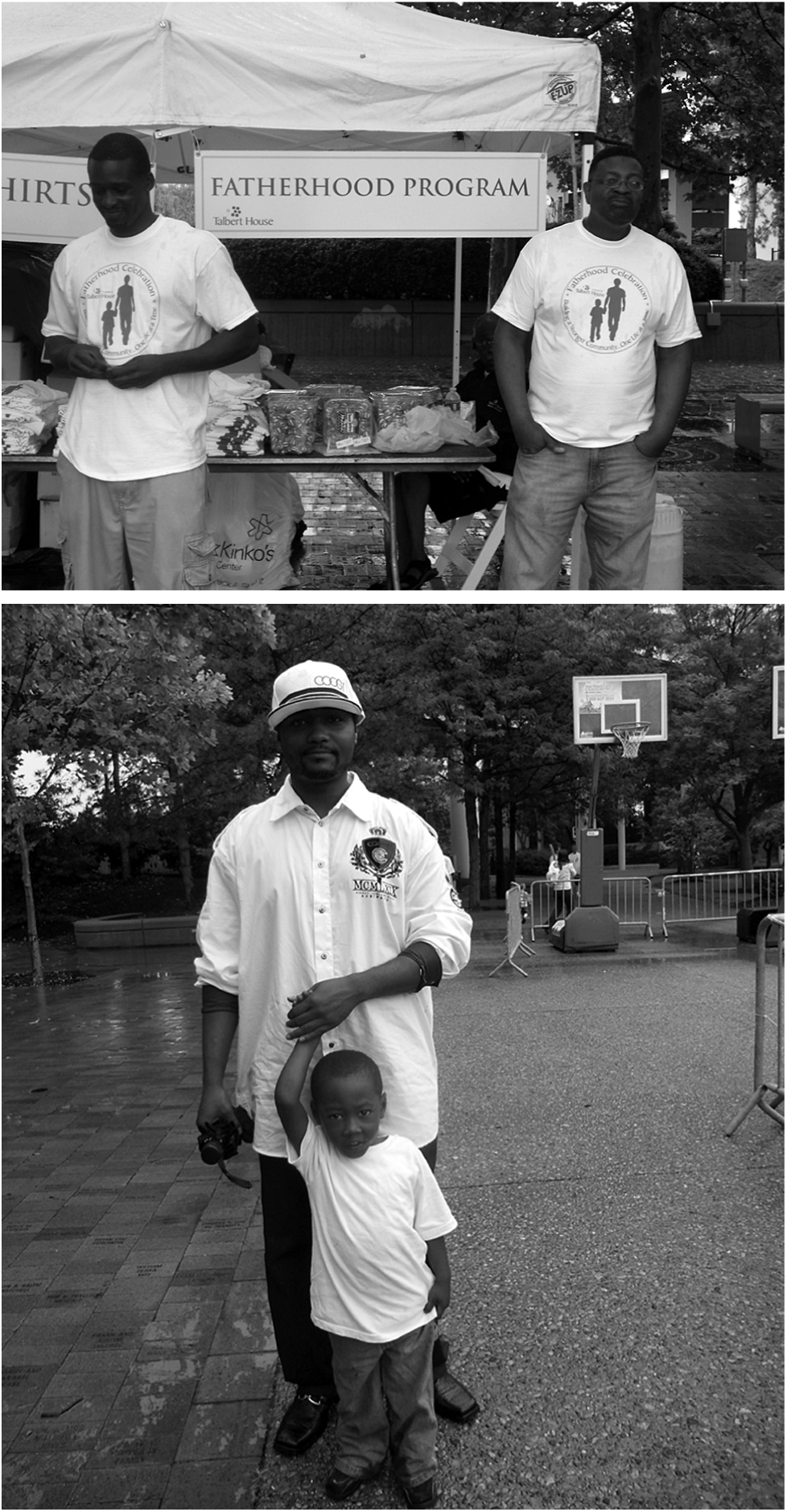
Graduates of a Cincinnati, Ohio fatherhood program geared specifically toward men reentering communities after incarceration.
Talbert House, Flickr CC
Nevertheless, responsible fatherhood programming has received bi-partisan support, even as policy priorities have varied. These initiatives began during the Clinton administration, and then George W. Bush increased public funding for relationship and fatherhood programs emphasizing marriage promotion to strengthen families and fathering. Barack Obama’s initiatives focused more specifically on fatherhood and improving fathers’ economic opportunities through job training and employment services. Funding for fatherhood programming has been granted through 2020. However, it is uncertain if the Trump administration, which seeks to cut social welfare programs, will continue to authorize it.
To understand how these programs work, I interviewed and conducted focus groups with 64 Black, Latino, and Native American fathers who participated in DADS, which received a responsible fatherhood grant in 2012. Most of the previous research on fatherhood programs used surveys to quantitatively evaluate how well programs met federal goals, such as increased earnings and more frequent father-child contact. For my part, I set out to qualitatively understand how men’s experiences in a fatherhood program shaped their self-image as fathers. Their detailed accounts revealed that making men into more “responsible” fathers—and addressing the social problems attributed to low father involvement—is not a matter of teaching men about the importance of fathering. Rather, as Cayden’s story suggests, it is about tackling the numerous economic and social barriers that constrain men’s abilities to be involved. These barriers include poor job prospects and racist and sexist ideas that typecast low-income men of color as “deadbeat dads” and failed providers. Cayden’s experience and those of his fellow participants reveal how responsible fatherhood programming can help fathers overcome these obstacles, however partially and temporarily.
Resources for “Responsibility”
Fathering is a social arrangement shaped by others, such as co-parents and government officials, and by social and economic factors including gendered parenting norms and access to education and jobs, as explained by fatherhood scholars William Marsiglio and Kevin Roy. Children who grow up with involved fathers tend to have overall better economic, social, and academic outcomes, including a lower chance of growing up poor. Yet lacking of a close relationship with one’s father does not directly cause poverty. In fact, growing sociological evidence suggests the opposite—poverty makes it harder for fathers to be involved.
Still, the U.S. government defines “responsible fatherhood” as financially supporting and living with children and being in a relationship, preferably married, with the children’s mother. Men with little education have experienced declining earnings and rising rates of unemployment since the 1960s, causing them to experience more job, relationship, and housing instability. Underemployed men struggle to provide economic resources for their children. Millions of U.S. fathers cannot make regular child support payments due to chronic unemployment, and many states punish them by imposing sanctions that lead to fast-growing debt, redoubling their money problems. Low-income fathers are also less likely to stay together with or marry their children’s mothers. Many of the poor fathers studied by sociologists Kathryn Edin and Timothy Nelson, for instance, had infrequent contact with their children due to strained co-parenting relationships or incarceration, but still prioritized the father-child relationship, wanted to be highly involved, and defied stereotypes that they deliberately avoided their parenting obligations.
DADS participants shared these views, describing how social and economic challenges prevented them from forging and sustaining bonds with children. The program, then, did not significantly change their ideas of responsible fathering—it gave them the resources they needed to act on definitions of responsibility they brought to the program, which emphasized “being there” for children with money, care, and time. Like Cayden, most fathers in DADS had not completed high school, and those who’d tried to go back had struggled to find and keep jobs that could accommodate school and childcare schedules. Enrolling in DADS would help. Isaac, a 23-year-old, Black father of one, lamented that his eighth grade education did not qualify him for even very low-wage work, and he had not seen or made child support payments for his two-year-old daughter in over a year. DADS gave him an opportunity to provide something—and maybe encourage his daughter’s mother to let them resume contact.
Fathers frequently described how they needed safe, reliable employment to meet their parenting goals. “Being there” fundamentally entailed staying alive and out of jail. The average $400 monthly wage men earned through the DADS vocational training program was enough for fathers to help financially and, as many reasoned, to cease illegal and life-threatening activities, such as selling drugs and gang involvement. Lester, a 40-year-old, Black father of four, credited DADS with saving both his life and his relationship with his kids: “[DADS] allowed me to be there to answer the kids’ questions, discipline the kids, basically be in tune with the kids’ feelings…. With that $200 every two weeks, you don’t have to worry about going to jail, looking over your back, or people breaking into your house…. It’s going to kill you in the long run, that $2,000 [you could get illegally], but the $200 keeps you safe and closer to your kids.” Like Lester and Cayden, half of the dads I studied had criminal records; along with their lack of education, this meant impossibly low chances of getting a steady job.
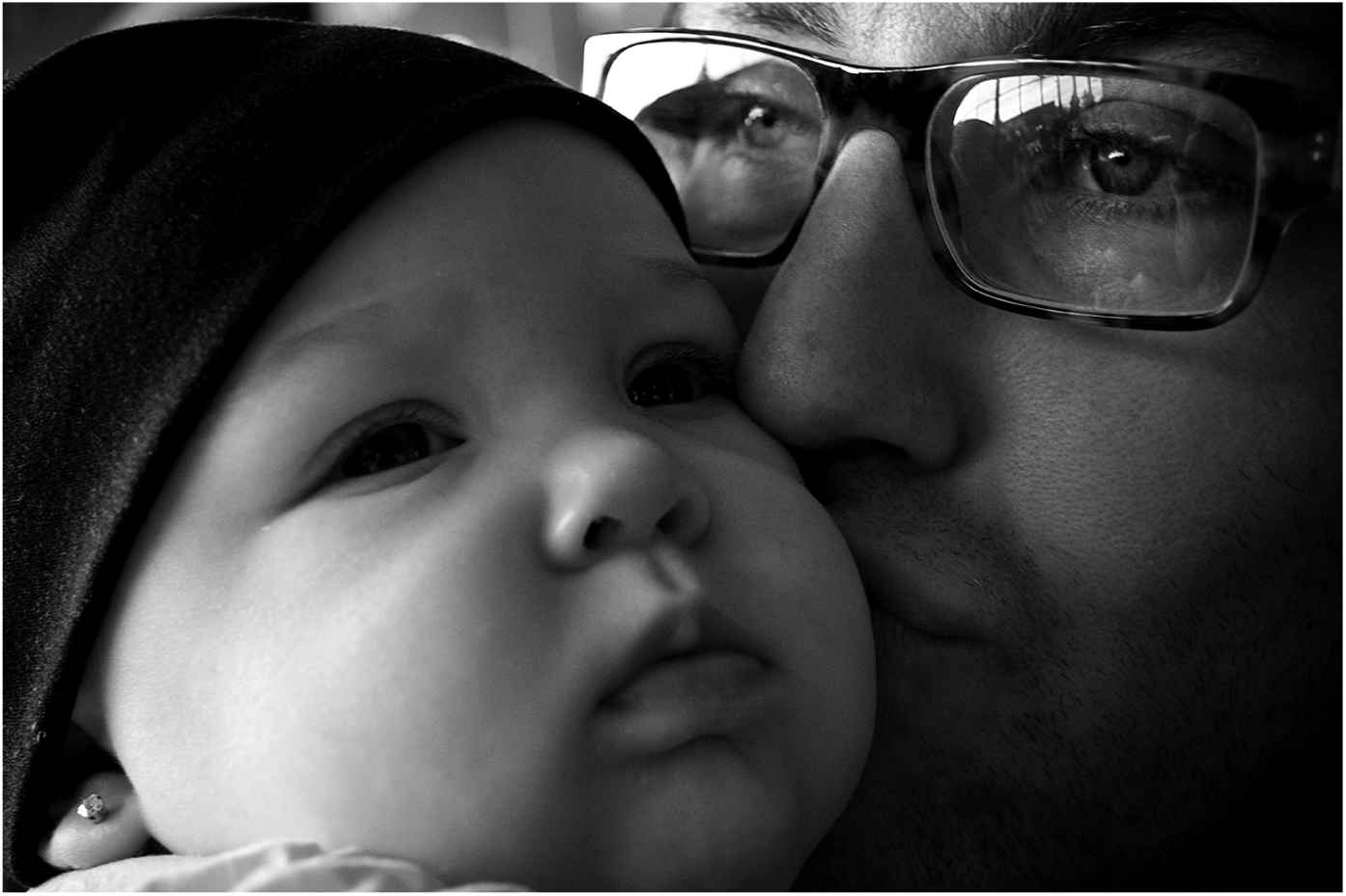
The U.S. government defines "responsible fatherhood" as financially supporting and living with children and being in a relationship, preferably married, with the children’s mother.
Seth Stoll, Flickr CC
Christopher, a 22-year-old, Black father of one, felt hopeful about signing up for DADS, believing it would help his kids have better social and economic opportunities than he’d had as a child: “I think about when I was sitting in jail and had to talk to my son from across the glass. That broke my heart…. I missed his last birthday. I refused to do that again…. I want him to go to school and say, ‘My daddy does his job. He’s not a hustler.’ I want my son to grow up in a better neighborhood than I grew up in. I don’t want him to be a have-not.” No matter how many political commentators describe men like Cayden, Lester, and Christopher as “deadbeats” who refuse to parent and provide, none of the men I interviewed needed any prompting to accept their parenting responsibilities. What they needed was a structure to act on them.
The program offered just that: a social context with material and symbolic resources disadvantaged men could use to align their economic opportunities with their identities as committed fathers. Because it helped them cover the direct and indirect costs of involvement, DADS meant the fathers could make a stronger case to others—especially mothers and the judges who controlled access to their children—about their responsibility and trustworthiness. DADS provided bus tokens and money for gas, registration, and car repairs so that fathers could travel to work, school, and children. To be residential fathers and make a case for shared custody, the men also needed some income and safe, reliable housing they could afford. They had paid jobs through DADS, and their case managers connected them with low-cost transitional housing, along with medical and mental health services many sorely needed. Additional incentives for attending classes included the provision of food boxes, formula packets, and diapers. These goods made fathers feel that they deserved to be with their children, especially when mothers asked that they not show up to see their kids empty-handed.
The program also offered social support through case managers, work supervisors, teachers, and men in similar life circumstances. As Darius, a 23-year-old, Black father of one, said: “Here they don’t see my [gang-related] tattoos. They care about me the person…. All you have to do here is work…. You’re not judged for being Black or having a past on the streets.” Of course, he cautioned, “When I leave the gate, it’s a whole different program.” In DADS, men felt valued and recognized foremost as parents, employees, and students trying to become better fathers. Outside that gate, they faced racist and classist stereotypes and stigmatized statuses as gang members, ex-convicts, and dropouts. DADS helped them develop a sense of themselves as responsible fathers with status and value by validating broader understandings of paternal provision.
Redefining the “Good Provider”
Although most men told me they came to the program believing that children needed both money and time from their fathers, they still felt inadequate when they could not meet breadwinner expectations—their own or others’. DADS lessons reinforcing that good fathers provide more than money resonated with men who had so little of it. Cayden confided: “I used to feel like money made me a father, that being a good father is cashing your kid out, making sure they got the best clothes or the best shoes. I’ve learned from [DADS] that the love and time you spend with your kids is best for them.” Taylor, a 24-year-old, Black father of two, similarly appreciated that DADS emphasized the importance of providing his time: “The classes taught us to be there, not just financially, but physically. Spending time with your kids is most important. Money goes and comes, but time goes and don’t come back.” Like fathers, program staff also used the language of provision to describe the ability to meet children’s full needs for care, instruction, and attention. This helped fathers identify as successful providers, despite economic constraints.
According to DADS, successful providers also equip children with male role models. It stressed that fathers who demonstrate responsible behaviors as men prevent children from growing up in poverty, joining gangs, going to jail, and dropping out of school. Martin, a 40-year-old, Latino father of five, described how the program made him consider, “If we’re raised by our mom, how do we, as a man, learn to be that father that wasn’t there for us?” Most fathers agreed with program messages that their value as parents partially derived from their gendered abilities to role-model responsible masculinity, offer a male point of view, and give children masculine forms of affection.
This was a powerful message: simply being present and being men made them uniquely valuable as parents. Reuben, a 19-year-old, Latino/Native American expectant father, described how he learned from DADS that a father’s love “is not the same as from a mother. The baby needs their dad, the man, to be there, to get safety and protection. It makes them a better person to grow up feeling love and affection from both parents.” About half of the fathers told me they enrolled in the program for this very reason, to learn about the importance of fathers and the fathering skills they feared they lacked due to limited contact with their own dads during childhood.
The other half, however, told me they had joined, at least in part, to learn how to emulate the parenting behaviors of their highly involved fathers or women who raised them. Monty, a 34-year-old, Latino father of six, mentioned: “I steered away from what my dad taught me…. He was all for school, working hard, and having a good life. That’s not what I did.” Political narratives often attribute personal failings and social problems, such as poverty, to a scourge of “fatherlessness” or “father absence” among children whose dads were not there to keep them on the right life path. Clearly, this ideological framing ignores the complexity of fathering experiences, the importance of non-father caregivers, and how inequality shapes differential opportunities.
Many men further attributed their commitment to responsible fathering to the mothers, grandmothers, and aunts in their lives. Arturo, a 22-year-old, Latino/Native American father of one, recalled: “My grandmother was the one holding everything down in the family. For me, she was my best role model because she actually did what she had to do.” The focus on male role modeling was an important part of helping these fathers define responsible parenting in a way they could attain given their financial constraints. Nevertheless, teaching men that children’s well-being depends on having male role models in the home—a message not supported by the sociological evidence—obscured the inequalities that led them to the program.
Fathers are, indeed, very important for families, but not necessarily because they are men. It is because they stand to provide children another set of emotional and financial resources—that is, if they have access to them. But the message that fathers are valuable because they provide male role models appealed to participants because it characterized them as worthy of being in their children’s lives, despite how little they saw the children or how little money they could give them. Unfortunately, the underside of that message is that it also communicates that the negative effects of hardships experienced by their own children—poverty, bad health, low educational attainment, incarceration, poor job prospects—are the faults of insufficiently masculine fathering. Teaching men that they are valuable parents regardless of gender is ultimately a more empowering message, sidestepping the assignation of implicit blame, that they are responsible for the social problems that shape their children’s life chances.
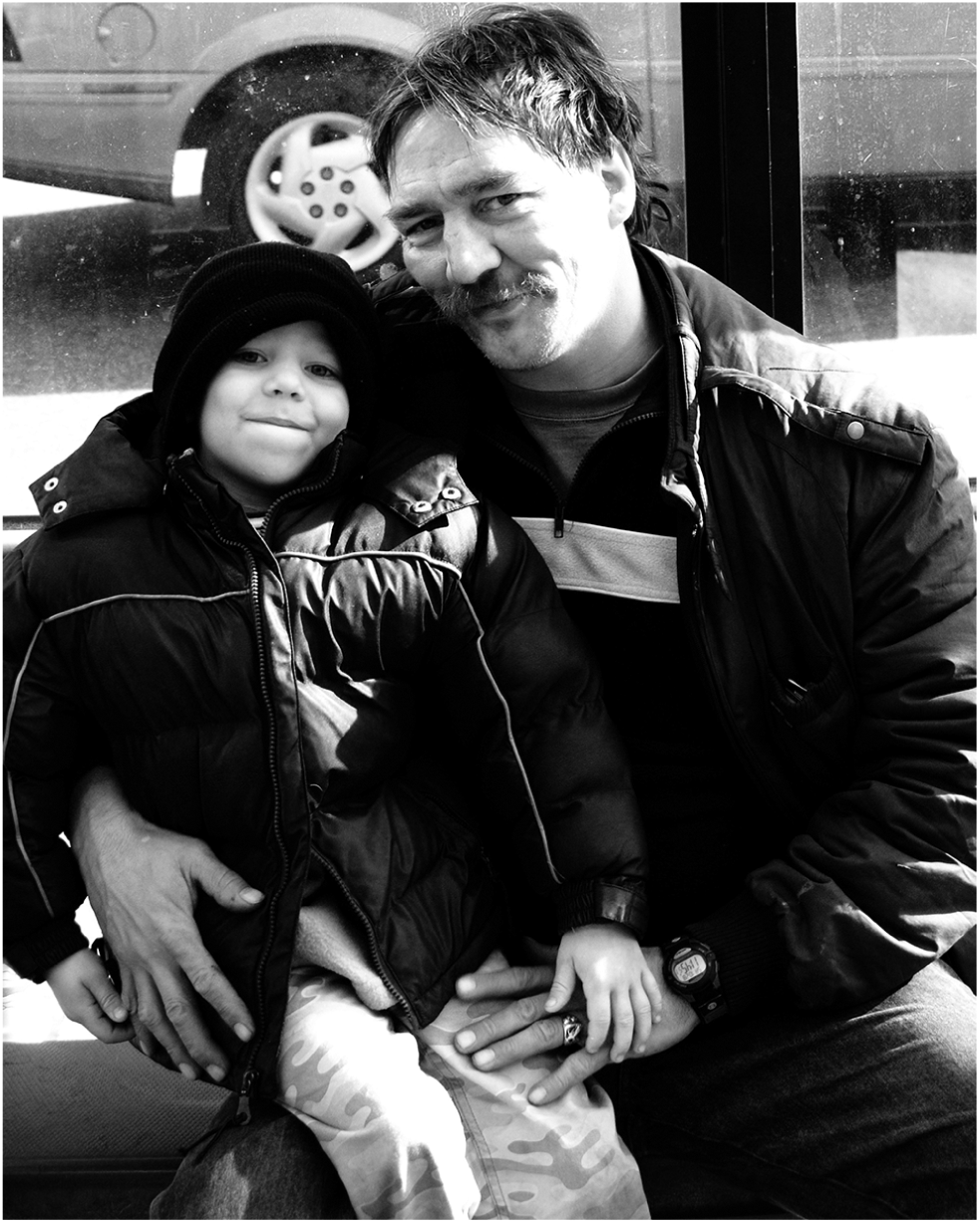
Many “responsible fatherhood” classes offer social support and symbolic resources alongside more tangible benefits including GED programs, job training, housing assistance, and even stipends.
Bill Forbes, Flickr CC
Policy Implications
Although Cayden’s earnings from DADS were low—around $450 a month—they allowed him to make his $70 monthly child support payment for Alisha and provide more for Cayden Jr. The money also allowed him to “get out of the game so that part of my life my son doesn’t even know about. All I want him to see is me hanging my certificates I get from here on the wall.” Cayden desperately missed Alisha, but told me, “At least I’m not a deadbeat. At least my child support is up to date.” Cayden also worried what would happen when his term in the DADS program ended. Would he be able to get a decent job? Would he be able to earn enough to keep “out of the game,” avoid jail, and stay alive? Would he have future opportunities to prove he was not a deadbeat? Even with his DADS certificates proudly hung on the wall, Cayden’s future was uncertain.
Government-supported fathering programs mostly target socially and economically vulnerable fathers like Cayden. This partially reflects “culture of poverty” stereotypes that poor men shun parenting responsibilities because they grew up without involved fathers themselves. Yet, it also reflects that “responsible” fathering—both its relational and financial components—requires resources and opportunities that poor fathers often lack. Fatherhood programs offer some of these resources and a space where poor fathers of color can identity as successful providers, broadly defined.
We therefore have a public responsibility for helping men become “responsible” fathers through social policies and programs that address the barriers to involvement poor men of color confront. These barriers include child support enforcement policies that trap poor fathers in a cycle of insurmountable debt, the growing low-wage labor market that makes earning a living wage near impossible for many, and the criminal justice system’s disparate treatment of men of color. Can programs like DADS meaningfully address any of these structural challenges? Cayden and his fellow participants would say yes. Their stories poignantly reveal how fatherhood programs help individual men cope with the personal consequences of poverty and racism that undermine father involvement in disadvantaged families. DADS gave men resources needed to claim identities as good parents, realize emotional and financial commitments to children, and develop skills for cooperating with co-parents and empathizing with children.
Yet, these stories also point to how commitment and skills are not enough. Fatherhood programs that increase individual fathers’ long-term economic opportunities and teach and support equitable caregiving by men have an important role to play in social policy. But we also need a broader set of fatherhood policies that include efforts to increase equitable access to contraception, quality education, living wages, and fair policing and criminal justice focused on sustaining, rather than weakening, father-child relationships. To be truly effective, policies and programs must reflect how making men into “responsible” fathers largely depends on addressing the unequal social, economic, and political conditions in which men parent.