



Abstract
working to prosecute the perpetrators of genocide, remember its victims, and move forward is an enormous undertaking. after nearly 2 million trials in under a decade, rwanda provides an case study in local legal adaptation toward accountability.
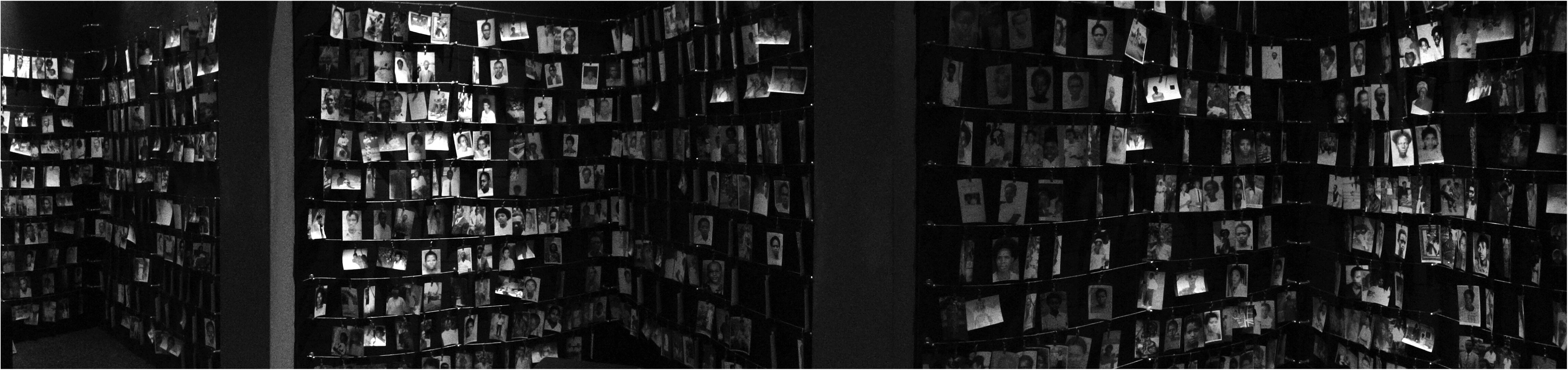
Photos of genocide victims hang in the Kigali Memorial Centre.
Adam Jones
The sunlight glinted off our SUV as it climbed the steep dirt road. The rolling green hills that give Rwanda its nickname—The Land of a Thousand Hills—were proving difficult to navigate. Soon, we were stuck, and the correctional officer driving the SUV asked if I would be willing to walk the rest of the way to the large tents on top of the hill.
As we walked closer, the faces of the Rwandans gathering outside of the tents slowly came into focus. Each had been convicted of committing crimes of genocide and was serving his or her sentence in this mobile community service camp. They spent most of their days building infrastructure, such as classrooms or roads, and constructing houses for genocide survivors. When they were not working, they took classes, rested, and met members of nearby communities for soccer matches.
An estimated 30,400 Rwandans are currently serving sentences for genocide-related crimes. About 30,000 of these individuals are in prisons, and 400 are in the community service camps located across the country as of May 2017. In the coming years, all but those serving strict life sentences will be allowed to return home, joining the hundreds of thousands of Rwandans who have already completed their genocide-related sentences and reentered their communities.
An estimated 30,400 Rwandans are currently serving sentences for genocide-related crimes. Hundreds of thousands of Rwandans have already completed their genocide-related sentences and reentered their communities.
For a country of 12.3 million citizens, this large-scale reentry of convicted genocidaires is nothing short of massive. Yet, while many people have learned about the genocide in classes or through the movie Hotel Rwanda, genocides often fade into history. This means that while people may know that violence occurred, less attention is paid to the aftermath. Here, I examine how Rwanda held wide swaths of its civilians accountable for the violence. I look at the gacaca court system, created to try crimes of genocide, assessing the court and some of its lasting effects.
Seeking Justice
On April 6, 1994, unknown assailants assassinated the President of Rwanda. At the time, Rwanda had seen decades of conflict between its two main ethnic groups (Hutu and Tutsi) and a recent civil war between the Hutu-led government and a rebel army of Tutsi known as the Rwandan Patriotic Front (RPF). A few hours after the assassination, high-ranking political officials took over the government. Suggesting that the RPF and other Tutsi must have been responsible for the assassination, these Hutu leaders began encouraging civilians to kill their Tutsi neighbors and any Hutu who tried to save Tutsi or who refused to join them. Several months later—when the RPF toppled the genocidal regime—up to one million people had been killed and millions more were displaced.
The new RPF-led government and the United Nations (UN) swiftly turned toward transitional justice mechanisms (such as trials or truth and reconciliation commissions) that have been used to reconcile violent or repressive pasts. In November of 1994, the UN created the International Criminal Tribunal for Rwanda (ICTR)—an international tribunal meant to try those it deemed most culpable for the violence, like government ministers and army commanders. Yet, while some individuals orchestrated the violence, soldiers in the Rwandan Armed Forces, members of militias, and several hundred thousand civilians participated in the genocide by directly killing someone, encouraging others to kill, or looting a victim’s home. These individuals did not fall under the jurisdiction of the ICTR, meaning that Rwanda was left to decide whether and how to hold them accountable.
Photos of genocide victims hang in the Kigali Memorial Centre.
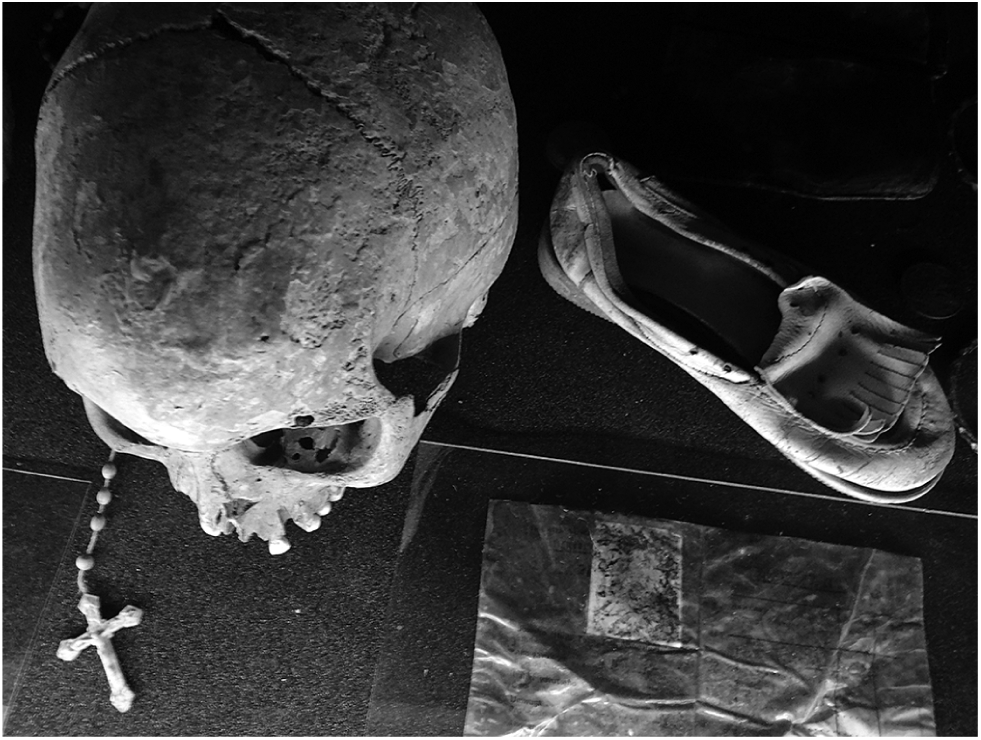
Kigali Genocide Memorial
The Rwandan government initially decided to try accused genocidaires—many of whom had been placed in pre-trial detention—in the national court system. When it became clear that this court system could not handle such a large caseload, the government turned toward a historically informed mechanism of dispute resolution known as gacaca courts. In this pre-colonial system, when a community member committed a petty crime, elders would publicly congregate to discuss his or her actions. Other community members would also be present, and the accused would typically ask for forgiveness and provide food or drink as a way to restore social harmony.
Because these courts had only been implemented after minor crimes or disagreements, the government had to modify them heavily to address crimes of genocide. This even involved creating an entirely new system of laws, since genocide was not in Rwanda’s criminal code. There wasn’t even a word for “genocide” in Kinyarwanda, the local language. So, during the late 1990s and early 2000s, the government created several “Organic Laws,” which eventually set forth three categories of genocidal crime: 1) planning, organizing, or supervising the genocide or committing rape or sexual torture, 2) killing, conspiring to kill, or committing other crimes against people, and 3) committing crimes against property. The laws also mandated that the new courts would try all but the particularly serious crimes (like those committed by people in national leadership positions, which would be tried by the national courts) and that trials would occur in public spaces and be attended by community members.
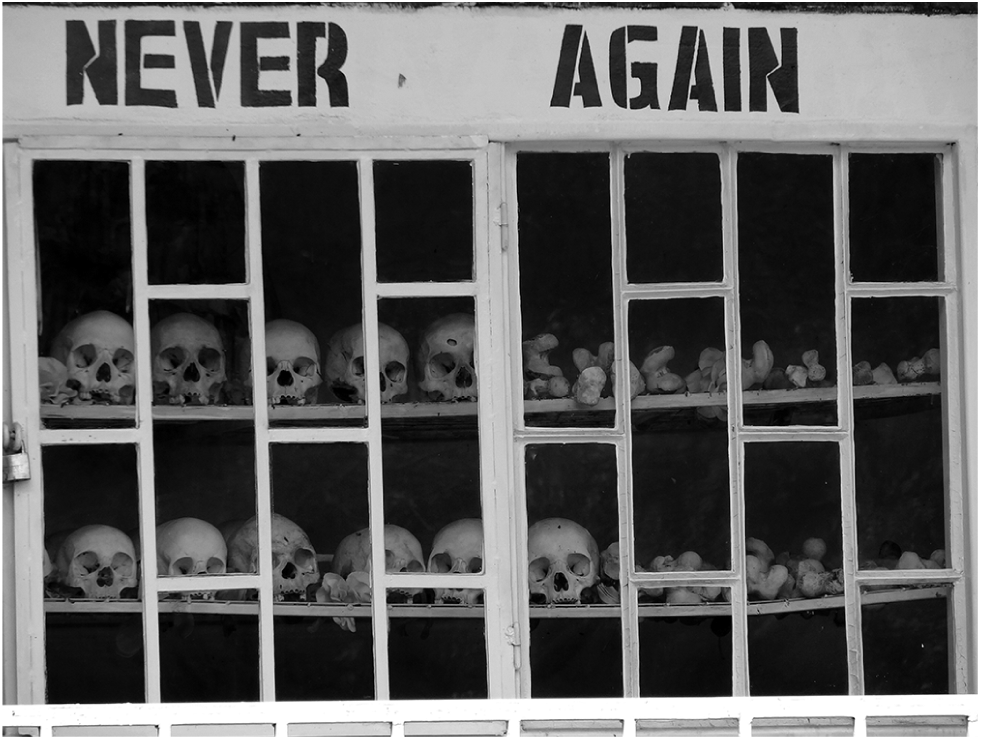
A memorial in Karongi, Rwanda.
Adam Jones
As there were few judges remaining in the country, the Organic Laws also dictated that Rwandans would elect the gacaca courts’ judges from amongst themselves. Judges needed to be Rwandan citizens, at least 21 years old, with “good character.” In fact, the word for this type of judge was inyangamugayo, “person of integrity.” The judges could not have participated in the genocide or have spent more than six months in prison, though formal legal training and literacy skills were not necessary. In 2001, with these requirements in mind, communities gathered to elect panels of judges that would serve on courts trying property crimes (Category 3), crimes against people (Categories 1 and 2), and appeals cases. Several hundred thousand women and men were chosen to serve as inyangamugayo. After they received some training, pilot gacaca court trials began in 2002. The courts opened in 2005, with weekly trials between 2005 and 2012.
The gacaca courts of the past were modified to fit the crush of cases stemming from the genocide. There wasn’t even a word for “genocide” in Kinyarwanda, the local language.
Working with Christopher Uggen, Jean-Damascène Gasanabo, and a small research team funded by a National Science Foundation grant, I have been studying the gacaca courts for the past six years. I was in Rwanda when the courts closed in 2012 and was able to negotiate access to court records from every gacaca trial. Our research team has also interviewed 250 people who were involved in the courts—as judges, witnesses, and/or defendants—to learn about how the courts operated and about Rwandans’ perceptions of the successes and pitfalls of gacaca.
Examining the court records, we found that the gacaca courts completed a staggering 1.96 million trials in a decade. To be clear, this does not mean that 1.96 million people committed genocide. Most of the people who went through the court system did not engage in physical violence but were found guilty of property crime, like looting a victim’s home. Many people also underwent multiple trials because each occurred in the location of the suspected crime, and over 150,000 of the trials were appeals.
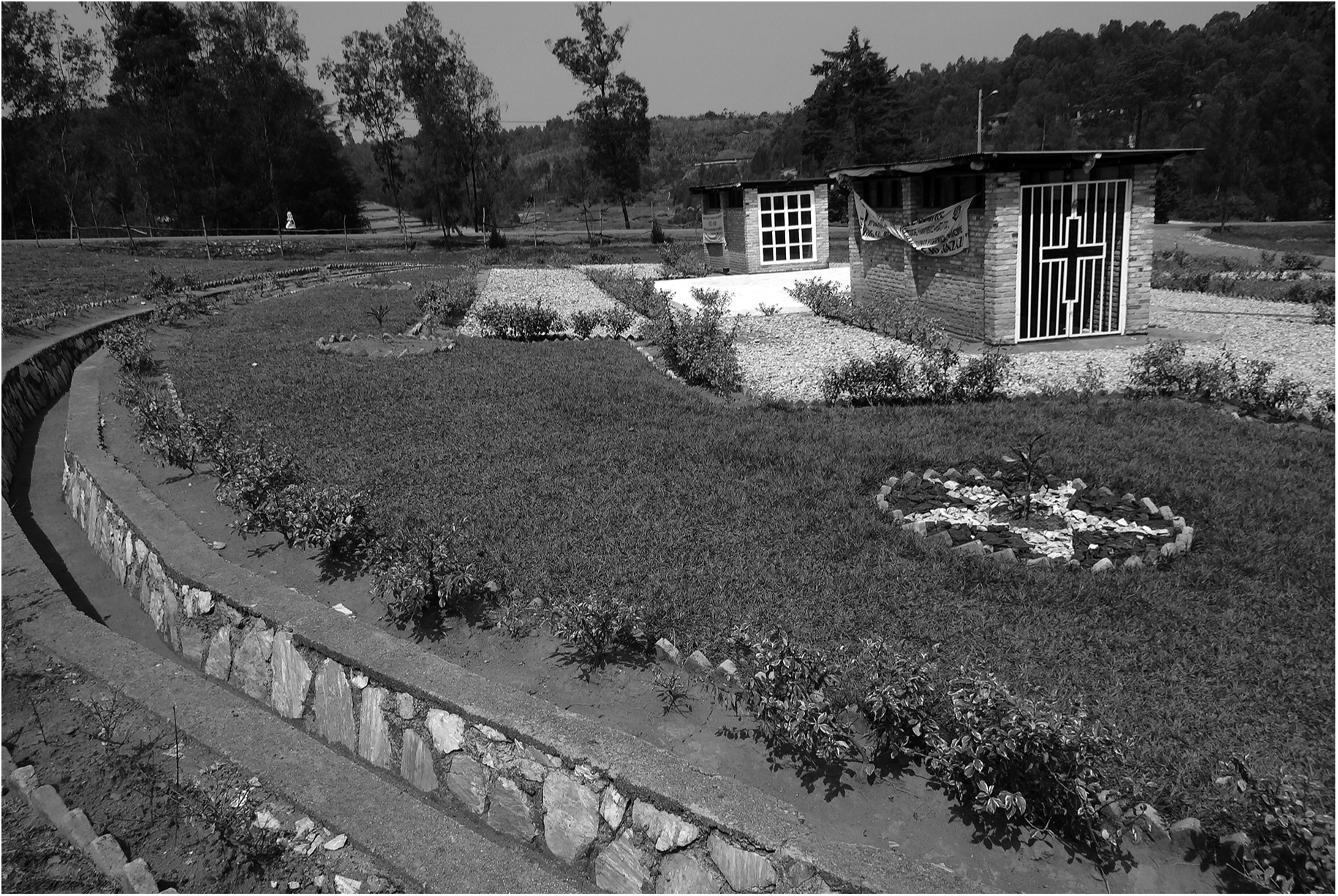
Some 6,000 victims of genocide are buried and remembered near Muhanga, Rwanda.
Adam Jones
Prior to appeals, 86% of trials ended with a guilty verdict. The panels of judges handed down sanctions according to the severity of the crime, whether and when the defendant confessed, and the defendant’s age in 1994. For those who committed serious crimes (Categories 1 and 2), the typical sanction was a prison sentence. Approximately 310,000 trials resulted in prison sentences, including 15,000 life sentences. Otherwise, the median sentence for Category 1 was 19 years, and the median sentence for Category 2 was 15 years.
Examining the court records, we found that the gacaca courts completed a staggering 1.96 million trials in a decade.
These sentences were served in Rwanda’s prisons, which—like the national justice system—had not been built to handle such a large undertaking. Prisons became overcrowded and unsanitary. Due in part to such overcrowding, the Organic Laws set forth several ways to reduce genocide-related prison sentences. For instance, almost one-third of the determinate prison sentences came with a community service obligation. This meant that those found guilty could spend half of their sentence in prison and the other half in a community service camp (known as TIG from the French acronym Travaux d’Interet General, or “works of public interest”) like the one I visited. The government also decided to shorten some prison sentences through mass amnesties and allowed some people with community service obligations to serve only their TIG component (as opposed to spending time in prison as well).
For crimes related to property, the majority of sanctions involved fines that were to be paid to victims or their families. If these reparations could not be paid, the guilty party could perform work as a form of compensation, ask for forgiveness, or pursue one of several other options. The median fine was approximately $11 (USD), though there was no formal mechanism to ensure fines were actually paid. We spoke with some victims who were never compensated, and many judges noted the lack of follow-through regarding fines among their biggest critiques of the court system.
Judging Transitional Justice
Though completing 1.96 million trials is arguably a herculean feat, Rwanda’s gacaca courts are heavily critiqued. Using a Western legal lens, academics and human rights activists lament the lack of due process rights, the use of pre-trial detention, the reliance on eyewitness testimony, the likelihood of false confessions, and the involvement of the state. Many have likewise criticized the lack of trials against members of the RPF, who were accused of committing crimes in the process of stopping the genocide and whose political wing has remained the dominant political party in Rwanda.
These critiques raise important questions about how transitional justice efforts should be judged, and by whom (e.g., legal practitioners, social scientists, victims, international organizations). We might ask whether they should be evaluated with regard to accuracy, fairness, or local community involvement. Or we could examine the speed of the process or whether the tensions that led to violence subside. And, perhaps paramount, whose viewpoint should these evaluations consider—those who were wronged or some combination of victims and perpetrators, blended as they so often were during the actual genocide?
Responses to these questions could fill books. Yet, as transitional justice efforts are far from rare—for instance, there have been over 50 truth commissions since 1970—it is important to consider how to assess them. Leaving aside the question of who should be assessing transitional justice efforts, I offer two lenses through which the gacaca courts—as well as other transitional justice mechanisms—can be judged. These include 1) whether the courts achieved the goals underlying their creation and 2) their effects.
Gacaca Court Goals
Creating a transitional justice mechanism is a contentious process, and those in power often set the mechanism’s goals. The Rwandan government instituted gacaca to reconcile Rwandans, accelerate the trials of suspected genocidaires, fight a culture of impunity, establish the truth about the genocide, and do all of this through endeavors spearheaded by Rwandans. Such ambitious goals may be impossible to realize in the best of circumstances, let alone in a country reeling from mass violence. Rwanda was in good company, though, as these objectives mirror the aims of other transitional justice pursuits worldwide.
Although reconciliation was arguably the most prominent goal, most of the people we interviewed were initially skeptical. Defendants, for instance, thought it would be too difficult to stand in front of someone they harmed and ask for forgiveness. Many who served as judges or witnesses believed it would be impossible to live alongside someone who had killed their son or their sister. One witness wondered, “How could you be asked to be mediated with someone who killed your family? I couldn’t imagine this.”
Despite their initial apprehensions, numerous Rwandans told my research team that attending trials made them feel more comfortable around their neighbors. In the aftermath of the violence, many Tutsi were afraid to leave their homes, often feeling unable to trust anyone and fearing death. Likewise, many Hutu dreaded being in public, sometimes because they expected vengeance or because they had not participated in the genocide and were shunned by friends who had. Gacaca trials encouraged all these individuals to leave their homes and facilitated weekly face-to-face interactions between them. Many Rwandans told us that these interactions slowly chipped away at their terror.
Creating a transitional justice mechanism is a contentious process, and those in power often set the mechanism’s goals.
Whether gacaca actually influenced reconciliation in terms of forgiveness, trust, and renewed relationships is yet to be seen. Many Rwandans were quick to credit gacaca for what they perceived as reconciliation across the country, often sharing personal stories of forgiveness and growth. But others felt that forgiveness was too difficult or lamented that the person who had wronged them did not express genuine remorse. Still others explained the intricacies of reconciliation, noting that it was often up to a family member to make amends for a deceased or absent relative or describing forgiveness as necessary but hollow. For instance, a woman who lost her husband during the genocide described going through the motions: “Those who killed our families could come and ask for forgiveness and we had no alternative. We’ve forgiven them, we’ve pardoned them because we didn’t have any alternatives since they cannot return our brothers or sisters that were lost.”
Accurately examining this goal would involve critically assessing what reconciliation means. Reconciliation implies that relationships were, at one point, conciliatory. It would also necessitate an accurate metric for reconciliation, which would benefit from studies of Rwandans’ opinions and social ties before, during, and after court participation and consideration of whether and how such efforts affect Rwanda’s youth. At a basic level, it may be possible to assess societal relationships by examining whether violence reoccurs; most considerations of transitional justice use the absence of subsequent violence as a marker of success. In this light, the gacaca courts would be deemed a success, even though the general absence of violence is not the same as reconciliation and cannot be causally linked to gacaca.
The gacaca courts were also meant to accelerate the trials of suspected genocidaires. While the ICTR completed approximately 60 trials and the national courts finished several thousand, the gacaca courts completed 1.96 million—a truly enormous endeavor. Although some defendants complained that they spent years in prison before their trials, the majority of Rwandans with whom we spoke echoed this assessment by mentioning speed as one of gacaca’s greatest assets. In a country shattered by genocide and facing a crushing caseload, this is an impressive outcome, though we have yet to learn how prioritizing speed may have influenced other aspects of the gacaca system.
The closely linked goal of fighting a culture of impunity is harder to evaluate. Impunity lurks in every justice system, and assessing this goal requires knowledge of who should have been tried. Nevertheless, the majority of people who went through gacaca were found guilty and given sanctions. My visits to prisons and TIG camps made clear that sentences were carried out, though judges explained that those with wealth and status in a community were harder to try, suggesting that, as in all legal systems, power and social position shaped outcomes. As noted above, interviews with judges and witnesses also revealed that reparations for property crimes often went unpaid. Some scholars have criticized the gacaca courts’ jurisdiction over property crimes—arguing that property crimes are not crimes of genocide—our conversations with many survivors suggest that these crimes were devastating. Numerous people bemoaned the theft and destruction of their homes and belongings, indicating that compensation was vital to rebuilding their lives and expressing hope that the Rwandan government would help them get it.
Judges often knew the defendants who stood before them, and they put their friends and their friends’ children in prison.
The other punishments meted out by the gacaca courts may appear light to a Western eye—with the average sentence for genocidal killing roughly aligning with the average sentence for homicide in the U.S.—though conversations with Rwandans revealed varying opinions. Some of those serving sentences believed they were too harsh; others expressed relief they had not been killed for their crimes (one defendant simply stated, “I got to live after being punished.”). Similarly, survivors ranged from satisfaction with the punishments to complaints that Rwanda had abolished the death penalty (previously used for homicide with premeditation). Only a handful of survivors thought the punishments were too harsh.
Another goal of the gacaca courts was to establish the truth about what occurred. Numerous people described how crucial it was for them to learn what happened to their loved ones during the genocide, and many were able to find their family members’ bones upon hearing testimony at a gacaca trial. Defendants and some judges likewise discussed the importance of clearing the names of those who were falsely accused of participating in the violence, either through errors associated with eyewitness testimony or by neighbors who fabricated alleged crimes as retaliation for unrelated grievances.
More broadly, all courts produce records about historical events, and the gacaca court judges kept detailed records of court proceedings. These documents, currently being archived and digitized in Rwanda’s capital, surely tell many stories about the genocide, though legal searches for truth are filtered through legalistic ways of viewing the world. For instance, courts emphasize certain elements of violence, such as individual culpability, at the expense of others. In much the same way, there are often multiple viewpoints concerning complex histories of violence, and those with power shape what becomes known as truth.
Finally, the government sought to accomplish these aforementioned goals through pursuits undertaken by Rwandans. This goal can be tied to a lasting perception of global abandonment during the genocide—after all, the UN did not stop the violence. Many Rwandans lamented global inaction and were proud that gacaca addressed the violence; judges who dedicated countless hours to the courts recounted their stories with pride. Rwandans created and implemented gacaca, which international practitioners have praised as a “local” mechanism of transitional justice, and other countries (like the Central African Republic) are currently looking to the system as an example. Nevertheless, scholars criticize the government’s creation of the courts and suggest that community actors should have had more agency in the process, though it is hard to imagine how such an undertaking could have been achieved without some state involvement. Further, communities are susceptible to the inequalities and power dynamics that often characterize state-led or international efforts; in our interviews, some Rwandans felt ownership over the courts, while many others—including some who lived within the communities as well as refugees continuing to return home—did not.
Lasting Effects of Gacaca
As we assessed gacaca, numerous participants told us about the courts’ lasting effects on their daily lives. In one particularly memorable conversation, a judge noted that gacaca completely changed her life because her neighbors developed trust in her, influencing her election as a community leader when the courts closed. That same week, we spoke with a witness who “gained nothing but enemies” from gacaca. She had testified against a former coworker who had killed her husband and stolen their car, and to this day she feels nervous whenever she sees that coworker’s family and goes out of her way to avoid their homes. Participants shared countless other examples of such impacts, many of which were intertwined with gacaca’s formal goals and others that illustrated the ripple effects of transitional justice endeavors.
Perhaps most evidently, the hundreds of thousands of Rwandans sent to prisons by the gacaca courts are now returning home. Reentry and reintegration are difficult in any context, and defendants told us that they encountered marital troubles and feelings of stigma upon their reentry. Rwanda’s rapidly developing economy creates other challenges. One person revealed, for instance, that he could not find his home upon leaving prison because there were so many new roads and buildings, while another remarked that he felt like he returned to a different country because Rwanda had changed so much over the decade he spent in prison.
Defendants who were found guilty are also dealing with the collateral consequences of their sentences. A Rwandan law prohibits convicted genocidaires from serving in public office, and some defendants explained that governmental and nongovernmental organizations are not interested in helping them get back on their feet because resources are devoted to survivors. Ripple effects extended to these defendants’ families as well, as numerous women became heads of the households and their children went years without seeing their fathers (or, to a lesser extent, their mothers)—mirroring what sociologist Robert Sampson calls the “social ledger of incarceration’s effects.”
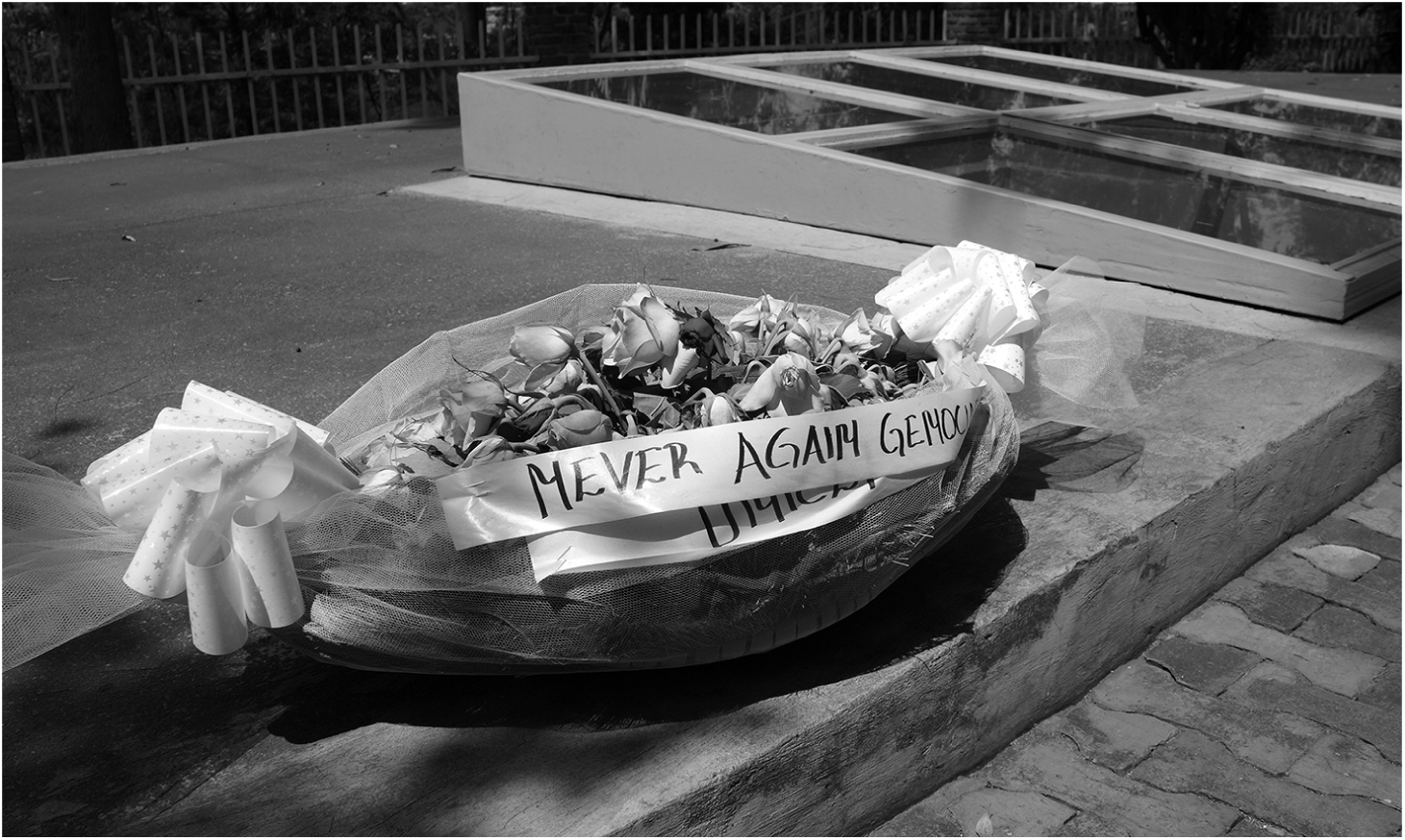
Kigali Genocide Memorial
Perhaps more unexpectedly, the gacaca court judges have also experienced effects from their unique volunteer positions. Judges told us that they gained skills from serving in the gacaca courts, and several suggested that their service paved the way for future positions, like serving as a community mediator. Many women—who before the genocide rarely worked as judges—emphasized the confidence and respect they garnered from the position. Such gains were not without significant drawbacks, however. Judges often knew the defendants who stood before them, and they put their friends and their friends’ children in prison. More than a third of the judges with whom we spoke mentioned grudges stemming from their work, and a few shared stories of colleagues who had been murdered. The individuals who served as judges bore an unintended burden of community justice: the gacaca courts may have helped mend some conflicts while creating others. When lay members of the community preside over transitional justice efforts that, too, can create a new sort of local conflict.
Despite the drawbacks, the 250 Rwandans we interviewed were ultimately pleased with the goals and lasting effects of gacaca. Put simply, almost everyone thought the system had been instrumental in holding people accountable, rebuilding lives, and moving the country forward.
Holding people accountable for their actions and coming to terms with a violent past are extremely complicated endeavors that often have divergent goals and outcomes. Fully acknowledging how such endeavors affect societies is crucial to understanding transitional justice mechanisms and will soon be highly consequential for the numerous countries—like Syria, Myanmar, and Sudan—that should not fall from attention when ongoing violence finally ends. In the meantime, Rwanda and its people, communities, and institutions are still discovering and experiencing both the aftermath of genocide and the effects of the gacaca courts’ massive undertaking to bring about reconciliation, justice, accountability, and peace.