




Abstract
Social scientific research is uniquely poised to document the patterned and probabilistic evidence helpful in achieving legal accountability for mass atrocities—and offers a voice to those who would not otherwise be heard.
Keywords
Internally Displaced People fleeing the genocide in Darfur.
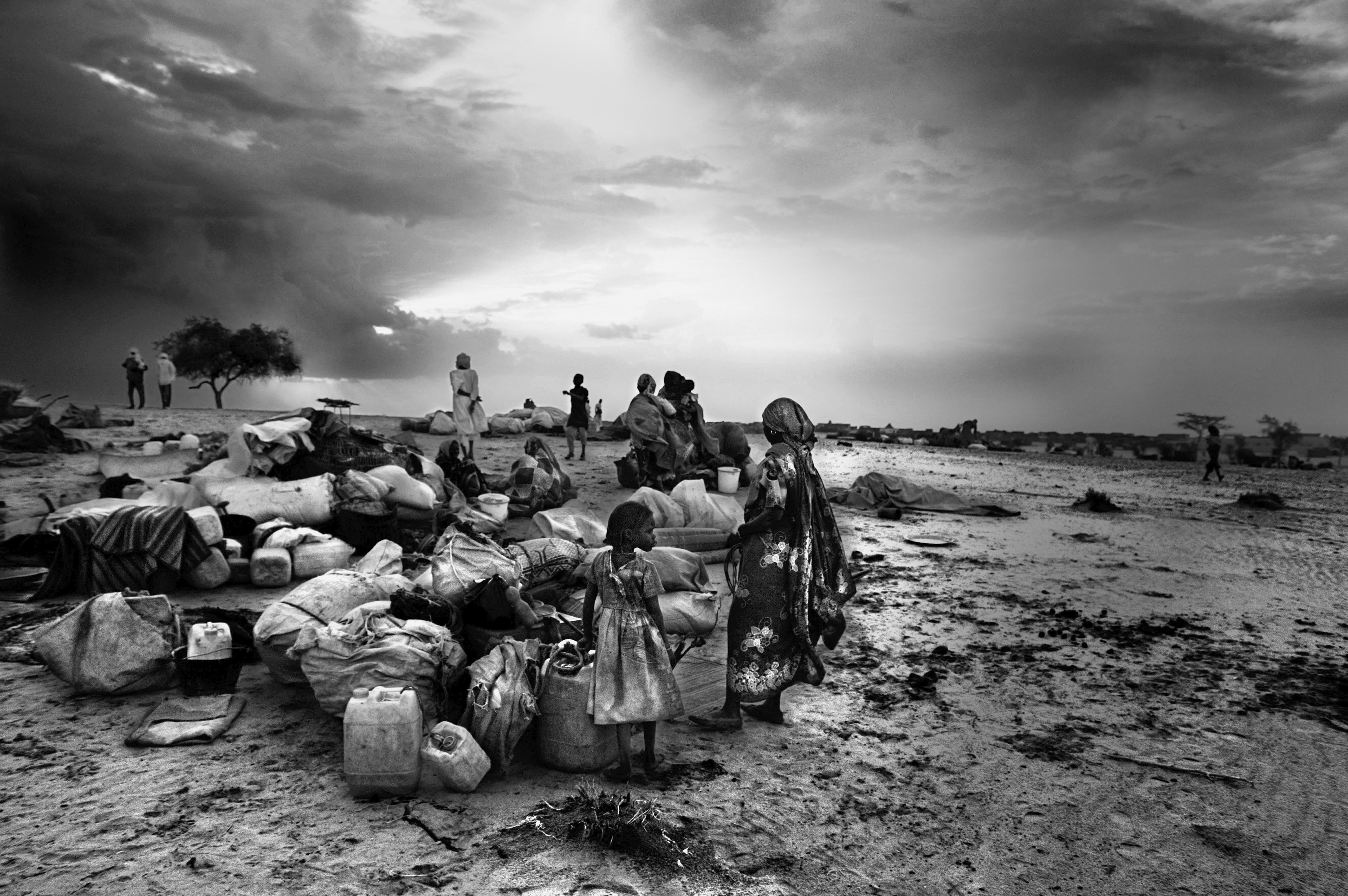
The western Sudanese states of Darfur have been racked by famine, violence and rebellion for decades. On the eve of South Sudan’s independence vote earlier this year, Barack Obama acknowledged Darfur’s neglect and desperation in a New York Times op-ed, concluding that “peace in Darfur (must) include accountability for… genocide.” American administrations have been inconsistent in their attention to Darfur, but Obama’s statements were at least a transitory acknowledgement of the now broadly accepted evidence of the massive Darfuri body count.
In the terrible case of Darfur, as in so many others, social science’s influence extends beyond death counts. By including related processes of displacement and the ways in which the relevant patterns of killing and forced migration are understood for purposes of investigation, social science is increasingly providing the foundation for prosecutorial theories and modes of judicial decision-making. The U.N. Security Council referred the Darfur case to the International Criminal Court for investigation and prosecution in March 2005, and in 2010, the Court issued a belated charge of genocide against Sudanese President Omar Al-Bashir. Here’s how sociology and its sister sciences took the stand.
Meanings and Measures of Genocide
Since 1948, Article II of the United Nations Genocide Convention (established after the Holocaust) has defined genocide as any of the following five acts committed with intent to destroy, in whole or in part, a national, ethnic, racial, or religious group: killing members of the group, causing serious bodily or mental harm to members of the group, deliberately inflicting on the group conditions of life calculated to bring about its physical destruction, imposing measures intended to prevent births within the group, or forcibly transferring children to another group. Any of the these elements legally constitutes genocide, but the third, with its reference to “conditions of life,” is perhaps the most all-encompassing and scientifically meaningful for understanding how killing can combine with displacement to destroy communities.
Media coverage and international attention raise innumerable questions about the mechanisms and outcomes of genocide, and social science is increasingly the channel through which the collective voices of victims of genocidal violence are heard. Relatively few individual victims will ever speak directly in these courts. Since the mandate of the International Criminal Court (ICC), for example, is to prosecute only the most massive and serious crimes, the order of magnitude makes it impossible for more than just a few survivors to testify. So international courts increasingly turn to social scientists to collect, analyze, and present data documenting systematic patterns of deadly human rights violations. In this way, our fields give collective voice to those who otherwise could not be heard.
Anatomy of Atrocity
On one side of Darfur’s conflict are largely nomadic Arab groups who require water and land on which to graze livestock on the way to market. On the other side are more sedentary land-holding non-Arab groups (including the Zaghawa, Masaleit, and Fur) who self-identify as Black Africans. They have survived for generations through subsistence agriculture. As climate change and desertification reduce arable land and water sources, Arab and non-Arab groups are locked in a resource struggle. The Arab-dominated Sudanese government, unable or unwilling to do much else, has sided with the Arab herding groups and used government forces to train and partner with Janjaweed militias to attack the Black African farming groups. (In Sudan, Janjaweed loosely refers to outlaws on horses or camels.)
International courts increasingly turn to social scientists to collect, analyze, and present data documenting systematic human rights violations.
Over the past decade, a relatively small Black African rebel movement has challenged the Janjaweed forces. The Sudanese government has responded on a scale vastly disproportionate to the size of the insurgency. In 2003 and 2004, it incited landless Arab groups to drive Black Africans from their settlements in two waves of attacks. This is a kind of “outsourcing by proxy” solution that the anthropologist Alex de Waal has called “counter-insurgency on the cheap.” Few rebels were even found in or near the settlements that were destroyed.
Counting the Dead
The Genocide Convention assures that killing intended “to destroy a group in whole or in part” is accorded a place of priority in international criminal law. But assessing the numbers of persons killed in genocidal violence is never simple. In addition to problems of scale, bodies are often hidden (burned or buried in unmarked mass graves) while others are regarded as permanently missing. Astoundingly, in the mid-1990s, seven to eight thousand Bosnian men were buried, exhumed, and reburied in an even more remote, inaccessible area. It took years of difficult negotiations to recover most of the bodies.
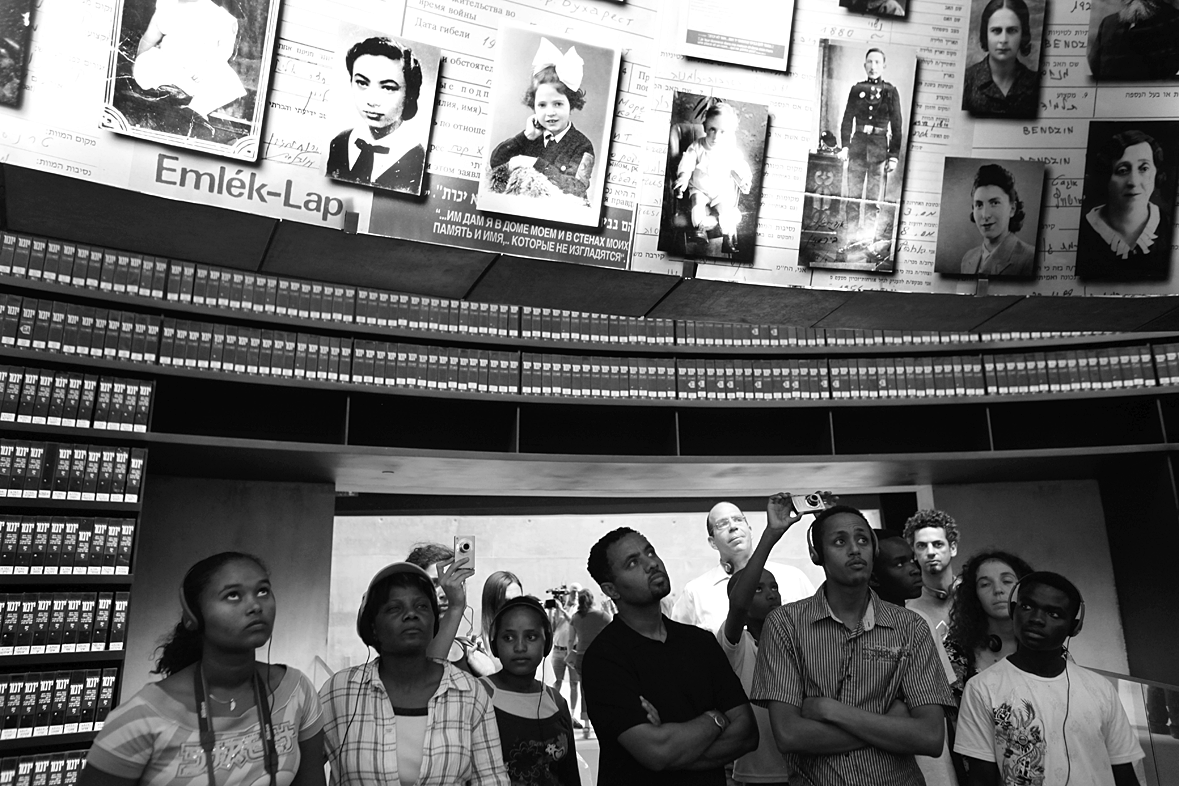
Darfuri refugees visit theYad Vashem Holocaust Memorial Museum in Jerusalem. After months of debate, Israel granted residency to a limited number of Sudanese refugees in 2008.
In Darfur, mass burial sites have now been identified, but, to my knowledge, none have been exhumed. The Sudanese government does not allow exhumations, and there’s no money to do it anyway. Instead, Darfur’s death toll consists of estimations based on sample surveys from internally displaced persons (IDPs) in Sudanese camps and refugees in camps in neighboring Chad. Usually conducted by public health researchers, these surveys enumerate deaths of family and household members and other forms of mass atrocity. To get access to the IDP camps inside Sudan, researchers have had to obtain the permission and cooperation of the Sudanese Ministry of Health. This has necessarily limited the kinds of questions they can ask on the Sudanese surveys, but not those conducted in Chad. So my work with colleagues has involved analyzing the refugee survey interviews collected in Chad and exploring their relationship to those conducted inside Sudan.
The health researchers in Sudan drew random samples from IDP camps and asked questions primarily about malnutrition and disease experienced while in the camps. They rarely asked questions about the killings and rapes that occurred during the attacks that led to displacement and flight to the camps. The surveys were done primarily for the humanitarian planning purposes of running the camps, and the Sudanese authorities certainly did not want information collected about attacks on Darfuri villages involving government forces as well as local Arab militia. Since the resulting early estimates by the World Health Organization were only for deaths occurring during limited time periods spent in the camps (most notably for seven months in 2003-2004) as few as 70,000 deaths were reported. Worse, the media often underreported by making references to “tens of thousands” of deaths.
In contrast, the U.S. Department of State sponsored the survey I have analyzed with my colleagues Wenona Rymond-Richmond, Patricia Parker, and Alberto Palloni. Conducted in Chad by social scientists and lawyers working with the Coalition for International Justice, this Atrocities Documentation Survey (ADS) sampled 1,136 randomly selected refugees in 20 sites just across the border from Darfur. The ADS was not designed to garner humanitarian aid information about malnutrition and disease; instead, it explicitly asked about the attacks, killings, and rapes that had forced the refugees to flee from their Darfur settlements in 2003-2004.
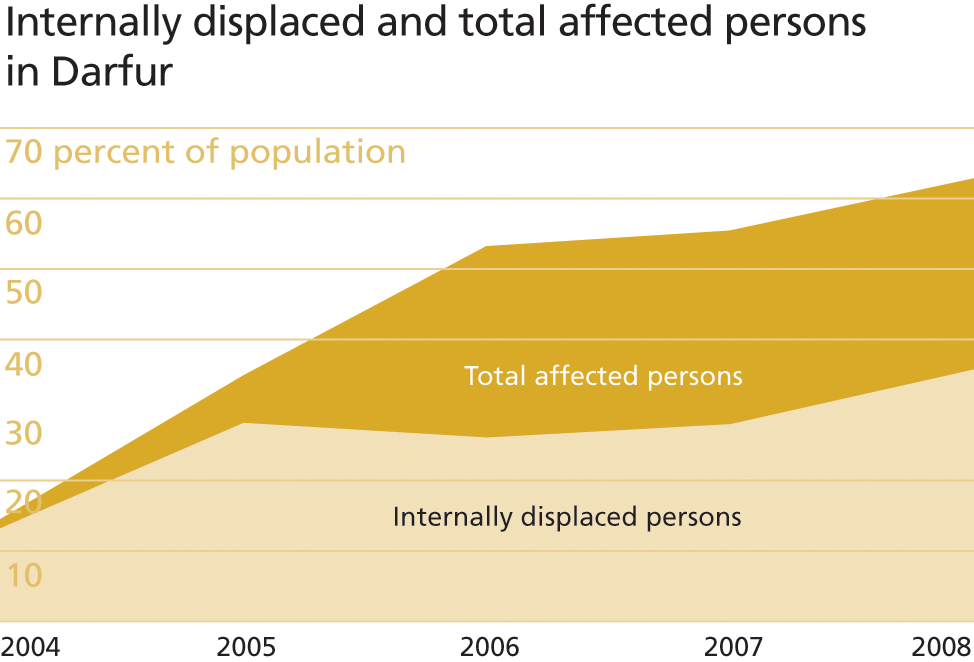
Internally displaced and total affected persons in Darfur
The refugees reported dates, locations, and events, so the data could be aggregated by places of origin to provide information at the settlement and village level. The interviews also asked about the attackers, including information about uniforms and clothing that would distinguish Sudanese soldiers from members of Janjaweed militias. Further questions regarded what attackers said during the attacks and whether rebel groups were living in or near the settlements, information that might help reveal the intent, location, and timing of state-led attacks.
With my first collaborators in the project, Rymond-Richmond and Parker, I used the survey results from Chad to develop an early estimate of the death toll in Darfur for the Coalition for International Justice. Some argue that counting the dead is pointless, but we believe that estimating the dead is important in establishing the scale of the crimes; it’s a starting point for documenting and explaining the patterns and processes of extermination and elimination involved in genocide.
After combining the number of dead and missing calculated from the ADS survey with parallel World Health Organization estimates of deaths from malnutrition and disease, we released a press report in the spring of 2005 indicating up to 350,000 dead and 50,000 missing persons in Darfur. The latter estimate was extensively cited in Save Darfur advocacy advertising in the New York Times and by the Aegis Trust in British newspaper advertisements. And today there is increasing convergence in the estimates of the mortality from various sources in Darfur, in the range of 200,000 to 400,000 deaths.
I developed a separate “floor” estimate of “more than 200,000 deaths” that I published in the journal Science with the demographer Alberto Palloni. We emphasized that at a minimum hundreds of thousands, rather than tens of thousands, had died (news reports subsequently upgraded their estimates). Recently, a group of Belgian researchers writing in Lancet has published a new estimate of 300,000 deaths. Together, these estimates have provided a solid foundation for President Obama’s reference to hundreds of thousands of innocent Darfuris’ deaths. Meanwhile, President Al-Bashir insists that less than ten thousand deaths have occurred.
Living Ghosts
Probably because of the overwhelming loss of life in the Holocaust, genocide scholars and the public have concentrated attention on group extermination by killing. This has resulted in the relative neglect of other elimination processes described in the Genocide Convention. Displacement resulting from forced migration is also a devastating process of genocidal destruction in Darfur.
While the U.N.’s Humanitarian Profiles publications have, in the past, drawn attention to the scale of displacement in Darfur, these reports have recently been suspended (apparently because of interference by the Sudanese government in the IDP camps). The last published Profile indicated that about 2.7 million Darfuris had been displaced from their homes and villages by 2008. Anthropological research has revealed the extraordinary persistence of those Darfuris who have remained and survived in their settlements through decades of famine and violence. Acknowledging that counting only those who are fully displaced (that is, have fled to camps) underestimates the destructive attacks on group life, the U.N. also reports counts of “total affected persons.” Defined in terms of those people requiring humanitarian aid, the number of affected persons exceeded four million in Darfur in 2008.
Counting the dead is a starting point for explaining the patterns and processes of genocide.
A key legal question is whether the consequences of the attacks constitute genocidal destruction of the non-Arab Black African groups “in whole or in part.” The Sudanese government conducted a much disputed national census in 2009. The results indicated a Darfuri population of about 7.5 million persons (this population is not broken into ethnic or racial groups, but it’s commonly estimated that about half are non-Arab). The graph above indicates that by 2008, about one third of the full Darfur population was displaced and more than half required humanitarian aid. The displaced and affected come overwhelmingly from the non-Arab Black African groups. Since about half the Darfur population is Arab, by any calculation, this means that the large majority of the non-Arab Black African groups have been displaced, and nearly all may have been affected. They are the living victims of genocide.
From Rico to the Icc
Social science evidence can also be uniquely valuable in demonstrating the roles of the physical perpetrators of atrocity crimes in horizontal relationships, as well as in establishing the indirect participation of perpetrators through vertical relationships, linking higher-level defendants in a chain of command of superior responsibility. This chain-of-command evidence can allow prosecutors and courts to advance cases that they would otherwise not be able to make. We demonstrated the accountability of the government of Sudan for the Darfur genocide, for instance, by first establishing that the government’s military forces joined in attacks on the Black African settlements with the Arab Janjaweed militia.
ADS data provided significant evidence about the legally relevant circumstances of death and displacement in Darfur. Death and displacement occurred most often when Sudanese forces joined with Janjaweed militia in attacks, and respondents heard dehumanizing racial epithets more often when the Sudanese and Janjaweed attacked together. These epithets were a part of the creation of a furious, frenzied atmosphere used to incite genocidal violence. When we analyzed the ADS data, we found that the factors that finally led refugees to flee settlements involved attacks on food and water even more than killings, although both were clearly involved. These tactics, such as when the Janjaweed placed dead animals in wells to poison community drinking water, provided evidence of “deliberately inflicting on the group conditions of life calculated to bring about its physical destruction.”
Our findings about displacement, as well as about killings and rapes, further speak to crucial legal issues of collective command responsibility. The concept of a “joint criminal enterprise,” derived from sociological criminology, has played a major role in how prosecutors in international criminal courts have constructed arguments about responsibility involving Sudanese leaders.
Our findings about displacement speak to crucial legal issues of collective command responsibility.
The concept of criminal enterprise has its sociological origin in the writing and advocacy of Donald Cressey, who followed Edwin Sutherland in pioneering studies of American white collar and organized crime. Cressey used the term “enterprise crime” and argued that the group initiative involved in planning and perpetrating these acts made them criminal. Congress and state legislatures eventually agreed and passed statutes called the Racketeer Influenced and Corrupt Organizations (RICO) laws. In the U.S., RICO laws have been widely used to prosecute organized, white collar, drug, and political crimes. And when the Clinton Administration sent thirty experienced lawyers from the U.S. Department of Justice (including a leading lawyer from the Exxon Valdez case) to help launch prosecutions at the International Criminal Tribunal for the former Yugoslavia (ICTY) in 1995, they brought the concept of criminal enterprise with them. In this new setting, the lawyers wed criminal enterprise with the long-standing international criminal law concept of superior responsibility, which holds political and military leaders of a nation state accountable for their failure to act on knowledge of war crimes committed in the chain of command below them.
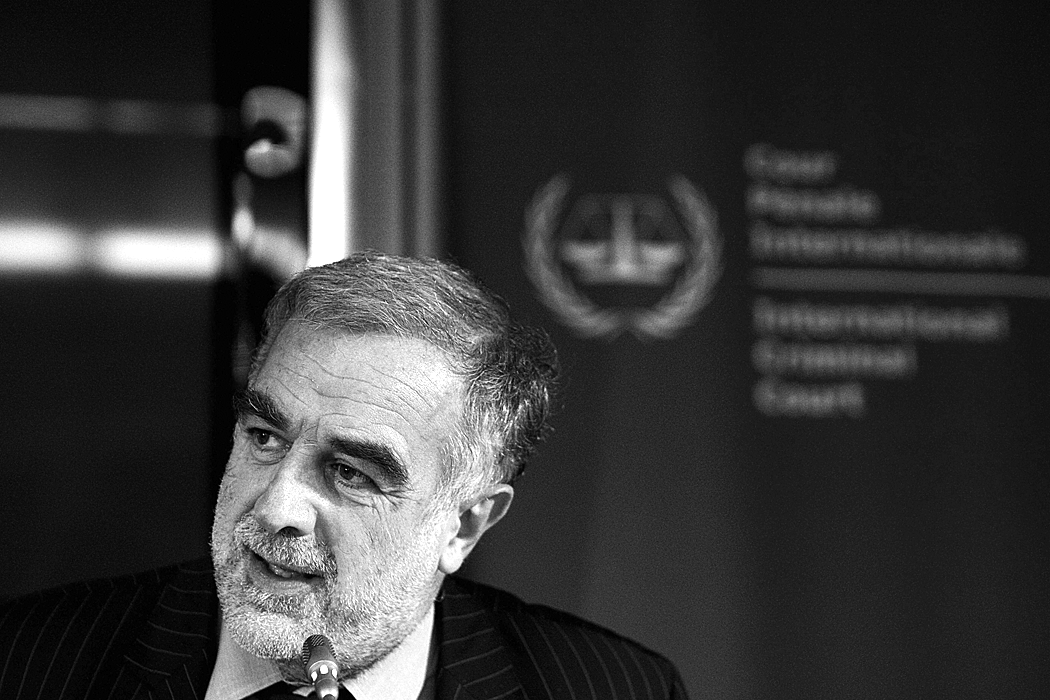
International Criminal Court chief prosecutor Luis Moreno-Ocampo speaks to the press on March 4, 2009 after announcing that the court had issued a warrant for Sudanese President OmarAl-Bashir for war crimes in Darfur.
In his application for arrest warrants for Darfur, the ICC Prosecutor linked joint criminal enterprise with superior responsibility and emphasized the group nature and common purpose of the genocidal violence. He cited “the aim of furthering the criminal activity or criminal purpose of the group” and “the knowledge of the intention of the group to commit crimes.” This kind of prosecution pursues the upward, downward, and lateral reach of the organization of atrocity crimes.
The ICC Prosecutor identified three individuals—President Al-Bashir, former Deputy Minister of Interior Ahmad Harun, and militia leader Ali Kushayb—as joint participants in the mass atrocities in Darfur. In addition, our eyewitness evidence, outlined in Darfur and the Crime of Genocide, points to three other militia leaders who participated in mass atrocities in connection with Deputy Minister Harun.
The joint nature of this genocidal enterprise involved knowledge and direction from the top: President Al-Bashir used racist language to talk about Black Africans in Sudan and travelled to Darfur to publicly incite the “annihilation” of the incipient rebellion. The organization of the enterprise involved the appointment of a Deputy Minister, Ahmad Harun, who dispersed money and resources and led the organization of the Arab Janjaweed militia to carry out the policy of annihilation. Notably, the enterprise involved “outsourcing” most of the killing, raping, and displacement of Black African Darfuris to and by the leaders and forces of the Janjaweed, but the work of the Janjaweed was most racialized and violent when it occurred in jointly organized attacks with the Government of Sudan (GoS) forces. The GoS provided training, aerial bombardment, and land cruisers equipped with mounted machine guns, while the Janjaweed took the lead in carrying out the face-to-face mass atrocities during ground attacks.
Social Science as “Reasonable Grounds”
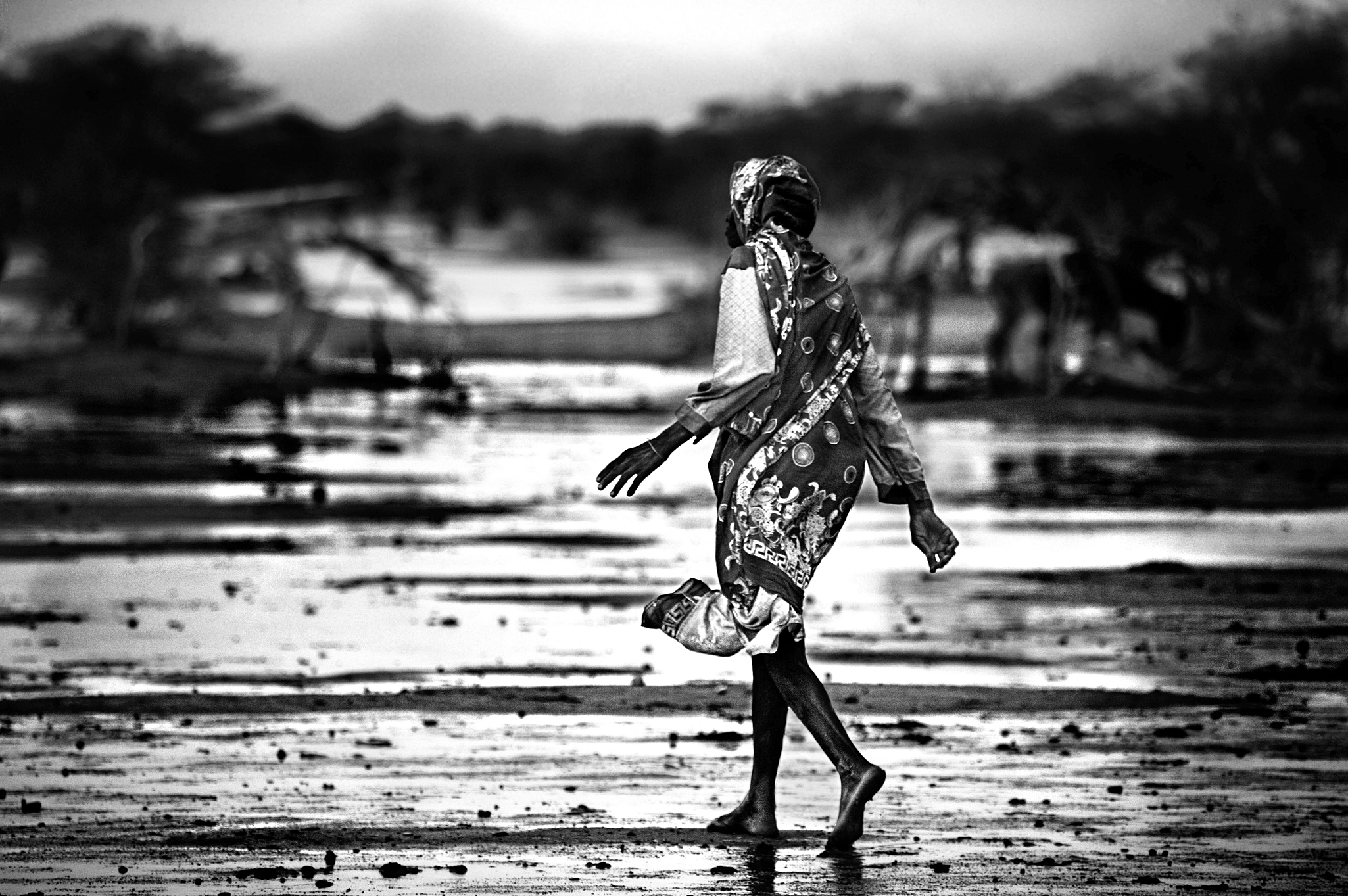
This woman, Hawa Abdelkerim, told the photographer that the Janjaweed had come into her village: “They killed everyone. I was lucky and managed to get away.”
On February 3, 2010, the Appeals Chamber of the ICC reversed an earlier decision of the ICC’s Pre-Trial Chamber not to issue an arrest warrant for President Al-Bashir for crimes of genocide. Their reasoning is important with regard to the use of social science evidence.
Social science evidence is characteristically and by design grounded in probabilities. In the Darfur case, the Appeals Chamber reasoned that the Pre-Trial Chamber had applied an erroneously high “beyond a reasonable doubt” standard of proof when it decided not to issue an arrest warrant for President Al-Bashir. The Appeals Chamber, however, ruled that the proper standard of proof at the pre-trial stage is actually the lesser standard of “reasonable grounds to believe” that President Al-Bashir committed genocide. The Pre-Trial Chamber responded to the Appeal Chamber’s reversal by reconsidering the genocide charge and issuing a warrant for Al-Bashir’s arrest.
Social science, with its focus on patterns and demonstrations of probabilistic relationships, is uniquely suited to develop the “reasonable grounds” evidence necessary to support investigations and prosecutions of violations of international criminal law. For example, in Darfur, social science evidence indicated the joined roles of Janjaweed and GoS perpetrators of genocide acting together through within-group horizontal and vertical relationships. These relationships structure a chain of command leading from rank and file Janjaweed members under the direction of militia leaders up through a Deputy Minister, and on to the highest levels of superior responsibility. The postulated links in this chain are not presented as certain, but when combined with the eyewitness testimony referenced by the Prosecutor and in our book, provide the kind of “reasonable grounds” evidence referred to in the ICC Appeals Panel decision.
Peace and Justice
Critics of international criminal law often make arguments about the limits and dangers of its use, while social scientists have just as frequently underestimated the potential for their research to positively influence and extend the impact of international criminal law. Critics note there is no arrest and enforcement power or mechanism readily available to implement international criminal indictments and arrests. The ICC, for example, has no police force; it must rely on the cooperation and participation of others, such as national governments and NATO military forces, in enforcement actions. A number of highly significant arrests have occurred this way — for example, former Serbian President Slobodan Milosevic was taken into custody in the former Yugoslavia and former Liberian President Charles Taylor was arrested in Africa and is now standing trial in The Hague. Ideally, African Union forces might make such arrests in Sudan.
Critics of international criminal law sometimes also argue that criminal indictments and arrests interfere with peace-making and restorative justice efforts. When leaders are confronted with investigations, indictments, and the threat of arrest, critics believe they lose their incentive to negotiate peaceful and restorative outcomes. Yet the counter-argument is that investigations, indictments, and warrants can have a sobering effect on their targets and perhaps add a motivating hope of mitigation; this might increase the willingness of accused persons to negotiate and bargain peaceful outcomes, even when no concrete or enforceable promises are made regarding future investigations and prosecutions.
Chain-of-command evidence can allow prosecutors and courts to advance cases they would otherwise not be able to make.
The kinds of pattern evidence developed by social scientists can place leaders who allow or encourage mass atrocities on warning: they are liable to prosecution and punishment, and their systematic and widespread acts can be statistically documented as prosecutorial evidence. Political negotiations often occur alongside court actions. For instance, the late diplomat Richard Holbrooke successfully brokered the Dayton Peace Agreement while the International Criminal Tribunal for the former Yugoslavia (ICTY) proceeded with its indictments; all four Serbian political representatives who attended and supported the Dayton Peace Agreement—Slobodan Milosevic, Momcilo Krajisnik, Milan Milutinovic, and Jovica Stanisic—were still indicted by the ICTY. (The ICTY has now indicted 161 defendants. Recently, the notorious Serbian General Ratko Mladic was successfully arrested.)
One new and novel aspect of the ICC in particular has the potential to incorporate social science in the advancement of restorative justice. The Rome Treaty, which established the permanent ICC, took effect in 2002. This Treaty included a provision creating a Trust Fund for Victims (TFV), which has begun its work by organizing physical and psychological rehabilitation for victims and delivering material resources for reestablishing the productive lives of these survivors. Social science will play an essential role in assessing and evaluating such programs for victims. A recent report by the TFV includes the results from the first wave of a longitudinal survey of 2,600 respondents in Uganda and Congo who have participated in these programs. The intent is to establish a base-line along which the effectiveness of TFV programs can be measured. The prospects are promising.
Social science’s key roles in international criminal law are apparent in establishing basic facts of death and displacement, in helping to model and explain the patterns of extermination and elimination involved in crimes against humanity and genocide, in stimulating theories used in the prosecution of perpetrators, and in evaluating and assessing programs for the rehabilitation of survivors and the restoration of community justice. Maybe it’s too much to think sociology and its sister sciences can save the world, but it’s good to know we can help.