



Abstract
The rise of the c-section is tied not to maternal or fetal outcomes, but to organizational and legal imperatives. To those ends, a woman’s rights to bodily integrity and decision-making–even the right to refuse surgery–are frequently challenged in childbirth.
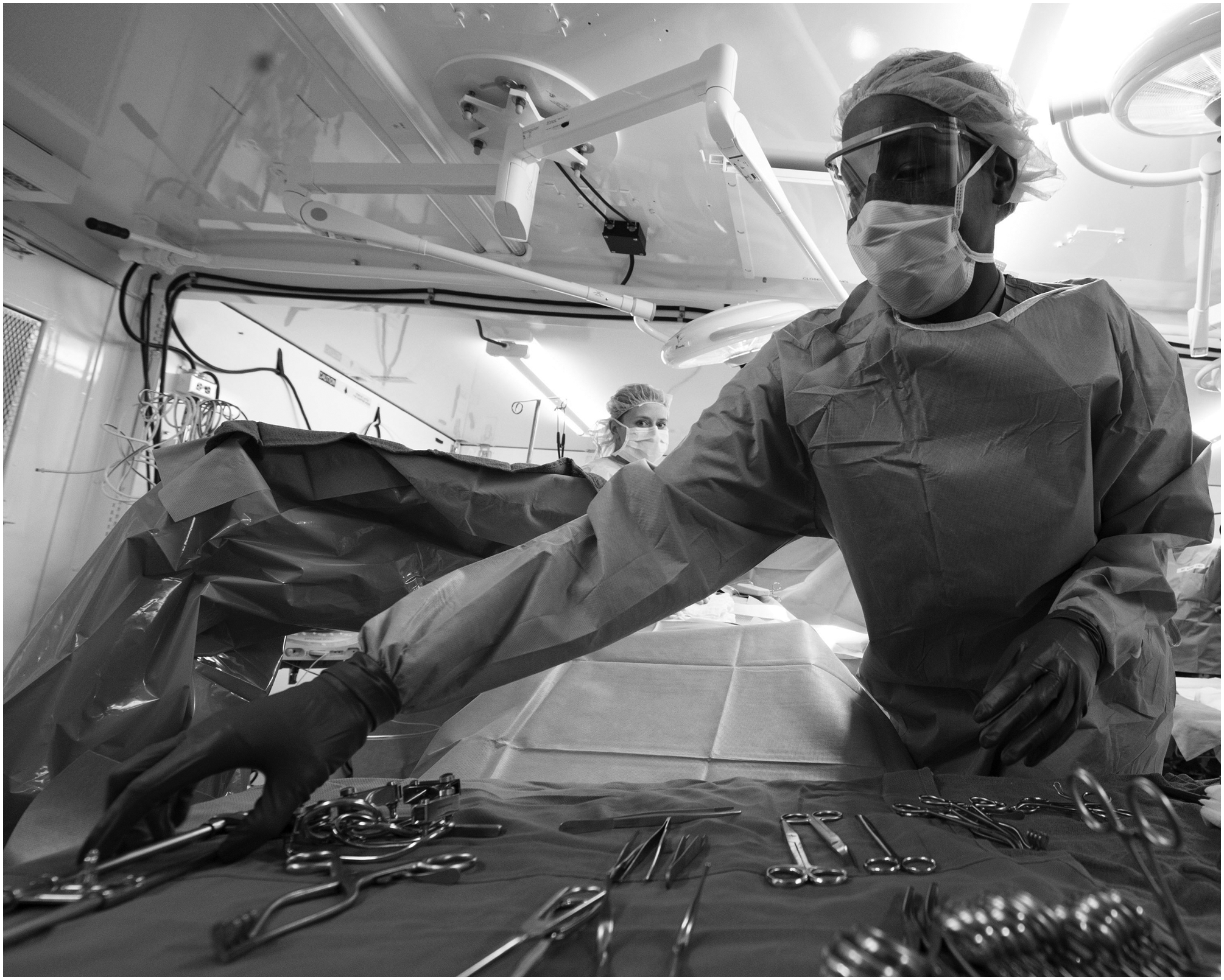
“I feel so sad about it,” she remembers. In her dreams, “I’m begging the doctor, ‘Don’t do it.’” In 2011, doctors performed a cesarean section on Rinat Dray, a 32-year-old, religious mother of two without her consent. Dray adamantly refused a cesarean throughout her labor, she told us in an interview, but “The [hospital] manager said, ‘Take her… to C-section. We got permission. …Take her to the room for the C-section.’” Doctors wheeled her into the operating room, told her to be quiet, and performed a cesarean. The baby was healthy, but during the surgery the physician lacerated Dray’s bladder, requiring extensive surgical repair. Dray’s malpractice lawsuit is ongoing.
To study forced and coerced cesareans, we searched for cases like Dray’s in LexisNexis and the National Advocates for Pregnant Women’s (NAPW) online case file. We found ten between 1990 and 2014 and were able to interview Dray and Jennifer Goodall, as well as two of the attorneys, Michael Bast (Dray’s attorney) and Colleen Connell (Tabita Bricci’s attorney), involved in forced C-section cases. We also interviewed three attorneys with Birth Rights Bar Association (BRBA), Deborah Fisch, Susan Jenkins, and Indra Lusero; NAPW senior staff attorney Farah Diaz-Tello; and President of Improving Birth Dawn Thompson.
The low number of published cases is partly a result of an exceptionally small fraction of court cases being published and thus accessible on LexisNexis, but it also reflects the high bar to entry into the legal system for these types of cases. Even so, we were surprised at how few cases we found: advocates and attorneys we’d interviewed had told us that instances of coerced and forced cesareans were common. For example, when we asked Dawn Thompson how often she receives calls from women in such situations, she answered, “Oh, every day.” Similarly, Michael Bast told us, “We’ve heard many times where women have said, ‘I was forced to have a C-section.’” Although statistics are unavailable and neither Bast nor Thompson can indicate the exact frequency with which they receive requests for help with lawsuits, we believe we’re just exposing the tip of the iceberg.
Forced and coerced cesareans are situated within a larger trend: an overuse of cesareans in the U.S., a trend coauthor Theresa Morris wrote about in her book Cut It Out. The procedures accounted for 32% of U.S. births in 2015. The technique is associated with higher rates of maternal and fetal morbidity (injury) and mortality (death) than vaginal deliveries—that is, it doesn’t lead to better maternal or fetal outcomes. Instead, the rise of the C-section is tied to organizational and legal imperatives. Specifically, physicians cannot know for certain whether a cesarean will lead to better outcomes than a vaginal birth, but they have learned through medical-legal conferences and court proceedings that they are less likely to be sued for malpractice if the baby is born by cesarean. This lowers doctors’ thresholds in choosing a cesarean.
The rise of the C-section is tied to organizational and legal imperatives, not maternal and fetal outcomes.
Although typically a woman’s “right to choose” is associated with abortion, not childbirth, it is instructive to think of both situations in a broader context of women’s bodily integrity. Choice is hard won in childbirth because the cultural context dictates that pregnant women should sacrifice everything for the fetus. Thus, a pregnant woman who makes a decision that authorities deem is not in the fetus’s best interest—for example refusing a cesarean section—may be deemed incapable of making decisions about the birth. Her “choice” never really existed. Our research reveals that a woman’s right to bodily integrity and decision-making, seemingly sacrosanct in the letter of the law, is frequently challenged by medical providers when it comes to childbirth. Women’s right to refuse unwanted surgery buckles under the weight of cultural pressures and legal and organizational processes.
Rinat Dray, forced into having a cesarean.
Courtesy Rinat Dray

Michael Bast, Attorney, Silverstein & Bast, represents Rinat Dray.
Courtesy Michael Bast

Colleen Connell, Executive Director, American Civil Liberties Union of Illinois, represented Tabita Bricci.
Courtesy Colleen Connell

Dawn Thompson, President, ImprovingBirth
Courtesy Dawn Thompson

Coercion Tactics in the Hospital
The most coercive organizational tactic in this realm is when physicians seek court orders to compel women to have cesareans. This happened to Laura Pemberton (Pemberton v. Tallahassee Reg’l Med. Ctr., 66 F. Supp. 2d 1247 (N.D. Fla. 1999)). Details in the published court case indicate that Pemberton wanted to give birth at home, attended by a midwife. During labor, she became dehydrated and went to the hospital for IV fluids. When she realized the doctors intended to perform a cesarean, she left. The hospital’s attorney called the state’s attorney, who contacted a judge who sent an ambulance and sheriff to Pemberton’s home to return her to the hospital. A trial was conducted in the operating room. Pemberton lost and was forced to have a cesarean.
A woman’s right to bodily integrity and decision-making, seemingly sacrosanct in the letter of the law, is frequently challenged by medical providers when it comes to childbirth.
Often, coercive organizational tactics lead women to acquiesce without a court order. As Colleen Connell, Tabita Bricci’s attorney, explains, “Much of the time for completely understandable reasons the woman… acquiesces without a formal court matter being required because she’s at term, …she’s medically stressed, and… [it] is just more than she can handle. …[S]he just sort of says, ‘I just can’t fight. I’m just gonna give in.’”
Another coercive practice used in hospitals is the threat of Child Protective Services (CPS). It’s so common that BRBA attorney Lusero was at a loss in our interview: “I’m actually trying to think of a situation where that wasn’t part of the coercion.” According to NAPW attorney Diaz-Tello, this type of coercion usually takes the form of a physician or nurse’s telling a woman, “So if you don’t acquiesce at this point, then we’re gonna call in child services that will then take the baby away.” When she refused a cesarean, Dray said, “[The physician] started using scare tactics. He said, ‘If you’re not going to sign the form for the C-section, …the state is going to take your children.’”
Doctors also threatened Jennifer Goodall with CPS. Goodall wanted to deliver her fourth child vaginally (she’d had three prior cesareans). She found a supportive physician, but the other physician in the practice was not supportive. Goodall told us of meeting with the second physician, “She seemed to basically tell us that there’s no way that we could have a vaginal birth after three cesareans. That it was basically murdering my baby and that it was dangerous and that she wouldn’t support it.” Shortly after that meeting, Goodall received a letter from the CFO of the hospital, threatening to contact the Department of Children and Family Services about her refusal to have a cesarean. Goodall attempted a home birth, but went to a different hospital when her pain became unbearable. She remembered, “The nurse on call said that I needed to have a C-section—that no doctor would see me or take care of me. …And at that point, I was in so much pain that I agreed. It was basically like being tortured.” The threat of CPS remained. Goodall was blunt: “I didn’t fight because I knew that [CPS] would be an issue …I already had that fear put into me.” Physicians delivered a healthy baby boy by cesarean.
The threat of CPS isn’t an empty one. Three of the ten cases we identified involved a mother appealing the loss of her parental rights with her refusal of a cesarean used as direct or circumstantial evidence of neglect or abuse: (1) In re C.D. (San Bernardino County Children and Family Servs.) v. P.D., 2009 Cal. App. Unpub. LEXIS 4953; (2) N.J. Div. of Youth and Family Servs. v. V.M and B.G., in the matter of J.MG., 974 A.2d 448 (N.J. Super. Ct. App. Div. 2009); and (3) In the Matter of K.A.U., 739 S.E.2d 627 (N.C. Ct. App. 2013)).
Other coercive tactics, such as “firing a patient,” refusing to admit a patient, labeling a woman “non-compliant,” and using the power of multiple doctors to bully a patient into submission were present in the cases we studied. And coercion could be subtler. According to attorney Lusero, “There are these extreme cases of just blatant—basically, it’s violence. But then, I think, there’s this whole other slew of situations …that I think [are] really scary [in which] people essentially could be having surgery due to bureaucracies. …All these micro decisions in the chain of decisions being made by people totally removed from the body.”
Farah Diaz-Tello, SIA Team Senior Council, Center on Reproductive Rights and Justice, University of California–Berkeley
Courtesy Farah Diaz-Tello

One bureaucratic issue deals with informed consent. Hospitals may require patients to sign a blanket informed-consent form upon hospital admission, including, for pregnant women, consent for a cesarean. A patient’s not signing may lead to the hospital staff’s refusing admission. Lusero laments, “A lot of times I have to tell them, ‘You actually signed a consent form when you got to the hospital saying that you consented to this procedure.’” Another example is around specific informed consent for a cesarean. Bast, Dray’s attorney, told us that when women come to him for legal advice because they claim to have been forced to have a cesarean, he asks, “‘Really? Forced? Did you sign the consent forms?’ And they say, ‘Yes, I signed the consent form, but he made me sign it. I didn’t really want to sign it.’” He concludes, “And then you lose.” Further, interventions in birth, such as induction of labor, epidurals, continuous electronic fetal monitoring, augmentation of contractions, strict time-lines—all of which make birth quicker and more predictable for the hospital—also make cesareans more likely. Diaz-Tello adds, “For some women …a vaginal delivery is not even posed as an option… VBAC [vaginal birth after cesarean] or twins, a breech …It’s not what [women] want, but they acquiesce.”
Coercive tactics including court orders are more commonly applied to poor women, women of color, and immigrants. For example, Goodall and Dray both received Medicaid, and Bricci was a Romanian immigrant whose first language was not English. This mattered, Connell explains, “[I]n… the real world of doctor/patient relationships …you had an impatient …doctor …who thought that he had an ignorant woman who was selfishly putting some crackpot religious view ahead of his assessment of the baby’s health. And [he] basically thought that if he rattled the cage she’d back down and say, ‘Okay,’ and she didn’t.” The court decisions we found frequently characterized women’s fitness to make decisions by using implicitly classed and raced language.
Legality Examined
Forcing a woman to have a cesarean section is not legal (see, e.g., a Supreme Court case, Cruzan v. Director, Missouri Dept. of Health, 497 U.S. 261 (1990)). U.S. courts have repeatedly held that “a competent person has the right to refuse medical treatment.” (In Re Baby Boy Doe, 632 N.E.2d 326 (1994)). This precedent rests on U.S. law’s historical protection of “negative rights,” sometimes called “liberty,” which is the right to be free from impositions, such as unwanted surgical interventions. People cannot be forced to donate blood or bone marrow to save someone’s life, let alone be forced to undergo surgery. Why are cesareans different?
The threat of calling Child Protective Services isn’t an empty one: Three of the ten cases we identified involved a mother appealing the loss of her parental rights with her refusal of a cesarean used as direct or circumstantial evidence of neglect or abuse.
One factor is the difference between lower-level courts, or “courts of first impression,” and appellate courts, which hear cases on appeal from lower-level courts. Lower-level courts are experts in dealing with a wide variety of factual situations that require quick decisions. Appellate courts are experts in dealing with issues of law and have the resources, lower caseloads, and time to examine complex legal issues. Lower-level courts have frequently ruled against women, but women who have sought appeals of their forced cesareans have always won. According to BRBA attorney Fisch, this is the difference between “the law on the books and the law on the ground.” Unfortunately, appeals rarely prevent a forced or coerced cesarean, and it can be a lengthy and expensive process to appeal any case. As Fisch explains, “The law deals better with these matters in retrospect. But this isn’t the case where… someone has breached a contract and you can make them whole again. …You’ve affected their fertility. You’ve violated their human rights.”
The ongoing “Birth Survey” is part of the “Transparency in Maternal Care” project and supplements institutional and state-level statistics on birth care.

Indra Lusero, Counselor at Law, President, Birth Rights Bar Association.
Courtesy Indra Lusero

There are examples of this disjuncture in the court cases we examined. For example, In re A.C., 573 A.2d 1235 (D.C. 1990) was won on appeal. From the published case, we learn that Angela Carder was 26-weeks pregnant and had an inoperable lung tumor. She agreed to palliative treatment to prolong her life until the fetus was 28 weeks, but her condition quickly deteriorated and she lost consciousness. Doctors discussed performing a cesarean with her family, at which point Carder briefly regained consciousness and said she did not want one. Nevertheless, the hospital obtained a court order and performed a cesarean. Both Carder and the baby died. Her family appealed, albeit posthumously, and In re A.C. affirms the right of a woman to refuse a cesarean.
Coercive tactics including court orders are more commonly applied to poor women, women of color, and immigrants.
Another appellate judgment upholding women’s right to refuse a cesarean is In re Baby Boy Doe. From the court case and our interview with her attorney, we learn that Tabita Bricci’s physician recommended a cesarean because Bricci was losing weight and he feared the fetus was not receiving enough oxygen. Bricci refused on religious grounds. The hospital lost a petition to make the fetus a ward of the state and appealed. In its decision, the court explained the fundamental rights at stake: “If a sibling cannot be forced to donate bone marrow to save a sibling’s life, if an incompetent brother cannot be forced to donate a kidney to save the life of his dying sister, …then surely a mother cannot be forced to undergo a cesarean to benefit her viable fetus.” Bricci vaginally delivered a healthy baby. Time and again, it is clear that forcing or coercing women to have a cesarean is not legal; it happens because women face barriers both to accessing the legal system and within the system itself.
Legal Barriers
The legal hurdles are similar whether the woman is fighting a forced or coerced cesarean or redressing one. First, labor is an all-encompassing process, and litigating during or immediately after childbirth is mind-boggling. Goodall, for one, has not attempted to redress her coerced cesarean. She reasons, “I don’t know if I psychologically just don’t want to go through that, or if I feel like I don’t have the time because I have all of this chaos going on with moving across the country [and] just having a regular relationship with my husband and my four kids.” Second, fighting a surgery that doctors claim is or was lifesaving challenges selfless expectations of women. Connell argues that cases of forced cesarean illustrate the common societal belief that “a pregnant woman owes a duty to the fetus that trumps every other interest or duty to herself or to other beliefs.” Third, it is difficult for such women to find legal representation (likely another factor in why we found so few court cases). During labor, there is time pressure. The “underground railroad” of help (in BRBA attorney Jenkins’ words) may be difficult to access. To redress a cesarean, women must enter the personal injury legal system, which often uses the contingency system whereby attorneys take cases with little or no payment in exchange for a percentage of the judgment. Attorneys, thus, prefer winnable cases, and cases of forced or coerced cesareans do not usually fit this bill. Fisch explains, “The problem… is that unless there is an injury to the baby or if the mother’s dead, there aren’t damages sufficient enough to cover the case [and] …the likelihood that you’ll win the case [is] very small. …[I]n our legal system, we so clearly prioritize harms to the fetus over harms to the mother.” Goodall gives life to this observation when she tells us, “I was told by my legal counsel that …the hospital’s …counsel basically said …they would rather have a lawsuit against the hospital for …doing physical harm to me for giving me a surgery against my will than having a litigation for something going wrong during my VBAC.” Women with less economic and social power have an even harder time accessing advocacy and attorneys.
Jennifer Goodall, coerced into having a cesarean.
Courtesy Jennifer Goodall

Solutions
Even though the legal system is stacked against women, women should not abandon the fight. In fact, according to attorneys we interviewed, only when women sue will physicians begin to see a real medical-legal risk to performing forced and coerced cesareans. It is important to remember that performing a forced surgery is not legal. Women exerting agency within the legal system is an essential part of putting a stop to these practices.
Especially for women facing an imminent threat of an unconsented cesarean, there are also options outside the legal system. Attorney Lusero shares that these non-legal solutions tend to be quicker and more effective—likely because lower-level court judges so often side with physicians in these cases. But this solution requires that women exert agency, arriving prepared to ask questions about and make requests for their care. If they are unhappy with their treatment, they must know and exercise their right to ask for a second opinion or more time to make a decision, to refuse treatment, or to switch providers or hospitals. Unfortunately, research has found that women are often hesitant to challenge the authority of physicians, especially during labor and birth.
Another non-legal solution is to make noise—lots of noise. As with other social issues, the more media attention this issue gets, the better. For example, to generate media attention about Goodall, BRBA asked supporters to send roses to Goodall in care of the hospital’s CFO, who sent Goodall the infamous letter. This floral influx was widely covered by traditional media and shared across social media, bringing unwanted attention to the hospital and possibly putting others on notice.
Ultimately, the legal system should protect women’s rights to make decisions about their own bodies. Educating physicians, hospital administrators, attorneys, judges, and women about the unconstitutionality of unconsented surgery is a necessary step in accomplishing this goal. There must also be repercussions—professional and personal—to those who trample on the right of women to refuse surgery.