



Abstract
Professional organizers are depicted, in pop culture, as clutter cops, but see themselves, in real life, as helping others prioritize and make peace with the stuff of their lives.
Keywords
I had seen enough episodes of “Hoarders” to know what the end of an organizing session was supposed to look like. After a harrowing process involving a lot of tough love and not a few dumpsters, the newly organized client would turn, tears in her eyes, to thank the organizer for changing her life. Nevertheless I was stunned when, at the end of my first job as an organizing assistant, the client did exactly that. After descending into her de-cluttered and re-organized home office she broke into tears, saying the clean, neatly labeled space made her feel like a real professional for the first time in her 20-year career. I was even more surprised to find my own eyes welling with tears, touched to have been part of this transformation.
Organizing is, at core, less about material belongings than about the complicated, intense emotions people attach to those belongings.
Organizing is, at core, less about material belongings than about the complicated, intense emotions people attach to those belongings. From 2011-13, I interviewed more than 50 organizers, primarily in Southern California, and spent more than 150 hours attending professional meetings, conferences, and classes for organizers and working alongside organizers as an unpaid assistant. Most organizers saw helping and supporting clients as their primary responsibility, far outranking the actual work of sorting and organizing possessions. One organizer said the most important part of her work is conveying to her clients “that they are not alone, that there is nothing to be ashamed about.”
This work is big business. Founded in 1984, the National Association of Professional Organizers (NAPO) now boasts more than 4,000 members, primarily in the U.S. Although organizing is perceived as a luxury service, the profession actually reaches a broad clientele. Hourly rates range from $25 up to, in rare cases, $400. Some organizers offer free or reduced-rate services to groups such as victims of domestic violence, families facing eviction, elderly clients in the process of downsizing, and developmentally disabled young adults.
Most scholars seem to expect a particular narrative about organizing. As they see it, professional organizing represents just another troubling intrusion of market forces into the intimate corners of Americans’ lives and homes. In this reading, organizers are clutter cops, policing an externally imposed boundary between good and bad consumption, useful belongings and junk, productive spaces and disorderly ones. There is some truth to this interpretation, but to tell only this version of organizing would be to omit what are, to me, the industry’s most interesting and novel components—the philosophies and priorities of organizers themselves and the intimate, meaningful connections they often forge with clients.
Part of the problem is that most of what we know, or think we know, about organizing is gleaned from glossy before-and-after magazine spreads or television programs such as “Clean Sweep” and “Hoarders.” These media demonstrate the domestic ideals to which advertisers would have us aspire as well as the damaging narratives we impose on those who thwart social norms and aesthetics. But neither tells us much about what actually goes on between organizers and clients when there are no cameras around, no scripts to follow, no advertisers to appease. For that sort of knowledge, we turn to ethnographic research and its core tools: open-ended interviews and extended participant-observation.
My fieldwork among organizers challenged many of my own preconceptions about this field and its practitioners. Based on organizing shows and magazines, I’d assumed organized spaces had to be pretty, with matching desk sets, color-coded files, and shiny new boxes to hide away messy odds and ends. Organizers themselves, however, care more about function than appearance and usually discourage the purchase of new organizing products. From an organizer’s perspective, if the client can quickly locate the things she or he needs, the system is working—however uninspiring or messy it may look to an observer. Rather than helping clients achieve the perfect aesthetic, organizers reveal the myth behind those images—no one lives that way, not even professional organizers. Clients are encouraged to seek out more affordable, workable solutions built around the spaces and items they already possess.
Nor do organizers see their role as policing the boundary between things worth keeping and “junk,” in contrast to the “tough love” approach employed in many organizing shows. Instead they see the line between treasure and trash as a blurry and subjective one. “Too much stuff” just means more stuff than you have room for, many organizers told me, which is why people who cannot afford large homes or multiple storage units are the ones who have to make hard decisions about what to keep. Organizers therefore see the problem with over-stuffed spaces as a practical issue, not a moral one.
To underscore that point, some organizers reject the very concept of “clutter.” One organizer said: “I hardly ever use the word ‘clutter.’ [My clients] don’t refer to this stuff as ‘clutter,’ it’s their stuff. So when we come in and we say that it’s clutter then it’s a little bit derogatory to me. It has a little bit of a judgment on it, the word has a little bit of an emotion tied to it. So if I can, I refer to it as their ‘stuff,’ their ‘things,’ or their ‘items.’”
The difference between “stuff” and “clutter” may seem a matter of semantics. Many organizers are fine with the term; some proudly refer to themselves as “clutter clearers.” Yet organizers agree that respecting clients’ feelings and preferences is one of organizing’s core principles, and they react quite negatively on the rare occasions they hear a fellow organizer belittle or criticize a client. As one organizer maintained: “I think what I bring to the table is a really strong lack of judgment on what they are dealing with and… that there is nothing wrong with them. That they can be organized according to what works for them not for IKEA or Container Store or the [organizing] books or me, but there is nothing wrong with them. Because really people feel so terrible about themselves. I think that is what I bring more so than the tips and strategies [for organizing].” Rather than policing client behavior or imposing a moral narrative on consumer and lifestyle choices, organizers seek to disabuse clients of the idea that over-crowded or disorganized spaces are a reflection of individual flaws or failures.
Similarly, organizers believe it is essential to recognize and respect the emotional ties people have to their belongings, even items seemingly devoid of financial or practical value. Another organizer put it this way: “I am not the kind of organizer that pushes people on [giving up] those things if they have room. If they don’t have room, we certainly have a serious conversation about what we can do to get through that, but I don’t feel I’m there to force people to get rid of stuff. I’m there to help them get rid of it if that’s their goal. But otherwise I’m there to find a way if we can store it so that they can keep it. Because I think [having] emotional ties to your stuff is fine.”
The emotional connection people have to their belongings is, many organizers say, what the organizing process really addresses. One organizer explained that she doesn’t press for details or try to “psychoanalyze” her clients, but that sometimes clients simply need to talk about the feelings attached to an object in order to let that item go. “Sometimes it’s like, ‘this reminds me of my Aunt Martha,’ and then it comes out that Aunt Martha was a horrible, wretched woman who was always very mean to them but it’s hard for them [to get rid of the item] because they are supposed to love their aunt. So sometimes just being able to say that and giving them the permission to let it go is what will do it.” Far from clutter cops or moral agents of market principles, organizers are like a human palliative, there to soothe the anxiety that belongings stoke.
Far from clutter cops or moral agents of market principles, organizers are like a human palliative, there to soothe the anxiety that belongings stoke.
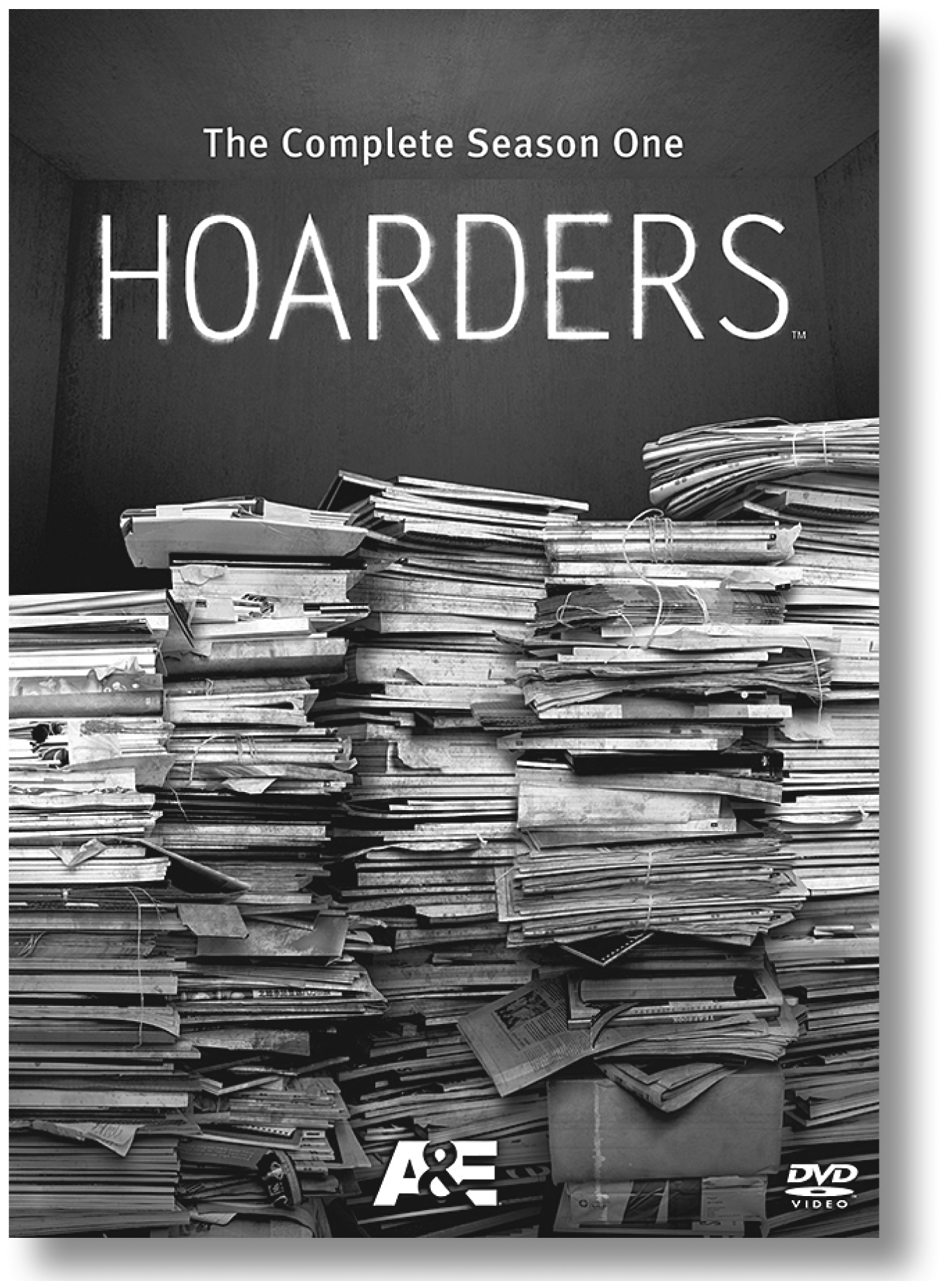
Television shows like “Hoarders” invite viewers’ judgment as they depict professional organizers sternly taking charge of others’ messes.
Although the organizing profession is still quite small it stands at the intersection of myriad trends and trajectories in modern American life. People feel overwhelmed, overworked, overspent and underappreciated—awash in so many emails, unread magazines, and orphaned cellphone chargers that they are willing to pay strangers to help them establish some sort of order. The new burdens so many Americans are carrying—insecure employment, an eroding social safety net, longer hours at work, the rise of time-intensive parenting, ever-evolving technologies that tether them to employers and acquaintances alike—are more than most can manage without help. Many are turning to professional organizers and other service providers, such as career coaches and personal concierges, for connection, reassurance, and guidance in dealing with the overwhelming mass of things and tasks that accompany our new, uncertain lives.
Providing support, affirmation, and an organized home for a price will not cure the intense isolation and anxiety of modern society. It is a Band-Aid solution to endemic social problems. Some argue that a Band-Aid just allows the underlying wound to fester unseen; others welcome even the thinnest layer of protection between themselves and the forces that threaten to overwhelm them.